From Enthusiasm to Strategy:
4 Critical Factors to Sustain the
Development of Technology Enhanced
Learning in Educational Organizations
Hervé Didiot-Cook
International Partnerships
Manager, International Office
Linc 2013 Conference, MIT, 18th June
2013, Cambridge MA
Hervé Didiot-Cook
International Partnerships Manager
Overview
•
•
•
•
•

Conclusion: 4 critical factors
Outcomes: Paris Descartes & LSE
How? RBVF (Analytical framework 1)
BTW what is E-learning?
Why? ANT (Analytical framework 2)
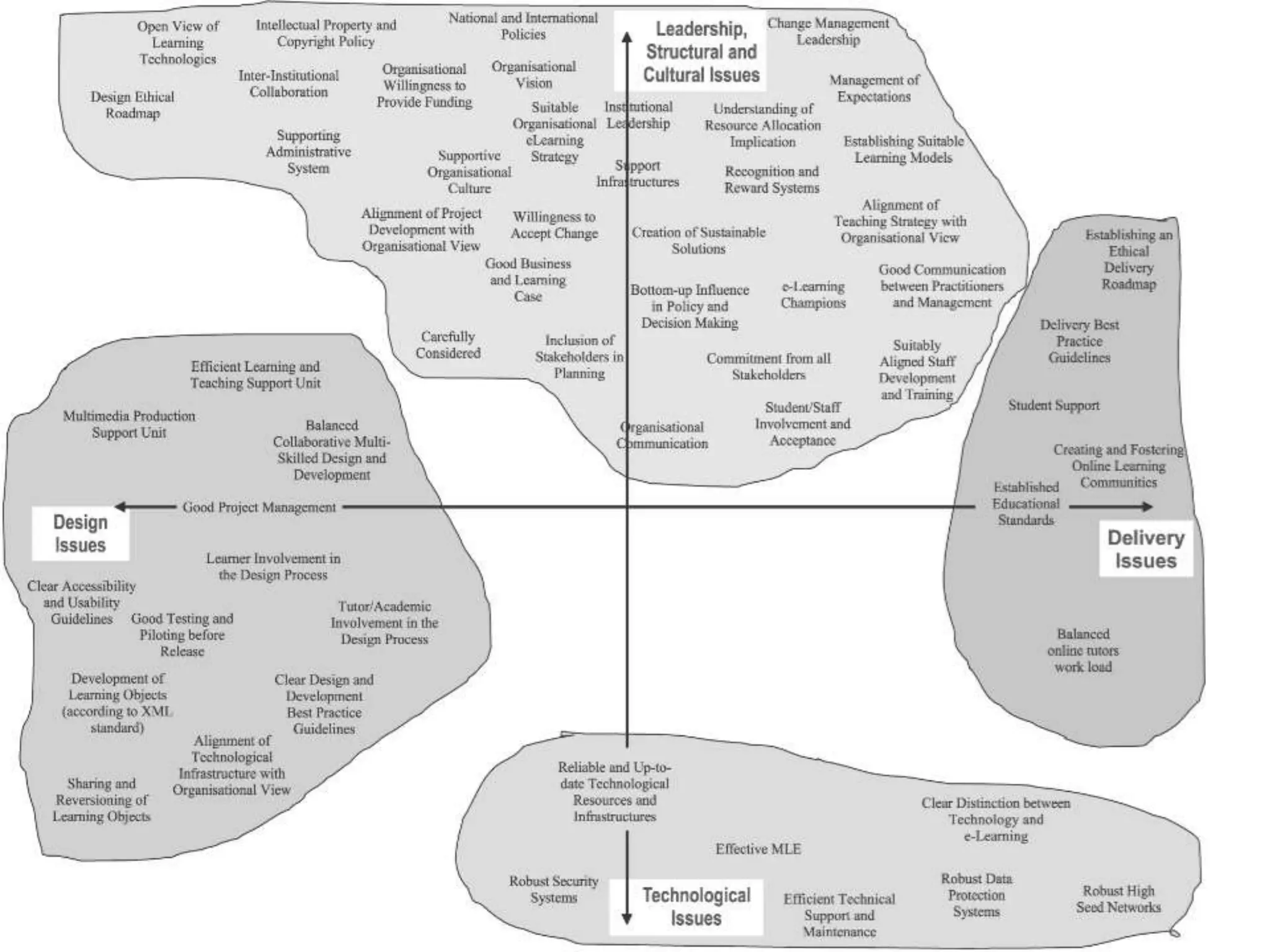
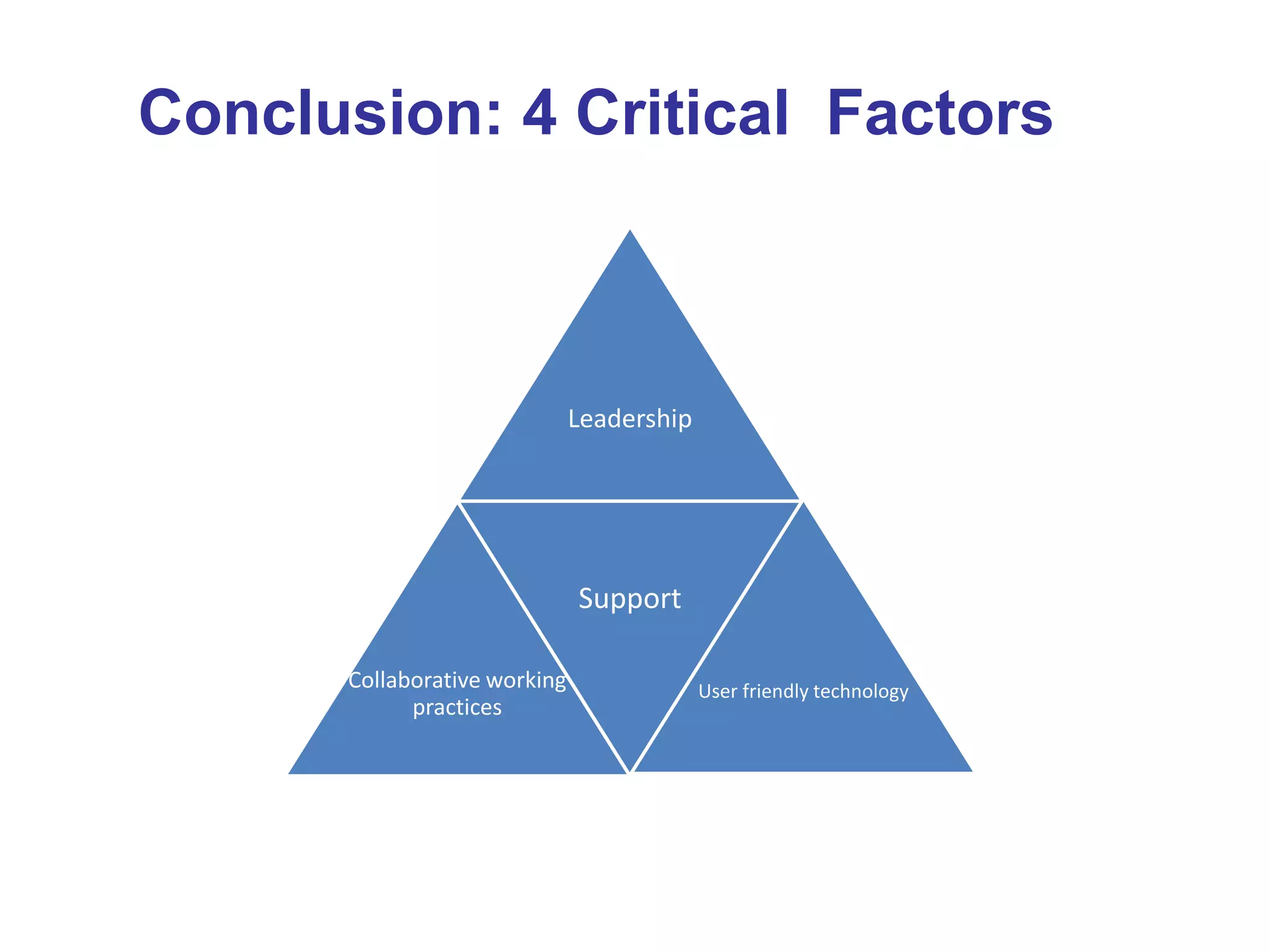
Conclusion: 4 Critical Factors

Leadership

Support
Collaborative working
practices

User friendly technology
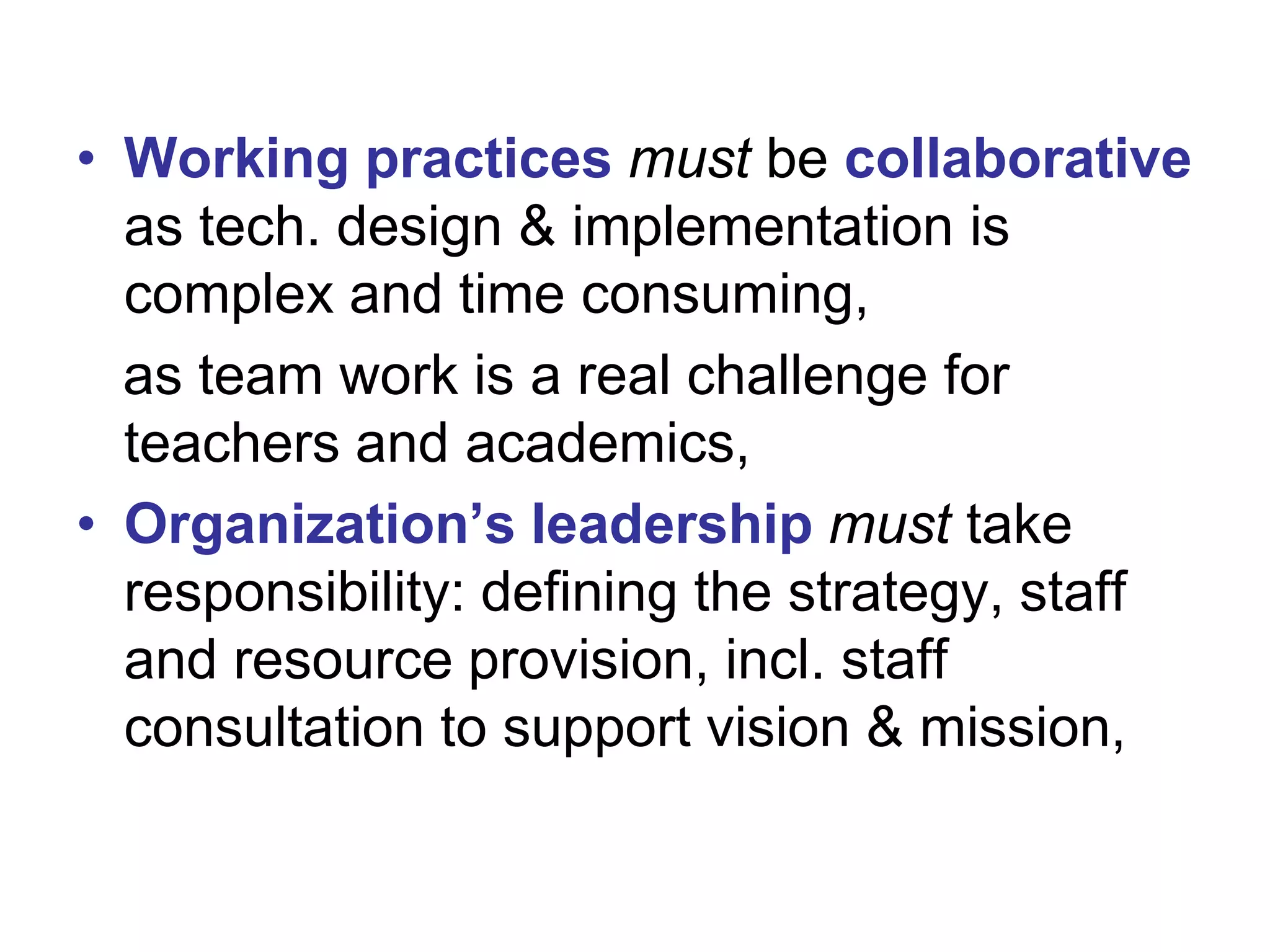
• Working practices must be collaborative
as tech. design & implementation is
complex and time consuming,
as team work is a real challenge for
teachers and academics,
• Organization’s leadership must take
responsibility: defining the strategy, staff
and resource provision, incl. staff
consultation to support vision & mission,
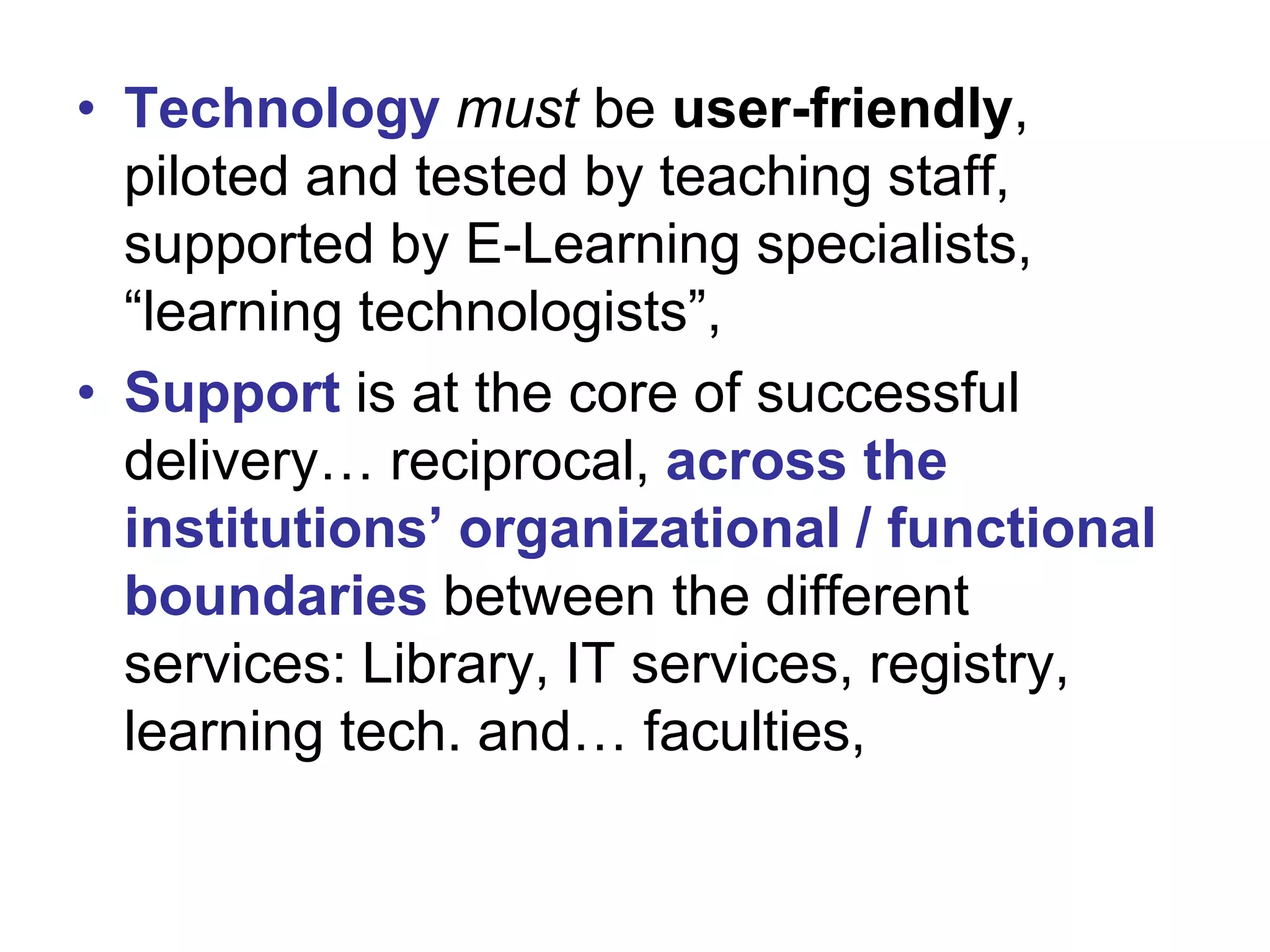
• Technology must be user-friendly,
piloted and tested by teaching staff,
supported by E-Learning specialists,
“learning technologists”,
• Support is at the core of successful
delivery… reciprocal, across the
institutions’ organizational / functional
boundaries between the different
services: Library, IT services, registry,
learning tech. and… faculties,
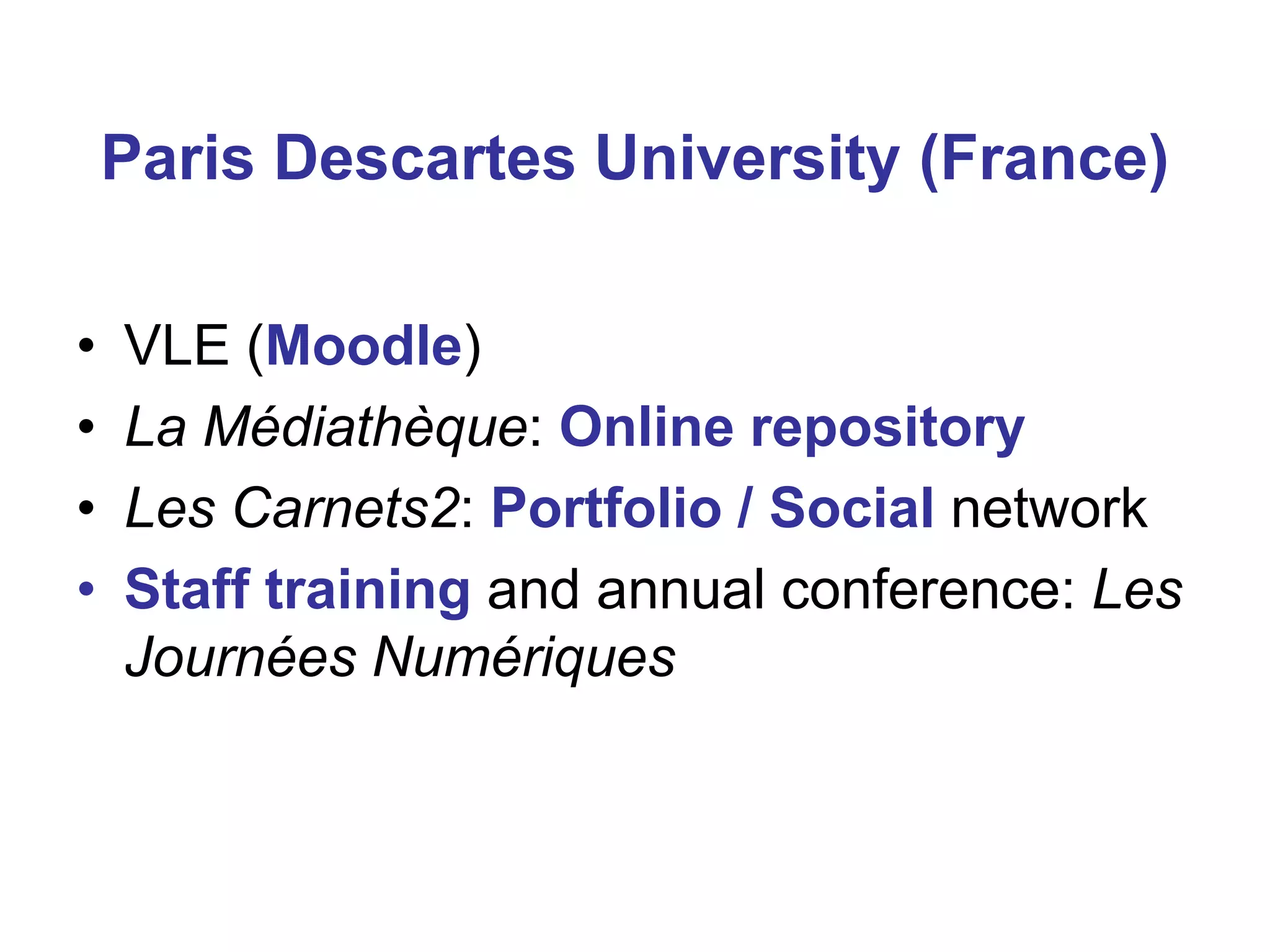
Paris Descartes University (France)
•
•
•
•

VLE (Moodle)
La Médiathèque: Online repository
Les Carnets2: Portfolio / Social network
Staff training and annual conference: Les
Journées Numériques
London School of Economics (UK)
• VLE (Moodle)
• Student mentoring inner city schools
pupils (Wimba voice boards)
• Art exhibition on Second Life “Déjà Vu”
with Michel Herreria
• Digital Storytelling at degree level & in
schools thanks to Columbia University
colleagues
Resource-Based View of the Firm
(RBVF)
…focuses on the firm’s resources and
capabilities to understand business
strategy and provide direction to strategy
formulation.
Organizational context divided in 3 different
levels : resources, capabilities and core
capabilities.
Amit & Shoemaker (1993)
“Capabilities refer to a firm’s capacity to
deploy Resources, usually in combination,
using organizational processes, to effect a
desired end […] Unlike Resources,
Capabilities are based on developing,
carrying and exchanging information
through the firm’s human capital”.
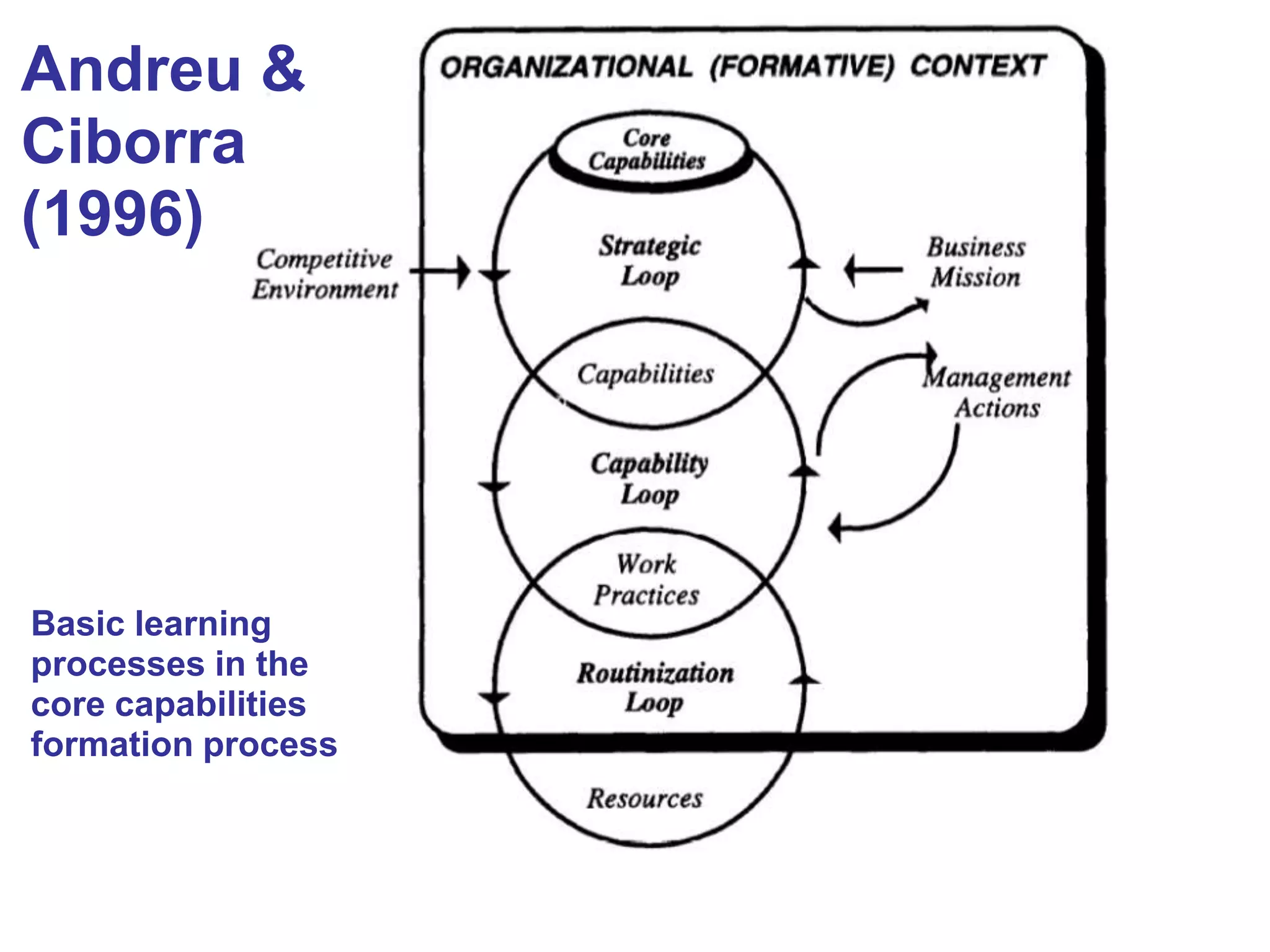
Andreu &
Ciborra
(1996)

Basic learning
processes in the
core capabilities
formation process
• 3 essential loops transform and translate
Resources (ie World leading professors,
IT software…) into Core Capabilities (ie
MOOCs).
• Loop 1: the Routinization Loop is enacted
by Working Practices.
• Loop 2: the Capability Loop is controlled
by Management Actions.
• Loop 3: the Strategic Loop ensures that
Core Capabilities are in line with the
Organization’s values and mission.
TEL, E-Learning is…
…not just about technology and pedagogy.
Also about schools, contexts, governments,
curriculum, control, power, values, aims &
objectives…
…complexity, interaction, agency and
power...
• One theory, Actor Network Theory
defines the “social” as everything !
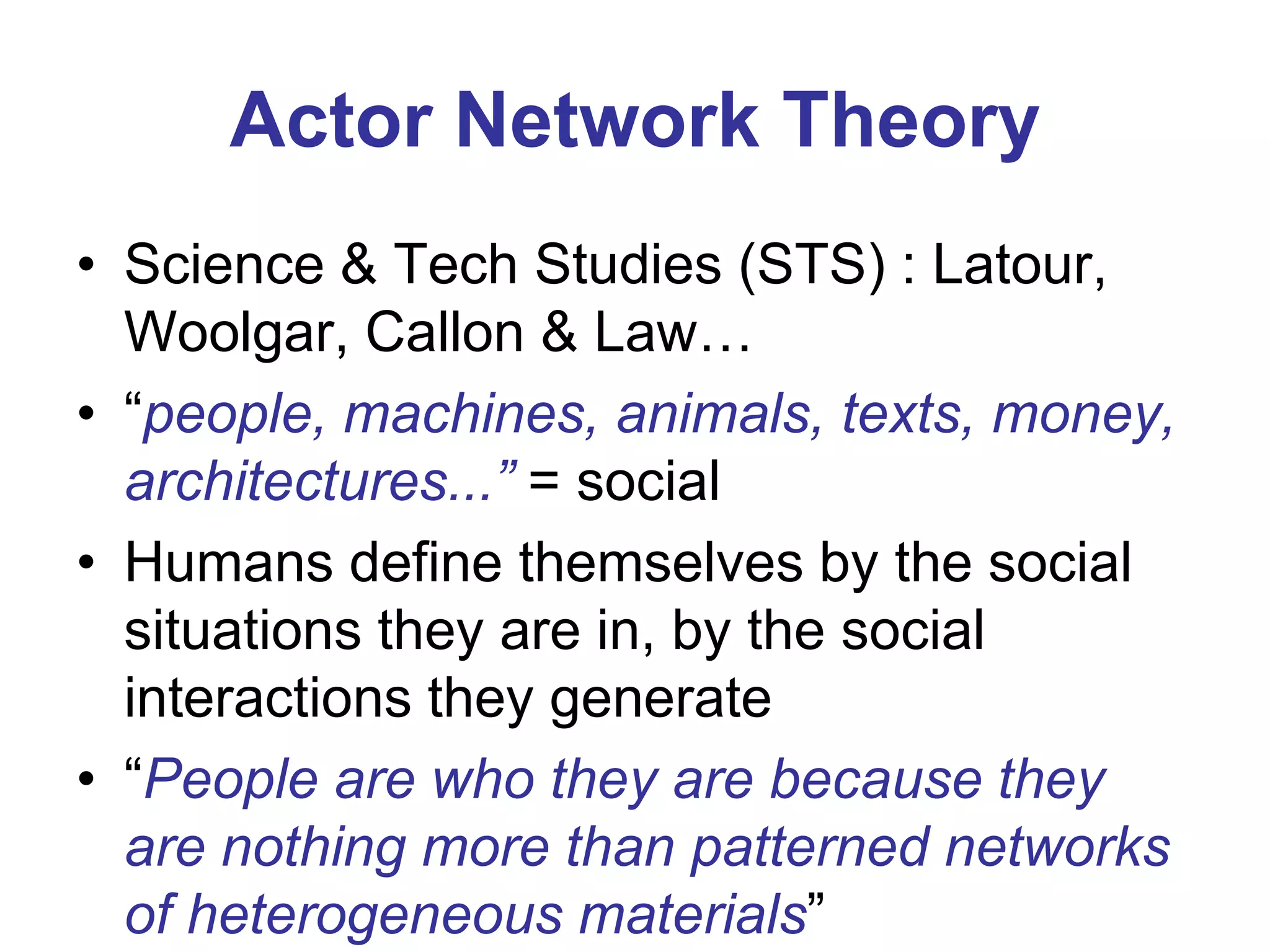
Actor Network Theory
• Science & Tech Studies (STS) : Latour,
Woolgar, Callon & Law…
• “people, machines, animals, texts, money,
architectures...” = social
• Humans define themselves by the social
situations they are in, by the social
interactions they generate
• “People are who they are because they
are nothing more than patterned networks
of heterogeneous materials”
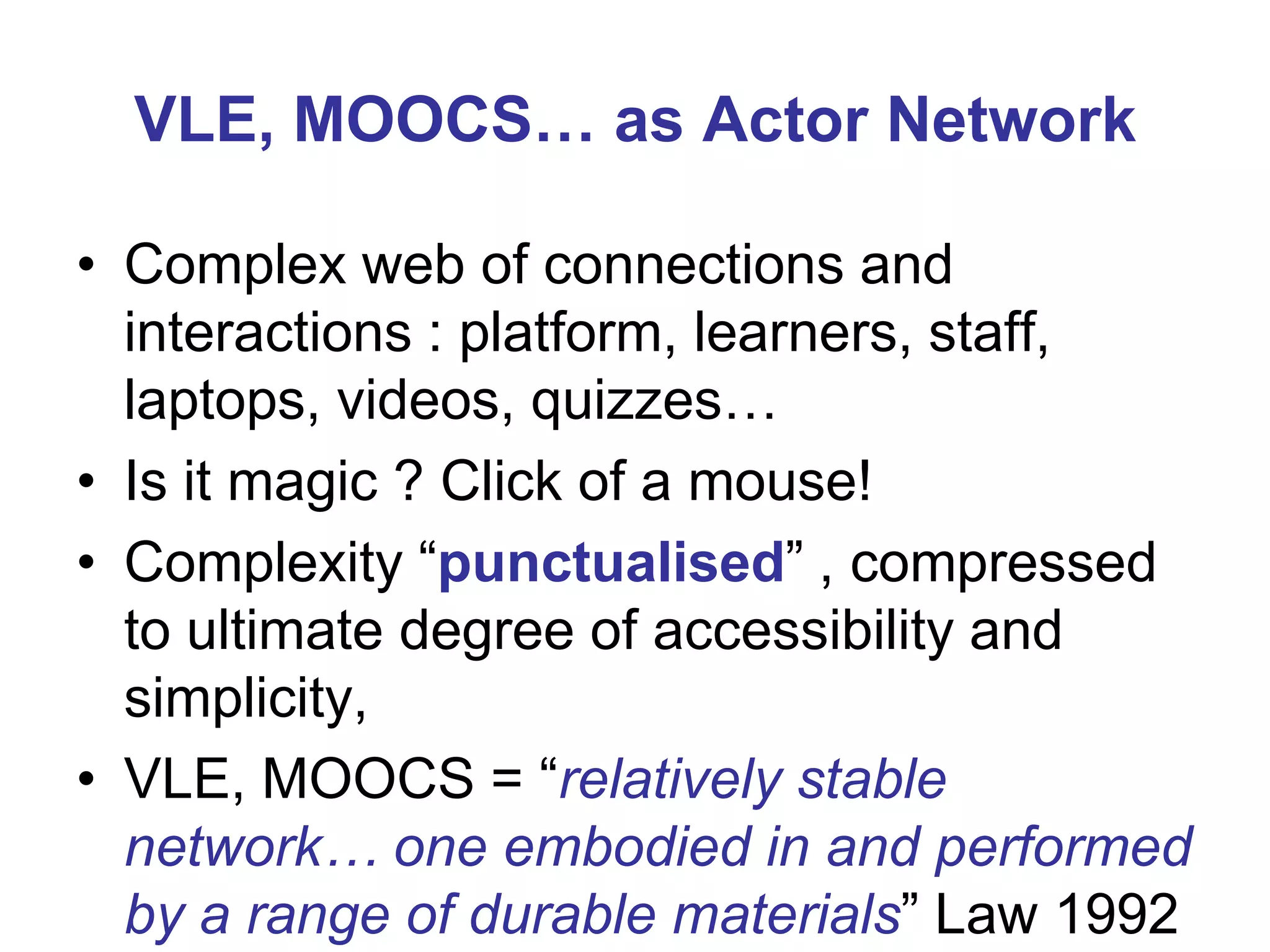
VLE, MOOCS… as Actor Network
• Complex web of connections and
interactions : platform, learners, staff,
laptops, videos, quizzes…
• Is it magic ? Click of a mouse!
• Complexity “punctualised” , compressed
to ultimate degree of accessibility and
simplicity,
• VLE, MOOCS = “relatively stable
network… one embodied in and performed
by a range of durable materials” Law 1992
Thank you

Hervé Didiot-Cook
Herve.didiot-cook@smuc.ac.uk

4 Critical Factors to Sustain the Development of Technology Enhanced Learning in Educational Organizations

  • 1.
    From Enthusiasm toStrategy: 4 Critical Factors to Sustain the Development of Technology Enhanced Learning in Educational Organizations Hervé Didiot-Cook International Partnerships Manager, International Office Linc 2013 Conference, MIT, 18th June 2013, Cambridge MA
  • 2.
  • 3.
    Overview • • • • • Conclusion: 4 criticalfactors Outcomes: Paris Descartes & LSE How? RBVF (Analytical framework 1) BTW what is E-learning? Why? ANT (Analytical framework 2)
  • 5.
    Conclusion: 4 CriticalFactors Leadership Support Collaborative working practices User friendly technology
  • 6.
    • Working practicesmust be collaborative as tech. design & implementation is complex and time consuming, as team work is a real challenge for teachers and academics, • Organization’s leadership must take responsibility: defining the strategy, staff and resource provision, incl. staff consultation to support vision & mission,
  • 7.
    • Technology mustbe user-friendly, piloted and tested by teaching staff, supported by E-Learning specialists, “learning technologists”, • Support is at the core of successful delivery… reciprocal, across the institutions’ organizational / functional boundaries between the different services: Library, IT services, registry, learning tech. and… faculties,
  • 8.
    Paris Descartes University(France) • • • • VLE (Moodle) La Médiathèque: Online repository Les Carnets2: Portfolio / Social network Staff training and annual conference: Les Journées Numériques
  • 9.
    London School ofEconomics (UK) • VLE (Moodle) • Student mentoring inner city schools pupils (Wimba voice boards) • Art exhibition on Second Life “Déjà Vu” with Michel Herreria • Digital Storytelling at degree level & in schools thanks to Columbia University colleagues
  • 10.
    Resource-Based View ofthe Firm (RBVF) …focuses on the firm’s resources and capabilities to understand business strategy and provide direction to strategy formulation. Organizational context divided in 3 different levels : resources, capabilities and core capabilities.
  • 11.
    Amit & Shoemaker(1993) “Capabilities refer to a firm’s capacity to deploy Resources, usually in combination, using organizational processes, to effect a desired end […] Unlike Resources, Capabilities are based on developing, carrying and exchanging information through the firm’s human capital”.
  • 12.
    Andreu & Ciborra (1996) Basic learning processesin the core capabilities formation process
  • 13.
    • 3 essentialloops transform and translate Resources (ie World leading professors, IT software…) into Core Capabilities (ie MOOCs). • Loop 1: the Routinization Loop is enacted by Working Practices. • Loop 2: the Capability Loop is controlled by Management Actions. • Loop 3: the Strategic Loop ensures that Core Capabilities are in line with the Organization’s values and mission.
  • 14.
    TEL, E-Learning is… …notjust about technology and pedagogy. Also about schools, contexts, governments, curriculum, control, power, values, aims & objectives… …complexity, interaction, agency and power... • One theory, Actor Network Theory defines the “social” as everything !
  • 15.
    Actor Network Theory •Science & Tech Studies (STS) : Latour, Woolgar, Callon & Law… • “people, machines, animals, texts, money, architectures...” = social • Humans define themselves by the social situations they are in, by the social interactions they generate • “People are who they are because they are nothing more than patterned networks of heterogeneous materials”
  • 16.
    VLE, MOOCS… asActor Network • Complex web of connections and interactions : platform, learners, staff, laptops, videos, quizzes… • Is it magic ? Click of a mouse! • Complexity “punctualised” , compressed to ultimate degree of accessibility and simplicity, • VLE, MOOCS = “relatively stable network… one embodied in and performed by a range of durable materials” Law 1992
  • 17.