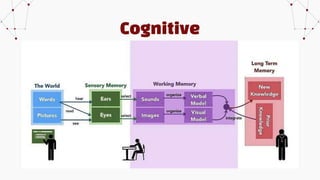
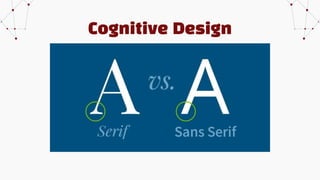
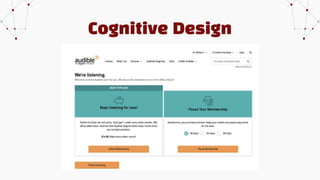
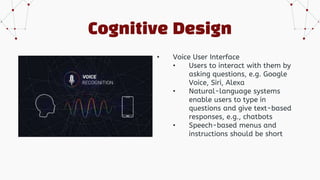
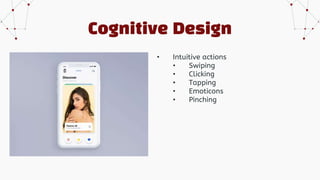
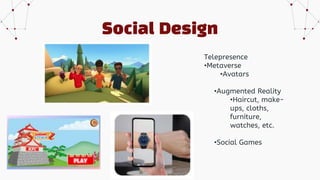
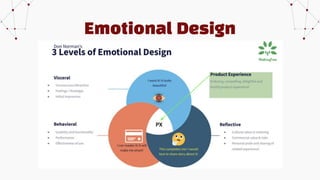
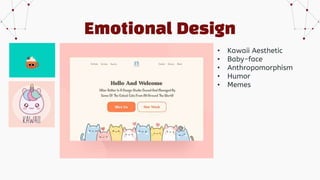
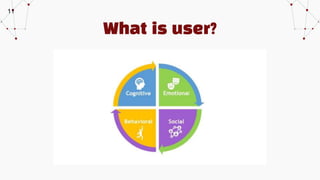
This document provides an overview of human-computer interaction design frameworks for the web, including cognitive, social, and emotional design. It discusses cognitive design principles like font choice, button placement, minimizing distractions, and intuitive interactions. Social design focuses on elements that promote a sense of social presence like user-generated content, live chat, and avatars. Emotional design aims to elicit positive emotions through techniques such as expressive robots, aesthetically pleasing layouts, and cute or humorous design elements. The document presents these frameworks to inform the design of interfaces that facilitate successful human-computer interactions.