Hazard-Types of Hazard- Risk-Hierarchy of Hazards Control Measures-Lead indicators-
Hazard-Types of Hazard- Risk-Hierarchy of Hazards Control Measures-Lead indicators- lag Indicators-Flammability- Toxicity Time-weighted Average (TWA) - Threshold Limit Value (TLV) - Short Term Exposure Limit (STEL)-
2
UNIT I SAFETYTERMINOLOGIES
Hazard-Types of Hazard- Risk-Hierarchy of Hazards Control
Measures-Lead indicators- lag Indicators-Flammability-
Toxicity Time-weighted Average (TWA) - Threshold Limit
Value (TLV) - Short Term Exposure Limit (STEL)- Immediately
dangerous to life or health (IDLH)- acute and chronic Effects-
Routes of Chemical Entry-Personnel Protective Equipment-
Health and Safety Policy-Material Safety Data Sheet MSDS
UNIT II STANDARDS AND REGULATIONS
Indian Factories Act-1948- Health- Safety- Hazardous
materials and Welfare- ISO 45001:2018 occupational health
and safety (OH&S) - Occupational Safety and Health Audit
IS14489:1998- Hazard Identification and Risk Analysis- code
of practice IS 15656:2006
3.
3
UNIT III SAFETYACTIVITIES
Toolbox Talk- Role of safety Committee- Responsibilities of Safety Officers
and Safety Representatives- Safety Training and Safety Incentives- Mock
Drills- On-site Emergency Action Plan- Off-site Emergency Action Plan-
Safety poster and Display- Human Error Assessment
UNIT IV WORKPLACE HEALTH AND SAFETY
Noise hazard- Particulate matter- musculoskeletal disorder improper
sitting poster and lifting Ergonomics RULE & REBA- Unsafe act & Unsafe
Condition- Electrical Hazards- Crane Safety- Toxic gas Release
UNIT V HAZARD IDENTIFICATION TECHNIQUES
Job Safety Analysis-Preliminary Hazard Analysis-Failure mode and Effects
Analysis- Hazard and
Operability- Fault Tree Analysis- Event Tree Analysis Qualitative and
Quantitative Risk Assessment- Checklist Analysis- Root cause analysis-
What-If Analysis- and Hazard Identification and Risk Assessment
4.
4
UNIT I SAFETYTERMINOLOGIES
• Hazard-Types of Hazard- Risk-Hierarchy of
Hazards Control Measures-Lead indicators- lag
Indicators-Flammability- Toxicity Time-weighted
Average (TWA) - Threshold Limit Value (TLV) -
Short Term Exposure Limit (STEL)- Immediately
dangerous to life or health (IDLH)- acute and
chronic Effects- Routes of Chemical Entry-
Personnel Protective Equipment- Health and
Safety Policy-Material Safety Data Sheet MSDS
5.
5
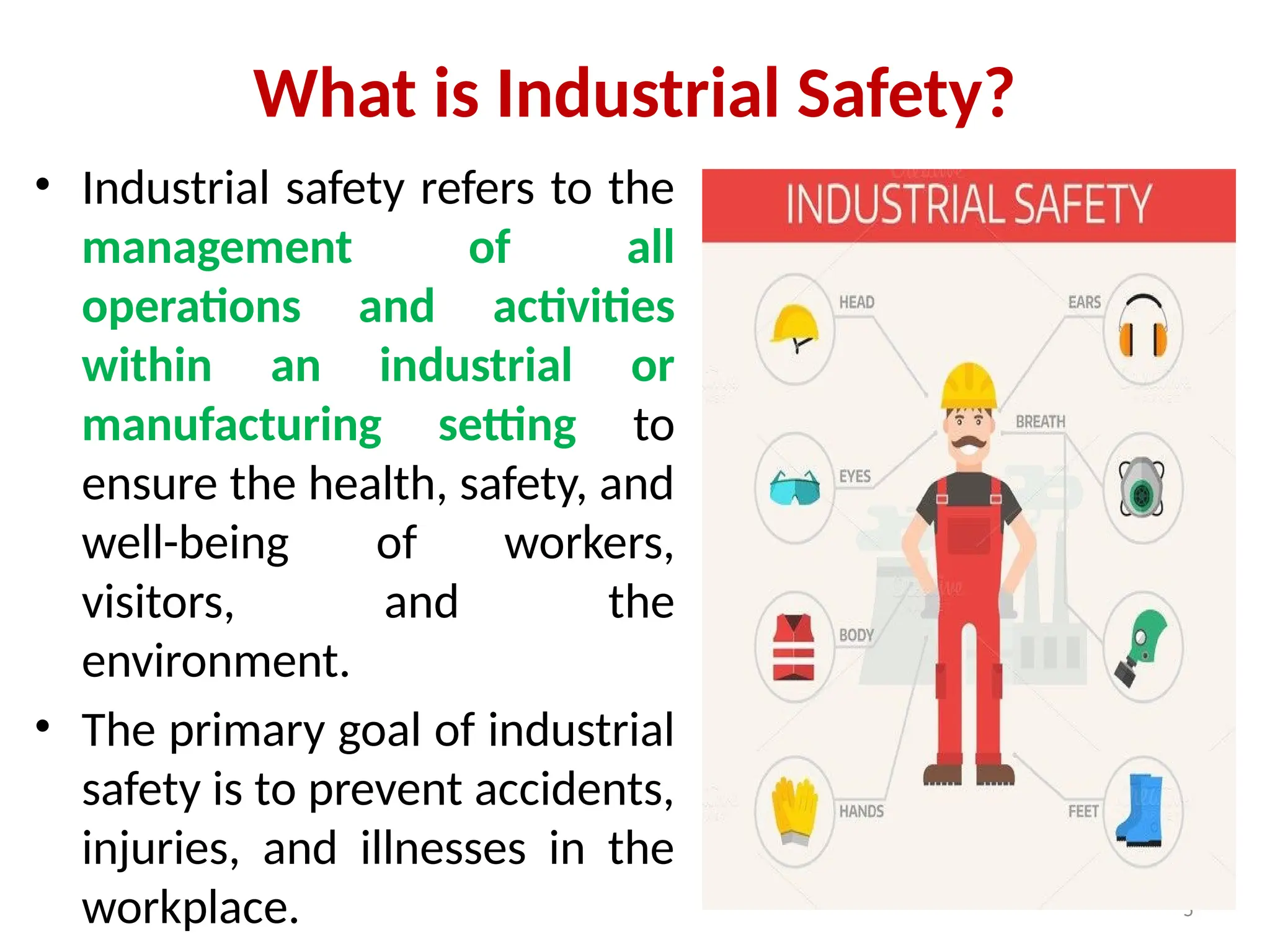
What is IndustrialSafety?
• Industrial safety refers to the
management of all
operations and activities
within an industrial or
manufacturing setting to
ensure the health, safety, and
well-being of workers,
visitors, and the
environment.
• The primary goal of industrial
safety is to prevent accidents,
injuries, and illnesses in the
workplace.
6.
6
Hazard
• Hazard refersto any source of potential damage, harm, or adverse
health effects on people, property, or the environment. Hazards can
be categorized into various types based on their nature and origin.
• Physical Hazards
• Chemical Hazards
• Biological Hazards
• Psychosocial Hazards
• Ergonomic Hazards
• Safety Hazards
• Environmental Hazards
• Radiation Hazards
• Fire Hazards
• Mechanical Hazards
7.
7
• Physical Hazards:
–These hazards involve physical processes that can cause harm without necessarily
involving chemicals or biological agents.
– Examples include noise, vibration, radiation, heat, cold, electricity, and ergonomic
factors like poor workstation design.
• Chemical Hazards:
– Chemical hazards result from exposure to harmful substances such as toxic gases,
liquids, dust, or vapors.
– Examples include exposure to industrial chemicals, cleaning agents, pesticides, and
hazardous materials.
• Biological Hazards:
– Biological hazards involve exposure to living organisms or their byproducts that can
cause harm to human health.
– Examples include bacteria, viruses, fungi, parasites, and allergens.
• Psychosocial Hazards:
– Psychosocial hazards are related to the impact of work on mental health and well-
being.
– Examples include workplace stress, harassment, violence, and inadequate social
support.
8.
8
• Safety Hazards:
–Safety hazards are conditions or activities that can lead to accidents and injuries.
– Examples include slippery floors, unguarded machinery, electrical hazards, and unsafe
work practices.
• Environmental Hazards:
– Environmental hazards are related to the impact of activities on the surrounding
environment.
– Examples include pollution, deforestation, habitat destruction, and climate change.
• Radiation Hazards:
– Radiation hazards involve exposure to ionizing or non-ionizing radiation, which can have
harmful effects on living organisms.
– Examples include X-rays, ultraviolet radiation, and radiofrequency radiation.
• Fire Hazards:
– Fire hazards involve the potential for fires to occur and cause damage to property and
harm to people.
– Examples include flammable materials, faulty wiring, and inadequate fire protection
measures.
• Mechanical Hazards:
– Mechanical hazards are associated with machinery and equipment that can cause
injuries due to moving parts, pinch points, or other mechanical processes.
– Examples include unguarded machinery, rotating equipment, and flying debris.
9.
9
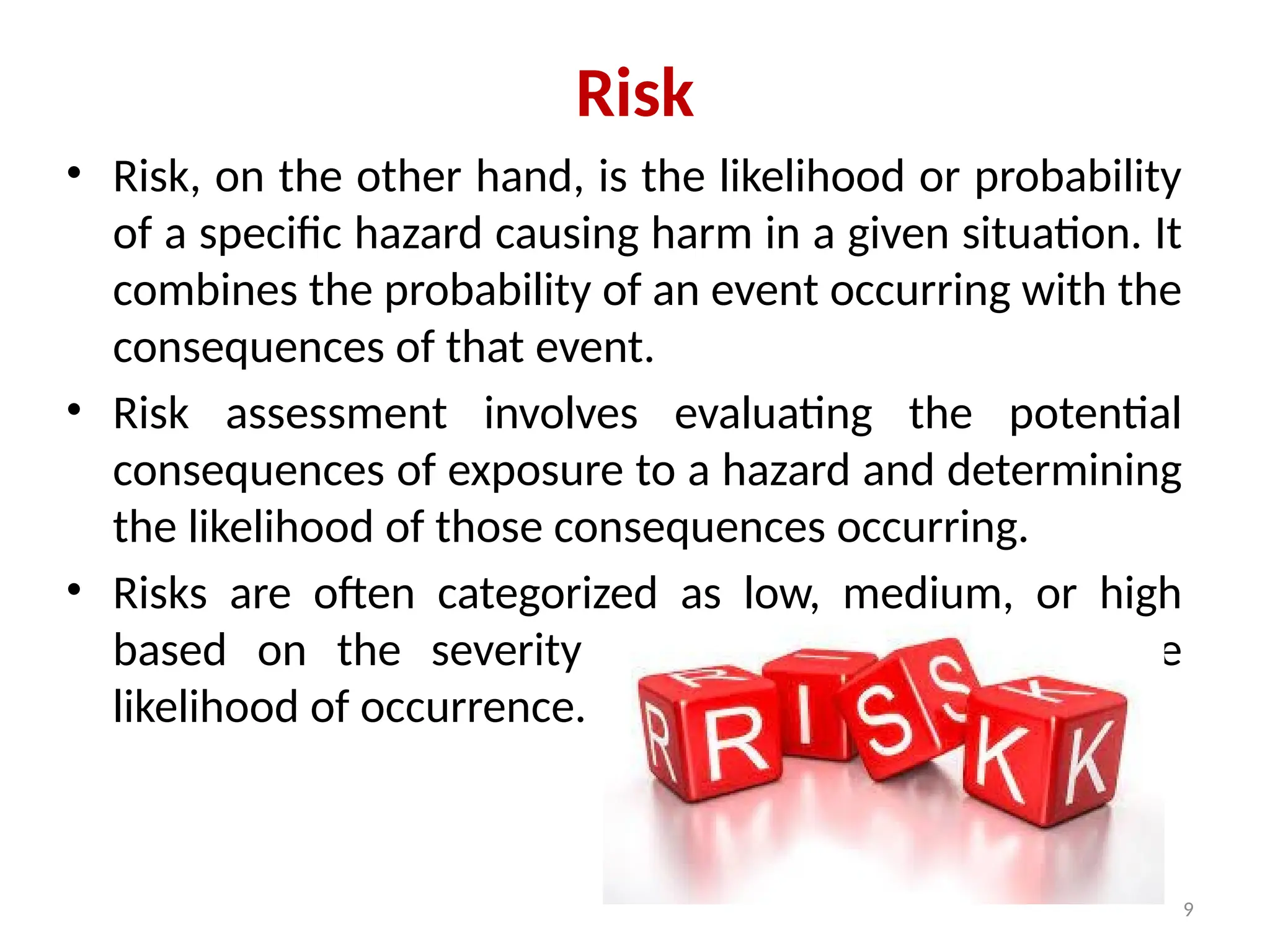
Risk
• Risk, onthe other hand, is the likelihood or probability
of a specific hazard causing harm in a given situation. It
combines the probability of an event occurring with the
consequences of that event.
• Risk assessment involves evaluating the potential
consequences of exposure to a hazard and determining
the likelihood of those consequences occurring.
• Risks are often categorized as low, medium, or high
based on the severity of potential harm and the
likelihood of occurrence.
10.
10
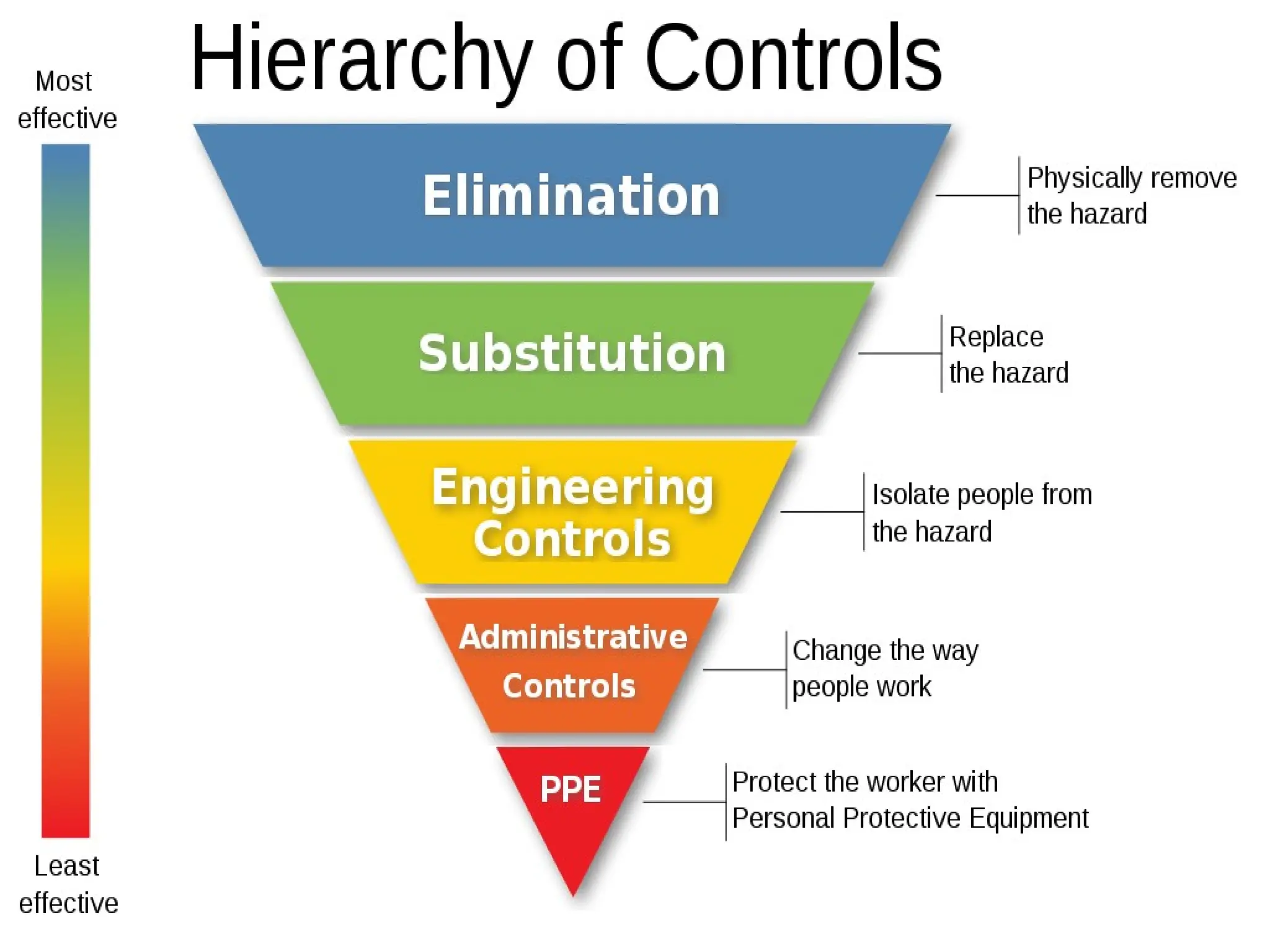
Hierarchy of HazardsControl Measures
• The Hierarchy of Hazard Controls is a systematic
approach used to minimize or eliminate exposure
to occupational hazards in the workplace.
• The hierarchy provides a prioritized list of control
measures, starting with the most effective and
moving down to less effective measures.
• The goal is to reduce the risk of injury or illness
by addressing hazards in a strategic and efficient
manner.
12
• Elimination:
– Themost effective control measure involves completely
removing the hazard from the workplace. This could mean
redesigning processes, substituting materials, or changing work
practices to eliminate the source of the hazard.
• Substitution:
– If elimination is not feasible, the next best option is substitution.
This involves replacing the hazardous material, process, or
equipment with a less hazardous alternative. Substitution aims to
reduce the risk while maintaining the necessary tasks or
processes.
• Engineering Controls:
– This level involves designing and installing engineering solutions
to isolate workers from the hazard. Examples include machine
guards, ventilation systems, or physical barriers. Engineering
controls are particularly effective because they don't rely on
human behavior for their success.
13.
13
• Administrative Controls:
–When engineering controls are not sufficient, administrative
controls come into play. This level involves changing the way
people work through policies, procedures, training, and
work practices. Administrative controls are often necessary
when eliminating or substituting the hazard is not practical.
• Personal Protective Equipment (PPE):
– PPE is the least effective level of control and should be
considered as a last resort. It includes equipment like
gloves, safety glasses, helmets, and respirators that
individuals use to protect themselves from workplace
hazards. PPE is considered the least effective because it
relies on worker compliance and may not eliminate the
hazard at its source.
14.
14
Lead indicators- lagIndicators
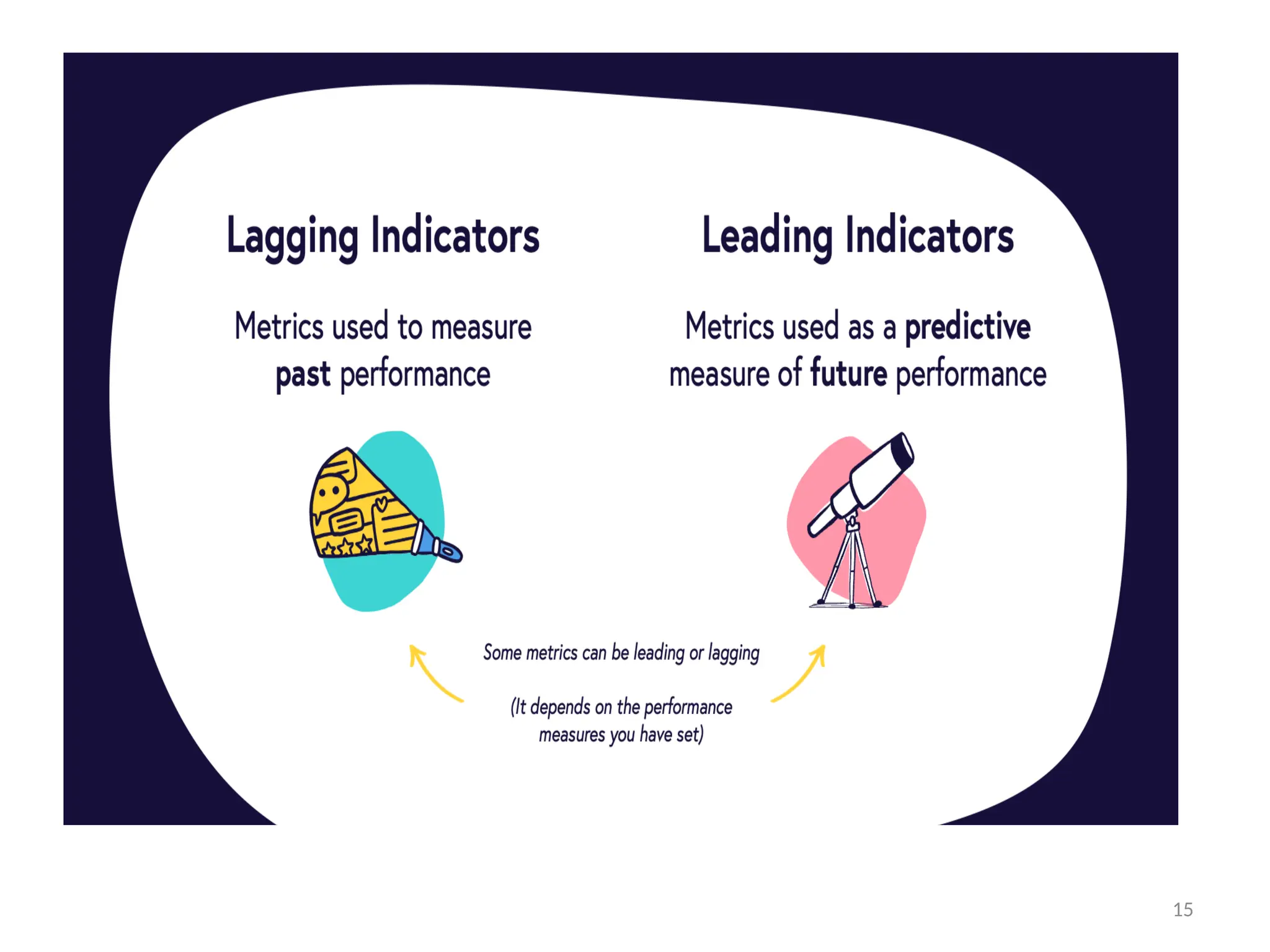
• In the context of safety terminologies, lead
indicators and lag indicators are terms used to
measure and assess safety performance
within an organization. These indicators play a
crucial role in evaluating the effectiveness of
safety programs and identifying areas for
improvement.
16
• Lead Indicators:
–Definition: Lead indicators are proactive and preventive measures that
are monitored to anticipate and lessen potential safety risks before they
result in incidents or accidents.
– Examples:
• Safety Training: Regular safety training sessions for employees to enhance their
awareness and skills.
• Near Miss Reporting: Encouraging the reporting of near misses to identify
potential hazards and prevent future incidents.
• Safety Inspections: Conducting regular inspections to identify and address
unsafe conditions or behaviors.
• Safety Audits: Periodic assessments to evaluate the effectiveness of safety
procedures and protocols.
– Purpose: Lead indicators provide insights into the current state of safety
practices and help organizations take proactive steps to prevent
accidents. Monitoring these indicators allows for early intervention and
the implementation of corrective actions to maintain a safe working
environment.
17.
17
• Lag Indicators:
–Definition: Lag indicators are reactive measures that assess the
historical performance of safety within an organization. They are
typically used to analyze incidents, injuries, or illnesses that have
already occurred.
– Examples:
• Injury Rates: Tracking the number of injuries or illnesses that occurred over a
specific period.
• Lost Time Incidents: Recording incidents that resulted in lost workdays.
• Workers' Compensation Claims: Analyzing claims filed for workplace injuries
or illnesses.
• Severity Rates: Measuring the severity of injuries or illnesses that occurred.
– Purpose: Lag indicators provide a retrospective view of safety
performance, helping organizations identify trends, patterns, and
areas where improvements are needed. While they don't prevent
incidents, they offer valuable information to enhance safety programs
and prevent similar occurrences in the future.
18.
18
Flammability
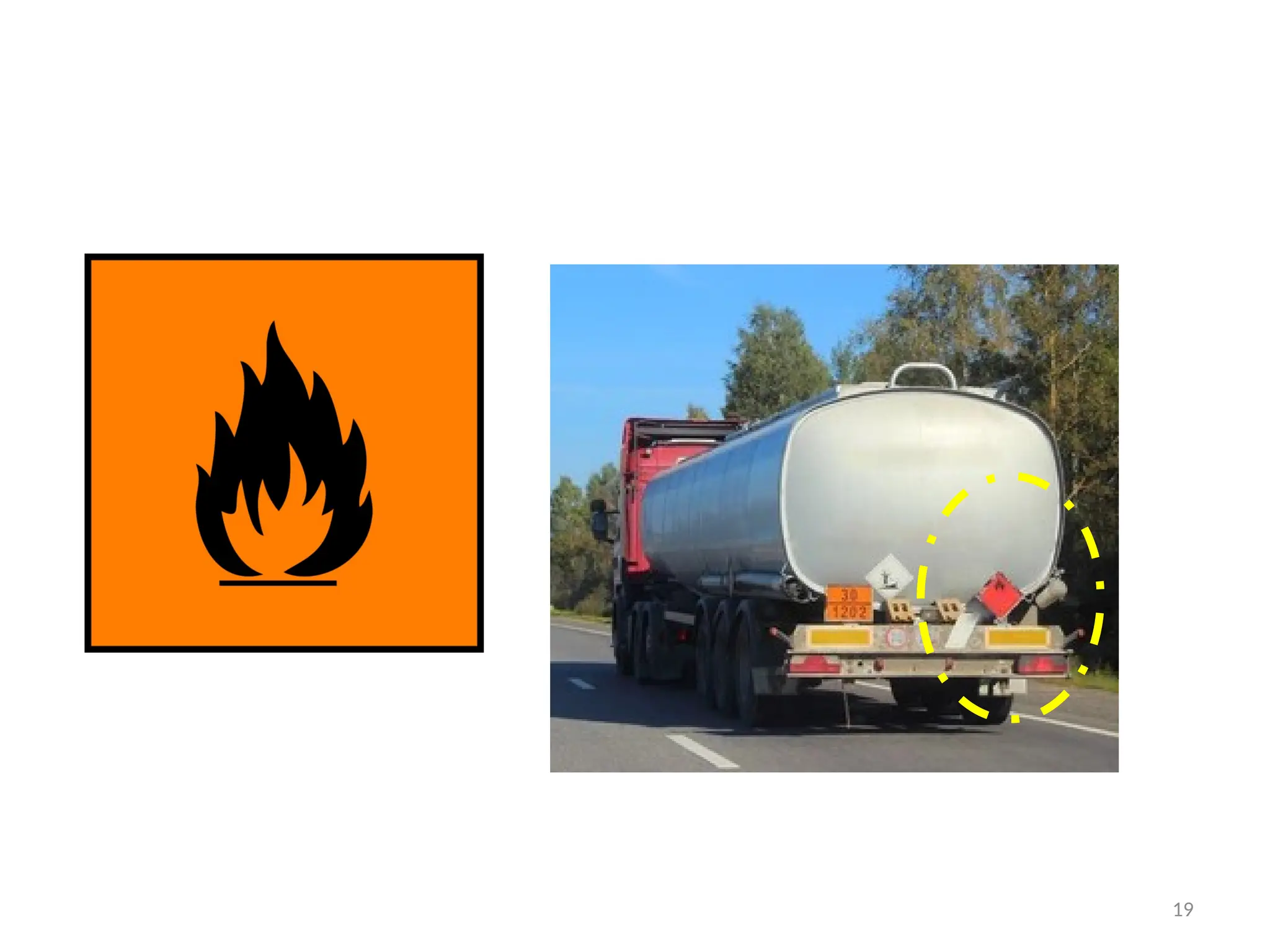
• Flammability isa key concept in safety
terminologies, particularly in the context of fire
safety and hazardous materials management.
• It refers to the ability of a substance or material to
ignite and sustain combustion when exposed to an
external ignition source.
• Understanding the flammability of materials is
crucial for assessing and mitigating fire risks in
various environments, such as homes, workplaces,
industrial facilities, and transportation systems.
20
• Flash Point:The flash point is the lowest temperature at
which a substance's vapors can ignite when exposed to
an open flame, spark, or heat source. Substances with
lower flash points are considered more flammable.
• Ignition Temperature: This is the minimum temperature
at which a substance or material can ignite and sustain
combustion without the need for an external ignition
source.
• Flammable Limits: Every flammable gas or vapor has a
range of concentrations in the air within which it can
ignite. Below the lower flammable limit (LFL) and above
the upper flammable limit (UFL), the mixture is too lean
or too rich to support combustion.
21.
21
• Combustibility: Combustibilityrefers to the ease with
which a substance can undergo combustion. It is a broader
term that includes both flammable and combustible
materials. Combustible materials have higher ignition
temperatures compared to flammable ones.
• Auto ignition Temperature: This is the lowest temperature
at which a substance can spontaneously ignite without an
external ignition source.
• Flame Spread: Flame spread is a measure of how quickly
fire can propagate across the surface of a material.
• Fire Hazard Classification: Many safety standards and
regulations categorize materials into different fire hazard
classes based on their flammability characteristics.
Common classifications include Class A, B, C, D, and K,
each representing different types of fire hazards.
22.
22
Toxicity Time-weighted Average(TWA)
• Toxicity Time-Weighted Average (TWA) refers
to a measure used to assess the average
exposure of individuals to a particular toxic
substance over a specified period of time.
• It is a crucial concept in occupational safety
and environmental health, helping to evaluate
the potential health risks associated with
prolonged exposure to hazardous substances.
23.
23
• The Time-WeightedAverage is calculated by
considering the concentration of a toxic
substance in the air over a specific time period,
typically an 8-hour workday.
• This time period is commonly used in
occupational settings as it reflects the standard
duration of a typical work shift.
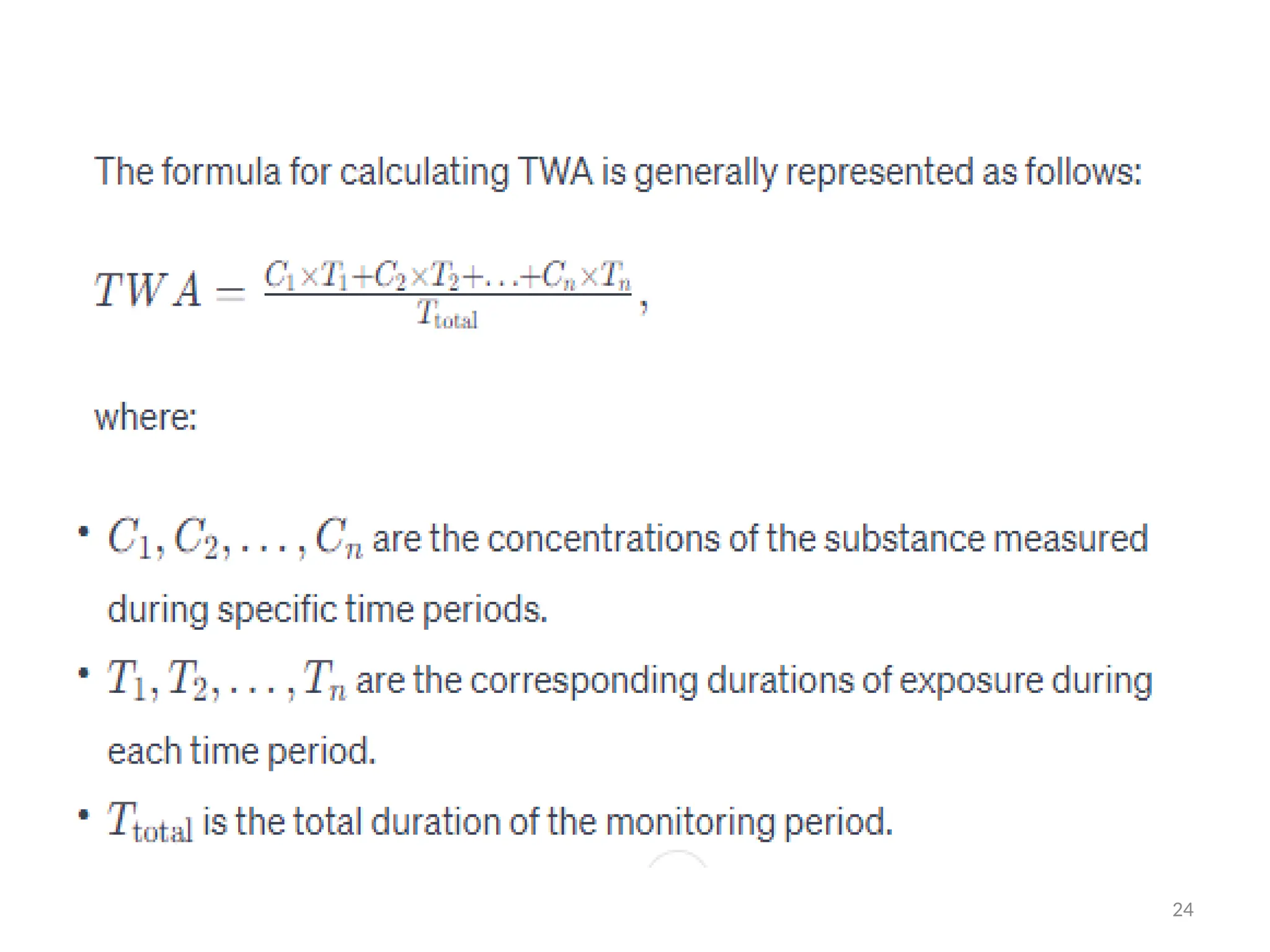
• The calculation involves taking regular
measurements of the substance's concentration
throughout the day, weighting each
measurement based on the duration of
exposure, and then averaging them.
25
Threshold Limit Value(TLV)
• Threshold Limit Value (TLV) is a term commonly
used in the field of industrial safety and
occupational health to represent the permissible
exposure limits for hazardous substances in the
workplace.
• TLV is defined by the American Conference of
Governmental Industrial Hygienists (ACGIH), a
professional organization that establishes
guidelines and standards for occupational safety
and health.
26.
26
• TLV isexpressed as a concentration or level of
a particular substance in the air, usually
measured in parts per million (ppm) or
milligrams per cubic meter (mg/m³), that
workers can be exposed to on a daily basis
without experiencing adverse health effects.
27.
27
• TLVs areimportant for industrial safety because
they provide guidance to employers, industrial
hygienists, and safety professionals in establishing
effective control measures to minimize worker
exposure to hazardous substances.
• These limits help create a safe working
environment and reduce the risk of occupational
illnesses and injuries.
• Employers are typically required to monitor
workplace air quality and ensure that exposure
levels are below the established TLVs.
30
Introduction
Employers must protectemployees:
• Assess the workplace
• Eliminate and reduce the hazards found using
engineering and administrative controls
• Then use appropriate personal protective
equipment
• Remember, Personal Protective Equipment is the
last level of control.
Editor's Notes
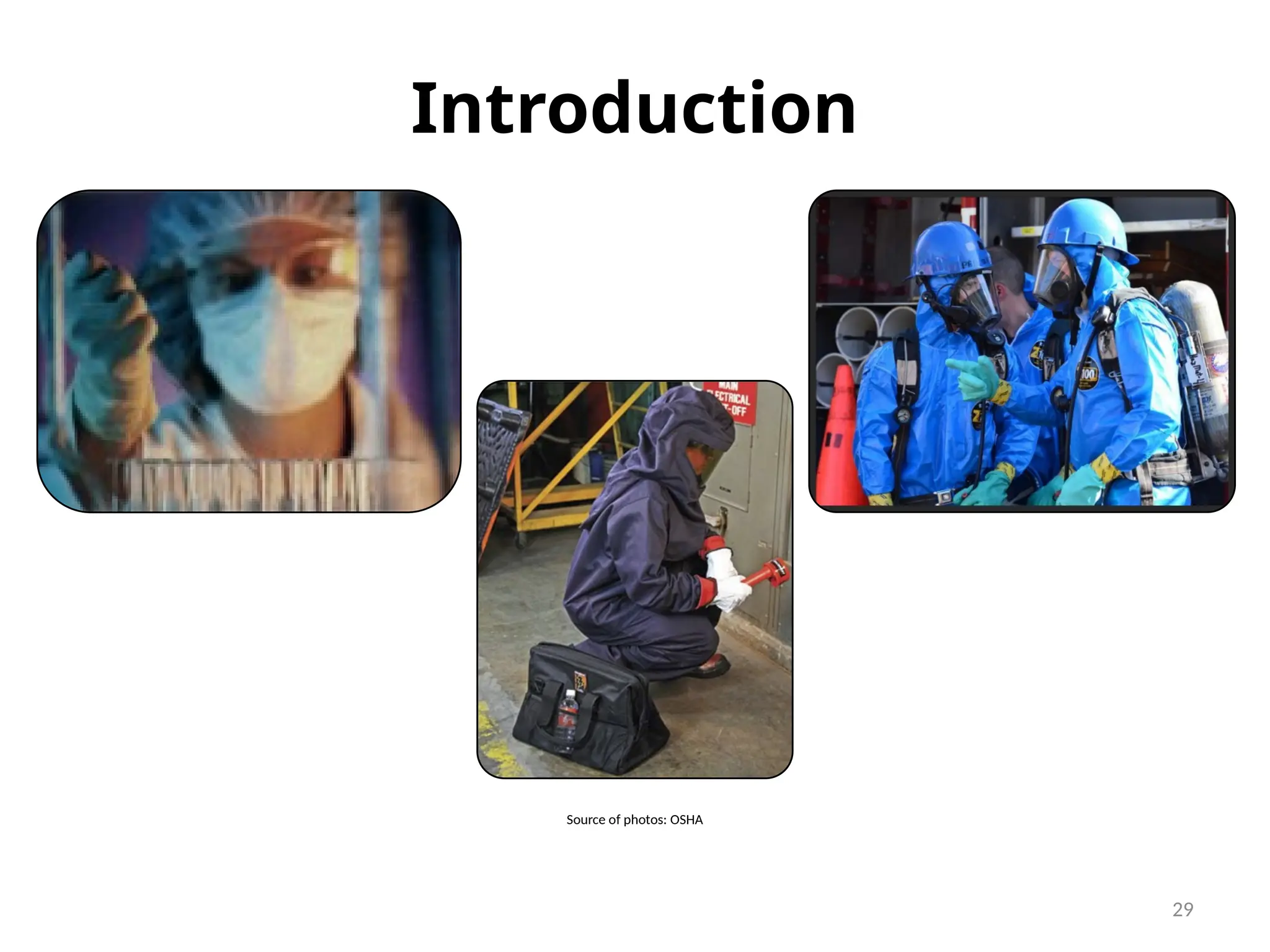
#29 OSHA requires employees to protect their employees from workplace hazards through the use of engineering or work practice controls.
When these controls are not feasible or do not provide sufficient protection, the use of personal protective equipment (PPE) is required.


![concept of safety[1].ppt BSN YEAR 1 SEM1](https://cdn.slidesharecdn.com/ss_thumbnails/conceptofsafety1-240509093204-8977567e-thumbnail.jpg?width=640&height=640&fit=bounds)


