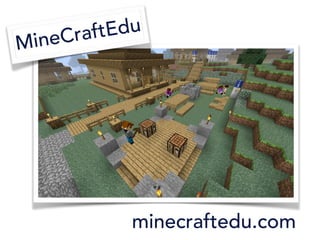
This document discusses how games and play can be used to create effective learning environments that are aligned with how the brain works. It notes that effective learning involves student choice, collaboration, problem-solving, and feedback. Games inherently include these elements and can help increase literacy and problem-solving skills. The document provides examples of educational games and simulations that engage students in authentic scenarios and sophisticated research. It encourages talking to students and learning more about how play can be incorporated into classrooms.