INSTALLATION OF WIRELESS
NIC
By George Smith-Moore
WHAT WILL BE INCLUDED?
I will show the installation process relating to a wireless NIC, PCI card.Testing the hardware and
showing potential problems.
INSTALLATION
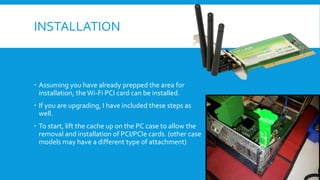
 Assuming you have already prepped the area for
installation, theWi-Fi PCI card can be installed.
 If you are upgrading, I have included these steps as
well.
 To start, lift the cache up on the PC case to allow the
removal and installation of PCI/PCIe cards. (other case
models may have a different type of attachment)
INSTALLATION
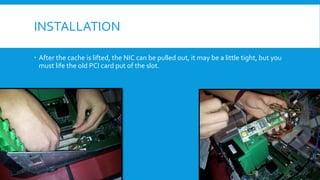
 After the cache is lifted, the NIC can be pulled out, it may be a little tight, but you
must life the old PCI card put of the slot.
INSTALLATION
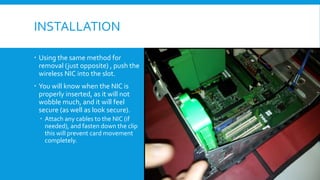
 Using the same method for
removal (just opposite) , push the
wireless NIC into the slot.
 You will know when the NIC is
properly inserted, as it will not
wobble much, and it will feel
secure (as well as look secure).
 Attach any cables to the NIC (if
needed), and fasten down the clip
this will prevent card movement
completely.
TESTING FOR FUNCTIONALITY
 Before you can test the hardware piece, you must first install the latest drivers,
this is to ensure all of the known bugs are gone.
 So after the software has been installed (UNIT 3), the testing can commence.
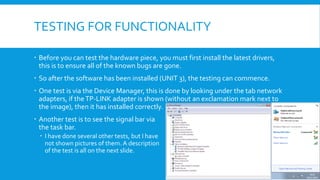
 One test is via the Device Manager, this is done by looking under the tab network
adapters, if theTP-LINK adapter is shown (without an exclamation mark next to
the image), then it has installed correctly.
 Another test is to see the signal bar via
the task bar.
 I have done several other tests, but I have
not shown pictures of them. A description
of the test is all on the next slide.
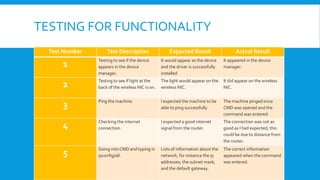
TESTING FOR FUNCTIONALITY
Test Number Test Description Expected Result Actual Result
1
Testing to see if the device
appears in the device
manager.
It would appear as the device
and the driver is successfully
installed
It appeared in the device
manager.
2
Testing to see if light at the
back of the wireless NIC is on.
The light would appear on the
wireless NIC.
It did appear on the wireless
NIC.
3
Ping the machine. I expected the machine to be
able to ping successfully
The machine pinged once
CMD was opened and the
command was entered.
4
Checking the internet
connection.
I expected a good internet
signal from the router.
The connection was not as
good as I had expected, this
could be due to distance from
the router.
5
Going into CMD and typing in
ipconfig/all.
Lists of information about the
network, for instance the ip
addresses, the subnet mask,
and the default gateway.
The correct information
appeared when the command
was entered.
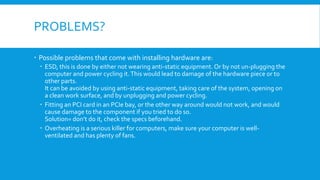
PROBLEMS?
 Possible problems that come with installing hardware are:
 ESD, this is done by either not wearing anti-static equipment. Or by not un-plugging the
computer and power cycling it.This would lead to damage of the hardware piece or to
other parts.
It can be avoided by using anti-static equipment, taking care of the system, opening on
a clean work surface, and by unplugging and power cycling.
 Fitting an PCI card in an PCIe bay, or the other way around would not work, and would
cause damage to the component if you tried to do so.
Solution= don’t do it, check the specs beforehand.
 Overheating is a serious killer for computers, make sure your computer is well-
ventilated and has plenty of fans.

Installation of a selected piece of hardware

  • 1.
  • 2.
    WHAT WILL BEINCLUDED? I will show the installation process relating to a wireless NIC, PCI card.Testing the hardware and showing potential problems.
  • 3.
    INSTALLATION  Assuming youhave already prepped the area for installation, theWi-Fi PCI card can be installed.  If you are upgrading, I have included these steps as well.  To start, lift the cache up on the PC case to allow the removal and installation of PCI/PCIe cards. (other case models may have a different type of attachment)
  • 4.
    INSTALLATION  After thecache is lifted, the NIC can be pulled out, it may be a little tight, but you must life the old PCI card put of the slot.
  • 5.
    INSTALLATION  Using thesame method for removal (just opposite) , push the wireless NIC into the slot.  You will know when the NIC is properly inserted, as it will not wobble much, and it will feel secure (as well as look secure).  Attach any cables to the NIC (if needed), and fasten down the clip this will prevent card movement completely.
  • 6.
    TESTING FOR FUNCTIONALITY Before you can test the hardware piece, you must first install the latest drivers, this is to ensure all of the known bugs are gone.  So after the software has been installed (UNIT 3), the testing can commence.  One test is via the Device Manager, this is done by looking under the tab network adapters, if theTP-LINK adapter is shown (without an exclamation mark next to the image), then it has installed correctly.  Another test is to see the signal bar via the task bar.  I have done several other tests, but I have not shown pictures of them. A description of the test is all on the next slide.
  • 7.
    TESTING FOR FUNCTIONALITY TestNumber Test Description Expected Result Actual Result 1 Testing to see if the device appears in the device manager. It would appear as the device and the driver is successfully installed It appeared in the device manager. 2 Testing to see if light at the back of the wireless NIC is on. The light would appear on the wireless NIC. It did appear on the wireless NIC. 3 Ping the machine. I expected the machine to be able to ping successfully The machine pinged once CMD was opened and the command was entered. 4 Checking the internet connection. I expected a good internet signal from the router. The connection was not as good as I had expected, this could be due to distance from the router. 5 Going into CMD and typing in ipconfig/all. Lists of information about the network, for instance the ip addresses, the subnet mask, and the default gateway. The correct information appeared when the command was entered.
  • 8.
    PROBLEMS?  Possible problemsthat come with installing hardware are:  ESD, this is done by either not wearing anti-static equipment. Or by not un-plugging the computer and power cycling it.This would lead to damage of the hardware piece or to other parts. It can be avoided by using anti-static equipment, taking care of the system, opening on a clean work surface, and by unplugging and power cycling.  Fitting an PCI card in an PCIe bay, or the other way around would not work, and would cause damage to the component if you tried to do so. Solution= don’t do it, check the specs beforehand.  Overheating is a serious killer for computers, make sure your computer is well- ventilated and has plenty of fans.