Complaint Handling
By –Nilesh Padhye
Complaint Handling
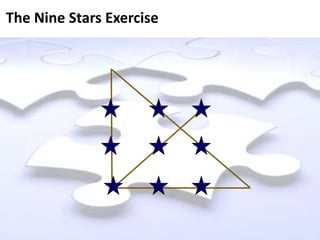
The Nine Stars Exercise
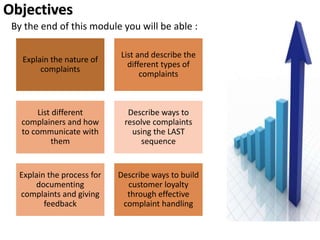
Objectives
By the end of this module you will be able :
Explain the nature of
complaints
List and describe the
different types of
complaints
List different
complainers and how
to communicate with
them
Describe ways to
resolve complaints
using the LAST
sequence
Explain the process for
documenting
complaints and giving
feedback
Describe ways to build
customer loyalty
through effective
complaint handling
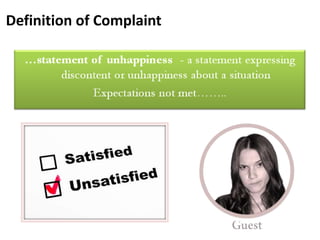
Definition of Complaint
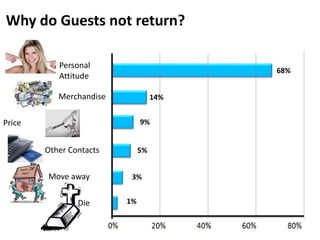
Why do Guests not return?
Personal
Attitude
Price
Other Contacts
Move away
Die 1%
3%
5%
Merchandise
9%
14%
68%
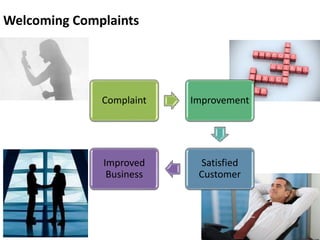
Welcoming Complaints
Complaint Improvement
Satisfied
Customer
Improved
Business
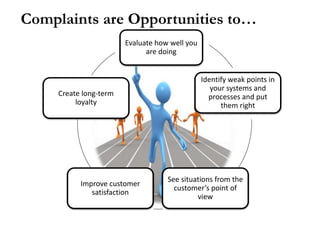
Complaints are Opportunities to…
Evaluate how well you
are doing
Identify weak points in
your systems and
processes and put
them right
See situations from the
customer’s point of
view
Improve customer
satisfaction
Create long-term
loyalty
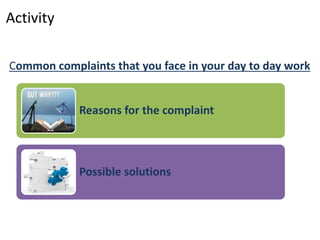
Activity
Reasons for the complaint
Possible solutions
Common complaints that you face in your day to day work
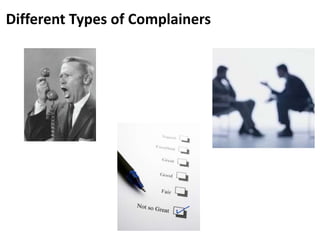
Different Types of Complainers
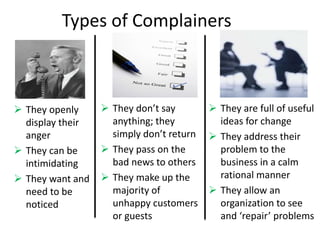
Types of Complainers
 They openly
display their
anger
 They can be
intimidating
 They want and
need to be
noticed
 They don’t say
anything; they
simply don’t return
 They pass on the
bad news to others
 They make up the
majority of
unhappy customers
or guests
 They are full of useful
ideas for change
 They address their
problem to the
business in a calm
rational manner
 They allow an
organization to see
and ‘repair’ problems
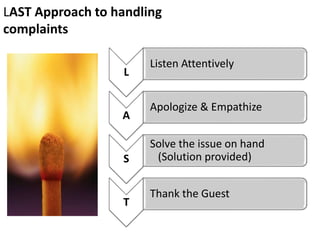
LAST Approach to handling
complaints
L
Listen Attentively
A
Apologize & Empathize
S
Solve the issue on hand
(Solution provided)
T
Thank the Guest
Activity
Act out in your previous groups any one of the
complaints that you mentioned – Using the
LAST Sequence of handling complaints
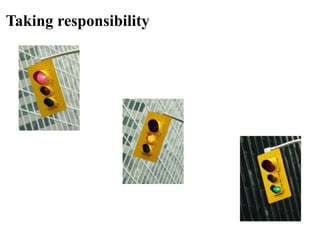
Taking responsibility
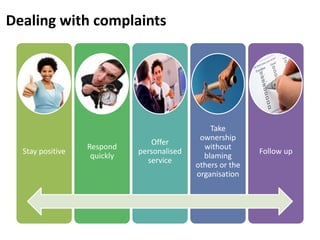
Dealing with complaints
Stay positive
Respond
quickly
Offer
personalised
service
Take
ownership
without
blaming
others or the
organisation
Follow up
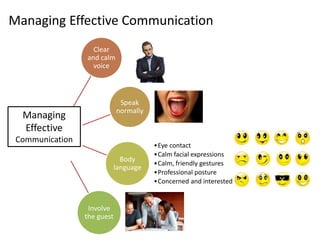
Managing Effective Communication
Clear
and calm
voice
Speak
normally
Body
language
•Eye contact
•Calm facial expressions
•Calm, friendly gestures
•Professional posture
•Concerned and interested
Involve
the guest
Managing
Effective
Communication
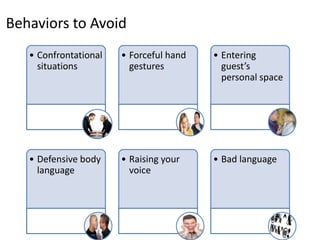
Behaviors to Avoid
• Forceful hand
gestures
• Entering
guest’s
personal space
• Defensive body
language
• Raising your
voice
• Bad language
• Confrontational
situations
Solving complaints
Win - Win
our guests are happy and so is
the Management….. 
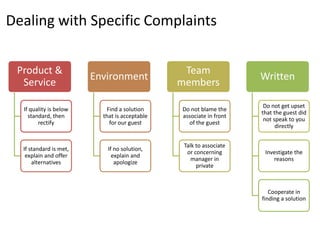
Dealing with Specific Complaints
Product &
Service
If quality is below
standard, then
rectify
If standard is met,
explain and offer
alternatives
Environment
Find a solution
that is acceptable
for our guest
If no solution,
explain and
apologize
Team
members
Do not blame the
associate in front
of the guest
Talk to associate
or concerning
manager in
private
Written
Do not get upset
that the guest did
not speak to you
directly
Investigate the
reasons
Cooperate in
finding a solution
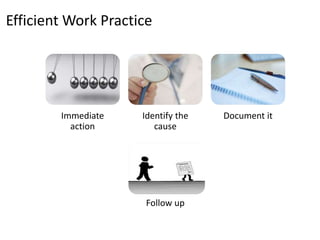
Efficient Work Practice
Immediate
action
Identify the
cause
Document it
Follow up
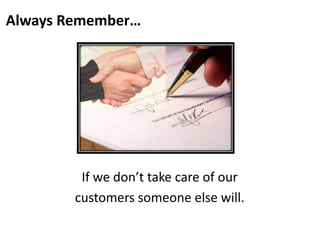
Always Remember…
If we don’t take care of our
customers someone else will.
QUESTIONS?
Handlingcomplaint2
Handlingcomplaint2
Handlingcomplaint2
Handlingcomplaint2
Handlingcomplaint2
Handlingcomplaint2
Handlingcomplaint2
Handlingcomplaint2
Handlingcomplaint2
Handlingcomplaint2
Handlingcomplaint2

Handlingcomplaint2

  • 1.
  • 2.
  • 3.
  • 4.
    Objectives By the endof this module you will be able : Explain the nature of complaints List and describe the different types of complaints List different complainers and how to communicate with them Describe ways to resolve complaints using the LAST sequence Explain the process for documenting complaints and giving feedback Describe ways to build customer loyalty through effective complaint handling
  • 5.
  • 6.
    Why do Guestsnot return? Personal Attitude Price Other Contacts Move away Die 1% 3% 5% Merchandise 9% 14% 68%
  • 7.
  • 8.
    Complaints are Opportunitiesto… Evaluate how well you are doing Identify weak points in your systems and processes and put them right See situations from the customer’s point of view Improve customer satisfaction Create long-term loyalty
  • 9.
    Activity Reasons for thecomplaint Possible solutions Common complaints that you face in your day to day work
  • 10.
    Different Types ofComplainers
  • 11.
    Types of Complainers They openly display their anger  They can be intimidating  They want and need to be noticed  They don’t say anything; they simply don’t return  They pass on the bad news to others  They make up the majority of unhappy customers or guests  They are full of useful ideas for change  They address their problem to the business in a calm rational manner  They allow an organization to see and ‘repair’ problems
  • 12.
    LAST Approach tohandling complaints L Listen Attentively A Apologize & Empathize S Solve the issue on hand (Solution provided) T Thank the Guest
  • 13.
    Activity Act out inyour previous groups any one of the complaints that you mentioned – Using the LAST Sequence of handling complaints
  • 14.
  • 15.
    Dealing with complaints Staypositive Respond quickly Offer personalised service Take ownership without blaming others or the organisation Follow up
  • 16.
    Managing Effective Communication Clear andcalm voice Speak normally Body language •Eye contact •Calm facial expressions •Calm, friendly gestures •Professional posture •Concerned and interested Involve the guest Managing Effective Communication
  • 17.
    Behaviors to Avoid •Forceful hand gestures • Entering guest’s personal space • Defensive body language • Raising your voice • Bad language • Confrontational situations
  • 18.
    Solving complaints Win -Win our guests are happy and so is the Management….. 
  • 19.
    Dealing with SpecificComplaints Product & Service If quality is below standard, then rectify If standard is met, explain and offer alternatives Environment Find a solution that is acceptable for our guest If no solution, explain and apologize Team members Do not blame the associate in front of the guest Talk to associate or concerning manager in private Written Do not get upset that the guest did not speak to you directly Investigate the reasons Cooperate in finding a solution
  • 20.
  • 21.
    Always Remember… If wedon’t take care of our customers someone else will.
  • 22.