






Linux Systems
Compromised
Understanding and dealing with break-ins
Ede, 5 February 2016
Michael Boelen
michael.boelen@cisofy.com
Agenda
Today
1. How do “they” get in
2. Rootkits
3. Malware handling
4. Defenses
2
Michael Boelen
● Security Tools
○ Rootkit Hunter (malware scan)
○ Lynis (security audit)
● 150+ blog posts
● Founder of CISOfy
3
How do “they” get in
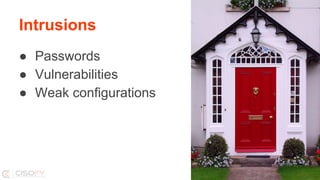
Intrusions
● Passwords
● Vulnerabilities
● Weak configurations
5
Why?
6
Keeping Control
● Rootkits
● Backdoors
7
Rootkits 101
Rootkits
● (become | stay) root
● (software) kit
9
Rootkits
● Stealth
● Persistence
● Backdoors
10
How to be the best rootkit?
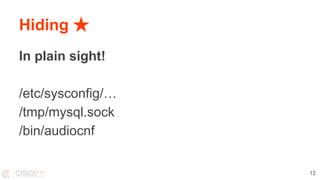
Hiding ★
In plain sight!
/etc/sysconfig/…
/tmp/mysql.sock
/bin/audiocnf
12
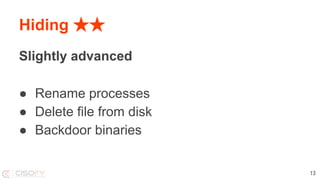
Hiding ★★
Slightly advanced
● Rename processes
● Delete file from disk
● Backdoor binaries
13
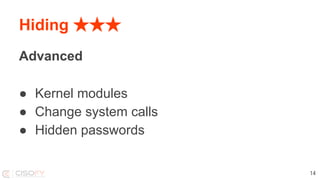
Hiding ★★★
Advanced
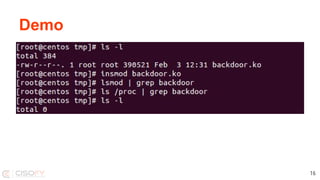
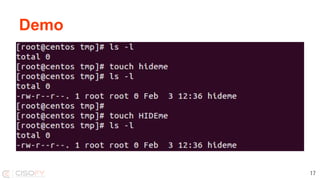
● Kernel modules
● Change system calls
● Hidden passwords
14
Demo
Demo
16
Demo
17
Continuous Game
18
Detection
Challenges
● We can’t trust anything
● Even ourselves
● No guarantees
21
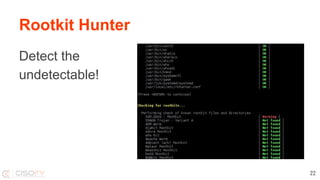
Rootkit Hunter
Detect the
undetectable!
22
Dealing with malware
● Owner?
● Risk?
● What if we pull the plug?
Activate your plan!
24
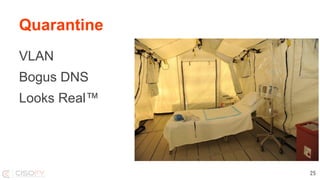
VLAN
Bogus DNS
Looks Real™
Quarantine
25
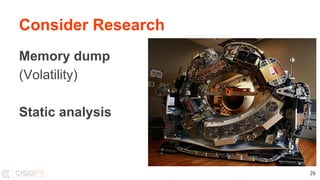
Consider Research
Memory dump
(Volatility)
Static analysis
26
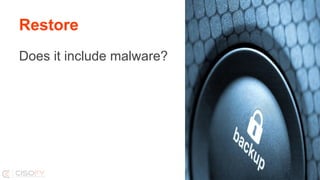
Restore
Does it include malware?
27
Defense
Best protection
At least
● Perform security scans
● Collect data
● System Hardening
29
Frameworks / Patches
● SELinux
● AppArmor
● Grsecurity
30
Compilers
● Remove
● Limit usage
31
Harden Applications
● Use chroot
● Limit permissions
● Change defaults
32
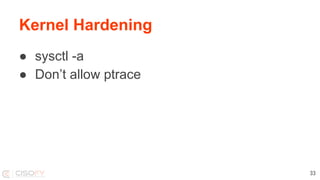
Kernel Hardening
● sysctl -a
● Don’t allow ptrace
33
Automation
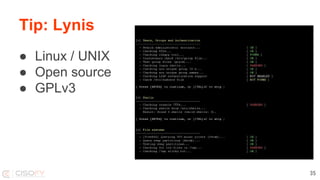
Tip: Lynis
● Linux / UNIX
● Open source
● GPLv3
35
Conclusions
Conclusions
● Good rootkits are hard to detect
● Use cost-effective methods
● Detect
● Restore
● Learn
● Apply hardening
37
You finished this presentation
Success!
More Linux security?
Presentations
michaelboelen.com/presentations/
Follow
● Blog Linux Audit (linux-audit.com)
● Twitter @mboelen
39
40

Handling of compromised Linux systems