If security is hard,
you are doing it wrong
Fabio Alessandro Locati
AMSTERDAM 11-12 MAY 2016
Big corporations
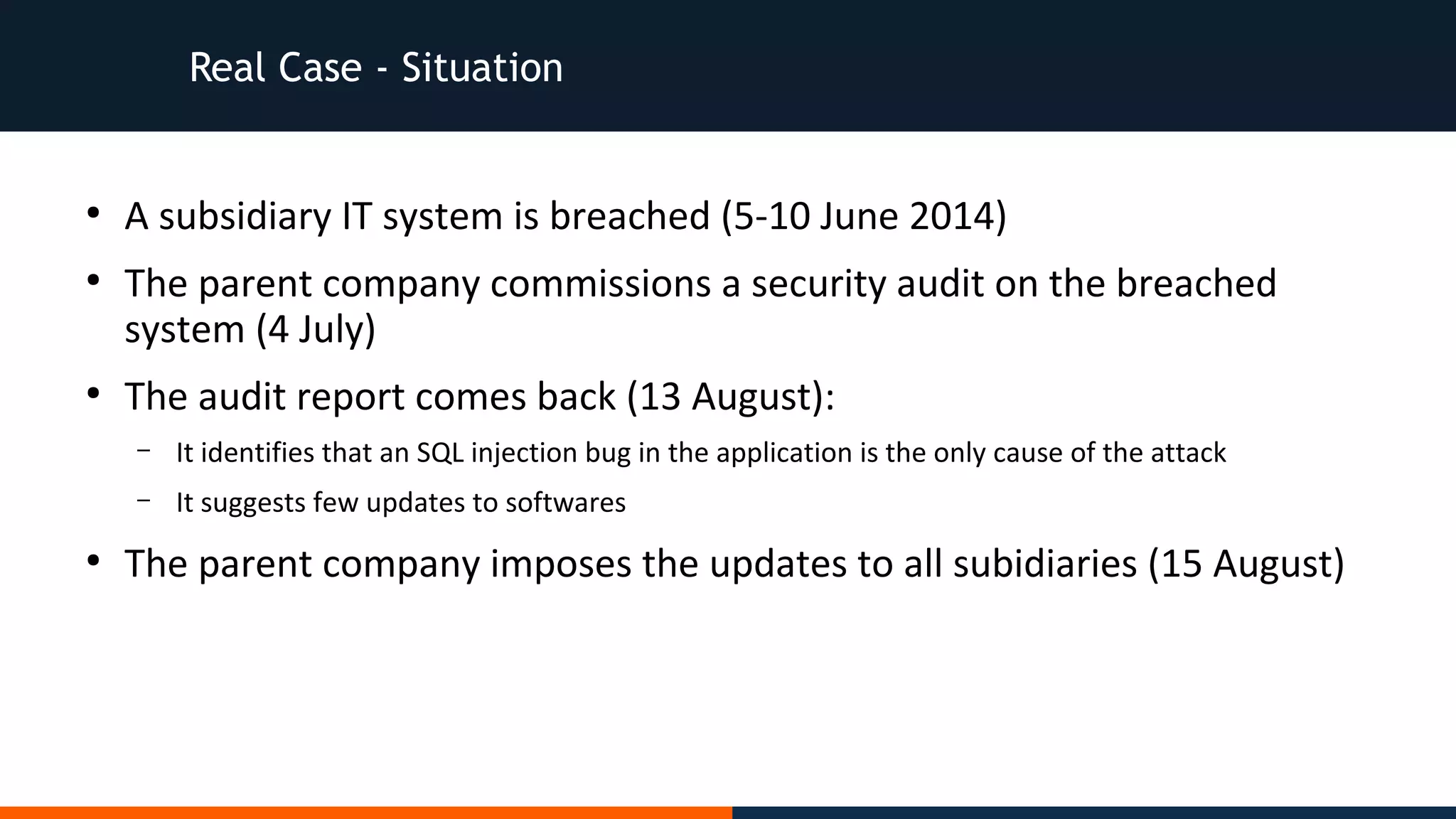
Real Case - Situation
●
A subsidiary IT system is breached (5-10 June 2014)
●
The parent company commissions a security audit on the breached
system (4 July)
●
The audit report comes back (13 August):
– It identifies that an SQL injection bug in the application is the only cause of the attack
– It suggests few updates to softwares
●
The parent company imposes the updates to all subidiaries (15 August)
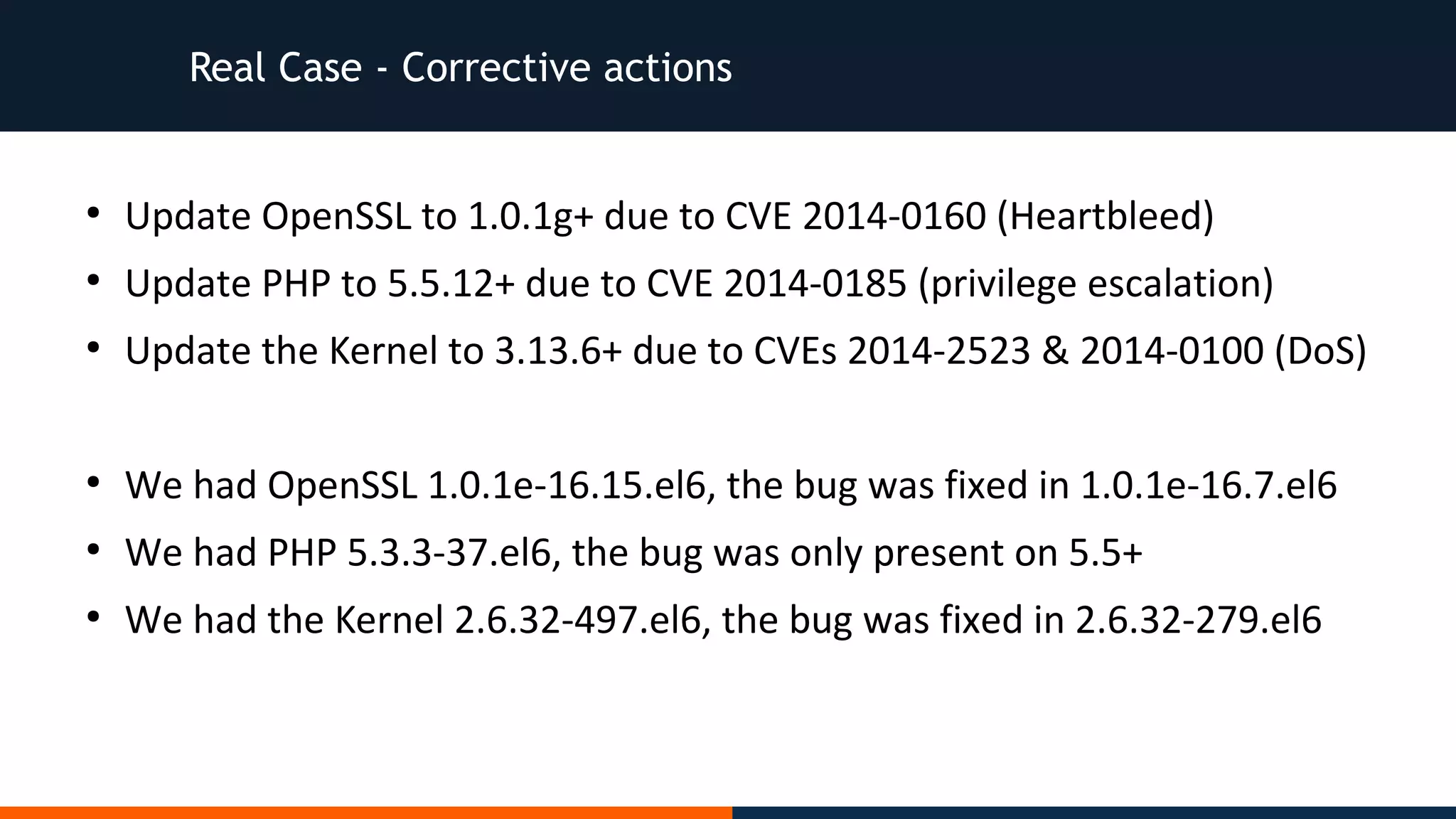
Real Case - Corrective actions
●
Update OpenSSL to 1.0.1g+ due to CVE 2014-0160 (Heartbleed)
●
Update PHP to 5.5.12+ due to CVE 2014-0185 (privilege escalation)
●
Update the Kernel to 3.13.6+ due to CVEs 2014-2523 & 2014-0100 (DoS)
●
We had OpenSSL 1.0.1e-16.15.el6, the bug was fixed in 1.0.1e-16.7.el6
●
We had PHP 5.3.3-37.el6, the bug was only present on 5.5+
●
We had the Kernel 2.6.32-497.el6, the bug was fixed in 2.6.32-279.el6
Real Case - Considerations
●
Pointless to close the stable door after the horse has bolted
●
Security is a word, but it's meaning is a whole world
– Ask yourself what are you trying to achieve
– Ask yourself the value of what you are protecting (for you and for others)
– No money can buy a secure system
●
There is no silver bullet in security
Built in vs Bolt on
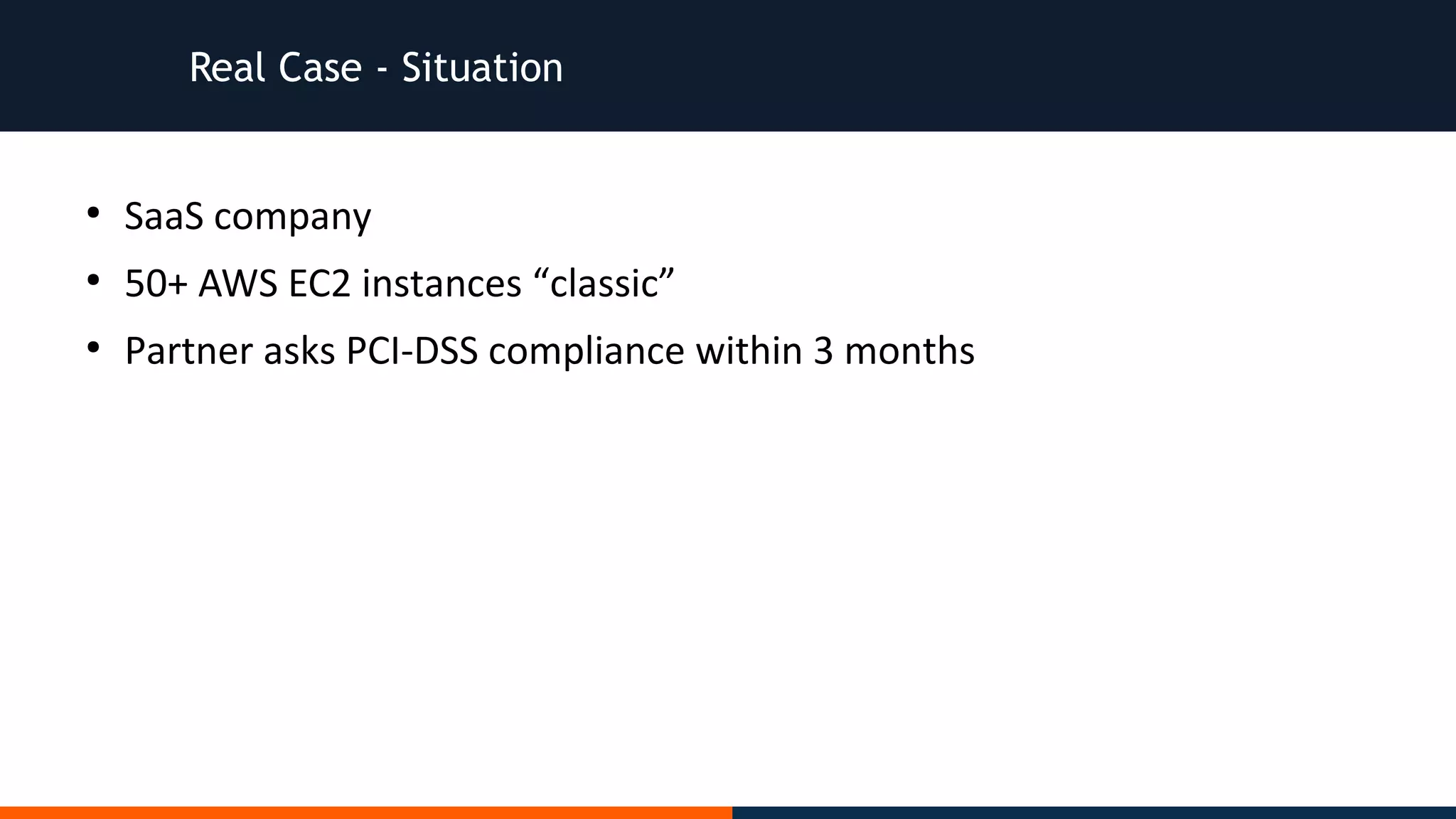
Real Case - Situation
●
SaaS company
●
50+ AWS EC2 instances “classic”
●
Partner asks PCI-DSS compliance within 3 months
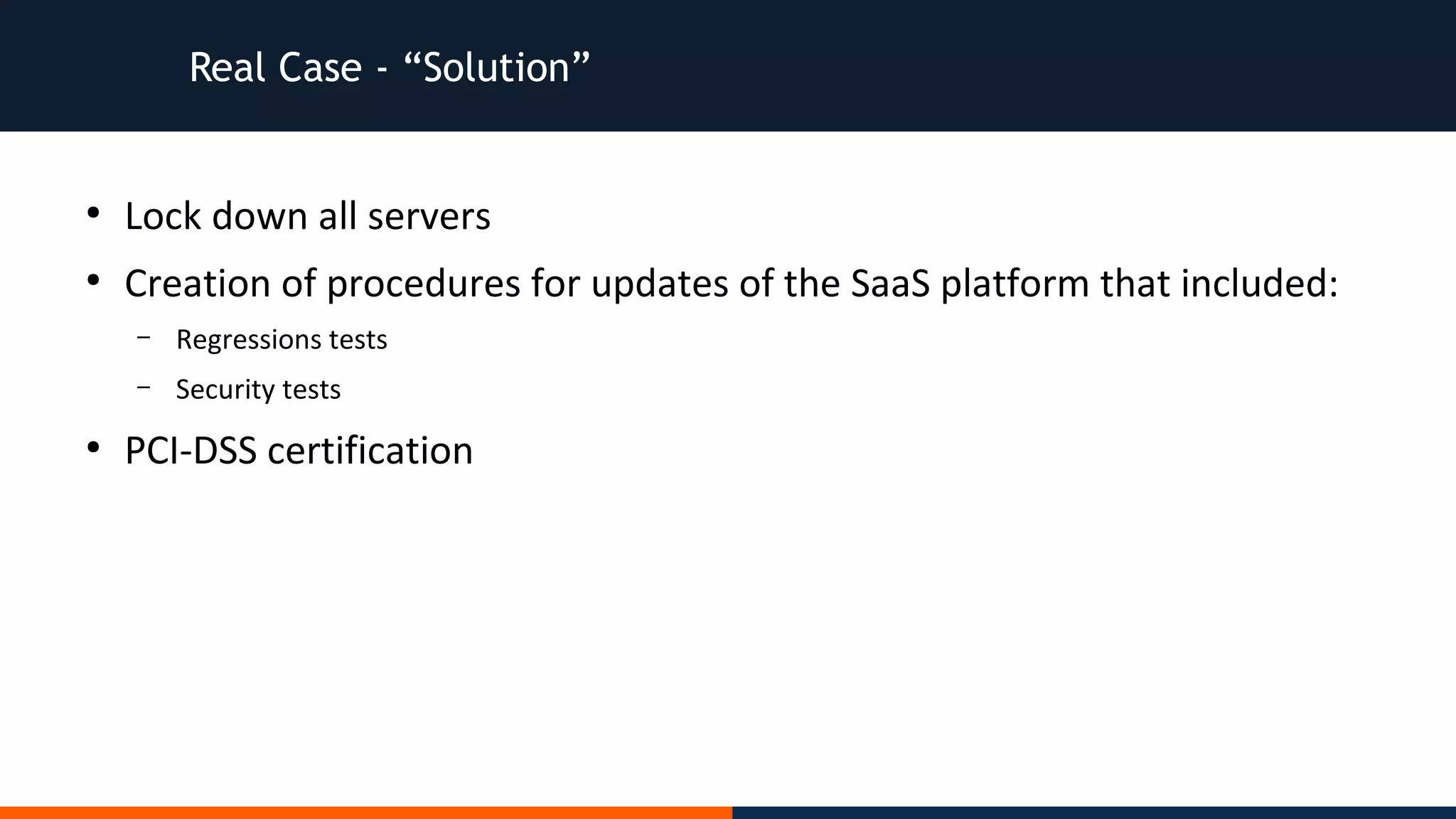
Real Case - “Solution”
●
Lock down all servers
●
Creation of procedures for updates of the SaaS platform that included:
– Regressions tests
– Security tests
●
PCI-DSS certification
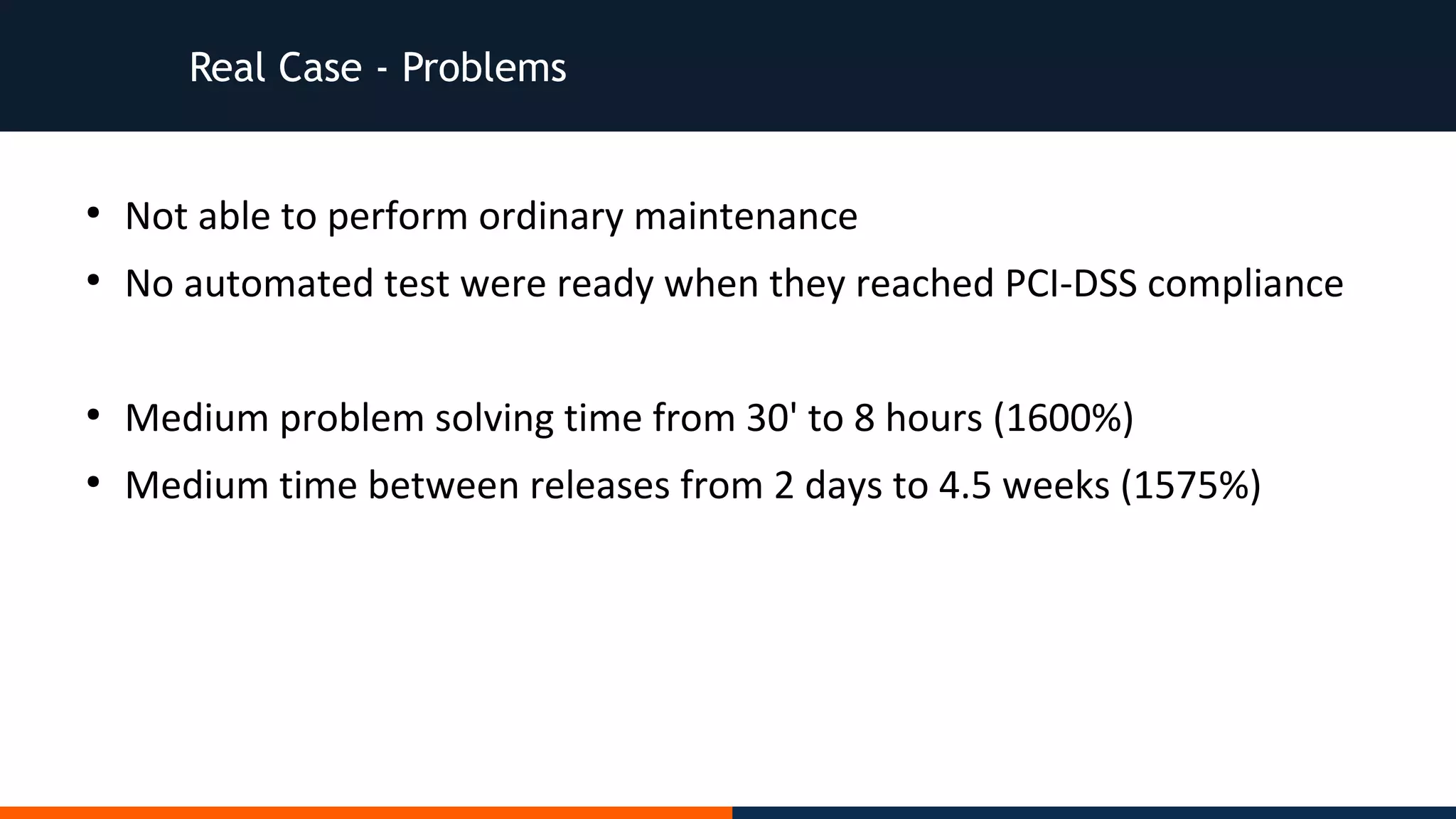
Real Case - Problems
●
Not able to perform ordinary maintenance
●
No automated test were ready when they reached PCI-DSS compliance
●
Medium problem solving time from 30' to 8 hours (1600%)
●
Medium time between releases from 2 days to 4.5 weeks (1575%)
Real Case - Considerations
●
Always think about security before you start your next project
●
Do not “drop in” security in a software/infrastructure
●
Do not rush to add security
●
Use configuration management system
●
Design infrastructures that are safe(r) from ground up
Trust but check
Real Case - Situation
@app.route("/login", methods=["GET", "POST"])
def login():
form = LoginForm()
if form.validate_on_submit():
user = User.query.get(form.email.data)
if user:
if bcrypt.check_password_hash(user.password, form.password.data):
user.authenticated = True
return render_template("login.html", form=form)
Real Case - Problem
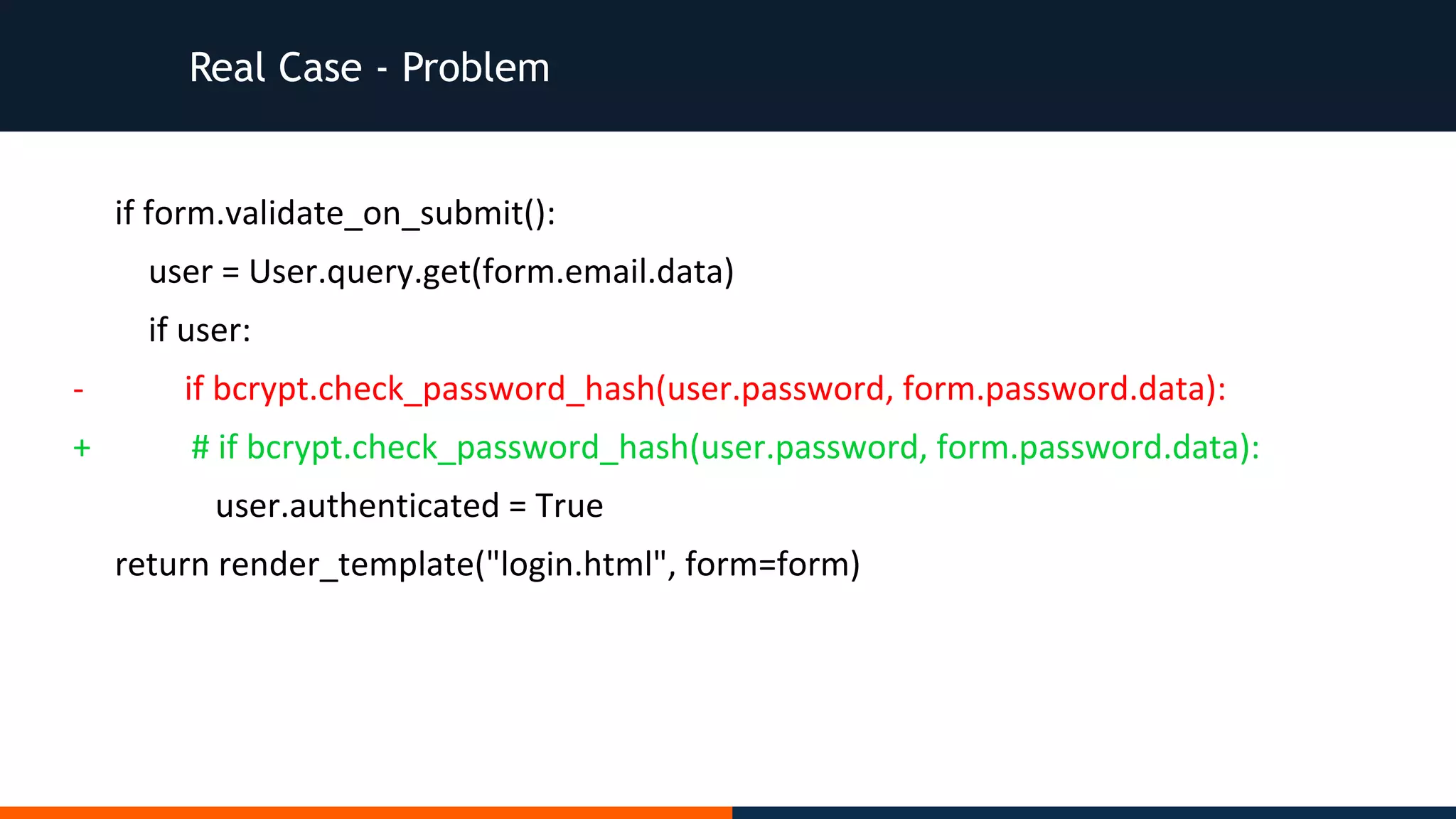
if form.validate_on_submit():
user = User.query.get(form.email.data)
if user:
- if bcrypt.check_password_hash(user.password, form.password.data):
+ # if bcrypt.check_password_hash(user.password, form.password.data):
user.authenticated = True
return render_template("login.html", form=form)
Real Case - Considerations
●
Use a Code Version System
●
Implement a code-review system
●
Implement an auto-deployment pipeline
●
Put lots of tests in the pipeline
Containers
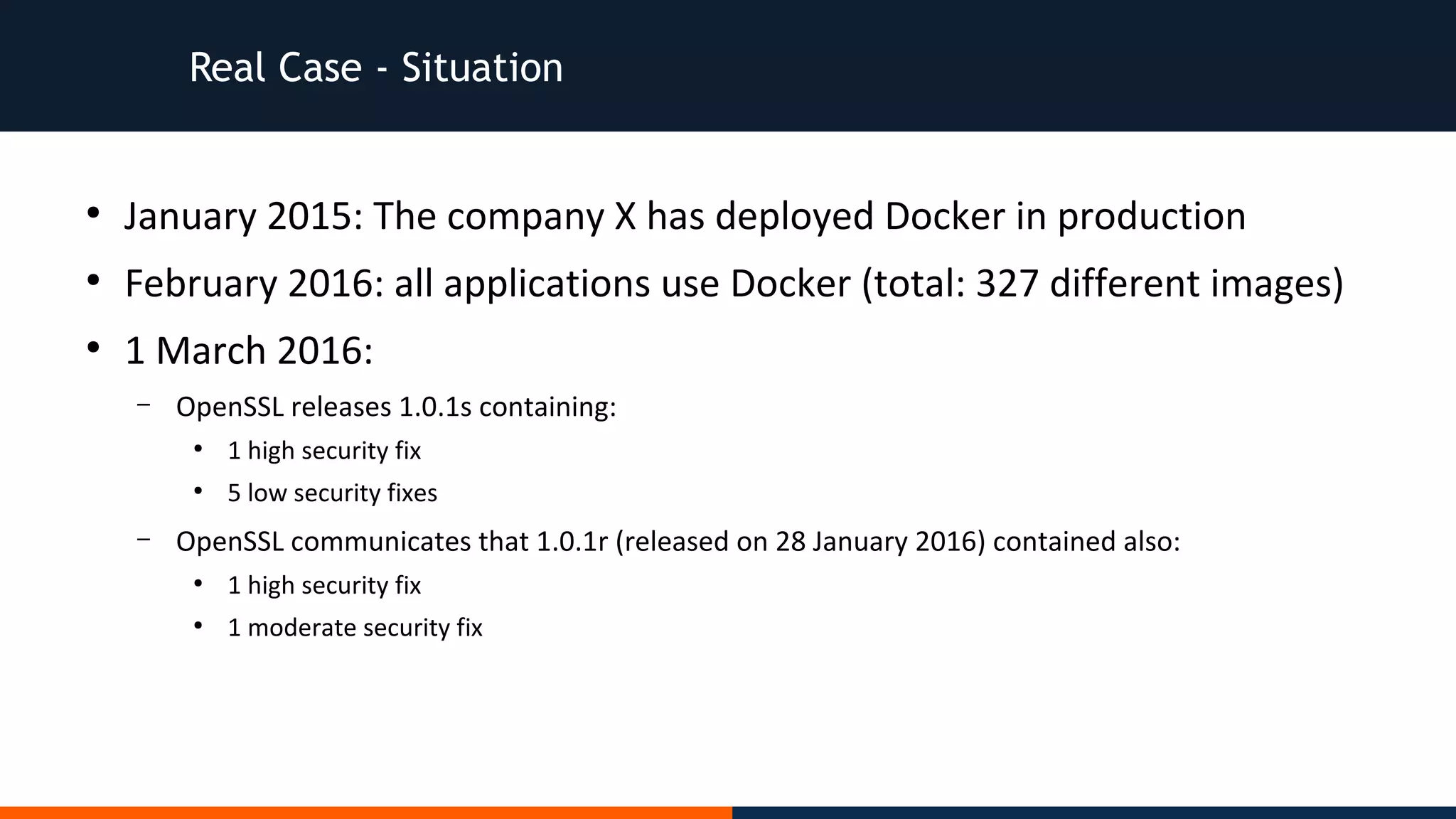
Real Case - Situation
●
January 2015: The company X has deployed Docker in production
●
February 2016: all applications use Docker (total: 327 different images)
●
1 March 2016:
– OpenSSL releases 1.0.1s containing:
●
1 high security fix
●
5 low security fixes
– OpenSSL communicates that 1.0.1r (released on 28 January 2016) contained also:
●
1 high security fix
●
1 moderate security fix
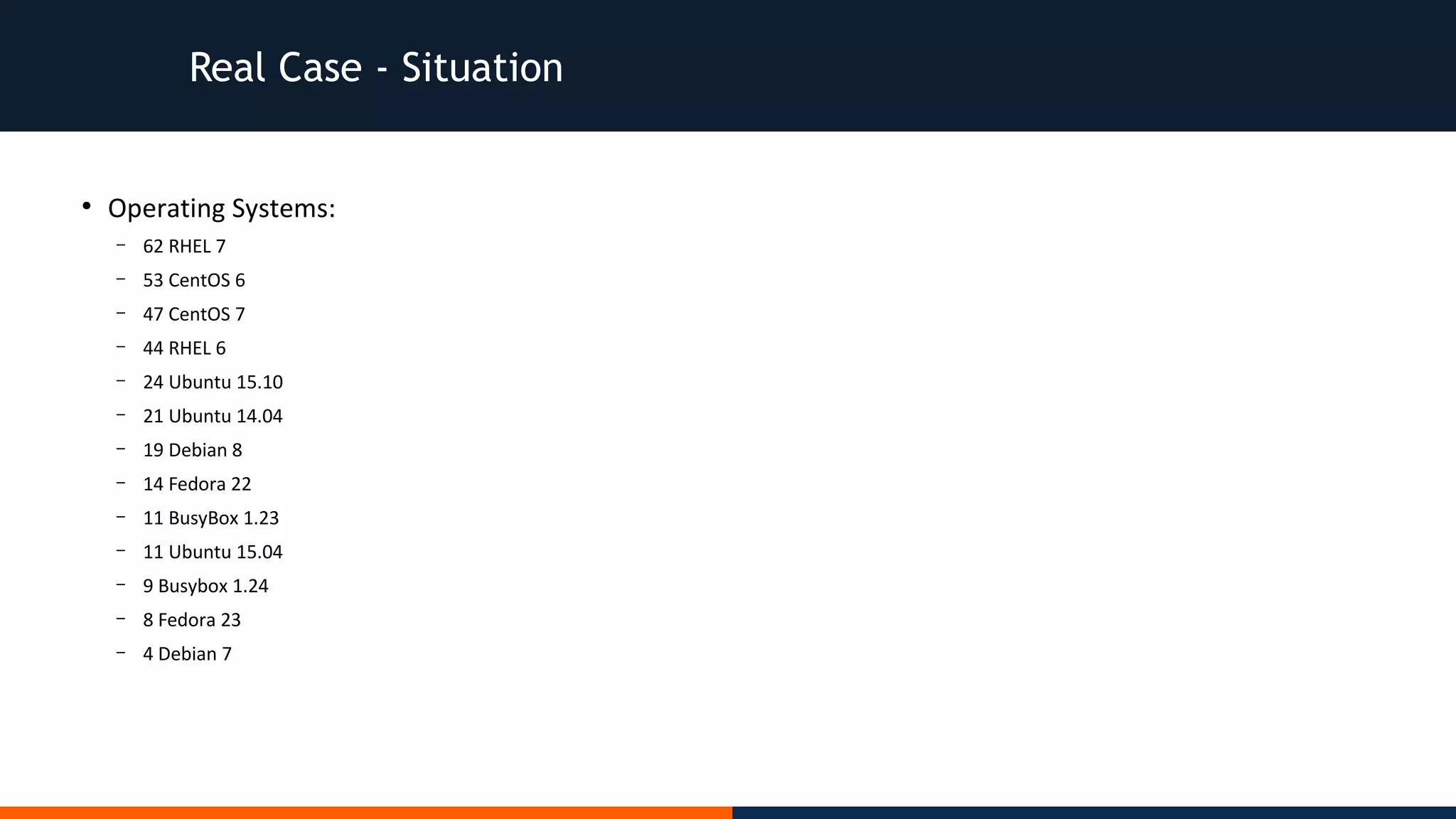
Real Case - Situation
●
Operating Systems:
– 62 RHEL 7
– 53 CentOS 6
– 47 CentOS 7
– 44 RHEL 6
– 24 Ubuntu 15.10
– 21 Ubuntu 14.04
– 19 Debian 8
– 14 Fedora 22
– 11 BusyBox 1.23
– 11 Ubuntu 15.04
– 9 Busybox 1.24
– 8 Fedora 23
– 4 Debian 7
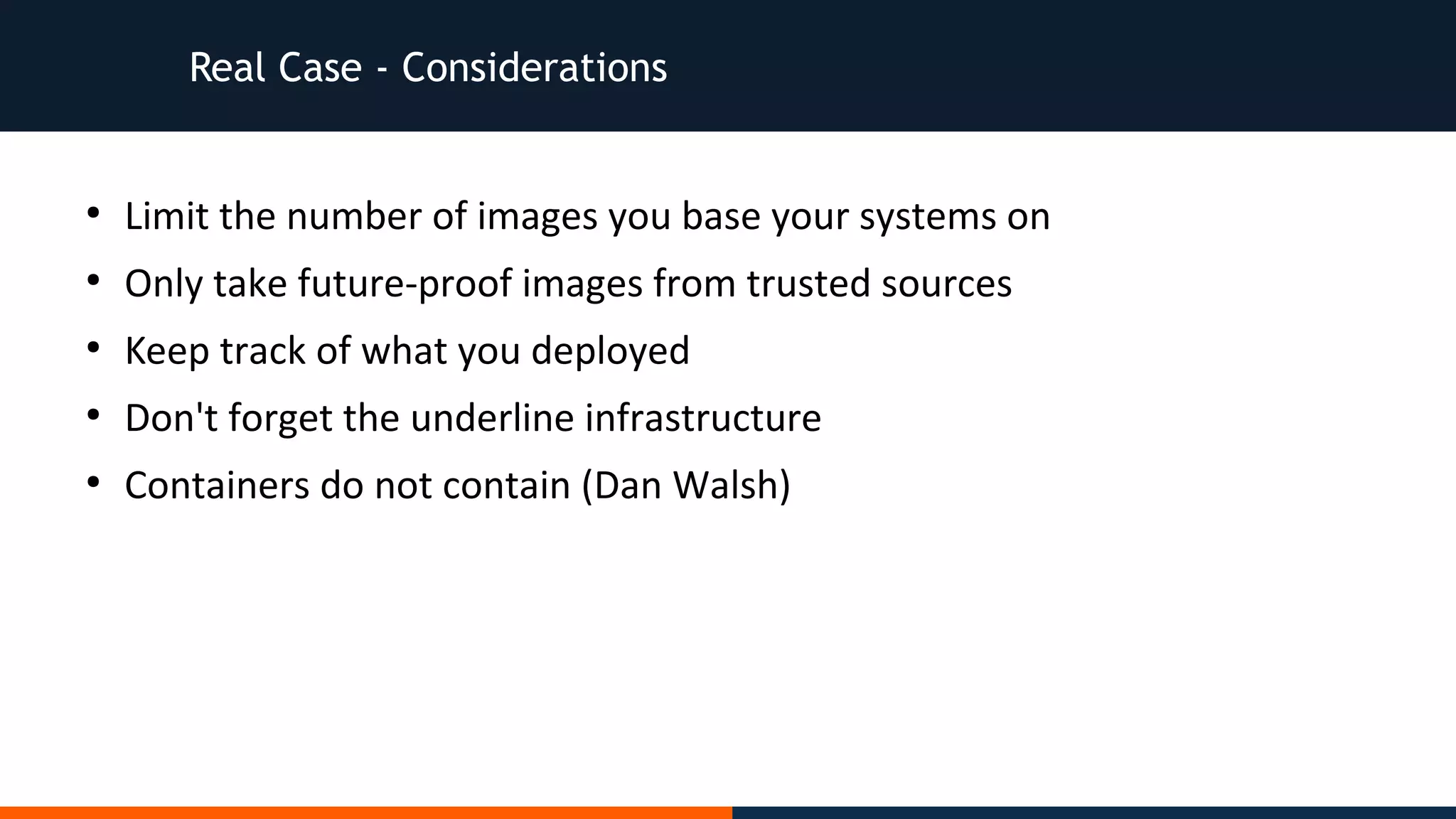
Real Case - Considerations
●
Limit the number of images you base your systems on
●
Only take future-proof images from trusted sources
●
Keep track of what you deployed
●
Don't forget the underline infrastructure
●
Containers do not contain (Dan Walsh)
People
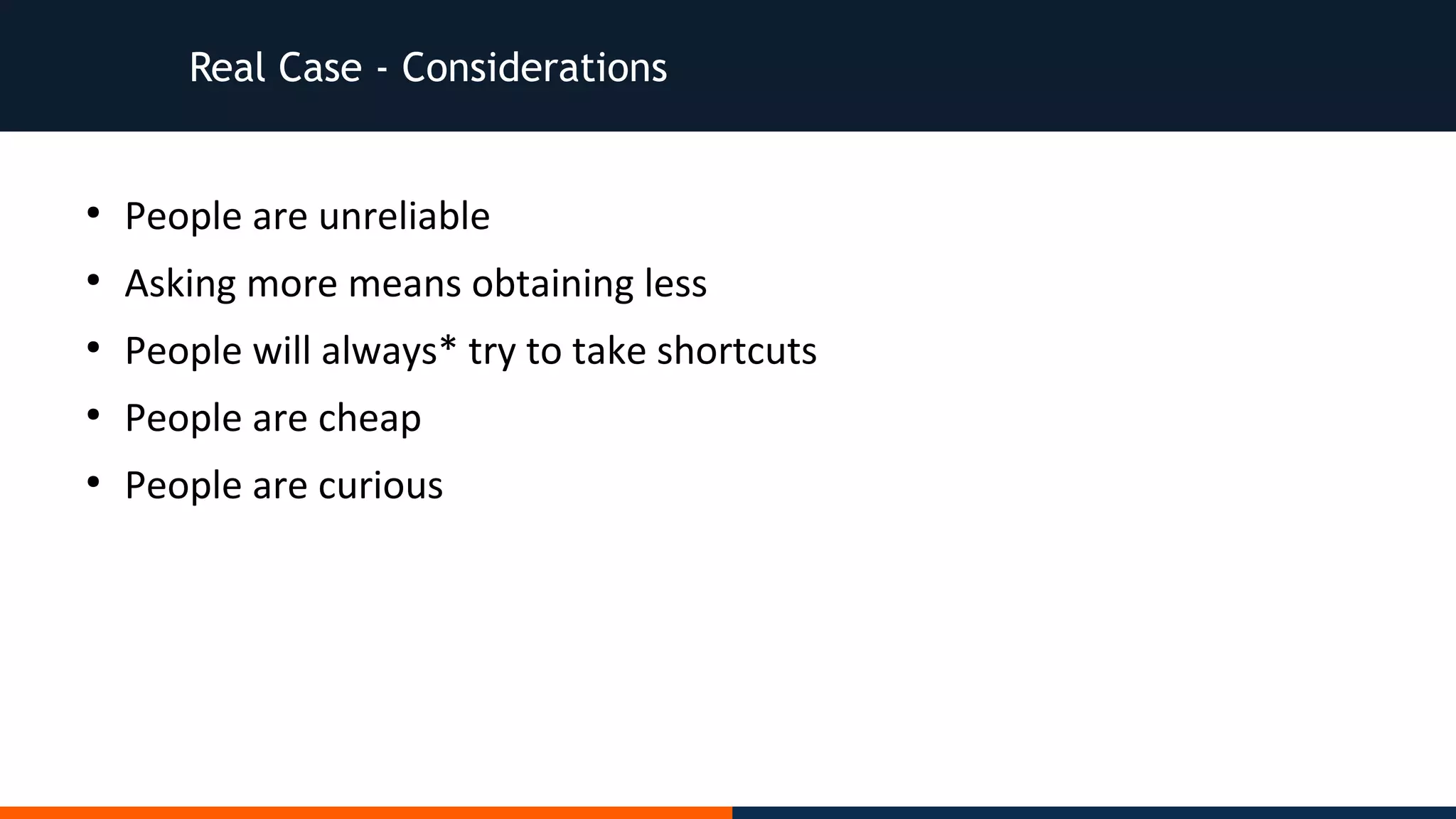
Real Case - Considerations
●
People are unreliable
●
Asking more means obtaining less
●
People will always* try to take shortcuts
●
People are cheap
●
People are curious
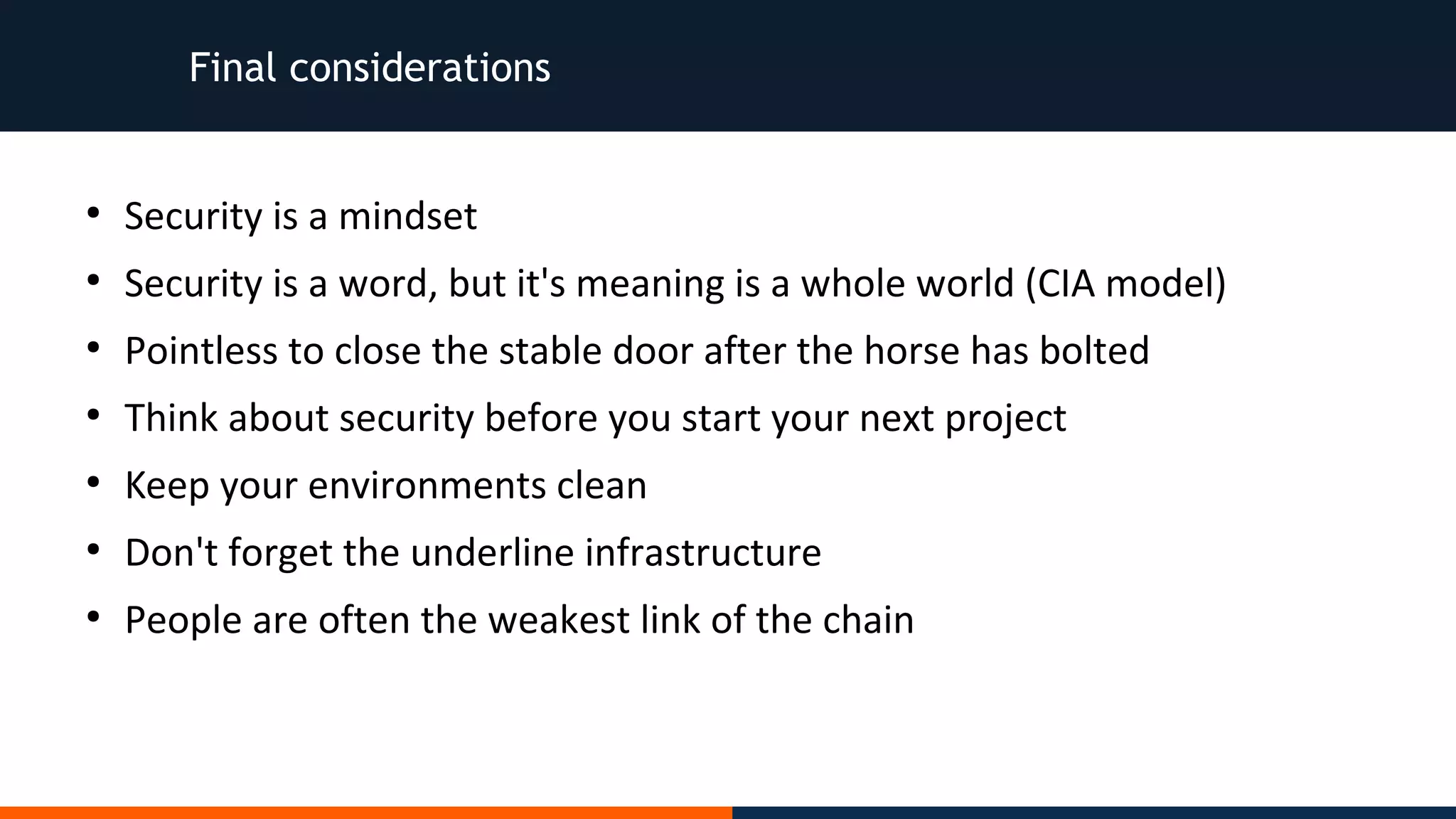
Final considerations
●
Security is a mindset
●
Security is a word, but it's meaning is a whole world (CIA model)
●
Pointless to close the stable door after the horse has bolted
●
Think about security before you start your next project
●
Keep your environments clean
●
Don't forget the underline infrastructure
●
People are often the weakest link of the chain
Thanks!
Fabio Alessandro Locati
Mail: me@fale.io
GPG key: 0xB2DC9C1B
All pictures belong
to their respective authors
AMSTERDAM 9-12 MAY 2016

If security is hard, you are doing it wrong - Fabio Locati - Codemotion Amsterdam 2016

  • 1.
    If security ishard, you are doing it wrong Fabio Alessandro Locati AMSTERDAM 11-12 MAY 2016
  • 2.
  • 3.
    Real Case -Situation ● A subsidiary IT system is breached (5-10 June 2014) ● The parent company commissions a security audit on the breached system (4 July) ● The audit report comes back (13 August): – It identifies that an SQL injection bug in the application is the only cause of the attack – It suggests few updates to softwares ● The parent company imposes the updates to all subidiaries (15 August)
  • 4.
    Real Case -Corrective actions ● Update OpenSSL to 1.0.1g+ due to CVE 2014-0160 (Heartbleed) ● Update PHP to 5.5.12+ due to CVE 2014-0185 (privilege escalation) ● Update the Kernel to 3.13.6+ due to CVEs 2014-2523 & 2014-0100 (DoS) ● We had OpenSSL 1.0.1e-16.15.el6, the bug was fixed in 1.0.1e-16.7.el6 ● We had PHP 5.3.3-37.el6, the bug was only present on 5.5+ ● We had the Kernel 2.6.32-497.el6, the bug was fixed in 2.6.32-279.el6
  • 5.
    Real Case -Considerations ● Pointless to close the stable door after the horse has bolted ● Security is a word, but it's meaning is a whole world – Ask yourself what are you trying to achieve – Ask yourself the value of what you are protecting (for you and for others) – No money can buy a secure system ● There is no silver bullet in security
  • 6.
    Built in vsBolt on
  • 7.
    Real Case -Situation ● SaaS company ● 50+ AWS EC2 instances “classic” ● Partner asks PCI-DSS compliance within 3 months
  • 8.
    Real Case -“Solution” ● Lock down all servers ● Creation of procedures for updates of the SaaS platform that included: – Regressions tests – Security tests ● PCI-DSS certification
  • 9.
    Real Case -Problems ● Not able to perform ordinary maintenance ● No automated test were ready when they reached PCI-DSS compliance ● Medium problem solving time from 30' to 8 hours (1600%) ● Medium time between releases from 2 days to 4.5 weeks (1575%)
  • 10.
    Real Case -Considerations ● Always think about security before you start your next project ● Do not “drop in” security in a software/infrastructure ● Do not rush to add security ● Use configuration management system ● Design infrastructures that are safe(r) from ground up
  • 11.
  • 12.
    Real Case -Situation @app.route("/login", methods=["GET", "POST"]) def login(): form = LoginForm() if form.validate_on_submit(): user = User.query.get(form.email.data) if user: if bcrypt.check_password_hash(user.password, form.password.data): user.authenticated = True return render_template("login.html", form=form)
  • 13.
    Real Case -Problem if form.validate_on_submit(): user = User.query.get(form.email.data) if user: - if bcrypt.check_password_hash(user.password, form.password.data): + # if bcrypt.check_password_hash(user.password, form.password.data): user.authenticated = True return render_template("login.html", form=form)
  • 14.
    Real Case -Considerations ● Use a Code Version System ● Implement a code-review system ● Implement an auto-deployment pipeline ● Put lots of tests in the pipeline
  • 15.
  • 16.
    Real Case -Situation ● January 2015: The company X has deployed Docker in production ● February 2016: all applications use Docker (total: 327 different images) ● 1 March 2016: – OpenSSL releases 1.0.1s containing: ● 1 high security fix ● 5 low security fixes – OpenSSL communicates that 1.0.1r (released on 28 January 2016) contained also: ● 1 high security fix ● 1 moderate security fix
  • 17.
    Real Case -Situation ● Operating Systems: – 62 RHEL 7 – 53 CentOS 6 – 47 CentOS 7 – 44 RHEL 6 – 24 Ubuntu 15.10 – 21 Ubuntu 14.04 – 19 Debian 8 – 14 Fedora 22 – 11 BusyBox 1.23 – 11 Ubuntu 15.04 – 9 Busybox 1.24 – 8 Fedora 23 – 4 Debian 7
  • 18.
    Real Case -Considerations ● Limit the number of images you base your systems on ● Only take future-proof images from trusted sources ● Keep track of what you deployed ● Don't forget the underline infrastructure ● Containers do not contain (Dan Walsh)
  • 19.
  • 20.
    Real Case -Considerations ● People are unreliable ● Asking more means obtaining less ● People will always* try to take shortcuts ● People are cheap ● People are curious
  • 21.
    Final considerations ● Security isa mindset ● Security is a word, but it's meaning is a whole world (CIA model) ● Pointless to close the stable door after the horse has bolted ● Think about security before you start your next project ● Keep your environments clean ● Don't forget the underline infrastructure ● People are often the weakest link of the chain
  • 22.
    Thanks! Fabio Alessandro Locati Mail:me@fale.io GPG key: 0xB2DC9C1B All pictures belong to their respective authors AMSTERDAM 9-12 MAY 2016