PROHEALTHCAREPRODUCTS.COM
Grip strength can be an
indicator and evaluator of
a patient’s overall health.
A grip strength
dynamometer is a useful
tool for testing a patient’s
hand grip strength.
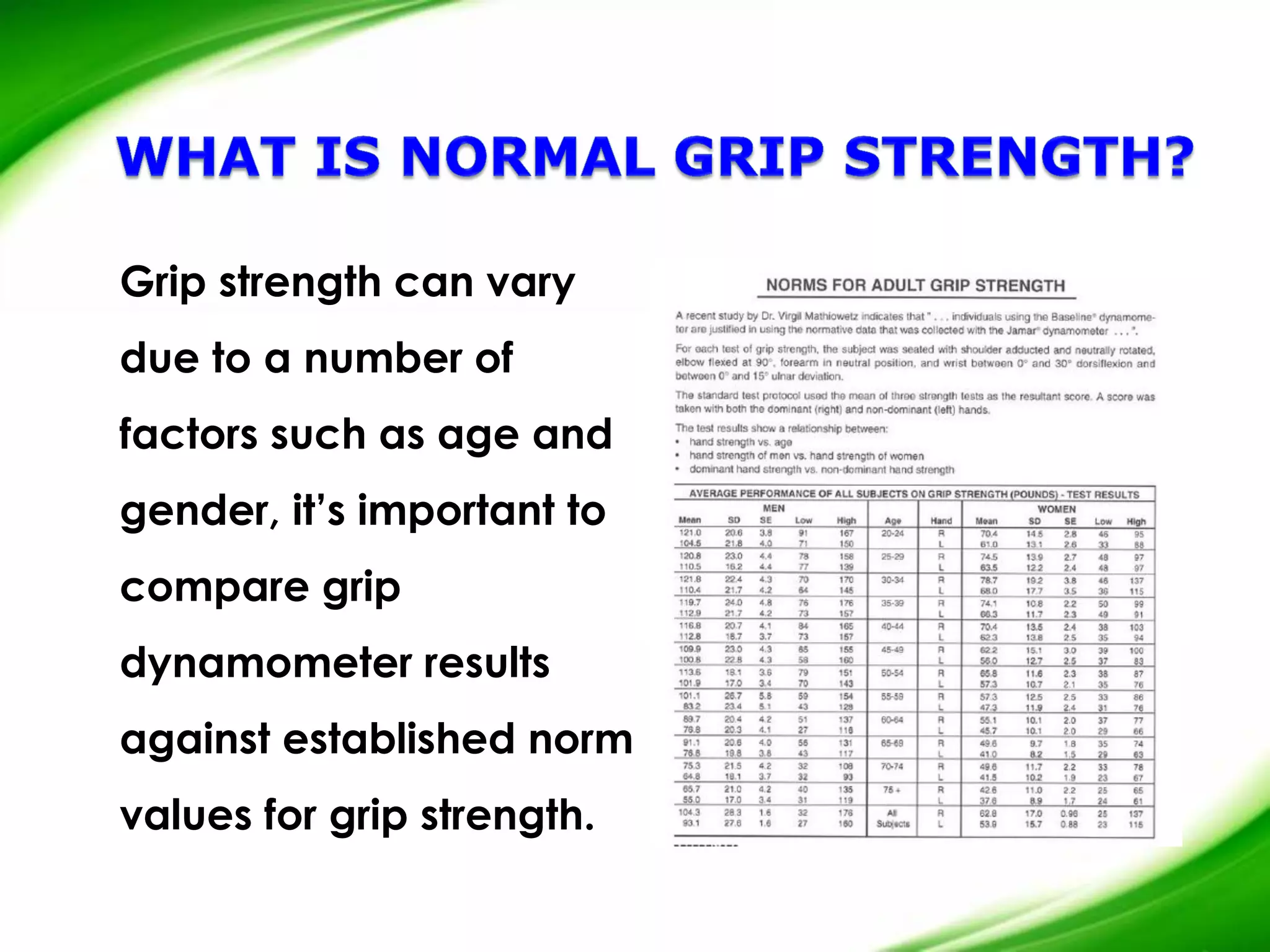
Grip strength can vary
due to a number of
factors such as age and
gender, it’s important to
compare grip
dynamometer results
against established norm
values for grip strength.
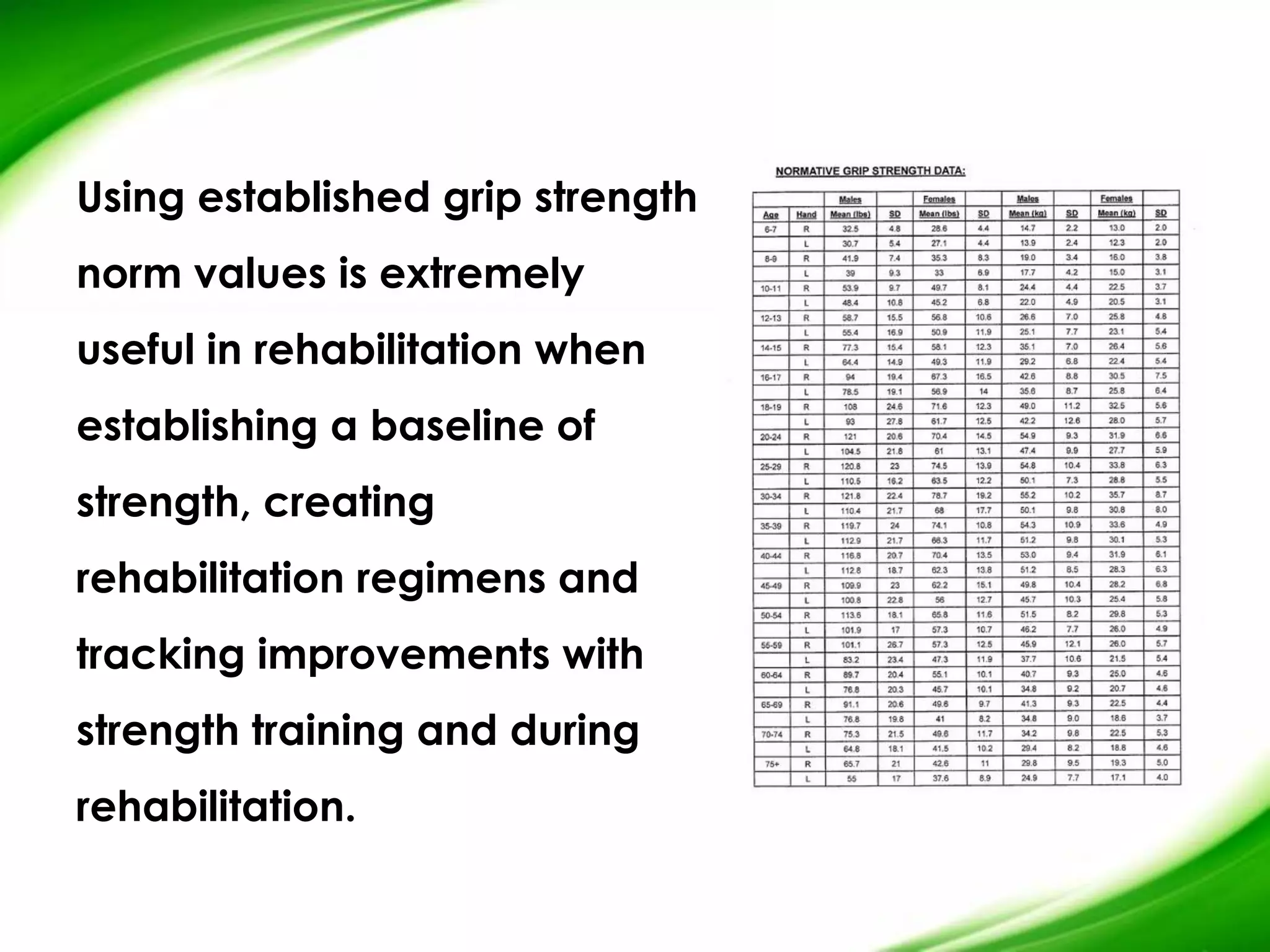
Using established grip strength
norm values is extremely
useful in rehabilitation when
establishing a baseline of
strength, creating
rehabilitation regimens and
tracking improvements with
strength training and during
rehabilitation.
HANDGRIP TESTING
PROTOCOLS
Hand grip strength testing results can vary when
different protocols are used, it’s important to
have established testing protocols to ensure
accuracy and easily duplicable results.
The handgrip dynamometer handle
should ideally be adjusted to fit the
patient’s hand or if that’s not
possible, the handle should be set
at the same setting for everyone.
When retesting, the same handle
setting should be used, even if the
strength of the right or left hand
varies. Also, it’s important to
perform multiple tests in order to
get the maximum score.
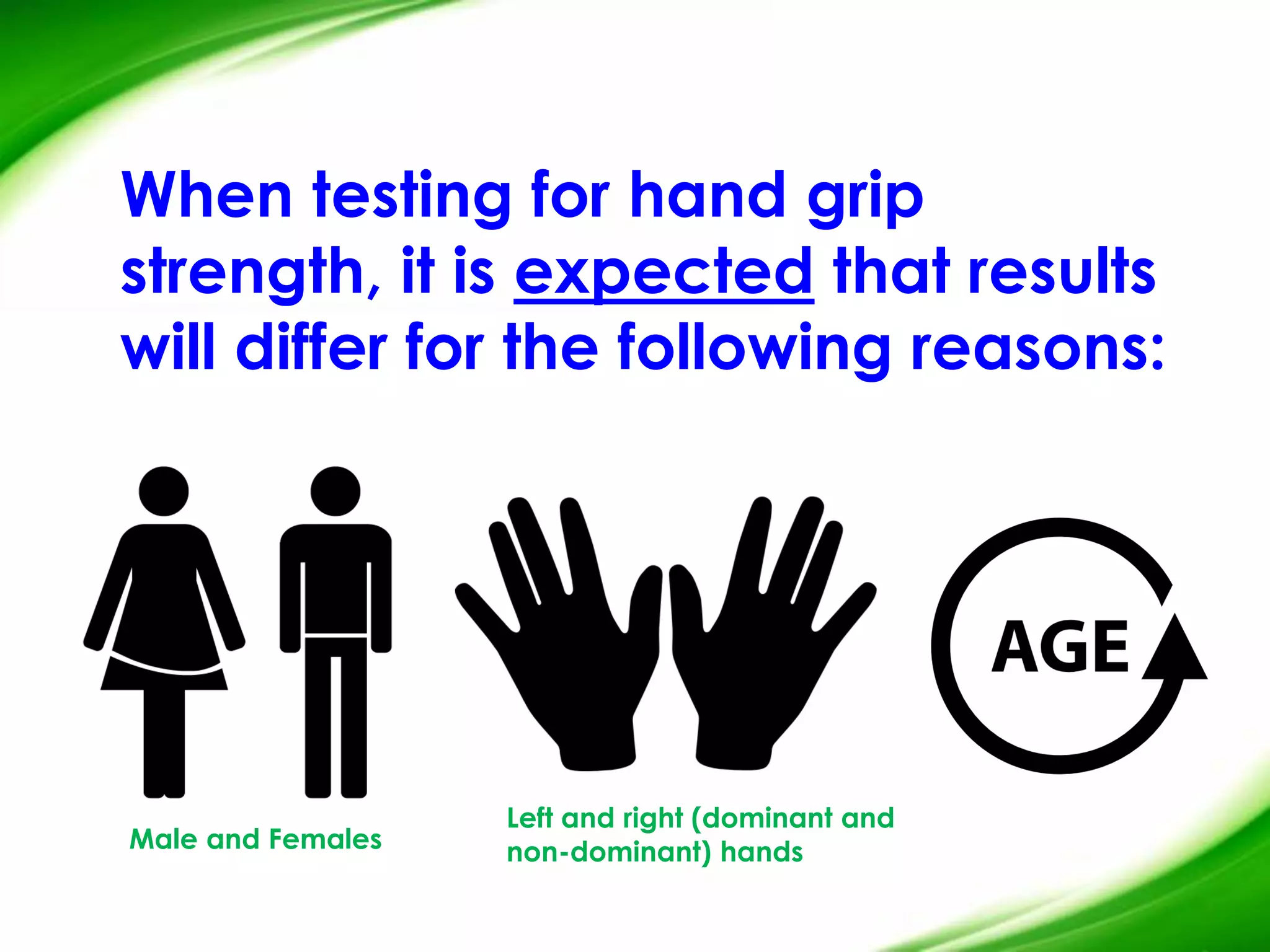
When testing for hand grip
strength, it is expected that results
will differ for the following reasons:
Male and Females
Left and right (dominant and
non-dominant) hands
Grip strength test results can also be affected by the
position of the wrist,
elbowhttp://www.prohealthcareproducts.com/blog/h
and-grip-strength-norms/ and shoulder, so these
should be standardized and adequate bracing and/or
support should be used when necessary.
SIMPLE NORM TABLE FOR
MALES AND FEMALES,
WITH SUBCATEGORIES
FOR AGE
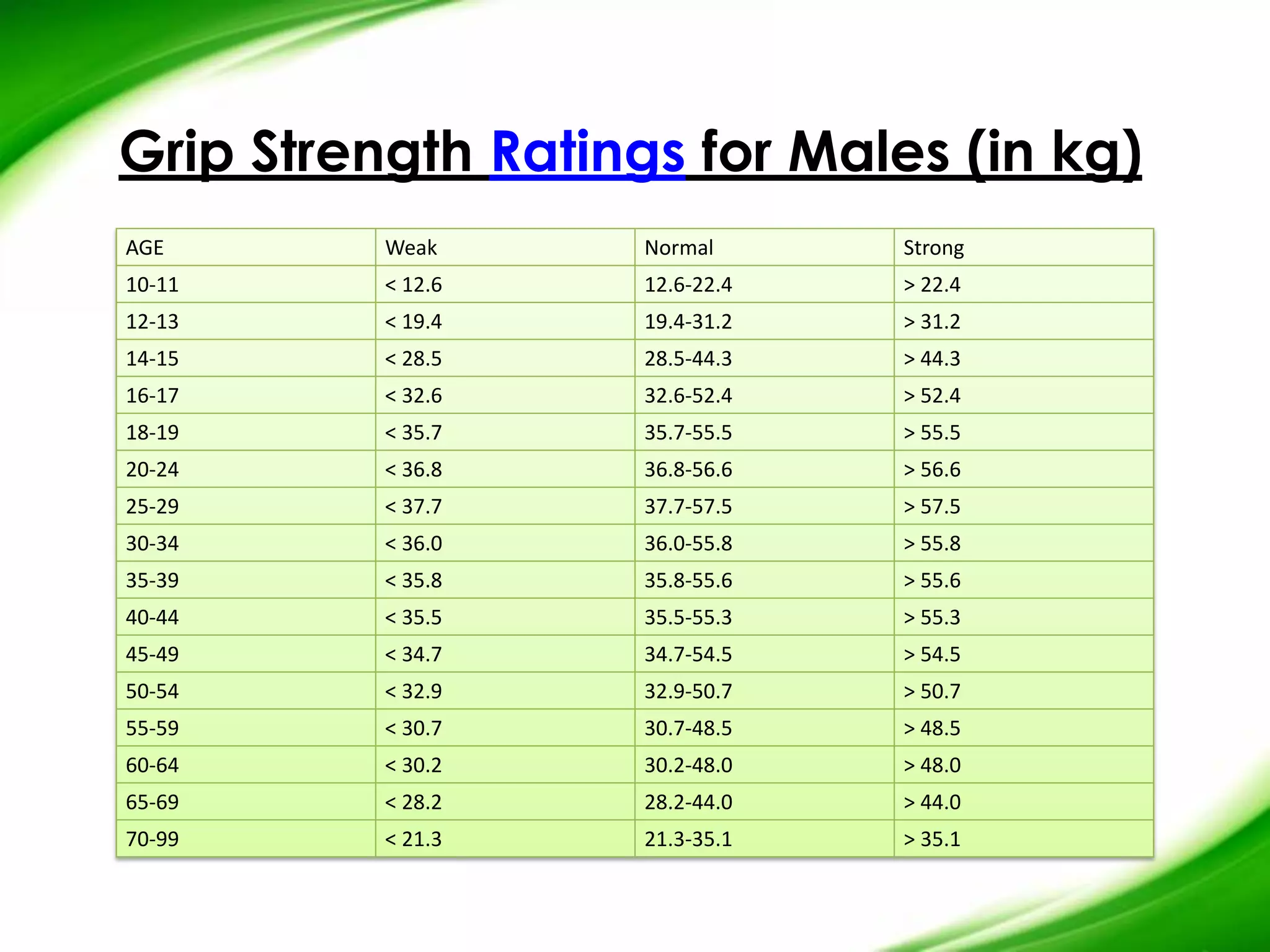
Grip Strength Ratings for Males (in kg)
AGE Weak Normal Strong
10-11 < 12.6 12.6-22.4 > 22.4
12-13 < 19.4 19.4-31.2 > 31.2
14-15 < 28.5 28.5-44.3 > 44.3
16-17 < 32.6 32.6-52.4 > 52.4
18-19 < 35.7 35.7-55.5 > 55.5
20-24 < 36.8 36.8-56.6 > 56.6
25-29 < 37.7 37.7-57.5 > 57.5
30-34 < 36.0 36.0-55.8 > 55.8
35-39 < 35.8 35.8-55.6 > 55.6
40-44 < 35.5 35.5-55.3 > 55.3
45-49 < 34.7 34.7-54.5 > 54.5
50-54 < 32.9 32.9-50.7 > 50.7
55-59 < 30.7 30.7-48.5 > 48.5
60-64 < 30.2 30.2-48.0 > 48.0
65-69 < 28.2 28.2-44.0 > 44.0
70-99 < 21.3 21.3-35.1 > 35.1
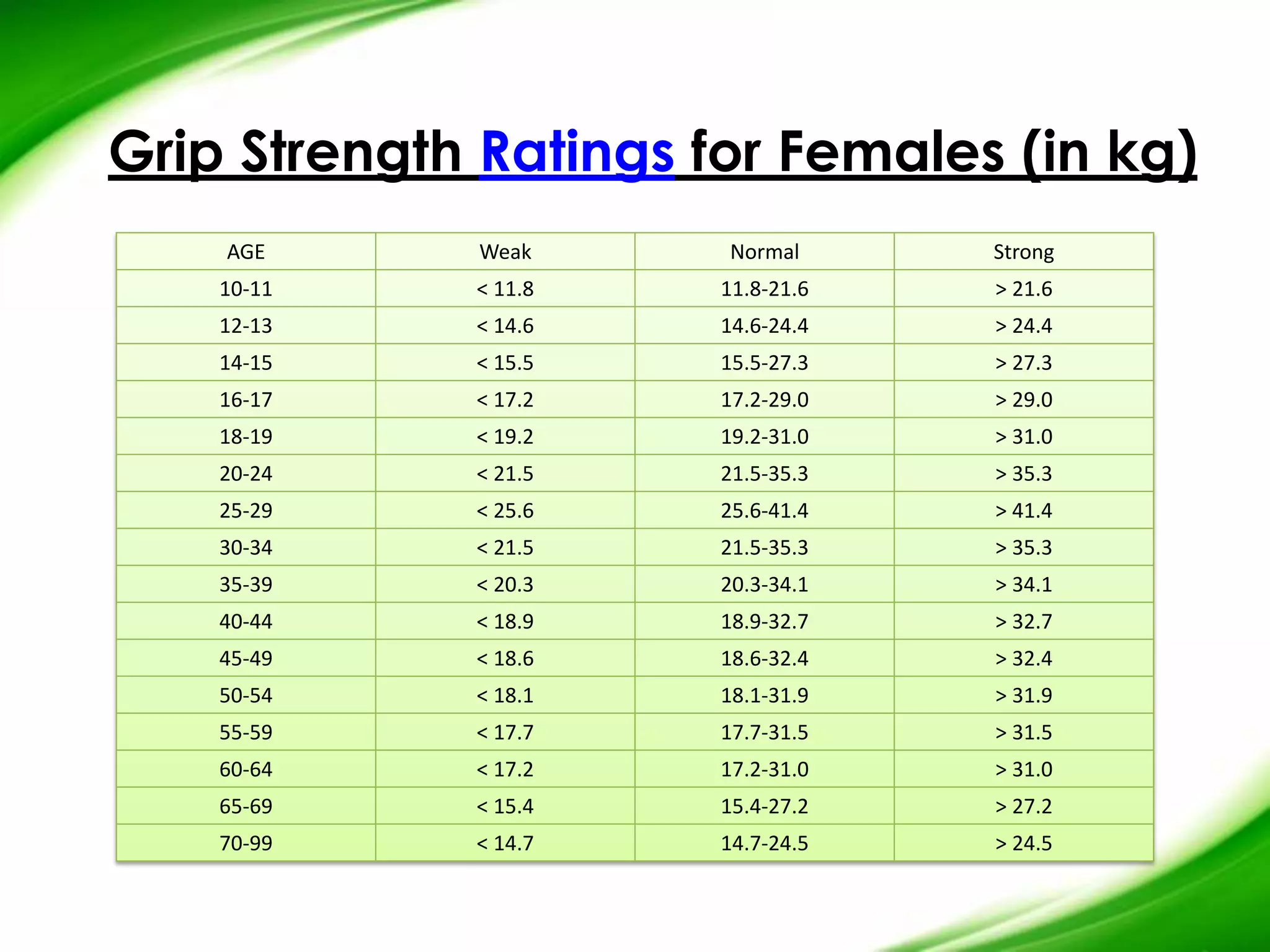
Grip Strength Ratings for Females (in kg)
AGE Weak Normal Strong
10-11 < 11.8 11.8-21.6 > 21.6
12-13 < 14.6 14.6-24.4 > 24.4
14-15 < 15.5 15.5-27.3 > 27.3
16-17 < 17.2 17.2-29.0 > 29.0
18-19 < 19.2 19.2-31.0 > 31.0
20-24 < 21.5 21.5-35.3 > 35.3
25-29 < 25.6 25.6-41.4 > 41.4
30-34 < 21.5 21.5-35.3 > 35.3
35-39 < 20.3 20.3-34.1 > 34.1
40-44 < 18.9 18.9-32.7 > 32.7
45-49 < 18.6 18.6-32.4 > 32.4
50-54 < 18.1 18.1-31.9 > 31.9
55-59 < 17.7 17.7-31.5 > 31.5
60-64 < 17.2 17.2-31.0 > 31.0
65-69 < 15.4 15.4-27.2 > 27.2
70-99 < 14.7 14.7-24.5 > 24.5
THE BEST HANDGRIP
STRENGTH
DYNAMOMETERS
* Most Accurate:
One of the best handgrip
strength dynamometers on the
market today is the J-Tech
Commander Echo Grip Strength
Tester. The J-Tech Commander
dynamometer is known for both
accuracy and testing efficiency.
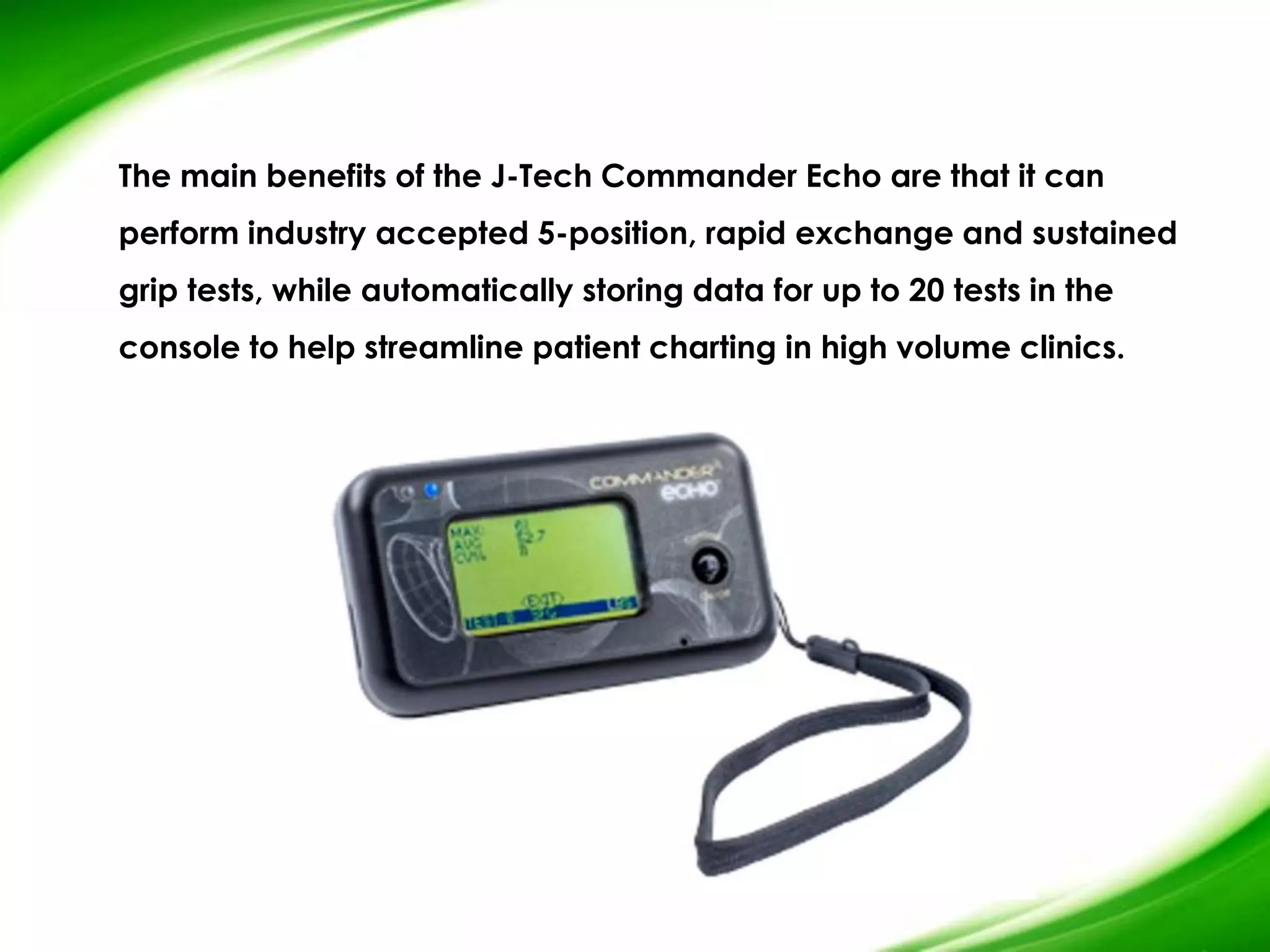
The main benefits of the J-Tech Commander Echo are that it can
perform industry accepted 5-position, rapid exchange and sustained
grip tests, while automatically storing data for up to 20 tests in the
console to help streamline patient charting in high volume clinics.
* Functional Capacity Testing:
For clinics and evaluations looking to
perform grip strength testing as part of
functional capacity evaluations, the
Commander GripTrack dynamometer
system is the perfect choice to provide
efficient and reliable grip strength
testing.
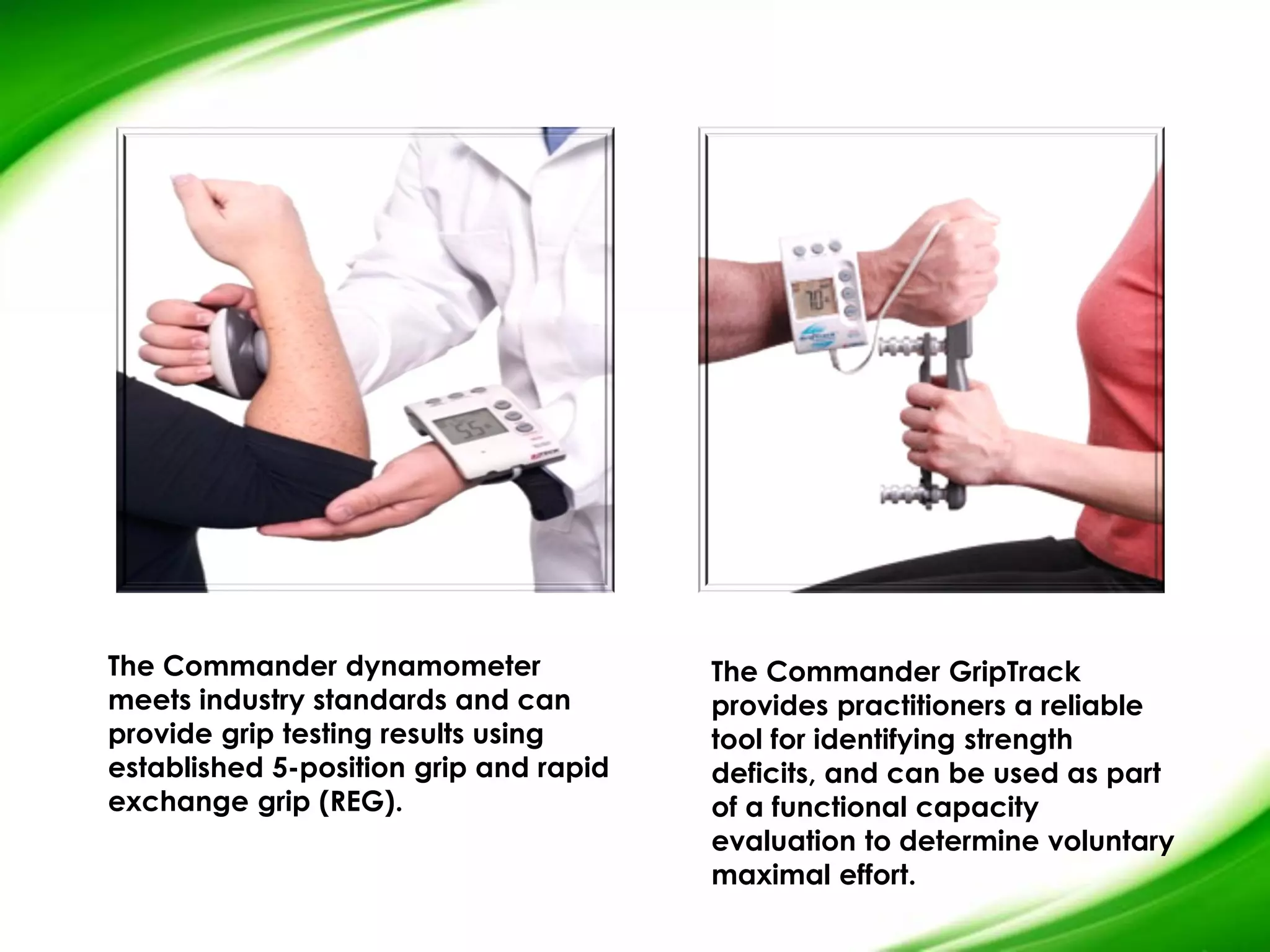
The Commander dynamometer
meets industry standards and can
provide grip testing results using
established 5-position grip and rapid
exchange grip (REG).
The Commander GripTrack
provides practitioners a reliable
tool for identifying strength
deficits, and can be used as part
of a functional capacity
evaluation to determine voluntary
maximal effort.
• Manual Muscle Tester and Grip
Strength Dynamometer
Combination Device:
Combination devices are great
for any clinician or practitioner
who needs to perform a full-
strength evaluation.
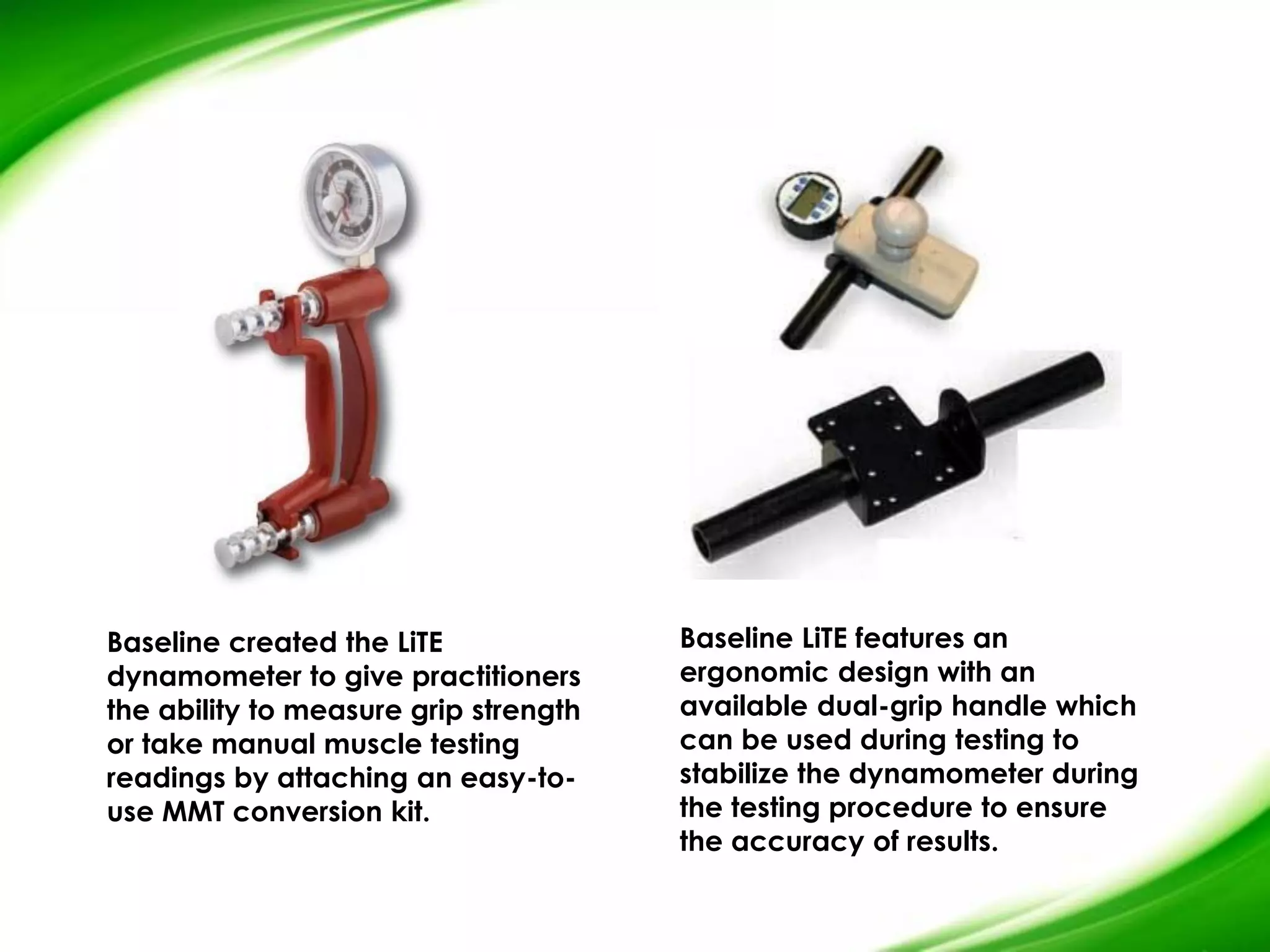
Baseline created the LiTE
dynamometer to give practitioners
the ability to measure grip strength
or take manual muscle testing
readings by attaching an easy-to-
use MMT conversion kit.
Baseline LiTE features an
ergonomic design with an
available dual-grip handle which
can be used during testing to
stabilize the dynamometer during
the testing procedure to ensure
the accuracy of results.
HANDGRIP STRENGTH
TRAINING TOOLS FOR
HAND REHABILITATION
When working with patients who would like to increase grip
strength, it’s important to give patients options for home use.
* Big Grip Hand Exerciser:
An easy to use tool for patients is the
Big Grip hand exerciser which can
be used to facilitate hand flexion and
improve grip strength. With a simple
design, the grip exercisers are simple
to use and are available in four
different resistance levels to
accommodate patients of varying
strength levels and can be upgraded
as grip strength improves.
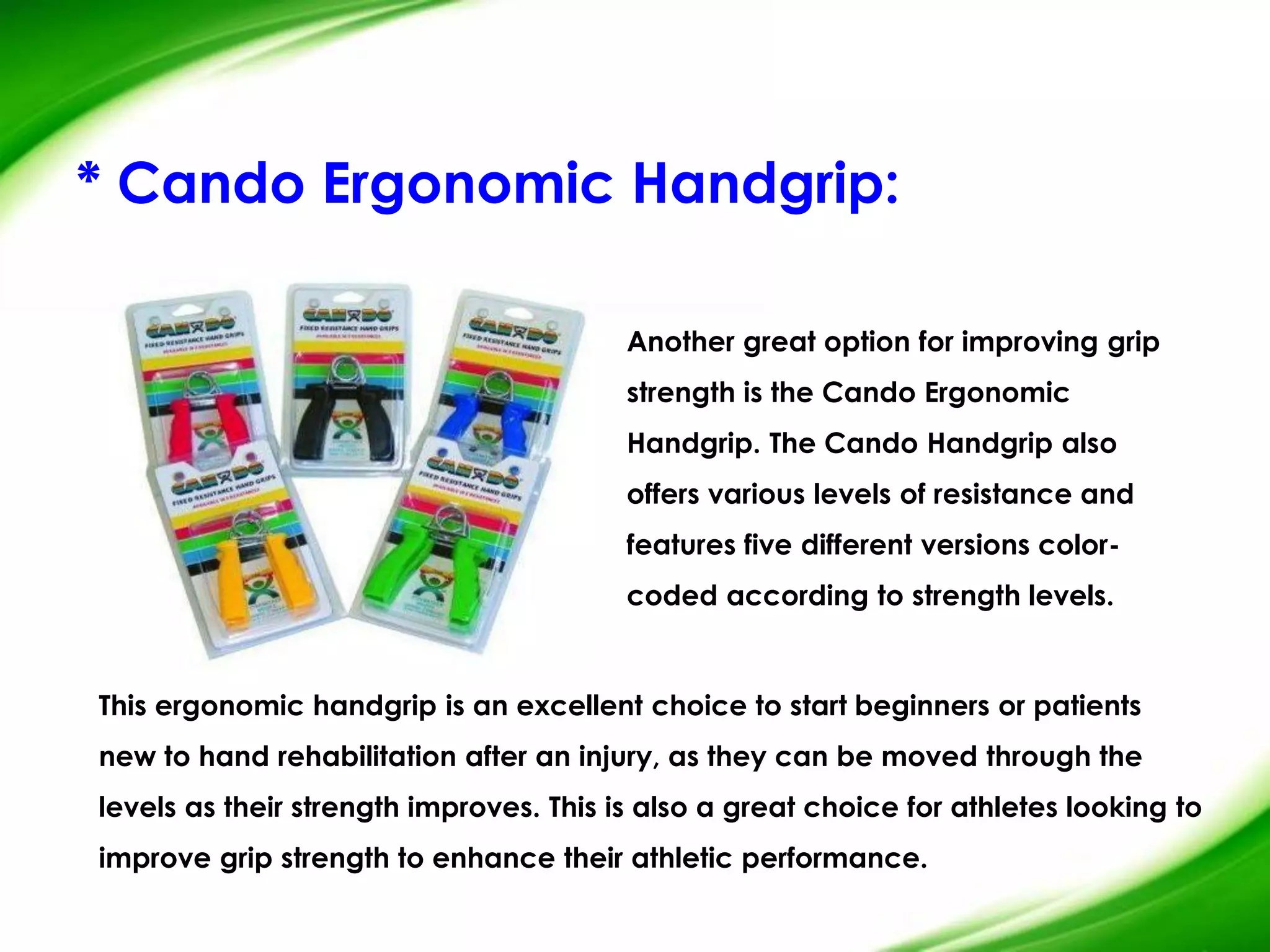
* Cando Ergonomic Handgrip:
Another great option for improving grip
strength is the Cando Ergonomic
Handgrip. The Cando Handgrip also
offers various levels of resistance and
features five different versions color-
coded according to strength levels.
This ergonomic handgrip is an excellent choice to start beginners or patients
new to hand rehabilitation after an injury, as they can be moved through the
levels as their strength improves. This is also a great choice for athletes looking to
improve grip strength to enhance their athletic performance.
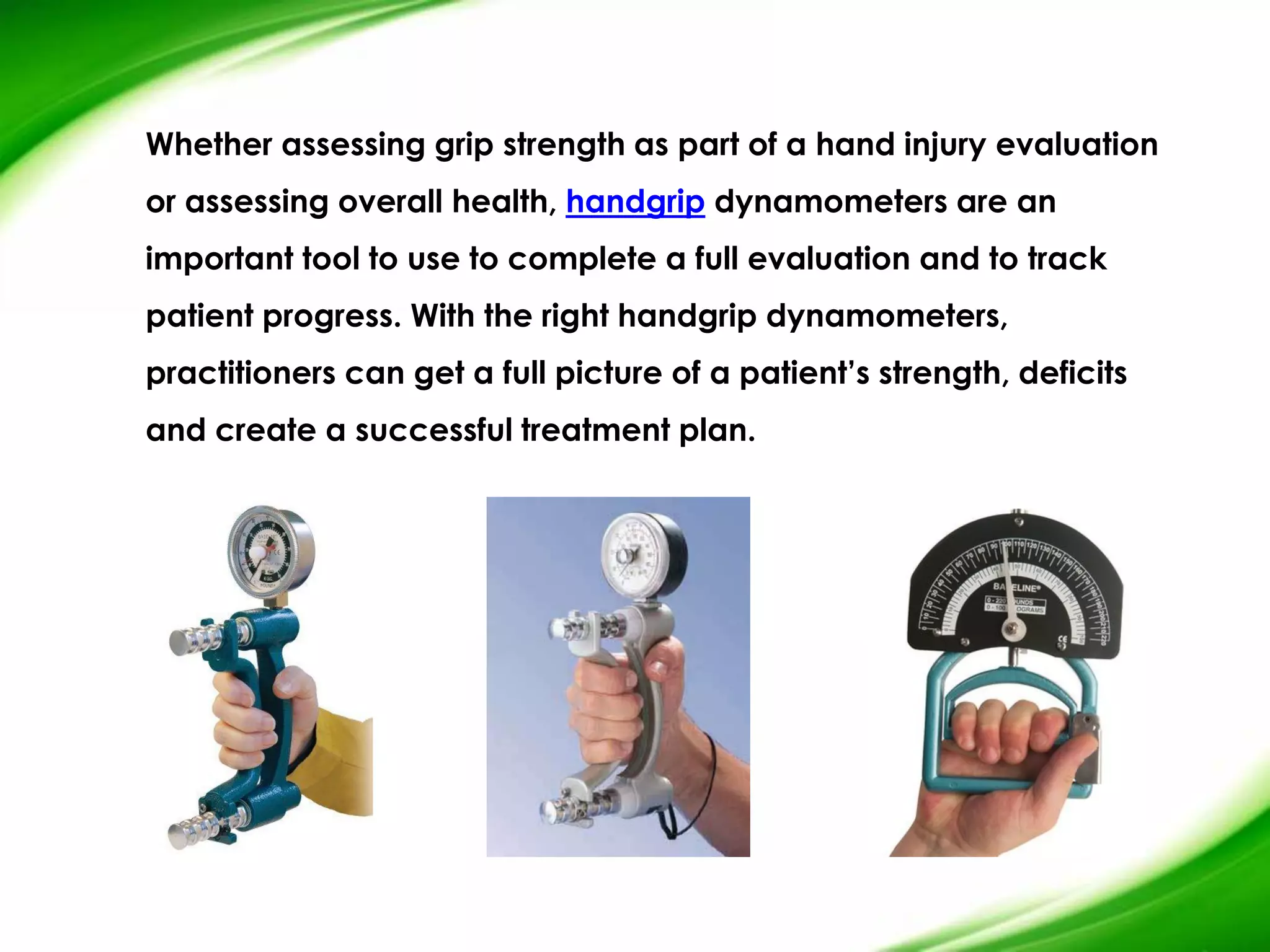
Whether assessing grip strength as part of a hand injury evaluation
or assessing overall health, handgrip dynamometers are an
important tool to use to complete a full evaluation and to track
patient progress. With the right handgrip dynamometers,
practitioners can get a full picture of a patient’s strength, deficits
and create a successful treatment plan.
Shop ProHealthcareProducts.com

Hand Grip Strength Norms

  • 1.
  • 2.
    Grip strength canbe an indicator and evaluator of a patient’s overall health. A grip strength dynamometer is a useful tool for testing a patient’s hand grip strength.
  • 3.
    Grip strength canvary due to a number of factors such as age and gender, it’s important to compare grip dynamometer results against established norm values for grip strength.
  • 4.
    Using established gripstrength norm values is extremely useful in rehabilitation when establishing a baseline of strength, creating rehabilitation regimens and tracking improvements with strength training and during rehabilitation.
  • 5.
    HANDGRIP TESTING PROTOCOLS Hand gripstrength testing results can vary when different protocols are used, it’s important to have established testing protocols to ensure accuracy and easily duplicable results.
  • 6.
    The handgrip dynamometerhandle should ideally be adjusted to fit the patient’s hand or if that’s not possible, the handle should be set at the same setting for everyone. When retesting, the same handle setting should be used, even if the strength of the right or left hand varies. Also, it’s important to perform multiple tests in order to get the maximum score.
  • 7.
    When testing forhand grip strength, it is expected that results will differ for the following reasons: Male and Females Left and right (dominant and non-dominant) hands
  • 8.
    Grip strength testresults can also be affected by the position of the wrist, elbowhttp://www.prohealthcareproducts.com/blog/h and-grip-strength-norms/ and shoulder, so these should be standardized and adequate bracing and/or support should be used when necessary.
  • 9.
    SIMPLE NORM TABLEFOR MALES AND FEMALES, WITH SUBCATEGORIES FOR AGE
  • 10.
    Grip Strength Ratingsfor Males (in kg) AGE Weak Normal Strong 10-11 < 12.6 12.6-22.4 > 22.4 12-13 < 19.4 19.4-31.2 > 31.2 14-15 < 28.5 28.5-44.3 > 44.3 16-17 < 32.6 32.6-52.4 > 52.4 18-19 < 35.7 35.7-55.5 > 55.5 20-24 < 36.8 36.8-56.6 > 56.6 25-29 < 37.7 37.7-57.5 > 57.5 30-34 < 36.0 36.0-55.8 > 55.8 35-39 < 35.8 35.8-55.6 > 55.6 40-44 < 35.5 35.5-55.3 > 55.3 45-49 < 34.7 34.7-54.5 > 54.5 50-54 < 32.9 32.9-50.7 > 50.7 55-59 < 30.7 30.7-48.5 > 48.5 60-64 < 30.2 30.2-48.0 > 48.0 65-69 < 28.2 28.2-44.0 > 44.0 70-99 < 21.3 21.3-35.1 > 35.1
  • 11.
    Grip Strength Ratingsfor Females (in kg) AGE Weak Normal Strong 10-11 < 11.8 11.8-21.6 > 21.6 12-13 < 14.6 14.6-24.4 > 24.4 14-15 < 15.5 15.5-27.3 > 27.3 16-17 < 17.2 17.2-29.0 > 29.0 18-19 < 19.2 19.2-31.0 > 31.0 20-24 < 21.5 21.5-35.3 > 35.3 25-29 < 25.6 25.6-41.4 > 41.4 30-34 < 21.5 21.5-35.3 > 35.3 35-39 < 20.3 20.3-34.1 > 34.1 40-44 < 18.9 18.9-32.7 > 32.7 45-49 < 18.6 18.6-32.4 > 32.4 50-54 < 18.1 18.1-31.9 > 31.9 55-59 < 17.7 17.7-31.5 > 31.5 60-64 < 17.2 17.2-31.0 > 31.0 65-69 < 15.4 15.4-27.2 > 27.2 70-99 < 14.7 14.7-24.5 > 24.5
  • 12.
  • 13.
    * Most Accurate: Oneof the best handgrip strength dynamometers on the market today is the J-Tech Commander Echo Grip Strength Tester. The J-Tech Commander dynamometer is known for both accuracy and testing efficiency.
  • 14.
    The main benefitsof the J-Tech Commander Echo are that it can perform industry accepted 5-position, rapid exchange and sustained grip tests, while automatically storing data for up to 20 tests in the console to help streamline patient charting in high volume clinics.
  • 15.
    * Functional CapacityTesting: For clinics and evaluations looking to perform grip strength testing as part of functional capacity evaluations, the Commander GripTrack dynamometer system is the perfect choice to provide efficient and reliable grip strength testing.
  • 16.
    The Commander dynamometer meetsindustry standards and can provide grip testing results using established 5-position grip and rapid exchange grip (REG). The Commander GripTrack provides practitioners a reliable tool for identifying strength deficits, and can be used as part of a functional capacity evaluation to determine voluntary maximal effort.
  • 17.
    • Manual MuscleTester and Grip Strength Dynamometer Combination Device: Combination devices are great for any clinician or practitioner who needs to perform a full- strength evaluation.
  • 18.
    Baseline created theLiTE dynamometer to give practitioners the ability to measure grip strength or take manual muscle testing readings by attaching an easy-to- use MMT conversion kit. Baseline LiTE features an ergonomic design with an available dual-grip handle which can be used during testing to stabilize the dynamometer during the testing procedure to ensure the accuracy of results.
  • 19.
    HANDGRIP STRENGTH TRAINING TOOLSFOR HAND REHABILITATION When working with patients who would like to increase grip strength, it’s important to give patients options for home use.
  • 20.
    * Big GripHand Exerciser: An easy to use tool for patients is the Big Grip hand exerciser which can be used to facilitate hand flexion and improve grip strength. With a simple design, the grip exercisers are simple to use and are available in four different resistance levels to accommodate patients of varying strength levels and can be upgraded as grip strength improves.
  • 21.
    * Cando ErgonomicHandgrip: Another great option for improving grip strength is the Cando Ergonomic Handgrip. The Cando Handgrip also offers various levels of resistance and features five different versions color- coded according to strength levels. This ergonomic handgrip is an excellent choice to start beginners or patients new to hand rehabilitation after an injury, as they can be moved through the levels as their strength improves. This is also a great choice for athletes looking to improve grip strength to enhance their athletic performance.
  • 22.
    Whether assessing gripstrength as part of a hand injury evaluation or assessing overall health, handgrip dynamometers are an important tool to use to complete a full evaluation and to track patient progress. With the right handgrip dynamometers, practitioners can get a full picture of a patient’s strength, deficits and create a successful treatment plan.
  • 23.