Kelly Hallman, Kasthuri Govender, Eva Roca, Cecilia Calderon,
Emmanuel Mbatha, Mike Rogan, and Hannah Taboada
Population Council, Isihlangu HDA, University of KwaZulu-Natal

Using mixed methods to study the relationship between
reproductive health and poverty: Lessons from the field
A methods workshop, PovPov Research Network
November 4-5, 2010, London
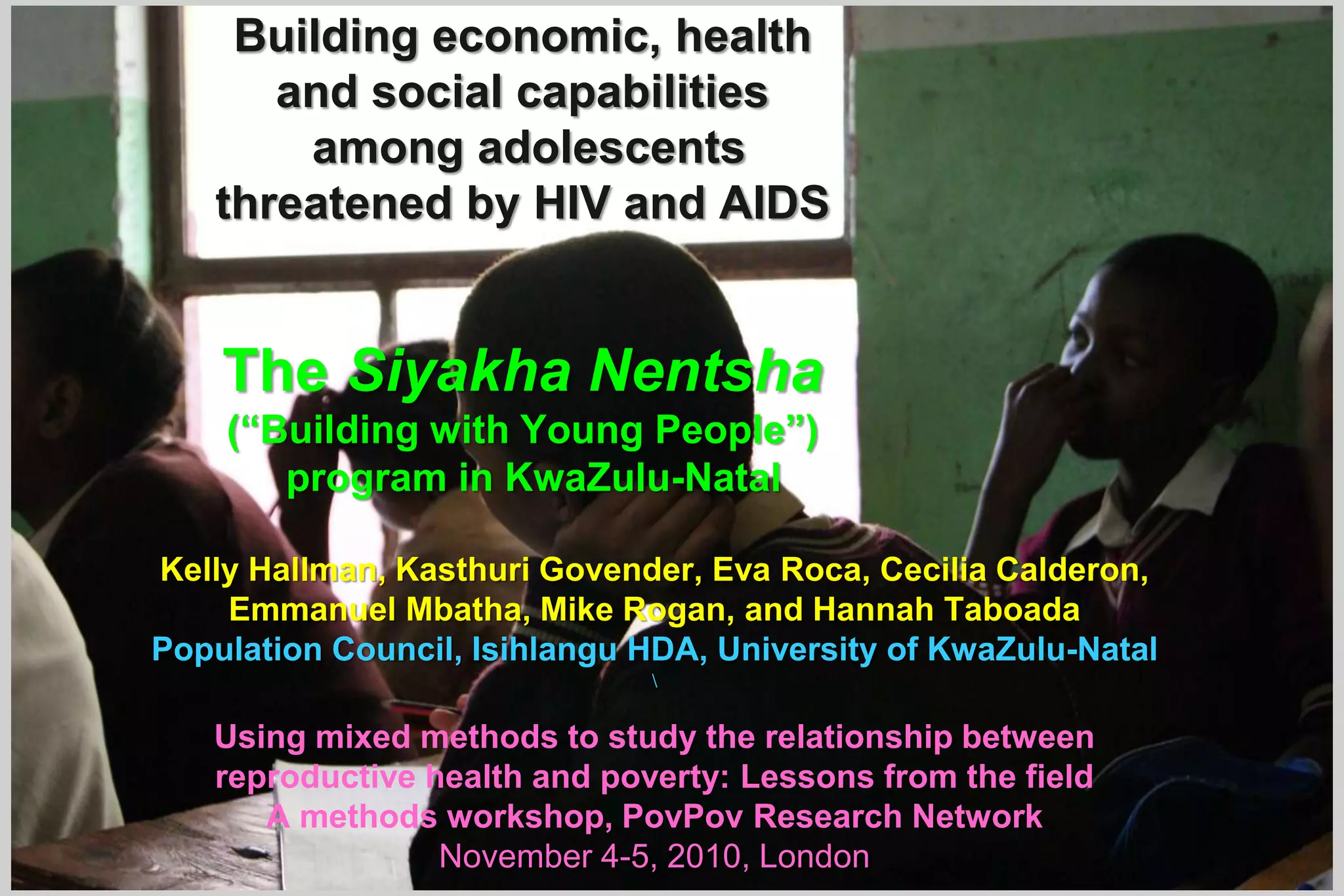
Building economic, health
and social capabilities
among adolescents
threatened by HIV and AIDS
The Siyakha Nentsha
(“Building with Young People”)
program in KwaZulu-Natal
Mixed methods at each stage
• Planning
• Program design
• Program implementation
• Measurement of outcomes
Strategic planning -
Mixed methods to learn
 Which adolescents vulnerable
- Identify highest concentrations of vulnerable by gender, age &
geography (quant w mapping)
 Whether at-risk adolescents reached by “youth”
initiatives (IDIs w programmes)
 What components missing from existing programs
(IDIs w programmes)
 How to reach/target a programme
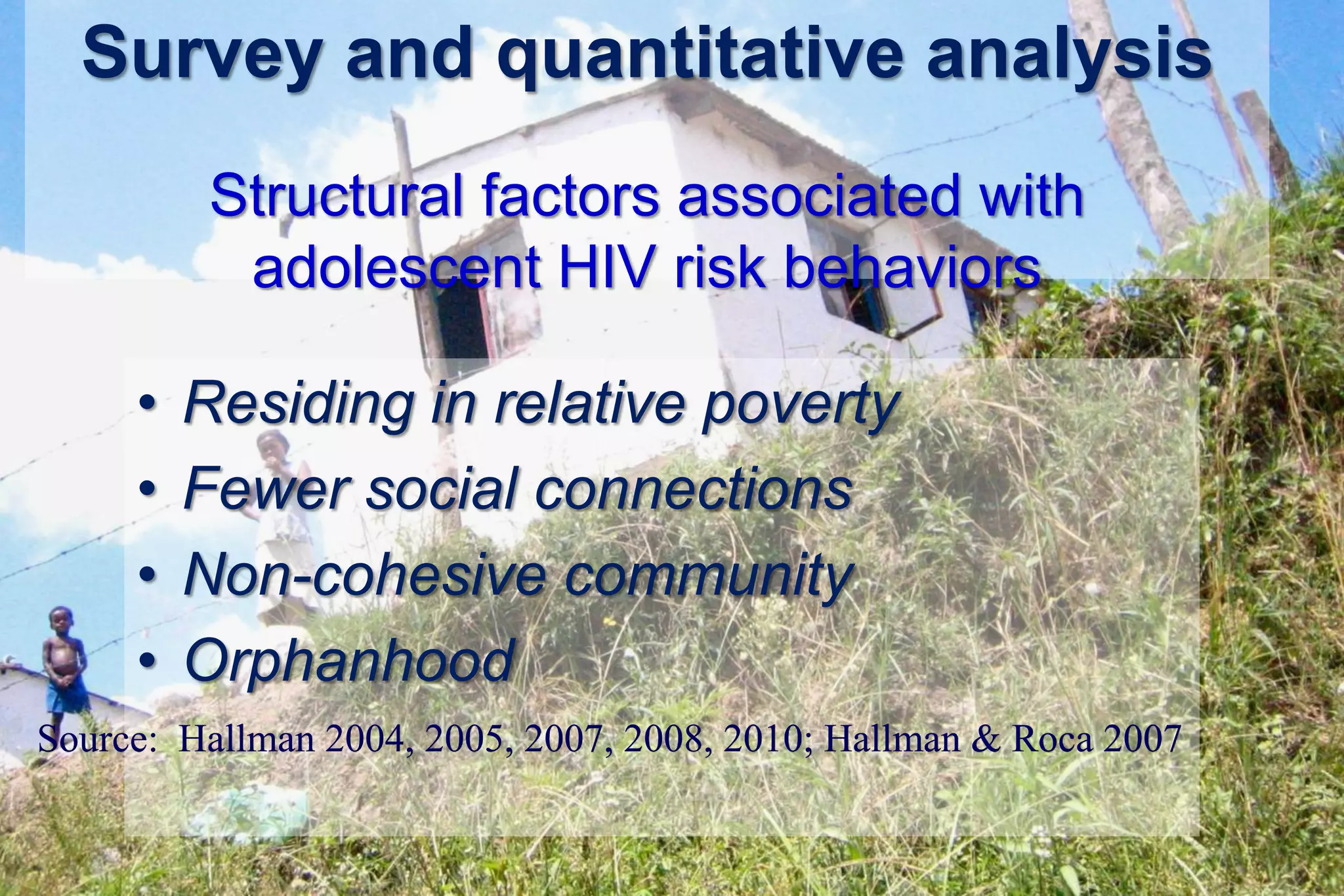
Survey and quantitative analysis
Structural factors associated with
adolescent HIV risk behaviors
• Residing in relative poverty
• Fewer social connections
• Non-cohesive community
• Orphanhood
Source: Hallman 2004, 2005, 2007, 2008, 2010; Hallman & Roca 2007
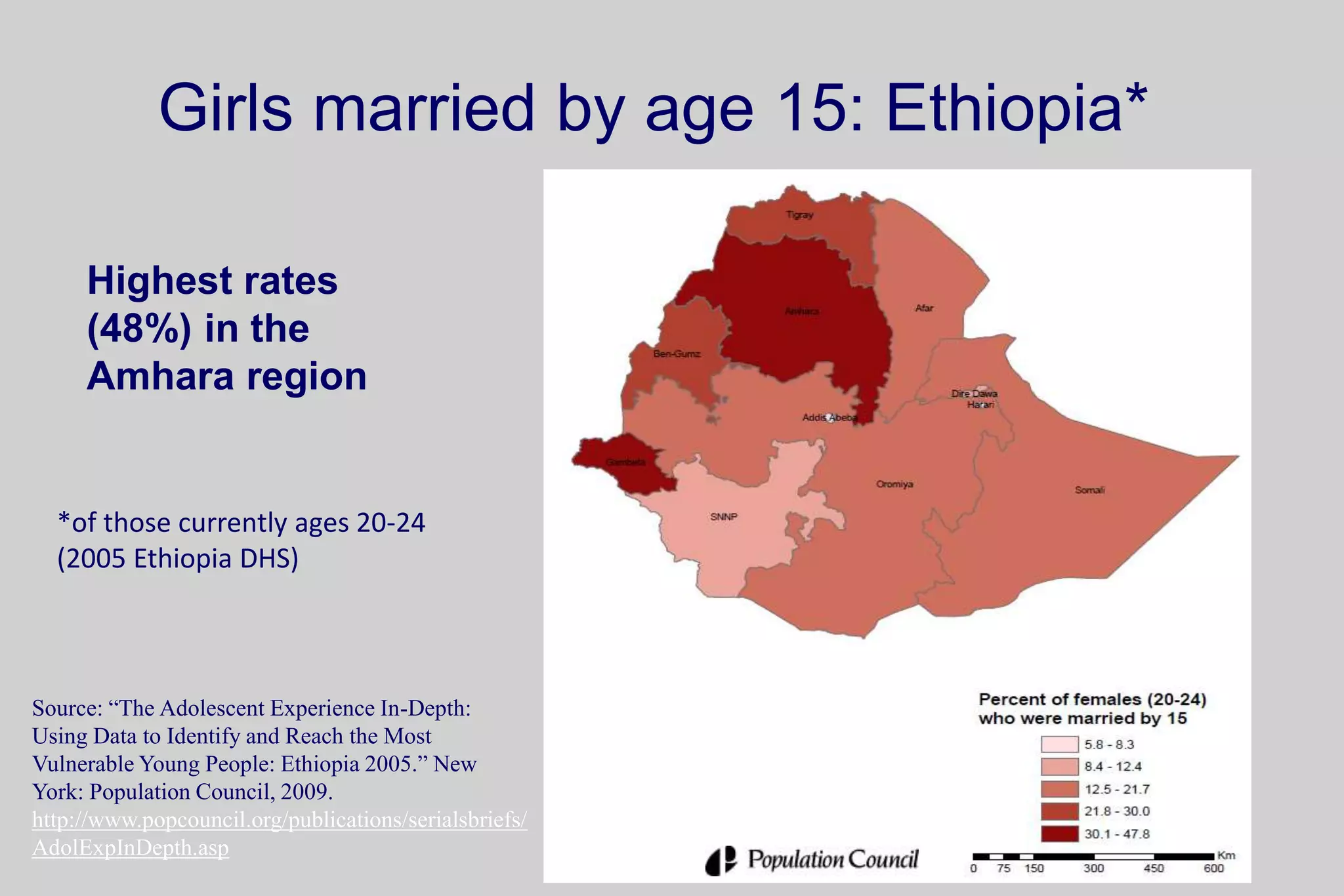
*of those currently ages 20-24
(2005 Ethiopia DHS)
Source: “The Adolescent Experience In-Depth:
Using Data to Identify and Reach the Most
Vulnerable Young People: Ethiopia 2005.” New
York: Population Council, 2009.
http://www.popcouncil.org/publications/serialsbriefs/
AdolExpInDepth.asp
Highest rates
(48%) in the
Amhara region
Girls married by age 15: Ethiopia*
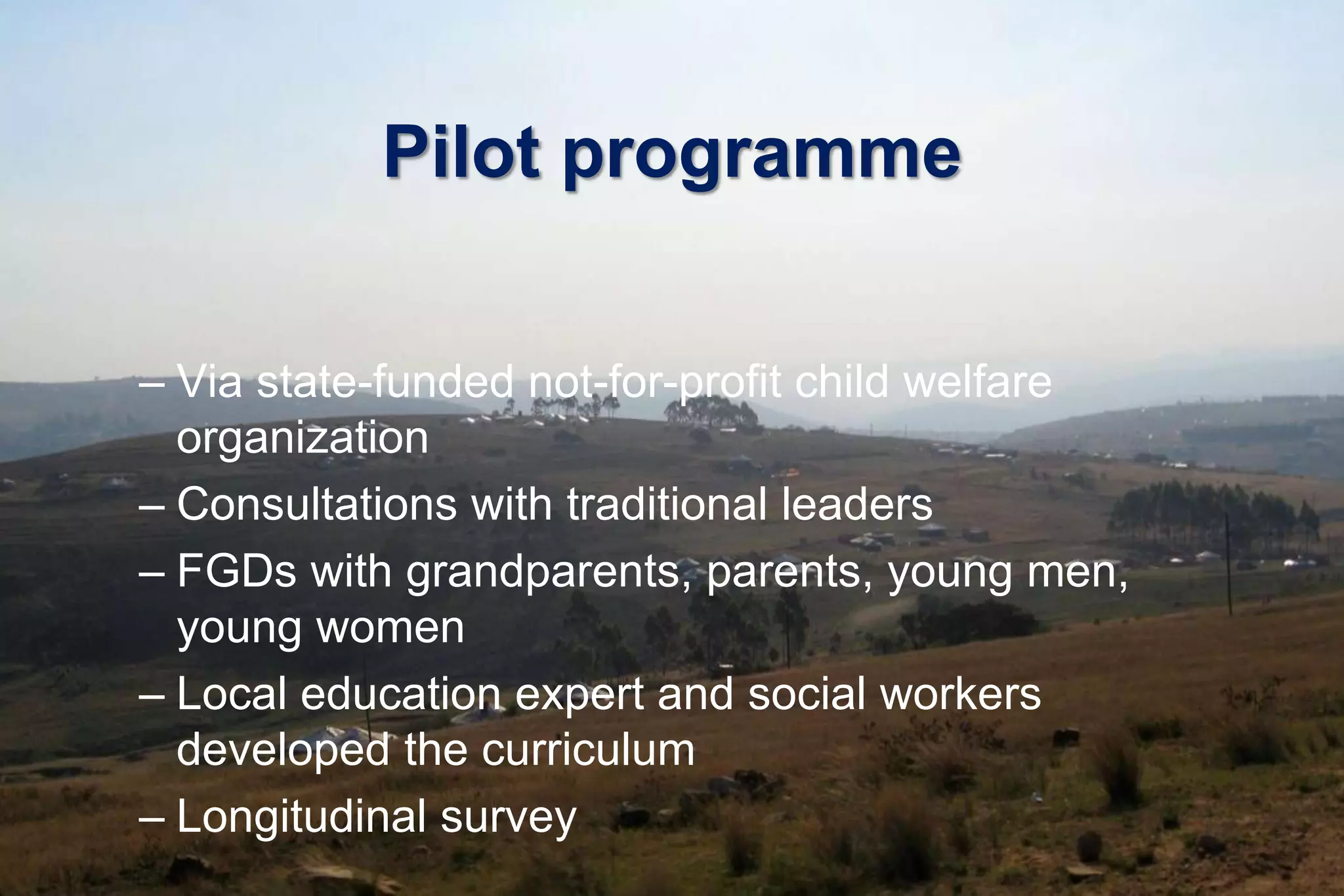
Pilot programme
– Via state-funded not-for-profit child welfare
organization
– Consultations with traditional leaders
– FGDs with grandparents, parents, young men,
young women
– Local education expert and social workers
developed the curriculum
– Longitudinal survey
Extensive engagement
with stakeholders
• Traditional leaders
• Department of education
• Schools
• Guardians
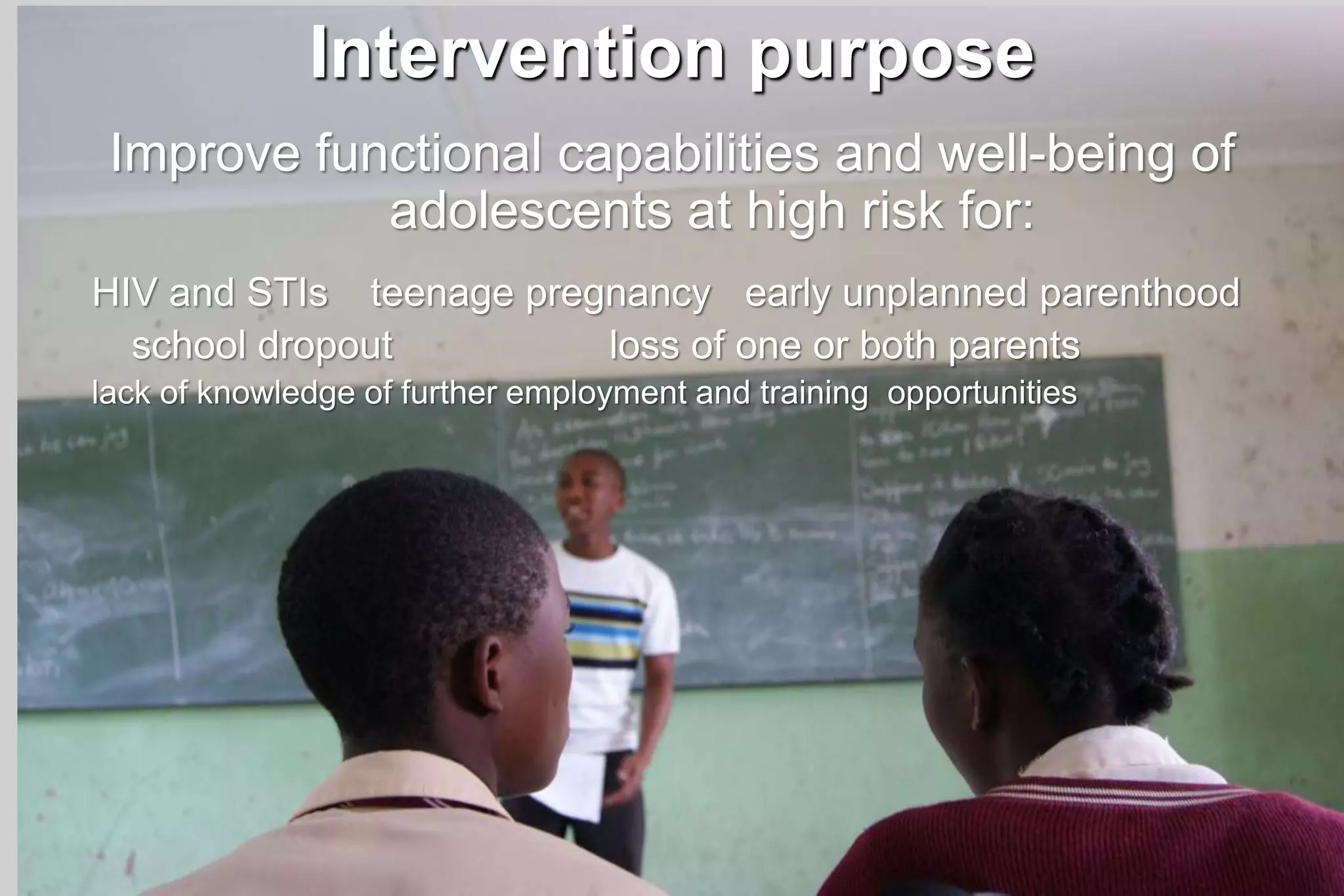
Intervention purpose
Improve functional capabilities and well-being of
adolescents at high risk for:
HIV and STIs teenage pregnancy early unplanned parenthood
school dropout loss of one or both parents
lack of knowledge of further employment and training opportunities
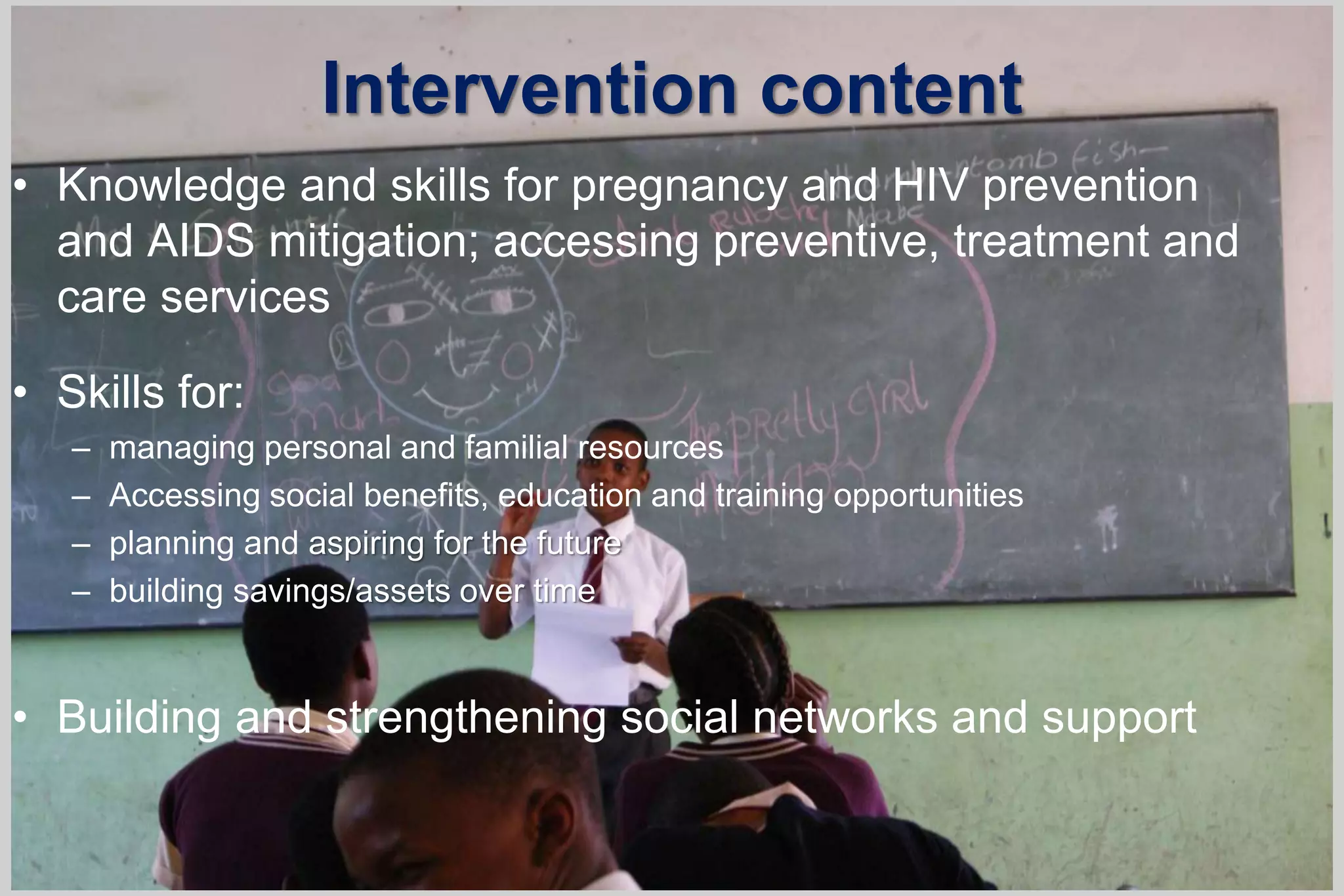
Intervention content
• Knowledge and skills for pregnancy and HIV prevention
and AIDS mitigation; accessing preventive, treatment and
care services
• Skills for:
– managing personal and familial resources
– Accessing social benefits, education and training opportunities
– planning and aspiring for the future
– building savings/assets over time
• Building and strengthening social networks and support
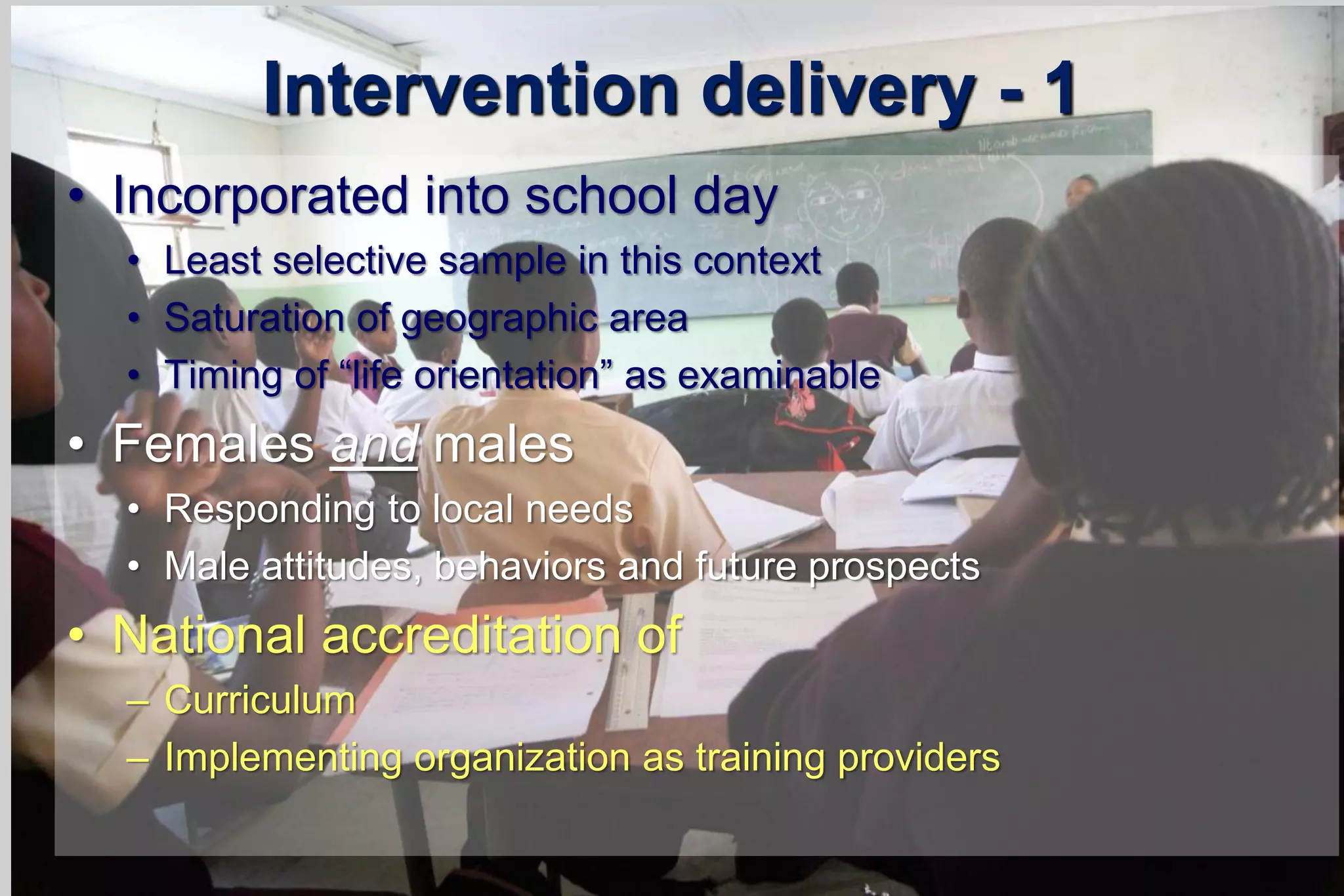
Intervention delivery - 1
• Incorporated into school day
• Least selective sample in this context
• Saturation of geographic area
• Timing of “life orientation” as examinable
• Females and males
• Responding to local needs
• Male attitudes, behaviors and future prospects
• National accreditation of
– Curriculum
– Implementing organization as training providers
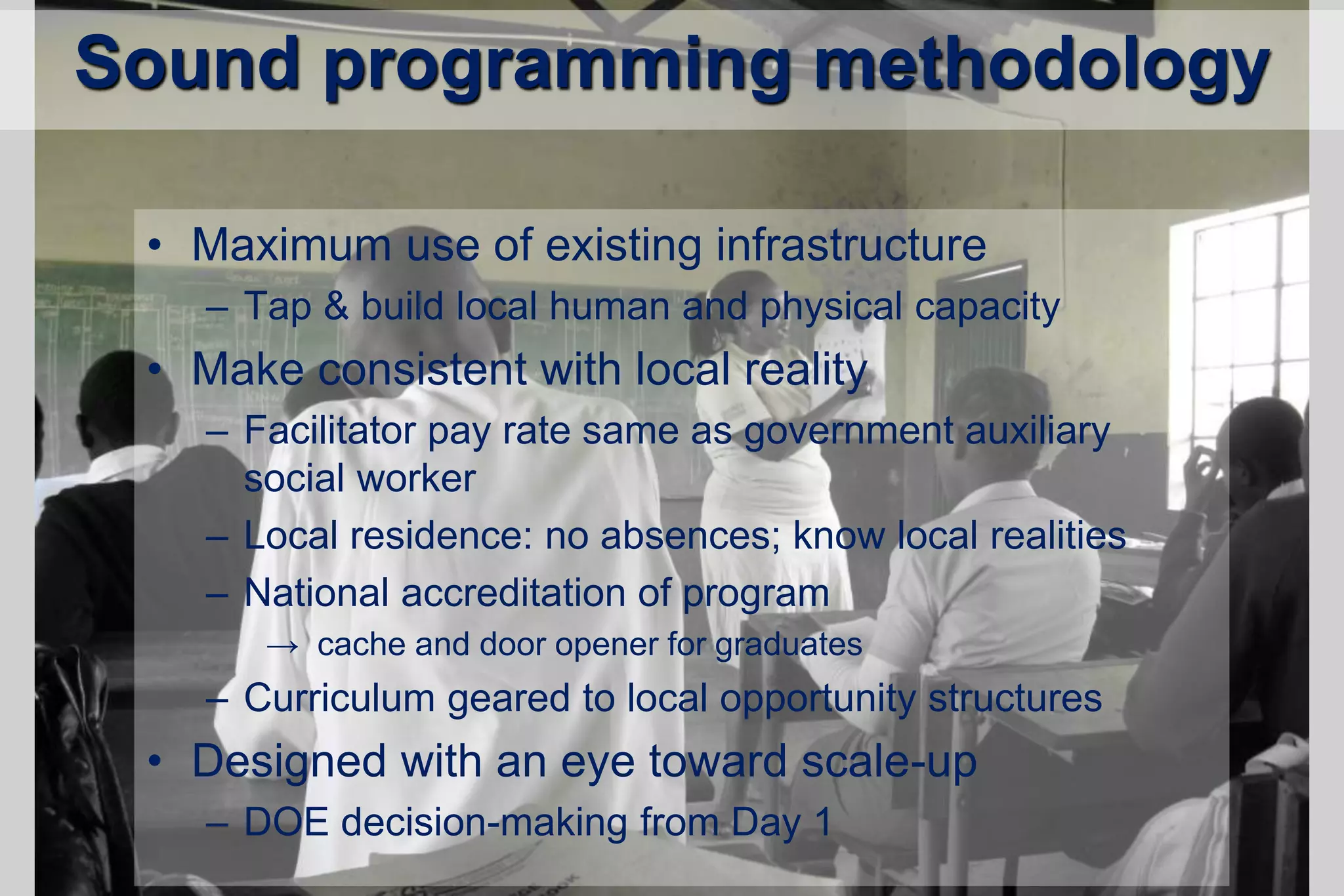
Sound programming methodology
• Maximum use of existing infrastructure
– Tap & build local human and physical capacity
• Make consistent with local reality
– Facilitator pay rate same as government auxiliary
social worker
– Local residence: no absences; know local realities
– National accreditation of program
→ cache and door opener for graduates
– Curriculum geared to local opportunity structures
• Designed with an eye toward scale-up
– DOE decision-making from Day 1
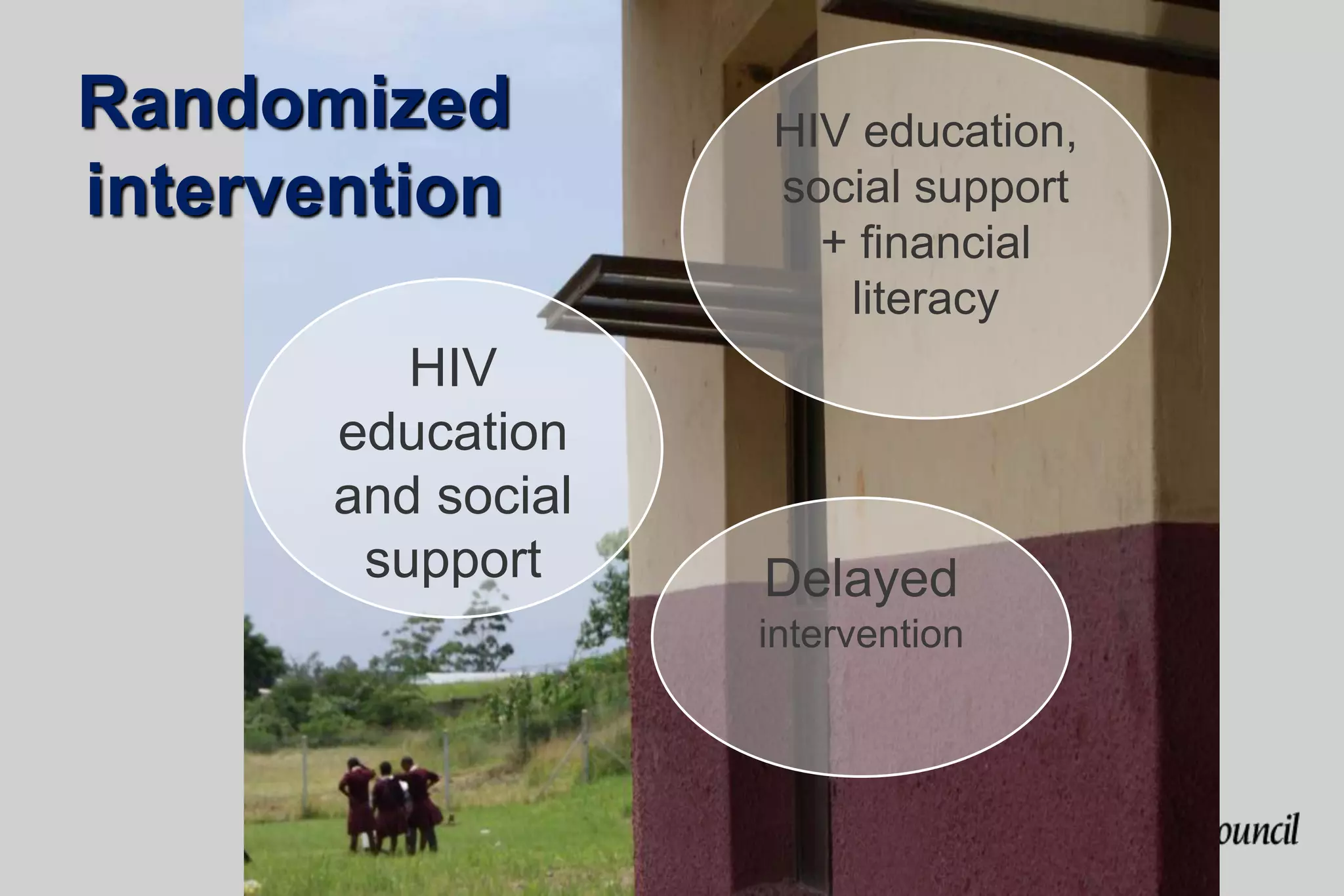
Randomized
intervention
HIV education,
social support
+ financial
literacy
HIV
education
and social
support Delayed
intervention
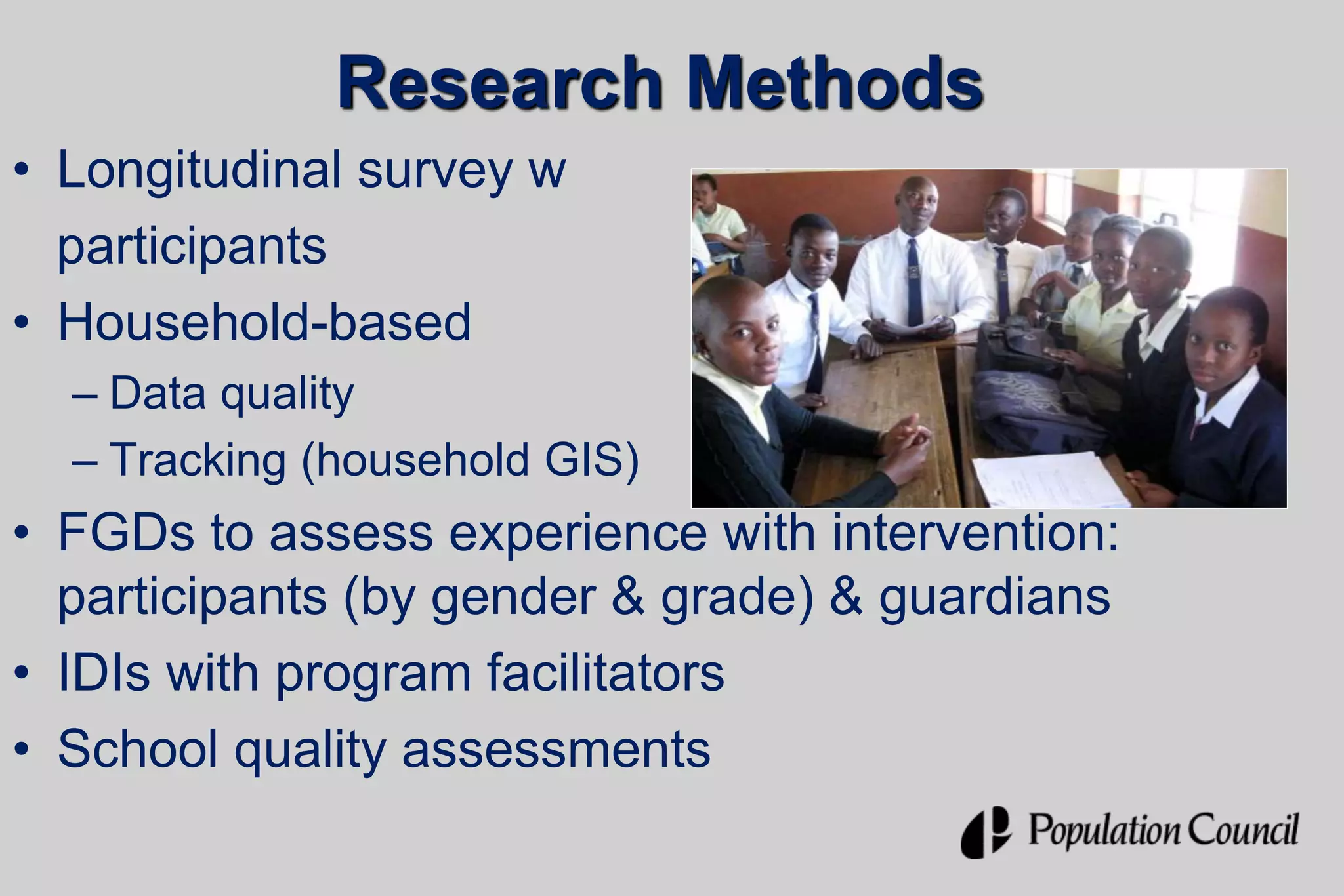
Research Methods
• Longitudinal survey w
participants
• Household-based interview
– Data quality
– Tracking (household GIS)
• FGDs to assess experience with intervention:
participants (by gender & grade) & guardians
• IDIs with program facilitators
• School quality assessments
Implementation challenges
• Working within existing local program
– School or NGO
• Mandates, priorities
• Ownership (programme; facilities; personnel)
• Time and resource constraints
• Managing local expectations of what programme
will deliver
• Explaining why programme is randomised
• Rationale for control schools
Advantages of mixed methods
• Ongoing partnership between researchers and
programme implementers
– Allows for iterative, dynamic process
• “Course correction” during intervention
• Improved research instruments
• Ability to select qualitative study participants
purposefully from survey, based on designated
characteristics
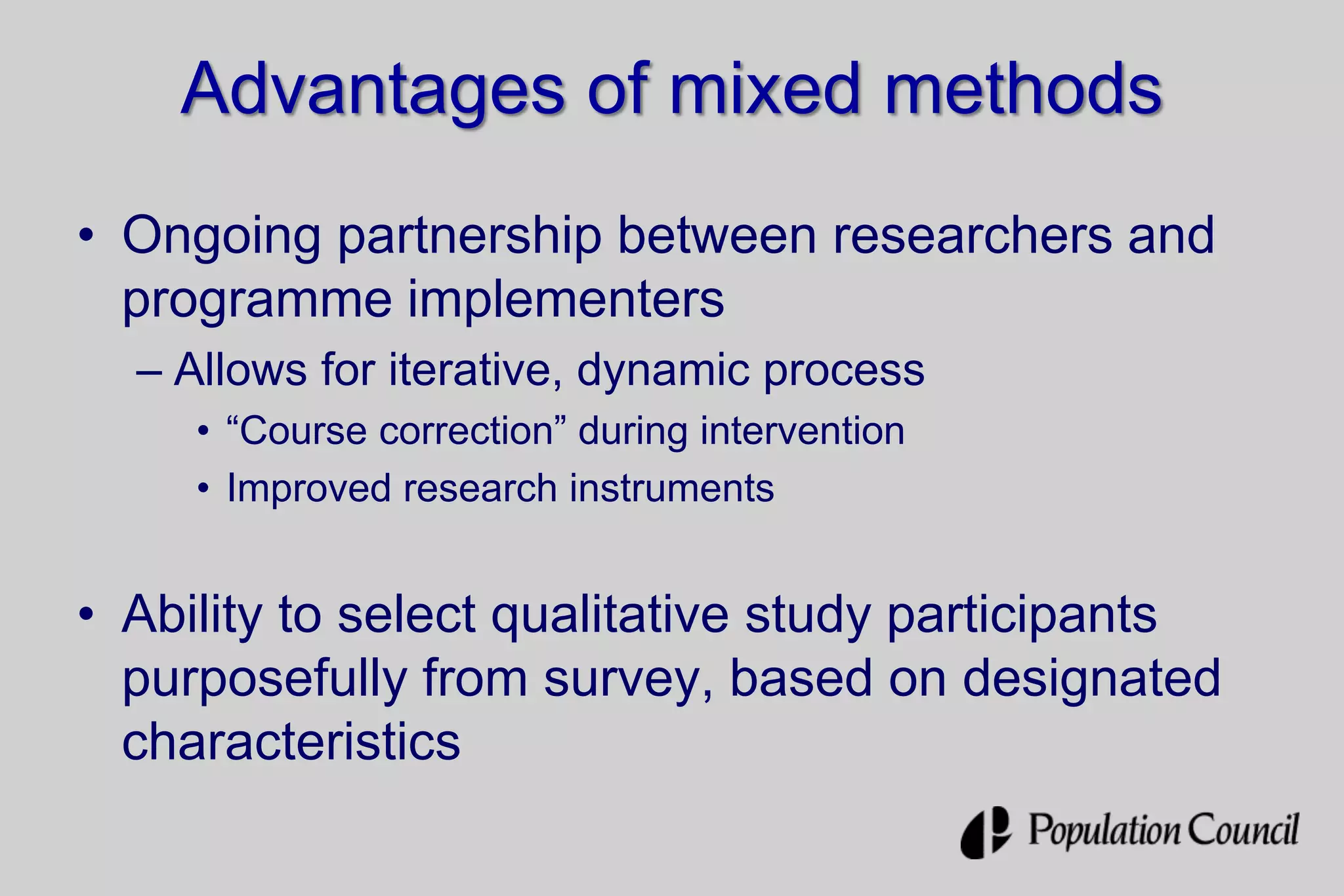
Advantages of mixed methods
Triangulation
• Sheds light on “confusing” results; reveals
complexities
• Research is more policy relevant and responsive
• New research issues emerge
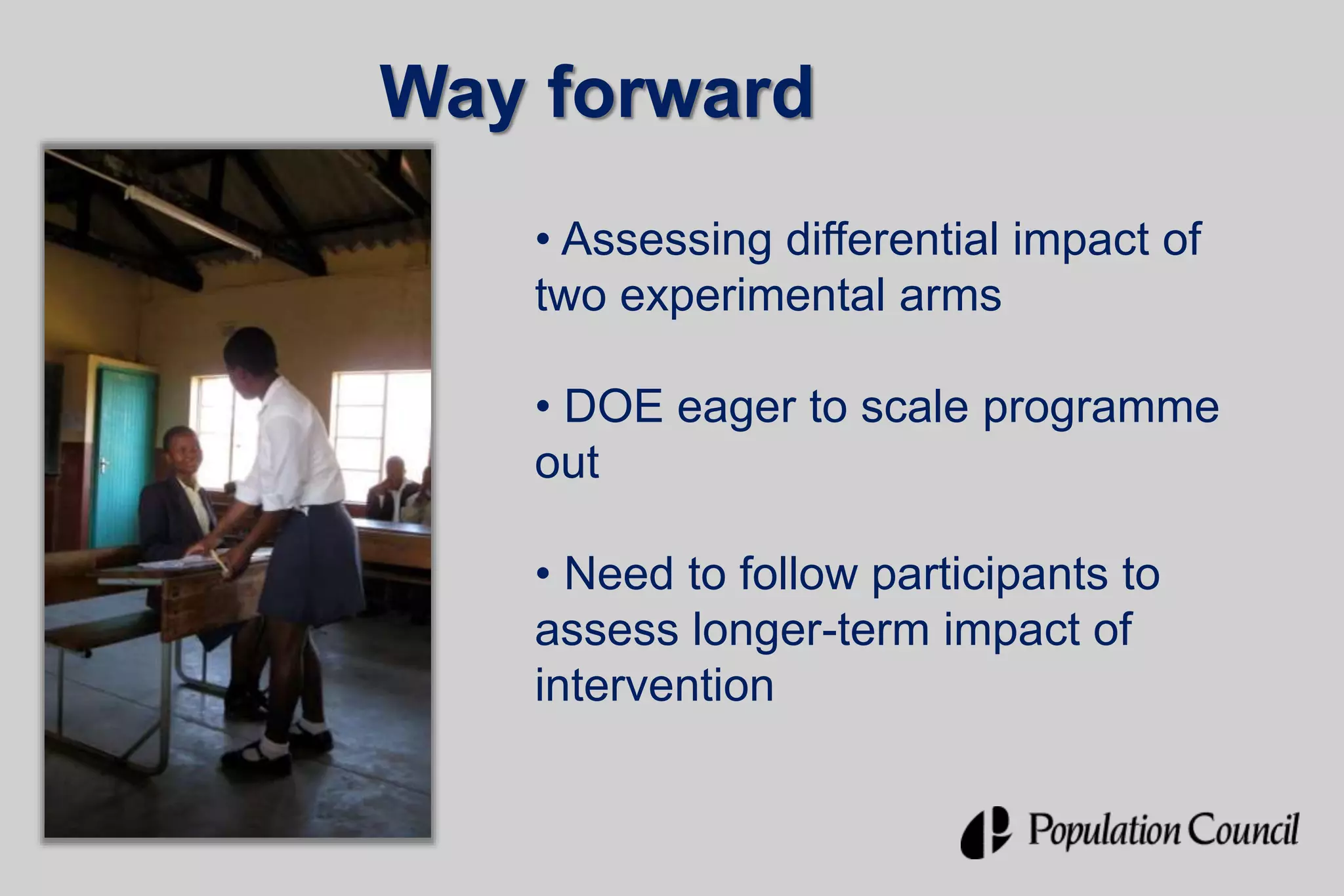
Way forward
• Assessing differential impact of
two experimental arms
• DOE eager to scale programme
out
• Need to follow participants to
assess longer-term impact of
intervention
Selected resources
• Hallman, K. 2010, in press. “Social exclusion: The gendering of adolescent HIV
risks in KwaZulu-Natal, South Africa,” in J. Klot and V. Nguyen eds., The Fourth
Wave: An Assault on Women - Gender, Culture and HIV in the 21st Century.
Social Science Research Council and UNESCO.
• Hallman, K. 2008.“Researching the determinants of vulnerability to HIV amongst
adolescents,” IDS Bulletin, 39(5), November 2008.
• Bruce, J. and Hallman, K. 2008. “Reaching the girls left behind,” Gender &
Development, 16(2): 227-245.
• Hallman, K and Roca, E. 2007. “Reducing the social exclusion of girls,”
www.popcouncil.org/pdfs/TABriefs/PGY_Brief27_SocialExclusion.pdf
• Hallman, K. 2007. “Nonconsensual sex, school enrollment and educational
outcomes in South Africa,” Africa Insight (special issue on Youth in Africa), 37(3):
454-472.
• Hallman, K. 2005. “Gendered socioeconomic conditions and HIV risk behaviours
among young people in South Africa,” African Journal of AIDS Research 4(1):
37–50. Abstract: http://www.popcouncil.org/projects/abstracts/AJAR_4_1.html
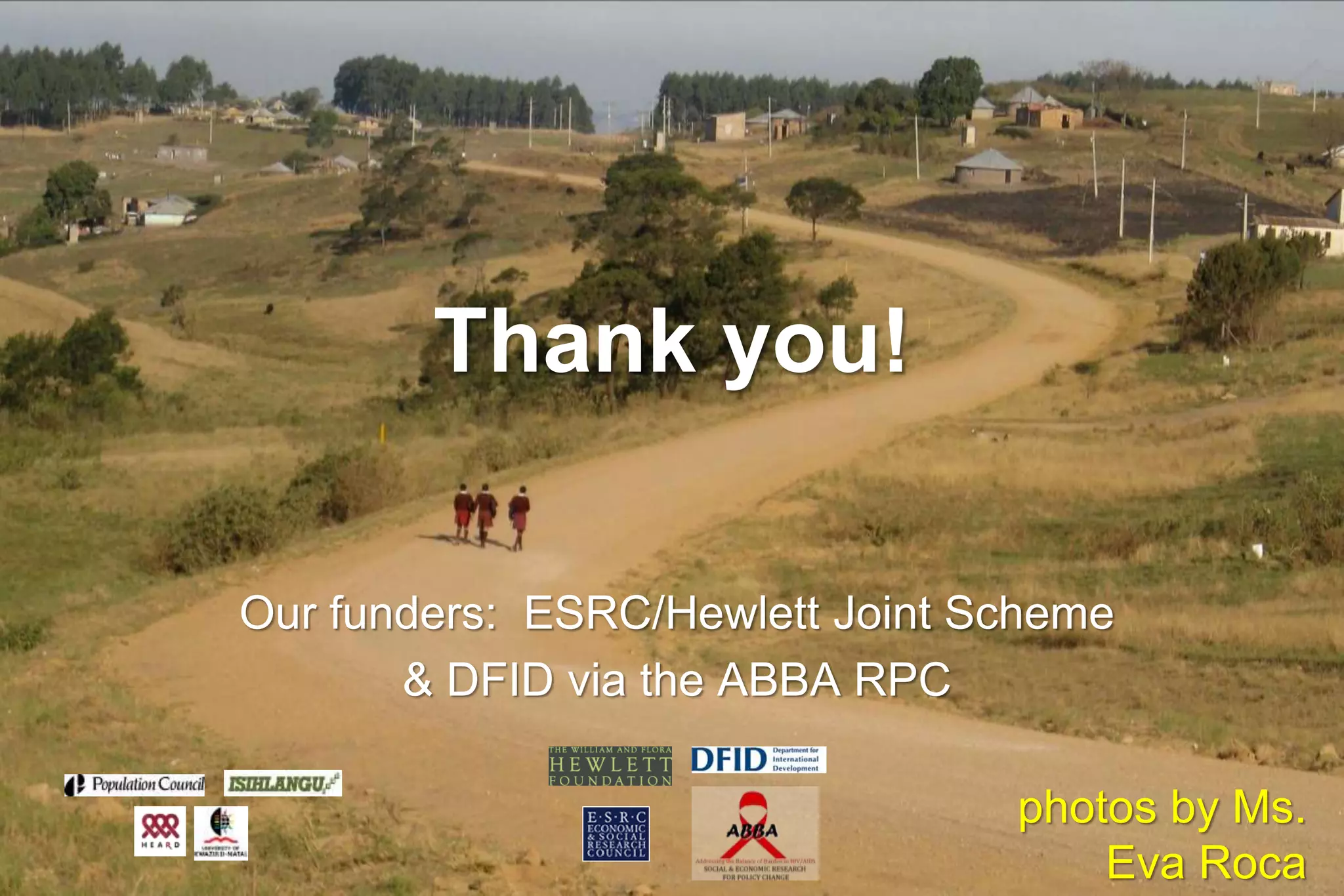
Thank you!
Our funders: ESRC/Hewlett Joint Scheme
& DFID via the ABBA RPC
photos by Ms.
Eva Roca

Building Health, Social, and Economic Capabilities among Adolescents Threatened by HIV and AIDS (mixed-methods research)

  • 1.
    Kelly Hallman, KasthuriGovender, Eva Roca, Cecilia Calderon, Emmanuel Mbatha, Mike Rogan, and Hannah Taboada Population Council, Isihlangu HDA, University of KwaZulu-Natal Using mixed methods to study the relationship between reproductive health and poverty: Lessons from the field A methods workshop, PovPov Research Network November 4-5, 2010, London Building economic, health and social capabilities among adolescents threatened by HIV and AIDS The Siyakha Nentsha (“Building with Young People”) program in KwaZulu-Natal
  • 2.
    Mixed methods ateach stage • Planning • Program design • Program implementation • Measurement of outcomes
  • 3.
    Strategic planning - Mixedmethods to learn  Which adolescents vulnerable - Identify highest concentrations of vulnerable by gender, age & geography (quant w mapping)  Whether at-risk adolescents reached by “youth” initiatives (IDIs w programmes)  What components missing from existing programs (IDIs w programmes)  How to reach/target a programme
  • 4.
    Survey and quantitativeanalysis Structural factors associated with adolescent HIV risk behaviors • Residing in relative poverty • Fewer social connections • Non-cohesive community • Orphanhood Source: Hallman 2004, 2005, 2007, 2008, 2010; Hallman & Roca 2007
  • 5.
    *of those currentlyages 20-24 (2005 Ethiopia DHS) Source: “The Adolescent Experience In-Depth: Using Data to Identify and Reach the Most Vulnerable Young People: Ethiopia 2005.” New York: Population Council, 2009. http://www.popcouncil.org/publications/serialsbriefs/ AdolExpInDepth.asp Highest rates (48%) in the Amhara region Girls married by age 15: Ethiopia*
  • 6.
    Pilot programme – Viastate-funded not-for-profit child welfare organization – Consultations with traditional leaders – FGDs with grandparents, parents, young men, young women – Local education expert and social workers developed the curriculum – Longitudinal survey
  • 7.
    Extensive engagement with stakeholders •Traditional leaders • Department of education • Schools • Guardians
  • 8.
    Intervention purpose Improve functionalcapabilities and well-being of adolescents at high risk for: HIV and STIs teenage pregnancy early unplanned parenthood school dropout loss of one or both parents lack of knowledge of further employment and training opportunities
  • 9.
    Intervention content • Knowledgeand skills for pregnancy and HIV prevention and AIDS mitigation; accessing preventive, treatment and care services • Skills for: – managing personal and familial resources – Accessing social benefits, education and training opportunities – planning and aspiring for the future – building savings/assets over time • Building and strengthening social networks and support
  • 10.
    Intervention delivery -1 • Incorporated into school day • Least selective sample in this context • Saturation of geographic area • Timing of “life orientation” as examinable • Females and males • Responding to local needs • Male attitudes, behaviors and future prospects • National accreditation of – Curriculum – Implementing organization as training providers
  • 11.
    Sound programming methodology •Maximum use of existing infrastructure – Tap & build local human and physical capacity • Make consistent with local reality – Facilitator pay rate same as government auxiliary social worker – Local residence: no absences; know local realities – National accreditation of program → cache and door opener for graduates – Curriculum geared to local opportunity structures • Designed with an eye toward scale-up – DOE decision-making from Day 1
  • 12.
    Randomized intervention HIV education, social support +financial literacy HIV education and social support Delayed intervention
  • 13.
    Research Methods • Longitudinalsurvey w participants • Household-based interview – Data quality – Tracking (household GIS) • FGDs to assess experience with intervention: participants (by gender & grade) & guardians • IDIs with program facilitators • School quality assessments
  • 14.
    Implementation challenges • Workingwithin existing local program – School or NGO • Mandates, priorities • Ownership (programme; facilities; personnel) • Time and resource constraints • Managing local expectations of what programme will deliver • Explaining why programme is randomised • Rationale for control schools
  • 15.
    Advantages of mixedmethods • Ongoing partnership between researchers and programme implementers – Allows for iterative, dynamic process • “Course correction” during intervention • Improved research instruments • Ability to select qualitative study participants purposefully from survey, based on designated characteristics
  • 16.
    Advantages of mixedmethods Triangulation • Sheds light on “confusing” results; reveals complexities • Research is more policy relevant and responsive • New research issues emerge
  • 17.
    Way forward • Assessingdifferential impact of two experimental arms • DOE eager to scale programme out • Need to follow participants to assess longer-term impact of intervention
  • 18.
    Selected resources • Hallman,K. 2010, in press. “Social exclusion: The gendering of adolescent HIV risks in KwaZulu-Natal, South Africa,” in J. Klot and V. Nguyen eds., The Fourth Wave: An Assault on Women - Gender, Culture and HIV in the 21st Century. Social Science Research Council and UNESCO. • Hallman, K. 2008.“Researching the determinants of vulnerability to HIV amongst adolescents,” IDS Bulletin, 39(5), November 2008. • Bruce, J. and Hallman, K. 2008. “Reaching the girls left behind,” Gender & Development, 16(2): 227-245. • Hallman, K and Roca, E. 2007. “Reducing the social exclusion of girls,” www.popcouncil.org/pdfs/TABriefs/PGY_Brief27_SocialExclusion.pdf • Hallman, K. 2007. “Nonconsensual sex, school enrollment and educational outcomes in South Africa,” Africa Insight (special issue on Youth in Africa), 37(3): 454-472. • Hallman, K. 2005. “Gendered socioeconomic conditions and HIV risk behaviours among young people in South Africa,” African Journal of AIDS Research 4(1): 37–50. Abstract: http://www.popcouncil.org/projects/abstracts/AJAR_4_1.html
  • 19.
    Thank you! Our funders:ESRC/Hewlett Joint Scheme & DFID via the ABBA RPC photos by Ms. Eva Roca

Editor's Notes

  • #6 Ethiopia: Child Marriage rates in Amhara Province are nearly double that of the next most effective region (Tigray)
  • #13 Aspirations failure from poverty trap literature. Low aspirations correlated with more sexual risk taking (Barnett)