Bruce Umbaugh
Professor of Philosophy
Director, Global Citizenship Program
October 4, 2012
Mission
The mission of the Global Citizenship Program is
to ensure that every undergraduate student
emerges from Webster University with the core
competencies required for responsible global
citizenship in the 21st Century.
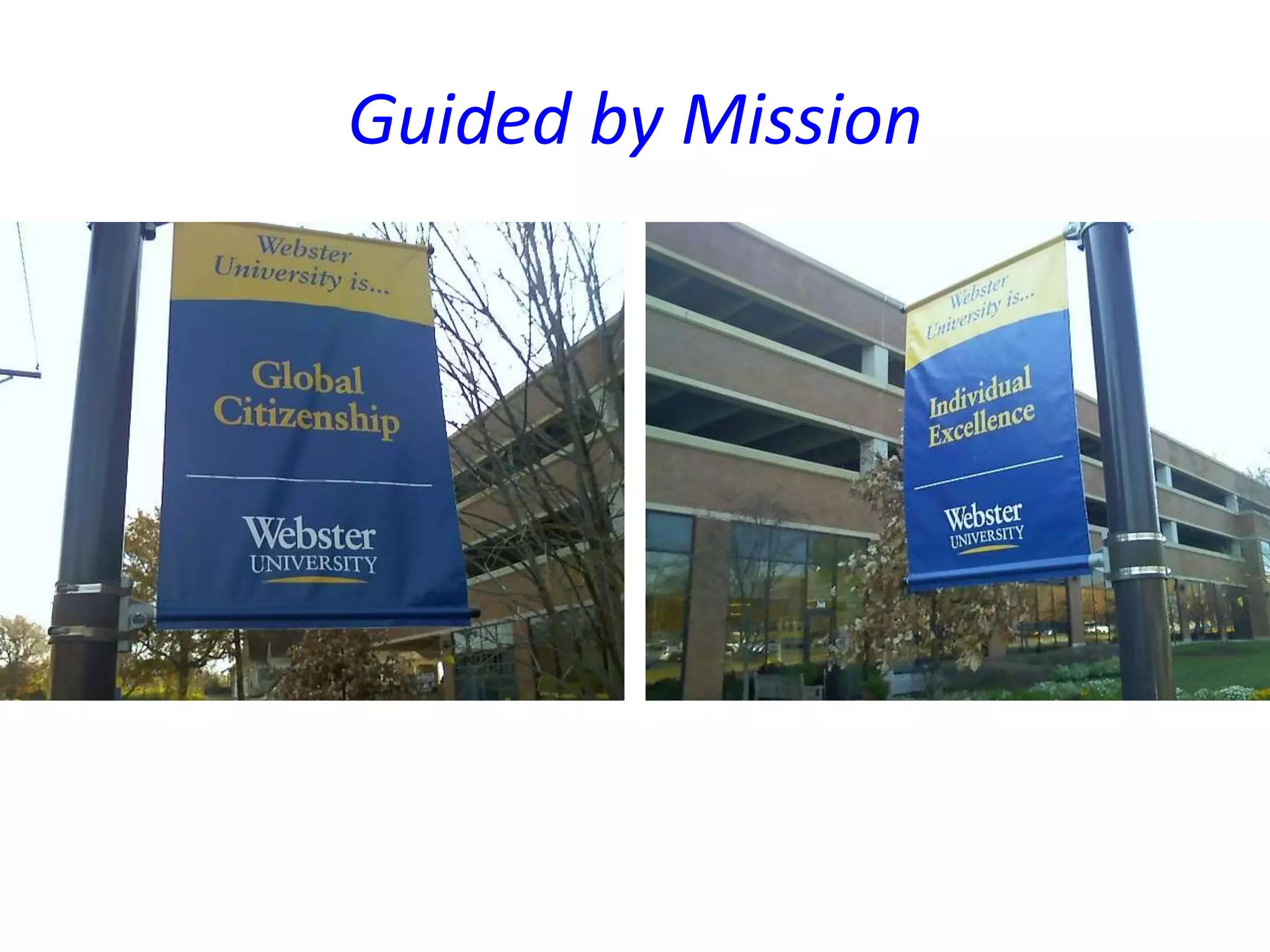
Guided by Mission
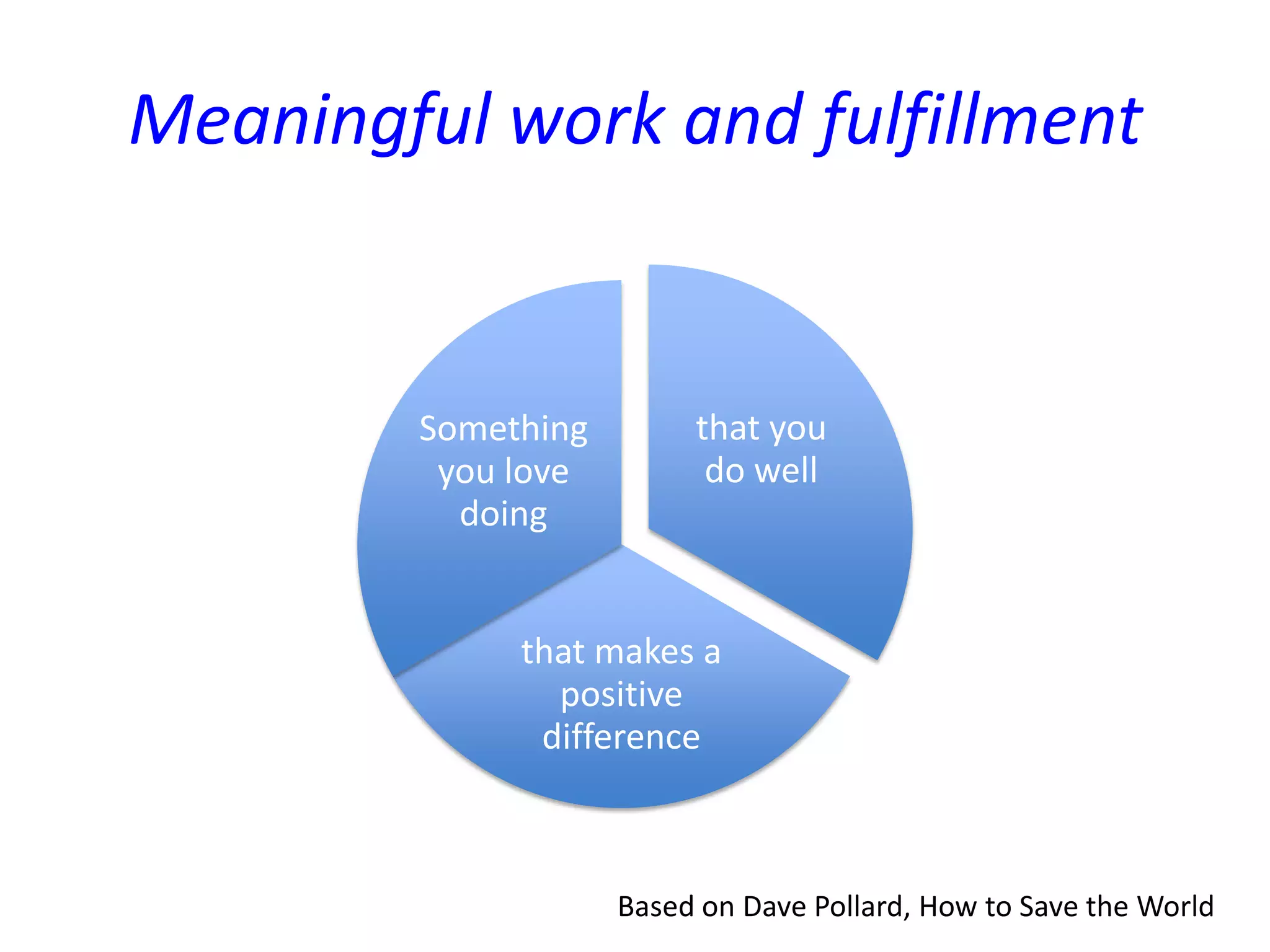
Meaningful work and fulfillment
that you
do well
that makes a
positive
difference
Something
you love
doing
Based on Dave Pollard, How to Save the World
GCP Competencies are the Gateway to
Career Success
“Irrespective of college major or
institutional selectivity, what matters
to career success is students’
development of a broad set of cross-
cutting capacities…”
Anthony Carnevale, Georgetown University
Center on Education and the Workforce
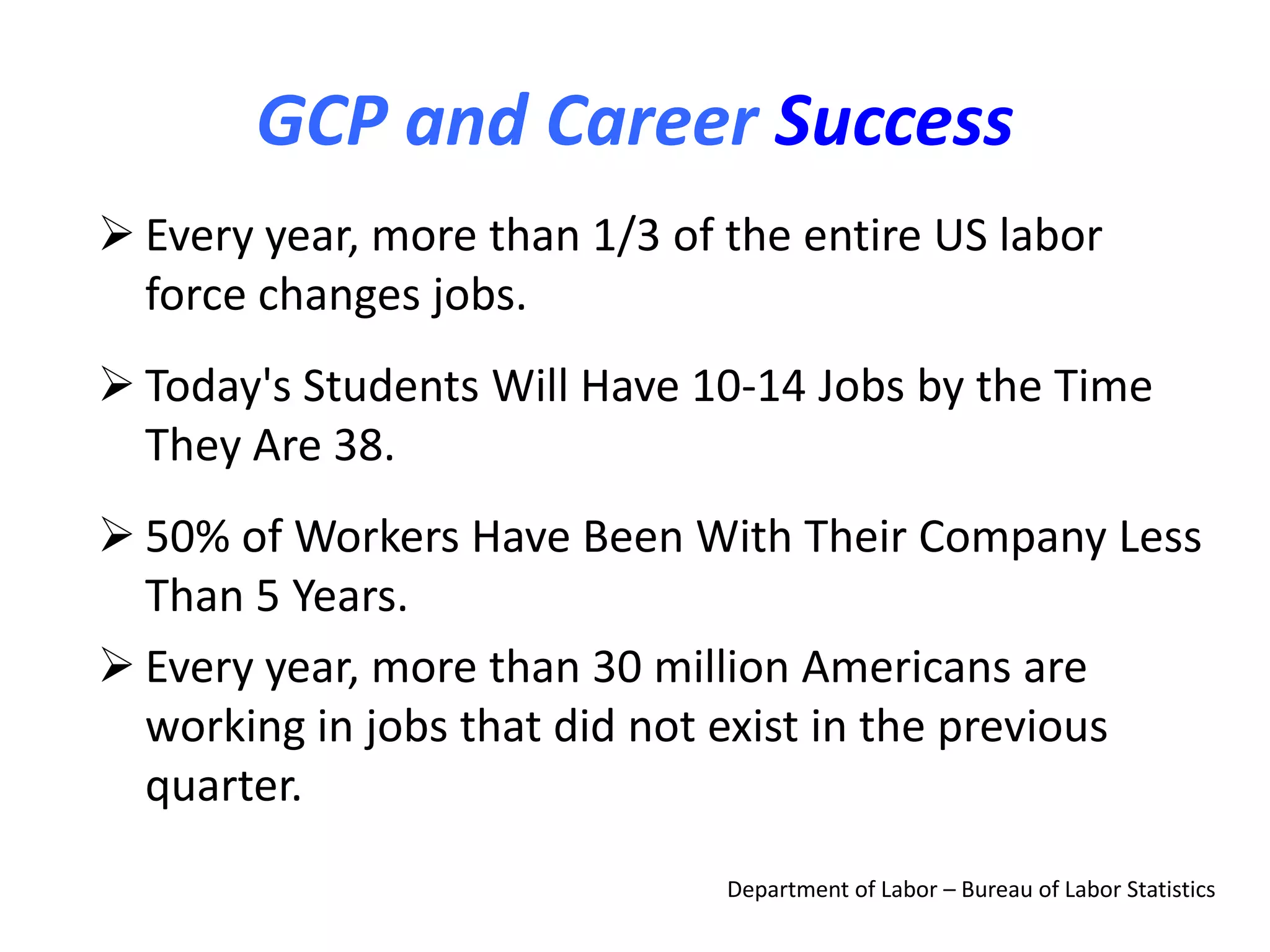
GCP and Career Success
Department of Labor – Bureau of Labor Statistics
 Every year, more than 1/3 of the entire US labor
force changes jobs.
 Today's Students Will Have 10-14 Jobs by the Time
They Are 38.
 50% of Workers Have Been With Their Company Less
Than 5 Years.
 Every year, more than 30 million Americans are
working in jobs that did not exist in the previous
quarter.
Giving students what they need
My own former students work in (for example)
– study abroad advising
– policy analysis
– health care ethics
– managing online learning
– nonprofit advocacy
– logistics management
– museum administration
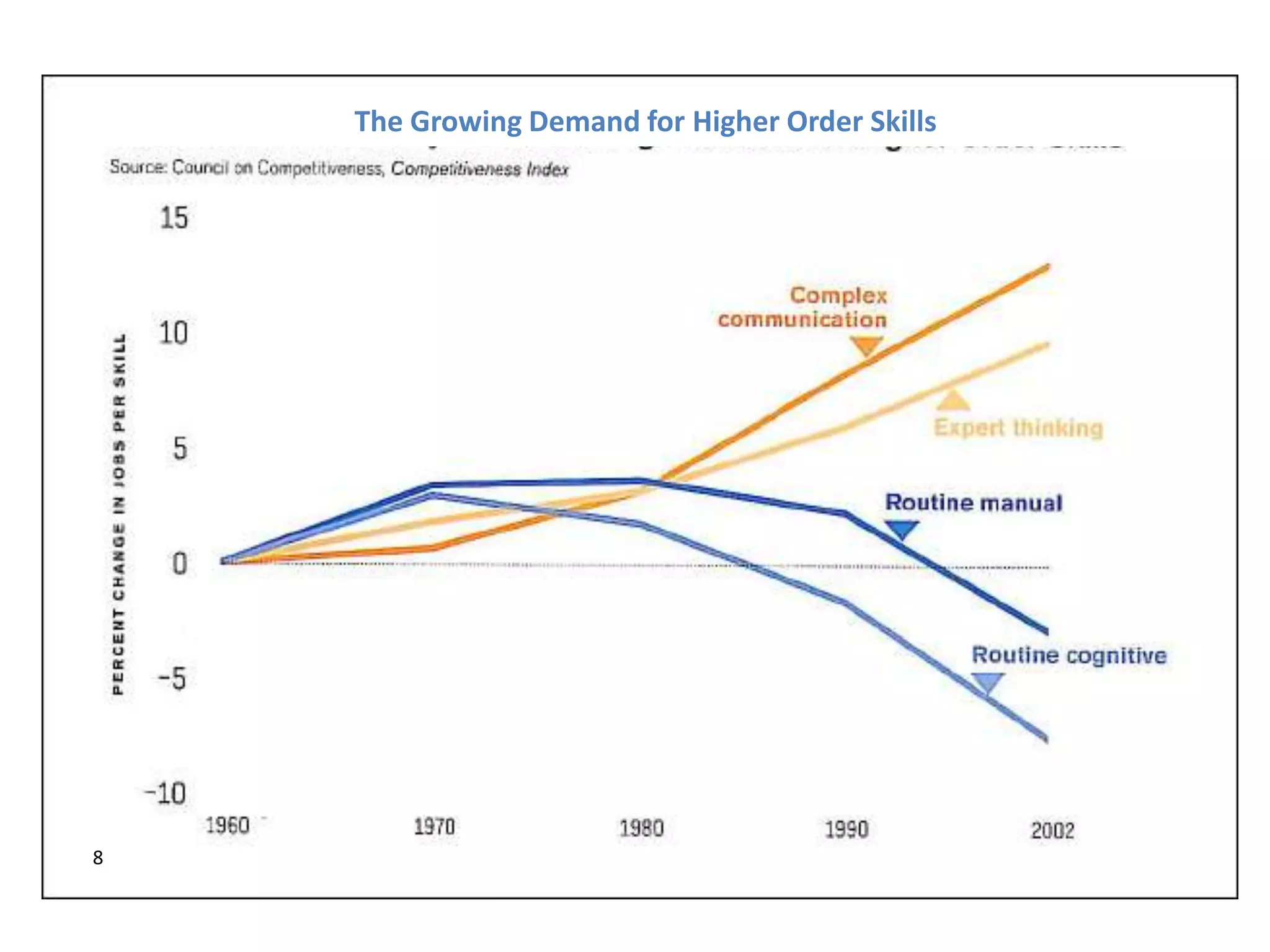
The Growing Demand for Higher Order Skills
8
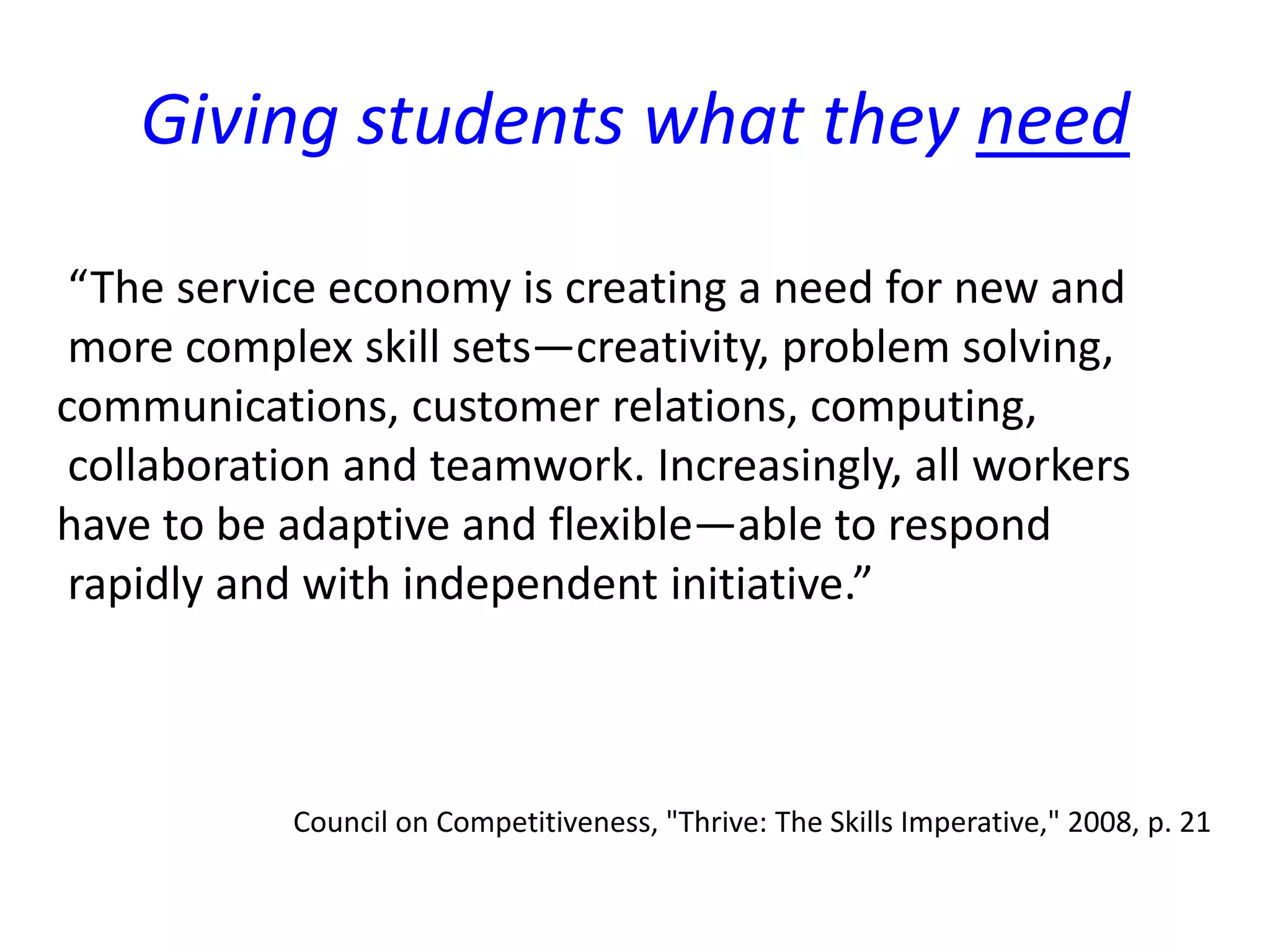
“The service economy is creating a need for new and
more complex skill sets—creativity, problem solving,
communications, customer relations, computing,
collaboration and teamwork. Increasingly, all workers
have to be adaptive and flexible—able to respond
rapidly and with independent initiative.”
Council on Competitiveness, "Thrive: The Skills Imperative," 2008, p. 21
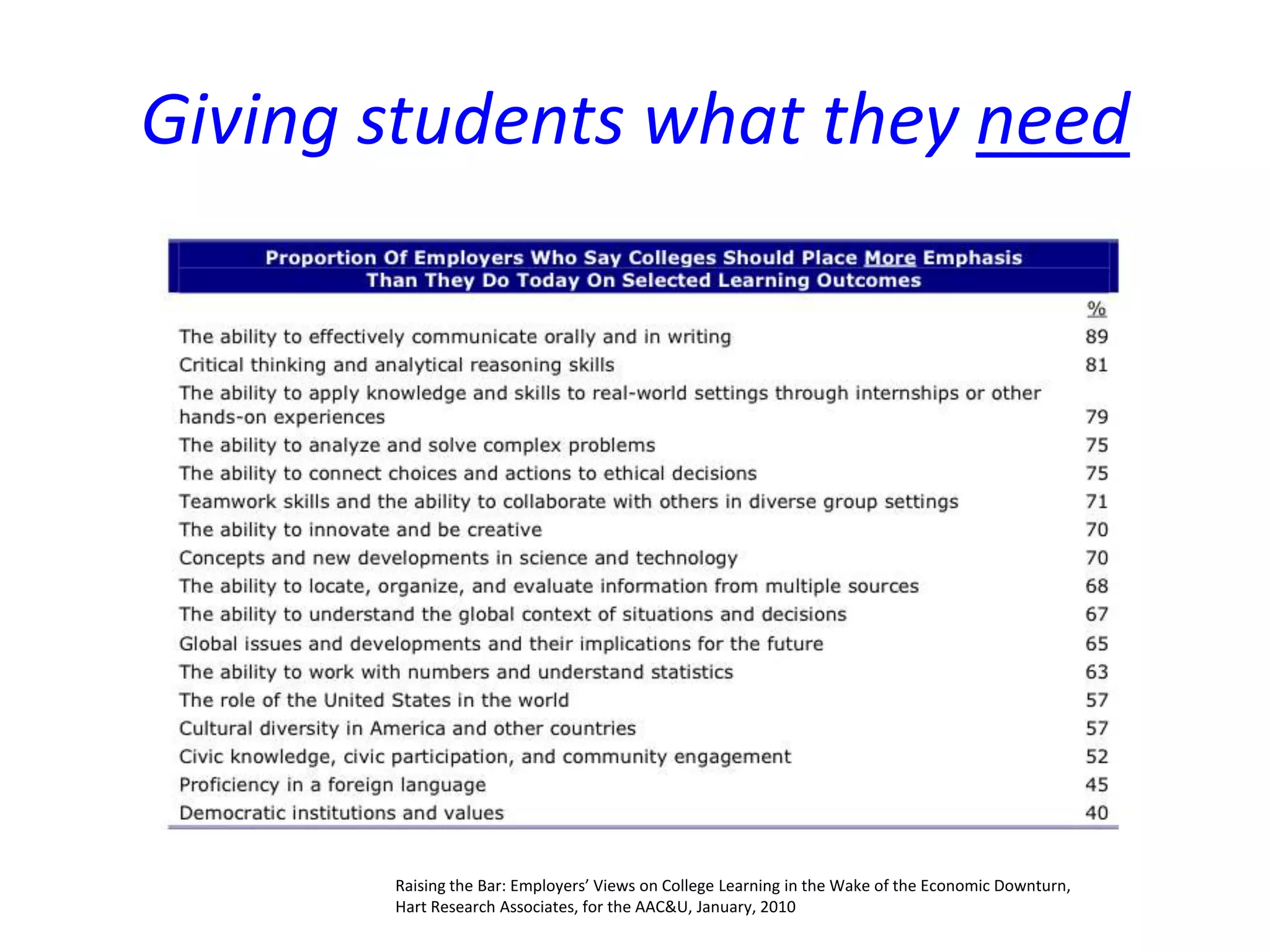
Giving students what they need
Raising the Bar: Employers’ Views on College Learning in the Wake of the Economic Downturn,
Hart Research Associates, for the AAC&U, January, 2010
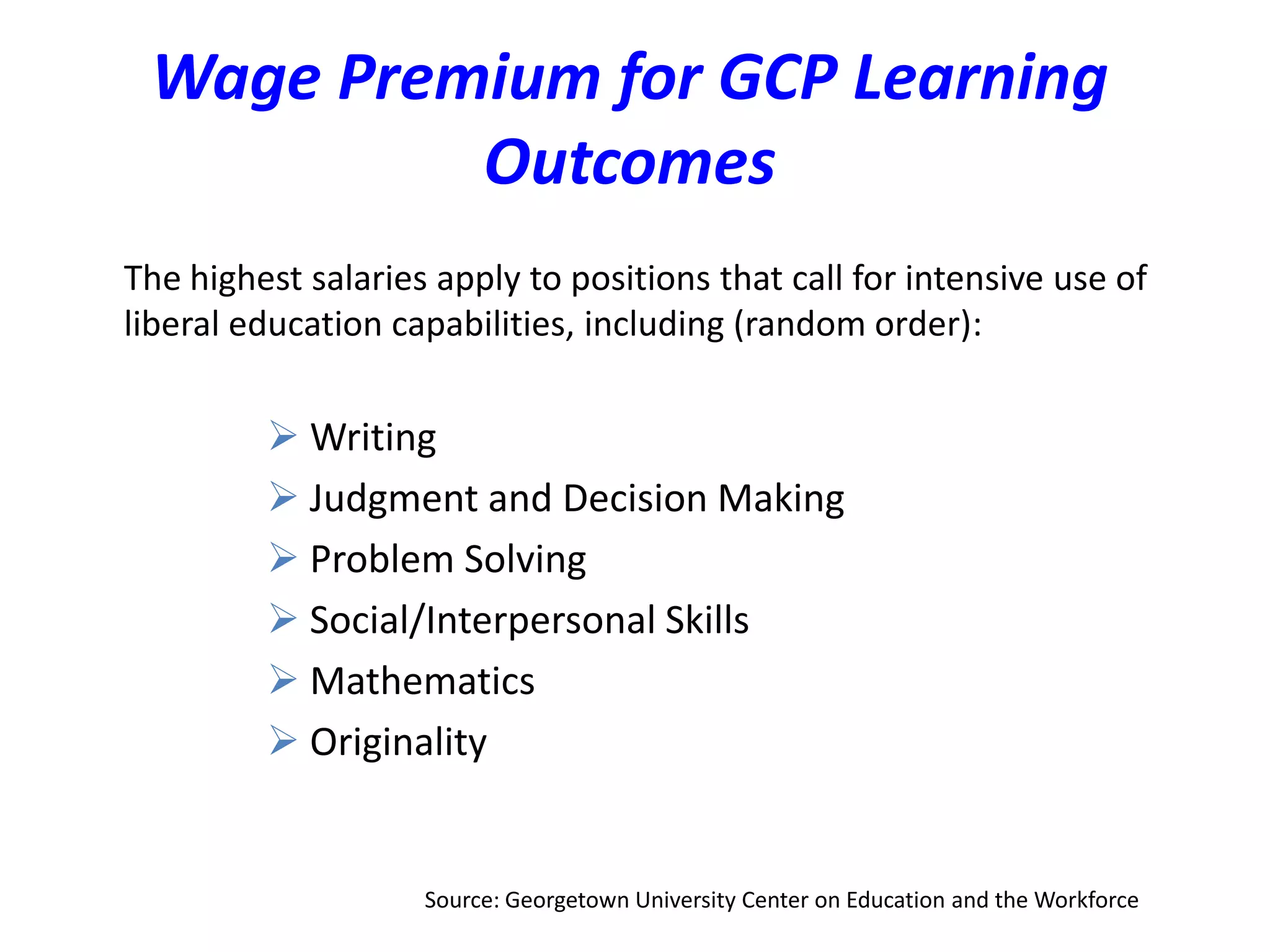
Wage Premium for GCP Learning
Outcomes
The highest salaries apply to positions that call for intensive use of
liberal education capabilities, including (random order):
 Writing
 Judgment and Decision Making
 Problem Solving
 Social/Interpersonal Skills
 Mathematics
 Originality
Source: Georgetown University Center on Education and the Workforce
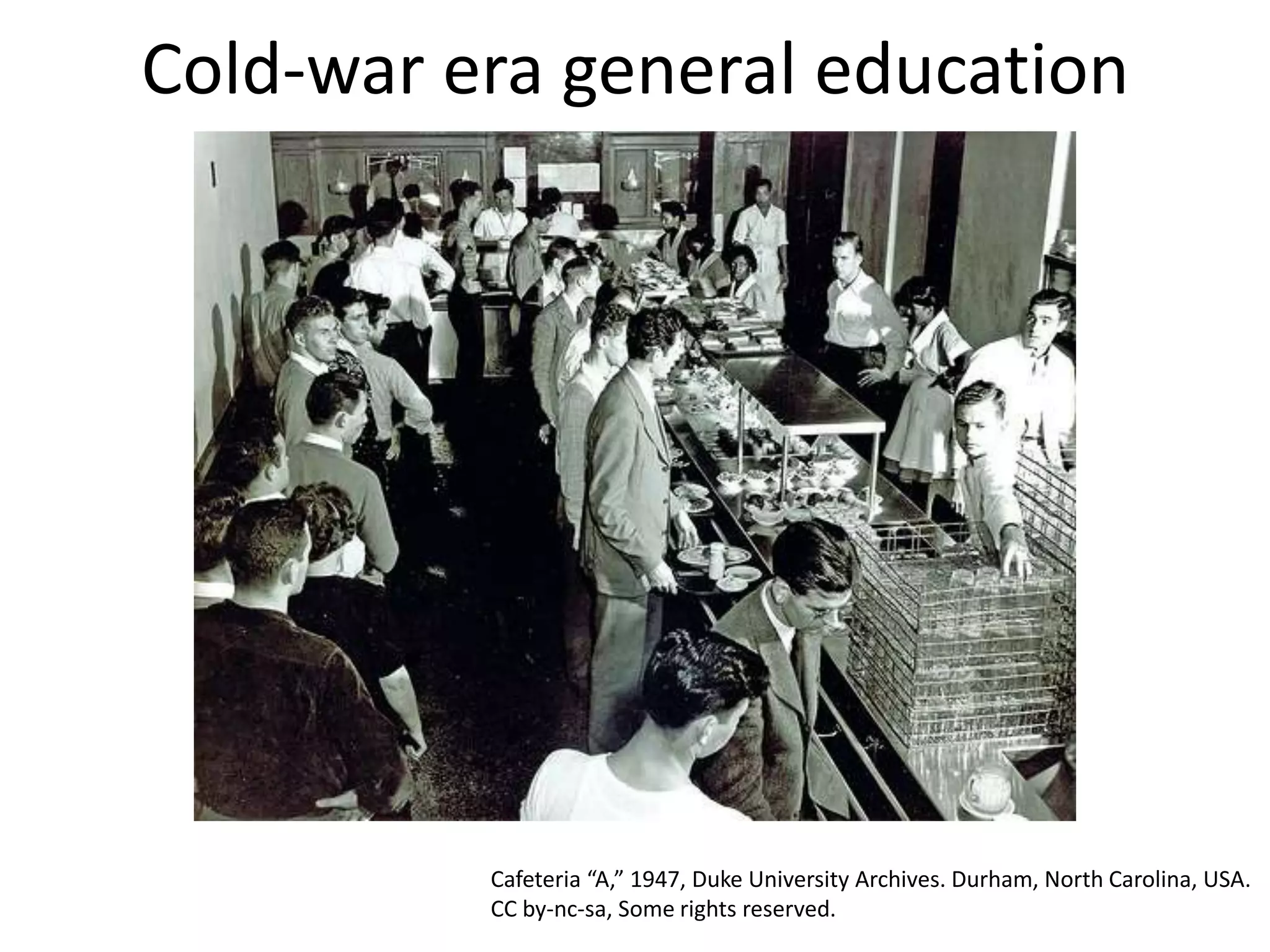
Cafeteria “A,” 1947, Duke University Archives. Durham, North Carolina, USA.
CC by-nc-sa, Some rights reserved.
Cold-war era general education
National Research and Best Practices
The Global Citizenship Program aligns with:
 Webster University Mission and Values
 Employer needs
 Student needs
National Research and Best Practices
The Global Citizenship Program aligns with research:
 Association of American Colleges & Universities
 Research on High Impact Practices
 Organization for Economic Cooperation and
Development
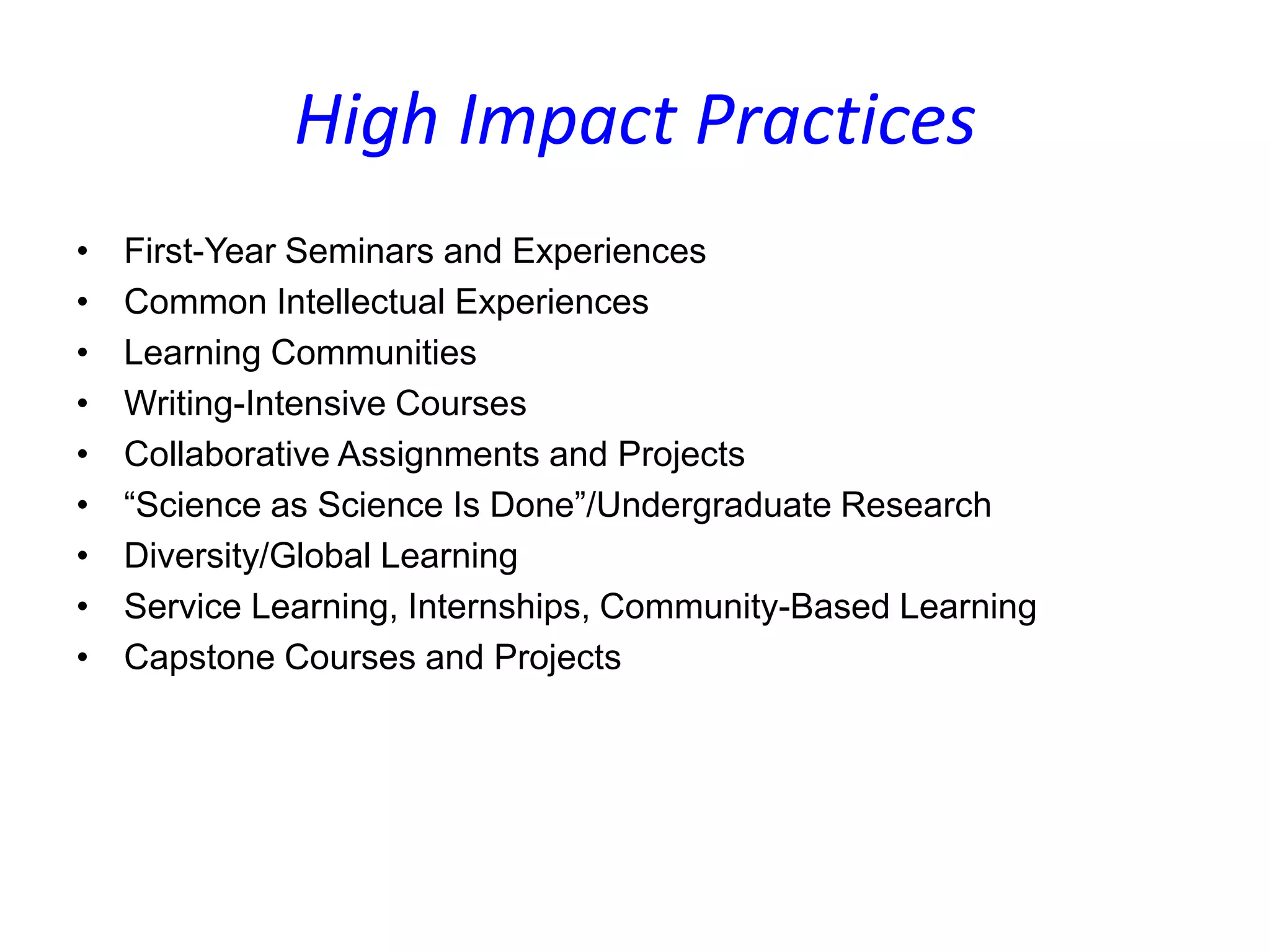
High Impact Practices
• First-Year Seminars and Experiences
• Common Intellectual Experiences
• Learning Communities
• Writing-Intensive Courses
• Collaborative Assignments and Projects
• “Science as Science Is Done”/Undergraduate Research
• Diversity/Global Learning
• Service Learning, Internships, Community-Based Learning
• Capstone Courses and Projects
OECD “Skills Strategy”
“Better Skills, Better Jobs, Better Lives: A Strategic Approach to Skills Policies”
Launched May 2012
OECD “Skills Strategy”
“Skills have become the
global currency of 21st
century economies.”
-- OECD Secretary-General Angel Gurría
OECD “Skills Strategy”
“Since skills requirements change and people need to adapt
and learn new skills over their working lives to ensure
occupational mobility . . . people should master foundation
skills and . . . develop the general desire and capacity to
engage in learning over an entire lifetime.”
Better Skills Better Jobs Better Lives: A Strategic Approach to Skills Policies,
OECD Publishing, 2012, p. 26
OECD “Skills Strategy”
Curricula for the 21st century:
• Knowledge – connected to real-world
experience
• Skills – including higher-order skills (Creativity,
Communication, Critical Thinking,
Collaboration)
• Values
• Meta-layer – integration and learning how to
continue to learn
What do students need?
• Knowledge
• Skills
• Abilities to integrate and apply
What do students need?
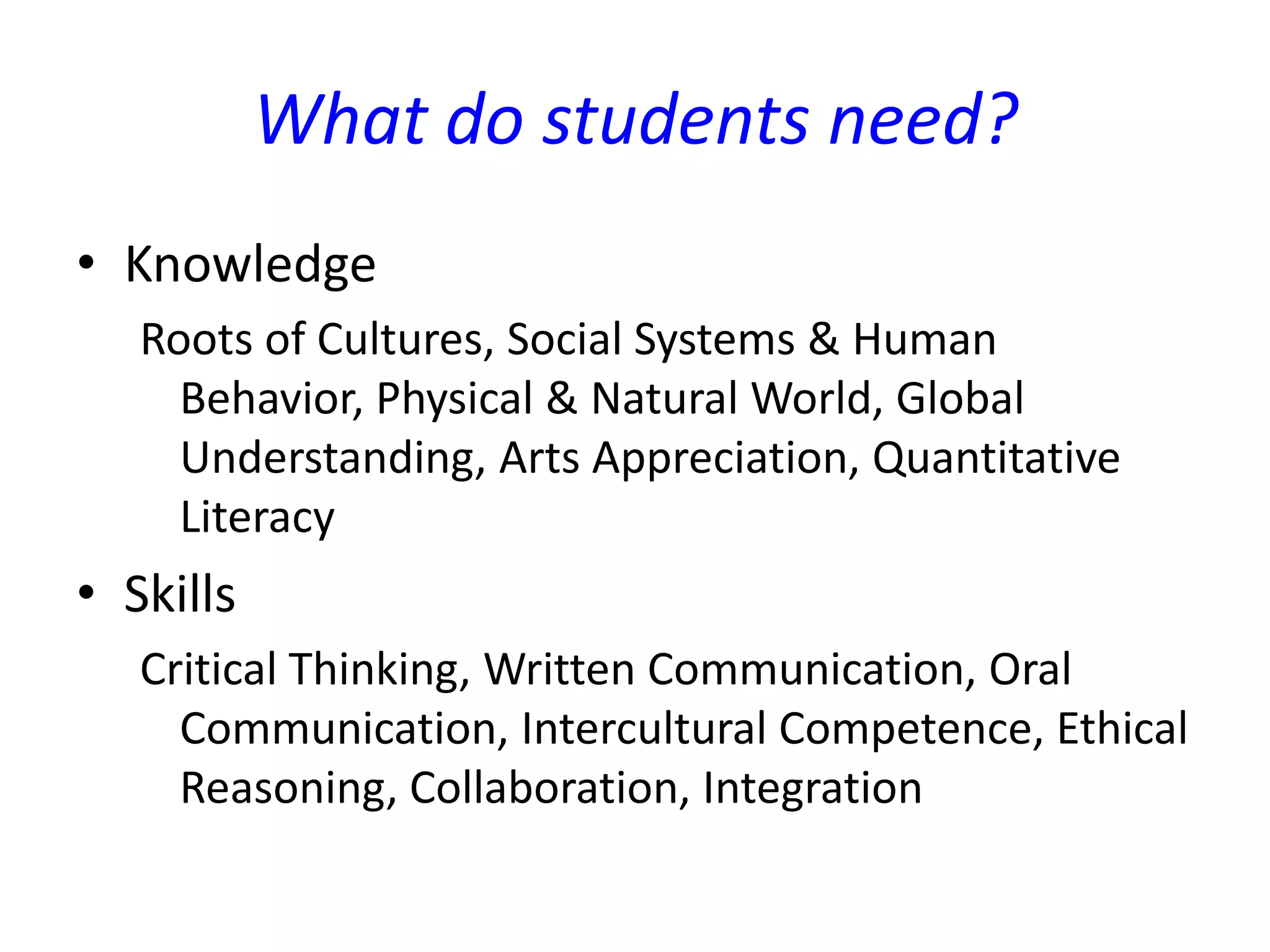
• Knowledge
Roots of Cultures, Social Systems & Human
Behavior, Physical & Natural World, Global
Understanding, Arts Appreciation, Quantitative
Literacy
• Skills
Critical Thinking, Written Communication, Oral
Communication, Intercultural Competence, Ethical
Reasoning, Collaboration, Integration
Integrative Learning
GCP integrates learning of
Knowledge + Skill in a course
Integrative Learning
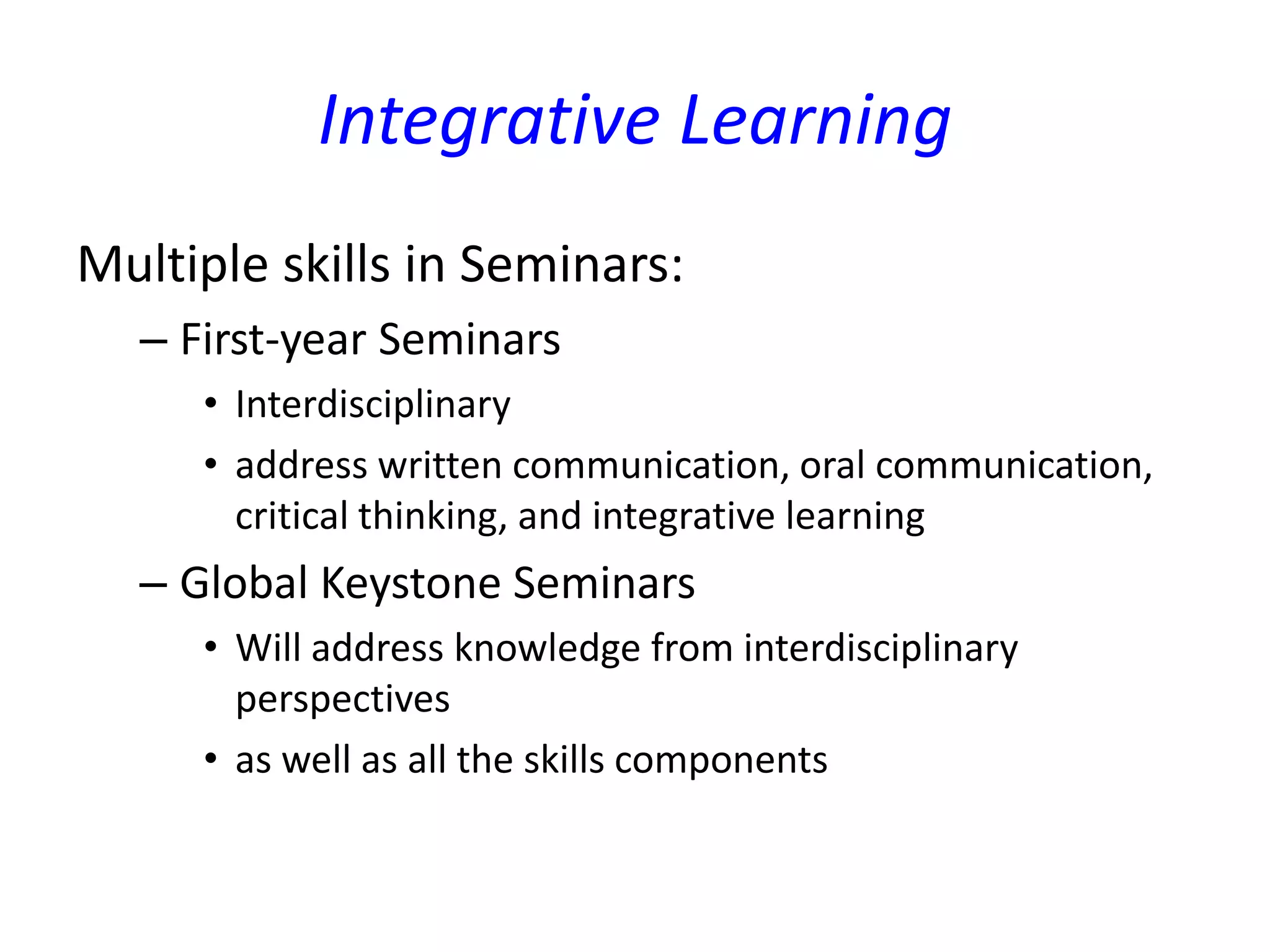
Multiple skills in Seminars:
– First-year Seminars
• Interdisciplinary
• address written communication, oral communication,
critical thinking, and integrative learning
– Global Keystone Seminars
• Will address knowledge from interdisciplinary
perspectives
• as well as all the skills components
Integrative Learning
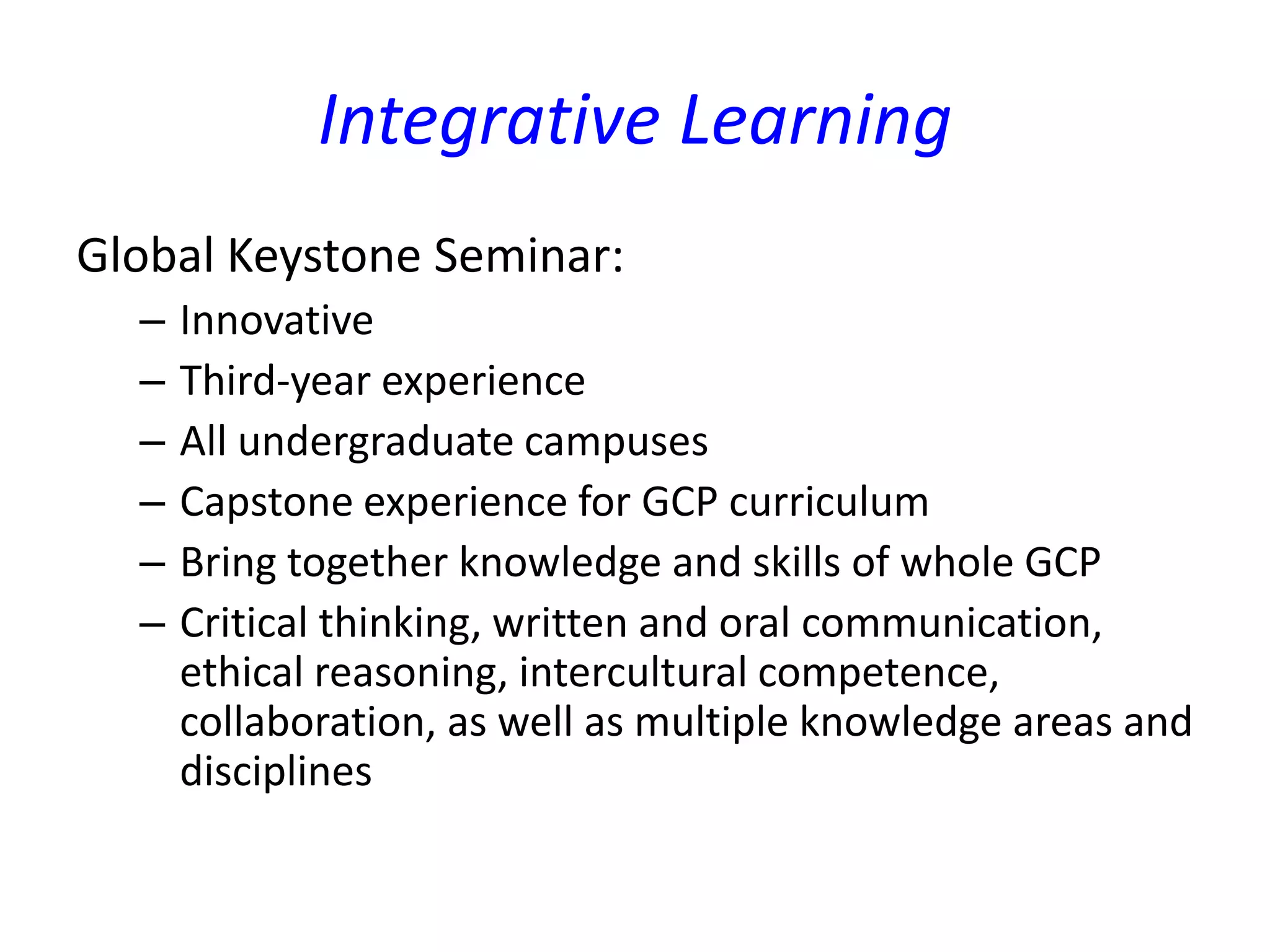
Global Keystone Seminar:
– Innovative
– Third-year experience
– All undergraduate campuses
– Capstone experience for GCP curriculum
– Bring together knowledge and skills of whole GCP
– Critical thinking, written and oral communication,
ethical reasoning, intercultural competence,
collaboration, as well as multiple knowledge areas and
disciplines
Board of Trustees presentation on Global Citizenship Program

Board of Trustees presentation on Global Citizenship Program

  • 1.
    Bruce Umbaugh Professor ofPhilosophy Director, Global Citizenship Program October 4, 2012
  • 2.
    Mission The mission ofthe Global Citizenship Program is to ensure that every undergraduate student emerges from Webster University with the core competencies required for responsible global citizenship in the 21st Century.
  • 3.
  • 4.
    Meaningful work andfulfillment that you do well that makes a positive difference Something you love doing Based on Dave Pollard, How to Save the World
  • 5.
    GCP Competencies arethe Gateway to Career Success “Irrespective of college major or institutional selectivity, what matters to career success is students’ development of a broad set of cross- cutting capacities…” Anthony Carnevale, Georgetown University Center on Education and the Workforce
  • 6.
    GCP and CareerSuccess Department of Labor – Bureau of Labor Statistics  Every year, more than 1/3 of the entire US labor force changes jobs.  Today's Students Will Have 10-14 Jobs by the Time They Are 38.  50% of Workers Have Been With Their Company Less Than 5 Years.  Every year, more than 30 million Americans are working in jobs that did not exist in the previous quarter.
  • 7.
    Giving students whatthey need My own former students work in (for example) – study abroad advising – policy analysis – health care ethics – managing online learning – nonprofit advocacy – logistics management – museum administration
  • 8.
    The Growing Demandfor Higher Order Skills 8
  • 9.
    “The service economyis creating a need for new and more complex skill sets—creativity, problem solving, communications, customer relations, computing, collaboration and teamwork. Increasingly, all workers have to be adaptive and flexible—able to respond rapidly and with independent initiative.” Council on Competitiveness, "Thrive: The Skills Imperative," 2008, p. 21 Giving students what they need
  • 10.
    Giving students whatthey need Raising the Bar: Employers’ Views on College Learning in the Wake of the Economic Downturn, Hart Research Associates, for the AAC&U, January, 2010
  • 11.
    Wage Premium forGCP Learning Outcomes The highest salaries apply to positions that call for intensive use of liberal education capabilities, including (random order):  Writing  Judgment and Decision Making  Problem Solving  Social/Interpersonal Skills  Mathematics  Originality Source: Georgetown University Center on Education and the Workforce
  • 12.
    Cafeteria “A,” 1947,Duke University Archives. Durham, North Carolina, USA. CC by-nc-sa, Some rights reserved. Cold-war era general education
  • 13.
    National Research andBest Practices The Global Citizenship Program aligns with:  Webster University Mission and Values  Employer needs  Student needs
  • 14.
    National Research andBest Practices The Global Citizenship Program aligns with research:  Association of American Colleges & Universities  Research on High Impact Practices  Organization for Economic Cooperation and Development
  • 15.
    High Impact Practices •First-Year Seminars and Experiences • Common Intellectual Experiences • Learning Communities • Writing-Intensive Courses • Collaborative Assignments and Projects • “Science as Science Is Done”/Undergraduate Research • Diversity/Global Learning • Service Learning, Internships, Community-Based Learning • Capstone Courses and Projects
  • 16.
    OECD “Skills Strategy” “BetterSkills, Better Jobs, Better Lives: A Strategic Approach to Skills Policies” Launched May 2012
  • 17.
    OECD “Skills Strategy” “Skillshave become the global currency of 21st century economies.” -- OECD Secretary-General Angel Gurría
  • 18.
    OECD “Skills Strategy” “Sinceskills requirements change and people need to adapt and learn new skills over their working lives to ensure occupational mobility . . . people should master foundation skills and . . . develop the general desire and capacity to engage in learning over an entire lifetime.” Better Skills Better Jobs Better Lives: A Strategic Approach to Skills Policies, OECD Publishing, 2012, p. 26
  • 19.
    OECD “Skills Strategy” Curriculafor the 21st century: • Knowledge – connected to real-world experience • Skills – including higher-order skills (Creativity, Communication, Critical Thinking, Collaboration) • Values • Meta-layer – integration and learning how to continue to learn
  • 20.
    What do studentsneed? • Knowledge • Skills • Abilities to integrate and apply
  • 21.
    What do studentsneed? • Knowledge Roots of Cultures, Social Systems & Human Behavior, Physical & Natural World, Global Understanding, Arts Appreciation, Quantitative Literacy • Skills Critical Thinking, Written Communication, Oral Communication, Intercultural Competence, Ethical Reasoning, Collaboration, Integration
  • 22.
    Integrative Learning GCP integrateslearning of Knowledge + Skill in a course
  • 23.
    Integrative Learning Multiple skillsin Seminars: – First-year Seminars • Interdisciplinary • address written communication, oral communication, critical thinking, and integrative learning – Global Keystone Seminars • Will address knowledge from interdisciplinary perspectives • as well as all the skills components
  • 24.
    Integrative Learning Global KeystoneSeminar: – Innovative – Third-year experience – All undergraduate campuses – Capstone experience for GCP curriculum – Bring together knowledge and skills of whole GCP – Critical thinking, written and oral communication, ethical reasoning, intercultural competence, collaboration, as well as multiple knowledge areas and disciplines