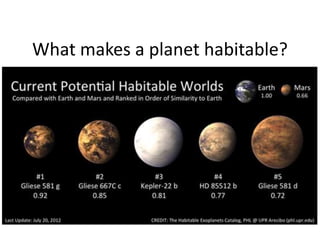
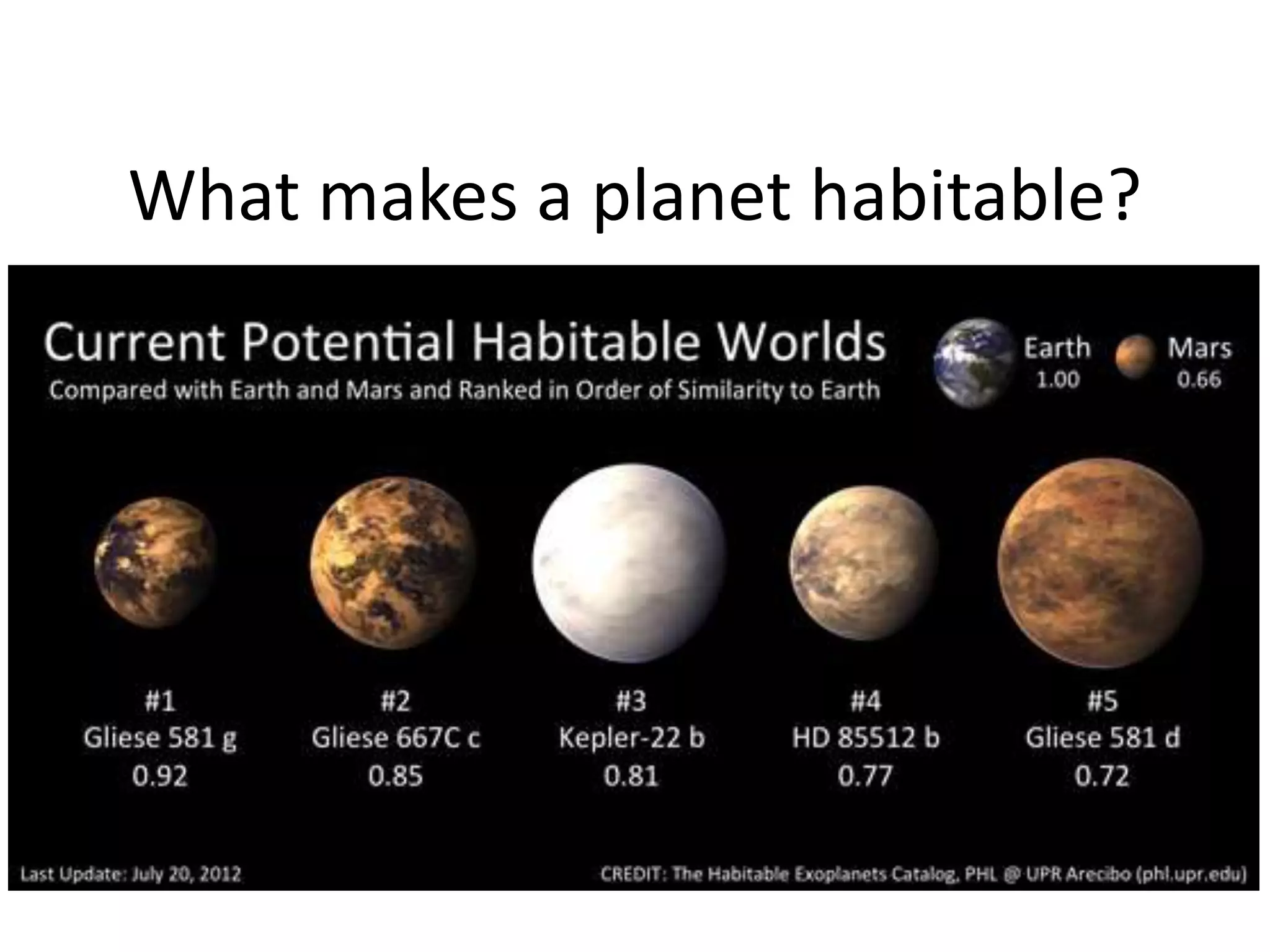
What makes a planet habitable?
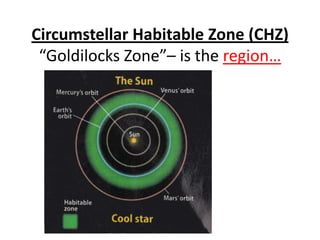
Circumstellar Habitable Zone (CHZ)
“Goldilocks Zone”– is the region…
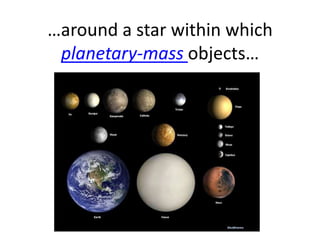
…around a star within which
planetary-mass objects…
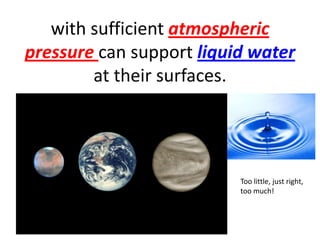
with sufficient atmospheric
pressure can support liquid water
at their surfaces.

Too little, just right,
too much!
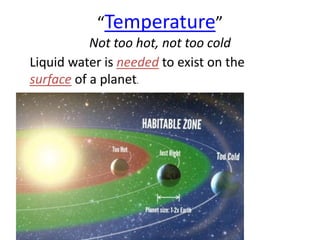
“Temperature”
Not too hot, not too cold
Liquid water is needed to exist on the
surface of a planet.
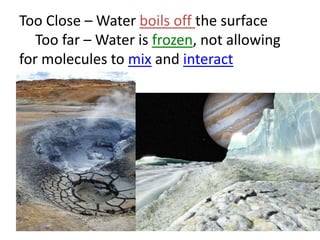
Too Close – Water boils off the surface
Too far – Water is frozen, not allowing
for molecules to mix and interact
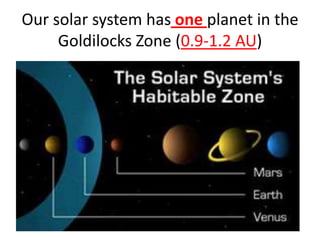
Our solar system has one planet in the
Goldilocks Zone (0.9-1.2 AU)
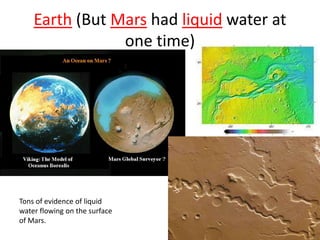
Earth (But Mars had liquid water at
one time)

Tons of evidence of liquid
water flowing on the surface
of Mars.
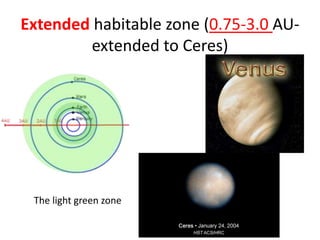
Extended habitable zone (0.75-3.0 AUextended to Ceres)

The light green zone
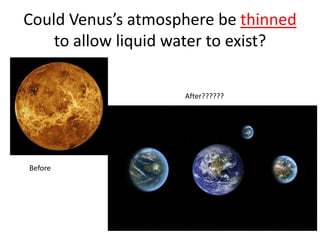
Could Venus’s atmosphere be thinned
to allow liquid water to exist?
After??????

Before
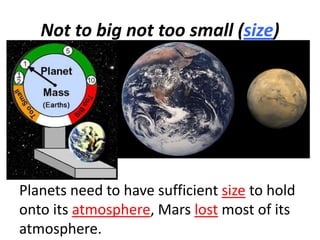
Not to big not too small (size)

Planets need to have sufficient size to hold
onto its atmosphere, Mars lost most of its
atmosphere.
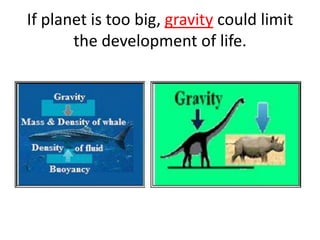
If planet is too big, gravity could limit
the development of life.
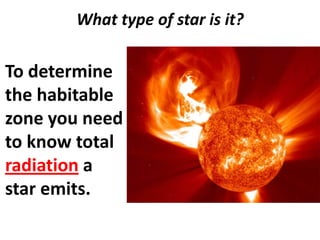
What type of star is it?

To determine
the habitable
zone you need
to know total
radiation a
star emits.
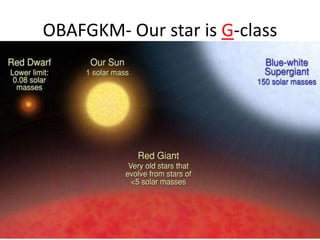
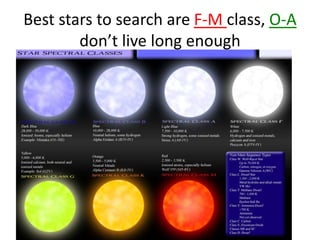
OBAFGKM- Our star is G-class
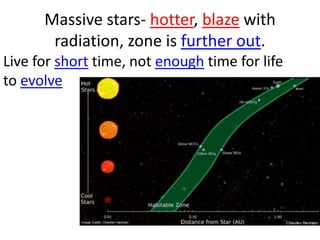
Massive stars- hotter, blaze with
radiation, zone is further out.
Live for short time, not enough time for life
to evolve
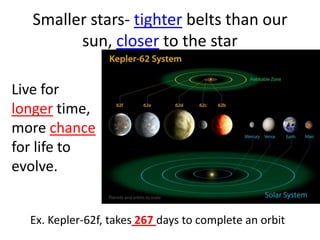
Smaller stars- tighter belts than our
sun, closer to the star
Live for
longer time,
more chance
for life to
evolve.
Ex. Kepler-62f, takes 267 days to complete an orbit
Best stars to search are F-M class, O-A
don’t live long enough
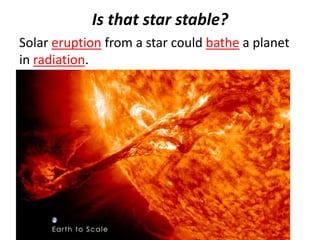
Is that star stable?
Solar eruption from a star could bathe a planet
in radiation.
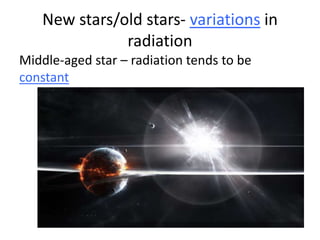
New stars/old stars- variations in
radiation
Middle-aged star – radiation tends to be
constant
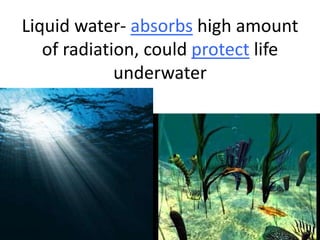
Liquid water- absorbs high amount
of radiation, could protect life
underwater
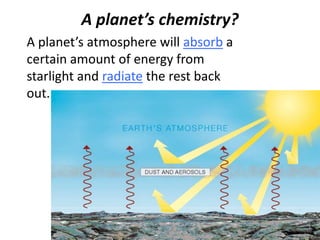
A planet’s chemistry?
A planet’s atmosphere will absorb a
certain amount of energy from
starlight and radiate the rest back
out.
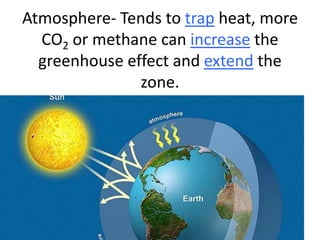
Atmosphere- Tends to trap heat, more
CO2 or methane can increase the
greenhouse effect and extend the
zone.
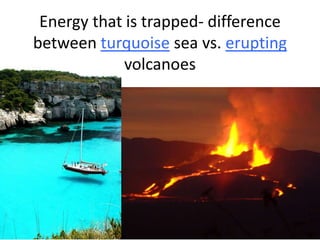
Energy that is trapped- difference
between turquoise sea vs. erupting
volcanoes
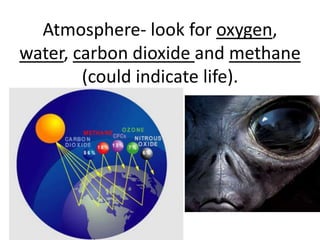
Atmosphere- look for oxygen,
water, carbon dioxide and methane
(could indicate life).
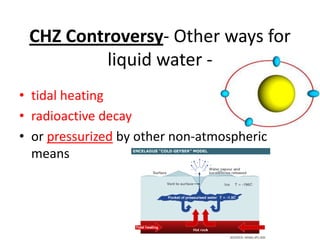
CHZ Controversy- Other ways for
liquid water • tidal heating
• radioactive decay
• or pressurized by other non-atmospheric
means
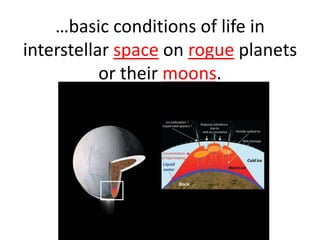
…basic conditions of life in
interstellar space on rogue planets
or their moons.
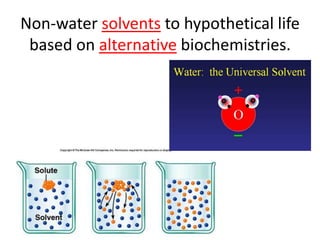
Non-water solvents to hypothetical life
based on alternative biochemistries.
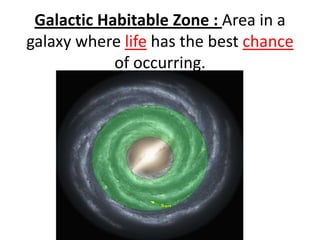
Galactic Habitable Zone : Area in a
galaxy where life has the best chance
of occurring.
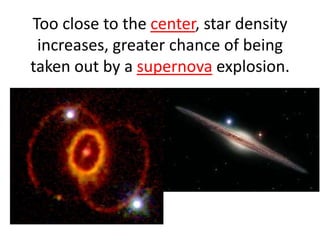
Too close to the center, star density
increases, greater chance of being
taken out by a supernova explosion.
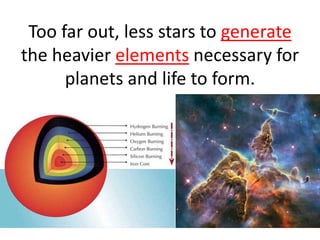
Too far out, less stars to generate
the heavier elements necessary for
planets and life to form.

Habital zone notes

  • 1.
    What makes aplanet habitable?
  • 2.
    Circumstellar Habitable Zone(CHZ) “Goldilocks Zone”– is the region…
  • 3.
    …around a starwithin which planetary-mass objects…
  • 4.
    with sufficient atmospheric pressurecan support liquid water at their surfaces. Too little, just right, too much!
  • 5.
    “Temperature” Not too hot,not too cold Liquid water is needed to exist on the surface of a planet.
  • 6.
    Too Close –Water boils off the surface Too far – Water is frozen, not allowing for molecules to mix and interact
  • 7.
    Our solar systemhas one planet in the Goldilocks Zone (0.9-1.2 AU)
  • 8.
    Earth (But Marshad liquid water at one time) Tons of evidence of liquid water flowing on the surface of Mars.
  • 9.
    Extended habitable zone(0.75-3.0 AUextended to Ceres) The light green zone
  • 10.
    Could Venus’s atmospherebe thinned to allow liquid water to exist? After?????? Before
  • 11.
    Not to bignot too small (size) Planets need to have sufficient size to hold onto its atmosphere, Mars lost most of its atmosphere.
  • 12.
    If planet istoo big, gravity could limit the development of life.
  • 13.
    What type ofstar is it? To determine the habitable zone you need to know total radiation a star emits.
  • 14.
  • 15.
    Massive stars- hotter,blaze with radiation, zone is further out. Live for short time, not enough time for life to evolve
  • 16.
    Smaller stars- tighterbelts than our sun, closer to the star Live for longer time, more chance for life to evolve. Ex. Kepler-62f, takes 267 days to complete an orbit
  • 17.
    Best stars tosearch are F-M class, O-A don’t live long enough
  • 18.
    Is that starstable? Solar eruption from a star could bathe a planet in radiation.
  • 19.
    New stars/old stars-variations in radiation Middle-aged star – radiation tends to be constant
  • 20.
    Liquid water- absorbshigh amount of radiation, could protect life underwater
  • 21.
    A planet’s chemistry? Aplanet’s atmosphere will absorb a certain amount of energy from starlight and radiate the rest back out.
  • 22.
    Atmosphere- Tends totrap heat, more CO2 or methane can increase the greenhouse effect and extend the zone.
  • 23.
    Energy that istrapped- difference between turquoise sea vs. erupting volcanoes
  • 24.
    Atmosphere- look foroxygen, water, carbon dioxide and methane (could indicate life).
  • 25.
    CHZ Controversy- Otherways for liquid water • tidal heating • radioactive decay • or pressurized by other non-atmospheric means
  • 26.
    …basic conditions oflife in interstellar space on rogue planets or their moons.
  • 27.
    Non-water solvents tohypothetical life based on alternative biochemistries.
  • 28.
    Galactic Habitable Zone: Area in a galaxy where life has the best chance of occurring.
  • 29.
    Too close tothe center, star density increases, greater chance of being taken out by a supernova explosion.
  • 30.
    Too far out,less stars to generate the heavier elements necessary for planets and life to form.