Download as PDF, PPTX
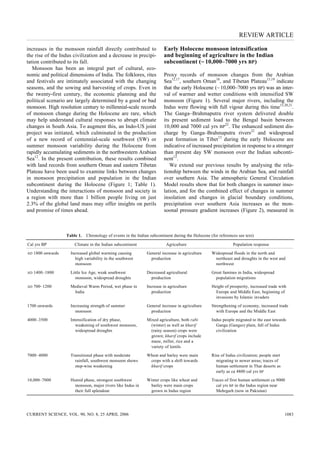
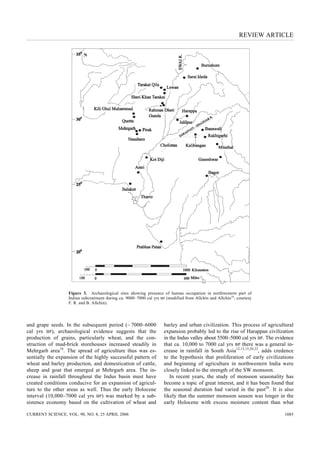
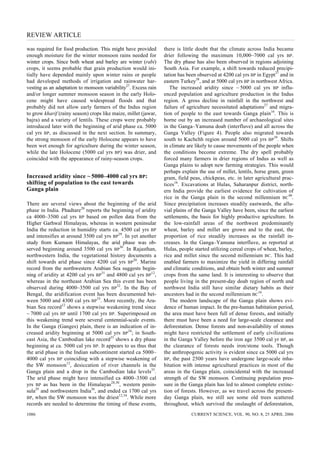
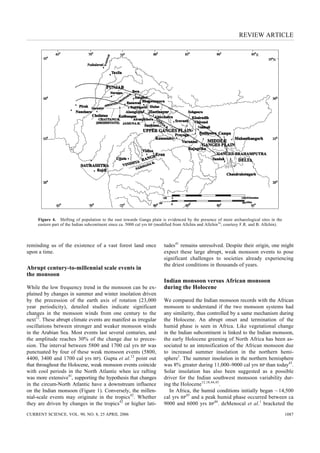
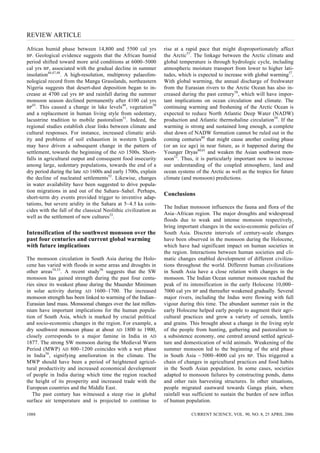

This document summarizes evidence that early Holocene (10,000-7000 years BP) in South Asia experienced a stronger summer monsoon that led to intensified agriculture and the rise of early civilizations in the region. Proxy records from marine sediments in the Arabian Sea and land records from southern Oman and Tibetan Plateau indicate warmer and wetter conditions during this period caused by a stronger southwest monsoon, bringing more rainfall over the Indian subcontinent. This created favorable conditions for agriculture and greater river flows that supported larger human populations and early civilizations along major rivers like the Indus and Ganges. However, the monsoon began to weaken after 7000 years BP, which impacted human settlements and civilizations through periods


