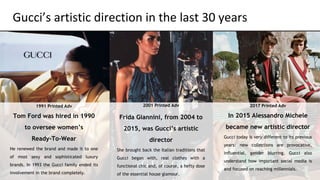
1991 Printed Adv
Tom Ford was hired in 1990
to oversee women’s
Ready-To-Wear
He renewed the brand and made it to one
of most sexy and sophisticated luxury
brands. In 1993 the Gucci family ended its
involvement in the brand completely.
2001 Printed Adv
Frida Giannini, from 2004 to
2015, was Gucci’s artistic
director
She brought back the Italian traditions that
Gucci began with, real clothes with a
functional chic and, of course, a hefty dose
of the essential house glamour.
2017 Printed Adv
In 2015 Alessandro Michele
became new artistic director
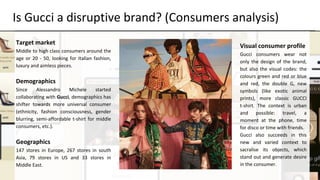
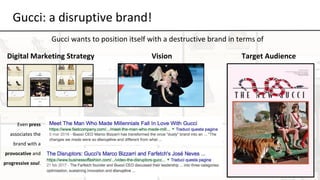
Gucci today is very different to its previous
years: new collections are provocative,
influential, gender blurring. Gucci also
understand how important social media is
and focused on reaching millennials.
.
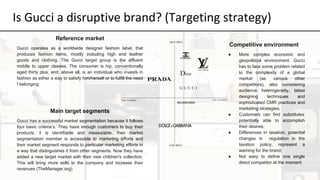
Reference market
Gucci operates as a worldwide designer fashion label, that
produces fashion items, mostly including high end leather
goods and clothing. The Gucci target group is the affluent
middle to upper classes. The consumer is hip, conventionally
aged thirty plus, and, above all, is an individual who invests in
fashion as either a way to satisfy him/herself or to fulfill the need
f belonging.
Main target segments
Gucci has a successful market segmentation because it follows
four basic criteria’s. They have enough customers to buy their
products, it is identifiable and measurable, their market
segmentation member is accessible to marketing efforts and
their market segment responds to particular marketing efforts in
a way that distinguishes it from other segments. Now they have
added a new target market with their new children's collection.
This will bring more sells to the company and increase their
revenues (TheManager.org).
Competitive environment
● More complex economic and
geopolitical environment. Gucci
has to face some problem related
to the complexity of a global
market (as various other
competitors), also considering
audience heterogeneity, latest
designing techniques and
sophisticated CMR practices and
marketing strategies;
● Customers can find substitutes
potentially able to accomplish
their desires;
● Differences in taxation, potential
changes in regulation in the
taxation policy, represent a
warning for the brand;
● Not easy to define one single
direct competitor at the moment
●
●
●
●
●
●
●
●
●
●
●
●
●
●
…
…
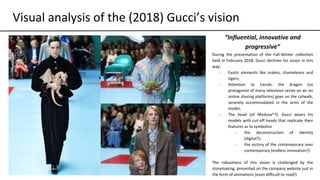
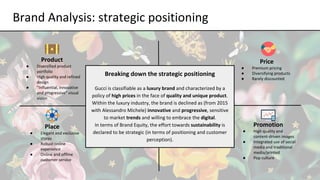
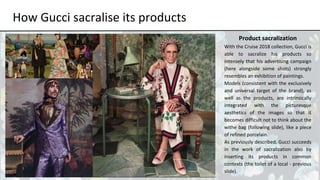
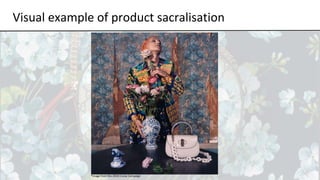
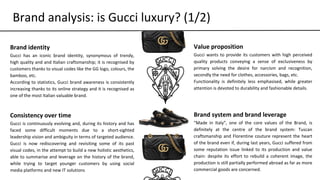
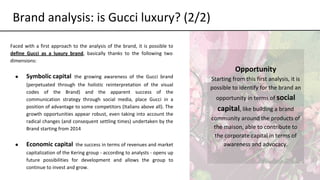
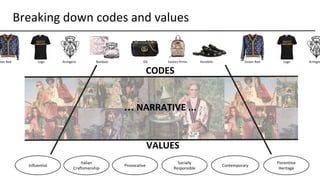
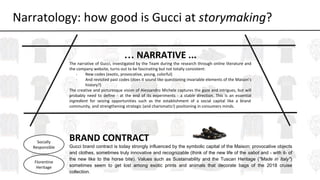
Gucci brand contract is today strongly influenced by the symbolic capital of the Maison: provocative objects
and clothes, sometimes truly innovative and recognizable (think of the new life of the sabot and - with it- of
the new like to the horse bite). Values such as Sustainability and the Tuscan Heritage ("Made in Italy")
sometimes seem to get lost among exotic prints and animals that decorate bags of the 2018 cruise
collection.
●
●
●
○
○
○
○
○
○
Gucci: Brand Analysis

Gucci: Brand Analysis

  • 5.
    1991 Printed Adv TomFord was hired in 1990 to oversee women’s Ready-To-Wear He renewed the brand and made it to one of most sexy and sophisticated luxury brands. In 1993 the Gucci family ended its involvement in the brand completely. 2001 Printed Adv Frida Giannini, from 2004 to 2015, was Gucci’s artistic director She brought back the Italian traditions that Gucci began with, real clothes with a functional chic and, of course, a hefty dose of the essential house glamour. 2017 Printed Adv In 2015 Alessandro Michele became new artistic director Gucci today is very different to its previous years: new collections are provocative, influential, gender blurring. Gucci also understand how important social media is and focused on reaching millennials.
  • 8.
  • 13.
    Reference market Gucci operatesas a worldwide designer fashion label, that produces fashion items, mostly including high end leather goods and clothing. The Gucci target group is the affluent middle to upper classes. The consumer is hip, conventionally aged thirty plus, and, above all, is an individual who invests in fashion as either a way to satisfy him/herself or to fulfill the need f belonging. Main target segments Gucci has a successful market segmentation because it follows four basic criteria’s. They have enough customers to buy their products, it is identifiable and measurable, their market segmentation member is accessible to marketing efforts and their market segment responds to particular marketing efforts in a way that distinguishes it from other segments. Now they have added a new target market with their new children's collection. This will bring more sells to the company and increase their revenues (TheManager.org). Competitive environment ● More complex economic and geopolitical environment. Gucci has to face some problem related to the complexity of a global market (as various other competitors), also considering audience heterogeneity, latest designing techniques and sophisticated CMR practices and marketing strategies; ● Customers can find substitutes potentially able to accomplish their desires; ● Differences in taxation, potential changes in regulation in the taxation policy, represent a warning for the brand; ● Not easy to define one single direct competitor at the moment
  • 18.
  • 22.
  • 25.
  • 26.
    … Gucci brand contractis today strongly influenced by the symbolic capital of the Maison: provocative objects and clothes, sometimes truly innovative and recognizable (think of the new life of the sabot and - with it- of the new like to the horse bite). Values such as Sustainability and the Tuscan Heritage ("Made in Italy") sometimes seem to get lost among exotic prints and animals that decorate bags of the 2018 cruise collection.
  • 29.