 What is a Group Discussion?
 A group of participants are given a topic and
are made to speak on it for a particular time.
Thereafter, based on several skills such as,
communication skills, knowledge of the
topic, ability to perform in a team, etc., the
candidates are analysed.
 A Group Discussion (GD) provides a chance to
various candidates for being vocal.The
candidates must shed away all the shyness
and put-forth their opinions. Group
discussion helps the participants to expand
their knowledge as there is an exchange of
ideas and opinions.
GD – Guidelines
 Active Participation By Everyone.
 Don’t feel scared to speak.
 Two orThree valuable insertions desired.
 Look AtThe SpeakerWhile Listening.
 NodWhileYou Are Listening
 Have Eye-ContactWith AllWhile Speaking
 Use Apt Hand MovementsWhile Speaking
 Sit Straight, Involved – with Both Feet
Grounded
 Don’t Get Into Arguments or Debate
 Regulations For Conducting GD :-
 Rules Static & Fixed
 Regulations Dynamic & Flexible
 While Speaking AddressGroup MembersAs –
“Fellow-Contestant, Friend, Co-Speaker or
Colleague”.
 In Case of Not UnderstandingTheTopic,Wait For
GroupTo RevealThe Meaning – “Observe & Interpret”
 Don’t Make Extreme Opening Remarks On an
Explicit Stand.
 IfYouWant,You CanTake Neutral Stand, If Its
Possible OnTopic.
 PRE
 P Point
 R Rationale {Reason}
 E Example
Thought Generation Method
 M-A-S-T-E-R-P-I-E-C-E-S
 M Media
 A Arts
 S Science
 T Technology
 E Education
 R Religion
 P Politics
 I Information
 E Entertainment
 C Culture
 E Economy
 S Sports
 Start Strong
 Maintain Interest
 Don’t Be Distracting
 RememberTo Relax
 End Strong
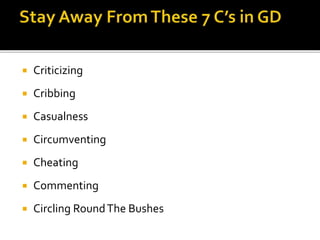
 Criticizing
 Cribbing
 Casualness
 Circumventing
 Cheating
 Commenting
 Circling RoundThe Bushes
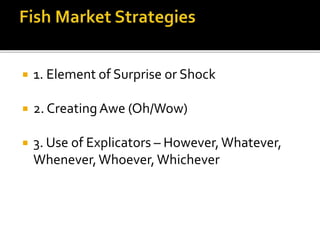
 1. Element of Surprise or Shock
 2. CreatingAwe (Oh/Wow)
 3. Use of Explicators – However,Whatever,
Whenever,Whoever,Whichever
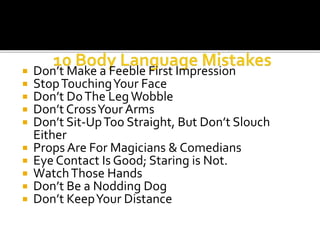
 Don’t Make a Feeble First Impression
 StopTouchingYour Face
 Don’t DoThe LegWobble
 Don’t CrossYour Arms
 Don’t Sit-UpToo Straight, But Don’t Slouch
Either
 Props Are For Magicians & Comedians
 Eye Contact Is Good; Staring is Not.
 WatchThose Hands
 Don’t Be a Nodding Dog
 Don’t KeepYour Distance
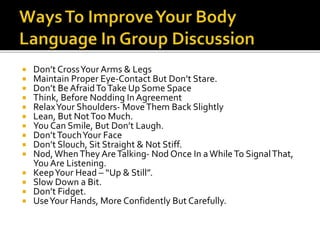
 Don’t CrossYour Arms & Legs
 Maintain Proper Eye-Contact But Don’t Stare.
 Don’t Be AfraidToTake Up Some Space
 Think, Before Nodding In Agreement
 RelaxYour Shoulders- MoveThem Back Slightly
 Lean, But NotToo Much.
 You Can Smile, But Don’t Laugh.
 Don’tTouchYour Face
 Don’t Slouch, Sit Straight & Not Stiff.
 Nod,WhenThey AreTalking- Nod Once In aWhileTo SignalThat,
You Are Listening.
 KeepYour Head – “Up & Still”.
 Slow Down a Bit.
 Don’t Fidget.
 UseYour Hands, More Confidently But Carefully.
 Listen to the subject carefully
 Put down your thoughts on a paper
 Initiate the discussion if you know the subject well
 Listen to others if you don’t know the subject
 Support you point with some facts and figures
 Make short contribution of 25-30 seconds 3-4 times
 Give others a chance to speak
 Speak politely and pleasantly. Respect contribution
from other members.
 Disagree politely and agree with what is right.
 Summarize the discussion if the group has not
reached a conclusion.
 Initiate the discussion if you do not have sufficient knowledge
about the given topic.
 Over speak, intervene and snatch other’s chance to speak.
 Argue and shout during the GD
 Look at the evaluators or a particular group member
 Talk irrelevant things and distract the discussion
 Pose negative body gestures like touching the nose, leaning back
on the chair, knocking the table with a pen etc.
 Mention erratic statistics.
 Display low self confidence with shaky voice and trembling hands.
 Try to dominate the discussion
 Put others in an embarrassing situation by asking them to speak if
they don’t want.
THANKYOU
Pratibha Agrawal
SoftskillsTrainer
 What is a Group Discussion?
 A group of participants are given a topic and are made to
speak on it for a particular time.Thereafter, based on
several skills such as, communication skills, knowledge of
the topic, ability to perform in a team, etc., the candidates
are analysed.
 How is a GD helpful?
 A Group Discussion (GD) provides a chance to various
candidates for being vocal.The candidates must shed
away all the shyness and put-forth their opinions. Group
discussion helps the participants to expand their
knowledge as there is an exchange of ideas and opinions.

Group discussion. complete guide

  • 1.
     What isa Group Discussion?  A group of participants are given a topic and are made to speak on it for a particular time. Thereafter, based on several skills such as, communication skills, knowledge of the topic, ability to perform in a team, etc., the candidates are analysed.
  • 2.
     A GroupDiscussion (GD) provides a chance to various candidates for being vocal.The candidates must shed away all the shyness and put-forth their opinions. Group discussion helps the participants to expand their knowledge as there is an exchange of ideas and opinions.
  • 3.
    GD – Guidelines Active Participation By Everyone.  Don’t feel scared to speak.  Two orThree valuable insertions desired.
  • 4.
     Look AtTheSpeakerWhile Listening.  NodWhileYou Are Listening  Have Eye-ContactWith AllWhile Speaking  Use Apt Hand MovementsWhile Speaking  Sit Straight, Involved – with Both Feet Grounded  Don’t Get Into Arguments or Debate
  • 5.
     Regulations ForConducting GD :-  Rules Static & Fixed  Regulations Dynamic & Flexible  While Speaking AddressGroup MembersAs – “Fellow-Contestant, Friend, Co-Speaker or Colleague”.  In Case of Not UnderstandingTheTopic,Wait For GroupTo RevealThe Meaning – “Observe & Interpret”  Don’t Make Extreme Opening Remarks On an Explicit Stand.  IfYouWant,You CanTake Neutral Stand, If Its Possible OnTopic.
  • 6.
     PRE  PPoint  R Rationale {Reason}  E Example Thought Generation Method
  • 7.
     M-A-S-T-E-R-P-I-E-C-E-S  MMedia  A Arts  S Science  T Technology  E Education  R Religion  P Politics  I Information  E Entertainment  C Culture  E Economy  S Sports
  • 8.
     Start Strong Maintain Interest  Don’t Be Distracting  RememberTo Relax  End Strong
  • 9.
     Criticizing  Cribbing Casualness  Circumventing  Cheating  Commenting  Circling RoundThe Bushes
  • 10.
     1. Elementof Surprise or Shock  2. CreatingAwe (Oh/Wow)  3. Use of Explicators – However,Whatever, Whenever,Whoever,Whichever
  • 11.
     Don’t Makea Feeble First Impression  StopTouchingYour Face  Don’t DoThe LegWobble  Don’t CrossYour Arms  Don’t Sit-UpToo Straight, But Don’t Slouch Either  Props Are For Magicians & Comedians  Eye Contact Is Good; Staring is Not.  WatchThose Hands  Don’t Be a Nodding Dog  Don’t KeepYour Distance
  • 12.
     Don’t CrossYourArms & Legs  Maintain Proper Eye-Contact But Don’t Stare.  Don’t Be AfraidToTake Up Some Space  Think, Before Nodding In Agreement  RelaxYour Shoulders- MoveThem Back Slightly  Lean, But NotToo Much.  You Can Smile, But Don’t Laugh.  Don’tTouchYour Face  Don’t Slouch, Sit Straight & Not Stiff.  Nod,WhenThey AreTalking- Nod Once In aWhileTo SignalThat, You Are Listening.  KeepYour Head – “Up & Still”.  Slow Down a Bit.  Don’t Fidget.  UseYour Hands, More Confidently But Carefully.
  • 13.
     Listen tothe subject carefully  Put down your thoughts on a paper  Initiate the discussion if you know the subject well  Listen to others if you don’t know the subject  Support you point with some facts and figures  Make short contribution of 25-30 seconds 3-4 times  Give others a chance to speak  Speak politely and pleasantly. Respect contribution from other members.  Disagree politely and agree with what is right.  Summarize the discussion if the group has not reached a conclusion.
  • 14.
     Initiate thediscussion if you do not have sufficient knowledge about the given topic.  Over speak, intervene and snatch other’s chance to speak.  Argue and shout during the GD  Look at the evaluators or a particular group member  Talk irrelevant things and distract the discussion  Pose negative body gestures like touching the nose, leaning back on the chair, knocking the table with a pen etc.  Mention erratic statistics.  Display low self confidence with shaky voice and trembling hands.  Try to dominate the discussion  Put others in an embarrassing situation by asking them to speak if they don’t want.
  • 15.
  • 16.
     What isa Group Discussion?  A group of participants are given a topic and are made to speak on it for a particular time.Thereafter, based on several skills such as, communication skills, knowledge of the topic, ability to perform in a team, etc., the candidates are analysed.  How is a GD helpful?  A Group Discussion (GD) provides a chance to various candidates for being vocal.The candidates must shed away all the shyness and put-forth their opinions. Group discussion helps the participants to expand their knowledge as there is an exchange of ideas and opinions.