WALT DISNEY Ajay Norman(DM18202)
Ankur kislaya(DM18206)
Melissa Mariam Alex(DM18233)
Saurabh Arora(DM18246)
Shivam Shukla(DM18248)
Introduction
 The Walt Disney company is an American mass media and
entertainment conglomerate
 Founded in 1923 by brothers, Walt Disney and Roy O. Disney
 Founded as a cartoon studio
 Later diversified into mass media, entertainment, film
production, etc.
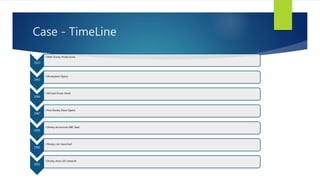
Case - TimeLine
1923
• Walt Disney Productions
1955
• Disneyland Opens
1984
• Michael Eisner hired
1987
• First Disney Store Opens
1995
• Disney announces ABC deal
1996
• Disney.com launched
2001
• Disney shuts GO network
Case Analysis
 Started out as a cartoon studio later became Disney Brothers
studio which was a flat, non-hierarchical organisation.
 After release of snow white, company grew 7 fold, and went public
to finance their growth strategies
 The decline caused by war slowed down growth and resulted in
financial constraints
 Diversified into WED, theme parks, cruise ships, in-house media,
in-house travel company
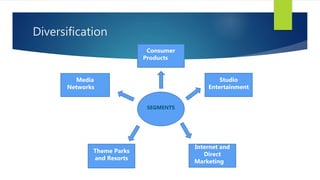
Diversification
Studio
Entertainment
Theme Parks
and Resorts
Media
Networks
Internet and
Direct
Marketing
SEGMENTS
Consumer
Products
Case Analysis
 Walt Disney’s death caused company to deteriorate over the
following years
 Eisner’s takeover in 1984
 Focused on annual growth of 20%
 Laid emphasis on managing creativity and synergy among
different enterprises
 1994- Turmoil – Wells dies in helicopter crash
 Acquisition of ABC, Miramax
 Soon after ABC Acquisition, starts deteriorating
 Market leader of theme park industry
Eisner’s strategies
 Cost cutting:
 Projected to save $500 million
 Reduced film budgets
 Leaner marketing of products
 Closed business not showing good returns – Club Disney, ESPN
stores
 Corporate synergy
 Only 20% overseas revenue – Strategy to improve overseas operations
 Introduced cruises and entered into internet, created ESPN Zones
 Managing the brand
 Third in entertainment channels for kids
 Controversies among catholic groups, animal rights activists
 Traditional view questioned
 Managing the creativity
 Gong show
 Conflicts between employees
 Emphasis on cost cutting drove creative talent away
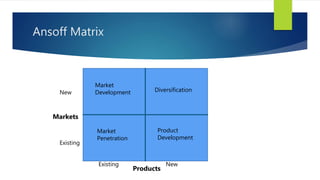
Ansoff Matrix
Market
Development
Market
Penetration
Diversification
Product
Development
Existing New
New
Existing
Products
Markets
Recommendations -
 Based on Ansoff Matrix, for Resorts and theme parks, Disney could focus
on market penetration
 For consumer products, it can develop new markets hence go for Market
Development
 For Disney Studios, given complete emphasis on creativity, for Music and
Film production, in midst on intense competition – Disney could go for
Diversification strategy
Smart or Dumb ?
 Disney has expanded domestically as well as globally through corporate
integration. It has shifted its focus from show quality and content to distribution,
marketing, licensing and merchandising arrangements to respond to industry
changes and replace lost revenues.
• Globalization: Disney products can be found all over the world in different forms
and areas. As a global brand, Walt Disney international provides oversight of
company’s activities outside US. The aim was to increase globalization to make it
relevant to consumers world wide.
• Horizontal Integration: Disney owns many studios, media networks and
consumer product companies. It uses this strategy to increase its market
awareness and presence through cross promotions.
• Vertical Integration: The sub companies allow Disney to plan, produce, advertise
and distribute all the products. It does not have to rely on anyone and hence
better control on quality, content and costs.
• Media Synergy: production and distribution of products can be done by the
Disney owned companies. An important factor of its success is the integrated
nature of its products.
• Diversification: Disney has always focused on diversification. The variety of
products and services ranging from movies, theme parks, shows, merchandise;
offer a range for the tastes and preferences of consumers of all ages.
• Distribution: whenever Disney produces a new image or brand such as a movie
character, its licensing, marketing and business outlets continue to capitalize on
that character till it has left the box office. It releases a line of toys or products
followed by DVD release and the character’s presence in theme parks.

Group 12 walt disney

  • 1.
    WALT DISNEY AjayNorman(DM18202) Ankur kislaya(DM18206) Melissa Mariam Alex(DM18233) Saurabh Arora(DM18246) Shivam Shukla(DM18248)
  • 2.
    Introduction  The WaltDisney company is an American mass media and entertainment conglomerate  Founded in 1923 by brothers, Walt Disney and Roy O. Disney  Founded as a cartoon studio  Later diversified into mass media, entertainment, film production, etc.
  • 3.
    Case - TimeLine 1923 •Walt Disney Productions 1955 • Disneyland Opens 1984 • Michael Eisner hired 1987 • First Disney Store Opens 1995 • Disney announces ABC deal 1996 • Disney.com launched 2001 • Disney shuts GO network
  • 4.
    Case Analysis  Startedout as a cartoon studio later became Disney Brothers studio which was a flat, non-hierarchical organisation.  After release of snow white, company grew 7 fold, and went public to finance their growth strategies  The decline caused by war slowed down growth and resulted in financial constraints  Diversified into WED, theme parks, cruise ships, in-house media, in-house travel company
  • 5.
  • 6.
    Case Analysis  WaltDisney’s death caused company to deteriorate over the following years  Eisner’s takeover in 1984  Focused on annual growth of 20%  Laid emphasis on managing creativity and synergy among different enterprises  1994- Turmoil – Wells dies in helicopter crash  Acquisition of ABC, Miramax  Soon after ABC Acquisition, starts deteriorating  Market leader of theme park industry
  • 7.
    Eisner’s strategies  Costcutting:  Projected to save $500 million  Reduced film budgets  Leaner marketing of products  Closed business not showing good returns – Club Disney, ESPN stores  Corporate synergy  Only 20% overseas revenue – Strategy to improve overseas operations
  • 8.
     Introduced cruisesand entered into internet, created ESPN Zones  Managing the brand  Third in entertainment channels for kids  Controversies among catholic groups, animal rights activists  Traditional view questioned  Managing the creativity  Gong show  Conflicts between employees  Emphasis on cost cutting drove creative talent away
  • 9.
  • 10.
    Recommendations -  Basedon Ansoff Matrix, for Resorts and theme parks, Disney could focus on market penetration  For consumer products, it can develop new markets hence go for Market Development  For Disney Studios, given complete emphasis on creativity, for Music and Film production, in midst on intense competition – Disney could go for Diversification strategy
  • 11.
    Smart or Dumb?  Disney has expanded domestically as well as globally through corporate integration. It has shifted its focus from show quality and content to distribution, marketing, licensing and merchandising arrangements to respond to industry changes and replace lost revenues. • Globalization: Disney products can be found all over the world in different forms and areas. As a global brand, Walt Disney international provides oversight of company’s activities outside US. The aim was to increase globalization to make it relevant to consumers world wide. • Horizontal Integration: Disney owns many studios, media networks and consumer product companies. It uses this strategy to increase its market awareness and presence through cross promotions.
  • 12.
    • Vertical Integration:The sub companies allow Disney to plan, produce, advertise and distribute all the products. It does not have to rely on anyone and hence better control on quality, content and costs. • Media Synergy: production and distribution of products can be done by the Disney owned companies. An important factor of its success is the integrated nature of its products. • Diversification: Disney has always focused on diversification. The variety of products and services ranging from movies, theme parks, shows, merchandise; offer a range for the tastes and preferences of consumers of all ages. • Distribution: whenever Disney produces a new image or brand such as a movie character, its licensing, marketing and business outlets continue to capitalize on that character till it has left the box office. It releases a line of toys or products followed by DVD release and the character’s presence in theme parks.