

















CASE ANALYSIS
STEINWAY AND SONS :
buying a legend
COMPANY BACKGROUND
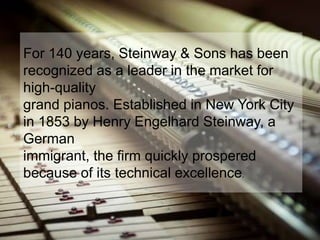
For 140 years, Steinway & Sons has been
recognized as a leader in the market for
high-quality
grand pianos. Established in New York City
in 1853 by Henry Engelhard Steinway, a
German
immigrant, the firm quickly prospered
because of its technical excellence.
STEINWAY ARTISTS
Timeline of
Steinway & Sons
After 120-years of family control, it was
decided that Steinway could no longer
survive as a closely-held family
operation. THE OWNERSHIP OF THE
COMPANY WAS SPREAD AMONG MANY
FAMILY MEMBERS UNWILLING TO
INVEST IN CAPITAL leading up to the
sale of Steinway in 1972 , REASONS
BEING PRIMARILY FINANCIAL
Steinway & Sons :1853-1972
The CBS Years :1972 - 1985
Company was sold to the CBS Musical
Instruments Division
in 1972 for about $21 million in CBS
stock.
CBS’s management of Steinway came
to a close in 1985. In November 1984,
despite being
moderately profitable, CBS announced
plans to sell its Musical Instruments
companies and to focus
its efforts on broadcasting
The Birmingham Years :
1985 - 1995
Company was sold to the Birmingham
Brothers in 1985 for about $50 million.
Birmingham's did something that
Steinway & Sons had resisted
throughout its history. They introduced
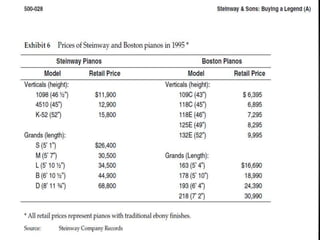
a mid-priced piano The Boston Piano
Finally, in late-1994, the Birmingham's
decided to sell the company.
The company was again sold on April 18,
1995 to Dana Messina and Kyle .Kirkland,
Messina & Kirkland :
April 18, 1995
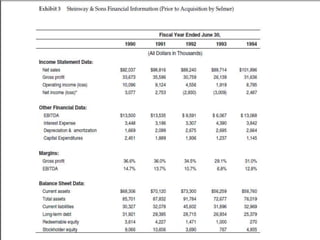
On April 18, 1995, the Selmer Company agreed to purchase
Steinway & Sons for $101.5 million . At the time of the purchase,
Selmer was the leading manufacturer of band and orchestral
instruments in the United States.
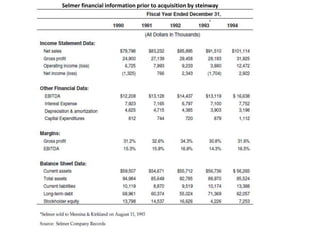
Selmer financial information prior to acquisition by steinway
Following the purchase of Steinway & Sons, Kirkland
and Messina formed Steinway Musical Instruments,
Inc., with Steinway & Sons and Selmer as wholly-
owned subsidiaries. Within this newly formed company,
Kirkland was named Chairman of the Board and
Messina was named Chief Executive Officer.
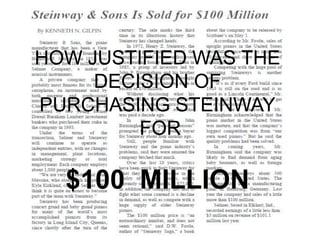
HOW JUSTIFIED WAS THE
DECISION OF
PURCHASING STEINWAY
FOR
$100 MILLION
PROBLEMS FACED
NO EXTANT SYNERGY
BETWEEN STEINWAY AND
SONS AND SELMER
COMPANY
PROBLEMS FACED
The company has changed hands several
times and product quality has been a
problem. Dealers and workers were losing
faith in Steinway & Sons.
PROBLEMS FACED
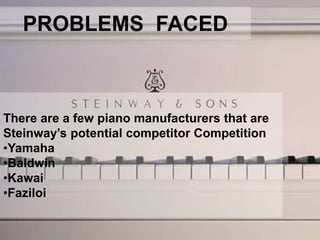
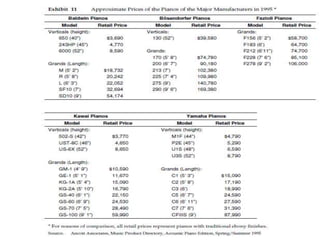
There are a few piano manufacturers that are
Steinway’s potential competitor Competition
•Yamaha
•Baldwin
•Kawai
•Faziloi
PROBLEMS FACED
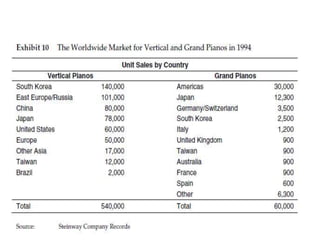
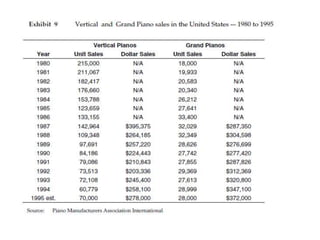
The piano industry saw a down
turn in current years with
global sales falling by 40 %
PROBLEMS FACED
STEINWAY’S RECENT
INTRODUCTION OF BOSTON
PIANOS WAS A QUESTIONABLE
STRATEGY
FUTURE PROSPECTS AND
EXCITING POSSIBILITIES
STEINWAY WAS A PRE
EMINENT BRAND NAME
IN THE MUSIC INDUSTRY
AS THE PRODUCER OF
THE FINEST PIANOS
FUTURE PROSPECTS AND
EXCITING POSSIBILITIES
STEINWAY WAS THE
LEADING PRODUCER
OF GRAND AND
VERTICAL PIANO
FUTURE PROSPECTS AND
EXCITING POSSIBILITIES
ECONOMIC
CONDITIONS WERE
IMPROVING IN US
AND EUROPE
FUTURE PROSPECTS AND
EXCITING POSSIBILITIES
STEINWAY HAD YET
TO TAKE THE
ADVANTAGE OF THE
GROWING ASIAN
MARKET
FUTURE PROSPECTS AND
EXCITING POSSIBILITIES
STEINWAY WAS THE
LEADING PRODUCER
OF GRAND AND
VERTICAL PIANO
FUTURE PROSPECTS AND
EXCITING POSSIBILITIES
INCREASE IN SALES
OF VERTICAL PIANO
– BOSTON PIANOS
Role of Messina & Kirkland
As both Messina and Kirkland lack
experience in the piano industry, they
should hire a professional team from the
piano industry and they itself have gain lot
of experience from financial sector from
salmon so they handle financial activities.
These slides were created by
MAULSHRI PATHAK, as part of an
internship done under the guidance
of Prof. Sameer Mathur
(www.IIMInternship.com

Steinway and sons - Case analysis

  • 1.
    CASE ANALYSIS STEINWAY ANDSONS : buying a legend
  • 2.
  • 3.
    For 140 years,Steinway & Sons has been recognized as a leader in the market for high-quality grand pianos. Established in New York City in 1853 by Henry Engelhard Steinway, a German immigrant, the firm quickly prospered because of its technical excellence.
  • 5.
  • 7.
  • 8.
    After 120-years offamily control, it was decided that Steinway could no longer survive as a closely-held family operation. THE OWNERSHIP OF THE COMPANY WAS SPREAD AMONG MANY FAMILY MEMBERS UNWILLING TO INVEST IN CAPITAL leading up to the sale of Steinway in 1972 , REASONS BEING PRIMARILY FINANCIAL Steinway & Sons :1853-1972
  • 9.
    The CBS Years:1972 - 1985 Company was sold to the CBS Musical Instruments Division in 1972 for about $21 million in CBS stock. CBS’s management of Steinway came to a close in 1985. In November 1984, despite being moderately profitable, CBS announced plans to sell its Musical Instruments companies and to focus its efforts on broadcasting
  • 10.
    The Birmingham Years: 1985 - 1995 Company was sold to the Birmingham Brothers in 1985 for about $50 million. Birmingham's did something that Steinway & Sons had resisted throughout its history. They introduced a mid-priced piano The Boston Piano Finally, in late-1994, the Birmingham's decided to sell the company.
  • 11.
    The company wasagain sold on April 18, 1995 to Dana Messina and Kyle .Kirkland, Messina & Kirkland : April 18, 1995
  • 12.
    On April 18,1995, the Selmer Company agreed to purchase Steinway & Sons for $101.5 million . At the time of the purchase, Selmer was the leading manufacturer of band and orchestral instruments in the United States.
  • 13.
    Selmer financial informationprior to acquisition by steinway
  • 14.
    Following the purchaseof Steinway & Sons, Kirkland and Messina formed Steinway Musical Instruments, Inc., with Steinway & Sons and Selmer as wholly- owned subsidiaries. Within this newly formed company, Kirkland was named Chairman of the Board and Messina was named Chief Executive Officer.
  • 16.
    HOW JUSTIFIED WASTHE DECISION OF PURCHASING STEINWAY FOR $100 MILLION
  • 17.
    PROBLEMS FACED NO EXTANTSYNERGY BETWEEN STEINWAY AND SONS AND SELMER COMPANY
  • 18.
    PROBLEMS FACED The companyhas changed hands several times and product quality has been a problem. Dealers and workers were losing faith in Steinway & Sons.
  • 20.
    PROBLEMS FACED There area few piano manufacturers that are Steinway’s potential competitor Competition •Yamaha •Baldwin •Kawai •Faziloi
  • 22.
    PROBLEMS FACED The pianoindustry saw a down turn in current years with global sales falling by 40 %
  • 23.
    PROBLEMS FACED STEINWAY’S RECENT INTRODUCTIONOF BOSTON PIANOS WAS A QUESTIONABLE STRATEGY
  • 24.
    FUTURE PROSPECTS AND EXCITINGPOSSIBILITIES STEINWAY WAS A PRE EMINENT BRAND NAME IN THE MUSIC INDUSTRY AS THE PRODUCER OF THE FINEST PIANOS
  • 25.
    FUTURE PROSPECTS AND EXCITINGPOSSIBILITIES STEINWAY WAS THE LEADING PRODUCER OF GRAND AND VERTICAL PIANO
  • 26.
    FUTURE PROSPECTS AND EXCITINGPOSSIBILITIES ECONOMIC CONDITIONS WERE IMPROVING IN US AND EUROPE
  • 28.
    FUTURE PROSPECTS AND EXCITINGPOSSIBILITIES STEINWAY HAD YET TO TAKE THE ADVANTAGE OF THE GROWING ASIAN MARKET
  • 30.
    FUTURE PROSPECTS AND EXCITINGPOSSIBILITIES STEINWAY WAS THE LEADING PRODUCER OF GRAND AND VERTICAL PIANO
  • 32.
    FUTURE PROSPECTS AND EXCITINGPOSSIBILITIES INCREASE IN SALES OF VERTICAL PIANO – BOSTON PIANOS
  • 34.
    Role of Messina& Kirkland As both Messina and Kirkland lack experience in the piano industry, they should hire a professional team from the piano industry and they itself have gain lot of experience from financial sector from salmon so they handle financial activities.
  • 35.
    These slides werecreated by MAULSHRI PATHAK, as part of an internship done under the guidance of Prof. Sameer Mathur (www.IIMInternship.com