STACY JACOBS (GROUP 1)
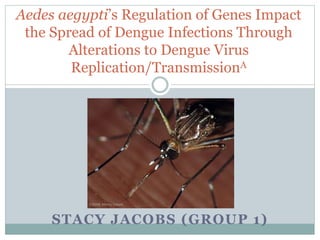
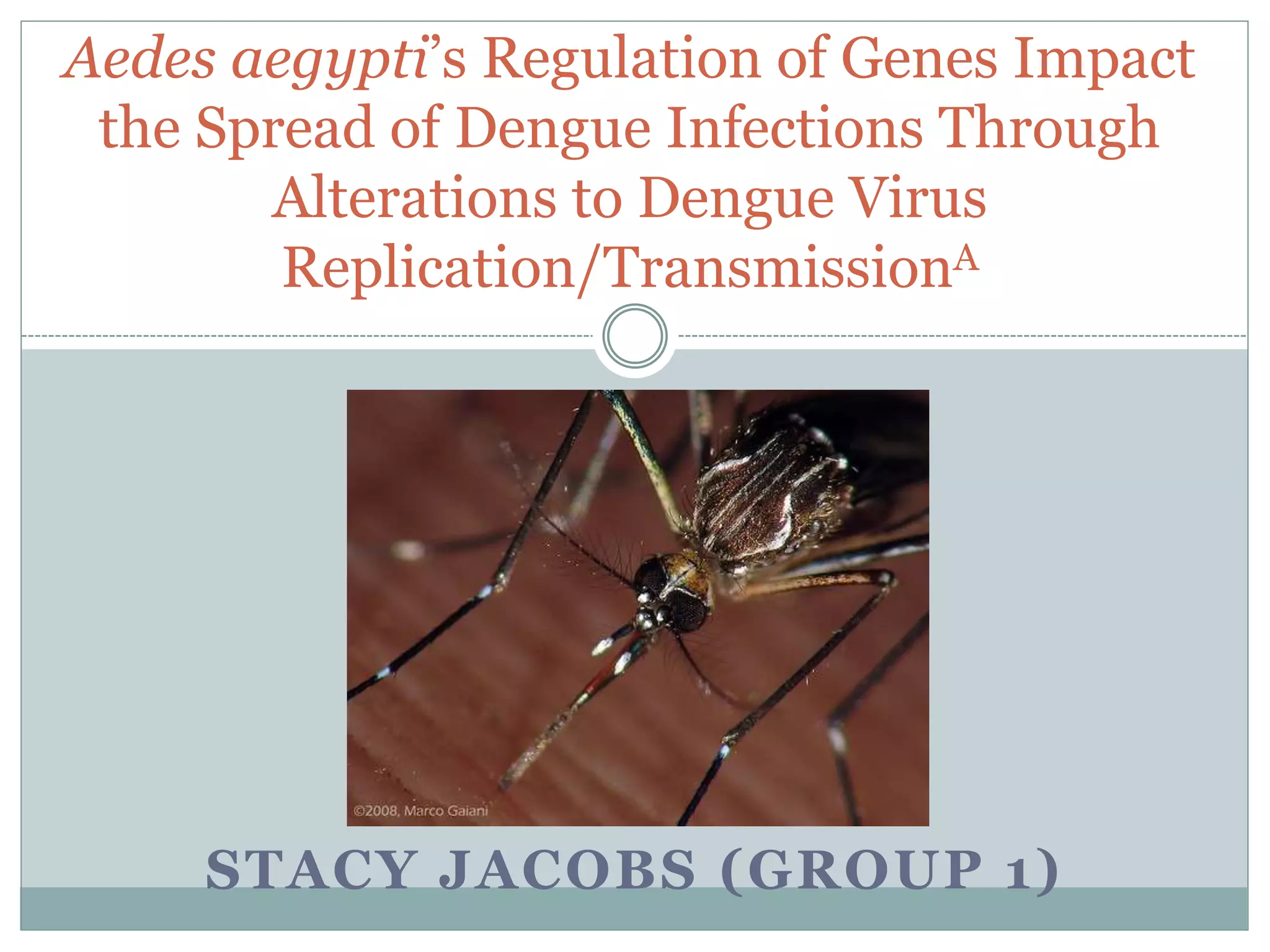
Aedes aegypti’s Regulation of Genes Impact
the Spread of Dengue Infections Through
Alterations to Dengue Virus
Replication/TransmissionA
Overview
Group 3 Group 2 Group 1 Group 4
• Aedes aegypti
• Life Cycle
-Adult
-Aquatic
• Morphology
• wMelPop
• Histology
• Transmission of
Dengue
-Mouth to
midgut
-Midgut to
hemocoel
-Hemocoel to
all organs
-Salivary
Glands
• Transcription
• Translation
• Dengue Virus
Replication
• ADE
• Genes
• Toll Pathway
• Habitat
-Temperature
-Location
• Keystone
Species
• Trophic Levels
• Prevention
Methods
B
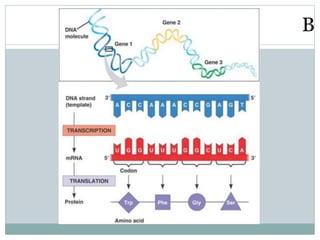
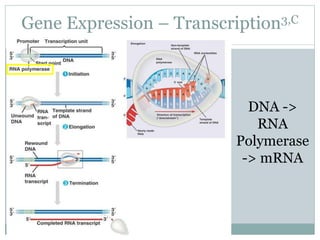
Gene Expression – Transcription3,C
DNA ->
RNA
Polymerase
-> mRNA
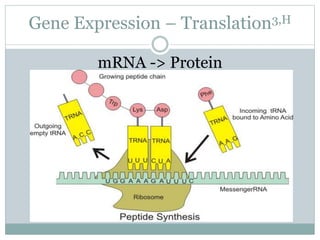
Gene Expression – Translation3,H
mRNA -> Protein
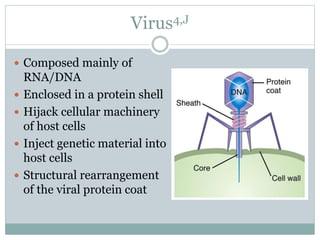
Virus4,J
ď‚— Composed mainly of
RNA/DNA
ď‚— Enclosed in a protein shell
ď‚— Hijack cellular machinery
of host cells
ď‚— Inject genetic material into
host cells
ď‚— Structural rearrangement
of the viral protein coat
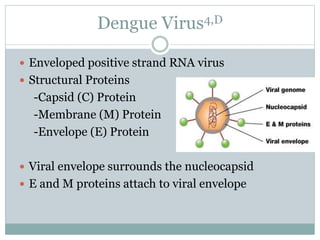
Dengue Virus4,D
ď‚— Enveloped positive strand RNA virus
ď‚— Structural Proteins
-Capsid (C) Protein
-Membrane (M) Protein
-Envelope (E) Protein
ď‚— Viral envelope surrounds the nucleocapsid
ď‚— E and M proteins attach to viral envelope
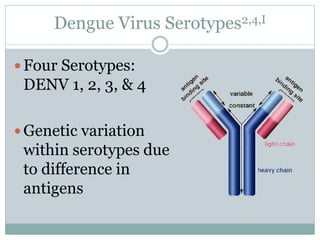
Dengue Virus Serotypes2,4,I
ď‚— Four Serotypes:
DENV 1, 2, 3, & 4
ď‚— Genetic variation
within serotypes due
to difference in
antigens
Dengue Virus Serotypes2,4
ď‚— Provides specific lifetime immunity and
short-term cross-immunity
ď‚— Some genetic variants within each
serotype may be more virulent or have
greater epidemic potential
ď‚— Bangkok, Thailand: 1994-2006
-DENV-1: more common
-DENV-2: more virulent
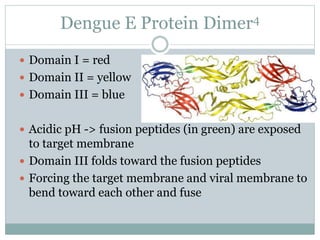
Dengue E Protein Dimer4
ď‚— Domain I = red
ď‚— Domain II = yellow
ď‚— Domain III = blue
ď‚— Acidic pH -> fusion peptides (in green) are exposed
to target membrane
ď‚— Domain III folds toward the fusion peptides
ď‚— Forcing the target membrane and viral membrane to
bend toward each other and fuse
G
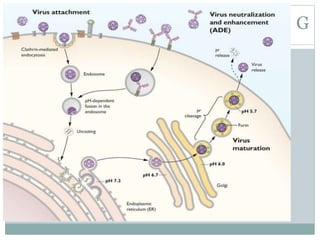
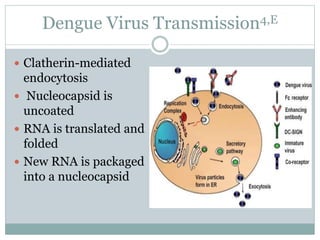
Dengue Virus Transmission4,E
ď‚— Clatherin-mediated
endocytosis
ď‚— Nucleocapsid is
uncoated
ď‚— RNA is translated and
folded
ď‚— New RNA is packaged
into a nucleocapsid
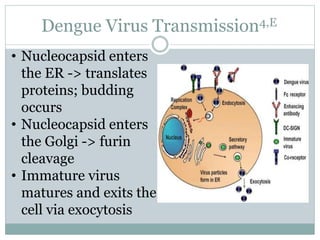
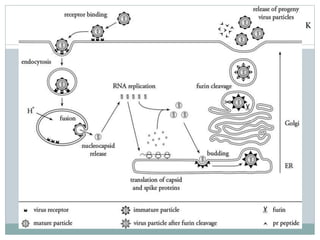
Dengue Virus Transmission4,E
• Nucleocapsid enters
the ER -> translates
proteins; budding
occurs
• Nucleocapsid enters
the Golgi -> furin
cleavage
• Immature virus
matures and exits the
cell via exocytosis
Dengue Virus Transmission K
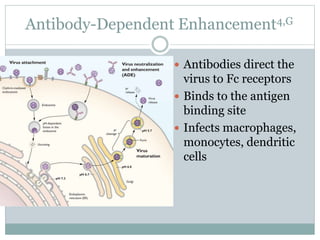
Antibody-Dependent Enhancement4,G
ď‚— Antibodies direct the
virus to Fc receptors
ď‚— Binds to the antigen
binding site
ď‚— Infects macrophages,
monocytes, dendritic
cells
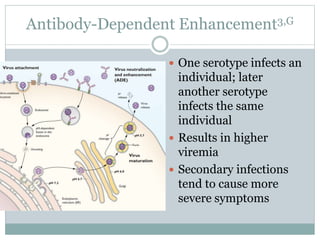
Antibody-Dependent Enhancement3,G
ď‚— One serotype infects an
individual; later
another serotype
infects the same
individual
ď‚— Results in higher
viremia
ď‚— Secondary infections
tend to cause more
severe symptoms
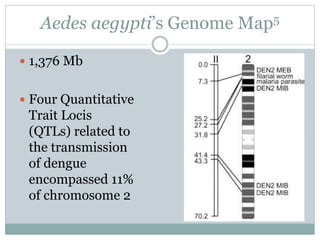
Aedes aegypti’s Genome Map5
ď‚— 1,376 Mb
ď‚— Four Quantitative
Trait Locis
(QTLs) related to
the transmission
of dengue
encompassed 11%
of chromosome 2
Regulation of Genes1
ď‚— Differentially Up-Regulated Genes (DURGs):
when a cell is deficient, more receptor protein is
synthesized
ď‚— Differentially Down-Regulated Genes
(DDRGs): when a cell is overstimulated, the
expression of the receptor protein is decreased
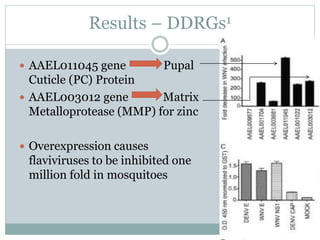
Results – DDRGs1
ď‚— AAEL011045 gene Pupal
Cuticle (PC) Protein
ď‚— AAEL003012 gene Matrix
Metalloprotease (MMP) for zinc
ď‚— Overexpression causes
flaviviruses to be inhibited one
million fold in mosquitoes
Results – DDRGs1
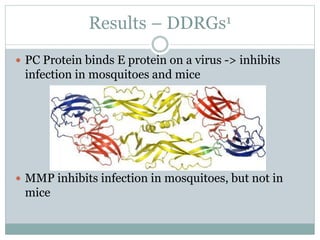
ď‚— PC Protein binds E protein on a virus -> inhibits
infection in mosquitoes and mice
ď‚— MMP inhibits infection in mosquitoes, but not in
mice
Results – DURG1
ď‚— AAEL014440 gene Juvenile Hormone
Inducible Protein
- up-regulated at all time points for all flaviviruses
- regulates many other genes
ď‚— AAEL003685 gene Core Histone H3 Protein
- 4 fold up-regulated at all time points for all
flaviviruses
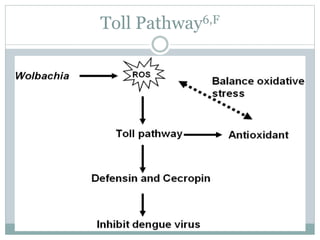
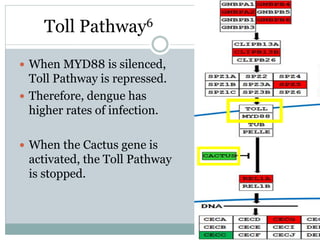
Toll Pathway6,F
Toll Pathway6
ď‚— Uses a large number of DDRGs and DURGs that
function in immune response
-34.5% in midgut
-27.5% in carcass
ď‚— Myeloid Differentiation Primary Response gene 88
(MYD88) Cytoplasmic Adaptor Protein
ď‚— Cytoplasmic Adaptor Protein binds to a receptor ->
activates Toll Pathway
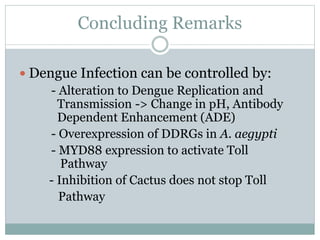
Toll Pathway6
ď‚— When MYD88 is silenced,
Toll Pathway is repressed.
ď‚— Therefore, dengue has
higher rates of infection.
ď‚— When the Cactus gene is
activated, the Toll Pathway
is stopped.
Concluding Remarks
ď‚— Dengue Infection can be controlled by:
- Alteration to Dengue Replication and
Transmission -> Change in pH, Antibody
Dependent Enhancement (ADE)
- Overexpression of DDRGs in A. aegypti
- MYD88 expression to activate Toll
Pathway
- Inhibition of Cactus does not stop Toll
Pathway
Works Cited - Literature
1. Colpitts, T., Cox, J., Vanlandingham, D., Feitosa, F., Cheng, G., Kurscheid, S., Wang, P.,
Krishnan, M., Higgs, S. and Firkrig, E. 2011. Alterations in the Aedes aegypti
transcriptome during infection with West Nile, dengue and yellow fever
viruses. PLoS Pathogens 7, e1002189.
2. Fried, J., Gibbons, R., Kalayanarooj, S., Thomas, S., Srikiatkhachorn, A., Yoon, I-K.,
Jarman, R., Green, S., Rothman, A. and Cummings, D. 2010. Serotype-specific
differences in the risk of dengue hemorrhagic fever: An analysis of data
collected in Bangkok, Thailand from 1994 to 2006. PLoS Neglected Tropical
Diseases 4, e617.
3. Grandi, G. 2007. In vitro transcription and translation protocols. Totoway, NJ.
Humana Press.
4. Rodenhuis-Zybert, I., Wilschut, J. and Smit, J. 2010. Dengue virus life cycle: viral and
host factors modulating infectivity. Cellular and Molecular Life Sciences 67,
2773-2786.
5. Timoshevskiy, V., Severson, D., deBruyn, B., Black, W., Sharakhov, I. and Sharakhov,
M. 2013. An integrated linkage, chromosome, and genome map for the yellow
fever mosquito Aedes aegypti. PLoS Neglected Tropical Diseases 7, e2052.
6. Zhiyong, X., Ramirez, J. and Dimopoulos G. 2008. The Aedes aegypti Toll pathway
controls dengue virus infection. PLoS Pathogens 4, e1000098.
Works Cited - Images
A. http://www.nowpublic.com/health/aedes-aegypti-0
B. http://hubpages.com/hub/protein-production-a-step-by-step-illustrated-
guide
C. http://denydendhi.blogspot.com/2011/03/replikasi-dna.html
D. http://www.nature.com/scitable/topicpage/dengue-viruses-22400925
E.http://pic1.gophoto.us/key/dengue%20virus%20life%20cycle%20ppt
F.http://www.pnas.org/content/109/1/E23/F6.expansion.html
G.http://www.niaid.nih.gov/labsandresources/labs/aboutlabs/lvd/viralpathog
enesissection/Pages/default.aspx
H.http://pioneerbiology.wordpress.com/2010/10/24/transcriptiontransation/
I.http://www.biology.arizona.edu/immunology/tutorials/antibody/structure.ht
ml
J. http://oceanworld.tamu.edu/resources/oceanography-
book/microbialweb.htm

Group 1 Presentation

  • 1.
    STACY JACOBS (GROUP1) Aedes aegypti’s Regulation of Genes Impact the Spread of Dengue Infections Through Alterations to Dengue Virus Replication/TransmissionA
  • 2.
    Overview Group 3 Group2 Group 1 Group 4 • Aedes aegypti • Life Cycle -Adult -Aquatic • Morphology • wMelPop • Histology • Transmission of Dengue -Mouth to midgut -Midgut to hemocoel -Hemocoel to all organs -Salivary Glands • Transcription • Translation • Dengue Virus Replication • ADE • Genes • Toll Pathway • Habitat -Temperature -Location • Keystone Species • Trophic Levels • Prevention Methods
  • 3.
  • 4.
    Gene Expression –Transcription3,C DNA -> RNA Polymerase -> mRNA
  • 5.
    Gene Expression –Translation3,H mRNA -> Protein
  • 6.
    Virus4,J ď‚— Composed mainlyof RNA/DNA ď‚— Enclosed in a protein shell ď‚— Hijack cellular machinery of host cells ď‚— Inject genetic material into host cells ď‚— Structural rearrangement of the viral protein coat
  • 7.
    Dengue Virus4,D ď‚— Envelopedpositive strand RNA virus ď‚— Structural Proteins -Capsid (C) Protein -Membrane (M) Protein -Envelope (E) Protein ď‚— Viral envelope surrounds the nucleocapsid ď‚— E and M proteins attach to viral envelope
  • 8.
    Dengue Virus Serotypes2,4,I ď‚—Four Serotypes: DENV 1, 2, 3, & 4 ď‚— Genetic variation within serotypes due to difference in antigens
  • 9.
    Dengue Virus Serotypes2,4 ď‚—Provides specific lifetime immunity and short-term cross-immunity ď‚— Some genetic variants within each serotype may be more virulent or have greater epidemic potential ď‚— Bangkok, Thailand: 1994-2006 -DENV-1: more common -DENV-2: more virulent
  • 10.
    Dengue E ProteinDimer4 ď‚— Domain I = red ď‚— Domain II = yellow ď‚— Domain III = blue ď‚— Acidic pH -> fusion peptides (in green) are exposed to target membrane ď‚— Domain III folds toward the fusion peptides ď‚— Forcing the target membrane and viral membrane to bend toward each other and fuse
  • 11.
  • 12.
    Dengue Virus Transmission4,E ď‚—Clatherin-mediated endocytosis ď‚— Nucleocapsid is uncoated ď‚— RNA is translated and folded ď‚— New RNA is packaged into a nucleocapsid
  • 13.
    Dengue Virus Transmission4,E •Nucleocapsid enters the ER -> translates proteins; budding occurs • Nucleocapsid enters the Golgi -> furin cleavage • Immature virus matures and exits the cell via exocytosis
  • 14.
  • 15.
    Antibody-Dependent Enhancement4,G ď‚— Antibodiesdirect the virus to Fc receptors ď‚— Binds to the antigen binding site ď‚— Infects macrophages, monocytes, dendritic cells
  • 16.
    Antibody-Dependent Enhancement3,G ď‚— Oneserotype infects an individual; later another serotype infects the same individual ď‚— Results in higher viremia ď‚— Secondary infections tend to cause more severe symptoms
  • 17.
    Aedes aegypti’s GenomeMap5  1,376 Mb  Four Quantitative Trait Locis (QTLs) related to the transmission of dengue encompassed 11% of chromosome 2
  • 18.
    Regulation of Genes1 ď‚—Differentially Up-Regulated Genes (DURGs): when a cell is deficient, more receptor protein is synthesized ď‚— Differentially Down-Regulated Genes (DDRGs): when a cell is overstimulated, the expression of the receptor protein is decreased
  • 19.
    Results – DDRGs1 AAEL011045 gene Pupal Cuticle (PC) Protein  AAEL003012 gene Matrix Metalloprotease (MMP) for zinc  Overexpression causes flaviviruses to be inhibited one million fold in mosquitoes
  • 20.
    Results – DDRGs1 PC Protein binds E protein on a virus -> inhibits infection in mosquitoes and mice  MMP inhibits infection in mosquitoes, but not in mice
  • 21.
    Results – DURG1 AAEL014440 gene Juvenile Hormone Inducible Protein - up-regulated at all time points for all flaviviruses - regulates many other genes  AAEL003685 gene Core Histone H3 Protein - 4 fold up-regulated at all time points for all flaviviruses
  • 22.
  • 23.
    Toll Pathway6 ď‚— Usesa large number of DDRGs and DURGs that function in immune response -34.5% in midgut -27.5% in carcass ď‚— Myeloid Differentiation Primary Response gene 88 (MYD88) Cytoplasmic Adaptor Protein ď‚— Cytoplasmic Adaptor Protein binds to a receptor -> activates Toll Pathway
  • 24.
    Toll Pathway6 ď‚— WhenMYD88 is silenced, Toll Pathway is repressed. ď‚— Therefore, dengue has higher rates of infection. ď‚— When the Cactus gene is activated, the Toll Pathway is stopped.
  • 25.
    Concluding Remarks ď‚— DengueInfection can be controlled by: - Alteration to Dengue Replication and Transmission -> Change in pH, Antibody Dependent Enhancement (ADE) - Overexpression of DDRGs in A. aegypti - MYD88 expression to activate Toll Pathway - Inhibition of Cactus does not stop Toll Pathway
  • 26.
    Works Cited -Literature 1. Colpitts, T., Cox, J., Vanlandingham, D., Feitosa, F., Cheng, G., Kurscheid, S., Wang, P., Krishnan, M., Higgs, S. and Firkrig, E. 2011. Alterations in the Aedes aegypti transcriptome during infection with West Nile, dengue and yellow fever viruses. PLoS Pathogens 7, e1002189. 2. Fried, J., Gibbons, R., Kalayanarooj, S., Thomas, S., Srikiatkhachorn, A., Yoon, I-K., Jarman, R., Green, S., Rothman, A. and Cummings, D. 2010. Serotype-specific differences in the risk of dengue hemorrhagic fever: An analysis of data collected in Bangkok, Thailand from 1994 to 2006. PLoS Neglected Tropical Diseases 4, e617. 3. Grandi, G. 2007. In vitro transcription and translation protocols. Totoway, NJ. Humana Press. 4. Rodenhuis-Zybert, I., Wilschut, J. and Smit, J. 2010. Dengue virus life cycle: viral and host factors modulating infectivity. Cellular and Molecular Life Sciences 67, 2773-2786. 5. Timoshevskiy, V., Severson, D., deBruyn, B., Black, W., Sharakhov, I. and Sharakhov, M. 2013. An integrated linkage, chromosome, and genome map for the yellow fever mosquito Aedes aegypti. PLoS Neglected Tropical Diseases 7, e2052. 6. Zhiyong, X., Ramirez, J. and Dimopoulos G. 2008. The Aedes aegypti Toll pathway controls dengue virus infection. PLoS Pathogens 4, e1000098.
  • 27.
    Works Cited -Images A. http://www.nowpublic.com/health/aedes-aegypti-0 B. http://hubpages.com/hub/protein-production-a-step-by-step-illustrated- guide C. http://denydendhi.blogspot.com/2011/03/replikasi-dna.html D. http://www.nature.com/scitable/topicpage/dengue-viruses-22400925 E.http://pic1.gophoto.us/key/dengue%20virus%20life%20cycle%20ppt F.http://www.pnas.org/content/109/1/E23/F6.expansion.html G.http://www.niaid.nih.gov/labsandresources/labs/aboutlabs/lvd/viralpathog enesissection/Pages/default.aspx H.http://pioneerbiology.wordpress.com/2010/10/24/transcriptiontransation/ I.http://www.biology.arizona.edu/immunology/tutorials/antibody/structure.ht ml J. http://oceanworld.tamu.edu/resources/oceanography- book/microbialweb.htm

Editor's Notes

  • #13 vesicles containing proteins with receptor sites specific to the molecules being internalized.
  • #14 Furin is a protein that cleaves precursor proteins at their paired basic amino acid processing sites
  • #16 Fc Receptors are found on macrophages, monocytes, dendritic cells However, domain I and II are targeted by human antibodies.
  • #23 Toll Pathway causes an anti-microbial cascade