Greening water resource use: a
perspective from the Vietnam National
Green Growth strategy
Pham Khanh Nam
Economy and Environment Partnership for Southeast Asia
(EEPSEA)
khanhnam@ueh.edu.vn
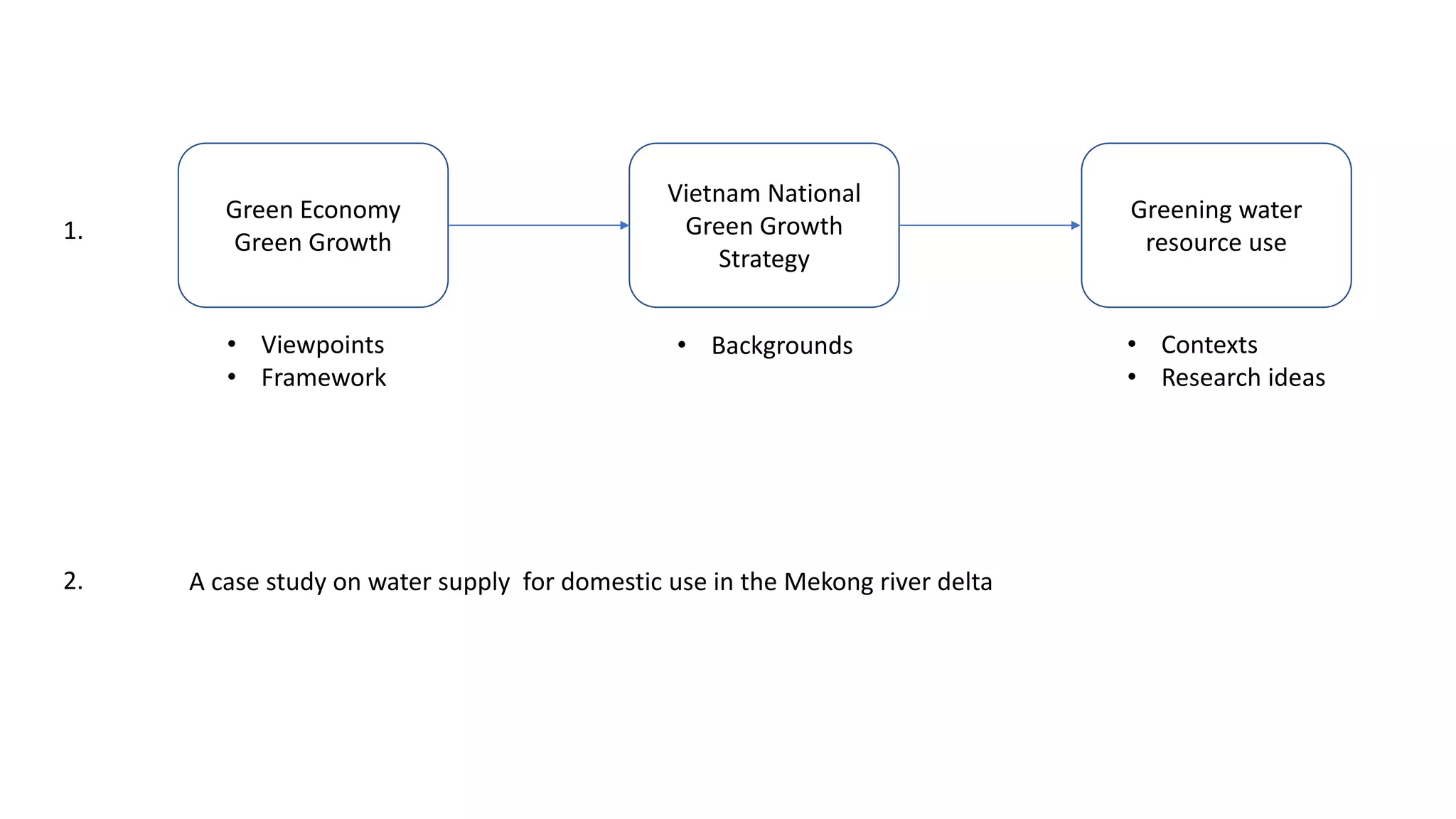
2. A case study on water supply for domestic use in the Mekong river delta
Green Economy
Green Growth
Vietnam National
Green Growth
Strategy
Greening water
resource use1.
• Viewpoints
• Framework
• Backgrounds • Contexts
• Research ideas
“Green Economy”: low carbon, resource efficient and socially inclusive (UNEP, 2011)
Green
Economy
Low carbon
Resource
efficient
Socially
inclusive
Green
Growth
Strategy
Investing in natural capital:
Agriculture
Fisheries
Forests
Water
Investing in energy and
resource efficiency
Renewable energy
Manufacturing
Waste
Buildings
Transport
Tourism
Cities
Brown
Economy
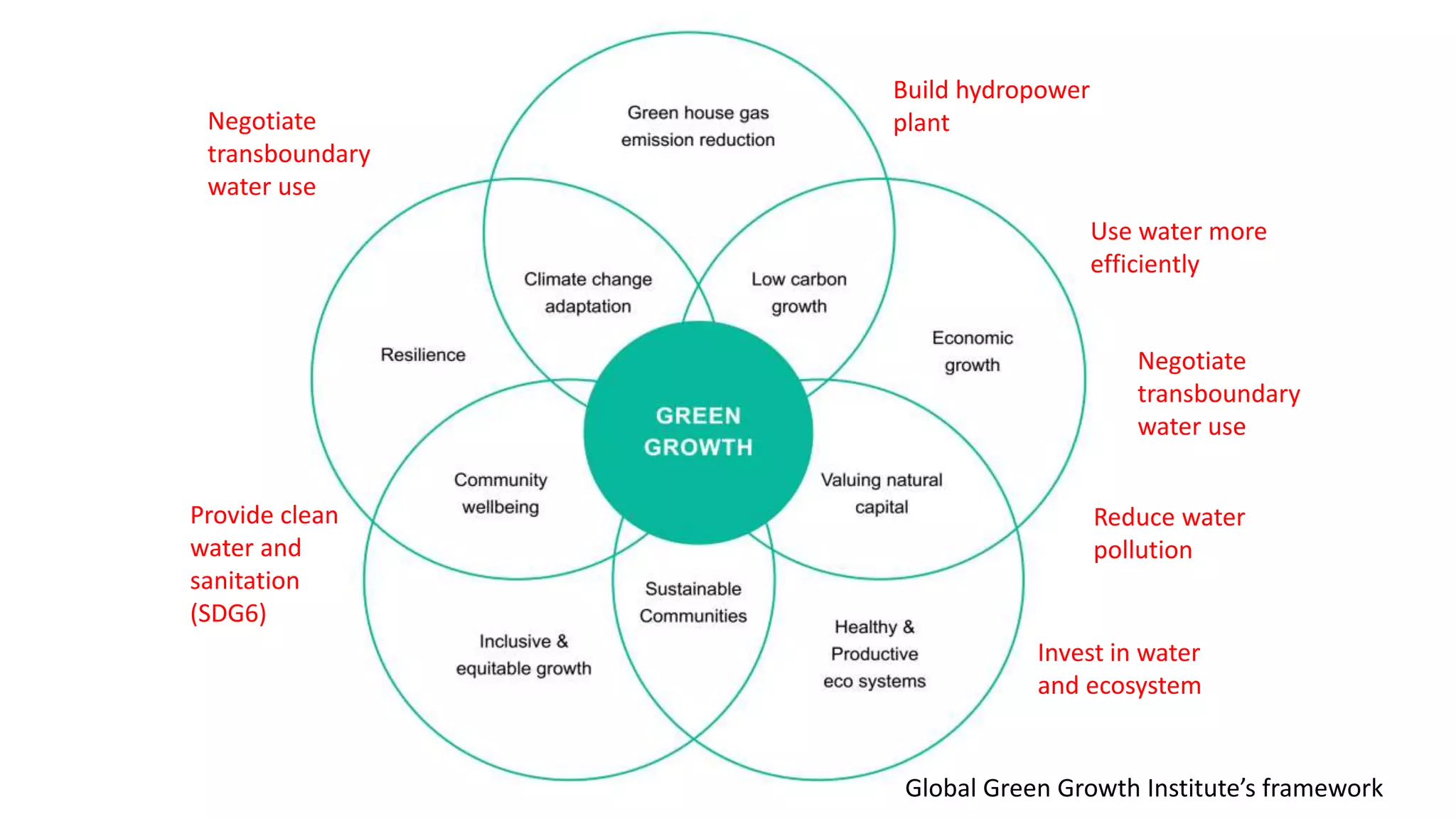
Global Green Growth Institute’s framework
Provide clean
water and
sanitation
(SDG6)
Invest in water
and ecosystem
Build hydropower
plant
Reduce water
pollution
Use water more
efficiently
Negotiate
transboundary
water use
Negotiate
transboundary
water use
Background
on water
resource in
Vietnam
Background
on water
resource in
Vietnam
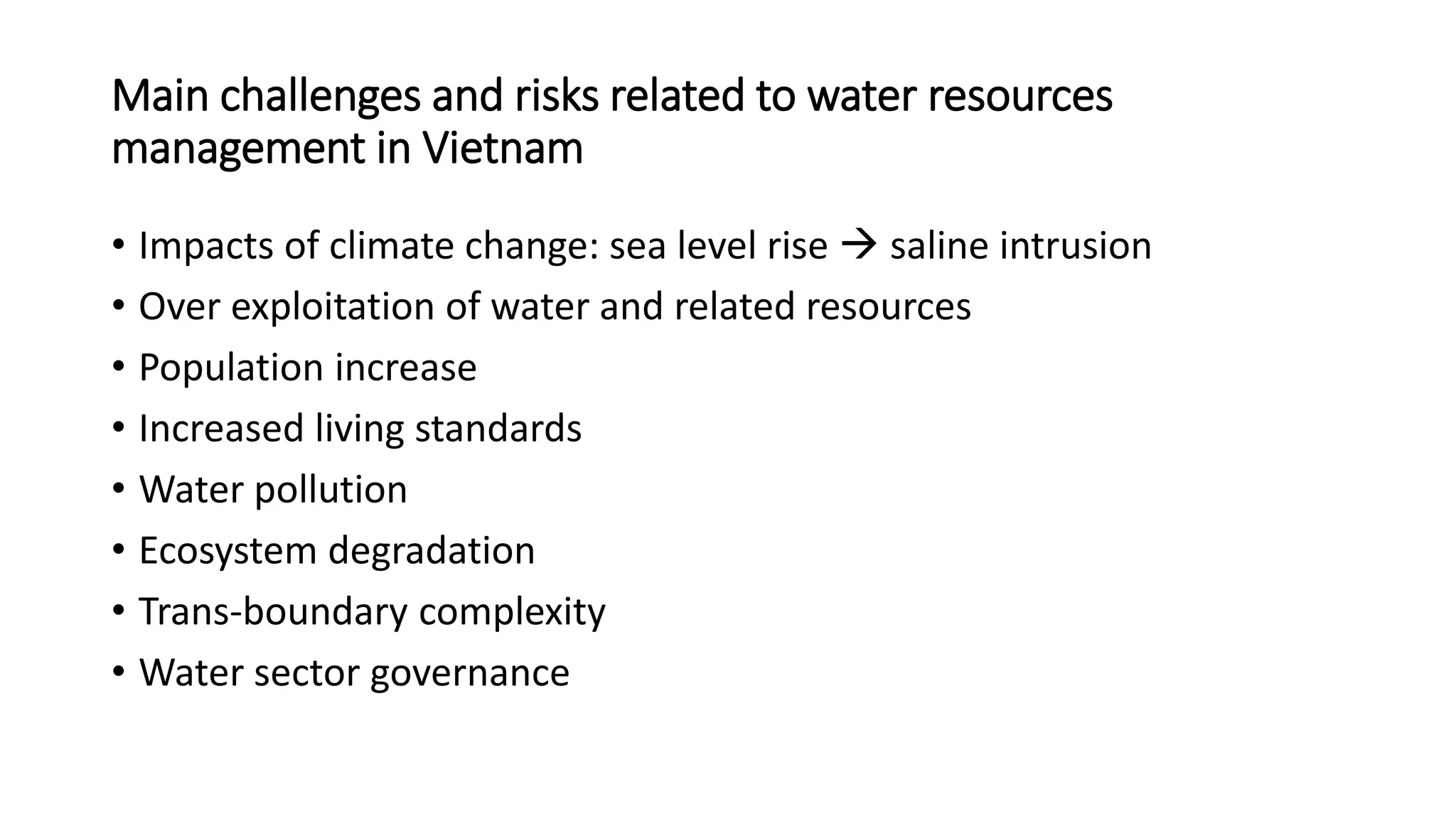
Main challenges and risks related to water resources
management in Vietnam
• Impacts of climate change: sea level rise  saline intrusion
• Over exploitation of water and related resources
• Population increase
• Increased living standards
• Water pollution
• Ecosystem degradation
• Trans-boundary complexity
• Water sector governance
Vietnam National Green Growth Strategy
• Signed in September 2012 by the Prime Minister, decision No.1393 “the
National Green Growth Strategy for the period 2011-2020 with a vision to
2050”
• Three parts: 1) Viewpoints and objectives of the strategy, 2) Strategic Tasks,
and 3) Solutions.
Overall Objective:
“Green growth, as a means to achieve a low carbon economy and to enrich
natural capital, will become the principal direction in sustainable economic
development; reduction of greenhouse gas emissions and increased
capability to absorb greenhouse gas are gradually becoming compulsory and
important indicators in socio-economic development.”
Comments?
 Climate change mitigation policy?
 Is it easy to implement?
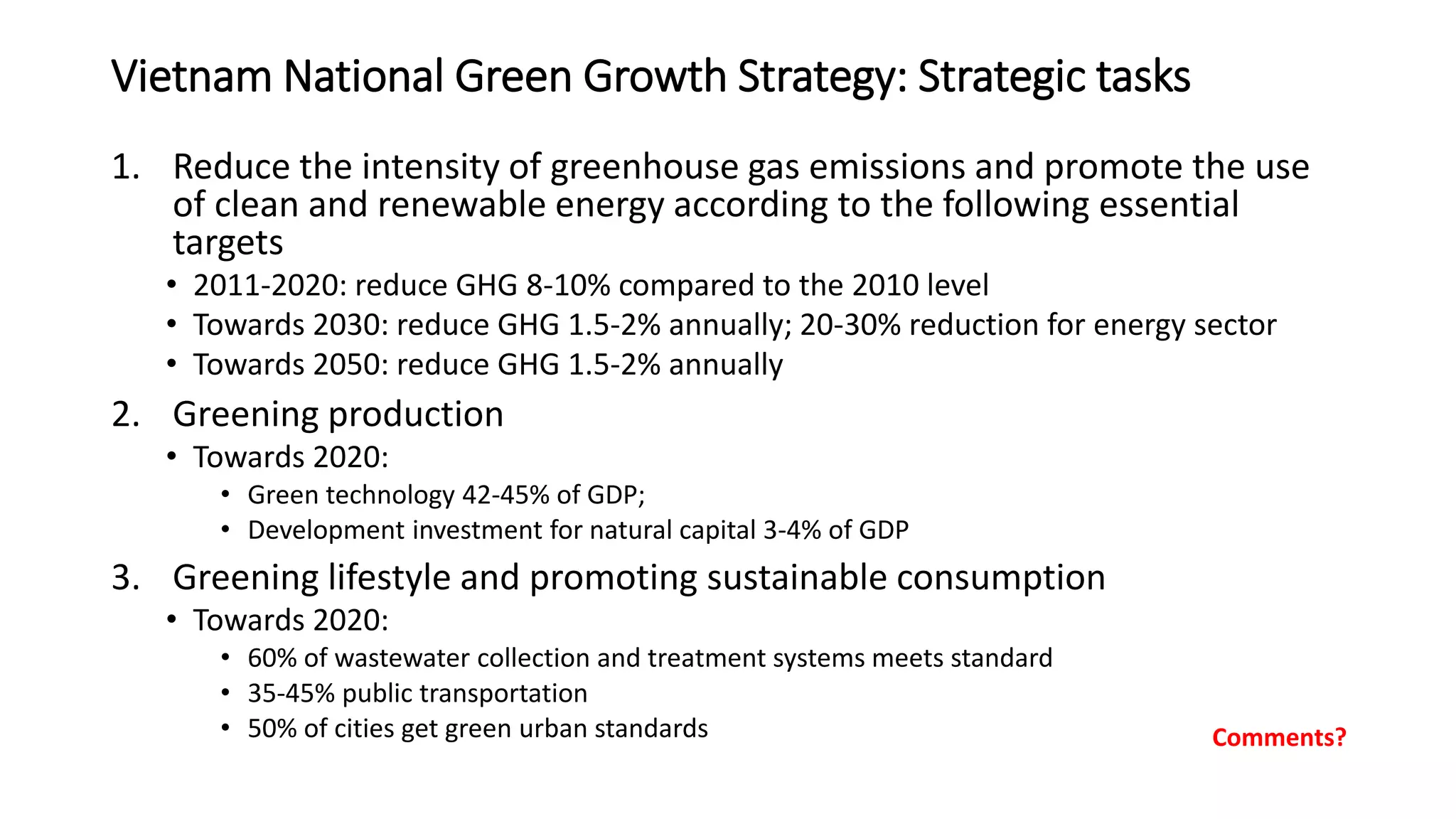
Vietnam National Green Growth Strategy: Strategic tasks
1. Reduce the intensity of greenhouse gas emissions and promote the use
of clean and renewable energy according to the following essential
targets
• 2011-2020: reduce GHG 8-10% compared to the 2010 level
• Towards 2030: reduce GHG 1.5-2% annually; 20-30% reduction for energy sector
• Towards 2050: reduce GHG 1.5-2% annually
2. Greening production
• Towards 2020:
• Green technology 42-45% of GDP;
• Development investment for natural capital 3-4% of GDP
3. Greening lifestyle and promoting sustainable consumption
• Towards 2020:
• 60% of wastewater collection and treatment systems meets standard
• 35-45% public transportation
• 50% of cities get green urban standards Comments?
• 17 Solutions (10 pages of 20 pages)
• Solution No.7: Economic and efficient utilization of natural resources
• “Establish and complete the legal framework and policies to enforce and effectively
implement the Law on water resources…to strengthen the use of economic and
administrative instruments based on the “polluters pays” principle.”
• Solution No.8: Restoration and development of natural capital
• “Apply an integrated management approach and improve management bodies of
river basins and ecological systems.”
• Solution No.9: Development of key sustainable infrastructure including:
transportation, energy, irrigation and urban works
• “Irrigation and water infrastructure:
• Upgrading the dike system … meeting the demand for responding to climate change, sea level
rise and flood control.
• Enhance investment in irrigation systems
• Increase investment for adequate water supply for industrial and urban development”
Vietnam National Green Growth Strategy: solutions related to water
Comments?
Provide clean
water and
sanitation
(SDG6)
Invest in water
and ecosystem
Negotiate
transboundary
water use
The economics of greening water resource use
Build hydropower
plant
Cost – Benefit Analysis
Multicriteria analysis
Analysis of co-benefits
Use water
more
efficiently
Negotiate
transboundary
water use
Collective action
Mechanisms
for cooperation
Water pricing
Policy Instrument
for ground water
Water demand
Nudges
Reduce water
pollution
Policy instruments
Valuation of damage
costs
Nudges
Collective action
Mechanisms
for cooperation
Payment for
Ecosystem
Services
Values of
ecosystems
Management of
common-pools
Demand for
domestic water
Health and
welfare impacts
Economic analysis
of supply options
Co-benefits
Climate
benefits
Socio-
Economic
Environment
benefits
Socio-economic
system
Climate
policy
Efficient use
of resource
Hydro
power
Plant
Projects
Objective:
Electricity
Objective:
GHG
emission
reduction
Example of analyzing the economics of
hydropower plant: the concept of co-benefits
Policy Instruments for managing
water resources
Command and
Control
Market Civil society
Standards
National parks
Market creation
Tax/Subsidy
Community:
Collective action,
cooperation
Voluntary
Regulations
Example of economics of policy instruments
Transboundary water use: can countries negotiate?
• Water for downstream?
• Water in the Mekong River Delta of
Vietnam: Life, Rice, Aquaculture, Sea
level rise
• Game theory
• Experiments: Public good games, Hawk-
dove, Stag hunt games

Greening water resource use: A perspective from the Vietnam National Green Growth Strategy, Pham Khanh Nam

  • 1.
    Greening water resourceuse: a perspective from the Vietnam National Green Growth strategy Pham Khanh Nam Economy and Environment Partnership for Southeast Asia (EEPSEA) khanhnam@ueh.edu.vn
  • 2.
    2. A casestudy on water supply for domestic use in the Mekong river delta Green Economy Green Growth Vietnam National Green Growth Strategy Greening water resource use1. • Viewpoints • Framework • Backgrounds • Contexts • Research ideas
  • 3.
    “Green Economy”: lowcarbon, resource efficient and socially inclusive (UNEP, 2011) Green Economy Low carbon Resource efficient Socially inclusive Green Growth Strategy Investing in natural capital: Agriculture Fisheries Forests Water Investing in energy and resource efficiency Renewable energy Manufacturing Waste Buildings Transport Tourism Cities Brown Economy
  • 4.
    Global Green GrowthInstitute’s framework Provide clean water and sanitation (SDG6) Invest in water and ecosystem Build hydropower plant Reduce water pollution Use water more efficiently Negotiate transboundary water use Negotiate transboundary water use
  • 5.
  • 6.
  • 7.
    Main challenges andrisks related to water resources management in Vietnam • Impacts of climate change: sea level rise  saline intrusion • Over exploitation of water and related resources • Population increase • Increased living standards • Water pollution • Ecosystem degradation • Trans-boundary complexity • Water sector governance
  • 8.
    Vietnam National GreenGrowth Strategy • Signed in September 2012 by the Prime Minister, decision No.1393 “the National Green Growth Strategy for the period 2011-2020 with a vision to 2050” • Three parts: 1) Viewpoints and objectives of the strategy, 2) Strategic Tasks, and 3) Solutions. Overall Objective: “Green growth, as a means to achieve a low carbon economy and to enrich natural capital, will become the principal direction in sustainable economic development; reduction of greenhouse gas emissions and increased capability to absorb greenhouse gas are gradually becoming compulsory and important indicators in socio-economic development.” Comments?  Climate change mitigation policy?  Is it easy to implement?
  • 9.
    Vietnam National GreenGrowth Strategy: Strategic tasks 1. Reduce the intensity of greenhouse gas emissions and promote the use of clean and renewable energy according to the following essential targets • 2011-2020: reduce GHG 8-10% compared to the 2010 level • Towards 2030: reduce GHG 1.5-2% annually; 20-30% reduction for energy sector • Towards 2050: reduce GHG 1.5-2% annually 2. Greening production • Towards 2020: • Green technology 42-45% of GDP; • Development investment for natural capital 3-4% of GDP 3. Greening lifestyle and promoting sustainable consumption • Towards 2020: • 60% of wastewater collection and treatment systems meets standard • 35-45% public transportation • 50% of cities get green urban standards Comments?
  • 10.
    • 17 Solutions(10 pages of 20 pages) • Solution No.7: Economic and efficient utilization of natural resources • “Establish and complete the legal framework and policies to enforce and effectively implement the Law on water resources…to strengthen the use of economic and administrative instruments based on the “polluters pays” principle.” • Solution No.8: Restoration and development of natural capital • “Apply an integrated management approach and improve management bodies of river basins and ecological systems.” • Solution No.9: Development of key sustainable infrastructure including: transportation, energy, irrigation and urban works • “Irrigation and water infrastructure: • Upgrading the dike system … meeting the demand for responding to climate change, sea level rise and flood control. • Enhance investment in irrigation systems • Increase investment for adequate water supply for industrial and urban development” Vietnam National Green Growth Strategy: solutions related to water Comments?
  • 11.
    Provide clean water and sanitation (SDG6) Investin water and ecosystem Negotiate transboundary water use The economics of greening water resource use Build hydropower plant Cost – Benefit Analysis Multicriteria analysis Analysis of co-benefits Use water more efficiently Negotiate transboundary water use Collective action Mechanisms for cooperation Water pricing Policy Instrument for ground water Water demand Nudges Reduce water pollution Policy instruments Valuation of damage costs Nudges Collective action Mechanisms for cooperation Payment for Ecosystem Services Values of ecosystems Management of common-pools Demand for domestic water Health and welfare impacts Economic analysis of supply options
  • 12.
  • 13.
    Policy Instruments formanaging water resources Command and Control Market Civil society Standards National parks Market creation Tax/Subsidy Community: Collective action, cooperation Voluntary Regulations Example of economics of policy instruments
  • 14.
    Transboundary water use:can countries negotiate? • Water for downstream? • Water in the Mekong River Delta of Vietnam: Life, Rice, Aquaculture, Sea level rise • Game theory • Experiments: Public good games, Hawk- dove, Stag hunt games