A presentation on
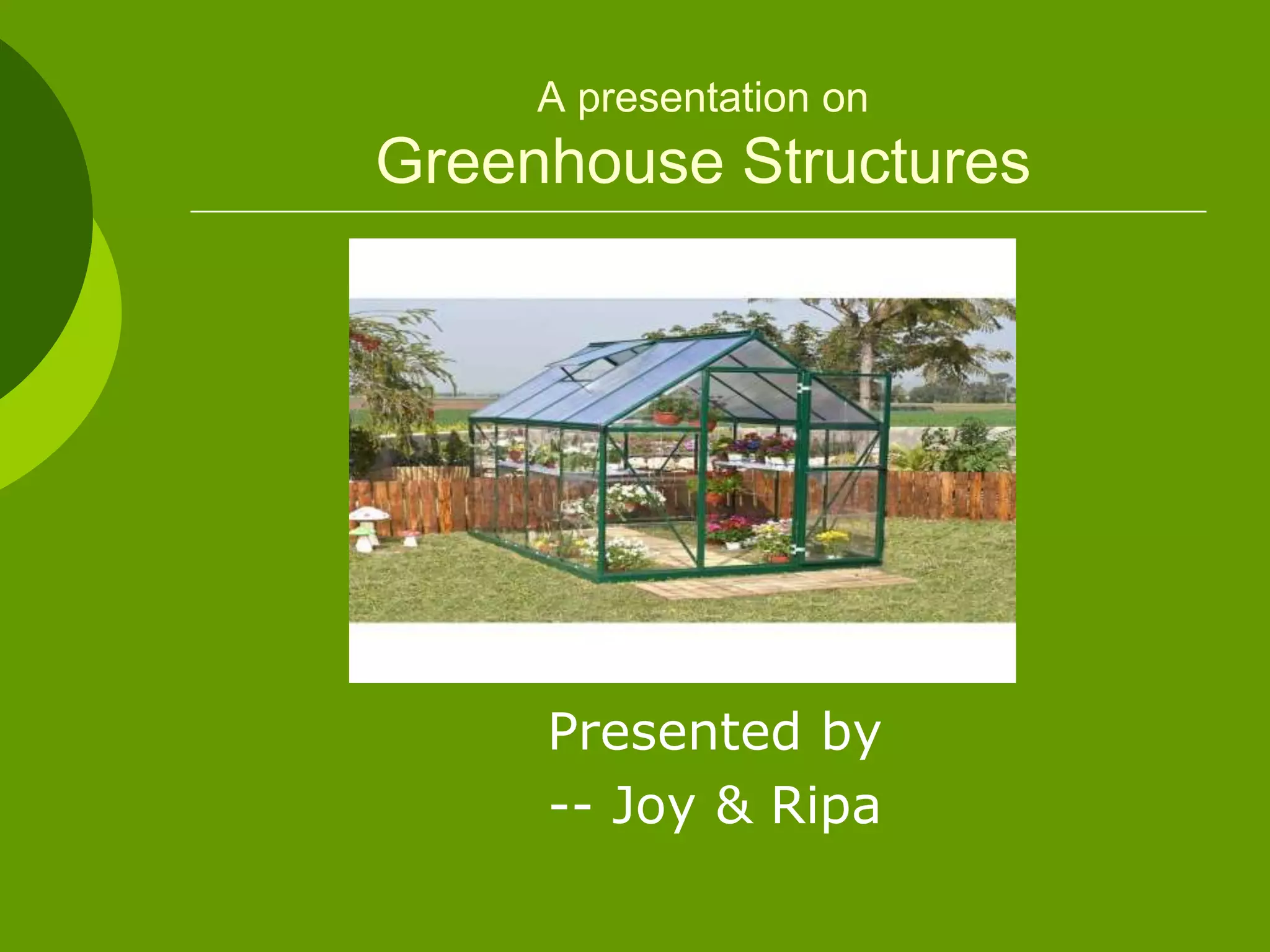
Greenhouse Structures
Presented by
-- Joy & Ripa
GREENHOUSE
 Structures with wall and roof
 Covered with transparent material
 Allows sunlight to enter for plant
growth and maintenance
 Artificially heated and cooled
Purposes
 Control interior environment
 Over wintering tender plants
 Raising vegetables, fruits and
flowers out of season
 Growing specialty plants
 Special Experiment
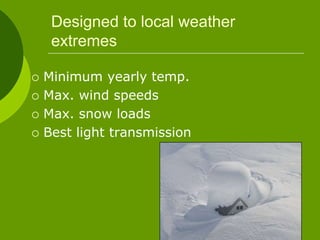
Designed to local weather
extremes
 Minimum yearly temp.
 Max. wind speeds
 Max. snow loads
 Best light transmission
Environmental considerations for
plants
 Light
 Temperature
 Humidity
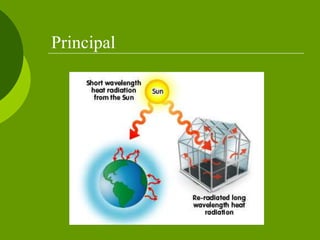
Principal
Types of Greenhouses
 Attached
 Freestanding
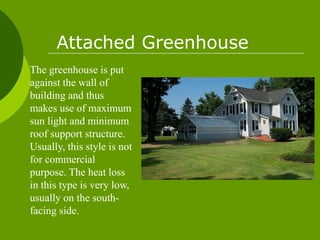
The greenhouse is put
against the wall of
building and thus
makes use of maximum
sun light and minimum
roof support structure.
Usually, this style is not
for commercial
purpose. The heat loss
in this type is very low,
usually on the south-
facing side.
Attached Greenhouse
Attached Greenhouses
 Advantages:
 Less construction material needed
 Can be utilized to heat homes in
winter, cool in summer through heat
and humidity change
 Disadvantages
 Existing building can shade the
greenhouse, limiting light needed for
plants
 Ventilation and temperature are
difficult to control.
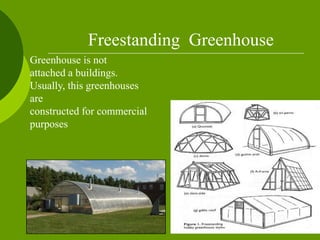
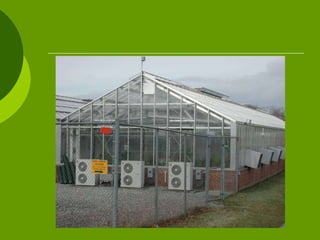
Greenhouse is not
attached a buildings.
Usually, this greenhouses
are
constructed for commercial
purposes
Freestanding Greenhouse
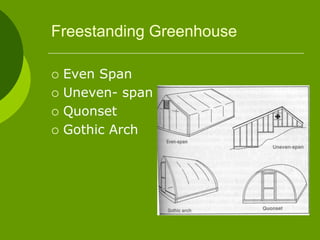
 Even Span
 Uneven- span
 Quonset
 Gothic Arch
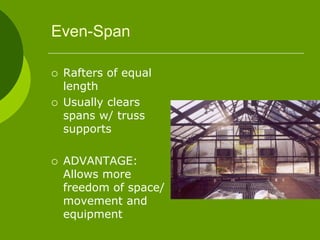
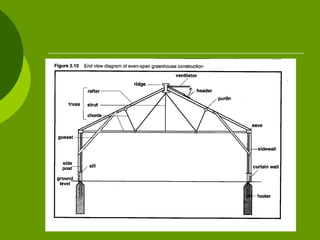
Even-Span
 Rafters of equal
length
 Usually clears
spans w/ truss
supports
 ADVANTAGE:
Allows more
freedom of space/
movement and
equipment
Uneven-Span
 Rafters of unequal length
 Usually used for hillside placement
 ADVANTAGES: maximizes sun light
 DISAVANTAGES: internal orientation of
greenhouse can make working in it
difficult
Quonset
 Curved roofs; military hut-style
 May or may not include sidewalls
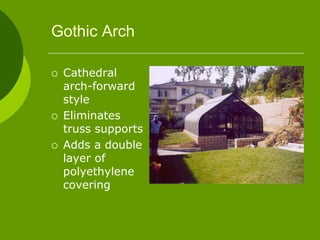
Gothic Arch
 Cathedral
arch-forward
style
 Eliminates
truss supports
 Adds a double
layer of
polyethylene
covering
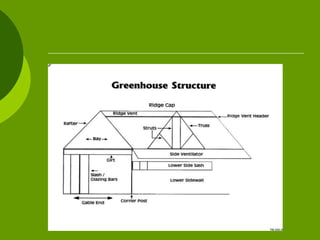
Components of Greenhouse
Structure
 Frame
 Foundation
 Sidewalls
 Shed
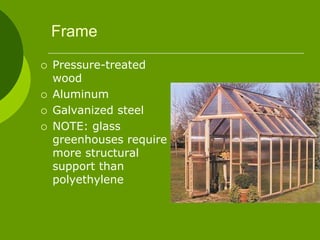
Frame
 Pressure-treated
wood
 Aluminum
 Galvanized steel
 NOTE: glass
greenhouses require
more structural
support than
polyethylene
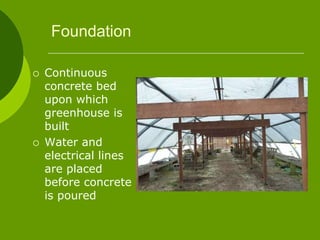
Foundation
 Continuous
concrete bed
upon which
greenhouse is
built
 Water and
electrical lines
are placed
before concrete
is poured
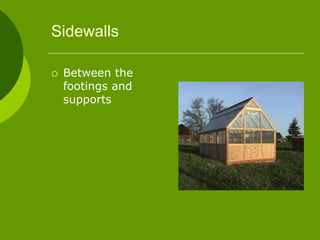
Sidewalls
 Between the
footings and
supports
Shed
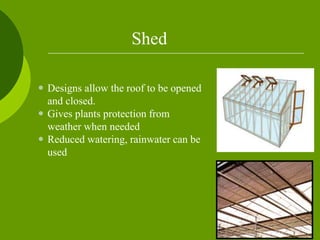
 Designs allow the roof to be opened
and closed.
 Gives plants protection from
weather when needed
 Reduced watering, rainwater can be
used
Lath House/ Shade House
 Provides some shade and wind
protection for plants
 Allows moisture and air to permeate
structure
 Used as an outdoor setting for
plants with some protection
Greenhouse Coverings
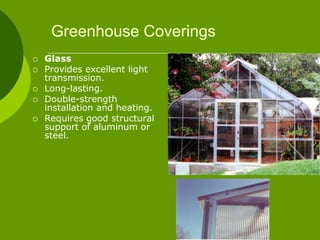
 Glass
 Provides excellent light
transmission.
 Long-lasting.
 Double-strength
installation and heating.
 Requires good structural
support of aluminum or
steel.
Greenhouse Coverings
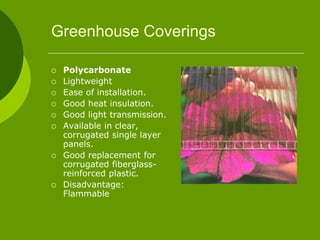
 Polycarbonate
 Lightweight
 Ease of installation.
 Good heat insulation.
 Good light transmission.
 Available in clear,
corrugated single layer
panels.
 Good replacement for
corrugated fiberglass-
reinforced plastic.
 Disadvantage:
Flammable
Greenhouse Coverings
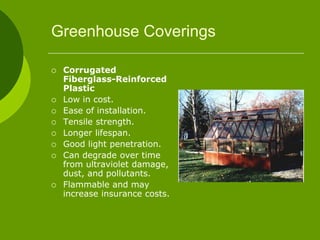
 Corrugated
Fiberglass-Reinforced
Plastic
 Low in cost.
 Ease of installation.
 Tensile strength.
 Longer lifespan.
 Good light penetration.
 Can degrade over time
from ultraviolet damage,
dust, and pollutants.
 Flammable and may
increase insurance costs.
Greenhouse Coverings
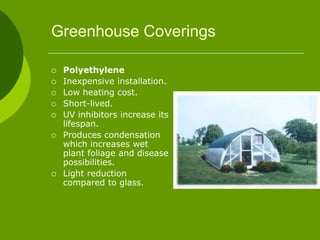
 Polyethylene
 Inexpensive installation.
 Low heating cost.
 Short-lived.
 UV inhibitors increase its
lifespan.
 Produces condensation
which increases wet
plant foliage and disease
possibilities.
 Light reduction
compared to glass.
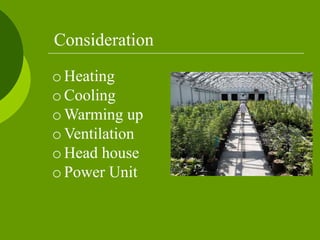
Consideration
oHeating
oCooling
oWarming up
oVentilation
oHead house
oPower Unit
Hot water heat system
heating water in a boiler and pumping the hot water
Steam heat
boilers that bring water to a boil and the resulting steam
flows through pipes in the greenhouse
Unit heaters
heat air within the unit, then blow the air throughout the
greenhouse.
Infrared heat systems
produce heat energy that is absorbed by the plants, media,
and benches
Heating
Cooling
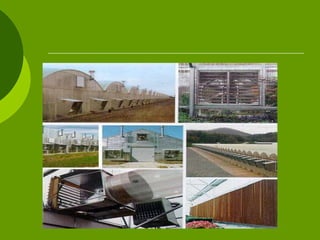
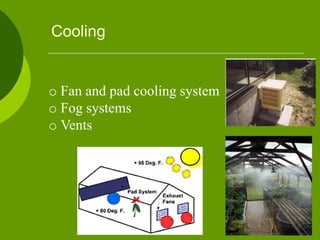
o Fan and pad cooling system
o Fog systems
o Vents
Ventilation
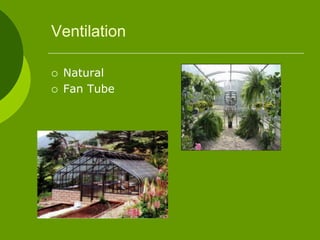
 Natural
 Fan Tube
Ventilation
Natural
 Air exchange is fostered through
open ridge and side venting, under
thermostatic control.
 Not advised for winter cooling due
to possible plant injury
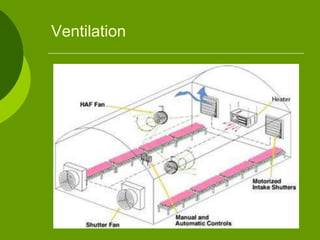
Fan-Tube
 Fans bring in cool air which is mixed
with warm air and distributed
though holes in plastic tubing
running the length of the
greenhouse
 May be used in conjunction with
heating systems
Headhouse
 Office, storage, and work space
from which greenhouses are located
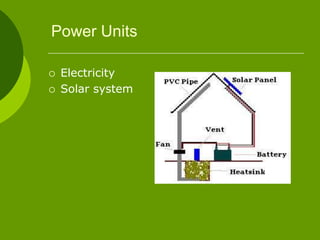
Power Units
 Electricity
 Solar system
Thank you…….

Greenhouse structures