Green Heating
Leed Green Buildings
Quotes
• Dean Kamen “ Our culture is 3000 miles
wide and less then a nanometer deep.
Every kid knows who Britney Spears and
Paris Hilton are but none of them are
going to influence your quality of life.”
• John Ruhnke “ It is who you learn from
that counts.”
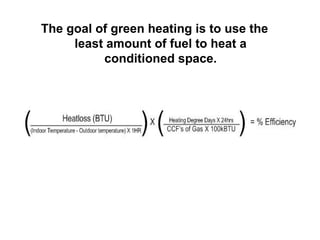
The goal of green heating is to use the
least amount of fuel to heat a
conditioned space.
Building Automation and Controls
Heating System Efficiency can
further be broken down into
three parts.
• Fuel Efficiency
• Boiler Side Efficiency
• System Side Efficiency
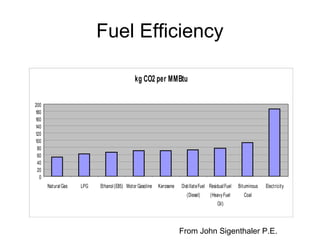
Fuel Efficiency
kg CO2 per MMBtu
0
20
40
60
80
100
120
140
160
180
200
NaturalGas LPG Ethanol(E85) Motor Gasoline Kerosene DistillateFuel
(Diesel)
ResidualFuel
(HeavyFuel
Oil)
Bituminous
Coal
Electricity
From John Sigenthaler P.E.
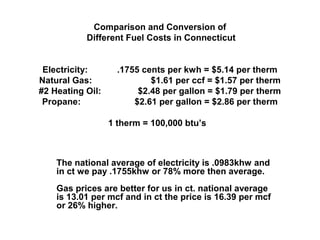
Comparison and Conversion of
Different Fuel Costs in Connecticut
Electricity: .1755 cents per kwh = $5.14 per therm
Natural Gas: $1.61 per ccf = $1.57 per therm
#2 Heating Oil: $2.48 per gallon = $1.79 per therm
Propane: $2.61 per gallon = $2.86 per therm
1 therm = 100,000 btu’s
The national average of electricity is .0983khw and
in ct we pay .1755khw or 78% more then average.
Gas prices are better for us in ct. national average
is 13.01 per mcf and in ct the price is 16.39 per mcf
or 26% higher.
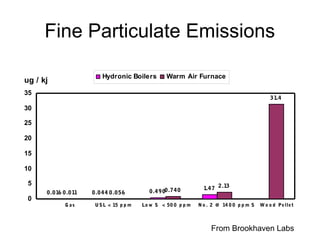
Fine Particulate Emissions
0.016 0.490
1.47
0.011 0.740
2.13
31.4
0.044 0.056
0
5
10
15
20
25
30
35
Hydronic Boilers Warm Air Furnace
G as No . 2 @ 14 0 0 p p m S W o o d PelletLo w S < 50 0 p p mUSL < 15 p p m
ug / kj
From Brookhaven Labs
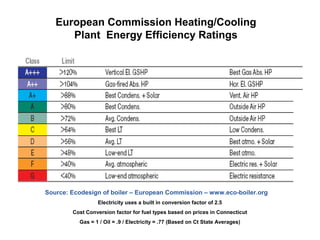
Source: Ecodesign of boiler – European Commission – www.eco-boiler.org
European Commission Heating/Cooling
Plant Energy Efficiency Ratings
Electricity uses a built in conversion factor of 2.5
Cost Conversion factor for fuel types based on prices in Connecticut
Gas = 1 / Oil = .9 / Electricity = .77 (Based on Ct State Averages)
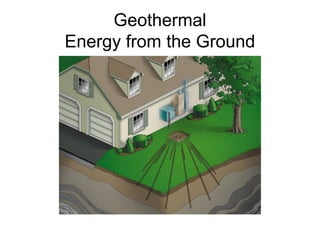
Geothermal
Energy from the Ground
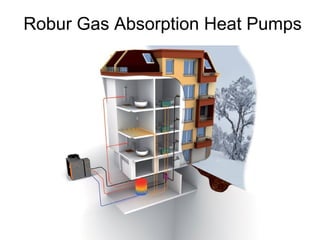
Robur Gas Absorption Heat Pumps
Metano o GPL per:
RISCALDAMENTO
CONDIZIONAMENTO
CLIMATIZZAZIONE
REFRIGERAZIONE
APPLICAZIONI di PROCESSO
prodotti
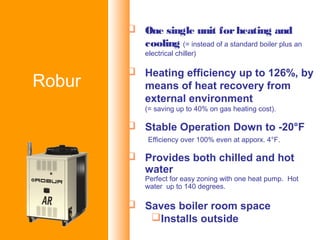
 One single unit forheating and
cooling (= instead of a standard boiler plus an
electrical chiller)
 Heating efficiency up to 126%, by
means of heat recovery from
external environment
(= saving up to 40% on gas heating cost).
 Stable Operation Down to -20°F
Efficiency over 100% even at apporx. 4°F.
 Provides both chilled and hot
water
Perfect for easy zoning with one heat pump. Hot
water up to 140 degrees.
 Saves boiler room space
Installs outside
Robur
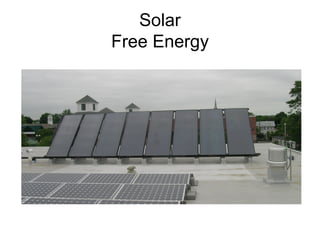
Solar
Free Energy
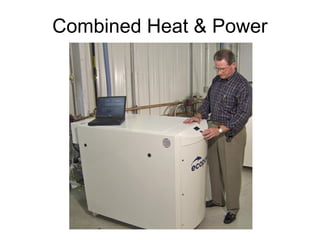
Combined Heat & Power
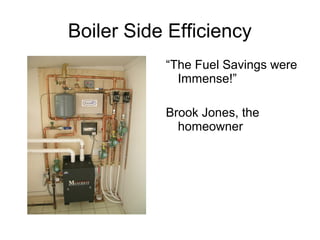
Boiler Side Efficiency
“The Fuel Savings were
Immense!”
Brook Jones, the
homeowner
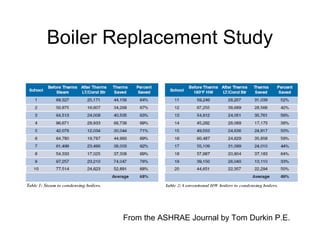
Boiler Replacement Study
From the ASHRAE Journal by Tom Durkin P.E.
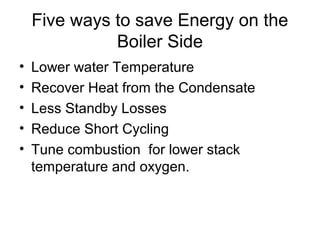
Five ways to save Energy on the
Boiler Side
• Lower water Temperature
• Recover Heat from the Condensate
• Less Standby Losses
• Reduce Short Cycling
• Tune combustion for lower stack
temperature and oxygen.
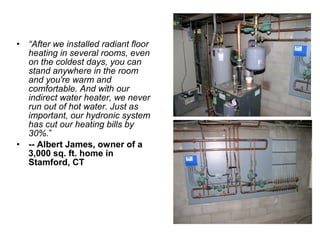
• “After we installed radiant floor
heating in several rooms, even
on the coldest days, you can
stand anywhere in the room
and you're warm and
comfortable. And with our
indirect water heater, we never
run out of hot water. Just as
important, our hydronic system
has cut our heating bills by
30%.”
• -- Albert James, owner of a
3,000 sq. ft. home in
Stamford, CT
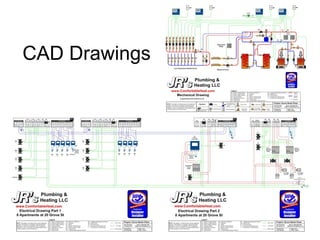
CAD Drawings
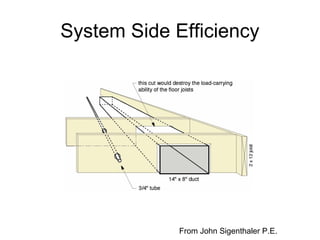
System Side Efficiency
From John Sigenthaler P.E.
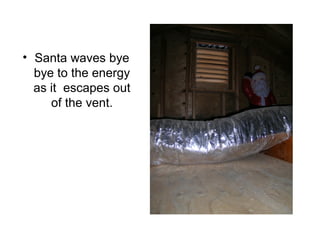
• Santa waves bye
bye to the energy
as it escapes out
of the vent.
Best Ways to save energy on the
system side
• Lower the water temperature
• Run smaller distribution pipes
• Do not run pipes in unconditioned spaces
• Put your heat emitters on the inside walls
• Turn down the thermostat
• Balance the room temperatures
European Style Hydronics
• “In Europe, essentially 100% of home heating
systems are hydronic. Advantages reported for
hydronic systems include comfort, reduced
electric power consumption, and near
elimination of energy losses associated with
distribution systems (duct losses can reach 30-
40%)”.
• by Dr. Tom Butcher, Dept Head, Energy Efficiency Buildings Div,
Brookhaven Laboratories (One of 10 U.S. Dept of Energy Laboratories)
Low Temperature Hydronics
• In Germany it is illegal to design for more
the 138 degrees and a outdoor reset
control is mandatory.
• The rule of thumb is for every 2 or 3
degrees you lower the water temperature
you can save 1% in fuel.
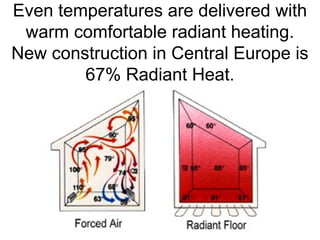
Even temperatures are delivered with
warm comfortable radiant heating.
New construction in Central Europe is
67% Radiant Heat.
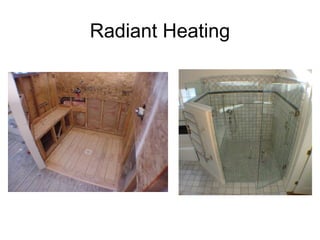
Radiant Heating
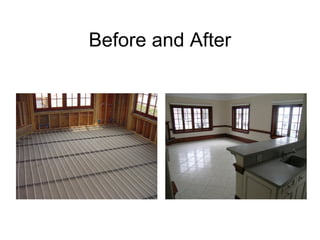
Before and After
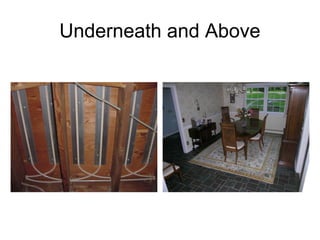
Underneath and Above
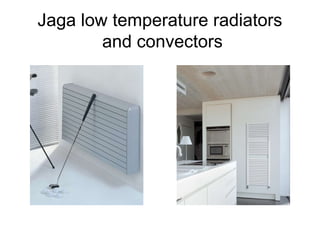
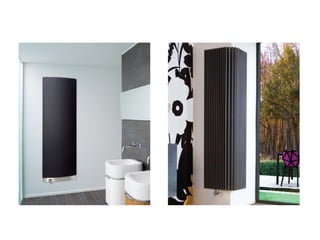
Jaga low temperature radiators
and convectors
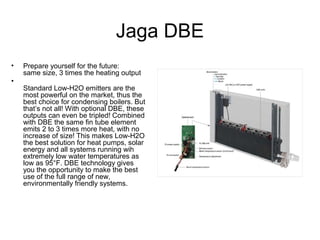
Jaga DBE
• Prepare yourself for the future:
same size, 3 times the heating output
•
Standard Low-H2O emitters are the
most powerful on the market, thus the
best choice for condensing boilers. But
that’s not all! With optional DBE, these
outputs can even be tripled! Combined
with DBE the same fin tube element
emits 2 to 3 times more heat, with no
increase of size! This makes Low-H2O
the best solution for heat pumps, solar
energy and all systems running wih
extremely low water temperatures as
low as 95°F. DBE technology gives
you the opportunity to make the best
use of the full range of new,
environmentally friendly systems.
Artistic Statements
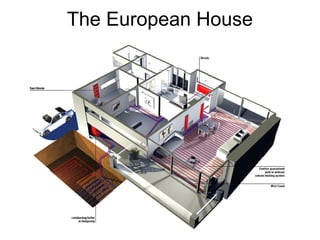
The European House
Thank you!
• John Ruhnke
• JR’s ComfortableHeat LLC
• www.ComfortableHeat.com
• JR@ComfortableHeat.com
• (203) 849-1479

Greenheat

  • 1.
  • 2.
  • 3.
    Quotes • Dean Kamen“ Our culture is 3000 miles wide and less then a nanometer deep. Every kid knows who Britney Spears and Paris Hilton are but none of them are going to influence your quality of life.” • John Ruhnke “ It is who you learn from that counts.”
  • 4.
    The goal ofgreen heating is to use the least amount of fuel to heat a conditioned space.
  • 5.
  • 6.
    Heating System Efficiencycan further be broken down into three parts. • Fuel Efficiency • Boiler Side Efficiency • System Side Efficiency
  • 7.
    Fuel Efficiency kg CO2per MMBtu 0 20 40 60 80 100 120 140 160 180 200 NaturalGas LPG Ethanol(E85) Motor Gasoline Kerosene DistillateFuel (Diesel) ResidualFuel (HeavyFuel Oil) Bituminous Coal Electricity From John Sigenthaler P.E.
  • 8.
    Comparison and Conversionof Different Fuel Costs in Connecticut Electricity: .1755 cents per kwh = $5.14 per therm Natural Gas: $1.61 per ccf = $1.57 per therm #2 Heating Oil: $2.48 per gallon = $1.79 per therm Propane: $2.61 per gallon = $2.86 per therm 1 therm = 100,000 btu’s The national average of electricity is .0983khw and in ct we pay .1755khw or 78% more then average. Gas prices are better for us in ct. national average is 13.01 per mcf and in ct the price is 16.39 per mcf or 26% higher.
  • 9.
    Fine Particulate Emissions 0.0160.490 1.47 0.011 0.740 2.13 31.4 0.044 0.056 0 5 10 15 20 25 30 35 Hydronic Boilers Warm Air Furnace G as No . 2 @ 14 0 0 p p m S W o o d PelletLo w S < 50 0 p p mUSL < 15 p p m ug / kj From Brookhaven Labs
  • 10.
    Source: Ecodesign ofboiler – European Commission – www.eco-boiler.org European Commission Heating/Cooling Plant Energy Efficiency Ratings Electricity uses a built in conversion factor of 2.5 Cost Conversion factor for fuel types based on prices in Connecticut Gas = 1 / Oil = .9 / Electricity = .77 (Based on Ct State Averages)
  • 11.
  • 12.
  • 13.
    Metano o GPLper: RISCALDAMENTO CONDIZIONAMENTO CLIMATIZZAZIONE REFRIGERAZIONE APPLICAZIONI di PROCESSO prodotti  One single unit forheating and cooling (= instead of a standard boiler plus an electrical chiller)  Heating efficiency up to 126%, by means of heat recovery from external environment (= saving up to 40% on gas heating cost).  Stable Operation Down to -20°F Efficiency over 100% even at apporx. 4°F.  Provides both chilled and hot water Perfect for easy zoning with one heat pump. Hot water up to 140 degrees.  Saves boiler room space Installs outside Robur
  • 14.
  • 15.
  • 16.
    Boiler Side Efficiency “TheFuel Savings were Immense!” Brook Jones, the homeowner
  • 17.
    Boiler Replacement Study Fromthe ASHRAE Journal by Tom Durkin P.E.
  • 18.
    Five ways tosave Energy on the Boiler Side • Lower water Temperature • Recover Heat from the Condensate • Less Standby Losses • Reduce Short Cycling • Tune combustion for lower stack temperature and oxygen.
  • 19.
    • “After weinstalled radiant floor heating in several rooms, even on the coldest days, you can stand anywhere in the room and you're warm and comfortable. And with our indirect water heater, we never run out of hot water. Just as important, our hydronic system has cut our heating bills by 30%.” • -- Albert James, owner of a 3,000 sq. ft. home in Stamford, CT
  • 23.
  • 24.
    System Side Efficiency FromJohn Sigenthaler P.E.
  • 25.
    • Santa wavesbye bye to the energy as it escapes out of the vent.
  • 26.
    Best Ways tosave energy on the system side • Lower the water temperature • Run smaller distribution pipes • Do not run pipes in unconditioned spaces • Put your heat emitters on the inside walls • Turn down the thermostat • Balance the room temperatures
  • 27.
    European Style Hydronics •“In Europe, essentially 100% of home heating systems are hydronic. Advantages reported for hydronic systems include comfort, reduced electric power consumption, and near elimination of energy losses associated with distribution systems (duct losses can reach 30- 40%)”. • by Dr. Tom Butcher, Dept Head, Energy Efficiency Buildings Div, Brookhaven Laboratories (One of 10 U.S. Dept of Energy Laboratories)
  • 28.
    Low Temperature Hydronics •In Germany it is illegal to design for more the 138 degrees and a outdoor reset control is mandatory. • The rule of thumb is for every 2 or 3 degrees you lower the water temperature you can save 1% in fuel.
  • 29.
    Even temperatures aredelivered with warm comfortable radiant heating. New construction in Central Europe is 67% Radiant Heat.
  • 30.
  • 31.
  • 32.
  • 34.
    Jaga low temperatureradiators and convectors
  • 35.
    Jaga DBE • Prepareyourself for the future: same size, 3 times the heating output • Standard Low-H2O emitters are the most powerful on the market, thus the best choice for condensing boilers. But that’s not all! With optional DBE, these outputs can even be tripled! Combined with DBE the same fin tube element emits 2 to 3 times more heat, with no increase of size! This makes Low-H2O the best solution for heat pumps, solar energy and all systems running wih extremely low water temperatures as low as 95°F. DBE technology gives you the opportunity to make the best use of the full range of new, environmentally friendly systems.
  • 36.
  • 40.
  • 41.
    Thank you! • JohnRuhnke • JR’s ComfortableHeat LLC • www.ComfortableHeat.com • JR@ComfortableHeat.com • (203) 849-1479