 Andrew Gunther
 A Greener World
SWGLA 2016
Our Farms, Our Food, Our Future Let’s choose!
Grass Fed Telling the story
“Beef environment cost 10 times that of other livestock”
-BBC News
“Climate change: Why beef is the new SUV”
-CNN.com
“Giving up beef will reduce carbon footprint more than cars, says
expert”
-The Guardian
“Beef eating bad for environment: Experts”
-India Times/Economic Times
“Beef: What’s Not for Dinner in a Sustainable World”
-Inside Climate News
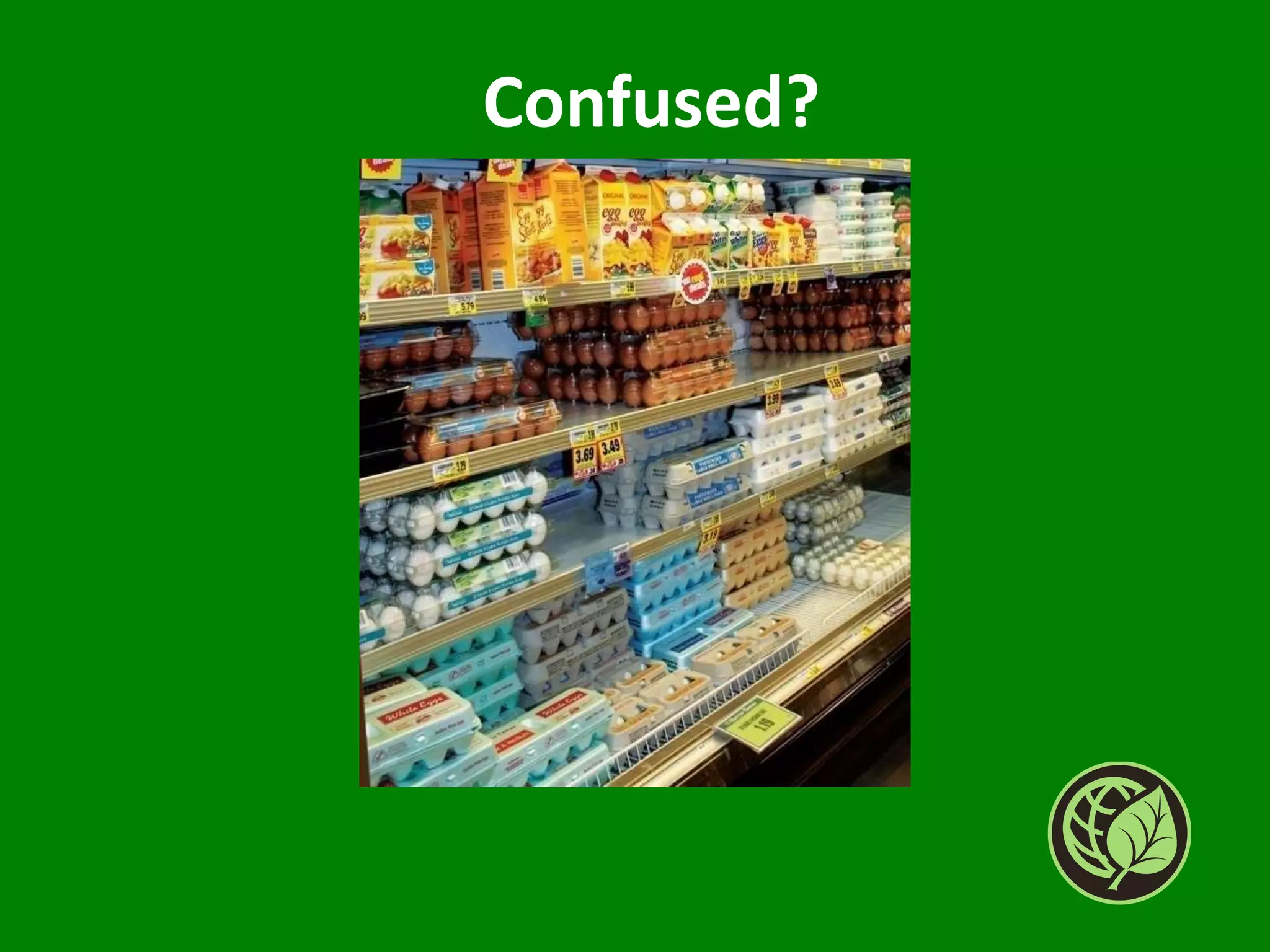
Confused?
Whole Foods.
Food Fight: PETA Files False-
Advertising Complaint Over Whole
Foods’ ‘Humane Meat’
Patagonia
We took some important steps to protect animals in
partnering with Ovis 21, but we failed to implement a
comprehensive process to assure animal welfare,
and we are dismayed to witness such horrifying
mistreatment.
Why transparency audits/certificates
mater
Volkswagen
The automaker admitted last month that 11 million cars and light
commercial vehicles equipped with a diesel motor line known as
the EA 189 had the illegal software. On Thursday, Volkswagen
said it was investigating whether some versions of another diesel
motor line, known as the EA 288, also had software intended to
detect when a vehicle was undergoing emissions testing and turn
on pollution controls.
Animal Welfare Approved (AWA)
• Our practical, science-based standards cover meat, dairy, eggs,
and fiber animals throughout North America with products
available in every state
• The only certification for high welfare, sustainable, pasture-
based family farms
• Given highest rating by Consumer Reports
Certified Grassfed by AGW
• Available for beef cattle, meat and dairy sheep,
meat and dairy goats and bison
• Demand for grassfed beef has increased by 25–30% every
year over the last decade
• Only Grassfed certification to ensure high-
welfare management
Certified Wildlife Friendly By AGW
• Recognizing wildlife stewardship on farms and ranches
• Building habitats and increasing biodiversity
• Available on small and large farms (one of our smaller farms of 15
acres has recorded 120 different bird species on farm)
• Managing livestock alongside wildlife - without threat to either
• Animals that spend their lives on CWF farms/ranches can have
meat, milk, eggs, wool leather, horn etc. marketed as CWF
• Different logos to show which species are being protected
• Building on the growing recognition that farming has an
impact on wildlife and biodiversity
• Protecting predators - keystone species that are vital to
ecosystems
• Educating farmers in non-lethal predator control methods
• Animals that spend their lives on PF farms/ranches can have
meat, milk, eggs, wool leather, horn etc. marketed as PF
Certified Predator Friendly by AGW
Non GM Fed by AGW
• Ensure by testing and audit that animals
are not fed GM products.
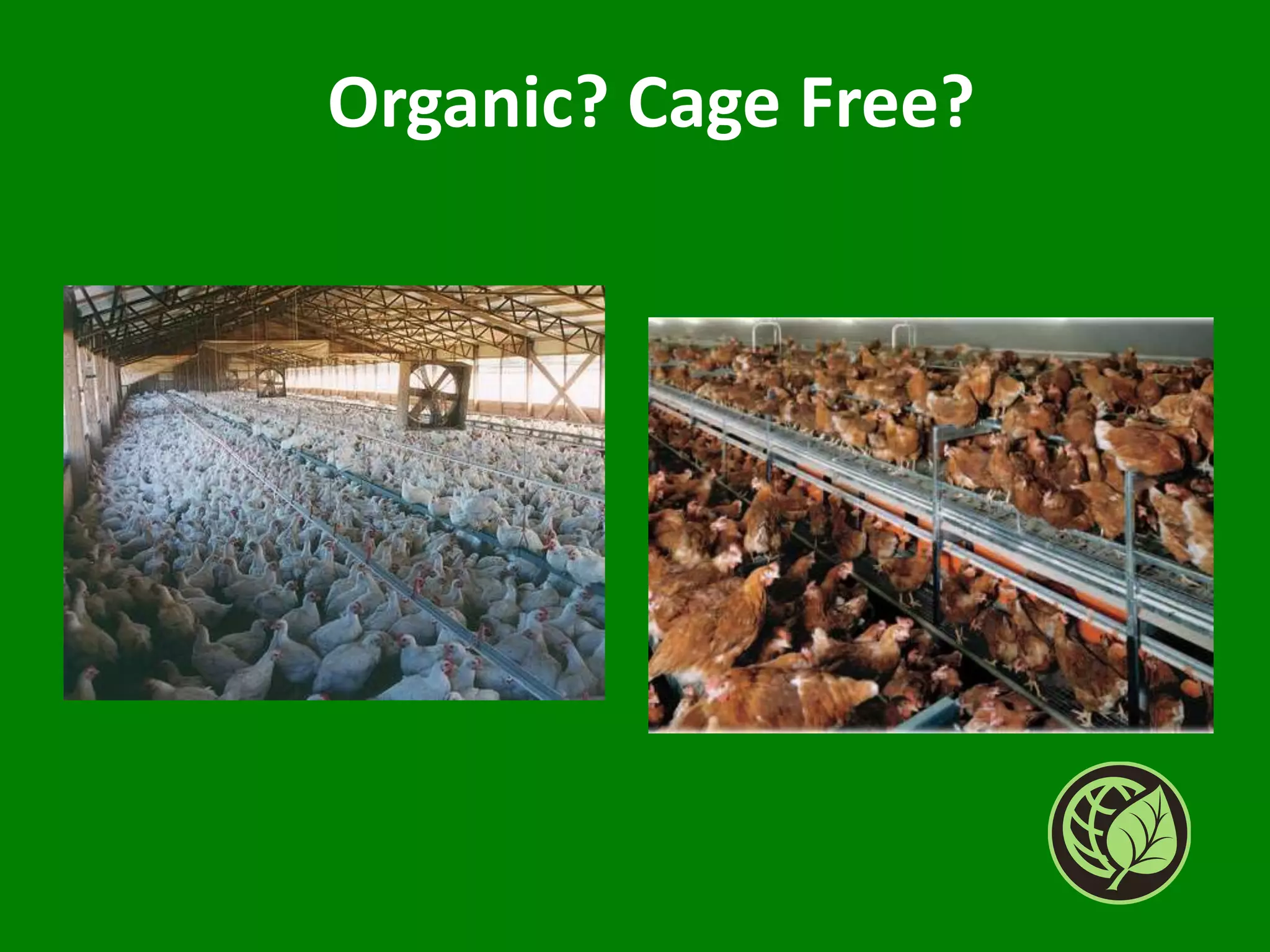
Organic? Cage Free?
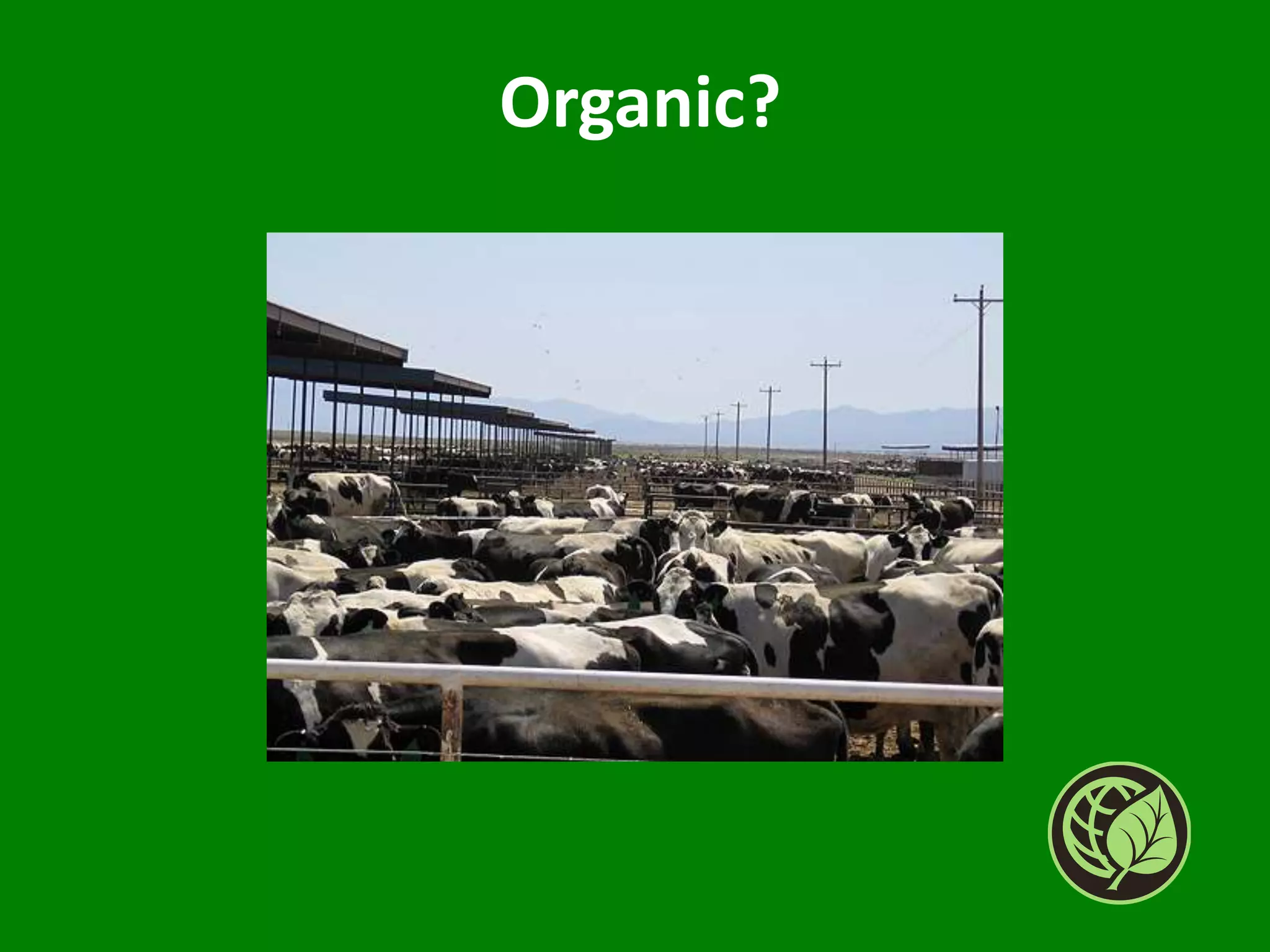
Organic?
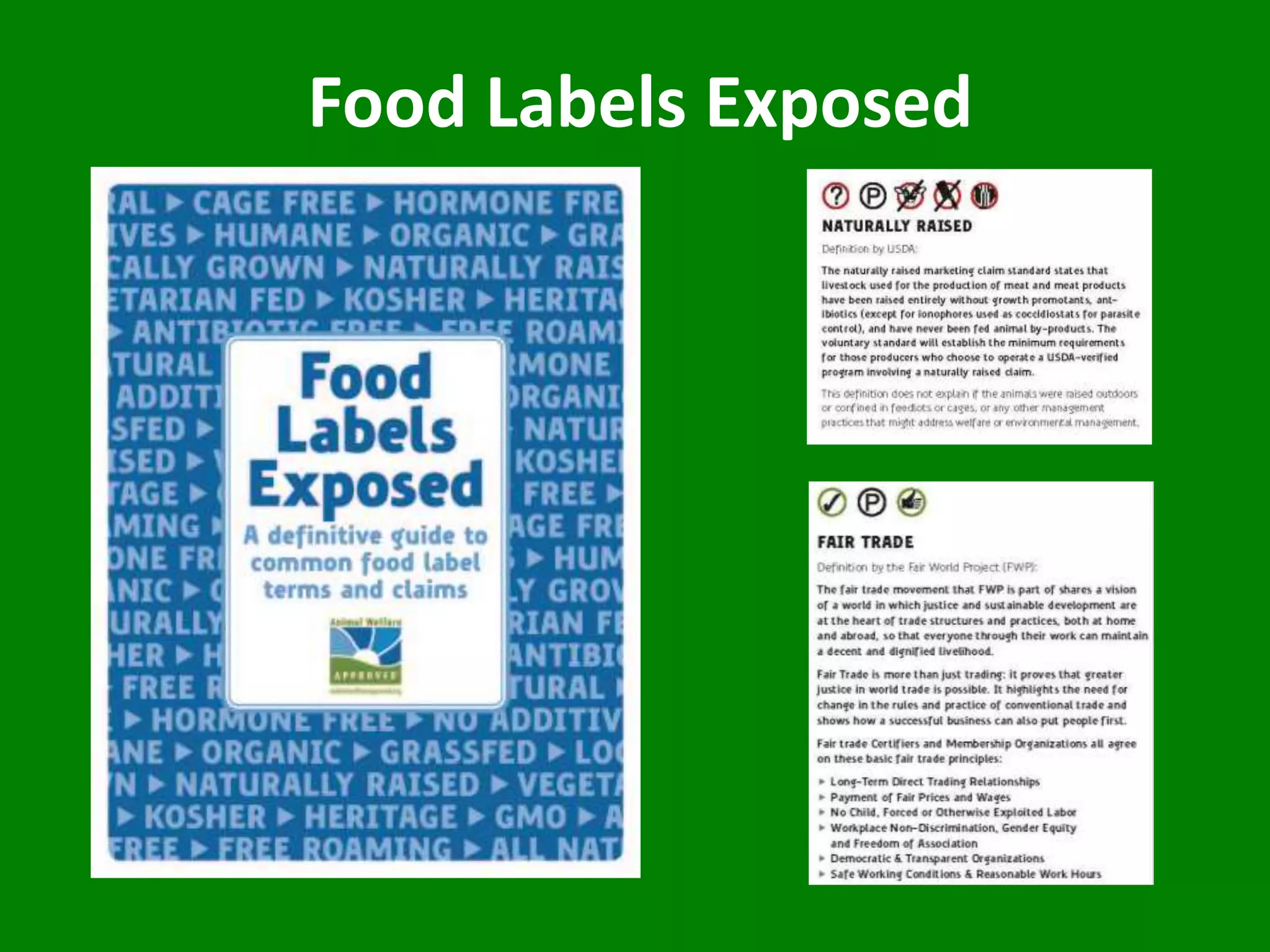
Food Labels Exposed
Type of program Details Examples
Independent No pressure can be exerted by farmers or
retailers involved in the selection of farms
to audit or the results of audits.
AWA
Independent-Vested The company or organization auditing the
farms depends on the income generated
from providing these audits and granting
approvals.
Certified Humane, National
Organic Program
Producer-Independent Standards are set by parties with a
commercial interest in the result of audits,
but audits are carried out by a third party.
American Grassfed Association
Producer Standards are set by producers or industry
groups and audited by auditors with a
vested interest in the result. Potentially the
same group that sets the standards is
responsible for verifying and making the
claims with no third party oversight at all.
American Humane Certified
(formerly “Free Farmed”)
Participatory Guarantee
System
Standards set by certifying entity, audits
carried out by program participants. Not an
independent third party certification.
Certified Naturally Grown
Retailer The standards-setting, auditing and
decision making processes are controlled
by the individual or company profiting from
the transaction. No third party oversight.
McDonald’s
KFC
Grocery Stores
“Cage-Free,” “Free-Roaming,” “Free-Range,”
and “Pasture Raised”
• “Cage-free” usually means birds are raised indoors. “Free-range” requires
outdoor access for chickens raised for meat, but “access” and quality of
range is not defined. The term has no official meaning for egg-laying hens
or other animals
• “Pasture-raised” widely considered better than “cage-free,” “free-range,”
or “free roaming,” but there is no standard definition or verification for
the term
• AWA is the only certification requiring pasture- and range-based
management
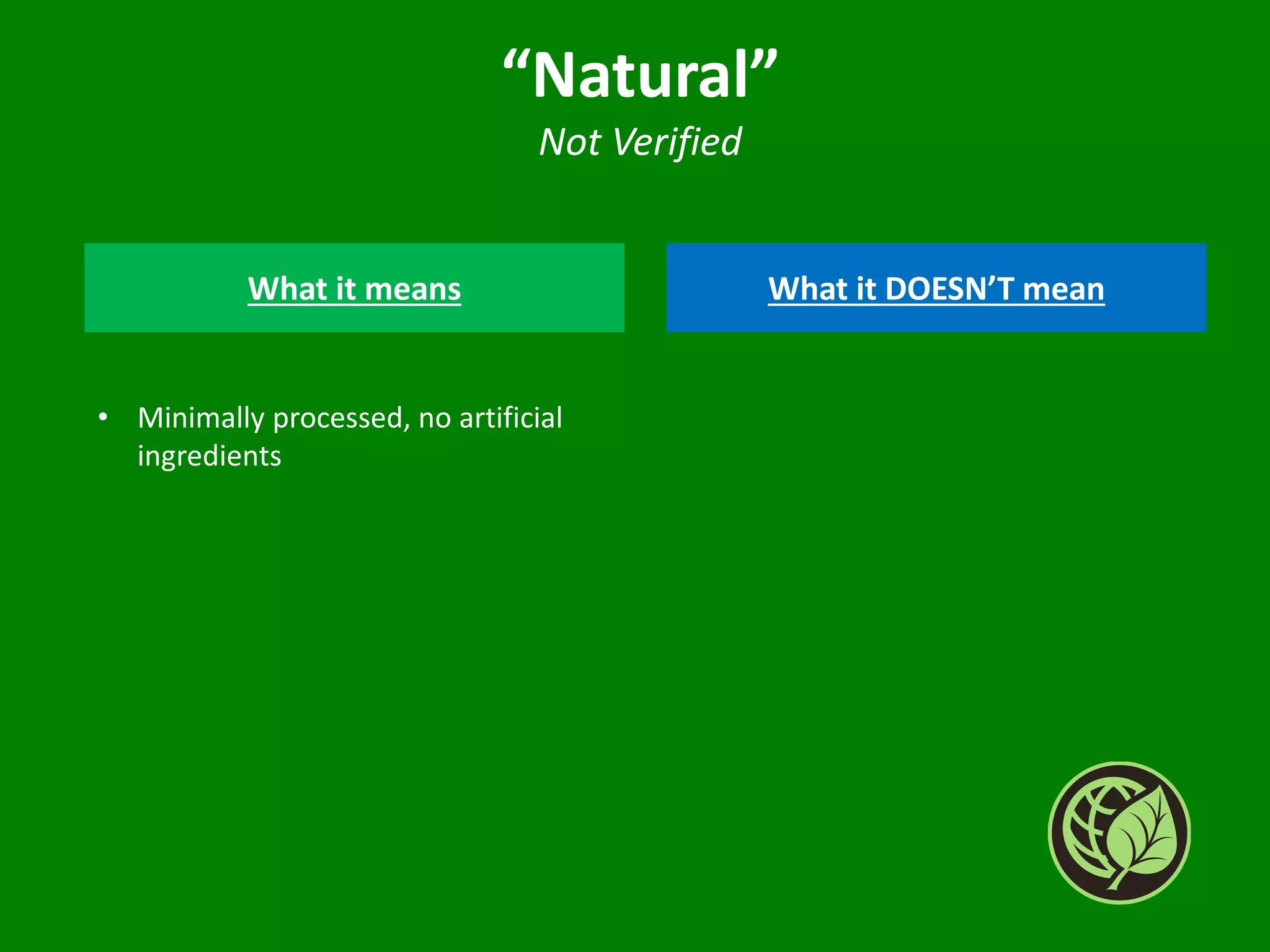
“Natural”
Not Verified
What it means What it DOESN’T mean
• Minimally processed, no artificial
ingredients
“Natural”
Not Verified
• Pasture-raised
• Responsible use of antibiotics
• No added hormones
• High animal welfare standards
• Environmentally responsible
• Healthy or non-GMO
• Family farmed
• Third party certified or audited in
any way
What it means What it DOESN’T mean
• Minimally processed, no artificial
ingredients
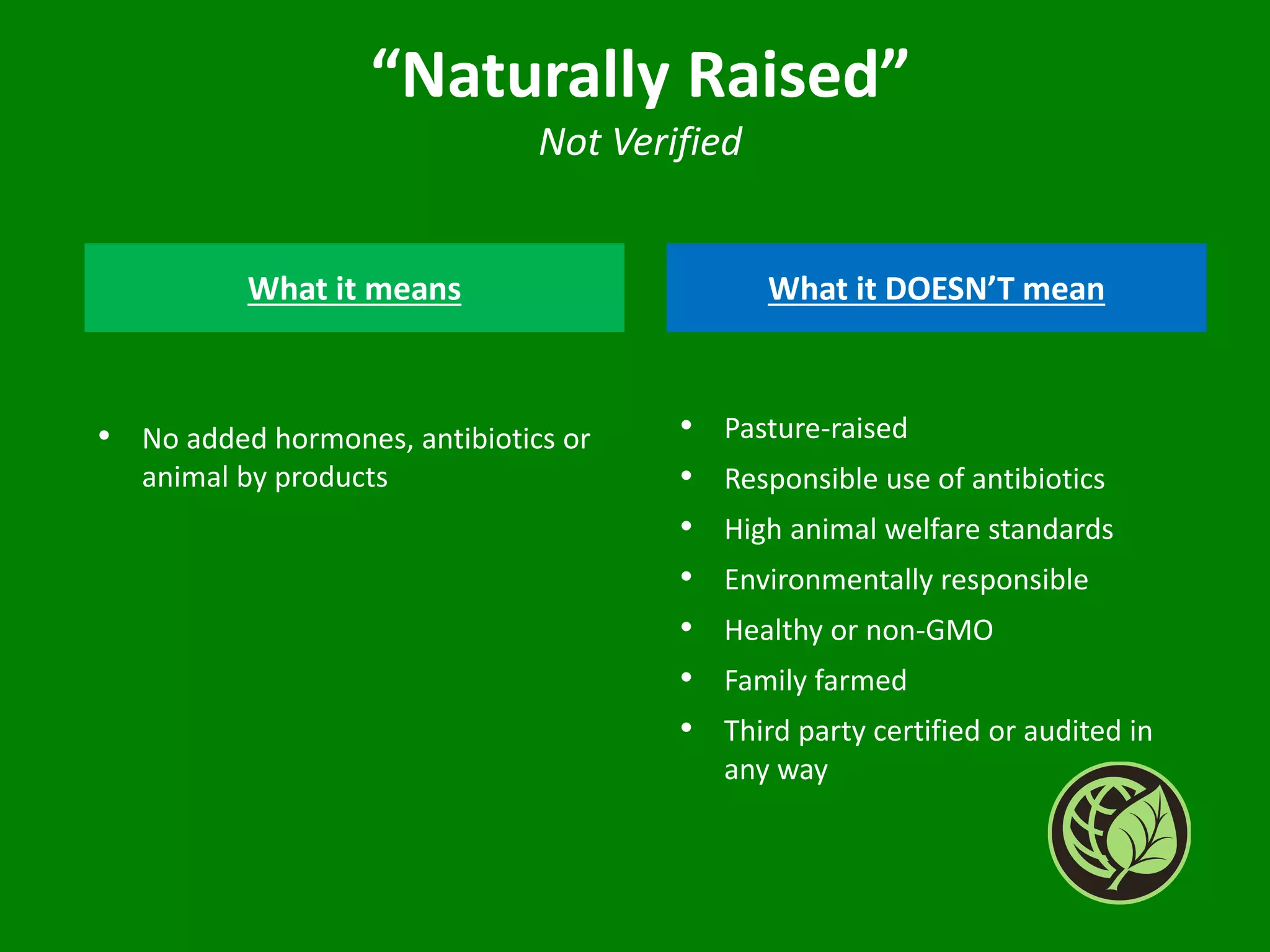
“Naturally Raised”
Not Verified
• No added hormones, antibiotics or
animal by products
What it means What it DOESN’T mean
“Naturally Raised”
Not Verified
• No added hormones, antibiotics or
animal by products
• Pasture-raised
• Responsible use of antibiotics
• High animal welfare standards
• Environmentally responsible
• Healthy or non-GMO
• Family farmed
• Third party certified or audited in
any way
What it means What it DOESN’T mean
“Organic”
Verified, Independent-Vested
• Animals must be fed organic feed
• Animals treated with antibiotics
must be segregated, giving
producers an incentive to withhold
treatment
• Range of organic labels: “100%
Organic”; “Organic” (95%); “Made
with Organic Ingredients” (more
than 70% organic ingredients)
What it means What it DOESN’T mean
“Organic”
Verified, Independent-Vested
• Animals must be fed organic feed
• Animals treated with antibiotics
must be segregated, giving
producers an incentive to withhold
treatment
• Range of organic labels: “100%
Organic”; “Organic” (95%); “Made
with Organic Ingredients” (more
than 70% organic ingredients)
• Pasture-raised
• Responsible use of antibiotics
• High animal welfare standards
• Environmentally responsible
• Healthy
• Family farmed
What it means What it DOESN’T mean
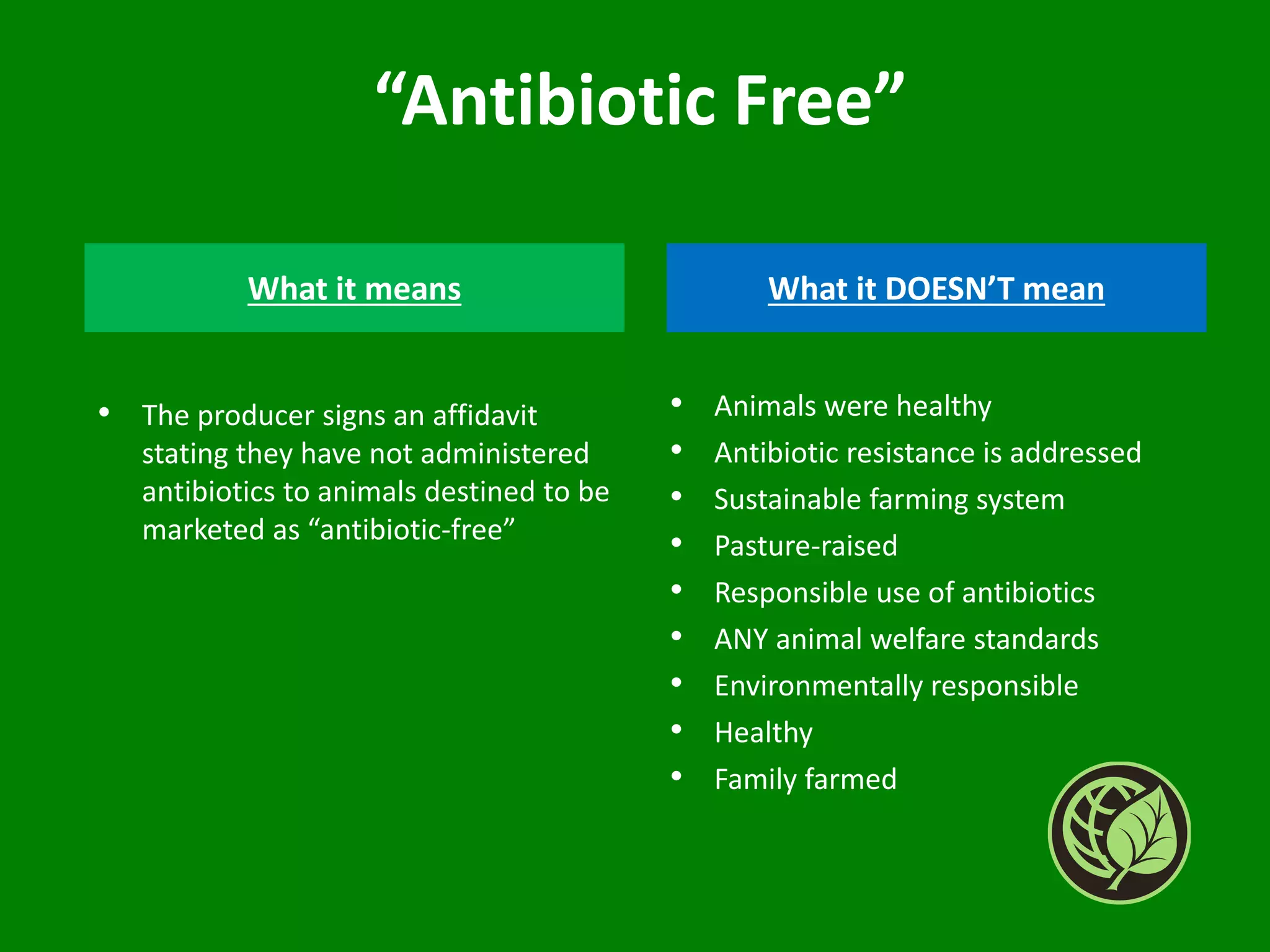
“Antibiotic Free”
• The producer signs an affidavit
stating they have not administered
antibiotics to animals destined to be
marketed as “antibiotic-free”
What it means What it DOESN’T mean
“Antibiotic Free”
• The producer signs an affidavit
stating they have not administered
antibiotics to animals destined to be
marketed as “antibiotic-free”
• Animals were healthy
• Antibiotic resistance is addressed
• Sustainable farming system
• Pasture-raised
• Responsible use of antibiotics
• ANY animal welfare standards
• Environmentally responsible
• Healthy
• Family farmed
What it means What it DOESN’T mean
More on “Antibiotic Free” - and what it
doesn’t address
• Antibiotic residue. ALL animals (conventional or otherwise) receiving
antibiotic treatment must legally follow a withdrawal period before their
products are marketed – meaning, there should NEVER be antibiotics in your
meat
• Sustainable farming systems. Most ABF products come from industrial
systems – systems which are inherently designed to require antibiotics
• Animal health. The ABF premium creates an incentive to withhold treatment
from sick animals, while not addressing the healthfulness of the system itself
• Antibiotic resistance. Conventional systems still use antibiotics on a daily,
subtherapeutic level, creating superbugs and making life-saving medicines
ineffective
• 2 labels allow responsible antibiotic use without penalizing the farmer: AWA
and European Union Organic
The REAL Problem: Antibiotic Resistance
When antibiotics are abused for growth promotion and disease prevention ,
bacteria become resistant. Alexander Fleming, credited with discovering
penicillin, used his Nobel Prize acceptance speech in 1945 to caution that the
misuse of penicillin in this way would inevitably lead to resistance:
“But I would like to sound one note of warning… There may be a danger,
though, in under dosage. It is not difficult to make microbes resistant to
penicillin in the laboratory by exposing them to concentrations not sufficient
to kill them, and the same thing has occasionally happened in the body. The
time may come when penicillin can be bought by anyone in the shops. Then
there is the danger that the ignorant man may easily underdose himself and
by exposing his microbes to non-lethal quantities of the drug make them
resistant.”
The REAL Solution: Transform the Farm System
• Abusing antibiotics for growth promotion and disease prevention results in
resistant bacteria, creating a scenario where life-threatening diseases
become untreatable
• Simply withholding treatment from a few animals doesn’t fix the problem
• The solution? Support farming systems that don’t depend on antibiotics,
saving these treatments for when they are really necessary
• High-welfare, pasture- and range-based systems (like AWA) promote
animal health without routine reliance on antibiotics
According to Consumer Reports
AWA is the only "Highly Meaningful" food label
for farm animal welfare, outdoor access, and
sustainability
“Concerned about how chickens are raised,
and trying to decipher egg-carton
labeling?... For chickens raised according to
the highest animal-welfare standards, look
for the label ‘Animal Welfare Approved’”
– Bonnie S. Benwick
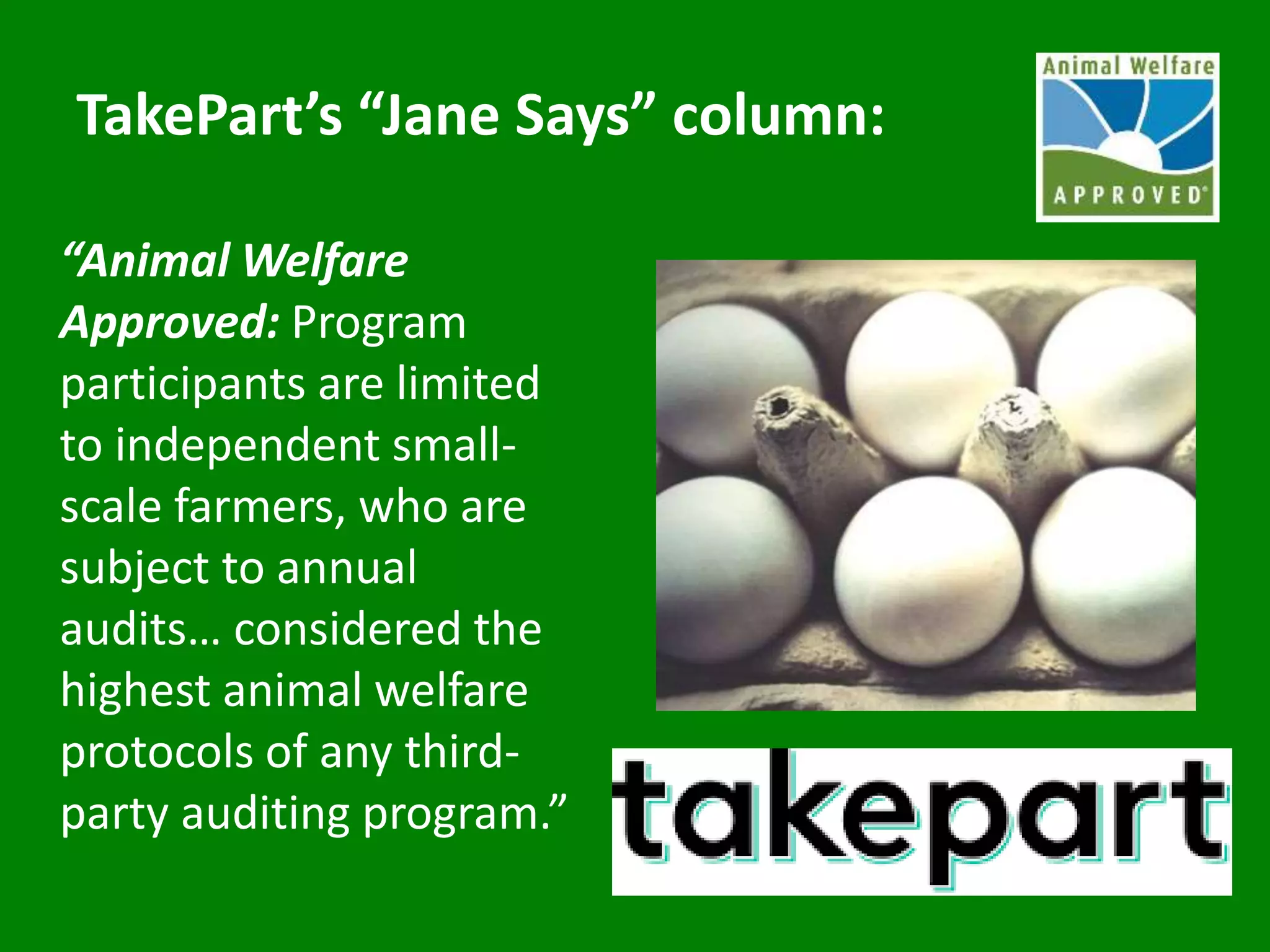
“Animal Welfare
Approved: Program
participants are limited
to independent small-
scale farmers, who are
subject to annual
audits… considered the
highest animal welfare
protocols of any third-
party auditing program.”
TakePart’s “Jane Says” column:
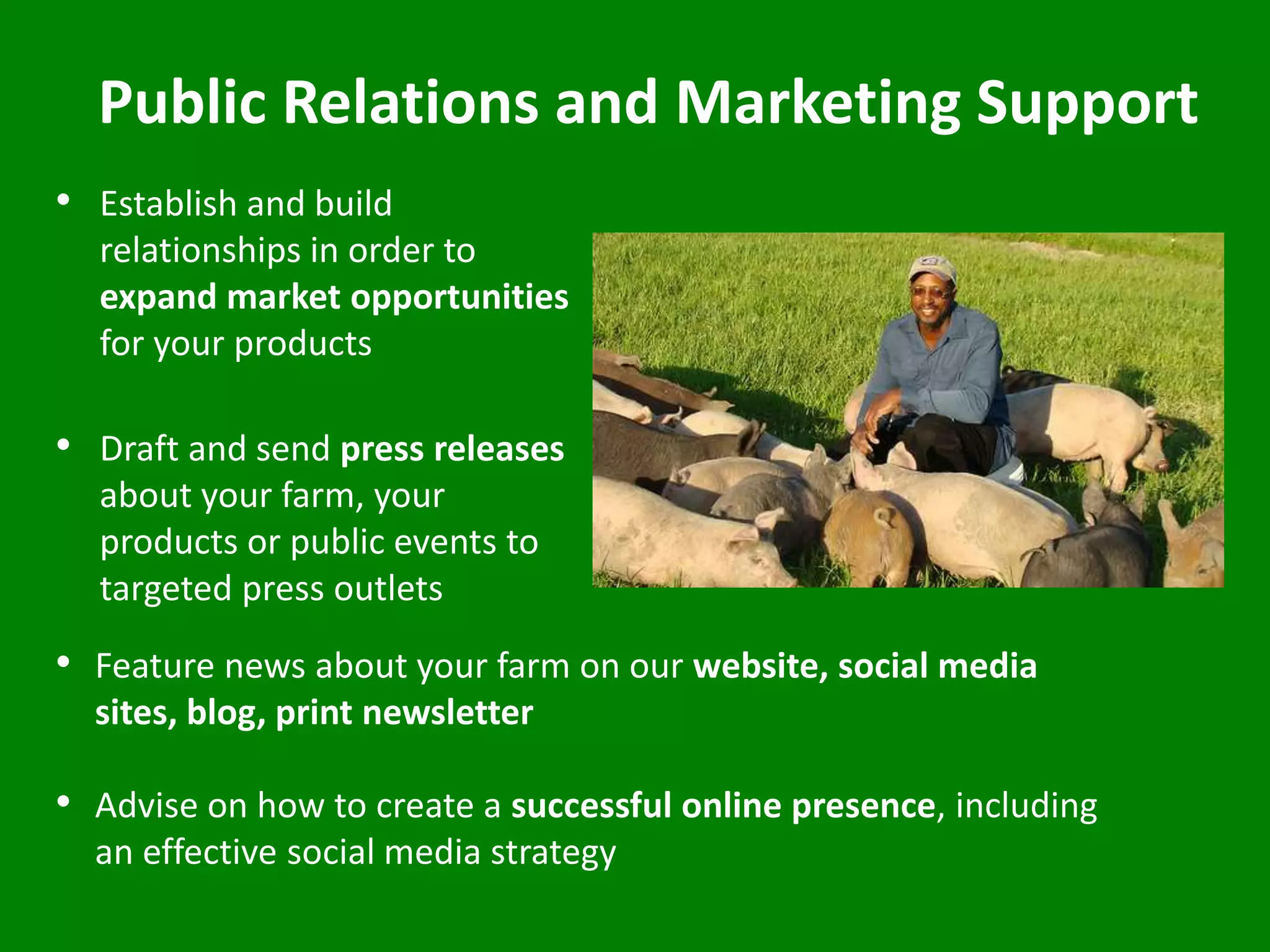
Public Relations and Marketing Support
• Establish and build
relationships in order to
expand market opportunities
for your products
• Draft and send press releases
about your farm, your
products or public events to
targeted press outlets
• Feature news about your farm on our website, social media
sites, blog, print newsletter
• Advise on how to create a successful online presence, including
an effective social media strategy
Our Publications
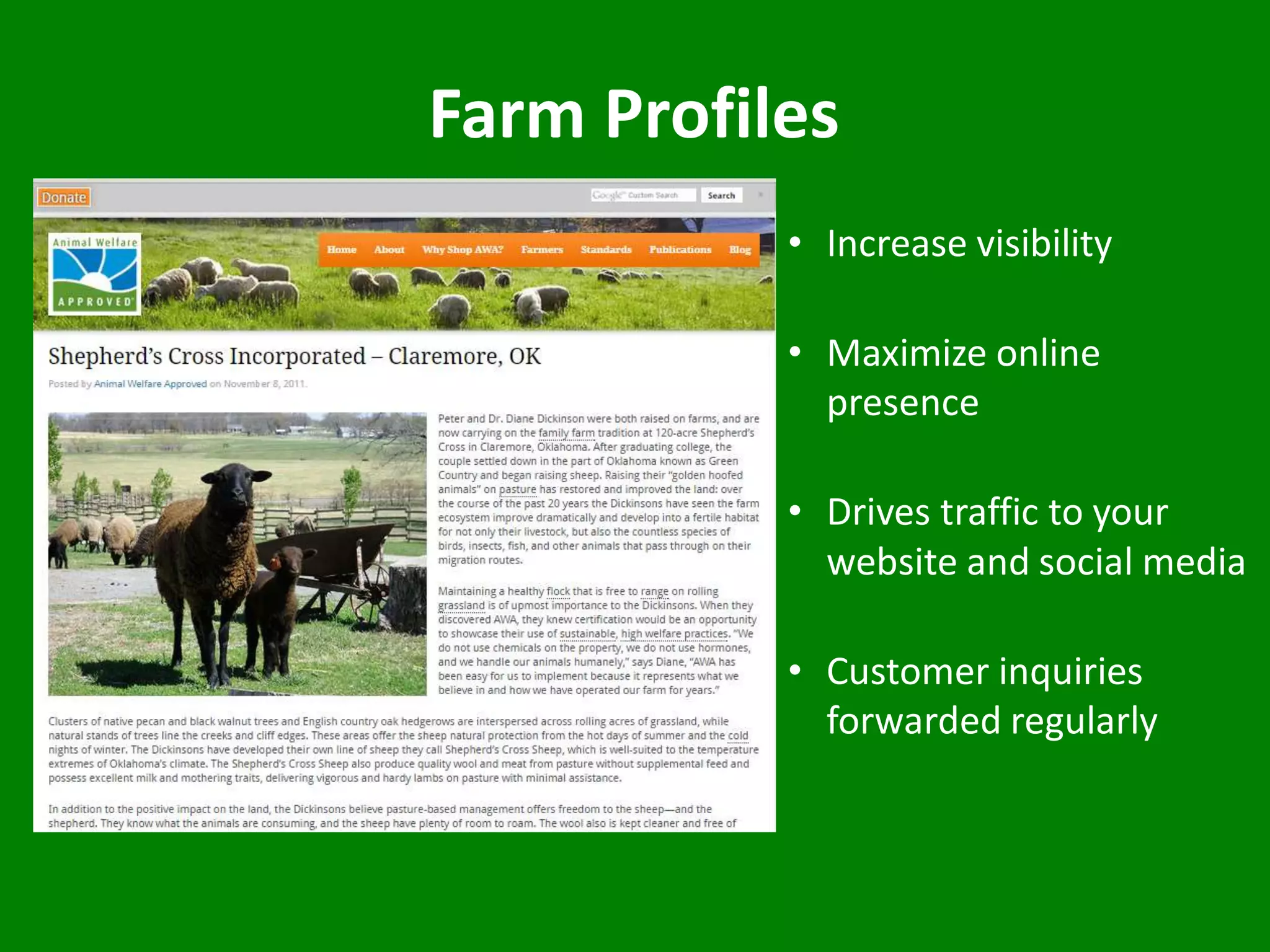
Farm Profiles
• Increase visibility
• Maximize online
presence
• Drives traffic to your
website and social media
• Customer inquiries
forwarded regularly
Online Directory
Searchable directory of AWA farms and products, including farms,
restaurants, retailers, CSA’s, and online purchasing options.
Event Support
• Host events and attend conferences or workshops with you
• Offer supporting materials and signage
• Assist with publicity and event promotion
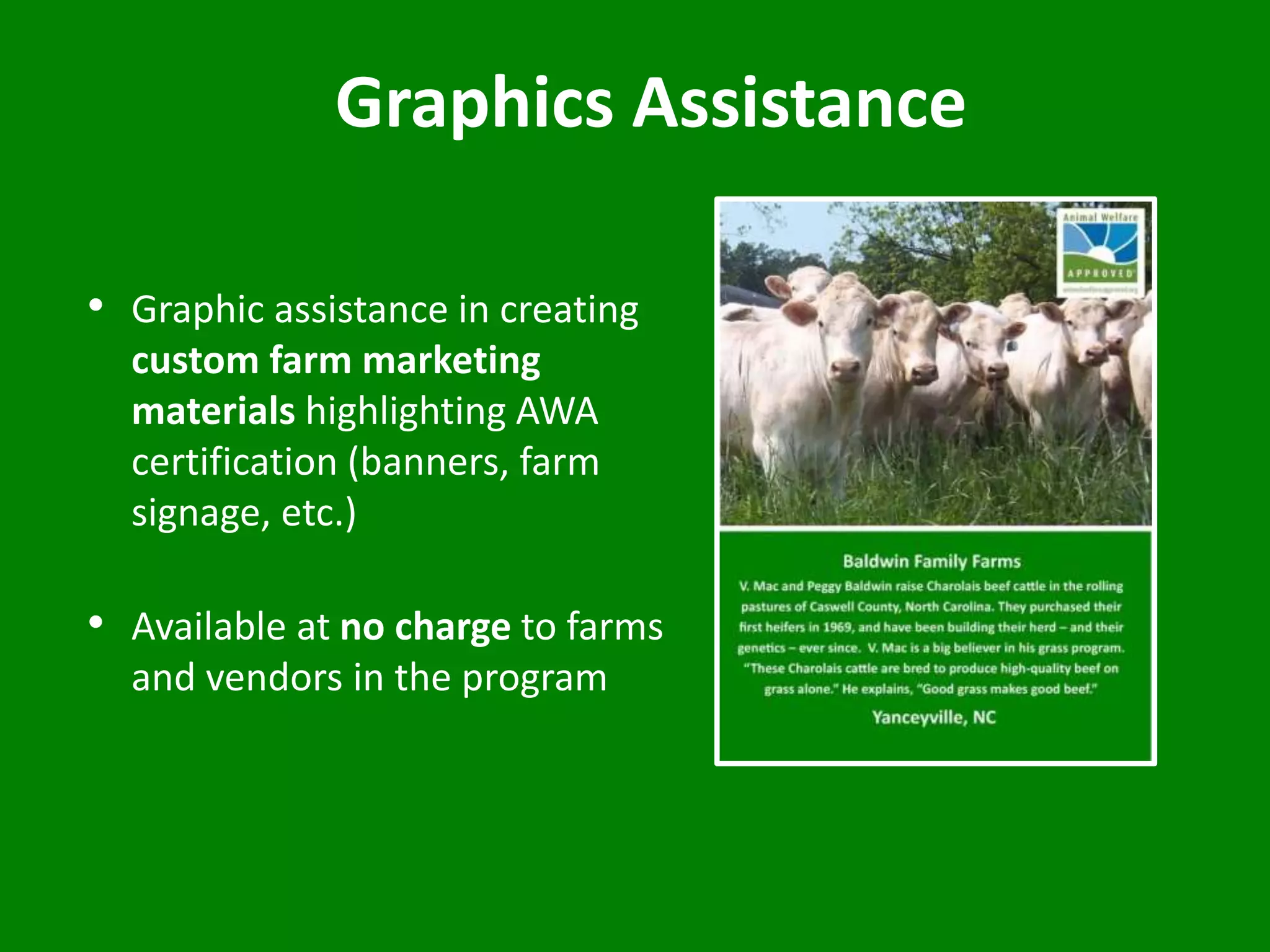
Graphics Assistance
• Graphic assistance in creating
custom farm marketing
materials highlighting AWA
certification (banners, farm
signage, etc.)
• Available at no charge to farms
and vendors in the program
AWA Egg Cartons
• AWA-branded egg
cartons are available
at cost to certified
farmers
• Includes AWA logo,
pasture-raised
branding and
informational insert
• Can be personalized for each farm with easy-to-
print label
Technical Support
• Technical Advice Fact Sheets cover commonly asked
questions about production practices
• Our quarterly newsletter includes technical articles and
information on compliance with our standards
• Access to expert technical advice that isn’t covered in our
published materials
• Examples of support:
• Determining costs of production
• Branching out into other species
• Mentoring and consulting to transition from conventional
operations to pasture-based systems
AWA Species-Specific Standards
• Beef Cattle
• Dairy Cattle
• Sheep
• Dairy Sheep
• Goats
• Dairy Goats
• Pigs
• Bison
• Rabbits
• Meat Chickens
• Laying Hens
• Geese
• Ducks
• Turkey
Questions?
Learn more and sign up for our mailing list at:
www.AGreenerWorld.org

Grass-Fed Beef: Telling the Story

  • 1.
     Andrew Gunther A Greener World SWGLA 2016 Our Farms, Our Food, Our Future Let’s choose! Grass Fed Telling the story
  • 2.
    “Beef environment cost10 times that of other livestock” -BBC News “Climate change: Why beef is the new SUV” -CNN.com “Giving up beef will reduce carbon footprint more than cars, says expert” -The Guardian “Beef eating bad for environment: Experts” -India Times/Economic Times “Beef: What’s Not for Dinner in a Sustainable World” -Inside Climate News
  • 3.
  • 5.
    Whole Foods. Food Fight:PETA Files False- Advertising Complaint Over Whole Foods’ ‘Humane Meat’ Patagonia We took some important steps to protect animals in partnering with Ovis 21, but we failed to implement a comprehensive process to assure animal welfare, and we are dismayed to witness such horrifying mistreatment. Why transparency audits/certificates mater Volkswagen The automaker admitted last month that 11 million cars and light commercial vehicles equipped with a diesel motor line known as the EA 189 had the illegal software. On Thursday, Volkswagen said it was investigating whether some versions of another diesel motor line, known as the EA 288, also had software intended to detect when a vehicle was undergoing emissions testing and turn on pollution controls.
  • 6.
    Animal Welfare Approved(AWA) • Our practical, science-based standards cover meat, dairy, eggs, and fiber animals throughout North America with products available in every state • The only certification for high welfare, sustainable, pasture- based family farms • Given highest rating by Consumer Reports
  • 7.
    Certified Grassfed byAGW • Available for beef cattle, meat and dairy sheep, meat and dairy goats and bison • Demand for grassfed beef has increased by 25–30% every year over the last decade • Only Grassfed certification to ensure high- welfare management
  • 8.
    Certified Wildlife FriendlyBy AGW • Recognizing wildlife stewardship on farms and ranches • Building habitats and increasing biodiversity • Available on small and large farms (one of our smaller farms of 15 acres has recorded 120 different bird species on farm) • Managing livestock alongside wildlife - without threat to either • Animals that spend their lives on CWF farms/ranches can have meat, milk, eggs, wool leather, horn etc. marketed as CWF • Different logos to show which species are being protected
  • 9.
    • Building onthe growing recognition that farming has an impact on wildlife and biodiversity • Protecting predators - keystone species that are vital to ecosystems • Educating farmers in non-lethal predator control methods • Animals that spend their lives on PF farms/ranches can have meat, milk, eggs, wool leather, horn etc. marketed as PF Certified Predator Friendly by AGW
  • 10.
    Non GM Fedby AGW • Ensure by testing and audit that animals are not fed GM products.
  • 11.
  • 12.
  • 13.
  • 14.
    Type of programDetails Examples Independent No pressure can be exerted by farmers or retailers involved in the selection of farms to audit or the results of audits. AWA Independent-Vested The company or organization auditing the farms depends on the income generated from providing these audits and granting approvals. Certified Humane, National Organic Program Producer-Independent Standards are set by parties with a commercial interest in the result of audits, but audits are carried out by a third party. American Grassfed Association Producer Standards are set by producers or industry groups and audited by auditors with a vested interest in the result. Potentially the same group that sets the standards is responsible for verifying and making the claims with no third party oversight at all. American Humane Certified (formerly “Free Farmed”) Participatory Guarantee System Standards set by certifying entity, audits carried out by program participants. Not an independent third party certification. Certified Naturally Grown Retailer The standards-setting, auditing and decision making processes are controlled by the individual or company profiting from the transaction. No third party oversight. McDonald’s KFC Grocery Stores
  • 15.
    “Cage-Free,” “Free-Roaming,” “Free-Range,” and“Pasture Raised” • “Cage-free” usually means birds are raised indoors. “Free-range” requires outdoor access for chickens raised for meat, but “access” and quality of range is not defined. The term has no official meaning for egg-laying hens or other animals • “Pasture-raised” widely considered better than “cage-free,” “free-range,” or “free roaming,” but there is no standard definition or verification for the term • AWA is the only certification requiring pasture- and range-based management
  • 16.
    “Natural” Not Verified What itmeans What it DOESN’T mean • Minimally processed, no artificial ingredients
  • 17.
    “Natural” Not Verified • Pasture-raised •Responsible use of antibiotics • No added hormones • High animal welfare standards • Environmentally responsible • Healthy or non-GMO • Family farmed • Third party certified or audited in any way What it means What it DOESN’T mean • Minimally processed, no artificial ingredients
  • 18.
    “Naturally Raised” Not Verified •No added hormones, antibiotics or animal by products What it means What it DOESN’T mean
  • 19.
    “Naturally Raised” Not Verified •No added hormones, antibiotics or animal by products • Pasture-raised • Responsible use of antibiotics • High animal welfare standards • Environmentally responsible • Healthy or non-GMO • Family farmed • Third party certified or audited in any way What it means What it DOESN’T mean
  • 20.
    “Organic” Verified, Independent-Vested • Animalsmust be fed organic feed • Animals treated with antibiotics must be segregated, giving producers an incentive to withhold treatment • Range of organic labels: “100% Organic”; “Organic” (95%); “Made with Organic Ingredients” (more than 70% organic ingredients) What it means What it DOESN’T mean
  • 21.
    “Organic” Verified, Independent-Vested • Animalsmust be fed organic feed • Animals treated with antibiotics must be segregated, giving producers an incentive to withhold treatment • Range of organic labels: “100% Organic”; “Organic” (95%); “Made with Organic Ingredients” (more than 70% organic ingredients) • Pasture-raised • Responsible use of antibiotics • High animal welfare standards • Environmentally responsible • Healthy • Family farmed What it means What it DOESN’T mean
  • 22.
    “Antibiotic Free” • Theproducer signs an affidavit stating they have not administered antibiotics to animals destined to be marketed as “antibiotic-free” What it means What it DOESN’T mean
  • 23.
    “Antibiotic Free” • Theproducer signs an affidavit stating they have not administered antibiotics to animals destined to be marketed as “antibiotic-free” • Animals were healthy • Antibiotic resistance is addressed • Sustainable farming system • Pasture-raised • Responsible use of antibiotics • ANY animal welfare standards • Environmentally responsible • Healthy • Family farmed What it means What it DOESN’T mean
  • 24.
    More on “AntibioticFree” - and what it doesn’t address • Antibiotic residue. ALL animals (conventional or otherwise) receiving antibiotic treatment must legally follow a withdrawal period before their products are marketed – meaning, there should NEVER be antibiotics in your meat • Sustainable farming systems. Most ABF products come from industrial systems – systems which are inherently designed to require antibiotics • Animal health. The ABF premium creates an incentive to withhold treatment from sick animals, while not addressing the healthfulness of the system itself • Antibiotic resistance. Conventional systems still use antibiotics on a daily, subtherapeutic level, creating superbugs and making life-saving medicines ineffective • 2 labels allow responsible antibiotic use without penalizing the farmer: AWA and European Union Organic
  • 25.
    The REAL Problem:Antibiotic Resistance When antibiotics are abused for growth promotion and disease prevention , bacteria become resistant. Alexander Fleming, credited with discovering penicillin, used his Nobel Prize acceptance speech in 1945 to caution that the misuse of penicillin in this way would inevitably lead to resistance: “But I would like to sound one note of warning… There may be a danger, though, in under dosage. It is not difficult to make microbes resistant to penicillin in the laboratory by exposing them to concentrations not sufficient to kill them, and the same thing has occasionally happened in the body. The time may come when penicillin can be bought by anyone in the shops. Then there is the danger that the ignorant man may easily underdose himself and by exposing his microbes to non-lethal quantities of the drug make them resistant.”
  • 26.
    The REAL Solution:Transform the Farm System • Abusing antibiotics for growth promotion and disease prevention results in resistant bacteria, creating a scenario where life-threatening diseases become untreatable • Simply withholding treatment from a few animals doesn’t fix the problem • The solution? Support farming systems that don’t depend on antibiotics, saving these treatments for when they are really necessary • High-welfare, pasture- and range-based systems (like AWA) promote animal health without routine reliance on antibiotics
  • 27.
    According to ConsumerReports AWA is the only "Highly Meaningful" food label for farm animal welfare, outdoor access, and sustainability
  • 28.
    “Concerned about howchickens are raised, and trying to decipher egg-carton labeling?... For chickens raised according to the highest animal-welfare standards, look for the label ‘Animal Welfare Approved’” – Bonnie S. Benwick
  • 29.
    “Animal Welfare Approved: Program participantsare limited to independent small- scale farmers, who are subject to annual audits… considered the highest animal welfare protocols of any third- party auditing program.” TakePart’s “Jane Says” column:
  • 30.
    Public Relations andMarketing Support • Establish and build relationships in order to expand market opportunities for your products • Draft and send press releases about your farm, your products or public events to targeted press outlets • Feature news about your farm on our website, social media sites, blog, print newsletter • Advise on how to create a successful online presence, including an effective social media strategy
  • 31.
  • 32.
    Farm Profiles • Increasevisibility • Maximize online presence • Drives traffic to your website and social media • Customer inquiries forwarded regularly
  • 33.
    Online Directory Searchable directoryof AWA farms and products, including farms, restaurants, retailers, CSA’s, and online purchasing options.
  • 34.
    Event Support • Hostevents and attend conferences or workshops with you • Offer supporting materials and signage • Assist with publicity and event promotion
  • 35.
    Graphics Assistance • Graphicassistance in creating custom farm marketing materials highlighting AWA certification (banners, farm signage, etc.) • Available at no charge to farms and vendors in the program
  • 36.
    AWA Egg Cartons •AWA-branded egg cartons are available at cost to certified farmers • Includes AWA logo, pasture-raised branding and informational insert • Can be personalized for each farm with easy-to- print label
  • 37.
    Technical Support • TechnicalAdvice Fact Sheets cover commonly asked questions about production practices • Our quarterly newsletter includes technical articles and information on compliance with our standards • Access to expert technical advice that isn’t covered in our published materials • Examples of support: • Determining costs of production • Branching out into other species • Mentoring and consulting to transition from conventional operations to pasture-based systems
  • 38.
    AWA Species-Specific Standards •Beef Cattle • Dairy Cattle • Sheep • Dairy Sheep • Goats • Dairy Goats • Pigs • Bison • Rabbits • Meat Chickens • Laying Hens • Geese • Ducks • Turkey
  • 39.
    Questions? Learn more andsign up for our mailing list at: www.AGreenerWorld.org

Editor's Notes

  • #4 The sea of label claims can be overwhelming for those of us trying to make an informed choice. The goal of this talk is to help you gain a better understanding of what common food labels mean,-- and don’t mean – and to offer resources on where to find out more.
  • #12 When most people thin of “Organic” or “Cage Free,” they likely imagine a bucolic setting where birds run free outdoors. However, neither of these labels requires consistent outdoor access for animals. While some producers may go above and beyond the systems pictured above, the label doesn’t require it.