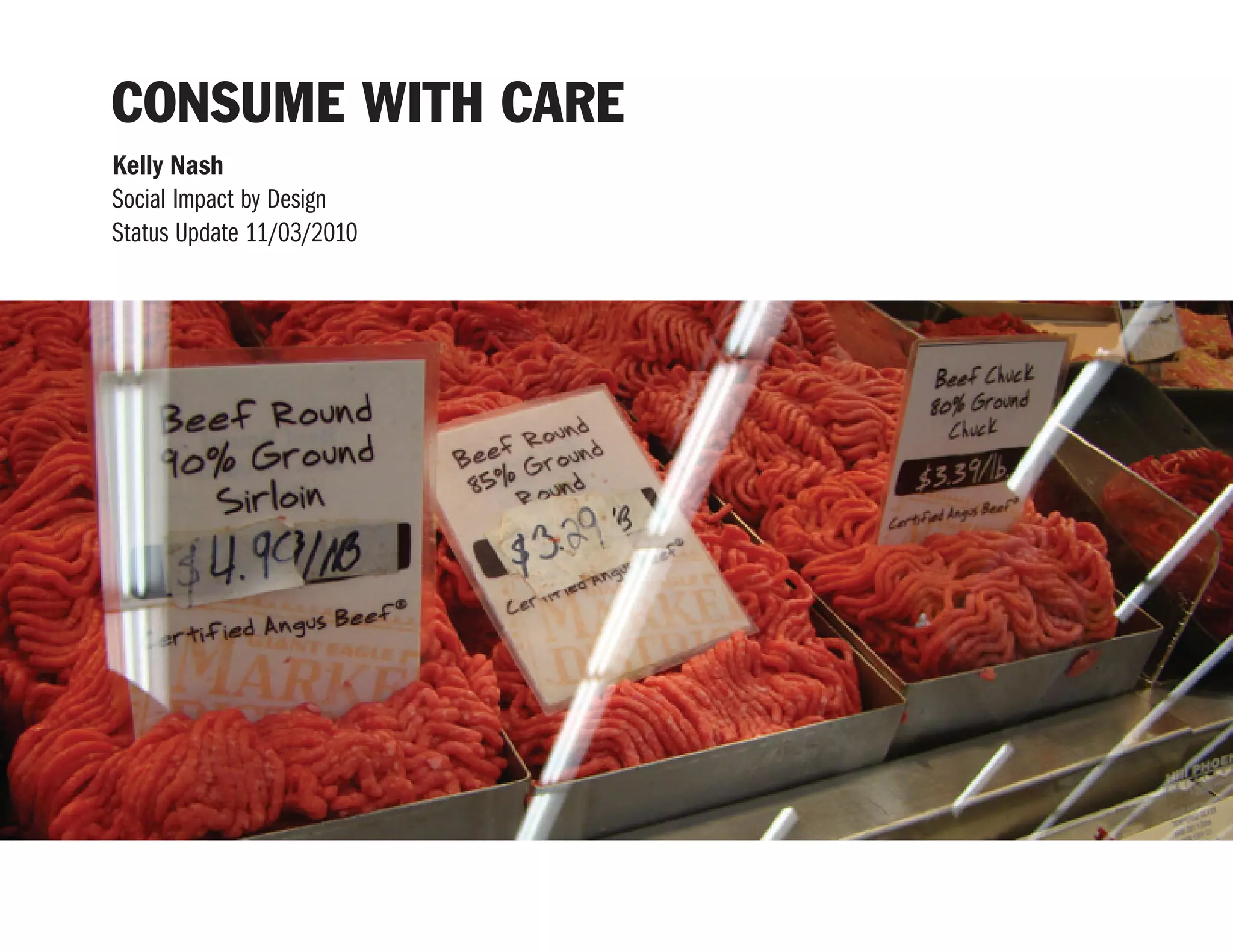
CONSUME WITH CARE
Kelly Nash
Social Impact by Design
Status Update 11/03/2010
hunt statement
How do we decide what meat to
buy at the grocery?
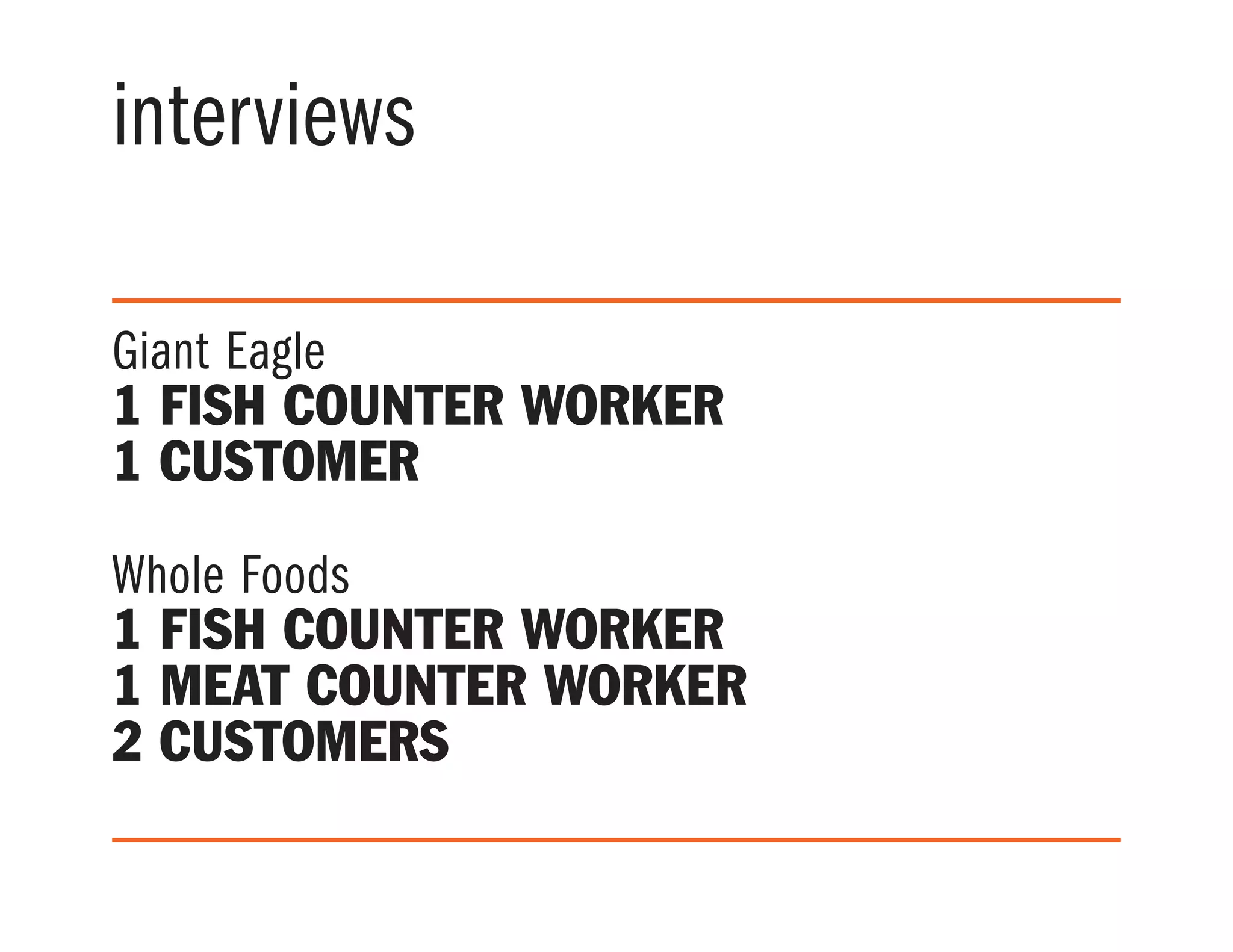
interviews
Giant Eagle
1 fish counter worker
1 customer
Whole Foods
1 fish counter worker
1 meat counter worker
2 customers
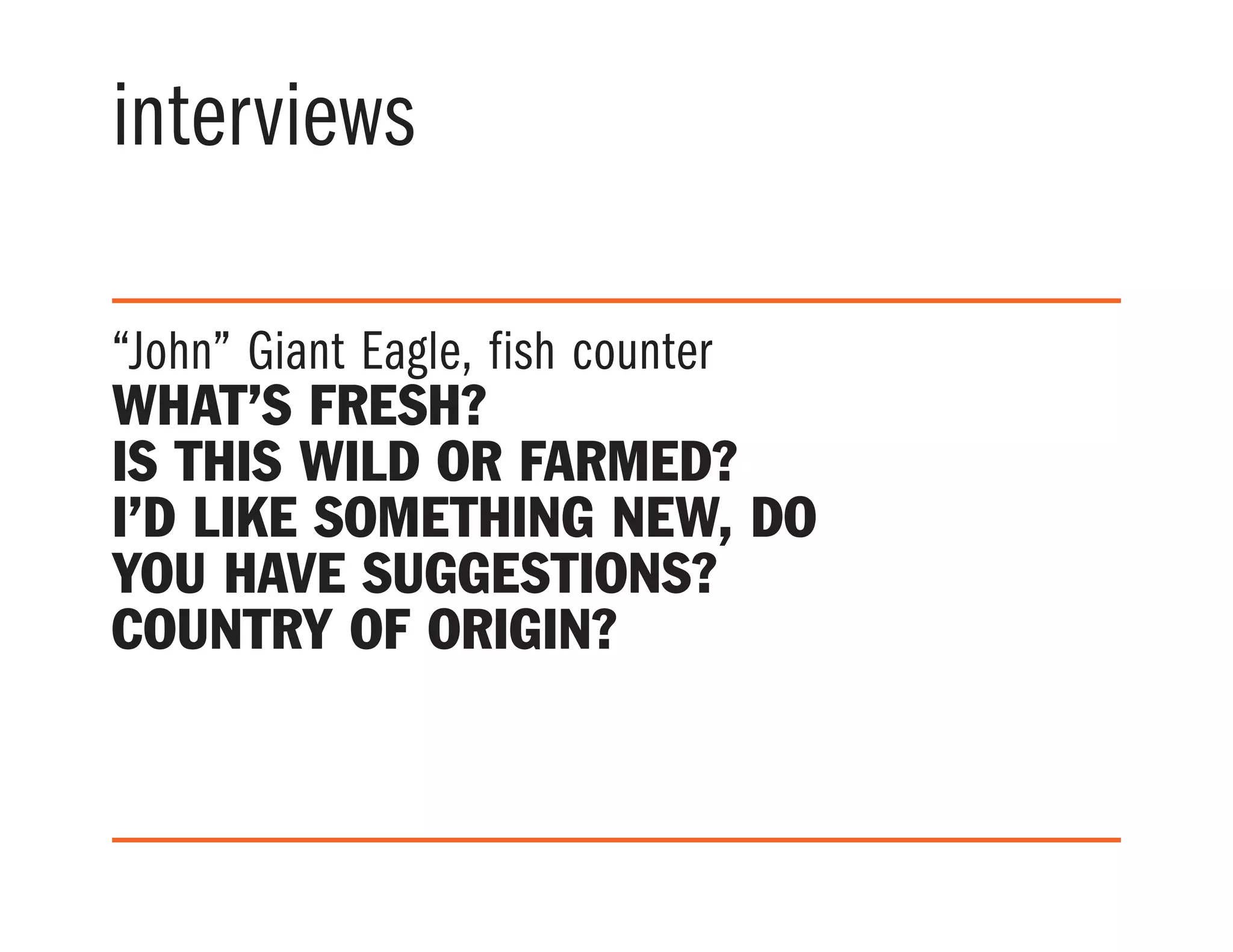
interviews
“john” Giant Eagle, fish counter
What’s fresh?
Is this wild or farmed?
I’d like something new, do
you have suggestions?
Country of origin?
interviews
“Zack” Whole Foods, fish counter
Which fish has Omega 3s?
Which fish have high mercury
levels?
Could you clarify whether I should
be buying wild fish or farmed fish?
interviews
“Owen” Whole Foods, meat counter
Did this come from a local and
sustainable farm?
How do I cook this?
interviews
Whole Foods, male customer
I get a lot of advice from a friend
who owns a farm.
Organic
Traceable to farm
Cost
interviews
Whole Foods, male customer
only at home, buys my meat here
Cost, but I’m not looking for cheapest
what I haven’t had in a while, what I can
make with ingredients I have
use price to make my choice after I’ve
narrowed down using other factors
transition happened gradually, wasn’t
always this way
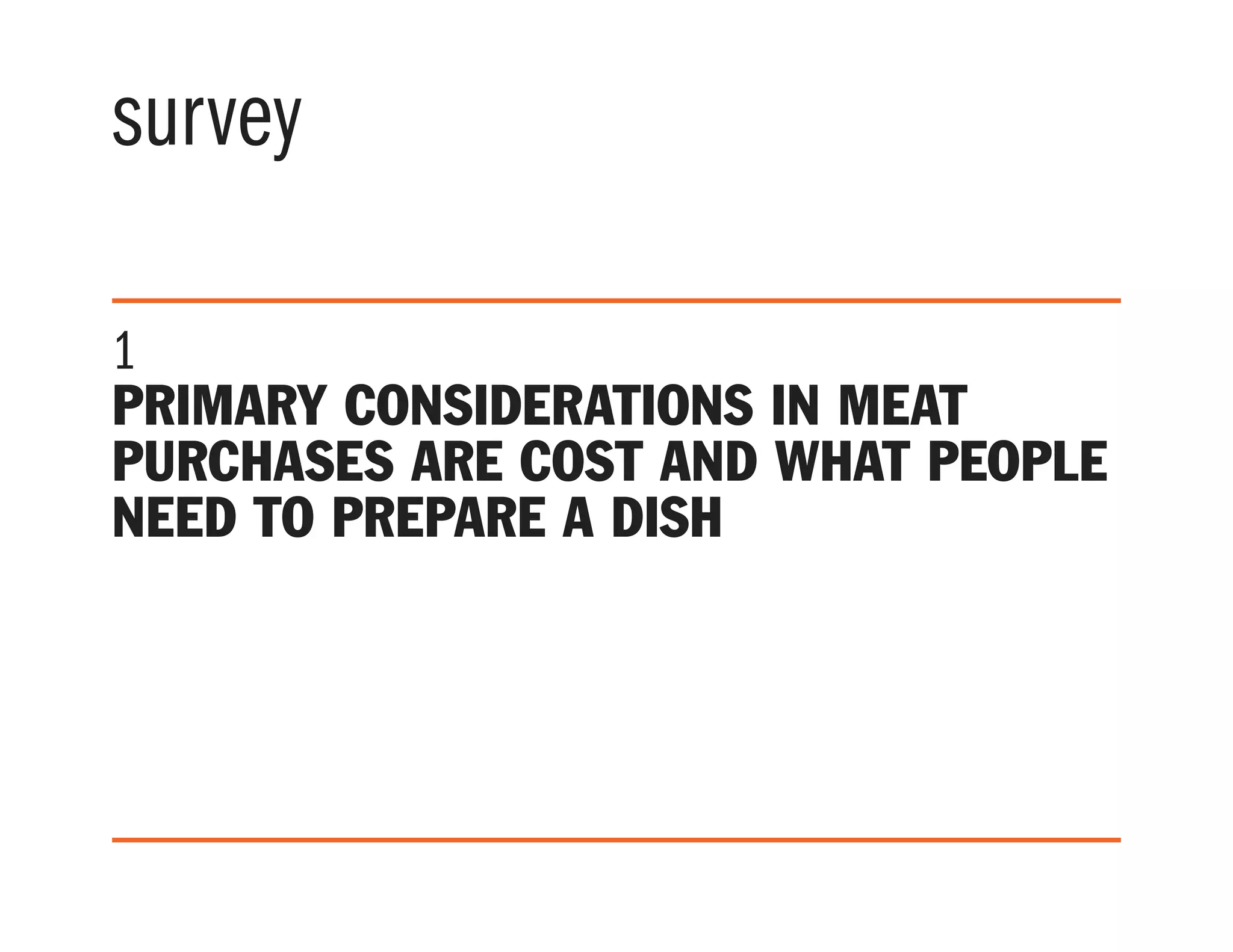
survey
1
Primary considerations in meat
purchases are cost and what people
need to prepare a dish
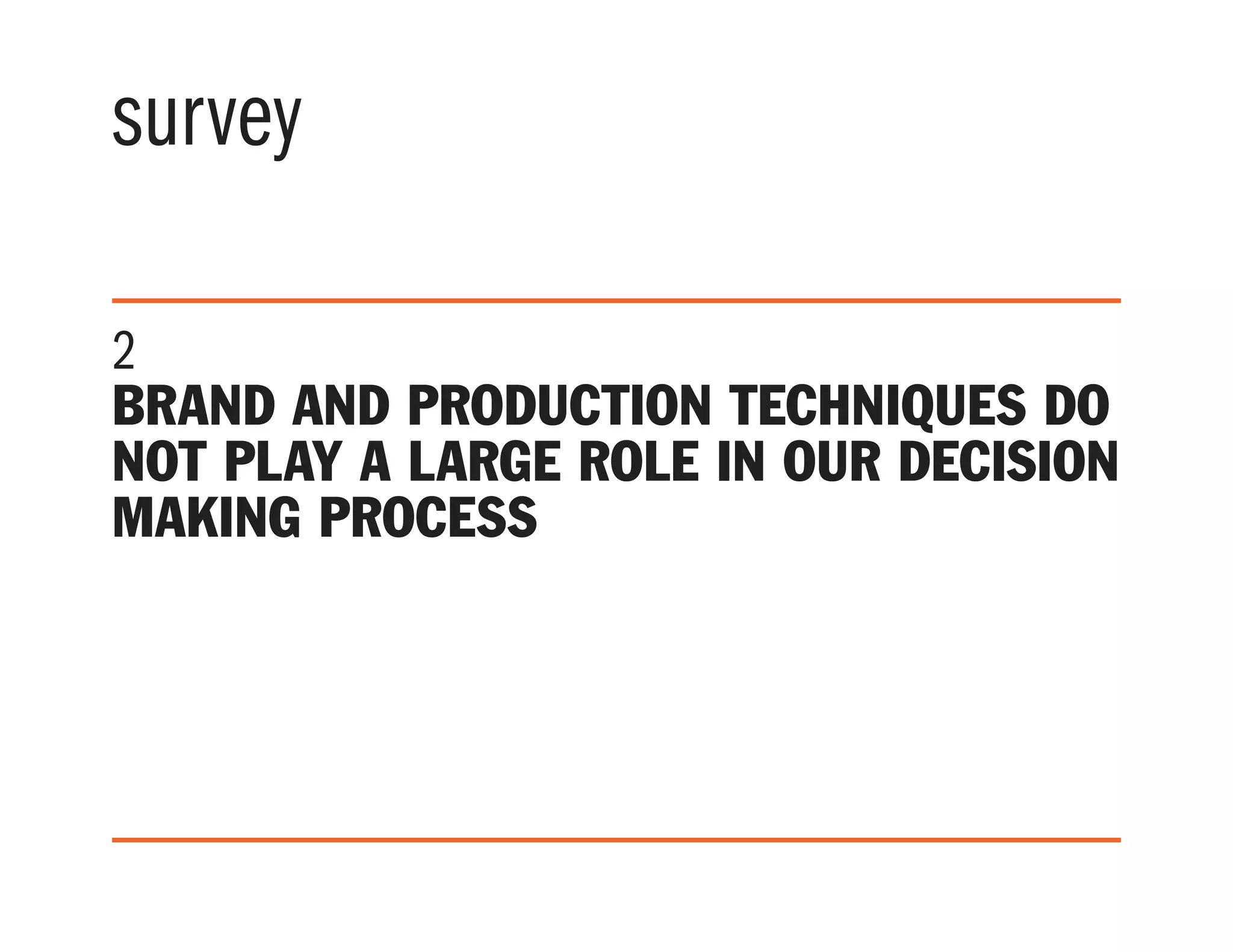
survey
2
Brand and production techniques do
not play a large role in our decision
making process
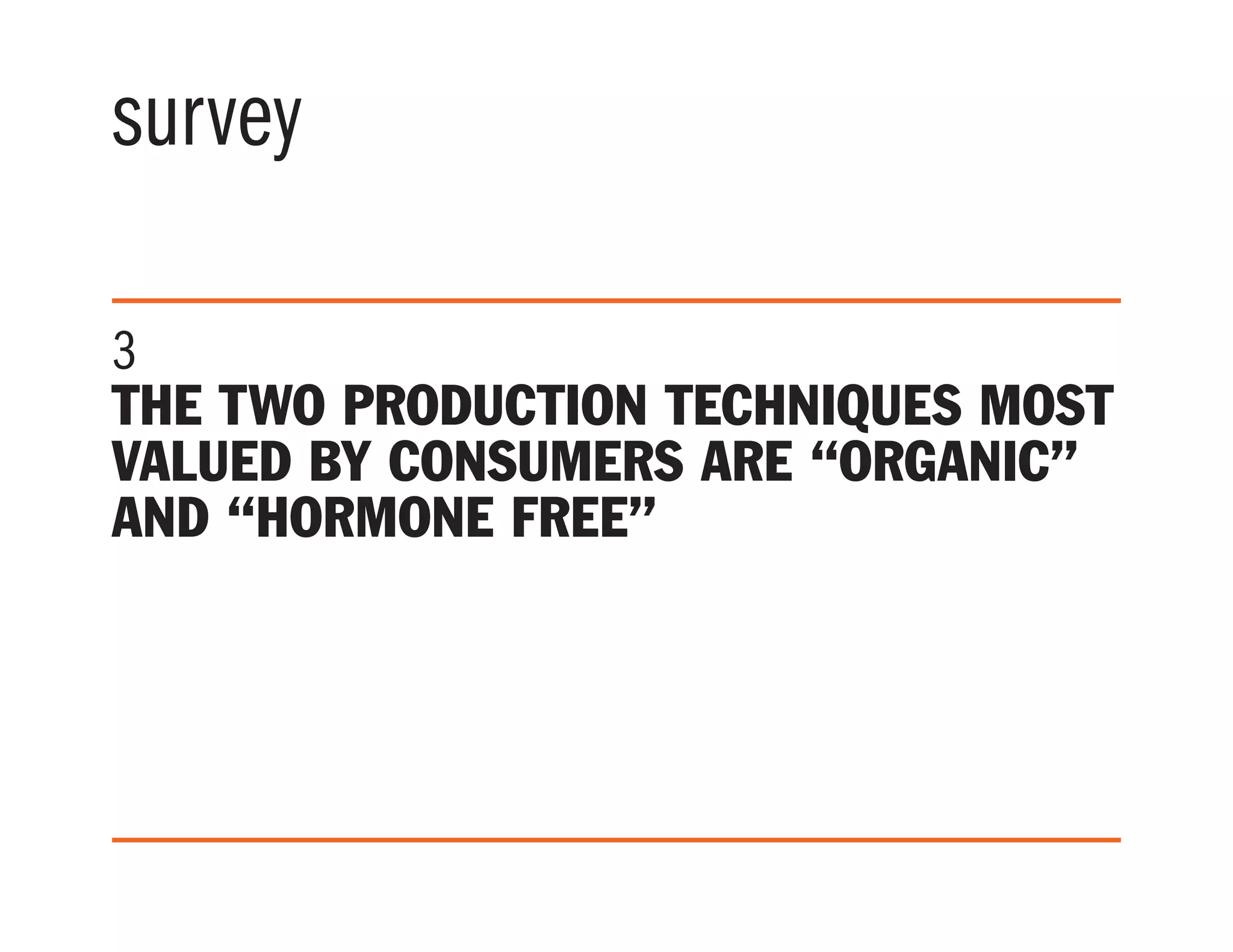
survey
3
The two production techniques most
valued by consumers are “organic”
and “hormone free”
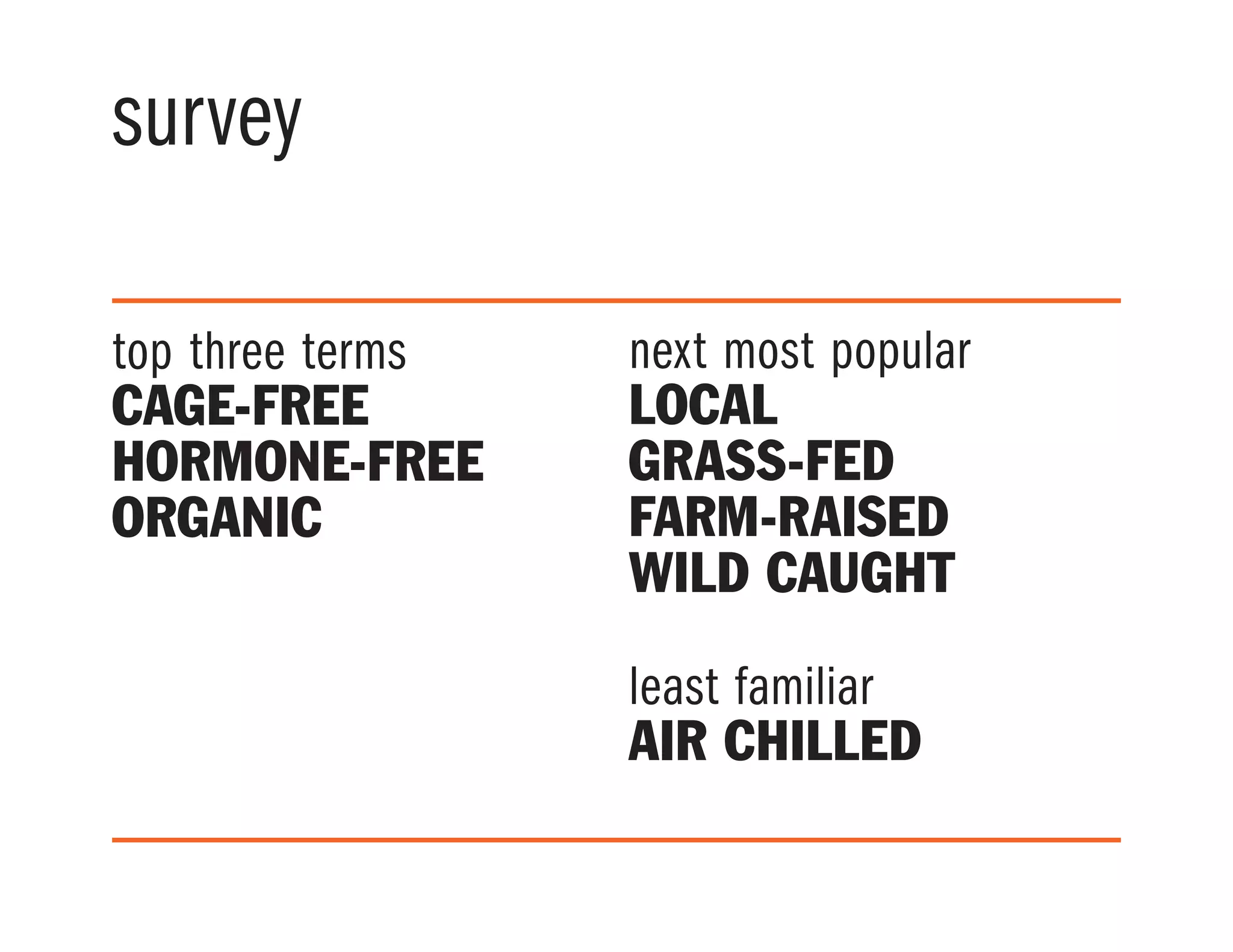
survey
top three terms
cage-free
hormone-free
organic
next most popular
local
grass-fed
farm-raised
wild caught
least familiar
air chilled
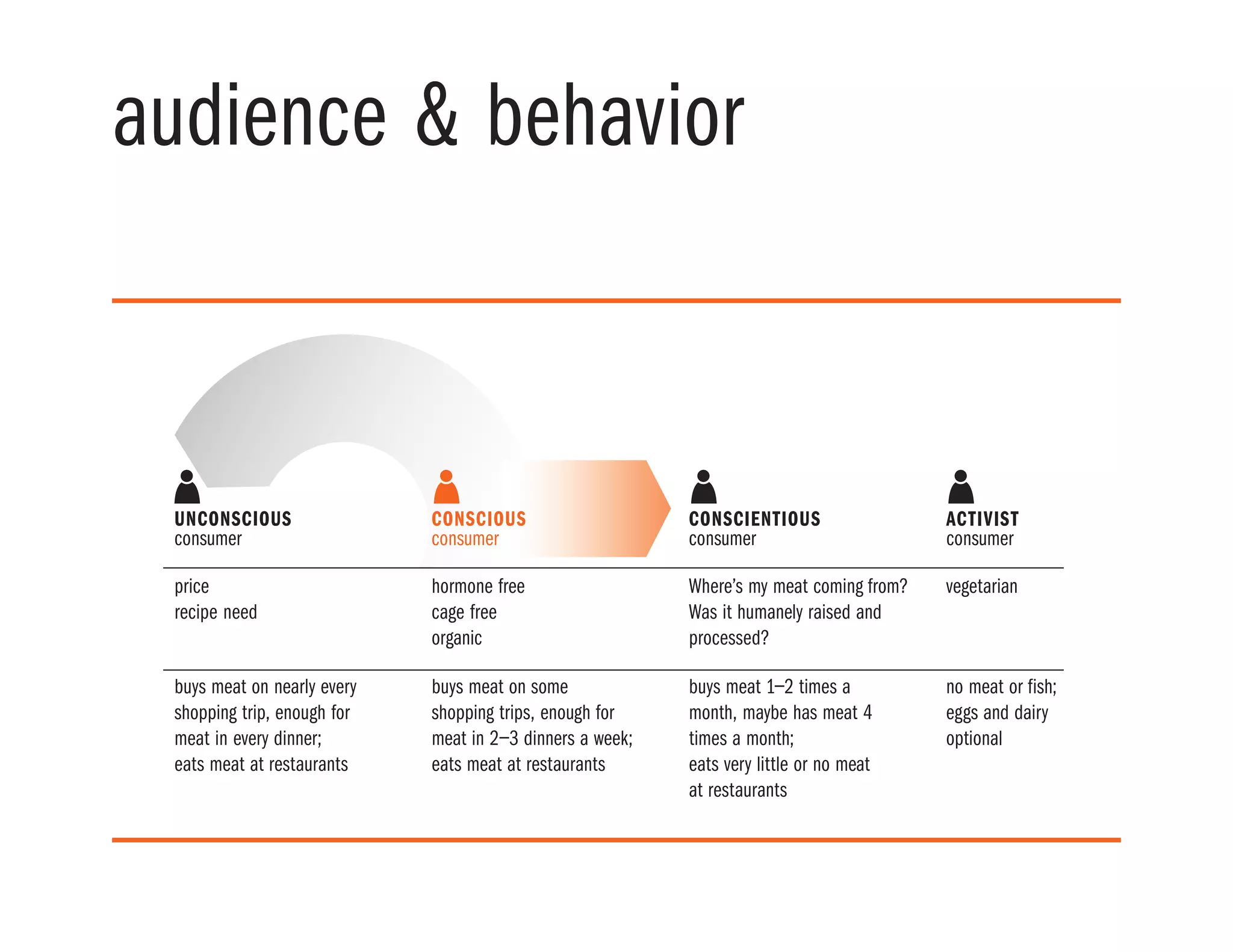
UNCONSCIOUS
consumer
price
recipe need
buys meat on nearly every
shopping trip, enough for
meat in every dinner;
eats meat at restaurants
buys meat on some
shopping trips, enough for
meat in 2–3 dinners a week;
eats meat at restaurants
buys meat 1–2 times a
month, maybe has meat 4
times a month;
eats very little or no meat
at restaurants
no meat or fish;
eggs and dairy
optional
hormone free
cage free
organic
Where’s my meat coming from?
Was it humanely raised and
processed?
vegetarian
CONSCIENTIOUS
consumer
ACTIVIST
consumer
CONSCIOUS
consumer
AUDIENCE & BEHAVIOR
audience & behavior
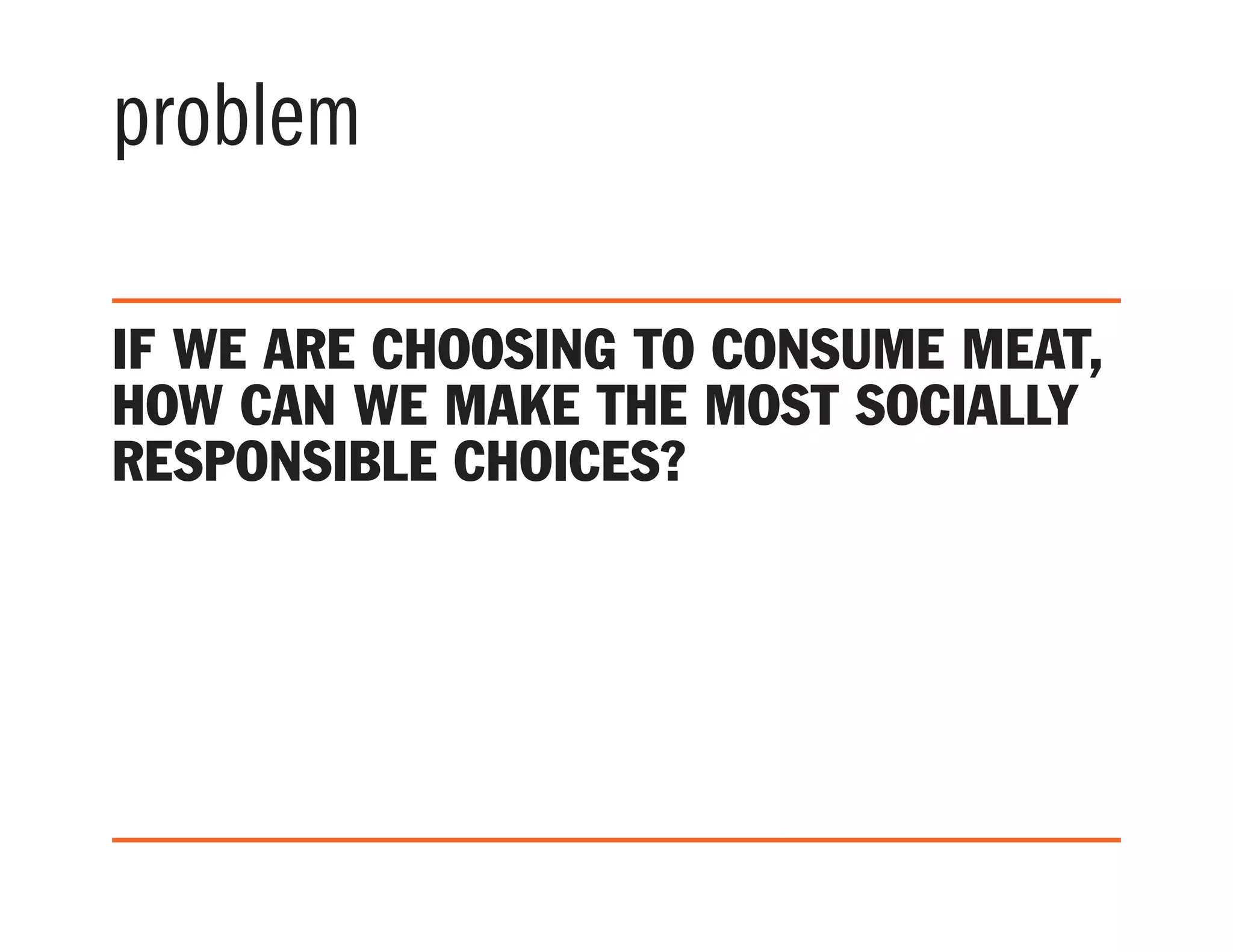
problem
If we are choosing to consume meat,
how can we make the most socially
responsible choices?
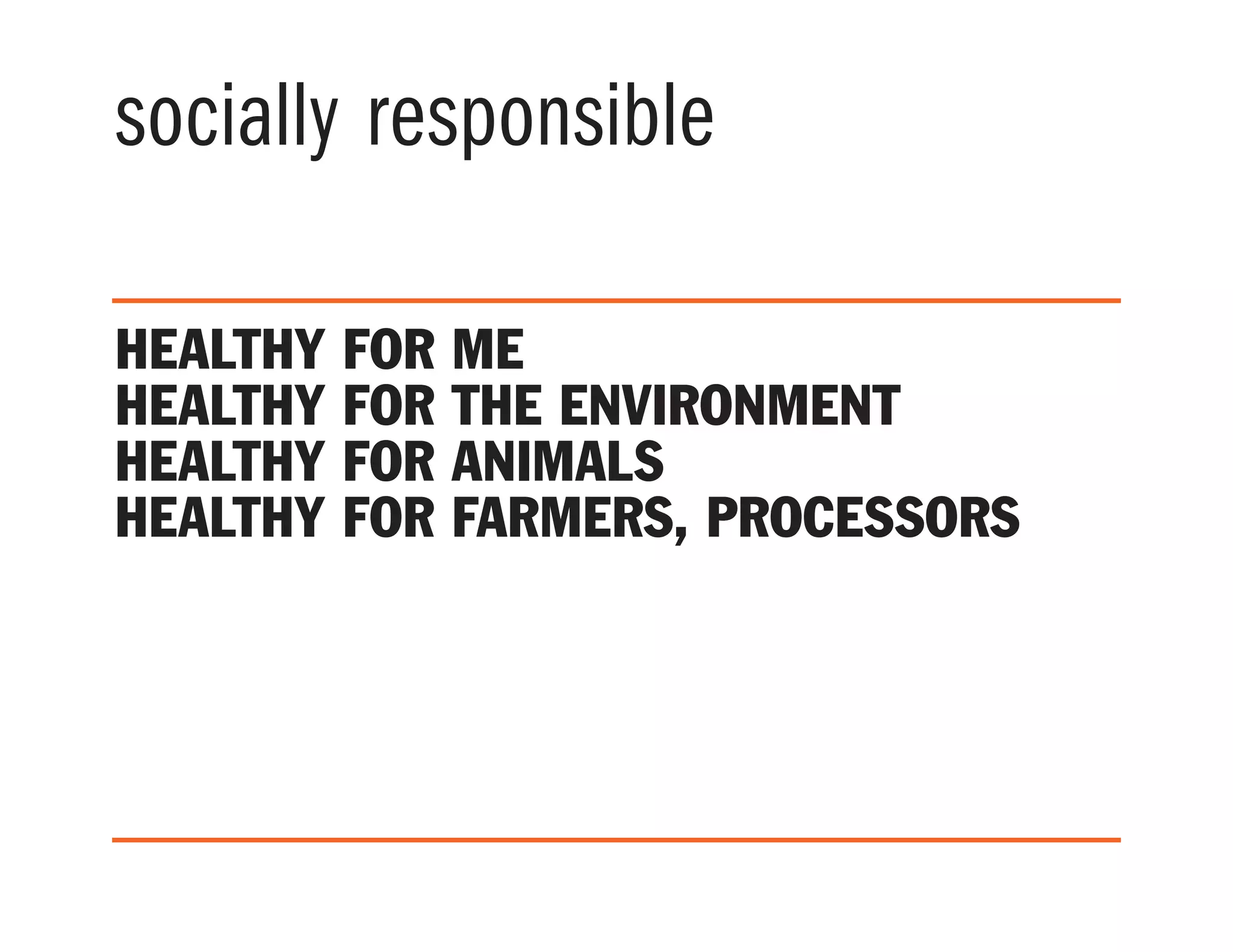
socially responsible
healthy for me
healthy for the environment
healthy for animals
healthy for farmers, processors
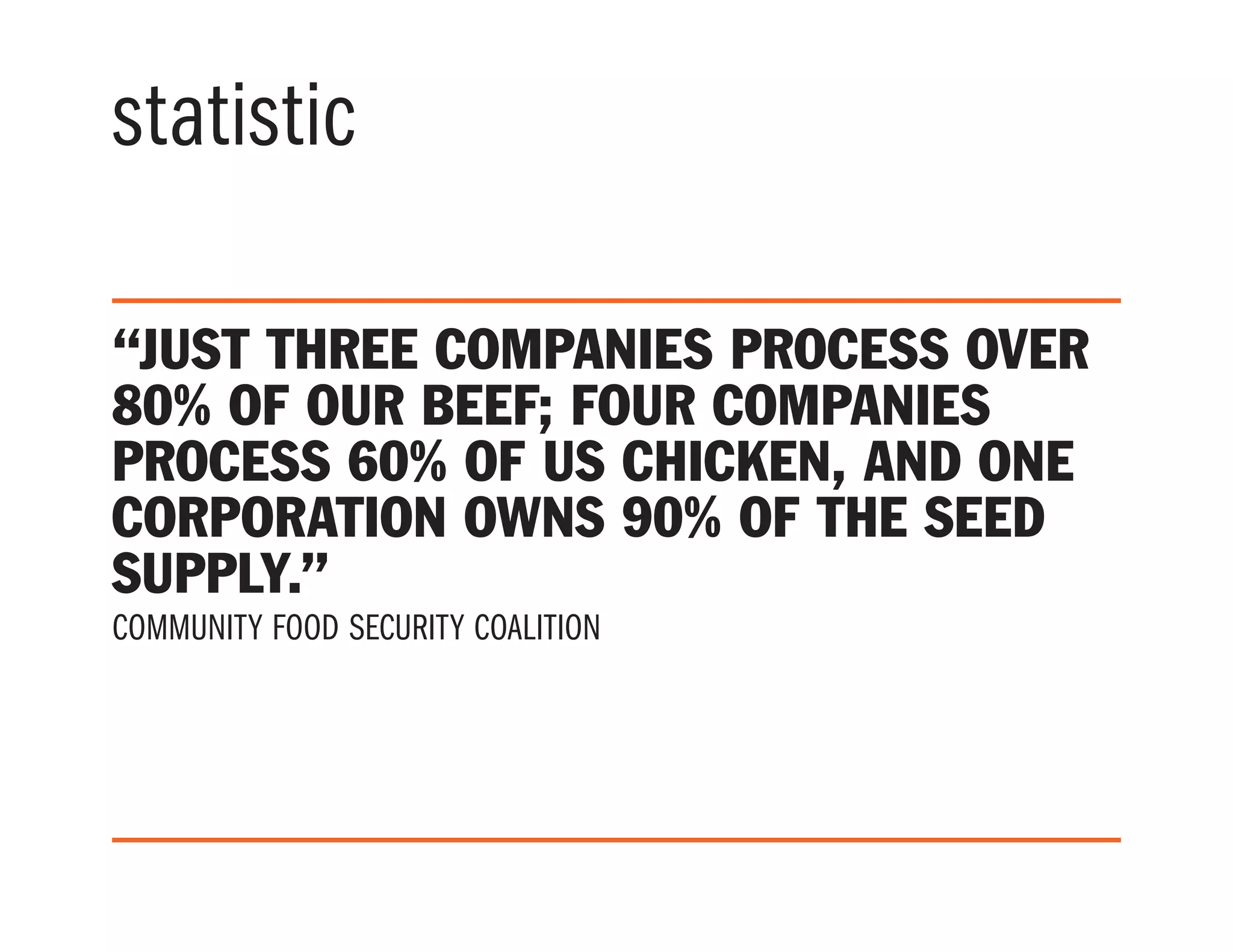
statistic
“Just three companies process over
80% of our beef; four companies
process 60% of US chicken, and one
corporation owns 90% of the seed
supply.”
community food security coalition
statistic
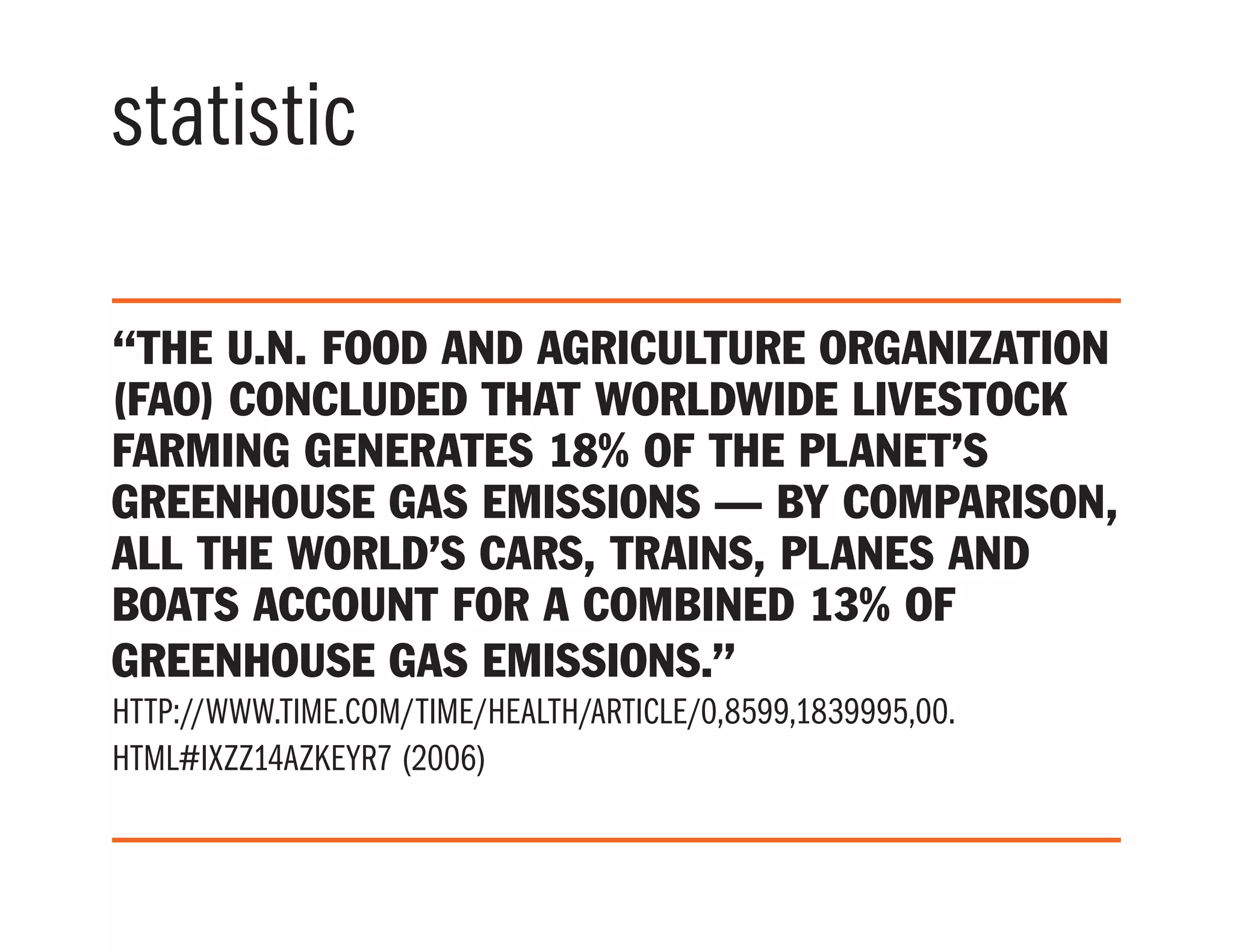
“the U.N. Food and Agriculture Organization
(FAO) concluded that worldwide livestock
farming generates 18% of the planet’s
greenhouse gas emissions — by comparison,
all the world’s cars, trains, planes and
boats account for a combined 13% of
greenhouse gas emissions.”
http://www.time.com/time/health/article/0,8599,1839995,00.
html#ixzz14AZKEyR7 (2006)
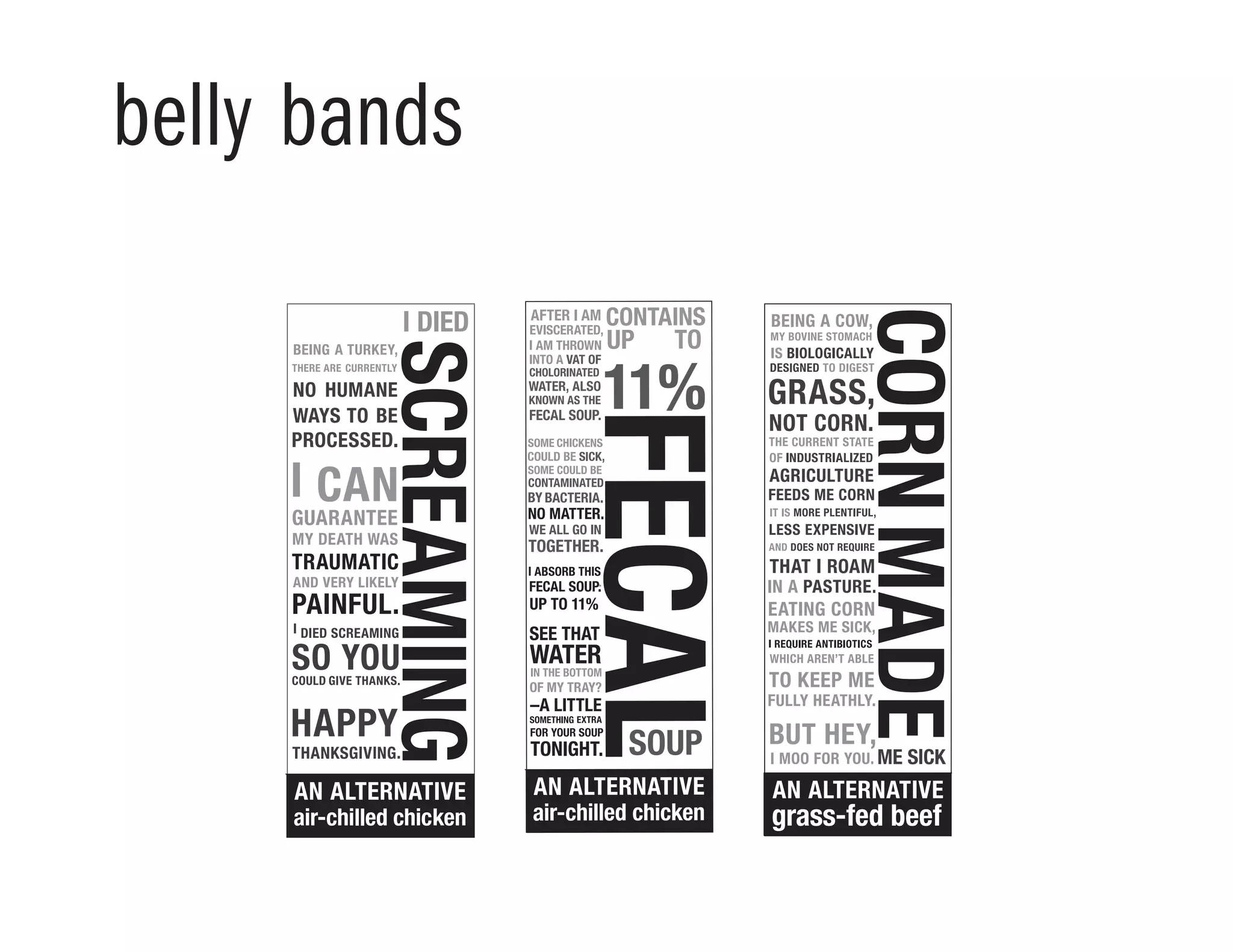
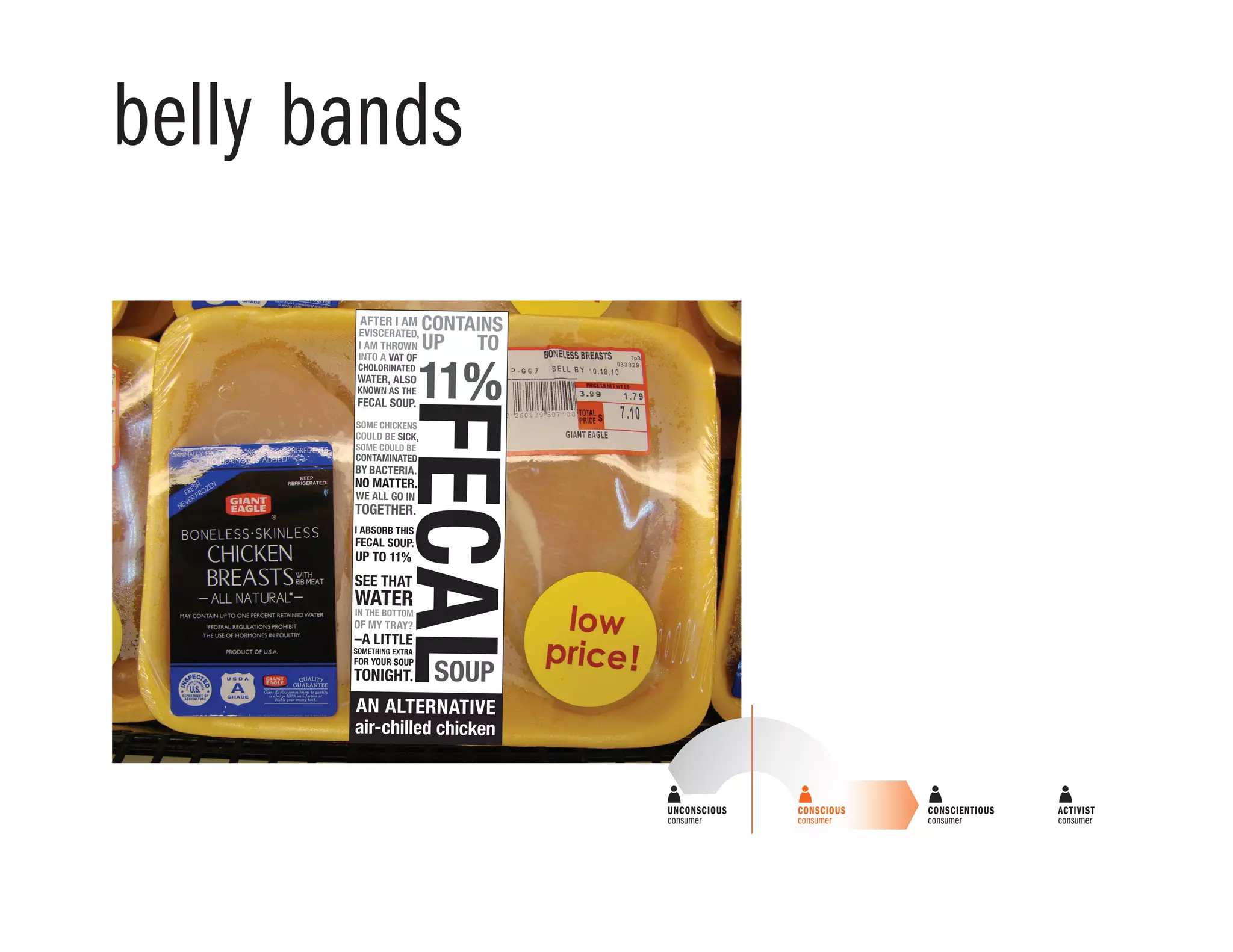
AN ALTERNATIVE
air-chilled chicken
AN ALTERNATIVE
grass-fed beef
belly bands
belly bands
UNCONSCIOUS
consumer
price
recipe need
buys meat on nearly every
shopping trip, enough for
meat in every dinner;
eats meat at restaurants
buys meat on some
shopping trips, enough for
meat in 2–3 dinners a week;
eats meat at restaurants
buys meat 1–2 times a
month, maybe has meat 4
times a month;
eats very little or no meat
at restaurants
no meat or fish;
eggs and dairy
optional
hormone free
cage free
organic
Where’s my meat coming from?
Was it humanely raised and
processed?
vegetarian
CONSCIENTIOUS
consumer
ACTIVIST
consumer
CONSCIOUS
consumer
AUDIENCE & BEHAVIOR
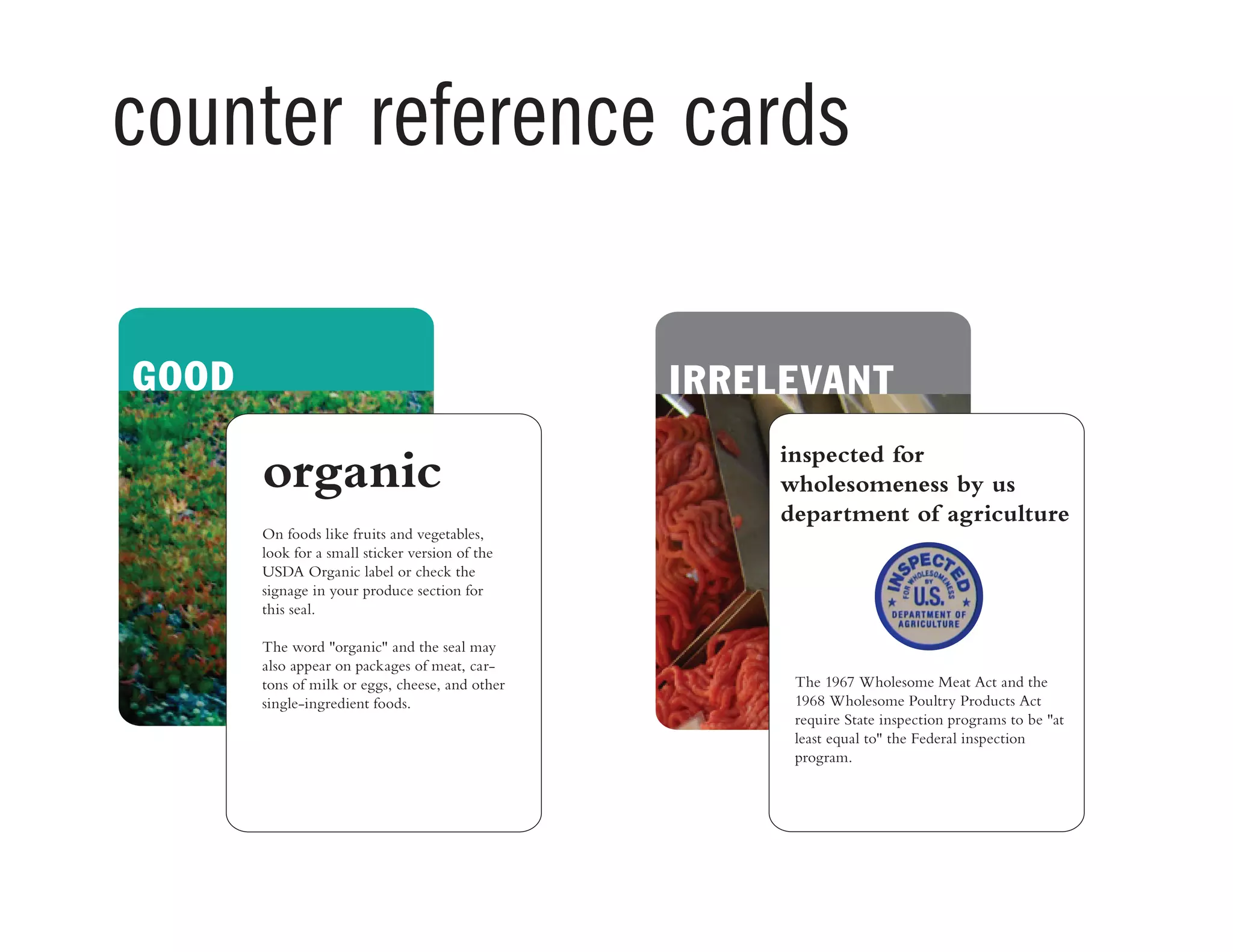
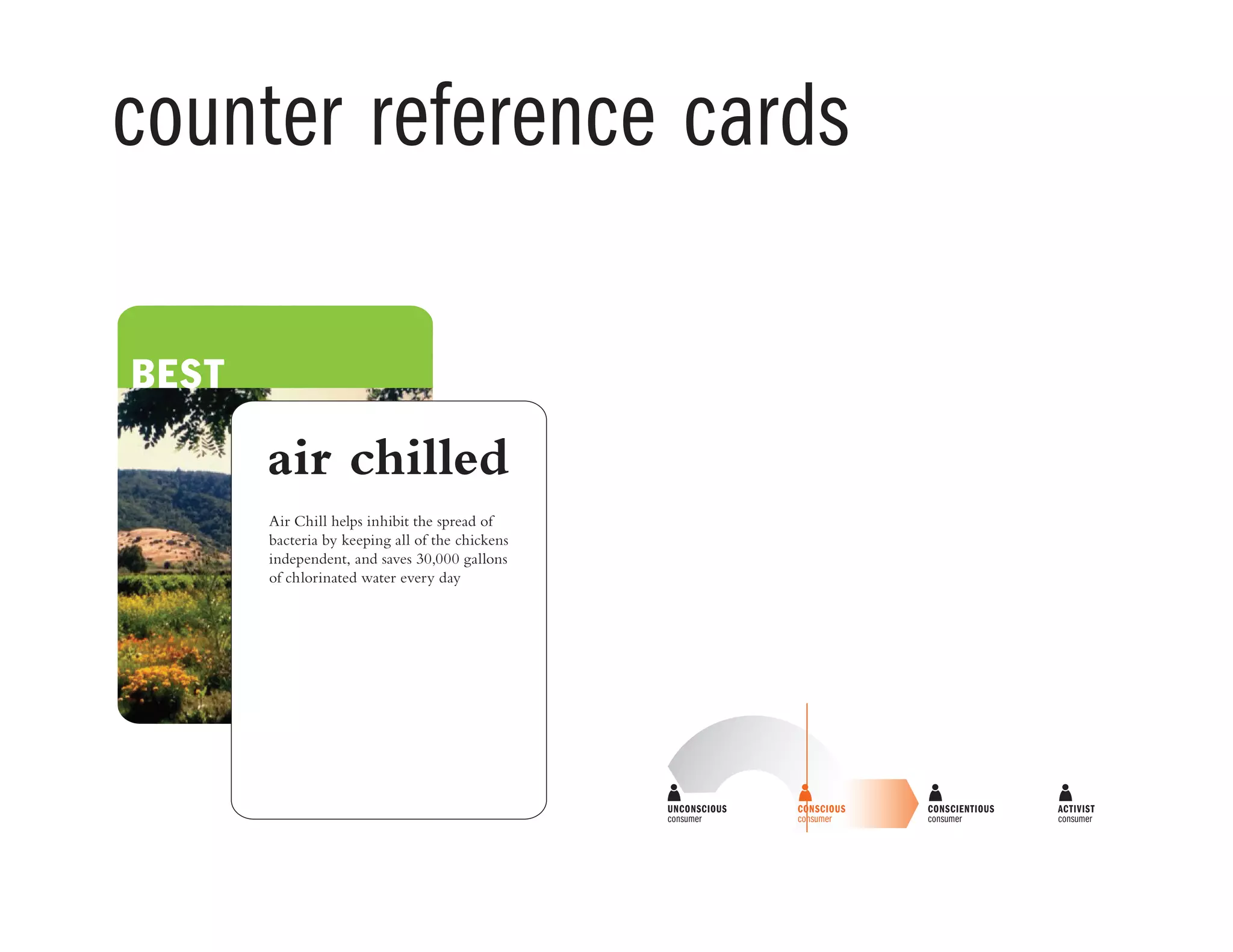
counter reference cards
IRRELEVANT BEGOOD
inspected for
wholesomeness by us
department of agriculture
The 1967 Wholesome Meat Act and the
1968 Wholesome Poultry Products Act
require State inspection programs to be "at
least equal to" the Federal inspection
program.
organic
On foods like fruits and vegetables,
look for a small sticker version of the
USDA Organic label or check the
signage in your produce section for
this seal.
The word "organic" and the seal may
also appear on packages of meat, car-
tons of milk or eggs, cheese, and other
single-ingredient foods.
UNCONSCIOUS
consumer
price
recipe need
buys meat on nearly every
shopping trip, enough for
meat in every dinner;
eats meat at restaurants
buys meat on some
shopping trips, enough for
meat in 2–3 dinners a week;
eats meat at restaurants
buys meat 1–2 times a
month, maybe has meat 4
times a month;
eats very little or no meat
at restaurants
no meat or fish;
eggs and dairy
optional
hormone free
cage free
organic
Where’s my meat coming from?
Was it humanely raised and
processed?
vegetarian
CONSCIENTIOUS
consumer
ACTIVIST
consumer
CONSCIOUS
consumer
AUDIENCE & BEHAVIOR
counter reference cards
• additonal questios you could ask
BEST
Antibiotics
Hormones
Vegetarian Diet
Traceability to Farm
Local
Grass Fed
Pasture Raised
Not confined
Barn roaming
Inspected for Wholesomeness
Grade A, B, C
Minimally proceessed
All natural
“Federeal regulatons prohibit the use of horm
poultry”
Country of origin
Cage free
Free range
air chilled
Air Chill helps inhibit the spread of
bacteria by keeping all of the chickens
independent, and saves 30,000 gallons
of chlorinated water every day
re
at
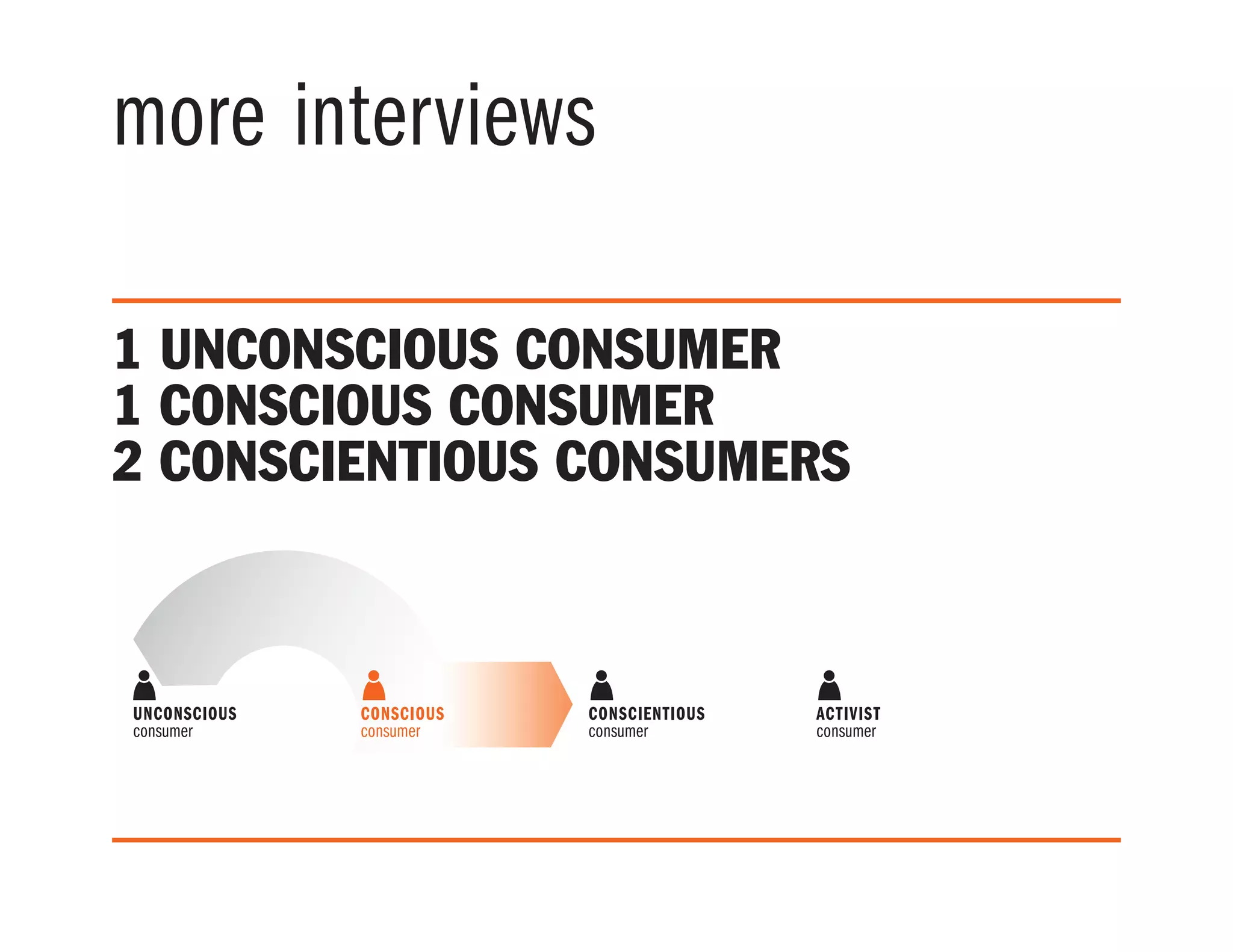
more interviews
1 unconscious consumer
1 conscious consumer
2 conscientious consumers
UNCONSCIOUS
consumer
price
recipe need
buys meat on nearly every
shopping trip, enough for
meat in every dinner;
eats meat at restaurants
buys meat on some
shopping trips, enough for
meat in 2–3 dinners a week;
eats meat at restaurants
buys meat 1–2 times a
month, maybe has meat 4
times a month;
eats very little or no meat
no meat or fish;
eggs and dairy
optional
hormone free
cage free
organic
Where’s my meat coming from?
Was it humanely raised and
processed?
vegetarian
CONSCIENTIOUS
consumer
ACTIVIST
consumer
CONSCIOUS
consumer
AUDIENCE & BEHAVIOR
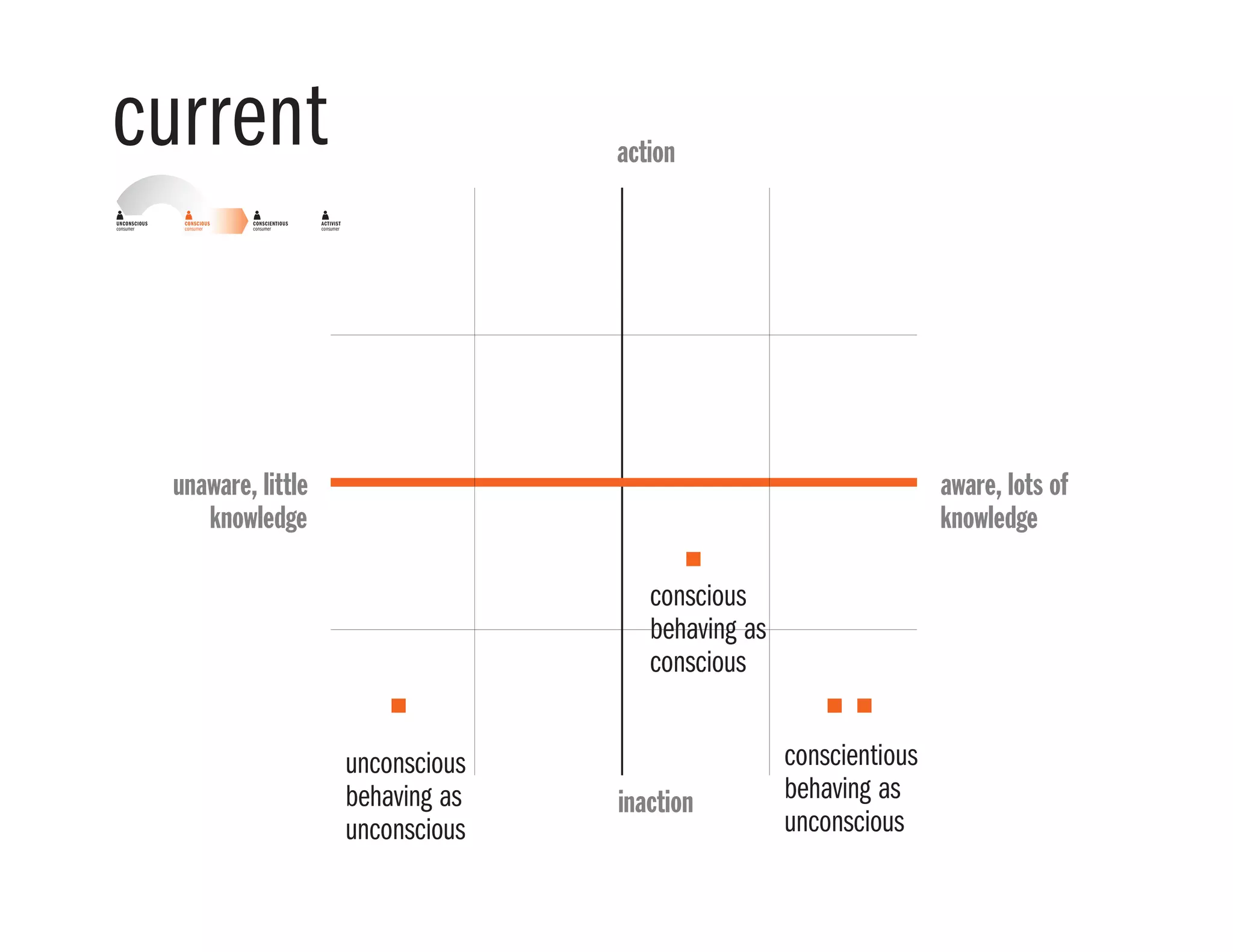
action
inaction
aware, lots of
knowledge
unaware, little
knowledge
conscientious
behaving as
unconscious
conscious
behaving as
conscious
unconscious
behaving as
unconscious
current
UNCONSCIOUS
consumer
price
recipe need
buys meat on nearly every
shopping trip, enough for
meat in every dinner;
eats meat at restaurants
buys meat on some
shopping trips, enough for
meat in 2–3 dinners a week;
eats meat at restaurants
buys meat 1–2 times a
month, maybe has meat 4
times a month;
eats very little or no meat
at restaurants
no meat or fish;
eggs and dairy
optional
hormone free
cage free
organic
Where’s my meat coming from?
Was it humanely raised and
processed?
vegetarian
CONSCIENTIOUS
consumer
ACTIVIST
consumer
CONSCIOUS
consumer
AUDIENCE & BEHAVIOR
action
inaction
aware, lots of
knowledge
unaware, little
knowledge
conscientious
behaving as
unconscious
conscious
behaving as
conscious
unconscious
behaving as
unconscious
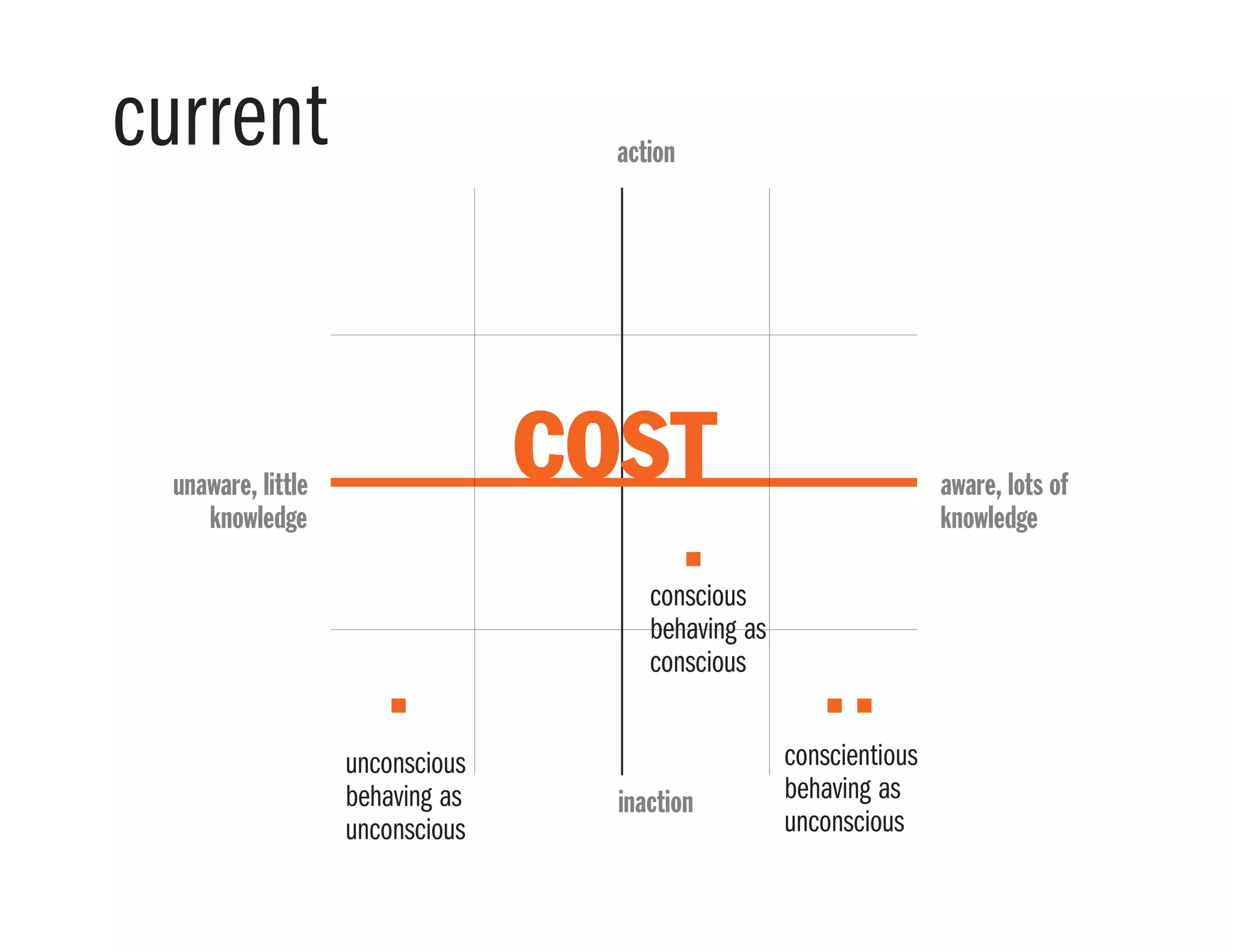
current
cost
desired action
inaction
aware, lots of
knowledge
unaware, little
knowledge
conscientious
behaving as
unconscious
conscious
behaving as
conscious
unconscious
behaving as
unconscious
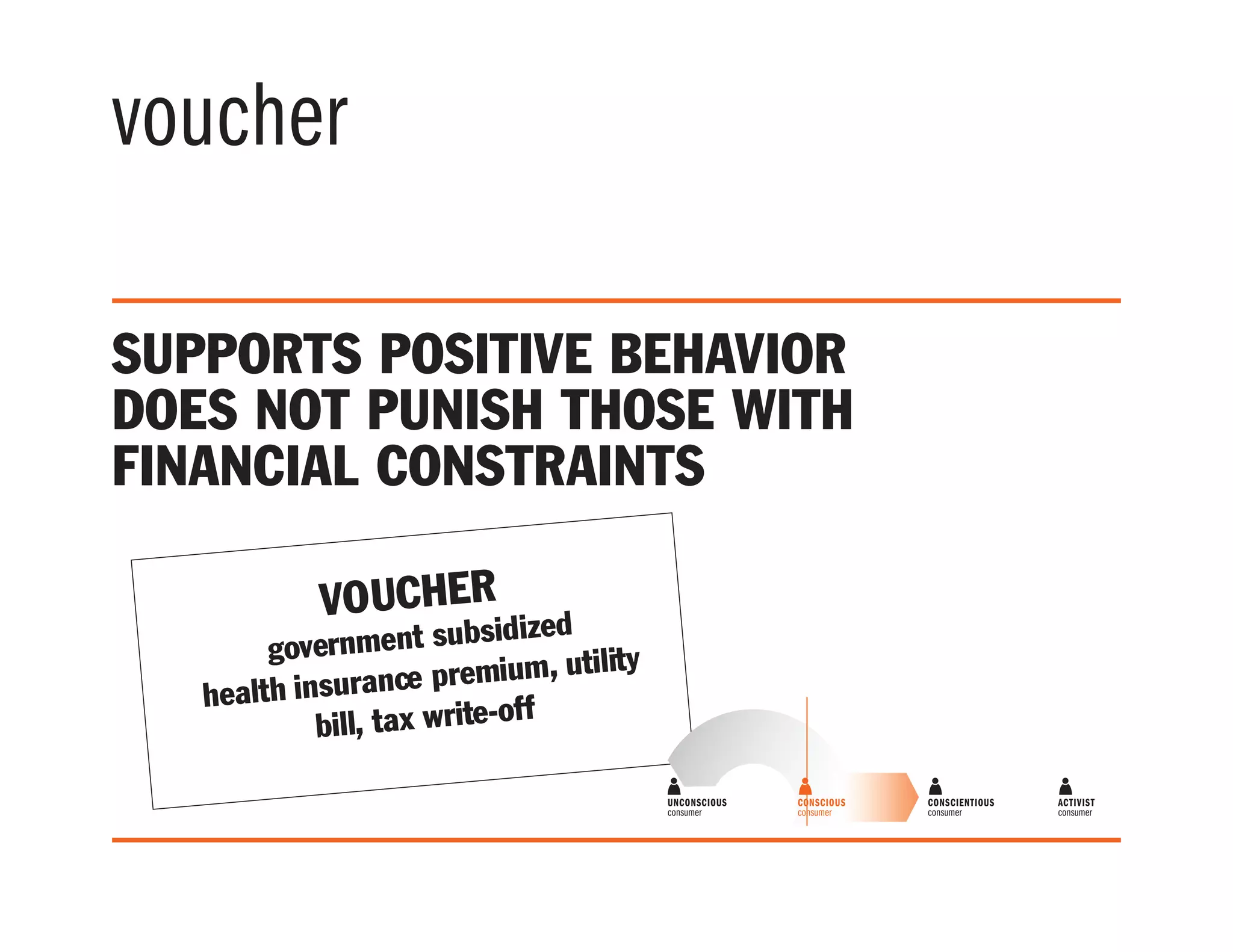
vOUCHER
government subsidized
health insurance premium, utility
bill, tax write-off
voucher
supports positive behavior
does not punish those with
financial constraints
UNCONSCIOUS
consumer
price
recipe need
buys meat on nearly every
shopping trip, enough for
meat in every dinner;
eats meat at restaurants
buys meat on some
shopping trips, enough for
meat in 2–3 dinners a week;
eats meat at restaurants
buys meat 1–2 times a
month, maybe has meat 4
times a month;
eats very little or no meat
at restaurants
no meat or fish;
eggs and dairy
optional
hormone free
cage free
organic
Where’s my meat coming from?
Was it humanely raised and
processed?
vegetarian
CONSCIENTIOUS
consumer
ACTIVIST
consumer
CONSCIOUS
consumer
AUDIENCE & BEHAVIOR
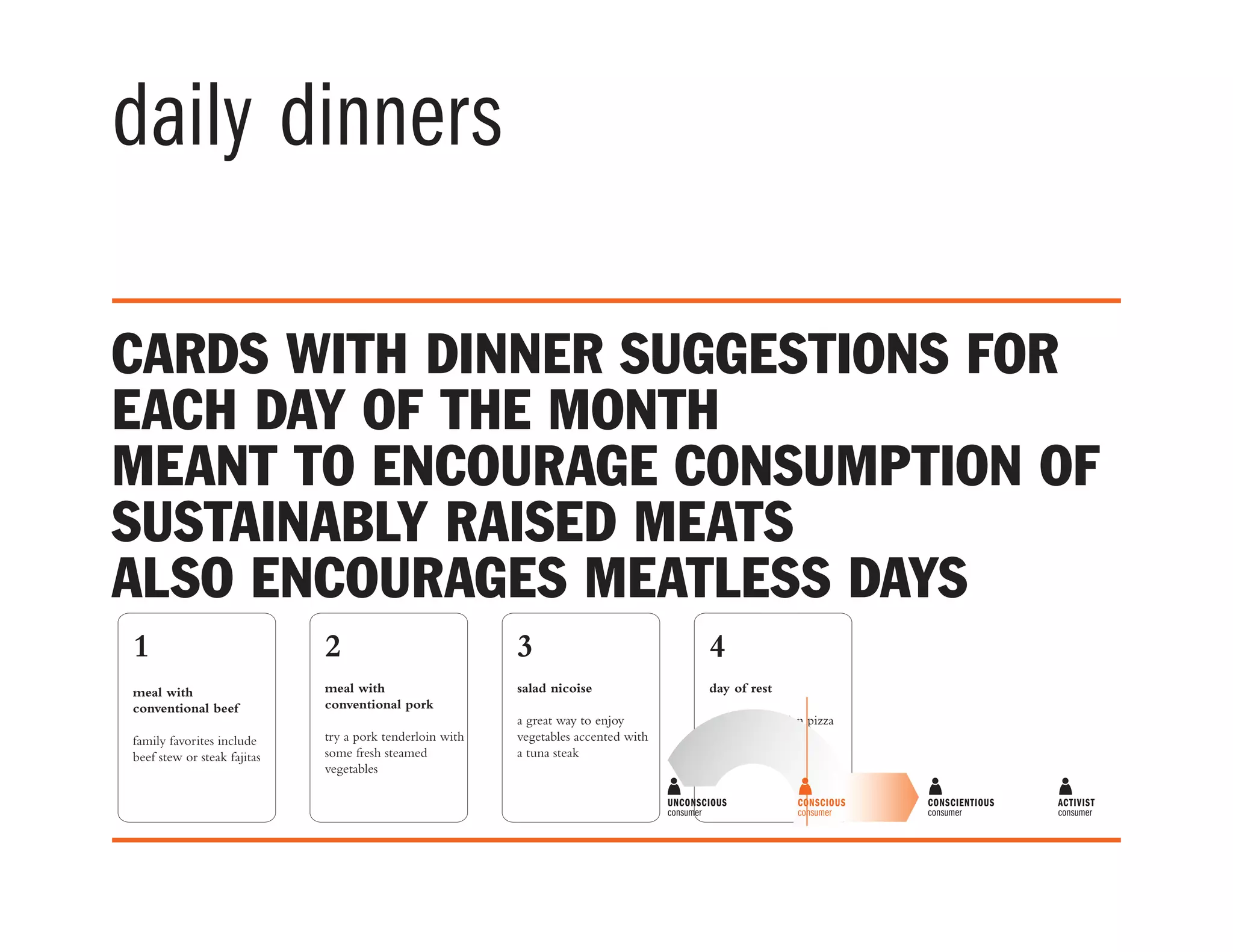
1
meal with
conventional beef
family favorites include
beef stew or steak fajitas
2
meal with
conventional pork
try a pork tenderloin with
some fresh steamed
vegetables
3
salad nicoise
a great way to enjoy
vegetables accented with
a tuna steak
4
day of rest
opt for vegetarian pizza
with a fresh salad
5
meal with
conventional chicken
buy a whole chicken and
roast it with vegetables
daily dinners
cards with dinner suggestions for
each day of the month
meant to encourage consumption of
sustainably raised meats
also encourages meatless days
UNCONSCIOUS
consumer
price
recipe need
buys meat on nearly every
shopping trip, enough for
meat in every dinner;
eats meat at restaurants
buys meat on some
shopping trips, enough for
meat in 2–3 dinners a week;
eats meat at restaurants
buys meat 1–2 times a
month, maybe has meat 4
times a month;
eats very little or no meat
at restaurants
no meat or fish;
eggs and dairy
optional
hormone free
cage free
organic
Where’s my meat coming from?
Was it humanely raised and
processed?
vegetarian
CONSCIENTIOUS
consumer
ACTIVIST
consumer
CONSCIOUS
consumer
AUDIENCE & BEHAVIOR
finally
questions
suggestions, please
thank you

Status update101102

  • 1.
    CONSUME WITH CARE KellyNash Social Impact by Design Status Update 11/03/2010
  • 2.
    hunt statement How dowe decide what meat to buy at the grocery?
  • 3.
    interviews Giant Eagle 1 fishcounter worker 1 customer Whole Foods 1 fish counter worker 1 meat counter worker 2 customers
  • 4.
    interviews “john” Giant Eagle,fish counter What’s fresh? Is this wild or farmed? I’d like something new, do you have suggestions? Country of origin?
  • 5.
    interviews “Zack” Whole Foods,fish counter Which fish has Omega 3s? Which fish have high mercury levels? Could you clarify whether I should be buying wild fish or farmed fish?
  • 6.
    interviews “Owen” Whole Foods,meat counter Did this come from a local and sustainable farm? How do I cook this?
  • 7.
    interviews Whole Foods, malecustomer I get a lot of advice from a friend who owns a farm. Organic Traceable to farm Cost
  • 8.
    interviews Whole Foods, malecustomer only at home, buys my meat here Cost, but I’m not looking for cheapest what I haven’t had in a while, what I can make with ingredients I have use price to make my choice after I’ve narrowed down using other factors transition happened gradually, wasn’t always this way
  • 9.
    survey 1 Primary considerations inmeat purchases are cost and what people need to prepare a dish
  • 10.
    survey 2 Brand and productiontechniques do not play a large role in our decision making process
  • 11.
    survey 3 The two productiontechniques most valued by consumers are “organic” and “hormone free”
  • 12.
    survey top three terms cage-free hormone-free organic nextmost popular local grass-fed farm-raised wild caught least familiar air chilled
  • 13.
    UNCONSCIOUS consumer price recipe need buys meaton nearly every shopping trip, enough for meat in every dinner; eats meat at restaurants buys meat on some shopping trips, enough for meat in 2–3 dinners a week; eats meat at restaurants buys meat 1–2 times a month, maybe has meat 4 times a month; eats very little or no meat at restaurants no meat or fish; eggs and dairy optional hormone free cage free organic Where’s my meat coming from? Was it humanely raised and processed? vegetarian CONSCIENTIOUS consumer ACTIVIST consumer CONSCIOUS consumer AUDIENCE & BEHAVIOR audience & behavior
  • 14.
    problem If we arechoosing to consume meat, how can we make the most socially responsible choices?
  • 15.
    socially responsible healthy forme healthy for the environment healthy for animals healthy for farmers, processors
  • 16.
    statistic “Just three companiesprocess over 80% of our beef; four companies process 60% of US chicken, and one corporation owns 90% of the seed supply.” community food security coalition
  • 17.
    statistic “the U.N. Foodand Agriculture Organization (FAO) concluded that worldwide livestock farming generates 18% of the planet’s greenhouse gas emissions — by comparison, all the world’s cars, trains, planes and boats account for a combined 13% of greenhouse gas emissions.” http://www.time.com/time/health/article/0,8599,1839995,00. html#ixzz14AZKEyR7 (2006)
  • 18.
    AN ALTERNATIVE air-chilled chicken ANALTERNATIVE grass-fed beef belly bands
  • 19.
    belly bands UNCONSCIOUS consumer price recipe need buysmeat on nearly every shopping trip, enough for meat in every dinner; eats meat at restaurants buys meat on some shopping trips, enough for meat in 2–3 dinners a week; eats meat at restaurants buys meat 1–2 times a month, maybe has meat 4 times a month; eats very little or no meat at restaurants no meat or fish; eggs and dairy optional hormone free cage free organic Where’s my meat coming from? Was it humanely raised and processed? vegetarian CONSCIENTIOUS consumer ACTIVIST consumer CONSCIOUS consumer AUDIENCE & BEHAVIOR
  • 20.
    counter reference cards IRRELEVANTBEGOOD inspected for wholesomeness by us department of agriculture The 1967 Wholesome Meat Act and the 1968 Wholesome Poultry Products Act require State inspection programs to be "at least equal to" the Federal inspection program. organic On foods like fruits and vegetables, look for a small sticker version of the USDA Organic label or check the signage in your produce section for this seal. The word "organic" and the seal may also appear on packages of meat, car- tons of milk or eggs, cheese, and other single-ingredient foods.
  • 21.
    UNCONSCIOUS consumer price recipe need buys meaton nearly every shopping trip, enough for meat in every dinner; eats meat at restaurants buys meat on some shopping trips, enough for meat in 2–3 dinners a week; eats meat at restaurants buys meat 1–2 times a month, maybe has meat 4 times a month; eats very little or no meat at restaurants no meat or fish; eggs and dairy optional hormone free cage free organic Where’s my meat coming from? Was it humanely raised and processed? vegetarian CONSCIENTIOUS consumer ACTIVIST consumer CONSCIOUS consumer AUDIENCE & BEHAVIOR counter reference cards • additonal questios you could ask • additonal questios you could ask • additonal questios you could ask • additonal questios you could ask • additonal questios you could ask • additonal questios you could ask BEST Antibiotics Hormones Vegetarian Diet Traceability to Farm Local Grass Fed Pasture Raised Not confined Barn roaming Inspected for Wholesomeness Grade A, B, C Minimally proceessed All natural “Federeal regulatons prohibit the use of horm poultry” Country of origin Cage free Free range air chilled Air Chill helps inhibit the spread of bacteria by keeping all of the chickens independent, and saves 30,000 gallons of chlorinated water every day re at
  • 22.
    more interviews 1 unconsciousconsumer 1 conscious consumer 2 conscientious consumers UNCONSCIOUS consumer price recipe need buys meat on nearly every shopping trip, enough for meat in every dinner; eats meat at restaurants buys meat on some shopping trips, enough for meat in 2–3 dinners a week; eats meat at restaurants buys meat 1–2 times a month, maybe has meat 4 times a month; eats very little or no meat no meat or fish; eggs and dairy optional hormone free cage free organic Where’s my meat coming from? Was it humanely raised and processed? vegetarian CONSCIENTIOUS consumer ACTIVIST consumer CONSCIOUS consumer AUDIENCE & BEHAVIOR
  • 23.
    action inaction aware, lots of knowledge unaware,little knowledge conscientious behaving as unconscious conscious behaving as conscious unconscious behaving as unconscious current UNCONSCIOUS consumer price recipe need buys meat on nearly every shopping trip, enough for meat in every dinner; eats meat at restaurants buys meat on some shopping trips, enough for meat in 2–3 dinners a week; eats meat at restaurants buys meat 1–2 times a month, maybe has meat 4 times a month; eats very little or no meat at restaurants no meat or fish; eggs and dairy optional hormone free cage free organic Where’s my meat coming from? Was it humanely raised and processed? vegetarian CONSCIENTIOUS consumer ACTIVIST consumer CONSCIOUS consumer AUDIENCE & BEHAVIOR
  • 24.
    action inaction aware, lots of knowledge unaware,little knowledge conscientious behaving as unconscious conscious behaving as conscious unconscious behaving as unconscious current cost
  • 25.
    desired action inaction aware, lotsof knowledge unaware, little knowledge conscientious behaving as unconscious conscious behaving as conscious unconscious behaving as unconscious
  • 26.
    vOUCHER government subsidized health insurancepremium, utility bill, tax write-off voucher supports positive behavior does not punish those with financial constraints UNCONSCIOUS consumer price recipe need buys meat on nearly every shopping trip, enough for meat in every dinner; eats meat at restaurants buys meat on some shopping trips, enough for meat in 2–3 dinners a week; eats meat at restaurants buys meat 1–2 times a month, maybe has meat 4 times a month; eats very little or no meat at restaurants no meat or fish; eggs and dairy optional hormone free cage free organic Where’s my meat coming from? Was it humanely raised and processed? vegetarian CONSCIENTIOUS consumer ACTIVIST consumer CONSCIOUS consumer AUDIENCE & BEHAVIOR
  • 27.
    1 meal with conventional beef familyfavorites include beef stew or steak fajitas 2 meal with conventional pork try a pork tenderloin with some fresh steamed vegetables 3 salad nicoise a great way to enjoy vegetables accented with a tuna steak 4 day of rest opt for vegetarian pizza with a fresh salad 5 meal with conventional chicken buy a whole chicken and roast it with vegetables daily dinners cards with dinner suggestions for each day of the month meant to encourage consumption of sustainably raised meats also encourages meatless days UNCONSCIOUS consumer price recipe need buys meat on nearly every shopping trip, enough for meat in every dinner; eats meat at restaurants buys meat on some shopping trips, enough for meat in 2–3 dinners a week; eats meat at restaurants buys meat 1–2 times a month, maybe has meat 4 times a month; eats very little or no meat at restaurants no meat or fish; eggs and dairy optional hormone free cage free organic Where’s my meat coming from? Was it humanely raised and processed? vegetarian CONSCIENTIOUS consumer ACTIVIST consumer CONSCIOUS consumer AUDIENCE & BEHAVIOR
  • 28.