Using Propaganda Techniques
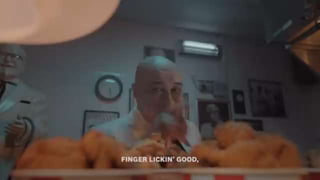
Let’s watch andEvaluate
Processing Questions:
1. What did you observed in the presented Commercial?
2. Do the commercial affect you in different ways?
3. What do you think the purpose of the video presentation you have watched?
4. Did the commercial persuade/encourage you to buy or patronize their product?
Using Propaganda Techniques
Propaganda – it is a form of communication that is aimed at
influencing the attitudes, perspectives and emotions of people
or communities toward some cause or position by presenting
only one side of an argument. It is usually repeated and
presented over a wide variety of media in order to attract the
interests of a greater majority.
Types of Propaganda Techniques
There are a number of ways and/ or techniques on how to persuade people to buy
products, accept ideas, and avail services.
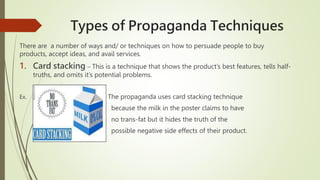
1. Card stacking – This is a technique that shows the product’s best features, tells half-
truths, and omits it’s potential problems.
Ex. The propaganda uses card stacking technique
because the milk in the poster claims to have
no trans-fat but it hides the truth of the
possible negative side effects of their product.
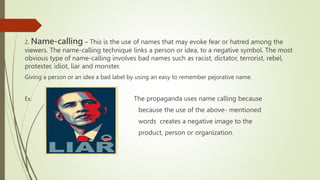
2. Name-calling – This is the use of names that may evoke fear or hatred among the
viewers. The name-calling technique links a person or idea, to a negative symbol. The most
obvious type of name-calling involves bad names such as racist, dictator, terrorist, rebel,
protester, idiot, liar and monster.
Giving a person or an idea a bad label by using an easy to remember pejorative name.
Ex. . The propaganda uses name calling because
because the use of the above- mentioned
words creates a negative image to the
product, person or organization.
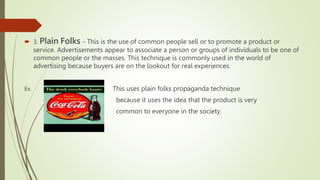
 3. Plain Folks – This is the use of common people sell or to promote a product or
service. Advertisements appear to associate a person or groups of individuals to be one of
common people or the masses. This technique is commonly used in the world of
advertising because buyers are on the lookout for real experiences.
Ex. This uses plain folks propaganda technique
because it uses the idea that the product is very
common to everyone in the society.
4. Glittering Generalities – this is the use of words or ideas that evoke a positive
emotional response from an audience. Virtue words are often used. For better effect, brands
appear to use hyperboles, metaphors, or lyrical phrases to attract more attention.
The goal of using a glittering generality is always to influence audience members in favor of
an idea, concept, product, or person. A glittering generality is a vague, "feel good"
statement that people are predisposed to want to identify with because of how they see it
linking to what they already believe, or want to believe. They are often used in advertising
or political campaign slogans, sayings or catchphrases.
Words that praise for product or person; nice words like goodness or patritiosm.
Ex. Natural, organic, scientific, ecological, sustainable.
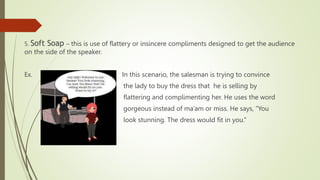
5. Soft Soap – this is use of flattery or insincere compliments designed to get the audience
on the side of the speaker.
Ex. In this scenario, the salesman is trying to convince
the lady to buy the dress that he is selling by
flattering and complimenting her. He uses the word
gorgeous instead of ma’am or miss. He says, “You
look stunning. The dress would fit in you.”
 6. Bandwagon – this is a technique that persuades people by showing them that everyone
else are doing the same thing. It also implies that one must accept or reject an idea
because everyone else is accepting or rejecting it.
Ex. Diets: When it seems like everyone is adopting a certain fad diet, people become more
likely to try the diet themselves.
Elections: People are more likely to vote for the candidate that they think is winning.
Fashion: Many people begin wearing a certain style of clothing as they see others adopt the
same fashions.
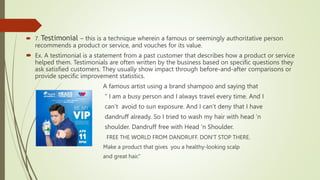
 7. Testimonial – this is a technique wherein a famous or seemingly authoritative person
recommends a product or service, and vouches for its value.
 Ex. A testimonial is a statement from a past customer that describes how a product or service
helped them. Testimonials are often written by the business based on specific questions they
ask satisfied customers. They usually show impact through before-and-after comparisons or
provide specific improvement statistics.
A famous artist using a brand shampoo and saying that
“ I am a busy person and I always travel every time. And I
can’t avoid to sun exposure. And I can’t deny that I have
dandruff already. So I tried to wash my hair with head ‘n
shoulder. Dandruff free with Head ‘n Shoulder.
FREE THE WORLD FROM DANDRUFF. DON'T STOP THERE.
Make a product that gives you a healthy-looking scalp
and great hair.”
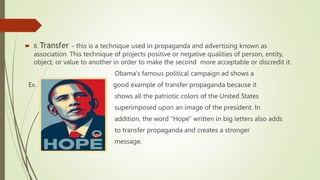
 8. Transfer – this is a technique used in propaganda and advertising known as
association. This technique of projects positive or negative qualities of person, entity,
object, or value to another in order to make the second more acceptable or discredit it.
Obama's famous political campaign ad shows a
Ex. good example of transfer propaganda because it
shows all the patriotic colors of the United States
superimposed upon an image of the president. In
addition, the word "Hope" written in big letters also adds
to transfer propaganda and creates a stronger
message.
 9. Simplification - this is used to reduce crucial issues to basic ideas and packages
them with catchy slogans and images. It usually targets uninformed readers or
costumers.
Ex. Using an automated can opener instead of the manual version. Lengthening a short
handle on a dustpan to avoid bending.
 10. Loaded Words – this technique uses words in attempting to influence an audience
by using emotional appeal or stereotypes that cannot be supported by concrete
evidences.
Ex. Politicians use loaded words in speeches when trying to put a positive spin on delicate
issues. Often speeches use words that trigger strong feelings. For example, the word terrorist
causes the hearer to think of torture and a need for freedom.

grade8lpweek2_110615.pptx

  • 1.
  • 14.
  • 16.
    Processing Questions: 1. Whatdid you observed in the presented Commercial? 2. Do the commercial affect you in different ways? 3. What do you think the purpose of the video presentation you have watched? 4. Did the commercial persuade/encourage you to buy or patronize their product?
  • 17.
    Using Propaganda Techniques Propaganda– it is a form of communication that is aimed at influencing the attitudes, perspectives and emotions of people or communities toward some cause or position by presenting only one side of an argument. It is usually repeated and presented over a wide variety of media in order to attract the interests of a greater majority.
  • 19.
    Types of PropagandaTechniques There are a number of ways and/ or techniques on how to persuade people to buy products, accept ideas, and avail services. 1. Card stacking – This is a technique that shows the product’s best features, tells half- truths, and omits it’s potential problems. Ex. The propaganda uses card stacking technique because the milk in the poster claims to have no trans-fat but it hides the truth of the possible negative side effects of their product.
  • 20.
    2. Name-calling –This is the use of names that may evoke fear or hatred among the viewers. The name-calling technique links a person or idea, to a negative symbol. The most obvious type of name-calling involves bad names such as racist, dictator, terrorist, rebel, protester, idiot, liar and monster. Giving a person or an idea a bad label by using an easy to remember pejorative name. Ex. . The propaganda uses name calling because because the use of the above- mentioned words creates a negative image to the product, person or organization.
  • 21.
     3. PlainFolks – This is the use of common people sell or to promote a product or service. Advertisements appear to associate a person or groups of individuals to be one of common people or the masses. This technique is commonly used in the world of advertising because buyers are on the lookout for real experiences. Ex. This uses plain folks propaganda technique because it uses the idea that the product is very common to everyone in the society.
  • 22.
    4. Glittering Generalities– this is the use of words or ideas that evoke a positive emotional response from an audience. Virtue words are often used. For better effect, brands appear to use hyperboles, metaphors, or lyrical phrases to attract more attention. The goal of using a glittering generality is always to influence audience members in favor of an idea, concept, product, or person. A glittering generality is a vague, "feel good" statement that people are predisposed to want to identify with because of how they see it linking to what they already believe, or want to believe. They are often used in advertising or political campaign slogans, sayings or catchphrases. Words that praise for product or person; nice words like goodness or patritiosm. Ex. Natural, organic, scientific, ecological, sustainable.
  • 23.
    5. Soft Soap– this is use of flattery or insincere compliments designed to get the audience on the side of the speaker. Ex. In this scenario, the salesman is trying to convince the lady to buy the dress that he is selling by flattering and complimenting her. He uses the word gorgeous instead of ma’am or miss. He says, “You look stunning. The dress would fit in you.”
  • 24.
     6. Bandwagon– this is a technique that persuades people by showing them that everyone else are doing the same thing. It also implies that one must accept or reject an idea because everyone else is accepting or rejecting it. Ex. Diets: When it seems like everyone is adopting a certain fad diet, people become more likely to try the diet themselves. Elections: People are more likely to vote for the candidate that they think is winning. Fashion: Many people begin wearing a certain style of clothing as they see others adopt the same fashions.
  • 25.
     7. Testimonial– this is a technique wherein a famous or seemingly authoritative person recommends a product or service, and vouches for its value.  Ex. A testimonial is a statement from a past customer that describes how a product or service helped them. Testimonials are often written by the business based on specific questions they ask satisfied customers. They usually show impact through before-and-after comparisons or provide specific improvement statistics. A famous artist using a brand shampoo and saying that “ I am a busy person and I always travel every time. And I can’t avoid to sun exposure. And I can’t deny that I have dandruff already. So I tried to wash my hair with head ‘n shoulder. Dandruff free with Head ‘n Shoulder. FREE THE WORLD FROM DANDRUFF. DON'T STOP THERE. Make a product that gives you a healthy-looking scalp and great hair.”
  • 26.
     8. Transfer– this is a technique used in propaganda and advertising known as association. This technique of projects positive or negative qualities of person, entity, object, or value to another in order to make the second more acceptable or discredit it. Obama's famous political campaign ad shows a Ex. good example of transfer propaganda because it shows all the patriotic colors of the United States superimposed upon an image of the president. In addition, the word "Hope" written in big letters also adds to transfer propaganda and creates a stronger message.
  • 27.
     9. Simplification- this is used to reduce crucial issues to basic ideas and packages them with catchy slogans and images. It usually targets uninformed readers or costumers. Ex. Using an automated can opener instead of the manual version. Lengthening a short handle on a dustpan to avoid bending.
  • 28.
     10. LoadedWords – this technique uses words in attempting to influence an audience by using emotional appeal or stereotypes that cannot be supported by concrete evidences. Ex. Politicians use loaded words in speeches when trying to put a positive spin on delicate issues. Often speeches use words that trigger strong feelings. For example, the word terrorist causes the hearer to think of torture and a need for freedom.