Program
Development
Life Cycle
COMPUTER 8
10:00AM
Tip: Use links to go to a different page inside
your presentation.
How: Highlight text, click on the link symbol
on the toolbar, and select the page in your
presentation you want to connect.
enda • Agenda • Agenda • Agenda • Agenda • Agenda • Agenda • Agenda • Agenda • Agenda • Agenda • Agenda • Agenda • Agen
PDLC
Programming
Languages
What is
Programming?
Agenda
Topics Covered
What is PDLC?
Programmers do not sit down and start writing code right
away when trying to make a computer program. Instead, they
follow an organized plan or methodology, that breaks the
process into a series of tasks.
Program Development Life Cycle
a process that developers follow to create software. It's like a
roadmap that guides us from the initial idea to the finished
product, ensuring that we create effective and efficient
programs.
Program Development Life Cycle
Back to Agenda Page
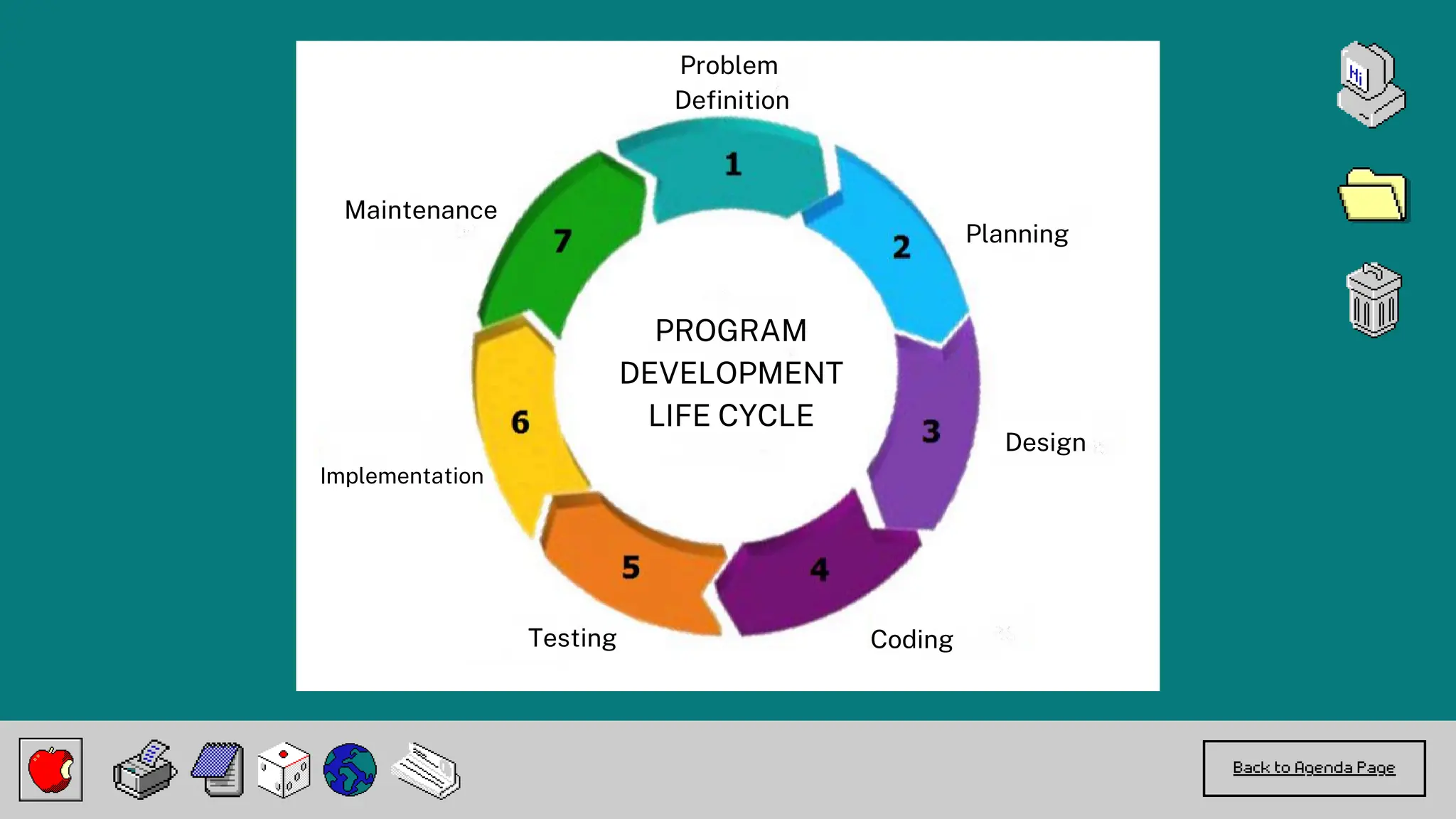
PROGRAM
DEVELOPMENT
LIFE CYCLE
Problem
Definition
Planning
Design
Coding
Testing
Implementation
Maintenance
Program Development Life Cycle
The first step in the PDLC is to understand
the problem we want to solve. This involves:
Identifying the problem.
Understanding the requirements.
Defining what the program should do.
Program Definition
1.
Program Development Life Cycle
Once we understand the problem, we move on to planning. In
this stage, we:
·Create a plan or roadmap for how we will develop the
program.
·Determine the resources needed, such as time, money, and
tools.
·Outline the tasks that need to be completed and set
deadlines.
Planning helps us stay organized and ensures that we have a
clear direction.
2. Planning
Program Development Life Cycle
Next, we design the program. This involves:
·Creating algorithms and flowcharts to outline the logic of
the program.
·Designing the user interface, deciding how the program will
look and feel.
·Ensuring that the design meets all the requirements
identified in the problem definition stage.
Think of this stage as creating a blueprint for our program.
3. Design
Program Development Life Cycle
With the design in hand, we move on to coding. In this stage:
·Developers write the actual code using a programming
language.
·They follow the design and algorithms created in the
previous stage.
·This is where the program starts to take shape.
Coding is like building the house from the blueprint we created.
4. Coding
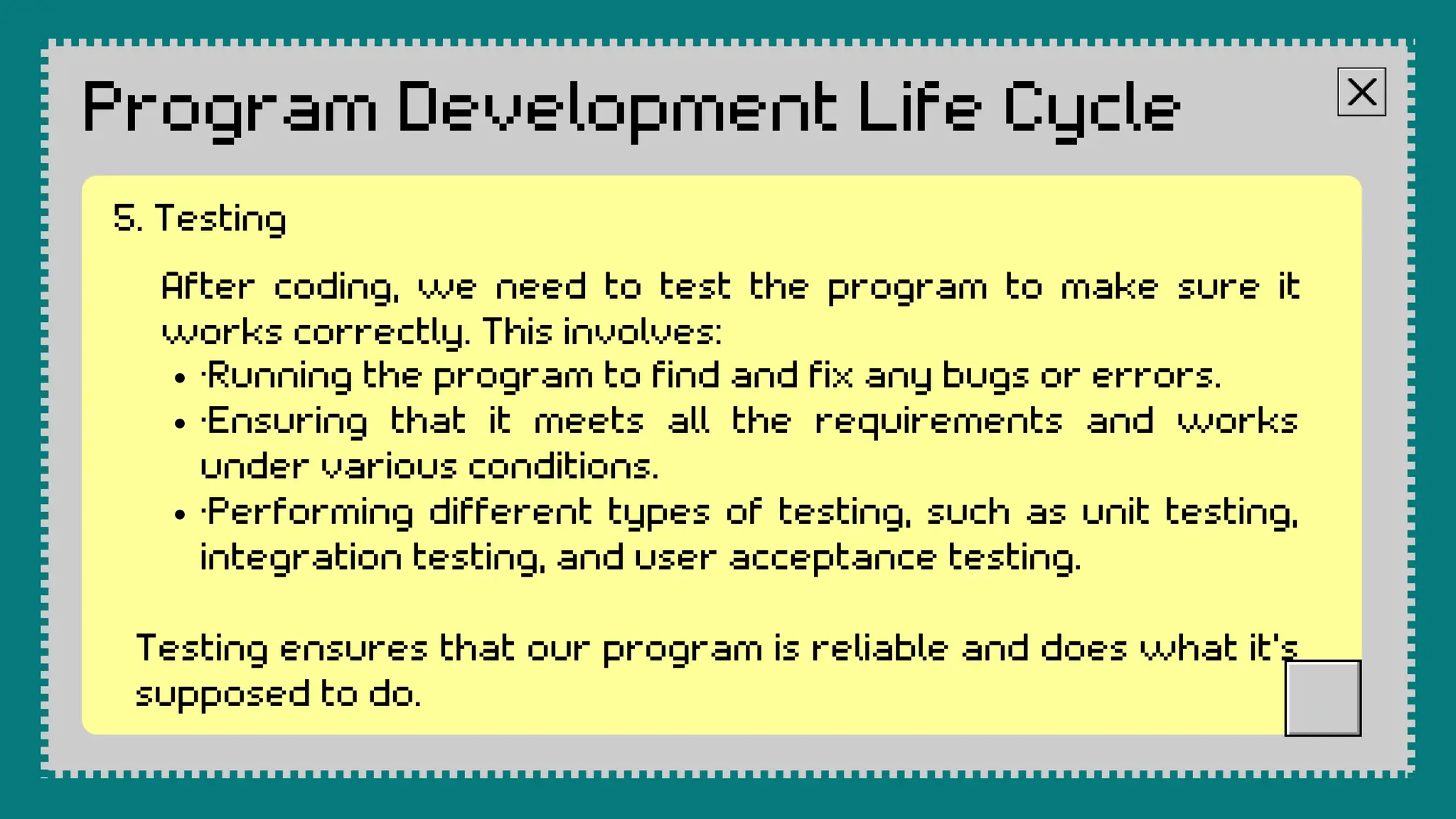
Program Development Life Cycle
After coding, we need to test the program to make sure it
works correctly. This involves:
·Running the program to find and fix any bugs or errors.
·Ensuring that it meets all the requirements and works
under various conditions.
·Performing different types of testing, such as unit testing,
integration testing, and user acceptance testing.
Testing ensures that our program is reliable and does what it's
supposed to do.
5. Testing
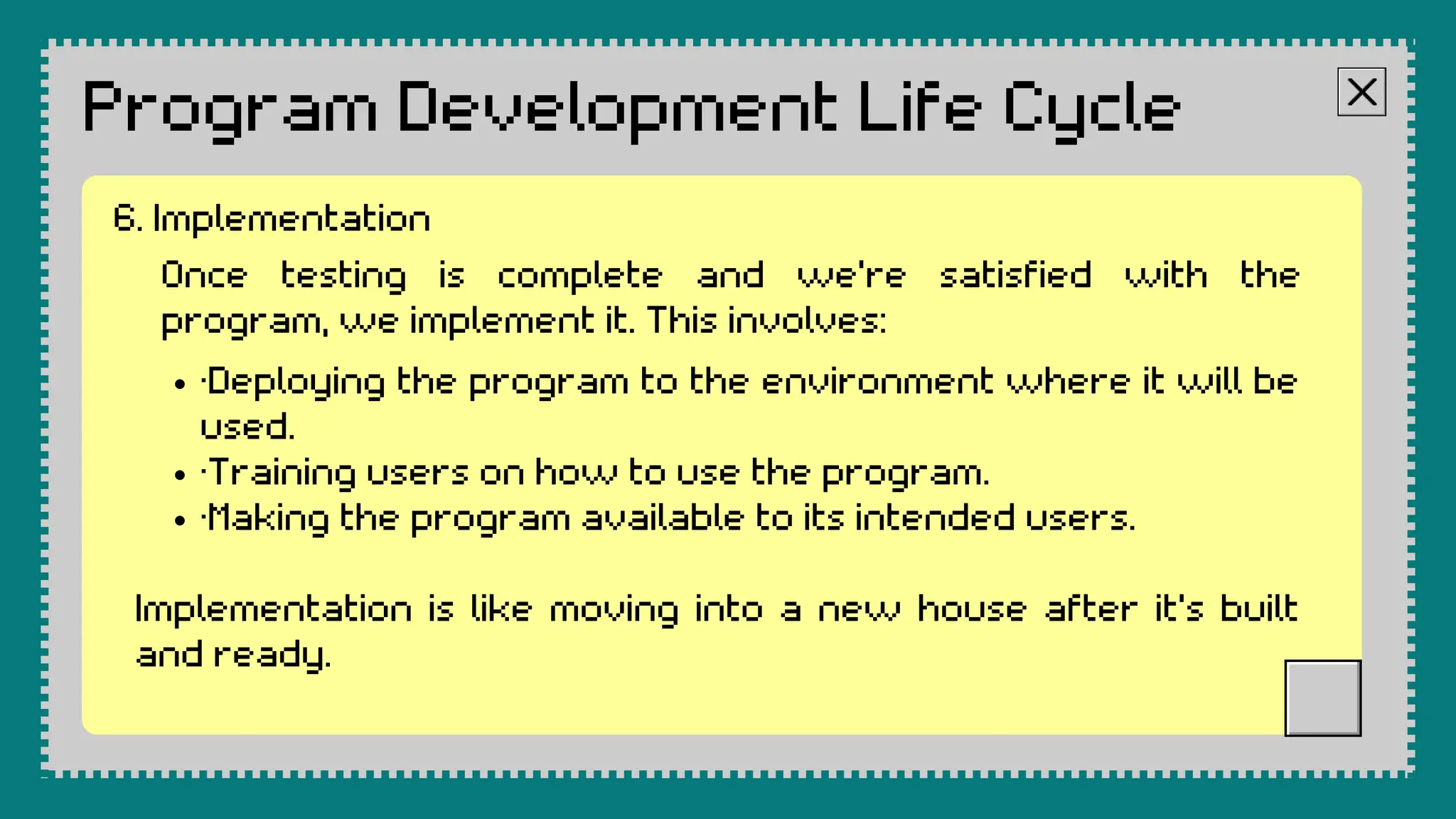
Program Development Life Cycle
Once testing is complete and we're satisfied with the
program, we implement it. This involves:
·Deploying the program to the environment where it will be
used.
·Training users on how to use the program.
·Making the program available to its intended users.
Implementation is like moving into a new house after it's built
and ready.
6. Implementation
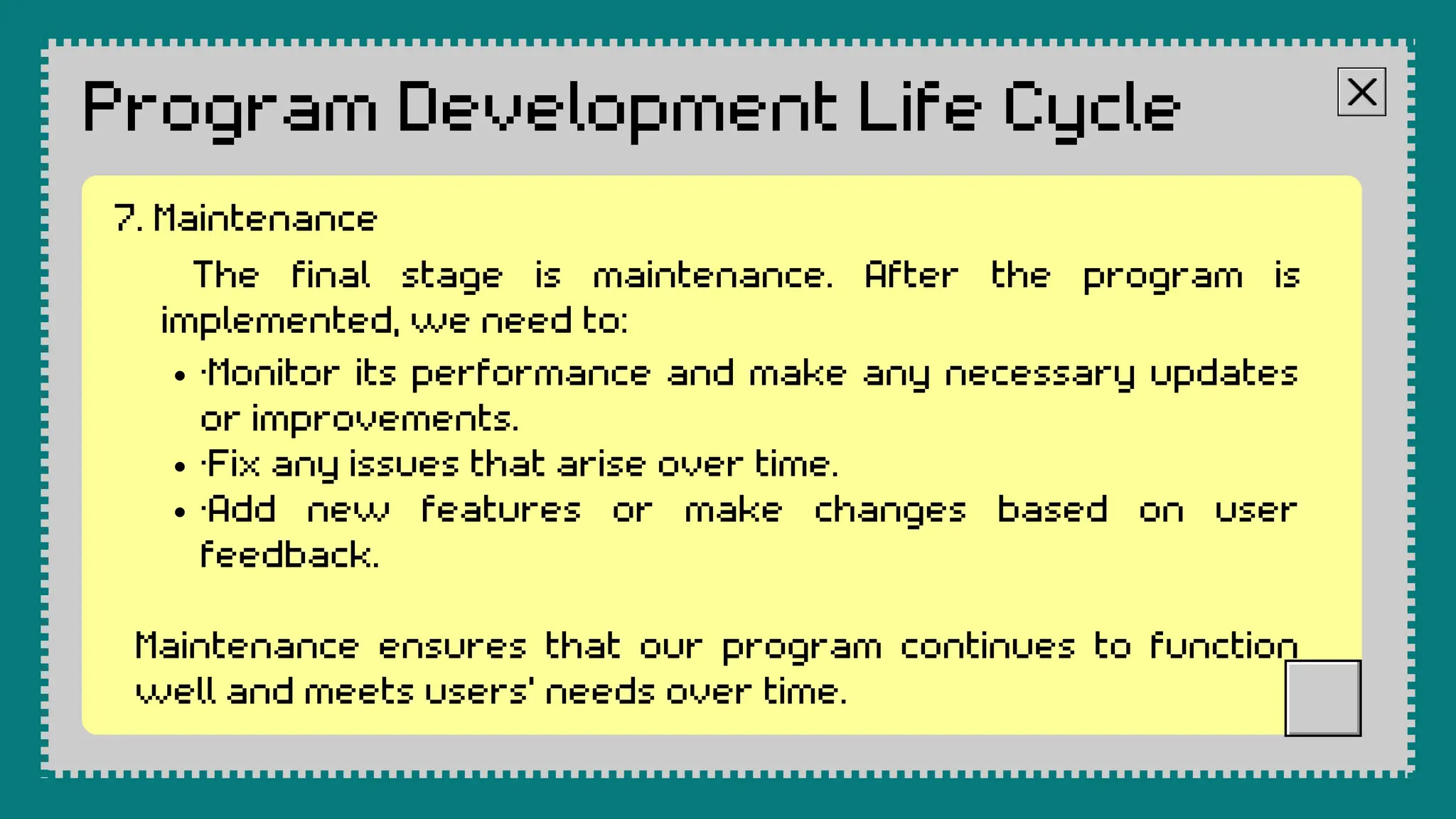
Program Development Life Cycle
The final stage is maintenance. After the program is
implemented, we need to:
·Monitor its performance and make any necessary updates
or improvements.
·Fix any issues that arise over time.
·Add new features or make changes based on user
feedback.
Maintenance ensures that our program continues to function
well and meets users' needs over time.
7. Maintenance
Thank You!!

Grade 8 - Program Development Life Cycle PDLC.pdf

  • 1.
  • 2.
    Tip: Use linksto go to a different page inside your presentation. How: Highlight text, click on the link symbol on the toolbar, and select the page in your presentation you want to connect. enda • Agenda • Agenda • Agenda • Agenda • Agenda • Agenda • Agenda • Agenda • Agenda • Agenda • Agenda • Agenda • Agen PDLC Programming Languages What is Programming? Agenda Topics Covered
  • 3.
    What is PDLC? Programmersdo not sit down and start writing code right away when trying to make a computer program. Instead, they follow an organized plan or methodology, that breaks the process into a series of tasks. Program Development Life Cycle a process that developers follow to create software. It's like a roadmap that guides us from the initial idea to the finished product, ensuring that we create effective and efficient programs. Program Development Life Cycle
  • 4.
    Back to AgendaPage PROGRAM DEVELOPMENT LIFE CYCLE Problem Definition Planning Design Coding Testing Implementation Maintenance
  • 5.
    Program Development LifeCycle The first step in the PDLC is to understand the problem we want to solve. This involves: Identifying the problem. Understanding the requirements. Defining what the program should do. Program Definition 1.
  • 6.
    Program Development LifeCycle Once we understand the problem, we move on to planning. In this stage, we: ·Create a plan or roadmap for how we will develop the program. ·Determine the resources needed, such as time, money, and tools. ·Outline the tasks that need to be completed and set deadlines. Planning helps us stay organized and ensures that we have a clear direction. 2. Planning
  • 7.
    Program Development LifeCycle Next, we design the program. This involves: ·Creating algorithms and flowcharts to outline the logic of the program. ·Designing the user interface, deciding how the program will look and feel. ·Ensuring that the design meets all the requirements identified in the problem definition stage. Think of this stage as creating a blueprint for our program. 3. Design
  • 8.
    Program Development LifeCycle With the design in hand, we move on to coding. In this stage: ·Developers write the actual code using a programming language. ·They follow the design and algorithms created in the previous stage. ·This is where the program starts to take shape. Coding is like building the house from the blueprint we created. 4. Coding
  • 9.
    Program Development LifeCycle After coding, we need to test the program to make sure it works correctly. This involves: ·Running the program to find and fix any bugs or errors. ·Ensuring that it meets all the requirements and works under various conditions. ·Performing different types of testing, such as unit testing, integration testing, and user acceptance testing. Testing ensures that our program is reliable and does what it's supposed to do. 5. Testing
  • 10.
    Program Development LifeCycle Once testing is complete and we're satisfied with the program, we implement it. This involves: ·Deploying the program to the environment where it will be used. ·Training users on how to use the program. ·Making the program available to its intended users. Implementation is like moving into a new house after it's built and ready. 6. Implementation
  • 11.
    Program Development LifeCycle The final stage is maintenance. After the program is implemented, we need to: ·Monitor its performance and make any necessary updates or improvements. ·Fix any issues that arise over time. ·Add new features or make changes based on user feedback. Maintenance ensures that our program continues to function well and meets users' needs over time. 7. Maintenance
  • 12.