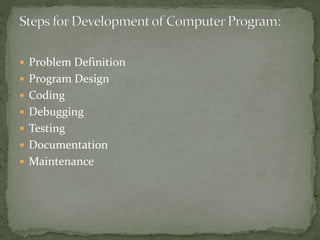
 Problem Definition
 Program Design
 Coding
 Debugging
 Testing
 Documentation
 Maintenance
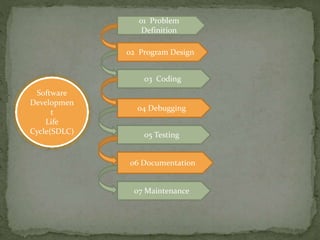
Software
Developmen
t
Life
Cycle(SDLC)
01 Problem
Definition
02 Program Design
03 Coding
04 Debugging
05 Testing
06 Documentation
07 Maintenance
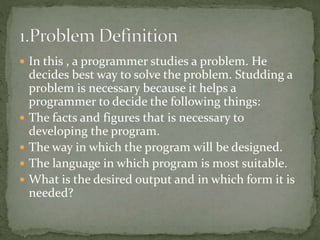
 In this , a programmer studies a problem. He
decides best way to solve the problem. Studding a
problem is necessary because it helps a
programmer to decide the following things:
 The facts and figures that is necessary to
developing the program.
 The way in which the program will be designed.
 The language in which program is most suitable.
 What is the desired output and in which form it is
needed?
 The next stage is the program design. The software
developer makes use of tools like algorithms and
flowcharts to develop the design of the program.
 Algorithm
 Flowchart
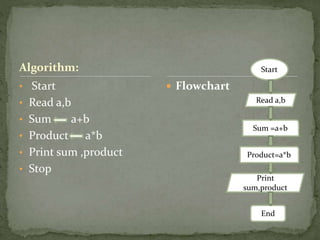
Algorithm:
• Start
• Read a,b
• Sum a+b
• Product a*b
• Print sum ,product
• Stop
 Flowchart
Start
Read a,b
Print
sum,product
Sum =a+b
End
Product=a*b
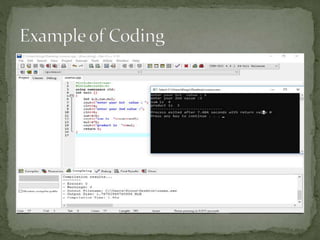
 Once the design process is complete, the actual computer
program is written, i.e. the instructions are written in a
computer language.
 Coding is generally a very small part of the entire program
development process and also a less time consuming activity in
reality.
 In this process all the syntax errors i.e. errors related to
spelling, missing commas, undefined labels etc. are eliminated.
 For effective coding some of the guide lines which are applied
are :
 Use of meaningful names and labels of variables,
 Simple and clear expressions,
 Modularity with emphasis on making modules generalized,
 Making use of comments and indenting the code properly,
 Avoiding jumps in the program to transfer control.
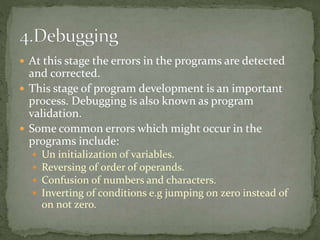
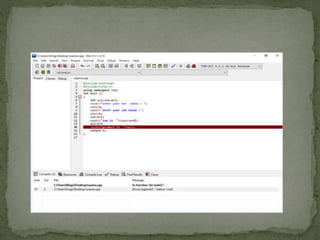
 At this stage the errors in the programs are detected
and corrected.
 This stage of program development is an important
process. Debugging is also known as program
validation.
 Some common errors which might occur in the
programs include:
 Un initialization of variables.
 Reversing of order of operands.
 Confusion of numbers and characters.
 Inverting of conditions e.g jumping on zero instead of
on not zero.
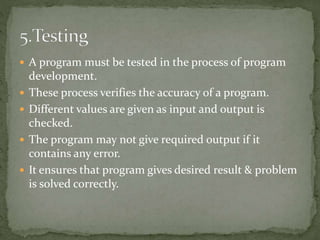
 A program must be tested in the process of program
development.
 These process verifies the accuracy of a program.
 Different values are given as input and output is
checked.
 The program may not give required output if it
contains any error.
 It ensures that program gives desired result & problem
is solved correctly.
 Documentation is a very essential step in the program
development.
 Documentation help the users and the people who
maintain the software.
 It guides the user how to use the program.
 Another purpose of it , is to allow the some other
programmer to modify the code if it necessary.
 Updating and correction of the program for changed
conditions and field experience is accounted for in
maintenance.
 Maintenance becomes essential in following
situations:
 Change in specification,
 Change in equipment,
 Errors which are found during the actual execution of
the program.
Development of computer program

Development of computer program

  • 3.
     Problem Definition Program Design  Coding  Debugging  Testing  Documentation  Maintenance
  • 4.
    Software Developmen t Life Cycle(SDLC) 01 Problem Definition 02 ProgramDesign 03 Coding 04 Debugging 05 Testing 06 Documentation 07 Maintenance
  • 5.
     In this, a programmer studies a problem. He decides best way to solve the problem. Studding a problem is necessary because it helps a programmer to decide the following things:  The facts and figures that is necessary to developing the program.  The way in which the program will be designed.  The language in which program is most suitable.  What is the desired output and in which form it is needed?
  • 6.
     The nextstage is the program design. The software developer makes use of tools like algorithms and flowcharts to develop the design of the program.  Algorithm  Flowchart
  • 7.
    Algorithm: • Start • Reada,b • Sum a+b • Product a*b • Print sum ,product • Stop  Flowchart Start Read a,b Print sum,product Sum =a+b End Product=a*b
  • 8.
     Once thedesign process is complete, the actual computer program is written, i.e. the instructions are written in a computer language.  Coding is generally a very small part of the entire program development process and also a less time consuming activity in reality.  In this process all the syntax errors i.e. errors related to spelling, missing commas, undefined labels etc. are eliminated.  For effective coding some of the guide lines which are applied are :  Use of meaningful names and labels of variables,  Simple and clear expressions,  Modularity with emphasis on making modules generalized,  Making use of comments and indenting the code properly,  Avoiding jumps in the program to transfer control.
  • 10.
     At thisstage the errors in the programs are detected and corrected.  This stage of program development is an important process. Debugging is also known as program validation.  Some common errors which might occur in the programs include:  Un initialization of variables.  Reversing of order of operands.  Confusion of numbers and characters.  Inverting of conditions e.g jumping on zero instead of on not zero.
  • 12.
     A programmust be tested in the process of program development.  These process verifies the accuracy of a program.  Different values are given as input and output is checked.  The program may not give required output if it contains any error.  It ensures that program gives desired result & problem is solved correctly.
  • 13.
     Documentation isa very essential step in the program development.  Documentation help the users and the people who maintain the software.  It guides the user how to use the program.  Another purpose of it , is to allow the some other programmer to modify the code if it necessary.
  • 14.
     Updating andcorrection of the program for changed conditions and field experience is accounted for in maintenance.  Maintenance becomes essential in following situations:  Change in specification,  Change in equipment,  Errors which are found during the actual execution of the program.