Prepared by:
Kristina E. Soroten
Teacher II
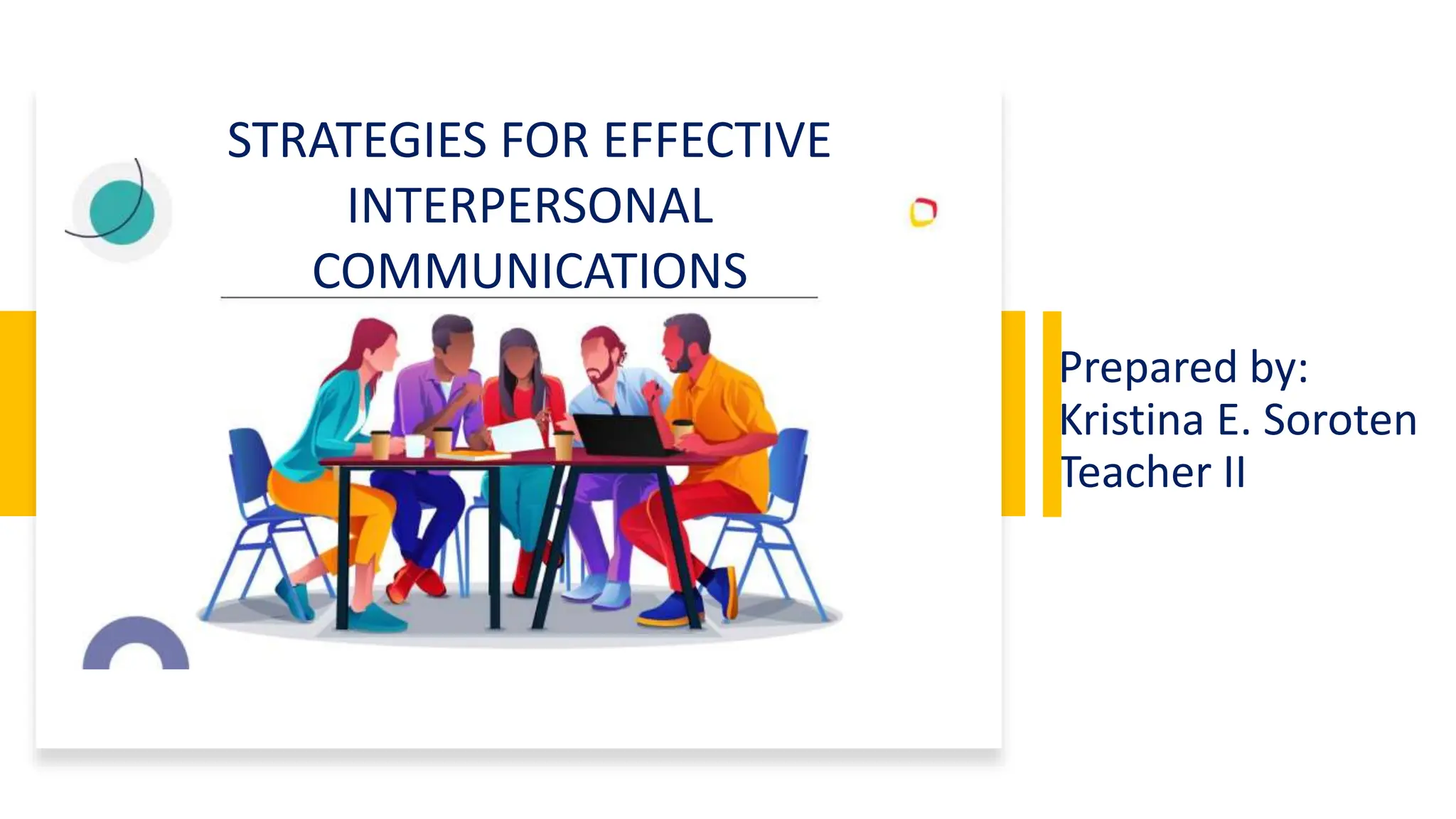
STRATEGIES FOR EFFECTIVE
INTERPERSONAL
COMMUNICATIONS
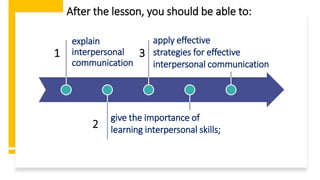
explain
interpersonal
communication
apply effective
strategies for effective
interpersonal communication
give the importance of
learning interpersonal skills;
1 3
2
After the lesson, you should be able to:
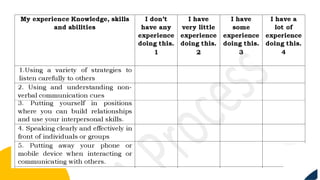
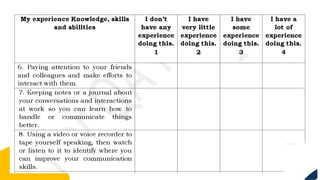
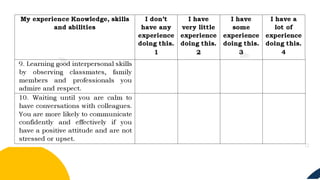
LEARNER
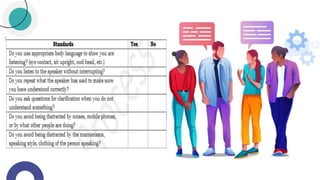
REFLECTION FORM
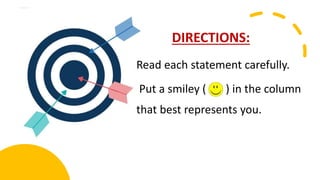
Read each statement carefully.
Put a smiley ( ) in the column
that best represents you.
DIRECTIONS:
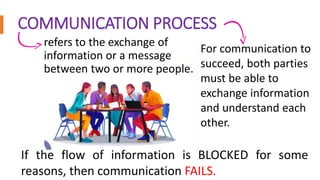
COMMUNICATION PROCESS
refers to the exchange of
information or a message
between two or more people.
For communication to
succeed, both parties
must be able to
exchange information
and understand each
other.
If the flow of information is BLOCKED for some
reasons, then communication FAILS.
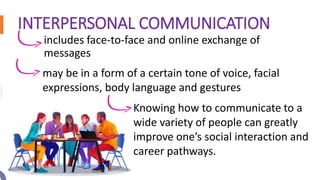
INTERPERSONAL COMMUNICATION
includes face-to-face and online exchange of
messages
Knowing how to communicate to a
wide variety of people can greatly
improve one’s social interaction and
career pathways.
may be in a form of a certain tone of voice, facial
expressions, body language and gestures
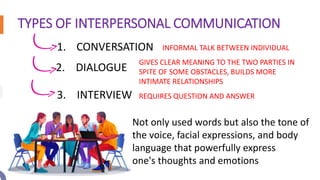
TYPES OF INTERPERSONAL COMMUNICATION
1. CONVERSATION
3. INTERVIEW
2. DIALOGUE
INFORMAL TALK BETWEEN INDIVIDUAL
GIVES CLEAR MEANING TO THE TWO PARTIES IN
SPITE OF SOME OBSTACLES, BUILDS MORE
INTIMATE RELATIONSHIPS
REQUIRES QUESTION AND ANSWER
Not only used words but also the tone of
the voice, facial expressions, and body
language that powerfully express
one's thoughts and emotions
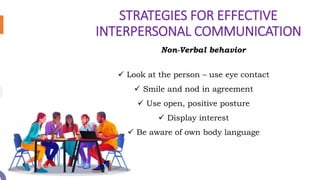
STRATEGIES FOR EFFECTIVE
INTERPERSONAL COMMUNICATION
Non-Verbal behavior
 Look at the person – use eye contact
 Smile and nod in agreement
 Use open, positive posture
 Display interest
 Be aware of own body language
STRATEGIES FOR EFFECTIVE
INTERPERSONAL COMMUNICATION
Acceptance
 Suspend judgement – listen with unbiased
and open mind
 Focus of attention on listener, not on your
ideas or opinions
 Allow people time to think
STRATEGIES FOR EFFECTIVE
INTERPERSONAL COMMUNICATION
Understanding
 Use probing in a helpful way to follow up
 Paraphrase and summarize to let the
listener know you are listening and to
give them a chance to correct
misunderstandings
Learn Big, BANG!
LET’S ANSWER:
1.What does it mean to listen/speak effectively?
2. How do you know when you are/are not being listened to or
ignored?
3. When speaking, what do you do to get your point cross?
4. Why is good (or effective) communication important in our
personal and professional lives?
EXPLAIN
"I hear you,
but I'm not listening."
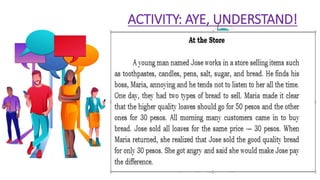
ACTIVITY: AYE, UNDERSTAND!
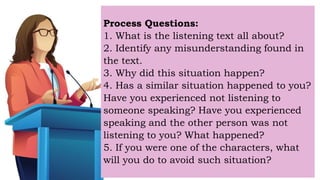
Process Questions:
1. What is the listening text all about?
2. Identify any misunderstanding found in
the text.
3. Why did this situation happen?
4. Has a similar situation happened to you?
Have you experienced not listening to
someone speaking? Have you experienced
speaking and the other person was not
listening to you? What happened?
5. If you were one of the characters, what
will you do to avoid such situation?
EXPLAIN
"I hear you,
but I'm not listening."
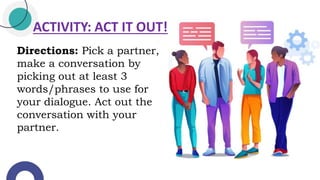
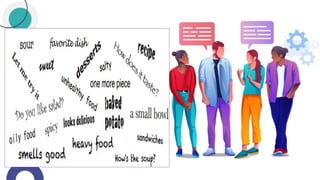
Directions: Pick a partner,
make a conversation by
picking out at least 3
words/phrases to use for
your dialogue. Act out the
conversation with your
partner.
ACTIVITY: ACT IT OUT!
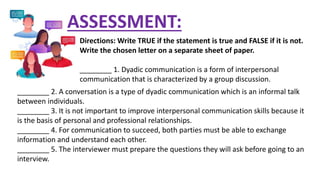
ASSESSMENT:
Directions: Write TRUE if the statement is true and FALSE if it is not.
Write the chosen letter on a separate sheet of paper.
________ 1. Dyadic communication is a form of interpersonal
communication that is characterized by a group discussion.
________ 2. A conversation is a type of dyadic communication which is an informal talk
between individuals.
________ 3. It is not important to improve interpersonal communication skills because it
is the basis of personal and professional relationships.
________ 4. For communication to succeed, both parties must be able to exchange
information and understand each other.
________ 5. The interviewer must prepare the questions they will ask before going to an
interview.
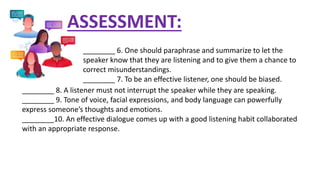
ASSESSMENT:
________ 6. One should paraphrase and summarize to let the
speaker know that they are listening and to give them a chance to
correct misunderstandings.
________ 7. To be an effective listener, one should be biased.
________ 8. A listener must not interrupt the speaker while they are speaking.
________ 9. Tone of voice, facial expressions, and body language can powerfully
express someone’s thoughts and emotions.
________10. An effective dialogue comes up with a good listening habit collaborated
with an appropriate response.
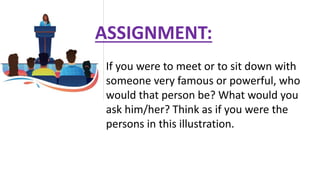
ASSIGNMENT:
If you were to meet or to sit down with
someone very famous or powerful, who
would that person be? What would you
ask him/her? Think as if you were the
persons in this illustration.

Grade 7 Lesson Quarter 4 - Interpersonal Communication.pptx

  • 1.
    Prepared by: Kristina E.Soroten Teacher II STRATEGIES FOR EFFECTIVE INTERPERSONAL COMMUNICATIONS
  • 2.
    explain interpersonal communication apply effective strategies foreffective interpersonal communication give the importance of learning interpersonal skills; 1 3 2 After the lesson, you should be able to:
  • 3.
  • 4.
    Read each statementcarefully. Put a smiley ( ) in the column that best represents you. DIRECTIONS:
  • 8.
    COMMUNICATION PROCESS refers tothe exchange of information or a message between two or more people. For communication to succeed, both parties must be able to exchange information and understand each other. If the flow of information is BLOCKED for some reasons, then communication FAILS.
  • 9.
    INTERPERSONAL COMMUNICATION includes face-to-faceand online exchange of messages Knowing how to communicate to a wide variety of people can greatly improve one’s social interaction and career pathways. may be in a form of a certain tone of voice, facial expressions, body language and gestures
  • 10.
    TYPES OF INTERPERSONALCOMMUNICATION 1. CONVERSATION 3. INTERVIEW 2. DIALOGUE INFORMAL TALK BETWEEN INDIVIDUAL GIVES CLEAR MEANING TO THE TWO PARTIES IN SPITE OF SOME OBSTACLES, BUILDS MORE INTIMATE RELATIONSHIPS REQUIRES QUESTION AND ANSWER Not only used words but also the tone of the voice, facial expressions, and body language that powerfully express one's thoughts and emotions
  • 11.
    STRATEGIES FOR EFFECTIVE INTERPERSONALCOMMUNICATION Non-Verbal behavior  Look at the person – use eye contact  Smile and nod in agreement  Use open, positive posture  Display interest  Be aware of own body language
  • 12.
    STRATEGIES FOR EFFECTIVE INTERPERSONALCOMMUNICATION Acceptance  Suspend judgement – listen with unbiased and open mind  Focus of attention on listener, not on your ideas or opinions  Allow people time to think
  • 13.
    STRATEGIES FOR EFFECTIVE INTERPERSONALCOMMUNICATION Understanding  Use probing in a helpful way to follow up  Paraphrase and summarize to let the listener know you are listening and to give them a chance to correct misunderstandings
  • 14.
  • 15.
    LET’S ANSWER: 1.What doesit mean to listen/speak effectively? 2. How do you know when you are/are not being listened to or ignored? 3. When speaking, what do you do to get your point cross? 4. Why is good (or effective) communication important in our personal and professional lives?
  • 16.
    EXPLAIN "I hear you, butI'm not listening."
  • 17.
  • 18.
    Process Questions: 1. Whatis the listening text all about? 2. Identify any misunderstanding found in the text. 3. Why did this situation happen? 4. Has a similar situation happened to you? Have you experienced not listening to someone speaking? Have you experienced speaking and the other person was not listening to you? What happened? 5. If you were one of the characters, what will you do to avoid such situation?
  • 19.
    EXPLAIN "I hear you, butI'm not listening."
  • 20.
    Directions: Pick apartner, make a conversation by picking out at least 3 words/phrases to use for your dialogue. Act out the conversation with your partner. ACTIVITY: ACT IT OUT!
  • 23.
    ASSESSMENT: Directions: Write TRUEif the statement is true and FALSE if it is not. Write the chosen letter on a separate sheet of paper. ________ 1. Dyadic communication is a form of interpersonal communication that is characterized by a group discussion. ________ 2. A conversation is a type of dyadic communication which is an informal talk between individuals. ________ 3. It is not important to improve interpersonal communication skills because it is the basis of personal and professional relationships. ________ 4. For communication to succeed, both parties must be able to exchange information and understand each other. ________ 5. The interviewer must prepare the questions they will ask before going to an interview.
  • 24.
    ASSESSMENT: ________ 6. Oneshould paraphrase and summarize to let the speaker know that they are listening and to give them a chance to correct misunderstandings. ________ 7. To be an effective listener, one should be biased. ________ 8. A listener must not interrupt the speaker while they are speaking. ________ 9. Tone of voice, facial expressions, and body language can powerfully express someone’s thoughts and emotions. ________10. An effective dialogue comes up with a good listening habit collaborated with an appropriate response.
  • 25.
    ASSIGNMENT: If you wereto meet or to sit down with someone very famous or powerful, who would that person be? What would you ask him/her? Think as if you were the persons in this illustration.