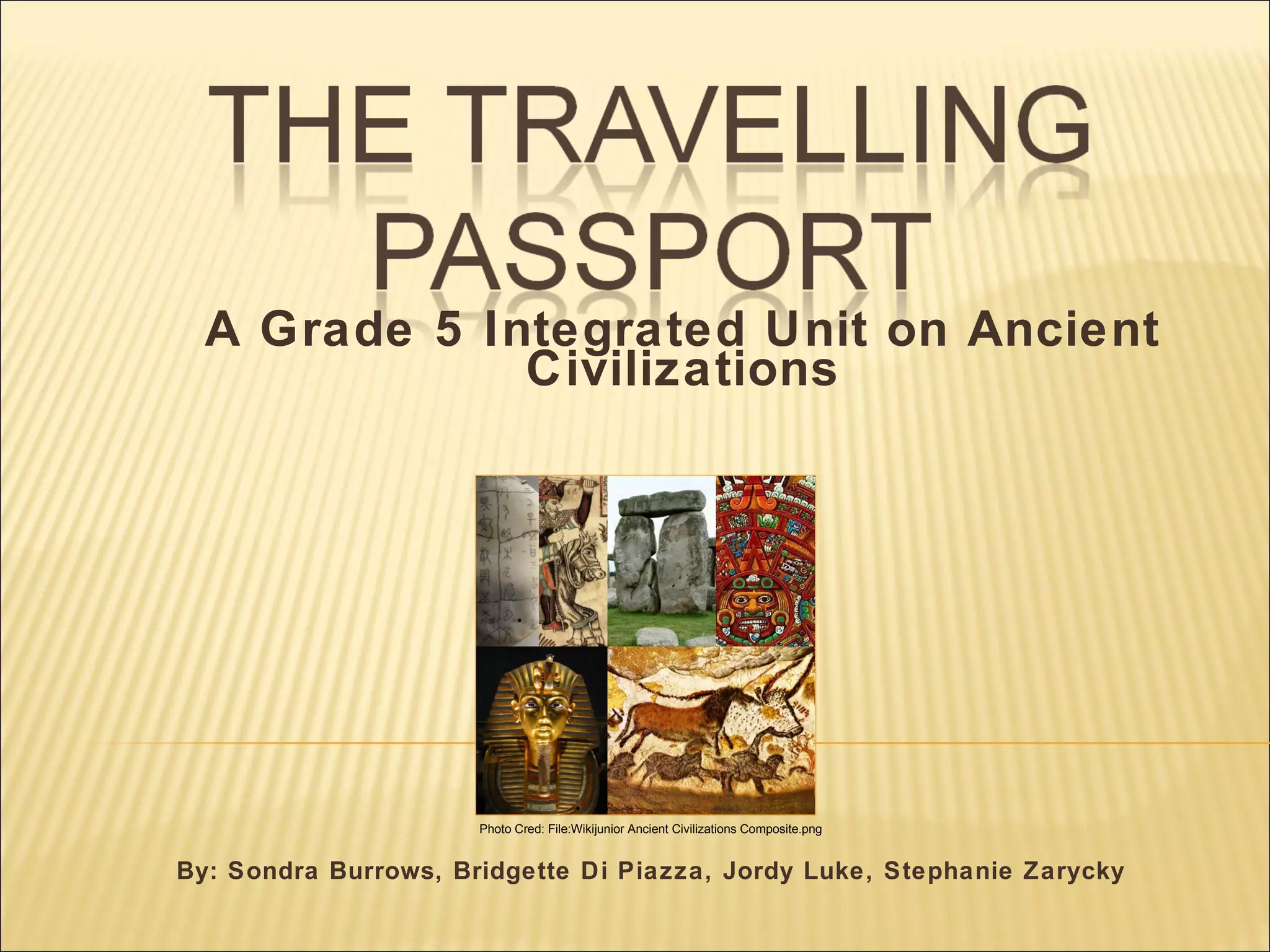
A Grade 5 Integrated Unit on Ancient Civilizations                               By: Sondra Burrows, Bridgette Di Piazza, Jordy Luke, Stephanie Zarycky Photo Cred: File:Wikijunior Ancient Civilizations Composite.png
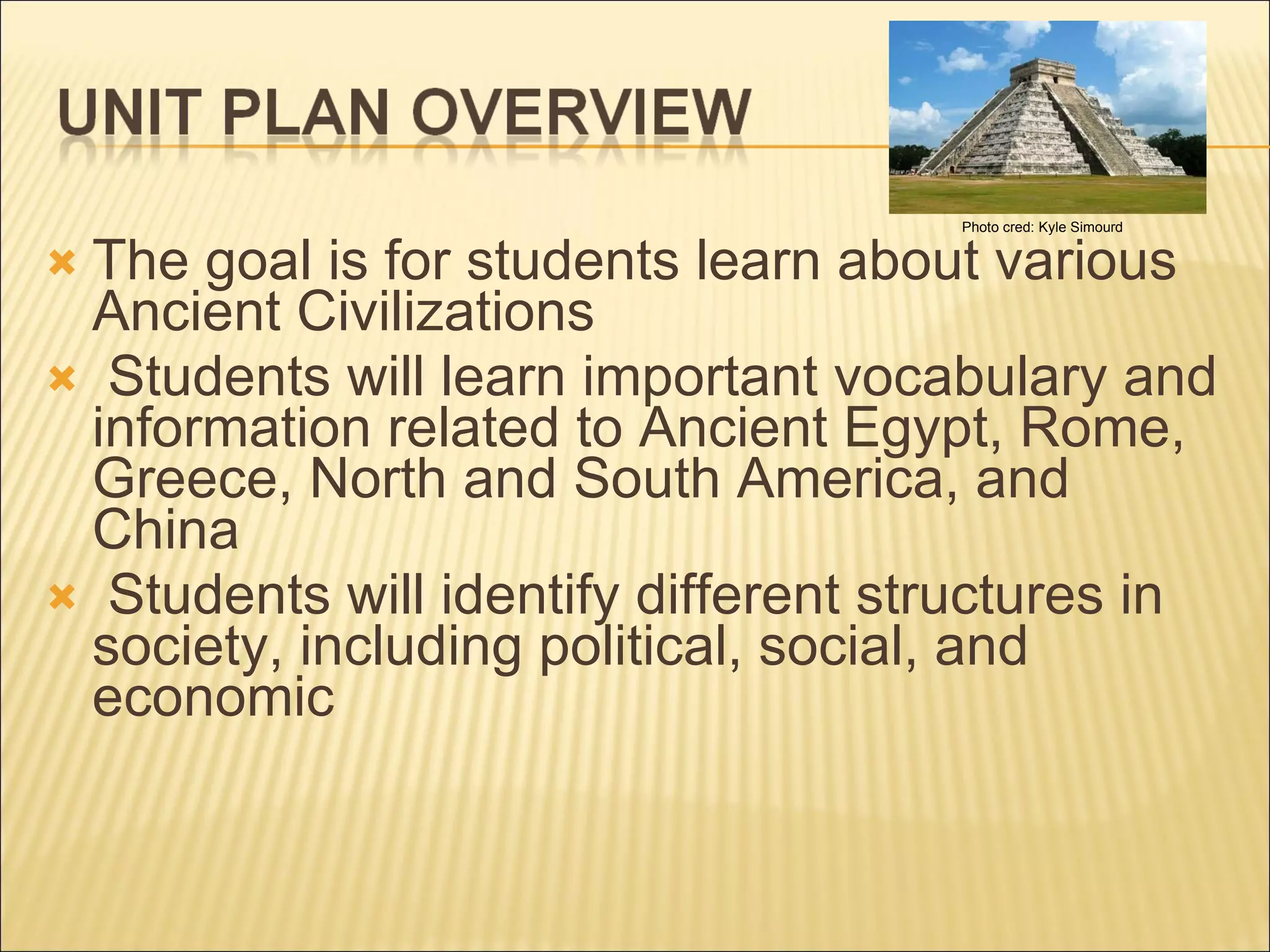
The goal is for students learn about various Ancient Civilizations Students will learn important vocabulary and information related to Ancient Egypt, Rome, Greece, North and South America, and China Students will identify different structures in society, including political, social, and economic  Photo cred: Kyle Simourd
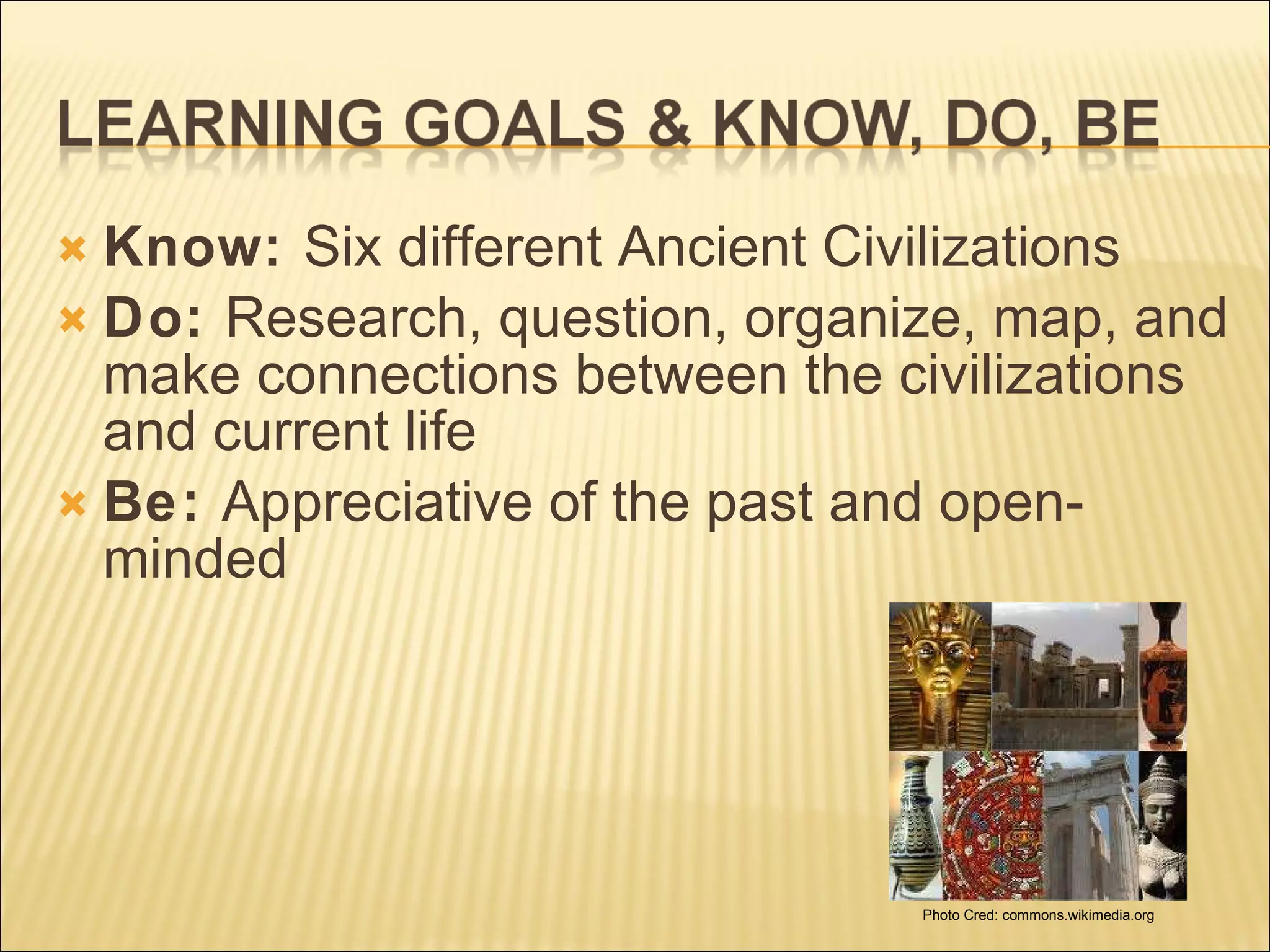
Know:  Six different Ancient Civilizations Do:  Research, question, organize, map, and make connections between the civilizations and current life  Be:  Appreciative of the past and open-minded Photo Cred: commons.wikimedia.org
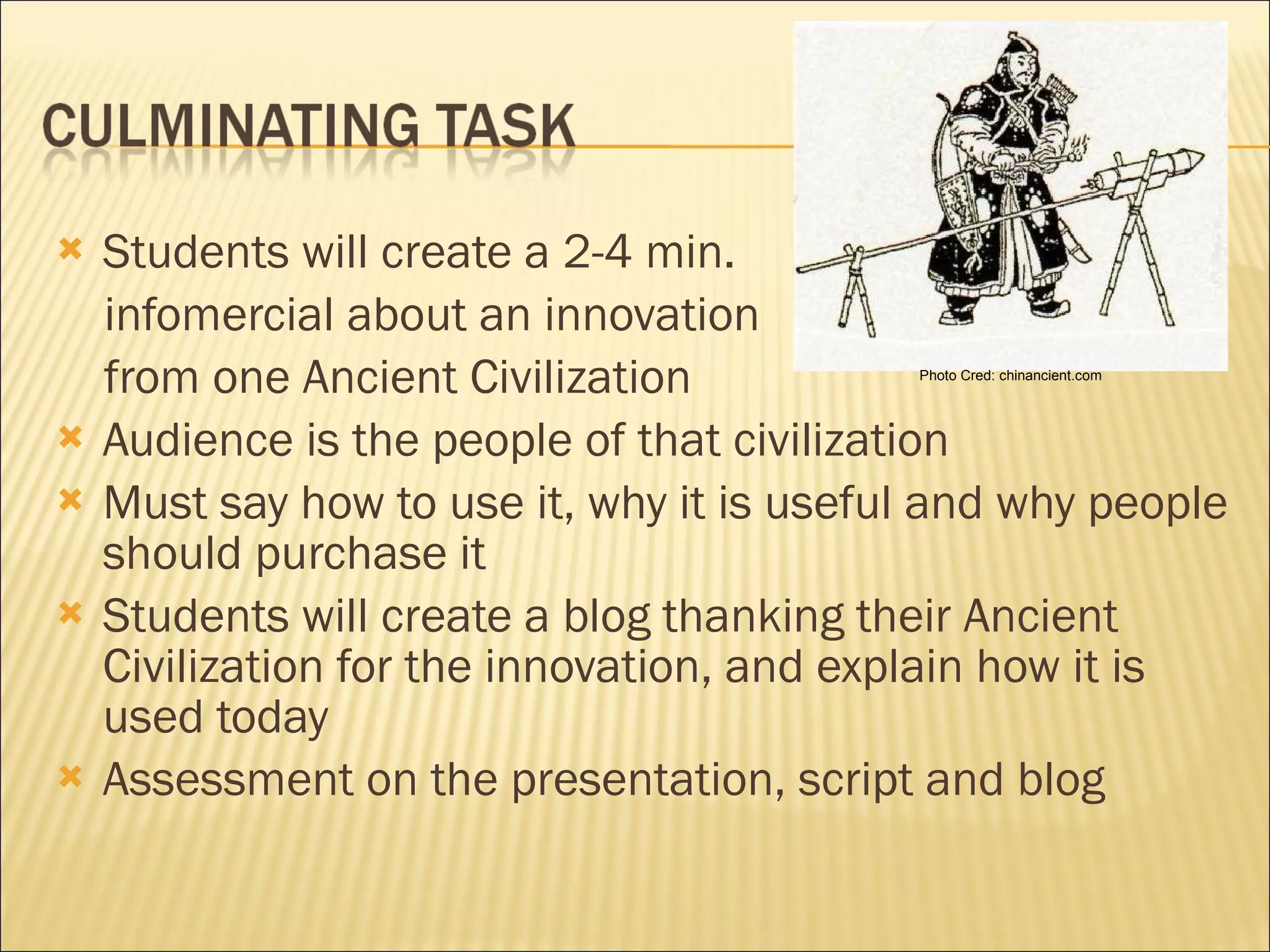
Students will create a 2-4 min.  infomercial about an innovation  from one Ancient Civilization Audience is the people of that civilization Must say how to use it, why it is useful and why people should purchase it Students will create a blog thanking their Ancient Civilization for the innovation, and explain how it is used today Assessment on the presentation, script and blog Photo Cred: chinancient.com
http://bit.ly/1btSe4
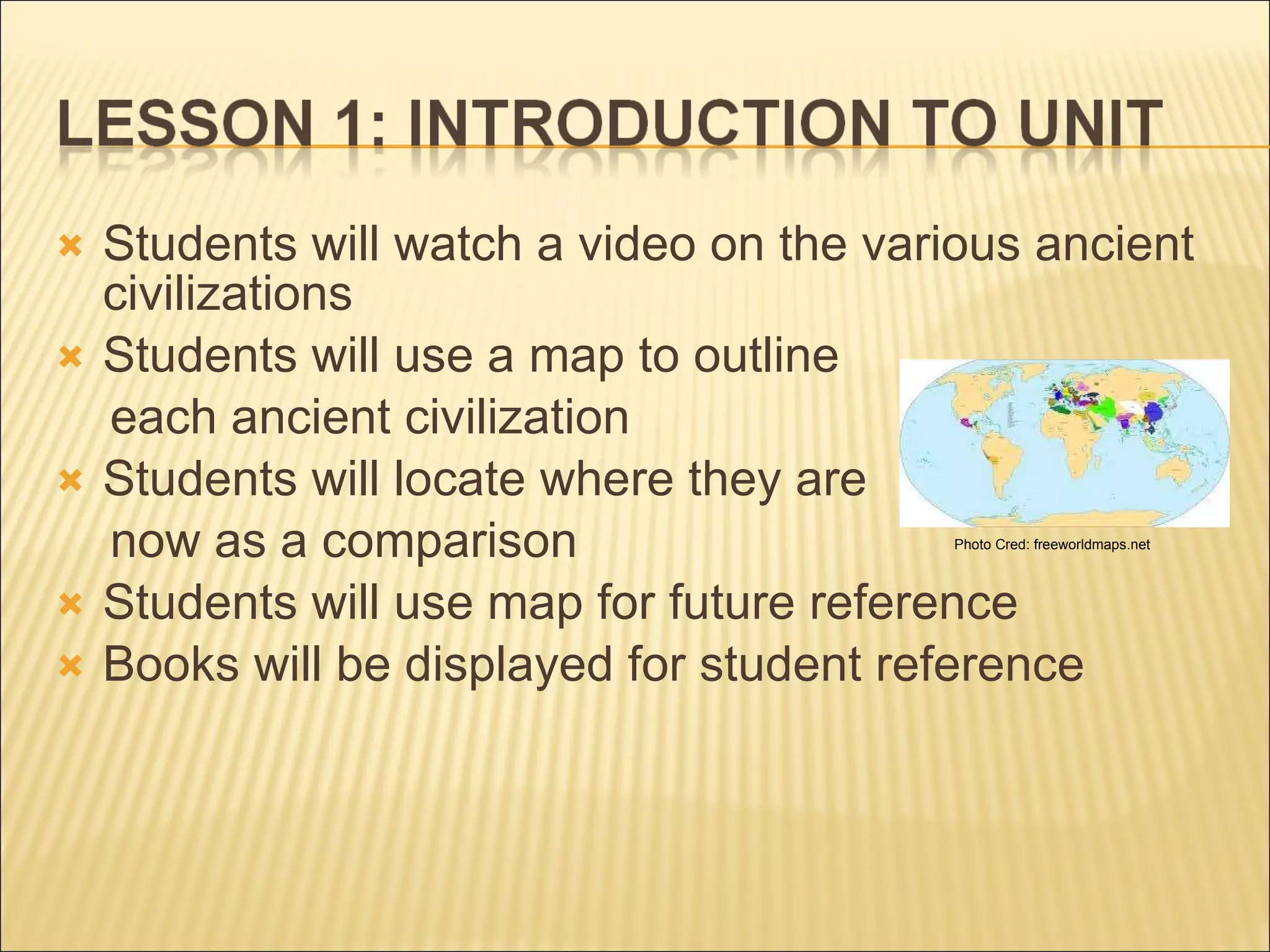
Students will watch a video on the various ancient civilizations Students will use a map to outline  each ancient civilization Students will locate where they are  now as a comparison Students will use map for future reference Books will be displayed for student reference Photo Cred: freeworldmaps.net
Students will view a PowerPoint presentation with key information and pictures of each  Ancient Civilization  Students will complete a graphic  organizer with key information for  each Ancient Civilization Students will have time to set up their passport (e.g. create a title page, 1 page per A.C) for each stop on the tour of Ancient Civilizations  Photo Cred: commons.wikimedia.org Photo Cred: commons.wikimedia.org
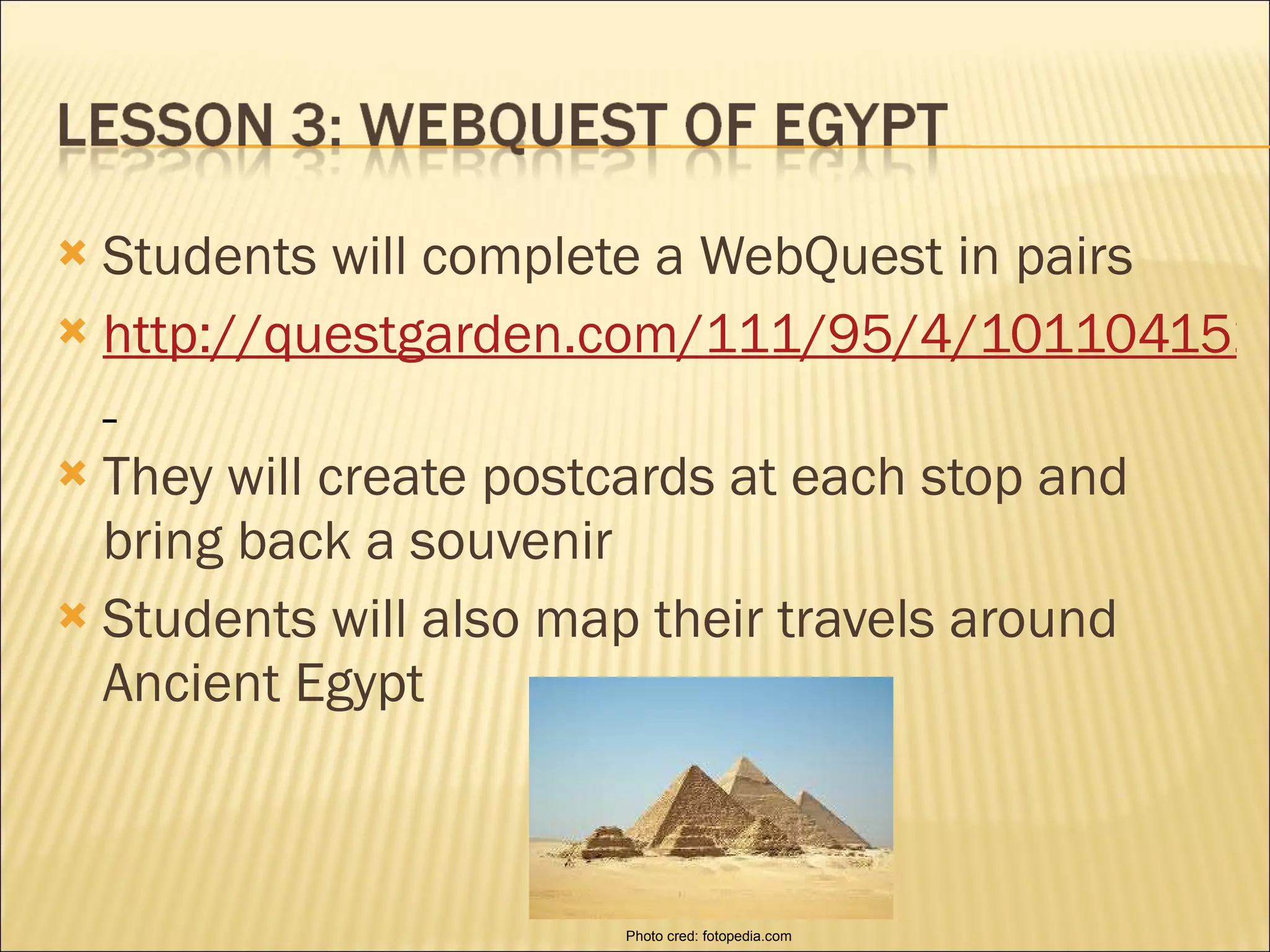
Students will complete a WebQuest in pairs http://questgarden.com/111/95/4/101104152334/index.htm   They will create postcards at each stop and bring back a souvenir Students will also map their travels around Ancient Egypt Photo cred: fotopedia.com
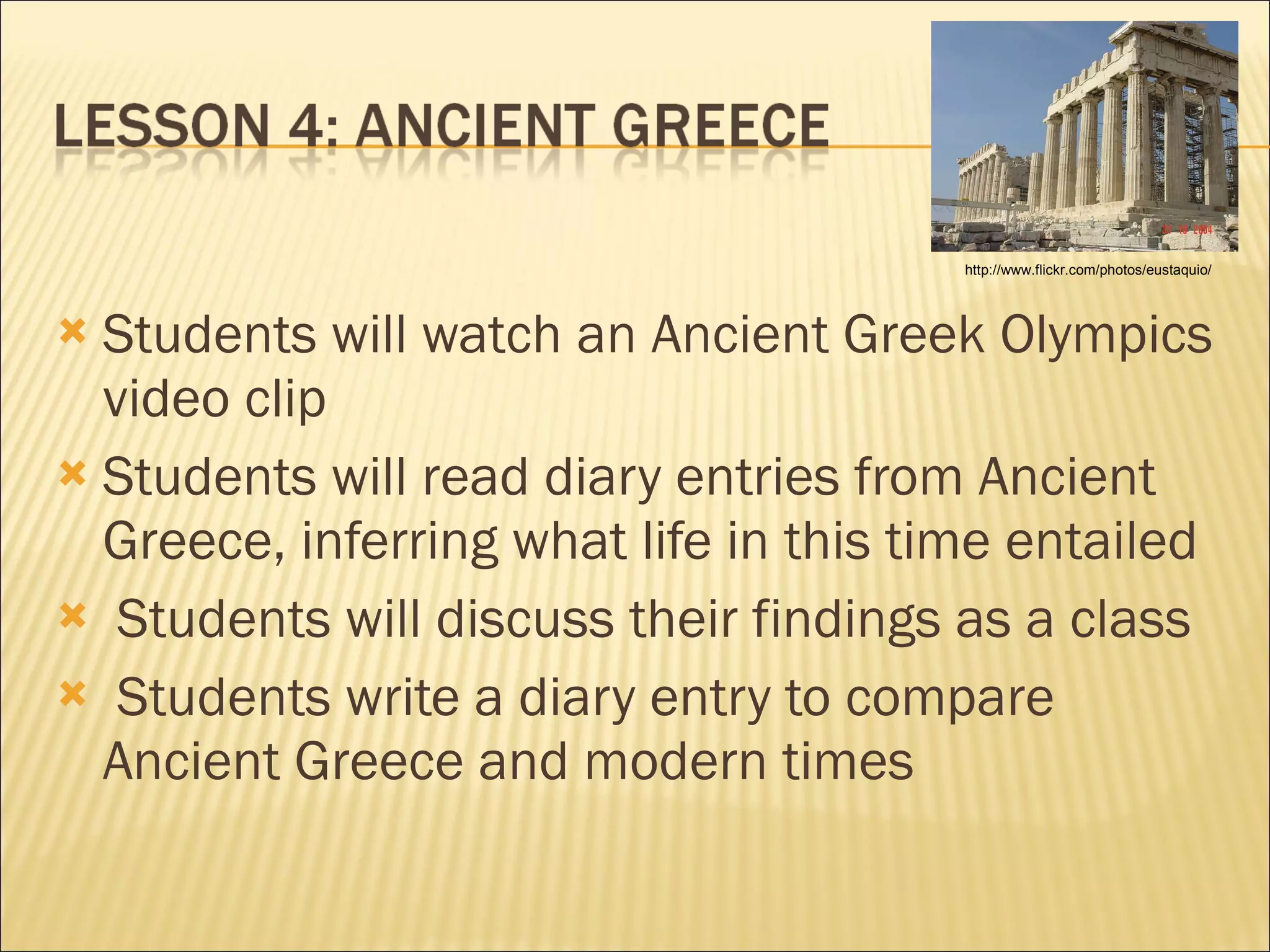
Students will watch an Ancient Greek Olympics video clip Students will read diary entries from Ancient Greece, inferring what life in this time entailed   Students will discuss their findings as a class   Students write a diary entry to compare Ancient Greece and modern times http://www.flickr.com/photos/eustaquio/
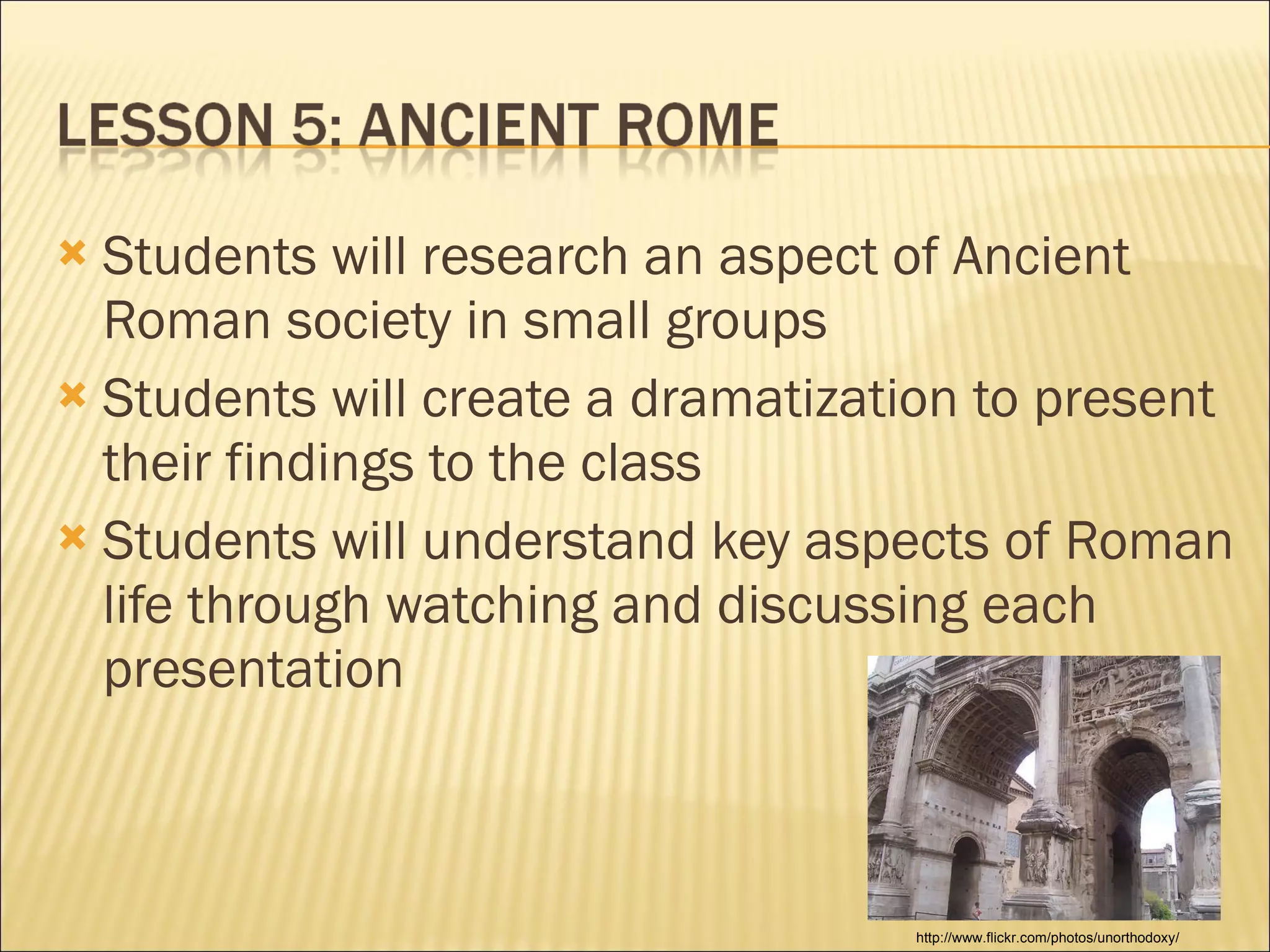
Students will research an aspect of Ancient Roman society in small groups Students will create a dramatization to present their findings to the class Students will understand key aspects of Roman life through watching and discussing each presentation  http://www.flickr.com/photos/unorthodoxy/
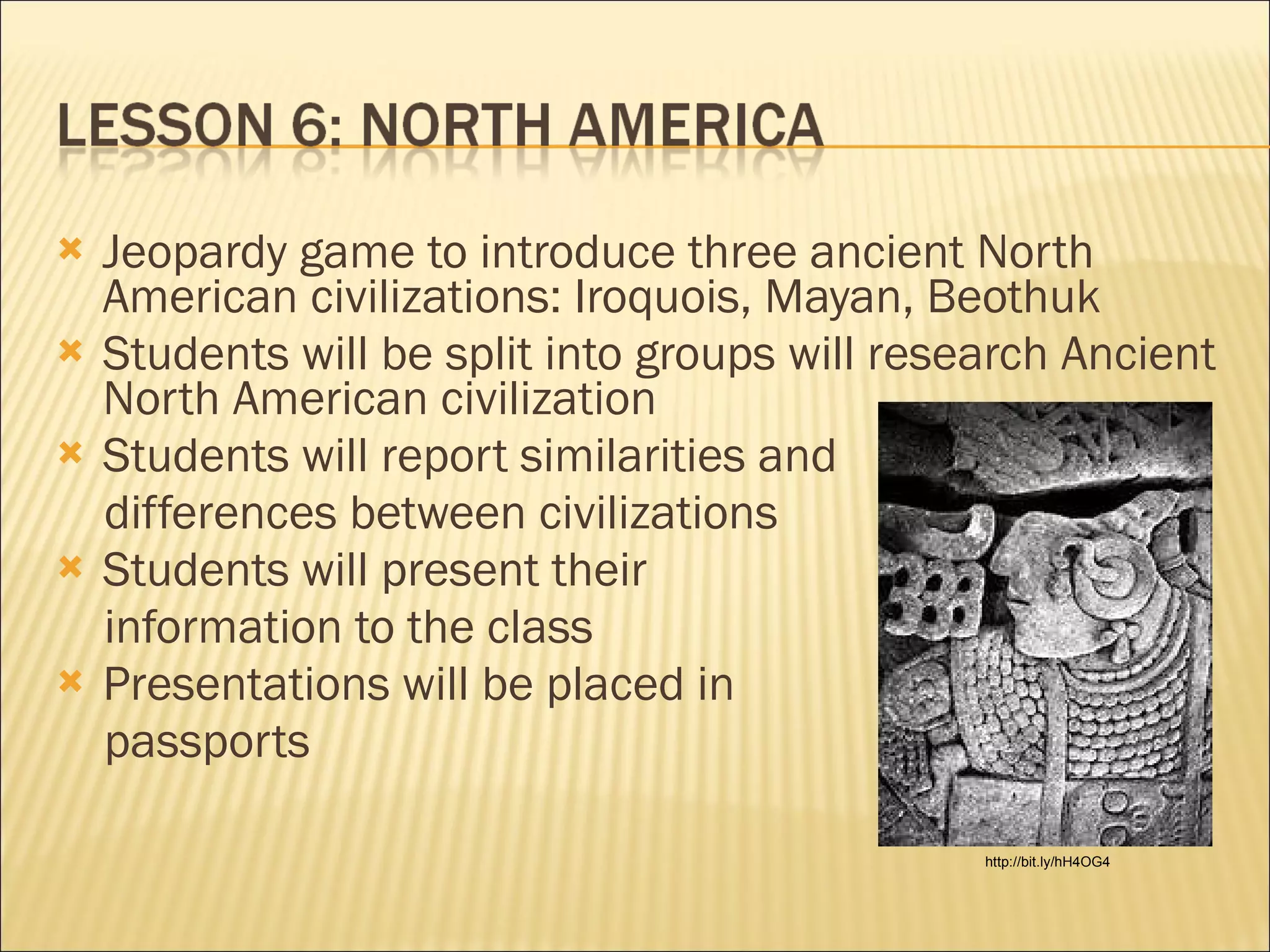
Jeopardy game to introduce three ancient North American civilizations: Iroquois, Mayan, Beothuk Students will be split into groups will research Ancient North American civilization Students will report similarities and  differences between civilizations Students will present their  information to the class Presentations will be placed in passports http://bit.ly/hH4OG4
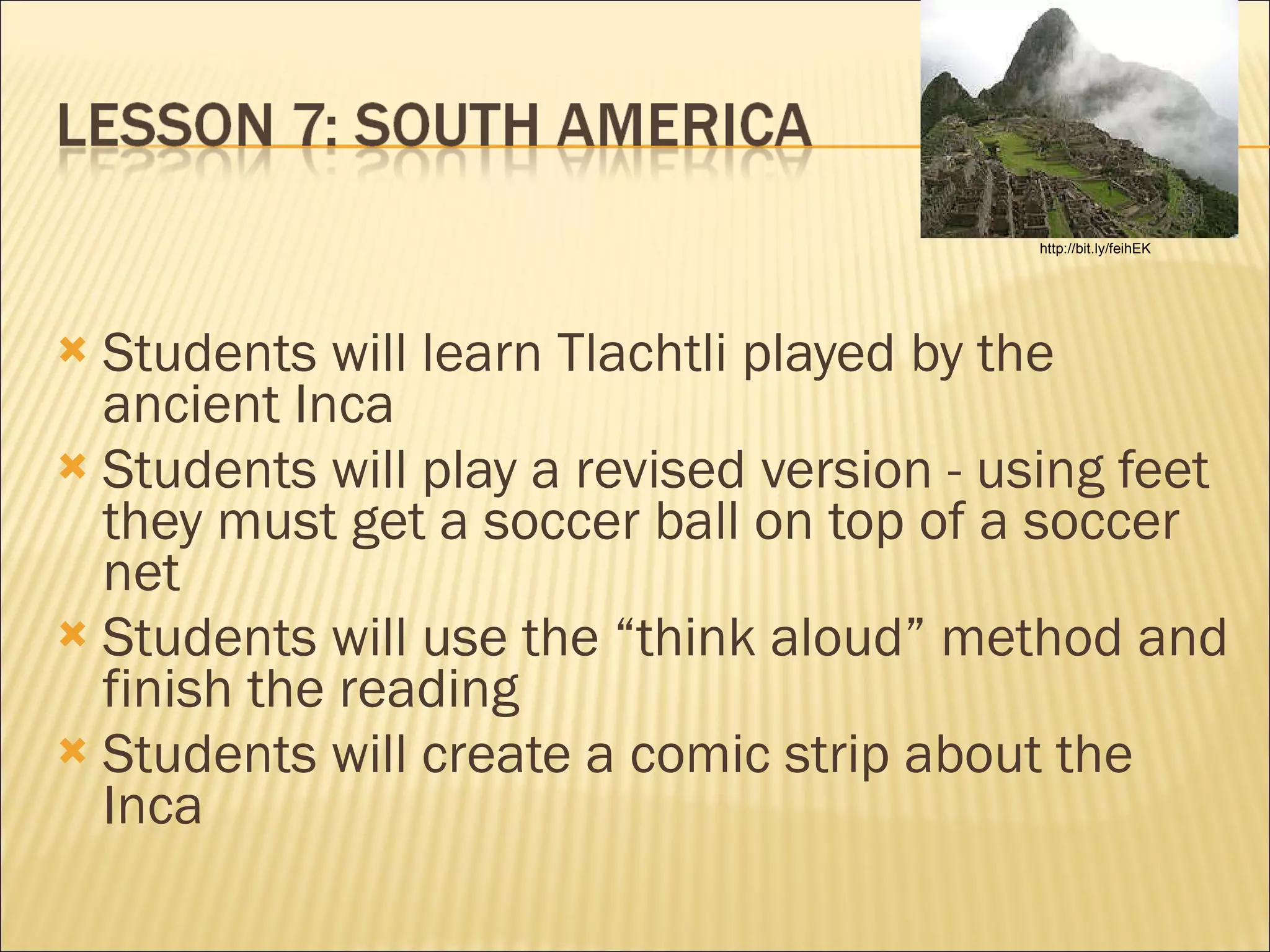
  Students will learn Tlachtli played by the ancient Inca  Students will play a revised version - using feet they must get a soccer ball on top of a soccer net  Students will use the “think aloud” method and finish the reading  Students will create a comic strip about the Inca http://bit.ly/feihEK
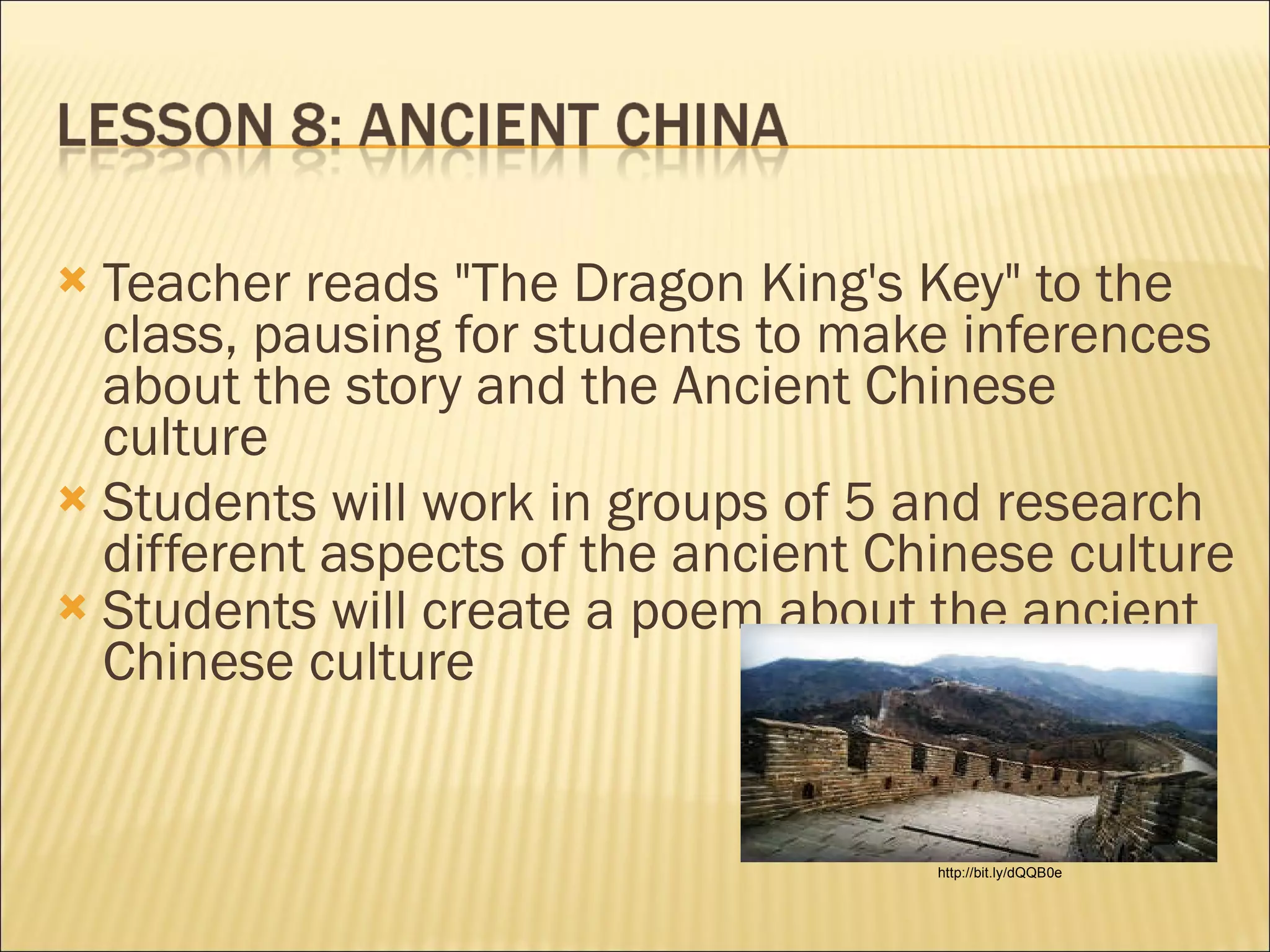
  Teacher reads "The Dragon King's Key" to the class, pausing for students to make inferences about the story and the Ancient Chinese culture  Students will work in groups of 5 and research different aspects of the ancient Chinese culture Students will create a poem about the ancient Chinese culture   http://bit.ly/dQQB0e
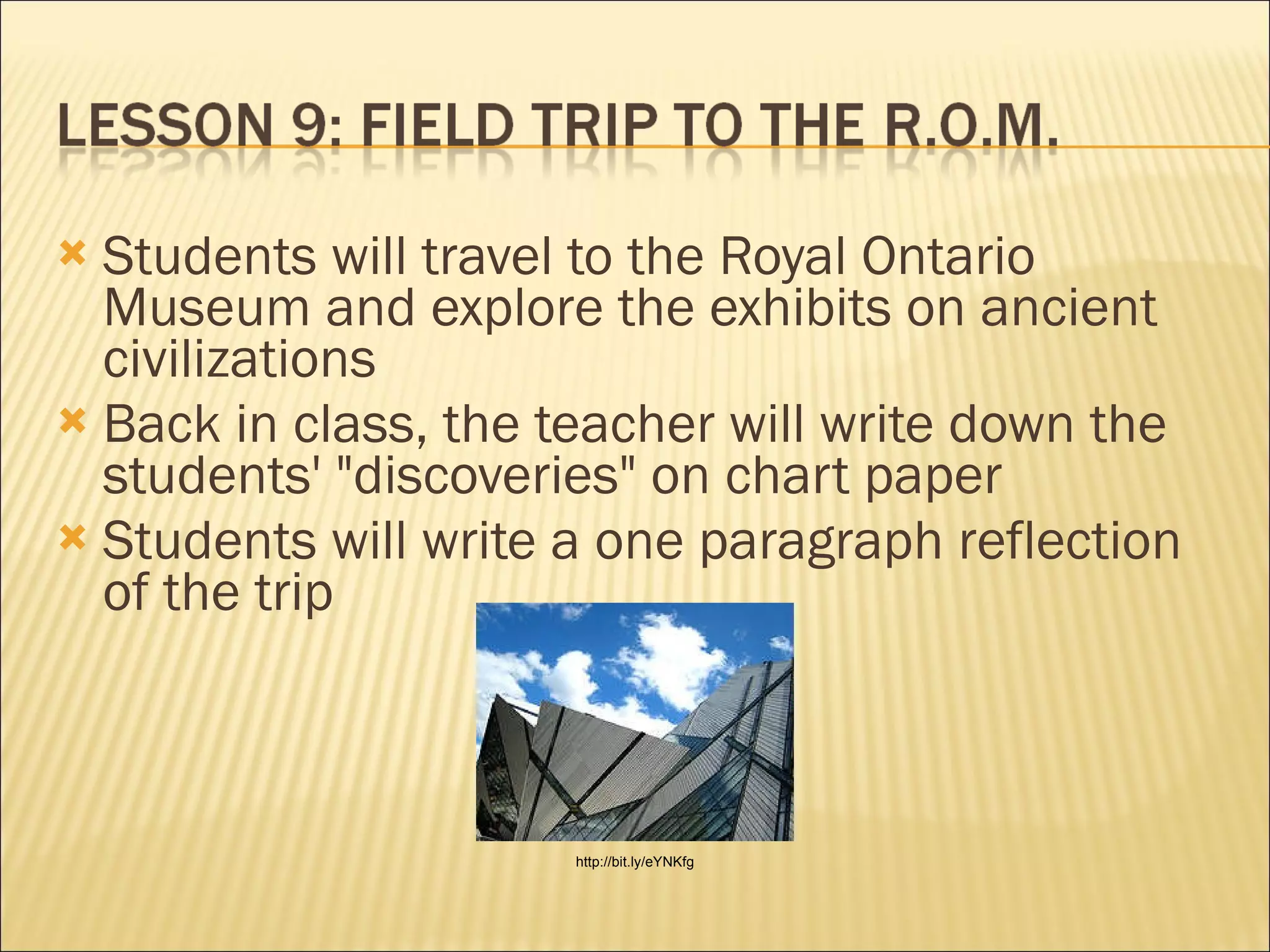
Students will travel to the Royal Ontario Museum and explore the exhibits on ancient civilizations Back in class, the teacher will write down the students' "discoveries" on chart paper Students will write a one paragraph reflection of the trip  http://bit.ly/eYNKfg
Students will visit five learning centres which will allow them to compare ancient civilizations, noting and investigating similarities and differences among civilizations science & technology social & political structures physical aspects thought (education, beliefs, values) meeting basic needs http://www.flickr.com/photos/kwl/
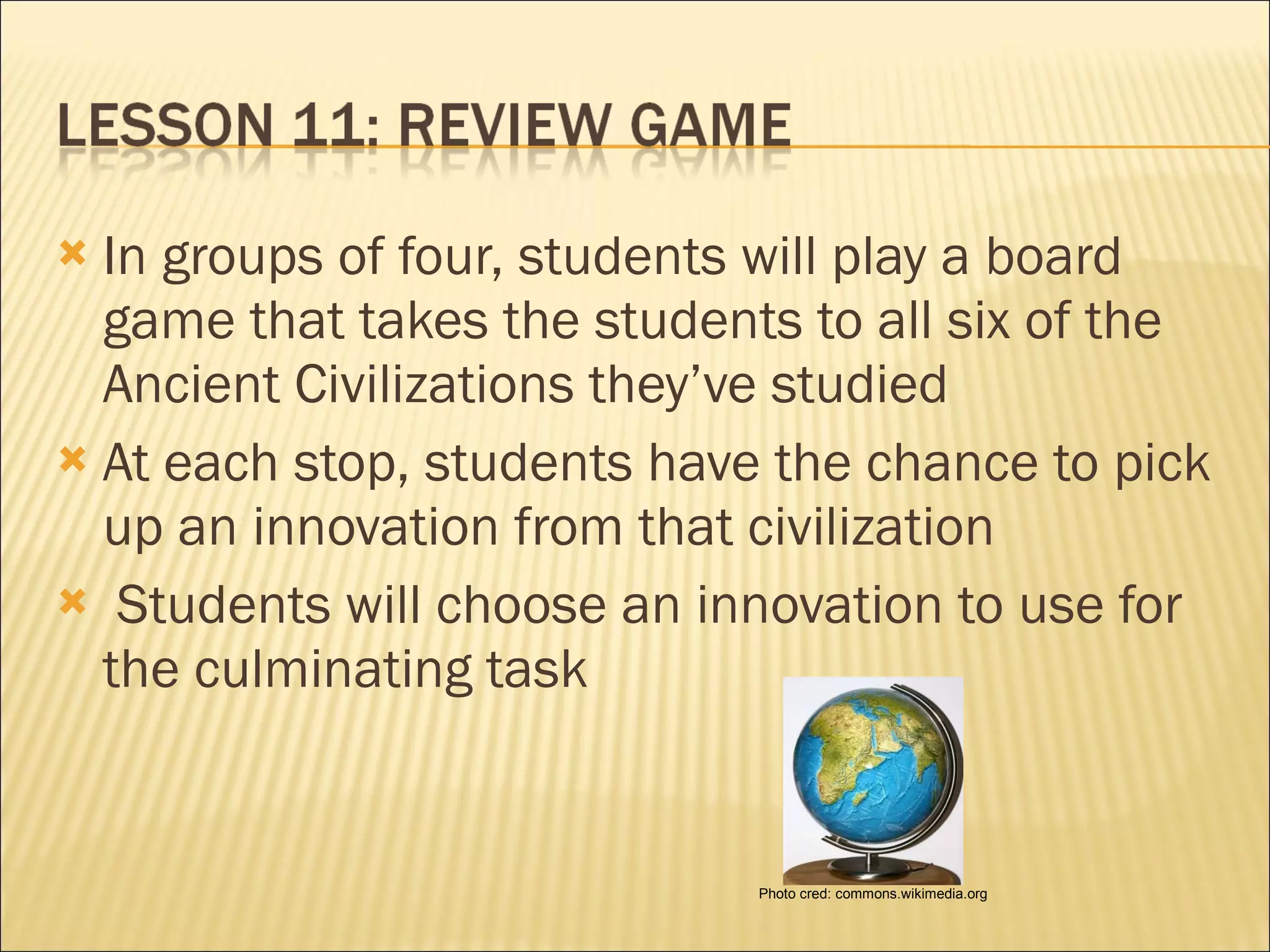
In groups of four, students will play a board game that takes the students to all six of the Ancient Civilizations they’ve studied At each stop, students have the chance to pick up an innovation from that civilization   Students will choose an innovation to use for the culminating task Photo cred: commons.wikimedia.org
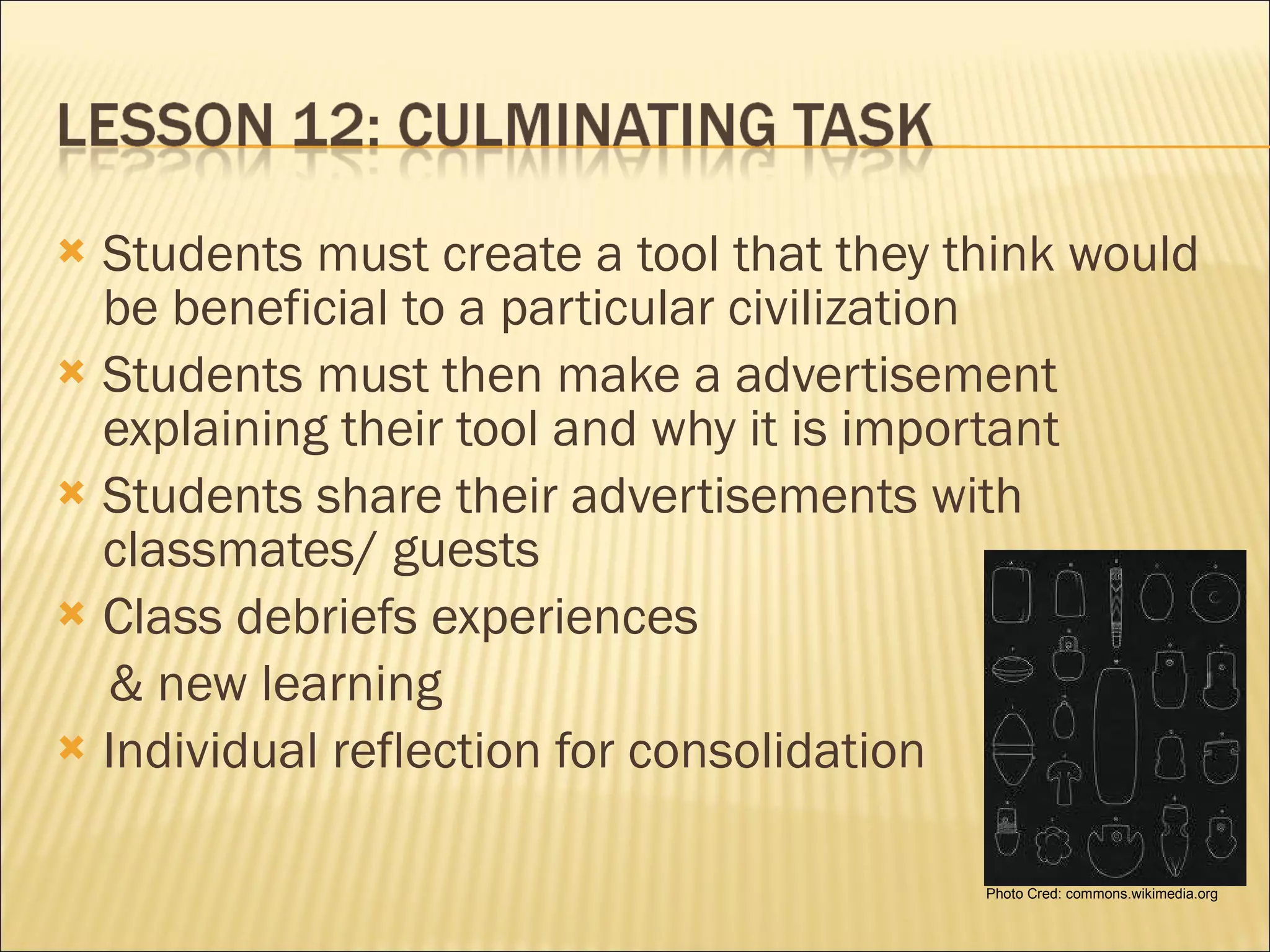
Students must create a tool that they think would be beneficial to a particular civilization Students must then make a advertisement explaining their tool and why it is important Students share their advertisements with classmates/ guests Class debriefs experiences  & new learning Individual reflection for consolidation Photo Cred: commons.wikimedia.org
Questions?
Burrows, S., Di Piazza, B., Jamieson, E., Luke, J., Zarycky, S.  (2011)  The Travelling Passport, Integrated Unit for EDUC 8Y29 . Ontario Ministry of Education Curriculum K-8  Health and Physical Education (2010) Language (2006) Social Studies & History and Geography (2004) The Arts (2009)
This unit was created for a Social Studies class at Brock University while being integrated with a Technology class Contact us as aspiring pre-service teachers on  Twitter  to provide us with feedback Sondra Burrows: @MsSBurrows Bridgette Di Piazza: @bdipiazza1 Jordy Luke: @JordannaEliza Stephanie Zarycky: @szarycky

Grade 5 Ancient Civilizations Unit

  • 1.
                                 A Grade 5 Integrated Unit on Ancient Civilizations                               By: Sondra Burrows, Bridgette Di Piazza, Jordy Luke, Stephanie Zarycky Photo Cred: File:Wikijunior Ancient Civilizations Composite.png
  • 2.
    The goal isfor students learn about various Ancient Civilizations Students will learn important vocabulary and information related to Ancient Egypt, Rome, Greece, North and South America, and China Students will identify different structures in society, including political, social, and economic Photo cred: Kyle Simourd
  • 3.
    Know: Sixdifferent Ancient Civilizations Do: Research, question, organize, map, and make connections between the civilizations and current life Be: Appreciative of the past and open-minded Photo Cred: commons.wikimedia.org
  • 4.
    Students will createa 2-4 min. infomercial about an innovation from one Ancient Civilization Audience is the people of that civilization Must say how to use it, why it is useful and why people should purchase it Students will create a blog thanking their Ancient Civilization for the innovation, and explain how it is used today Assessment on the presentation, script and blog Photo Cred: chinancient.com
  • 5.
  • 6.
    Students will watcha video on the various ancient civilizations Students will use a map to outline each ancient civilization Students will locate where they are now as a comparison Students will use map for future reference Books will be displayed for student reference Photo Cred: freeworldmaps.net
  • 7.
    Students will viewa PowerPoint presentation with key information and pictures of each Ancient Civilization Students will complete a graphic organizer with key information for each Ancient Civilization Students will have time to set up their passport (e.g. create a title page, 1 page per A.C) for each stop on the tour of Ancient Civilizations Photo Cred: commons.wikimedia.org Photo Cred: commons.wikimedia.org
  • 8.
    Students will completea WebQuest in pairs http://questgarden.com/111/95/4/101104152334/index.htm They will create postcards at each stop and bring back a souvenir Students will also map their travels around Ancient Egypt Photo cred: fotopedia.com
  • 9.
    Students will watchan Ancient Greek Olympics video clip Students will read diary entries from Ancient Greece, inferring what life in this time entailed   Students will discuss their findings as a class   Students write a diary entry to compare Ancient Greece and modern times http://www.flickr.com/photos/eustaquio/
  • 10.
    Students will researchan aspect of Ancient Roman society in small groups Students will create a dramatization to present their findings to the class Students will understand key aspects of Roman life through watching and discussing each presentation http://www.flickr.com/photos/unorthodoxy/
  • 11.
    Jeopardy game tointroduce three ancient North American civilizations: Iroquois, Mayan, Beothuk Students will be split into groups will research Ancient North American civilization Students will report similarities and differences between civilizations Students will present their information to the class Presentations will be placed in passports http://bit.ly/hH4OG4
  • 12.
      Students willlearn Tlachtli played by the ancient Inca Students will play a revised version - using feet they must get a soccer ball on top of a soccer net Students will use the “think aloud” method and finish the reading Students will create a comic strip about the Inca http://bit.ly/feihEK
  • 13.
      Teacher reads"The Dragon King's Key" to the class, pausing for students to make inferences about the story and the Ancient Chinese culture Students will work in groups of 5 and research different aspects of the ancient Chinese culture Students will create a poem about the ancient Chinese culture http://bit.ly/dQQB0e
  • 14.
    Students will travelto the Royal Ontario Museum and explore the exhibits on ancient civilizations Back in class, the teacher will write down the students' "discoveries" on chart paper Students will write a one paragraph reflection of the trip http://bit.ly/eYNKfg
  • 15.
    Students will visitfive learning centres which will allow them to compare ancient civilizations, noting and investigating similarities and differences among civilizations science & technology social & political structures physical aspects thought (education, beliefs, values) meeting basic needs http://www.flickr.com/photos/kwl/
  • 16.
    In groups offour, students will play a board game that takes the students to all six of the Ancient Civilizations they’ve studied At each stop, students have the chance to pick up an innovation from that civilization   Students will choose an innovation to use for the culminating task Photo cred: commons.wikimedia.org
  • 17.
    Students must createa tool that they think would be beneficial to a particular civilization Students must then make a advertisement explaining their tool and why it is important Students share their advertisements with classmates/ guests Class debriefs experiences & new learning Individual reflection for consolidation Photo Cred: commons.wikimedia.org
  • 18.
  • 19.
    Burrows, S., DiPiazza, B., Jamieson, E., Luke, J., Zarycky, S. (2011) The Travelling Passport, Integrated Unit for EDUC 8Y29 . Ontario Ministry of Education Curriculum K-8 Health and Physical Education (2010) Language (2006) Social Studies & History and Geography (2004) The Arts (2009)
  • 20.
    This unit wascreated for a Social Studies class at Brock University while being integrated with a Technology class Contact us as aspiring pre-service teachers on Twitter to provide us with feedback Sondra Burrows: @MsSBurrows Bridgette Di Piazza: @bdipiazza1 Jordy Luke: @JordannaEliza Stephanie Zarycky: @szarycky