• Explain the plate tectonics theory
• Discuss the supportive evidences on
the existence of plate tectonics
• Explain the processes of convection
current and seafloor spreading
• Predict what landmasses on Earth will look
like many years from now if the continents
continuously move slowly
• Appreciate plate tectonics, a theory that
binds together many geologic processes,
such as volcanism and earthquakes
• What evidences proved Earth’s landmasses have
split?
• What resulted from the movements of Earth’s
landmasses?
• What can we learn from fossils?
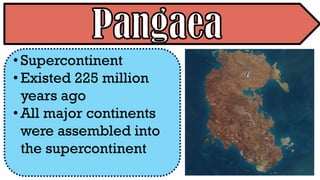
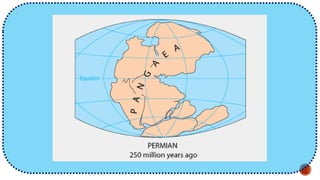
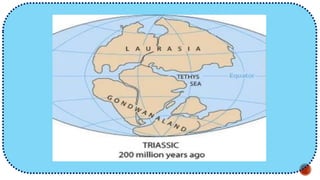
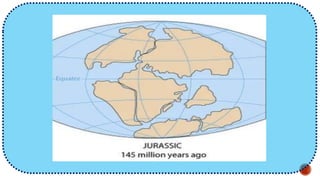
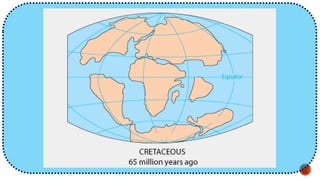
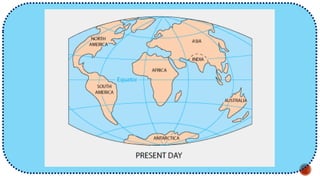
• Supercontinent
• Existed 225 million
years ago
• All major continents
were assembled into
the supercontinent
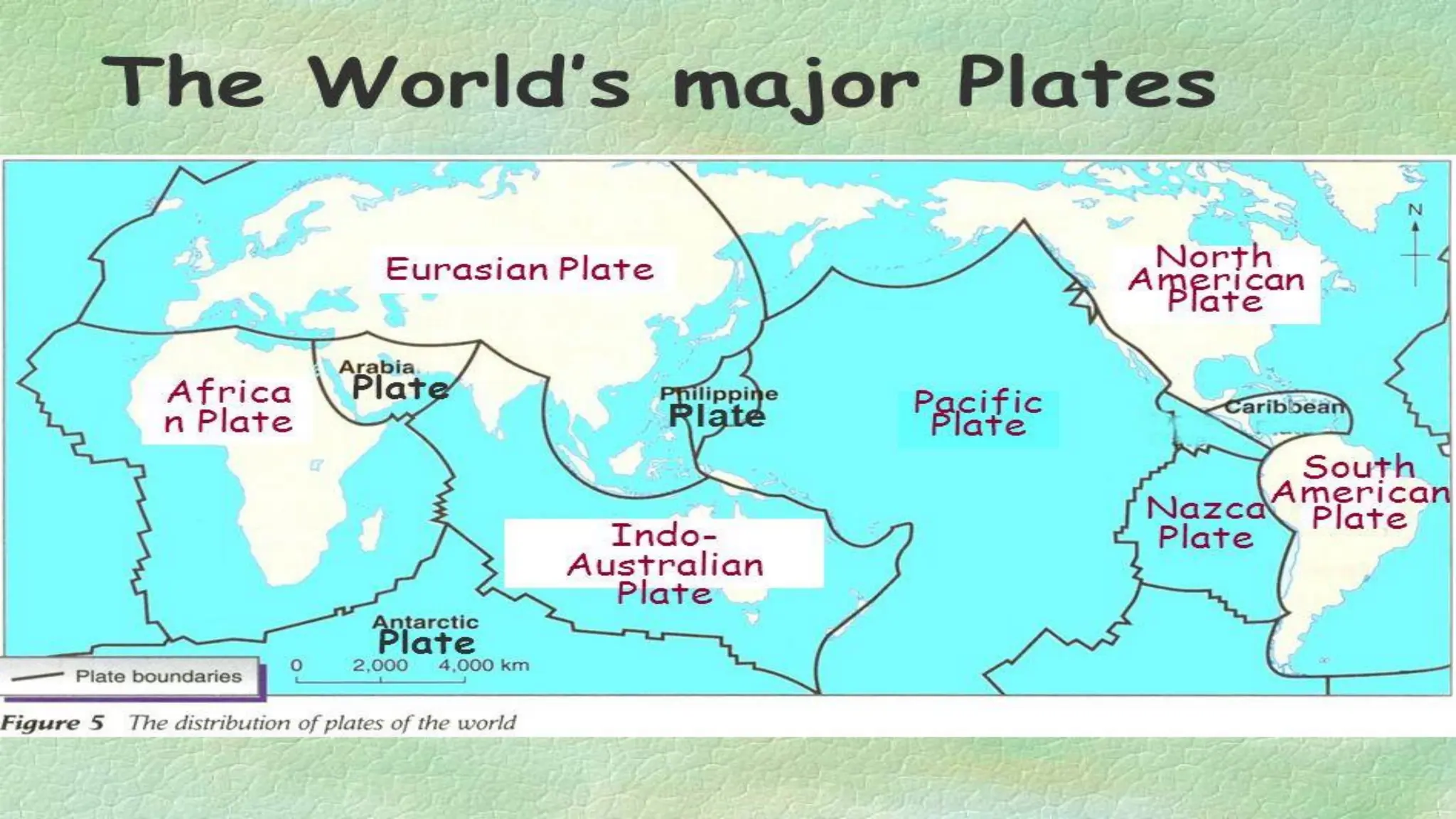
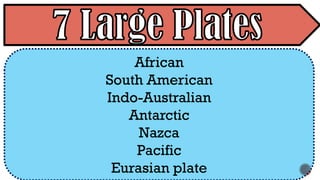
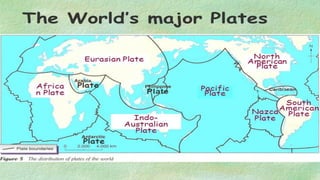
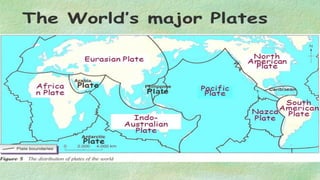
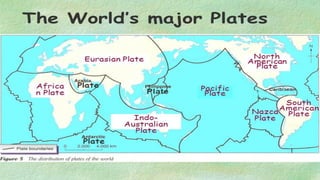
African
South American
Indo-Australian
Antarctic
Nazca
Pacific
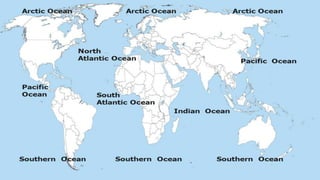
Eurasian plate
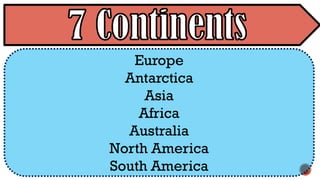
Europe
Antarctica
Asia
Africa
Australia
North America
South America
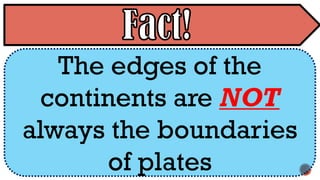
The edges of the
continents are NOT
always the boundaries
of plates
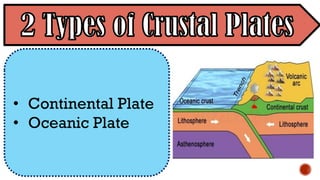
• Continental Plate
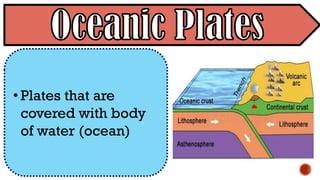
• Oceanic Plate
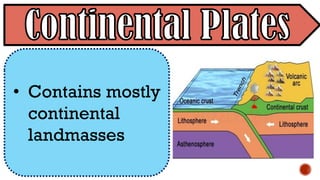
• Contains mostly
continental
landmasses
• Plates that are
covered with body
of water (ocean)
•Attributed with earthquakes,
volcanoes, and mountain
formation due to the movement
and interaction of plates.
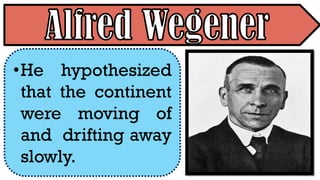
•He hypothesized
that the continent
were moving of
and drifting away
slowly.
•Continents have similar
rock patterns and
fossils.
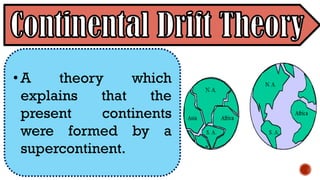
• A theory which
explains that the
present continents
were formed by a
supercontinent.
• At first, scientists were skeptical about
Wegener’s theory.
• Earth is a solid land mass
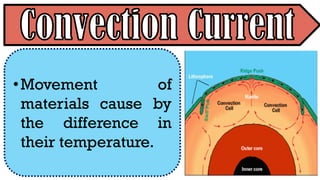
•Convection current
•Seafloor spreading
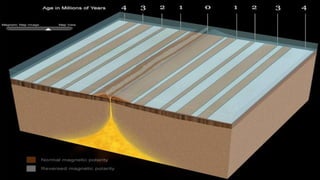
•Paleomagnetism
•Movement of
materials cause by
the difference in
their temperature.
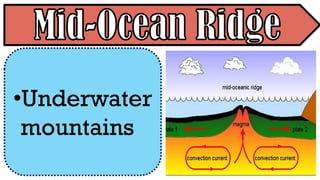
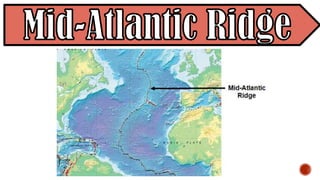
•Underwater
mountains
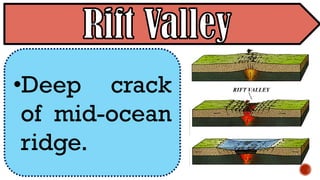
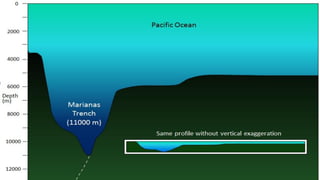
•Deep crack
of mid-ocean
ridge.
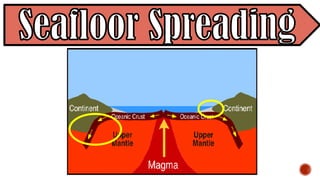
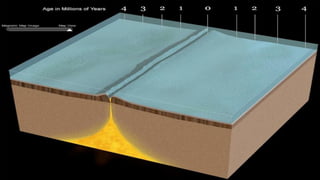
Process that occurs at mid-ocean
ridges, where new oceanic crust is
formed through volcanic activity and
then gradually moves away from the
ridge.
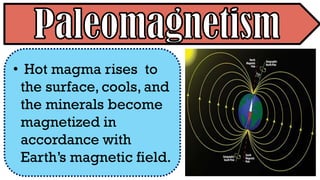
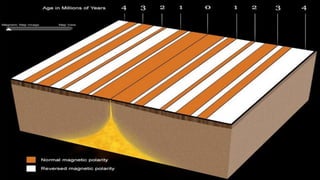
• Hot magma rises to
the surface, cools, and
the minerals become
magnetized in
accordance with
Earth’s magnetic field.
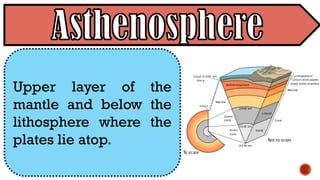
Upper layer of the
mantle and below the
lithosphere where the
plates lie atop.
Plates can carry both
continental and oceanic, or
exclusively one or the other.
Eg. Pacific plate is entirely
oceanic
• Move apart
• Collide
• Slide and glide
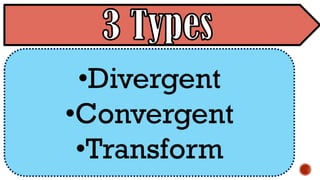
•Divergent
•Convergent
•Transform
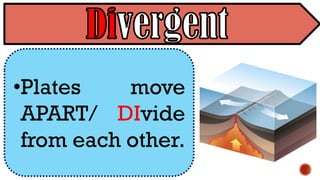
•Plates move
APART/ DIvide
from each other.
• Also called “Constructive boundaries”
• New material is added to plates.
• Oceans are formed
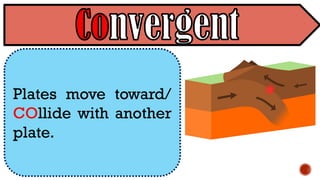
Plates move toward/
COllide with another
plate.
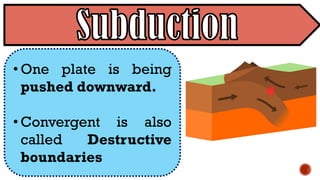
• One plate is being
pushed downward.
• Convergent is also
called Destructive
boundaries
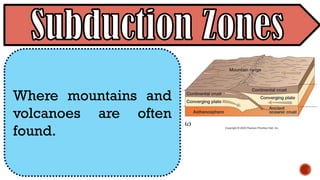
Where mountains and
volcanoes are often
found.
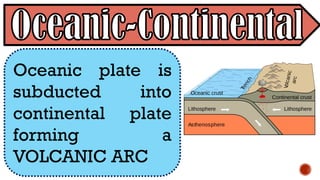
Oceanic plate is
subducted into
continental plate
forming a
VOLCANIC ARC
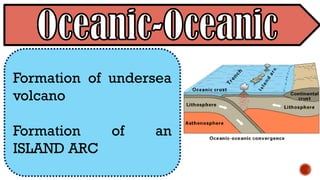
Formation of undersea
volcano
Formation of an
ISLAND ARC
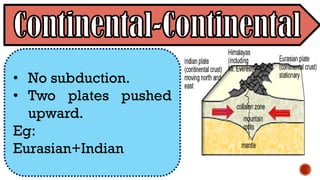
• No subduction.
• Two plates pushed
upward.
Eg:
Eurasian+Indian
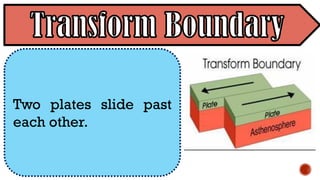
Two plates slide past
each other.
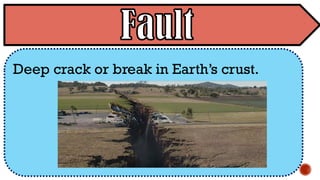
Deep crack or break in Earth’s crust.
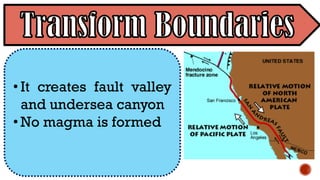
• It creates fault valley
and undersea canyon
• No magma is formed
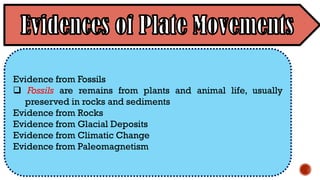
Evidence from Fossils
❑ Fossils are remains from plants and animal life, usually
preserved in rocks and sediments
Evidence from Rocks
Evidence from Glacial Deposits
Evidence from Climatic Change
Evidence from Paleomagnetism
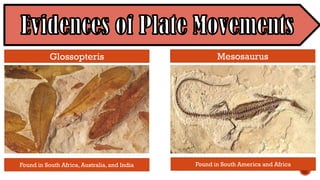
Found in South Africa, Australia, and India Found in South America and Africa
Glossopteris Mesosaurus
• What evidences proved Earth’s landmasses have
split?
• What resulted from the movements of Earth’s
landmasses?
• What can we learn from fossils?

GR10_Chapter-2_Student-Copy-World Major Platespdf