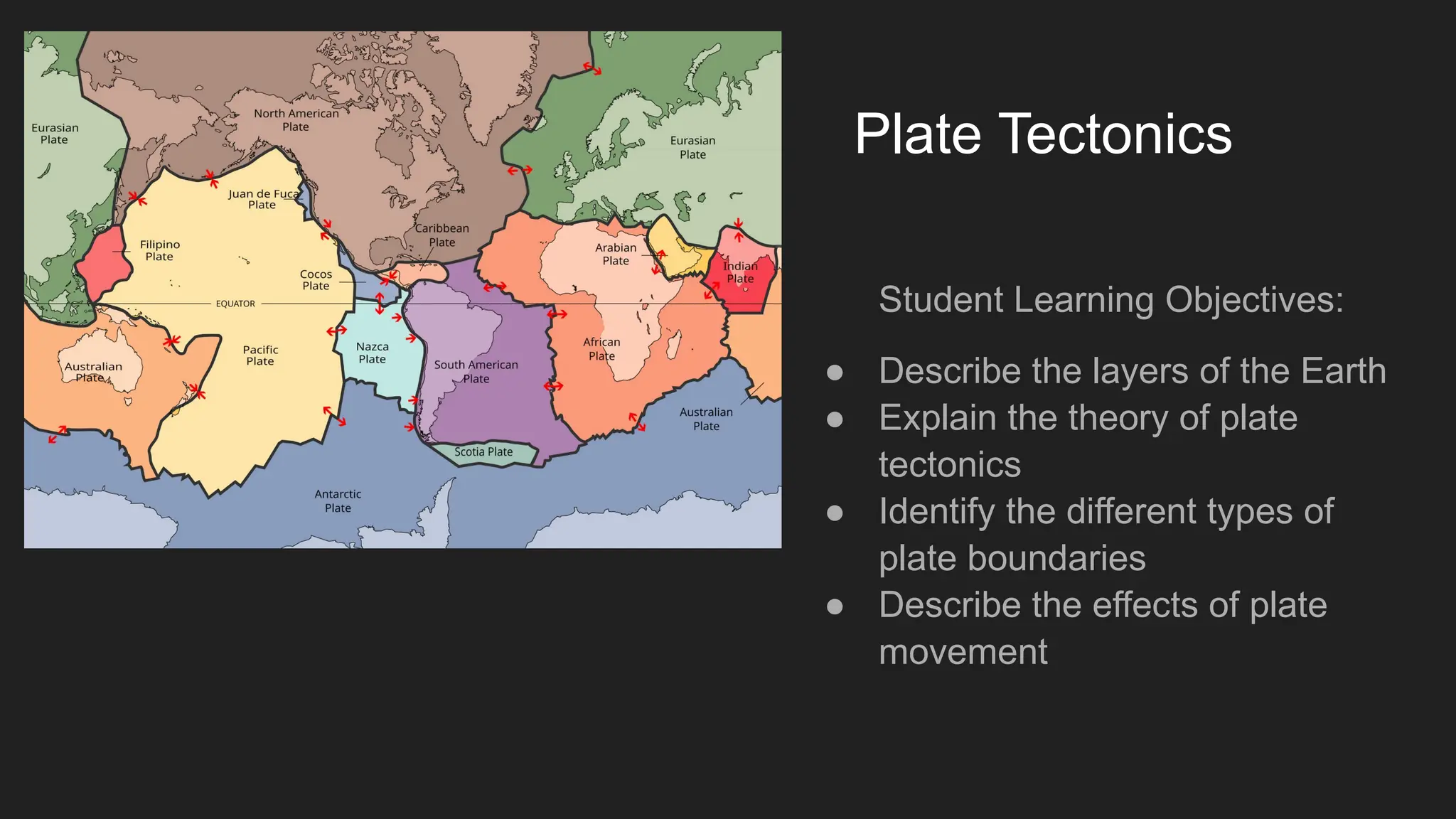
Plate Tectonics
Student Learning Objectives:
● Describe the layers of the Earth
● Explain the theory of plate
tectonics
● Identify the different types of
plate boundaries
● Describe the effects of plate
movement
The Earth's Moving
Puzzle
● Ever heard of Plate Tectonics?
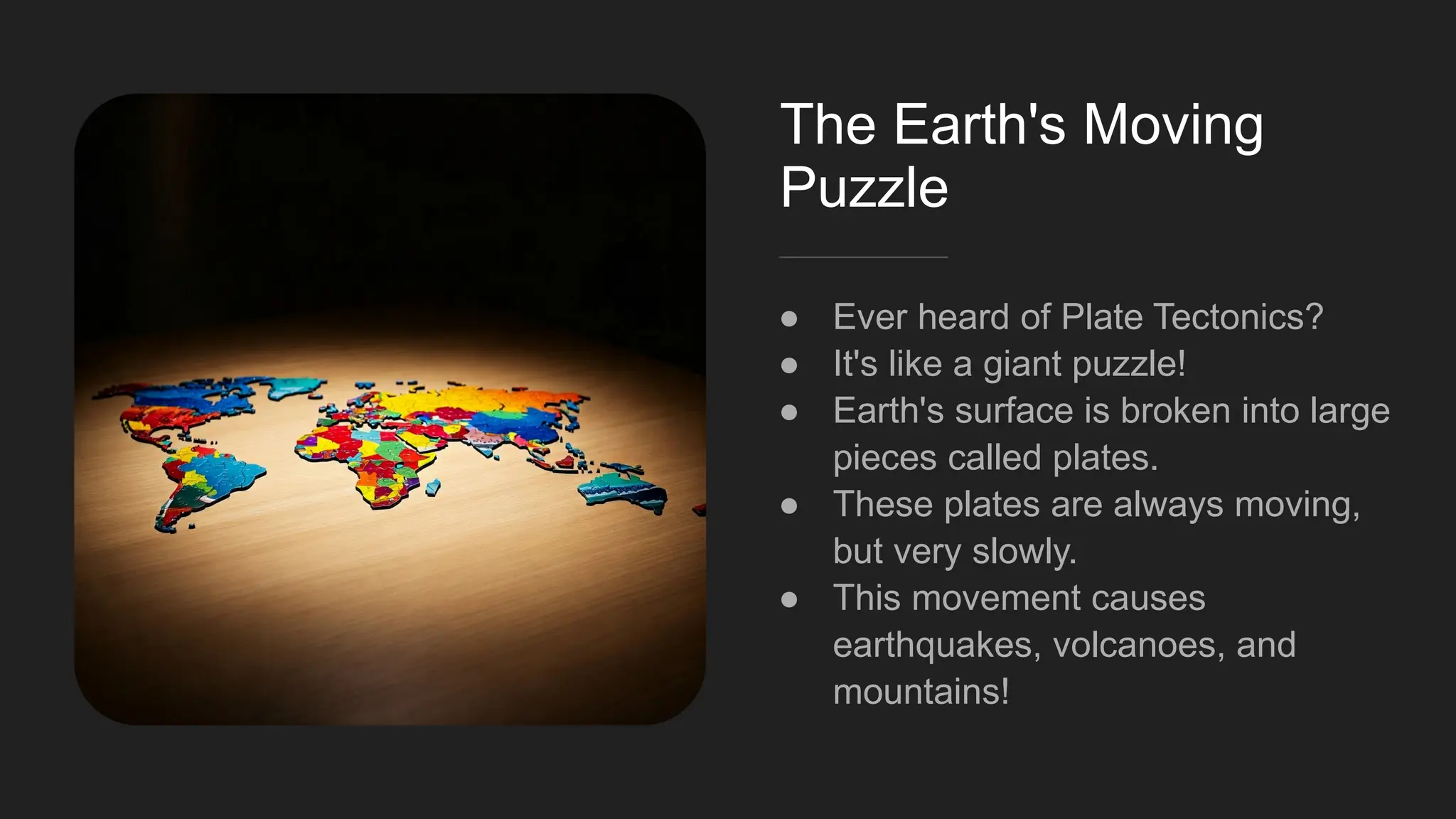
● It's like a giant puzzle!
● Earth's surface is broken into large
pieces called plates.
● These plates are always moving,
but very slowly.
● This movement causes
earthquakes, volcanoes, and
mountains!
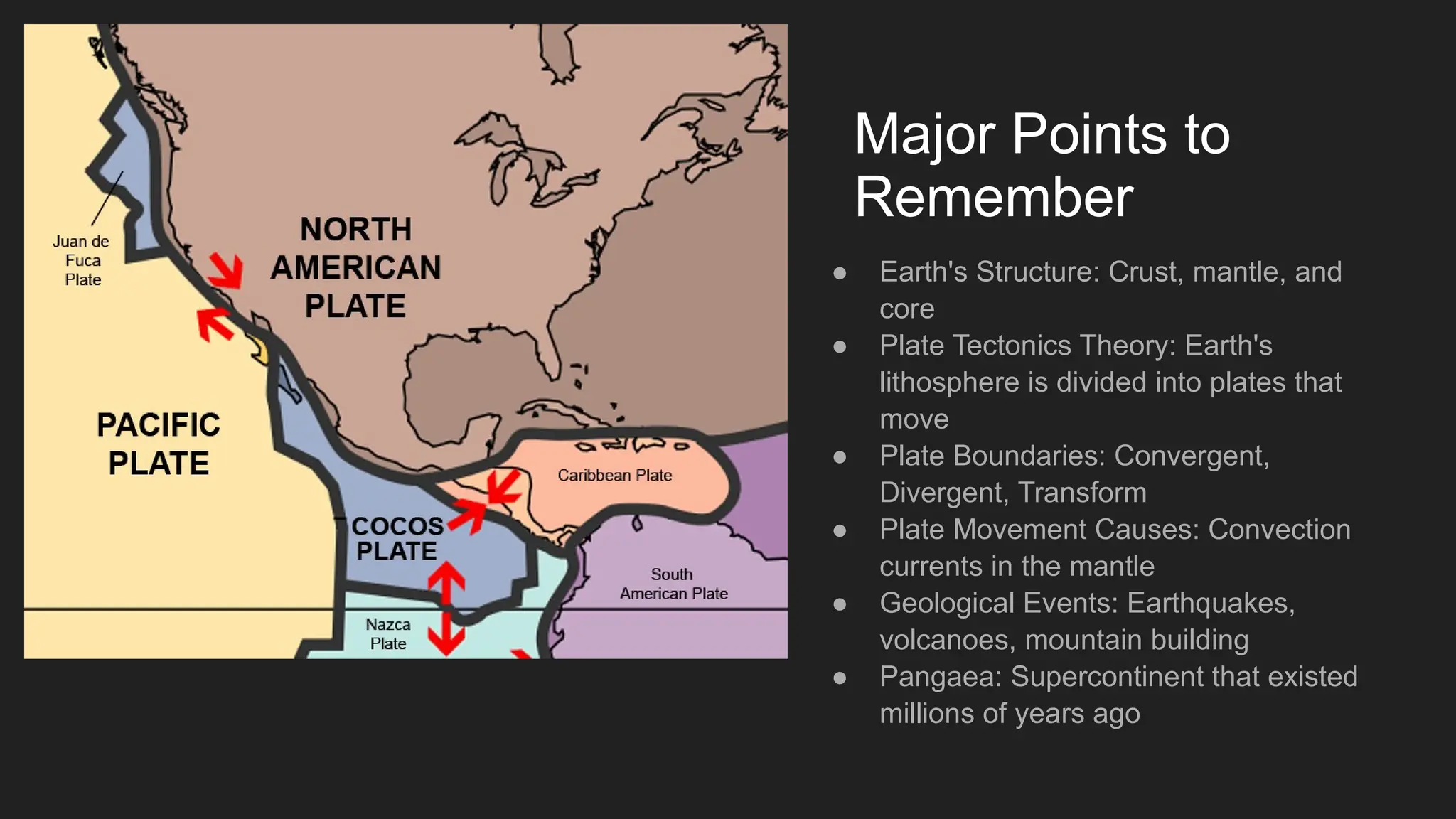
Major Points to
Remember
● Earth's Structure: Crust, mantle, and
core
● Plate Tectonics Theory: Earth's
lithosphere is divided into plates that
move
● Plate Boundaries: Convergent,
Divergent, Transform
● Plate Movement Causes: Convection
currents in the mantle
● Geological Events: Earthquakes,
volcanoes, mountain building
● Pangaea: Supercontinent that existed
millions of years ago
Earth's Layers
● Earth is made up of 3
layers
● Crust: Outermost layer,
thinnest
● Mantle: Thickest layer, hot
and dense
● Core: Innermost layer,
extremely hot
Earth's Moving Plates
● The Earth's lithosphere (the crust
and upper mantle) is broken into
pieces called plates.
● These plates are like puzzle
pieces that fit together.
● The plates are constantly moving,
but very slowly (about as fast as
your fingernails grow).
● This movement is caused by
convection currents in the mantle
(the layer below the crust).
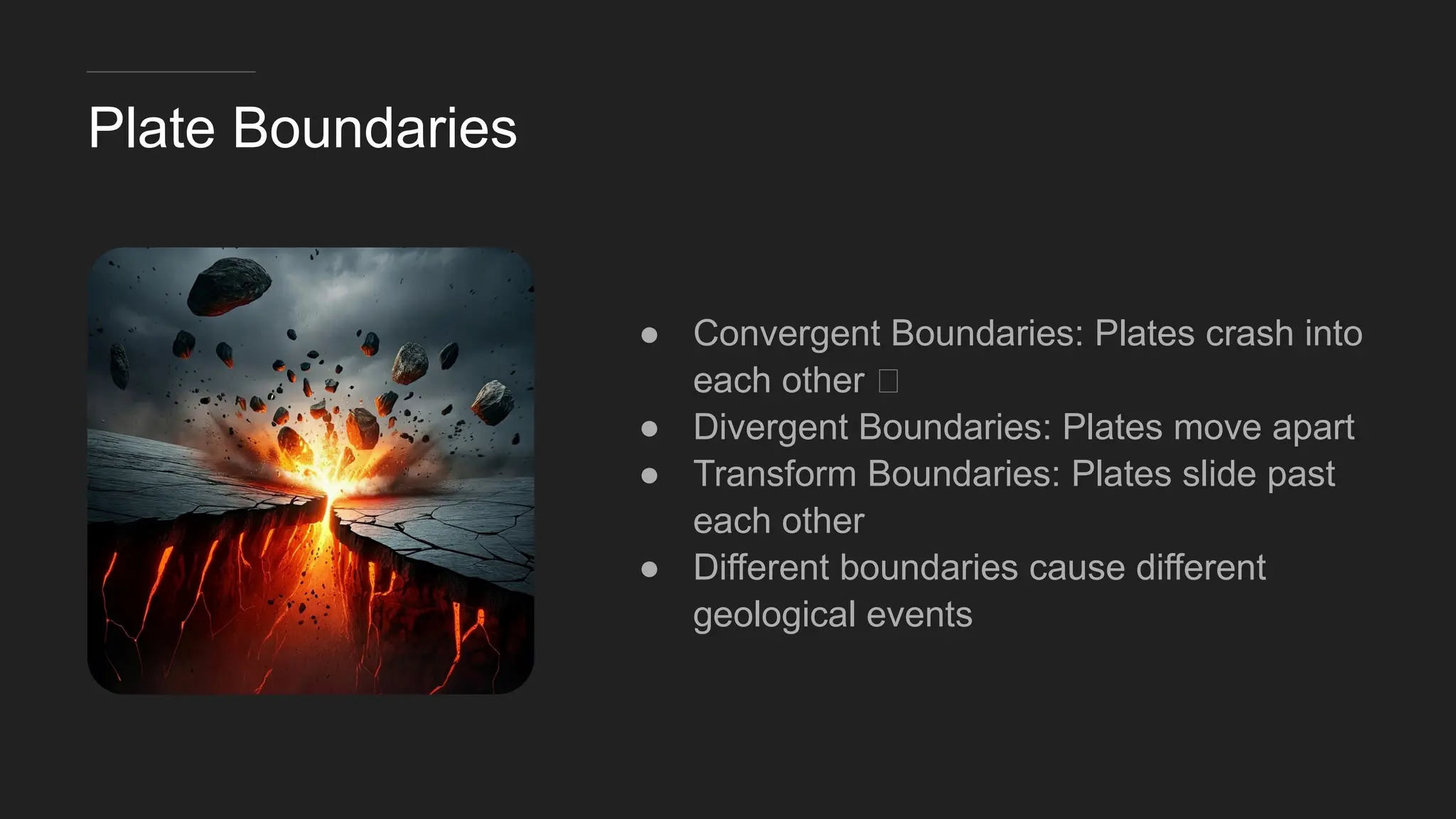
Plate Boundaries
● Convergent Boundaries: Plates crash into
each other 💥
● Divergent Boundaries: Plates move apart
● Transform Boundaries: Plates slide past
each other
● Different boundaries cause different
geological events
Mantle Convection
● Heat from the Earth's core causes
convection currents in the mantle.
● Hot material rises, cool material
sinks, creating a circular motion.
● This movement drags the plates
along, causing them to shift.
● Think of it like a pot of boiling
water, the plates are like the
croutons on top moving around!
01
02
03
04
Geological Events
Plate movement
causes events
like earthquakes,
volcanoes, and
tsunamis.
Earthquakes
happen when
plates suddenly
shift or break.
Volcanoes form
when magma
rises to the
surface at plate
boundaries.
Mountains are
created when
plates collide
and push up the
land.
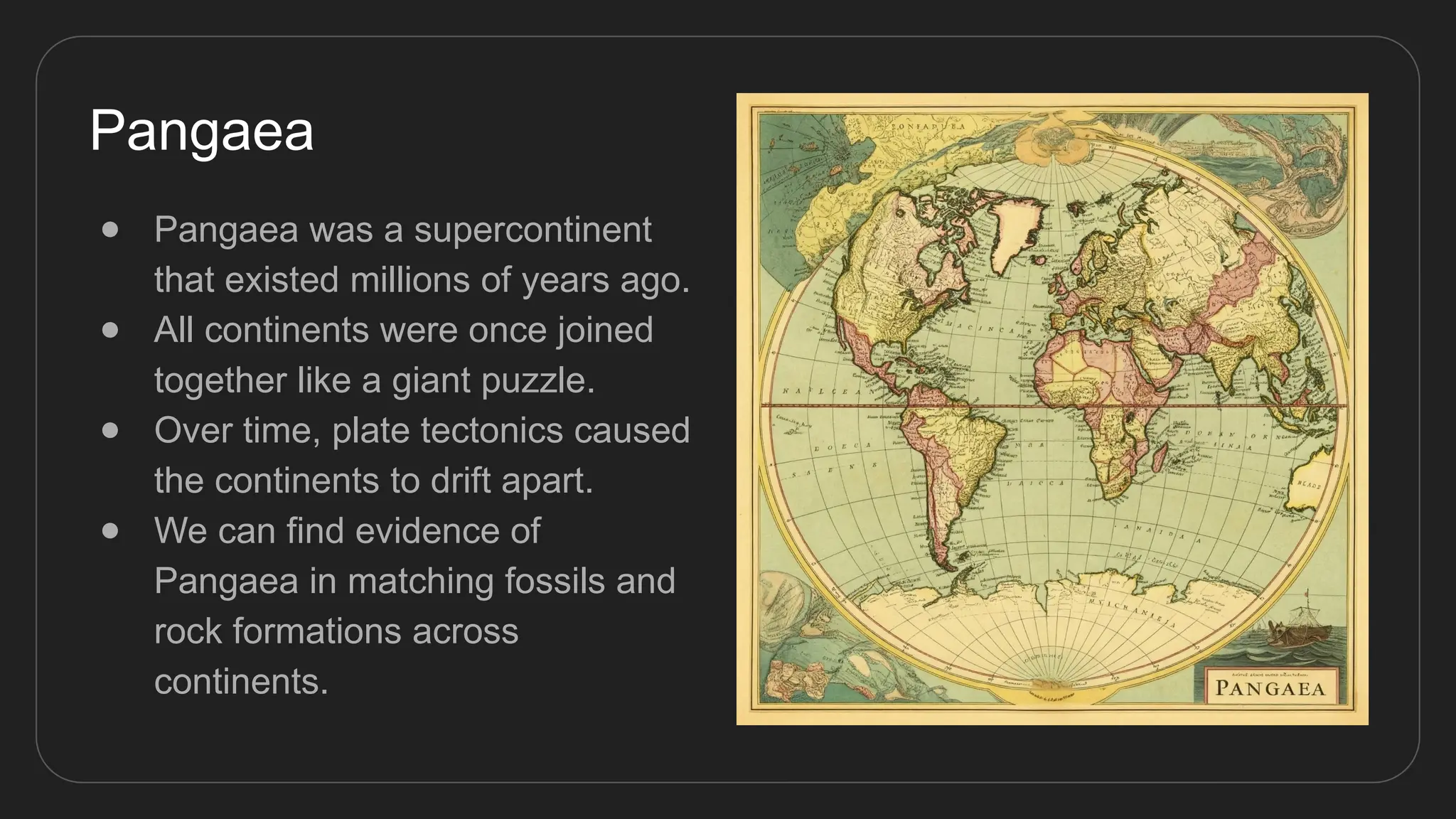
Pangaea
● Pangaea was a supercontinent
that existed millions of years ago.
● All continents were once joined
together like a giant puzzle.
● Over time, plate tectonics caused
the continents to drift apart.
● We can find evidence of
Pangaea in matching fossils and
rock formations across
continents.
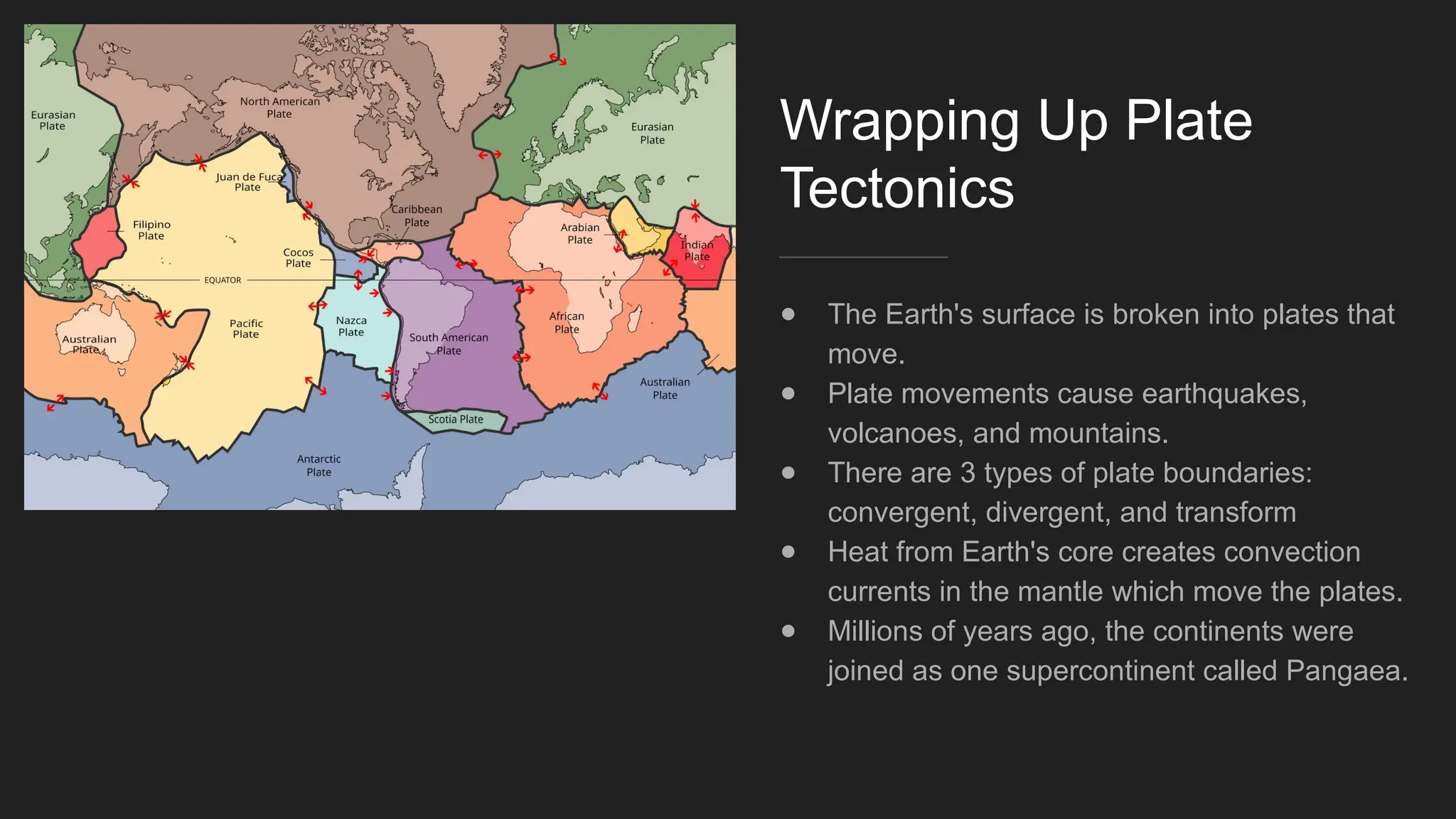
Wrapping Up Plate
Tectonics
● The Earth's surface is broken into plates that
move.
● Plate movements cause earthquakes,
volcanoes, and mountains.
● There are 3 types of plate boundaries:
convergent, divergent, and transform
● Heat from Earth's core creates convection
currents in the mantle which move the plates.
● Millions of years ago, the continents were
joined as one supercontinent called Pangaea.
01
02
03
Let's Discuss!
What evidence do we have
that Earth's plates are moving?
How do the different types of
plate boundaries shape the
Earth's surface?
How does the concept of Pangaea
help explain the distribution of
fossils and landforms?
PlateTectonics6thGradeLessonSlideShowPresentationFREEEDITABLE-1.pptx

  • 1.
    Plate Tectonics Student LearningObjectives: ● Describe the layers of the Earth ● Explain the theory of plate tectonics ● Identify the different types of plate boundaries ● Describe the effects of plate movement
  • 2.
    The Earth's Moving Puzzle ●Ever heard of Plate Tectonics? ● It's like a giant puzzle! ● Earth's surface is broken into large pieces called plates. ● These plates are always moving, but very slowly. ● This movement causes earthquakes, volcanoes, and mountains!
  • 3.
    Major Points to Remember ●Earth's Structure: Crust, mantle, and core ● Plate Tectonics Theory: Earth's lithosphere is divided into plates that move ● Plate Boundaries: Convergent, Divergent, Transform ● Plate Movement Causes: Convection currents in the mantle ● Geological Events: Earthquakes, volcanoes, mountain building ● Pangaea: Supercontinent that existed millions of years ago
  • 4.
    Earth's Layers ● Earthis made up of 3 layers ● Crust: Outermost layer, thinnest ● Mantle: Thickest layer, hot and dense ● Core: Innermost layer, extremely hot
  • 5.
    Earth's Moving Plates ●The Earth's lithosphere (the crust and upper mantle) is broken into pieces called plates. ● These plates are like puzzle pieces that fit together. ● The plates are constantly moving, but very slowly (about as fast as your fingernails grow). ● This movement is caused by convection currents in the mantle (the layer below the crust).
  • 6.
    Plate Boundaries ● ConvergentBoundaries: Plates crash into each other 💥 ● Divergent Boundaries: Plates move apart ● Transform Boundaries: Plates slide past each other ● Different boundaries cause different geological events
  • 7.
    Mantle Convection ● Heatfrom the Earth's core causes convection currents in the mantle. ● Hot material rises, cool material sinks, creating a circular motion. ● This movement drags the plates along, causing them to shift. ● Think of it like a pot of boiling water, the plates are like the croutons on top moving around!
  • 8.
    01 02 03 04 Geological Events Plate movement causesevents like earthquakes, volcanoes, and tsunamis. Earthquakes happen when plates suddenly shift or break. Volcanoes form when magma rises to the surface at plate boundaries. Mountains are created when plates collide and push up the land.
  • 9.
    Pangaea ● Pangaea wasa supercontinent that existed millions of years ago. ● All continents were once joined together like a giant puzzle. ● Over time, plate tectonics caused the continents to drift apart. ● We can find evidence of Pangaea in matching fossils and rock formations across continents.
  • 10.
    Wrapping Up Plate Tectonics ●The Earth's surface is broken into plates that move. ● Plate movements cause earthquakes, volcanoes, and mountains. ● There are 3 types of plate boundaries: convergent, divergent, and transform ● Heat from Earth's core creates convection currents in the mantle which move the plates. ● Millions of years ago, the continents were joined as one supercontinent called Pangaea.
  • 11.
    01 02 03 Let's Discuss! What evidencedo we have that Earth's plates are moving? How do the different types of plate boundaries shape the Earth's surface? How does the concept of Pangaea help explain the distribution of fossils and landforms?