Grade 1 Mathematics Unit Preview
                Quarter 1: Number Relationships (Number Development 2)

Objectives: (Your student will be able to)

    •   Read, write, and represent whole numbers up to 100.
    •   Describe numbers as odd or even.
    •   Locate, sequence, and write ordinal numbers first through tenth. For example 1st, 2nd, 3rd, 4th, 5th…
    •   Model addition by combining sets of concrete objects and describe the results using words and
        pictures.
    •   Model subtraction by separating sets of concrete objects and describe the results using words and
        pictures.
    •   State the number that comes before and after a given whole number.
    •   Compare and order whole numbers up to 99 using terms such as greater than, less than, equal to.
    •   Locate numbers on a number line up to 50. For example,

    •   Estimate quantities up to 50 and use the term about.

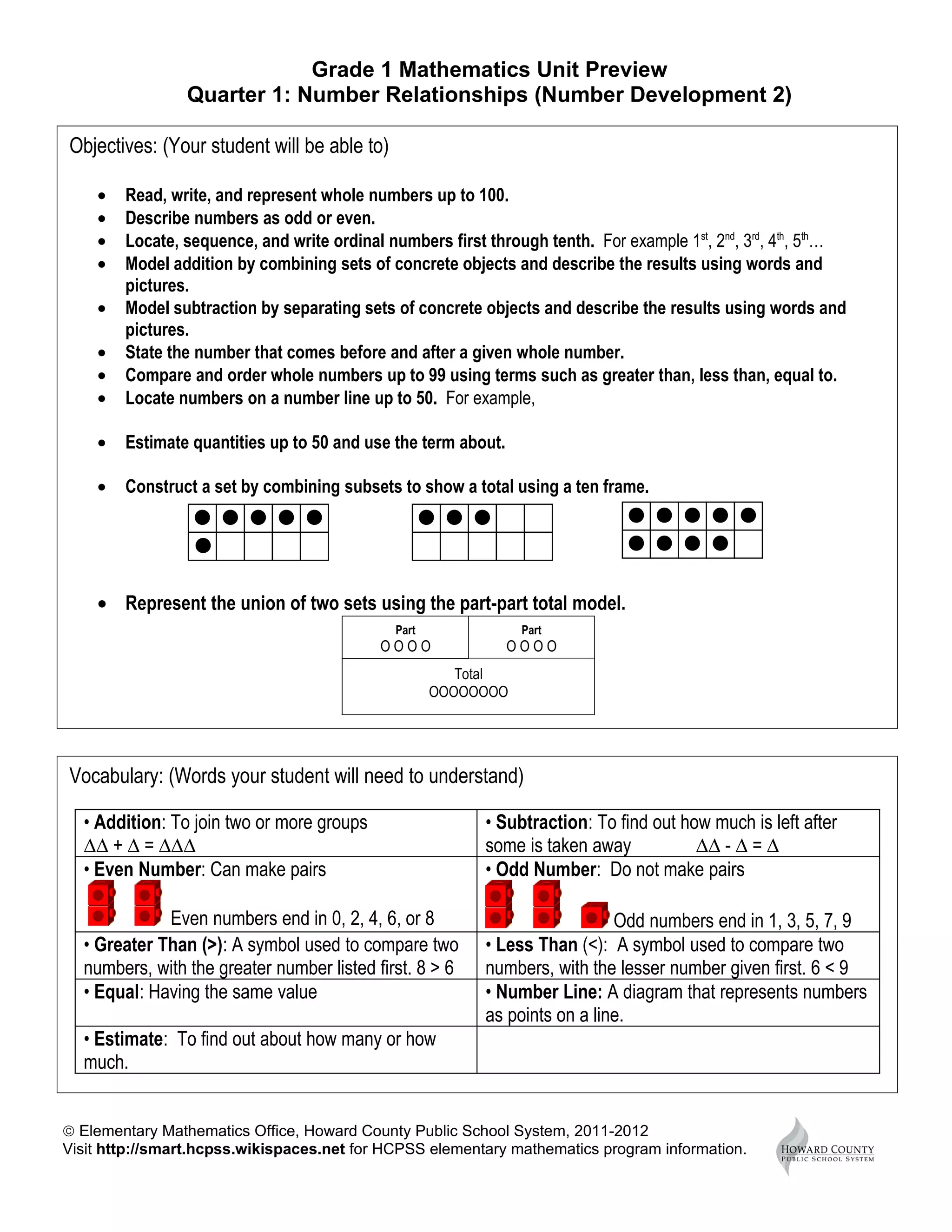
    •   Construct a set by combining subsets to show a total using a ten frame.


    • Represent the union of two sets using the part-part total model.
                                             Part               Part
                                           OOOO                OOOO
                                                       Total
                                                    OOOOOOOO


Vocabulary: (Words your student will need to understand)

  • Addition: To join two or more groups                  • Subtraction: To find out how much is left after
  ∆∆ + ∆ = ∆∆∆                                            some is taken away           ∆∆ - ∆ = ∆
  • Even Number: Can make pairs                           • Odd Number: Do not make pairs

             Even numbers end in 0, 2, 4, 6, or 8                           Odd numbers end in 1, 3, 5, 7, 9
  • Greater Than (>): A symbol used to compare two        • Less Than (<): A symbol used to compare two
  numbers, with the greater number listed first. 8 > 6    numbers, with the lesser number given first. 6 < 9
  • Equal: Having the same value                          • Number Line: A diagram that represents numbers
                                                          as points on a line.
  • Estimate: To find out about how many or how
  much.


© Elementary Mathematics Office, Howard County Public School System, 2011-2012
Visit http://smart.hcpss.wikispaces.net for HCPSS elementary mathematics program information.
Activities to do with your student (in addition to homework, optional):

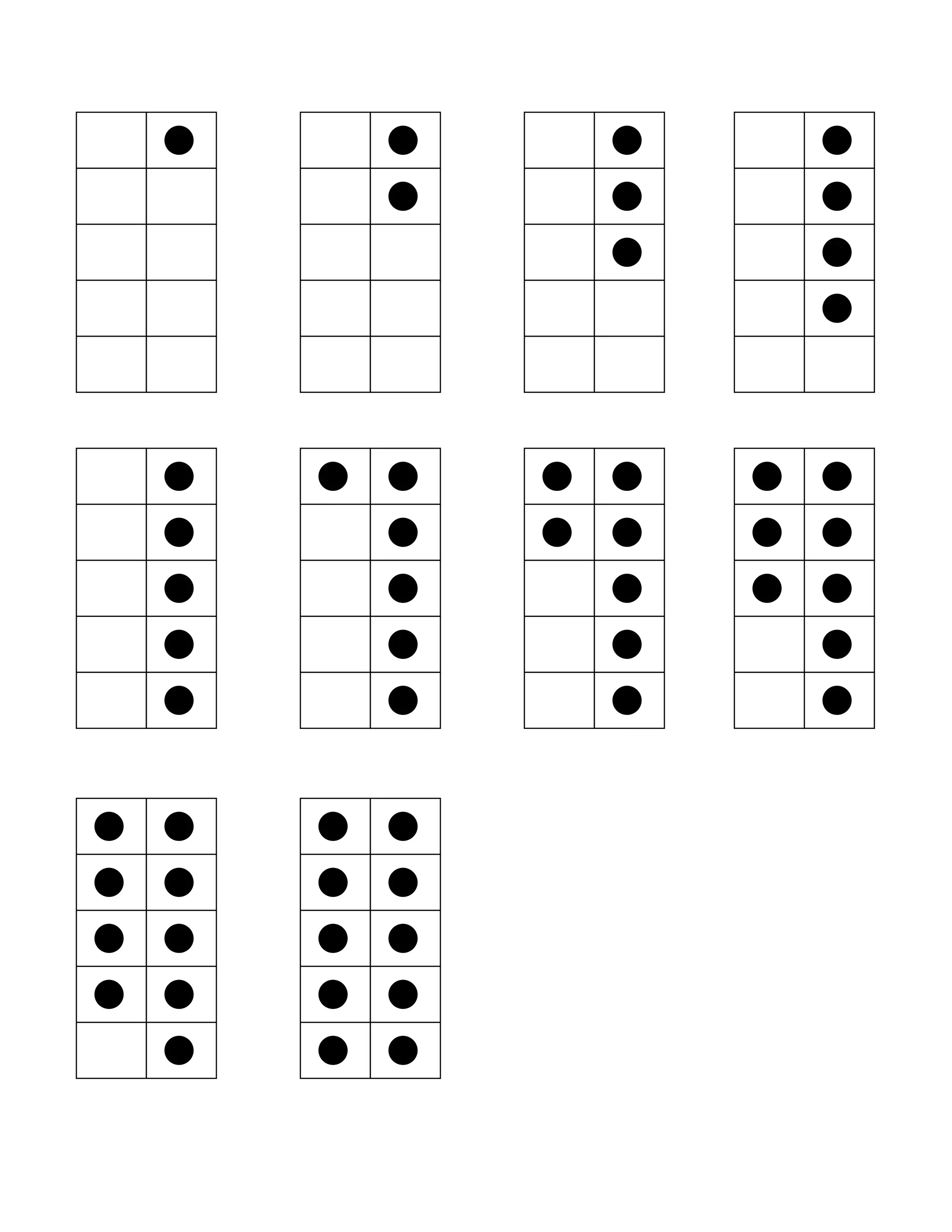
   •   Have students use objects to make even and odd groups and ask them to share why they are even or odd.
   •   While waiting in line at a store or in the bank, talk with your student about who is first, second, third etc. in line.
   •   Estimate the number of objects in a container – jellybeans in a bowl, pennies in a jar, cheerios in a baggie etc.
   •   Put different items into groups and talk about which group has more or less items using the terms greater than
       and less than.
Gr1 q1numberpreview2

Gr1 q1numberpreview2

  • 1.
    Grade 1 MathematicsUnit Preview Quarter 1: Number Relationships (Number Development 2) Objectives: (Your student will be able to) • Read, write, and represent whole numbers up to 100. • Describe numbers as odd or even. • Locate, sequence, and write ordinal numbers first through tenth. For example 1st, 2nd, 3rd, 4th, 5th… • Model addition by combining sets of concrete objects and describe the results using words and pictures. • Model subtraction by separating sets of concrete objects and describe the results using words and pictures. • State the number that comes before and after a given whole number. • Compare and order whole numbers up to 99 using terms such as greater than, less than, equal to. • Locate numbers on a number line up to 50. For example, • Estimate quantities up to 50 and use the term about. • Construct a set by combining subsets to show a total using a ten frame. • Represent the union of two sets using the part-part total model. Part Part OOOO OOOO Total OOOOOOOO Vocabulary: (Words your student will need to understand) • Addition: To join two or more groups • Subtraction: To find out how much is left after ∆∆ + ∆ = ∆∆∆ some is taken away ∆∆ - ∆ = ∆ • Even Number: Can make pairs • Odd Number: Do not make pairs Even numbers end in 0, 2, 4, 6, or 8 Odd numbers end in 1, 3, 5, 7, 9 • Greater Than (>): A symbol used to compare two • Less Than (<): A symbol used to compare two numbers, with the greater number listed first. 8 > 6 numbers, with the lesser number given first. 6 < 9 • Equal: Having the same value • Number Line: A diagram that represents numbers as points on a line. • Estimate: To find out about how many or how much. © Elementary Mathematics Office, Howard County Public School System, 2011-2012 Visit http://smart.hcpss.wikispaces.net for HCPSS elementary mathematics program information.
  • 2.
    Activities to dowith your student (in addition to homework, optional): • Have students use objects to make even and odd groups and ask them to share why they are even or odd. • While waiting in line at a store or in the bank, talk with your student about who is first, second, third etc. in line. • Estimate the number of objects in a container – jellybeans in a bowl, pennies in a jar, cheerios in a baggie etc. • Put different items into groups and talk about which group has more or less items using the terms greater than and less than.