The document discusses governance analysis using enterprise architecture. It describes the Zachman framework which provides a way to document relationships between different aspects of an enterprise. The framework uses matrices to illustrate relationships between data, processes, locations, business units, events and business plans. It also discusses how a strategic model can be used to automatically generate the rows and columns for these matrices. The process involves developing a strategic model through workshops with management and then using this model to document the various components needed for governance analysis such as activities, data, locations and business units.
What is Governance?
•Relates to consistent management ,Policies , guidance,
processes and decision rights for given area of
responsibility.
3.
Surbanes-oxley
• Surbanes-oxley actof 2002
• Named as company accounting reform and investor
protection
• Most important goals of the act is to ensure that
company directors and officers and aware and
accountable for the financial condition of the
company they manage.
4.
Governance Analysis Framework
•The Zachman framework provides a way to cut through
the complexity of today’s enterprises and document the
relationships that exist between each column for each
row
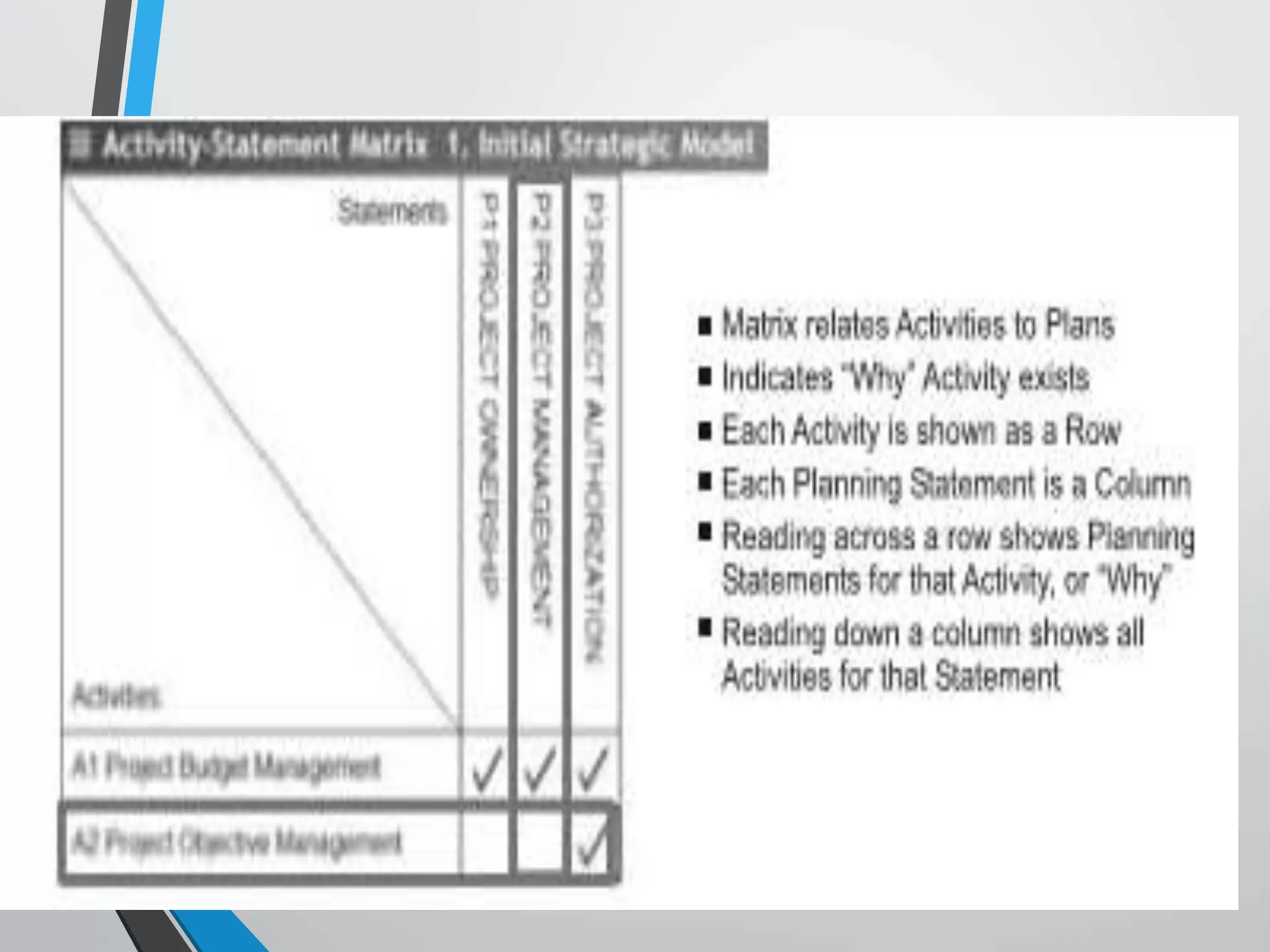
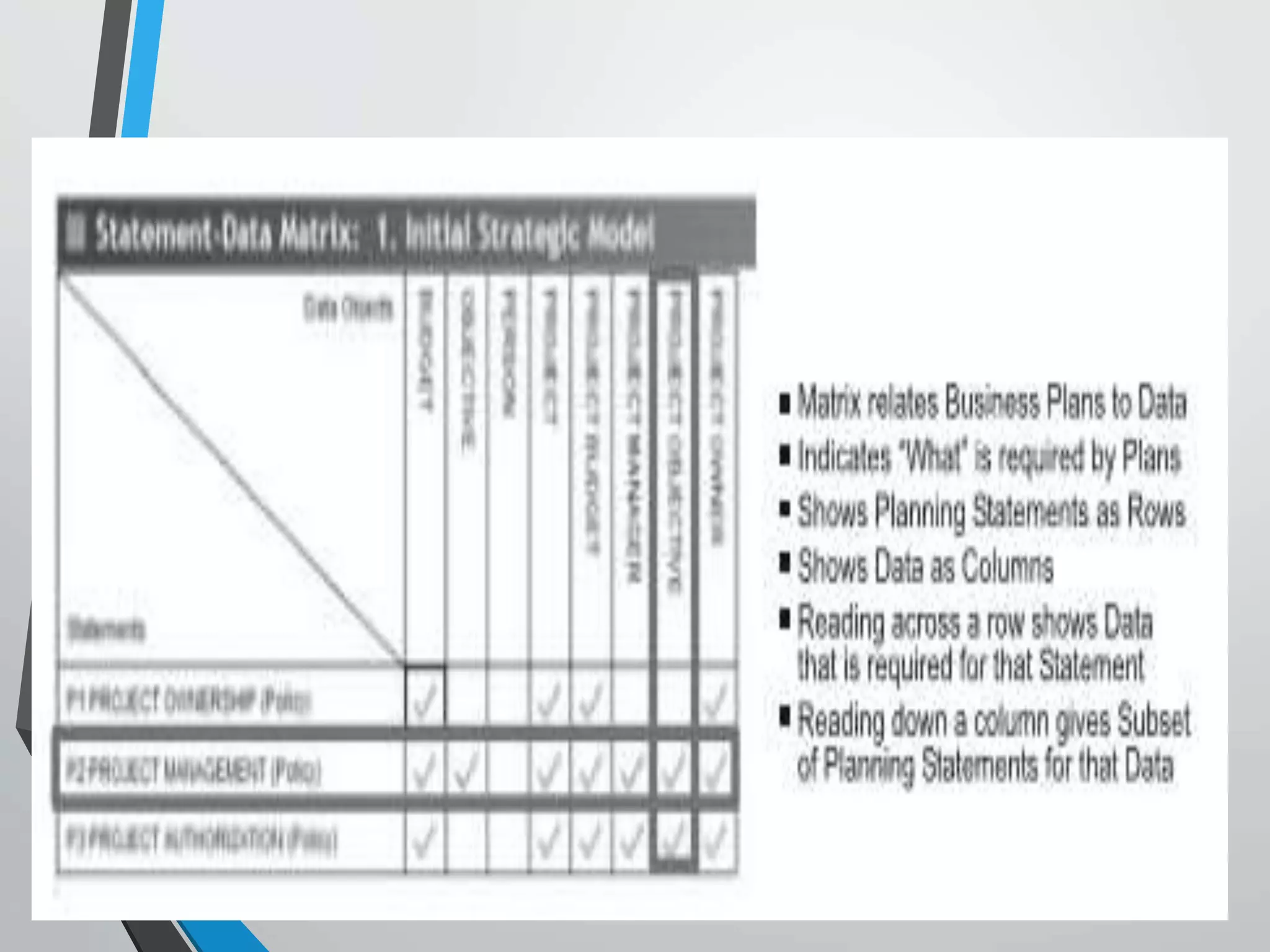
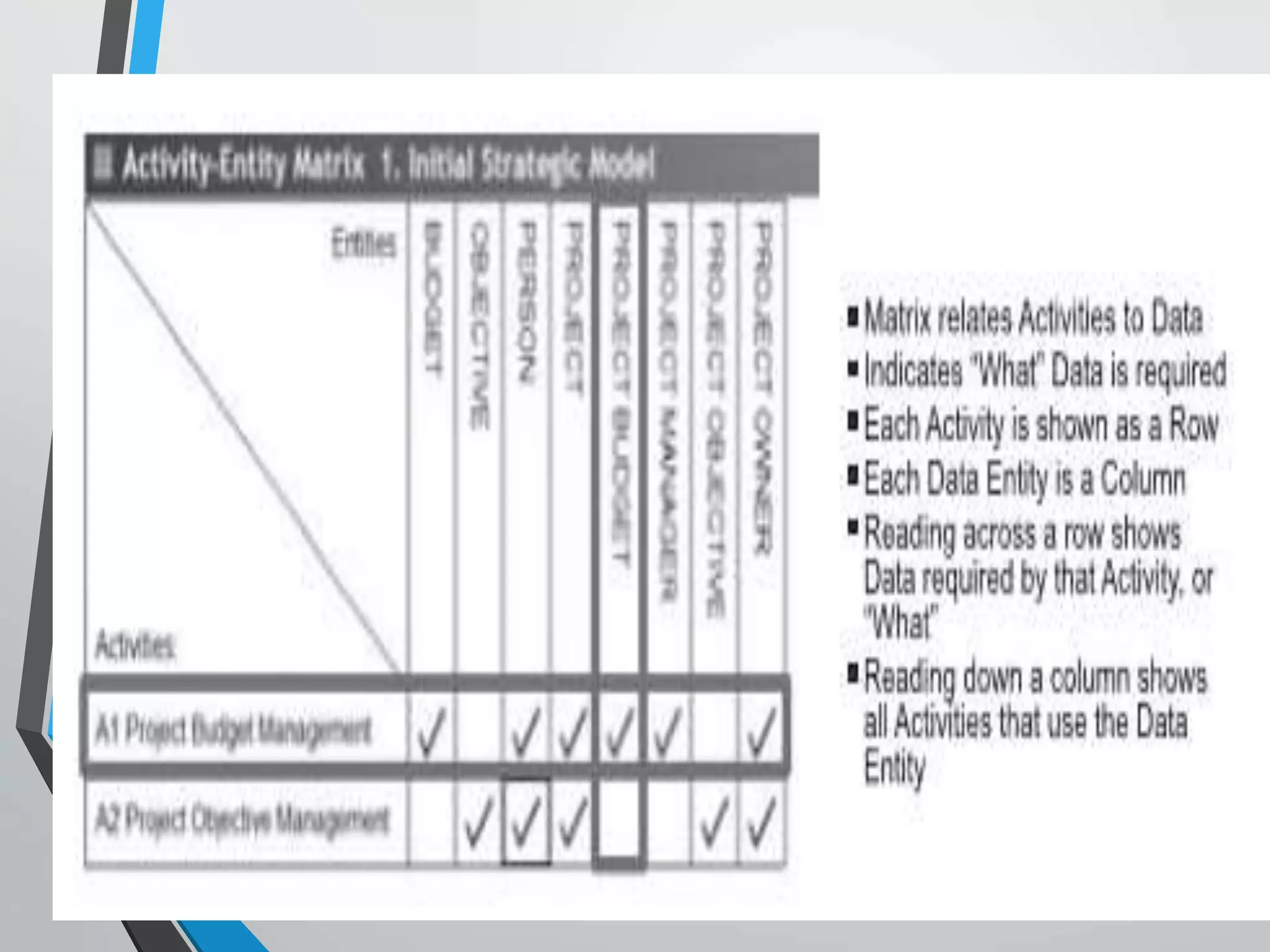
• These relationships are illustrated as matrices
8.
Different types ofmatrices
• Data matrices: data to data to locations, data to people
or business units, data to events, data to business plans
• Process matrices: processes to data, processes to
locations, processes to business units, processes to
events, processes to business plans
• Location matrices: locations to data, locations to
processes, locations to people or business units ,
locations to events, locations to business plans
9.
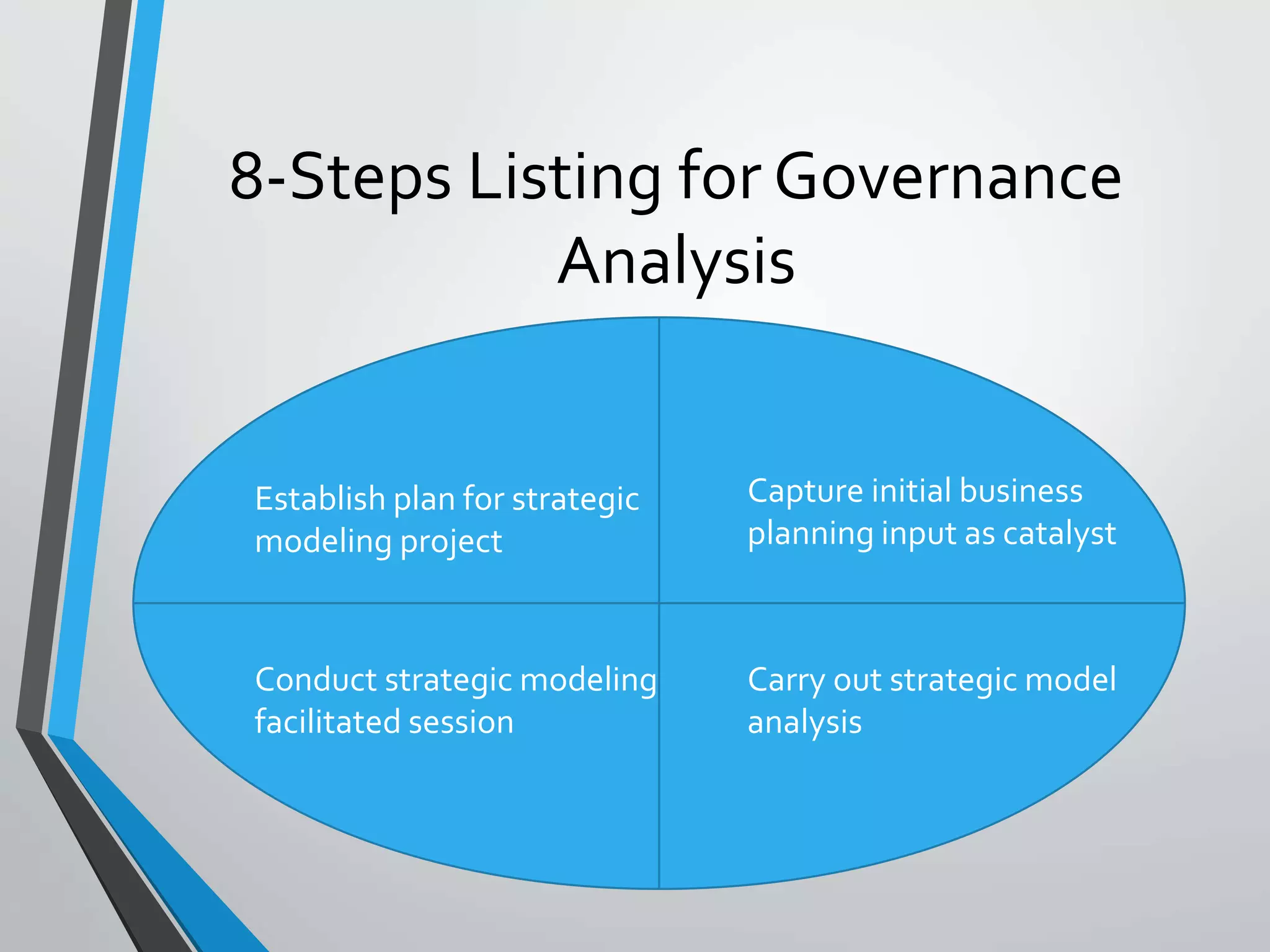
Cont.
• People orbusiness unit matrices: people or business
units to data, people or business units to processes,
people or business units to locations, people or business
units to events, people or business units to business
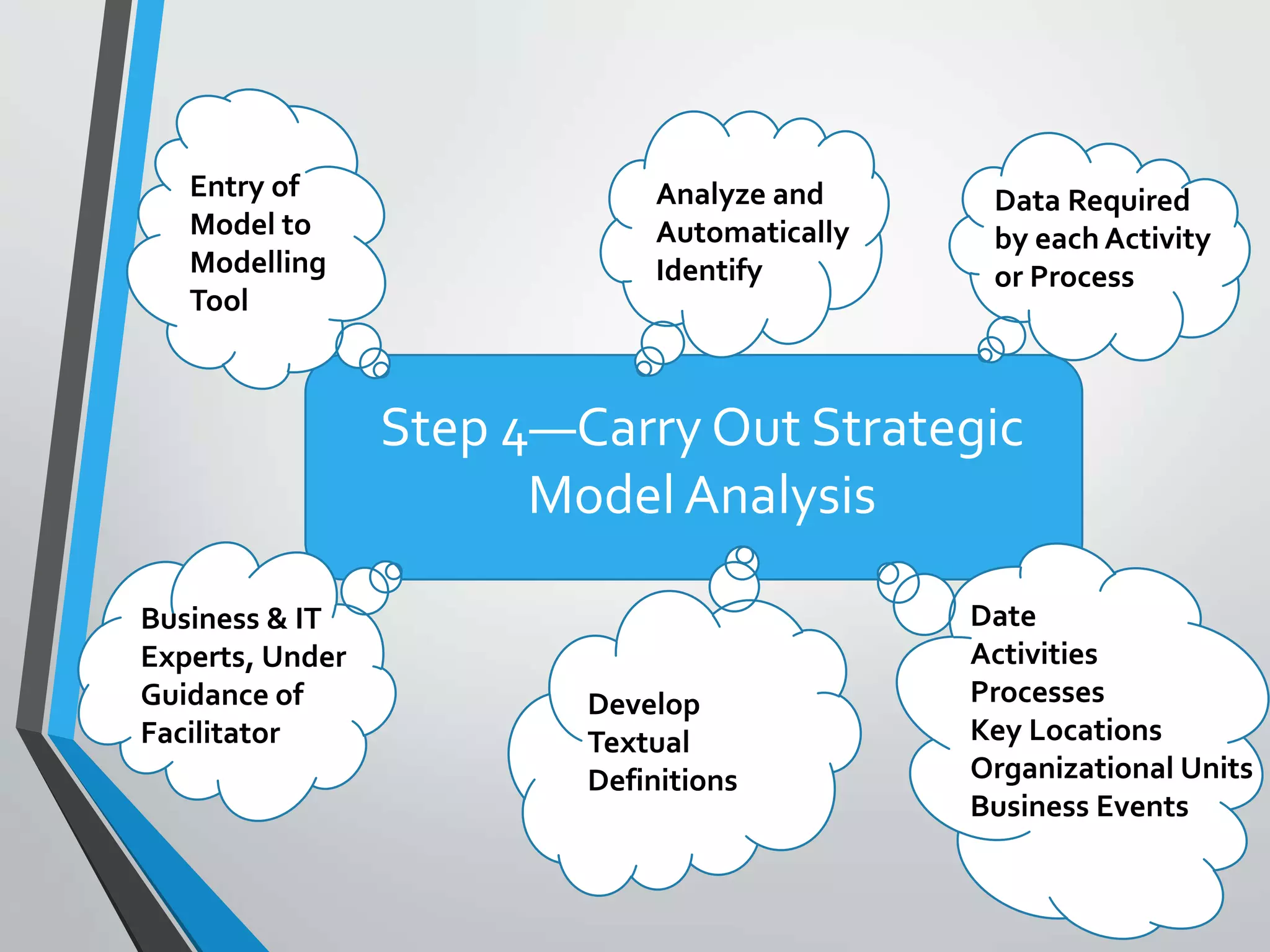
plans
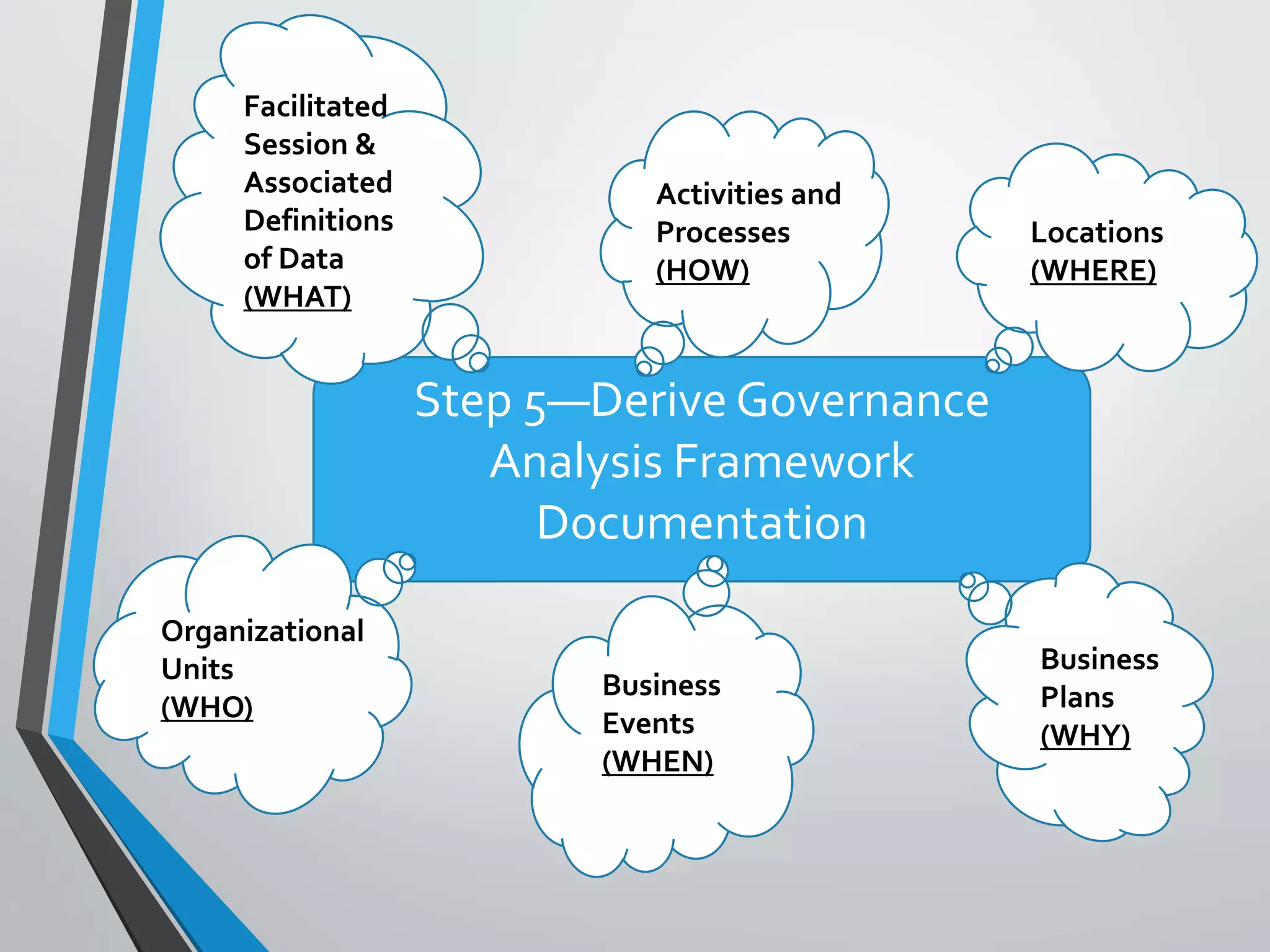
• Business event matrices: business events to data,
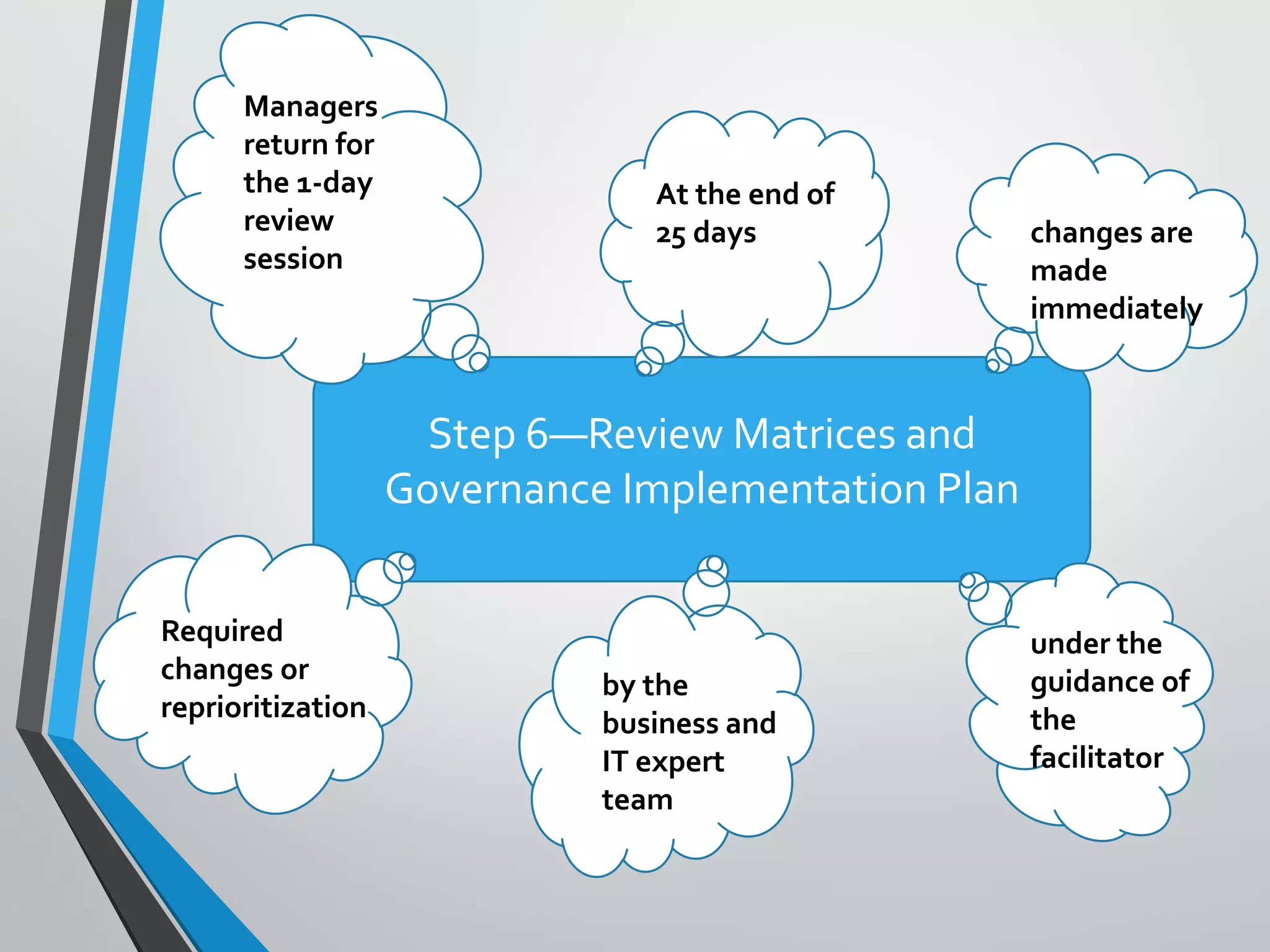
events to processes, events to locations, events to
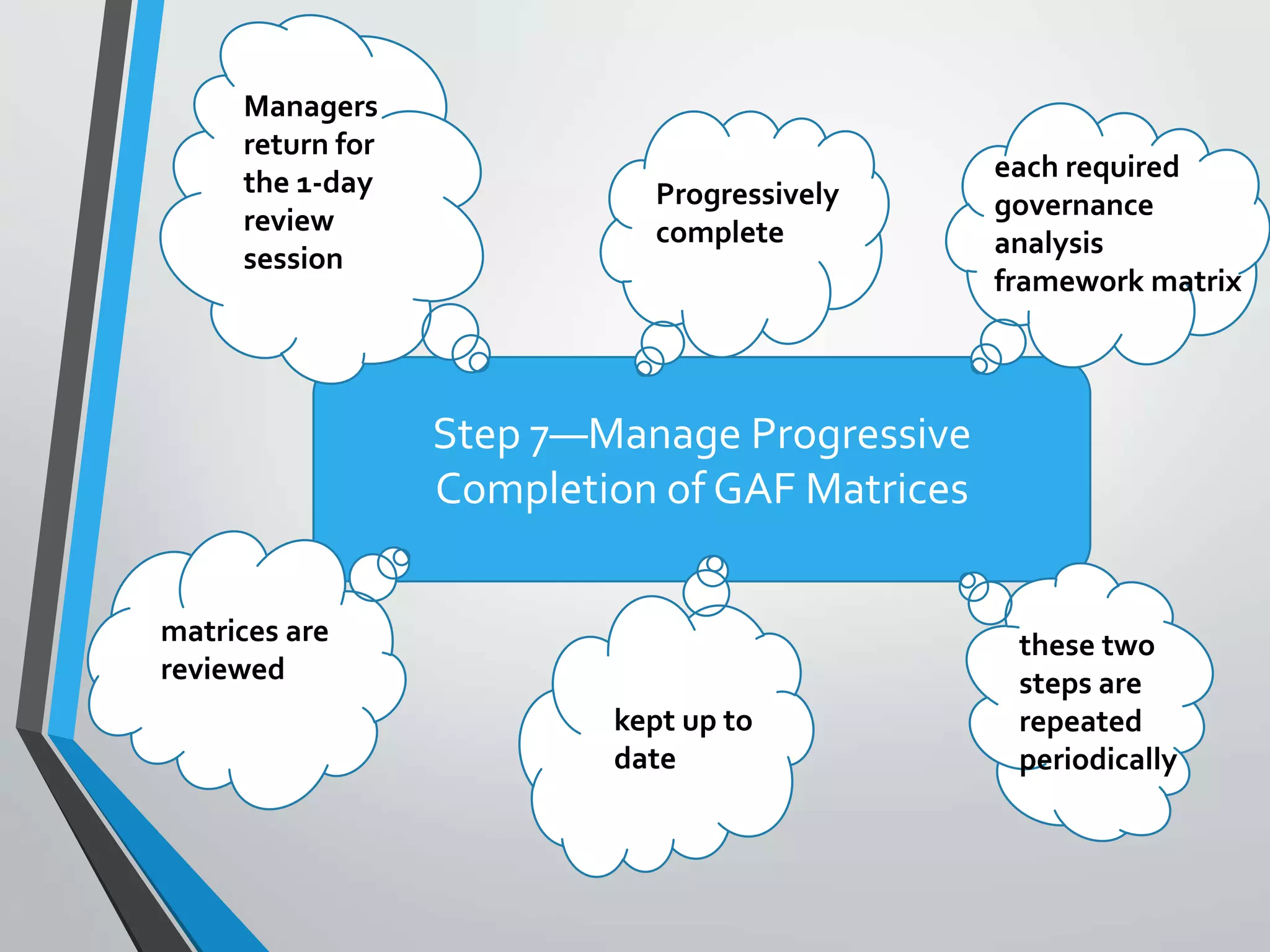
people or business units, business events to business
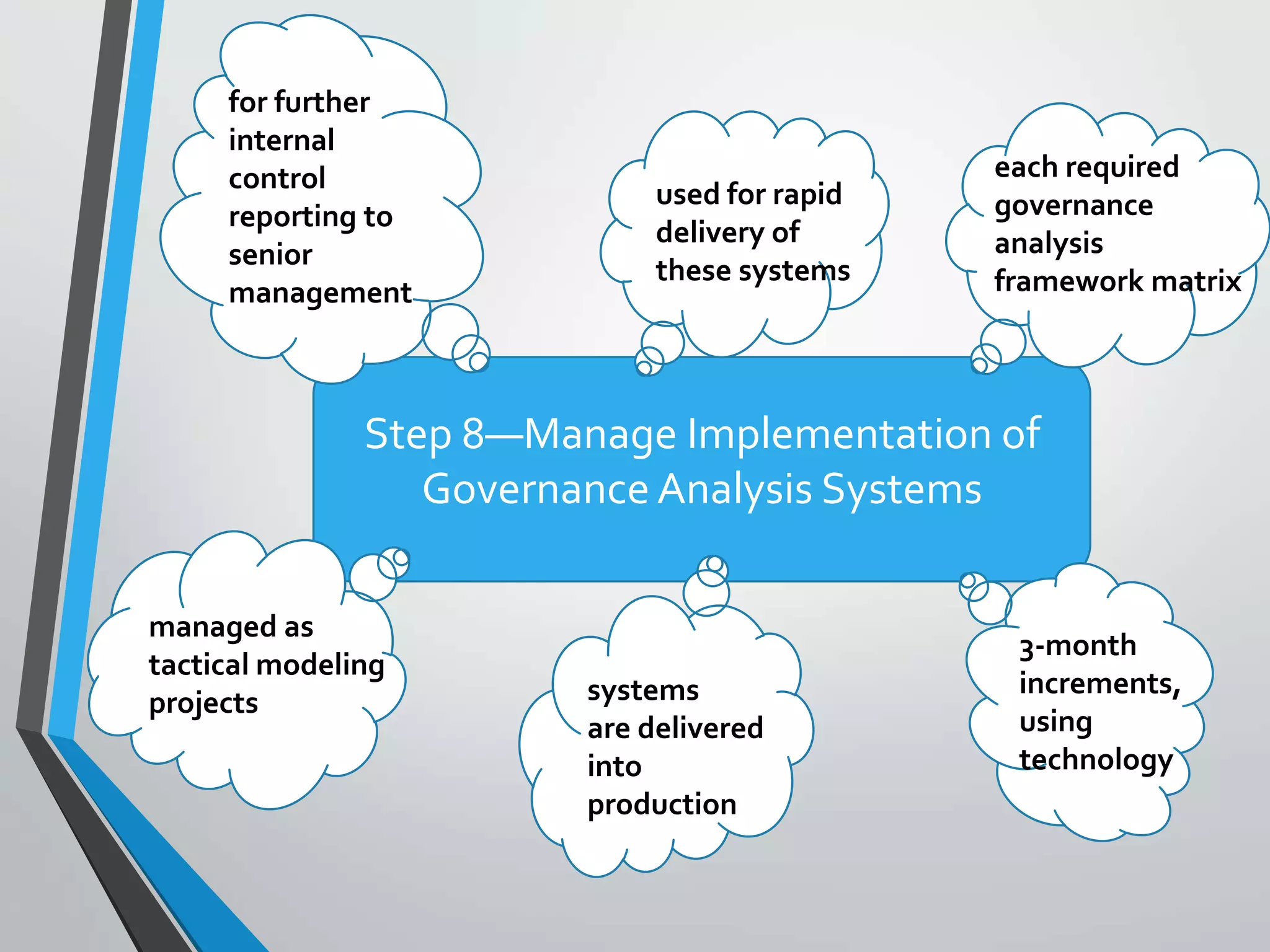
plans
10.
Cont.
• Business planmatrices: business plans to data,
business plans to processes , business plans to
locations, business plans to people or business
units ,business plans to business events.
11.
• When seniormanagers use governance analysis
framework matrices as described here, they are able to
demonstrate that they have a powerful management
12.
Developing a Governance
AnalysisFramework
• All the matrices were manual.
• Manually determining the relevant row and column titles
for each of these matrices is extremely difficult
• to keep them manually updated continually as the
enterprise changes overtime is even more difficult
• the row and column titles for each matrix in these
figures can automatically generate from strategic model
by a modeling tool
13.
• These matricesprovide a powerful internal control
reporting capability
• These matrices are generated from the business plans
that are defined and agreed on by senior management
for the enterprise
• Plans define the strategic directions that the senior
management team establishes to manage the enterprise
today, and provide direction as it moves into the future
14.
How strategy modelworks?
• A strategic model provides a “picture of the business”
• Just like a city map
• The strategic model also enables key business activities
and processes to be identified and named. These
identified activities and processes are automatically used
to create the activity rows
• The named business units responsible for, or involved in,
implementing the business plans are automatically used
to create the business unit columns
15.
• The strategicmodel is automatically used to create the
relevant rows and columns of many other matrices
Strategic Model
16.
• The developmentof a tailored strategic model for an
enterprise is the vital first step toward establishing
internal control reporting based on dynamic governance
analysisframeworkmatricesthatcanbeautomaticallygen
eratedasdiscussedearlier.The method used to achieve
this is called strategic modeling.
Strategic Model
17.
• A typicalstrategic modeling project to define a tailored
strategic model for an enterprise takes 25 days—
typically spread over 3 months.
• This 25-day period does not result in completed GAF
matrices, but it does automatically create each relevant
blank dynamic matrix row and column name, tailored to
the terminology enterprise.
Time Period
18.
• The completionof a strategic modeling project in this
time frame depends on corporate buy-in and support by
senior management. It requires the senior management
team and their direct reports to participate for 2 days in
a facilitated session near the start of the 25-day period
to help develop the tailored strategic model.Their
active commitment is vital: It ensures that their key
needs for internal control reporting are incorporated
into the strategic model.
Continued..
19.
Two days isa significant demand on their limited
time availability, but it is essential. Although this
facilitated session with management has been
reduced in some cases to 1 day, the accuracy,
usefulness, and maintainability of the resulting
GA matrices suffer if the senior management
team is not actively involved. If their direct
reports participate on the second day.
Continued..
20.
• The resultof this strategic model analysis is
documented in an enterprise architecture portfolio
plan (EAPP) report.This is the main deliverable
from a strategic modeling project.This report
includes an executive summary and key
recommendations, with a description of the
methods used to maintain the delivered tailored
GAF matrices over time. Appendices are also
included that document all components of the
defined strategic model for internal control
reporting.
Outputs
21.
• Business plan:Documents the strategic business
planning statements that were used as the catalyst for
the facilitated strategic modeling session.These
address the why questions for SOX compliance.
Business Plan
22.
• Strategic model:Documents the enterprise strategic
model and high-level
tacticalmodelsforkeybusinessunits.Thesemodelsarerepr
esentedasdatamaps that show a “picture of the
business.”
Strategic Model
23.
• Strategic data:Documents the underlying data
represented in the enterprise strategic model and high-
level tactical models for key business units.This answers
the what questions for SOX compliance.
Strategic Data
24.
• Business activities:Identifies key business activities that
are reflected in the strategic model, as determined
during and after the facilitated session.This answers the
how questions for SOX compliance
Business Activities
25.
• Business activityclusters: Documents automatically
derived project plans that identify the data required by
each activity. This identifies activities that can be reused
throughout the enterprise—with large potential cost
savings from this reuse.This also answers the how
questions for SOX compliance.
Business Activity Cluster
26.
• Business locations:Lists key locations (where relevant)
that were identified during and after the facilitated
session.This answers where questions for SOX.
Business Locations
27.
• Business units:Lists key business units identified during
and after the facilitated session based on the high-level
tactical models from the strategic model.This answers
the who questions for SOX compliance.
Business Units
28.
• Business events:Lists key business events (where
relevant) identified during and after the facilitated
session.This answers the when questions for SOX
compliance.
Business Events
29.
• GAF matrices:Documents blank governance analysis
framework matrices from the data, activities, locations,
business units, events, and business plans from the
earlier appendices.
GAF Matrices
30.
• The EAPPreport and its contents (as described earlier)
provide a high-level documented view of tailored
internal control reporting from the perspective of senior
management.Thesematricesthenmustbecompletedbyr
elevantbusinessexpertsas discussed earlier.The
strategic GAF matrices are typically defined later as
more detailed matrices by key business units.
EAPP Report
31.
• Strategic modelingand tactical modeling projects have
been completed for large and medium commercial
enterprises throughout the world. Some of these.
Strategic modeling and tactical modeling projects for
government and
defensehavebeencompletedintheUnitedStates,Canada,
Australia,andNewZealand.
Strategic & Tactical Modeling
32.
8-Steps Listing forGovernance
Analysis
Establish plan for strategic
modeling project
Capture initial business
planning input as catalyst
Carry out strategic model
analysis
Conduct strategic modeling
facilitated session
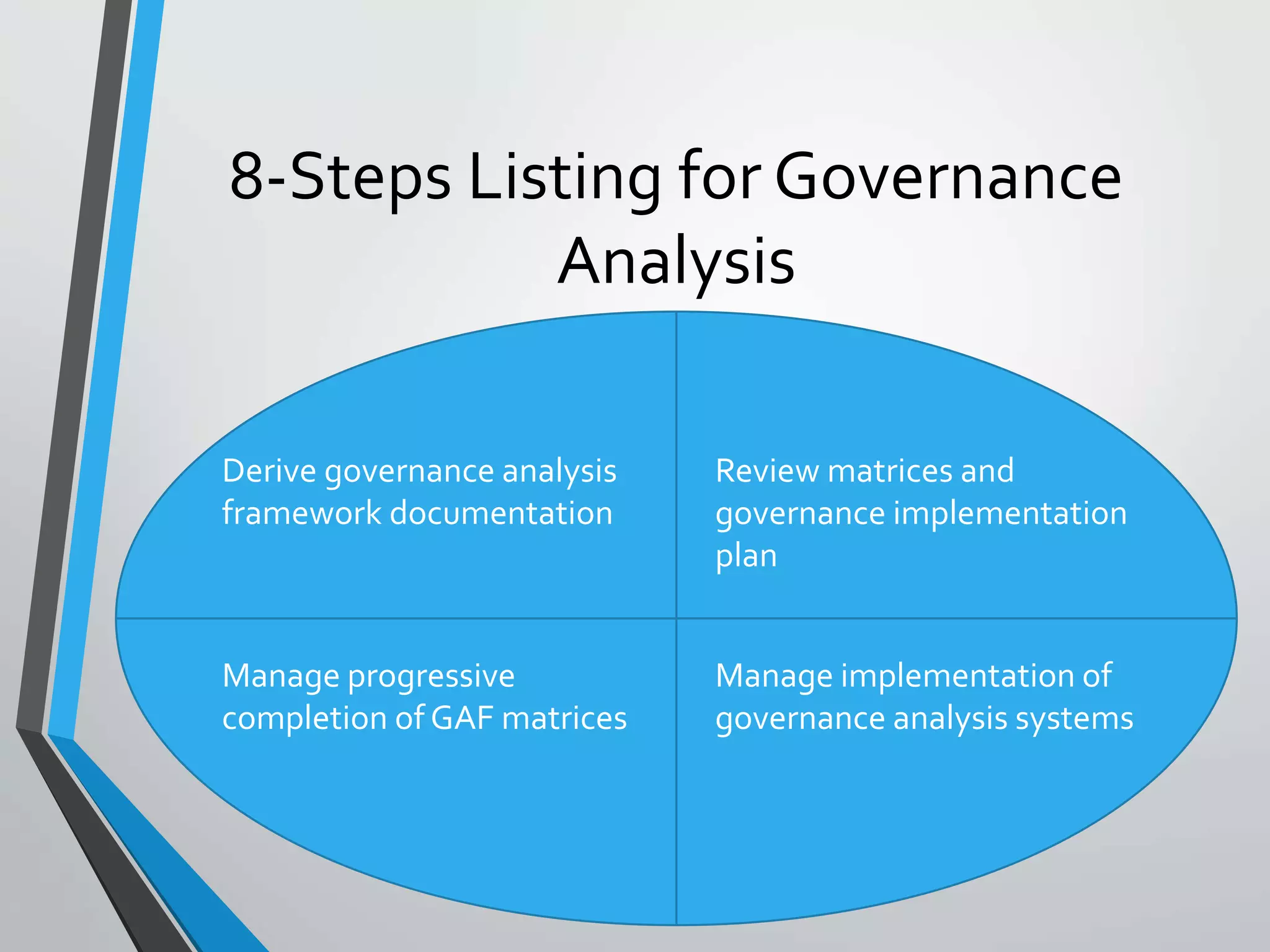
33.
8-Steps Listing forGovernance
Analysis
Derive governance analysis
framework documentation
Review matrices and
governance implementation
plan
Manage implementation of
governance analysis systems
Manage progressive
completion of GAF matrices
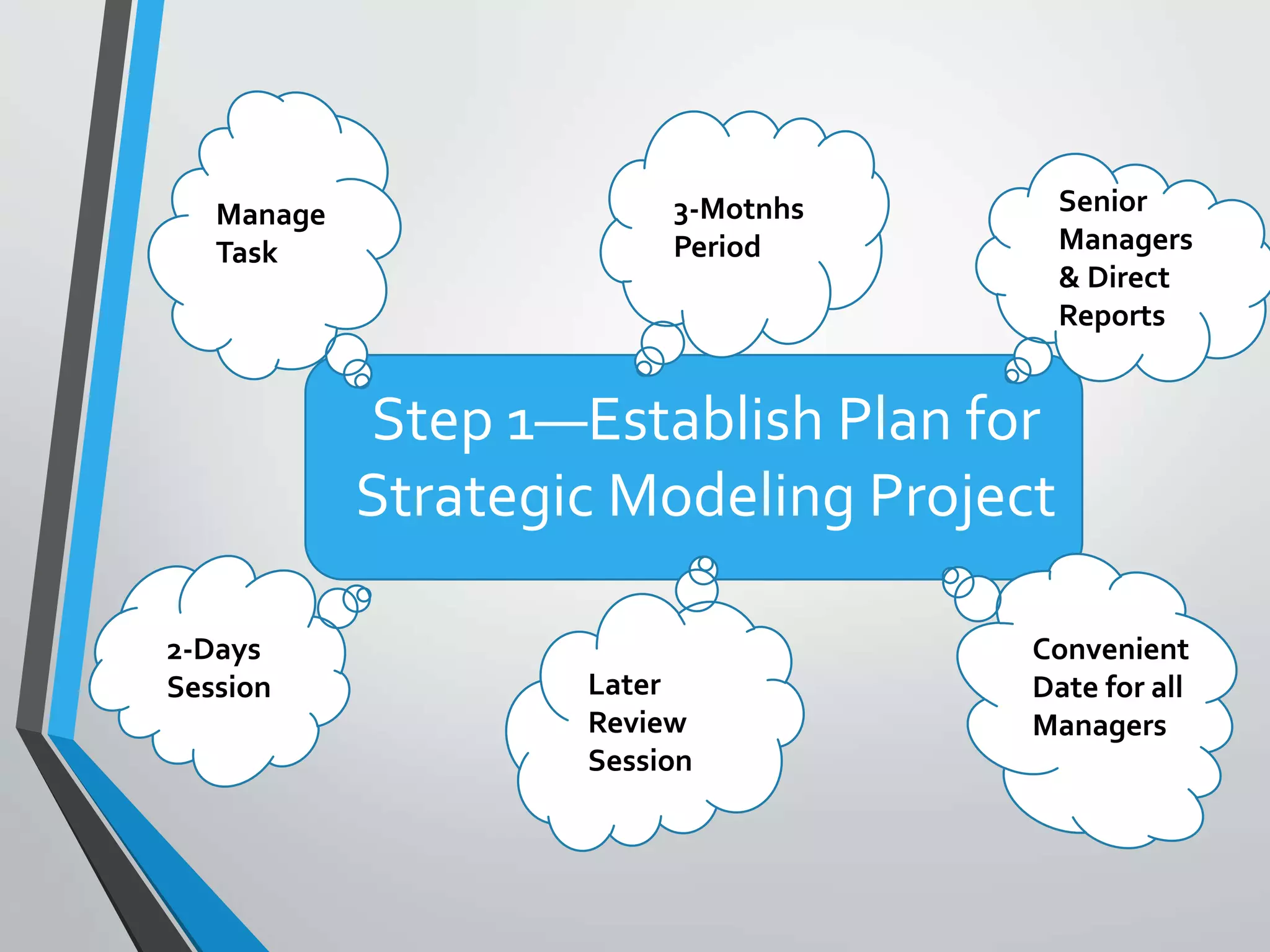
34.
Step 1—Establish Planfor
Strategic Modeling Project
Senior
Managers
& Direct
Reports
3-Motnhs
Period
Manage
Task
Convenient
Date for all
Managers
Later
Review
Session
2-Days
Session
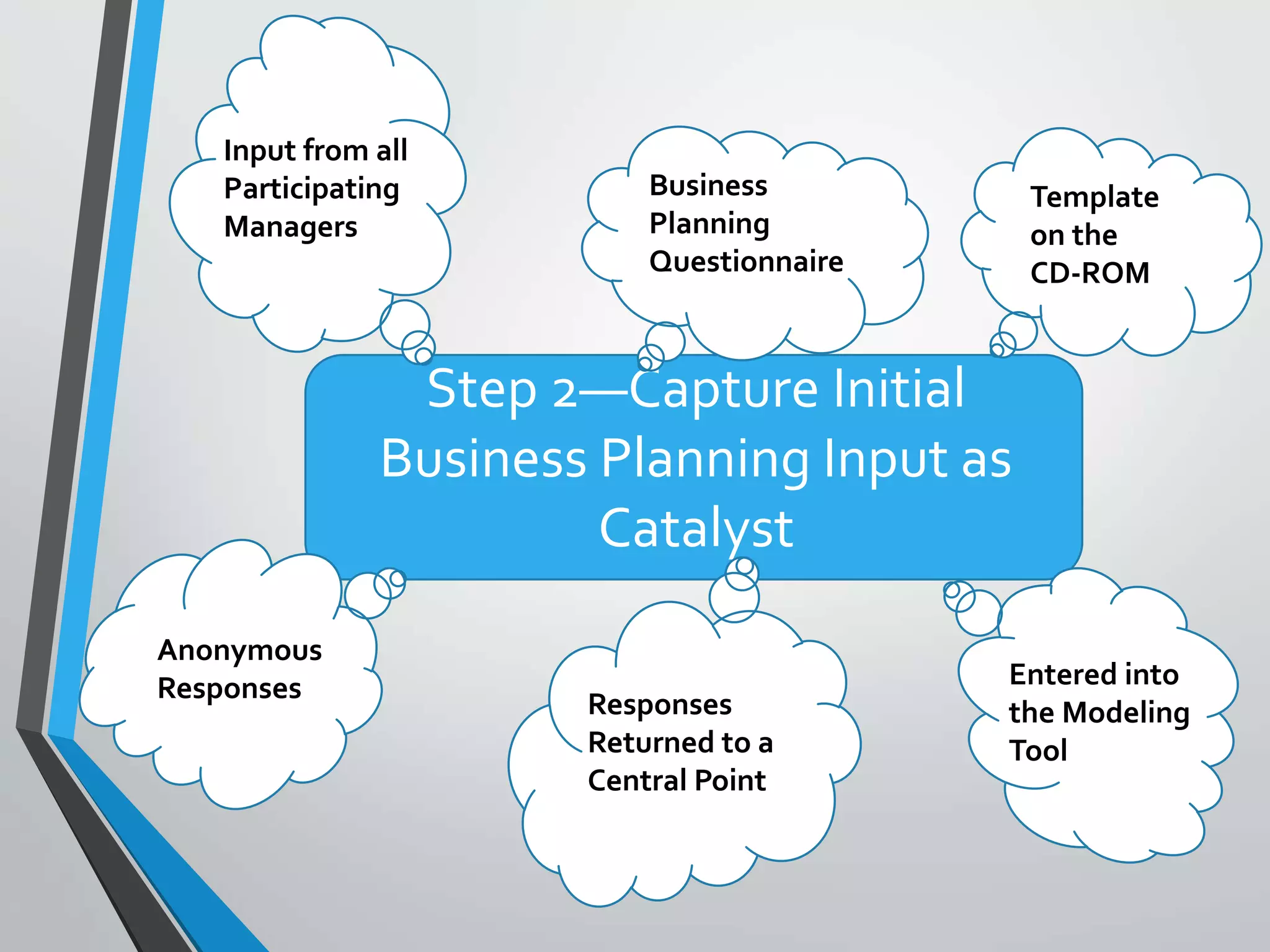
35.
Step 2—Capture Initial
BusinessPlanning Input as
Catalyst
Template
on the
CD-ROM
Business
Planning
Questionnaire
Input from all
Participating
Managers
Entered into
the Modeling
Tool
Responses
Returned to a
Central Point
Anonymous
Responses
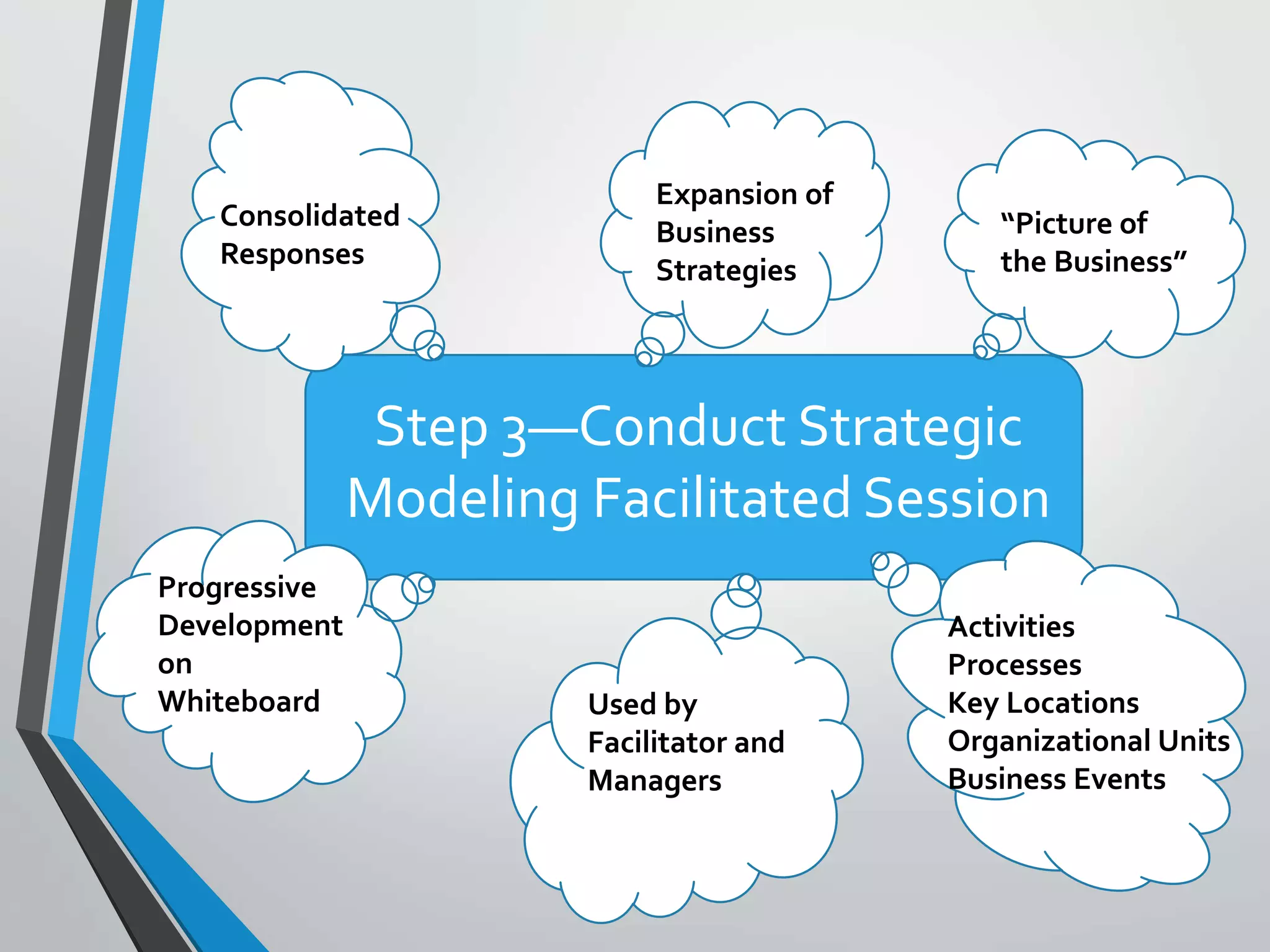
36.
Step 3—Conduct Strategic
ModelingFacilitated Session
“Picture of
the Business”
Expansion of
Business
Strategies
Consolidated
Responses
Activities
Processes
Key Locations
Organizational Units
Business Events
Used by
Facilitator and
Managers
Progressive
Development
on
Whiteboard
37.
Step 4—Carry OutStrategic
Model Analysis
Data Required
by each Activity
or Process
Analyze and
Automatically
Identify
Entry of
Model to
Modelling
Tool
Date
Activities
Processes
Key Locations
Organizational Units
Business Events
Develop
Textual
Definitions
Business & IT
Experts, Under
Guidance of
Facilitator
38.
Step 5—Derive Governance
AnalysisFramework
Documentation
Locations
(WHERE)
Activities and
Processes
(HOW)
Facilitated
Session &
Associated
Definitions
of Data
(WHAT)
Business
Plans
(WHY)
Business
Events
(WHEN)
Organizational
Units
(WHO)
39.
Step 6—Review Matricesand
Governance Implementation Plan
changes are
made
immediately
At the end of
25 days
Managers
return for
the 1-day
review
session
under the
guidance of
the
facilitator
by the
business and
IT expert
team
Required
changes or
reprioritization
40.
Step 7—Manage Progressive
Completionof GAF Matrices
each required
governance
analysis
framework matrix
Progressively
complete
Managers
return for
the 1-day
review
session
these two
steps are
repeated
periodically
kept up to
date
matrices are
reviewed
41.
Step 8—Manage Implementationof
Governance Analysis Systems
each required
governance
analysis
framework matrix
used for rapid
delivery of
these systems
for further
internal
control
reporting to
senior
management
3-month
increments,
using
technology
systems
are delivered
into
production
managed as
tactical modeling
projects


![[Whitepaper] The Definitive Introduction to Strategy Development and Strategy...](https://cdn.slidesharecdn.com/ss_thumbnails/thedefinitiveintroductiontostrategydevelopmentandstrategyexecutionbymarkbridgesjan2021medium-210213184931-thumbnail.jpg?width=640&height=640&fit=bounds)


