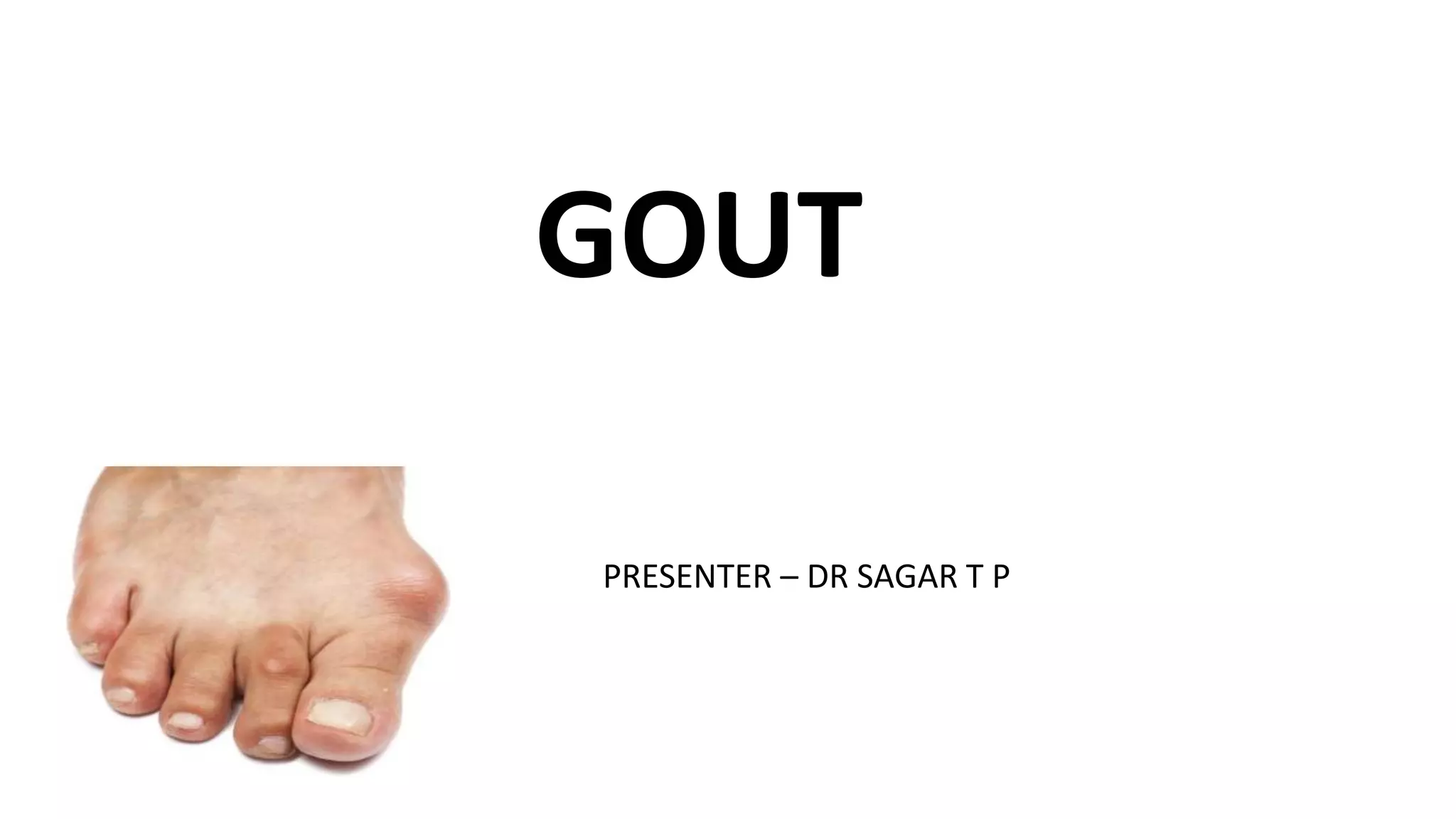
GOUT
PRESENTER – DR SAGAR T P
INTRODUCTION
• It’s a chronic heterogeneous disorder of urate
metabolism.
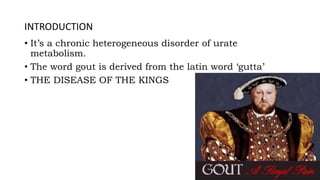
• The word gout is derived from the latin word ‘gutta’
• THE DISEASE OF THE KINGS
EPIDIMIOLOGY
• Most common inflammatory arthritis in men >40 years
• M:F::10:1
• Western > India
• Urban > rural
• INCIDENCE – IN INDIA 0.3 %
IN WORLD 0.3 to .6
PREDISPOSING FACTORS
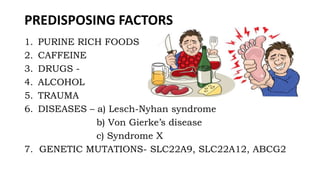
1. PURINE RICH FOODS
2. CAFFEINE
3. DRUGS -
4. ALCOHOL
5. TRAUMA
6. DISEASES – a) Lesch-Nyhan syndrome
b) Von Gierke’s disease
c) Syndrome X
7. GENETIC MUTATIONS- SLC22A9, SLC22A12, ABCG2
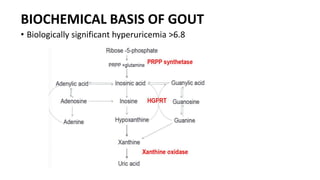
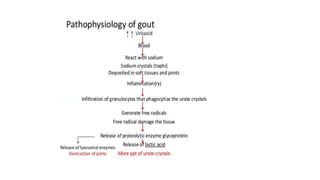
BIOCHEMICAL BASIS OF GOUT
• Biologically significant hyperuricemia >6.8
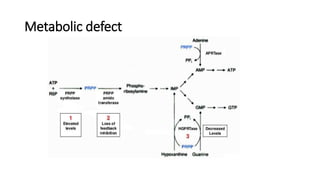
Metabolic defect
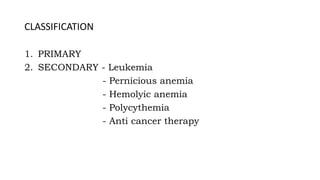
CLASSIFICATION
1. PRIMARY
2. SECONDARY - Leukemia
- Pernicious anemia
- Hemolyic anemia
- Polycythemia
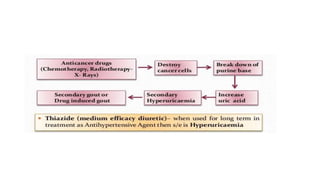
- Anti cancer therapy
CLINICAL PRESENTATION
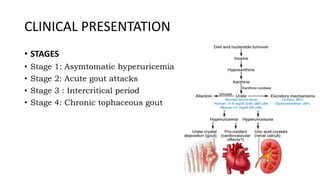
• STAGES
• Stage 1: Asymtomatic hyperuricemia
• Stage 2: Acute gout attacks
• Stage 3 : Intercritical period
• Stage 4: Chronic tophaceous gout
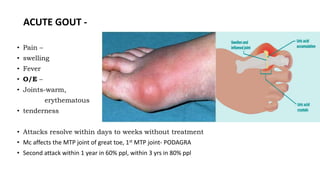
ACUTE GOUT -
• Pain –
• swelling
• Fever
• O/E –
• Joints-warm,
erythematous
• tenderness
• Attacks resolve within days to weeks without treatment
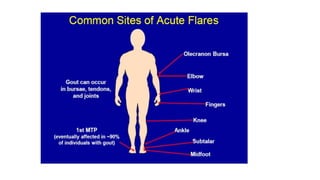
• Mc affects the MTP joint of great toe, 1st MTP joint- PODAGRA
• Second attack within 1 year in 60% ppl, within 3 yrs in 80% ppl
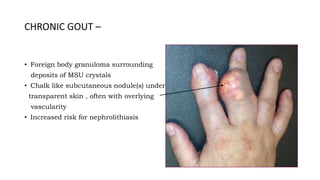
CHRONIC GOUT –
• Foreign body granuloma surrounding
deposits of MSU crystals
• Chalk like subcutaneous nodule(s) under
transparent skin , often with overlying
vascularity
• Increased risk for nephrolithiasis
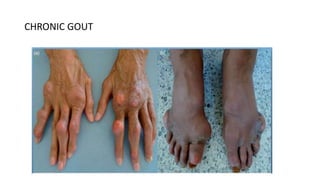
CHRONIC GOUT
LAB INVESTIGATIONS
• Serum Uric acid
• 24hrs Urine collection for uric acid
• BUN
• Creatinine level
• CBC
• ESR/CRP
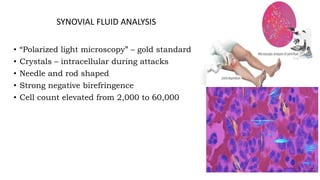
SYNOVIAL FLUID ANALYSIS
• “Polarized light microscopy” – gold standard
• Crystals – intracellular during attacks
• Needle and rod shaped
• Strong negative birefringence
• Cell count elevated from 2,000 to 60,000
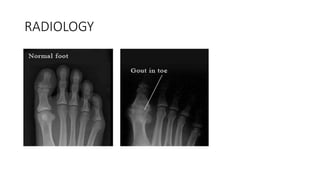
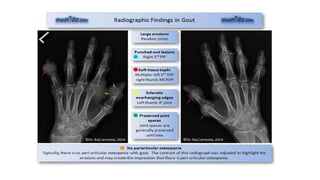
RADIOLOGY
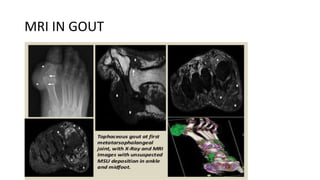
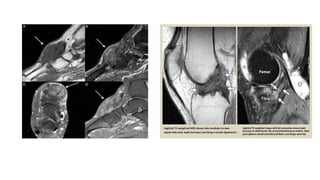
MRI IN GOUT
DIFFERENTIAL DIAGNOSIS
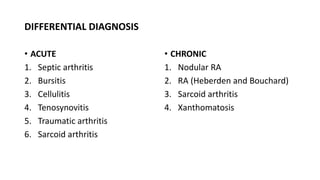
• ACUTE
1. Septic arthritis
2. Bursitis
3. Cellulitis
4. Tenosynovitis
5. Traumatic arthritis
6. Sarcoid arthritis
• CHRONIC
1. Nodular RA
2. RA (Heberden and Bouchard)
3. Sarcoid arthritis
4. Xanthomatosis
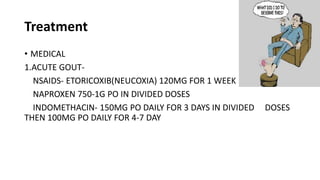
Treatment
• MEDICAL
1.ACUTE GOUT-
NSAIDS- ETORICOXIB(NEUCOXIA) 120MG FOR 1 WEEK
NAPROXEN 750-1G PO IN DIVIDED DOSES
INDOMETHACIN- 150MG PO DAILY FOR 3 DAYS IN DIVIDED DOSES
THEN 100MG PO DAILY FOR 4-7 DAY
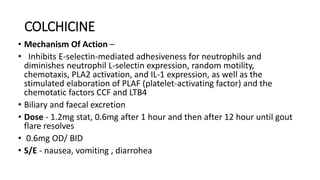
COLCHICINE
• Mechanism Of Action –
• Inhibits E-selectin-mediated adhesiveness for neutrophils and
diminishes neutrophil L-selectin expression, random motility,
chemotaxis, PLA2 activation, and IL-1 expression, as well as the
stimulated elaboration of PLAF (platelet-activating factor) and the
chemotatic factors CCF and LTB4
• Biliary and faecal excretion
• Dose - 1.2mg stat, 0.6mg after 1 hour and then after 12 hour until gout
flare resolves
• 0.6mg OD/ BID
• S/E - nausea, vomiting , diarrohea
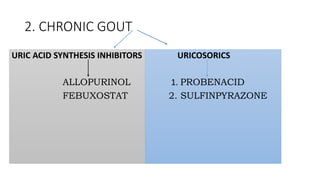
2. CHRONIC GOUT
URIC ACID SYNTHESIS INHIBITORS
ALLOPURINOL
FEBUXOSTAT
URICOSORICS
1. PROBENACID
2. SULFINPYRAZONE
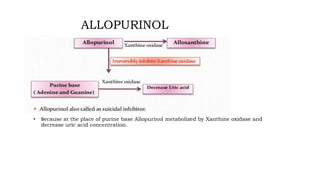
ALLOPURINOL
• Because at the place of purine base Allopurinol metabolized by Xanthine oxidase and
decrease uric acid concentration.

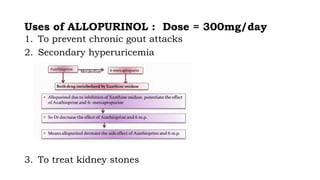
Uses of ALLOPURINOL : Dose = 300mg/day
1. To prevent chronic gout attacks
2. Secondary hyperuricemia
3. To treat kidney stones
Side effects of ALLOPURINOL
• Nausea, diarrohea, elevated liver enzymes,
Hepatic disease (granulomatous hepatitis
cholestatic jaundice, advanced liver necrosis)
• BM suppression
• Allopurinol hypersensitivity Syndrome
FEBUXOSTAT
• Selective inhibitor of Xanthine Oxidase
• Dose = GIVEN AT 40MG/DAY , if urate levels doesn’t decrease in 2
wks then increase to 80mg/day . Max 300mg /day
• Side effects - rash, elevation of liver enz, diarrhea
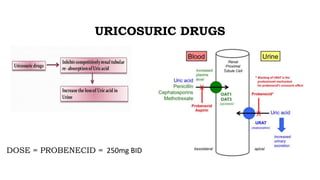
URICOSURIC DRUGS
DOSE = PROBENECID = 250mg BID
Indications of surgery -
1. Advanced tophi with joint destruction
2. Loss of involved joint movements associated with pain
3. Tophi collection causing pressure symtoms
4. Tophaceous ulcer
5. Cosmetic
Surgical options
• Removal of tophi
• Joint fusion
• Joint replacement
LONG TERM COMPLICATIONS OF THE DISEASE
• Joint Damage and Deformity
• Kidney Stones
• Kidney Disease
• Heart Disease
• Other Conditions – Cataracts, Dry eye syndrome
GOUT
GOUT

GOUT

  • 1.
  • 2.
    INTRODUCTION • It’s achronic heterogeneous disorder of urate metabolism. • The word gout is derived from the latin word ‘gutta’ • THE DISEASE OF THE KINGS
  • 3.
    EPIDIMIOLOGY • Most commoninflammatory arthritis in men >40 years • M:F::10:1 • Western > India • Urban > rural • INCIDENCE – IN INDIA 0.3 % IN WORLD 0.3 to .6
  • 4.
    PREDISPOSING FACTORS 1. PURINERICH FOODS 2. CAFFEINE 3. DRUGS - 4. ALCOHOL 5. TRAUMA 6. DISEASES – a) Lesch-Nyhan syndrome b) Von Gierke’s disease c) Syndrome X 7. GENETIC MUTATIONS- SLC22A9, SLC22A12, ABCG2
  • 5.
    BIOCHEMICAL BASIS OFGOUT • Biologically significant hyperuricemia >6.8
  • 6.
  • 7.
    CLASSIFICATION 1. PRIMARY 2. SECONDARY- Leukemia - Pernicious anemia - Hemolyic anemia - Polycythemia - Anti cancer therapy
  • 9.
    CLINICAL PRESENTATION • STAGES •Stage 1: Asymtomatic hyperuricemia • Stage 2: Acute gout attacks • Stage 3 : Intercritical period • Stage 4: Chronic tophaceous gout
  • 11.
    ACUTE GOUT - •Pain – • swelling • Fever • O/E – • Joints-warm, erythematous • tenderness • Attacks resolve within days to weeks without treatment • Mc affects the MTP joint of great toe, 1st MTP joint- PODAGRA • Second attack within 1 year in 60% ppl, within 3 yrs in 80% ppl
  • 13.
    CHRONIC GOUT – •Foreign body granuloma surrounding deposits of MSU crystals • Chalk like subcutaneous nodule(s) under transparent skin , often with overlying vascularity • Increased risk for nephrolithiasis
  • 14.
  • 15.
    LAB INVESTIGATIONS • SerumUric acid • 24hrs Urine collection for uric acid • BUN • Creatinine level • CBC • ESR/CRP
  • 16.
    SYNOVIAL FLUID ANALYSIS •“Polarized light microscopy” – gold standard • Crystals – intracellular during attacks • Needle and rod shaped • Strong negative birefringence • Cell count elevated from 2,000 to 60,000
  • 17.
  • 19.
  • 21.
    DIFFERENTIAL DIAGNOSIS • ACUTE 1.Septic arthritis 2. Bursitis 3. Cellulitis 4. Tenosynovitis 5. Traumatic arthritis 6. Sarcoid arthritis • CHRONIC 1. Nodular RA 2. RA (Heberden and Bouchard) 3. Sarcoid arthritis 4. Xanthomatosis
  • 22.
    Treatment • MEDICAL 1.ACUTE GOUT- NSAIDS-ETORICOXIB(NEUCOXIA) 120MG FOR 1 WEEK NAPROXEN 750-1G PO IN DIVIDED DOSES INDOMETHACIN- 150MG PO DAILY FOR 3 DAYS IN DIVIDED DOSES THEN 100MG PO DAILY FOR 4-7 DAY
  • 23.
    COLCHICINE • Mechanism OfAction – • Inhibits E-selectin-mediated adhesiveness for neutrophils and diminishes neutrophil L-selectin expression, random motility, chemotaxis, PLA2 activation, and IL-1 expression, as well as the stimulated elaboration of PLAF (platelet-activating factor) and the chemotatic factors CCF and LTB4 • Biliary and faecal excretion • Dose - 1.2mg stat, 0.6mg after 1 hour and then after 12 hour until gout flare resolves • 0.6mg OD/ BID • S/E - nausea, vomiting , diarrohea
  • 24.
    2. CHRONIC GOUT URICACID SYNTHESIS INHIBITORS ALLOPURINOL FEBUXOSTAT URICOSORICS 1. PROBENACID 2. SULFINPYRAZONE
  • 25.
    ALLOPURINOL • Because atthe place of purine base Allopurinol metabolized by Xanthine oxidase and decrease uric acid concentration.
  • 26.
    Uses of ALLOPURINOL: Dose = 300mg/day 1. To prevent chronic gout attacks 2. Secondary hyperuricemia 3. To treat kidney stones
  • 27.
    Side effects ofALLOPURINOL • Nausea, diarrohea, elevated liver enzymes, Hepatic disease (granulomatous hepatitis cholestatic jaundice, advanced liver necrosis) • BM suppression • Allopurinol hypersensitivity Syndrome
  • 28.
    FEBUXOSTAT • Selective inhibitorof Xanthine Oxidase • Dose = GIVEN AT 40MG/DAY , if urate levels doesn’t decrease in 2 wks then increase to 80mg/day . Max 300mg /day • Side effects - rash, elevation of liver enz, diarrhea
  • 29.
    URICOSURIC DRUGS DOSE =PROBENECID = 250mg BID
  • 30.
    Indications of surgery- 1. Advanced tophi with joint destruction 2. Loss of involved joint movements associated with pain 3. Tophi collection causing pressure symtoms 4. Tophaceous ulcer 5. Cosmetic
  • 31.
    Surgical options • Removalof tophi • Joint fusion • Joint replacement
  • 32.
    LONG TERM COMPLICATIONSOF THE DISEASE • Joint Damage and Deformity • Kidney Stones • Kidney Disease • Heart Disease • Other Conditions – Cataracts, Dry eye syndrome