Presented by:
Abhijeet kumar
Contents
 Introduction
Development
 Hardware
 Camera
 Touch pad
Technical specifications
 Software
 Applications
 My glass
Voice activation
 Reception
 Critical reception
 privacy concerns
Safety considerations
 Terms of services
Introduction
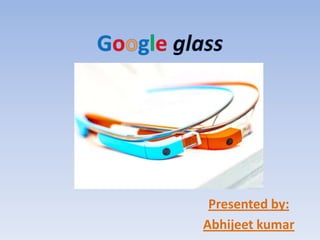
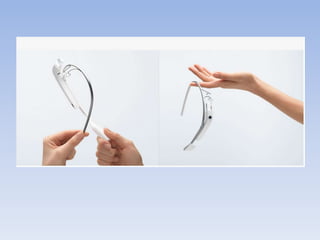
 Google glass is wearable computer with an optical head
mounted display(OHMD). That is being developed by
the google in the project glass research and
development project.
 google glass displays information in smartphone like
handsfree format and can communicate with the
internet through natural voice command.
 Currently the frames are not fitted with the lenses but
google is considering partnership with the sunglasses
retailors like “ray.ban“ or werby parker and may also
open retail store to allow customer to try on the device.
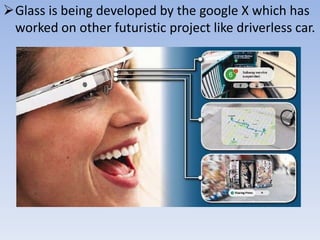
Glass is being developed by the google X which has
worked on other futuristic project like driverless car.
development :
 The product began testing in april 2012
 Sergey brin wore a prototype of the glass to an
april 5, 2012
 In May 2012, Glass was demonstrated in the first
test video shot with the eyewear, demonstrating
the 720p HD first-person video recording
capabilities of the device
The Explorer Edition receives data through Wi-Fi, or
it can tether via Bluetooth to share data connection.
The Glass does not have built-in GPS or SMS
messaging, but can access these services through
Bluetooth connection to Android devices.
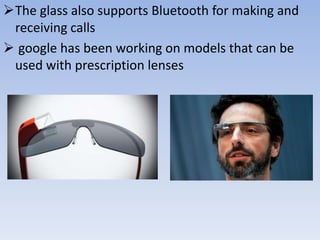
The glass also supports Bluetooth for making and
receiving calls
 google has been working on models that can be
used with prescription lenses
Hardware :
 Camera : Google Glass has the ability to take
photos and record 720p HD video. While video is
recording, the screen stays on.
 Touch pad: A touchpad is located on the side of
Google Glass, allowing users to control the device
by swiping through a timeline-like interface
displayed on the screen. Sliding backward shows
current events, such as weather, and sliding forward
shows past events, such as phone calls, photos, etc
 Technical specifications :
Developer
Google
manufacturer
foxconn
type
wearable technology
introductory price $1500 USD
OS
android 4.0.3+
cpu
OMAP 4430 soc, dual core
memory
1gb RAM
storage
16gb flash
display
640*360
input

controller input
camera
connectivity
weight
compatiblity

voice command through
mic. Gyroscope, proximity
sensor etc.
touch pad, my glass phone
app
photo: 5mp
video: 720p
wifi, bluetooth, USB
50gm
any bluetooth capable,
my glass companion app.
Software :
Application :
 Google Glass applications are free applications built
by third-party developers. Glass also uses many
existing Google applications, such as Google
Now, Google Maps, Google+, and Gmail.
Many developers and companies have built
applications for Glass, including news apps, facial
recognition, exercise, photo
manipulation, translation, and sharing to social
networks, such asFacebook and Twitter.
My glass :
Google offers a companion Android and iOS app called
MyGlass, which allows you to configure and manage
your device.
Voice activation :
 Other than the touchpad, Google Glass can be
controlled using "voice actions". To activate
Glass, wearers tilt their heads 30° upward (which can
be altered for preference) or tap the touchpad, and say
"O.K., Glass." Once Glass is activated, wearers can say
an action, such as "Take a picture", "Record a
video", "Hangout with [person/Google+
circle]", "Google 'What year was Wikipedia
founded?'", "Give me directions to the Eiffel
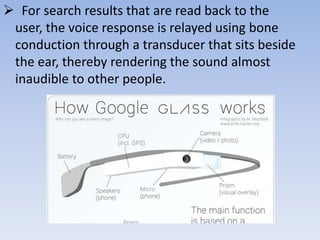
 For search results that are read back to the
user, the voice response is relayed using bone
conduction through a transducer that sits beside
the ear, thereby rendering the sound almost
inaudible to other people.
Reception :
critical reception :
In November 2012, Glass received recognition
by Time Magazine as one of the "Best Inventions of
the Year 2012“.
 but when the google glass was tested on some deaf
people it was believed that google glass is not
suitable for people who can not understand speech.
Privacy concern
There is controversy that Google Glass would
violate privacy rights due to security problems and
others
Privacy advocates are concerned that people
wearing such eyewear may be able to identify
strangers in public using facial recognition, or
surreptitiously record and broadcast private
conversations.
Some companies in the U.S. have posted antiGoogle Glass signs in their establishments.
 many companies have blocked the facial
recognition app. Of the google glass.
 casinos in Las vegas also banned the google glass.
 Concerns were also raised in regard to the privacy
and security of Glass users in the event that the
device is stolen or lost, an issue that was raised by a
US congressional committee. As part of its response
to the governmental committee, Google stated in
early July that is working on a locking system and
raised awareness of the ability of users to remotely
reset Glass from the web interface in the event of
loss.
Safety considerations :
Concerns have also been raised on operating motor
vehicles while wearing the device.
 On 31 July 2013 it was reported that driving while
wearing Google Glass is likely to be banned in the
UK, being deemed careless driving, therefore a fixed
penalty offense, following a decision by
the Department for Transport.
Terms of service :
Under the Google Glass terms of service for the
Glass Explorer pre-public release program, it
specifically states, "you may not
resell, loan, transfer, or give your device to any
other person. If you resell, loan, transfer, or give
your device to any other person without Google's
authorization, Google reserves the right to
deactivate the device, and neither you nor the
unauthorized person using the device will be
entitled to any refund, product support, or product
THANKS FOR
WATCHING

google glass

  • 1.
  • 2.
    Contents  Introduction Development  Hardware Camera  Touch pad Technical specifications  Software  Applications  My glass Voice activation
  • 3.
     Reception  Criticalreception  privacy concerns Safety considerations  Terms of services
  • 4.
    Introduction  Google glassis wearable computer with an optical head mounted display(OHMD). That is being developed by the google in the project glass research and development project.  google glass displays information in smartphone like handsfree format and can communicate with the internet through natural voice command.  Currently the frames are not fitted with the lenses but google is considering partnership with the sunglasses retailors like “ray.ban“ or werby parker and may also open retail store to allow customer to try on the device.
  • 5.
    Glass is beingdeveloped by the google X which has worked on other futuristic project like driverless car.
  • 6.
    development :  Theproduct began testing in april 2012  Sergey brin wore a prototype of the glass to an april 5, 2012  In May 2012, Glass was demonstrated in the first test video shot with the eyewear, demonstrating the 720p HD first-person video recording capabilities of the device The Explorer Edition receives data through Wi-Fi, or it can tether via Bluetooth to share data connection. The Glass does not have built-in GPS or SMS messaging, but can access these services through Bluetooth connection to Android devices.
  • 7.
    The glass alsosupports Bluetooth for making and receiving calls  google has been working on models that can be used with prescription lenses
  • 8.
    Hardware :  Camera: Google Glass has the ability to take photos and record 720p HD video. While video is recording, the screen stays on.  Touch pad: A touchpad is located on the side of Google Glass, allowing users to control the device by swiping through a timeline-like interface displayed on the screen. Sliding backward shows current events, such as weather, and sliding forward shows past events, such as phone calls, photos, etc
  • 9.
     Technical specifications: Developer Google manufacturer foxconn type wearable technology introductory price $1500 USD OS android 4.0.3+ cpu OMAP 4430 soc, dual core memory 1gb RAM storage 16gb flash display 640*360
  • 10.
    input controller input camera connectivity weight compatiblity voice commandthrough mic. Gyroscope, proximity sensor etc. touch pad, my glass phone app photo: 5mp video: 720p wifi, bluetooth, USB 50gm any bluetooth capable, my glass companion app.
  • 12.
    Software : Application : Google Glass applications are free applications built by third-party developers. Glass also uses many existing Google applications, such as Google Now, Google Maps, Google+, and Gmail. Many developers and companies have built applications for Glass, including news apps, facial recognition, exercise, photo manipulation, translation, and sharing to social networks, such asFacebook and Twitter.
  • 13.
    My glass : Googleoffers a companion Android and iOS app called MyGlass, which allows you to configure and manage your device. Voice activation :  Other than the touchpad, Google Glass can be controlled using "voice actions". To activate Glass, wearers tilt their heads 30° upward (which can be altered for preference) or tap the touchpad, and say "O.K., Glass." Once Glass is activated, wearers can say an action, such as "Take a picture", "Record a video", "Hangout with [person/Google+ circle]", "Google 'What year was Wikipedia founded?'", "Give me directions to the Eiffel
  • 14.
     For searchresults that are read back to the user, the voice response is relayed using bone conduction through a transducer that sits beside the ear, thereby rendering the sound almost inaudible to other people.
  • 15.
    Reception : critical reception: In November 2012, Glass received recognition by Time Magazine as one of the "Best Inventions of the Year 2012“.  but when the google glass was tested on some deaf people it was believed that google glass is not suitable for people who can not understand speech.
  • 16.
    Privacy concern There iscontroversy that Google Glass would violate privacy rights due to security problems and others Privacy advocates are concerned that people wearing such eyewear may be able to identify strangers in public using facial recognition, or surreptitiously record and broadcast private conversations. Some companies in the U.S. have posted antiGoogle Glass signs in their establishments.  many companies have blocked the facial recognition app. Of the google glass.
  • 17.
     casinos inLas vegas also banned the google glass.  Concerns were also raised in regard to the privacy and security of Glass users in the event that the device is stolen or lost, an issue that was raised by a US congressional committee. As part of its response to the governmental committee, Google stated in early July that is working on a locking system and raised awareness of the ability of users to remotely reset Glass from the web interface in the event of loss. Safety considerations : Concerns have also been raised on operating motor vehicles while wearing the device.
  • 18.
     On 31July 2013 it was reported that driving while wearing Google Glass is likely to be banned in the UK, being deemed careless driving, therefore a fixed penalty offense, following a decision by the Department for Transport.
  • 19.
    Terms of service: Under the Google Glass terms of service for the Glass Explorer pre-public release program, it specifically states, "you may not resell, loan, transfer, or give your device to any other person. If you resell, loan, transfer, or give your device to any other person without Google's authorization, Google reserves the right to deactivate the device, and neither you nor the unauthorized person using the device will be entitled to any refund, product support, or product
  • 20.