Not all questions are equal.
Some are easy to answer, but don’t deliver useful
insight.
Other questions can reveal a lot about the way we
think, feel and behave...

1
Here’s Qual Street’s take on what makes a good
question, starting poor, getting better and ending great!

2
Poor question

3
Poor Question...

Why do you like it?

4

It’s a natural question to ask, and people always like to
tell you what they like or dislike about something.
Actually they are giving their opinion in answer to this
question, and that’s something rational, thoughtful, and
may be very different from real behaviour, real feelings
and responses. Beware!
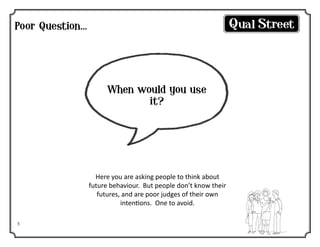
Poor Question...

When would you use
it?

Here you are asking people to think about
future behaviour. But people don’t know their
futures, and are poor judges of their own
intentions. One to avoid.
5
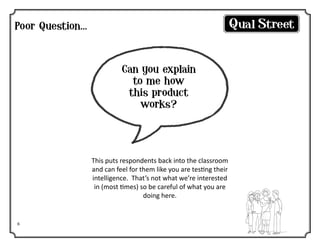
Poor Question...

Can you explain
to me how
this product
works?

This puts respondents back into the classroom
and can feel for them like you are testing their
intelligence. That’s not what we’re interested
in (most times) so be careful of what you are
doing here.

6
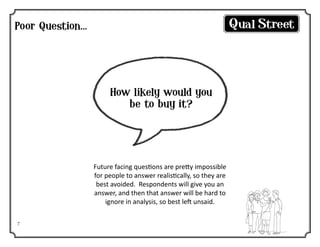
Poor Question...

How likely would you
be to buy it?

Future facing questions are pretty impossible
for people to answer realistically, so they are
best avoided. Respondents will give you an
answer, and then that answer will be hard to
ignore in analysis, so best left unsaid.
7
Good question!

8
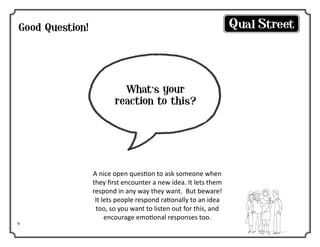
Good Question!

What’s your
reaction to this?

9

A nice open question to ask someone when
they first encounter a new idea. It lets them
respond in any way they want. But beware!
It lets people respond rationally to an idea
too, so you want to listen out for this, and
encourage emotional responses too.
Good Question!

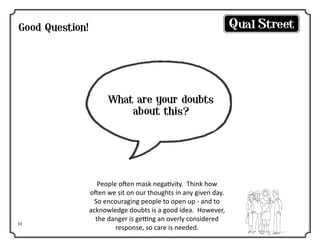
What are your doubts
about this?

10

People often mask negativity. Think how
often we sit on our thoughts in any given day.
So encouraging people to open up - and to
acknowledge doubts is a good idea. However,
the danger is getting an overly considered
response, so care is needed.
Good Question!

Think back, on which
occasions would you
have used this?

11

People can’t know their future behaviour, but
they can access their past (to some
degree!). Getting people to think
realistically about how a new product idea
could have fitted into an occasion in the past
help delivers a realistic view on a product’s
relevance.
Good Question!

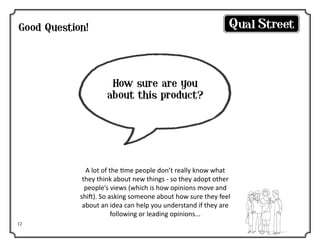
How sure are you
about this product?

A lot of the time people don’t really know what
they think about new things - so they adopt other
people’s views (which is how opinions move and
shift). So asking someone about how sure they feel
about an idea can help you understand if they are
following or leading opinions...
12
Good Question!

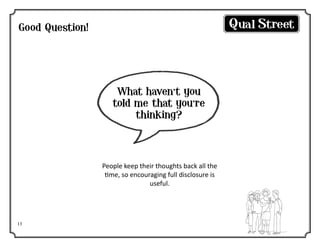
What haven’t you
told me that you’re
thinking?

People keep their thoughts back all the
time, so encouraging full disclosure is
useful.

13
Good Question!

I think you’re telling me x,y,z about
this - that right?

Checking comprehension is always a good
idea - and it gives respondents a chance to add
more, clarify or dispute an issue.

14
Good Question!

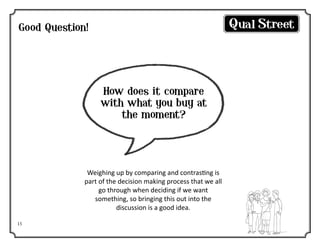
How does it compare
with what you buy at
the moment?

Weighing up by comparing and contrasting is
part of the decision making process that we all
go through when deciding if we want
something, so bringing this out into the
discussion is a good idea.
15
Great question!

16
Great Question!

So what is it about
this product?

17

This is a great question because it’s
purposefully vague. These kinds of
questions allow for creative connections, forcing
people to link what they know with the new idea
under discussion.
Great for the ‘storming’ stages of a group
discussion and in workshops...
Great Question!

What could you lose out
on if you bought this?

18

This reflects people’s natural bias for ‘loss
aversion’. We dislike losing something more
than we like gaining it. Asking respondents
what they could lose out on helps reflect the
kinds of processes we go through we we make
decisions.
Great Question!

What would you tell
someone about this
product?

19

We know that adoption of new products and
ideas is linked to social interaction. So
uncovering what people would say about a
new idea to someone else is a great way to
establish this. Also it’s a good checking
question - to see what someone really makes
of a product or idea. Two for the price of
one!
Great Question!

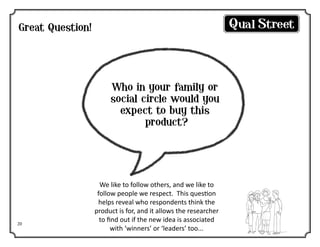
Who in your family or
social circle would you
expect to buy this
product?

20

We like to follow others, and we like to
follow people we respect. This question
helps reveal who respondents think the
product is for, and it allows the researcher
to find out if the new idea is associated
with ‘winners’ or ‘leaders’ too...
www.qual-street.co.uk

21

Good question!

  • 1.
    Not all questionsare equal. Some are easy to answer, but don’t deliver useful insight. Other questions can reveal a lot about the way we think, feel and behave... 1
  • 2.
    Here’s Qual Street’stake on what makes a good question, starting poor, getting better and ending great! 2
  • 3.
  • 4.
    Poor Question... Why doyou like it? 4 It’s a natural question to ask, and people always like to tell you what they like or dislike about something. Actually they are giving their opinion in answer to this question, and that’s something rational, thoughtful, and may be very different from real behaviour, real feelings and responses. Beware!
  • 5.
    Poor Question... When wouldyou use it? Here you are asking people to think about future behaviour. But people don’t know their futures, and are poor judges of their own intentions. One to avoid. 5
  • 6.
    Poor Question... Can youexplain to me how this product works? This puts respondents back into the classroom and can feel for them like you are testing their intelligence. That’s not what we’re interested in (most times) so be careful of what you are doing here. 6
  • 7.
    Poor Question... How likelywould you be to buy it? Future facing questions are pretty impossible for people to answer realistically, so they are best avoided. Respondents will give you an answer, and then that answer will be hard to ignore in analysis, so best left unsaid. 7
  • 8.
  • 9.
    Good Question! What’s your reactionto this? 9 A nice open question to ask someone when they first encounter a new idea. It lets them respond in any way they want. But beware! It lets people respond rationally to an idea too, so you want to listen out for this, and encourage emotional responses too.
  • 10.
    Good Question! What areyour doubts about this? 10 People often mask negativity. Think how often we sit on our thoughts in any given day. So encouraging people to open up - and to acknowledge doubts is a good idea. However, the danger is getting an overly considered response, so care is needed.
  • 11.
    Good Question! Think back,on which occasions would you have used this? 11 People can’t know their future behaviour, but they can access their past (to some degree!). Getting people to think realistically about how a new product idea could have fitted into an occasion in the past help delivers a realistic view on a product’s relevance.
  • 12.
    Good Question! How sureare you about this product? A lot of the time people don’t really know what they think about new things - so they adopt other people’s views (which is how opinions move and shift). So asking someone about how sure they feel about an idea can help you understand if they are following or leading opinions... 12
  • 13.
    Good Question! What haven’tyou told me that you’re thinking? People keep their thoughts back all the time, so encouraging full disclosure is useful. 13
  • 14.
    Good Question! I thinkyou’re telling me x,y,z about this - that right? Checking comprehension is always a good idea - and it gives respondents a chance to add more, clarify or dispute an issue. 14
  • 15.
    Good Question! How doesit compare with what you buy at the moment? Weighing up by comparing and contrasting is part of the decision making process that we all go through when deciding if we want something, so bringing this out into the discussion is a good idea. 15
  • 16.
  • 17.
    Great Question! So whatis it about this product? 17 This is a great question because it’s purposefully vague. These kinds of questions allow for creative connections, forcing people to link what they know with the new idea under discussion. Great for the ‘storming’ stages of a group discussion and in workshops...
  • 18.
    Great Question! What couldyou lose out on if you bought this? 18 This reflects people’s natural bias for ‘loss aversion’. We dislike losing something more than we like gaining it. Asking respondents what they could lose out on helps reflect the kinds of processes we go through we we make decisions.
  • 19.
    Great Question! What wouldyou tell someone about this product? 19 We know that adoption of new products and ideas is linked to social interaction. So uncovering what people would say about a new idea to someone else is a great way to establish this. Also it’s a good checking question - to see what someone really makes of a product or idea. Two for the price of one!
  • 20.
    Great Question! Who inyour family or social circle would you expect to buy this product? 20 We like to follow others, and we like to follow people we respect. This question helps reveal who respondents think the product is for, and it allows the researcher to find out if the new idea is associated with ‘winners’ or ‘leaders’ too...
  • 21.