Good  Manners
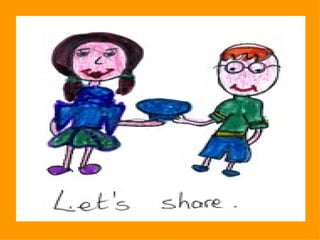
Manners at home being helpful to others in your room; saying “please” and “thank you”; sharing and not grabbing and keeping good things to yourself; respecting other people’s property and their rooms;  helping the family by doing your chores; cleaning up after yourself.
 
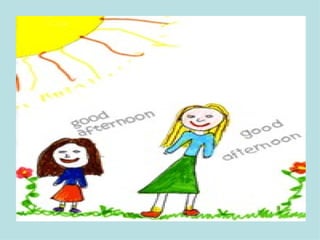
Manners at school saying “good morning/afternoon” if you are walking past an adult that you know; asking if you can borrow something, not just taking; returning things that you have borrowed; waiting your turn before you speak; saying “excuse me”, rather than pushing past someone; holding the door open for the person coming in,  especially if he/she is carrying something; respecting your own and other people’s property, especially school property; saying “please” and “thank you”.
 
When you are out Respect other people. Be polite to others. Don’t use bad language in public – it is offensive to others. Let an older person have your seat on buses, trains and trams if there is nowhere for them to sit. Queue up quietly and don’t push. Put your rubbish into bins, don’t leave it for someone else to clean up. Have fun but don’t be so loud that you attract the wrong kind of attention. Respect property. Don’t make fun of anyone – everyone has feelings. Don’t run in shopping centers or where there are other people.
 
On the phone Say your telephone number and who you are. Never say, “Mum/Dad is out”. Say, “He/She can’t come to the phone right now – may I take a message?” Always write down messages and organize with your family their places. Negotiate with your family for length of time on the phone.
 
Advice given by Serban, 5 D

Good Manners

  • 1.
  • 2.
    Manners at homebeing helpful to others in your room; saying “please” and “thank you”; sharing and not grabbing and keeping good things to yourself; respecting other people’s property and their rooms; helping the family by doing your chores; cleaning up after yourself.
  • 3.
  • 4.
    Manners at schoolsaying “good morning/afternoon” if you are walking past an adult that you know; asking if you can borrow something, not just taking; returning things that you have borrowed; waiting your turn before you speak; saying “excuse me”, rather than pushing past someone; holding the door open for the person coming in, especially if he/she is carrying something; respecting your own and other people’s property, especially school property; saying “please” and “thank you”.
  • 5.
  • 6.
    When you areout Respect other people. Be polite to others. Don’t use bad language in public – it is offensive to others. Let an older person have your seat on buses, trains and trams if there is nowhere for them to sit. Queue up quietly and don’t push. Put your rubbish into bins, don’t leave it for someone else to clean up. Have fun but don’t be so loud that you attract the wrong kind of attention. Respect property. Don’t make fun of anyone – everyone has feelings. Don’t run in shopping centers or where there are other people.
  • 7.
  • 8.
    On the phoneSay your telephone number and who you are. Never say, “Mum/Dad is out”. Say, “He/She can’t come to the phone right now – may I take a message?” Always write down messages and organize with your family their places. Negotiate with your family for length of time on the phone.
  • 9.
  • 10.
    Advice given bySerban, 5 D