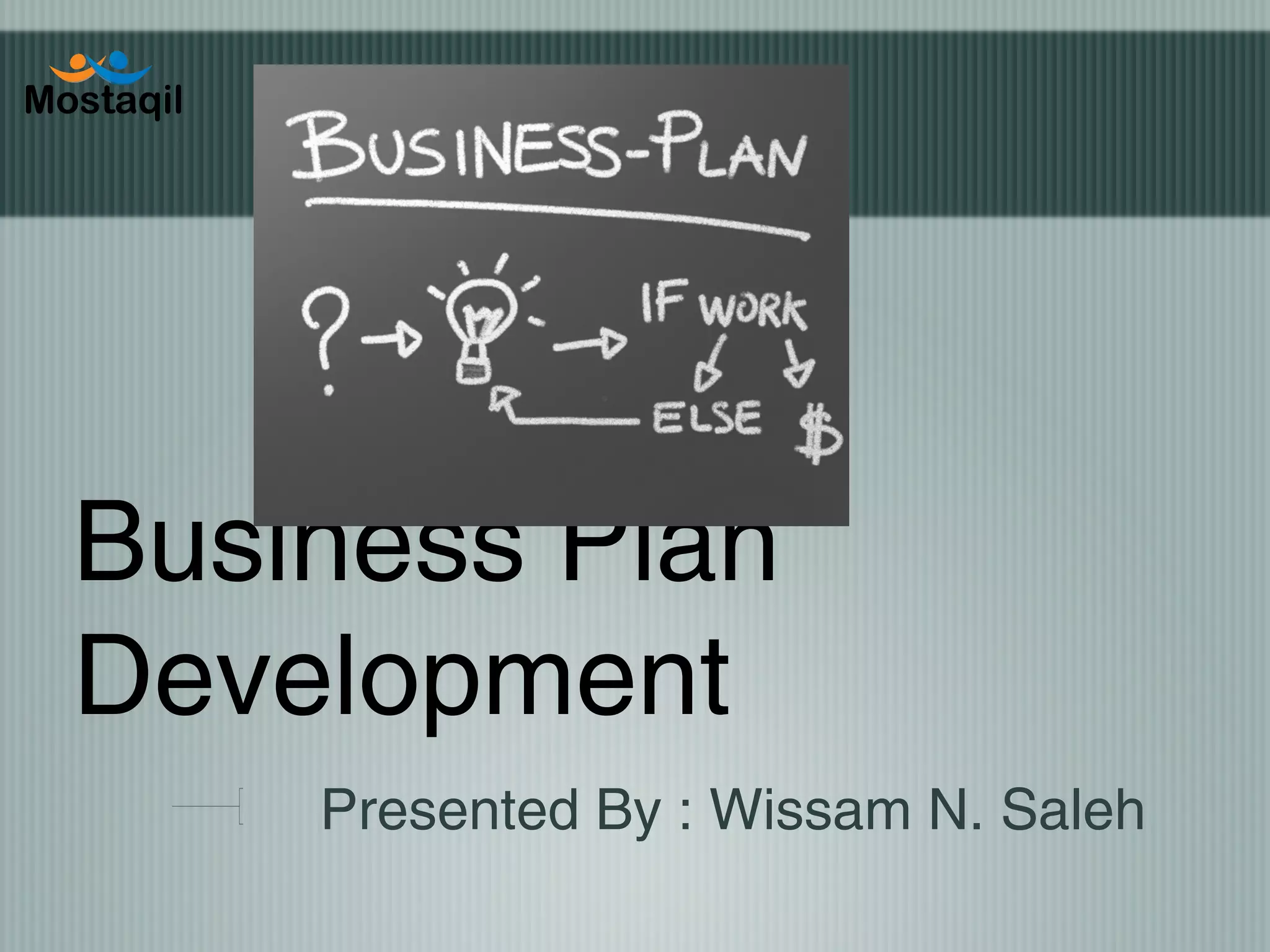

Business Plan
Development
    Presented By : Wissam N. Saleh
Presentation Outline
   Purpose of a Business Plan
   Executive Summery
   Company Overview
   Product of Service Plan
   Market and Industry Analysis
   Marketing Plan
   Operations Plan
   Risks
   Financial Plan
Purpose of A
business plan
 Who Should Write ?
 Why Write ?
 What Are the Uses of a Plan ?
      •   Action Plan
      •   Road Map
      •   Fund Raising
      •   Sales Tool
Executive Summary
I
Objective : Capture the reader’s interest .
The last section to be written .
The reader should be able to tell what your
plan is all about .
Max of two pages.
Executive Summary
     II
1.   Concept Description

2.   Opportunity

3.   Product Service

4.   Value Proposition

5.   Marketing Strategy

6.   Competitive Advantage

7.   Management

8.   Financial

9.   Funding
Company Overview
Objective : The reader should know where your company is now and
where it will be in the future .

Written after you complete your business plan .

Elements :

 1. Introduction

 2. Vision

 3. Mission Statement

 4. Business Model

 5. Value Proposition

     Competitive Advantage
Product or Service
Plan
The reader is excited to hear about your operations, marketing
and financial planning .

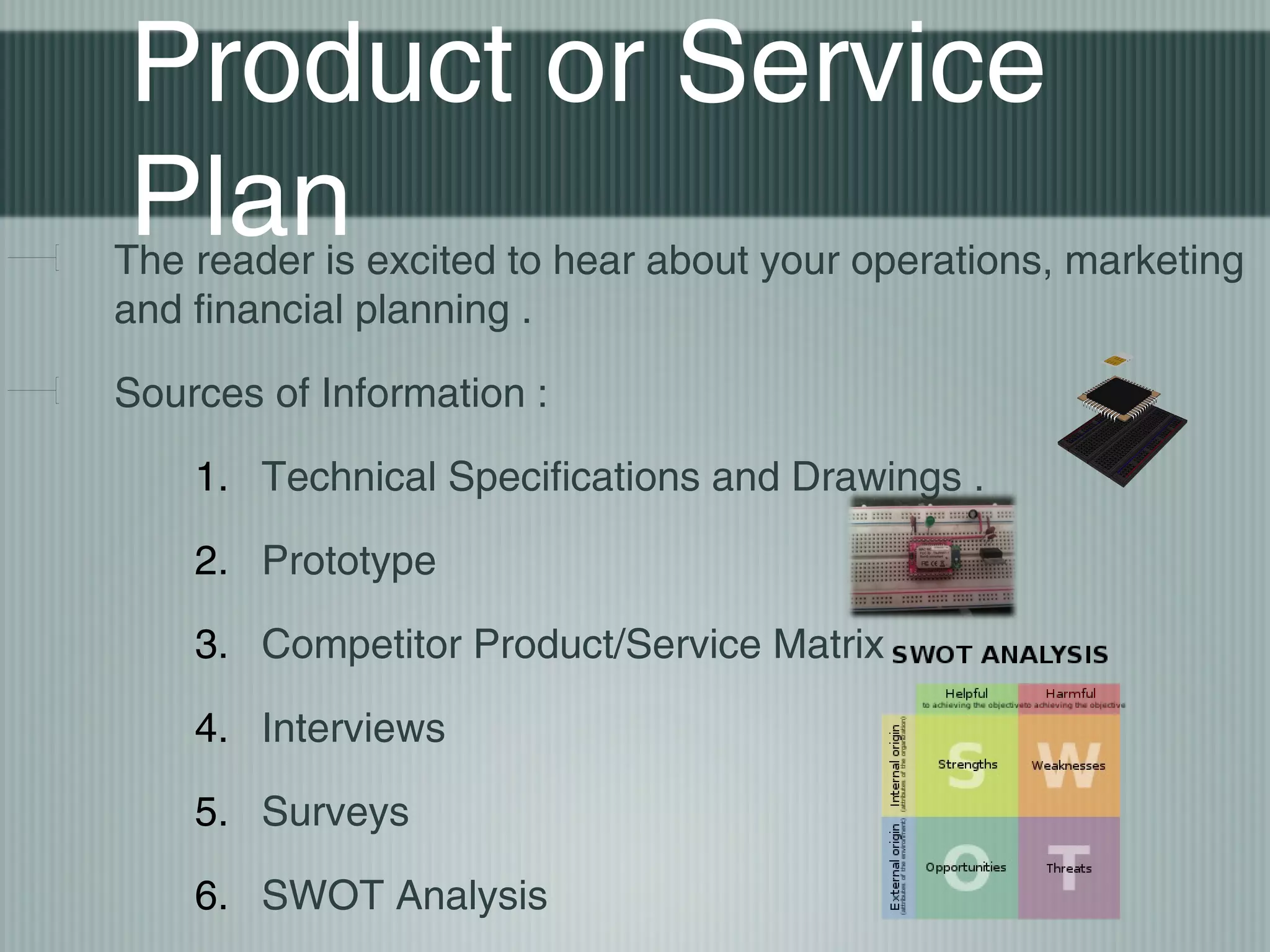
Sources of Information :

    1. Technical Specifications and Drawings .

    2. Prototype

    3. Competitor Product/Service Matrix

    4. Interviews

    5. Surveys

    6. SWOT Analysis
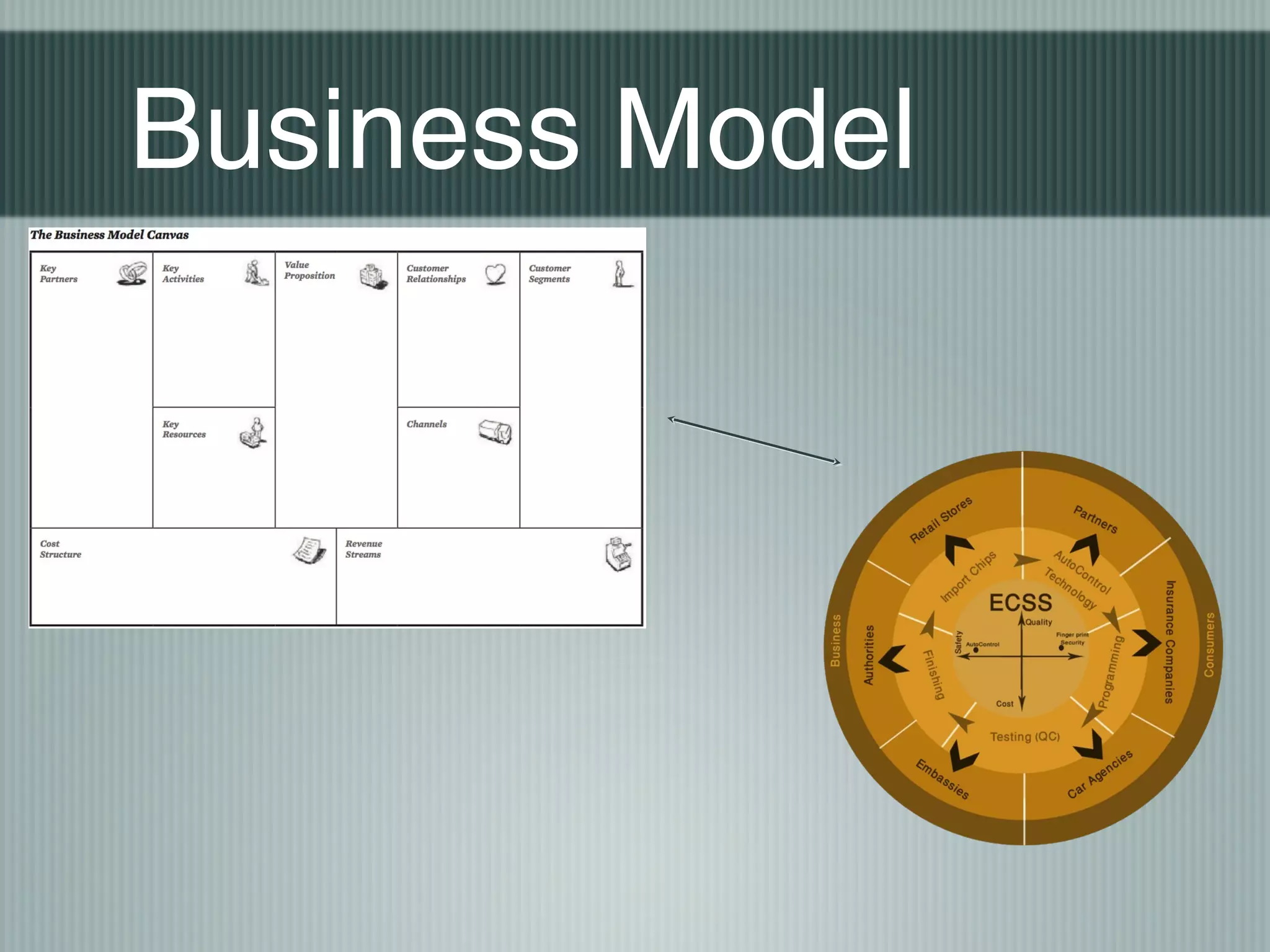
Business Model
Product/Service
Plan II
Features :
   Key Attributes
             •   Function , Speed, Taste, Cost
                 Reduction, Stability , Reliability ,
                 Responsiveness ... Etc
   Enhancements :
             •   Unique Process, Delivery Method,
                 Location, Packaging, Tech Support ,
                 Delivery , Warranty , Payment Terms .
Product/Service
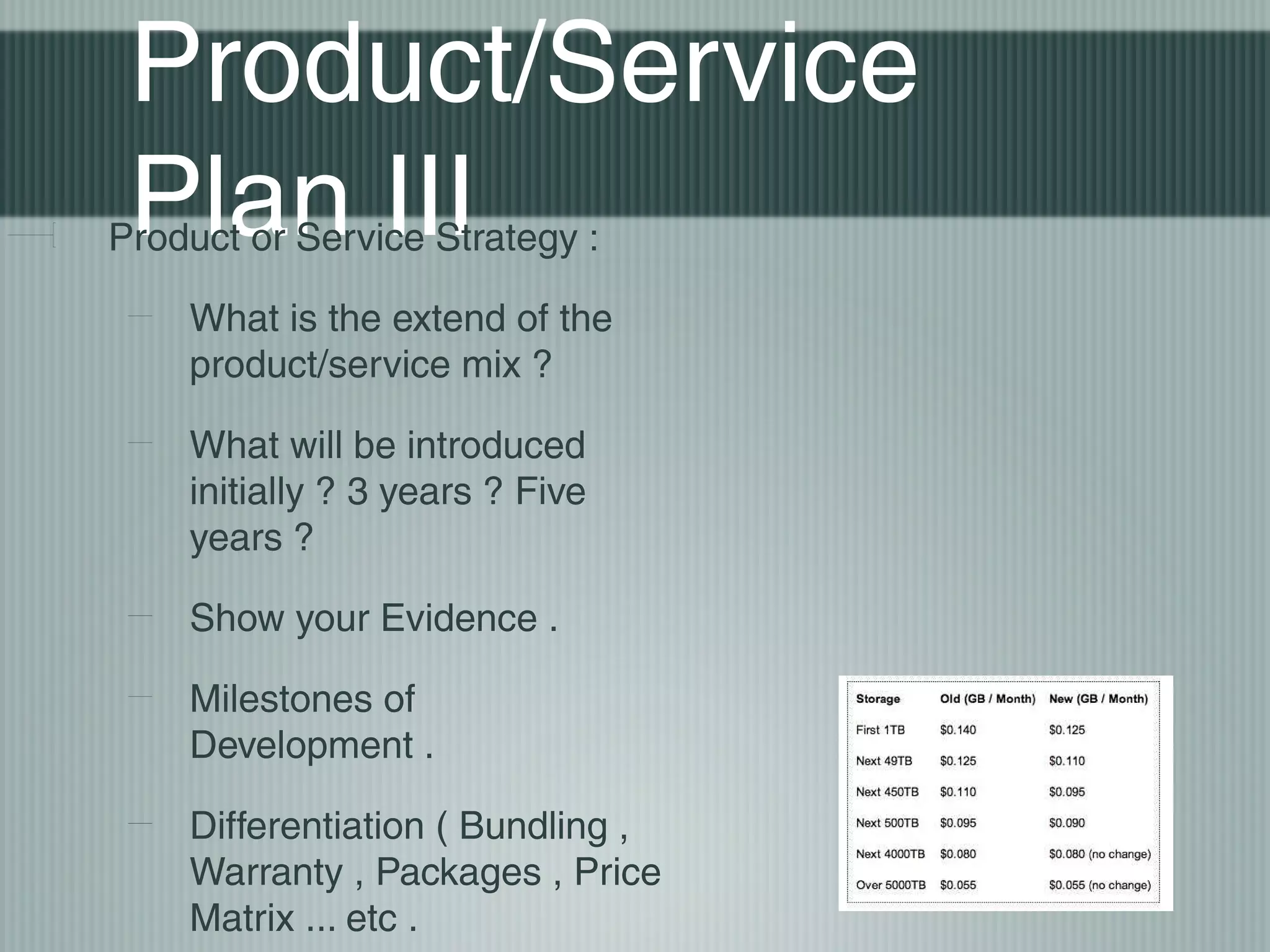
 Plan III
Product or Service Strategy :

    What is the extend of the
    product/service mix ?

    What will be introduced
    initially ? 3 years ? Five
    years ?

    Show your Evidence .

    Milestones of
    Development .

    Differentiation ( Bundling ,
    Warranty , Packages , Price
    Matrix ... etc .
Product/Service
Plan IV
Benefits to the Customer
  Easier to use , delivery on time , used
  based on demand , quality , durability ,
  appearance .
  Are the customers aware of these
  benefits ?
  Are they really benefits ?
Market and Industry
Analysis
Objective : Prove that there is an
Opportunity .
No passion , just data .
No mention of your business.
You should be able to Validate the need for
your product/service .
Market Analysis
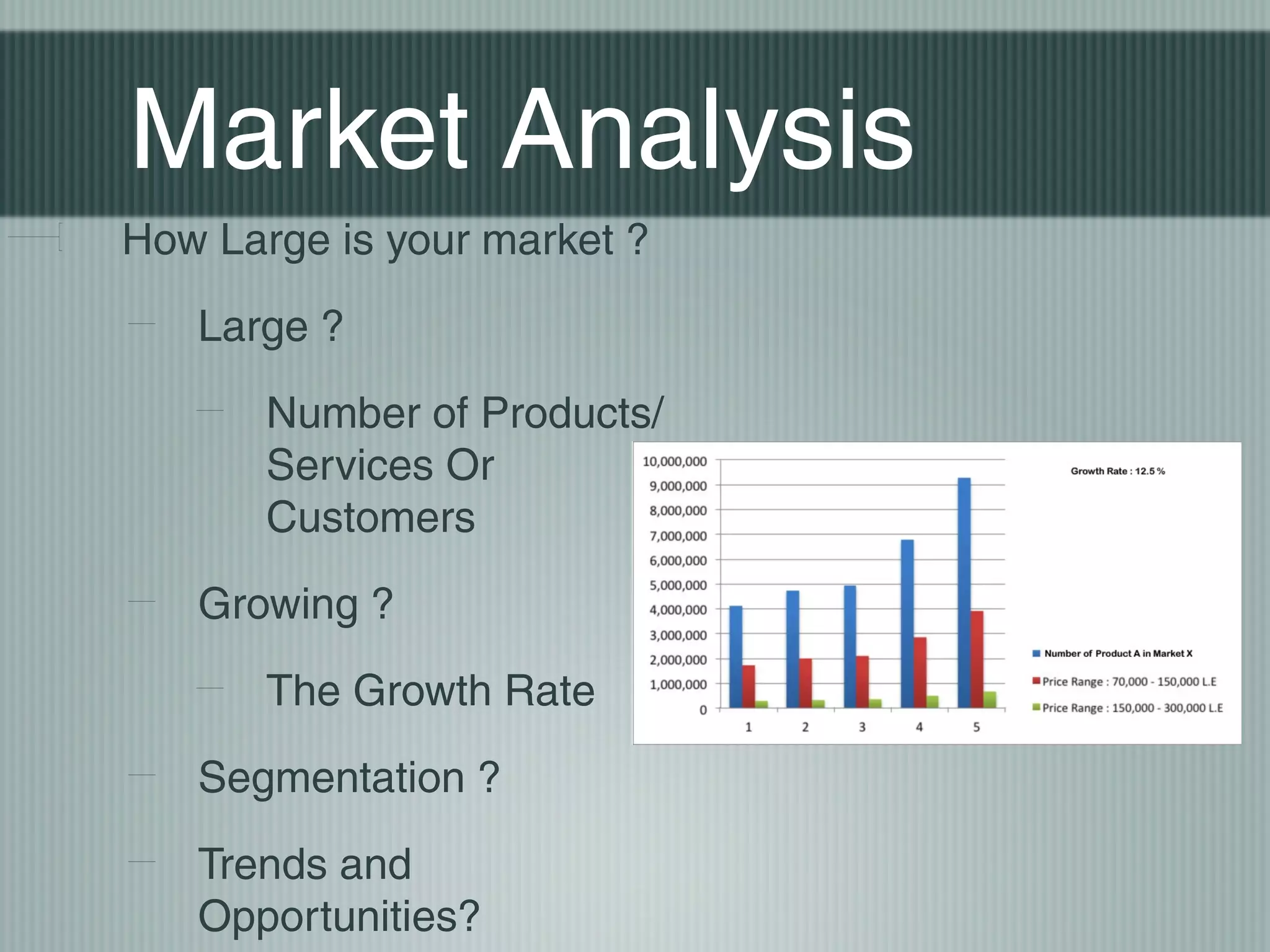
How Large is your market ?
   Large ?

       Number of Products/
       Services Or
       Customers
   Growing ?

       The Growth Rate

   Segmentation ?

   Trends and
   Opportunities?
Market Analysis II
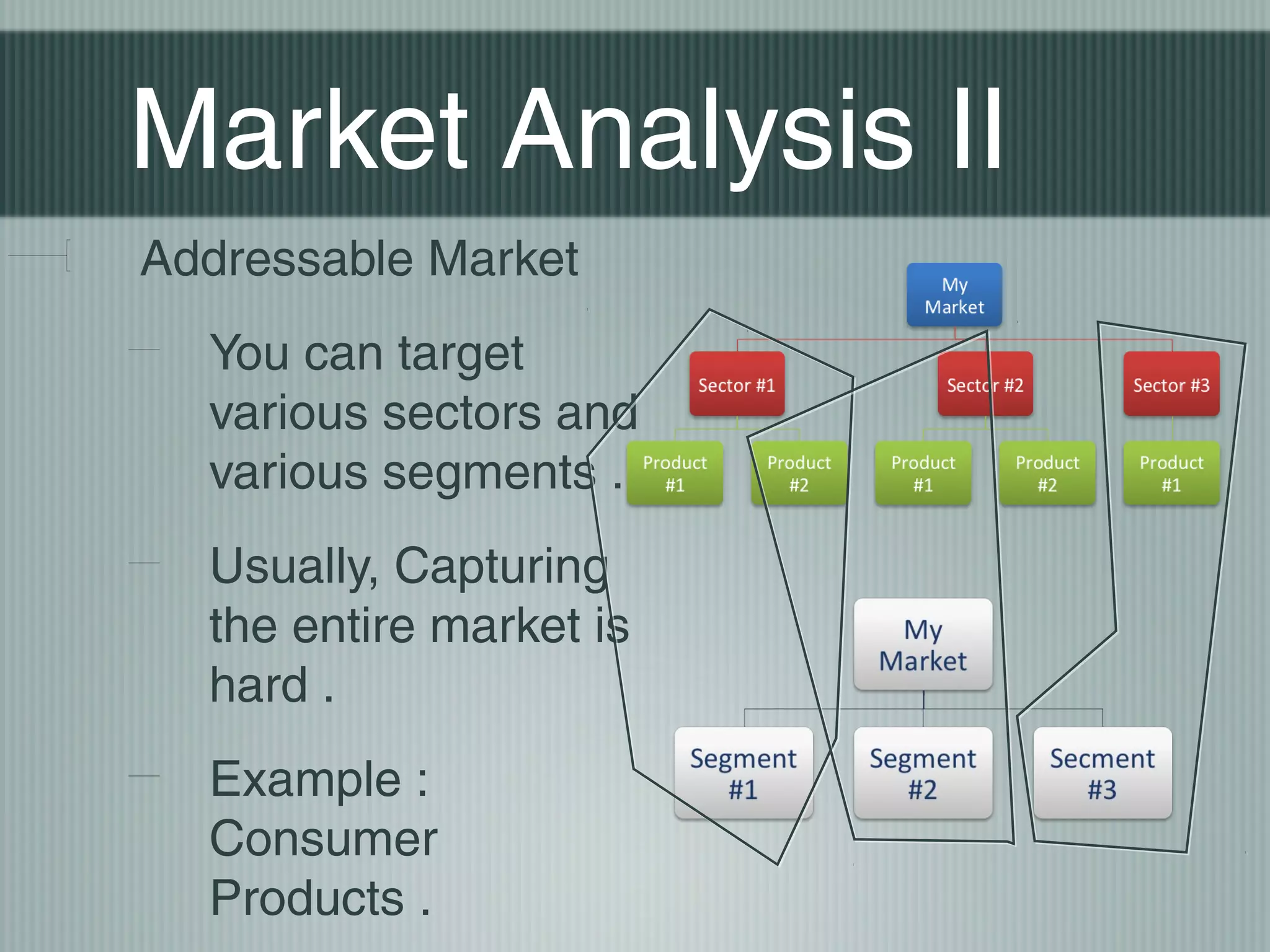
Addressable Market
  You can target
  various sectors and
  various segments .
  Usually, Capturing
  the entire market is
  hard .
  Example :
  Consumer
  Products .
Market Analysis III
Entry Point :
  Based on your Segmentation , Choose
  your Entry Point .
  However, Do they really need your
  Product/Service ?
  Do They Understand the Benefits ?
  What Future Segments Would Join ?
  Why ?
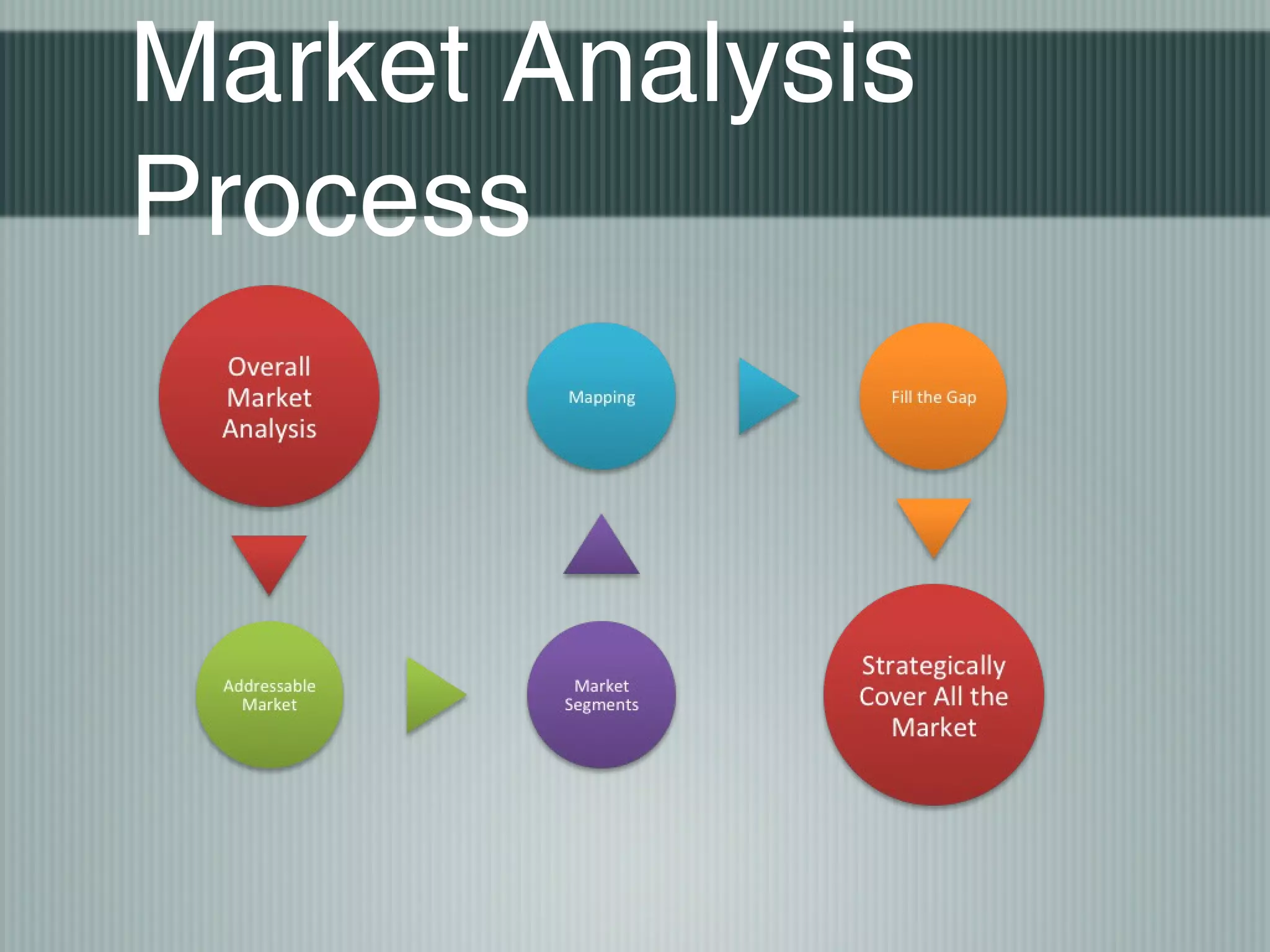
Market Analysis
Process
Industry Analysis I
Objective : Know you competitors and how they compete . Understand the
nature of the market

Elements :

     Industry Organization

         What are the goods ? Where are they produced ?Supply Chain ?
         How do your competitors see themselves ?

     Competitive Environment

         How do they compete ? Service ? Quality ? Price ? Technology ?
         Customer Support ?

         Highly Competitive ? Price based ?

         Profit Margins ? Net Profit Margins ?

         How do they deal with new comers ?
Industry Analysis II
Barriers to Entry

    Legal ?

    Economy of Scale ?

    Customer Loyalty ?

    Agreements with Suppliers ?

    Control of Distribution Channels ?

    High Cost of Entry ?

    Social Conventions ?
Industry Analysis III
Control
  How much control do you have over : Prices ,
  Costs , Channels of Distribution , Buying your
  way in .
Competition
  Direct
  Indirect
  Future
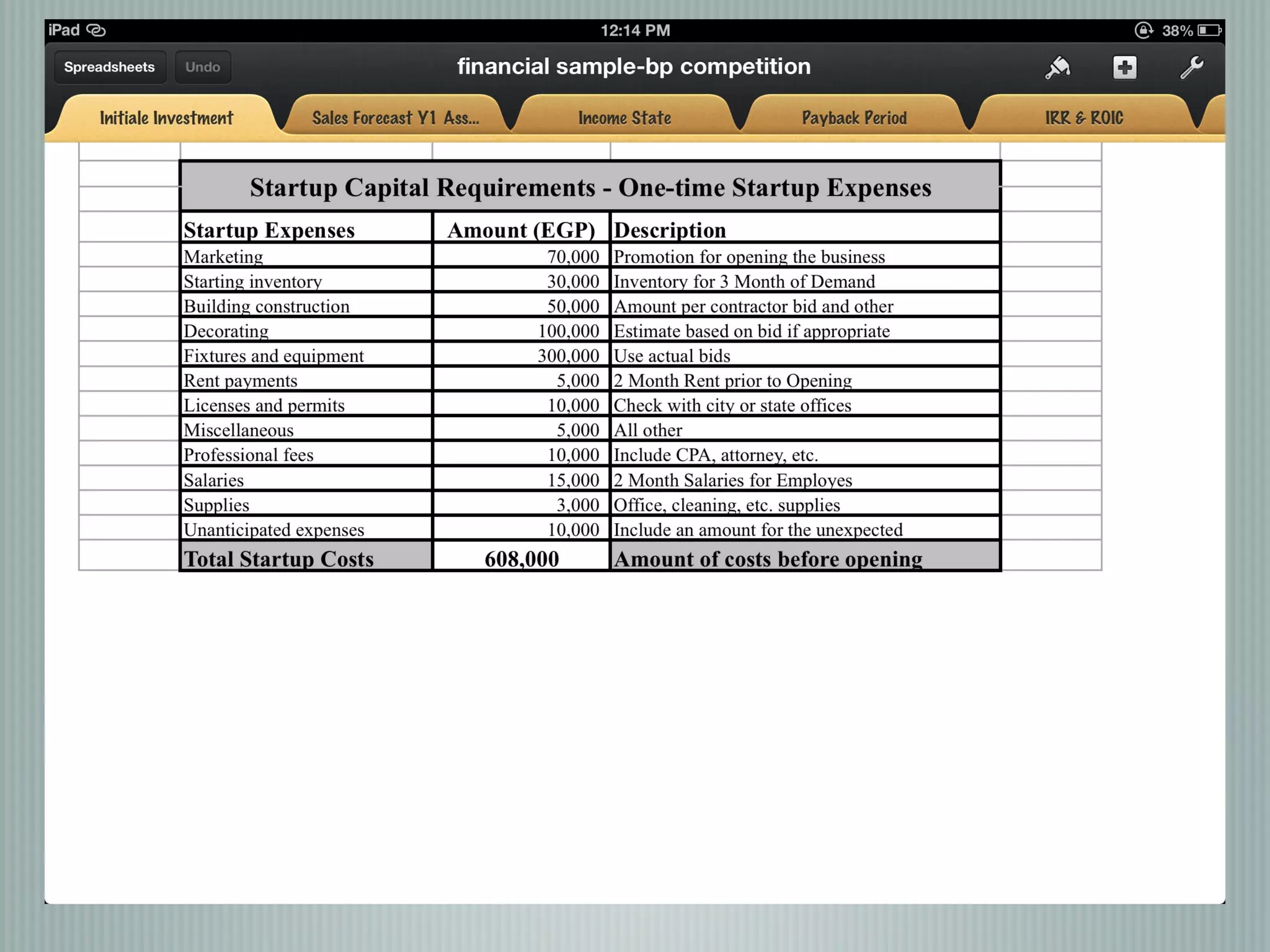
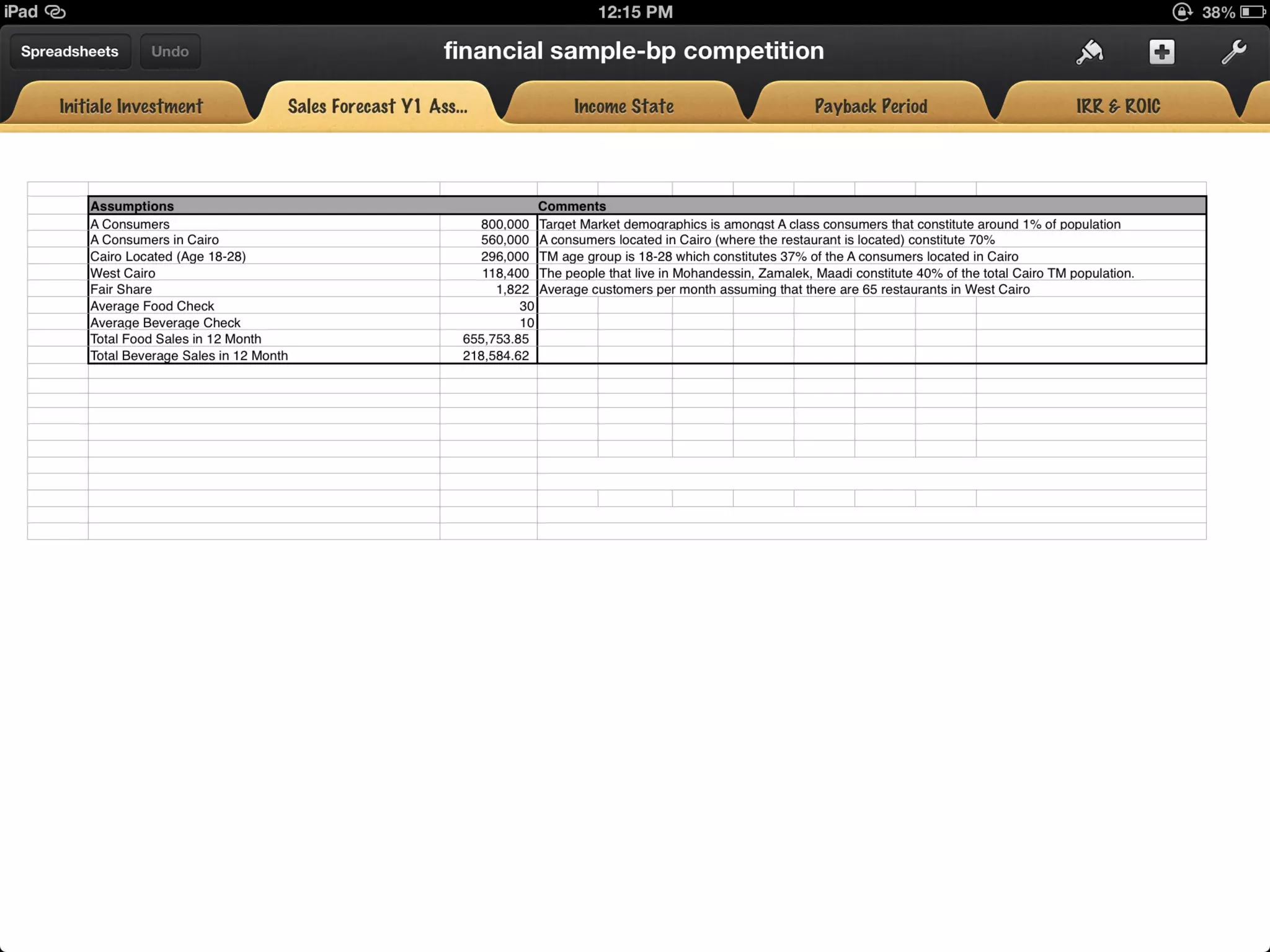
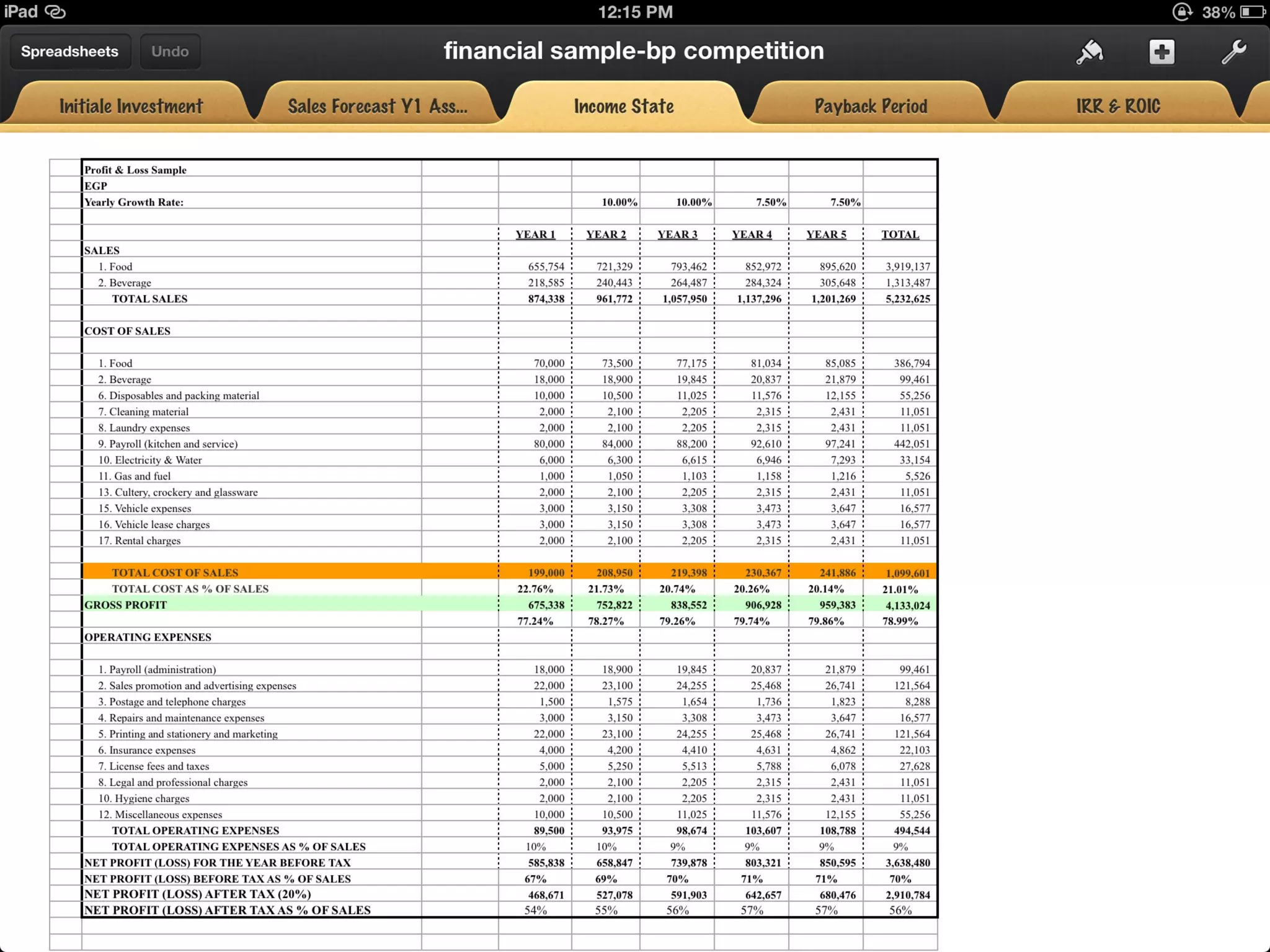
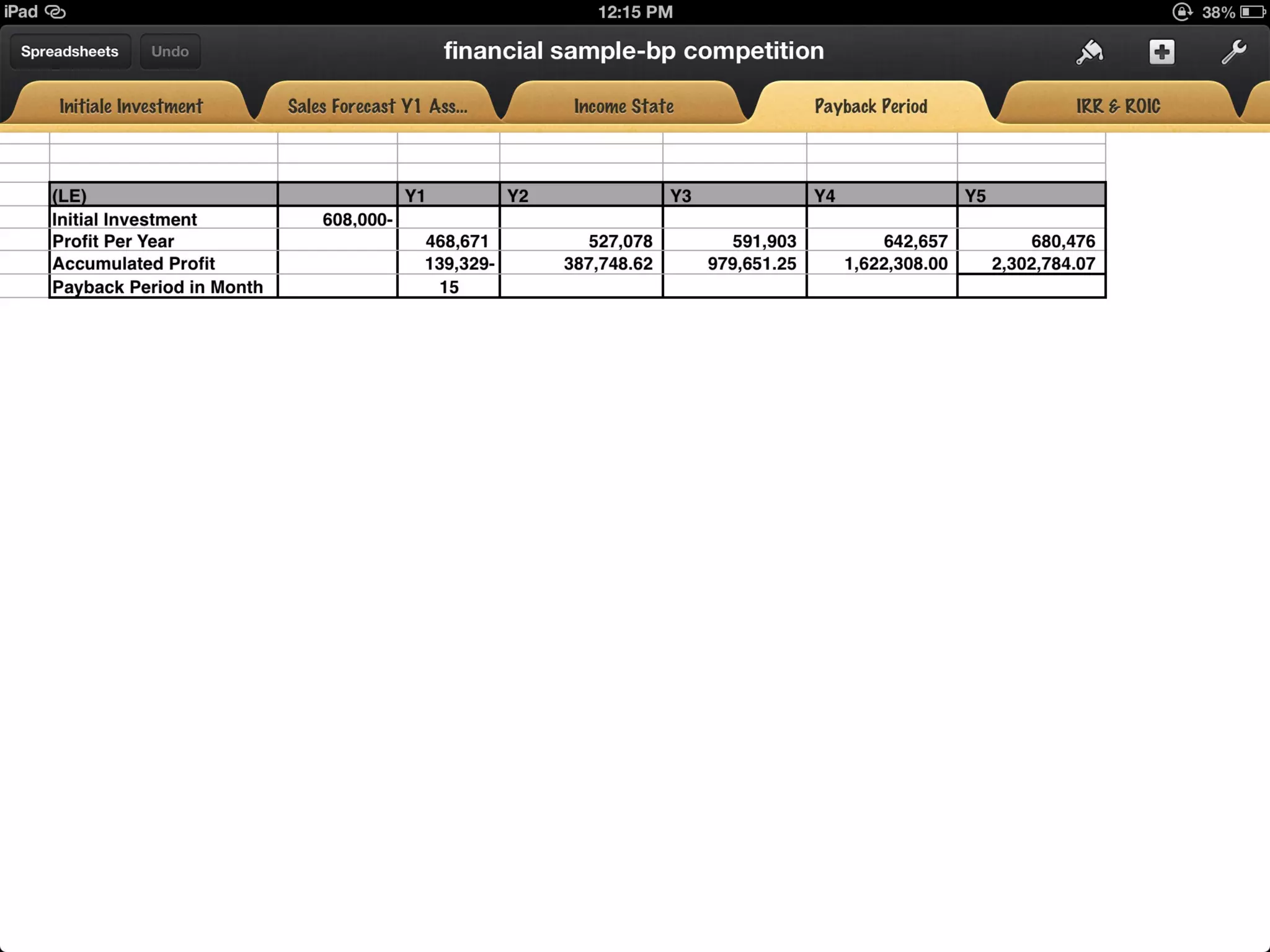
Financial Analysis


Objective : Project your Revenues and
calculate key Ratios .
Method : Excel Modeling
Thank You

Gol presentation copy

  • 1.
    Business Plan Development Presented By : Wissam N. Saleh
  • 2.
    Presentation Outline Purpose of a Business Plan Executive Summery Company Overview Product of Service Plan Market and Industry Analysis Marketing Plan Operations Plan Risks Financial Plan
  • 3.
    Purpose of A businessplan Who Should Write ? Why Write ? What Are the Uses of a Plan ? • Action Plan • Road Map • Fund Raising • Sales Tool
  • 4.
    Executive Summary I Objective :Capture the reader’s interest . The last section to be written . The reader should be able to tell what your plan is all about . Max of two pages.
  • 5.
    Executive Summary II 1. Concept Description 2. Opportunity 3. Product Service 4. Value Proposition 5. Marketing Strategy 6. Competitive Advantage 7. Management 8. Financial 9. Funding
  • 6.
    Company Overview Objective :The reader should know where your company is now and where it will be in the future . Written after you complete your business plan . Elements : 1. Introduction 2. Vision 3. Mission Statement 4. Business Model 5. Value Proposition Competitive Advantage
  • 7.
    Product or Service Plan Thereader is excited to hear about your operations, marketing and financial planning . Sources of Information : 1. Technical Specifications and Drawings . 2. Prototype 3. Competitor Product/Service Matrix 4. Interviews 5. Surveys 6. SWOT Analysis
  • 8.
  • 9.
    Product/Service Plan II Features : Key Attributes • Function , Speed, Taste, Cost Reduction, Stability , Reliability , Responsiveness ... Etc Enhancements : • Unique Process, Delivery Method, Location, Packaging, Tech Support , Delivery , Warranty , Payment Terms .
  • 10.
    Product/Service Plan III Productor Service Strategy : What is the extend of the product/service mix ? What will be introduced initially ? 3 years ? Five years ? Show your Evidence . Milestones of Development . Differentiation ( Bundling , Warranty , Packages , Price Matrix ... etc .
  • 11.
    Product/Service Plan IV Benefits tothe Customer Easier to use , delivery on time , used based on demand , quality , durability , appearance . Are the customers aware of these benefits ? Are they really benefits ?
  • 12.
    Market and Industry Analysis Objective: Prove that there is an Opportunity . No passion , just data . No mention of your business. You should be able to Validate the need for your product/service .
  • 13.
    Market Analysis How Largeis your market ? Large ? Number of Products/ Services Or Customers Growing ? The Growth Rate Segmentation ? Trends and Opportunities?
  • 14.
    Market Analysis II AddressableMarket You can target various sectors and various segments . Usually, Capturing the entire market is hard . Example : Consumer Products .
  • 15.
    Market Analysis III EntryPoint : Based on your Segmentation , Choose your Entry Point . However, Do they really need your Product/Service ? Do They Understand the Benefits ? What Future Segments Would Join ? Why ?
  • 16.
  • 17.
    Industry Analysis I Objective: Know you competitors and how they compete . Understand the nature of the market Elements : Industry Organization What are the goods ? Where are they produced ?Supply Chain ? How do your competitors see themselves ? Competitive Environment How do they compete ? Service ? Quality ? Price ? Technology ? Customer Support ? Highly Competitive ? Price based ? Profit Margins ? Net Profit Margins ? How do they deal with new comers ?
  • 18.
    Industry Analysis II Barriersto Entry Legal ? Economy of Scale ? Customer Loyalty ? Agreements with Suppliers ? Control of Distribution Channels ? High Cost of Entry ? Social Conventions ?
  • 19.
    Industry Analysis III Control How much control do you have over : Prices , Costs , Channels of Distribution , Buying your way in . Competition Direct Indirect Future
  • 20.
    Financial Analysis Objective :Project your Revenues and calculate key Ratios . Method : Excel Modeling
  • 25.