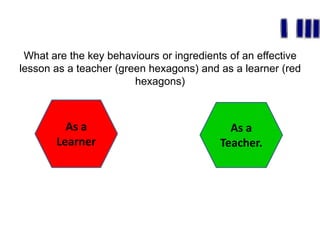


What are the key behaviours or ingredients of an effective
lesson as a teacher (green hexagons) and as a learner (red
                        hexagons)


         As a                               As a
       Learner                            Teacher.
Pick out the most important key behaviours or ingredients
of an effective lessons from a teachers perspective and
then write them onto a green hexagon.


          As a                             As a
        Learner                          teacher


Pick out the most important key behaviours or ingredients
of an effective lessons from a learners perspective and
then write them onto a green hexagon.
Can you now link them together to show how the different
ideas link to together when we are designing lessons.

                                                                Tip!
 pathways
                                                                The more links
                                                                you have with
            differentiation
                                          progress              each hexagon &
                                                                between different
                              Challenge               Leveled   coloured
                                                     outcomes
                                                                hexagons the
            Engaged                                             better!
• SOLO (Structure of Observed Learning
  Outcomes) is a model of learning that helps
  develop a common understanding & language
  of learning that helps teachers (and students)
  understand the learning process.
To build it you need two things


Facts, ideas, observations         Theories, patterns, systems.
There are 5 stages to
 building that house


  - What’s different about each stage.
What do you know about


Read your 5 statements about what someone knows about X factor.
•Which shows the deepest knowledge?
•How are they different from each other?
•How are they related to each other?
“SOLO Taxonomy provides a simple and
      robust way of describing how learning
outcomes grow in complexity from surface to
                      deep understanding”

                         Biggs & Collis 1982
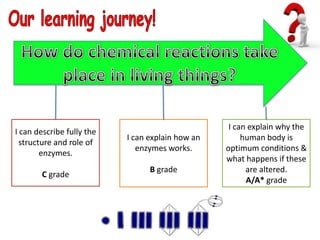
I can explain why the
I can describe fully the
                           I can explain how an        human body is
  structure and role of
                              enzymes works.      optimum conditions &
        enzymes.
                                                  what happens if these
                                 B grade                are altered.
       C grade
                                                        A/A* grade
Activate        Revision Session Protocol
1.    Think carefully about which level you should start at. The aim of the
      session is for you to have a deeper understanding of a particularly
      tricky topic and make progress. It’s not to see who finishes first or
      gives up.

2.    Move onto new tasks in order. You can start at any level (see point 1).

3.    Read the success criteria for each level carefully.

4.    Only move up to the next level when you feel confident (see the
      success criteria’s for guidance). You could always go back a level if
      needed.

5.    Be independent of others. Your exam is less than 4 weeks away and
      no one can help you then, so don’t let them hold you back now.
Isn’t this a bit like
Bloom’s
Taxonomy?

Going SOLO Learning Matters

  • 1.
    What are thekey behaviours or ingredients of an effective lesson as a teacher (green hexagons) and as a learner (red hexagons) As a As a Learner Teacher.
  • 2.
    Pick out themost important key behaviours or ingredients of an effective lessons from a teachers perspective and then write them onto a green hexagon. As a As a Learner teacher Pick out the most important key behaviours or ingredients of an effective lessons from a learners perspective and then write them onto a green hexagon.
  • 3.
    Can you nowlink them together to show how the different ideas link to together when we are designing lessons. Tip! pathways The more links you have with differentiation progress each hexagon & between different Challenge Leveled coloured outcomes hexagons the Engaged better!
  • 4.
    • SOLO (Structureof Observed Learning Outcomes) is a model of learning that helps develop a common understanding & language of learning that helps teachers (and students) understand the learning process.
  • 5.
    To build ityou need two things Facts, ideas, observations Theories, patterns, systems.
  • 6.
    There are 5stages to building that house - What’s different about each stage.
  • 12.
    What do youknow about Read your 5 statements about what someone knows about X factor. •Which shows the deepest knowledge? •How are they different from each other? •How are they related to each other?
  • 13.
    “SOLO Taxonomy providesa simple and robust way of describing how learning outcomes grow in complexity from surface to deep understanding” Biggs & Collis 1982
  • 15.
    I can explainwhy the I can describe fully the I can explain how an human body is structure and role of enzymes works. optimum conditions & enzymes. what happens if these B grade are altered. C grade A/A* grade
  • 18.
    Activate Revision Session Protocol 1. Think carefully about which level you should start at. The aim of the session is for you to have a deeper understanding of a particularly tricky topic and make progress. It’s not to see who finishes first or gives up. 2. Move onto new tasks in order. You can start at any level (see point 1). 3. Read the success criteria for each level carefully. 4. Only move up to the next level when you feel confident (see the success criteria’s for guidance). You could always go back a level if needed. 5. Be independent of others. Your exam is less than 4 weeks away and no one can help you then, so don’t let them hold you back now.
  • 22.
    Isn’t this abit like Bloom’s Taxonomy?

Editor's Notes

  • #5 SOLO should be supplementary to what the pupils are doing and not the focus of it