Going Beyond Genomics
in Precision Medicine:
̶ David Crockett, Ph.D.
What’s Next
© 2016 Health Catalyst
Proprietary. Feel free to share but we would appreciate a Health Catalyst citation.
Genomics in Precision Medicine
In our 2016 survey we learned that
many healthcare organizations seem to
have more pressing challenges to face
than embracing the paradigm of
precision medicine.
The demands of changing cost models,
decreasing reimbursement, avoiding
CMS penalties, and merger/acquisition
pressures threaten to overwhelm
numerous health systems.
© 2016 Health Catalyst
Proprietary. Feel free to share but we would appreciate a Health Catalyst citation.
Genomics in Precision Medicine
When we asked healthcare leaders
across the nation, a majority responded
that integrating genomic data into the
records was a low priority.
Some groups even responded that
genetic information from patients was
irrelevant to their health systems.
We should be clear. Precision medicine
is not only about “-omics” (genomics,
proteomics, metabolomics). It is really
about “econ-omics.” It is about
improving patient lives.
© 2016 Health Catalyst
Proprietary. Feel free to share but we would appreciate a Health Catalyst citation.
The Elusive Paradigm of Precision Medicine
For us, precision medicine simply means that
patients are quickly and appropriately placed
into the path of care that is most effective
and cost efficient for them at that time.
One clear obstacle to precisely diagnosing
and treating diseases is the dilemma of
“diagnostic gradient.”
Many disease conditions are relatively
straightforward to identify with a distinct
biological cause, a direct clinical measure
or a clear diagnostic image.
© 2016 Health Catalyst
Proprietary. Feel free to share but we would appreciate a Health Catalyst citation.
The Elusive Paradigm of Precision Medicine
Unfortunately, others disease conditions have
only indirect markers or require more extensive
observation and rule out testing—sometimes
referred to as a diagnostic odyssey.
The chief complaint of this diagnostic gradient
is diagnostic error. In a September 2015
Institute of Medicine report Improving
Diagnosis in Healthcare, a diagnostic error is
described as “[in]accurate if it differs from the
true condition a patient has (or does not have)
or if it is imprecise and incomplete.”
The consequence of diagnostic gradient and
diagnostic errors is imprecise medicine.
© 2016 Health Catalyst
Proprietary. Feel free to share but we would appreciate a Health Catalyst citation.
The Elusive Paradigm of Precision Medicine
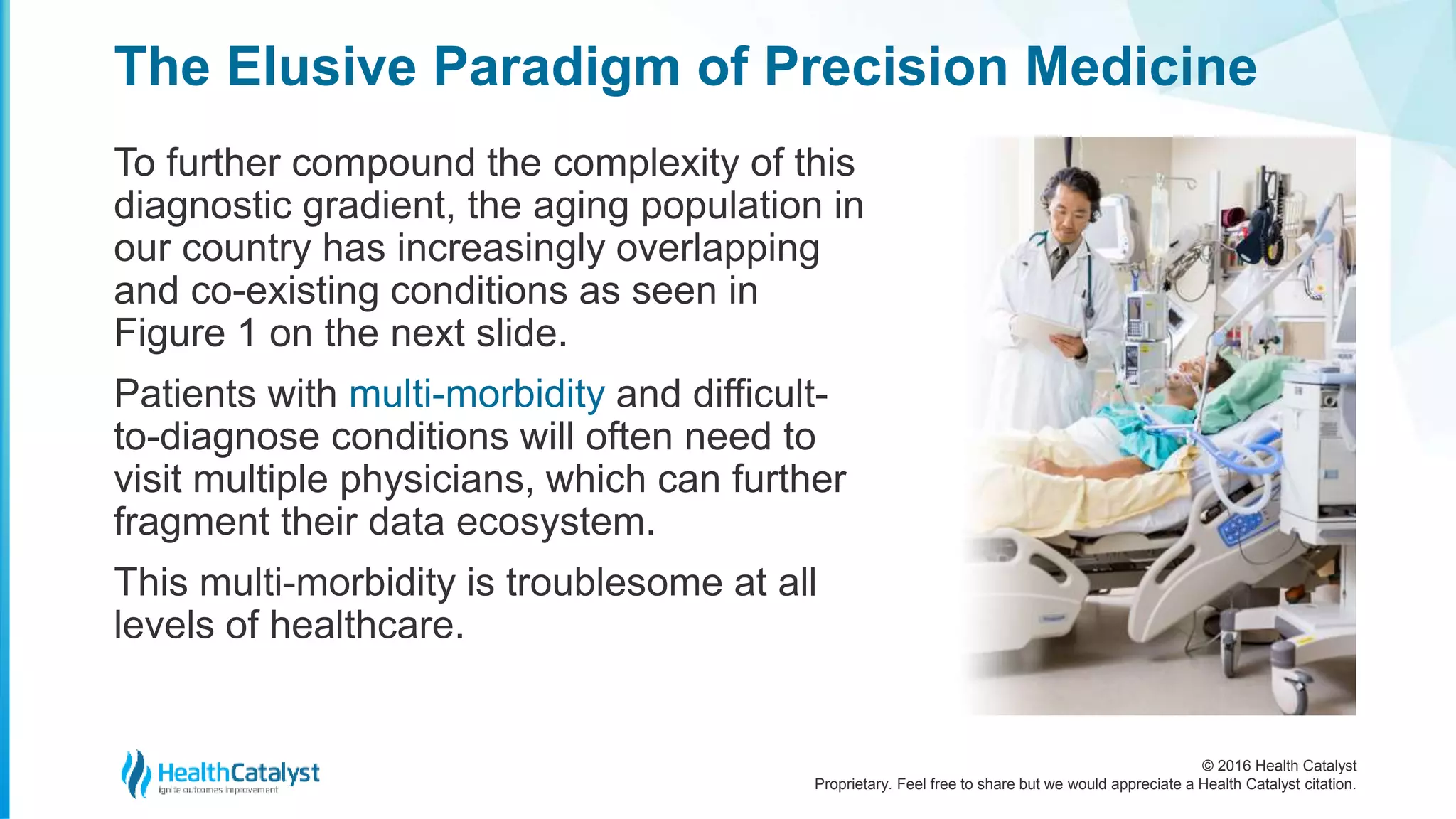
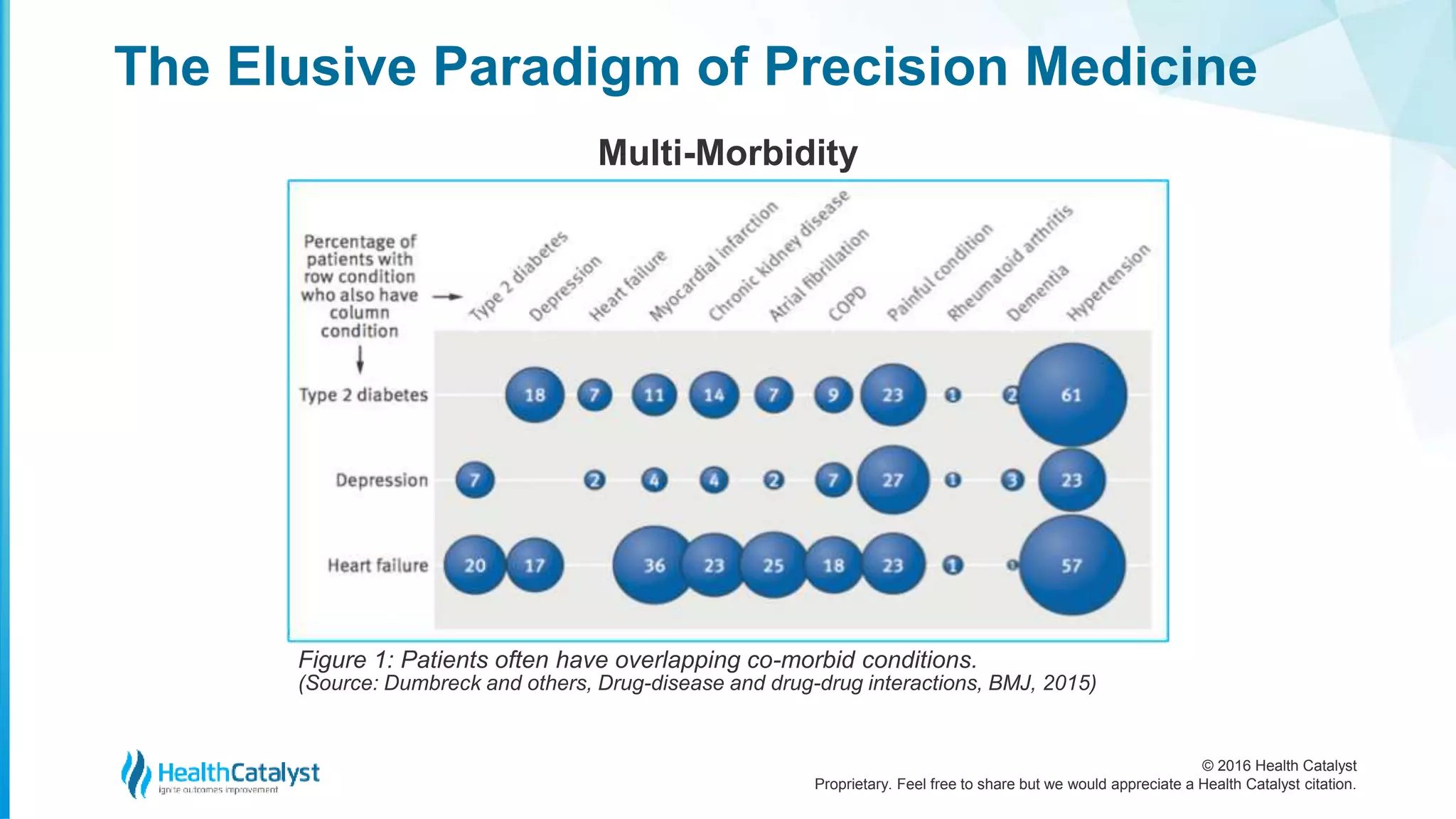
To further compound the complexity of this
diagnostic gradient, the aging population in
our country has increasingly overlapping
and co-existing conditions as seen in
Figure 1 on the next slide.
Patients with multi-morbidity and difficult-
to-diagnose conditions will often need to
visit multiple physicians, which can further
fragment their data ecosystem.
This multi-morbidity is troublesome at all
levels of healthcare.
© 2016 Health Catalyst
Proprietary. Feel free to share but we would appreciate a Health Catalyst citation.
The Elusive Paradigm of Precision Medicine
Figure 1: Patients often have overlapping co-morbid conditions.
(Source: Dumbreck and others, Drug-disease and drug-drug interactions, BMJ, 2015)
Multi-Morbidity
© 2016 Health Catalyst
Proprietary. Feel free to share but we would appreciate a Health Catalyst citation.
More Precise and Comprehensive Patient Data
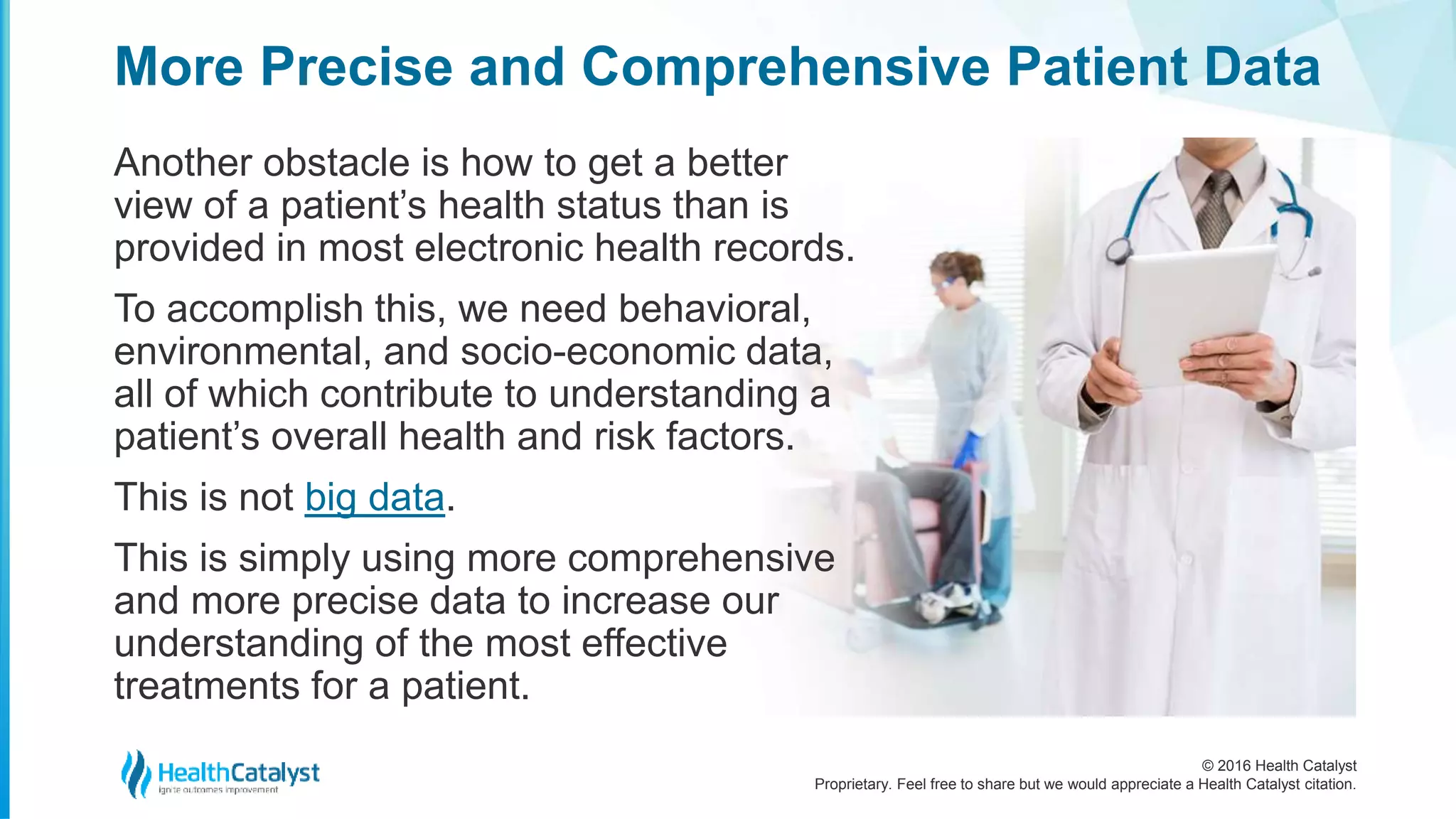
Another obstacle is how to get a better
view of a patient’s health status than is
provided in most electronic health records.
To accomplish this, we need behavioral,
environmental, and socio-economic data,
all of which contribute to understanding a
patient’s overall health and risk factors.
This is not big data.
This is simply using more comprehensive
and more precise data to increase our
understanding of the most effective
treatments for a patient.
© 2016 Health Catalyst
Proprietary. Feel free to share but we would appreciate a Health Catalyst citation.
More Precise and Comprehensive Patient Data
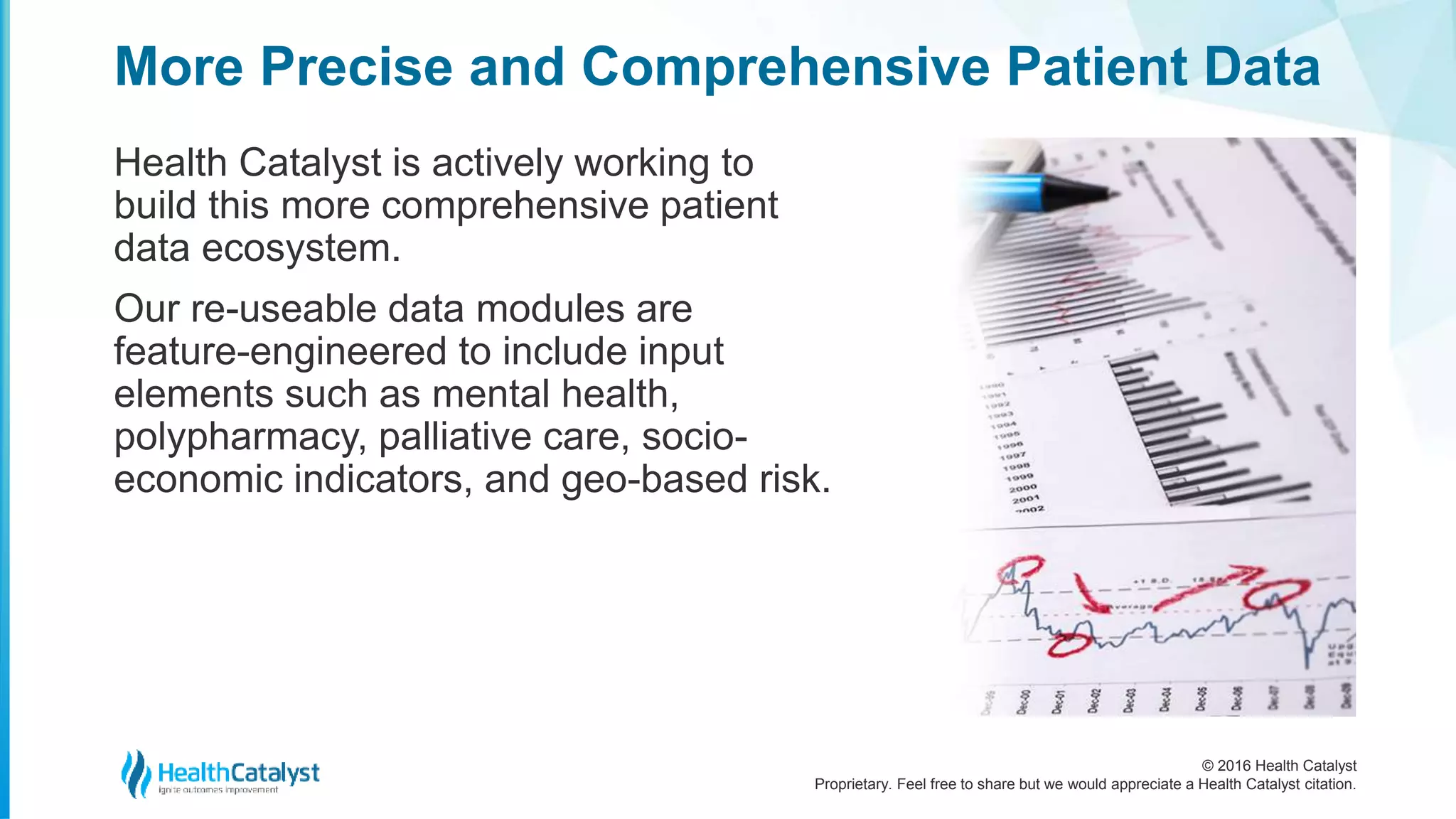
Health Catalyst is actively working to
build this more comprehensive patient
data ecosystem.
Our re-useable data modules are
feature-engineered to include input
elements such as mental health,
polypharmacy, palliative care, socio-
economic indicators, and geo-based risk.
© 2016 Health Catalyst
Proprietary. Feel free to share but we would appreciate a Health Catalyst citation.
More Precise and Comprehensive Patient Data
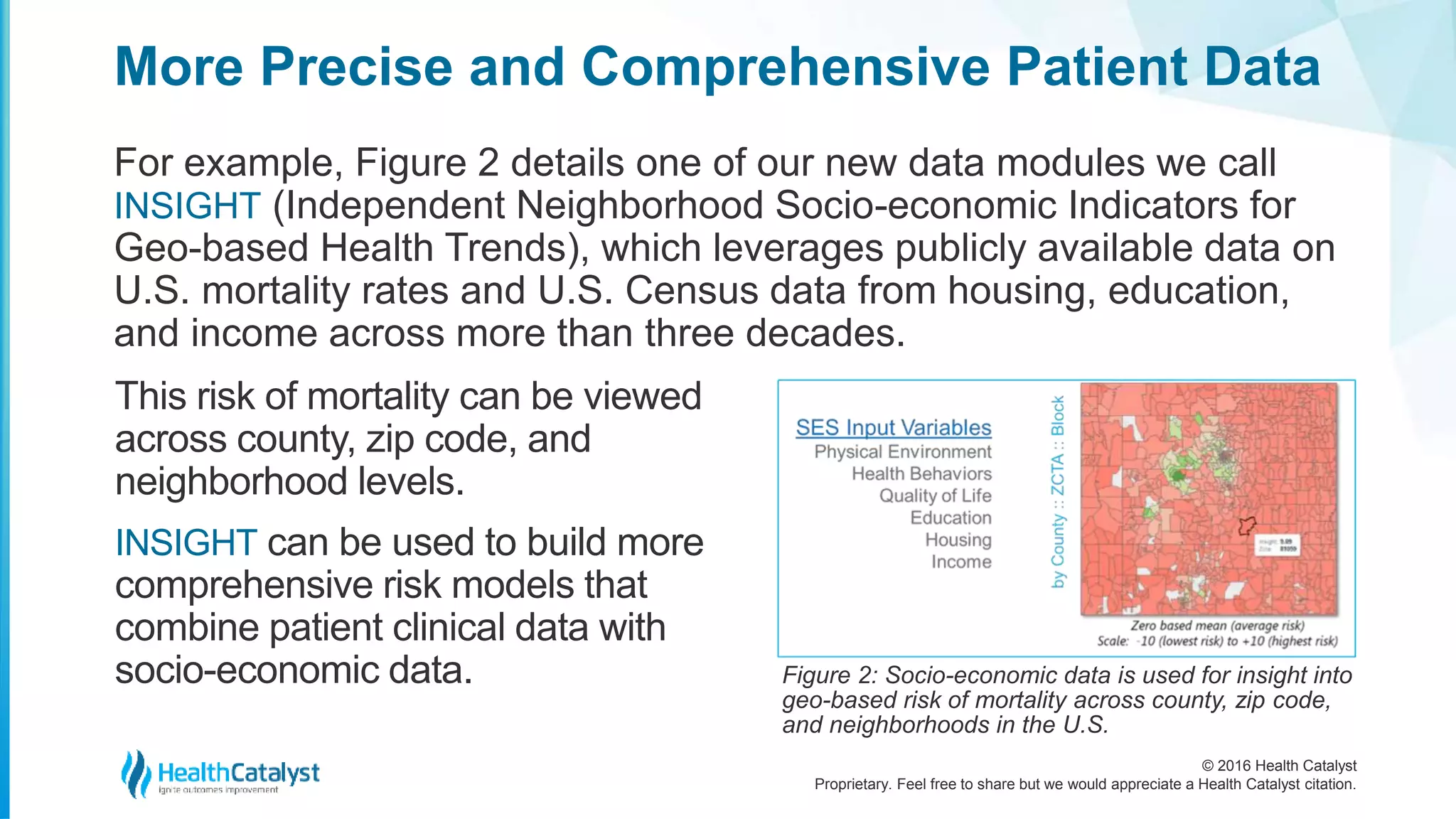
For example, Figure 2 details one of our new data modules we call
INSIGHT (Independent Neighborhood Socio-economic Indicators for
Geo-based Health Trends), which leverages publicly available data on
U.S. mortality rates and U.S. Census data from housing, education,
and income across more than three decades.
This risk of mortality can be viewed
across county, zip code, and
neighborhood levels.
INSIGHT can be used to build more
comprehensive risk models that
combine patient clinical data with
socio-economic data. Figure 2: Socio-economic data is used for insight into
geo-based risk of mortality across county, zip code,
and neighborhoods in the U.S.
© 2016 Health Catalyst
Proprietary. Feel free to share but we would appreciate a Health Catalyst citation.
The Next Big Leap in Healthcare
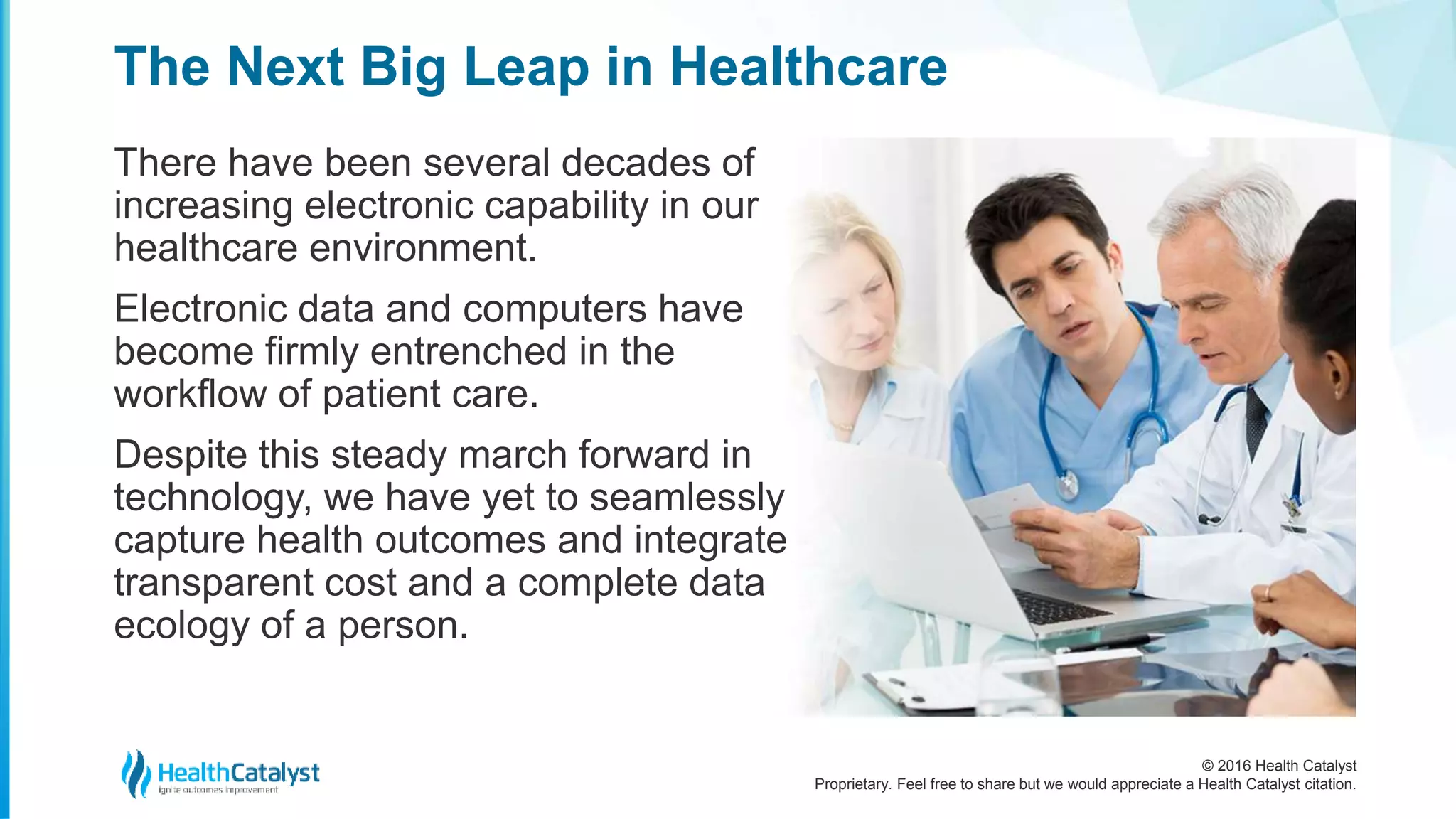
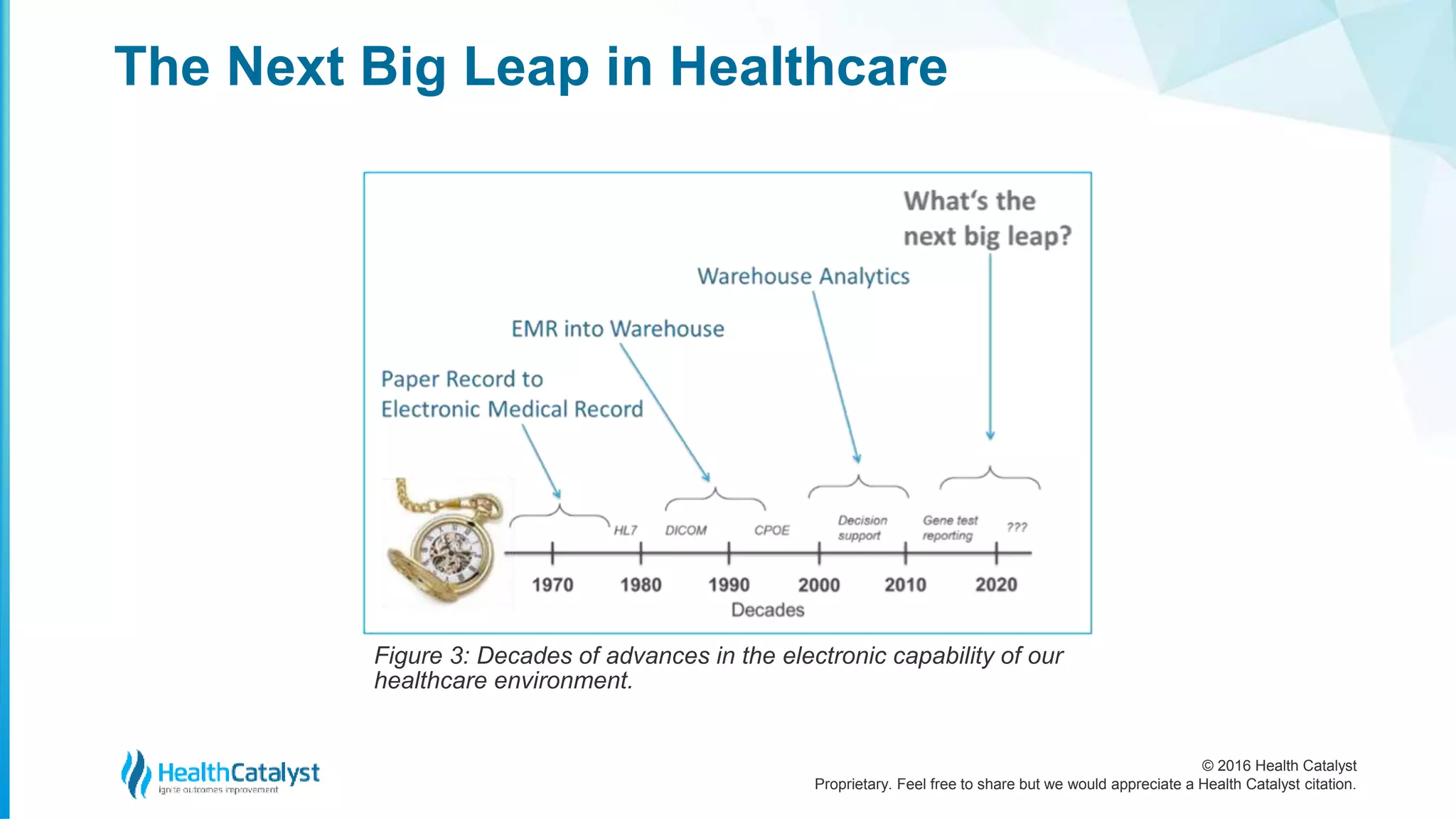
There have been several decades of
increasing electronic capability in our
healthcare environment.
Electronic data and computers have
become firmly entrenched in the
workflow of patient care.
Despite this steady march forward in
technology, we have yet to seamlessly
capture health outcomes and integrate
transparent cost and a complete data
ecology of a person.
© 2016 Health Catalyst
Proprietary. Feel free to share but we would appreciate a Health Catalyst citation.
The Next Big Leap in Healthcare
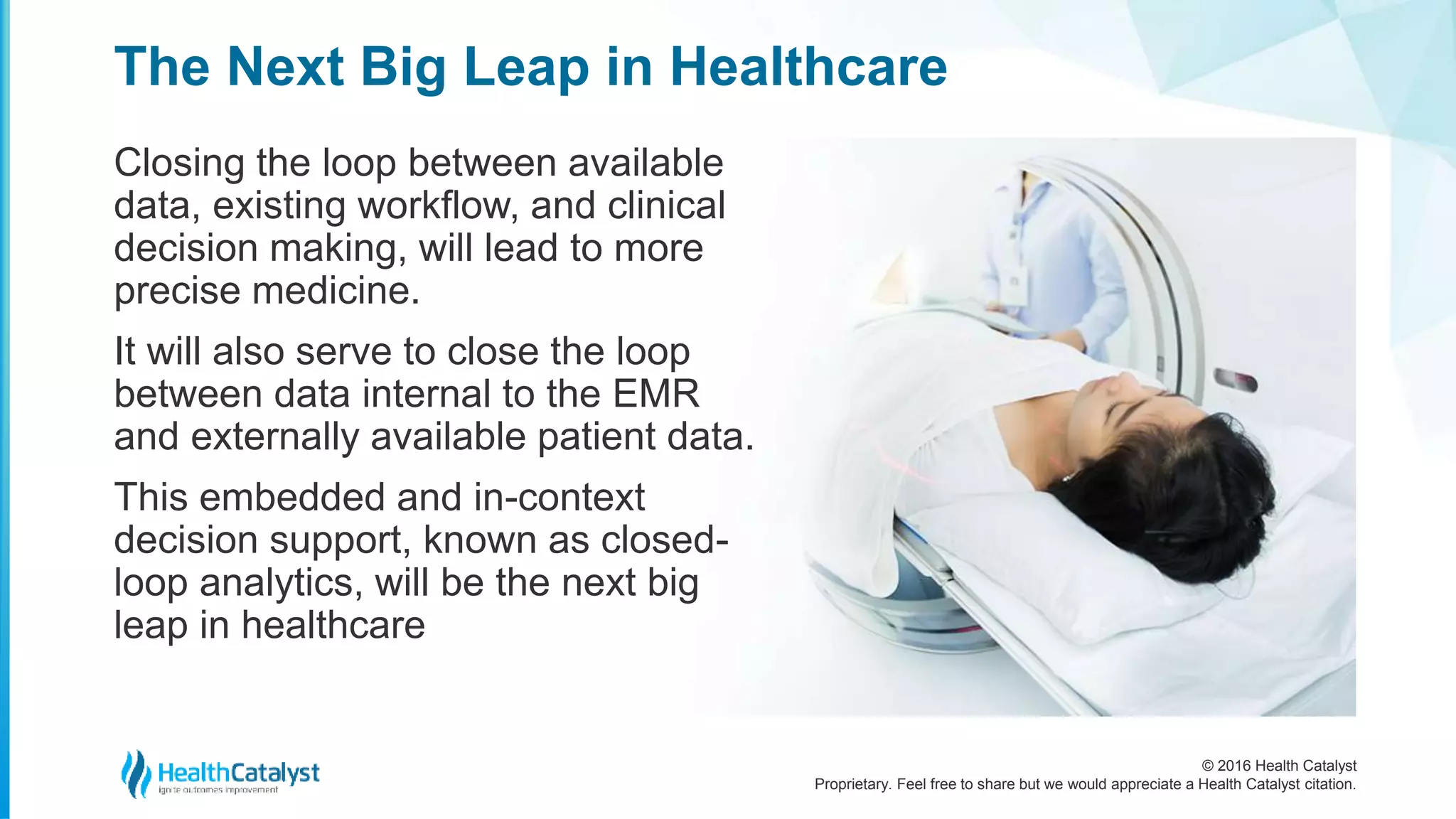
Closing the loop between available
data, existing workflow, and clinical
decision making, will lead to more
precise medicine.
It will also serve to close the loop
between data internal to the EMR
and externally available patient data.
This embedded and in-context
decision support, known as closed-
loop analytics, will be the next big
leap in healthcare
© 2016 Health Catalyst
Proprietary. Feel free to share but we would appreciate a Health Catalyst citation.
The Next Big Leap in Healthcare
Closing the loop between available
data, existing workflow, and clinical
decision making, will lead to more
precise medicine.
It will also serve to close the loop
between data internal to the EMR
and externally available patient data.
This embedded and in-context
decision support, known as closed-
loop analytics, will be the next big
leap in healthcare
© 2016 Health Catalyst
Proprietary. Feel free to share but we would appreciate a Health Catalyst citation.
The Next Big Leap in Healthcare
Figure 3: Decades of advances in the electronic capability of our
healthcare environment.
© 2016 Health Catalyst
Proprietary. Feel free to share but we would appreciate a Health Catalyst citation.
Closed-loop Analytics Leads to Precise Medicine
Precision medicine is not only about
accurate diagnosis and treatment but
timely diagnosis and treatment, as well.
In terms of treating a patient effectively,
the primary goal of closed-loop
analytics is decreasing the time from
insight to decision to action.
Closed-loop analytics within a robust
data warehouse environment will
always be superior to standalone or
siloed applications.
© 2016 Health Catalyst
Proprietary. Feel free to share but we would appreciate a Health Catalyst citation.
Closed-loop Analytics Leads to Precise Medicine
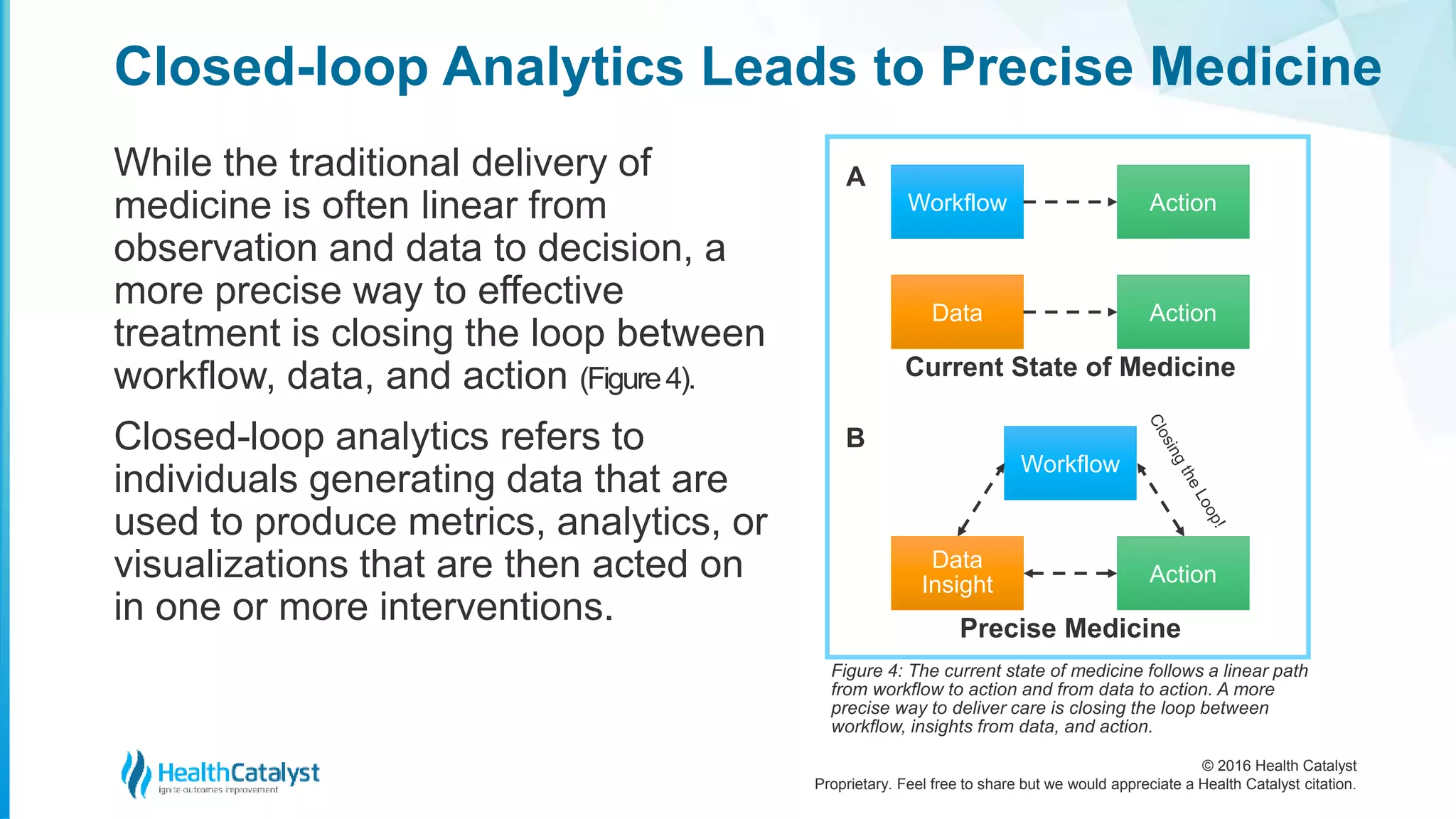
While the traditional delivery of
medicine is often linear from
observation and data to decision, a
more precise way to effective
treatment is closing the loop between
workflow, data, and action (Figure4).
Closed-loop analytics refers to
individuals generating data that are
used to produce metrics, analytics, or
visualizations that are then acted on
in one or more interventions.
Workflow Action
Data Action
Current State of Medicine
A
Data
Insight Action
Precise Medicine
B
Workflow
Figure 4: The current state of medicine follows a linear path
from workflow to action and from data to action. A more
precise way to deliver care is closing the loop between
workflow, insights from data, and action.
© 2016 Health Catalyst
Proprietary. Feel free to share but we would appreciate a Health Catalyst citation.
Closed-loop Analytics Leads to Precise Medicine
It is the confluence of EHR system tools,
decision support tools, and reporting and
analytics, all used to improve patient
outcomes and reduce cost.
Analytics and decision support are most
effective at the point of care and when
shown in an existing workflow directly to the
decision maker.
Similar to disease surveillance or
immunization in public health, closed loop
analytics can also lend insight into the
entire patient lifecycle, not just point of care.
© 2016 Health Catalyst
Proprietary. Feel free to share but we would appreciate a Health Catalyst citation.
Closed-loop Analytics Leads to Precise Medicine
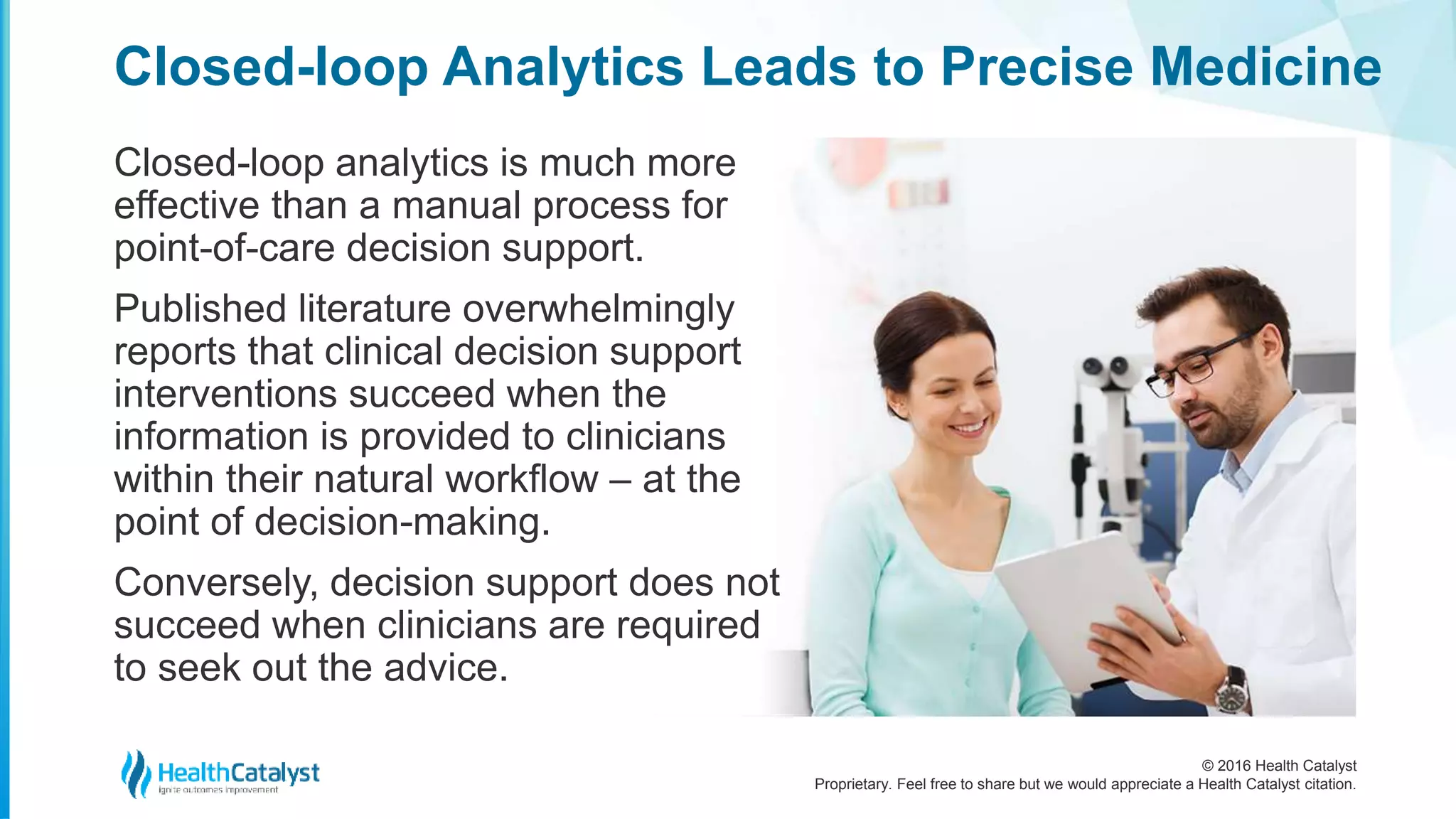
Closed-loop analytics is much more
effective than a manual process for
point-of-care decision support.
Published literature overwhelmingly
reports that clinical decision support
interventions succeed when the
information is provided to clinicians
within their natural workflow – at the
point of decision-making.
Conversely, decision support does not
succeed when clinicians are required
to seek out the advice.
© 2016 Health Catalyst
Proprietary. Feel free to share but we would appreciate a Health Catalyst citation.
Closed-loop Analytics Leads to Precise Medicine
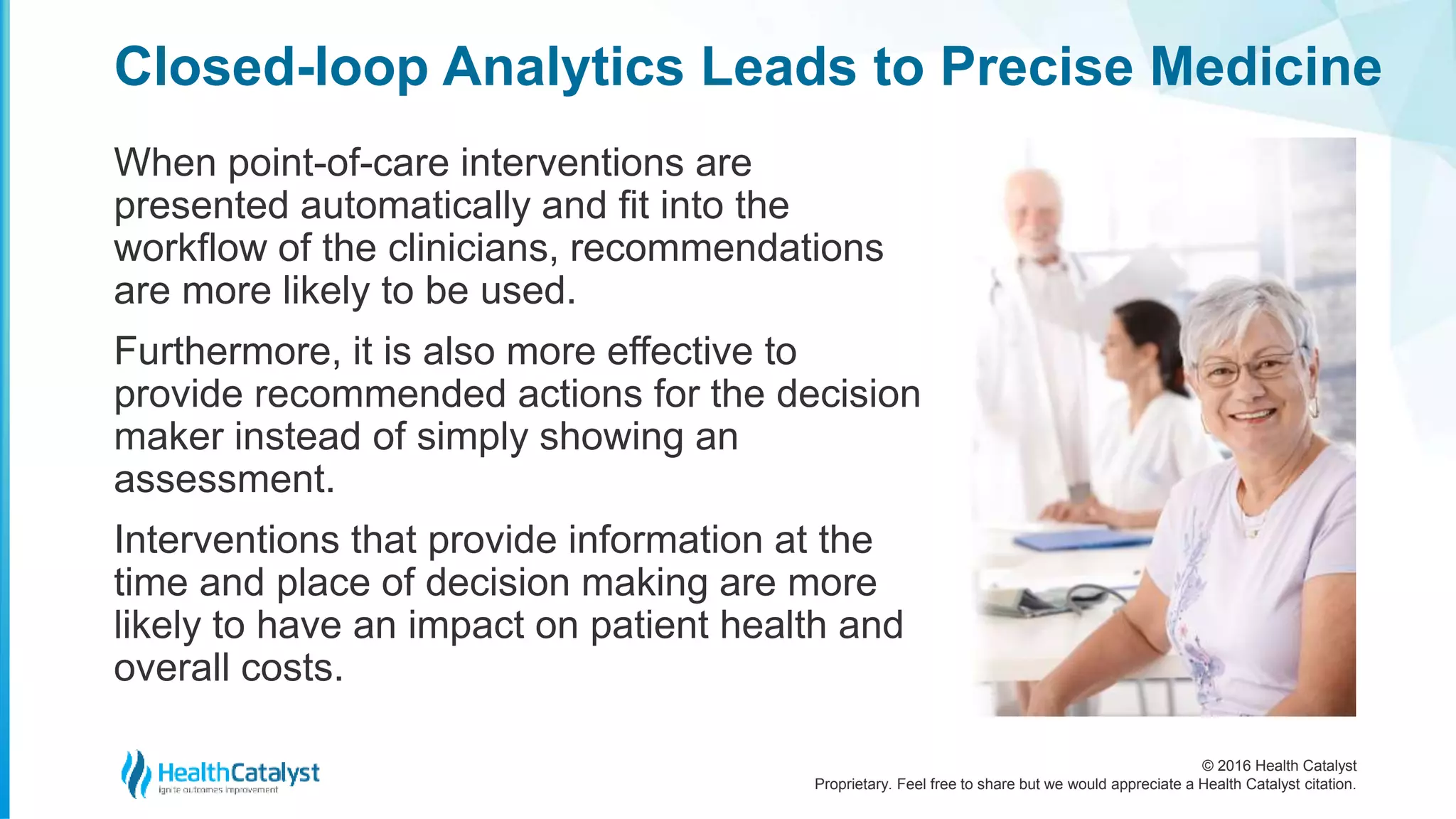
When point-of-care interventions are
presented automatically and fit into the
workflow of the clinicians, recommendations
are more likely to be used.
Furthermore, it is also more effective to
provide recommended actions for the decision
maker instead of simply showing an
assessment.
Interventions that provide information at the
time and place of decision making are more
likely to have an impact on patient health and
overall costs.
© 2016 Health Catalyst
Proprietary. Feel free to share but we would appreciate a Health Catalyst citation.
Closed-loop Analytics Leads to Precise Medicine
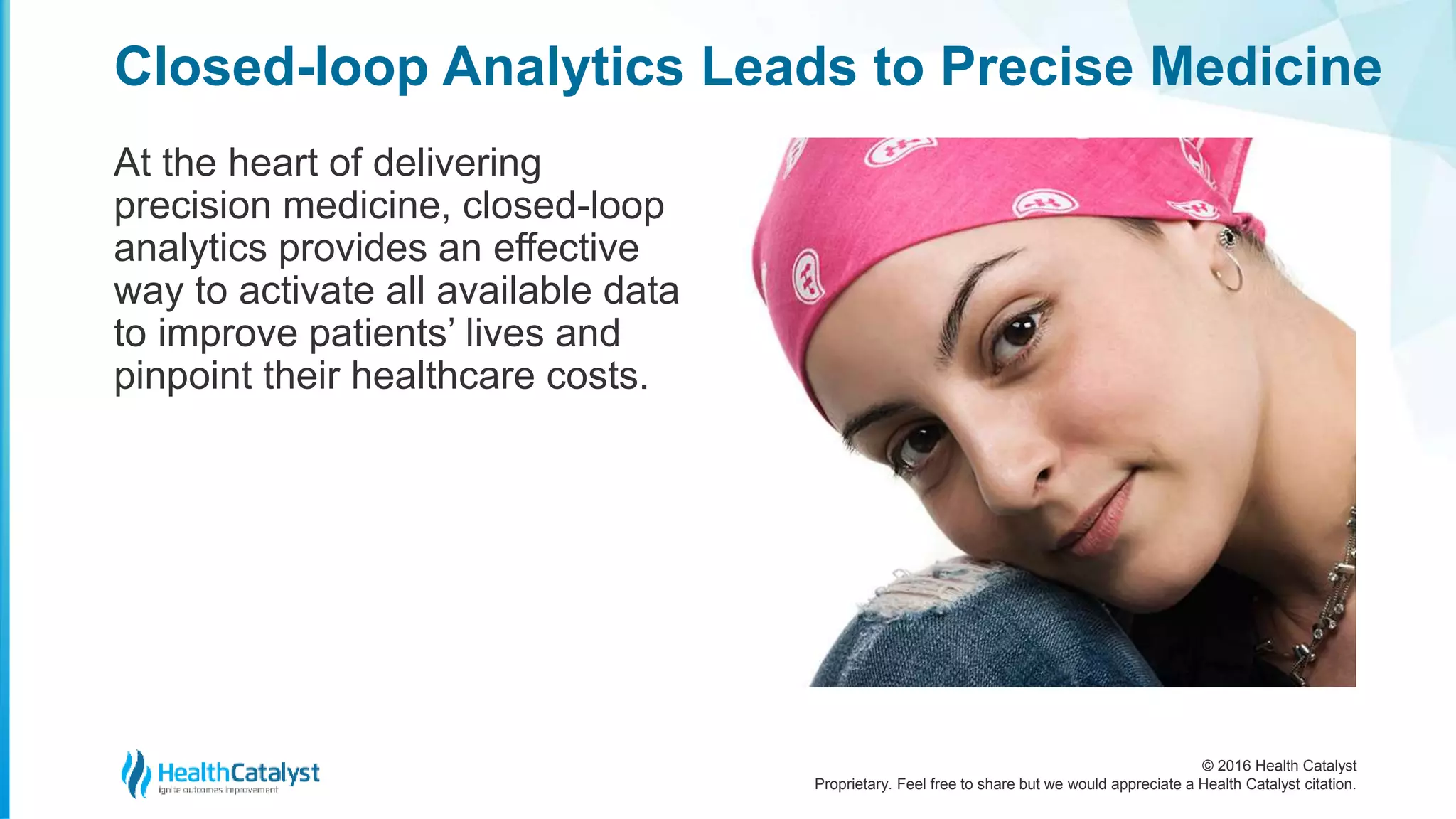
At the heart of delivering
precision medicine, closed-loop
analytics provides an effective
way to activate all available data
to improve patients’ lives and
pinpoint their healthcare costs.
© 2016 Health Catalyst
Proprietary. Feel free to share but we would appreciate a Health Catalyst citation.
References:
The National Academies of Sciences, Engineering and Medicine, Improving Diagnosis in Health Care, September
22, 2015
Bright TJ, Wong A, Dhurjati R, Bristow E, Bastian L, Coeytaux RR, et al. Effect of Clinical Decision-Support
Systems: A Systematic Review. Ann Intern Med. 2012;157:29-43.
Fox J, Patkar V, Chronakis I, et al. From practice guidelines to clinical decision support: closing the loop. Journal of
the Royal Society of Medicine. 2009;102 (11), 464-473.
Kawamoto K, Houlihan CA, Balas EA, Lobach DF., Improving clinical practice using clinical decision support
systems: a systematic review of trials to identify features critical to success. BMJ. 2005 Apr 2;330(74794):765.
van der Lei J. Closing the loop between clinical practice, research, and education: the potential of electronic
patient records. Methods Inf Med. 2002;41(1):51-4.
© 2016 Health Catalyst
Proprietary. Feel free to share but we would appreciate a Health Catalyst citation.
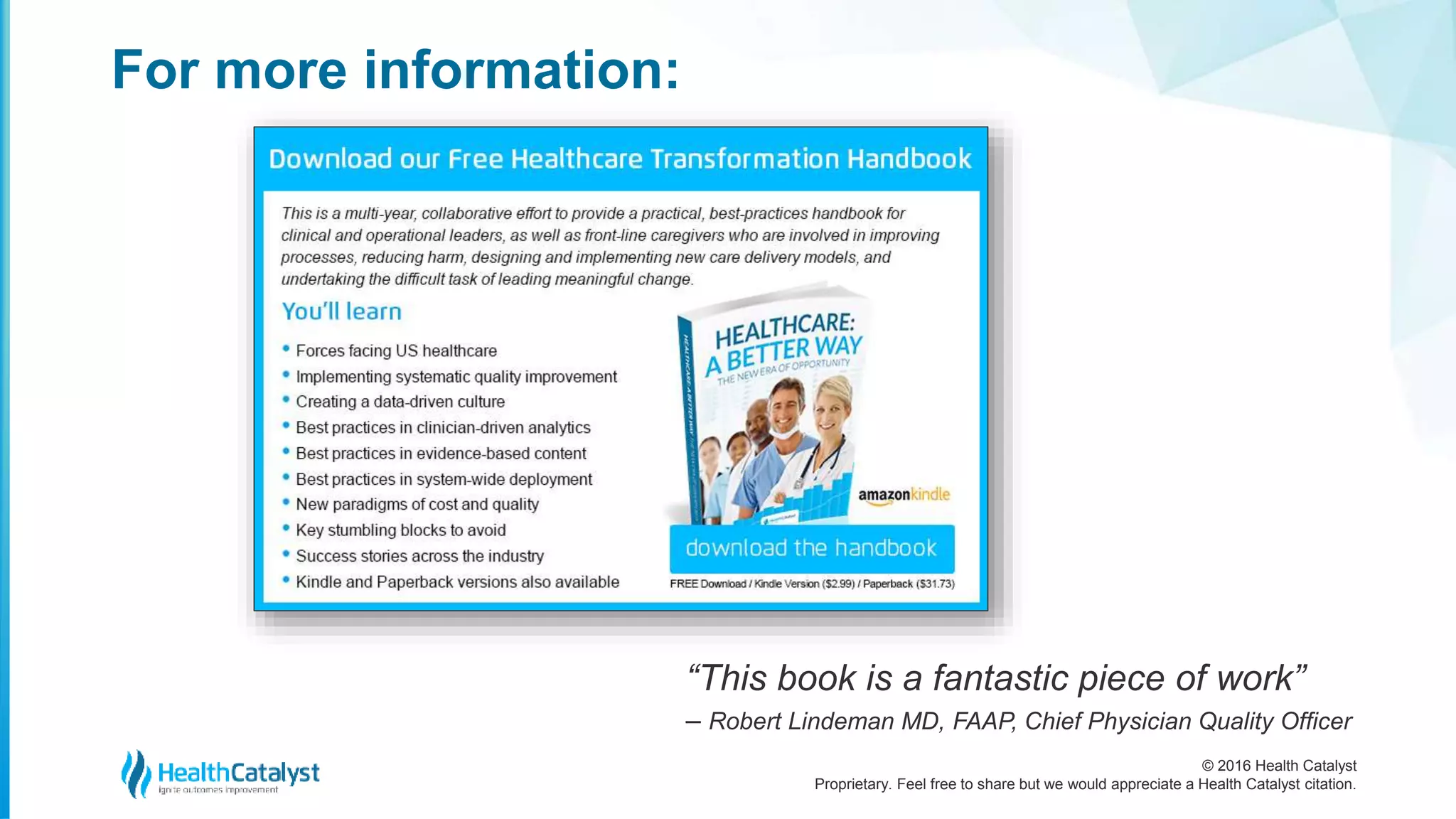
For more information:
“This book is a fantastic piece of work”
– Robert Lindeman MD, FAAP, Chief Physician Quality Officer
© 2016 Health Catalyst
Proprietary. Feel free to share but we would appreciate a Health Catalyst citation.
More about this topic
Link to original article for a more in-depth discussion.
Going Beyond Genomics in Precision Medicine: What’s Next
The Real Opportunity of Precision Medicine and How to Not Miss Out
David Crockett, Ph.D., Research & Predictive Analytics, Sr. Director
The Best Way to Optimize Physician Workflow
Dr. Ed Corbett, Deputy CMO
Precision Medicine and Embracing Variability
Webinar panel
Prescriptive Analytics Beats Simple Prediction for Improving Healthcare
David Crockett, Ph.D., Research & Predictive Analytics, Sr. Director
Problems With Relying on EHR Analytics For Your ACO: You Need a True Data Warehouse
Dr. David Burton, Former Executive Chairman
© 2016 Health Catalyst
Proprietary. Feel free to share but we would appreciate a Health Catalyst citation.
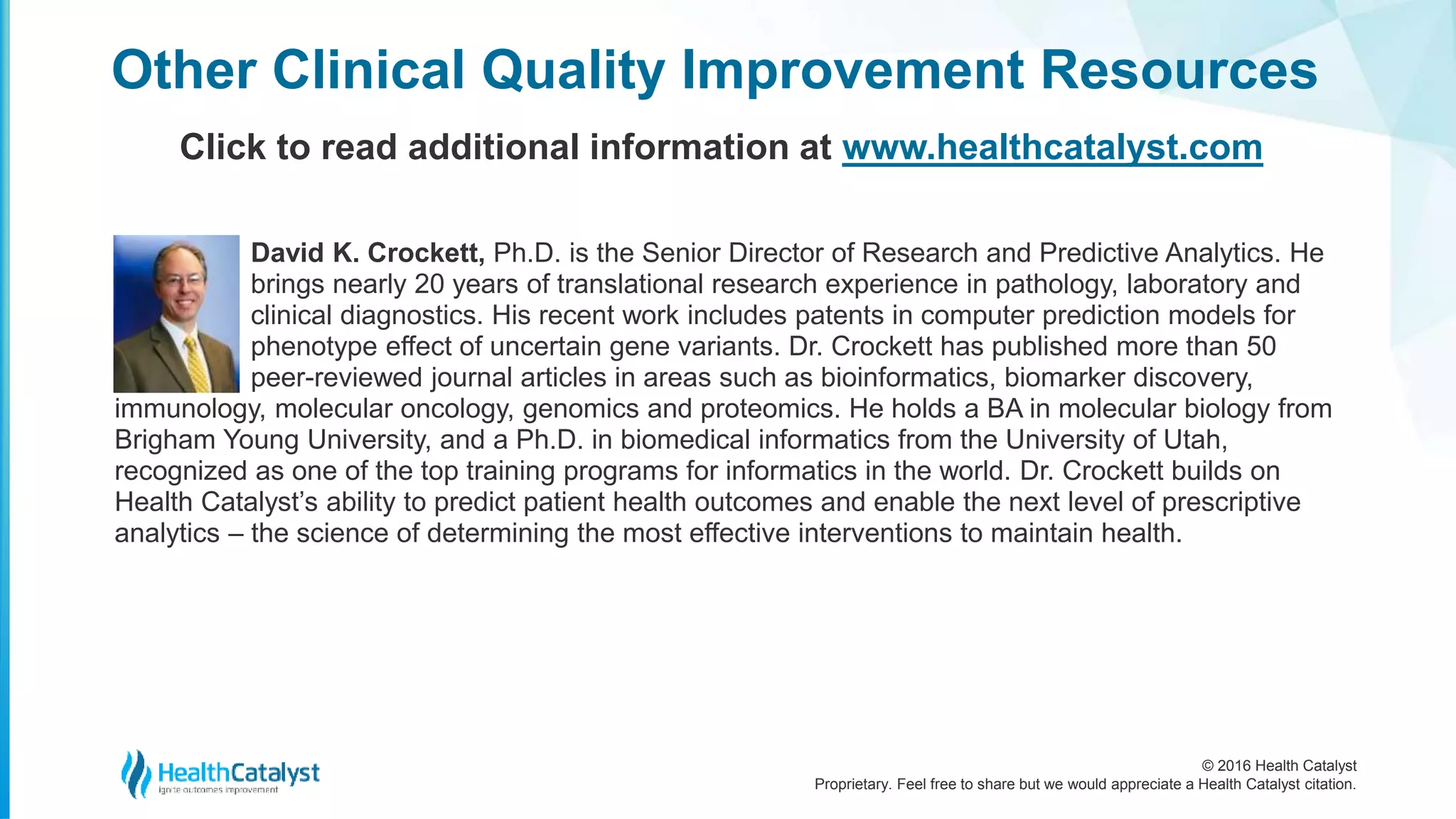
David K. Crockett, Ph.D. is the Senior Director of Research and Predictive Analytics. He
brings nearly 20 years of translational research experience in pathology, laboratory and
clinical diagnostics. His recent work includes patents in computer prediction models for
phenotype effect of uncertain gene variants. Dr. Crockett has published more than 50
peer-reviewed journal articles in areas such as bioinformatics, biomarker discovery,
immunology, molecular oncology, genomics and proteomics. He holds a BA in molecular biology from
Brigham Young University, and a Ph.D. in biomedical informatics from the University of Utah,
recognized as one of the top training programs for informatics in the world. Dr. Crockett builds on
Health Catalyst’s ability to predict patient health outcomes and enable the next level of prescriptive
analytics – the science of determining the most effective interventions to maintain health.
Other Clinical Quality Improvement Resources
Click to read additional information at www.healthcatalyst.com

Going Beyond Genomics in Precision Medicine: What's Next

  • 1.
    Going Beyond Genomics inPrecision Medicine: ̶ David Crockett, Ph.D. What’s Next
  • 2.
    © 2016 HealthCatalyst Proprietary. Feel free to share but we would appreciate a Health Catalyst citation. Genomics in Precision Medicine In our 2016 survey we learned that many healthcare organizations seem to have more pressing challenges to face than embracing the paradigm of precision medicine. The demands of changing cost models, decreasing reimbursement, avoiding CMS penalties, and merger/acquisition pressures threaten to overwhelm numerous health systems.
  • 3.
    © 2016 HealthCatalyst Proprietary. Feel free to share but we would appreciate a Health Catalyst citation. Genomics in Precision Medicine When we asked healthcare leaders across the nation, a majority responded that integrating genomic data into the records was a low priority. Some groups even responded that genetic information from patients was irrelevant to their health systems. We should be clear. Precision medicine is not only about “-omics” (genomics, proteomics, metabolomics). It is really about “econ-omics.” It is about improving patient lives.
  • 4.
    © 2016 HealthCatalyst Proprietary. Feel free to share but we would appreciate a Health Catalyst citation. The Elusive Paradigm of Precision Medicine For us, precision medicine simply means that patients are quickly and appropriately placed into the path of care that is most effective and cost efficient for them at that time. One clear obstacle to precisely diagnosing and treating diseases is the dilemma of “diagnostic gradient.” Many disease conditions are relatively straightforward to identify with a distinct biological cause, a direct clinical measure or a clear diagnostic image.
  • 5.
    © 2016 HealthCatalyst Proprietary. Feel free to share but we would appreciate a Health Catalyst citation. The Elusive Paradigm of Precision Medicine Unfortunately, others disease conditions have only indirect markers or require more extensive observation and rule out testing—sometimes referred to as a diagnostic odyssey. The chief complaint of this diagnostic gradient is diagnostic error. In a September 2015 Institute of Medicine report Improving Diagnosis in Healthcare, a diagnostic error is described as “[in]accurate if it differs from the true condition a patient has (or does not have) or if it is imprecise and incomplete.” The consequence of diagnostic gradient and diagnostic errors is imprecise medicine.
  • 6.
    © 2016 HealthCatalyst Proprietary. Feel free to share but we would appreciate a Health Catalyst citation. The Elusive Paradigm of Precision Medicine To further compound the complexity of this diagnostic gradient, the aging population in our country has increasingly overlapping and co-existing conditions as seen in Figure 1 on the next slide. Patients with multi-morbidity and difficult- to-diagnose conditions will often need to visit multiple physicians, which can further fragment their data ecosystem. This multi-morbidity is troublesome at all levels of healthcare.
  • 7.
    © 2016 HealthCatalyst Proprietary. Feel free to share but we would appreciate a Health Catalyst citation. The Elusive Paradigm of Precision Medicine Figure 1: Patients often have overlapping co-morbid conditions. (Source: Dumbreck and others, Drug-disease and drug-drug interactions, BMJ, 2015) Multi-Morbidity
  • 8.
    © 2016 HealthCatalyst Proprietary. Feel free to share but we would appreciate a Health Catalyst citation. More Precise and Comprehensive Patient Data Another obstacle is how to get a better view of a patient’s health status than is provided in most electronic health records. To accomplish this, we need behavioral, environmental, and socio-economic data, all of which contribute to understanding a patient’s overall health and risk factors. This is not big data. This is simply using more comprehensive and more precise data to increase our understanding of the most effective treatments for a patient.
  • 9.
    © 2016 HealthCatalyst Proprietary. Feel free to share but we would appreciate a Health Catalyst citation. More Precise and Comprehensive Patient Data Health Catalyst is actively working to build this more comprehensive patient data ecosystem. Our re-useable data modules are feature-engineered to include input elements such as mental health, polypharmacy, palliative care, socio- economic indicators, and geo-based risk.
  • 10.
    © 2016 HealthCatalyst Proprietary. Feel free to share but we would appreciate a Health Catalyst citation. More Precise and Comprehensive Patient Data For example, Figure 2 details one of our new data modules we call INSIGHT (Independent Neighborhood Socio-economic Indicators for Geo-based Health Trends), which leverages publicly available data on U.S. mortality rates and U.S. Census data from housing, education, and income across more than three decades. This risk of mortality can be viewed across county, zip code, and neighborhood levels. INSIGHT can be used to build more comprehensive risk models that combine patient clinical data with socio-economic data. Figure 2: Socio-economic data is used for insight into geo-based risk of mortality across county, zip code, and neighborhoods in the U.S.
  • 11.
    © 2016 HealthCatalyst Proprietary. Feel free to share but we would appreciate a Health Catalyst citation. The Next Big Leap in Healthcare There have been several decades of increasing electronic capability in our healthcare environment. Electronic data and computers have become firmly entrenched in the workflow of patient care. Despite this steady march forward in technology, we have yet to seamlessly capture health outcomes and integrate transparent cost and a complete data ecology of a person.
  • 12.
    © 2016 HealthCatalyst Proprietary. Feel free to share but we would appreciate a Health Catalyst citation. The Next Big Leap in Healthcare Closing the loop between available data, existing workflow, and clinical decision making, will lead to more precise medicine. It will also serve to close the loop between data internal to the EMR and externally available patient data. This embedded and in-context decision support, known as closed- loop analytics, will be the next big leap in healthcare
  • 13.
    © 2016 HealthCatalyst Proprietary. Feel free to share but we would appreciate a Health Catalyst citation. The Next Big Leap in Healthcare Closing the loop between available data, existing workflow, and clinical decision making, will lead to more precise medicine. It will also serve to close the loop between data internal to the EMR and externally available patient data. This embedded and in-context decision support, known as closed- loop analytics, will be the next big leap in healthcare
  • 14.
    © 2016 HealthCatalyst Proprietary. Feel free to share but we would appreciate a Health Catalyst citation. The Next Big Leap in Healthcare Figure 3: Decades of advances in the electronic capability of our healthcare environment.
  • 15.
    © 2016 HealthCatalyst Proprietary. Feel free to share but we would appreciate a Health Catalyst citation. Closed-loop Analytics Leads to Precise Medicine Precision medicine is not only about accurate diagnosis and treatment but timely diagnosis and treatment, as well. In terms of treating a patient effectively, the primary goal of closed-loop analytics is decreasing the time from insight to decision to action. Closed-loop analytics within a robust data warehouse environment will always be superior to standalone or siloed applications.
  • 16.
    © 2016 HealthCatalyst Proprietary. Feel free to share but we would appreciate a Health Catalyst citation. Closed-loop Analytics Leads to Precise Medicine While the traditional delivery of medicine is often linear from observation and data to decision, a more precise way to effective treatment is closing the loop between workflow, data, and action (Figure4). Closed-loop analytics refers to individuals generating data that are used to produce metrics, analytics, or visualizations that are then acted on in one or more interventions. Workflow Action Data Action Current State of Medicine A Data Insight Action Precise Medicine B Workflow Figure 4: The current state of medicine follows a linear path from workflow to action and from data to action. A more precise way to deliver care is closing the loop between workflow, insights from data, and action.
  • 17.
    © 2016 HealthCatalyst Proprietary. Feel free to share but we would appreciate a Health Catalyst citation. Closed-loop Analytics Leads to Precise Medicine It is the confluence of EHR system tools, decision support tools, and reporting and analytics, all used to improve patient outcomes and reduce cost. Analytics and decision support are most effective at the point of care and when shown in an existing workflow directly to the decision maker. Similar to disease surveillance or immunization in public health, closed loop analytics can also lend insight into the entire patient lifecycle, not just point of care.
  • 18.
    © 2016 HealthCatalyst Proprietary. Feel free to share but we would appreciate a Health Catalyst citation. Closed-loop Analytics Leads to Precise Medicine Closed-loop analytics is much more effective than a manual process for point-of-care decision support. Published literature overwhelmingly reports that clinical decision support interventions succeed when the information is provided to clinicians within their natural workflow – at the point of decision-making. Conversely, decision support does not succeed when clinicians are required to seek out the advice.
  • 19.
    © 2016 HealthCatalyst Proprietary. Feel free to share but we would appreciate a Health Catalyst citation. Closed-loop Analytics Leads to Precise Medicine When point-of-care interventions are presented automatically and fit into the workflow of the clinicians, recommendations are more likely to be used. Furthermore, it is also more effective to provide recommended actions for the decision maker instead of simply showing an assessment. Interventions that provide information at the time and place of decision making are more likely to have an impact on patient health and overall costs.
  • 20.
    © 2016 HealthCatalyst Proprietary. Feel free to share but we would appreciate a Health Catalyst citation. Closed-loop Analytics Leads to Precise Medicine At the heart of delivering precision medicine, closed-loop analytics provides an effective way to activate all available data to improve patients’ lives and pinpoint their healthcare costs.
  • 21.
    © 2016 HealthCatalyst Proprietary. Feel free to share but we would appreciate a Health Catalyst citation. References: The National Academies of Sciences, Engineering and Medicine, Improving Diagnosis in Health Care, September 22, 2015 Bright TJ, Wong A, Dhurjati R, Bristow E, Bastian L, Coeytaux RR, et al. Effect of Clinical Decision-Support Systems: A Systematic Review. Ann Intern Med. 2012;157:29-43. Fox J, Patkar V, Chronakis I, et al. From practice guidelines to clinical decision support: closing the loop. Journal of the Royal Society of Medicine. 2009;102 (11), 464-473. Kawamoto K, Houlihan CA, Balas EA, Lobach DF., Improving clinical practice using clinical decision support systems: a systematic review of trials to identify features critical to success. BMJ. 2005 Apr 2;330(74794):765. van der Lei J. Closing the loop between clinical practice, research, and education: the potential of electronic patient records. Methods Inf Med. 2002;41(1):51-4.
  • 22.
    © 2016 HealthCatalyst Proprietary. Feel free to share but we would appreciate a Health Catalyst citation. For more information: “This book is a fantastic piece of work” – Robert Lindeman MD, FAAP, Chief Physician Quality Officer
  • 23.
    © 2016 HealthCatalyst Proprietary. Feel free to share but we would appreciate a Health Catalyst citation. More about this topic Link to original article for a more in-depth discussion. Going Beyond Genomics in Precision Medicine: What’s Next The Real Opportunity of Precision Medicine and How to Not Miss Out David Crockett, Ph.D., Research & Predictive Analytics, Sr. Director The Best Way to Optimize Physician Workflow Dr. Ed Corbett, Deputy CMO Precision Medicine and Embracing Variability Webinar panel Prescriptive Analytics Beats Simple Prediction for Improving Healthcare David Crockett, Ph.D., Research & Predictive Analytics, Sr. Director Problems With Relying on EHR Analytics For Your ACO: You Need a True Data Warehouse Dr. David Burton, Former Executive Chairman
  • 24.
    © 2016 HealthCatalyst Proprietary. Feel free to share but we would appreciate a Health Catalyst citation. David K. Crockett, Ph.D. is the Senior Director of Research and Predictive Analytics. He brings nearly 20 years of translational research experience in pathology, laboratory and clinical diagnostics. His recent work includes patents in computer prediction models for phenotype effect of uncertain gene variants. Dr. Crockett has published more than 50 peer-reviewed journal articles in areas such as bioinformatics, biomarker discovery, immunology, molecular oncology, genomics and proteomics. He holds a BA in molecular biology from Brigham Young University, and a Ph.D. in biomedical informatics from the University of Utah, recognized as one of the top training programs for informatics in the world. Dr. Crockett builds on Health Catalyst’s ability to predict patient health outcomes and enable the next level of prescriptive analytics – the science of determining the most effective interventions to maintain health. Other Clinical Quality Improvement Resources Click to read additional information at www.healthcatalyst.com