Goal 7Introduction to Economics
What is Economics?Economics: the study of how people seek to satisfy their needs and wants by making choices
THE FACTORS OFPRODUCTIONGOAL 7: Economics
There are 4 Factors of Production:Land or Natural ResourcesCapitalLaborEntrepreneurship
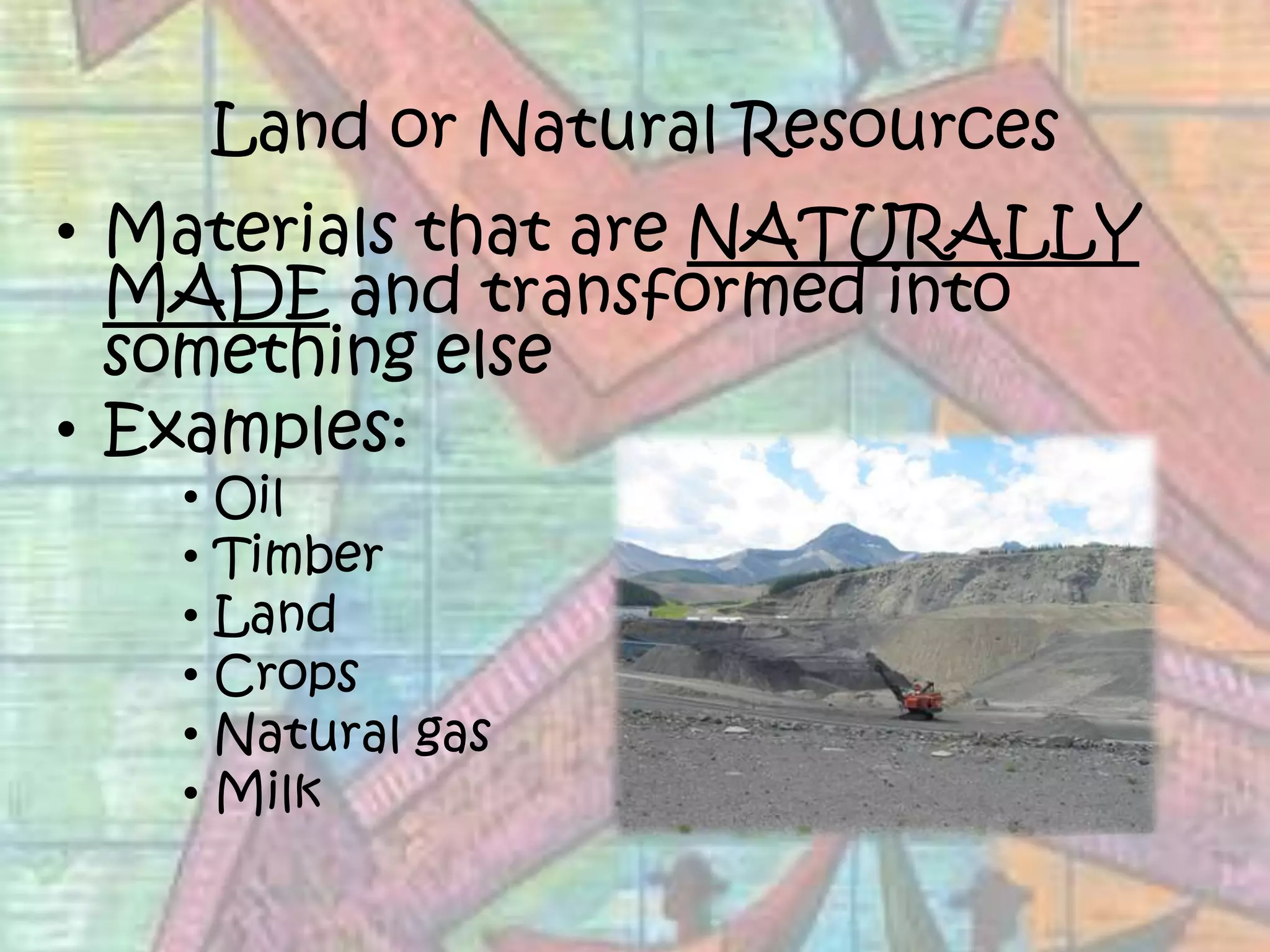
Land or Natural ResourcesMaterials that are NATURALLY MADE and transformed into something elseExamples:OilTimberLandCropsNatural gasMilk
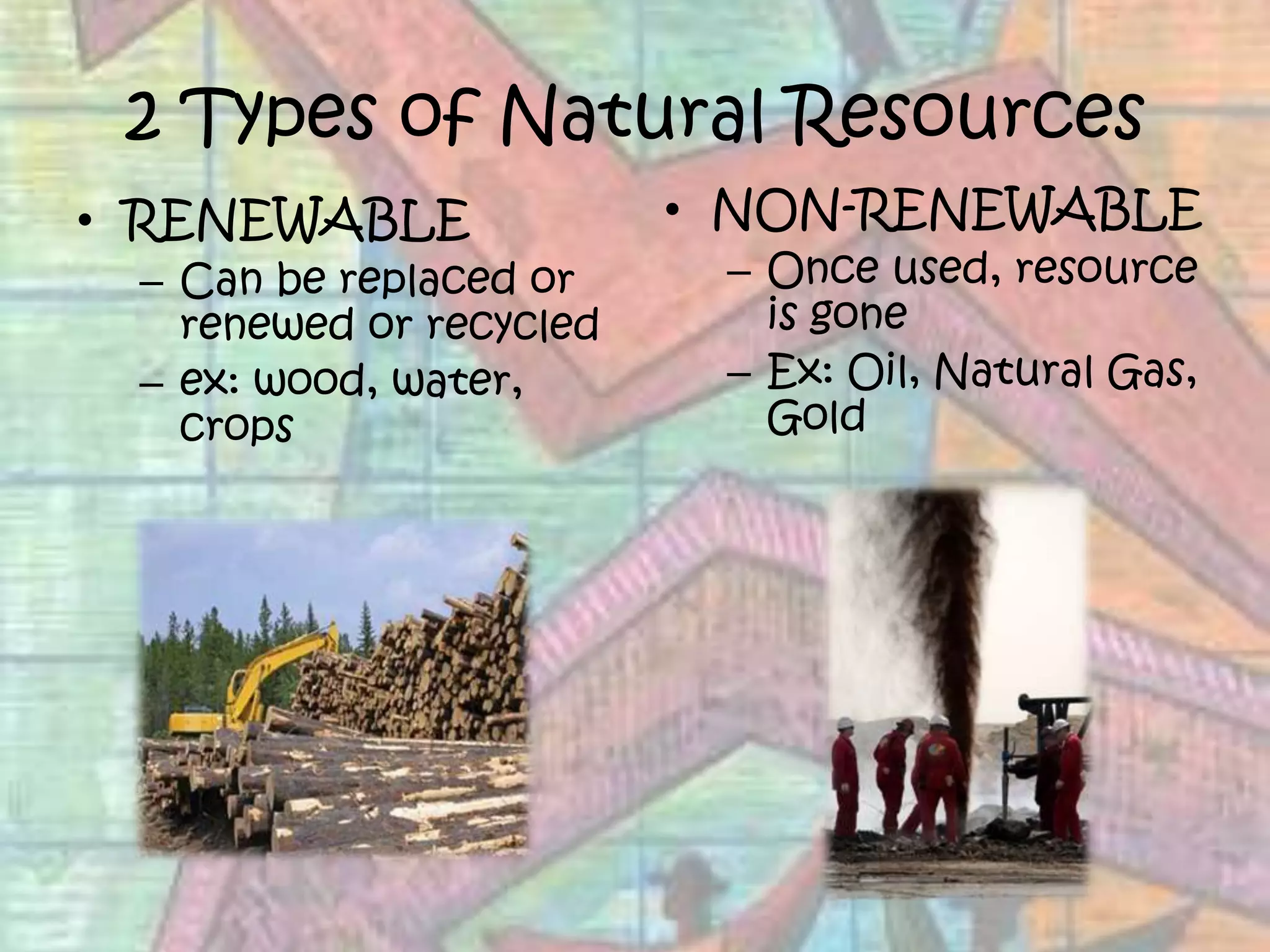
2 Types of Natural ResourcesNON-RENEWABLEOnce used, resource is goneEx: Oil, Natural Gas, Gold RENEWABLECan be replaced or renewed or recycledex: wood, water, crops
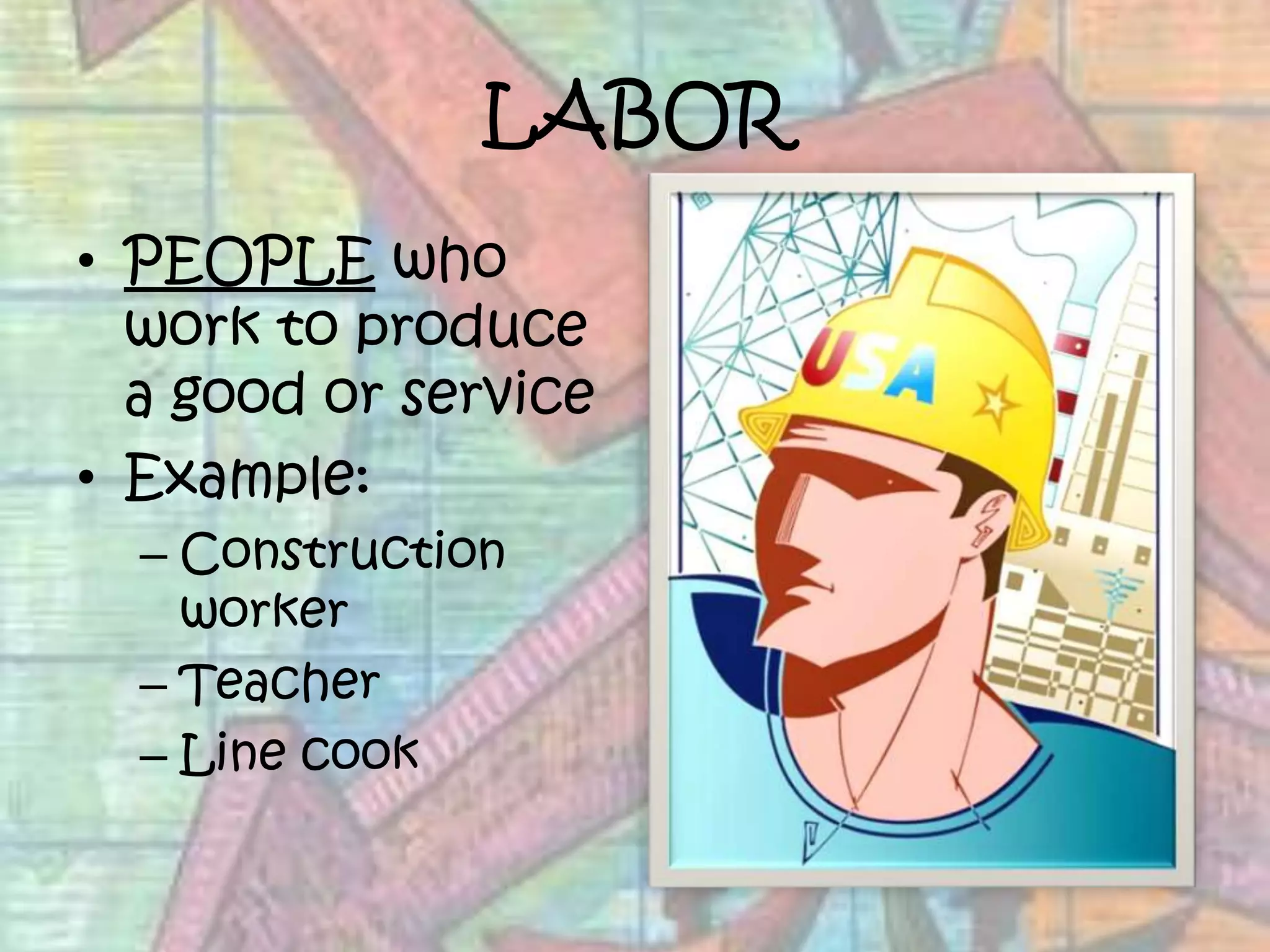
LABORPEOPLE who work to produce a good or serviceExample:Construction workerTeacherLine cook
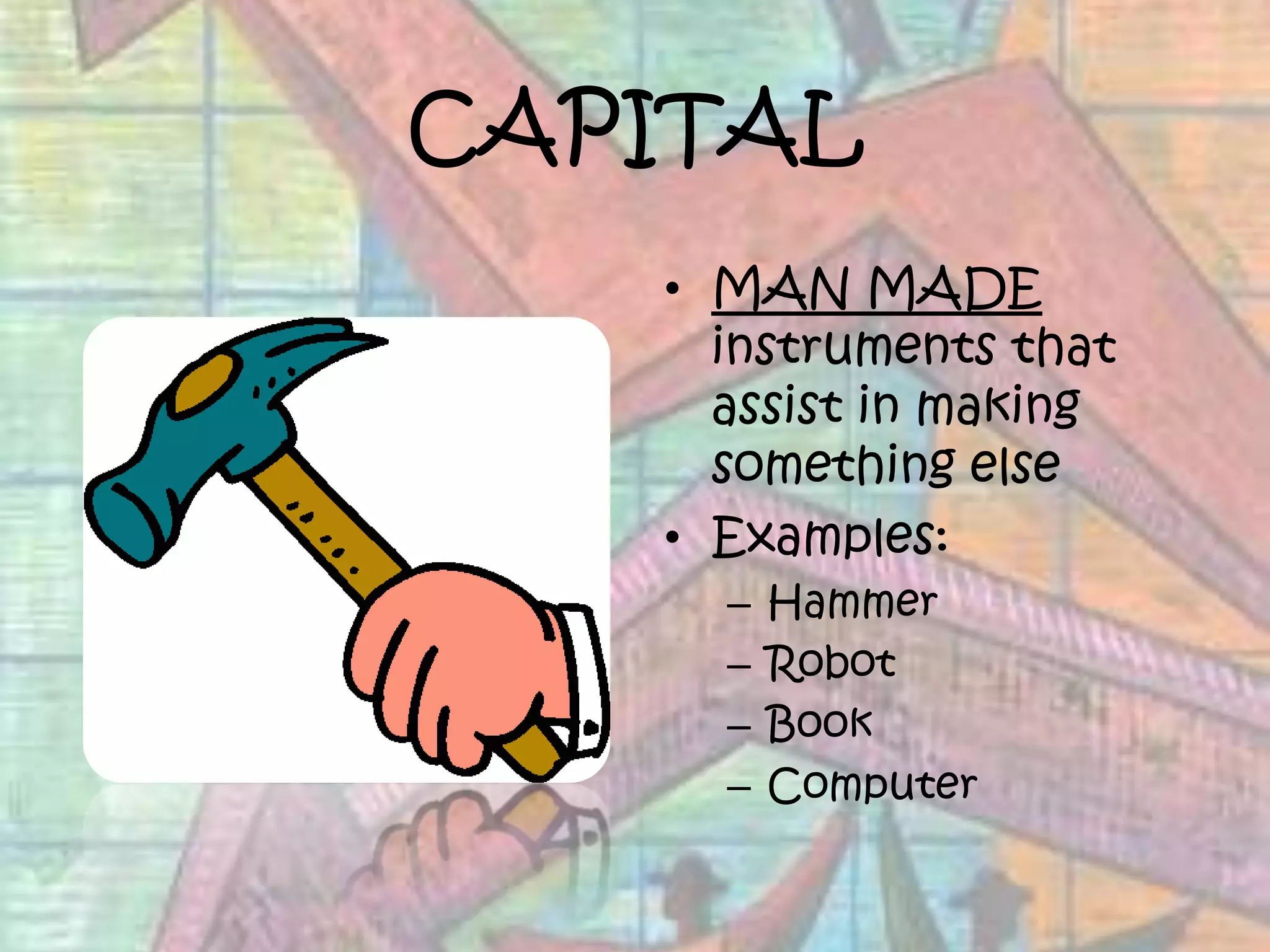
CAPITALMAN MADE instruments that assist in making something elseExamples:HammerRobotBookComputer
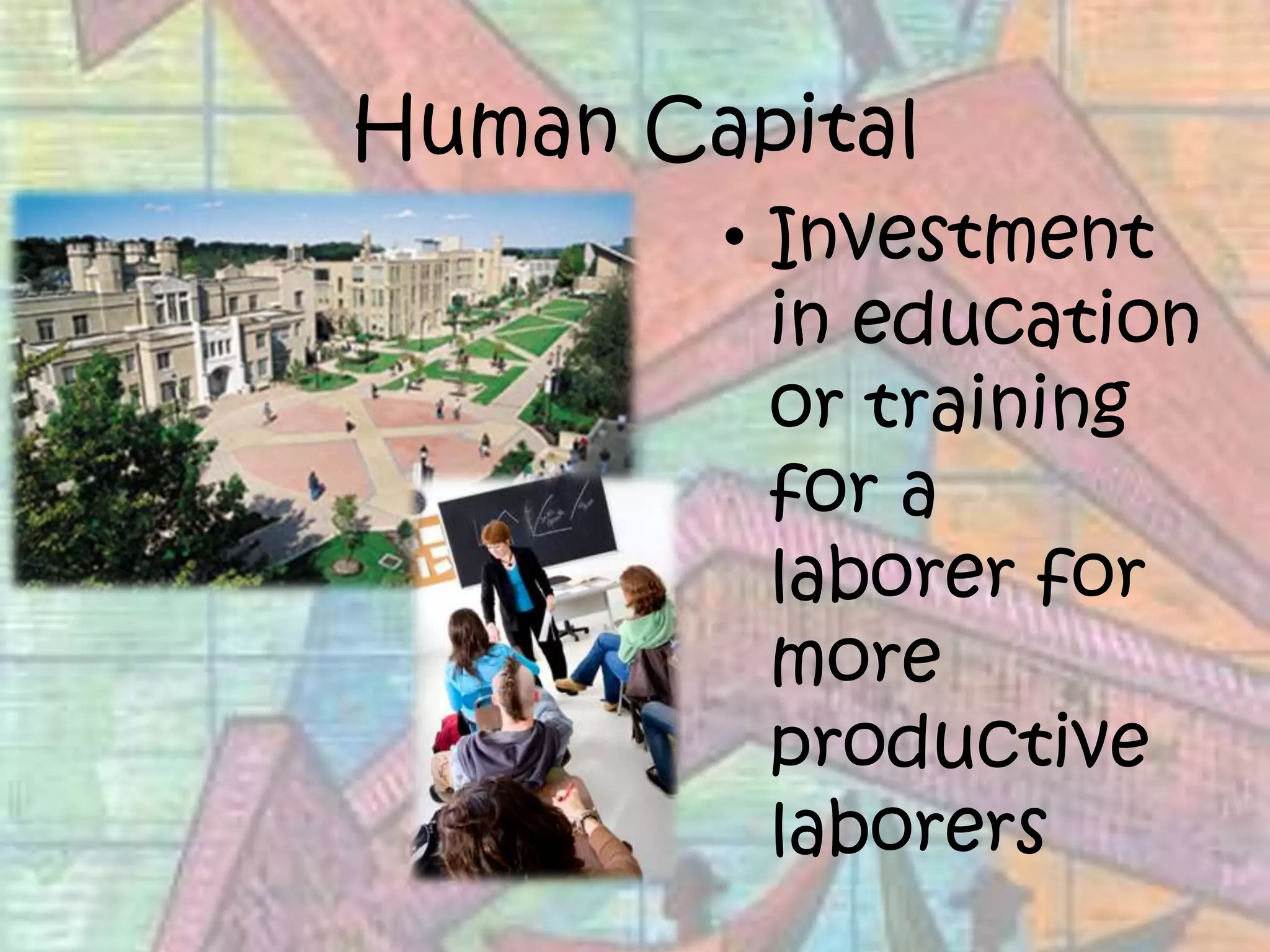
Human CapitalInvestment in education or training for a laborer for more productive laborers
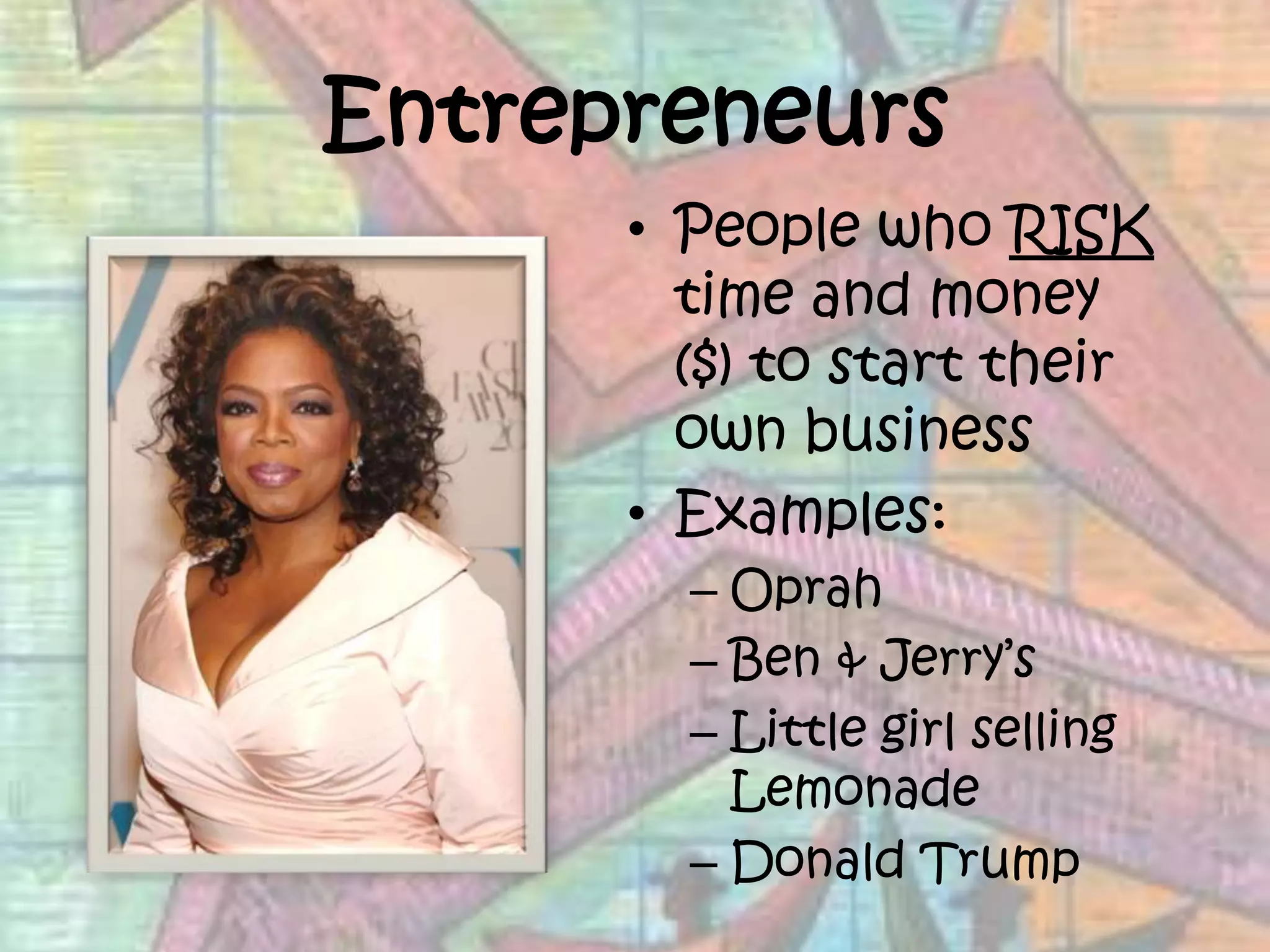
EntrepreneursPeople who RISK time and money ($) to start their own businessExamples:OprahBen & Jerry’sLittle girl selling LemonadeDonald Trump
Needs v. WantsNeed: something people need that is necessary for survival (ex: air, food, shelter) Want: an item we desire but that is not essential to survival
Three Basic Economic QuestionsWhat good and services should be produced?Should money go to schools or a new city park??Howshould these goods and services be produced?How much of the product are we going to produce?For whom should these goods and services be produced?After goods and services have been produced, society must determine how goods and services should be distributed among members of society…use a price system in the US
Every CHOICE you make has a…Monetary cost: price you paid for a decision ($)Trade off: ALL of the alternative choicesOpportunity cost: the best alternative, your second choice
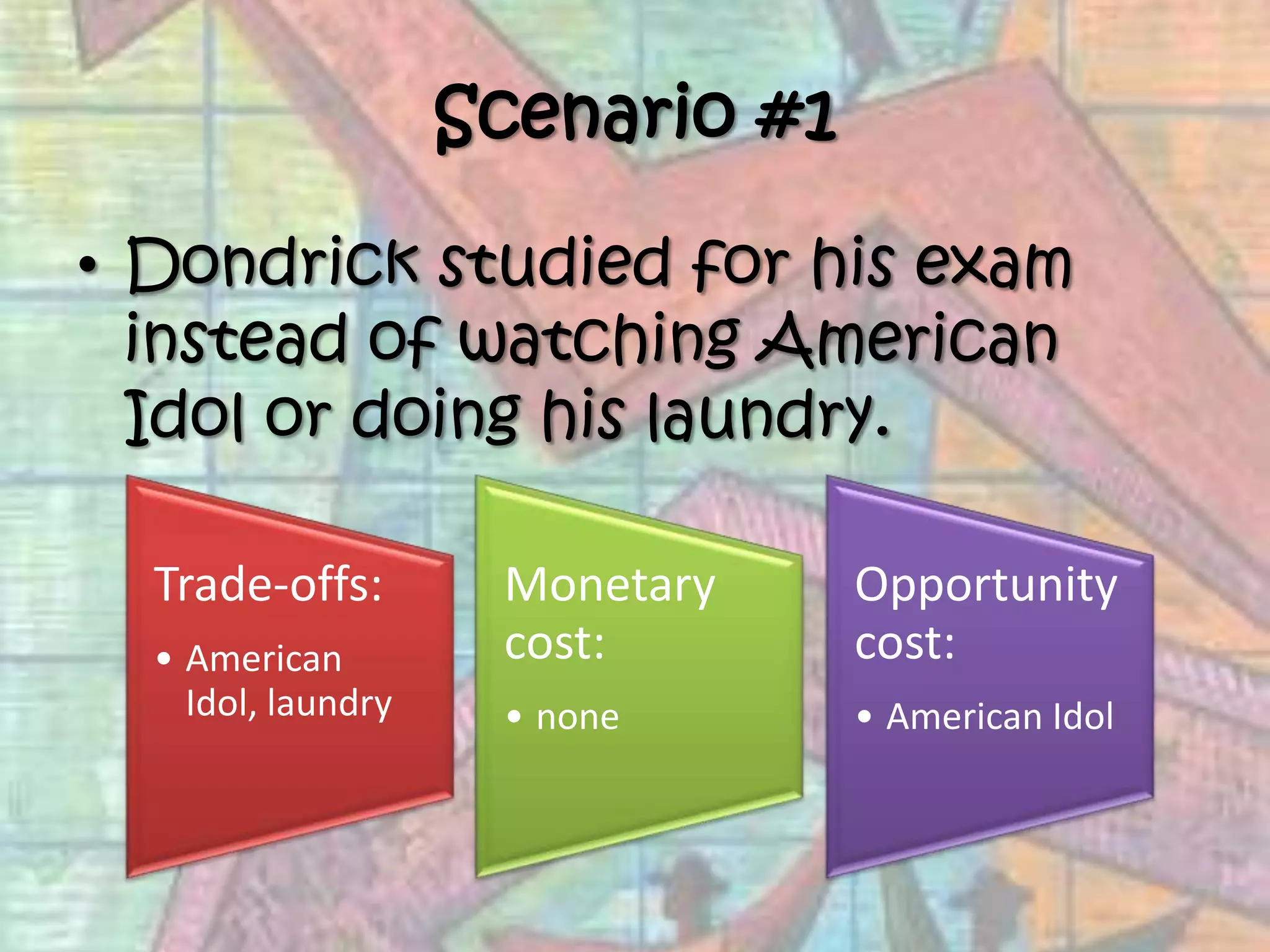
Scenario #1Dondrick studied for his exam instead of watching American Idol or doing his laundry.
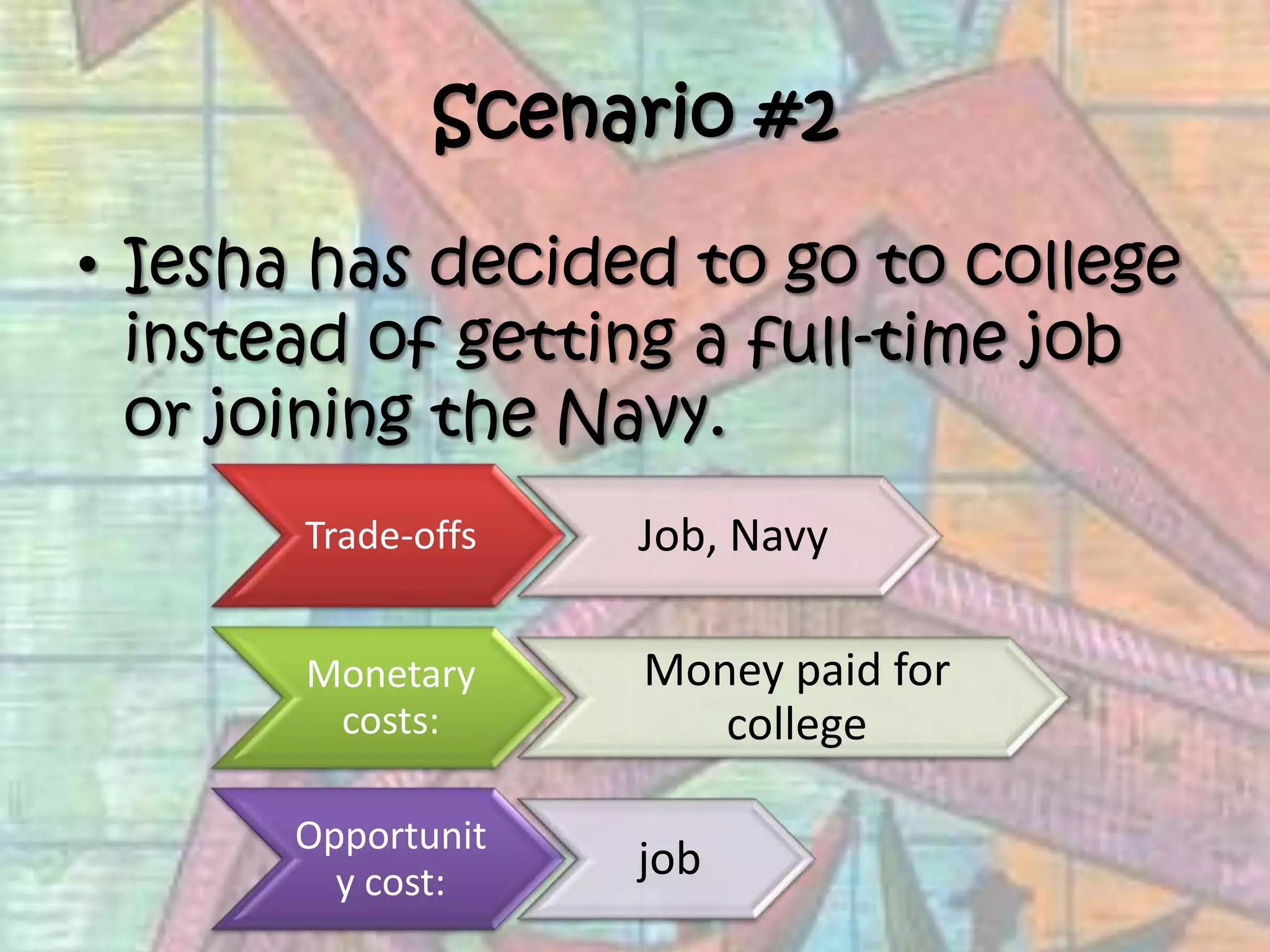
Scenario #2Iesha has decided to go to college instead of getting a full-time job or joining the Navy.
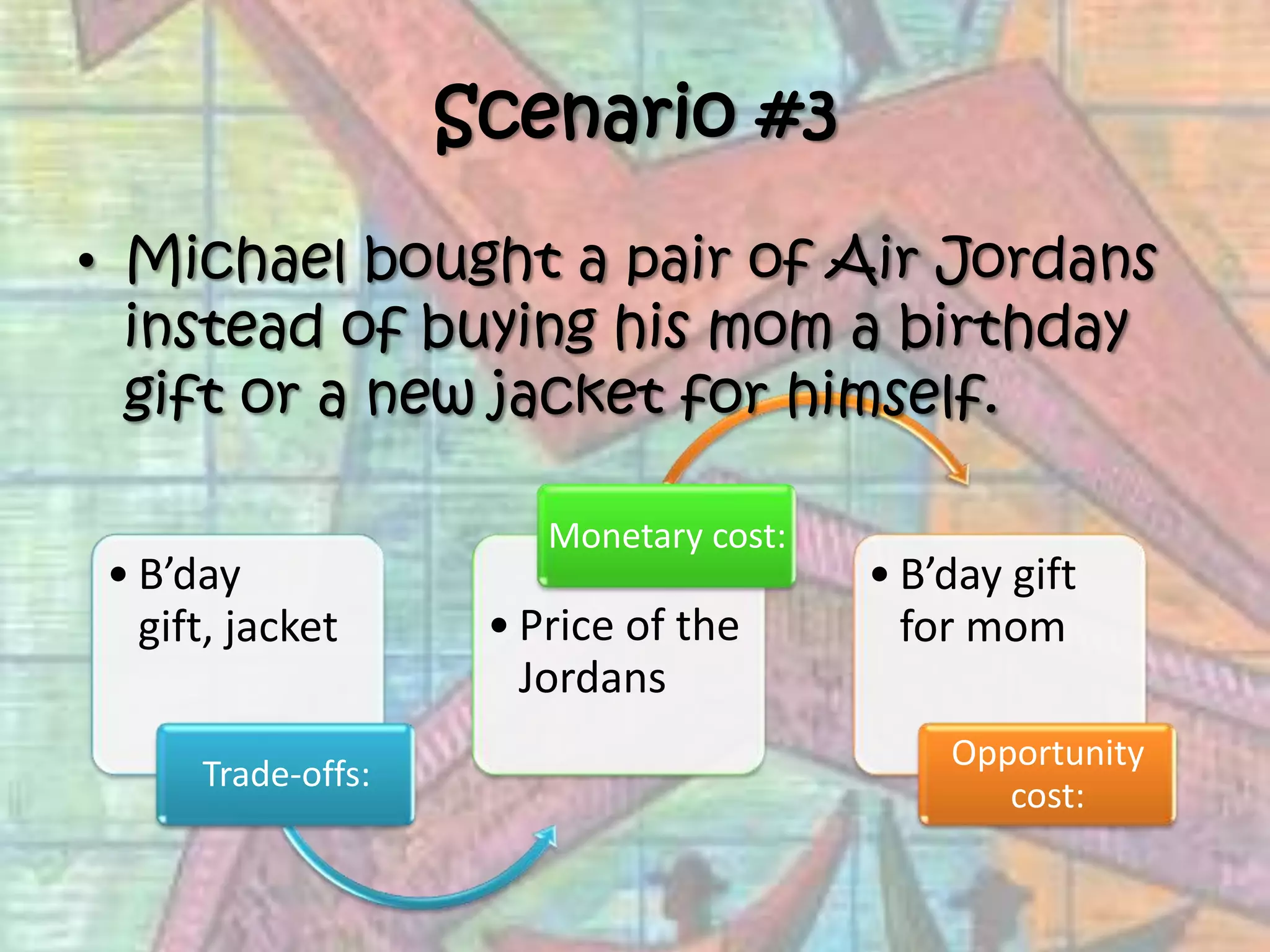
Scenario #3Michael bought a pair of Air Jordans instead of buying his mom a birthday gift or a new jacket for himself.
Productivity
How does an assembly line increase a company’s profits? Divides up the tasks to make a product and allows a worker to specialize in a task to make it fasterMore product = more profit
Division of LaborDividing up the tasks required to make a product.
SpecializationGiving a worker a specific task to completeWorker becomes a professional in the task
Automationcreating a product with the assistance of machinery
Types of WorkersBlue Collar:wage-earning workers who wear work clothes ex: mechanics, miners, maids White Collar:office and professional workers who do not wear a uniform. Ex: lawyer, teacher, doctor
Types of WorkersSkilled workers:Workers who get special training to do their job, earn more for their educationEx: mechanic, teacher, doctorUnskilled workers:workers do not have any special training that allows them to earn more than a basic wage Ex: fast food employee, cashier
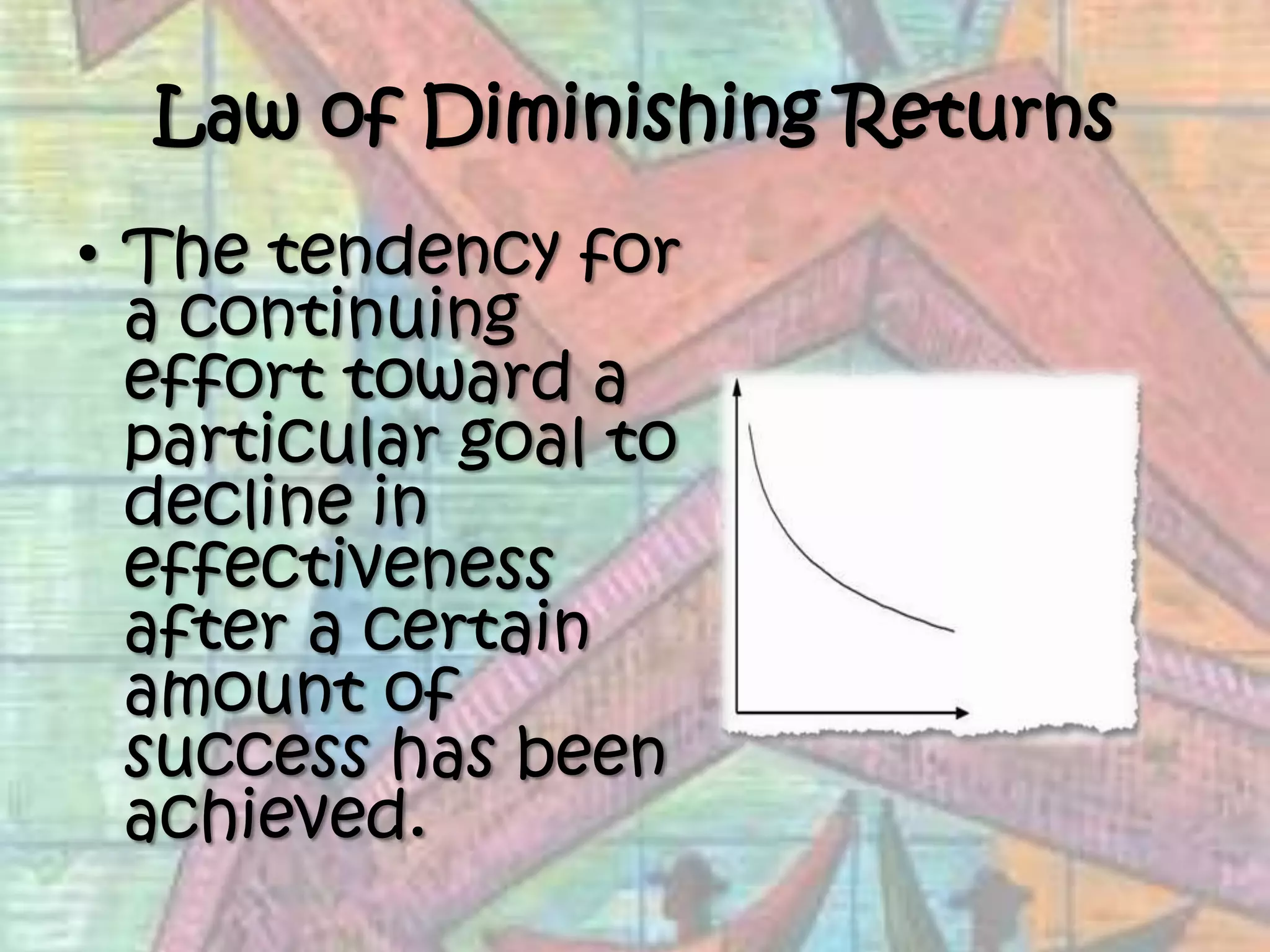
What will happen to a company if they add too many factors of production?Law of diminishing returnsAt a certain point adding another factor of production will make a company less productive (lose $)GraphWhat do you think this would look like?
Law of Diminishing ReturnsThe tendency for a continuing effort toward a particular goal to decline in effectiveness after a certain amount of success has been achieved.
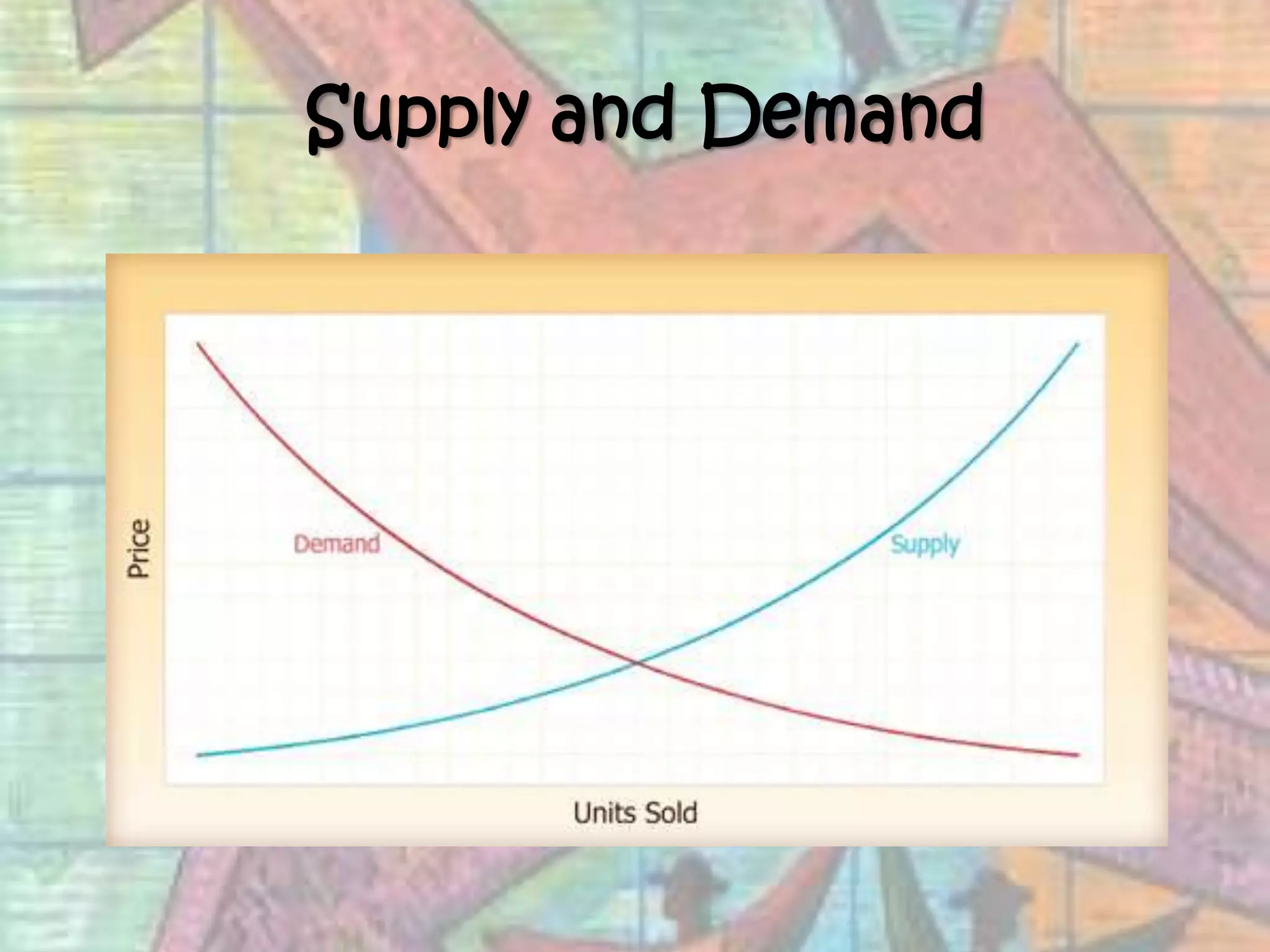
 Supply and Demand
How can comparative advantage influence what a company or country produces?Comparative advantage: a country, individual, or company can produce a product at a lower cost than a competitor Produce products for less money to make a greater profit
TYPES OF ECONOMIES
3 Basic Economic QuestionsWhat to produce?How to produce?For whom to produce?
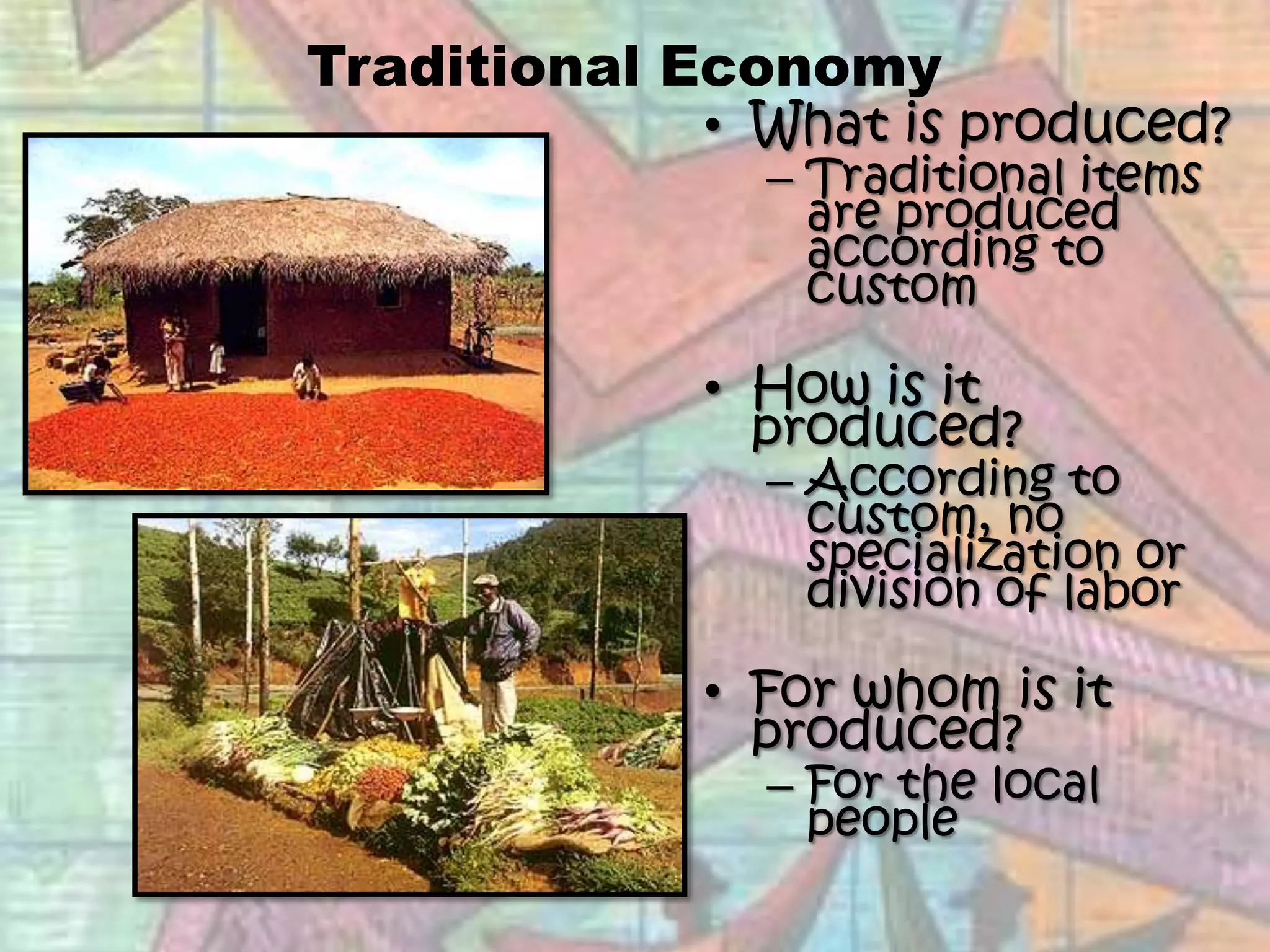
Traditional EconomyWhat is produced?Traditional items are produced according to customHow is it produced?According to custom, no specialization or division of laborFor whom is it produced?For the local people
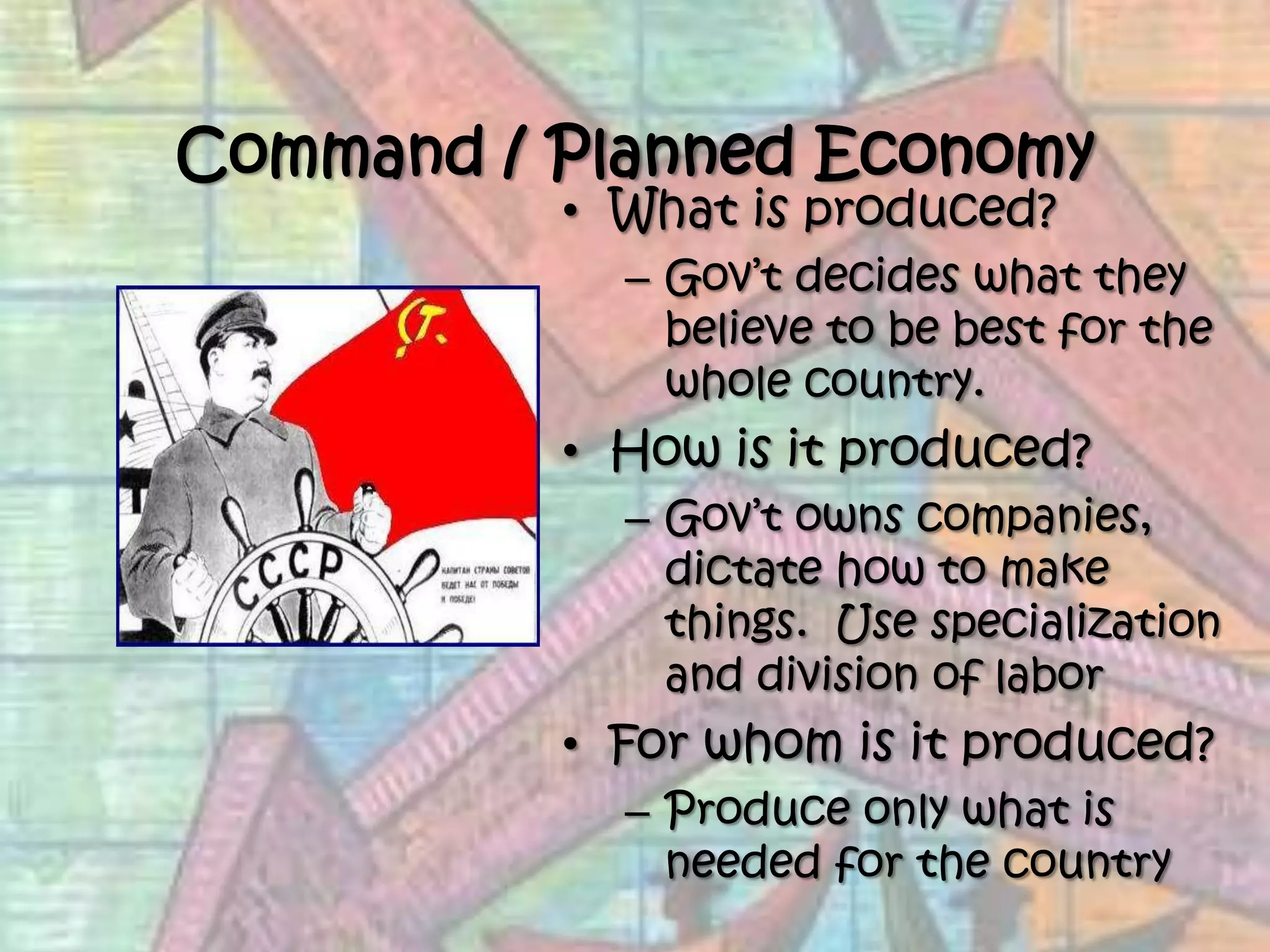
Command / Planned EconomyWhat is produced?Gov’t decides what they believe to be best for the whole country. How is it produced?Gov’t owns companies, dictate how to make things.  Use specialization and division of laborFor whom is it produced?Produce only what is needed for the country
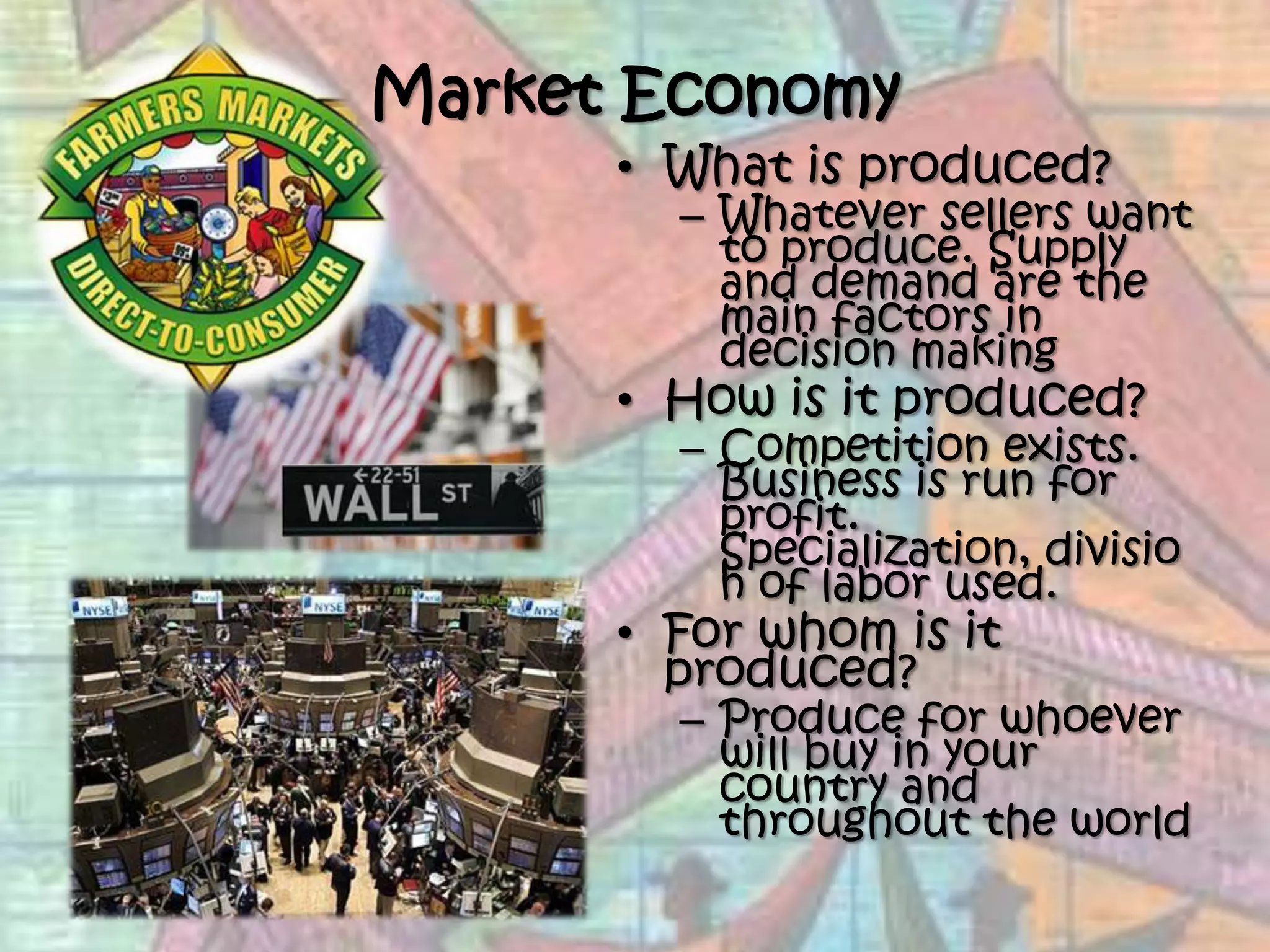
Market EconomyWhat is produced?Whatever sellers want to produce. Supply and demand are the main factors in decision making How is it produced?Competition exists.  Business is run for profit.  Specialization, division of labor used. For whom is it produced?Produce for whoever will buy in your country and throughout the world
Mixed EconomyMost countries have mixed economies.  They combine aspects of the 3 economies to make what is best for them. Ex: United Statesmostly market (individuals buy and sell)Some command (gov’t rules and restrictions)	Little traditional (Native American, Amish communities)

Goal 7 intro

  • 1.
  • 2.
    What is Economics?Economics:the study of how people seek to satisfy their needs and wants by making choices
  • 3.
  • 4.
    There are 4Factors of Production:Land or Natural ResourcesCapitalLaborEntrepreneurship
  • 5.
    Land or NaturalResourcesMaterials that are NATURALLY MADE and transformed into something elseExamples:OilTimberLandCropsNatural gasMilk
  • 6.
    2 Types ofNatural ResourcesNON-RENEWABLEOnce used, resource is goneEx: Oil, Natural Gas, Gold RENEWABLECan be replaced or renewed or recycledex: wood, water, crops
  • 7.
    LABORPEOPLE who workto produce a good or serviceExample:Construction workerTeacherLine cook
  • 8.
    CAPITALMAN MADE instrumentsthat assist in making something elseExamples:HammerRobotBookComputer
  • 9.
    Human CapitalInvestment ineducation or training for a laborer for more productive laborers
  • 10.
    EntrepreneursPeople who RISKtime and money ($) to start their own businessExamples:OprahBen & Jerry’sLittle girl selling LemonadeDonald Trump
  • 11.
    Needs v. WantsNeed:something people need that is necessary for survival (ex: air, food, shelter) Want: an item we desire but that is not essential to survival
  • 12.
    Three Basic EconomicQuestionsWhat good and services should be produced?Should money go to schools or a new city park??Howshould these goods and services be produced?How much of the product are we going to produce?For whom should these goods and services be produced?After goods and services have been produced, society must determine how goods and services should be distributed among members of society…use a price system in the US
  • 13.
    Every CHOICE youmake has a…Monetary cost: price you paid for a decision ($)Trade off: ALL of the alternative choicesOpportunity cost: the best alternative, your second choice
  • 14.
    Scenario #1Dondrick studiedfor his exam instead of watching American Idol or doing his laundry.
  • 15.
    Scenario #2Iesha hasdecided to go to college instead of getting a full-time job or joining the Navy.
  • 16.
    Scenario #3Michael boughta pair of Air Jordans instead of buying his mom a birthday gift or a new jacket for himself.
  • 17.
  • 18.
    How does anassembly line increase a company’s profits? Divides up the tasks to make a product and allows a worker to specialize in a task to make it fasterMore product = more profit
  • 19.
    Division of LaborDividingup the tasks required to make a product.
  • 20.
    SpecializationGiving a workera specific task to completeWorker becomes a professional in the task
  • 21.
    Automationcreating a productwith the assistance of machinery
  • 22.
    Types of WorkersBlueCollar:wage-earning workers who wear work clothes ex: mechanics, miners, maids White Collar:office and professional workers who do not wear a uniform. Ex: lawyer, teacher, doctor
  • 23.
    Types of WorkersSkilledworkers:Workers who get special training to do their job, earn more for their educationEx: mechanic, teacher, doctorUnskilled workers:workers do not have any special training that allows them to earn more than a basic wage Ex: fast food employee, cashier
  • 24.
    What will happento a company if they add too many factors of production?Law of diminishing returnsAt a certain point adding another factor of production will make a company less productive (lose $)GraphWhat do you think this would look like?
  • 25.
    Law of DiminishingReturnsThe tendency for a continuing effort toward a particular goal to decline in effectiveness after a certain amount of success has been achieved.
  • 26.
  • 27.
    How can comparativeadvantage influence what a company or country produces?Comparative advantage: a country, individual, or company can produce a product at a lower cost than a competitor Produce products for less money to make a greater profit
  • 28.
  • 29.
    3 Basic EconomicQuestionsWhat to produce?How to produce?For whom to produce?
  • 30.
    Traditional EconomyWhat isproduced?Traditional items are produced according to customHow is it produced?According to custom, no specialization or division of laborFor whom is it produced?For the local people
  • 31.
    Command / PlannedEconomyWhat is produced?Gov’t decides what they believe to be best for the whole country. How is it produced?Gov’t owns companies, dictate how to make things. Use specialization and division of laborFor whom is it produced?Produce only what is needed for the country
  • 32.
    Market EconomyWhat isproduced?Whatever sellers want to produce. Supply and demand are the main factors in decision making How is it produced?Competition exists. Business is run for profit. Specialization, division of labor used. For whom is it produced?Produce for whoever will buy in your country and throughout the world
  • 33.
    Mixed EconomyMost countrieshave mixed economies. They combine aspects of the 3 economies to make what is best for them. Ex: United Statesmostly market (individuals buy and sell)Some command (gov’t rules and restrictions) Little traditional (Native American, Amish communities)