2014
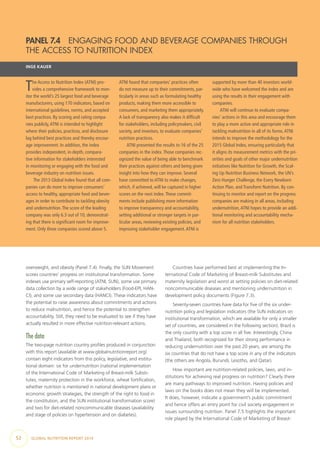
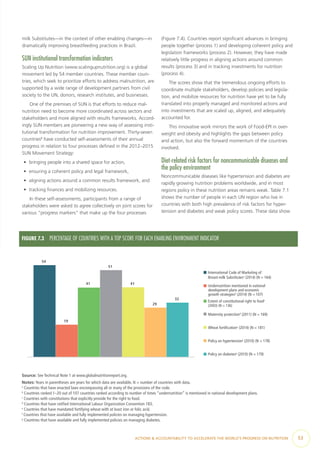
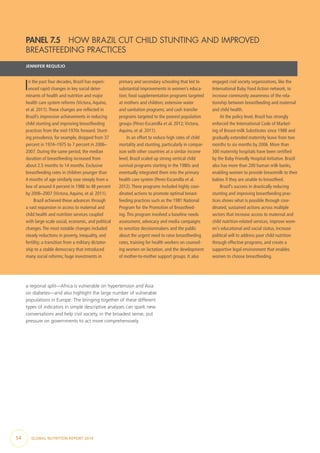
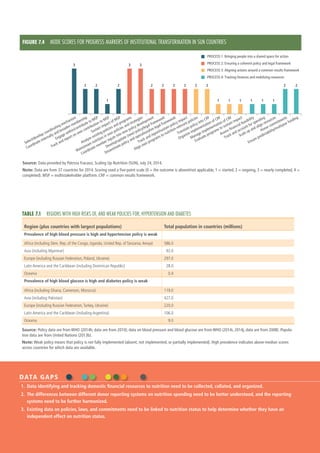
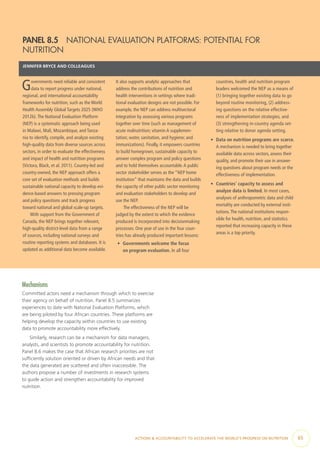
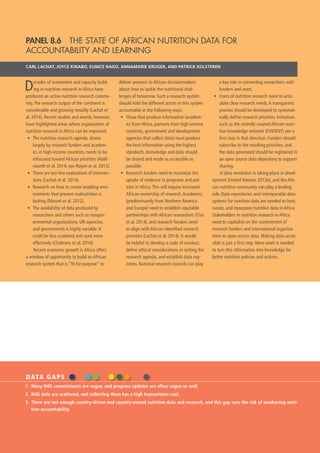
ACTIONS AND
ACCOUNTABILITY
TO ACCELERATE THE
WORLD’S PROGRESS
ON NUTRITION
This report highlights the global nature of malnutrition and the successes and bottlenecks in addressing it.
Malnutrition continues to affect the lives of millions of children and women worldwide. Every country is
affected by some form of nutrition problem. This calls for countries to put in place appropriate strategies
to overcome the problem in a concerted manner. But it isn’t an easy task. We all have many priorities and
concerns that compete for our attention, our resources, our energy, and our political commitment. Ethiopia
strongly believes that for a country to achieve sustainable human and economic growth, it must give special
attention to the early stages of life as the foundation of human capital. We also believe that aligning and
harmonizing partners’ plans with the government is critical to delivering results in the most efficient and
effective manner. This necessitates not only more money for nutrition, but also more value for money.
KESETEBIRHAN ADMASU BIRHANE  MINISTER OF HEALTH, FEDERAL DEMOCRATIC REPUBLIC OF ETHIOPIA
I congratulate the authors of the Global Nutrition Report and welcome their clear and decisive recom-
mendations for action. The data and the evidence encourage us to become more ambitious and more
accountable. There is no one solution for all, but many countries are showing that progress is achievable.
The Scaling Up Nutrition Movement will continue to provide an open space for everyone that truly cham-
pions nutrition.
TOM ARNOLD  SCALING UP NUTRITION (SUN) MOVEMENT COORDINATOR AD INTERIM
Ending malnutrition throughout the world requires action on many fronts. The health sector cannot do it
alone. But political commitment is growing. More and more countries know what they need to do to en-
sure access to healthy diets for all. This report will help us track progress toward global nutrition targets and
understand where greater investments are needed.
MARGARET CHAN  DIRECTOR-GENERAL, WORLD HEALTH ORGANIZATION
The Global Nutrition Report is timely and inspiring. Its overview of under- and overnutrition taps the mo-
mentum and urgency for achieving better nutrition, as encompassed by the Scaling Up Nutrition Move-
ment and the Zero Hunger Challenge. It highlights areas for action, contributes to strengthened nutrition
accountability, and guides as well as provides a yardstick for alliances across the supply chains for food and
health, work with which WFP is intimately involved.
ERTHARIN COUSIN  EXECUTIVE DIRECTOR, WORLD FOOD PROGRAMME
As this report reminds us, good nutrition is a foundation for sustainable development. Malnutrition affects
all countries—North, South, East, and West—so all of us have a strong interest in working together to end
this scourge. We know much about what must be done to improve nutrition, but we need to keep building
political support to allow these actions to be scaled up. This report helps that scale-up by identifying where
progress is lagging, by suggesting actions to accelerate it, and by making recommendations to ensure all
stakeholders are more accountable for taking action to end malnutrition.
SHENGGEN FAN  DIRECTOR GENERAL, INTERNATIONAL FOOD POLICY RESEARCH INSTITUTE 
The findings highlighted in this report attest to an important commitment to bring together the data that
exist on malnutrition and demonstrate meaningful progress on the commitments made at the 2013 Nutri-
tion for Growth summit. Policymakers should heed the report’s call to prioritize collecting more and better
nutrition data to drive even greater impact on the lives of the poorest in the years ahead.
MELINDA GATES  CO-CHAIR, BILL & MELINDA GATES FOUNDATION
The report offers a much-needed platform for tracking progress on nutrition. Its emphasis on productive
partnerships to accelerate improvements is especially relevant as the international community commits
to action at the Second International Conference on Nutrition. Our generation has all the conditions to
respond to the Zero Hunger Challenge and make all forms of malnutrition a relic of the past. True to our
Constitution and the responsibility entrusted to us to help end hunger and raise the levels of nutrition, FAO
is committed to working with all stakeholders to make this happen.
JOSÉ GRAZIANO DA SILVA  DIRECTOR-GENERAL, FOOD AND AGRICULTURE ORGANIZATION OF THE UNITED NATIONS
Nutrition is one of the most cost-effective investments we can make in children—and fundamental to
achieving all our sustainable development goals. But until recently, it was a forgotten topic. This has started
to change as the Scaling Up Nutrition Movement has gained force, supported by more than 50 countries
and the commitment of governments, international organizations, civil society, and communities to scale
up nutrition. This report highlights the progress we have made and the urgent necessity to do more—set-
ting ambitious goals and holding ourselves accountable for achieving them. For when we lose a child’s full
potential, we lose a piece of our common future.
ANTHONY LAKE  EXECUTIVE DIRECTOR, UNICEF
I am pleased to note the progress made in reducing malnutrition. We are now better informed about the
complexities of malnutrition. Our response must therefore be adequate, multidimensional, and compre-
hensive. It requires country-by-country interventions and a multistakeholder approach. At a community
level, this means changing beliefs, habits, and practices. We must start early, from the health of the mother,
through the first 1,000 days of life and beyond.
GRAÇA MACHEL  FOUNDER, GRAÇA MACHEL TRUST
The Global Nutrition Report demonstrates with data and with examples what we all know: improved nutri-
tional status is essential for sustainable development. We are all responsible for ensuring that actions and
investments truly respond to the realities of those for whom the multiple burdens of malnutrition are not
an abstract concept, but an everyday reality. Access to timely and reliable data empowers decisionmakers
to make the most efficient use of resources and is key to ensuring that all stakeholders’ commitments are
honored and sustained.
DAVID NABARRO  SPECIAL REPRESENTATIVE OF THE UN SECRETARY GENERAL FOR FOOD SECURITY AND NUTRITION
2014
ACTIONS AND
ACCOUNTABILITY
TO ACCELERATE THE
WORLD’S PROGRESS
ON NUTRITION
A PEER-REVIEWED PUBLICATION
This report was produced by an Independent Expert Group (IEG) empowered by the Global Nutrition Report Stakeholder Group. The writing was a
collective effort by the IEG members, supplemented by additional analysts and writers. They are all listed here:
Lawrence Haddad, International Food Policy Research Institute, Washington, DC; Endang Achadi, University of Indonesia, Jakarta;
Mohamed Ag Bendech, Food and Agriculture Organization of the United Nations, Rome; Arti Ahuja, Women and Child Development, Odisha, India;
Komal Bhatia, Institute of Development Studies, Brighton, UK; Zulfiqar Bhutta, Center for Global Child Health, Hospital for Sick Children, Toronto,
Canada, and Center of Excellence in Women and Child Health, Aga Khan University, Karachi, Pakistan; Monika Blössner, World Health Organization,
Geneva; Elaine Borghi, World Health Organization, Geneva; Esi Colecraft, University of Ghana, Accra; Mercedes de Onis, World Health Organization,
Geneva; Kamilla Eriksen, University of Cambridge, UK; Jessica Fanzo, Columbia University, New York; Rafael Flores-Ayala, Centers for Disease Con-
trol and Prevention, Atlanta; Patrizia Fracassi, Scaling Up Nutrition Secretariat, Geneva; Elizabeth Kimani, African Population and Health Research
Centre, Nairobi; Eunice Nago, University of Abomey-Calavi, Benin; Julia Krasevec, United Nations Children’s Fund, New York; Holly Newby, United
Nations Children’s Fund, New York; Rachel Nugent, University of Washington, Seattle; Stineke Oenema, Interchurch organization for development
cooperation (ICCO) Alliance, Utrecht, Netherlands; Yves Martin-Prével, Institut de recherche pour le développement, Marseille, France; Judith Randel,
Development Initiatives, Bristol, UK; Jennifer Requejo, Partnership for Maternal, Newborn & Child Health, World Health Organization, Geneva;
Tara Shyam, Institute of Development Studies, Brighton, UK; Emorn Udomkesmalee, Mahidol University, Bangkok, Thailand; and K Srinath Reddy,
Public Health Foundation of India, New Delhi
Authors of the panels in this report, and their affiliations, are as follows:
Endang Achadi (with acknowledgment to Sudarno Sumarto and Taufik Hidayat), University of Indonesia, Jakarta; Jose Luis Alvarez, Action Against
Hunger UK (ACF), London; Michael Anderson, Children’s Investment Fund Foundation, London; Fernando Arriola, Secretaría de Seguridad Alimen-
taria y Nutricional, Guatemala; Komal Bhatia, Institute of Development Studies, Brighton, UK; Claire Blanchard, Save the Children UK, London;
Jennifer Bryce and colleagues, Johns Hopkins University, Baltimore, USA; Jesús Bulux, Secretaría de Seguridad Alimentaria y Nutricional, Guate-
mala; Shruthi Cyriac, International Food Policy Research Institute, Washington, DC; Andrew Dillon, Michigan State University, East Lansing, USA;
Kamilla Eriksen, University of Cambridge, UK; Jessica Fanzo, Columbia University, New York; Joel Gittelsohn, Johns Hopkins Bloomberg School of
Public Health, Baltimore, USA; Carla Guillén, Secretaría de Seguridad Alimentaria y Nutricional, Guatemala; Lawrence Haddad, International Food
Policy Research Institute, Washington, DC; Corinna Hawkes, World Cancer Research Fund International, London; Derek Headey, International Food
Policy Research Institute, Washington, DC; Cecibel Juárez, Secretaría de Seguridad Alimentaria y Nutricional, Guatemala; Inge Kauer, Access to
Nutrition Foundation, Utrecht, Netherlands; Joyce Kinabo, Sokoine University of Agriculture, Morogoro, Tanzania; Patrick Kolsteren, Ghent University,
Belgium; Annamarie Kruger, North-West University, South Africa; Carl Lachat, Ghent University, Belgium; Purnima Menon, International Food Policy
Research Institute, Washington, DC; Eunice Nago, University of Abomey-Calavi, Benin; Nicholas Nisbett, Institute of Development Studies, Brighton,
UK; Deanna Kelly Olney, International Food Policy Research Institute, Washington, DC; Marcellin Ouédraogo, Helen Keller International, Ouagadou-
gou, Burkina Faso; Abdoulaye Pedehombga, Helen Keller International, Ouagadougou, Burkina Faso; Clara Picanyol, Oxford Policy Management, Ox-
ford, UK; Jennifer Requejo, Partnership for Maternal, Newborn & Child Health, World Health Organization, Geneva; Marie Ruel, International Food
Policy Research Institute, Washington DC; Lisa Smith, TANGO International, Tucson, USA; Boyd Swinburn, University of Auckland, New Zealand;
Dolf te Lintelo, Institute of Development Studies, Brighton, UK; Jonathan Tench, SUN Business Network; Otto Velasquez, Secretaría de Seguridad Ali-
mentaria y Nutricional, Guatemala; Daniel Wang, Harvard School of Public Health, Cambridge, USA; Walter Willett, Harvard School of Public Health,
Cambridge, USA
Copyright © 2014 International Food Policy Research Institute. All rights reserved. Contact the Communications and Knowledge Management Divi-
sion at ifpri-copyright@cgiar.org for permission to reprint.
Suggested citation: International Food Policy Research Institute. 2014. Global Nutrition Report 2014: Actions and Accountability to Accelerate the
World’s Progress on Nutrition. Washington, DC.
Any opinions stated herein are those of the authors and are not necessarily representative of or endorsed by the International Food Policy Research
Institute. The boundaries and names used do not imply official endorsement or acceptance by the International Food Policy Research Institute.
International Food Policy Research Institute
2033 K Street, NW
Washington, DC 20006-1002 USA
Telephone: +1-202-862-5600
www.ifpri.org
ISBN: 978-0-89629-564-3
DOI: http://dx.doi.org/10.2499/9780896295643
PRODUCTION CREDITS
Editors: Heidi Fritschel, Terra Carter, John Whitehead, and Andrew Marble
Cover design: Julia Vivalo
Book design and layout: Julia Vivalo and David Popham
CONTENTS
Supplementary Online Materials......................................................................................................................................... ix
Acknowledgments................................................................................................................................................................x
Abbreviations.................................................................................................................................................................... xii
Executive Summary...........................................................................................................................................................xiii
Chapter 1  Introduction...................................................................................................................................................2
Chapter 2  Nutrition Is Central to Sustainable Development..............................................................................................7
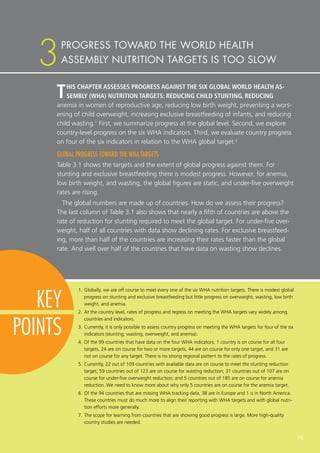
Chapter 3  Progress toward the World Health Assembly Nutrition Targets Is Too Slow.......................................................15
Chapter 4  The Coexistence of Different Forms of Malnutrition Is the “New Normal”........................................................22
Chapter 5  The Coverage of Nutrition-Specific Interventions Needs to Improve................................................................29
Chapter 6  Interventions Addressing the Underlying Determinants of Nutrition Status Are Important,
but They Need to Be More Nutrition Sensitive................................................................................................38
Chapter 7  The Enabling Environment Is Improving, but Not Quickly Enough...................................................................47
Chapter 8  The Need to Strengthen Accountability in Nutrition........................................................................................56
Chapter 9  What Are the Priorities for Investment in Improved Nutrition Data?...............................................................67
Chapter 10  Key Messages and Recommendations............................................................................................................71
Appendix 1  The Nutrition Country Profile: A Tool for Action.............................................................................................75
Appendix 2  Which Countries Are on Course to Meet Several WHA Targets?.......................................................................77
Appendix 3  Which Countries Are on Course for Which WHA Targets?................................................................................79
Appendix 4  Donor Spending on Nutrition-Specific and Nutrition-Sensitive Interventions and Programs..........................................84
Appendix 5  How Accountable Is the Global Nutrition Report?...........................................................................................86
Appendix 6  Availability of Data for Nutrition Country Profile Indicators...........................................................................88
Notes................................................................................................................................................................................91
References........................................................................................................................................................................95
PANELS
Panel 1.1  Types of Nutrition Investment.........................................................................................................................4
Lawrence Haddad
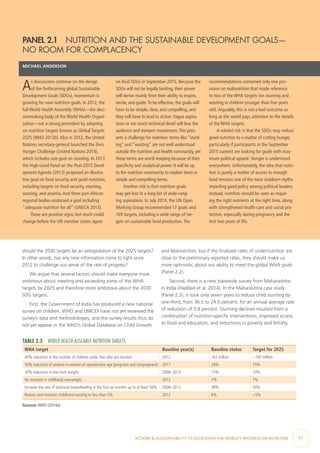
Panel 2.1   Nutrition and the Sustainable Development Goals—No Room for Complacency .............................................11
Michael Anderson
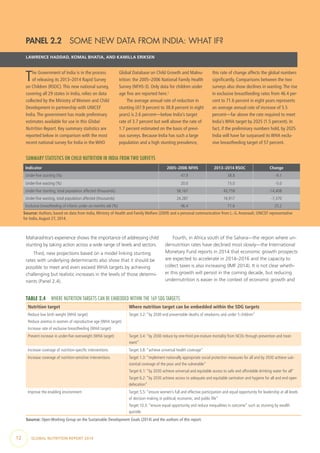
Panel 2.2   Some New Data from India: What If?............................................................................................................12
Lawrence Haddad, Komal Bhatia, and Kamilla Eriksen
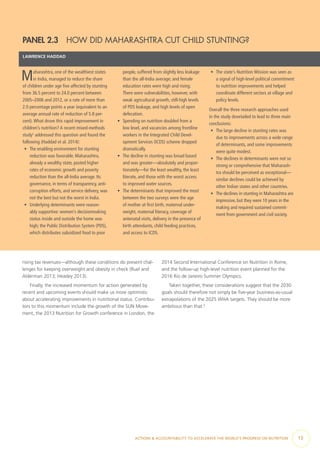
Panel 2.3   How Did Maharashtra Cut Child Stunting?......................................................................................................13
Lawrence Haddad
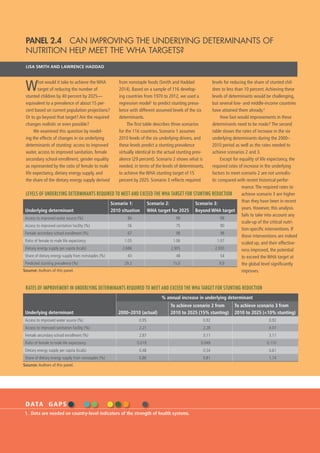
Panel 2.4   Can Improving the Underlying Determinants of Nutrition Help Meet the WHA Targets? ...................................14
Lisa Smith and Lawrence Haddad
Panel 4.1  Malnutrition in the United States and United Kingdom...................................................................................25
Jessica Fanzo
v
PANELS CONTINUED
Panel 4.2  Regional Drivers of Malnutrition in Indonesia................................................................................................26
Endang Achadi with acknowledgment to Sudarno Sumarto and Taufik Hidayat
Panel 4.3   Compiling District-Level Nutrition Data in India..............................................................................................27
Purnima Menon and Shruthi Cyriac
Panel 4.4   Targeting Minority Groups at Risk in the United States...................................................................................28
Jennifer Requejo and Joel Gittelsohn
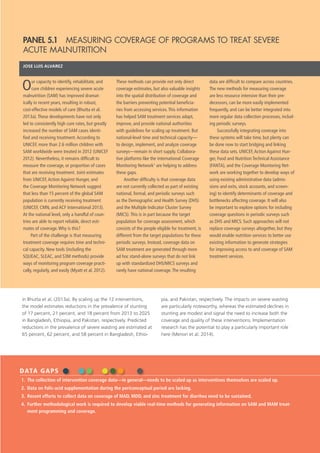
Panel 5.1  Measuring Coverage of Programs to Treat Severe Acute Malnutrition..............................................................37
Jose Luis Alvarez
Panel 6.1  Trends in Dietary Quality among Adults in the United States...........................................................................41
Daniel Wang and Walter Willett
Panel 6.2  How Did Bangladesh Reduce Stunting So Rapidly? ........................................................................................43
Derek Headey
Panel 6.3  Using an Agricultural Platform in Burkina Faso to Improve Nutrition during the First 1,000 Days....................45
Deanna Kelly Olney, Andrew Dillon, Abdoulaye Pedehombga, Marcellin Ouédraogo, and Marie Ruel
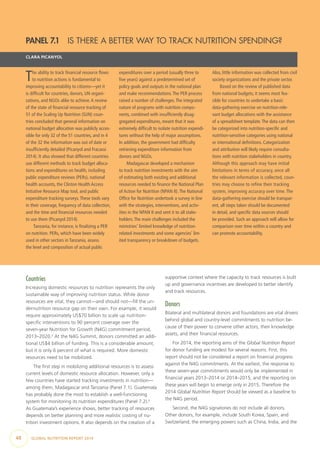
Panel 7.1  Is There a Better Way to Track Nutrition Spending?........................................................................................48
Clara Picanyol
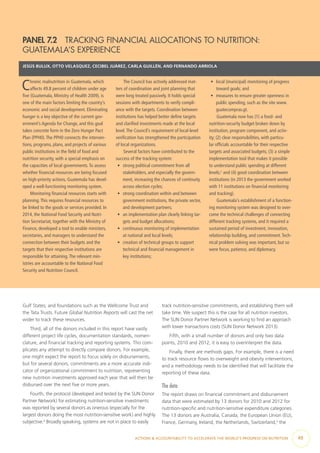
Panel 7.2  Tracking Financial Allocations to Nutrition: Guatemala’s Experience................................................................49
Jesús Bulux, Otto Velasquez, Cecibel Juárez, Carla Guillén, and Fernando Arriola
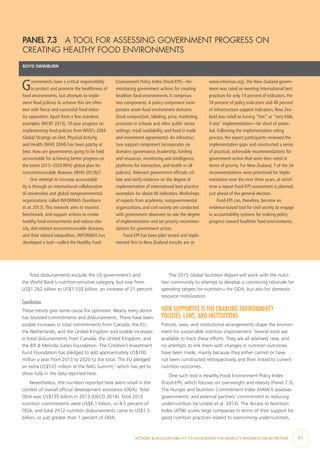
Panel 7.3  A Tool for Assessing Government Progress on Creating Healthy Food Environments ........................................51
Boyd Swinburn
Panel 7.4  Engaging Food and Beverage Companies through the Access to Nutrition Index .............................................52
Inge Kauer
Panel 7.5  How Brazil Cut Child Stunting and Improved Breastfeeding Practices..............................................................54
Jennifer Requejo
Panel 8.1  Scaling Up Nutrition through Business...........................................................................................................61
Jonathan Tench
Panel 8.2  How Civil Society Organizations Build Commitment to Nutrition......................................................................62
Claire Blanchard
Panel 8.3  Building Civil Society’s Capacity to Push for Policies on Obesity and Noncommunicable Diseases......................63
Corinna Hawkes
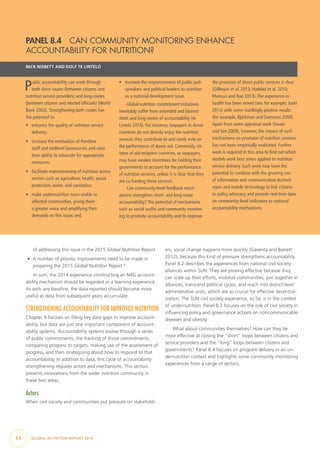
Panel 8.4  Can Community Monitoring Enhance Accountability for Nutrition?..................................................................64
Nick Nisbett and Dolf te Lintelo
Panel 8.5  National Evaluation Platforms: Potential for Nutrition....................................................................................65
Jennifer Bryce and colleagues
Panel 8.6  The State of African Nutrition Data for Accountability and Learning................................................................66
Carl Lachat, Joyce Kinabo, Eunice Nago, Annamarie Kruger, and Patrick Kolsteren
FIGURES
Figure 1.1  Conceptual framework of this report................................................................................................................5
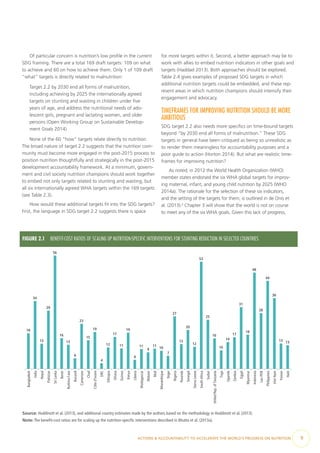
Figure 2.1  Benefit-cost ratios of scaling up nutrition-specific interventions for stunting reduction in selected countries.........9
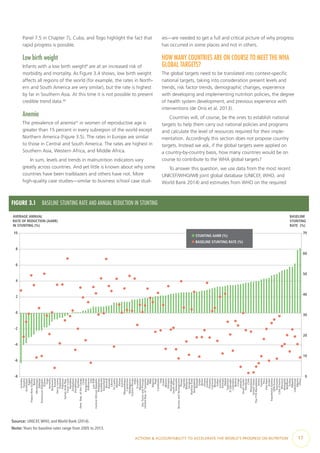
Figure 3.1  Baseline stunting rate and annual reduction in stunting..................................................................................17
Figure 3.2  Baseline under-five overweight rate and annual reduction in under-five overweight........................................18
Figure 3.3  Percentage of infants age 0–5 months who are exclusively breastfed, by region, around 2000 and 2012........19
Figure 3.4  Average incidence of low birth weight by UN subregion (%)............................................................................19
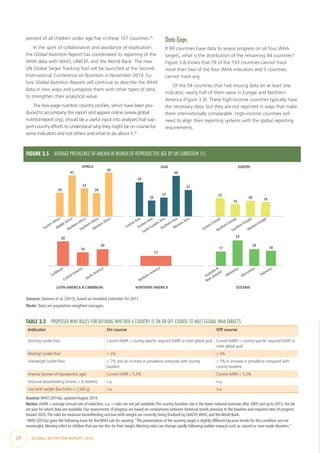
Figure 3.5  Average prevalence of anemia in women of reproductive age by UN subregion (%).........................................20
vi  GLOBAL NUTRITION REPORT 2014
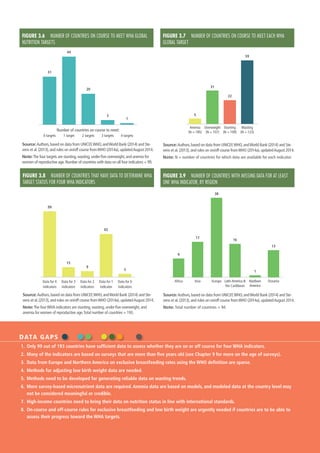
Figure 3.6  Number of countries on course to meet WHA global nutrition targets...............................................................21
Figure 3.7  Number of countries on course to meet each WHA global target......................................................................21
Figure 3.8  Number of countries that have data to determine WHA target status for four WHA indicators....................................21
Figure 3.9  Number of countries with missing data for at least one WHA indicator, by region.............................................21
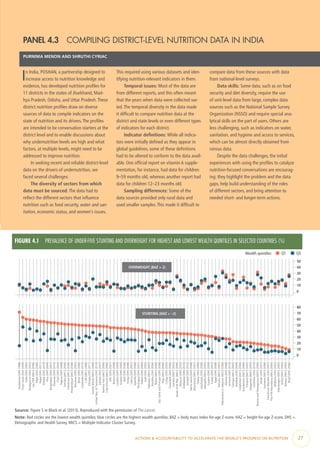
Figure 4.1  Prevalence of under-five stunting and overweight for highest and lowest wealth quintiles in
selected countries (%)...................................................................................................................................27
Figure 5.1  Average share of women receiving iron–folic acid supplements for at least 90 days during pregnancy (%)............31
Figure 5.2  Baseline breastfeeding rates and annual increase in breastfeeding, last two surveys........................................31
Figure 5.3  Rates of minimum acceptable diet and wasting rates......................................................................................32
Figure 5.4  Rates of minimum dietary diversity and stunting rates....................................................................................32
Figure 5.5  Average coverage of vitamin A supplementation (%)......................................................................................33
Figure 5.6  Coverage of zinc treatment for diarrhea.........................................................................................................33
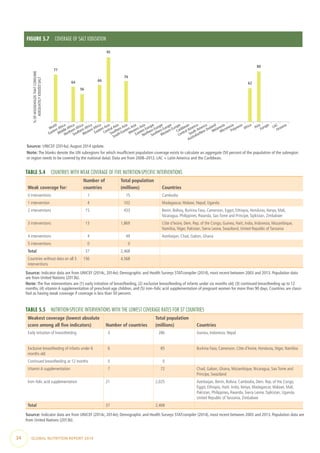
Figure 5.7  Coverage of salt iodization............................................................................................................................34
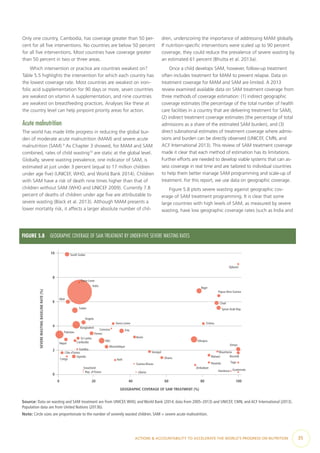
Figure 5.8  Geographic coverage of SAM treatment by under-five severe wasting rates.....................................................35
Figure 6.1  Undernourishment trends by subregion..........................................................................................................39
Figure 6.2  Undernourishment and overacquisition trends by region.................................................................................39
Figure 6.3  Trends in calorie overacquisition in selected countries......................................................................................40
Figure 6.4  Trends in access to improved water and sanitation in subregions of Africa and Asia..........................................40
Figure 6.5  Trends in female secondary education enrollment...........................................................................................42
Figure 6.6  Health worker density per 1,000 people........................................................................................................42
Figure 6.7  Share of government expenditures on four sectors related to nutrition (%)......................................................44
Figure 6.8  Share of government expenditures on four sectors related to nutrition in selected African countries (%), 2010.......44
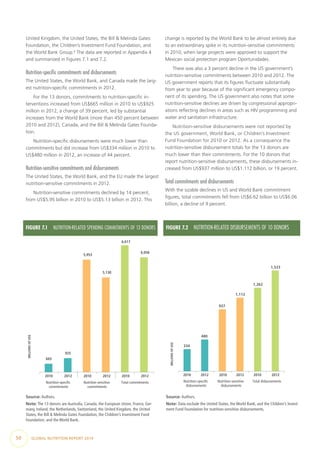
Figure 7.1  Nutrition-related spending commitments of 13 donors....................................................................................50
Figure 7.2  Nutrition-related disbursements of 10 donors.................................................................................................50
Figure 7.3  Percentage of countries with a top score for each enabling environment indicator............................................53
Figure 7.4  Mode scores for progress markers of institutional transformation in SUN countries..........................................55
TABLES
Table 1.1  Audiences for this report: Individuals, organizations, and networks ....................................................................4
Table 2.1  The human and economic costs of malnutrition..................................................................................................8
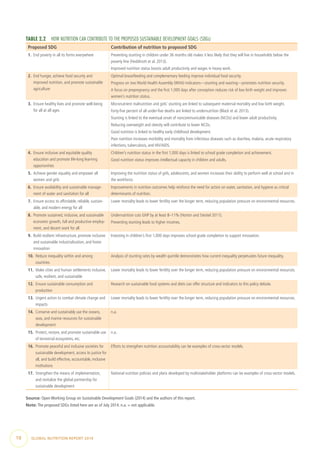
Table 2.2  How nutrition can contribute to the proposed Sustainable Development Goals (SDGs)........................................10
Table 2.3  World Health Assembly nutrition targets .........................................................................................................11
Table 2.4  Where nutrition targets can be embedded within the 169 SDG targets ..............................................................12
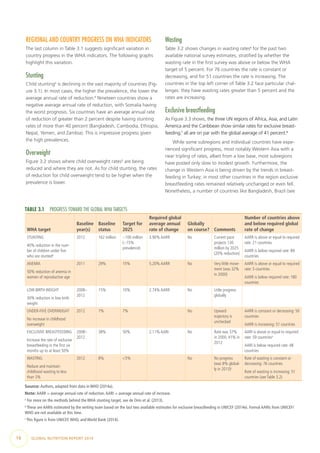
Table 3.1  Progress toward the global WHA targets..........................................................................................................16
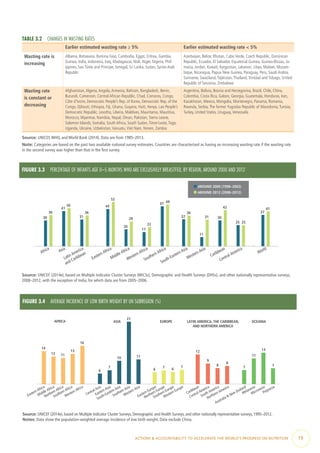
Table 3.2  Changes in wasting rates ................................................................................................................................19
Table 3.3  Proposed WHO rules for defining whether a country is on or off course to meet
global WHA targets.........................................................................................................................................20
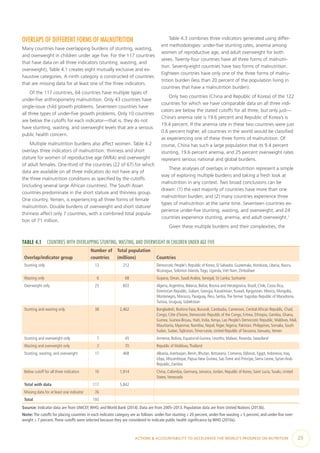
Table 4.1  Countries with overlapping stunting, wasting, and overweight in children under age five ..................................23
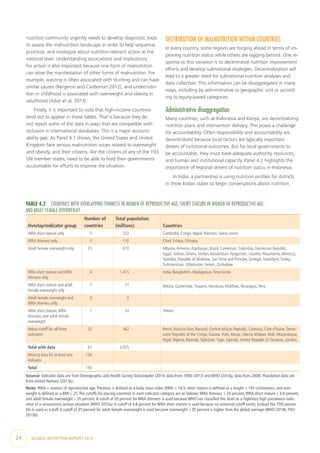
Table 4.2  Countries with overlapping thinness in women of reproductive age, short stature
in women of reproductive age, and adult female overweight ..........................................................................24
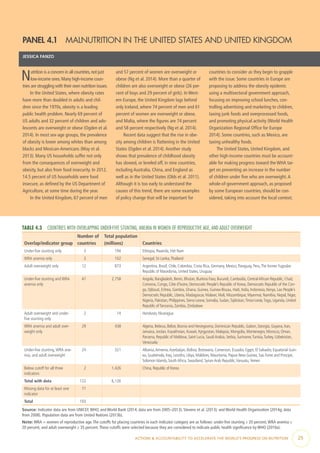
Table 4.3  Countries with overlapping under-five stunting, anemia in women of reproductive age, and adult overweight.........25
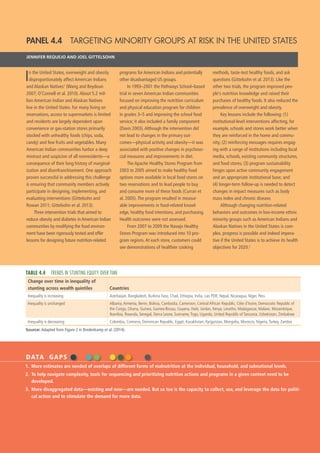
Table 4.4  Trends in stunting equity over time..................................................................................................................28
Table 5.1  State of coverage data for nutrition-specific interventions ................................................................................30
ACTIONS & ACCOUNTABILITY TO ACCELERATE THE WORLD’S PROGRESS ON NUTRITION  vii
TABLES CONTINUED
Table 5.2  Coverage of iron–folic acid supplementation during pregnancy........................................................................31
Table 5.3  Summary of infant and young child diets.........................................................................................................32
Table 5.4  Countries with weak coverage of five nutrition-specific interventions................................................................34
Table 5.5  Nutrition-specific interventions with the lowest coverage rates for 37 countries ................................................34
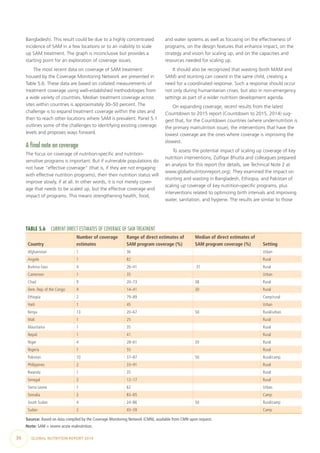
Table 5.6  Current direct estimates of coverage of SAM treatment ....................................................................................36
Table 6.1  Number of countries that are vulnerable on underlying determinants for undernutrition .........................................42
Table 6.2  Countries that are most vulnerable by each underlying determinant ................................................................43
Table 6.3  Examples of ways to make sector investments more nutrition sensitive.............................................................46
Table 7.1  Regions with high risks of, and weak policies for, hypertension and diabetes ....................................................55
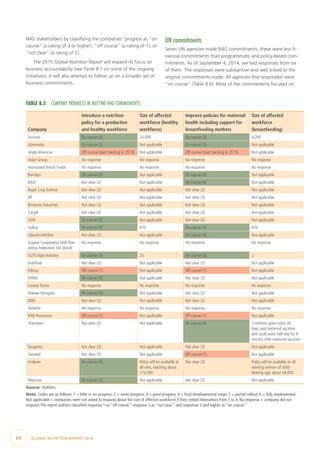
Table 8.1  Response rates to requests for progress against N4G commitments ..................................................................57
Table 8.2  Country progress in meeting N4G commitments...............................................................................................58
Table 8.3  Civil society organizations’ progress in meeting N4G commitments ..................................................................59
Table 8.4  Self-assessments of N4G business commitments on workforce nutrition.............................................................59
Table 8.5  Company progress in meeting N4G commitments.............................................................................................60
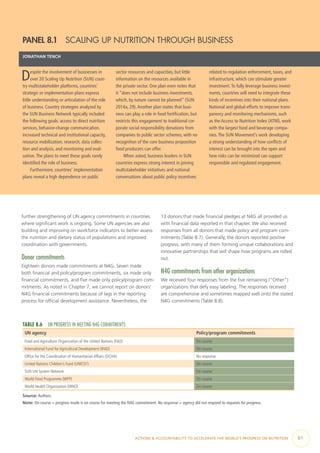
Table 8.6  UN progress in meeting N4G commitments......................................................................................................61
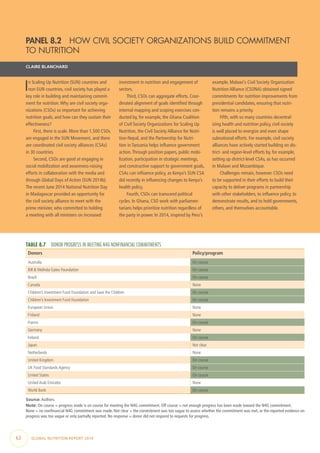
Table 8.7  Donor progress in meeting N4G nonfinancial commitments .............................................................................62
Table 8.8  Other organizations’ progress in meeting N4G commitments............................................................................63
Table 9.1  Data gaps that are constraints to needed action...............................................................................................68
Table 9.2  Year of the most recent survey containing under-five anthropometry in the WHA database................................69
Table 9.3  Some key points from Technical Notes 4–12 on ways forward in filling some data gaps....................................70
Table A.1  Guide to the nutrition country profiles.............................................................................................................76
Table A.2  Countries on course to meet several WHA targets.............................................................................................77
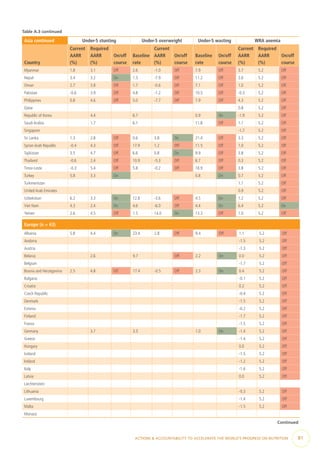
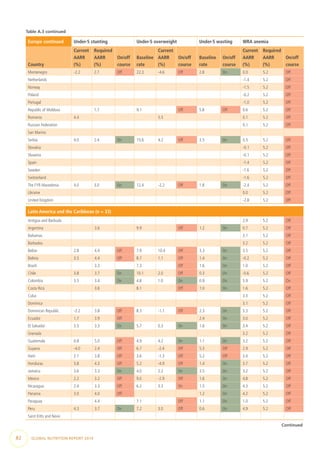
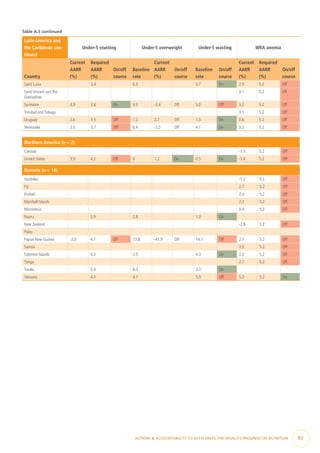
Table A.3  Country progress on the four WHA targets ......................................................................................................79
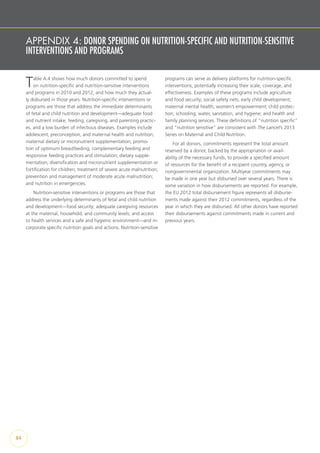
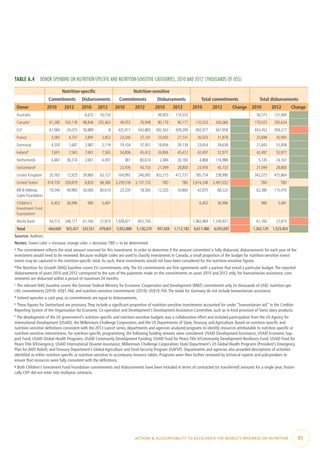
Table A.4  Donor spending on nutrition-specific and nutrition-sensitive categories, 2010 and 2012 (thousands of US$)......85
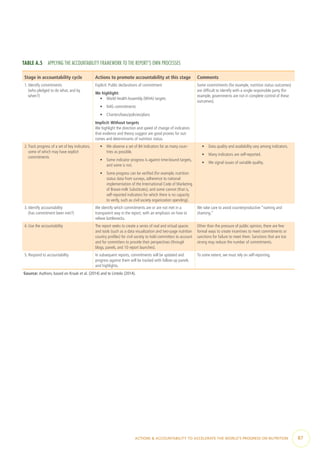
Table A.5  Applying the accountability framework to the report’s own processes................................................................87
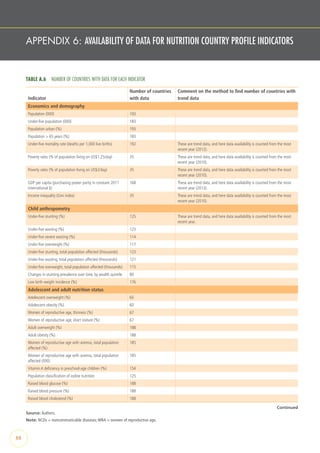
Table A.6  Number of countries with data for each indicator.............................................................................................88
viii  GLOBAL NUTRITION REPORT 2014
SUPPLEMENTARY ONLINE MATERIALS
The following supporting materials are available at www.globalnutritionreport.org.
Nutrition profiles
Global nutrition profile (data available for 84 indicators on a global scale)
Nutrition country profiles (data available for 84 indicators for each of the 193 United Nations member states)
Technical notes
Technical Note 1   Nutrition Country Profile Indicators Definitions and Sources
Technical Note 2   LiST Analysis for Global Nutrition Report Independent Expert Group, Zulfiqar Bhutta
Technical Note 3   The Excessive (and Wasteful) Consumption of Food, Carlo Cafiero
Technical Note 4   Toward Sustainable, Healthy, and Profitable Food Systems: Nutrition and the Sustainable Management of Natural
  Resources, United Nations System Standing Committee for Nutrition
Technical Note 5   Learning from Efforts to Cost Country Plans: Priority Technical Issues to Address, Helen Connolly
Technical Note 6   Measuring and Tracking the Access Dimension of Food Security: Available Indicators and Recommendations for
  Future Investments, Marie T. Ruel, Terri J. Ballard, and Megan Deitchler
Technical Note 7   Voices of the Hungry: Where in the World Is Food Insecurity More Severe? Carlo Cafiero
Technical Note 8   Assessing Capacity: The Need to Invest in Nutrition Capacity Development in the West Africa Region, Roger Sodjinou
Technical Note 9    Data Gaps for Low Birth Weight, Holly Newby
Technical Note 10  Measuring Overweight and Obesity: Need for Harmonization and Refinement, Rachel Nugent, Mercedes de
Onis, Komal Bhatia, Kamilla Eriksen, Gretchen Stevens, and Yves Martin-Prevel
Technical Note 11  Countries in the SUN Movement Assess Their Own Progress within Government-Led Multistakeholder
Platforms, SUN Secretariat
Technical Note 12  Vitamin and Mineral Status Worldwide: What We Know and the Challenges Ahead, Luz Maria De-Regil
Nutrition for Growth tracking tables	
Country Progress: Nutrition for Growth Tracking Table
Business Progress: Nutrition for Growth Tracking Table
Civil Society Organization Progress: Nutrition for Growth Tracking Table
Donor Nonfinancial Progress: Nutrition for Growth Tracking Table
Other Organizations Progress: Nutrition for Growth Tracking Table
UN Progress: Nutrition for Growth Tracking Table
Extended versions of panels in this report
Data and visualization platform
ix
ACKNOWLEDGMENTS
The Global Nutrition Report’s Independent Expert Group (IEG)
would like to acknowledge the support and contributions
of a large number of people and organizations who made the
development and delivery of the 2014 report possible.
We would like to thank the writing and data analysis team:
Lawrence Haddad, Jessica Fanzo, Kamilla Eriksen, and Komal
Bhatia, with help from Julia Krasevec. We also thank the Report
Secretariat, based at the Institute of Development Studies (IDS)
and coordinated by Tara Shyam.
The IEG is grateful to the International Food Policy Re-
search Institute’s Director General Shenggen Fan and Director
of Communications and Knowledge Management (CKM)
Gwendolyn Stansbury, as well as to CKM team members
Tamar Abrams, Melanie Allen, Luz Marina Alvare, Mulugeta
Bayeh, Terra Carter, Heidi Fritschel, Simone Hill-Lee, Andrew
Marble, Andrea Pedolsky, David Popham, Nilam Prasai, Ghada
Shields, Julia Vivalo, and John Whitehead. We also greatly ap-
preciate administrative support from Lynette Aspillera, David
Governey, and Catherine Gee.
We thank the following people for help with data methods
and data access: Allison Pepper (Flour Fortification Initiative)
for data access; Ann Biddlecom (United Nations Population
Division) for information on the unmet need for family plan-
ning; Anne Peniston, Richard Greene, Elizabeth Jordan-Bell,
and Robbin Boyer (US Agency for International Development
[USAID]) for data clarifications; Bingxin Yu (IFPRI) for SPEED
data; Carlo Cafiero and Piero Conforti (Food and Agriculture
Organization of the United Nations [FAO]) for access to the
overaquisition data; Caryn Bredenkamp and Leander Buisman
(World Bank) for stunting trends by wealth quintile data; Leslie
Elder and Andrea Spray (World Bank) for data clarifications; Erin
McLean (Government of Canada) for data clarifications; David
Clark (UNICEF) for the latest data on the International Code of
Marketing of Breast-milk Substitutes; Liliana Carvajal (UNICEF)
for information on zinc treatment for diarrhea; Holly Newby,
Julia Krasevec, Arachana Dwivedi, and David Clark (UNICEF)
for help on data access and data interpretation; Jere Behrman
(University of Pennsylvania) for advice on the latest literature
on the economic returns to nutrition; John Hoddinott (IFPRI)
for new benefit-cost projections; Juan Feng (World Bank) for
definitions of poverty indicators; Lisa Smith (TANGO Interna-
tional) for advice on models and access to some data on basic
and underlying determinants; Manos Antoninis (United Nations
Educational, Scientific, and Cultural Organization [UNESCO]) for
advice on women’s secondary education indicators; Matthew
Greenslade (UK Department for International Development
[DFID]) for advice on social protection data; Mercedes de Onis,
Monika Blössner, and Elaine Borghi (World Health Organization
[WHO]) for support with data access and guidance on methods;
Scaling Up Nutrition (SUN) focal points and in-country partners
for conducting the self-assessment exercises on SUN country
institutional transformation and the MDF team (Irma Alpenid-
ze, Mike Zuyderduyn, and Ingrid Oomes) and SUN Movement
Secretariat team (Patrizia Fracassi, Shaoyu Lin, Martin Gallagher,
Kwame Akoto-Danso, Pau Blanquer, Delphine Babin-Pelliard,
and Fanny Granchamp) for collating and analyzing the data;
Rajith Lakshman, Maria Fe Celi Reyna, and Woody Wong Espejo
(IDS) for work on the development policy document review;
Rolf Luyendijk (UNICEF) for data and advice on water, sanita-
tion, and hygiene; and Dolf te Lintelo (IDS), Gretchen Stevens
(WHO), Jose Luiz Alvares Moran (Coverage Monitoring Net-
work, Action Against Hunger), and Luz Maria De-Regil (Micro-
nutrient Initiative) for being part of the report’s Data Access
Group.
We also acknowledge support for the development of the
panels (beyond authorship) featured in this year’s report from
Jennifer Requejo, Lina Mahy and the UN Standing Committee
on Nutrition, Pau Blanquer, Patrizia Fracassi, Rachel Nugent,
Endang Achadi, Steve Wiggins, Mercedes de Onis, and Clara
Picanyol.
For facilitating the tracking of Nutrition for Growth commit-
ments, we thank Anna Taylor, Tanya Green, and Rob Hughes
(DFID); Delphine Babin Pelliard, Kwame Akoto-Danso, Martin
Gallagher, Patrizia Fracassi, Pau Blanquer, and Fanny Gran-
champ (SUN Movement Secretariat); Jessica Meeker and Kat
Pittore (IDS); Jonathan Tench (SUN Business Network); and Lina
Mahy (UN Standing Committee on Nutrition).
The IEG acknowledges the support of Richard Horton and
Pamela Das at The Lancet in facilitating the peer review of the
report and thanks the four anonymous Lancet reviewers. We
thank those who provided further feedback and comments
on the draft report: Jennifer Rigg and Rebecca Olson (1,000
Days); Kate Goertzen (ACTION); Juliet Attenborough (Australian
Department of Foreign Affairs and Trade); Ellen Piwoz, Shawn
Baker, and Neil Watkins (Bill & Melinda Gates Foundation);
Sabine Triemer (BMZ–German Federal Ministry for Economic
Cooperation); Jennifer Goosen and Erin McClean (Government
of Canada); Jo Lofthouse, Michael Anderson, and Augustin
Flory (Children’s Investment Fund Foundation [CIFF]); Joseph
Patrick Ngang (Collectif des ONG pour la Sécurité Alimentaire et
le Développement Rural); Joanna Francis (Concern Worldwide;
Generation Nutrition); John Cordaro (Mars); Pedro Campo-
Llopis, Catherine Chazaly, and Patrice Moussy (European
Commission); Food and Agriculture Organization of the United
x
Nations; Glen Tarman, Sabrina de Souza, and Sandra Mutuma
(Action Against Hunger UK, Generation Nutrition); Stuart Gillespie
(IFPRI); Marc van Ameringen and Jonathan Tench (Global Alli-
ance for Improved Nutrition [GAIN] and SUN Business Network);
Aslam Shaheen and Qadir Baloch (Harvest Plus Pakistan); Mags
Gaynor (Irish Aid); Iris Bollemeijer (International Medical Corps);
David Nabarro (SUN Movement Secretariat); Nicholas Nisbett
(IDS); Kathryn Russell and Anupama Dathan (ONE Campaign);
Robert Hecht, Arathi Rao, Tae Min Kim, and Aparna Kamath
(Results for Development); Marie Rumsby (Save the Children UK,
Road to Rio Group); Marie Ruel (IFPRI); Alexendre Ghelew (Swiss
Development Cooperation); Syngenta; Hannah Schellander and
James Jansen (UK Department for Environment, Food, and Rural
Affairs); Anna Taylor and Rob Hughes (DFID); Werner Schultink,
Yarlini Balarajan, and France Begin (UNICEF); Lina Mahy (UN
Standing Committee on Nutrition); Anne Peniston (USAID);
Veronique LaGrange and Dacia Whitsett-Morrow (US Dairy
Export Council); Yael Velleman (WaterAid); Leslie Elder and Juan
Feng (World Bank); Martin Bloem, Lynnda Kiess, Saskia Depee,
and Natalie Rae Aldern (World Food Programme [WFP]); and
Francesco Branca (WHO).
We are also grateful to Alan Dangour (London School of
Hygiene and Tropical Medicine), Anna Taylor (DFID), and Jo
Lofthouse (CIFF) for their early and continued encouragement;
to Peter Godwin and Sujaya Misra for comments and ideas on
the accountability and legitimacy framework; and to those who
provided their feedback and ideas during the development of
the concept note for the Global Nutrition Report in early 2014.
The IEG would like to thank the report’s Stakeholder Group
for its engagement throughout the development of the report:
cochairs Edith Mkawa (Permanent Secretary, Office of the
President, Malawi, SUN Focal Point) and Jane Edmonson (DFID),
Abdoulaye Ka (Cellule de lutte contre la malnutrition [CLM],
Senegal), Anna Lartey  (FAO), Chris Osa Isokpunwu (SUN Focal
Point, Nigeria), David Nabarro (United Nations Secretary-
General’s office, SUN), Ferew Lemma (Ethiopia), Francesco Bran-
ca (WHO), Jésus Búlux (Secretaría de Seguridad Alimentaria y
Nutricional de la Presidencia de la República [SESAN], Guatema-
la), Martin Bloem (WFP), Nina Sardjunani (Bappenas, Indonesia),
Jean-Pierre Halkin (European Commission, SUN Donor Network),
Jennifer Goosen (Government of Canada, SUN Donor Network),
John Cordaro (Mars, SUN Business Network), Kate Houston
(Cargill, SUN Business Network), Lucy Sullivan and Jennifer Rigg
(1,000 Days, SUN CSO Network), M. Aslam Shaheen (Pakistan),
Marc Van Ameringen (GAIN, SUN Business Network), Michael
Anderson (CIFF), Milton Rondo (Brazil), Shawn Baker (Bill &
Melinda Gates Foundation, SUN Donor Network), Tom Arnold
(Concern Worldwide, SUN CSO Network), and Werner Schultink
(UNICEF).
Finally, we would also like to acknowledge the organiza-
tions that provided financial support for the 2014 report: 1,000
Days, the Bill & Melinda Gates Foundation, the CGIAR Research
Program on Agriculture for Nutrition and Health, the Children’s
Investment Fund Foundation, the European Commission, the
Government of Canada, Irish Aid, and the UK Department for
International Development.
ACTIONS & ACCOUNTABILITY TO ACCELERATE THE WORLD’S PROGRESS ON NUTRITION  xi
ABBREVIATIONS
AARI		 average annual rate of increase
AARR		 average annual rate of reduction
BMI		 body mass index
CAADP		 Comprehensive Africa Agriculture Development Programme
CSO		 civil society organization
DHS		 Demographic and Health Survey
FAO		 Food and Agriculture Organization of the United Nations
HANCI		 Hunger and Nutrition Commitment Index
MAD		 minimum acceptable diet
MAM		 moderate acute malnutrition
MDD		 minimum dietary diversity
MICS		 Multiple Indicator Cluster Survey
NCD		 noncommunicable disease
NEPAD		 New Partnership for Africa’s Development
NGO		 nongovernmental organization
PPP		 purchasing power parity
SAM		 severe acute malnutrition
SDG		 Sustainable Development Goal
SUN		 Scaling Up Nutrition
UNICEF		 United Nations Children’s Fund
WHA		 World Health Assembly
WHO		 World Health Organization
WRA		 women of reproductive age
xii
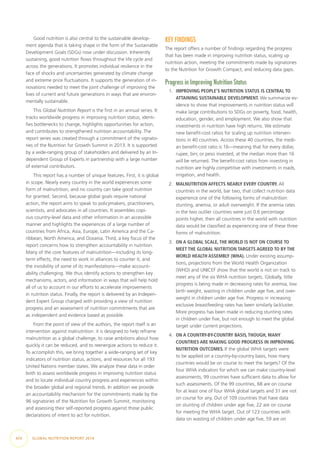
GOOD NUTRITION IS THE BEDROCK OF HUMAN WELL-BEING. BEFORE BIRTH AND
THROUGHOUT INFANCY, GOOD NUTRITION ALLOWS BRAIN FUNCTIONING TO
evolve without impairment and immune systems to develop more robustly. For
young children, good nutrition status averts death and equips the body to grow and
develop to its full potential. Over the course of the human lifespan, it leads to more
effective learning at school, better-nourished mothers who give birth to better-nourished
children, and adults who are likelier to be productive and earn higher wages. In middle
age, it gives people metabolisms that are better prepared to ward off the diseases asso-
ciated with changes in diet and physical activity. Without good nutrition, people’s lives
and livelihoods are built on quicksand.
1.	 People with good nutrition are key to sustainable development.
•	 Malnutrition affects nearly every country in the world.
•	 More nutrition indicators need to be embedded within the Sustainable Development Goal accountability framework.
2.	 We need to commit to improving nutrition faster and build this goal into the Sustainable Development
Goal targets for 2030.
•	 The 2030 Sustainable Development Goal targets should be more ambitious than simple extensions of the 2025
World Health Assembly targets.A new consensus about what is possible needs to be established.
3.	 The world is currently not on course to meet the global nutrition targets set by the World Health As-
sembly, but many countries are making good progress in the target indicators.
•	 More high-quality case studies are needed to understand why progress has or has not been made.
4.	 Dealing with different, overlapping forms of malnutrition is the “new normal.”
•	 Nutrition resources and expertise need to be better aligned toward the evolving nature of malnutrition.
5.	 We need to extend coverage of nutrition-specific programs to more of the people who need them.
•	 More attention needs to be given to coverage data—an important way of assessing presence on the ground where
it counts.
6.	 A greater share of investments to improve the underlying determinants of nutrition should be de-
signed to have a larger impact on nutritional outcomes.
•	 We need to keep tracking the proportion of nutrition resources to these approaches.
•	 We must also provide more guidance on how to design and implement these approaches to improve their effec-
tiveness and reach.
7.	 More must be done to hold donors, countries, and agencies accountable for meeting their commit-
ments to improve nutrition.
•	 Stakeholders should work to develop, pilot, and evaluate new accountability mechanisms. Civil society efforts to
increase accountability need support.
•	 We need to develop targets or norms for spending on nutrition.
8.	 Tracking spending on nutrition is currently challenging, making it difficult to hold responsible parties
accountable.
•	 Efforts to track financial resources need to be intensified—for all nutrition stakeholders.
9.	 Nutrition needs a data revolution.
•	 Of the many information gaps, the ones that most need to be filled are those that constrain priority action and
impede accountability.
10.	National nutrition champions need to be recognized, supported, and expanded in number.
•	 We must fill frontline vacancies, support nutrition leadership programs, and design country-led research programs.
xiii
EXECUTIVE SUMMARY
KEY
POINTS
Good nutrition is also central to the sustainable develop-
ment agenda that is taking shape in the form of the Sustainable
Development Goals (SDGs) now under discussion. Inherently
sustaining, good nutrition flows throughout the life cycle and
across the generations. It promotes individual resilience in the
face of shocks and uncertainties generated by climate change
and extreme price fluctuations. It supports the generation of in-
novations needed to meet the joint challenge of improving the
lives of current and future generations in ways that are environ-
mentally sustainable.
This Global Nutrition Report is the first in an annual series. It
tracks worldwide progress in improving nutrition status, identi-
fies bottlenecks to change, highlights opportunities for action,
and contributes to strengthened nutrition accountability. The
report series was created through a commitment of the signato-
ries of the Nutrition for Growth Summit in 2013. It is supported
by a wide-ranging group of stakeholders and delivered by an In-
dependent Group of Experts in partnership with a large number
of external contributors.
This report has a number of unique features. First, it is global
in scope. Nearly every country in the world experiences some
form of malnutrition, and no country can take good nutrition
for granted. Second, because global goals require national
action, the report aims to speak to policymakers, practitioners,
scientists, and advocates in all countries. It assembles copi-
ous country-level data and other information in an accessible
manner and highlights the experiences of a large number of
countries from Africa, Asia, Europe, Latin America and the Ca-
ribbean, North America, and Oceania. Third, a key focus of the
report concerns how to strengthen accountability in nutrition.
Many of the core features of malnutrition—including its long-
term effects, the need to work in alliances to counter it, and
the invisibility of some of its manifestations—make account-
ability challenging. We thus identify actions to strengthen key
mechanisms, actors, and information in ways that will help hold
all of us to account in our efforts to accelerate improvements
in nutrition status. Finally, the report is delivered by an Indepen-
dent Expert Group charged with providing a view of nutrition
progress and an assessment of nutrition commitments that are
as independent and evidence based as possible.
From the point of view of the authors, the report itself is an
intervention against malnutrition: it is designed to help reframe
malnutrition as a global challenge, to raise ambitions about how
quickly it can be reduced, and to reenergize actions to reduce it.
To accomplish this, we bring together a wide-ranging set of key
indicators of nutrition status, actions, and resources for all 193
United Nations member states. We analyze these data in order
both to assess worldwide progress in improving nutrition status
and to locate individual country progress and experiences within
the broader global and regional trends. In addition we provide
an accountability mechanism for the commitments made by the
96 signatories of the Nutrition for Growth Summit, monitoring
and assessing their self-reported progress against those public
declarations of intent to act for nutrition.
KEY FINDINGS
The report offers a number of findings regarding the progress
that has been made in improving nutrition status, scaling up
nutrition action, meeting the commitments made by signatories
to the Nutrition for Growth Compact, and reducing data gaps.
Progress in Improving Nutrition Status
1.	 IMPROVING PEOPLE’S NUTRITION STATUS IS CENTRAL TO
ATTAINING SUSTAINABLE DEVELOPMENT. We summarize ev-
idence to show that improvements in nutrition status will
make large contributions to SDGs on poverty, food, health,
education, gender, and employment. We also show that
investments in nutrition have high returns. We estimate
new benefit-cost ratios for scaling up nutrition interven-
tions in 40 countries. Across these 40 countries, the medi-
an benefit-cost ratio is 16—meaning that for every dollar,
rupee, birr, or peso invested, at the median more than 16
will be returned. The benefit-cost ratios from investing in
nutrition are highly competitive with investments in roads,
irrigation, and health.
2.	 MALNUTRITION AFFECTS NEARLY EVERY COUNTRY. All
countries in the world, bar two, that collect nutrition data
experience one of the following forms of malnutrition:
stunting, anemia, or adult overweight. If the anemia rates
in the two outlier countries were just 0.6 percentage
points higher, then all countries in the world with nutrition
data would be classified as experiencing one of these three
forms of malnutrition.
3.	 ON A GLOBAL SCALE, THE WORLD IS NOT ON COURSE TO
MEET THE GLOBAL NUTRITION TARGETS AGREED TO BY THE
WORLD HEALTH ASSEMBLY (WHA). Under existing assump-
tions, projections from the World Health Organization
(WHO) and UNICEF show that the world is not on track to
meet any of the six WHA nutrition targets. Globally, little
progress is being made in decreasing rates for anemia, low
birth weight, wasting in children under age five, and over-
weight in children under age five. Progress in increasing
exclusive breastfeeding rates has been similarly lackluster.
More progress has been made in reducing stunting rates
in children under five, but not enough to meet the global
target under current projections.
4.	 ON A COUNTRY-BY-COUNTRY BASIS, THOUGH, MANY
COUNTRIES ARE MAKING GOOD PROGRESS IN IMPROVING
NUTRITION OUTCOMES. If the global WHA targets were
to be applied on a country-by-country basis, how many
countries would be on course to meet the targets? Of the
four WHA indicators for which we can make country-level
assessments, 99 countries have sufficient data to allow for
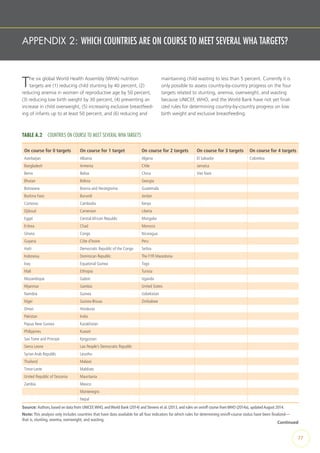
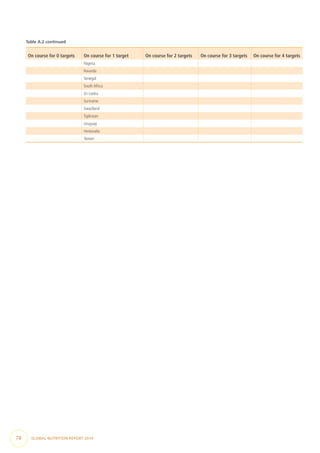
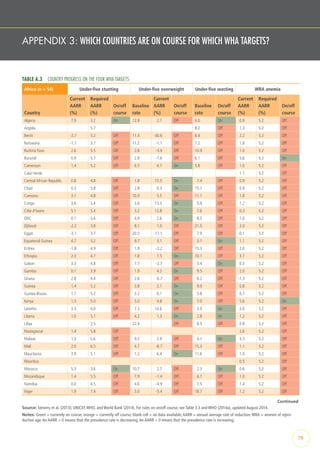
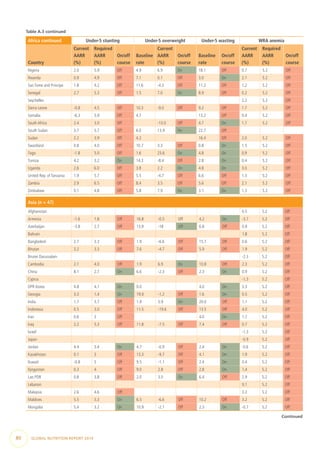
such assessments. Of the 99 countries, 68 are on course
for at least one of four WHA global targets and 31 are not
on course for any. Out of 109 countries that have data
on stunting of children under age five, 22 are on course
for meeting the WHA target. Out of 123 countries with
data on wasting of children under age five, 59 are on
xiv  GLOBAL NUTRITION REPORT 2014
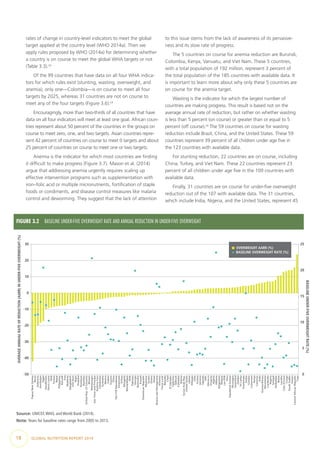
course. Out of 107 countries with data on overweight of
children under age five, 31 are on course. Finally—and of
great concern—only 5 out of 185 countries with data on
anemia are on course for anemia reduction. There is great
potential to learn from country experiences, but it is not
being exploited because of a lack of country case studies
that examine the wide range of factors affecting progress.
5.	 THERE IS A BASIS FOR SETTING MORE CHALLENGING TAR-
GETS FOR NUTRITION IMPROVEMENT. How is this finding
consistent with a world that is off course for the WHA
global targets? First, country-level variation suggests that
there are plenty of examples of progress from which to
draw inspiration and insight. Second, experiences from the
Indian state of Maharashtra as well from Bangladesh, Bra-
zil, and the United States suggest that significant change
in nutrition status can happen over the medium term as
a result of determined action sustained over a period of
6–12 years. If just a few large countries improved their
performance, it would change the basis for earlier projec-
tions of progress. Finally, for India—the second-most pop-
ulous country in the world—new and preliminary national
data suggest it is experiencing a much faster improvement
in WHA indicators than currently assumed. For example, if
the new preliminary estimates undergo no further signif-
icant adjustments, then the numbers of stunted children
under the age of five in India has already declined by more
than 10 million.
6.	 THE FACE OF MALNUTRITION IS CHANGING: COUNTRIES
ARE FACING COMPLEX, OVERLAPPING, AND CONNECTED
MALNUTRITION BURDENS. Most countries experience some
combination of under-five stunting, anemia in women of
reproductive age, and adult overweight; fewer than 20
countries have only one of these forms of malnutrition.
These different burdens are connected not only at a physi-
ological level, but also at a resource and political level. Re-
searchers and practitioners urgently need to develop tools
and strategies to prioritize and sequence nutrition-relevant
actions in these complex contexts. Given these multiple
burdens and the trend toward decentralization of nutrition
programming, disaggregated analyses of nutrition out-
comes are more important than ever. This is a major data
gap, though it may not exist in all countries.
Progress on Scaling Up Nutrition Action
7.	 COVERAGE OF NUTRITION-SPECIFIC INTERVENTIONS IS
LOW. The lack of national coverage data for nutrition-​
specific interventions reflects the low coverage of the
programs themselves. Of 12 key nutrition-specific inter-
ventions that have been identified as crucial for reducing
undernutrition, many countries have national coverage
data for only 3 (vitamin A supplementation, zinc treatment
for diarrhea, and universal salt iodization). Given the lack
of progress on wasting rates, the lack of coverage data
for programs to treat moderate and severe acute malnu-
trition (MAM and SAM) is a major concern. Geographic
coverage is poor, even in countries with very large burdens
of SAM. Direct coverage estimates are needed to properly
assess people’s access to treatment for both MAM and
SAM. Ways need to be found to get the best blend of
rapid stand-alone surveys and periodic national surveys to
estimate MAM and SAM coverage in a timely and credible
way.
8.	 UNDERLYING DRIVERS OF NUTRITION STATUS ARE IMPROV-
ING. Underlying drivers—such as food supply, clean water
and sanitation, education, and health care—can contrib-
ute a great deal to improving nutrition status. Estimates of
undernourishment based on food supply are decreasing,
but—with 805 million people below a minimum calorie
threshold in 2012–2014—they are still high. Access to
improved water and sanitation services is steadily im-
proving, although large coverage gaps remain in Eastern,
Western, and Middle Africa for water and in Southern
and South-Eastern Asia and most regions of Africa for
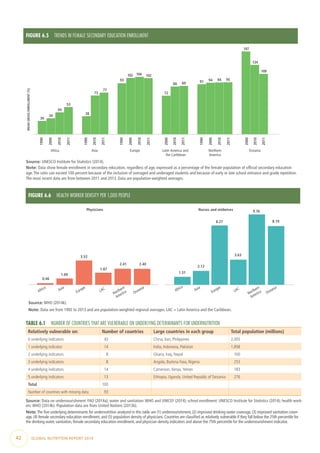
sanitation. Trends in female secondary education enroll-
ment are positive for all regions, although the rate is still
just 50 percent for Africa. Health services, though, are still
lacking in Africa and Asia. Europe has the most physicians
per 1,000 people (at 3.5) and Africa the least (0.5), while
North America has the most nurses and midwives per
1,000 people (9.8) and Africa the least (1.3). Asia has two
times as many community health workers per 1,000 peo-
ple as Africa, but the numbers are low for both regions
(1.4 compared with 0.7).
9.	 THE POTENTIAL FOR EXPANDING RESOURCES TO NUTRITION-​​
SENSITIVE PROGRAMS IS CLEAR;THE QUESTION IS, HOW?
Investments in nutrition-sensitive programs and approaches
that address the underlying determinants of malnutrition
can be important components of a portfolio of actions to
improve nutrition status. We present data on government
expenditures on the related sectors of agriculture, educa-
tion, health, and social protection. Different governments
make different choices about these sectors, and expendi-
ture levels vary between regions and within regions. Social
protection spending is increasing rapidly in many African
and Asian countries, providing a major opportunity to scale
up nutrition-sensitive actions. But evidence is limited on
how to make interventions that address underlying determi-
nants more nutrition sensitive. The report offers some ideas
for agriculture; social protection; education; health; and
water, sanitation, and hygiene.
10.	COUNTRIES CANNOT CURRENTLY TRACK THEIR FINAN-
CIAL COMMITMENTS TO NUTRITION. Several tools exist to
accomplish this, and investments will need to be made to
build the organizational capacity to do so. Guatemala pro-
vides an inspiring case study. Spending by donors is some-
what clearer than spending by countries. Between 2010
and 2012, commitments from 13 donors to nutrition-​
specific interventions rose by 39 percent, and disburse-
ACTIONS & ACCOUNTABILITY TO ACCELERATE THE WORLD’S PROGRESS ON NUTRITION  xv
ments rose by 30 percent. Nutrition-sensitive donor com-
mitments declined by 14 percent, but nutrition-
sensitive disbursements for the 10 donors that reported
data increased by 19 percent. The percentage of official
development assistance disbursed to nutrition in 2012
was just above 1 percent. Donor reporting on nutrition is
becoming more harmonized but has further to go owing
to differences in definitions and timing.
11.	POLICIES, LAWS, AND INSTITUTIONS ARE IMPORTANT FOR
SCALING UP NUTRITION. These elements of the policy envi-
ronment can be measured. The Scaling Up Nutrition (SUN)
process score approach is noteworthy for being a partic-
ipatory measurement process that stimulates reflection
among stakeholders on how they can strengthen coordi-
nated action on nutrition. Assessments of the strength of
policies, laws, and institutions can point out disconnects,
such as the coexistence of weak policy environments on di-
abetes and populations with rates of raised blood glucose
levels.
Monitoring the Nutrition for Growth Commitments
12.	REPORTING ON THE 2013 NUTRITION FOR GROWTH (N4G)
COMMITMENTS WAS CHALLENGING FOR ALL GROUPS OF
SIGNATORIES. Valuable lessons were learned in this “base-
line year.” Ninety percent of the signatories responded to
requests for updates against their N4G commitments. Very
few signatories were off course on their commitments,
although there were many “not clear” assessments due
to the vagueness of commitments made and of responses
provided. In terms of progress against N4G targets, there
were no obvious causes for concern from any group, at
least at this early stage in the reporting period of 2013–
2020. The assessment will be strengthened in 2015 by
more data, more streamlined processes, and, we suspect,
participants that are more motivated given their under-
standing of how their responses will be reported.
13.	NUTRITION ACCOUNTABILITY CAN AND MUST BE BUILT.
Civil society actors are particularly important in building
accountability, although they need support to be most
effective. National evaluation platforms and community
feedback mechanisms are promising ways of strengthening
nutrition accountability, but they need to be piloted and
evaluated. National and international nutrition research
programs that are driven by the problems of countries
themselves are likely to improve accountability at the
national level.
Reducing Data Gaps
14.	THERE ARE MANY GAPS IN DATA ON NUTRITION OUTCOMES,
PROGRAMS, AND RESOURCES. For example, for the four of
six WHA indicators where rules exist to classify countries as
“on course” or “off course,” only 60 percent of the 193
UN member countries have the data to assess whether
their contribution levels are on or off course to meet the
global WHA targets. Ensuring all countries can report on
the WHA indicators is a priority for governments and UN
agencies. To identify data gaps beyond the WHA indica-
tors, we posed the question: In what areas are data gaps
leading us to fail to prioritize the issues that need to be
prioritized and the actions that need to be taken to reduce
malnutrition? We identified three nutrition-status indica-
tors—anemia, overweight/obesity, and low birth weight—
where progress is slow and data gaps could be holding
back action. We also identified data gaps that we believe
are holding back the scaling up and context-specific blend-
ing of nutrition-specific, nutrition-sensitive, and enabling
environment interventions. These gaps included data on
countries’ capacity to implement and scale up nutrition
actions, program costs, and financial resource tracking.
Many decisions about how to prioritize the filling of data
gaps need to be undertaken at the national level, based on
nutrition policies, plans, and strategies.
15.	NOT ALL DATA GAPS NEED TO BE ADDRESSED BY COLLECT-
ING NEW DATA. We identified several ways of filling data
gaps: (1) using existing data better, (2) strengthening exist-
ing data collection quality, (3) improving data comparability
across countries, (4) collecting new data where there are
not enough for good accountability, and (5) increasing
the frequency of national nutrition survey data collection.
Three to four key data gaps were identified under each of
these five areas, and ways to begin filling these gaps were
proposed. Many of these data gaps can be filled by invest-
ing in the capacity of nutrition analysts, program manag-
ers, and policy units to make better use of existing data.
WE CAN IMPROVE NUTRITION MORE RAPIDLY: STRONGER
ACCOUNTABILITY IS KEY
Almost all countries suffer from high levels of malnutrition.
Countries should make a common cause and exploit opportu-
nities to learn from each other. It is clear that the low-income
countries do not have a monopoly on malnutrition problems
and that the high-income countries do not have a monopoly on
nutrition solutions.
Failure to intensify action and find solutions will cast a long
shadow, bequeathing a painful legacy to the next generation.
Our generation has the opportunity—and the ability—to banish
those shadows. To do so, we must act strategically, effectively, in
alliances, and at scale. And we need to be held to account.
The annual series of Global Nutrition Reports—their data,
analyses, examples, messages, and recommendations—rep-
resents one contribution to meeting this collective 21st-century
challenge.
xvi  GLOBAL NUTRITION REPORT 2014
1
KEY
POINTS
2
INTRODUCTION
THE CHALLENGE OF IMPROVING NUTRITIONAL STATUS IS A QUINTESSENTIALLY
21ST-CENTURY ENDEAVOR. IT IS A CHALLENGE THAT RESONATES THE WORLD OVER:
nearly every country in the world experiences a level of malnutrition that constitutes
a serious public health risk. Between 2 and 3 billion people are malnourished—they
experience some form of undernutrition, are overweight or obese, or have some sort
of micronutrient deficiency.1
The faces of poor nutrition are many: from children living under famine conditions
who appear to be made of skin and bone, to adults who have trouble breathing
owing to obesity, to infants who do not live to see their first birthday as a result of a
combination of poor diets, poor infant feeding practices, and exposure to infectious
disease.
It is a challenge that requires effective action across a number of sectors and areas
(food, health, social welfare, education, water, sanitation, and women) and across
a number of actors (government, civil society, business, research, and international
development partners). Strong alliances for action are much more effective than silver
bullets, and the multiple causes of malnutrition often represent multiple opportunities
to improve nutrition in a sustainable way.
Lastly, poor nutrition is a challenge that casts a long shadow: its consequences flow
throughout the life cycle and cascade down the generations affecting everyone—
especially children, adolescent girls, and women—and include mortality, infection,
cognitive impairment, lower work productivity, early onset and higher risk of noncom-
municable diseases (NCDs), stigma, and depression.
1.	The challenge of improving nutrition shares many characteristics with other 21st-century develop-
ment challenges: global prevalence, long-term consequences, and the need to work through broad
alliances of sectors and actors.
2.	Improvements in nutrition status will be central to the sustainable development agenda: nutrition
improvements are inherently sustaining throughout the life cycle and across generations, and they
contribute directly to most of the proposed Sustainable Development Goals.
3.	The features of nutrition outcomes and actions—their short- and long-term effects, the invisibility
of some consequences of malnutrition, and the need for alliances—make the process of identifying
commitments, and then monitoring them for accountability, more complex than for many other
development issues.
4.	This report is one contribution to strengthening accountability in nutrition.
1
ACTIONS & ACCOUNTABILITY TO ACCELERATE THE WORLD’S PROGRESS ON NUTRITION  3
NUTRITION IS CENTRAL TO SUSTAINABLE DEVELOPMENT
These features of nutrition—its global prevalence, the need to
improve it through broad alliances of sectors, and its short- and
long-term consequences—also define other current develop-
ment challenges: achieving equity, facilitating demographic
transitions to lower mortality and fertility levels, and addressing
climate change and its implications for vulnerability, sustainable
food systems, and natural resource use. The process of improv-
ing nutrition outcomes has a kinship with these issues and is
central to the sustainable development agenda in at least two
ways. First, nutrition improvements are inherently sustaining
over time. Investments in the first 1,000 days of a person’s life
yield benefits throughout that person’s life cycle and across
generations.2
Second, improvements in nutritional status will
drive many sustainable development outcomes—directly and in-
directly. As Chapter 2 will show, improved nutrition contributes
to most of the Sustainable Development Goals (SDGs) proposed
by the UN’s Open Working Group. It is clear that improvements
in nutrition can help drive the SDG agenda.
THE NEED TO STRENGTHEN NUTRITION ACCOUNTABILITY
While these aspects of nutrition make it central to sustainable
development, they also make it difficult to hold key stakehold-
ers accountable for their actions to improve it. How do individ-
uals make claims on those responsible for improving nutrition
if they cannot identify those responsible, cannot identify their
duties, and cannot track whether they are fulfilling those
responsibilities? Similarly those responsible for nutrition-
improving actions will have trouble tracking the progress of
their own efforts if tracking and feedback mechanisms are
weak. The large number of actors, the long-term benefits to
action, and the invisibility of some consequences of malnutri-
tion all work against strong accountability. Without nutrition
accountability, there is no guide to action and no consequence
to inaction and indifference—other than to the 2 to 3 billion
people directly affected.
Our knowledge of which actions can improve nutrition sta-
tus has never been greater. For undernutrition, we can call on
a set of proven, specific interventions and a set of much larger
nutrition-sensitive investments that have enormous untapped
potential. For overweight and obesity, the evidence base is
weaker but getting stronger. Evidence suggests that addressing
undernutrition also mitigates some of the risk factors associated
with noncommunicable diseases later in life. In the absence of
data, issues remain of how to sequence and prioritize actions
and how to assess whether the actions are making a difference
at the meso and macro levels.
AIMS OF THIS REPORT
This report represents a new contribution to strengthen the
ability of policymakers, program implementers, civil society
advocates, investors, communities, and families to monitor their
society’s progress in improving nutrition. The aim of the report
is to help these groups hold themselves, and others, to account
for their actions or inaction in improving nutrition. In so doing,
the report seeks to support the SDG accountability infrastruc-
ture and to serve as a spur to improved resource allocation and
to intensified action and demand for good nutrition.
The key audiences are current “nutrition champions” and
their current and future allies (Table 1.1). Nutrition champions
are organizations and individuals, operating in the spotlight
or behind the scenes, who consistently strive to accelerate
improvements in nutrition outcomes. Their allies are those
who work with the champions because they have an interest
in investing in nutrition, typically to further another goal—in
conjunction with, or because of, efforts to improve nutrition.
Future champions are those whom we need to inspire and
support, who are starting out in their nutrition careers, or who
are discovering nutrition. Future allies are those who have
vested interests in nutrition but may not yet realize it. They are
the economists searching for new sources of growth; the social
planners looking for new ways of reaching the most vulnerable;
the agriculturalists seeking to maximize the human impacts of
farm technologies, practices, and market innovations; and the
water, sanitation, and hygiene specialists looking to maximize
the health benefits of their work. Reaching and motivating
these strategic partners will lead to new dialogues and should
identify new opportunities for investments that lead to improve-
ments in nutrition.
The report was originally called for by the signatories of the
Nutrition for Growth (N4G) Summit Compact in 2013 in recog-
nition of the need to better monitor commitments to improving
nutrition. As such, the report is a collective endeavor of a set of
N4G stakeholders who care deeply about improving nutrition as
a spur to sustainable development.
The Stakeholder Group has empowered an Independent Ex-
pert Group to bring together existing and new nutrition data to
provide a more complete picture of country and global nutrition
indicators, strengthen accountability, generate fresh insights,
start new conversations, and catalyze new actions.
These two groups, like many others, recognize that
although the political commitment to improve nutrition is
currently high, it is not permanent. Development trends come
and go. This report aims to be a legacy of current high levels
of commitment and to help stimulate future waves of commit-
ment to nutrition long after the current wave has dissipated.
CONCEPTUAL FRAMEWORK
The report broadly follows the framework for actions to im-
prove nutrition status shown in Black et al. (2013). It describes
the importance of improved nutrition status, progress in improv-
ing nutrition status, and coverage levels and trends in nutri-
tion-specific and nutrition-sensitive programs and approaches,
including investments in the underlying determinants that
support them (see Panel 1.1). It examines the enabling environ-
ment for nutrition—resources, policies, laws, and institutional
transformations—and identifies bottlenecks to progress and
opportunities for stakeholders to come together.
4  GLOBAL NUTRITION REPORT 2014
Throughout the report we focus on the need for action on
a broad number of fronts if nutrition status is to improve rapidly
and sustainably. We use case studies from Bangladesh, Brazil,
Burkina Faso, Indonesia, the Indian state of Maharashtra, the
United States, and the United Kingdom to show what can be
accomplished when action occurs in different sectors. Case
studies in this report and elsewhere show that there is no magic
recipe for multisectoral action (Garrett and Natalicchio 2011).
Nutrition-specific and nutrition-sensitive programs, together
with changes in the underlying determinants and the enabling
environment, all have important roles to play. When they
come together in a virtuous circle, they can lead to significant
improvements in people’s nutrition status. It is vital that national
leaders and the nutrition community have a strong vision for the
nutrition goals they want to meet and a focused plan for how
to do it. But the focused plan needs to be open to all possible
actions and combinations of actions.
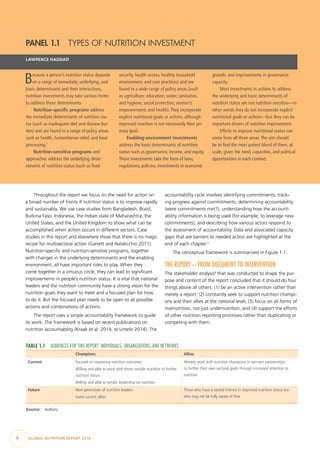
The report uses a simple accountability framework to guide
its work. The framework is based on recent publications on
nutrition accountability (Kraak et al. 2014; te Lintelo 2014). The
accountability cycle involves identifying commitments, track-
ing progress against commitments, determining accountability
(were commitments met?), understanding how the account-
ability information is being used (for example, to leverage new
commitments), and describing how various actors respond to
the assessment of accountability. Data and associated capacity
gaps that are barriers to needed action are highlighted at the
end of each chapter.3
The conceptual framework is summarized in Figure 1.1.
THE REPORT—FROM DOCUMENT TO INTERVENTION
The stakeholder analysis4
that was conducted to shape the pur-
pose and content of the report concluded that it should do four
things above all others: (1) be an active intervention rather than
merely a report; (2) constantly seek to support nutrition champi-
ons and their allies at the national level; (3) focus on all forms of
malnutrition, not just undernutrition, and (4) support the efforts
of other nutrition reporting processes rather than duplicating or
competing with them.
PANEL 1.1  TYPES OF NUTRITION INVESTMENT
LAWRENCE HADDAD
Because a person’s nutrition status depends
on a range of immediate, underlying, and
basic determinants and their interactions,
nutrition investments may take various forms
to address these determinants.
Nutrition-specific programs address
the immediate determinants of nutrition sta-
tus (such as inadequate diet and disease bur-
den) and are found in a range of policy areas,
such as health, humanitarian relief, and food
processing.1
 
Nutrition-sensitive programs and
approaches address the underlying deter-
minants of nutrition status (such as food
security, health access, healthy household
environment, and care practices) and are
found in a wide range of policy areas (such
as agriculture; education; water, sanitation,
and hygiene; social protection; women’s
empowerment; and health).They incorporate
explicit nutritional goals or actions, although
improved nutrition is not necessarily their pri-
mary goal.
Enabling-environment investments
address the basic determinants of nutrition
status such as governance, income, and equity.
These investments take the form of laws,
regulations, policies, investments in economic
growth, and improvements in governance
capacity.
Most investments in actions to address
the underlying and basic determinants of
nutrition status are not nutrition sensitive—in
other words they do not incorporate explicit
nutritional goals or actions—but they can be
important drivers of nutrition improvement.
Efforts to improve nutritional status can
come from all three areas.The aim should
be to find the most potent blend of them, at
scale, given the need, capacities, and political
opportunities in each context.
TABLE 1.1  AUDIENCES FOR THIS REPORT: INDIVIDUALS, ORGANIZATIONS, AND NETWORKS
Champions Allies
Current Focused on improving nutrition outcomes
Willing and able to work with those outside nutrition to further
nutrition status
Willing and able to exhibit leadership on nutrition
Already work with nutrition champions in win-win partnerships
to further their own sectoral goals through increased attention to
nutrition
Future Next generation of nutrition leaders
Some current allies
Those who have a vested interest in improved nutrition status but
who may not be fully aware of that
Source: Authors.
ACTIONS & ACCOUNTABILITY TO ACCELERATE THE WORLD’S PROGRESS ON NUTRITION  5
The report as an intervention
The goal of this report is to help better monitor progress on a
range of nutrition status indicators, programs, determinants,
policies, laws, and resources. The aim is to strengthen nutrition
accountability and contribute to faster improvements in nutri-
tion status. By identifying commitments, tracking them, and
assessing whether they are met, the report should stimulate and
intensify action. Because Global Nutrition Reports will be issued
annually, stakeholders will be better able to learn who is and is
not meeting commitments and to help them better meet these
commitments in the future.
A focus on stakeholders at the national level
Arguably, the global commitment to nutrition is stronger than
it has ever been. The food price spikes of 2007–2008 focused
global attention on the long-term consequences of widespread
shocks. The Lancet published two series of papers on maternal
and child undernutrition in 2008 and 2013, bringing together
what we know about the distribution and consequences of
malnutrition and what works to promote good nutrition. The
Scaling Up Nutrition (SUN) Movement, initiated in 2010, has
more than 50 country or state-level members and has been
instrumental in stimulating and sustaining commitment to nu-
trition. Progress in improving micronutrient deficiencies is slow
but has received renewed global attention (such as in the 2014
Global Hunger Index [von Grebmer et al. 2014]). The signatories
to the N4G Compact in London in 2013 pledged more than
US$4 billion in extra financing for undernutrition reduction until
2020. Overweight and obesity, which affect between a third
and a half of adults in high-income countries, are also rising
up the global agenda (Ng et al. 2014; Popkin 2009; Keats and
Wiggins 2014).
Global interest in malnutrition is increasingly reflected at
the national level and generated by challenges experienced at
that level. But without national-level progress, global interest
will be difficult to sustain. This progress at the national level will
depend on national champions who lead the way in pushing
nutrition up the development agenda, building alliances across
FIGURE 1.1  CONCEPTUAL FRAMEWORK OF THIS REPORT
IDENTIFY
COMMITMENTS
TRACK PROGRESS
AGAINST
COMMITMENTS
DETERMINE
WHETHER
COMMITMENTS
WERE MET
LEVERAGE INFORMATION ON ACCOUNTABILITY
TO PUSH FOR NEW COMMITMENTS
DESCRIBE
RESPONSE TO
ACCOUNTABILITY
1 2
3
4
5
Country-driven combinations of nutrition-specific and nutrition-senstive programs
and approaches, supported by trends in areas and sectors related to nutrition such
as food, health, social welfare, education, water, sanitation, hygiene, and gender
Identify key data and capacity gaps
Enabling environment for nutrition improvement
Progress in improving nutrition status
Benefits of improved nutrition status
Source: Authors, based on Kraak et al. (2014) and te Lintelo (2014).
6  GLOBAL NUTRITION REPORT 2014
sectors and between central and local governments, delivering
services, and documenting what works and what does not. This
report—by offering access to country-specific data and analyses,
showcasing national efforts, and directly connecting to a wide
range of national champions—seeks to support the work of
national champions in every country.
One key tool produced in conjunction with this report is a
set of nutrition country profiles—one for each of the 193 mem-
ber states of the United Nations. These profiles, which showcase
the global scope of the report, are available at www​.global
nutritionreport.org. Each two-page profile contains 84 indica-
tors in categories that are consistent with the different sections
of the report.5
A focus on all forms of malnutrition
The world is experiencing an overweight and obesity pan-
demic. At the same time the burden of disease in low- and
middle-income countries is shifting rapidly from communicable
to noncommunicable diseases (Lim et al. 2012). Micronutrient
deficiencies remain a concern; anemia rates, for example, have
not changed appreciably for more than 20 years and neither
have wasting rates (WHO 2014a).
Virtually no country is free of malnutrition, and many fami-
lies, communities, and countries struggle with all of these forms
of malnutrition at the same time. Moreover, the various forms
of malnutrition are connected physiologically, politically, and
financially. Just as families must deal with them simultaneously,
so too must policy and programming. The report outlines the
overlaps in malnutrition burdens at the country level.
A report that complements rather than competes with others
It has taken the nutrition community almost 30 years to come
together and work across national and institutional boundaries.
This report seeks to highlight the excellent work done by the
dozens of organizations that have shared country-level data
with us and to complement their work by bringing it together
with the work of others. In so doing, we hope to generate new
insights and identify gaps that need to be filled. New reports
will be published in 2015 and in 2016 to help maintain the
pressure for effective action on nutrition, to guide action, and to
hold actors to account.
STRUCTURE OF THE REPORT
The report is organized as follows. Drawing on new analyses,
Chapter 2 highlights the returns to improved nutrition status
and explores the extent of improvements that are possible by
2025. Chapter 3 describes changes in nutrition status outcomes,
assesses global progress on meeting the World Health Assembly
targets, and looks at country progress in the WHA indicators.
Chapter 4 describes how countries are experiencing multiple
forms of malnutrition and examines some critical subnational
patterns. Chapter 5 reports on the coverage of nutrition-specific
interventions. Chapter 6 describes some
nutrition-sensitive programs and approaches, including a
broader focus on trends in underlying determinants. Chapter 7
focuses on the enabling environment, tracking resources, laws,
policies, and institutional transformations. Chapter 8 explores
ways in which nutrition accountability can be improved. It is
here that progress against the Nutrition for Growth commit-
ments is assessed. Chapter 9 reflects on the gaps in nutrition
data and proposes some key priorities for action to strengthen
accountability and data. The report closes with some key mes-
sages and recommendations for action for different audiences
at the national and global levels, both within and beyond the
nutrition community.6
7
KEY
POINTS
EFFORTS TO IMPROVE PEOPLE’S NUTRITION WILL CONTRIBUTE TO PROGRESS IN MANY
AREAS OF SUSTAINABLE DEVELOPMENT. PERSISTENT MALNUTRITION REFLECTS A
failure of the development process. This chapter highlights the importance of nutrition
status for a wide range of development outcomes.
Using new data, evidence, and analysis, the chapter also illustrates the possibility of
reaching and exceeding World Health Assembly (WHA) nutrition targets under de-
manding but realistic rates of progress in nutrition-relevant actions.
NUTRITION HAS HIGH HUMAN AND ECONOMIC RETURNS
The costs of undernutrition and obesity are increasingly well known (Table 2.1). The
human costs are high in terms of preventable mortality and morbidity. Accordingly,
the economic costs are also large. Gross domestic product (GDP) totals in Africa and
Asia are less than 90 percent of what they would be in the absence of undernutrition,
and in China, approximately 95 percent of what they would be in the absence of
obesity.
All of the studies cited in Table 2.1 stress the conservative nature of their assump-
tions and the lower-bound nature of the estimates. The future economic costs of
obesity for China are projected to more than double—from 4 percent of gross na-
tional product (GNP) in 2000 to 9 percent of GNP in 2025 (Popkin et al. 2006). Unlike
China, many countries, such as Indonesia, are experiencing high rates of both under-
weight and obesity, and hence the costs of poor nutrition for them are even higher
than single-burden estimates. It is vital that countries avoid this double economic
burden and strategize to reduce undernutrition and overweight and obesity at the
same time.
1.	The human and economic costs of all forms of malnutrition are substantial. The economic benefit-​
cost ratios of investing in interventions to reduce child stunting are highly competitive with other
public investments.
2.	Nutrition has the potential to be a core component of the post-2015 agenda, but there is no room
for complacency. The case for nutrition must be made more strongly.
3.	New country data, experiences, and analysis show that rapid progress in reducing malnutrition is possible.
4.	The Sustainable Development Goals’ nutrition targets for 2030 should be significantly more ambitious
than simple extrapolations of the WHA targets for 2025. The nutrition community must generate
targets for 2030 that are challenging but reachable.
NUTRITION IS CENTRAL TO SUSTAINABLE
DEVELOPMENT2
8  GLOBAL NUTRITION REPORT 2014
The corollary of the cost of inaction to improve nutrition is
the reward to action. Figure 2.1 shows the benefit-cost ratio of
scaling up nutrition-specific interventions to 90 percent coverage,
in terms of their impact on stunting, in a wide range of countries
with high stunting levels. The analysis is based on an assumption,
in line with the level of stunting reduction modeled by Bhutta et
al. (2013a), that scaling up a core package of interventions will
lead to a 20 percent decrease in the rate of stunting.
The median benefit-cost ratio of achieving this 20 percent
decline in the rate of stunting is approximately 16 for all 40
countries. In other words, for every dollar, rupee, birr, or peso
invested, at the median, more than 16 will be returned. The me-
dian ratio for the 27 African countries south of the Sahara is 13.
These benefit-cost ratios are competitive with the benefit-​
cost ratios generated by overall investments in health as
reported in Jamison et al. (2013) and Stenberg et al. (2014).1
The estimated ratios are also higher than the median estimated
benefit-cost ratio reported for large-scale irrigation investments
in 11 countries in Africa south of the Sahara (You 2008), for
a range of public investments in roads in India, Thailand, and
Uganda (Fan et al. 2007), and for road investments in Bolivia
and Mexico (Gonzales et al. 2007).
NUTRITION NEEDS TO BE BETTER POSITIONED IN THE SDGs
Improved nutrition status may have high economic returns, but
how can it contribute to the sustainable development agenda?
The current debate on the post-2015 sustainable development
agenda is driven by the discussions on the Sustainable Develop-
ment Goals (SDGs). Table 2.2 summarizes the contributions that
improvements in nutrition status and accompanying efforts can
make toward achieving the SDGs. There is also a quid pro quo
in achieving the SDGs: meeting the SDGs should have lasting
impacts on nutrition outcomes as well.
Despite these positive contributions, the nutrition commu-
nity must not take it for granted that nutrition will be properly
featured within the SDG accountability framework (Panel 2.1).
We must be persuasive advocates.
TABLE 2.1  THE HUMAN AND ECONOMIC COSTS OF MALNUTRITION
Type of cost Undernutrition Obesity
Mortality 45% of under-five mortality is attributable to undernutrition (Black et al.
2013).
Morbidity “Nutritional deficiencies” are responsible for over 50% of years lived with
disability in children age four and under (Vos et al. 2012).
Underweight is the number-one contributor to the burden of disease in
Africa south of the Sahara and number four in South Asia (Lim et al. 2012).
Every extra 5 kg/m2
of BMI increases esophageal cancer
risk by 52%, colon cancer risk by 24%, women’s endo-
metrial cancer risk by 59%, and gall bladder cancer risk
by 59% (various countries;Wang et al. 2011).
School attainment Improving linear growth for children under age two by 1 standard deviation
adds about half a grade to school attainment (multicountry; in Adair et al.
2013).
Forgone labor market productivity Prevention of undernutrition in early childhood leads to hourly earnings that
are 20% higher and wage rates that are 48% higher; individuals who are
33% more likely to escape poverty; and women who are 10% more likely to
own their own business (Guatemala; Hoddinott et al. 2013).
One extra cm of adult height corresponds to a 4.5% increase in wage rates
(multicountry; Horton and Steckel 2011).
Obesity leads to productivity losses from absentee-
ism and presenteeism (indirect costs) equivalent to
US$668–US$4,299/person/year in the US (Finkelstein
et al. 2010).
Percentage of national income Undernutrition lowers GDP for Egypt by 1.9%; Ethiopia, 16.5%; Swaziland,
3.1%; and Uganda, 5.6% (African Union Commission et al. 2014).
Asia and Africa lose 11% of GNP every year owing to poor nutrition (Horton
and Steckel 2013).
Obesity lowered China’s GNP by 3.58% in 2000 and
will lower it by 8.73% in 2025 (Popkin et al. 2006).
Incremental health care costsa
Obesity costs US$475–US$2,532/person/year in the US
(Finkelstein et al. 2010).
Obesity cost 0.48% of GNP in China in 2000 and will
cost 0.50% in 2025 (Popkin et al. 2006).
Obesity will cost £648 million/year in the UK in 2020
(Wang et al. 2011).
Total cost estimates Obesity cost 33 billion euros/year in EU member states
in 2002 (Fry and Finley 2005).
Source: As noted in table.
a
These are direct health care costs compared with the health care costs of a person with a normal body mass index (BMI).
ACTIONS & ACCOUNTABILITY TO ACCELERATE THE WORLD’S PROGRESS ON NUTRITION  9
Of particular concern is nutrition’s low profile in the current
SDG framing. There are a total 169 draft targets: 109 on what
to achieve and 60 on how to achieve them. Only 1 of 109 draft
“what” targets is directly related to malnutrition:
Target 2.2 by 2030 end all forms of malnutrition,
including achieving by 2025 the internationally agreed
targets on stunting and wasting in children under five
years of age, and address the nutritional needs of ado-
lescent girls, pregnant and lactating women, and older
persons (Open Working Group on Sustainable Develop-
ment Goals 2014)
None of the 60 “how” targets relate directly to nutrition.
The broad nature of target 2.2 suggests that the nutrition com-
munity must become more engaged in the post-2015 process to
position nutrition thoughtfully and strategically in the post-2015
development accountability framework. At a minimum, govern-
ment and civil society nutrition champions should work together
to embed not only targets related to stunting and wasting, but
all six internationally agreed WHA targets within the 169 targets
(see Table 2.3).
How would these additional targets fit into the SDG targets?
First, the language in SDG target 2.2 suggests there is space
for more targets within it. Second, a better approach may be to
work with allies to embed nutrition indicators in other goals and
targets (Haddad 2013). Both approaches should be explored.
Table 2.4 gives examples of proposed SDG targets in which
additional nutrition targets could be embedded, and these rep-
resent areas in which nutrition champions should intensify their
engagement and advocacy.
TIMEFRAMES FOR IMPROVING NUTRITION SHOULD BE MORE
AMBITIOUS
SDG target 2.2 also needs more specifics on time-bound targets
beyond “by 2030 end all forms of malnutrition.” These SDG
targets in general have been critiqued as being so unrealistic as
to render them meaningless for accountability purposes and a
poor guide to action (Horton 2014). But what are realistic time-
frames for improving nutrition?
As noted, in 2012 the World Health Organization (WHO)
member states endorsed the six WHA global targets for improv-
ing maternal, infant, and young child nutrition by 2025 (WHO
2014a). The rationale for the selection of these six indicators,
and the setting of the targets for them, is outlined in de Onis et
al. (2013).2
Chapter 3 will show that the world is not on course
to meet any of the six WHA goals. Given this lack of progress,
FIGURE 2.1  BENEFIT-COST RATIOS OF SCALING UP NUTRITION-SPECIFIC INTERVENTIONS FOR STUNTING REDUCTION IN SELECTED COUNTRIES
18
34
13
29
56
16
13
6
23
15
19
4
12
17
11
19
6
11
9
11
10
7
27
13
20
12
53
25
16
10
14
17
31
18
48
28
44
36
13 13
Bangladesh
India
Nepal
Pakistan
SriLanka
Benin
BurkinaFaso
Burundi
Cameroon
Chad
Côted'Ivoire
DRC
Ethiopia
Ghana
Guinea
Kenya
Liberia
Madagascar
Malawi
Mali
Mozambique
Niger
Nigeria
Rwanda
Senegal
SierraLeone
SouthAfrica
Sudan
UnitedRep.ofTanzania
Togo
Uganda
Zambia
Egypt
Myanmar
Indonesia
LaoPDR
Philippines
VietNam
Yemen
Haiti
Source: Hoddinott et al. (2013), and additional country estimates made by the authors based on the methodology in Hoddinott et al. (2013).
Note: The benefit-cost ratios are for scaling up the nutrition-specific interventions described in Bhutta et al. (2013a).
10  GLOBAL NUTRITION REPORT 2014
TABLE 2.2  HOW NUTRITION CAN CONTRIBUTE TO THE PROPOSED SUSTAINABLE DEVELOPMENT GOALS (SDGs)
Proposed SDG Contribution of nutrition to proposed SDG
1.  End poverty in all its forms everywhere Preventing stunting in children under 36 months old makes it less likely that they will live in households below the
poverty line (Hoddinott et al. 2013).
Improved nutrition status boosts adult productivity and wages in heavy work.
2.  End hunger, achieve food security and
improved nutrition, and promote sustainable
agriculture
Optimal breastfeeding and complementary feeding improve individual food security.
Progress on two World Health Assembly (WHA) indicators—stunting and wasting—promotes nutrition security.
A focus on prepregnancy and the first 1,000 days after conception reduces risk of low birth weight and improves
women’s nutrition status.
3.  Ensure healthy lives and promote well-being
for all at all ages
Micronutrient malnutrition and girls’ stunting are linked to subsequent maternal mortality and low birth weight.
Forty-five percent of all under-five deaths are linked to undernutrition (Black et al. 2013).
Stunting is linked to the eventual onset of noncommunicable diseases (NCDs) and lower adult productivity.
Reducing overweight and obesity will contribute to lower NCDs.
Good nutrition is linked to healthy early childhood development.
Poor nutrition increases morbidity and mortality from infectious diseases such as diarrhea, malaria, acute respiratory
infections, tuberculosis, and HIV/AIDS.
4.  Ensure inclusive and equitable quality
education and promote life-long learning
opportunities
Children’s nutrition status in the first 1,000 days is linked to school grade completion and achievement.
Good nutrition status improves intellectual capacity in children and adults.
5.  Achieve gender equality and empower all
women and girls
Improving the nutrition status of girls, adolescents, and women increases their ability to perform well at school and in
the workforce.
6.  Ensure availability and sustainable manage-
ment of water and sanitation for all
Improvements in nutrition outcomes help reinforce the need for action on water, sanitation, and hygiene as critical
determinants of nutrition.
7.  Ensure access to affordable, reliable, sustain-
able, and modern energy for all
Lower mortality leads to lower fertility over the longer term, reducing population pressure on environmental resources.
8.  Promote sustained, inclusive, and sustainable
economic growth, full and productive employ-
ment, and decent work for all
Undernutrition cuts GNP by at least 8–11% (Horton and Steckel 2011).
Preventing stunting leads to higher incomes.
9.  Build resilient infrastructure, promote inclusive
and sustainable industrialization, and foster
innovation
Investing in children’s first 1,000 days improves school grade completion to support innovation.
10.  Reduce inequality within and among
countries
Analysis of stunting rates by wealth quintile demonstrates how current inequality perpetuates future inequality.
11.  Make cities and human settlements inclusive,
safe, resilient, and sustainable
Lower mortality leads to lower fertility over the longer term, reducing population pressure on environmental resources.
12.  Ensure sustainable consumption and
production
Research on sustainable food systems and diets can offer structure and indicators to this policy debate.
13.  Urgent action to combat climate change and
impacts
Lower mortality leads to lower fertility over the longer term, reducing population pressure on environmental resources.
14.  Conserve and sustainably use the oceans,
seas, and marine resources for sustainable
development
n.a.
15.  Protect, restore, and promote sustainable use
of terrestrial ecosystems, etc.
n.a.
16.  Promote peaceful and inclusive societies for
sustainable development, access to justice for
all, and build effective, accountable, inclusive
institutions
Efforts to strengthen nutrition accountability can be examples of cross-sector models.
17.  Strengthen the means of implementation,
and revitalize the global partnership for
sustainable development
National nutrition policies and plans developed by multistakeholder platforms can be examples of cross-sector models.
Source: Open Working Group on Sustainable Development Goals (2014) and the authors of this report.
Note: The proposed SDGs listed here are as of July 2014. n.a. = not applicable.
ACTIONS & ACCOUNTABILITY TO ACCELERATE THE WORLD’S PROGRESS ON NUTRITION  11
should the 2030 targets be an extrapolation of the 2025 targets?
In other words, has any new information come to light since
2012 to challenge our sense of the rate of progress?
We argue that several factors should make everyone more
ambitious about meeting and exceeding some of the WHA
targets by 2025 and therefore more ambitious about the 2030
SDG targets.
First, the Government of India has produced a new national
survey on children. WHO and UNICEF have not yet reviewed the
survey’s data and methodologies, and the survey results thus do
not yet appear in the WHO’s Global Database on Child Growth
and Malnutrition, but if the finalized rates of undernutrition are
close to the preliminary reported rates, they should make us
more optimistic about our ability to meet the global WHA goals
(Panel 2.2).
Second, there is a new statewide survey from Maharashtra
in India (Haddad et al. 2014). In the Maharashtra case study
(Panel 2.3), it took only seven years to reduce child stunting by
one-third, from 36.5 to 24.0 percent, for an annual average rate
of reduction of 5.8 percent. Stunting declines resulted from a
combination of nutrition-specific interventions, improved access
to food and education, and reductions in poverty and fertility.
PANEL 2.1  NUTRITION AND THE SUSTAINABLE DEVELOPMENT GOALS—
NO ROOM FOR COMPLACENCY
MICHAEL ANDERSON
As discussions continue on the design
of the forthcoming global Sustainable
Development Goals (SDGs), momentum is
growing for new nutrition goals. In 2012, the
full World Health Assembly (WHA)—the deci-
sionmaking body of the World Health Organi-
zation—set a strong precedent by adopting
six nutrition targets known as Global Targets
2025 (WHO 2012b).Also in 2012, the United
Nations secretary-general launched the Zero
Hunger Challenge (United Nations 2014),
which includes one goal on stunting. In 2013
the High-Level Panel on the Post-2015 Devel-
opment Agenda (2013) proposed an illustra-
tive goal on food security and good nutrition,
including targets on food security, stunting,
wasting, and anemia.And three pan-African
regional bodies endorsed a goal including
“adequate nutrition for all” (UNECA 2013).
These are positive signs, but much could
change before the UN member states agree
on final SDGs in September 2015. Because the
SDGs will not be legally binding, their power
will derive mainly from their ability to inspire,
excite, and guide.To be effective, the goals will
have to be simple, clear, and compelling, and
they will have to lead to action.Vague aspira-
tions or too much technical detail will lose the
audience and dampen momentum.This pres-
ents a challenge for nutrition: terms like “stunt-
ing” and “wasting” are not well understood
outside the nutrition and health community, yet
these terms are worth keeping because of their
specificity and analytical power. It will be up
to the nutrition community to explain them in
simple and compelling terms.
Another risk is that nutrition goals
may get lost in a long list of wide-rang-
ing aspirations. In July 2014, the UN Open
Working Group recommended 17 goals and
169 targets, including a wide range of tar-
gets on sustainable food production.The
recommendations contained only one pro-
vision on malnutrition that made reference
to two of the WHA targets (on stunting and
wasting in children younger than five years
old).Arguably, this is not a bad outcome as
long as the world pays attention to the details
of the WHA targets.
A related risk is that the SDGs may reduce
good nutrition to a matter of cutting hunger,
particularly if participants in the September
2015 summit are looking for goals with max-
imum political appeal. Hunger is understood
everywhere. Unfortunately, the idea that nutri-
tion is purely a matter of access to enough
food remains one of the most stubborn myths
impeding good policy among political leaders.
Instead, nutrition should be seen as requir-
ing the right nutrients at the right time, along
with strengthened health care and social pro-
tection, especially during pregnancy and the
first two years of life.
TABLE 2.3  WORLD HEALTH ASSEMBLY NUTRITION TARGETS
WHA target Baseline year(s) Baseline status Target for 2025
40% reduction in the number of children under five who are stunted 2012 162 million ~100 million
50% reduction of anemia in women of reproductive age (pregnant and nonpregnant) 2011 29% 15%
30% reduction in low birth weight 2008–2012 15% 10%
No increase in childhood overweight 2012 7% 7%
Increase the rate of exclusive breastfeeding in the first six months up to at least 50% 2008–2012 38% 50%
Reduce and maintain childhood wasting to less than 5% 2012 8% <5%
Source: WHO (2014a).
12  GLOBAL NUTRITION REPORT 2014
Maharashtra’s experience shows the importance of addressing child
stunting by taking action across a wide range of levels and sectors.
Third, new projections based on a model linking stunting
rates with underlying determinants also show that it should be
possible to meet and even exceed WHA targets by achieving
challenging but realistic increases in the levels of those determi-
nants (Panel 2.4).
Fourth, in Africa south of the Sahara—the region where un-
dernutrition rates have declined most slowly—the International
Monetary Fund reports in 2014 that economic growth prospects
are expected to accelerate in 2014–2016 and the capacity to
collect taxes is also increasing (IMF 2014). It is not clear wheth-
er this growth will persist in the coming decade, but reducing
undernutrition is easier in the context of economic growth and
TABLE 2.4  WHERE NUTRITION TARGETS CAN BE EMBEDDED WITHIN THE 169 SDG TARGETS
Nutrition target Where nutrition target can be embedded within the SDG targets
Reduce low birth weight (WHA target)
Reduce anemia in women of reproductive age (WHA target)
Increase rate of exclusive breastfeeding (WHA target)
Target 3.2: “by 2030 end preventable deaths of newborns and under 5 children”
Prevent increase in under-five overweight (WHA target) Target 3.4: “by 2030 reduce by one-third pre-mature mortality from NCDs through prevention and treat-
ment”
Increase coverage of nutrition-specific interventions Target 3.8: “achieve universal health coverage”
Increase coverage of nutrition-sensitive interventions Target 1.3: “implement nationally appropriate social protection measures for all and by 2030 achieve sub-
stantial coverage of the poor and the vulnerable”
Target 6.1: “by 2030 achieve universal and equitable access to safe and affordable drinking water for all”
Target 6.2: “by 2030 achieve access to adequate and equitable sanitation and hygiene for all and end open
defecation”
Improve the enabling environment Target 5.5: “ensure women’s full and effective participation and equal opportunity for leadership at all levels
of decision making in political, economic, and public life”
Target 10.3: “ensure equal opportunity and reduce inequalities in outcome” such as stunting by wealth
quintile.
Source: Open Working Group on the Sustainable Development Goals (2014) and the authors of this report.
PANEL 2.2  SOME NEW DATA FROM INDIA: WHAT IF?
LAWRENCE HADDAD, KOMAL BHATIA, AND KAMILLA ERIKSEN
The Government of India is in the process
of releasing its 2013–2014 Rapid Survey
on Children (RSOC).This new national survey,
covering all 29 states in India, relies on data
collected by the Ministry of Women and Child
Development in partnership with UNICEF
India.The government has made preliminary
estimates available for use in this Global
Nutrition Report. Key summary statistics are
reported below in comparison with the most
recent national survey for India in the WHO
Global Database on Child Growth and Malnu-
trition: the 2005–2006 National Family Health
Survey (NFHS-3). Only data for children under
age five are reported here.1
The average annual rate of reduction in
stunting (47.9 percent to 38.8 percent in eight
years) is 2.6 percent—below India’s target
rate of 3.7 percent but well above the rate of
1.7 percent estimated on the basis of previ-
ous surveys. Because India has such a large
population and a high stunting prevalence,
this rate of change affects the global numbers
significantly. Comparisons between the two
surveys also show declines in wasting.The rise
in exclusive breastfeeding rates from 46.4 per-
cent to 71.6 percent in eight years represents
an average annual rate of increase of 5.5
percent—far above the rate required to meet
India’s WHA target by 2025 (1.5 percent). In
fact, if the preliminary numbers hold, by 2025
India will have far surpassed its WHA exclu-
sive breastfeeding target of 57 percent.
SUMMARY STATISTICS ON CHILD NUTRITION IN INDIA FROM TWO SURVEYS
Indicator 2005–2006 NFHS 2013–2014 RSOC Change
Under-five stunting (%) 47.9 38.8 -9.1
Under-five wasting (%) 20.0 15.0 -5.0
Under-five stunting, total population affected (thousands) 58,167 43,759 -14,408
Under-five wasting, total population affected (thousands) 24,287 16,917 -7,370
Exclusive breastfeeding of infants under six months old (%) 46.4 71.6 25.2
Source: Authors, based on data from India, Ministry of Health and Family Welfare (2009) and a personal communication from L.-G.Arsenault, UNICEF representative
for India,August 27, 2014.
ACTIONS & ACCOUNTABILITY TO ACCELERATE THE WORLD’S PROGRESS ON NUTRITION  13
PANEL 2.3  HOW DID MAHARASHTRA CUT CHILD STUNTING?
LAWRENCE HADDAD
Maharashtra, one of the wealthiest states
in India, managed to reduce the share
of children under age five affected by stunting
from 36.5 percent to 24.0 percent between
2005–2006 and 2012, or a rate of more than
2.0 percentage points a year (equivalent to an
average annual rate of reduction of 5.8 per-
cent).What drove this rapid improvement in
children’s nutrition? A recent mixed-methods
study1
addressed this question and found the
following (Haddad et al. 2014):
•	 The enabling environment for stunting
reduction was favorable. Maharashtra,
already a wealthy state, posted higher
rates of economic growth and poverty
reduction than the all-India average. Its
governance, in terms of transparency, anti-
corruption efforts, and service delivery, was
not the best but not the worst in India.
•	 Underlying determinants were reason-
ably supportive: women’s decisionmaking
status inside and outside the home was
high; the Public Distribution System (PDS),
which distributes subsidized food to poor
people, suffered from slightly less leakage
than the all-India average; and female
education rates were high and rising.
There were vulnerabilities, however, with
weak agricultural growth, still-high levels
of PDS leakage, and high levels of open
defecation.
•	 Spending on nutrition doubled from a
low level, and vacancies among frontline
workers in the Integrated Child Devel-
opment Services (ICDS) scheme dropped
dramatically.
•	 The decline in stunting was broad based
and was greater—absolutely and propor-
tionately—for the least wealthy, the least
literate, and those with the worst access
to improved water sources.
•	 The determinants that improved the most
between the two surveys were the age
of mother at first birth, maternal under-
weight, maternal literacy, coverage of
antenatal visits, delivery in the presence of
birth attendants, child feeding practices,
and access to ICDS.
•	 The state’s Nutrition Mission was seen as
a signal of high-level political commitment
to nutrition improvements and helped
coordinate different sectors at village and
policy levels.
Overall the three research approaches used
in the study dovetailed to lead to three main
conclusions:
•	 The large decline in stunting rates was
due to improvements across a wide range
of determinants, and some improvements
were quite modest.
•	 The declines in determinants were not so
strong or comprehensive that Maharash-
tra should be perceived as exceptional—
similar declines could be achieved by
other Indian states and other countries.
•	 The declines in stunting in Maharashtra are
impressive, but they were 10 years in the
making and required sustained commit-
ment from government and civil society.
rising tax revenues—although these conditions do present chal-
lenges for keeping overweight and obesity in check (Ruel and
Alderman 2013; Headey 2013).
Finally, the increased momentum for action generated by
recent and upcoming events should make us more optimistic
about accelerating improvements in nutritional status. Contribu-
tors to this momentum include the growth of the SUN Move-
ment, the 2013 Nutrition for Growth conference in London, the
2014 Second International Conference on Nutrition in Rome,
and the follow-up high-level nutrition event planned for the
2016 Rio de Janeiro Summer Olympics.
Taken together, these considerations suggest that the 2030
goals should therefore not simply be five-year business-as-usual
extrapolations of the 2025 WHA targets. They should be more
ambitious than that.3
14  GLOBAL NUTRITION REPORT 2014
PANEL 2.4  CAN IMPROVING THE UNDERLYING DETERMINANTS OF
NUTRITION HELP MEET THE WHA TARGETS?
LISA SMITH AND LAWRENCE HADDAD
What would it take to achieve the WHA
target of reducing the number of
stunted children by 40 percent by 2025—
equivalent to a prevalence of about 15 per-
cent based on current population projections?
Or to go beyond that target? Are the required
changes realistic or even possible?
We examined this question by model-
ing the effects of changes in six underlying
determinants of stunting: access to improved
water, access to improved sanitation, female
secondary school enrollment, gender equality
as represented by the ratio of female to male
life expectancy, dietary energy supply, and
the share of the dietary energy supply derived
from nonstaple foods (Smith and Haddad
2014). Based on a sample of 116 develop-
ing countries from 1970 to 2012, we used a
regression model1
to predict stunting preva-
lence with different assumed levels of the six
determinants.
The first table describes three scenarios
for the 116 countries. Scenario 1 assumes
2010 levels of the six underlying drivers, and
these levels predict a stunting prevalence
virtually identical to the actual stunting prev-
alence (29 percent). Scenario 2 shows what is
needed, in terms of the levels of determinants,
to achieve the WHA stunting target of 15
percent by 2025. Scenario 3 reflects required
levels for reducing the share of stunted chil-
dren to less than 10 percent.Achieving these
levels of determinants would be challenging,
but several low- and middle-income countries
have attained them already.2
How fast would improvements in these
determinants need to be made? The second
table shows the rates of increase in the six
underlying determinants during the 2000–
2010 period as well as the rates needed to
achieve scenarios 2 and 3.
Except for equality of life expectancy, the
required rates of increase in the underlying
factors to meet scenario 2 are not unrealis-
tic compared with recent historical perfor-
mance.The required rates to
achieve scenario 3 are higher
than they have been in recent
years. However, this analysis
fails to take into account any
scale-up of the critical nutri-
tion-specific interventions. If
those interventions are indeed
scaled up, and their effective-
ness improved, the potential
to exceed the WHA target at
the global level significantly
improves.
LEVELS OF UNDERLYING DETERMINANTS REQUIRED TO MEET AND EXCEED THE WHA TARGET FOR STUNTING REDUCTION
Underlying determinant
Scenario 1:
2010 situation
Scenario 2:
WHA target for 2025
Scenario 3:
Beyond WHA target
Access to improved water source (%) 86 98 98
Access to improved sanitation facility (%) 56 75 90
Female secondary school enrollment (%) 67 98 98
Ratio of female to male life expectancy 1.05 1.06 1.07
Dietary energy supply per capita (kcals) 2,686 2,905 2,930
Share of dietary energy supply from nonstaples (%) 43 48 54
Predicted stunting prevalence (%) 29.2 15.0 9.9
Source: Authors of this panel.
RATES OF IMPROVEMENT IN UNDERLYING DETERMINANTS REQUIRED TO MEET AND EXCEED THE WHA TARGET FOR STUNTING REDUCTION
Underlying determinant
% annual increase in underlying determinant
2000–2010 (actual)
To achieve scenario 2 from
2010 to 2025 (15% stunting)
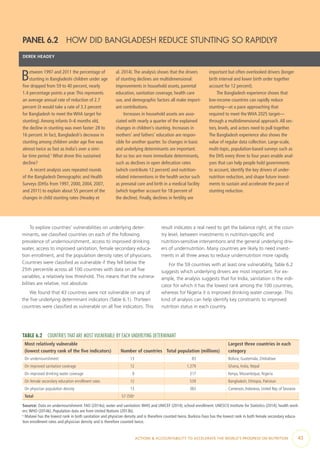
To achieve scenario 3 from
2010 to 2025 (<10% stunting)
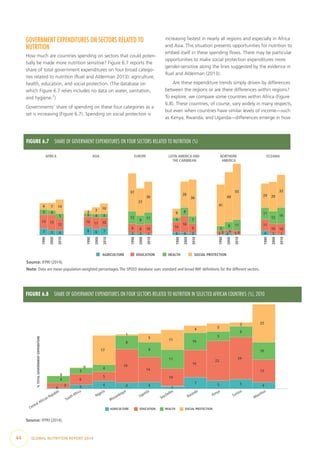
Access to improved water source (%) 0.95 0.92 0.92
Access to improved sanitation facility (%) 2.21 2.28 4.07
Female secondary school enrollment (%) 2.87 3.11 3.11
Ratio of female to male life expectancy 0.019 0.049 0.110
Dietary energy supply per capita (kcals) 0.48 0.54 0.61
Share of dietary energy supply from nonstaples (%) 0.86 0.81 1.74
Source: Authors of this panel.
DATA GAPS
1.	 Data are needed on country-level indicators of the strength of health systems.
15
KEY
POINTS
THIS CHAPTER ASSESSES PROGRESS AGAINST THE SIX GLOBAL WORLD HEALTH AS-
SEMBLY (WHA) NUTRITION TARGETS: REDUCING CHILD STUNTING, REDUCING
anemia in women of reproductive age, reducing low birth weight, preventing a wors-
ening of child overweight, increasing exclusive breastfeeding of infants, and reducing
child wasting.1
First, we summarize progress at the global level. Second, we explore
country-level progress on the six WHA indicators. Third, we evaluate country progress
on four of the six indicators in relation to the WHA global target.2
GLOBAL PROGRESS TOWARD THE WHA TARGETS
Table 3.1 shows the targets and the extent of global progress against them. For
stunting and exclusive breastfeeding there is modest progress. However, for anemia,
low birth weight, and wasting, the global figures are static, and under-five overweight
rates are rising.
The global numbers are made up of countries. How do we assess their progress?
The last column of Table 3.1 also shows that nearly a fifth of countries are above the
rate of reduction for stunting required to meet the global target. For under-five over-
weight, half of all countries with data show declining rates. For exclusive breastfeed-
ing, more than half of the countries are increasing their rates faster than the global
rate. And well over half of the countries that have data on wasting show declines.
1.	Globally, we are off course to meet every one of the six WHA nutrition targets. There is modest global
progress on stunting and exclusive breastfeeding but little progress on overweight, wasting, low birth
weight, and anemia.
2.	At the country level, rates of progress and regress on meeting the WHA targets vary widely among
countries and indicators.
3.	Currently, it is only possible to assess country progress on meeting the WHA targets for four of the six
indicators (stunting, wasting, overweight, and anemia).
4.	Of the 99 countries that have data on the four WHA indicators, 1 country is on course for all four
targets, 24 are on course for two or more targets, 44 are on course for only one target, and 31 are
not on course for any target. There is no strong regional pattern to the rates of progress.
5.	Currently, 22 out of 109 countries with available data are on course to meet the stunting reduction
target; 59 countries out of 123 are on course for wasting reduction; 31 countries out of 107 are on
course for under-five overweight reduction; and 5 countries out of 185 are on course for anemia
reduction. We need to know more about why only 5 countries are on course for the anemia target.
6.	Of the 94 countries that are missing WHA tracking data, 38 are in Europe and 1 is in North America.
These countries must do much more to align their reporting with WHA targets and with global nutri-
tion efforts more generally.
7.	The scope for learning from countries that are showing good progress is large. More high-quality
country studies are needed.
PROGRESS TOWARD THE WORLD HEALTH
ASSEMBLY NUTRITION TARGETS IS TOO SLOW3
16  GLOBAL NUTRITION REPORT 2014
TABLE 3.1  PROGRESS TOWARD THE GLOBAL WHA TARGETS
WHA target
Baseline
year(s)
Baseline
status
Target for
2025
Required global
average annual
rate of change
Globally
on course? Comments
Number of countries above
and below required global
rate of change
STUNTING
40% reduction in the num-
ber of children under five
who are stunteda
2012 162 million ~100 million
(~15%
prevalence)
3.90% AARR No Current pace
projects 130
million by 2025
(20% reduction)
AARR is above or equal to required
rate: 21 countries
AARR is below required rate: 89
countries
ANEMIA
50% reduction of anemia in
women of reproductive age
2011 29% 15% 5.20% AARR No Very little move-
ment (was 32%
in 2000)
AARR is above or equal to required
rate: 5 countries
AARR is below required rate: 180
countries
LOW BIRTH WEIGHT
30% reduction in low birth
weight
2008–
2012
15% 10% 2.74% AARR No Little progress
globally
UNDER-FIVE OVERWEIGHT
No increase in childhood
overweight
2012 7% 7% No Upward
trajectory is
unchecked
AARR is constant or decreasing: 50
countries
AARR is increasing: 51 countries
EXCLUSIVE BREASTFEEDING
Increase the rate of exclusive
breastfeeding in the first six
months up to at least 50%
2008–
2012
38% 50% 2.11% AARI No Rate was 37%
in 2000, 41% in
2012
AARI is above or equal to required
rate: 59 countriesb
AARI is below required rate: 48
countries
WASTING
Reduce and maintain
childhood wasting to less
than 5%
2012 8% <5% No No progress
(was 8% global-
ly in 2013)c
Rate of wasting is constant or
decreasing: 76 countries
Rate of wasting is increasing: 51
countries (see Table 3.2)
Source: Authors, adapted from data in WHO (2014a).
Note: AARR = average annual rate of reduction.AARI = average annual rate of increase.
a
For more on the methods behind the WHA stunting target, see de Onis et al. (2013).
b
These are AARIs estimated by the writing team based on the last two available estimates for exclusive breastfeeding in UNICEF (2014e). Formal AARIs from UNICEF/
WHO are not available at this time.
c
This figure is from UNICEF,WHO, and World Bank (2014).
REGIONAL AND COUNTRY PROGRESS ON WHA INDICATORS
The last column in Table 3.1 suggests significant variation in
country progress in the WHA indicators. The following graphs
highlight this variation.
Stunting
Child stunting3
is declining in the vast majority of countries (Fig-
ure 3.1). In most cases, the higher the prevalence, the lower the
average annual rate of reduction.4
Nineteen countries show a
negative average annual rate of reduction, with Somalia having
the worst prognosis. Six countries have an average annual rate
of reduction of greater than 2 percent despite having stunting
rates of more than 40 percent (Bangladesh, Cambodia, Ethiopia,
Nepal, Yemen, and Zambia). This is impressive progress given
the high prevalences.
Overweight
Figure 3.2 shows where child overweight rates5
are being
reduced and where they are not. As for child stunting, the rates
of reduction for child overweight tend to be higher when the
prevalence is lower.
Wasting
Table 3.2 shows changes in wasting rates6
for the past two
available national survey estimates, stratified by whether the
wasting rate in the first survey was above or below the WHA
target of 5 percent. For 76 countries the rate is constant or
decreasing, and for 51 countries the rate is increasing. The
countries in the top left corner of Table 3.2 face particular chal-
lenges: they have wasting rates greater than 5 percent and the
rates are increasing.
Exclusive breastfeeding
As Figure 3.3 shows, the three UN regions of Africa, Asia, and Latin
America and the Caribbean show similar rates for exclusive breast-
feeding;7
all are on par with the global average of 41 percent.8
While some subregions and individual countries have expe-
rienced significant progress, most notably Western Asia with a
near tripling of rates, albeit from a low base, most subregions
have posted only slow to modest growth. Furthermore, the
change in Western Asia is being driven by the trends in breast-
feeding in Turkey; in most other countries in the region exclusive
breastfeeding rates remained relatively unchanged or even fell.
Nonetheless, a number of countries like Bangladesh, Brazil (see
ACTIONS & ACCOUNTABILITY TO ACCELERATE THE WORLD’S PROGRESS ON NUTRITION  17
Panel 7.5 in Chapter 7), Cuba, and Togo highlight the fact that
rapid progress is possible.
Low birth weight
Infants with a low birth weight9
are at an increased risk of
morbidity and mortality. As Figure 3.4 shows, low birth weight
affects all regions of the world (for example, the rates in North-
ern and South America are very similar), but the rate is highest
by far in Southern Asia. At this time it is not possible to present
credible trend data.10
Anemia
The prevalence of anemia11
in women of reproductive age is
greater than 15 percent in every subregion of the world except
Northern America (Figure 3.5). The rates in Europe are similar
to those in Central and South America. The rates are highest in
Southern Asia, Western Africa, and Middle Africa.
In sum, levels and trends in malnutrition indicators vary
greatly across countries. And yet little is known about why some
countries have been trailblazers and others have not. More
high-quality case studies—similar to business school case stud-
ies—are needed to get a full and critical picture of why progress
has occurred in some places and not in others.
HOW MANY COUNTRIES ARE ON COURSE TO MEET THE WHA
GLOBAL TARGETS?
The global targets need to be translated into context-specific
national targets, taking into consideration present levels and
trends, risk factor trends, demographic changes, experience
with developing and implementing nutrition policies, the degree
of health system development, and previous experience with
interventions (de Onis et al. 2013).
Countries will, of course, be the ones to establish national
targets to help them carry out national policies and programs
and calculate the level of resources required for their imple-
mentation. Accordingly this section does not propose country
targets. Instead we ask, if the global targets were applied on
a country-by-country basis, how many countries would be on
course to contribute to the WHA global targets?
To answer this question, we use data from the most recent
UNICEF/WHO/WB joint global database (UNICEF, WHO, and
World Bank 2014) and estimates from WHO on the required
FIGURE 3.1  BASELINE STUNTING RATE AND ANNUAL REDUCTION IN STUNTING
0
10
20
30
40
50
60
70
-8
-6
-4
-2
0
2
4
6
8
10
BASELINE
STUNTING
RATE (%)
AVERAGE ANNUAL
RATE OF REDUCTION (AARR)
IN STUNTING (%)
STUNTING AARR (%)
BASELINE STUNTING RATE (%)
Somalia
Guyana
Azerbaijan
Egypt
PapuaNewGuinea
Benin
Montenegro
Djibouti
DominicanRepublic
Eritrea
Togo
Armenia
Botswana
Kuwait
SierraLeone
Thailand
Pakistan
SyrianArabRep.
Timor-Leste
Namibia
Zimbabwe
Kazakhstan
Gambia
Dem.Rep.oftheCongo
Chad
Kyrgyzstan
Indonesia
Iran
LaoPDR
CentralAfricanRepublic
Philippines
Guatemala
Swaziland
Burundi
Rwanda
Liberia
SriLanka
Malawi
Kenya
Guinea
Mozambique
Cameroon
Madagascar
Guinea-Bissau
India
Ecuador
Myanmar
SaoTomeandPrincipe
UnitedRep.ofTanzania
Niger
Mali
Nigeria
Haiti
Cambodia
Iraq
Sudan
Mexico
Ethiopia
Nicaragua
SouthAfrica
Venezuela
BosniaandHerzegovina
Yemen
Uganda
Malaysia
Uruguay
BurkinaFaso
Bangladesh
Senegal
Oman
Belize
Ghana
Zambia
Panama
Comoros
Bhutan
Gabon
Lesotho
Georgia
Nepal
Tajikistan
ElSalvador
Colombia
Bolivia
Congo
Jamaica
SouthSudan
Honduras
Chile
Mauritania
UnitedStates
TheFYRMacedonia
Serbia
Tunisia
Peru
VietNam
Jordan
EquatorialGuinea
DPRKorea
Suriname
Côted'Ivoire
Morocco
Mongolia
Maldives
Turkey
Albania
Uzbekistan
Algeria
China
Source: UNICEF,WHO, and World Bank (2014).
Note: Years for baseline rates range from 2005 to 2013.
18  GLOBAL NUTRITION REPORT 2014
rates of change in country-level indicators to meet the global
target applied at the country level (WHO 2014a). Then we
apply rules proposed by WHO (2014a) for determining whether
a country is on course to meet the global WHA targets or not
(Table 3.3).12
Of the 99 countries that have data on all four WHA indica-
tors for which rules exist (stunting, wasting, overweight, and
anemia), only one—Colombia—is on course to meet all four
targets by 2025, whereas 31 countries are not on course to
meet any of the four targets (Figure 3.6).13
Encouragingly, more than two-thirds of all countries that have
data on all four indicators will meet at least one goal. African coun-
tries represent about 50 percent of the countries in the groups on
course to meet zero, one, and two targets. Asian countries repre-
sent 42 percent of countries on course to meet 0 targets and about
25 percent of countries on course to meet one or two targets.
Anemia is the indicator for which most countries are finding
it difficult to make progress (Figure 3.7). Mason et al. (2014)
argue that addressing anemia urgently requires scaling up
effective intervention programs such as supplementation with
iron–folic acid or multiple micronutrients, fortification of staple
foods or condiments, and disease control measures like malaria
control and deworming. They suggest that the lack of attention
to this issue stems from the lack of awareness of its pervasive-
ness and its slow rate of progress.
The 5 countries on course for anemia reduction are Burundi,
Colombia, Kenya, Vanuatu, and Viet Nam. These 5 countries,
with a total population of 192 million, represent 3 percent of
the total population of the 185 countries with available data. It
is important to learn more about why only these 5 countries are
on course for the anemia target.
Wasting is the indicator for which the largest number of
countries are making progress. This result is based not on the
average annual rate of reduction, but rather on whether wasting
is less than 5 percent (on course) or greater than or equal to 5
percent (off course).14
The 59 countries on course for wasting
reduction include Brazil, China, and the United States. These 59
countries represent 39 percent of all children under age five in
the 123 countries with available data.
For stunting reduction, 22 countries are on course, including
China, Turkey, and Viet Nam. These 22 countries represent 23
percent of all children under age five in the 109 countries with
available data.
Finally, 31 countries are on course for under-five overweight
reduction out of the 107 with available data. The 31 countries,
which include India, Nigeria, and the United States, represent 45
FIGURE 3.2  BASELINE UNDER-FIVE OVERWEIGHT RATE AND ANNUAL REDUCTION IN UNDER-FIVE OVERWEIGHT
0
5
10
15
20
25
-50
-40
-30
-20
-10
0
10
20
30
PapuaNewGuinea
Benin
Indonesia
Azerbaijan
Egypt
Kazakhstan
SierraLeone
Mali
Tunisia
Nepal
Philippines
Burundi
Iraq
Maldives
Bangladesh
VietNam
Niger
Thailand
Honduras
Namibia
UnitedRep.ofTanzania
Bhutan
Montenegro
SaoTomeandPrincipe
BurkinaFaso
Uzbekistan
Suriname
Mexico
Gabon
Guyana
China
TheFYRMacedonia
Venezuela
Eritrea
Mongolia
Mozambique
Haiti
Pakistan
Georgia
Botswana
Kuwait
DominicanRepublic
Myanmar
Jordan
Ghana
Oman
BosniaandHerzegovina
Armenia
Timor-Leste
Rwanda
Chad
ElSalvador
Tajikistan
Djibouti
Colombia
Bolivia
SyrianArabRep.
UnitedStates
Liberia
Ethiopia
Chile
Guinea
Jamaica
Uganda
DRC
Morocco
Uruguay
Algeria
Albania
Kyrgyzstan
Malawi
LaoPDR
Peru
EquatorialGuinea
Nicaragua
Swaziland
Zambia
SriLanka
Guatemala
Serbia
Gambia
Cameroon
Kenya
Comoros
India
Guinea-Bissau
Mauritania
Cambodia
Nigeria
Senegal
Zimbabwe
Belize
Lesotho
Côted'Ivoire
Congo
SouthSudan
Yemen
CentralAfricanRepublic
Togo
BASELINEUNDER-FIVEOVERWEIGHTRATE(%)
AVERAGEANNUALRATEOFREDUCTION(AARR)INUNDER-FIVEOVERWEIGHT(%)
OVERWEIGHT AARR (%)
BASELINE OVERWEIGHT RATE (%)
Source: UNICEF,WHO, and World Bank (2014).
Note: Years for baseline rates range from 2005 to 2013.
ACTIONS & ACCOUNTABILITY TO ACCELERATE THE WORLD’S PROGRESS ON NUTRITION  19
TABLE 3.2  CHANGES IN WASTING RATES
Earlier estimated wasting rate ≥ 5% Earlier estimated wasting rate < 5%
Wasting rate is
increasing
Albania, Botswana, Burkina Faso, Cambodia, Egypt, Eritrea, Gambia,
Guinea, India, Indonesia, Iraq, Madagascar, Mali, Niger, Nigeria, Phil-
ippines, Sao Tome and Principe, Senegal, Sri Lanka, Sudan, Syrian Arab
Republic
Azerbaijan, Belize, Bhutan, Cabo Verde, Czech Republic, Dominican
Republic, Ecuador, El Salvador, Equatorial Guinea, Guinea-Bissau, Ja-
maica, Jordan, Kuwait, Kyrgyzstan, Lebanon, Libya, Malawi, Mozam-
bique, Nicaragua, Papua New Guinea, Paraguay, Peru, Saudi Arabia,
Suriname, Swaziland,Tajikistan,Thailand,Trinidad and Tobago, United
Republic of Tanzania, Zimbabwe
Wasting rate
is constant or
decreasing
Afghanistan,Algeria,Angola,Armenia, Bahrain, Bangladesh, Benin,
Burundi, Cameroon, Central African Republic, Chad, Comoros, Congo,
Côte d’Ivoire, Democratic People’s Rep. of Korea, Democratic Rep. of the
Congo, Djibouti, Ethiopia, Fiji, Ghana, Guyana, Haiti, Kenya, Lao People’s
Democratic Republic, Lesotho, Liberia, Maldives, Mauritania, Mauritius,
Morocco, Myanmar, Namibia, Nepal, Oman, Pakistan, Sierra Leone,
Solomon Islands, Somalia, South Africa, South Sudan,Timor-Leste,Togo,
Uganda, Ukraine, Uzbekistan,Vanuatu,Viet Nam,Yemen, Zambia
Argentina, Bolivia, Bosnia and Herzegovina, Brazil, Chile, China,
Colombia, Costa Rica, Gabon, Georgia, Guatemala, Honduras, Iran,
Kazakhstan, Mexico, Mongolia, Montenegro, Panama, Romania,
Rwanda, Serbia,The former Yugoslav Republic of Macedonia,Tunisia,
Turkey, United States, Uruguay,Venezuela
Source: UNICEF,WHO, and World Bank (2014). Data are from 1985–2013.
Note: Categories are based on the past two available national survey estimates. Countries are characterized as having an increasing wasting rate if the wasting rate
in the second survey was higher than that in the first survey.
FIGURE 3.3  PERCENTAGE OF INFANTS AGE 0–5 MONTHS WHO ARE EXCLUSIVELY BREASTFED, BY REGION, AROUND 2000 AND 2012
Southern Africa
Central America
World
Caribbean
Latin America
and Caribbean
Western Asia
South-Eastern Asia
Asia
Western Africa
Middle Africa
Eastern Africa
Africa
30
41
31
44
20
17
47
32
11
30
25
3736
45
36
52
29
22
49
36
31
42
25
41
AROUND 2000 (1998–2002)
AROUND 2012 (2008–2012)
Source: UNICEF (2014e), based on Multiple Indicator Cluster Surveys (MICSs), Demographic and Health Surveys (DHSs), and other nationally representative surveys,
2008–2012, with the exception of India, for which data are from 2005–2006.
FIGURE 3.4  AVERAGE INCIDENCE OF LOW BIRTH WEIGHT BY UN SUBREGION (%)
Southern Africa
Polynesia
Micronesia
Melanesia
Australia & New Zealand
Northern America
South America
Central America
Caribbean
Western Europe
Southern Europe
Northern Europe
Eastern Europe
Western Asia
Southern Asia
South-Eastern Asia
Eastern Asia
Central Asia
Western Africa
Northern Africa
Middle Africa
Eastern Africa
14
12 11
13
16
6
7
10
27
11
6
7 6
7
12
9
8
8
7
11
13
7
AFRICA ASIA EUROPE LATIN AMERICA, THE CARIBBEAN,
AND NORTHERN AMERICA
OCEANIA
Source: UNICEF (2014e), based on Multiple Indicator Cluster Surveys, Demographic and Health Surveys, and other nationally representative surveys, 1995–2012.
Notes: Data show the population-weighted average incidence of low birth weight. Data exclude China.
20  GLOBAL NUTRITION REPORT 2014
percent of all children under age five in these 107 countries.15
In the spirit of collaboration and avoidance of duplication,
the Global Nutrition Report has coordinated its reporting of the
WHA data with WHO, UNICEF, and the World Bank. The new
UN Global Target Tracking Tool will be launched at the Second
International Conference on Nutrition in November 2014. Fu-
ture Global Nutrition Reports will continue to describe the WHA
data in new ways and juxtapose them with other types of data
to strengthen their analytical value.
The two-page nutrition country profiles, which have been pro-
duced to accompany this report and appear online (www.global
nutritionreport.org), should be a useful input into analyses that sup-
port country efforts to understand why they might be on course for
some indicators and not others and what to do about it.16
Data Gaps
If 99 countries have data to assess progress on all four WHA
targets, what is the distribution of the remaining 94 countries?
Figure 3.8 shows that 79 of the 193 countries cannot track
more than two of the four WHA indicators and 5 countries
cannot track any.
Of the 94 countries that had missing data on at least one
indicator, nearly half of them were in Europe and Northern
America (Figure 3.9). These high-income countries typically have
the necessary data, but they are not reported in ways that make
them internationally comparable. High-income countries will
need to align their reporting systems with the global reporting
requirements.
TABLE 3.3  PROPOSED WHO RULES FOR DEFINING WHETHER A COUNTRY IS ON OR OFF COURSE TO MEET GLOBAL WHA TARGETS
Indicator On course Off course
Stunting (under-five) Current AARR ≥ country-specific required AARR to meet global goal Current AARR < country-specific required AARR to
meet global goal
Wastinga
(under-five) < 5% ≥ 5%
Overweight (under-five) < 7% and no increase in prevalence compared with country
baseline
≥ 7% or increase in prevalence compared with
country baseline
Anemia (women of reproductive age) Current AARR ≥ 5.2% Current AARR < 5.2%
Exclusive breastfeeding (infants < 6 months) n.a. n.a.
Low birth weight (live births < 2,500 g) n.a. n.a.
Source:WHO (2014a), updatedAugust 2014.
Notes:AARR = average annual rate of reduction. n.a. = rules are not yet available.The country baseline rate is the latest national estimate after 2005 and up to 2012, the lat-
est year for which data are available. Our assessments of progress are based on comparisons between historical trends previous to the baseline and required rates of progress
toward 2025.The rules for exclusive breastfeeding and low birth weight are currently being finalized by UNICEF,WHO, and theWorld Bank.
a
WHO (2014a) gives the following basis for theWHO rule for wasting:“The presentation of the wasting target is slightly different because trends for this condition are not
meaningful.Wasting refers to children that are too thin for their height.Wasting rates can change rapidly following sudden impacts such as natural or man-made disasters.”
FIGURE 3.5  AVERAGE PREVALENCE OF ANEMIA IN WOMEN OF REPRODUCTIVE AGE BY UN SUBREGION (%)
Eastern Africa
Middle Africa
Northern Africa
Southern Africa
Western Africa
Central Asia
Eastern Asia
South-Eastern Asia
Southern Asia
Western Asia
Eastern Europe
Northern Europe
Southern Europe
Western Europe
Caribbean
Central America
South America
Northern America
Australia &
New Zealand
Melanesia
Micronesia
Polynesia
28
47
33
28
50
39
20
23
46
31
22
16
20 18
28
16
20
12
17
29
20
18
AFRICA ASIA EUROPE
LATIN AMERICA & CARIBBEAN NORTHERN AMERICA OCEANIA
Source: Stevens et al. (2013), based on modeled estimates for 2011.
Note: Data are population-weighted averages.
ACTIONS & ACCOUNTABILITY TO ACCELERATE THE WORLD’S PROGRESS ON NUTRITION  21
FIGURE 3.6  NUMBER OF COUNTRIES ON COURSE TO MEET WHA GLOBAL
NUTRITION TARGETS
31
0 targets
44
1 target
20
2 targets
3
3 targets
1
4 targets
Number of countries on course to meet:
Source:Authors,based on data from UNICEF,WHO,andWorld Bank (2014) and Ste-
vens et al.(2013),and rules on on/off course fromWHO (2014a),updatedAugust 2014.
Note:The four targets are stunting,wasting,under-five overweight,and anemia for
women of reproductive age.Number of countries with data on all four indicators = 99.
FIGURE 3.7  NUMBER OF COUNTRIES ON COURSE TO MEET EACH WHA
GLOBAL TARGET
5
Anemia
(N = 185)
31
Overweight
(N = 107)
22
Stunting
(N = 109)
59
Wasting
(N = 123)
Source:Authors,based on data from UNICEF,WHO,andWorld Bank (2014) and Ste-
vens et al.(2013),and rules on on/off course fromWHO (2014a),updatedAugust 2014.
Note: N = number of countries for which data are available for each indicator.
FIGURE 3.8  NUMBER OF COUNTRIES THAT HAVE DATA TO DETERMINE WHA
TARGET STATUS FOR FOUR WHA INDICATORS
99
Data for 4
indicators
15
Data for 3
indicators
9
Data for 2
indicators
65
Data for 1
indicator
5
Data for 0
indicators
Source:Authors,based on data from UNICEF,WHO,andWorld Bank (2014) and Ste-
vens et al.(2013),and rules on on/off course fromWHO (2014a),updatedAugust 2014.
Note:The fourWHA indicators are stunting, wasting, under-five overweight, and
anemia for women of reproductive age.Total number of countries = 193.
FIGURE 3.9  NUMBER OF COUNTRIES WITH MISSING DATA FOR AT LEAST
ONE WHA INDICATOR, BY REGION
9
Africa
17
Asia
38
Europe
16
Latin America &
the Caribbean
1
Northern
America
13
Oceania
Source:Authors,based on data from UNICEF,WHO,andWorld Bank (2014) and Ste-
vens et al.(2013),and rules on on/off course fromWHO (2014a),updatedAugust 2014.
Note: Total number of countries = 94.
DATA GAPS
1.	 Only 99 out of 193 countries have sufficient data to assess whether they are on or off course for four WHA indicators.
2.	 Many of the indicators are based on surveys that are more than five years old (see Chapter 9 for more on the age of surveys).
3.	 Data from Europe and Northern America on exclusive breastfeeding rates using the WHO definition are sparse.
4.	 Methods for adjusting low birth weight data are needed.
5.	 Methods need to be developed for generating reliable data on wasting trends.
6.	 More survey-based micronutrient data are required. Anemia data are based on models, and modeled data at the country level may
not be considered meaningful or credible.
7.	 High-income countries need to bring their data on nutrition status in line with international standards.
8.	 On-course and off-course rules for exclusive breastfeeding and low birth weight are urgently needed if countries are to be able to
assess their progress toward the WHA targets.
22
KEY
POINTS
FEW COUNTRIES ARE FREE FROM MALNUTRITION,AND MANY COUNTRIES EXPERIENCE
MULTIPLE BURDENS OF MALNUTRITION.TYPICALLY, DATA ON CHILD UNDERNUTRITION,
child and adult micronutrient deficiencies, and child and adult overweight and obesity
are presented separately. This report aims to shed light on the overlaps because they
reflect the multiple issues facing countries.
This chapter begins by looking at the growth of children under the age of five: how
many countries are experiencing different combinations of unhealthy growth among
children under five? Next, it focuses on the multiple dimensions of the nutrition status
of women. Then, stunting, micronutrient deficiencies, and overweight and obesity
data are overlaid to identify countries that are experiencing simultaneous burdens.
Ideally, analyses of overlapping burdens of malnutrition would be conducted within
countries as well as across them. The second part of this chapter explores national
data issues concerning equity and decentralization within countries. The 2015 Global
Nutrition Report will endeavor to support more within-country analysis.
1.	Malnutrition affects nearly every country. Only two countries have levels of under-five stunting, ane-
mia in women of reproductive age, and adult overweight all below public health thresholds.
2.	Countries are facing complex, overlapping, and connected malnutrition burdens. Fewer than 20
countries have only a single form of malnutrition when under-five stunting, anemia in women of
reproductive age, and adult overweight are considered together. The nutrition community must
urgently develop tools and strategies for prioritizing and sequencing nutrition-relevant actions in com-
plex contexts.
3.	Given these multiple burdens and the trend toward decentralization of nutrition programming, dis-
aggregated analyses of nutrition outcomes are more important than ever. This is a major data gap in
many, though perhaps not all, countries.
THE COEXISTENCE OF DIFFERENT FORMS OF
MALNUTRITION IS THE “NEW NORMAL”4
ACTIONS & ACCOUNTABILITY TO ACCELERATE THE WORLD’S PROGRESS ON NUTRITION  23
OVERLAPS OF DIFFERENT FORMS OF MALNUTRITION
Many countries have overlapping burdens of stunting, wasting,
and overweight in children under age five. For the 117 countries
that have data on all three indicators (stunting, wasting, and
overweight), Table 4.1 creates eight mutually exclusive and ex-
haustive categories. A ninth category is constructed of countries
that are missing data for at least one of the three indicators.
Of the 117 countries, 64 countries have multiple types of
under-five anthropometry malnutrition. Only 43 countries have
single-issue child growth problems. Seventeen countries have
all three types of under-five growth problems. Only 10 countries
are below the cutoffs for each indicator—that is, they do not
have stunting, wasting, and overweight levels that are a serious
public health concern.
Multiple malnutrition burdens also affect women. Table 4.2
overlays three indicators of malnutrition: thinness and short
stature for women of reproductive age (WRA) and overweight
of adult females. One-third of the countries (22 of 67) for which
data are available on all three indicators do not have any of
the three malnutrition conditions as specified by the cutoffs
(including several large African countries). The South Asian
countries predominate in the short stature and thinness group.
One country, Yemen, is experiencing all three forms of female
malnutrition. Double burdens of overweight and short stature/
thinness affect only 7 countries, with a combined total popula-
tion of 71 million.
Table 4.3 combines three indicators generated using differ-
ent methodologies: under-five stunting rates, anemia among
women of reproductive age, and adult overweight for both
sexes. Twenty-four countries have all three forms of malnutri-
tion. Seventy-eight countries have two forms of malnutrition.
Eighteen countries have only one of the three forms of malnu-
trition burden (less than 20 percent of the population living in
countries that have a malnutrition burden).
Only two countries (China and Republic of Korea) of the 122
countries for which we have comparable data on all three indi-
cators are below the stated cutoffs for all three, but only just—
China’s anemia rate is 19.6 percent and Republic of Korea’s is
19.4 percent. If the anemia rate in these two countries were just
0.6 percent higher, all countries in the world would be classified
as experiencing one of these three forms of malnutrition. Of
course, China has such a large population that its 9.4 percent
stunting, 19.6 percent anemia, and 25 percent overweight rates
represent serious national and global burdens.
These analyses of overlaps in malnutrition represent a simple
way of exploring multiple burdens and taking a fresh look at
malnutrition in any context. Two broad conclusions can be
drawn: (1) the vast majority of countries have more than one
malnutrition burden, and (2) many countries experience three
types of malnutrition at the same time. Seventeen countries ex-
perience under-five stunting, wasting, and overweight, and 24
countries experience stunting, anemia, and adult overweight.1
Given these multiple burdens and their complexities, the
TABLE 4.1  COUNTRIES WITH OVERLAPPING STUNTING, WASTING, AND OVERWEIGHT IN CHILDREN UNDER AGE FIVE
Overlap/indicator group
Number of
countries
Total population
(millions) Countries
Stunting only 12 212 Democratic People’s Republic of Korea, El Salvador, Guatemala, Honduras, Liberia, Nauru,
Nicaragua, Solomon Islands,Togo, Uganda,Viet Nam, Zimbabwe
Wasting only 6 68 Guyana, Oman, Saudi Arabia, Senegal, Sri Lanka, Suriname
Overweight only 25 603 Algeria,Argentina, Belarus, Belize, Bosnia and Herzegovina, Brazil, Chile, Costa Rica,
Dominican Republic, Gabon, Georgia, Kazakhstan, Kuwait, Kyrgyzstan, Mexico, Mongolia,
Montenegro, Morocco, Paraguay, Peru, Serbia,The former Yugoslav Republic of Macedonia,
Tunisia, Uruguay, Uzbekistan
Stunting and wasting only 38 2,462 Bangladesh, Burkina Faso, Burundi, Cambodia, Cameroon, Central African Republic, Chad,
Congo, Côte d’Ivoire, Democratic Republic of the Congo, Eritrea, Ethiopia, Gambia, Ghana,
Guinea, Guinea-Bissau, Haiti, India, Kenya, Lao People’s Democratic Republic, Maldives, Mali,
Mauritania, Myanmar, Namibia, Nepal, Niger, Nigeria, Pakistan, Philippines, Somalia, South
Sudan, Sudan,Tajikistan,Timor-Leste, United Republic of Tanzania,Vanuatu,Yemen
Stunting and overweight only 7 45 Armenia, Bolivia, Equatorial Guinea, Lesotho, Malawi, Rwanda, Swaziland
Wasting and overweight only 2 70 Republic of Moldova,Thailand
Stunting, wasting, and overweight 17 468 Albania,Azerbaijan, Benin, Bhutan, Botswana, Comoros, Djibouti, Egypt, Indonesia, Iraq,
Libya, Mozambique, Papua New Guinea, Sao Tome and Principe, Sierra Leone, Syrian Arab
Republic, Zambia
Below cutoff for all three indicators 10 1,914 China, Colombia, Germany, Jamaica, Jordan, Republic of Korea, Saint Lucia,Tuvalu, United
States,Venezuela
Total with data 117 5,842
Missing data for at least one indicator 76
Total 193
Source: Indicator data are from UNICEF,WHO, and World Bank (2014). Data are from 2005–2013. Population data are from United Nations (2013b).
Note: The cutoffs for placing countries in each indicator category are as follows: under-five stunting ≥ 20 percent, under-five wasting ≥ 5 percent, and under-five over-
weight ≥ 7 percent.These cutoffs were selected because they are considered to indicate public health significance by WHO (2010a).
24  GLOBAL NUTRITION REPORT 2014
nutrition community urgently needs to develop diagnostic tools
to assess the malnutrition landscape in order to help sequence,
prioritize, and strategize about nutrition-relevant action at the
national level. Understanding associations and implications
for action is also important because one form of malnutrition
can drive the manifestation of other forms of malnutrition. For
example, wasting is often associated with stunting and can have
similar causes (Bergeron and Castleman 2012), and undernutri-
tion in childhood is associated with overweight and obesity in
adulthood (Adair et al. 2013).
Finally, it is important to note that high-income countries
tend not to appear in these tables. That is because they do
not report some of the data in ways that are compatible with
inclusion in international databases. This is a major account-
ability gap. As Panel 4.1 shows, the United States and United
Kingdom face serious malnutrition issues related to overweight
and obesity, and their citizens, like the citizens of any of the 193
UN member states, need to be able to hold their governments
accountable for efforts to improve the situation.
DISTRIBUTION OF MALNUTRITION WITHIN COUNTRIES
In every country, some regions are forging ahead in terms of im-
proving nutrition status while others are lagging behind. One re-
sponse to this variation is to decentralize nutrition improvement
efforts and develop subnational strategies. Decentralization will
lead to a greater need for subnational nutrition analyses and
data collection. This information can be disaggregated in many
ways, including by administrative or geographic unit or accord-
ing to equity-based categories.
Administrative disaggregation
Many countries, such as Indonesia and Kenya, are decentralizing
nutrition plans and intervention delivery. This poses a challenge
for accountability. Often responsibility and accountability are
decentralized because local factors are typically important
drivers of nutritional outcomes. But for local governments to
be accountable, they must have adequate authority, resources,
and human and institutional capacity. Panel 4.2 highlights the
importance of regional drivers of nutrition status in Indonesia.
In India, a partnership is using nutrition profiles for districts
in three Indian states to begin conversations about nutrition,
TABLE 4.2  COUNTRIES WITH OVERLAPPING THINNESS IN WOMEN OF REPRODUCTIVE AGE, SHORT STATURE IN WOMEN OF REPRODUCTIVE AGE,
AND ADULT FEMALE OVERWEIGHT
Overlap/indicator group
Number of
countries
Total population
(millions) Countries
WRA short stature only 5 232 Cambodia, Congo, Nepal, Pakistan, Sierra Leone
WRA thinness only 3 110 Chad, Eritrea, Ethiopia
Adult female overweight only 25 610 Albania,Armenia,Azerbaijan, Brazil, Cameroon, Colombia, Dominican Republic,
Egypt, Gabon, Ghana, Jordan, Kazakhstan, Kyrgyzstan, Lesotho, Mauritania, Morocco,
Namibia, Republic of Moldova, Sao Tome and Principe, Senegal, Swaziland,Turkey,
Turkmenistan, Uzbekistan,Yemen, Zimbabwe
WRA short stature and WRA
thinness only
4 1,415 India, Bangladesh, Madagascar,Timor-Leste
WRA short stature and adult
female overweight only
7 71 Bolivia, Guatemala, Guyana, Honduras, Maldives, Nicaragua, Peru
Adult female overweight and
WRA thinness only
0 0
WRA short stature,WRA
thinness, and adult female
overweight
1 24 Yemen
Below cutoff for all three
indicators
22 562 Benin, Burkina Faso, Burundi, Central African Republic, Comoros, Côte d’Ivoire, Demo-
cratic Republic of the Congo, Guinea, Haiti, Kenya, Liberia, Malawi, Mali, Mozambique,
Niger, Nigeria, Rwanda,Tajikistan,Togo, Uganda, United Republic of Tanzania, Zambia
Total with data 67 3,025
Missing data for at least one
indicator
126
Total 193
Source: Indicator data are from Demographic and Health Survey Statcompiler (2014; data from 1994–2013) and WHO (2014g; data from 2008). Population data are
from United Nations (2013b).
Note: WRA = women of reproductive age.Thinness is defined as a body mass index (BMI) < 18.5; short stature is defined as a height < 145 centimeters; and over-
weight is defined as a BMI ≥ 25.The cutoffs for placing countries in each indicator category are as follows:WRA thinness ≥ 20 percent,WRA short stature ≥ 4.8 percent,
and adult female overweight ≥ 35 percent.A cutoff of 20 percent for WRA thinness is used because WHO has classified this level as a high/very high prevalence indic-
ative of a serious/very serious situation (WHO 2010a).A cutoff of 4.8 percent for WRA short stature is used because no universal cutoff exists; instead the 75th percen-
tile is used as cutoff.A cutoff of 35 percent for adult female overweight is used because overweight ≥ 35 percent is higher than the global average (WHO 2014b; FAO
2013b).
ACTIONS & ACCOUNTABILITY TO ACCELERATE THE WORLD’S PROGRESS ON NUTRITION  25
TABLE 4.3  COUNTRIES WITH OVERLAPPING UNDER-FIVE STUNTING, ANEMIA IN WOMEN OF REPRODUCTIVE AGE, AND ADULT OVERWEIGHT
Overlap/indicator group
Number of
countries
Total population
(millions) Countries
Under-five stunting only 3 194 Ethiopia, Rwanda,Viet Nam
WRA anemia only 3 102 Senegal, Sri Lanka,Thailand
Adult overweight only 12 873 Argentina, Brazil, Chile, Colombia, Costa Rica, Germany, Mexico, Paraguay, Peru,The formerYugoslav
Republic of Macedonia, United States, Uruguay
Under-five stunting and WRA
anemia only
47 2,758 Angola, Bangladesh, Benin, Bhutan, Burkina Faso, Burundi, Cambodia, CentralAfrican Republic, Chad,
Comoros, Congo, Côte d’Ivoire, Democratic People’s Republic of Korea, Democratic Republic of the Con-
go, Djibouti, Eritrea, Gambia, Ghana, Guinea, Guinea-Bissau, Haiti, India, Indonesia, Kenya, Lao People’s
Democratic Republic, Liberia, Madagascar, Malawi, Mali, Mozambique, Myanmar, Namibia, Nepal, Niger,
Nigeria, Pakistan, Philippines, Sierra Leone, Somalia, Sudan,Tajikistan,Timor-Leste,Togo, Uganda, United
Republic ofTanzania, Zambia, Zimbabwe
Adult overweight and under-
five stunting only
2 14 Honduras, Nicaragua
WRA anemia and adult over-
weight only
29 438 Algeria, Belarus, Belize, Bosnia and Herzegovina, Dominican Republic, Gabon, Georgia, Guyana, Iran,
Jamaica, Jordan, Kazakhstan, Kuwait, Kyrgyzstan, Malaysia, Mongolia, Montenegro, Morocco, Oman,
Panama, Republic of Moldova, Saint Lucia, SaudiArabia, Serbia, Suriname,Tunisia,Turkey, Uzbekistan,
Venezuela
Under-five stunting,WRA ane-
mia, and adult overweight
24 321 Albania,Armenia,Azerbaijan, Bolivia, Botswana, Cameroon, Ecuador, Egypt, El Salvador, Equatorial Guin-
ea, Guatemala, Iraq, Lesotho, Libya, Maldives, Mauritania, Papua New Guinea, SaoTome and Principe,
Solomon Islands, SouthAfrica, Swaziland, SyrianArab Republic,Vanuatu,Yemen
Below cutoff for all three
indicators
2 1,426 China, Republic of Korea
Total with data 122 6,126
Missing data for at least one
indicator
71
Total 193
Source: Indicator data are from UNICEF,WHO, and World Bank (2014; data are from 2005–2013); Stevens et al. (2013); and World Health Organization (2014g; data
from 2008). Population data are from United Nations (2013b).
Note: WRA = women of reproductive age.The cutoffs for placing countries in each indicator category are as follows: under-five stunting ≥ 20 percent,WRA anemia ≥
20 percent, and adult overweight ≥ 35 percent.These cutoffs were selected because they are considered to indicate public health significance by WHO (2010a).
PANEL 4.1  MALNUTRITION IN THE UNITED STATES AND UNITED KINGDOM
JESSICA FANZO
Nutrition is a concern in all countries,not just
low-income ones.Many high-income coun-
tries are struggling with their own nutrition issues.
In the United States, where obesity rates
have more than doubled in adults and chil-
dren since the 1970s, obesity is a leading
public health problem. Nearly 69 percent of
US adults and 32 percent of children and ado-
lescents are overweight or obese (Ogden et al.
2014). In most sex-age groups, the prevalence
of obesity is lower among whites than among
blacks and Mexican-Americans (May et al.
2013). Many US households suffer not only
from the consequences of overweight and
obesity, but also from food insecurity. In 2012,
14.5 percent of US households were food
insecure, as defined by the US Department of
Agriculture, at some time during the year.
In the United Kingdom, 67 percent of men
and 57 percent of women are overweight or
obese (Ng et al. 2014). More than a quarter of
children are also overweight or obese (26 per-
cent of boys and 29 percent of girls). In West-
ern Europe, the United Kingdom lags behind
only Iceland, where 74 percent of men and 61
percent of women are overweight or obese,
and Malta, where the figures are 74 percent
and 58 percent respectively (Ng et al. 2014).
Recent data suggest that the rise in obe-
sity among children is flattening in the United
States (Ogden et al. 2014).Another study
shows that prevalence of childhood obesity
has slowed, or leveled off, in nine countries,
including Australia, China, and England as
well as in the United States (Olds et al. 2011).
Although it is too early to understand the
causes of this trend, there are some examples
of policy change that will be important for
countries to consider as they begin to grapple
with the issue. Some countries in Europe are
proposing to address the obesity epidemic
using a multisectoral government approach,
focusing on improving school lunches, con-
trolling advertising and marketing to children,
taxing junk foods and overprocessed foods,
and promoting physical activity (World Health
Organization Regional Office for Europe
2014). Some countries, such as Mexico, are
taxing unhealthy foods.
The United States, United Kingdom, and
other high-income countries must be account-
able for making progress toward the WHA tar-
get on preventing an increase in the number
of children under five who are overweight.A
whole-of-government approach, as proposed
by some European countries, should be con-
sidered, taking into account the local context.
26  GLOBAL NUTRITION REPORT 2014
PANEL 4.2  REGIONAL DRIVERS OF MALNUTRITION IN INDONESIA
ENDANG ACHADI WITH ACKNOWLEDGMENT TO SUDARNO SUMARTO AND TAUFIK HIDAYAT
Indonesia faces a paradox: national gross
domestic product (GDP) per capita has
grown steadily—from US$1,643 in 2006
to US$3,592 in 2012 (Statistics Indone-
sia 2014)—but undernutrition has declined
only slowly and obesity and overweight are
increasing rapidly. Indonesia is marked by a
high degree of geographic, and consequently
economic, variation, depending on the district
examined. Is this one of the factors driving
variation in nutrition outcomes by district?
A study by Sumarto et al. (2013) analyzed
factors associated with Indonesia’s successful
national poverty reduction at the district level
in the context of decentralization.The data
show that poverty incidence is lower in dis-
tricts with higher GDP per capita, higher fiscal
revenues as a share of GDP, higher average
educational attainment, a larger share of local
leaders with secondary education (as a proxy
for local capacity), a higher degree of urban-
ization, and local offices for coordinating pov-
erty reduction initiatives.
We examined the relationship of these
same variables with childhood stunting,
a marker of chronic undernutrition, using
the Riskesdas National Basic Health Survey
(Indonesia, Ministry of Health 2008). Risk-
esdas 2007 nutrition data were matched
with socioeconomic data for 2005–2010.
Our preliminary analysis of 345 districts and
municipalities finds results consistent with the
Sumarto et al. (2013) study. Stunting prev-
alence at the district level is associated with
low GDP per capita, a larger share of local
leaders with no or low levels of education,
and low levels of urbanization.
Another factor in the persistence of the
variation in stunting among districts might be
the decentralization of government functions
since 2000. Some have argued that Indonesia
implemented decentralization using a radi-
cal approach (Hofman and Kaiser 2002) and
without a comprehensive policy (World Bank
2005).This may have led to less than optimal
shifting of responsibilities and accountabilities
from the central to the district level, poten-
tially contributing to variations in the quality
of nutrition services.
When looking at malnutrition data, it is
important to take into account the local con-
text: geography, local governance, socioeco-
nomic status, demography, and educational
attainment. In Indonesia, these dimensions
vary strongly by district.Thus, ensuring better
planning of health and nutrition programs
requires looking deeply at district-level data,
not just national data.
identify accountabilities, highlight data gaps, and strategize
about action (Panel 4.3). The work so far has highlighted data
gaps and incompatibilities, but also the availability of data that
had not previously been brought into nutrition analyses.
Equity
As equity has moved up the global development agenda
(Haddad 2014), equity gaps in nutrition have increasingly been
highlighted (for example, Black et al. 2013). Malnourished
children in the poorest income groups may need extra help from
public finances given the limited private means they and their
families have at their disposal. These children are most likely to
face multiple deficits when it comes to intervention coverage
and underlying drivers of malnutrition.
Figure 4.1 shows differences in stunting and overweight
outcomes by household wealth quintile. Countries with wide
disparities in stunting rates between the highest and lowest
quintiles are found throughout the range of stunting prev-
alences. The wealth disparities in overweight rates are less
pronounced but with no obvious pattern to the differences: in
many countries the lowest quintile has higher rates of under-five
overweight than the highest quintile.
There are large disparities in stunting outcomes by wealth
quintile, but as stunting rates decline, are these disparities wid-
ening? One of the most comprehensive wealth-based studies is
a recent analysis of data from 52 countries from the mid-1990s
to the mid- to late 2000s (Bredenkamp et al. 2014). The study
concludes that for 30 of the 52 countries there is no statistically
significant evidence that stunting outcomes are becoming more
or less unequal across wealth groups within countries. For 11
countries stunting equity is increasing, and for a different set of
11 countries stunting equity is decreasing (Table 4.4). The au-
thors report no obvious relationship between trends in stunting
prevalence and trends in stunting inequality.
Equity is not only about wealth. Discrimination can have
geographic, historical, and cultural roots that often manifest
themselves in different cultural identities. This poses challenges
for programming in the presence of different norms, different
trust levels, and different ways of influencing behavior. Panel
4.4 draws some lessons from nutrition interventions within US
Native American populations, who make up a marginalized
group.
ACTIONS & ACCOUNTABILITY TO ACCELERATE THE WORLD’S PROGRESS ON NUTRITION  27
FIGURE 4.1  PREVALENCE OF UNDER-FIVE STUNTING AND OVERWEIGHT FOR HIGHEST AND LOWEST WEALTH QUINTILES IN SELECTED COUNTRIES (%)
Q1 Q5Wealth quintiles:
Brazil(DHS2006)
Belarus(MICS2005)
Serbia(MICS2005)
Montenegro(MICS2005)
Moldova(DHS2005)
TheFYRMacedonia(MICS2005)
DominicanRepublic(DHS2007)
Suriname(MICS2006)
Jordan(DHS2007)
BosniaandHerzegovina(MICS2006)
Colombia(DHS2010)
Kyrgyzstan(MICS2005)
Thailand(MICS2005)
Kazakhstan(MICS2006)
Uzbekistan(MICS2006)
Maldives(DHS2009)
Georgia(MICS2005)
Armenia(DHS2010)
Albania(DHS2008)
PalestiniansinLebanon(MICS2006)
Vanuatu(MICS2007)
Egypt(DHS2008)
Turkey(DHS2003)
Guyana(DHS2009)
Mongolia(MICS2005)
Azerbaijan(DHS2006)
Ghana(DHS2008)
Mauritania(MICS2007)
SierraLeone(DHS2008)
Senegal(DHS2010)
Zimbabwe(DHS2010)
Morocco(DHS2003)
SyrianArabRep.(MICS2006)
Gambia(MICS2005)
Swaziland(DHS2006)
Congo(DHS2005)
Togo(MICS2006)
SaoTomeandPrincipe(DHS2008)
Belize(MICS2006)
Namibia(DHS2006)
Tajikistan(MICS2005)
Haiti(DHS2005)
Gabon(DHS2000)
Nicaragua(DHS2001)
Uganda(DHS2006)
Liberia(DHS2007)
Kenya(DHS2008)
Mali(DHS2006)
Guinea(DHS2005)
Lesotho(DHS2009)
Bolivia(DHS2008)
DRC(DHS2007)
Côted’Ivoire(MICS2006)
BurkinaFaso(MICS2006)
Zambia(DHS2007)
UnitedRep.ofTanzania(DHS2010)
GuineaBissau(MICS2006)
Ethiopia(DHS2011)
CAR(MICS2006)
Cambodia(DHS2010)
Benin(DHS2006)
Honduras(DHS2005)
Mozambique(MICS2008)
Cameroon(MICS2006)
Somalia(MICS2006)
Nigeria(DHS2008)
Chad(DHS2004)
Rwanda(DHS2010)
Bangladesh(DHS2007)
Peru(DHS2004)
Malawi(DHS2010)
Nepal(DHS2011)
Niger(DHS2006)
LaoPDR(MICS2006)
Madagascar(DHS2003)
India(DHS2005)
Timor-Leste(DHS2009)
Guatemala(DHS1998)
0
10
20
30
40
50
60
70
80
0
10
20
30
40
50
STUNTING (HAZ < –2)
OVERWEIGHT (BAZ > 2)
Source: Figure 5 in Black et al. (2013). Reproduced with the permission of The Lancet.
Note: Red circles are the lowest wealth quintiles; blue circles are the highest wealth quintiles. BAZ = body mass index-for-age Z-score. HAZ = height-for-age Z-score. DHS =
Demographic and Health Survey. MICS = Multiple Indicator Cluster Survey.
PANEL 4.3  COMPILING DISTRICT-LEVEL NUTRITION DATA IN INDIA
PURNIMA MENON AND SHRUTHI CYRIAC
In India, POSHAN, a partnership designed to
increase access to nutrition knowledge and
evidence, has developed nutrition profiles for
11 districts in the states of Jharkhand, Mad-
hya Pradesh, Odisha, and Uttar Pradesh.These
district nutrition profiles draw on diverse
sources of data to compile indicators on the
state of nutrition and its drivers.The profiles
are intended to be conversation starters at the
district level and to enable discussions about
why undernutrition levels are high and what
factors, at multiple levels, might need to be
addressed to improve nutrition.
In seeking recent and reliable district-level
data on the drivers of undernutrition, we
faced several challenges:
The diversity of sectors from which
data must be sourced: The data had to
reflect the different sectors that influence
nutrition such as food security, water and san-
itation, economic status, and women’s issues.
This required using various datasets and iden-
tifying nutrition-relevant indicators in them.
Temporal issues: Most of the data are
from different reports, and this often meant
that the years when data were collected var-
ied.The temporal diversity in the data made
it difficult to compare nutrition data at the
district and state levels or even different types
of indicators for each district.
Indicator definitions: While all indica-
tors were initially defined as they appear in
global guidelines, some of these definitions
had to be altered to conform to the data avail-
able. One official report on vitamin A supple-
mentation, for instance, had data for children
9–59 months old, whereas another report had
data for children 12–23 months old.
Sampling differences: Some of the
data sources provided only rural data and
used smaller samples.This made it difficult to
compare data from these sources with data
from national-level surveys.
Data skills: Some data, such as on food
security and diet diversity, require the use
of unit-level data from large, complex data
sources such as the National Sample Survey
Organization (NSSO) and require special ana-
lytical skills on the part of users. Others are
less challenging, such as indicators on water,
sanitation, and hygiene and access to services,
which can be almost directly obtained from
census data.
Despite the data challenges, the initial
experiences with using the profiles to catalyze
nutrition-focused conversations are encourag-
ing: they highlight the problem and the data
gaps, help build understanding of the roles
of different sectors, and bring attention to
needed short- and longer-term actions.
28  GLOBAL NUTRITION REPORT 2014
DATA GAPS
1.	 More estimates are needed of overlaps of different forms of malnutrition at the individual, household, and subnational levels.
2.	 To help navigate complexity, tools for sequencing and prioritizing nutrition actions and programs in a given context need to be
developed.
3.	 More disaggregated data—existing and new—are needed. But so too is the capacity to collect, use, and leverage the data for politi-
cal action and to stimulate the demand for more data.
PANEL 4.4  TARGETING MINORITY GROUPS AT RISK IN THE UNITED STATES
JENNIFER REQUEJO AND JOEL GITTELSOHN
In the United States, overweight and obesity
disproportionately affect American Indians
and Alaskan Natives1
(Wang and Beydoun
2007; O’Connell et al. 2010).About 5.2 mil-
lion American Indian and Alaskan Natives
live in the United States. For many living on
reservations, access to supermarkets is limited
and residents are largely dependent upon
convenience or gas-station stores primarily
stocked with unhealthy foods (chips, soda,
candy) and few fruits and vegetables. Many
American Indian communities harbor a deep
mistrust and suspicion of all nonresidents—a
consequence of their long history of marginal-
ization and disenfranchisement. One approach
proven successful in addressing this challenge
is ensuring that community members actively
participate in designing, implementing, and
evaluating interventions (Gittelsohn and
Rowan 2011; Gittelsohn et al. 2013).
Three intervention trials that aimed to
reduce obesity and diabetes in American Indian
communities by modifying the food environ-
ment have been rigorously tested and offer
lessons for designing future nutrition-related
programs for American Indians and potentially
other disadvantaged US groups.
In 1993–2001 the Pathways School–based
trial in seven American Indian communities
focused on improving the nutrition curriculum
and physical education program for children
in grades 3–5 and improving the school food
service; it also included a family component
(Davis 2003).Although the intervention did
not lead to changes in the primary out-
comes—physical activity and obesity—it was
associated with positive changes in psychoso-
cial measures and improvements in diet.
The Apache Healthy Stores Program from
2003 to 2005 aimed to make healthy food
options more available in local food stores on
two reservations and to lead people to buy
and consume more of these foods (Curran et
al. 2005).The program resulted in measur-
able improvements in food-related knowl-
edge, healthy food intentions, and purchasing.
Health outcomes were not assessed.
From 2007 to 2009 the Navajo Healthy
Stores Program was introduced into 10 pro-
gram regions.At each store, customers could
see demonstrations of healthier cooking
methods, taste-test healthy foods, and ask
questions (Gittelsohn et al. 2013). Like the
other two trials, the program improved peo-
ple’s nutrition knowledge and raised their
purchases of healthy foods. It also reduced the
prevalence of overweight and obesity.
Key lessons include the following: (1)
institutional-level interventions affecting, for
example, schools and stores work better when
they are reinforced in the home and commu-
nity; (2) reinforcing messages requires engag-
ing with a range of institutions including local
media, schools, existing community structures,
and food stores; (3) program sustainability
hinges upon active community engagement
and an appropriate institutional base; and
(4) longer-term follow-up is needed to detect
changes in impact measures such as body
mass index and chronic disease.
Although changing nutrition-related
behaviors and outcomes in low-income ethnic
minority groups such as American Indians and
Alaskan Natives in the United States is com-
plex, progress is possible and indeed impera-
tive if the United States is to achieve its health
objectives for 2020.2
TABLE 4.4  TRENDS IN STUNTING EQUITY OVER TIME
Change over time in inequality of
stunting across wealth quintiles Countries
Inequality is increasing Azerbaijan, Bangladesh, Burkina Faso, Chad, Ethiopia, India, Lao PDR, Nepal, Nicaragua, Niger, Peru
Inequality is unchanged Albania,Armenia, Benin, Bolivia, Cambodia, Cameroon, Central African Republic, Côte d’Ivoire, Democratic Republic of
the Congo, Ghana, Guinea, Guinea-Bissau, Guyana, Haiti, Jordan, Kenya, Lesotho, Madagascar, Malawi, Mozambique,
Namibia, Rwanda, Senegal, Sierra Leone, Suriname,Togo, Uganda, United Republic of Tanzania, Uzbekistan, Zimbabwe
Inequality is decreasing Colombia, Comoros, Dominican Republic, Egypt, Kazakhstan, Kyrgyzstan, Mongolia, Morocco, Nigeria,Turkey, Zambia
Source: Adapted from Figure 2 in Bredenkamp et al. (2014).
29
KEY
POINTS
COVERAGE OF NUTRITION INTERVENTIONS—THAT IS, THE NUMBER OF PEOPLE IN
A PROGRAM COMPARED WITH THE NUMBER OF PEOPLE WHO SHOULD BE IN A
program—is a key indicator for accountability of service providers. This chapter re-
views coverage of the set of nutrition-specific interventions described in Bhutta et al.
(2013a) and identifies gaps in the data on coverage of those interventions. Next, it
analyzes the coverage of a set of five undernutrition interventions for which data do
exist. It reviews the coverage issues that are particular to severe acute malnutrition. Fi-
nally, it briefly reviews new evidence on the predicted impacts of scaling up nutrition-
specific interventions. This evidence suggests that more research on implementation is
needed to show how to improve the effectiveness of existing proven interventions.
The coverage data in this chapter are primarily for nutrition-specific interventions
that address undernutrition, rather than overweight and obesity.1
This is due to the
paucity of large-scale interventions to address overweight and obesity, even in high-
income countries, as well as to the lack of an international database on the coverage
of the interventions that do exist.
1.	Coverage data for nutrition-specific interventions are sparse. This is often because the interventions
themselves have yet to be scaled up. Of 12 key nutrition-specific interventions, many countries have
national coverage data for only 3 (vitamin A supplementation, universal salt iodization, and zinc treat-
ment for diarrhea). Data for practices relating to nutrition-specific interventions (exclusive breastfeed-
ing and diets of 6- to 23-month-old children) are more available.
2.	Only 37 countries have data on all five of the nutrition interventions and practices with the most
extensive coverage data. Of these 37 countries, only one is above the 50 percent threshold for each
intervention or practice. Seventeen countries are below 50 percent on three or more of the five inter-
ventions or practices.
3.	Geographic coverage of programs to treat moderate and severe acute malnutrition is poor, even in
countries with large burdens of acute malnutrition. Direct coverage estimates are one critical com-
ponent in properly assessing access to treatment for both moderate and severe acute malnutrition,
but these data tend to be based on subnational stand-alone surveys. Coverage assessment should
be integrated into institutionalized data collection, with frequency and methods tailored to country
capacity.
4.	Expanded program coverage is only valuable if it leads to expanded impact. It is thus important to fo-
cus on maintaining and improving program effectiveness. Implementation research is important here.
THE COVERAGE OF NUTRITION-SPECIFIC
INTERVENTIONS NEEDS TO IMPROVE5
30  GLOBAL NUTRITION REPORT 2014
COVERAGE OF NUTRITION-SPECIFIC INTERVENTIONS
Coverage of nutrition-specific interventions is crucial for under-
nutrition reduction (Bhutta et al. 2013a), but coverage data for
these programs are scarce.
Table 5.1 summarizes 12 nutrition-specific interventions: the
10 nutrition-specific interventions in Bhutta et al. (2013a), plus
zinc treatment for diarrhea (Bhutta et al. 2013b) and universal
salt iodization (also a proven nutrition-specific intervention). It is
clear that the coverage data are in scarce supply. Data are only
readily available for more than a handful of countries for vitamin
A supplementation for children 6–59 months old and universal
salt iodization. There are data on iron–folic acid supplementa-
tion during pregnancy (but not for all women of reproductive
age and not during the periconceptual period), on practices re-
lated to breastfeeding promotion (exclusive breastfeeding rates),
and on practices relating to complementary feeding programs
(minimum acceptable diet and minimum dietary diversity indica-
tors for children 6–23 months old). We were not able to locate
and verify the data on zinc treatment for diarrhea before this
report went to press. Although The Lancet Nutrition series in
2008 and 2013 recommended preventive zinc supplementation,
many countries have so far failed to implement this measure on
a national scale. Moreover, no countries have introduced multi-
ple micronutrient supplementation or calcium supplementation
in pregnancy at scale. For other interventions, such as treatment
of moderate or severe acute malnutrition, programs exist, but
data on geographic coverage are not systematically collected or
comparable.
Iron and folic acid during pregnancy
Iron supplementation during pregnancy is associated with
reduced maternal anemia, and folic acid supplementation at
the time of conception is associated with reduced neural tube
defects in the brain and spinal cord (Black et al. 2013; Bhutta et
al. 2013a).
Data on the percentage of women who receive iron–folic acid
tablets or syrup for at least 90 days during pregnancy are avail-
able for 58 countries from 2003 onward from the Demographic
and Health Surveys.2
As Table 5.2 shows, the range of coverage is
very wide (from 0.1 percent for Turkmenistan to 78.9 percent for
Nicaragua). According to these surveys, mean coverage is only 26
percent, which is consistent with the findings of others (Hodgins
and D’Agostino 2014). All subregions for which sufficient data
are available have coverage rates well below 50 percent with the
exception of the Caribbean (Figure 5.1).
Exclusive breastfeeding
Chapter 3 described regional trends on exclusive breastfeeding
rates; this section summarizes country trends. For countries with
data on exclusive breastfeeding, the two latest surveys show
that many more countries have rising annual average rates of
increase (AARI) than falling rates (Figure 5.2). In some coun-
tries, increases in rates are extremely rapid, although typically
from low bases (such as in Côte d’Ivoire, Dominican Republic,
Thailand, and Trinidad and Tobago). This is not always the case,
however. Burkina Faso and Georgia, for example, show rapid in-
creases from rates nearer the WHA global target of 50 percent.
The wide variation in country progress needs to be better under-
stood and offers much scope for learning among countries.
TABLE 5.1  STATE OF COVERAGE DATA FOR NUTRITION-SPECIFIC INTERVENTIONS
Time period Intervention Status of data on coverage
Preconception Folic acid supplementation/fortification Data are only available on coverage of iron–folic acid supplementation during
pregnancy (not for all women of reproductive age or during periconceptual period, as
modeled in Bhutta et al. 2013a).
Pregnancy Balanced energy-protein supplementation No program data exist as far as we know.
Calcium supplementation Few programs exist as far as we know.
Multiple micronutrient supplementation There are no national programs for multiple micronutrient supplementation in
pregnancy.
Breastfeeding Promotion of breastfeeding (including early initiation) Data are available on exclusive breastfeeding, early breastfeeding initiation, and
continued breastfeeding. Note that these are practices, not program coverage.
 Preventive Complementary feeding for food-secure and -insecure
population
Data are available on practices, minimum acceptable diet (MAD), and minimum diet
diversity (MDD).There are no data on program coverage.
Vitamin A supplementation for children 6–59 months old Coverage data exist for many countries.
Preventive zinc supplementation  There are no preventive zinc supplementation programs globally, and so currently
coverage is zero.
Curative Zinc for treatment of diarrhea Data are available for 58 countries; for 50 countries the coverage rate is < 5 percent.
Feeding for children with moderate acute malnutrition No programs for moderate acute malnutrition exist presently at scale.
Therapeutic feeding for severe wasting Geographic data are available but are not very meaningful. Direct coverage data are
not national.
All Universal salt iodization Coverage data exist for many countries.
Source: Authors, based on Bhutta et al. (2013a).
ACTIONS & ACCOUNTABILITY TO ACCELERATE THE WORLD’S PROGRESS ON NUTRITION  31
FIGURE 5.1  AVERAGE SHARE OF WOMEN RECEIVING IRON–FOLIC ACID SUPPLEMENTS FOR AT LEAST 90 DAYS DURING PREGNANCY (%)
8
14 11
34
24
51
Eastern Africa Middle Africa Northern Africa South-Eastern Asia Southern Asia Caribbean
Source: Most recent Demographic and Health Surveys between 2003 and 2013.
Note: Data are population-weighted averages.
FIGURE 5.2  BASELINE BREASTFEEDING RATES AND ANNUAL INCREASE IN BREASTFEEDING, LAST TWO SURVEYS
0
10
20
30
40
50
60
70
80
90
-40
-20
0
20
40
60
80
100
Tunisia2000-06
Mali2006-10
Iran2000-05
Ghana2008-11
Algeria2000-06
MarshallIslands2000-07
Yemen1997-2003
Botswana2000-07
Niger2010-12
Lebanon2000-09
Benin2006-11
Madagascar2003-08
SaoTomeandPrincipe2006-09
Iraq2006-11
Gambia2006-10
CostaRica1993-2006
TheFYRMacedonia1999-2011
Fiji1999-2004
Turkmenistan2000-06
Liberia1999-2007
Vanuatu1996-2007
Serbia2005-10
Colombia2005-10
Eritrea1995-2002
Kiribati2000-09
Cameroon2006-11
Albania2006-08
Mexico1999-2009
Rwanda2005-10
PapuaNewGuinea1996-2006
Haiti2005-12
Gabon2000-12
Nicaragua2001-06
Guatemala2002-08
VietNam2006-11
Somalia2000-06
Philippines2003-08
CapeVerde1998-2005
DRC2007-10
Jordan2007-12
Uganda2006-11
Ethiopia2005
Honduras2005-11
BosniaandHerzegovina2006-11
Armenia2005-10
Montenegro2000-05
Brazil2006-08
SolomonIslands2000-07
Bolivia2003-08
Senegal2005-10
Paraguay2004-08
Mongolia2005-10
Ecuador1999-2004
Morocco1995-2003
Kyrgyzstan1997-2006
UnitedRep.ofTanzania2004-10
Peru2010-11
Uruguay2007-11
SouthAfrica1998-2003
Namibia2000-06
India2000-05
Nigeria2008-11
Indonesia2007-12
Mozambique2008-11
ElSalvador2003-08
Cambodia2008-10
Nepal2006-11
Malawi2006-10
Suriname2006-10
SriLanka2000-06
Zambia2001-07
Belize2006-11
Pakistan1995-2006
Lesotho2004-09
Myanmar2003-09
Azerbaijan2000-06
Burundi2005-10
Uzbekistan2002-06
Chad2004-10
Timor-Leste2003-09
CentralAfricanRepublic2006-10
Bangladesh2007-11
LaoPDR2006-11
Egypt2005-08
Tajikistan2000-05
Togo2008-10
SyrianArabRep.2006-09
Turkey2003-08
Guyana2006-09
Swaziland2008-10
Cuba2006-10
Kazakhstan2006-10
Kenya2003-08
Maldives2001-09
Guinea2005-08
Zimbabwe2009-10
Côted'Ivoire2006-11
BurkinaFaso2010-12
Guinea-Bissau2006-10
Thailand2005-09
Mauritania2009-10
TrinidadandTobago2000-06
Georgia2005-09
Comoros1996-2000
SierraLeone2008-10
Ukraine2005-07
DominicanRepublic2006-07
BASELINE EXCLUSIVE
BREASTFEEDING RATE (%)
AVERAGE ANNUAL RATE
OF INCREASE (AARI) OF EXCLUSIVE
BREASTFEEDING (%)
AARI OF EXCLUSIVE BREASTFEEDING (%)
BASELINE EXCLUSIVE BREASTFEEDING RATE (%)
Source: UNICEF (2014e), based on Multiple Indicator Cluster Surveys (MICS), Demographic and Health Surveys (DHS), and other nationally representative surveys.
Note: Baseline rates are data from 2005–2012.Average annual rates of increase are for the period between the two years specified for each country in the horizontal axis.
TABLE 5.2  COVERAGE OF IRON–FOLIC ACID SUPPLEMENTATION DURING PREGNANCY
Coverage indicator within the group
of 58 countries with data
% of pregnant women receiving iron–folic acid supplementation for at least
90 days during pregnancy
Minimum coverage   0.1 (Turkmenistan)
Maximum coverage 78.9 (Nicaragua)
Mean coverage 25.7
Median coverage 24.0
Source: Demographic and Health Surveys since 2003.
32  GLOBAL NUTRITION REPORT 2014
Complementary feeding
Comparable national data on complementary feeding pro-
grams do not exist, but national surveys increasingly collect
information that permits an internationally comparable assess-
ment of the diets of children 6 to 23 months old. Data from
Demographic and Health Surveys between 2010 and 2013 are
collated and summarized in Table 5.3 and plotted in Figures 5.3
and 5.4.
The median share of young children with a minimum accept-
able diet (MAD) or minimum dietary diversity (MDD) is low in the
27 countries for which data are available3
—15 percent for MAD
and 27 percent for MDD. Still, the wide variation between coun-
tries suggests great potential for cross-country learning. As might
be expected, improved rates of MAD are associated with lower
wasting rates, and improved minimum dietary diversity scores are
associated with lower stunting rates (Figures 5.3 and 5.4).4
Vitamin A supplementation
Figure 5.5 reports on the percentage of children between 6 and
59 months of age receiving two high doses of vitamin A sup-
plementation in various subregions. Melanesia has the lowest
coverage, and Central Asia the highest. There is considerable
variation within subregions in Africa, with rates increasing from
east to west.5
Zinc treatment of diarrhea
Zinc, when administered with oral rehydration solution (ORS),
can reduce the severity and duration of diarrhea (Lamberti et al.
2013; Bhutta et al. 2013a). Figure 5.6 shows available data for
58 countries from DHS and MICS on zinc treatment for children
under five with diarrhea in the two weeks preceding the survey.
The percentage of zinc use varies from 29 percent of children
receiving zinc supplements as treatment in Bangladesh to 0 per-
cent in Tunisia. Mean coverage in this group of countries is 2.5
percent, and in most countries coverage is less than 5.0 percent.
FIGURE 5.3  RATES OF MINIMUM ACCEPTABLE DIET AND WASTING RATES
Armenia
Bangladesh
Benin
Burkina Faso
Burundi
Cambodia
Comoros
Côte d’Ivoire
Ethiopia
Ghana
Guinea
Haiti
Honduras
Indonesia
Jordan
Kyrgyzstan
Malawi
Mozambique
Nepal
Niger
Nigeria
Pakistan
Rwanda
Senegal
Tajikistan
Uganda
Zimbabwe
0204060
MINIMUMACCEPTABLEDIETFOR6-TO23-MONTH-OLDS(%)
0 5 10 15 20
WASTING IN CHILDREN UNDER FIVE (%)
Source: Data on minimum acceptable diet are from Demographic and Health
Surveys between 2010 and 2013. Data on wasting are from UNICEF,WHO, and
World Bank (2014).The orange line is the line of best fit.
FIGURE 5.4  RATES OF MINIMUM DIETARY DIVERSITY AND STUNTING RATES
Armenia
Bangladesh
Benin
Burkina Faso
Burundi
Cambodia
Comoros
Côte d’Ivoire
Ethiopia
Ghana
Guinea
Haiti
Honduras
Indonesia
Jordan
Kyrgyzstan
MalawiNepal
Niger
Nigeria
Pakistan
RwandaSenegal
Tajikistan
Uganda
Zimbabwe
020406080
MINIMUMDIETARYDIVERSITYIN6-TO23-MONTH-OLDS(%)
0 20 40 60
STUNTING IN CHILDREN UNDER FIVE (%)
Mozambique
Source: Data on minimum dietary diversity are from Demographic and Health Sur-
veys between 2010 and 2013. Data on stunting are from UNICEF,WHO, and World
Bank (2014).The orange line is the line of best fit.
TABLE 5.3  SUMMARY OF INFANT AND YOUNG CHILD DIETS
Indicator
% of young children, 6–23 months, with:
Minimum acceptable diet (MAD) Minimum dietary diversity (MDD)
Median 15.0 27.0
Minimum   3.1   4.8
Maximum 54.2 67.7
Number of countries for which data are available 27 27
Source: MDD and MAD estimates from Demographic and Health Surveys between 2010 and 2013.
ACTIONS & ACCOUNTABILITY TO ACCELERATE THE WORLD’S PROGRESS ON NUTRITION  33
Even though UNICEF/WHO recommended incorporating
zinc treatment into routine programs in 2004, this practice
remains limited.
Universal salt iodization
It is difficult to assess trends in coverage of universal salt io-
dization because of changes in how iodization is measured and
changes in thresholds.6
The most current data from UNICEF (Figure 5.7) show that
rates still have further to go to reach 100 percent in Africa and
Southern Asia.
Interventions: Identifying weak links
Here we focus on the five nutrition-specific interventions and
practices where data exist for more than 50 countries:
1.	 early initiation of breastfeeding (within one hour after birth),
2.	 exclusive breastfeeding of infants under six months old,
3.	 continued breastfeeding up to 12 months,
4.	 vitamin A supplementation of preschool-age children, and
5.	 iron–folic acid supplementation of pregnant women for
more than 90 days.
Only 37 countries have data on all five programs or practic-
es; 156 countries lack data on one or more of them. Sixty-nine
countries do not have data on any of them.7
Table 5.4 shows
the number of countries that have weak coverage—that is, less
than 50 percent—for these five interventions and practices.8
FIGURE 5.5  AVERAGE COVERAGE OF VITAMIN A SUPPLEMENTATION (%)
56
69 69
78
99
82
68
15
Eastern Africa Middle Africa Northern Africa Western Africa Central Asia South-Eastern Asia Southern Asia Melanesia
AFRICA ASIA OCEANIA
Source: UNICEF (2014c), based on administrative reports from countries for the 2012 calendar year.
Note: Data are population-weighted averages.
FIGURE 5.6  COVERAGE OF ZINC TREATMENT FOR DIARRHEA
0
5
10
15
20
25
30
Bangladesh
Dem.People’sRep.ofKorea
ElSalvador
Niger
Benin
Nepal
Timor-Leste
Afghanistan
UnitedRep.ofTanzania
Albania
SouthSudan
Nigeria
Cambodia
DRC
Philippines
Iraq
Uganda
Pakistan
Togo
CostaRica
Cuba
Guyana
SierraLeone
Indonesia
Armenia
LaoPDR
Madagascar
VietNam
Bhutan
Senegal
CentralAfricanRepublic
Guinea
BurkinaFaso
Comoros
Honduras
Liberia
Mauritania
Gambia
Haiti
India
Chad
EquatorialGuinea
Ethiopia
Kenya
Malawi
Mongolia
Rwanda
Burundi
Cameroon
Ghana
Zimbabwe
Argentina
Belarus
BosniaandHerzegovina
Jamaica
Kazakhstan
Serbia
Tunisia
%OFCHILDRENWITHDIARRHEARECEIVINGZINCTREATMENT
Source: Carvajal (2014).
Note: Data are for children who had diarrhea in the two weeks preceding the survey. Data for Bangladesh refer to zinc syrup; the value for zinc tablets in Bangladesh
is 19.8 percent.
34  GLOBAL NUTRITION REPORT 2014
FIGURE 5.7  COVERAGE OF SALT IODIZATION
%OFHOUSEHOLDSTHATCONSUME
ADEQUATELYIODIZEDSALT
77
64
56
66
95
70
62
80
Middle Africa
Eastern Africa
World
Western Africa
Southern Africa
Northern Africa
Southern Asia
Central Asia
Eastern Asia
Eastern Europe
Western Asia
South-Eastern Asia
Western Europe
Southern Europe
Northern Europe
Central America
Caribbean
Melanesia
Australia/New Zealand
South America
Africa
Polynesia
Micronesia
Asia
OceaniaLAC
Europe
Source: UNICEF (2014a),August 2014 update.
Note: The blanks denote the UN subregions for which insufficient population coverage exists to calculate an aggregate (50 percent of the population of the subregion
or region needs to be covered by the national data). Data are from 2008–2012. LAC = Latin America and the Caribbean.
TABLE 5.5  NUTRITION-SPECIFIC INTERVENTIONS WITH THE LOWEST COVERAGE RATES FOR 37 COUNTRIES
Weakest coverage (lowest absolute
score among all five indicators) Number of countries
Total population
(millions) Countries
Early initiation of breastfeeding   3    286 Guinea, Indonesia, Nepal
Exclusive breastfeeding of infants under 6
months old
  6      85 Burkina Faso, Cameroon, Côte d’Ivoire, Honduras, Niger, Namibia
Continued breastfeeding at 12 months   0        0
Vitamin A supplementation   7      72 Chad, Gabon, Ghana, Mozambique, Nicaragua, Sao Tome and
Principe, Swaziland
Iron–folic acid supplementation 21 2,025 Azerbaijan, Benin, Bolivia, Cambodia, Dem. Rep. of the Congo,
Egypt, Ethiopia, Haiti, India, Kenya, Madagascar, Malawi, Mali,
Pakistan, Philippines, Rwanda, Sierra Leone,Tajikistan, Uganda,
United Republic of Tanzania, Zimbabwe
Total 37 2,468
Source: Indicator data are from UNICEF (2014c, 2014e); Demographic and Health Surveys STATcompiler (2014), most recent between 2003 and 2013. Population data are
from United Nations (2013b).
TABLE 5.4  COUNTRIES WITH WEAK COVERAGE OF FIVE NUTRITION-SPECIFIC INTERVENTIONS
Weak coverage for:
Number of
countries
Total population
(millions) Countries
0 interventions     1      15 Cambodia
1 intervention     4    102 Madagascar, Malawi, Nepal, Uganda
2 interventions   15    433 Benin, Bolivia, Burkina Faso, Cameroon, Egypt, Ethiopia, Honduras, Kenya, Mali,
Nicaragua, Philippines, Rwanda, Sao Tome and Principe,Tajikistan, Zimbabwe
3 interventions   13 1,869 Côte d’Ivoire, Dem. Rep. of the Congo, Guinea, Haiti, India, Indonesia, Mozambique,
Namibia, Niger, Pakistan, Sierra Leone, Swaziland, United Republic of Tanzania
4 interventions     4      49 Azerbaijan, Chad, Gabon, Ghana
5 interventions     0        0
Total   37 2,468
Countries without data on all 5
interventions
156 4,568
Source: Indicator data are from UNICEF (2014c, 2014e); Demographic and Health Surveys STATcompiler (2014), most recent between 2003 and 2013. Population data
are from United Nations (2013b).
Note: The five interventions are (1) early initiation of breastfeeding, (2) exclusive breastfeeding of infants under six months old, (3) continued breastfeeding up to 12
months, (4) vitamin A supplementation of preschool-age children, and (5) iron–folic acid supplementation of pregnant women for more than 90 days. Countries are classi-
fied as having weak coverage if coverage is less than 50 percent.
ACTIONS & ACCOUNTABILITY TO ACCELERATE THE WORLD’S PROGRESS ON NUTRITION  35
Only one country, Cambodia, has coverage greater than 50 per-
cent for all five interventions. No countries are below 50 percent
for all five interventions. Most countries have coverage greater
than 50 percent in two or three areas.
Which intervention or practice are countries weakest on?
Table 5.5 highlights the intervention for which each country has
the lowest coverage rate. Most countries are weakest on iron–
folic acid supplementation for 90 days or more, seven countries
are weakest on vitamin A supplementation, and nine countries
are weakest on breastfeeding practices. Analyses like these at
the country level can help pinpoint priority areas for action.
Acute malnutrition
The world has made little progress in reducing the global bur-
den of moderate acute malnutrition (MAM) and severe acute
malnutrition (SAM).9
As Chapter 3 showed, for MAM and SAM
combined, rates of child wasting10
are static at the global level.
Globally, severe wasting prevalence, one indicator of SAM, is
estimated at just under 3 percent (equal to 17 million children
under age five) (UNICEF, WHO, and World Bank 2014). Children
with SAM have a risk of death nine times higher than that of
children without SAM (WHO and UNICEF 2009). Currently 7.8
percent of deaths of children under age five are attributable to
severe wasting (Black et al. 2013). Although MAM presents a
lower mortality risk, it affects a larger absolute number of chil-
dren, underscoring the importance of addressing MAM globally.
If nutrition-specific interventions were scaled up to 90 percent
coverage, they could reduce the prevalence of severe wasting by
an estimated 61 percent (Bhutta et al. 2013a).
Once a child develops SAM, however, follow-up treatment
often includes treatment for MAM to prevent relapse. Data on
treatment coverage for MAM and SAM are limited. A 2013
review examined available data on SAM treatment coverage from
three methods of coverage estimation: (1) indirect geographic
coverage estimates (the percentage of the total number of health
care facilities in a country that are delivering treatment for SAM),
(2) indirect treatment coverage estimates (the percentage of total
admissions as a share of the estimated SAM burden), and (3)
direct subnational estimates of treatment coverage where admis-
sions and burden can be directly observed (UNICEF, CMN, and
ACF International 2013). This review of SAM treatment coverage
made it clear that each method of estimation has its limitations.
Further efforts are needed to develop viable systems that can as-
sess coverage in real time and are tailored to individual countries
to help them better manage SAM programming and scale-up of
treatment. For this report, we use data on geographic coverage.
Figure 5.8 plots severe wasting against geographic cov-
erage of SAM treatment programming. It is clear that some
large countries with high levels of SAM, as measured by severe
wasting, have low geographic coverage rates (such as India and
FIGURE 5.8  GEOGRAPHIC COVERAGE OF SAM TREATMENT BY UNDER-FIVE SEVERE WASTING RATES
0
2
6
4
8
10
SEVEREWASTINGBASELINERATE(%)
0 20 40 60 80 100
GEOGRAPHIC COVERAGE OF SAM TREATMENT (%)
South Sudan
Timor-Leste
India
Mali
Sudan
Djibouti
Niger
Papua New Guinea
Chad
Syrian Arab Rep.
EritreaSierra Leone
Angola
Bangladesh
Comoros Iraq
Yemen
Benin
Ethiopia
Pakistan
Nepal Cambodia
Sri Lanka
DRC
Mozambique
Gambia
Uganda
Swaziland
Rep. of Korea
Haiti
Senegal
Guinea-Bissau
Liberia
Ghana
Zimbabwe
Rwanda
Malawi
Mauritania
Kenya
Burundi
Togo
Honduras Guatemala
Côte d’Ivoire
Congo
Source: Data on wasting and SAM treatment are from UNICEF,WHO, and World Bank (2014; data from 2005–2013) and UNICEF, CMN, and ACF International (2013).
Population data are from United Nations (2013b).
Note: Circle sizes are proportionate to the number of severely wasted children. SAM = severe acute malnutrition.
36  GLOBAL NUTRITION REPORT 2014
Bangladesh). This result could be due to a highly concentrated
incidence of SAM in a few locations or to an inability to scale
up SAM treatment. The graph is inconclusive but provides a
starting point for an exploration of coverage issues.
The most recent data on coverage of SAM treatment
housed by the Coverage Monitoring Network are presented in
Table 5.6. These data are based on collated measurements of
treatment coverage using well-established methodologies from
a wide variety of countries. Median treatment coverage across
sites within countries is approximately 30–50 percent. The
challenge is to expand treatment coverage within the sites and
then to reach other locations where SAM is prevalent. Panel 5.1
outlines some of the challenges to identifying existing coverage
levels and proposes ways forward.
A final note on coverage
The focus on coverage of nutrition-specific and nutrition-
sensitive programs is important. But if vulnerable populations do
not have “effective coverage” (that is, if they are not engaging
with effective nutrition programs), then their nutrition status will
improve slowly, if at all. In other words, it is not merely cover-
age that needs to be scaled up, but the effective coverage and
impact of programs. This means strengthening health, food,
and water systems as well as focusing on the effectiveness of
programs, on the design features that enhance impact, on the
strategy and vision for scaling up, and on the capacities and
resources needed for scaling up.
It should also be recognized that wasting (both MAM and
SAM) and stunting can coexist in the same child, creating a
need for a coordinated response. Such a response should occur
not only during humanitarian crises, but also in non-emergency
settings as part of a wider nutrition development agenda.
On expanding coverage, recent results from the latest
Countdown to 2015 report (Countdown to 2015, 2014) sug-
gest that, for the Countdown countries (where undernutrition is
the primary malnutrition issue), the interventions that have the
lowest coverage are the ones where coverage is improving the
slowest.
To assess the potential impact of scaling up coverage of key
nutrition interventions, Zulfiqar Bhutta and colleagues prepared
an analysis for this report (for details, see Technical Note 2 at
www.globalnutritionreport.org). They examined the impact on
stunting and wasting in Bangladesh, Ethiopia, and Pakistan of
scaling up coverage of key nutrition-specific programs, plus
interventions related to optimizing birth intervals and improving
water, sanitation, and hygiene. The results are similar to those
TABLE 5.6  CURRENT DIRECT ESTIMATES OF COVERAGE OF SAM TREATMENT
Country
Number of coverage
estimates
Range of direct estimates of
SAM program coverage (%)
Median of direct estimates of
SAM program coverage (%) Setting
Afghanistan 1 36   Urban
Angola 1 82   Rural
Burkina Faso 4 26–41  31 Rural
Cameroon 1 35   Urban
Chad 9 20–73 38 Rural
Dem. Rep. of the Congo 4 14–41 30 Rural
Ethiopia 2 79–89   Camp/rural
Haiti 1 45   Urban
Kenya 13 20–67 50 Rural/urban
Mali 1 25   Rural
Mauritania 1 35   Rural
Nepal 1 41   Rural
Niger 4 28–61 30 Rural
Nigeria 1 55   Rural
Pakistan 10 37–87 50 Rural/camp
Philippines 2 33–91   Rural
Rwanda 1 35   Rural
Senegal 2 12–17   Rural
Sierra Leone 1 62   Urban
Somalia 2 83–85   Camp
South Sudan 4 24–86 50 Rural/camp
Sudan 2 43–59   Camp
Source: Based on data compiled by the Coverage Monitoring Network (CMN), available from CMN upon request.
Note: SAM = severe acute malnutrition.
ACTIONS & ACCOUNTABILITY TO ACCELERATE THE WORLD’S PROGRESS ON NUTRITION  37
in Bhutta et al. (2013a). By scaling up the 12 interventions,
the model estimates reductions in the prevalence of stunting
of 17 percent, 21 percent, and 18 percent from 2013 to 2025
in Bangladesh, Ethiopia, and Pakistan, respectively. Predicted
reductions in the prevalence of severe wasting are estimated at
65 percent, 62 percent, and 58 percent in Bangladesh, Ethio-
pia, and Pakistan, respectively. The impacts on severe wasting
are particularly noteworthy, whereas the estimated declines in
stunting are modest and signal the need to increase both the
coverage and quality of these interventions. Implementation
research has the potential to play a particularly important role
here (Menon et al. 2014).
DATA GAPS
1.	 The collection of intervention coverage data—in general—needs to be scaled up as interventions themselves are scaled up.
2.	 Data on folic-acid supplementation during the periconceptual period are lacking.
3.	 Recent efforts to collect data on coverage of MAD, MDD, and zinc treatment for diarrhea need to be sustained.
4.	 Further methodological work is required to develop viable real-time methods for generating information on SAM and MAM treat-
ment programming and coverage.
PANEL 5.1  MEASURING COVERAGE OF PROGRAMS TO TREAT SEVERE
ACUTE MALNUTRITION
JOSE LUIS ALVAREZ
Our capacity to identify, rehabilitate, and
cure children experiencing severe acute
malnutrition (SAM) has improved dramat-
ically in recent years, resulting in robust,
cost-effective models of care (Bhutta et al.
2013a).These developments have not only
led to consistently high cure rates, but greatly
increased the number of SAM cases identi-
fied and receiving treatment.According to
UNICEF, more than 2.6 million children with
SAM worldwide were treated in 2012 (UNICEF
2012). Nevertheless, it remains difficult to
measure the coverage, or proportion of cases
that are receiving treatment. Joint estimates
from UNICEF,Action Against Hunger, and
the Coverage Monitoring Network suggest
that less than 15 percent of the global SAM
population is currently receiving treatment
(UNICEF, CMN, and ACF International 2013).
At the national level, only a handful of coun-
tries are able to report reliable, direct esti-
mates of coverage.Why is this?
Part of the challenge is that measuring
treatment coverage requires time and techni-
cal capacity. New tools (including the
SQUEAC, SLEAC, and S3M methods) provide
ways of monitoring program coverage practi-
cally, regularly, and easily (Myatt et al. 2012).
These methods can provide not only direct
coverage estimates, but also valuable insights
into the spatial distribution of coverage and
the barriers preventing potential beneficia-
ries from accessing services.This information
has helped SAM treatment services adapt,
improve, and provide national authorities
with guidelines for scaling up treatment. But
national-level time and technical capacity—
to design, implement, and analyze coverage
surveys—remain in short supply. Collabora-
tive platforms like the international Coverage
Monitoring Network1
are helping to address
these gaps.
Another difficulty is that coverage data
are not currently collected as part of existing
national, formal, and periodic surveys such
as the Demographic and Health Survey (DHS)
and the Multiple Indicator Cluster Survey
(MICS).This is in part because the target
population for coverage assessment, which
consists of the people eligible for treatment, is
different from the target populations for these
periodic surveys. Instead, coverage data on
SAM treatment are generated through more
ad hoc stand-alone surveys that do not link
up with standardized DHS/MICS surveys and
rarely have national coverage.The resulting
data are difficult to compare across countries.
The new methods for measuring coverage
are less resource intensive than their pre-
decessors, can be more easily implemented
frequently, and can be better integrated into
more regular data collection processes, includ-
ing periodic surveys.
Successfully integrating coverage into
these systems will take time, but plenty can
be done now to start bridging and linking
these data sets. UNICEF,Action Against Hun-
ger, Food and Nutrition Technical Assistance
(FANTA), and the Coverage Monitoring Net-
work are working together to develop ways of
using existing administrative data (admis-
sions and exits, stock accounts, and screen-
ing) to identify determinants of coverage and
bottlenecks affecting coverage. It will also
be important to explore options for including
coverage questions in periodic surveys such
as DHS and MICS. Such approaches will not
replace coverage surveys altogether, but they
would enable nutrition services to better use
existing information to generate strategies
for improving access to and coverage of SAM
treatment services.
38
6
KEY
POINTS
1.	Investments in nutrition-sensitive programs and underlying determinants of malnutrition should be
part of a portfolio of actions to improve nutrition status in a sustained manner.
2.	With regard to food supply, as undernourishment declines, overacquisition of calories is rising. This
means that the share of the population that has a healthy food supply—neither undernourished nor
experiencing overacquisition—remains constant instead of increasing.
3.	Access to improved water and sanitation services is steadily improving, but there are large coverage
gaps in Eastern, Western, and Middle Africa for water and in Southern and South-Eastern Asia for
sanitation. Girls’ secondary education enrollment is increasing steadily, exceeding 50 percent in Africa.
Health worker population density remains very low in Africa and is half the rate of Asia.
4.	Fifty-nine of the 100 countries that have data are relatively vulnerable (below the 25th percentile for
all countries with data) on at least one of the underlying determinants. Thirty-five are relatively vul-
nerable on three to five of these underlying determinants. Here there is a particular need to get the
balance of investment right among nutrition-specific actions, nutrition-sensitive actions, and actions
addressing more general underlying determinants.
5.	Different countries have different vulnerabilities. Each underlying determinant is most important for a
different set of countries.
6.	Government expenditures on broad categories that can support improvements in nutrition status—
agriculture, education, health, and social protection—vary between regions and within regions. Social
protection spending is increasing rapidly in many African and Asian countries, providing an opportu-
nity to incorporate nutrition into those programs.
7.	The evidence base is getting stronger but is still weak on how to make interventions that address un-
derlying determinants more nutrition sensitive. Drawing on the current evidence base, the report offers
some ideas for agriculture, social protection, education, health, and water, sanitation, and hygiene.
SIGNIFICANT AND SUSTAINED IMPROVEMENTS IN NUTRITION COME FROM COMBINA-
TIONS OF NUTRITION-SPECIFIC AND NUTRITION-SENSITIVE ACTIONS AND ACTIONS
that operate at the level of underlying determinants. This chapter focuses on
nutrition-sensitive programs and on underlying drivers of improved nutrition status.
These include food supply; water, sanitation, and hygiene; female secondary school
enrollment; and availability of health care. The discussion here focuses heavily on
undernutrition, and we aim to increase discussion of overweight and obesity in the
2015 Global Nutrition Report.1
First, this chapter describes trends in undernourishment and “overacquisition.”
We also report on access to improved water and sanitation facilities given the re-
newed profile of these areas (for example, Spears et al. 2013).2
Second, we attempt
to highlight vulnerabilities in underlying determinants of nutrition status for different
countries. Third, we review expenditure trends in sectors related to these underlying
drivers. Finally, we summarize current thinking on how to make investments in the
underlying drivers of nutrition more nutrition sensitive.
INTERVENTIONS ADDRESSING THE UNDERLYING
DETERMINANTS OF NUTRITION STATUS ARE
IMPORTANT, BUT THEY NEED TO BE MORE
NUTRITION SENSITIVE
ACTIONS & ACCOUNTABILITY TO ACCELERATE THE WORLD’S PROGRESS ON NUTRITION  39
TRENDS IN SELECTED UNDERLYING DETERMINANTS
Food supply
The UN’s standard indicator of food insecurity is the FAO’s
measure of “undernourishment.” FAO calculates the prevalence
of undernourishment by combining data on food supply with a
number of assumptions to estimate the proportion of a popu-
lation that falls below a minimum dietary energy requirement.
The State of Food Insecurity in the World 2014 (FAO 2014b)
reports a headline global number of 805 million undernour-
ished. Nearly all regions have shown progress in reducing the
share of undernourished people since 1990–1992, but at very
different rates (Figure 6.1). In Africa, however, in contrast to
other regions, the number of undernourished is rising because
of increasing population (FAO 2014b).
In addition to measuring undernourishment, FAO recently
developed an estimate of “overacquisition”: the proportion of a
population lying above a maximum dietary energy requirement.3
(FAO does not call the indicator “overnourishment” because
one cannot assume that there is no food waste at the upper
end of the calorie distribution.)
Figure 6.2 shows both undernourishment and
overacquisition for UN regions and defines the re-
sidual population within each region as consistent
with a healthy food supply—neither undernour-
ished nor overacquiring. In all regions, the share of
the undernourished population is declining while
the share of the overacquiring population is in-
creasing in an offsetting way, leaving constant the
share of population with a healthy food supply.
Despite declines in undernourishment, the
food supply does not seem to be getting health-
ier, at least in terms of calories. Researchers need
to do more work to determine the usefulness
of the overacquisition indicator, but these initial
results, if valid, are worrying.
It is not possible to construct these graphs
for Northern America and Europe because FAO
does not publish undernourishment estimates for
these regions. However, comparing estimates of
overacquisition for Australia, the United Kingdom,
and the United States with those for selected
countries in Africa, Asia, and South America
FIGURE 6.2  UNDERNOURISHMENT AND OVERACQUISITION TRENDS BY REGION
Africa Asia
Latin America and
the Caribbean Oceania
1991
2000
2010
2012
OVERACQUISITION
1991
2000
2010
2012
1991
2000
2010
2012
1991
2000
2010
2012
UNDERNOURISHMENTNEITHER UNDERNOURISHMENT NOR OVERACQUISITION
14
30
56
15
30
55
20
25
55
22
24
55
17
30
54
14
23
63
20
19
61
24
17
59
14
21
65
16
20
64
20
15
65
23
14
64
23
12
65
29
9
62
30
9
61
27
10
63
Source: Undernourishment data are from FAO (2014a). Overacquisition data are unpublished data from FAO. See Technical Note 3 at www.globalnutritionreport.org
for details.
Note: Overacquisition data are for 1991, 2000, 2010, and 2013. Overacquisition is defined as the percentage of a population acquiring calories above a level consis-
tent with the 95th percentile of body mass index in a healthy population and a physical activity level coefficient of 2.10.
FIGURE 6.1  UNDERNOURISHMENT TRENDS BY SUBREGION
10
24
16
27
11
31
11
23
31
36
29
30
% OF UNDERNOURISHED PEOPLE
Western Africa
Southern Asia
South-Eastern Asia
Eastern Asia
Eastern Africa
Caribbean
1991 2014
Source: Authors, based on data from FAO (2014a).
Note: FAO data were recalculated using UN regional classifications, when data were available for
≥50 percent of the population in the subregion.The corresponding figures for 1991 and 2014 using
FAO regional classification and names are Caribbean: 27% and 20%; Sub-Saharan Africa: 33% and
24%; Eastern Asia: 23% and 11%; South-Eastern Asia: 31% and 10%; Southern Asia: 24% and 16%.
40  GLOBAL NUTRITION REPORT 2014
shows that the higher-income countries have higher rates of
overacquisition, but all countries are converging somewhat
(Figure 6.3).
The numbers in Figures 6.2 and 6.3 may help highlight
broad trends, but they are crude proxies for the quality of diet.
National surveys are needed to properly assess dietary diversity
and quality. Panel 6.1 documents and assesses recent trends in
dietary quality among adults in the United States and shows
that policy, combined with scientific evidence, consumer aware-
ness, and food-company actions, can make a difference.
Water, sanitation, and hygiene
People need access to improved water and sanitation facilities
to reduce the risk of infection that can compromise nutrient
absorption.4
In Africa and Asia—the regions where access to
improved water and sanitation have been the poorest—peo-
ple’s access to these improvements is steadily increasing in all
subregions (Figure 6.4). Still, in Eastern, Middle, and Western
Africa, more than 30 percent of the population has no access to
improved water.5
For sanitation, there is much more work to do. Improved
facility coverage is less than 33 percent in Eastern, Western, and
FIGURE 6.3  TRENDS IN CALORIE OVERACQUISITION IN SELECTED COUNTRIES
0
10
20
30
40
50
60
70
1990
1992
1994
1996
1998
2000
2002
2004
2006
2008
2010
2012
%OFPOPULATION
United States
United Kingdom
Australia
Brazil
Nigeria
Indonesia
China
Source: Unpublished data from FAO. For details on methodology, see Technical
Note 3 at www.globalnutritionreport.org.
Note: Overacquisition is defined as the percentage of a population acquiring
calories above a level consistent with the 95th percentile of body mass index in a
healthy population and a physical activity level coefficient of 2.10.
FIGURE 6.4  TRENDS IN ACCESS TO IMPROVED WATER AND SANITATION IN SUBREGIONS OF AFRICA AND ASIA
8
31
30
32
9
38
28
25
12
49
24
16
11
34
34
21
12
37
33
18
12
43
31
14
53
31
13
3
63
22
12
2
71
13
13
2
48
32
6
14
58
27
5
9
75
4
2
12
36
27
26
12
46
25
17
11
57
22
9
Eastern Africa Middle Africa Northern Africa Southern Africa Western Africa
1990
2000
2012
1990
2000
2012
1990
2000
2012
1990
2000
2012
1990
2000
2012
1990
2000
2012
1990
2000
2012
1990
2000
2012
1990
2000
2012
1990
2000
2012
1990
2000
2012
1990
2000
2012
1990
2000
2012
1990
2000
2012
1990
2000
2012
1990
2000
2012
1990
2000
2012
1990
2000
2012
1990
2000
2012
1990
2000
2012
AFRICA IMPROVED DRINKING WATER COVERAGE
PIPED ON PREMISES OTHER IMPROVED UNIMPROVED SURFACE WATER
56
34
5
6
52
33
7
8
51
36
7
6
38
32
24
7
56
26
14
3
73
19
7
1
17
54
20
9
24
56
14
6
28
61
9
2
19
53
24
4
23
58
16
3
28
63
8
1
67
15
14
4
75
11
11
3
82
7
9
2
Central Asia Eastern Asia South-Eastern Asia Southern Asia Western Asia
Eastern Africa Middle Africa Northern Africa Southern Africa Western Africa Central Asia Eastern Asia South-Eastern Asia Southern Asia Western Asia
ASIA IMPROVED DRINKING WATER COVERAGE
15
9
31
44
19
12
32
37
26
15
35
24
21
10
45
24
25
13
43
20
31
16
38
15
58
5
14
23
67
6
10
17
75
6
6
13
56
10
17
17
62
11
14
14
71
13
9
8
25
22
18
35
25
24
20
32
24
26
21
29
AFRICA IMPROVED SANITATION COVERAGE
IMPROVED FACILITIES SHARED FACILITIES UNIMPROVED FACILITIES OPEN DEFECATION
95
3
1
1
94
3
2
1
96
3
20
30
6
57
6
49
12
36
3
68
18
14
1
47
6
15
32
58
8
12
22
70
10
7
13
23
6
6
65
31
8
8
53
42
11
9
38
77
2
12
9
80
4
11
6
86
4
7
3
ASIA IMPROVED SANITATION COVERAGE
19
Source: WHO and UNICEF (2014).
Note: Data are population-weighted regional averages.
ACTIONS & ACCOUNTABILITY TO ACCELERATE THE WORLD’S PROGRESS ON NUTRITION  41
Middle Africa and 42 percent in Southern Asia. Rates of open
defecation, thought to be a particularly important factor in
nutrition status (Spears et al. 2013 as reported on by Bhutta et
al. 2013a), are above 10 percent in Eastern, Middle, Northern,
and Western Africa and in South-Eastern Asia. The rate of open
defecation is extremely high in Southern Asia at 38 percent,
although it is falling rapidly.
Female secondary education enrollment
Girls’ education is important for nutrition because it tends to
delay girls’ first pregnancy and is an important part of em-
powering girls in general. All regions are making progress in
enrolling girls in secondary school, converging on a rate just
above 100,6
although the rate is still at only about 50 percent in
Africa (Figure 6.5).
Population density of health workers
Access to knowledgeable health workers is important for many
nutrition-specific interventions. Figure 6.6 shows the number
of health workers per 1,000 people by region. Europe has the
most physicians (3.5) and Africa the fewest (0.5). Northern
America has the most nurses and midwives (9.8) and Africa
the fewest (1.3). Although Asia has twice as many community
health workers as Africa per 1,000 people (not shown in graph),
the numbers are very low in both regions (0.7 versus 1.4). No
trend data are available. Moreover, these data say nothing
about the distribution of health workers; the ratios are likely to
be much lower in more remote, rural areas. Clearly, efforts to
scale up nutrition programs in the health sector will be ham-
pered by low numbers of health workers, particularly in Africa.
WHERE ARE COUNTRIES MOST VULNERABLE TO LOW LEVELS
OF UNDERLYING DETERMINANTS?
How many countries are relatively vulnerable to low levels of more
than one of these underlying drivers, and which ones are they most
vulnerable to? These are important questions to address because
they have the potential to contribute to accelerating improvements
in nutrition (as Panel 6.2 shows for Bangladesh).
PANEL 6.1  TRENDS IN DIETARY QUALITY AMONG ADULTS IN THE
UNITED STATES
DANIEL WANG AND WALTER WILLETT
Evidence on trends in dietary quality pro-
vides essential feedback and guidance
for public policy.To investigate trends in US
dietary quality over time and within socioeco-
nomic subgroups, we used a nationally rep-
resentative population of 29,124 adults aged
20–85 years from the US 1999–2010 National
Health and Nutrition Examination Surveys
(Wang et al. 2014).We measured dietary qual-
ity by the Alternate Healthy Eating Index 2010
(AHEI-2010), an 11-dimension score based
on a combination of food and nutrient vari-
ables that have established relationships with
important health outcomes.
Over the 12 years, the mean AHEI-2010
increased from 39.9 to 46.8, suggesting a
steady improvement in dietary quality.This
improvement reflected favorable changes in
both consumers’ food choices and food pro-
cessing motivated by public policy and nutrition
education. Reduction of trans fat, from 4.6
grams per person per day in the late 1990s
to 1.3 grams per person per day by 2010,
accounted for more than half of the improve-
ment in dietary quality.
Public policy efforts were largely responsi-
ble for this reduction in trans fat consumption.
Because of strong scientific evidence of adverse
effects, since 2006 the US Food and Drug
Administration (FDA) has required that trans
fat be included in nutrition labels. Many states
and cities have taken legislative and regula-
tory actions to limit trans fat use in restaurants
and other locations. Most manufacturers have
reformulated products to reduce trans fat.
More recently, the FDA proposed an action to
eliminate trans fat from the food supply. Signif-
icant improvements were also found for other
components of AHEI-2010, including whole
fruit, whole grains, sugar-sweetened beverages,
nuts and legumes, and polyunsaturated fatty
acids, whereas sodium intake increased signifi-
cantly over time.Although modestly improved,
overall dietary quality remains far from optimal,
and huge room exists for further improvements,
but only a small further gain can be made by
reducing intake of trans fats.
Dietary quality in the high socioeconomic
group was consistently higher than in the lower
socioeconomic groups, and that gap widened
from 3.9 points in 1999–2000 to 7.8 points in
2009–2010. Higher prices for healthy foods and
limited access to them may help explain this
gap.Among ethnic groups, Mexican Americans
had a higher AHEI-2010 than non-Hispanic
white and black groups, possibly owing to their
dietary traditions and culture. Non-
Hispanic blacks had the lowest AHEI-2010
scores largely because of differences in income
and education.
Our findings highlight the need for pub-
lic health researchers and policymakers to
generate further scientific evidence to inform
dietary guidelines and to design strategies for
addressing the socioeconomic disparities in
dietary quality. Some lessons can be learned
from the process of trans fat elimination,
which resulted from a combination of evolving
scientific evidence, increasing consumer con-
sciousness of the harmful effects of trans fat,
regulatory actions, and reformulation of foods
by manufacturers.The trans fat experience also
shows that collective actions, such as legisla-
tion and taxation, that create an environment
that supports individuals’ healthy choices are
more effective and efficient than actions that
depend solely on consumers’ individual per-
sonal responsibility. Populations with low socio-
economic status are likely to benefit most from
these kinds of collective actions.
42  GLOBAL NUTRITION REPORT 2014
FIGURE 6.5  TRENDS IN FEMALE SECONDARY EDUCATION ENROLLMENT
30
34
44
53
38
73
77
93
102 104 102
72
88 89 91 94 94 95
147
124
109
MEANGROSSENROLLMENT(%)
Africa Asia Europe Latin America and
the Caribbean
Northern
America
Oceania
2000
2010
2011
2000
2010
2011
1990
2000
2010
2011
1990
2000
2010
2011
1990
2000
2010
2011
1990
2010
2011
Source: UNESCO Institute for Statistics (2014).
Note: Data show female enrollment in secondary education, regardless of age, expressed as a percentage of the female population of official secondary education
age.The ratio can exceed 100 percent because of the inclusion of overaged and underaged students and because of early or late school entrance and grade repetition.
The most recent data are from between 2011 and 2013. Data are population-weighted averages.
FIGURE 6.6  HEALTH WORKER DENSITY PER 1,000 PEOPLE
Africa
Asia
Europe
LAC
Northern
America Oceania
Africa
Asia
Europe
LAC
Northern
America Oceania
Physicians Nurses and midwives
0.46
1.09
3.52
1.87
2.41 2.40
1.31
2.12
8.27
3.63
9.76
8.19
Source: WHO (2014k).
Note: Data are from 1992 to 2013 and are population-weighted regional averages. LAC = Latin America and the Caribbean.
TABLE 6.1  NUMBER OF COUNTRIES THAT ARE VULNERABLE ON UNDERLYING DETERMINANTS FOR UNDERNUTRITION
Relatively vulnerable on: Number of countries Large countries in each group Total population (millions)
0 underlying indicators   43 China, Iran, Philippines 2,005
1 underlying indicator   14 India, Indonesia, Pakistan 1,858
2 underlying indicators     8 Ghana, Iraq, Nepal    100
3 underlying indicators     8 Angola, Burkina Faso, Nigeria    253
4 underlying indicators   14 Cameroon, Kenya,Yemen    183
5 underlying indicators   13 Ethiopia, Uganda, United Republic of Tanzania    276
Total 100
Number of countries with missing data   93
Source: Data on undernourishment: FAO (2014a); water and sanitation:WHO and UNICEF (2014); school enrollment: UNESCO Institute for Statistics (2014); health work-
ers:WHO (2014k). Population data are from United Nations (2013b).
Note:The five underlying determinants for undernutrition analyzed in this table are (1) undernourishment, (2) improved drinking water coverage, (3) improved sanitation cover-
age, (4) female secondary education enrollment, and (5) population density of physicians. Countries are classified as relatively vulnerable if they fall below the 25th percentile for
the drinking water, sanitation, female secondary education enrollment, and physician density indicators and above the 75th percentile for the undernourishment indicator.
ACTIONS & ACCOUNTABILITY TO ACCELERATE THE WORLD’S PROGRESS ON NUTRITION  43
PANEL 6.2  HOW DID BANGLADESH REDUCE STUNTING SO RAPIDLY?
DEREK HEADEY
Between 1997 and 2011 the percentage of
stunting in Bangladeshi children under age
five dropped from 59 to 40 percent, nearly
1.4 percentage points a year.This represents
an average annual rate of reduction of 2.7
percent (it would take a rate of 3.3 percent
for Bangladesh to meet the WHA target for
stunting).Among infants 0–6 months old,
the decline in stunting was even faster: 28 to
16 percent. In fact, Bangladesh’s decrease in
stunting among children under age five was
almost twice as fast as India’s over a simi-
lar time period.1
What drove this sustained
decline?
A recent analysis uses repeated rounds
of the Bangladesh Demographic and Health
Surveys (DHSs from 1997, 2000, 2004, 2007,
and 2011) to explain about 55 percent of the
changes in child stunting rates (Headey et
al. 2014).The analysis shows that the drivers
of stunting declines are multidimensional:
improvements in household assets, parental
education, sanitation coverage, health care
use, and demographic factors all make import-
ant contributions.
Increases in household assets are asso-
ciated with nearly a quarter of the explained
changes in children’s stunting. Increases in
mothers’ and fathers’ education are respon-
sible for another quarter. So changes in basic
and underlying determinants are important.
But so too are more immediate determinants,
such as declines in open defecation rates
(which contribute 12 percent) and nutrition-
related interventions in the health sector such
as prenatal care and birth in a medical facility
(which together account for 18 percent of
the decline). Finally, declines in fertility are
important but often overlooked drivers (longer
birth interval and lower birth order together
account for 12 percent).
The Bangladesh experience shows that
low-income countries can rapidly reduce
stunting—at a pace approaching that
required to meet the WHA 2025 target—
through a multidimensional approach.All sec-
tors, levels, and actors need to pull together.
The Bangladesh experience also shows the
value of regular data collection. Large-scale,
multi-topic, population-based surveys such as
the DHS every three to four years enable anal-
yses that can help people hold governments
to account, identify the key drivers of under-
nutrition reduction, and shape future invest-
ments to sustain and accelerate the pace of
stunting reduction.
To explore countries’ vulnerabilities on underlying deter-
minants, we classified countries on each of the following:
prevalence of undernourishment, access to improved drinking
water, access to improved sanitation, female secondary educa-
tion enrollment, and the population density rates of physicians.
Countries were classified as vulnerable if they fell below the
25th percentile across all 100 countries with data on all five
variables, a relatively low threshold. This means that the vulnera-
bilities are relative, not absolute.
We found that 43 countries were not vulnerable on any of
the five underlying determinant indicators (Table 6.1). Thirteen
countries were classified as vulnerable on all five indicators. This
result indicates a real need to get the balance right, at the coun-
try level, between investments in nutrition-specific and
nutrition-sensitive interventions and the general underlying driv-
ers of undernutrition. Many countries are likely to need invest-
ments in all three areas to reduce undernutrition more rapidly.
For the 59 countries with at least one vulnerability, Table 6.2
suggests which underlying drivers are most important. For ex-
ample, the analysis suggests that for India, sanitation is the indi-
cator for which it has the lowest rank among the 100 countries,
whereas for Nigeria it is improved drinking water coverage. This
kind of analysis can help identify key constraints to improved
nutrition status in each country.
TABLE 6.2  COUNTRIES THAT ARE MOST VULNERABLE BY EACH UNDERLYING DETERMINANT
Most relatively vulnerable
(lowest country rank of the five indicators) Number of countries Total population (millions)
Largest three countries in each
category
On undernourishment 13 83 Bolivia, Guatemala, Zimbabwe
On improved sanitation coverage 12 1,379 Ghana, India, Nepal
On improved drinking water coverage 9 317 Kenya, Mozambique, Nigeria
On female secondary education enrollment rates 12 539 Bangladesh, Ethiopia, Pakistan
On physician population density 13 383 Cameroon, Indonesia, United Rep. ofTanzania
Total 57 (59)a
Source: Data on undernourishment: FAO (2014a); water and sanitation:WHO and UNICEF (2014); school enrollment: UNESCO Institute for Statistics (2014); health work-
ers:WHO (2014k). Population data are from United Nations (2013b).
a
Malawi has the lowest rank in both sanitation and physician density and is therefore counted twice. Burkina Faso has the lowest rank in both female secondary educa-
tion enrollment rates and physician density and is therefore counted twice.
44  GLOBAL NUTRITION REPORT 2014
GOVERNMENT EXPENDITURES ON SECTORS RELATED TO
NUTRITION
How much are countries spending on sectors that could poten-
tially be made more nutrition sensitive? Figure 6.7 reports the
share of total government expenditures on four broad catego-
ries related to nutrition (Ruel and Alderman 2013): agriculture,
health, education, and social protection. (The database on
which Figure 6.7 relies includes no data on water, sanitation,
and hygiene.7
)
Governments’ share of spending on these four categories as a
set is increasing (Figure 6.7). Spending on social protection is
increasing fastest in nearly all regions and especially in Africa
and Asia. This situation presents opportunities for nutrition to
embed itself in these spending flows. There may be particular
opportunities to make social protection expenditures more
gender-sensitive along the lines suggested by the evidence in
Ruel and Alderman (2013).
Are these expenditure trends simply driven by differences
between the regions or are there differences within regions?
To explore, we compare some countries within Africa (Figure
6.8). These countries, of course, vary widely in many respects,
but even when countries have similar levels of income—such
as Kenya, Rwanda, and Uganda—differences emerge in how
FIGURE 6.7  SHARE OF GOVERNMENT EXPENDITURES ON FOUR SECTORS RELATED TO NUTRITION (%)
1990
2000
2010
1990
2000
2010
1990
2000
2010
1990
2000
2010
1990
2000
2010
1990
2000
2010
AFRICA ASIA EUROPE LATIN AMERICA AND
THE CARIBBEAN
NORTHERN
AMERICA
OCEANIA
AGRICULTURE EDUCATION HEALTH SOCIAL PROTECTION
7
13
5
6
5
15
4
7
4
12
5
14
8
10
3
3
6
11
4
7
7
10
4
10
2
9
12
37
2
8
9
27
1
10
11
30
3
10
4
9
3
16
8
26
2
9
7
36
1 3
5
41
2
3
8
49
1 4
11
55
4
11
11
24
1
10
12
29
1
10
16
32
Source: IFPRI (2014).
Note: Data are mean population-weighted percentages.The SPEED database uses standard and broad IMF definitions for the different sectors.
FIGURE 6.8  SHARE OF GOVERNMENT EXPENDITURES ON FOUR SECTORS RELATED TO NUTRITION IN SELECTED AFRICAN COUNTRIES (%), 2010
0
3
4
0
2
6
3
0
4
5
4
17
4
19
8
1
4
14
9
5
1
10
11
11
7
16
10
4
5
23
5
5
5
24
6
2
4
13
10
22
%TOTALGOVERNMENTEXPENDITURE
South Africa
Central African Republic
Nigeria
Mozambique
Uganda
Seychelles
Rwanda
Kenya
Tunisia
Mauritius
AGRICULTURE EDUCATION HEALTH SOCIAL PROTECTION
Source: IFPRI (2014).
ACTIONS & ACCOUNTABILITY TO ACCELERATE THE WORLD’S PROGRESS ON NUTRITION  45
PANEL 6.3  USING AN AGRICULTURAL PLATFORM IN BURKINA FASO TO
IMPROVE NUTRITION DURING THE FIRST 1,000 DAYS
DEANNA KELLY OLNEY, ANDREW DILLON, ABDOULAYE PEDEHOMBGA, MARCELLIN OUÉDRAOGO, AND MARIE RUEL
Integrating nutrition programs with agri-
cultural programs has great potential to
improve nutrition outcomes, but weaknesses
in program targeting, design, and implemen-
tation, as well as poor evaluation designs,
have limited the evidence available on the
actual impact of such programs.
One type of integrated nutrition-
agriculture program is homestead food
production (HFP).The standard HFP model
includes gardening and small animal produc-
tion and a behavior-change communication
strategy designed around the so-called essen-
tial nutrition actions. It is typically targeted
to vulnerable households with children under
five years of age. In Burkina Faso an Enhanced
Homestead Food Production (E-HFP) program
was introduced by Helen Keller International
(HKI) in 2010. Instead of targeting households
with children under five, it targeted women
with children 3–12 months of age to ensure
that the program would directly benefit chil-
dren within the “first 1,000 days” window
of opportunity.The E-HFP also changed how
the program was designed and implemented.
Rather than just teaching mothers about
nutrition, it modified the behavior-change
communication strategy to promote adoption
of key nutrition practices. It also empow-
ered women by providing education on best
agriculture and nutrition practices, transfer-
ring small agricultural assets and chickens to
beneficiary women, and having village model
farms led by beneficiary women (rather than
male farmers living in the village).
To address the issue of poor evaluation
designs, we designed a comprehensive eval-
uation approach. It included a longitudinal
cluster-randomized controlled trial (the first
of its kind for an agriculture and nutrition
program other than biofortification) as well as
two rounds of qualitative process evaluation.
Compared with people living in the control
villages, children who were program benefi-
ciaries showed increased dietary diversity and
reduced prevalence of wasting, anemia, and
diarrhea.Women who were program benefi-
ciaries had increased intake of nutrient-rich
foods and reduced prevalence of thinness.
These positive changes were likely related
to the positive impacts of the E-HFP program
on intermediate outcomes observed along
the primary program impact pathways.These
intermediate outcomes included
•	 increases in women’s ownership of pro-
ductive assets, including agricultural
assets and small animals,
•	 increased production of nutrient-rich
foods by women,
•	 improvements in women’s knowledge of
key feeding and care practices for infants
and young children,
•	 increased dietary diversity and consumption
of nutrient-rich foods in households, and
•	 improvements in women’s status indica-
tors, such as their ability to make decisions
about purchases.
This study is one of the first to employ
rigorous evaluation to provide convinc-
ing evidence that using an agricultural
platform can improve maternal and child
nutrition (Olney et al. 2014). It shows
that a well-designed, well-targeted, and
well-implemented integrated agriculture and
nutrition program, including a strong nutri-
tion and health behavior-change communi-
cation strategy and women’s empowerment
activities, can have a significant and possibly
long-lasting impact on the nutrition and
health of mothers and children during the first
1,000 days.
they allocate spending. These allocations are driven not only by
available resources, but by political choices.
HOW CAN PROGRAMS AND SPENDING ON UNDERLYING
DETERMINANTS BE MADE MORE NUTRITION SENSITIVE?
As Ruel and Alderman noted (2013, 1), “Nutrition-sensitive
interventions and programmes in agriculture, social safety nets,
early child development, and education have enormous poten-
tial to enhance the scale and effectiveness of nutrition-specific
interventions.” The evidence base on which to achieve that po-
tential is weak but growing stronger. Many organizations have
put forward documents that propose good-practice guidelines
to practitioners. Most of these proposed guidelines have been
for agriculture, social protection, and health (see World Bank
2013 for an excellent summary), with none that we can find for
education or water, sanitation, and hygiene.8
Table 6.3 summarizes the main guidelines for agriculture
and social protection and health and makes some suggestions
for water and sanitation and education.
The evidence base is still shaky but growing stronger. Panel
6.3 provides an excellent new example from Burkina Faso of an
agricultural intervention designed to improve nutritional status.
The intervention seems to be successful by targeting children
during the first 1,000 days, focusing on changing specific nu-
trition behaviors, and deliberately aiming to empower women
within agriculture.
46  GLOBAL NUTRITION REPORT 2014
DATA GAPS
1.	 Data on food consumption and diet quality at the national and subnational levels are scarce.
2.	 Spending data on water, sanitation, and hygiene are needed and should be added to the Statistics of Public Expenditure for Eco-
nomic Development (SPEED) database.
3.	 More evidence is needed on how to make programs and policies that address underlying drivers of malnutrition more nutrition sensitive.
4.	 More evidence is needed on how different classes of improved water and sanitation affect nutritional outcomes.
TABLE 6.3  EXAMPLES OF WAYS TO MAKE SECTOR INVESTMENTS MORE NUTRITION SENSITIVE
Examples of: Agriculture Social protection Water, sanitation & hygiene Health systems Education
Target groups Producer families and
women farmers
Women and girls
Children during first 1,000
days
Children under two years of age and
pregnant and lactating women
Children during first
1,000 days
Adolescent girls
Types of
interventions
Behavior change related to
specific nutrition practices
Crop choices: factor in
nutritional value of crops
Breeding choices: factor
in nutrient content (as in
biofortification)
Postharvest choices: factor
in nutrition in storage, pro-
cessing, and preservation
Food safety practices:
minimize contamination
(such as by aflatoxins and
E. coli)
Conditional cash transfers
School meals and condi-
tional take-home rations
(girls’ attendance at school)
Food supplements: nutri-
tional supplements (protein
and energy), micronutrient
powders, fortified foods
Prevention of feces ingestion
Safe feces disposal
Total sanitation programs to focus
on minimizing open defecation
Proper storage and handling of
complementary foods
Water treatment kits
As many nutrition-
specific interventions
as possible embedded
within health systems
Peer counseling and facil-
ity-based promotion for
the uptake of exclusive
breastfeeding
Improved position of
nutrition within health
curricula and health
professional training
Family planning
School meals and take-
home rations
Separate toilets for girls
in schools
Instruction on childcare
skills in schools
Delivery channels Agricultural extension and
rural advisory services
Farmer field schools
Distribution centers for
technologies and inputs
Microcredit and insurance
mechanisms
Market-based approaches
Food for work/cash/voucher
(asset programs)
Schools
Health clinic services
Water, sanitation, and hygiene
programs
Agricultural extension for food
safety
Social and behavior-change commu-
nication community campaigns
Community management of acute
malnutrition programs
Community health
workers
Social and behavior-
change communication
community campaigns
Formal education
(primary, secondary,
and beyond)
Literacy workshops
Media campaigns
Community-based
education
Impacts to aim for Improvements in dietary
diversity and household
diet quality
Improved dietary diversity
and potentially nutrition
status of children under
two years old, women of
reproductive age, pregnant
and lactating women
Potentially, improved nutrition status
of children under two years old
Potentially, improved
nutrition status of preg-
nant women and children
under two years old
Potentially, birth
outcomes: reduction in
small-for-gestational-
age and preterm births
Considerations Women’s time and energy
are scarce resources.
Women’s increased control
may lead to recriminations
against them.
Ensure safety nets do
not negate nutritional
objectives, such as by
inadvertently promoting
obesity.
Social norms need to be understood,
respected, and taken into account.
Screen for early risk
factors of obesity and
noncommunicable
diseases.
Adopt school-based
interdisciplinary inter-
ventions to decrease
overweight and obesity
risk (including physical
activity and healthy
eating).
What all sectors
can do to
strengthen
nutrition outcomes
Make the case to other sectors that they can further their own sectoral goals by using a nutrition lens; include nutrition goals, indicators, and targets.
Work with partners to use the nutrition lens to develop specific nutrition-enhancing practices and actions within their interventions.
Work in high-malnutrition areas; engage women in design and implementation; focus on key stages in life cycle; incorporate nutrition-specific interven-
tions within broader platforms.
Source: For agriculture: UNSCN (2013);World Vision International (2014); International Fund for Agricultural Development (2014); Kurz (2013);ACF International
(2013); Ruel and Alderman (2013); Herforth et al. (2012). For social protection: Ruel and Alderman (2013);Alderman (2014); UNICEF (2014d). For water, sanitation, and
hygiene: Dangour et al. (2013); Guerrant et al. (2008); Humphrey (2009); Spears et al. (2013). For health: Fanzo et al. (2014);Tappenden et al. (2013). For education:
Fanzo et al. (2014);Alderman (2014); Gortmaker et al. (1999); Gonzalez-Suarez et al. (2009). For agriculture, social protection, and health:World Bank (2013).
KEY
POINTS
7
1.	Most countries are currently unable to identify and track their financial commitments to nutrition.
Several tools exist to accomplish this, and investments will need to be made to build the organization-
al capacity to do so. Guatemala provides an inspiring case study.
2.	Between 2010 and 2012 commitments and disbursements to nutrition-specific interventions from
13 donors increased by 39 percent and 30 percent respectively. Nutrition-sensitive commitments fell
by 14 percent, but nutrition-sensitive disbursements by the 10 donors that reported data rose by 19
percent. Donor reporting on nutrition is becoming more harmonized but has further to go owing to
definitional and timing differences.
3.	No comment can be made on donors’ Nutrition for Growth financial commitments because 2013–
2014 data are not yet available. The share of official development assistance disbursed to nutrition in
2012 was just above 1 percent.
4.	A nutrition spending target for governments and for official development assistance could help focus
more attention on this issue. Such a target would need to be complemented by better tracking data
on spending to ensure that the quality and quantity of spending are improved.
5.	Policies, laws, and institutions are important for scaling up nutrition, and they can be measured. The
Scaling Up Nutrition (SUN) process score approach is noteworthy for being a participatory measure-
ment process that stimulates reflection and action.
6.	Assessments of policies, laws, and institutions can point out actionable disconnects, such as the
coexistence of weak policy environments on diabetes and populations with high rates of raised blood
glucose levels.
ENABLING OR SUPPORTIVE ENVIRONMENTS FOR NUTRITION IMPROVEMENT HAVE A
WIDE RANGE OF FEATURES AND RELATE TO BROAD ISSUES OF GOVERNANCE.1
HERE,
we focus on issues such as identifying and tracking financial resources to nutrition,
where it is absolutely vital for measurement to improve. We also focus on factors that
can increasingly be measured in a comparable way for a large number of countries,
such as legislation, policy, and institutional transformation.
THE CHALLENGE OF TRACKING FINANCIAL RESOURCES TO NUTRITION
Although donors and a few countries are making progress in tracking financial re-
sources to nutrition, this task has been a challenge for all nutrition actors. There are
technical challenges (which components and line items to include or exclude), data
collection challenges (how to routinize the data collection), coordination challenges (it
can be politically tricky to achieve consensus on what is included and excluded), and
planning issues (which time frame to report to).
THE ENABLING ENVIRONMENT IS IMPROVING,
BUT NOT QUICKLY ENOUGH
47
48  GLOBAL NUTRITION REPORT 2014
Countries
Increasing domestic resources to nutrition represents the only
sustainable way of improving nutrition status. While donor
resources are vital, they cannot—and should not—fill the un-
dernutrition resource gap on their own. For example, it would
require approximately US$70 billion to scale up nutrition-
specific interventions to 90 percent coverage over the
seven-year Nutrition for Growth (N4G) commitment period,
2013–2020.2
At the N4G Summit, donors committed an addi-
tional US$4 billion of funding. This is a considerable amount,
but it is only 6 percent of what is required. More domestic
resources need to be mobilized.
The first step in mobilizing additional resources is to assess
current levels of domestic resource allocation. However, only a
few countries have started tracking investments in nutrition—
among them, Madagascar and Tanzania (Panel 7.1). Guatemala
has probably done the most to establish a well-functioning
system for monitoring its nutrition expenditures (Panel 7.2).3
As Guatemala’s experience shows, better tracking of resources
depends on better planning and more realistic costing of nu-
trition investment options. It also depends on the creation of a
supportive context where the capacity to track resources is built
up and governance incentives are developed to better identify
and track resources.
Donors
Bilateral and multilateral donors and foundations are vital drivers
behind global and country-level commitments to nutrition be-
cause of their power to convene other actors, their knowledge
assets, and their financial resources.
For 2014, the reporting aims of the Global Nutrition Report
for donor funding are modest for several reasons. First, this
report should not be considered a report on financial progress
against the N4G commitments. At the earliest, the response to
these seven-year commitments would only be implemented in
financial years 2013–2014 or 2014–2015, and the reporting on
these years will begin to emerge only in 2015. Therefore the
2014 Global Nutrition Report should be viewed as a baseline to
the N4G period.
Second, the N4G signatories do not include all donors.
Other donors, for example, include South Korea, Spain, and
Switzerland; the emerging powers such as China, India, and the
PANEL 7.1  IS THERE A BETTER WAY TO TRACK NUTRITION SPENDING?
CLARA PICANYOL
The ability to track financial resource flows
to nutrition actions is fundamental to
improving accountability to citizens—yet it
is difficult for countries, donors, UN organi-
zations, and NGOs alike to achieve.A review
of the state of financial resource tracking of
51 of the Scaling Up Nutrition (SUN) coun-
tries concluded that general information on
national budget allocation was publicly acces-
sible for only 32 of the 51 countries, and in 4
of the 32 the information was out of date or
insufficiently detailed (Picanyol and Fracassi
2014). It also showed that different countries
use different methods to track budget alloca-
tions and expenditures on health, including
public expenditure reviews (PERs), national
health accounts, the Clinton Health Access
Initiative Resource Map tool, and public
expenditure tracking surveys.These tools vary
in their coverage, frequency of data collection,
and the time and financial resources needed
to use them (Picanyol 2014).
Tanzania, for instance, is finalizing a PER
on nutrition. PERs, which have been widely
used in other sectors in Tanzania, assess
the level and composition of actual public
expenditures over a period (usually three to
five years) against a predetermined set of
policy goals and outputs in the national plan
and make recommendations.The PER process
raised a number of challenges.The integrated
nature of programs with nutrition compo-
nents, combined with insufficiently disag-
gregated expenditures, meant that it was
extremely difficult to isolate nutrition expendi-
tures without the help of major assumptions.
In addition, the government had difficulty
retrieving expenditure information from
donors and NGOs.
Madagascar developed a mechanism
to track nutrition investments with the aim
of estimating both existing and additional
resources needed to finance the National Plan
of Action for Nutrition (NPAN II).The National
Office for Nutrition undertook a survey in line
with the strategies, interventions, and activ-
ities in the NPAN II and sent it to all stake-
holders.The main challenges included the
ministries’ limited knowledge of nutrition-
related investments and some agencies’ lim-
ited transparency or breakdown of budgets.
Also, little information was collected from civil
society organizations and the private sector.
Based on the review of published data
from national budgets, it seems most fea-
sible for countries to undertake a basic
data-gathering exercise on nutrition-rele-
vant budget allocations with the assistance
of a spreadsheet template.The data can then
be categorized into nutrition-specific and
nutrition-sensitive categories using national
or international definitions. Categorization
and attribution will likely require consulta-
tions with nutrition stakeholders in country.
Although this approach may have initial
limitations in terms of accuracy, once all
the relevant information is collected, coun-
tries may choose to refine their tracking
system, improving accuracy over time. The
data-gathering exercise should be transpar-
ent, all steps taken should be documented
in detail, and specific data sources should
be provided. Such an approach will allow for
comparison over time within a country and
can promote accountability.
ACTIONS & ACCOUNTABILITY TO ACCELERATE THE WORLD’S PROGRESS ON NUTRITION  49
Gulf States; and foundations such as the Wellcome Trust and
the Tata Trusts. Future Global Nutrition Reports will cast the net
wider to track these resources.
Third, all of the donors included in this report have vastly
different project life cycles, documentation standards, nomen-
clature, and financial tracking and reporting systems. This com-
plicates any attempt to directly compare donors. For example,
one might expect the report to focus solely on disbursements,
but for several donors, commitments are a more accurate indi-
cator of organizational commitment to nutrition, representing
new nutrition investments approved each year that will then be
disbursed over the next five or more years.
Fourth, the protocol (developed and tested by the SUN Donor
Partner Network) for estimating nutrition-sensitive investments
was reported by several donors as onerous (especially for the
largest donors doing the most nutrition-sensitive work) and highly
subjective.4
Broadly speaking, systems are not in place to easily
track nutrition-sensitive commitments, and establishing them will
take time. We suspect this is the case for all nutrition investors.
The SUN Donor Partner Network is working to find an approach
with lower transactions costs (SUN Donor Network 2013).
Fifth, with a small number of donors and only two data
points, 2010 and 2012, it is easy to overinterpret the data.
Finally, there are methods gaps. For example, there is a need
to track resource flows to overweight and obesity interventions,
and a methodology needs to be identified that will facilitate the
reporting of these data.
The data
The report draws on financial commitment and disbursement
data that were estimated by 13 donors for 2010 and 2012 for
nutrition-specific and nutrition-sensitive expenditure categories.
The 13 donors are Australia, Canada, the European Union (EU),
France, Germany, Ireland, the Netherlands, Switzerland,5
the
PANEL 7.2  TRACKING FINANCIAL ALLOCATIONS TO NUTRITION:
GUATEMALA’S EXPERIENCE
JESÚS BULUX, OTTO VELASQUEZ, CECIBEL JUÁREZ, CARLA GUILLÉN, AND FERNANDO ARRIOLA
Chronic malnutrition in Guatemala, which
affects 49.8 percent of children under age
five (Guatemala, Ministry of Health 2009), is
one of the main factors limiting the country’s
economic and social development. Eliminating
hunger is a key objective of the current gov-
ernment’s Agenda for Change, and this goal
takes concrete form in the Zero Hunger Pact
Plan (PPH0).The PPH0 connects the interven-
tions, programs, plans, and projects of various
public institutions in the field of food and
nutrition security, with a special emphasis on
the capacities of local governments.To assess
whether financial resources are being focused
on high-priority actions, Guatemala has devel-
oped a well-functioning monitoring system.
Monitoring financial resources starts with
planning.This requires financial resources to
be linked to the goods or services provided. In
2014, the National Food Security and Nutri-
tion Secretariat, together with the Ministry of
Finance, developed a tool to enable ministers,
secretaries, and managers to understand the
connection between their budgets and the
targets that their respective institutions are
responsible for attaining.The relevant min-
istries are accountable to the National Food
Security and Nutrition Council.
The Council has actively addressed mat-
ters of coordination and joint planning that
were long treated passively. It holds special
sessions with departments to verify compli-
ance with the targets. Coordination between
institutions has helped better define targets
and clarified investments made at the local
level.The Council’s requirement of local-level
verification has strengthened the participation
of local organizations.
Several factors have contributed to the
success of the tracking system:
•	 strong political commitment from all
stakeholders, and especially the govern-
ment, increasing the chances of continuity
across election cycles;
•	 strong coordination within and between
government institutions, the private sector,
and development partners;
•	 an implementation plan clearly linking tar-
gets and budget allocations;
•	 continuous monitoring of implementation
at national and local levels;
•	 creation of technical groups to support
technical and financial management in
key institutions;
•	 local (municipal) monitoring of progress
toward goals; and
•	 measures to ensure greater openness in
public spending, such as the site www.
guatecompras.gt.
Guatemala now has (1) a food- and
nutrition-security budget broken down by
institution, program component, and activ-
ity; (2) clear responsibilities, with particu-
lar officials accountable for their respective
targets and associated budgets; (3) a simple
implementation tool that makes it possible
to understand public spending at different
levels;1
and (4) good coordination between
institutions (in 2013 the government worked
with 11 institutions on financial monitoring
and tracking).
Guatemala’s establishment of a function-
ing monitoring system was designed to over-
come the technical challenges of connecting
different tracking systems, and it required a
sustained period of investment, innovation,
relationship building, and commitment.Tech-
nical problem solving was important, but so
were focus, patience, and diplomacy.
50  GLOBAL NUTRITION REPORT 2014
United Kingdom, the United States, the Bill & Melinda Gates
Foundation, the Children’s Investment Fund Foundation, and
the World Bank Group.6
The data are reported in Appendix 4
and summarized in Figures 7.1 and 7.2.
Nutrition-specific commitments and disbursements
The United States, the World Bank, and Canada made the larg-
est nutrition-specific commitments in 2012.
For the 13 donors, commitments to nutrition-specific in-
terventions increased from US$665 million in 2010 to US$925
million in 2012, a change of 39 percent, led by substantial
increases from the World Bank (more than 450 percent between
2010 and 2012), Canada, and the Bill & Melinda Gates Founda-
tion.
Nutrition-specific disbursements were much lower than
commitments but did increase from US$334 million in 2010 to
US$480 million in 2012, an increase of 44 percent.
Nutrition-sensitive commitments and disbursements
The United States, the World Bank, and the EU made the largest
nutrition-sensitive commitments in 2012.
Nutrition-sensitive commitments declined by 14 percent,
from US$5.95 billion in 2010 to US$5.13 billion in 2012. This
change is reported by the World Bank to be almost entirely due
to an extraordinary spike in its nutrition-sensitive commitments
in 2010, when large projects were approved to support the
Mexican social protection program Oportunidades.
There was also a 3 percent decline in the US government’s
nutrition-sensitive commitments between 2010 and 2012. The
US government reports that its figures fluctuate substantially
from year to year because of the significant emergency compo-
nent of its spending. The US government also notes that some
nutrition-sensitive declines are driven by congressional appropri-
ations reflecting declines in areas such as HIV programming and
water and sanitation infrastructure.
Nutrition-sensitive disbursements were not reported by
the US government, World Bank, or Children’s Investment
Fund Foundation for 2010 or 2012. As a consequence the
nutrition-​sensitive disbursement totals for the 13 donors are
much lower than their commitments. For the 10 donors that
report nutrition-sensitive disbursements, these disbursements in-
creased from US$937 million to US$1.112 billion, or 19 percent.
Total commitments and disbursements
With the sizable declines in US and World Bank commitment
figures, total commitments fell from US$6.62 billion to US$6.06
billion, a decline of 9 percent.
FIGURE 7.1  NUTRITION-RELATED SPENDING COMMITMENTS OF 13 DONORS
Nutrition-specific
commitments
Nutrition-sensitive
commitments
Total commitments
665
2010 2012 2010 2012 2010 2012
925
5,953
5,130
6,617
6,056
MILLIONSOFUS$
Source: Authors.
Note: The 13 donors are Australia, Canada, the European Union, France, Ger-
many, Ireland, the Netherlands, Switzerland, the United Kingdom, the United
States, the Bill & Melinda Gates Foundation, the Children’s Investment Fund
Foundation, and the World Bank.
FIGURE 7.2  NUTRITION-RELATED DISBURSEMENTS OF 10 DONORS
334
480
937
1,112
1,262
1,523
MILLIONSOFUS$
Nutrition-specific
disbursements
Nutrition-sensitive
disbursements
Total disbursements
2010 2012 2010 2012 2010 2012
Source: Authors.
Note: Data exclude the United States, the World Bank, and the Children’s Invest-
ment Fund Foundation for nutrition-sensitive disbursements.
ACTIONS & ACCOUNTABILITY TO ACCELERATE THE WORLD’S PROGRESS ON NUTRITION  51
Total disbursements exclude the US government’s and
the World Bank’s nutrition-sensitive category, but rose from
US$1.262 billion to US$1.532 billion, an increase of 21 percent.
Conclusion
These trends give some cause for optimism. Nearly every donor
has boosted commitments and disbursements. There have been
sizable increases in total commitments from Canada, the EU,
the Netherlands, and the United Kingdom and sizable increases
in total disbursements from Canada, the United Kingdom, and
the Bill & Melinda Gates Foundation. The Children’s Investment
Fund Foundation has pledged to add approximately US$100
million a year from 2013 to 2020 to the total. The EU pledged
an extra US$533 million at the N4G Summit,7
which has yet to
show fully in the data reported here.
Nevertheless, the numbers reported here seem small in the
context of overall official development assistance (ODA). Total
ODA was US$135 billion in 2013 (OECD 2014). Total 2012
nutrition commitments were US$6.1 billion, or 4.5 percent of
ODA, and total 2012 nutrition disbursements came to US$1.5
billion, or just greater than 1 percent of ODA.
The 2015 Global Nutrition Report will work with the nutri-
tion community to attempt to develop a convincing rationale for
spending targets for nutrition—for ODA, but also for domestic
resource mobilization.
HOW SUPPORTIVE IS THE ENABLING ENVIRONMENT?
POLICIES, LAWS, AND INSTITUTIONS
Policies, laws, and institutional arrangements shape the environ-
ment for sustainable nutrition improvement. Several tools are
available to track these efforts. They are all relatively new, and
no attempts to link them with changes in nutrition outcomes
have been made, mainly because they either cannot or have
not been constructed retrospectively and then linked to current
nutrition outcomes.
One such tool is Healthy Food Environment Policy Index
(Food-EPI), which focuses on overweight and obesity (Panel 7.3).
The Hunger and Nutrition Commitment Index (HANCI) assesses
governments’ and external partners’ commitment to reducing
undernutrition (te Lintelo et al. 2014). The Access to Nutrition
Index (ATNI) scores large companies in terms of their support for
good nutrition practices related to overcoming undernutrition,
PANEL 7.3  A TOOL FOR ASSESSING GOVERNMENT PROGRESS ON
CREATING HEALTHY FOOD ENVIRONMENTS
BOYD SWINBURN
Governments have a critical responsibility
to protect and promote the healthiness of
food environments, but attempts to imple-
ment food policies to achieve this are often
met with fierce and successful food indus-
try opposition.Apart from a few standout
examples (WCRF 2013), 10-year progress on
implementing food policies from WHO’s 2004
Global Strategy on Diet, Physical Activity,
and Health (WHO 2004) has been patchy at
best. How are governments going to be held
accountable for achieving better progress on
the latest 2013–2020 WHO global plan for
noncommunicable diseases (WHO 2013b)?
One attempt to increase accountabil-
ity is through an international collaboration
of universities and global nongovernmental
organizations called INFORMAS (Swinburn
et al. 2013).This network aims to monitor,
benchmark, and support actions to create
healthy food environments and reduce obe-
sity, diet-related noncommunicable diseases,
and their related inequalities. INFORMAS has
developed a tool—called the Healthy Food
Environment Policy Index (Food-EPI)—for
monitoring government actions for creating
healthier food environments. It comprises
two components.A policy component incor-
porates seven food environment domains
(food composition, labeling, price, marketing,
provision in schools and other public sector
settings, retail availability, and food in trade
and investment agreements).An infrastruc-
ture support component incorporates six
domains (governance, leadership, funding
and resources, monitoring and intelligence,
platforms for interaction, and health in all
policies). Relevant government officials col-
late and verify evidence on the degree of
implementation of international best practice
exemplars for about 40 indicators.Workshops
of experts from academia, nongovernmental
organizations, and civil society are conducted
with government observers to rate the degree
of implementation and set priority recommen-
dations for government action.
Food-EPI has been pilot tested and imple-
mented first in New Zealand (results are at
www.informas.org).The New Zealand govern-
ment was rated as meeting international best
practices for only 14 percent of indicators. For
74 percent of policy indicators and 48 percent
of infrastructure support indicators, New Zea-
land was rated as having “low” or “very little,
if any” implementation—far short of poten-
tial. Following the implementation rating
process, the expert participants reviewed the
implementation gaps and constructed a series
of practical, achievable recommendations for
government action that were then rated in
terms of priority. For New Zealand, 7 of the 34
recommendations were prioritized for imple-
mentation over the next three years, at which
time a repeat Food-EPI assessment is planned,
just ahead of the general election.
Food-EPI can, therefore, become an
evidence-based tool for civil society to engage
in accountability systems for making policy
progress toward healthier food environments.
52  GLOBAL NUTRITION REPORT 2014
overweight, and obesity (Panel 7.4). Finally, the SUN Movement
scores countries’ progress on institutional transformation. Some
indexes use primary self-reporting (ATNI, SUN), some use primary
data collection by a wide range of stakeholders (Food-EPI, HAN-
CI), and some use secondary data (HANCI). These indicators have
the potential to raise awareness about commitments and actions
to reduce malnutrition, and hence the potential to strengthen
accountability. Still, they need to be evaluated to see if they have
actually resulted in more effective nutrition-relevant actions.
The data
The two-page nutrition country profiles produced in conjunction
with this report (available at www.globalnutritionreport.org)
contain eight indicators from this policy, legislative, and institu-
tional domain: six for undernutrition (national implementation
of the International Code of Marketing of Breast-milk Substi-
tutes, maternity protection in the workforce, wheat fortification,
whether nutrition is mentioned in national development plans or
economic growth strategies, the strength of the right to food in
the constitution, and the SUN institutional transformation score)
and two for diet-related noncommunicable diseases (availability
and stage of policies on hypertension and on diabetes).
Countries have performed best at implementing the In-
ternational Code of Marketing of Breast-milk Substitutes and
maternity legislation and worst at setting policies on diet-related
noncommunicable diseases and mentioning undernutrition in
development policy documents (Figure 7.3).
Seventy-seven countries have data for five of the six under-
nutrition policy and legislation indicators (the SUN indicators on
institutional transformation, which are available for only a smaller
set of countries, are considered in the following section). Brazil is
the only country with a top score in all five. Interestingly, China
and Thailand, both recognized for their strong performance in
reducing undernutrition over the past 20 years, are among the
six countries that do not have a top score in any of the indicators
(the others are Angola, Burundi, Lesotho, and Qatar).
How important are nutrition-related policies, laws, and in-
stitutions for achieving real progress on nutrition? Clearly there
are many pathways to improved nutrition. Having policies and
laws on the books does not mean they will be implemented.
It does, however, indicate a government’s public commitment
and hence offers an entry point for civil society engagement in
issues surrounding nutrition. Panel 7.5 highlights the important
role played by the International Code of Marketing of Breast-
PANEL 7.4  ENGAGING FOOD AND BEVERAGE COMPANIES THROUGH
THE ACCESS TO NUTRITION INDEX
INGE KAUER
The Access to Nutrition Index (ATNI) pro-
vides a comprehensive framework to mon-
itor the world’s 25 largest food and beverage
manufacturers, using 170 indicators, based on
international guidelines, norms, and accepted
best practices. By scoring and rating compa-
nies publicly,ATNI is intended to highlight
where their policies, practices, and disclosure
lag behind best practices and thereby encour-
age improvement. In addition, the index
provides independent, in-depth, compara-
tive information for stakeholders interested
in monitoring or engaging with the food and
beverage industry on nutrition issues.
The 2013 Global Index found that all com-
panies can do more to improve consumers’
access to healthy, appropriate food and bever-
ages in order to contribute to tackling obesity
and undernutrition.The score of the leading
company was only 6.3 out of 10, demonstrat-
ing that there is significant room for improve-
ment. Only three companies scored above 5.
ATNI found that companies’ practices often
do not measure up to their commitments, par-
ticularly in areas such as formulating healthy
products, making them more accessible to
consumers, and marketing them appropriately.
A lack of transparency also makes it difficult
for stakeholders, including policymakers, civil
society, and investors, to evaluate companies’
nutrition practices.
ATNI presented the results to 16 of the 25
companies in the index.Those companies rec-
ognized the value of being able to benchmark
their practices against others and being given
insight into how they can improve. Several
have committed to ATNI to make changes,
which, if achieved, will be captured in higher
scores on the next index.These commit-
ments include publishing more information
to improve transparency and accountability,
setting additional or stronger targets in par-
ticular areas, reviewing existing policies, and
improving stakeholder engagement.ATNI is
supported by more than 40 investors world-
wide who have welcomed the index and are
using the results in their engagement with
companies.
ATNI will continue to evaluate compa-
nies’ actions in this area and encourage them
to play a more active and appropriate role in
tackling malnutrition in all of its forms.ATNI
intends to improve the methodology for the
2015 Global Index, ensuring particularly that
it aligns its measurement metrics with the pri-
orities and goals of other major undernutrition
initiatives like Nutrition for Growth, the Scal-
ing Up Nutrition Business Network, the UN’s
Zero Hunger Challenge, the Every Newborn
Action Plan, and Transform Nutrition. By con-
tinuing to monitor and report on the progress
companies are making in all areas, including
undernutrition,ATNI hopes to provide an addi-
tional monitoring and accountability mecha-
nism for all nutrition stakeholders.
ACTIONS & ACCOUNTABILITY TO ACCELERATE THE WORLD’S PROGRESS ON NUTRITION  53
milk Substitutes—in the context of other enabling changes—in
dramatically improving breastfeeding practices in Brazil.
SUN institutional transformation indicators
Scaling Up Nutrition (www.scalingupnutrition.org) is a global
movement led by 54 member countries. These member coun-
tries, which seek to prioritize efforts to address malnutrition, are
supported by a wide range of development partners from civil
society to the UN, donors, research institutes, and businesses.
One of the premises of SUN is that efforts to reduce mal-
nutrition need to become more coordinated across sectors and
stakeholders and more aligned with results frameworks. Accord-
ingly SUN members are pioneering a new way of assessing insti-
tutional transformation for nutrition improvement. Thirty-seven
countries8
have conducted self-assessments of their annual
progress in relation to four processes defined in the 2012–2015
SUN Movement Strategy:
•	 bringing people into a shared space for action,
•	 ensuring a coherent policy and legal framework,
•	 aligning actions around a common results framework, and
•	 tracking finances and mobilizing resources.
In these self-assessments, participants from a range of
stakeholders were asked to agree collectively on joint scores for
various “progress markers” that make up the four processes
(Figure 7.4). Countries report significant advances in bringing
people together (process 1) and developing coherent policy and
legislation frameworks (process 2). However, they have made
relatively little progress in aligning actions around common
results (process 3) and in tracking investments for nutrition
(process 4).
The scores show that the tremendous ongoing efforts to
coordinate multiple stakeholders, develop policies and legisla-
tion, and mobilize resources for nutrition have yet to be fully
translated into properly managed and monitored actions and
into investments that are scaled up, aligned, and adequately
accounted for.
This innovative work mirrors the work of Food-EPI in over-
weight and obesity and highlights the gaps between policy
and action, but also the forward momentum of the countries
involved.
Diet-related risk factors for noncommunicable diseases and
the policy environment
Noncommunicable diseases like hypertension and diabetes are
rapidly growing nutrition problems worldwide, and in most
regions policy in these nutrition areas remains weak. Table 7.1
shows the number of people in each UN region who live in
countries with both high prevalence of risk factors for hyper-
tension and diabetes and weak policy scores. These data show
FIGURE 7.3  PERCENTAGE OF COUNTRIES WITH A TOP SCORE FOR EACH ENABLING ENVIRONMENT INDICATOR
54
19
41
51
41
29
32
International Code of Marketing of
Breast-milk Substitutesa
(2014) (N = 164)
Undernutrition mentioned in national
development plans and economic
growth strategiesb
(2014) (N = 107)
Extent of constitutional right to foodc
(2003) (N = 136)
Maternity protectiond
(2011) (N = 169)
Wheat fortificatione
(2014) (N = 181)
Policy on hypertensionf
(2010) (N = 178)
Policy on diabetesg
(2010) (N = 179)
Source: See Technical Note 1 at www.globalnutritionreport.org.
Notes: Years in parentheses are years for which data are available. N = number of countries with data.
a
Countries that have enacted laws encompassing all or many of the provisions of the code.
b
Countries ranked 1–20 out of 107 countries ranked according to number of times “undernutrition” is mentioned in national development plans.
c
Countries with constitutions that explicitly provide for the right to food.
d
Countries that have ratified International Labour Organization Convention 183.
e
Countries that have mandated fortifying wheat with at least iron or folic acid.
f
Countries that have available and fully implemented policies on managing hypertension.
g
Countries that have available and fully implemented policies on managing diabetes.
54  GLOBAL NUTRITION REPORT 2014
a regional split—Africa is vulnerable on hypertension and Asia
on diabetes—and also highlight the large number of vulnerable
populations in Europe. The bringing together of these different
types of indicators in simple descriptive analyses can spark new
conversations and help civil society, in the broadest sense, put
pressure on governments to act more comprehensively.
PANEL 7.5  HOW BRAZIL CUT CHILD STUNTING AND IMPROVED
BREASTFEEDING PRACTICES
JENNIFER REQUEJO
In the past four decades, Brazil has experi-
enced rapid changes in key social deter-
minants of health and nutrition and major
health care system reforms (Victora,Aquino,
et al. 2011).These changes are reflected in
Brazil’s impressive achievements in reducing
child stunting and improving breastfeeding
practices from the mid-1970s forward. Stunt-
ing prevalence, for example, dropped from 37
percent in 1974–1975 to 7 percent in 2006–
2007. During the same period, the median
duration of breastfeeding increased from
about 2.5 months to 14 months. Exclusive
breastfeeding rates in children younger than
4 months of age similarly rose steeply from a
low of around 4 percent in 1986 to 48 percent
by 2006–2007 (Victora,Aquino, et al. 2011).
Brazil achieved these advances through
a vast expansion in access to maternal and
child health and nutrition services coupled
with large-scale social, economic, and political
changes.The most notable changes included
steady reductions in poverty, inequality, and
fertility; a transition from a military dictator-
ship to a stable democracy that introduced
many social reforms; huge investments in
primary and secondary schooling that led to
substantial improvements in women’s educa-
tion; food supplementation programs targeted
at mothers and children; extensive water
and sanitation programs; and cash transfer
programs targeted to the poorest population
groups (Pérez-Escamilla et al. 2012;Victora,
Aquino, et al. 2011).
In an effort to reduce high rates of child
mortality and stunting, particularly in compar-
ison with other countries at a similar income
level, Brazil scaled up strong vertical child
survival programs starting in the 1980s and
eventually integrated them into the primary
health care system (Perez-Escamilla et al.
2012).These programs included highly coor-
dinated actions to promote optimal breast-
feeding practices such as the 1981 National
Program for the Promotion of Breastfeed-
ing.This program involved a baseline needs
assessment, advocacy and media campaigns
to sensitize decisionmakers and the public
about the urgent need to raise breastfeeding
rates, training for health workers on counsel-
ing women on lactation, and the development
of mother-to-mother support groups. It also
engaged civil society organizations, like the
International Baby Food Action network, to
increase community awareness of the rela-
tionship between breastfeeding and maternal
and child health.
At the policy level, Brazil has strongly
enforced the International Code of Market-
ing of Breast-milk Substitutes since 1988 and
gradually extended maternity leave from two
months to six months by 2006. More than
300 maternity hospitals have been certified
by the Baby-Friendly Hospital Initiative. Brazil
also has more than 200 human milk banks,
enabling women to provide breastmilk to their
babies if they are unable to breastfeed.
Brazil’s success in drastically reducing
stunting and improving breastfeeding prac-
tices shows what is possible through coor-
dinated, sustained actions across multiple
sectors that increase access to maternal and
child nutrition-related services, improve wom-
en’s educational and social status, increase
political will to address poor child nutrition
through effective programs, and create a
supportive legal environment that enables
women to choose breastfeeding.
ACTIONS & ACCOUNTABILITY TO ACCELERATE THE WORLD’S PROGRESS ON NUTRITION  55
DATA GAPS
1.	 Data identifying and tracking domestic financial resources to nutrition need to be collected, collated, and organized.
2.	 The differences between different donor reporting systems on nutrition spending need to be better understood, and the reporting
systems need to be further harmonized.
3.	 Existing data on policies, laws, and commitments need to be linked to nutrition status to help determine whether they have an
independent effect on nutrition status.
TABLE 7.1  REGIONS WITH HIGH RISKS OF, AND WEAK POLICIES FOR, HYPERTENSION AND DIABETES
Region (plus countries with largest populations) Total population in countries (millions)
Prevalence of high blood pressure is high and hypertension policy is weak
Africa (including Dem. Rep. of the Congo, Uganda, United Rep. of Tanzania, Kenya) 586.0
Asia (including Myanmar)   92.0
Europe (including Russian Federation, Poland, Ukraine) 297.0
Latin America and the Caribbean (including Dominican Republic)   28.0
Oceania     0.4
Prevalence of high blood glucose is high and diabetes policy is weak
Africa (including Ghana, Cameroon, Morocco) 119.0
Asia (including Pakistan) 427.0
Europe (including Russian Federation,Turkey, Ukraine) 220.0
Latin America and the Caribbean (including Argentina) 106.0
Oceania     9.0
Source: Policy data are from WHO (2014h; data are from 2010); data on blood pressure and blood glucose are from WHO (2014i, 2014j; data are from 2008). Popula-
tion data are from United Nations (2013b).
Note: Weak policy means that policy is not fully implemented (absent, not implemented, or partially implemented). High prevalence indicates above-median scores
across countries for which data are available.
FIGURE 7.4  MODE SCORES FOR PROGRESS MARKERS OF INSTITUTIONAL TRANSFORMATION IN SUN COUNTRIES
3
2 2
1
2
3 3
2 2 2 2 2 2
1 1 1 1 1 1
2 2
Select/develop coordinating mechanism
Coordinate internally and broaden membership
Engage within/contribute to MSP
Sustain impact of MSP
Track and report on own contribution to MSP
Analyze existing policies and programs
Mainstream nutrition in own policies and strategies
Coordinate member inputs into new policy development
Develop/update (new) policy/legal framework
Track and report/sustain policy impact
Disseminate policy and operationalize legal framework
Align own programs to nutrition-relevant policies
Translate policy into CRF
Organize implementation of CRF
Manage implementation of CRF
Evaluate programs to sustain impact
Assess financial feasibility
Track and account for spending
Scale up and align resources
Honor commitments
Ensure predictability/multiyear funding
PROCESS 1: Bringing people into a shared space for action
PROCESS 2: Ensuring a coherent policy and legal framework
PROCESS 3: Aligning actions around a common results framework
PROCESS 4: Tracking finances and mobilizing resources
Source: Data provided by Patrizia Fracassi, Scaling Up Nutrition (SUN), July 24, 2014.
Note: Data are from 37 countries for 2014. Scoring used a five-point scale (0 = the outcome is absent/not applicable, 1 = started, 2 = ongoing, 3 = nearly completed, 4 =
completed). MSP = multistakeholder platform. CRF = common results framework.
AT THE 2013 NUTRITION FOR GROWTH (N4G) SUMMIT IN LONDON, MORE THAN 90 SIG-
NATORIES MADE SIGNIFICANT AND PUBLIC COMMITMENTS TO NUTRITION-RELATED
actions, with the collective ambition of, by 2020,
1.	 ensuring that at least 500 million pregnant women and children under age two
are reached with effective nutrition interventions,
2.	 preventing at least 20 million children under age five from being stunted, and
3.	 saving at least 1.7 million lives by reducing stunting, increasing breastfeeding, and
treating severe acute malnutrition.
Tracking the commitments by the N4G signatories is inherently important, and
failure to do so would breed cynicism and complacency. This report, an outcome of
the N4G event, is meant to enable partners to hold each other accountable for their
commitments and demonstrate the delivery of results.
1.	To make the process of preparing this report as accountable as possible, we have, among other
things, undertaken external reviews, made statements of competing interest, provided open data
access, been inclusive in soliciting contributions, and adopted a focus on country perspectives.
2.	Reporting on the Nutrition for Growth (N4G) 2013 commitments was challenging for all groups of
signatories. Valuable lessons were learned in this “baseline year.”
3.	More than 90 percent of the signatories responded to requests for updates against their N4G com-
mitments. Very few signatories were off course on their commitments, although there were many
“not clear” assessments owing to vague commitments and responses.
4.	In terms of progress against N4G targets, there were no obvious causes for concern from any group,
at least at this early stage in the reporting period of 2013–2020. The assessment will be strengthened
in 2015 by more data, more streamlined processes, and more motivated participants.
5.	Accountability can be built. Civil society actors are particularly important, although they need support
to be more effective. National evaluation platforms and community feedback mechanisms are promis-
ing ways of strengthening nutrition accountability, but they need to be piloted and evaluated.
6.	National and international nutrition research systems driven by countries themselves are likely to pro-
mote more accountability at the national level.
THE NEED TO STRENGTHEN ACCOUNTABILITY IN
NUTRITION8
KEY
POINTS
56
ACTIONS & ACCOUNTABILITY TO ACCELERATE THE WORLD’S PROGRESS ON NUTRITION  57
This chapter reports on the process we followed to identi-
fy and track the N4G commitments, and it presents findings,
challenges, and ideas for strengthening the process in the
2015 Global Nutrition Report. Improving the tracking process
will be important as Brazil gears up to host the next Nutrition
for Growth Summit in Rio de Janeiro in 2016. Our attempts to
track these commitments highlight the challenges of improving
accountability in nutrition, and the chapter thus also makes
suggestions about how to strengthen accountability in nutrition,
drawing on a range of panels that are featured throughout the
chapter.1
TRACKING THE NUTRITION FOR GROWTH COMMITMENTS
Ninety stakeholders were signatories to the N4G Compact,
and an additional 20 stakeholders made commitments after
the Compact was formulated. As we describe our attempts to
track these commitments, it is important to note two things:
First, the N4G signatories made commitments to nutrition that
are not captured specifically in their N4G commitments. Unless
the signatories report on these other commitments, they will
not appear in the online tables. Second, not everyone working
in nutrition made N4G commitments, and their lack of involve-
ment does not make them any less important. Experience with
identifying and tracking N4G commitments may have lessons
for tracking similar non-N4G commitments, and the 2015 Glob-
al Nutrition Report will explore ways of doing this.
We divided the 110 stakeholders into six groups: national
governments, UN agencies, civil society organizations (CSOs),
businesses, donors, and a group of organizations that did not
fit easily into any of the first five categories. Assisted by the
Scaling Up Nutrition (SUN) Movement Secretariat and the SUN
UN, Business, Donor, and CSO Networks, we followed up with
all signatories to the Compact. Commitments were divided into
financial pledges (to increase funding) and nonfinancial pledges
(which did not involve explicit financial pledges to increase
funding but involved resource reallocations) that could be cate-
gorized into impact, programmatic, or policy commitments. The
timeline for commitments was 2013 to 2020.
The process for identifying and tracking commitments was
as follows: (1) identify the specific commitment in the Compact
document, (2) remind the signatory of this commitment and ask
it to report progress via a template tailored to each group, (3)
clarify issues with those who responded, (4) enter the final re-
sponses into a set of detailed online N4G commitment tracking
tables, and (5) make an assessment of progress.
The full, detailed N4G tracking tables are available online
(at www.globalnutritionreport.org). They show responses from
each signatory, with only minimal editing of language, giving a
flavor of the rich variety of responses from different organiza-
tions and countries.
To assess progress, two members of the writing team
reviewed the detailed N4G tracking tables for each signatory,
making independent assessments and then—twice—reviewing
and reconciling each of the two independent assessments.2
Assessing progress on financial commitments was relatively
straightforward. If progress reported for 2014 met or exceeded
the commitment, we assigned a status of “on course”; if it was
clear it did not, we assigned a status of “off course”; and if it
was unclear, we assigned “not clear.” Assessing nonfinancial
commitments was more difficult. Again we looked for specifics.
Was something promised actually reported as complete or near
complete? Whenever on-/off-course status was not clear to
either reviewer, independently and after two joint reviews, we
assigned a status of “not clear.” On this basis, we compiled a
series of tables summarizing each signatory’s progress. In these
tables, we also make it clear which signatories did not send us
the requested data by the date requested and which signatories
did not make commitments in certain areas. In these tracking
tables, readers can view the evidence on which our assessment
was made and make their own assessments of progress.
Table 8.1 shows the rate of response to our requests, which
were sent in collaboration with the Institute of Development
Studies (IDS) starting in March 2014. For this report, we accept-
ed responses until September 15, 2014.
Country commitments
Twenty-five signatory governments committed themselves to
making reduction of undernutrition a high priority, to increasing
domestic budgets for improving nutrition, and to scaling up the
implementation of national nutrition plans. Of the 25 govern-
TABLE 8.1  RESPONSE RATES TO REQUESTS FOR PROGRESS AGAINST N4G COMMITMENTS
N4G signatory group Number of progress requests issued Number of responses Response rate (%)
Countries   25   24   96
UN agencies     7     6   86
Civil society organizations   15   14   93
Businesses   29   24   83
Funders – financial   11   11 100
Funders – nonfinancial   18   18 100
Other organizations     5     4   80
Total 110 101   92
Source: Authors.
58  GLOBAL NUTRITION REPORT 2014
ments, 15 committed to increase the domestic resources in-
vested in scaling up national nutrition plans and 12 announced
national stunting reduction targets (some made both types of
commitments). Of the 25 countries being tracked, 24 respond-
ed by the deadline.
N4G commitments were classified into the following cate-
gories: impact/outcome commitments (related to, for example,
WHA targets such as exclusive breastfeeding, stunting, or acute
malnutrition rates), financial commitments, policy commitments,
and program commitments. Table 8.2 shows whether the 25
countries are on or off course based on their reported progress
against these targets.
For the 24 countries that responded, many are on course,
particularly for policy commitments. For the impact commit-
ments, it is difficult to draw meaningful comparisons with
countries’ baseline data because few new datasets have been
collected. In cases where new data are available, two countries
are on course and two are off course. For financial commit-
ments, three countries are on course and one is off course, with
the rest of the commitments and responses being too vague to
determine.
Civil society organization commitments
Civil society organizations made financial commitments and
policy/program commitments, and this report tracked both.
Of the 15 civil society organizations approached, 14 respond-
ed. Most have made some progress on their commitments
(Table 8.3). The financial commitments from civil society orga-
nizations are categorized as nutrition-specific investments,
nutrition-sensitive investments, or both. A significant proportion
of investment in nutrition-sensitive work is focused on linkages
between nutrition and agriculture. Many of the policy/program
progress updates provided by civil society organizations focus on
specific countries and target groups being covered. This detailed
information provides a rich picture of the reach that civil society
organizations have within their programs and within countries.
Business commitments
TABLE 8.2  COUNTRY PROGRESS IN MEETING N4G COMMITMENTS
Country Impact commitments Policy commitments Program commitments Financial commitments
Bangladesh Not clear On course On course On course
Benin Not clear Not clear Not clear None
Burkina Faso Not clear On course Not clear None
Burundi Not clear On course Off course None
Côte d’Ivoire Not clear None On course Not clear
Dem. Rep. of the Congo None On course Not clear Not clear
Ethiopia Not clear None On course On course
Gambia Off course None None None
Guatemala Not clear On course Not clear Not clear
Indonesia Off course On course Not clear None
Liberia None Off course None Not clear
Malawi None On course Not clear Not clear
Mali None On course None None
Mauritania Not clear Not clear None None
Namibia On course None Off course None
Niger Not clear On course On course Not clear
Nigeria No response No response No response No response
Senegal On course On course Not clear On course
Sierra Leone Not clear Not clear On course Not clear
Sri Lanka Not clear None None Not clear
United Republic of Tanzania Not clear On course None None
Uganda Not clear On course Not clear None
Yemen None Not clear Not clear Not clear
Zambia Not clear Not clear On course Not clear
Zimbabwe None Not clear Not clear Off course
Source: Authors.
Note: On course = progress made is on course for meeting the N4G commitment. Off course = not enough progress has been made toward the N4G commitment.
None = no N4G commitment was made. Not clear = the commitment was too vague to assess whether the commitment was met, or the reported evidence on progress
was too vague or only partially reported. No response = country did not respond to requests for information.
ACTIONS & ACCOUNTABILITY TO ACCELERATE THE WORLD’S PROGRESS ON NUTRITION  59
Twenty-nine companies committed to putting good nutrition at
the core of their business practice. Specifically, they stated that
by June 2016 they would (1) introduce a nutrition policy for a
productive and healthy workforce and (2) improve policies for
maternal health including support for breastfeeding mothers in
their workforce. It was anticipated that these steps would deliv-
er improved nutrition, and consequently better productivity and
health, for more than 1.2 million workforce members in more
than 80 countries.
For 2014, we worked with the SUN Business Network to
send out requests and receive reports on these business com-
mitments.3
Companies were asked to assign themselves a rating
of between 1 and 6 where 1 = little or no progress, 2 = some
progress, 3 = good progress, 4 = final developmental stage,
5 = partial rollout, and 6 = full implementation.
Of the 29 companies tracked, 24 companies reported on
their commitments (Table 8.4). No pattern in the responses
could be detected by region, size, or sector. Table 8.5 lists
responses by company. Companies that self-reported well on
one workforce dimension tended to do so on both. The mode
and median of both dimensions is 2. We then went one step
further to bring the business assessments in line with other
TABLE 8.3  CIVIL SOCIETY ORGANIZATIONS’ PROGRESS IN MEETING N4G COMMITMENTS
Civil society organization (CSO) Financial commitments Policy/program commitments
Action Against Hunger (ACF International) On course On course
CAFOD None Not clear
Comic Relief No response No response
Concern Worldwide Off coursea
None
Helen Keller International None On course
Interaction On course None
Mercy Corps None Not clear
Micronutrient Initiative On course On course
One Campaign None On course
Oxfam None Off course
Save the Children International On course On course
SUN CSO Alliance Zambia None Not clear
UK Biotechnology and Biological Sciences Research Council None On course
Vegan Society None On course
World Vision On course None
Source: Authors.
Note: On course = progress made is on course for meeting the N4G commitment. Off course = not enough progress has been made toward the N4G commitment.
None = no N4G commitment was made. Not clear = the commitment was too vague to assess whether the commitment was met, or the reported evidence on prog-
ress was too vague or only partially reported. No response = CSO did not respond to requests for information.
a
Concern Worldwide reported enormous progress against its very substantial commitments but fell just short, hence the assessment.
TABLE 8.4  SELF-ASSESSMENTS OF N4G BUSINESS COMMITMENTS ON WORKFORCE NUTRITION
Responses Number of companies with given responses on progress
Introduce a nutrition policy for a productive and healthy workforce Improve policies for maternal health of workforce, including
support for breastfeeding mothers
1 = little or no progress   2   3
2 = some progress 11 12
3 = good progress   6   3
4 = final developmental stage   0   2
5 = partial rollout   3   2
6 = fully implemented   0   0
Total responses 22 22
No response   7   7
Total number of businesses 29 29
Source: Authors.
60  GLOBAL NUTRITION REPORT 2014
N4G stakeholders by classifying the companies’ progress as “on
course” (a rating of 3 or higher), “off course” (a rating of 1), or
“not clear” (a rating of 2).
The 2015 Global Nutrition Report will expand its focus on
business accountability (see Panel 8.1 on some of the ongoing
initiatives). It will also attempt to follow up on a broader set of
business commitments.
UN commitments
Seven UN agencies made N4G commitments; these were less fi-
nancial commitments than programmatic and policy-based com-
mitments. As of September 4, 2014, we had responses from six
of them. The responses were substantive and well linked to the
original commitments made. All agencies that responded were
“on course” (Table 8.6). Most of the commitments focused on
TABLE 8.5  COMPANY PROGRESS IN MEETING N4G COMMITMENTS
Company
Introduce a nutrition
policy for a productive
and healthy workforce
Size of affected
workforce (healthy
workforce)
Improve policies for maternal
health including support for
breastfeeding mothers
Size of affected
workforce
(breastfeeding)
Acciona On course (5) 33,000 On course (5) 4,200
Ajinomoto On course (3) Not applicable On course (3) Not applicable
Anglo American Off course (start tracking in 2015) Not applicable Off course (start tracking in 2015) Not applicable
Aslan Group No response No response No response No response
Associated British Foods No response No response No response No response
Barclays On course (3) Not applicable On course (3) Not applicable
BASF Not clear (2) Not applicable On course (4) Not applicable
Bayer Crop Science Not clear (2) Not applicable Not clear (2) Not applicable
BP Not clear (2) Not applicable Not clear (2) Not applicable
Britannia Industries Not clear (2) Not applicable Not clear (2) Not applicable
Cargill Not clear (2) Not applicable Not clear (2) Not applicable
DSM On course (3) Not applicable Not clear (2) Not applicable
Gallup On course (5) 670 On course (5) 670
GlaxoSmithKline Not clear (2) Not applicable On course (4) Not applicable
Gujarat Cooperative Milk Mar-
keting Federation Ltd (Amul)
No response No response No response No response
GUTS Agro Industry On course (5) 25 On course (3) 2
Indofood Not clear (2) Not applicable Not clear (2) Not applicable
Infosys Off course (1) Not applicable Off course (1) Not applicable
KPMG On course (3) Not applicable Not clear (2) Not applicable
Lozane Farms No response No response No response No response
Malawi Mangoes On course (3) Not applicable Not clear (2) Not applicable
M&S Not clear (2) Not applicable Not clear (2) Not applicable
Netafim No response No response No response No response
RAB Processors Off course (1) Not applicable Off course (1) Not applicable
Shambani Not clear (2) Not applicable On course (3) 3 mothers given extra 30
days paid maternal vacation
and could work half-day for 4
months after maternal vacation
Syngenta Not clear (2) Not applicable Not clear (2) Not applicable
Tanseed Not clear (2) Not applicable Off course (1) Not applicable
Unilever On course (3) Policy will be available at
all sites, reaching about
174,000
Not clear (2) Policy will be available to all
working women of child-
bearing age, about 44,000
Waitrose On course (3) Not applicable Not clear (2) Not applicable
Source: Authors.
Note: Codes are as follows: 1 = little or no progress; 2 = some progress; 3 = good progress; 4 = final developmental stage; 5 = partial rollout; 6 = fully implemented.
Not applicable = companies were not asked to respond about the size of affected workforce if they ranked themselves from 1 to 4. No response = company did not
respond.The report authors classified response 1 as “off course,” response 2 as “not clear,” and responses 3 and higher as “on course.”
ACTIONS & ACCOUNTABILITY TO ACCELERATE THE WORLD’S PROGRESS ON NUTRITION  61
further strengthening of UN agency commitments in countries
where significant work is ongoing. Some UN agencies are also
building and improving on workforce indicators to better assess
the nutrition and dietary status of populations and improved
coordination with governments.
Donor commitments
Eighteen donors made commitments at N4G. Seven made
both financial and policy/program commitments, six made only
financial commitments, and five made only policy/program com-
mitments. As noted in Chapter 7, we cannot report on donors’
N4G financial commitments because of lags in the reporting
process for official development assistance. Nevertheless, the
13 donors that made financial pledges at N4G all provided us
with financial data reported in that chapter. We also received
responses from all donors that made policy and program com-
mitments (Table 8.7). Generally, the donors reported positive
progress, with many of them forming unique collaborations and
innovative partnerships that will shape how programs are rolled
out.
N4G commitments from other organizations
We received four responses from the five remaining (“Other”)
organizations that defy easy labeling. The responses received
are comprehensive and sometimes mapped well onto the stated
N4G commitments (Table 8.8).
TABLE 8.6  UN PROGRESS IN MEETING N4G COMMITMENTS
UN agency Policy/program commitments
Food and Agriculture Organization of the United Nations (FAO) On course
International Fund for Agricultural Development (IFAD) On course
Office for the Coordination of Humanitarian Affairs (OCHA) No response
United Nations Children’s Fund (UNICEF) On course
SUN UN System Network On course
World Food Programme (WFP) On course
World Health Organization (WHO) On course
Source: Authors.
Note: On course = progress made is on course for meeting the N4G commitment. No response = agency did not respond to requests for progress.
PANEL 8.1  SCALING UP NUTRITION THROUGH BUSINESS
JONATHAN TENCH
Despite the involvement of businesses in
over 20 Scaling Up Nutrition (SUN) coun-
try multistakeholder platforms, countries’
strategic or implementation plans express
little understanding or articulation of the role
of business. Country strategies analyzed by
the SUN Business Network typically included
the following goals: access to direct nutrition
services, behavior-change communication,
increased technical and institutional capacity,
resource mobilization, research, data collec-
tion and analysis, and monitoring and eval-
uation.The plans to meet these goals rarely
identified the role of business.
Furthermore, countries’ implementation
plans reveal a high dependence on public
sector resources and capacities, but little
information on the resources available in
the private sector. One plan even notes that
it “does not include business investments,
which, by nature cannot be planned” (SUN
2014a, 29).Another plan states that busi-
ness can play a role in food fortification, but
restricts this engagement to traditional cor-
porate social responsibility donations from
companies to public sector schemes, with no
recognition of the core business proposition
food producers can offer.
When asked, business leaders in SUN
countries express strong interest in joining
multistakeholder initiatives and national
conversations about public policy incentives
related to regulation enforcement, taxes, and
infrastructure, which can stimulate greater
investment.To fully leverage business invest-
ments, countries will need to integrate these
kinds of incentives into their national plans.
National and global efforts to improve trans-
parency and monitoring mechanisms, such
as the Access to Nutrition Index (ATNI), work
with the largest food and beverage compa-
nies.The SUN Movement’s work developing
a strong understanding of how conflicts of
interest can be brought into the open and
how risks can be minimized can support
responsible and regulated engagement.
62  GLOBAL NUTRITION REPORT 2014
TABLE 8.7  DONOR PROGRESS IN MEETING N4G NONFINANCIAL COMMITMENTS
Donors Policy/program
Australia On course
Bill & Melinda Gates Foundation On course
Brazil On course
Canada None
Children’s Investment Fund Foundation and Save the Children On course
Children’s Investment Fund Foundation On course
European Union None
Finland None
France On course
Germany None
Ireland On course
Japan Not clear
Netherlands None
United Kingdom On course
UK Food Standards Agency On course
United States On course
United Arab Emirates None
World Bank On course
Source: Authors.
Note: On course = progress made is on course for meeting the N4G commitment. Off course = not enough progress has been made toward the N4G commitment.
None = no nonfinancial N4G commitment was made. Not clear = the commitment was too vague to assess whether the commitment was met, or the reported evidence on
progress was too vague or only partially reported. No response = donor did not respond to requests for progress.
PANEL 8.2  HOW CIVIL SOCIETY ORGANIZATIONS BUILD COMMITMENT
TO NUTRITION
CLAIRE BLANCHARD
In Scaling Up Nutrition (SUN) countries and
non-SUN countries, civil society has played a
key role in building and maintaining commit-
ment for nutrition.Why are civil society orga-
nizations (CSOs) so important for achieving
nutrition goals, and how can they sustain their
effectiveness?
First, there is scale. More than 1,500 CSOs
are engaged in the SUN Movement, and there
are coordinated civil society alliances (CSAs)
in 30 countries.
Second, CSOs are good at engaging in
social mobilization and awareness-raising
efforts in collaboration with the media and
through Global Days of Action (SUN 2014b).
The recent June 2014 National Nutrition Day
in Madagascar provided an opportunity for
the civil society alliance to meet with the
prime minister, who committed to holding
a meeting with all ministers on increased
investment in nutrition and engagement of
sectors.
Third, CSOs can aggregate efforts. Coor-
dinated alignment of goals identified through
internal mapping and scoping exercises con-
ducted by, for example, the Ghana Coalition
of Civil Society Organizations for Scaling Up
Nutrition, the Civil Society Alliance for Nutri-
tion-Nepal, and the Partnership for Nutri-
tion in Tanzania helps influence government
action.Through position papers, public mobi-
lization, participation in strategic meetings,
and constructive support to government goals,
CSAs can influence policy, as Kenya’s SUN CSA
did recently in influencing changes to Kenya’s
health policy.
Fourth, CSOs can transcend political
cycles. In Ghana, CSO work with parliamen-
tarians helps prioritize nutrition regardless of
the party in power. In 2014, inspired by Peru’s
example, Malawi’s Civil Society Organization
Nutrition Alliance (CSONA) obtained signed
commitments for nutrition improvements from
presidential candidates, ensuring that nutri-
tion remains a priority.
Fifth, with so many countries decentral-
izing health and nutrition policy, civil society
is well placed to energize and even shape
subnational efforts. For example, civil society
alliances have actively started building on dis-
trict- and region-level efforts by, for example,
setting up district-level CSAs, as has occurred
in Malawi and Mozambique.
Challenges remain, however. CSOs need
to be supported in their efforts to build their
capacity to deliver programs in partnership
with other stakeholders, to influence policy, to
demonstrate results, and to hold governments,
others, and themselves accountable.
ACTIONS & ACCOUNTABILITY TO ACCELERATE THE WORLD’S PROGRESS ON NUTRITION  63
Conclusions
•	 A response rate of 92 percent is respectable. Nonetheless,
given repeated requests and offers of help completing the
templates over a five-month period, it is disappointing that 8
percent of signatories did not respond.
•	 There are more “on course” ratings than “off course” ones,
which is encouraging.
•	 The “not clear” category is dominant. This reflects the
difficulty of identifying clear commitments (what do they
actually mean? who actually made them? are they time
bound?), tracking progress, and identifying accountability
(have commitments been met?).
•	 A rating of “on course” can be achieved by making and
meeting a very modest commitment, while an “off course”
rating can be achieved by making a challenging commitment
and then falling just short of it (as happened, for example,
with Concern Worldwide). We observed these tendencies
on several occasions. These occurrences seem counter to the
spirit of the accountability exercise, and we will explore ways
TABLE 8.8  OTHER ORGANIZATIONS’ PROGRESS IN MEETING N4G COMMITMENTS
Other organizations Policy/program commitments
CABI Not clear
CGIAR On course
GlobalAlliance for Improved Nutrition (GAIN) On course
Naandi Foundation No response
Grand Challenges Canada Not clear
Source: Authors.
Note: On course = progress made is on course for meeting the N4G commitment.
Not clear = the commitment was too vague to assess whether the commitment was
met, or the reported evidence on progress was too vague or only partially reported.
No response = organization did not respond to requests for progress.
PANEL 8.3  BUILDING CIVIL SOCIETY’S CAPACITY TO PUSH FOR POLICIES
ON OBESITY AND NONCOMMUNICABLE DISEASES
CORINNA HAWKES
In 2011, the 193 member governments of the
United Nations made a series of commit-
ments to prevent and control noncommunica-
ble diseases (NCDs) (United Nations General
Assembly 2011). Governments committed
to, among other things, advance policies for
healthy diets, improve governance of obesity
by engaging multiple sectors, and build the
capacity of nongovernmental organizations
(NGOs).WHO established a roadmap for
implementing and monitoring these commit-
ments in its Global Action Plan for the Prevention
and Control of NCDs 2013–2020 (WHO 2013b)
and Global Monitoring Framework (WHO
2013a).
As public interest watchdogs, civil soci-
ety organizations (CSOs) have a unique role
to play in monitoring the implementation of
these commitments.Yet—as these documents
recognize—to do so effectively, they need
greater capacity. Significant investment can
pave the way. For example, Denmark’s devel-
opment cooperation agency, Danida, has since
2010 funded a series of NCD alliances in East
Africa (Kenya, Rwanda,Tanzania, Uganda,
Zanzibar) (NCD Alliance 2014a). Modeled on
the global NCD Alliance, the organizations
bring together groups concerned with heart
disease, cancer, diabetes, and lung diseases to
raise the political profile of NCDs, build public
awareness, and provide support for education,
treatment, and patient concerns (Ministry of
Foreign Affairs in Denmark [DANIDA] 2008).
Another example is the Obesity Prevention
Program at Bloomberg Philanthropies (2014),
which has provided a US$10 million, three-
year grant to Mexican civil society organiza-
tions and research institutes to build obesity
prevention into their work.
Facilitated by funding and international
monitoring tools, these CSOs work to hold
governments to account.The Healthy Carib-
bean Coalition (2014b)—an alliance of more
than 40 health-based NGOs—published an
assessment of progress in 2014, guided by the
benchmarking tool developed by the global
NCD Alliance (2014b).The assessment identi-
fied nutrition as the area of least progress; no
countries reported having nutrition strate-
gies or policies on food marketing to children,
despite having committed to implementing
the WHO recommendations on marketing to
children (Healthy Caribbean Coalition 2014a).
Investments in global-scale monitoring
are needed to bring together national-level
data.WHO has several instruments for
assessing progress on international commit-
ments on obesity and NCDs, including a 2010
survey of countries’ capacity to prevent and
control NCDs (WHO 2010c) and the Global
Database on the Implementation of Nutri-
tion Action (GINA) (WHO 2014d). CSOs have
developed more detailed tools. For example,
the World Cancer Research Fund Interna-
tional’s NOURISHING Framework includes a
regularly updated repository of healthy eating
policies from around the world (WCRF 2013).
The International Baby Food Action Network
(2014) and UNICEF monitor the actions of 198
governments toward implementing the WHO
International Code of Marketing of Breast-
milk Substitutes.
To improve accountability, funders should
invest in increasing staffing capacity in
national CSOs.They should also finance the
time-consuming process of collecting and
collating information on NCD policy imple-
mentation and indicators of good nutrition
governance. CSOs need to engage with the
research community in this process and
develop projects and proposals for monitoring
policy and governance to hold their govern-
ments to account.
64  GLOBAL NUTRITION REPORT 2014
of addressing this issue in the 2015 Global Nutrition Report.
•	 A number of process improvements need to be made in
preparing the 2015 Global Nutrition Report.4
In sum, the 2014 experience constructing an N4G account-
ability mechanism should be regarded as a learning experience.
As with any baseline, the data reported should become more
useful as data from subsequent years accumulate.
STRENGTHENING ACCOUNTABILITY FOR IMPROVED NUTRITION
Chapter 9 focuses on filling key data gaps to improve account-
ability, but data are just one important component of account-
ability systems. Accountability systems evolve through a series
of public commitments, the tracking of those commitments,
comparing progress to targets, making use of the assessment of
progress, and then strategizing about how to respond to that
accountability. In addition to data, this cycle of accountability
strengthening requires actors and mechanisms. This section
presents innovations from the wider nutrition community in
these two areas.
Actors
When civil society and communities put pressure on stakehold-
ers, social change happens more quickly (Gaventa and Barrett
2012), because this kind of pressure strengthens accountability.
Panel 8.2 describes the experiences from national civil society
alliances within SUN. They are proving effective because they
can scale up their efforts, mobilize communities, join together in
alliances, transcend political cycles, and reach into district-level
administrative units, which are so crucial for effective decentral-
ization. The SUN civil society experience, so far, is in the context
of undernutrition. Panel 8.3 focuses on the role of civil society in
influencing policy and governance actions on noncommunicable
diseases and obesity.
What about communities themselves? How can they be
more effective at closing the “short” loops between citizens and
service providers and the “long” loops between citizens and
governments? Panel 8.4 focuses on program delivery in an un-
dernutrition context and highlights some community monitoring
experiences from a range of sectors.
PANEL 8.4  CAN COMMUNITY MONITORING ENHANCE
ACCOUNTABILITY FOR NUTRITION?
NICK NISBETT AND DOLF TE LINTELO
Public accountability can work through
both short routes (between citizens and
nutrition service providers) and long routes
(between citizens and elected officials) (World
Bank 2003). Strengthening both routes has
the potential to
•	 enhance the quality of nutrition service
delivery;
•	 increase the motivation of frontline
staff and midlevel bureaucrats and raise
their ability to advocate for appropriate
resources;
•	 facilitate mainstreaming of nutrition across
sectors such as agriculture, health, social
protection, water, and sanitation;
•	 make undernutrition more visible to
affected communities, giving them
a greater voice and amplifying their
demands on this issue; and
•	 increase the responsiveness of public poli-
cymakers and political leaders to nutrition
as a national development issue.
Global nutrition commitment initiatives
inevitably suffer from extended and blurred
short and long routes of accountability (te
Lintelo 2014). For instance, taxpayers in donor
countries do not directly enjoy the nutrition
services they contribute to and rarely vote on
the performance of donor aid. Conversely, cit-
izens of aid-recipient countries, as taxpayers,
may have weaker incentives for holding their
governments to account for the performance
of nutrition services, unless it is clear that they
are co-funding these services.
Can community-level feedback mech-
anisms strengthen short- and long-route
accountability? The potential of mechanisms
such as social audits and community monitor-
ing to promote accountability and to improve
the provision of direct public services is clear
(Gillespie et al. 2013; Haddad et al. 2010;
Mansuri and Rao 2013).The experience in
health has been mixed (see, for example, Joshi
2013) with some startlingly positive results
(for example, Björkman and Svensson 2009).
Apart from some appraisal work (Swain
and Sen 2009), however, the impact of such
mechanisms on provision of nutrition services
has not been empirically evaluated. Further
work is required in this area to find out which
models work best when applied to nutrition
service delivery. Such work may have the
potential to combine with the growing use
of information and communication technol-
ogies and mobile technology to link citizens
to policy advocacy and provide real-time data
on community-level indicators to national
accountability mechanisms.
ACTIONS & ACCOUNTABILITY TO ACCELERATE THE WORLD’S PROGRESS ON NUTRITION  65
Mechanisms
Committed actors need a mechanism through which to exercise
their agency on behalf of nutrition. Panel 8.5 summarizes
experiences to date with National Evaluation Platforms, which
are being piloted by four African countries. These platforms are
helping develop the capacity within countries to use existing
data to promote accountability more effectively.
Similarly, research can be a mechanism for data managers,
analysts, and scientists to promote accountability for nutrition.
Panel 8.6 makes the case that African research priorities are not
sufficiently solution oriented or driven by African needs and that
the data generated are scattered and often inaccessible. The
authors propose a number of investments in research systems
to guide action and strengthen accountability for improved
nutrition.
PANEL 8.5  NATIONAL EVALUATION PLATFORMS: POTENTIAL FOR
NUTRITION
JENNIFER BRYCE AND COLLEAGUES
Governments need reliable and consistent
data to report progress under national,
regional, and international accountability
frameworks for nutrition, such as the World
Health Assembly Global Targets 2025 (WHO
2012b).The National Evaluation Platform
(NEP) is a systematic approach being used
in Malawi, Mali, Mozambique, and Tanza-
nia to identify, compile, and analyze existing
high-quality data from diverse sources across
sectors, in order to evaluate the effectiveness
and impact of health and nutrition programs
(Victora, Black, et al. 2011). Country-led and
country-owned, the NEP approach offers a
core set of evaluation methods and builds
sustainable national capacity to develop evi-
dence-based answers to pressing program
and policy questions and track progress
toward national and global scale-up targets.
With support from the Government of
Canada, the NEP brings together relevant,
high-quality district-level data from a range
of sources, including national surveys and
routine reporting systems and databases. It is
updated as additional data become available.
It also supports analytic approaches that
address the contributions of nutrition and
health interventions in settings where tradi-
tional evaluation designs are not possible. For
example, the NEP can address multisectoral
integration by assessing various programs
together over time (such as management of
acute malnutrition; vitamin A supplemen-
tation; water, sanitation, and hygiene; and
immunizations). Finally, it empowers countries
to build homegrown, sustainable capacity to
answer complex program and policy questions
and to hold themselves accountable.A public
sector stakeholder serves as the “NEP home
institution” that maintains the data and builds
the capacity of other public sector monitoring
and evaluation stakeholders to develop and
use the NEP.
The effectiveness of the NEP will be
judged by the extent to which the evidence
produced is incorporated into decisionmaking
processes. One year of use in the four coun-
tries has already produced important lessons:
•	 Governments welcome the focus
on program evaluation. In all four
countries, health and nutrition program
leaders welcomed the NEP as a means of
(1) bringing together existing data to go
beyond routine monitoring, (2) address-
ing questions on the relative effective-
ness of implementation strategies, and
(3) strengthening in-country agenda set-
ting relative to donor agenda setting.
•	 Data on nutrition programs are scarce.
A mechanism is needed to bring together
available data across sectors, assess their
quality, and promote their use in answer-
ing questions about program needs or the
effectiveness of implementation.
•	 Countries’ capacity to assess and
analyze data is limited. In most cases,
analyses of anthropometric data and child
mortality are conducted by external insti-
tutions.The national institutions respon-
sible for health, nutrition, and statistics
reported that increasing capacity in these
areas is a top priority.
66  GLOBAL NUTRITION REPORT 2014
PANEL 8.6  THE STATE OF AFRICAN NUTRITION DATA FOR
ACCOUNTABILITY AND LEARNING
CARL LACHAT, JOYCE KINABO, EUNICE NAGO, ANNAMARIE KRUGER, AND PATRICK KOLSTEREN
Decades of investment and capacity build-
ing in nutrition research in Africa have
produced an active nutrition research commu-
nity.The research output of the continent is
considerable and growing steadily (Lachat et
al. 2014). Recent studies and events, however,
have highlighted areas where organization of
nutrition research in Africa can be improved:
•	 The nutrition research agenda, driven
largely by research funders and academ-
ics in high-income countries, needs to be
refocused toward African priorities (Hold-
sworth et al. 2014; van Royen et al. 2013).
•	 There are too few evaluations of interven-
tions (Lachat et al. 2014).
•	 Research on how to create enabling envi-
ronments that prevent malnutrition is
lacking (Masset et al. 2012).
•	 The availability of data produced by
researchers and others such as nongov-
ernmental organizations, UN agencies,
and governments is highly variable. It
could be less scattered and used more
effectively (Chalmers et al. 2014).
Recent economic growth in Africa offers
a window of opportunity to build an African
research system that is “fit for purpose” to
deliver answers to African decisionmakers
about how to tackle the nutritional chal-
lenges of tomorrow. Such a research system
should hold the different actors in this system
accountable in the following ways:
•	 Those that produce information (academ-
ics from Africa, partners from high-income
countries, government and development
agencies that collect data) must produce
the best information using the highest
standards. Knowledge and data should
be shared and made as accessible as
possible.
•	 Research funders need to maximize the
uptake of evidence in programs and pol-
icies in Africa.This will require increased
African ownership of research.Academics
(predominantly from Northern America
and Europe) need to establish equitable
partnerships with African researchers (Chu
et al. 2014), and research funders need
to align with African-identified research
priorities (Lachat et al. 2014). It would
be helpful to develop a code of conduct,
define ethical considerations in setting the
research agenda, and establish data reg-
istries. National research councils can play
a key role in connecting researchers with
funders and users.
•	 Users of nutrition research need to artic-
ulate clear research needs.A transparent
process should be developed to systemat-
ically define research priorities. Initiatives
such as the recently created African nutri-
tion knowledge network (EVIDENT) are a
first step in that direction. Funders should
subscribe to the resulting priorities, and
the data generated should be registered in
an open source data depository to support
sharing.
A data revolution is taking place in devel-
opment (United Nations 2013a), and the Afri-
can nutrition community can play a leading
role. Data repositories and interoperable data
systems for nutrition data are needed to host,
curate, and repurpose nutrition data in Africa.
Stakeholders in nutrition research in Africa
need to capitalize on the commitment of
research funders and international organiza-
tions to open access data. Making data acces-
sible is just a first step. More work is needed
to turn this information into knowledge for
better nutrition policies and actions.
DATA GAPS
1.	 Many N4G commitments are vague, and progress updates are often vague as well.
2.	 N4G data are scattered, and collecting them has a high transactions cost.
3.	 There are not enough country-driven and country-owned nutrition data and research, and this gap runs the risk of weakening nutri-
tion accountability.
ACCESS TO THE RIGHT DATA AT THE RIGHT TIME IN THE RIGHT PLACE IS NECESSARY
TO IMPROVE ACCOUNTABILITY, BUT NOT SUFFICIENT. THIS CHAPTER MAPS THE
gaps, suggests criteria for prioritizing data collection efforts, and identifies some
promising approaches to addressing the gaps.
THE GAPS AND IMPROVEMENTS NEEDED
To identify data gaps, we undertook several steps. First, as we developed the nutrition
country profiles, we went from identifying ideal indicators to assessing the available
indicators and developed a sense of what data were absent but needed. Second, we
analyzed the 84 indicators in the 193 nutrition country profiles and mapped the gaps in
these data by indicator group.1
Third, we noted the data gaps highlighted by the anal-
yses in this report; these are shown at the end of each chapter. Finally, we took a step
back and asked ourselves, What are the issues that should be prioritized and the actions
that should be taken to reduce malnutrition but are not—because of data gaps? We
found that few studies have been done on how lack of data is constraining nutrition
action, and we will undertake a more detailed literature review in a future report.
1.	There are many gaps in data on nutrition outcomes, outputs, and inputs. For example, 40 percent
of the 193 member countries of the United Nations cannot track more than two of the four World
Health Assembly (WHA) indicators included in this report. Supporting all countries’ capacity to report
on the WHA indicators is a priority.
2.	To identify data gaps beyond the WHA indicators, we asked, What are the issues that should be
prioritized and the actions that should be taken to reduce malnutrition but are not—because of
data gaps? We identified four nutrition status indicators—anemia, overweight and obesity, wasting,
and low birth weight—where progress is slow and data gaps could be holding back action. We also
identified data gaps that we believe are holding back the scaling up and context-specific blending of
nutrition-specific, nutrition-sensitive, and enabling-environment interventions.
3.	Not all data gaps require the collection of new data. Data gaps can be filled by (1) using existing data
better, (2) improving the collection of existing data, (3) improving data comparability across countries,
(4) collecting data more frequently, and (5) collecting new data where there are not enough for good
accountability. Each of these approaches offers scope for filling several data gaps.
4.	Decisions about which data gaps are most important to fill need to be undertaken at the national
level, based on nutrition policies, plans, and strategies. Answers to the following questions will help
prioritize these gaps: Will the availability of the data lead to better or more intensive action for nutri-
tion? Is the data collection practical? Is there demand for the data, or can such demand be created?
WHAT ARE THE PRIORITIES FOR INVESTMENT IN
IMPROVED NUTRITION DATA?9
KEY
POINTS
67
68  GLOBAL NUTRITION REPORT 2014
Table 9.1 summarizes the key issues and actions where prog-
ress seems to be stalled and the data gaps that, we hypothesize,
are holding back action. For example, we know that progress on
reducing anemia is slow. Is this because not enough food-based
interventions are being piloted? And is this in turn because food
consumption data are not detailed enough to identify people’s
patterns of consuming local foods rich in bioavailable iron?
Not all of these data gaps need to be filled by collecting new
data. We identified five ways to fill these gaps: (1) use existing
data better, (2) improve the collection of existing data, (3) im-
prove data comparability across countries, (4) collect data more
frequently, and (5) collect new data where there is not enough
for good accountability.
Use existing data better
•	 Identify and monitor spending on nutrition. Typically these
financial data exist but need to be identified, classified,
and embedded in monitoring and reporting systems. It is
important to build people’s capacity to do these tasks (see,
for example, the description of Guatemala’s experience with
financial tracking in Panel 7.2).
•	 Use existing administrative data, especially at subnational
levels, to mobilize interest in nutrition and to develop strate-
gies. The district-level nutrition profiles for India, described in
Panel 4.3, highlight the possible surprises in terms of what is
available. The National Evaluation Platform pilots in four Afri-
can countries, described in Panel 8.5, also represent a prom-
ising approach to using as much existing data as possible.
•	 Capture existing data on legislation, policy, and spending. The
Hunger and Nutrition Commitment Index (HANCI) is a good
example of how existing data can be brought together to
generate fresh insights.2
•	 Make better use of existing monitoring and evaluation data.
While new data collection is often required for impact
assessment, the rapidly growing area of implementation
research and evaluation tends to use monitoring and eval-
uation systems that could be made even more useful with
some modest changes (Menon et al. 2014).
TABLE 9.1  DATA GAPS THAT ARE CONSTRAINTS TO NEEDED ACTION
Nutrition outcome on which
progress is stalled Constraining data gap Potential value added of filling data gap
Anemia
Detailed food consumption data identifying
iron-rich components of local diets
Food-based interventions could be better designed to address anemia.
Wasting and low birth weight
Solution to adjustment issues in estimates of
low birth weight
Resources for adolescent girl programming could be allocated more effectively.
Overweight and obesity
Detailed food consumption data identifying
healthy and nonhealthy diet components, e.g.,
certain types of fat, food eaten away from
home
Interventions could be better designed to adjust the food environment to support
healthy choices.
More survey data on obesity Subgroups that are particularly at risk could be identified; modeled estimates
cannot do this.
Key action that may be stalled Constraining data gap Potential value added of filling data gap
Scaling up of nutrition-specific
programs
Coverage data Groups not receiving effective coverage could be identified.
Financial tracking data It would be easier to see whether resources are being allocated to the most
cost-effective interventions for the most vulnerable.
Capacity data Feasibility of plans to scale up could be assessed.
Cost data Practicality of proposed plans, given available resources, could be assessed.
Disaggregated data Data would help practitioners scale up nutrition programs at subnational levels.
Scaling up of nutrition-sensitive programs
Financial tracking data The scope for increasing nutrition-sensitive programming could be assessed.
Capacity data The potential for increased nutrition-sensitive programming could be assessed.
Cost data Benefit-cost ratios for nutrition-sensitive programs that reflect the marginal
benefits and costs of increased nutrition sensitivity could be developed.
Disaggregated data The geographic potential of overlaying nutrition-specific and nutrition-sensitive
approaches could be better understood.
Better blending, prioritizing, and se-
quencing of different nutrition actions
Tools and approaches for blended nutrition
actions
This information would help prevent the risk of “doing everything.” Overlaps
between biggest potential impacts and greatest political commitments could be
identified.
Case studies at national and subnational
levels
Lessons could be learned about other countries’ and regions’ successes and
failures. Ineffective actions could be avoided.
Data on trade-offs between nutrition-
improving strategies and natural resource use
Nutrition-relevant actions could be made more sustainable, and unnecessary
trade-offs with the aims of other sectors could be avoided.
Source: Authors.
ACTIONS & ACCOUNTABILITY TO ACCELERATE THE WORLD’S PROGRESS ON NUTRITION  69
Improve the collection of existing data
•	 Address problems with collecting low birth weight data.
There are substantial problems with the collection of low
birth weight data, including nonstandard definitions,
missing data, and evidence of heaping of reporting around
the threshold. Given the increased focus on good nutrition
during a child’s first 1,000 days after conception, it is vital to
improve how data are collected, reported, and adjusted.
•	 Collect more data on micronutrient biomarkers. Given the
slow overall progress in addressing micronutrient malnutri-
tion, we need better data on trends in micronutrient status
so we can identify areas of progress and learn from them.
Currently, too few nationally representative surveys contain
data on multiple micronutrient biomarkers, collected through
standardized methods. In part this gap is due to the absence
of field-friendly, noninvasive devices that allow for quick, low-
cost assessments of biomarkers in small blood samples.
•	 Collect data on different types of program costs. Rigorous
evaluations of programs increasingly collect data on cost and
cost-effectiveness. In addition, certain types of cost data are
routinely collected as most programs are implemented. But
to make these data more useful for, say, prioritizing nutrition
interventions, it is important to define unit costs, participa-
tion costs, opportunity costs, and recurrent costs; develop
methods of collecting data on these costs; and make these
data widely available.
Improve data comparability across countries
•	 Make data for high-income countries more internationally
comparable. Nearly half of the WHA data reporting gaps
are from countries in Europe and Northern America. This is
because these countries use different reporting methods or
do not grant access to the raw data to WHO and UNICEF.
•	 Harmonize data collection on adult obesity. Different sub-
populations are covered by different surveys (for example,
surveys of women of reproductive age or all adults), using
different methods (for example, enumerator reporting versus
self-reporting). Given the rising tide of adult obesity, it is
urgent to harmonize data collection.
Collect data more frequently
Compared with policy areas such as economic growth, employ-
ment, and poverty reduction, nutrition policy is poorly served by
national surveys and surveillance systems. In a world that is more
uncertain owing to climate change and environmental degrada-
tion, it will be important to have more frequent survey data on
changes in nutrition status and in nutrition program coverage.
The WHA database currently contains surveys from 125
countries on anthropometry of children under age five. The
database excludes surveys from before 2005, but many of the
included surveys are quite old. Nearly 40 percent of the surveys
are from the period 2005–2009 (Table 9.2). It seems very chal-
lenging to make public policy on the basis of five- to nine-year-
old data. Other public policy areas would demand better. Every
country should have a national nutrition survey at least every
three to four years.
Collect new data
•	 Collect more data on nutrition intervention coverage. Our
knowledge about what works in nutrition has increased
greatly in the past five years, but our knowledge of how
many people interventions are reaching is weak. As pro-
grams are scaled up, the collection of coverage data needs
to be scaled up as well.
•	 Collect data on coverage of moderate acute malnutrition
(MAM) and severe acute malnutrition (SAM) programs. Given
the stubbornness of child wasting rates and the increasing
volatilities generated by climate change, getting more data
on the coverage of MAM and SAM programs is important.
Panel 5.1 suggests some ways to do this.
•	 Improve data collection on food consumption. The absence of
data on food consumption is one of the most glaring gaps
among indicators of nutrition outcomes. For children aged 6
to 23 months, data collection is improving through measure-
ments of complementary feeding that include data on min-
imum acceptable diet (MAD) and minimum dietary diversity
(MDD). For severe food insecurity at the national and subna-
tional levels, new annual data efforts include the Voices of
the Hungry, a partnership of Gallup and the FAO that reports
on perceptions of hunger. But given the importance of food
consumption for anemia and overweight and obesity, more
effort should be made to collect new survey-based data on
the quantity and quality of food consumption.
•	 Collect data on the capacity to design, implement, and
evaluate nutrition-relevant actions. Existing data on human
resource availability can be mobilized, but new data are
needed on performance at the frontline (for example, com-
munity health workers), organization (for example, Ministry
TABLE 9.2  YEAR OF THE MOST RECENT SURVEY CONTAINING UNDER-FIVE
ANTHROPOMETRY IN THE WHA DATABASE
Year of most recent
survey in WHA
database
Number of countries
for which this is the
most recent survey
Cumulative
percentage
2005     7     5.6
2006     8   12.0
2007   11   20.8
2008     8   27.2
2009   14   38.4
2010   28   60.8
2011   18   75.2
2012   25   95.2
2013     6 100.0
Total 125
Source: Authors.
70  GLOBAL NUTRITION REPORT 2014
of Health), and system levels (for example, on wages, career
prospects, and certification) if nutrition-specific interventions
are to be scaled up, nutrition-sensitive programs developed,3
and an enabling environment created (Sodjinou et al. 2014).
•	 Collect data on the resource-use intensity of nutrition pro-
grams. This issue will become increasingly pressing in the
post-2015 era, but few data exist. What is the intensity of
resource use in nutrition interventions, and which approach-
es are most environmentally sustainable?
WAYS FORWARD IN FILLING SOME OF THE GAPS
The report has already highlighted ways forward for filling
financial tracking gaps (Panel 7.1), SAM coverage gaps (Pan-
el 5.1), and capacity gaps for using existing data (Panel 8.5).
Table 9.3 summarizes some ways forward in nine further areas:
measuring natural resource use in nutrition, costing nutrition ac-
tions, developing food consumption indicators, using experien-
tial assessments of severe hunger, assessing capacity, measuring
low birth weight, reporting on adult obesity, self-reporting on
SUN institutional transformations, and collecting data on vita-
mins and minerals. The detailed pieces of work behind each row
in Table 9.3 are provided in Technical Notes 4–12.
This report refrains from further prioritizing the data gaps
to be filled. More detailed decisions about data priorities should
probably be made in various international, regional, national,
and subnational forums and involve users and producers of such
data. Criteria for such decisions should be appropriate to the
context, but should include questions such as the following:
Does filling the gap have the potential to stimulate and guide
action that reduces malnutrition faster? Is it feasible to fill the
gap? Is there is demand for the gap to be filled?
The final priorities will no doubt reflect a combination of
technical, capacity, and political considerations. Just as informa-
tion is power, power shapes information: the data selected for
collection, how they are used, and the conclusions framed are
all influenced by who is using them.
TABLE 9.3  SOME KEY POINTS FROM TECHNICAL NOTES 4–12 ON WAYS FORWARD IN FILLING SOME DATA GAPS
Data gap Way forward
Natural resource use Explore and test innovative scientific methods, pilot studies, metrics, and good practices to link human and natural resource outcomes.
(Technical Note 4)
Costs of nutrition actions Develop standardized guidance on what constitutes nutrition-sensitive action.Address how to include nongovernmental costs. Develop tools
to help prioritize and sequence actions. (Technical Note 5)
Food security Invest in setting up, maintaining, and validating a worldwide data collection system that allows incorporation of standard measures of key food
security indicators, including simple food access indicators measured at household and individual levels, into existing survey platforms. Escalate
the amount of nationally representative survey data on food consumption, collected through standardized methods. (Technical Note 6)
Severity of food insecurity Rather than measuring the consequences of food insecurity in terms of what people eat (analysis of food consumption data), measure the
severity of food insecurity by asking people directly about their food-related behaviors in the face of restricted access to food.Though food
insecurity cannot be directly observed, its extent can be inferred from the lived experiences of food-insecure people themselves. (Technical
Note 7)
Implementation capacity Because capacity is the combination of many interrelated factors at individual, organizational, and systemic levels, a systemic assessment of
capacity gaps is needed.A thorough capacity gap analysis would provide the basis for developing a comprehensive framework to strengthen
the implementation and scale-up of nutrition interventions. Several authors have provided clear indications to guide the measurement of
capacity gaps for nutrition in a systematic manner. However, there have been few attempts to link these proposed frameworks to concrete
case studies in countries or regions with a high burden of malnutrition. (Technical Note 8)
Measuring low birth weight Analyze current methods to adjust for collection inconsistencies and reporting, and explore alternative methods (ongoing). (Technical Note 9)
Adult obesity Achieve a consensus on the pros and cons of using different adult obesity data sources, with a recommendation on which to use in future
Global Nutrition Reports and elsewhere. (Technical Note 10)
Institutional transformation The SUN indicator on institutional transformation (described in Chapter 7) raised awareness about the significant gaps in implementation
of actions around common results and in the alignment and tracking of investments for nutrition. Future such exercises can be a way of
prioritizing and stimulating change. (Technical Note 11)
Vitamins and minerals Allocate resources for countries where there are no data and where there is interest in conducting surveys. Collect more nationally repre-
sentative survey data on multiple micronutrient biomarkers, using standardized methods. Develop field-friendly devices that allow a quick
and low-cost assessment of multiple biomarkers in small blood samples. Integrate micronutrient biomarkers into national health information
systems. Standardize coverage definitions, collect coverage data, and collate them in a global database to track the progress of micronutri-
ent interventions. (Technical Note 12)
Source: Authors.
71
THIS GLOBAL NUTRITION REPORT IS AIMED AT NUTRITION CHAMPIONS AND THEIR
CURRENT AND POTENTIAL ALLIES—PEOPLE AND ORGANIZATIONS WHO CAN FORM
productive partnerships to accelerate improvements in nutrition outcomes. Drawing
upon the findings of the report, this chapter offers messages and recommendations
for those seeking to accelerate malnutrition reduction through stronger policies, pro-
grams, research, and advocacy. The messages are to be tailored to each of these audi-
ences at the global, regional, national, and subnational levels, according to context.
KEY MESSAGES AND RECOMMENDATIONS10
MESSAGE 1: People with good nutrition are key to sustain-
able development.
The report shows that malnutrition affects nearly every country
in the world. Improvements in nutrition status contribute to
many of the proposed Sustainable Development Goals (SDGs),
which will be the primary global accountability mechanism for
the next 15 years. Nutrition should thus be a prominent focus
of the SDG framework. At present, only 1 of 169 SDG targets is
explicitly related to nutrition.
Recommendations
•	 The nutrition community should continue to advocate
strongly for nutrition within the SDG framework. We
recommend finding ways of embedding all six World
Health Assembly (WHA) nutrition indicators within the SDG
framework, but not necessarily all in the food and nutrition
SDG. In addition, we recommend identifying and advocating
for indicators and targets across all SDGs that are clearly
important to tracking nutritional outcomes, drivers, and
consequences, even when they are not labeled as nutrition
indicators.
•	 In the next few months, influential players within the
nutrition community should intensify their engagement on
nutrition in the SDG process. These players include key gov-
ernments, foundations, prominent nongovernmental organi-
zations (NGOs) and civil society organizations, the UN and
other key multilateral agencies, businesses, and researchers
and academics.
MESSAGE 2: We need to commit to improving nutrition faster
and build this goal into the Sustainable Development Goal
targets for 2030.
Using new data, experiences, and analyses, we make the case
that the SDG targets for 2030 need to be more ambitious
than simple extrapolations of trends for the WHA targets for
2025. Considerable commitments and energy are evident from
the SUN Movement, the Nutrition for Growth Summit and
Compact, the Second International Conference on Nutrition
in November 2014, and the 2016 Rio Olympic Summit. New
evidence from the Indian state of Maharashtra, new preliminary
and promising national-level data from India, new analysis of
trend data from Bangladesh, and new comparative country
evidence provide grounds for us to set more ambitious goals for
what can be achieved.
Recommendations
•	 The UN agencies should lead a brief but open and consul-
tative process to establish a consensus on SDG nutrition
targets for 2030. This process should be completed by the
end of the first quarter of 2015.
•	 A decision needs to be made on how to align WHA 2025
targets with new 2030 targets.
MESSAGE 3: The world is currently not on course to meet the
global nutrition targets set by the World Health Assembly,
but many countries are making good progress in the target
indicators.
Although the world is not on course to meet the global WHA
targets, many individual countries are. Of the 99 countries
for which we can make assessments for four of the six WHA
targets, 68 are on course to meet one or more of the WHA
targets. We need to understand more about why these coun-
tries are successful and others are not. The case studies from
Bangladesh, Brazil, Maharashtra, and the United States as well
as Europe illustrate the broad-based effort it takes to improve
people’s nutrition in a sustained way.
Recommendation
•	 Research funders and research journals should commission
a series of high-quality country case studies to understand
72  GLOBAL NUTRITION REPORT 2014
how progress has and has not been achieved, to identify
bottlenecks, to guide further action, and to inform and
inspire related efforts in other countries. These should be
led by researchers from the case study countries, should
include countries from all parts of the world, and should be
completed to agreed-upon standards of quality.
MESSAGE 4: Dealing with different, overlapping forms of
malnutrition is the “new normal.” 	
Single-issue malnutrition is on the wane, and the days of sepa-
rating undernutrition from overweight and obesity are num-
bered, if not over. Countries are increasingly facing complex
combinations of malnutrition. For example, of 122 countries
with data on stunting among children under age five, anemia
in women of reproductive age, and obesity in adults, fewer
than 20 experience only one type of malnutrition. This com-
plexity should not be an excuse for inaction, but an urgent call
for more effort to strategize, prioritize, and sequence actions.
Complexity must focus action, not stifle it.
All nutrition actors need to be more aware of the risks—
nutritional, financial, and political—of addressing each burden
in isolation. Given these multiple burdens as well as the trend
toward decentralization of nutrition programming, it is more
important than ever to produce subnational and other disaggre-
gated analyses of nutrition outcomes.
Recommendations
•	 Nutrition-related institutions—national and international,
public and private—need to better align their capacity and
expertise with the evolving nature of malnutrition. Groups
that work on undernutrition issues need to reach out to
groups within their organizations that work on overweight,
obesity, and noncommunicable diseases.
•	 International partners who work on only one dimension of
malnutrition should consider whether their approach reflects
a deliberate strategic focus or simply an easy default.
•	 In the disbursement of awards, funders should encourage
the development of simple tools to help develop and refresh
country and subnational plans for improving nutrition status,
focusing on prioritization, sequencing, and trade-offs.
MESSAGE 5: We need to extend coverage of nutrition-specific
programs to more of the people who need them.
Only three nutrition-specific programs—vitamin A supplemen-
tation, universal salt iodization, and zinc treatment during
diarrhea—have comparable national coverage data for many
countries. This is in part because few nutrition-specific inter-
ventions have been scaled up. The poor data on coverage of
interventions to treat moderate and severe acute malnutrition
are a particular concern because levels of moderate and severe
child wasting are high and persistent.
Expanded program coverage is valuable only if it leads to
expanded impact. It is thus important to focus on maintaining
and improving effectiveness. Research on implementation has an
important role to play in improving the quality of programming.
Recommendations
•	 The 2015 Global Nutrition Report will help the relevant agen-
cies do more to document and analyze the stock of available
data on program coverage. We aim to expand the report’s
focus on programs to address overweight and obesity.
•	 As programs scale up to national levels, data on coverage
must be scaled up in ways that promote international com-
parisons.
•	 In future research calls, a greater emphasis should be placed
on implementation research.
MESSAGE 6: A greater share of investments to improve the
underlying determinants of nutrition should be designed to
have a larger impact on nutritional outcomes.
This report has highlighted the stable long-term relationship
between improvements in the underlying drivers of stunting
(such as food supply, clean water and sanitation coverage, and
women’s secondary education enrollment) and decreases in
stunting rates. Given the relatively large national budget expen-
ditures for agriculture, social protection, health, and education,
there is a clear rationale for increasing the proportion of those
expenditures that are nutrition sensitive. Moreover the need
to do so seems urgent. For example, the nutrition-sensitive
disbursements of the donors cited in the report were only twice
that of their nutrition-specific disbursements. The evidence base
on how to increase nutrition sensitivity is growing stronger in
agriculture and social protection but less so in other sectors.
Recommendations
•	 As difficult as it may be, nutrition investors—whether gov-
ernments, civil society organizations, businesses, or interna-
tional partners—need to persist with their efforts to assess
nutrition-sensitive spending.
•	 A review of evidence on how to make health systems and
interventions on water, sanitation, and hygiene more nutri-
tion sensitive needs to be commissioned.
•	 The relative absence of evidence on the nutrition impacts
of nutrition-sensitive programs and approaches means that
efforts to improve nutrition sensitivity should be evaluated in
a rigorous way.
MESSAGE 7: More must be done to hold countries, donors,
and agencies accountable for meeting their commitments to
improve nutrition.
In most fields of human endeavor, accountability is a constant
spur to action. But the key features of nutrition status—the need
to work in alliances to improve it, the long-term benefits derived
from improving it, and the invisibility of the consequences of
failing to do so—all work against accountability. An increased
ACTIONS & ACCOUNTABILITY TO ACCELERATE THE WORLD’S PROGRESS ON NUTRITION  73
focus on accountability is not designed to “name and shame”; it
is about focusing scarce resources that have alternative uses.
At present, accountability of all stakeholders in nutrition
is weak. The Nutrition for Growth (N4G) tracking process
showed a community with highly variable capacities to respond
to accountability prompts. In addition, there are few national
data on domestic resource flows designed to improve nutrition
status. Presently, country-level progress can only be assessed for
four of the six WHA indicators. The nutrition community needs
to be more deliberate about building accountability. Investing
in civil society is likely to be key, as highlighted in several panels
throughout the report.
Recommendations
•	 As a matter of urgency, the Joint Child Malnutrition Mon-
itoring group (UNICEF, WHO, and the World Bank) should
establish rules for determining whether countries are on or
off course for meeting global goals on low birth weight and
exclusive breastfeeding.
•	 Targets for nutrition spending should be developed in both
domestic budgets and donor budgets and accompanied by
better tracking data on spending to ensure that the quantity
and quality of spending are improved. The 2015 Global
Nutrition Report will include new work in this area.
•	 N4G signatories need to see themselves as champions of ac-
countability—investing in accountability mechanisms within
their own organizations and helping others to become more
accountable.
•	 The development, piloting, and evaluation of new account-
ability mechanisms by all nutrition actors should be encour-
aged and supported. Approaches that engage citizens and
national civil society organizations are particularly important.
•	 The 2014 Global Nutrition Report places insufficient empha-
sis on business and private sector accountability. The 2015
Global Nutrition Report will rectify this shortcoming.
MESSAGE 8: Tracking spending on nutrition is currently
challenging, making it difficult to hold responsible parties
accountable.
Few countries have transparent and comprehensive systems
for tracking nutrition spending, with Guatemala appearing
to be one notable exception. Tracking of donor resources is
improving, but many reporting differences remain. Civil society
organizations, multilateral agencies, and businesses also need
to do more to track nutrition resources.
Recommendations
•	 Countries should be supported by a wide range of stake-
holders to undertake basic data-gathering exercises on
nutrition-relevant budget allocations. The data can then be
categorized into nutrition-specific and nutrition-sensitive
categories using national or international definitions and
published in an open data format. The 2015 Global Nutri-
tion Report will aim to provide a platform for countries to
highlight their work in this domain.
•	 Other nutrition actors—such as UN agencies, large civil
society organizations, intergovernmental organizations,
and large companies—should be encouraged to undertake
similar financial tracking exercises and to make the data
freely available.
MESSAGE 9: Nutrition needs a data revolution.
The world has committed itself to meeting six WHA global nu-
trition targets, yet more than half of the countries in the world
do not have the data to assess their progress. It is, moreover,
a problem in all regions: of the 94 countries that are missing
WHA tracking data, 38 are in Europe and 1 is in North America.
In addition, nearly 40 percent of the countries that do have
tracking data for four of the six WHA targets are using survey
data that are five to nine years old.
In addition to data gaps on WHA progress, intervention cov-
erage, and financial tracking, there are important gaps in data
on food consumption, program costs, low birth weight, micro-
nutrient status, capacity to scale up interventions, and impact.
We also have few data on the natural resource use intensity of
different nutrition actions.
Recommendations
•	 Because there are many data gaps, it is vital to prioritize
which gaps to fill. Given the imminent finalization of the
SDGs, we need to be prepared for a possible increase in
spending on data gathering. A series of regional workshops
should be held in the next 12 months to identify key data
gaps to be filled.
•	 Nutrition investors—both domestic and international—
should be prepared to invest in capacity to conduct consis-
tent and comparable national nutrition surveys so that they
are available every three to four years.
•	 High-income countries need to do more to make their WHA
data internationally comparable. Future Global Nutrition
Reports will track the rates of inclusion of data from these
countries, which are mainly in Europe.
•	 Too little is spent on updating and maintaining national and
global databases on nutrition. Governments and donors
must start investing more in this essential component of ac-
countability. The 2015 Global Nutrition Report will attempt
to analyze current levels of investment in relation to need.
MESSAGE 10: National nutrition champions need to be
recognized, supported, and expanded in number.
Effective large-scale action on nutrition requires the existence of
sufficient numbers of dedicated, trained, and properly motivat-
ed individuals with adequate resources, working in conditions
that support their efforts. Examples of the importance of these
champions are plentiful: the Maharashtra case study in Panel
2.3, for example, shows how important it is to fill frontline
74  GLOBAL NUTRITION REPORT 2014
nutrition staff vacancies, while Panels 8.2 and 8.3 on African
civil society networks highlight the importance of the scale and
reach of their membership. If nutrition is to improve rapidly and
sustainably by 2030, it must be driven by the efforts of national
champions. The global community, then, needs to champion
these individuals and their organizations.
Recommendations
Governments, international partners, and businesses need to
invest strategically, systematically, and in a sustained manner in
•	 nutrition leadership programs to scale up the numbers and
reach of nutrition champions (the African Nutrition Leader-
ship Programme is a good example of a program that has
the potential for scale-up);
•	 filling frontline vacancies of nutrition practitioners at the
community, district, and national levels and strengthening the
incentives and motivation of existing frontline workers; and
•	 country-led research programs, including not only research
on the sequencing and prioritization tools that nutrition
champions need, but also support for their efforts to evalu-
ate interventions.
WE CAN IMPROVE NUTRITION MORE RAPIDLY: STRONGER
ACCOUNTABILITY IS KEY
This report, supported by a wide-ranging group of stakeholders
and delivered by an Independent Expert Group in partnership
with a large number of contributors, aims to mark progress
in improving nutrition status, highlight areas for action, and
contribute to strengthened nutrition accountability. The report
seeks to provide a fresh perspective on the distribution of
malnutrition, on efforts to reduce it, and on the capacities and
data needed to drive such efforts. It attempts to shed new light
on the issues, initiate new conversations, and identify new
opportunities to act. The authors of the report view it as an
intervention to reframe the way we think about malnutrition,
to reset aspirations about how quickly it can be reduced, and to
reenergize actions to reduce it.
Urgency is the driver of this reimagining of nutrition. The
report shows that malnutrition—whether in the form of infants
whose brains fail to develop fully or adults whose hearts fail to
function properly—affects virtually every country on the planet.
And yet the world is not on track to meet the global nutrition
targets set by the WHA for 2025.
In the 21st century the challenge of improving nutrition
status resonates the world over. A failure to intensify action
will cast a long shadow, bequeathing a painful legacy to the
next generation. Our generation has not only the opportunity
but also the ability to banish those shadows. Yet we can be
successful only if we act strategically, effectively, in alliances,
and at scale, and hold ourselves accountable. This report—
its data, analysis, examples, messages, and recommenda-
tions—represents one contribution to meeting this collective
21st-century challenge.
APPENDIX 1: THE NUTRITION COUNTRY PROFILE: A TOOL FOR ACTION
The two-page country profiles present a range of evidence
needed to assess country progress in improving nutrition
and nutrition-related outcomes. The first step in using the
nutrition country profiles is to explore all types of data shown:
demographic factors; anthropometric and other nutrition status
measures for children, adolescents, and adults; coverage of
evidence-based interventions; financial data; policy and systems
factors; and broader determinants. They are organized as
shown in Table A.1.
Key questions that can be answered in reviewing the data
include the following:
•	 Are trends in nutritional status measures moving in the right
direction? How prevalent are risk factors for diet-related
noncommunicable diseases? Is the country progressing
toward achieving the World Health Assembly targets for
2025?
•	 How high is coverage for each intervention? Do trends in in-
fant and young-child feeding practices show improvements?
Are there major gaps in coverage for specific interventions?
•	 How diverse and adequate is the food supply? Are support-
ive policies and institutional arrangements in place to enable
delivery of needed nutrition-specific and nutrition-sensitive
programs?
The second step in using the nutrition country profiles is to
identify opportunities to address coverage gaps and weaknesses
in the health system and policy framework so that progress can
be rapidly achieved in improving child, adolescent, and adult
nutrition. Questions to ask include the following:
•	 Are the coverage and policy data consistent with the epide-
miological situation? This inquiry can be broken down into
more specific questions:
¤¤ If stunting prevalence is high, are levels low for the in-
fant and young-child feeding practices? Would a focus
on ensuring adherence to the International Code of
Marketing of Breast-milk Substitutes and promoting
optimal breastfeeding practices help to drive progress
on reducing stunting?
¤¤ In countries where low birth weight and short stat-
ure among women of reproductive age are highly
prevalent, are sufficient resources being targeted to
improve the provision of high-quality family planning
and antenatal and delivery care? Is legislation in place
to reduce the percentage of women who have a first
birth before the age of 18, such as laws prohibiting
child marriage and policies that facilitate women’s
increased enrollment in secondary school?
¤¤ Are there patterns in the risk factors for noncommu-
nicable diseases and trends in adolescent and adult
overweight and obesity that suggest clear actions?
For example, high prevalence of adult overweight and
obesity and prevalence of raised blood pressure and
blood glucose levels suggest the need for program-
matic action targeted at changing food consumption
and exercise patterns and improving access to healthy
food options. Guidelines on diabetes and hypertension
should also be in place and enforced.
•	 In countries experiencing high levels of stunting and increas-
ing levels of child and adult overweight, are sufficient re-
sources being spent on nutrition-specific and nutrition-sen-
sitive interventions that address this double burden? Does
undernutrition feature in the country’s national development
plan, and are community and school-based strategies in
place to improve access to diverse diets and increase healthy
eating and exercise habits?
The profiles are meant to be a stimulus to action. Instances
of gaps and shortcomings, as well as evidence of progress,
should serve as signals for further investigation.
75
TABLE A.1  GUIDE TO THE NUTRITION COUNTRY PROFILES
PAGE 1
Economics and demography
Poverty rates and GDP (vertical clustered bar graph with
superimposed trend line)
Under-5 mortality rate (vertical bar graph) Income inequality: Gini index (text, one indicator)
Population (text, four indicators)
Child anthropometry
Child anthropometry, number of children under 5 affect-
ed and percentage of children under 5 affected (text,
seven indicators)
Prevalence of under-5 stunting (vertical bar graph) Changes in stunting prevalence over time, by wealth
quintile (graph)
Adolescent and adult nutrition status
Adolescent and adult anthropometry (text, four indicators) Micronutrient status of population (text, four indicators)
Metabolic risk factors for diet-related noncommunicable diseases (vertical clustered bar
graph)
Prevalence of adult overweight and obesity (horizontal clustered bar graph)
World Health Assembly indicators: Progress against global WHA targets
Under-5 stunting (text) Under-5 wasting (text) Under-5 overweight (text) WRA anemia (text)
PAGE 2
Intervention coverage and child-feeding practices
Continuum of care (horizontal bar graph) Rate of exclusive breastfeeding of infants under 6
months (vertical bar graph)
Intervention coverage (text, five indicators)
Infant and young-child feeding practices (text, two
indicators)
Underlying determinants
Food supply (vertical clustered bar graph with superim-
posed trend line, three indicators)
Gender-related determinants (text, three indicators) Female secondary education enrollment (vertical bar graph)
Population density of health workers per 1,000
people (text, three indicators)
Improved drinking water coverage (100% stacked vertical
bar graph)
Improved sanitation coverage (100% stacked
vertical bar graph)
Government expenditures (stacked vertical bar graph)
Financial resources and policy, legislation, and institutional arrangements
Scaling Up Nutrition (SUN) country institutional transfor-
mations, 2014 (horizontal bar graph)
Policy and legislative provisions (text, five
indicators)
Availability and stage of implementation of guidelines/
protocols/standards for the management of NCDs (text,
two indicators)
Source: Authors.
Note: WRA = women of reproductive age. NCDs = noncommunicable diseases.
76  GLOBAL NUTRITION REPORT 2014
APPENDIX 2: WHICH COUNTRIES ARE ON COURSE TO MEET SEVERAL WHA TARGETS?
The six global World Health Assembly (WHA) nutrition
targets are (1) reducing child stunting by 40 percent, (2)
reducing anemia in women of reproductive age by 50 percent,
(3) reducing low birth weight by 30 percent, (4) preventing an
increase in child overweight, (5) increasing exclusive breastfeed-
ing of infants up to at least 50 percent, and (6) reducing and
maintaining child wasting to less than 5 percent. Currently it is
only possible to assess country-by-country progress on the four
targets related to stunting, anemia, overweight, and wasting
because UNICEF, WHO, and the World Bank have not yet final-
ized rules for determining country-by-country progress on low
birth weight and exclusive breastfeeding.
TABLE A.2  COUNTRIES ON COURSE TO MEET SEVERAL WHA TARGETS
On course for 0 targets On course for 1 target On course for 2 targets On course for 3 targets On course for 4 targets
Azerbaijan Albania Algeria El Salvador Colombia
Bangladesh Armenia Chile Jamaica
Benin Belize China Viet Nam
Bhutan Bolivia Georgia
Botswana Bosnia and Herzegovina Guatemala
Burkina Faso Burundi Jordan
Comoros Cambodia Kenya
Djibouti Cameroon Liberia
Egypt Central African Republic Mongolia
Eritrea Chad Morocco
Ghana Congo Nicaragua
Guyana Côte d’Ivoire Peru
Haiti Democratic Republic of the Congo Serbia
Indonesia Dominican Republic The FYR Macedonia
Iraq Equatorial Guinea Togo
Mali Ethiopia Tunisia
Mozambique Gabon Uganda
Myanmar Gambia United States
Namibia Guinea Uzbekistan
Niger Guinea-Bissau Zimbabwe
Oman Honduras
Pakistan India
Papua New Guinea Kazakhstan
Philippines Kuwait
Sao Tome and Principe Kyrgyzstan
Sierra Leone Lao People’s Democratic Republic
Syrian Arab Republic Lesotho
Thailand Malawi
Timor-Leste Maldives
United Republic of Tanzania Mauritania
Zambia Mexico
Montenegro
Nepal
Continued
Source: Authors, based on data from UNICEF,WHO, andWorld Bank (2014) and Stevens et al. (2013, and rules on on/off course fromWHO (2014a), updatedAugust 2014.
Note: This analysis only includes countries that have data available for all four indicators for which rules for determining on/off-course status have been finalized—
that is, stunting, anemia, overweight, and wasting.
77
On course for 0 targets On course for 1 target On course for 2 targets On course for 3 targets On course for 4 targets
Nigeria
Rwanda
Senegal
South Africa
Sri Lanka
Suriname
Swaziland
Tajikistan
Uruguay
Venezuela
Yemen
Table A.2 continued
78  GLOBAL NUTRITION REPORT 2014
APPENDIX 3: WHICH COUNTRIES ARE ON COURSE FOR WHICH WHA TARGETS?
TABLE A.3  COUNTRY PROGRESS ON THE FOUR WHA TARGETS
Africa (n = 54) Under-five stunting Under-five overweight Under-five wasting WRA anemia
Country
Current
AARR
(%)
Required
AARR
(%)
On/off
course
Baseline
rate
Current
AARR
(%)
On/off
course
Baseline
rate
On/off
course
Current
AARR
(%)
Required
AARR
(%)
On/off
course
Algeria  7.9 3.2 On 12.9    2.7 Off 4.0 On 0.9 5.2 Off
Angola 5.7 8.2 Off 1.3 5.2 Off
Benin -2.7 5.2 Off 11.4 -30.6 Off 8.4 Off 2.2 5.2 Off
Botswana -1.1 3.7 Off 11.2   -1.1 Off 7.2 Off 1.8 5.2 Off
Burkina Faso  2.6 5.5 Off   2.8   -3.9 Off 10.9 Off 1.0 5.2 Off
Burundi  0.9 5.7 Off   2.9   -7.6 Off 6.1 Off 5.6 5.2 On
Cameroon  1.4 5.2 Off   6.5    4.7 On 5.8 Off 1.0 5.2 Off
Cabo Verde 1.1 5.2 Off
Central African Republic  0.8 4.8 Off   1.8  15.5 On   7.4 Off 0.9 5.2 Off
Chad  0.3 5.8 Off   2.8    0.3 On 15.7 Off 0.9 5.2 Off
Comoros  3.1 4.8 Off 10.9    5.5 Off 11.1 Off 1.8 5.2 Off
Congo  3.6 5.4 Off   3.6  13.3 On   5.9 Off 1.2 5.2 Off
Côte d’Ivoire  5.1 5.4 Off   3.2  12.8 On   7.6 Off 0.3 5.2 Off
DRC  0.1 5.6 Off   4.9    2.6 On   8.5 Off 1.0 5.2 Off
Djibouti -2.2 3.8 Off   8.1    1.0 Off 21.5 Off 2.0 5.2 Off
Egypt -3.1 3.7 Off 20.5 -17.1 Off   7.9 Off -0.1 5.2 Off
Equatorial Guinea  4.7 5.2 Off   9.7    3.1 Off   3.1 On 1.1 5.2 Off
Eritrea -1.8 4.9 Off   1.9   -2.2 Off 15.3 Off 2.0 5.2 Off
Ethiopia  2.3 4.7 Off   1.8    1.5 On 10.1 Off 3.7 5.2 Off
Gabon  3.3 4.8 Off   7.7   -2.7 Off   3.4 On 0.3 5.2 Off
Gambia  0.1 3.9 Off   1.9    4.3 On   9.5 Off 2.0 5.2 Off
Ghana  2.8 4.4 Off   2.6   -0.7 Off   6.2 Off -1.3 5.2 Off
Guinea  1.4 5.2 Off   3.8    2.1 On   9.9 Off 0.8 5.2 Off
Guinea-Bissau  1.7 5.2 Off   3.2    6.1 On   5.8 Off 0.7 5.2 Off
Kenya  1.3 5.0 Off   5.0    4.8 On   7.0 Off 5.6 5.2 On
Lesotho  3.3 4.0 Off   7.3  10.6 Off   3.9 On 2.0 5.2 Off
Liberia  1.0 5.1 Off   4.2    1.3 On   2.8 On 1.2 5.2 Off
Libya 2.5 22.4 Off   6.5 Off 0.9 5.2 Off
Madagascar  1.4 5.8 Off 2.6 5.2 Off
Malawi  1.3 5.6 Off   9.2    2.9 Off   4.1 On 3.3 5.2 Off
Mali  2.0 6.5 Off   4.7   -8.7 Off 15.3 Off 1.1 5.2 Off
Mauritania  3.9 5.1 Off   1.2    6.4 On 11.6 Off 1.0 5.2 Off
Mauritius 0.5 5.2 Off
Morocco  5.3 3.6 On 10.7    2.7 Off   2.3 On 0.6 5.2 Off
Mozambique  1.4 5.5 Off   7.9   -1.4 Off   6.1 Off 1.0 5.2 Off
Namibia  0.0 4.5 Off   4.6   -4.9 Off   7.5 Off 1.4 5.2 Off
Niger  1.9 7.4 Off   3.0   -5.4 Off 18.7 Off 1.2 5.2 Off
Source: Stevens et al. (2013); UNICEF,WHO, and World Bank (2014). For rules on on/off course, see Table 3.3 and WHO (2014a), updated August 2014.
Notes: Green = currently on course; orange = currently off course; blank cell = no data available;AARR = annual average rate of reduction;WRA = women of repro-
ductive age.An AARR > 0 means that the prevalence rate is decreasing.An AARR < 0 means that the prevalence rate is increasing.
Continued
79
Africa continued Under-5 stunting Under-5 overweight Under-5 wasting WRA anemia
Country
Current
AARR
(%)
Required
AARR
(%)
On/off
course
Baseline
rate
Current
AARR
(%)
On/off
course
Baseline
rate
On/off
course
Current
AARR
(%)
Required
AARR
(%)
On/off
course
Nigeria 2.0 5.9 Off 4.9 6.9 On 18.1 Off 0.7 5.2 Off
Rwanda 0.9 4.9 Off 7.1 0.1 Off 3.0 On 2.1 5.2 Off
Sao Tome and Principe 1.8 4.2 Off 11.6 -4.3 Off 11.2 Off 1.2 5.2 Off
Senegal 2.7 5.3 Off 1.5 7.0 On 8.9 Off 0.2 5.2 Off
Seychelles 2.2 5.2 Off
Sierra Leone -0.8 4.5 Off 10.3 -9.0 Off 9.2 Off 1.7 5.2 Off
Somalia -6.3 5.9 Off 4.7 13.2 Off 0.4 5.2 Off
South Africa 2.4 3.0 Off -13.0 Off 4.7 On 1.7 5.2 Off
South Sudan 3.7 5.7 Off 6.0 13.9 On 22.7 Off
Sudan 2.2 3.9 Off 4.2 16.4 Off 2.0 5.2 Off
Swaziland 0.8 4.0 Off 10.7 3.3 Off 0.8 On 1.5 5.2 Off
Togo -1.8 5.0 Off 1.6 23.6 On 4.8 On 0.9 5.2 Off
Tunisia 4.2 3.2 On 14.3 -8.4 Off 2.8 On 0.4 5.2 Off
Uganda 2.6 6.0 Off 3.8 2.2 On 4.8 On 3.0 5.2 Off
United Rep. of Tanzania 1.9 5.7 Off 5.5 -4.7 Off 6.6 Off 1.3 5.2 Off
Zambia 2.9 6.5 Off 8.4 3.5 Off 5.6 Off 2.1 5.2 Off
Zimbabwe 0.1 4.8 Off 5.8 7.9 On 3.1 On 1.3 5.2 Off
Asia (n = 47)
Afghanistan 0.5 5.2 Off
Armenia -1.6 1.8 Off 16.8 -0.5 Off 4.2 On -3.7 5.2 Off
Azerbaijan -3.8 2.7 Off 13.9 -18 Off 6.8 Off 0.9 5.2 Off
Bahrain 1.8 5.2 Off
Bangladesh 2.7 3.3 Off 1.9 -6.6 Off 15.7 Off 0.6 5.2 Off
Bhutan 3.2 3.3 Off 7.6 -4.7 Off 5.9 Off 1.9 5.2 Off
Brunei Darussalam -2.3 5.2 Off
Cambodia 2.1 4.0 Off 1.9 6.9 On 10.8 Off 2.3 5.2 Off
China 8.1 2.7 On 6.6 -2.3 Off 2.3 On 0.9 5.2 Off
Cyprus -1.3 5.2 Off
DPR Korea 4.8 4.1 On 0.0 4.0 On 3.3 5.2 Off
Georgia 3.3 1.4 On 19.9 -1.2 Off 1.6 On 0.5 5.2 Off
India 1.7 3.7 Off 1.9 5.9 On 20.0 Off 1.1 5.2 Off
Indonesia 0.5 3.0 Off 11.5 -19.6 Off 13.5 Off 4.0 5.2 Off
Iran 0.6 3 Off 4.0 On 1.7 5.2 Off
Iraq 2.2 5.3 Off 11.8 -7.5 Off 7.4 Off 0.7 5.2 Off
Israel -1.3 5.2 Off
Japan -0.9 5.2 Off
Jordan 4.4 3.4 On 4.7 -0.9 Off 2.4 On -0.6 5.2 Off
Kazakhstan 0.1 3 Off 13.3 -9.7 Off 4.1 On 1.9 5.2 Off
Kuwait -0.8 5 Off 9.5 -1.1 Off 2.4 On 0.4 5.2 Off
Kyrgyzstan 0.3 4 Off 9.0 2.8 Off 2.8 On 1.4 5.2 Off
Lao PDR 0.8 3.8 Off 2.0 3.0 On 6.4 Off 2.9 5.2 Off
Lebanon 0.1 5.2 Off
Malaysia 2.6 4.6 Off 3.2 5.2 Off
Maldives 5.5 3.3 On 6.5 -6.6 Off 10.2 Off 3.2 5.2 Off
Mongolia 5.4 3.2 On 10.9 -2.1 Off 2.3 On -0.7 5.2 Off
Continued
Table A.3 continued
80  GLOBAL NUTRITION REPORT 2014
Asia continued Under-5 stunting Under-5 overweight Under-5 wasting WRA anemia
Country
Current
AARR
(%)
Required
AARR
(%)
On/off
course
Baseline
rate
Current
AARR
(%)
On/off
course
Baseline
rate
On/off
course
Current
AARR
(%)
Required
AARR
(%)
On/off
course
Myanmar 1.8 3.1 Off 2.6 -1.0 Off 7.9 Off 3.7 5.2 Off
Nepal 3.4 3.2 On 1.5 -7.9 Off 11.2 Off 2.6 5.2 Off
Oman 2.7 3.8 Off 1.7 -0.6 Off 7.1 Off 1.0 5.2 Off
Pakistan -0.6 3.9 Off 4.8 -1.2 Off 10.5 Off -0.3 5.2 Off
Philippines 0.8 4.6 Off 5.0 -7.7 Off 7.9 Off 4.3 5.2 Off
Qatar 0.8 5.2 Off
Republic of Korea 4.4 6.7 0.9 On -1.9 5.2 Off
Saudi Arabia 1.7 6.1 11.8 Off 1.1 5.2 Off
Singapore -1.7 5.2 Off
Sri Lanka 1.3 2.8 Off 0.6 3.8 On 21.4 Off 3.3 5.2 Off
Syrian Arab Republic -0.4 4.3 Off 17.9 1.2 Off 11.5 Off 1.0 5.2 Off
Tajikistan 3.5 4.7 Off 6.6 0.8 On 9.9 Off 3.8 5.2 Off
Thailand -0.6 2.4 Off 10.9 -5.3 Off 6.7 Off 0.3 5.2 Off
Timor-Leste -0.3 5.4 Off 5.8 -0.2 Off 18.9 Off 3.8 5.2 Off
Turkey 5.8 3.3 On 0.8 On 0.7 5.2 Off
Turkmenistan 1.1 5.2 Off
United Arab Emirates 0.9 5.2 Off
Uzbekistan 6.2 3.3 On 12.8 -3.6 Off 4.5 On 1.2 5.2 Off
Viet Nam 4.3 2.4 On 4.6 -6.0 Off 4.4 On 6.4 5.2 On
Yemen 2.6 4.5 Off 1.5 14.0 On 13.3 Off 1.0 5.2 Off
Europe (n = 43)
Albania 5.8 4.4 On 23.4 2.8 Off 9.4 Off 1.1 5.2 Off
Andorra -1.5 5.2 Off
Austria -1.3 5.2 Off
Belarus 2.6 9.7 Off 2.2 On 0.0 5.2 Off
Belgium -1.7 5.2 Off
Bosnia and Herzegovina 2.5 4.8 Off 17.4 -0.5 Off 2.3 On 0.4 5.2 Off
Bulgaria -0.1 5.2 Off
Croatia 0.2 5.2 Off
Czech Republic -0.4 5.2 Off
Denmark -1.5 5.2 Off
Estonia -0.2 5.2 Off
Finland -1.7 5.2 Off
France -1.5 5.2 Off
Germany 3.7 3.5 1.0 On -1.4 5.2 Off
Greece -1.4 5.2 Off
Hungary 0.0 5.2 Off
Iceland -1.5 5.2 Off
Ireland -1.2 5.2 Off
Italy -1.6 5.2 Off
Latvia 0.0 5.2 Off
Liechtenstein
Lithuania -0.3 5.2 Off
Luxembourg -1.4 5.2 Off
Malta -1.5 5.2 Off
Monaco
Continued
Table A.3 continued
ACTIONS & ACCOUNTABILITY TO ACCELERATE THE WORLD’S PROGRESS ON NUTRITION  81
Europe continued Under-5 stunting Under-5 overweight Under-5 wasting WRA anemia
Country
Current
AARR
(%)
Required
AARR
(%)
On/off
course
Baseline
rate
Current
AARR
(%)
On/off
course
Baseline
rate
On/off
course
Current
AARR
(%)
Required
AARR
(%)
On/off
course
Montenegro -2.2 2.7 Off 22.3 -4.6 Off 2.8 On 0.0 5.2 Off
Netherlands -1.4 5.2 Off
Norway -1.5 5.2 Off
Poland -0.2 5.2 Off
Portugal -1.0 5.2 Off
Republic of Moldova 1.7 9.1 Off 5.8 Off 0.6 5.2 Off
Romania 4.4 5.5 0.1 5.2 Off
Russian Federation 0.1 5.2 Off
San Marino
Serbia 4.0 2.4 On 15.6 4.2 Off 3.5 On 0.5 5.2 Off
Slovakia -0.1 5.2 Off
Slovenia -0.1 5.2 Off
Spain -1.4 5.2 Off
Sweden -1.6 5.2 Off
Switzerland -1.6 5.2 Off
The FYR Macedonia 4.0 3.0 On 12.4 -2.2 Off 1.8 On -2.4 5.2 Off
Ukraine 0.0 5.2 Off
United Kingdom -2.8 5.2 Off
Latin America and the Caribbean (n = 33)
Antigua and Barbuda 2.9 5.2 Off
Argentina 3.6 9.9 Off 1.2 On 0.7 5.2 Off
Bahamas 3.1 5.2 Off
Barbados 3.2 5.2 Off
Belize 2.8 4.4 Off 7.9 10.4 Off 3.3 On 3.5 5.2 Off
Bolivia 3.5 4.4 Off 8.7 1.1 Off 1.4 On -0.2 5.2 Off
Brazil 3.3 7.3 Off 1.6 On 1.0 5.2 Off
Chile 3.8 3.7 On 10.1 2.0 Off 0.3 On -0.6 5.2 Off
Colombia 3.5 3.4 On 4.8 1.0 On 0.9 On 5.9 5.2 On
Costa Rica 3.6 8.1 Off 1.0 On 1.6 5.2 Off
Cuba 3.3 5.2 Off
Dominica 3.1 5.2 Off
Dominican Republic -2.2 3.8 Off 8.3 -1.1 Off 2.3 On 3.3 5.2 Off
Ecuador 1.7 3.9 Off 2.4 On 3.0 5.2 Off
El Salvador 3.5 3.3 On 5.7 0.3 On 1.6 On 3.4 5.2 Off
Grenada 3.2 5.2 Off
Guatemala 0.8 5.0 Off 4.9 4.2 On 1.1 On 3.2 5.2 Off
Guyana -4.0 2.4 Off 6.7 -2.4 Off 5.3 Off 2.9 5.2 Off
Haiti 2.1 3.8 Off 3.6 -1.3 Off 5.2 Off 3.4 5.2 Off
Honduras 3.8 4.3 Off 5.2 -4.9 Off 1.4 On 3.7 5.2 Off
Jamaica 3.6 3.3 On 4.0 2.2 On 3.5 On 3.2 5.2 Off
Mexico 2.2 3.2 Off 9.0 -2.9 Off 1.6 On 4.8 5.2 Off
Nicaragua 2.4 3.3 Off 6.2 3.3 On 1.5 On 4.3 5.2 Off
Panama 3.0 4.0 Off 1.2 On 4.2 5.2 Off
Paraguay 4.4 7.1 Off 1.1 On 1.0 5.2 Off
Peru 4.3 3.7 On 7.2 3.0 Off 0.6 On 4.9 5.2 Off
Saint Kitts and Nevis
Table A.3 continued
Continued
82  GLOBAL NUTRITION REPORT 2014
Latin America and
the Caribbean con-
tinued
Under-5 stunting Under-5 overweight Under-5 wasting WRA anemia
Country
Current
AARR
(%)
Required
AARR
(%)
On/off
course
Baseline
rate
Current
AARR
(%)
On/off
course
Baseline
rate
On/off
course
Current
AARR
(%)
Required
AARR
(%)
On/off
course
Saint Lucia 3.4 6.3 3.7 On 2.9 5.2 Off
Saint Vincent and the
Grenadines
3.1 5.2 Off
Suriname 4.9 3.6 On 4.0 -3.4 Off 5.0 Off 3.2 5.2 Off
Trinidad and Tobago 3.1 5.2 Off
Uruguay 2.6 3.5 Off 7.2 2.7 Off 1.3 On 0.6 5.2 Off
Venezuela 2.5 3.7 Off 6.4 -2.2 Off 4.1 On 3.2 5.2 Off
Northern America (n = 2)
Canada -1.5 5.2 Off
United States 3.9 4.2 Off 6 1.2 On 0.5 On -3.4 5.2 Off
Oceania (n = 14)
Australia -1.2 5.2 Off
Fiji 2.7 5.2 Off
Kiribati 2.3 5.2 Off
Marshall Islands 2.3 5.2 Off
Micronesia 0.4 5.2 Off
Nauru 3.9 2.8 1.0 On
New Zealand -2.8 5.2 Off
Palau
Papua New Guinea -3.0 4.7 Off 13.8 -41.9 Off 14.1 Off 2.1 5.2 Off
Samoa 2.0 5.2 Off
Solomon Islands 4.3 2.5 4.3 On 2.3 5.2 Off
Tonga 2.1 5.2 Off
Tuvalu 3.9 6.3 3.3 On
Vanuatu 4.3 4.7 5.9 Off 5.2 5.2 On
Table A.3 continued
ACTIONS & ACCOUNTABILITY TO ACCELERATE THE WORLD’S PROGRESS ON NUTRITION  83
APPENDIX 4: DONOR SPENDING ON NUTRITION-SPECIFIC AND NUTRITION-SENSITIVE
INTERVENTIONS AND PROGRAMS
Table A.4 shows how much donors committed to spend
on nutrition-specific and nutrition-sensitive interventions
and programs in 2010 and 2012, and how much they actual-
ly disbursed in those years. Nutrition-specific interventions or
programs are those that address the immediate determinants
of fetal and child nutrition and development—adequate food
and nutrient intake, feeding, caregiving, and parenting practic-
es, and a low burden of infectious diseases. Examples include
adolescent, preconception, and maternal health and nutrition;
maternal dietary or micronutrient supplementation; promo-
tion of optimum breastfeeding; complementary feeding and
responsive feeding practices and stimulation; dietary supple-
mentation; diversification and micronutrient supplementation or
fortification for children; treatment of severe acute malnutrition;
prevention and management of moderate acute malnutrition;
and nutrition in emergencies.
Nutrition-sensitive interventions or programs are those that
address the underlying determinants of fetal and child nutrition
and development—food security; adequate caregiving resources
at the maternal, household, and community levels; and access
to health services and a safe and hygienic environment—and in-
corporate specific nutrition goals and actions. Nutrition-sensitive
programs can serve as delivery platforms for nutrition-specific
interventions, potentially increasing their scale, coverage, and
effectiveness. Examples of these programs include agriculture
and food security; social safety nets; early child development;
maternal mental health; women’s empowerment; child protec-
tion; schooling; water, sanitation, and hygiene; and health and
family planning services. These definitions of “nutrition specific”
and “nutrition sensitive” are consistent with The Lancet’s 2013
Series on Maternal and Child Nutrition.
For all donors, commitments represent the total amount
reserved by a donor, backed by the appropriation or avail-
ability of the necessary funds, to provide a specified amount
of resources for the benefit of a recipient country, agency, or
nongovernmental organization. Multiyear commitments may
be made in one year but disbursed over several years. There is
some variation in how disbursements are reported. For example,
the EU 2012 total disbursement figure represents all disburse-
ments made against their 2012 commitments, regardless of the
year in which they are disbursed. All other donors have reported
their disbursements against commitments made in current and
previous years.
84
TABLE A.4  DONOR SPENDING ON NUTRITION-SPECIFIC AND NUTRITION-SENSITIVE CATEGORIES, 2010 AND 2012 (THOUSANDS OF US$)
Nutrition-specific Nutrition-sensitive
Total commitments Total disbursementsCommitments Disbursements Commitments Disbursements
Donor 2010 2012 2010 2012 2010 2012 2010 2012 2010 2012 Change 2010 2012 Change
Australia 6,672 16,516 49,903 114,553 56,575 131,069
Canadaa
61,280 163,118 98,846 205,463 49,053 76,948 80,179 90,171 110,333 240,066   179,025 295,634  
EUb
67,060 24,075 50,889 8 425,917 543,883 392,563 309,209 492,977 567,958   443,452 309,217  
France 3,585 4,737 2,895 3,852 23,340 27,141 23,003 27,141 26,925 31,878   25,898 30,993  
Germanyc
4,550 1,687 2,987 2,719 19,104 37,951 18,856 29,139 23,654 39,638   21,843 31,858  
Irelandd
7,691 7,565 7,691 7,565 34,806 45,412 34,806 45,412 42,497 52,977   42,497 52,977  
Netherlands 4,487 36,314 2,661 4,007 381 80,674 2,484 20,160 4,868 116,988   5,145 24,167  
Switzerlande
23,976 43,733 21,099 28,800 23,976 43,733   21,099 28,800  
United Kingdom 20,762 12,925 39,860 63,127 164,992 246,065 302,215 412,737 185,754 258,990   342,075 475,864  
United Statesf
414,730 339,879 8,820 68,380 3,259,518 3,157,153 TBD TBD 3,674,248 3,497,032   TBD TBD
Bill & Melinda
Gates Foundation
19,540 49,960 50,060 80,610 23,330 18,560 12,320 34,860 42,870 68,520   62,380 115,470  
Children’s
Investment Fund
Foundationg
6,402 36,996 980 5,481 6,402 36,996   980 5,481  
World Bank 54,513 248,171 61,160 21,873 1,928,471 852,750 1,982,984 1,100,921   61,160 21,873  
Total 664,600 925,427 333,521 479,601 5,952,888 5,130,270 937,428 1,112,182 6,617,488 6,055,697   1,262,129 1,523,403  
Source: Authors.
Notes: Green color = increase; orange color = decrease;TBD = to be determined.
a
The commitment reflects the total amount reserved for this investment. In order to determine if the amount committed is fully disbursed, disbursements for each year of the
investment would need to be reviewed. Because multiple codes are used to classify investments in Canada, a small proportion of the budget for nutrition-sensitive invest-
ments may be captured in the nutrition-specific total.As such, these investments would not have been considered for the nutrition-sensitive figures.
b
The Nutrition for Growth (N4G) baseline covers EU commitments only.The EU commitments are firm agreements with a partner that entail a particular budget.The reported
disbursements of years 2010 and 2012 correspond to the sum of the payments made on the commitments on years 2010 and 2012 only. For humanitarian assistance, com-
mitments are disbursed within a period of maximum 24 months.
c
The relevant N4G baseline covers the German Federal Ministry for Economic Cooperation and Development (BMZ) commitment only (in thousands of US$): nutrition-spe-
cific commitments (2010): US$1,766; and nutrition-sensitive commitments (2010): US$19,104.The totals for Germany do not include humanitarian assistance.
d
Ireland operates a cash year, so commitments are equal to disbursements.
e
These figures for Switzerland are provisory.They include a significant proportion of nutrition-sensitive investments accounted for under “humanitarian aid” in the Creditor
Reporting System of the Organisation for Economic Co-operation and Development’s Development Assistance Committee, such as in-kind provision of Swiss dairy products.
f
The development of the US government’s nutrition-specific and nutrition-sensitive budgets was a collaborative effort and included participation from the US Agency for
International Development (USAID), the Millennium Challenge Corporation, and the US Departments of State,Treasury, and Agriculture. Based on nutrition-specific and
nutrition-sensitive definitions consistent with the 2013 Lancet series, departments and agencies analyzed programs to identify resources attributable to nutrition-specific or
nutrition-sensitive interventions. For nutrition-specific programming, the following funding streams were considered: USAID Development Assistance; USAID Economic Sup-
port Fund; USAID Global Health Programs; USAID Community Development Funding; USAID Food for Peace Title II/Community Development Resilience Fund; USAID Food for
Peace Title II/Emergency; USAID International Disaster Assistance; Millennium Challenge Corporation; State Department’s US Global Health Programs (President’s Emergency
Plan for AIDS Relief); and Treasury Department’s Global Agriculture and Food Security Program (GAFSP). Departments and agencies also provided descriptions of activities
identified as either nutrition-specific or nutrition-sensitive to accompany resource tables. Programs were then further reviewed by technical experts and policymakers to
ensure that resources were fully consistent with the definitions.
g
Both Children’s Investment Fund Foundation commitments and disbursements have been included in terms of contracted (or transferred) amounts for a single year; histori-
cally CIFF did not enter into multiyear contracts. 
ACTIONS & ACCOUNTABILITY TO ACCELERATE THE WORLD’S PROGRESS ON NUTRITION  85
APPENDIX 5: HOW ACCOUNTABLE IS THE GLOBAL NUTRITION REPORT?
Based on recent publications on nutrition accountability (Kraak
et al. 2014; te Lintelo 2014), this report uses a simple account-
ability framework to guide its work: identifying commitments,
tracking progress, identifying accountability, using the account-
ability, and responding to the accountability. Table A.5 describes
how the report attempts to promote accountability in nutrition
(including its own accountability) at each step in the cycle.
Issues related to the report’s (1) validation of data, (2) inde-
pendence, (3) legitimacy, and (4) sustainability are addressed in
a paper found on the report’s website (www.globalnutrition
report.org). The first three of these aspects of the report can be
briefly described:
1.	 Validation of data. The report’s data and conclusions will
be validated (or not) by a wide series of reviews (internal
and external), transparency of process, open access to all
data, and country launches.
2.	 Independence. Each member of the Independent Expert
Group (IEG) has a particular perspective as a result of disci-
plinary training, geographic and institutional location, and
life experiences. IEG membership is diverse, based primarily
on individual perspectives, reputation, and expertise.
Individuals were openly nominated, and the selection pro-
cess was stated at the time of nomination. IEG members’
statements of competing interests on the website promote
transparency and support confidence in independence.
The report also has a diverse set of funders, and this diver-
sity protects against dependence.
3.	 Legitimacy. For whom does this report speak, and why
should anyone pay attention to it? The legitimacy of the
report derives from the call for an accountability report in
the Nutrition for Growth Compact. This call was further
refined by the establishment of a Stakeholder Group that
delivered formal terms of reference for the report, including
the formation of an IEG that would be accountable for the
quality of the report. Nevertheless, the Stakeholder Group
and the IEG are not formal entities, and so issues of legiti-
macy are especially pertinent. We have sought to strength-
en our legitimacy by being inclusive at all stages. Ultimately
the quality (rigor, relevance, innovativeness, comprehensive-
ness, timeliness, and accessibility) of the report will be the
reason people do or do not pay attention to it.
86
TABLE A.5  APPLYING THE ACCOUNTABILITY FRAMEWORK TO THE REPORT’S OWN PROCESSES
Stage in accountability cycle Actions to promote accountability at this stage Comments
1. Identify commitments
(who pledged to do what, and by
when?)
Explicit: Public declarations of commitment
We highlight:
•	 World Health Assembly (WHA) targets
•	 N4G commitments
•	 Charters/laws/policies/plans
Implicit: Without targets
We highlight the direction and speed of change of indicators
that evidence and theory suggest are good proxies for out-
comes and determinants of nutrition status.
Some commitments (for example, nutrition status outcomes)
are difficult to identify with a single responsible party (for
example, governments are not in complete control of these
outcomes).
2.Track progress of a set of key indicators,
some of which may have explicit
commitments
•	 We observe a set of 84 indicators for as many coun-
tries as possible.
•	 Some indicator progress is against time-bound targets,
and some is not.
•	 Some progress can be verified (for example, nutrition
status data from surveys, adherence to national
implementation of the International Code of Marketing
of Breast-milk Substitutes), and some cannot (that is,
self-reported indicators for which there is no capacity
to verify, such as civil society organization spending).
•	 Data quality and availability vary among indicators.
•	 Many indicators are self-reported.
•	 We signal issues of variable quality.
3. Identify accountability
(has commitment been met?)
We identify which commitments are or are not met in a
transparent way in the report, with an emphasis on how to
relieve bottlenecks.
We take care to avoid counterproductive “naming and
shaming.”
4. Use the accountability The report seeks to create a series of real and virtual spaces
and tools (such as a data visualization and two-page nutrition
country profiles) for civil society to hold committers to account
and for committers to provide their perspectives (through
blogs, panels, and 10 report launches).
Other than the pressure of public opinion, there are few
formal ways to create incentives to meet commitments or
sanctions for failure to meet them. Sanctions that are too
strong may reduce the number of commitments.
5. Respond to accountability In subsequent reports, commitments will be updated and
progress against them will be tracked with follow-up panels
and highlights.
To some extent, we must rely on self-reporting.
Source: Authors, based on Kraak et al. (2014) and te Lintelo (2014).
ACTIONS & ACCOUNTABILITY TO ACCELERATE THE WORLD’S PROGRESS ON NUTRITION  87
APPENDIX 6: AVAILABILITY OF DATA FOR NUTRITION COUNTRY PROFILE INDICATORS
TABLE A.6  NUMBER OF COUNTRIES WITH DATA FOR EACH INDICATOR
Indicator
Number of countries
with data
Comment on the method to find number of countries with
trend data
Economics and demography
Population (000) 193
Under-five population (000) 183
Population urban (%) 193
Population > 65 years (%) 183
Under-five mortality rate (deaths per 1,000 live births) 192 These are trend data, and here data availability is counted from the most
recent year (2012).
Poverty rates (% of population living on US$1.25/day) 35 These are trend data, and here data availability is counted from the most
recent year (2010).
Poverty rates (% of population living on US$2/day) 35 These are trend data, and here data availability is counted from the most
recent year (2010).
GDP per capita (purchasing power parity in constant 2011
international $)
168 These are trend data, and here data availability is counted from the most
recent year (2013).
Income inequality (Gini index) 35 These are trend data, and here data availability is counted from the most
recent year (2010).
Child anthropometry
Under-five stunting (%) 125 These are trend data, and here data availability is counted from the most
recent year.
Under-five wasting (%) 123
Under-five severe wasting (%) 114
Under-five overweight (%) 117
Under-five stunting, total population affected (thousands) 123
Under-five wasting, total population affected (thousands) 121
Under-five overweight, total population affected (thousands) 115
Changes in stunting prevalence over time, by wealth quintile 80
Low birth weight incidence (%) 176
Adolescent and adult nutrition status
Adolescent overweight (%) 60
Adolescent obesity (%) 60
Women of reproductive age, thinness (%) 67
Women of reproductive age, short stature (%) 67
Adult overweight (%) 188
Adult obesity (%) 188
Women of reproductive age with anemia, total population
affected (%)
185
Women of reproductive age with anemia, total population
affected (000)
185
Vitamin A deficiency in preschool-age children (%) 154
Population classification of iodine nutrition 125
Raised blood glucose (%) 188
Raised blood pressure (%) 188
Raised blood cholesterol (%) 188
Source: Authors.
Note: NCDs = noncommunicable diseases;WRA = women of reproductive age.
Continued
88
Indicator
Number of countries
with data
Comment on the method to find number of countries with
trend data
World Health Assembly indicators: Progress against global WHA targets
Under-five stunting currently on/off course 109
Under-five wasting currently on/off course 123
Under-five overweight currently on/off course 117
WRA anemia currently on/off course 185 These are modeled data; the number of actual surveys is very small.
Intervention coverage and child-feeding practices
Minimum acceptable diet of children 6–23 months old (%) 27
Minimum dietary diversity of children 6–23 months old (%) 27
Antenatal care (4+ visits) (%) 123
Skilled attendant at birth (%) 176
Unmet need for family planning (%) 131
Early initiation of breastfeeding (within 1 hour after birth) (%) 116
Rate of exclusive breastfeeding of infants under 6 months (%) 112 These are trend data, and here data availability is counted from the most
recent year.
Continued breastfeeding at 1 year (%) 120
Severe acute malnutrition, geographical coverage (%) 47
Vitamin A supplementation, full coverage (%) 62
Children under five with diarrhea receiving oral rehydration
salts (ORSs) (%)
115
Immunization coverage, full course of diphtheria, pertussis,
and tetanus vaccine (DTP3) (%)
192
Iodized salt consumption (%) 128
Underlying determinants
Undernourishment (%) 81 These are trend data, and here data availability is counted from the most
recent year (2014).
Availability of fruits and vegetables (grams) 169 These are trend data, and here data availability is counted from the most
recent year (2011).
Available calories from nonstaples (%) 169 These are trend data, and here data availability is counted from the most
recent year (2009).
Gender Inequality Index (score) 148
Gender Inequality Index (country rank) 148
Population density of health workers (per 1,000 people):
Physicians
191
Population density of health workers (per 1,000 people):
Nurses and midwives
186
Population density of health workers (per 1,000 people):
Community health workers
62
Early childbearing: births by age 18 (%) 105
Female secondary education enrollment (%) 110 These are trend data, and here data availability is counted from the most
recent year (2012).
Improved sanitation coverage (%) 188 These are trend data, and here data availability is counted from the most
recent year.
Improved drinking water coverage (%) 189 These are trend data, and here data availability is counted from the most
recent year.
Financial resources and policy, legislation, and institutional arrangements
Government expenditure on agriculture (%) 74 These are trend data, and here data availability is counted from the most
recent year (2010).
Government expenditure on social protection (%) 79 These are trend data, and here data availability is counted from the most
recent year (2010).
Government expenditure on education (%) 80 These are trend data, and here data availability is counted from the most
recent year (2010).
Government expenditure on health (%) 80 These are trend data, and here data availability is counted from the most
recent year (2010).
Continued
ACTIONS & ACCOUNTABILITY TO ACCELERATE THE WORLD’S PROGRESS ON NUTRITION  89
Indicator
Number of countries
with data
Comment on the method to find number of countries with
trend data
Financial resources and policy, legislation, and institutional arrangements
National implementation of the International Code of Market-
ing of Breast-milk Substitutes
165
Extent of constitutional right to food 136
Maternity protection (Convention 183) 169
Wheat fortification legislation 181
Undernutrition in national development plans and economic
growth strategies
107
Availability and stage of implementation of guidelines/proto-
cols/standards for the management of NCDs: Diabetes
179
Availability and stage of implementation of guidelines/proto-
cols/standards for the management of NCDs: Hypertension
178
Scaling Up Nutrition (SUN) country institutional transforma-
tions: Bringing people into a shared space for action (%)
50
Scaling Up Nutrition (SUN) country institutional transforma-
tions: Ensuring a coherent policy and legal framework (%)
50
Scaling Up Nutrition (SUN) country institutional transforma-
tions:Aligning actions around a common results framework
(%)
50
Scaling Up Nutrition (SUN) country institutional transforma-
tions: Financial tracking and resource mobilization (%)
50
Scaling Up Nutrition (SUN) country institutional transforma-
tions: Total weighted (%)
50
Table A.6 continued
90  GLOBAL NUTRITION REPORT 2014
NOTES
CHAPTER 1
1  The World Health Organization estimates that at least a third of the
world’s population is affected by micronutrient malnutrition (Allen et
al. 2006) and that in 2008 more than 1.4 billion adults over the age
of 20 were overweight (WHO 2014b).
2  Nutritional needs change over the life course, and adequate nu-
trition early in life—particularly during the 1,000 days between a
woman’s pregnancy and a child’s second birthday—has enormous
benefits throughout the life cycle and across generations.
3  The scope for progress in nutrition outcomes will depend on ex-
ternal factors such as climate, conflict, trade, and financial shocks;
political opportunities generated by changes in leadership or crisis;
and the capacity of different actors to deliver nutrition-relevant ac-
tions. Data can play a vital role in building commitment and guiding
action, but it is only one of the factors at play.
4  For more information, see http://globalnutritionreport.org
/governance/concept-note/.
5  The main criterion for selecting indicators was evidence of relevance
in improving nutrition outcomes. Many other indicators were con-
sidered but not included because there was little evidence that they
mattered for nutrition outcomes or they were not available for more
than a handful of countries. The nutrition country profile document
on the Global Nutrition Report website (www.globalnutrition
report.org) provides a rationale for each indicator included and
for indicators considered but not included. Appendix 1 describes
how to use the nutrition country profiles as a diagnostic tool, and
Appendix 6 summarizes the indicators by category. Technical Note 1
(available at www.globalnutritionreport.org) provides definitions and
full data sources for all 84 indicators.
6  In addition to the report, key data can be found on the Global
Nutrition Report website (www.globalnutritionreport.org), includ-
ing nutrition country profiles, more in-depth panels and additional
panels beyond those presented in the report, detailed Nutrition for
Growth tracking tables, and relevant blogs and news pieces.
Panel 1.1
1  These concepts are based on Ruel and Alderman (2013), Gillespie et
al. (2013), and Haddad and Isenman (2014).
CHAPTER 2
1  In fact they may be more competitive because they exclude several
benefit categories that these health sector studies included: (1) the
social value of human life, (2) morbidity averted, and (3) changes in
the dependency ratio due to subsequent fertility declines resulting
from improved child survival.
2  The rate of progress required for countries to meet targets is
expressed by WHO as the annual average rate of reduction (AARR)
or annual average rate of increase (AARI). They can be applied to
prevalence rates or numbers of individuals. For example, the AARR
for a change from a 40 percent stunting rate in 2005 (P1) to a 30
percent rate in 2012 (P2), a seven-year time frame, is ([7√(P2/P1)] -
1) * 100 = an AARI of −4.026 percent or an AARR of 4.026 percent.
AARI is analogous to a compound rate of interest that generates P2
after being applied to P1 over a period of, in this case, seven years.
For more details, see http://www.childinfo.org/files/Technical_Note_
AARR.pdf.
3  For example, the WHA goal of reducing the number of stunted
children under the age of five from 162 million in 2012 to 102.5
million in 2025 translates into an average annual rate of reduction
(AARR) of 3.9 percent (de Onis et al. 2013). But the new data on
stunting in India may generate an opportunity for more ambitious
steps. If the number of stunted children globally, say, is now actually
about 150 million (not 162 million as in Table 2.3) because of the
new India results, then an AARR of 3.9 percent from 2013 to 2025
would reduce the number of stunted children to about 93 million
and to 76 million by 2030. Moreover, as prevalence rates decline, it
becomes mathematically easier to attain a given AARR, suggesting
that we should increase our AARR ambitions as progress is made in
stunting rates. A modest increase in the target AARR to 4.2 percent,
applied from 2013 to 2030 from a base of 150 million stunted
children would make the 2030 target 61 million. We do not suggest
this as a 2030 SDG target for stunting. What we do suggest is that
it is time to reassess our aspirations for nutritional status improve-
ments toward 2030 in the light of new data and evidence.
Panel 2.2
1  Anthropometric measurements were made for 90,667 children
younger than five years old. Inquiries on the methodological details
can be directed to UNICEF’s India office.
Panel 2.3
1  Haddad et al. (2014) used a review of existing studies and reports,
a comparison of 2005–2006 and 2012 survey data, and a set of 28
stakeholder interviews in four districts.
Panel 2.4
1  Using a multiyear sample covering 1970 to 2012 and 116 low- and
middle-income developing countries (accounting for 96 percent of
the developing world’s population), we generated panel regression
estimates for the associations between stunting prevalence and
the six underlying determinants of stunting. The regression model
(six proxy underlying determinants, country dummy variables, and
time-period dummy variables) predicted much of the variation in
stunting and was stable over time (pre- and post-2000).
2  For access to improved water source, Brazil had a level of 95 percent
in 2006; Vietnam had access to improved sanitation facilities of
76 percent in 2011 and Sri Lanka had 89 percent in 2006. For
female secondary school enrollment, South Africa posted a rate of
95 percent in 2008. For the ratio of female to male life expectan-
cy, Indonesia had 1.06 in 2004, Honduras had 1.07 in 2005, and
the Central African Republic had 1.08 in 2010. For dietary energy
supply, Ghana had 2,934 in 2011. Finally, for the share of dietary
energy supply from nonstaples, Guatemala had 49 percent in 2008,
Brazil had 64 percent in 2006, Thailand had 50 percent in 2005, and
Swaziland had 45 percent in 2005.
CHAPTER 3
1  The rationale for and formulation of the WHA nutrition targets is
provided in WHO (2012b).
91
2  At this time it is not possible to assess whether sufficient progress
is being made on a country-by-country basis toward the global
goals on low birth weight and exclusive breastfeeding because the
rules for determining such progress have not yet been finalized by
UNICEF, WHO, and the World Bank.
3  Stunting is defined as being below minus two standard deviations
from the median height-for-age of the WHO Child Growth Stan-
dards for children 0–59 months old.
4  In part this reflects the fact that a given percentage-point change
generates a larger average annual rate of reduction or increase at
lower prevalences.
5  Overweight is defined as being above two standard deviations from
the median weight-for-height of the WHO Child Growth Standards
for children 0–59 months old.
6  Wasting is defined as being below minus two standard deviations
from the median weight-for-height of the WHO Child Growth Stan-
dards for children 0–59 months old.
7  Exclusive breastfeeding is defined as the practice of feeding infants
younger than six months old only breastmilk.
8  We cannot report on UN regions Europe and Northern America
because of missing data. No internationally comparable data are
available for Northern America, and for Europe only 10 of 43 coun-
tries have data, covering only 14 percent of the region’s population.
9  Low birth weight is defined as weight at birth of less than 2,500
grams.
10  The majority of babies born in low- and low-middle-income coun-
tries are not weighed. To help account for the large proportion of
unweighed births, survey data undergo a number of adjustments
(see Technical Note 9, available at www.globalnutritionreport.org).
While the methods were applicable when originally proposed, yield-
ing plausible values for low birth weight in countries with available
data at that time, shifts in various factors (such as the proportion of
weighed births and the proportion of recorded birth weights from
maternal recall versus from a health card) seem to have rendered the
adjustments less robust in some cases. This has raised questions re-
lated to the time series in a number of countries. Therefore, UNICEF,
WHO, Johns Hopkins University, and the London School of Hygiene
and Tropical Medicine are undertaking methodological work to
determine if revision to the adjustment procedures is required. Until
that time, time series are not available from UNICEF and WHO.
11  Anemia is defined as hemoglobin levels below 12 g/dL for nonpreg-
nant women of reproductive age (15–49 years) and below 11 g/dL
for pregnant women.
12  The Global Nutrition Report Independent Expert Group alone is re-
sponsible for the classification of countries in this report, which does
not necessarily represent the view or assessment of WHO. WHO
will report on progress made toward the achievement of the WHA
global nutrition targets at its 68th WHA session in May 2015.
13  Countries in each category are listed in Appendix 2.
14  Given their time sensitivity, wasting trends between surveys that are
several years apart are not considered meaningful by WHO, and so
the average annual rate of reduction is not used as a rule for deter-
mining whether countries are on or off course. Nevertheless, this is
not a universal view and not all wasting trends are shock related—
hence the value of Table 3.2.
15  Appendix 3 lists the on- or off-course status for all countries and
indicators.
16  1,000 Days and the Bill & Melinda Gates Foundation, two mem-
bers of this report’s Stakeholder Group, are developing WHA policy
briefs, and we will endeavor to collaborate on the development
of these briefs, making them as useful to national policymakers as
possible.
CHAPTER 4
1  Thinness and short stature of women of reproductive age and
female obesity coexist for only one country, Yemen.
Panel 4.4
1  American Indian and Alaskan Native is the official classification for
this population group in the United States census (United States
Census Bureau 2014).
2  The nutrition and weight status objectives can be found at United
States Department of Health and Human Services (2014).
CHAPTER 5
1  Water and sanitation coverage are described in Chapter 6.
2  Other indicators of iron–folic acid supplementation are available; we
chose the one likely to have the largest effect on nutrition status.
3  Minimum dietary diversity is the proportion of children 6–23 months
of age who receive foods from four or more food groups. Minimum
acceptable diet is a composite indicator calculated from (1) the pro-
portion of breastfed children aged 6–23 months who had at least
the minimum dietary diversity and the minimum meal frequency
during the previous day and (2) the proportion of nonbreastfed
children aged 6–23 months who received at least two milk feedings
and had at least the minimum dietary diversity not including milk
feedings and the minimum meal frequency during the previous day
(WHO 2008b).
4  In 2007 WHO introduced changes to indicator definitions of infant
and young child feeding practices (WHO 2008b). The criterion for
minimum dietary diversity was changed to four or more food groups
for all children aged 6–23 months, rather than separate criteria for
breastfed children (three or more food groups) and nonbreastfed
children (four or more food groups), to reflect the quality of comple-
mentary feeding. In addition, “eggs” were counted as a food group
separate from poultry. Demographic and Health Surveys where these
two changes were not adequately reported were excluded from the
database, even if they were conducted after 2007 (WHO 2008a),
in an effort to present only data that used the most up-to-date
definition and criteria. Since minimum acceptable diet is a compos-
ite indicator incorporating minimum dietary diversity, similar criteria
were applied. Surveys from 27 countries met these two criteria.
5  The limited availability of national coverage rates for vitamin A
supplementation for some UN subregions means we can only report
on the subregions where data are reported for at least 50 percent of
the subregional population.
6  The most common method used in household surveys to assess io-
dine in salt is the rapid test kit (RTK). Although RTKs have long been
used to assess whether salt has “adequate” iodine (> 15 parts per
million) or “inadequate” iodine (0–15 parts per million), the most
recent guidelines indicate that RTKs can only provide information on
the presence or absence of iodine. Alternative methods like titration
are required to determine the quantity of iodine in salt and therefore
for measurement of the standard indicator (WHO, UNICEF, ICDD
2007). The apparent lack of precision of RTK-based estimates could
lead to questions about comparability over time, and thus UNICEF
finds it inappropriate to provide trends at present.
7  We would not expect to have data on all of these interventions for
the higher-income countries because some interventions would be
self-supplemented (such as iron–folic acid) and therefore not cap-
tured in the data, and some are not recommended for all countries
(such as vitamin A supplementation).
92  GLOBAL NUTRITION REPORT 2014
8  We exclude zinc supplementation for diarrhea from the analysis
in the table because its coverage is so low. For the remaining five
interventions and practices, we use a conservative coverage level of
50 percent for each.
9  For children under five, WHO/UNICEF define MAM as a weight-for-
height Z-score < −2 standard deviations (SD) but > −3 SD. SAM is
defined as a weight-for-height Z-score of < −3 (severe wasting),
mid-upper-arm circumference of < 11.5cm, bilateral pitting edema,
or marasmic kwashiorkor (both wasting and edema). The definition
appears at http://www.unicef.org/nutrition/training/2.3/13.html.
10  Wasting is defined as a weight-for-height Z-score of < −2 SD.
Panel 5.1
1  The Coverage Monitoring Network is a multiagency initiative
co-funded by the European Commission’s Office for Humanitarian
Aid and Civil Protection and the Office of Foreign Development
Assistance of the US Agency for International Development. It is
designed to improve nutrition programs by promoting high-quality
coverage assessment tools, capacity building, and information shar-
ing. For more information, go to www.coverage-monitoring.org.
CHAPTER 6
1  There are few econometric analyses of the underlying drivers of
obesity across a wide range of countries, and they tend to focus
on income, urbanization, and food prices (for example, Font et al.
2010; Popkin et al. 2012; Ruel and Alderman 2013).
2  We aim to focus on social protection, education, health systems,
and women’s empowerment programs in future Global Nutrition
Reports.
3  See Technical Note 3 at www.globalnutritionreport.org for details on
methodology. More work needs to be done to understand whether
this indicator adds value and whether it should be presented in
future Global Nutrition Reports.
4  As with anemia prevalence, coverage data for water, sanitation,
and hygiene are modeled, and therefore estimates (not data) are
available for each country.
5  In addition, it is not clear how improved the “other improved”
sources are. WHO and UNICEF (2014) defines “other improved”
as the “number of household members living in households using
public taps or standpipes, tube wells, protected springs, or rainwater
collection.”
6  The rate can be much higher than 100 if there is extensive grade
repetition, so an optimal rate is just above 100.
7  Spending data on water, sanitation, and hygiene are difficult to find.
The Government Spending Watch (2013) report found data for only
30 countries. The report states:
Due to the difficulty of disaggregating water and sanita-
tion spending at country level, this GSW report therefore
assesses country progress against an overall target of
1.5 per cent of GDP. Planned spending is well below this
target in most countries, as Figure 3.21 shows. Of the
30 countries for which GSW has data, seven (Cambodia,
Lesotho, Mozambique, Niger, Samoa, the Solomon Islands,
and Tanzania) have recently spent more than 1.5 per cent
of GDP on WASH. However, nine others (Central African
Republic, Côte d’Ivoire, Ghana, Guyana, Haiti, Madagascar,
Liberia, Papua New Guinea, and the Gambia) are spending
much less than 0.5 per cent of GDP (the amount needed for
sanitation alone) on all aspects of WASH. (p. 39)
8  USAID (2013) provides a good review of how to bring water, san-
itation, and hygiene into nutrition programming, but we have not
found guidelines on accomplishing the inverse—that is, bringing
nutrition into water, sanitation, and hygiene programming. We wel-
come information on any such guidelines: globalnutritionreport@
ids.ac.uk.
Panel 6.2
1  For India between 1999 and 2006 the decline in under-five stunting
prevalence was 5 percentage points, from 51 percent to 46 percent
or 0.85 percentage points a year (India, Ministry of Health and
Family Welfare 2009). For Bangladesh between 1997 and 2007 the
decline was from 59 percent to 43 percent or 1.6 percentage points
a year.
CHAPTER 7
1  For more information on enabling environments for nutrition and on
governance issues, see Gillespie et al. (2013), Swinburn et al. (2011),
and Nisbett et al. (2014).
2  This figure is based on the annual cost estimates in Bhutta et al.
(2013a).
3  The 2015 Global Nutrition Report aims to have more to say on this
vital issue, but for now Panels 7.1 and 7.2 are useful summaries of
the current situation.
4  Nutrition-specific flows are those defined by the Organization for
Economic Co-operation and Development’s (OECD) Development
Assistance Committee (DAC) Creditor Reporting System code
12240. (Note that this way of classifying nutrition-specific interven-
tions is not without problems; see Action Against Hunger 2012).
According to the SUN Donor Network (2013):
To be nutrition-sensitive, the actions must fulfill ALL the
following criteria: Aimed at Individuals: the actions must
intend to improve nutrition for women or adolescent girls
or children; AND The project has a significant nutrition
objective OR nutrition indicator(s); AND The project must
contribute to nutrition-sensitive outcomes, which are ex-
plicit in the project design through activities, indicators and
specifically the expected results themselves. (p. 2)
Further details of the methodology used by donors can be
found at SUN Donor Network (2013).
5  Note that Switzerland is not an N4G signatory although the remain-
ing funders are.
6  An official from USAID informed us that USAID reported on
disbursements as reported to the OECD-DAC for nutrition-specific
investments (excluding school feeding) but not yet on nutrition-
sensitive investments because they are still refining their tracking
methodology for this area. A World Bank official informed us that
given the bank’s large portfolio of projects that disburse money
every year, a tally of nutrition-sensitive disbursements—using the
methodology adopted by this report—was not available.
7  The N4G commitment document is at Nutrition for Growth (2013).
8  Forty countries that had joined the SUN Movement before Septem-
ber 2013 were involved in the self-assessment exercise conducted
between April and July 2014. Thirty-seven countries were able to
complete and send their reports and scoring.
Panel 7.2
1  This website is https://sicoin.minfin.gob.gt/sicoinweb/login/frmlogin.
htm. To access it, follow these steps: User = prensa, password =
prensa, log in, select year, click on “Reportes para la ley de acceso a
la información pública,” click on “00818983 Plan del Pacto Hambre
Cero,” parameter values = select the period, continue.
ACTIONS & ACCOUNTABILITY TO ACCELERATE THE WORLD’S PROGRESS ON NUTRITION  93
CHAPTER 8
1  Appendix 5 describes how the report attempts to promote account-
ability in nutrition (including its own accountability) at each step in
the cycle.
2  We will expand the number of independent reviewers for the 2015
Global Nutrition Report.
3  The SUN Business Network reports that the private sector is making
more commitments above and beyond the N4G commitments. To
date, companies have committed to improved nutrition interven-
tions by 2020 for a significant number of consumers in developing
and emerging markets. For more information, see the SUN Business
Network website at www.sunbusinessnetwork.org.
4  It is necessary to have one small team focusing on engaging and
following up with signatories and their responses to ensure compre-
hensive information. Given the 2014 timelines, this year too many
individuals and organizations were involved in following up with
organizations, resulting in a rather chaotic process. It is important
to record the contact point and their departmental location in each
organization. Too often the individuals responsible for signing off
on commitments had moved on, and their successors either felt
less obligation to deliver on the commitment or did not understand
how it was to be delivered or reported on. The reporting templates
need to be simplified, with more context and guidance provided
on why and how to complete them. There is a need to develop an
online platform for signatories to record their progress and make
self-assessments in addition to independent assessments. This will
reduce transactions costs and errors and promote transparency, peer
pressure, and learning. Finally, there is a need to formalize the sim-
ple qualitative traffic light system used in this report to signal who is
making progress and who is not. The Independent Expert Group will
develop procedures for this for the 2015 Global Nutrition Report.
CHAPTER 9
1  This information appears in Appendix 6.
2  For example, the commitment to reduce hunger was found to be
only loosely correlated with the commitment to improve nutrition
status. See the HANCI website at www.hancindex.org.
3  The New Partnership for Africa’s Development (NEPAD) and its
development partners have supported 50 African countries in
mainstreaming nutrition considerations in their national agricul-
ture investment plans using a multisectoral approach, as part of
the Comprehensive Africa Agriculture Development Programme
(CAADP). This is a good example of investing in data capacity to
identify accountability.
94  GLOBAL NUTRITION REPORT 2014
REFERENCES
ACF International. 2013. Sowing the Seeds of Good Nutrition. Making
Agricultural Policies Deliver Better Nutrition. Paris: Action Contre le
Faim.
Action Against Hunger. 2012. Aid for Nutrition: Can Investments to
Scale Up Nutrition Actions Be Accurately Tracked? London: Action
Against Hunger/ACF International.
Adair, L. S., C. H. D. Fall, C. Osmond, A. D. Stein, R. Martorell, M.
Ramirez-Zea, H. S. Sachdev, et al. 2013. “Associations of Linear
Growth and Relative Weight Gain during Early Life with Adult
Health and Human Capital in Countries of Low and Middle Income:
Findings from Five Birth Cohort Studies.” The Lancet 382 (9891):
525–534.
African Union Commission, NEPAD (New Partnership for Africa’s
Development) Planning and Coordinating Agency, UNECA (United
Nations Economic Commission for Africa), and UN World Food Pro-
gramme. 2014. The Cost of Hunger in Africa: Social and Economic
Impact of Child Undernutrition in Egypt, Ethiopia, Swaziland, and
Uganda. Addis Ababa: UNECA.
Alderman, H. 2014. Can Transfer Programs Be Made More Nutrition
Sensitive? IFPRI Discussion Paper 1342. Washington, DC: Interna-
tional Food Policy Research Institute.
Alianza por la Salud Alimentaria. 2014. “Quienes Somos.” Accessed
August 1, 2014. http://alianzasalud.org.mx/quienes-somos/.
Allen, L., B. de Benoist, O. Dary, and R. Hurrell, ed. 2006. Guidelines on
Food Fortification with Micronutrients. Geneva: World Health Orga-
nization; Rome: Food and Agriculture Organization of the United
Nations.
Bergeron, G., and T. Castleman. 2012. “Program Responses to Acute
and Chronic Malnutrition: Divergences and Convergences.”
Advances in Nutrition: An International Review Journal 3 (2): 242–
249. http://dx.doi.org/10.3945/an.111.001263.
Bhutta, Z. A., J. K. Das, A. Rizvi, M. F. Gaffey, N. Walker, S. Horton, P.
Webb, et al. 2013a. “Evidence-Based Interventions for Improve-
ment of Maternal and Child Nutrition: What Can Be Done and at
What Cost?” The Lancet 382 (9890): 452–477.
Bhutta, Z. A., J. K. Das, N. Walker, A. Rizvi, H. Campbell, I. Rudan,
and R. E. Black. 2013b. “Interventions to Address Deaths from
Childhood Pneumonia and Diarrhoea Equitably: What Works and
at What Cost?” The Lancet 381 (9875): 1417–1429. http://dx.doi.
org/10.1016/S0140-6736(13)60648-0.
Björkman, M., and J. Svensson. 2009. “Power to the People: Evidence
from a Randomized Field Experiment on Community-Based Mon-
itoring in Uganda.” Quarterly Journal of Economics 124 (2): 735-
769. http://dx.doi.org/10.1162/qjec.2009.124.2.735.
Black, R. E., C. G. Victora, S. P. Walker, Z. A. Bhutta, P. Christian, M. de
Onis, M. Ezzati, et al. 2013. “Maternal and Child Undernutrition
and Overweight in Low-Income and Middle-Income Countries.” The
Lancet 382 (9890): 427–451.
Bloomberg Philanthropies. 2014. “Obesity Prevention.” Accessed
August 1, 2014. www.bloomberg.org/program/public-health/
obesity-prevention/.
Bredenkamp, C., L. R. Buisman, and E. Van de Poel. 2014. “Persistent
Inequalities in Child Undernutrition: Evidence from 80 Countries,
from 1990 to Today.” International Journal of Epidemiology 43 (4):
1328–1335. http://dx.doi.org/10.1093/ije/dyu075.
Carvajal, L. 2014. Personal communication, September 9, 2014.
UNICEF.
Chalmers, I., M. B. Bracken, B. Djulbegovic, S. Garattini, J. Grant, A.
Metin Gülmezoglu, D. Howells, et al. 2014. “How to Increase Value
and Reduce Waste When Research Priorities Are Set.” The Lancet
383 (9912): 156–165.
Chu, K. M., S. Jayaraman, P. Kyamanywa, and G. Ntakiyiruta. 2014.
“Building Research Capacity in Africa: Equity and Global Health
Collaborations.” PLoS Med 11 (3): e1001612. http://dx.doi.
org/10.1371/journal.pmed.1001612.
Collins, S., K. Sadler, N. Dent, T. Khara, S. Guerrero, M. Myatt, M. Sab-
oya, and A. Walsh. 2006. “Key Issues in the Success of Communi-
ty-Based Management of Severe Malnutrition.” Food and Nutrition
Bulletin 27 (3): S49–82.
Countdown to 2015. 2014. Fulfilling the Health Agenda for Women
and Children: The 2014 Report. New York: UNICEF; Geneva: World
Health Organization.
Curran, S., J. Gittelsohn, J. Anliker, B. Ethelbah, K. Blake, S. Sharma,
and B. Caballero. 2005. “Process Evaluation of a Store-Based Envi-
ronmental Obesity Intervention on Two American Indian Reserva-
tions.” Health Education Research 20 (6): 719–729. http://dx.doi.
org/10.1093/her/cyh032.
Dangour, A. D, L. Watson, O. Cumming, S. Boisson, Y. Che, Y. Velle-
man, S, Cavill, et al. 2013. “Interventions to Improve Water Quality
and Supply, Sanitation and Hygiene Practices, and Their Effects on
the Nutritional Status of Children.” Cochrane Database of System-
atic Reviews 8: CD009382.
Davis, S. M. 2003. “Introduction. Pathways, an Intervention Trial for the
Primary Prevention of Obesity in American Indian Schoolchildren.”
Preventative Medicine 37 (6 Pt 2): S1–2.
Demographic and Health Surveys. 2014. “The DHS Program.” Accessed
June 1, 2014. http://www.dhsprogram.com/Data/.
Demographic and Health Surveys STATcompiler. 2014. “Anthropometric
Indicators of Maternal Nutritional Status.” 2012. Accessed June 1,
2014. http://www.statcompiler.com/?share=1856217EEAF.
de Onis, M., K. G. Dewey, E. Borghi, A. W. Onyango, M. Blossner, B.
Daelmans, E. Piwoz, and F. Branca. 2013. “The World Health Orga-
nization’s Global Target for Reducing Childhood Stunting by 2025:
Rationale and Proposed Actions.” Maternal and Child Nutrition 9
(2): 6–26.
El Poder del Consumidor. 2014. “Quienes Somos.” Accessed August 1,
2014. http://elpoderdelconsumidor.org/quienessomos/.
Fan, S., J. Brzeska, and G. Shields. 2007. Investment Priorities for
Economic Growth and Poverty Reduction. 2020 Focus Brief on the
World’s Poor and Hungry People. Washington, DC: International
Food Policy Research Institute.
Fanzo, J., S. Curran, R. Remans, V. Mara, J. S. Briseño, D. Cisewski,
G. Denning, and P. Fracassi. 2014. Simulating Potential of Nutri-
tion-Sensitive Interventions. New York: Columbia University, Earth
Institute, Center on Globalization and Sustainable Development.
Accessed September 1, 2014. http://scalingupnutrition.org/wp-con-
tent/uploads/2014/07/SUN-Report-CU_Jan-21-2014.pdf.
FAO (Food and Agriculture Organization of the United Nations). 2013a.
The State of Food Insecurity in the World 2013. Rome.
95
—. 2013b. The State of Food and Agriculture. Rome.
—. 2014a. FAOSTAT database: “Food Security/Suite of Food Secu-
rity Indicators.” Accessed June 1, 2014. http://faostat3.fao.org/
faostat-gateway/go/to/search/food%20security%20indicator/E.
—. 2014b. The State of Food Insecurity in the World 2014. Rome.
Finkelstein, E. A., M. daCosta DiBonaventura, S. M. Burgess, and B. C.
Hale. 2010. “The Costs of Obesity in the Workplace.” Journal of
Occupational and Environmental Medicine 52 (10): 971–976. http://
dx.doi.org/10.1097/JOM.0b013e3181f274d2.
Fischer Walker, C. L., O. Fontaine, and R. E. Black. 2013. “Measuring
Coverage in MNCH: Current Indicators for Measuring Coverage of
Diarrhea Treatment Interventions and Opportunities for Improve-
ment.” PLoS Med 10 (5): e1001385. http://dx.doi.org/10.1371/jour-
nal.pmed.1001385.
Font, J. C., D. Fabbri, and J. Gil. 2010. “Decomposing Cross-Country
Differences in Levels of Obesity and Overweight: Does the Social
Environment Matter?” Social Science & Medicine 70 (8): 1185–
1193. http://dx.doi.org/10.1016/j.socscimed.2009.12.011.
Fry, J., and W. Finley. 2005. “The Prevalence and Costs of Obesity in the
EU.” Proceedings of the Nutrition Society 64 (3): 359–362.
Garrett, J., and M. Natalicchio, ed. 2011. Working Multisectorally in
Nutrition: Principles, Practices, and Case Studies. Washington, DC:
International Food Policy Research Institute.
Gaventa, J., and G. Barrett. 2012. “Mapping the Outcomes of Citizen
Engagement.” World Development 40 (12): 2399–2410.
Gillespie, S., L. Haddad, V. Mannar, P. Menon, and N. Nisbett. 2013.
“The Politics of Reducing Malnutrition: Building Commitment and
Accelerating Progress.” The Lancet 382 (9891): 552–569.
Gittelsohn, J., and M. Rowan. 2011. “Preventing Diabetes and Obesity
in American Indian Communities: The Potential of Environmental
Interventions.” The American Journal of Clinical Nutrition 93 (5):
1179s–1183s. http://dx.doi.org/10.3945/ajcn.110.003509.
Gittelsohn, J., E. M. Kim, S. He, and M. Pardilla. 2013. “A Food Store–
Based Environmental Intervention Is Associated with Reduced BMI
and Improved Psychosocial Factors and Food-Related Behaviors
on the Navajo Nation.” Journal of Nutrition 143 (9): 1494–1500.
http://dx.doi.org/10.3945/jn.112.165266.
Gonzalez, J. A., J. L. Guasch, and T. Serebrisky. 2007. Latin America:
Addressing High Logistics Costs and Poor Infrastructure for Mer-
chandise Transportation and Trade Facilitation. Washington, DC:
World Bank.
Gonzalez-Suarez, C., A. Worley, K. Grimmer-Somers, and V. Dones.
2009. “School-Based Interventions on Childhood Obesity: A
Meta-Analysis.” American Journal of Preventive Medicine 37 (5):
418–427. http://dx.doi.org/10.1016/j.amepre.2009.07.012.
Gortmaker, S. L., K. Peterson, J. Wiecha, A. M. Sobol, S. Dixit, M. K.
Fox, and N. Laird. 1999. “Reducing Obesity via a School-Based
Interdisciplinary Intervention among Youth: Planet Health.” Archives
of Pediatrics and Adolescent Medicine 153 (4): 409–418.
Government Spending Watch. 2013. Putting Progress at Risk? MDG
Spending in Developing Countries. Research Report. Oxford, UK:
Development Finance International and Oxfam International.
Guatemala, Ministry of Health. 2009. “National Maternal and Child
Health Survey 2008–09 (ENSMI).” Guatemala City.
Guerrant, R. L., R. B. Oriá, S. R. Moore, M. O. Oria, and A. A. Lima.
2008. “Malnutrition as an Enteric Infectious Disease with Long-
Term Effects on Child Development.” Nutrition Reviews 66 (9):
487–505. http://dx.doi.org/10.1111/j.1753-4887.2008.00082.x.
Haddad, L. 2013. “How Should Nutrition Be Positioned in the
Post-2015 Agenda?” Food Policy 43: 341–352. http://dx.doi.
org/10.1016/j.foodpol.2013.05.002.
—. 2014. “Equity: Not Just for Optimists.” Development Policy
Review, forthcoming.
Haddad, L., and P. Isenman. 2014. “Which Aid Spending Categories
Have the Greatest Untapped Potential to Support the Reduction of
Undernutrition? Some Ideas on Moving Forward.” Food Nutrition
Bulletin 35 (2): 266–276.
Haddad, L., J. Lindstrom, and Y. Pinto. 2010. “The Sorry State of M&E
in Agriculture: Can People-Centred Approaches Help?” IDS Bulletin
41 (6): 6–25. http://dx.doi.org/10.1111/j.1759-5436.2010.00177.x.
Haddad, L., N. Nisbett, I. Barnett, and E. Valli. 2014. Maharashtra’s
Child Stunting Declines: What Is Driving Them? Findings of a
Multidisciplinary Analysis. Brighton, UK: Institute of Development
Studies.
Headey, D. D. 2013. “Developmental Drivers of Nutritional Change: A
Cross-Country Analysis.” World Development 42: 76–88. http://dx.
doi.org/10.1016/j.worlddev.2012.07.002.
Headey, D. D., J. Hoddinott, D. Ali, R. Tesfaye, and M. Dereje. 2014. The
Other Asian Enigma: Explaining the Rapid Reduction of Undernutri-
tion in Bangladesh. IFPRI Discussion Paper 1358. Washington, DC:
International Food Policy Research Institute.
Healthy Caribbean Coalition. 2014a. “A Civil Society Regional Status
Report: Responses to NCDs in the Caribbean Community.” http://
ncdalliance.org/sites/default/files/resource_files/HCC%20NCDA%20
RSR%20FINAL.pdf
—. 2014b. “About Us.” Accessed August 1, 2014. http://www.
healthycaribbean.org/about_us.html.
Herforth, A., A. Jones, and P. Pinstrup-Andersen. 2012. Prioritizing
Nutrition in Agriculture and Rural Development: Guiding Principles
for Operational Investments. Health, Nutrition and Population Dis-
cussion Paper Series. Washington, DC: World Bank.
High-Level Panel on the Post-2015 Development Agenda. 2013. “Goal
5: Ensure Food Security and Good Nutrition.” In The Report of the
High-Level Panel of Eminent Persons on the Post-2015 Development
Agenda. Accessed September 23, 2014. http://report.post2015hlp.
org/digital-report-goal-5-ensure-food-security-and-good-nutrition.
html.
Hoddinott, J., H. Alderman, J. R. Behrman, L. Haddad, and S. Horton.
2013. “The Economic Rationale for Investing in Stunting Reduc-
tion.” Maternal and Child Nutrition 9: 69–82.
Hodgins, S., and A. D’Agostino. 2014. “The Quality-Coverage Gap in
Antenatal Care: Toward Better Measurement of Effective Cover-
age.” Global Health: Science and Practice 2 (2): 173–181. http://
dx.doi.org/10.9745/ghsp-d-13-00176.
Hofman, B., and K. Kaiser. 2002. “The Making of the Big Bang and Its
Aftermath: A Political Economy Perspective.” Paper presented at
the conference “Can Decentralization Help Rebuild Indonesia?”
Georgia State University, Atlanta, May 1–3.
Holdsworth, M., A. Kruger, E. Nago, C. Lachat, P. Mamiro, K. Smit,
C. Garimoi-Orach, et al. 2014. “African Stakeholders’ Views of
Research Options to Improve Nutritional Status in Sub-Saharan
Africa.” Health Policy and Planning. http://dx.doi.org/10.1093/
heapol/czu087.
Horton, R. 2014. “Offline: Why the Sustainable Development Goals Will
Fail.” The Lancet 383 (9936): 2196.
Horton, S., and R. H. Steckel. 2011. Malnutrition: Global Economic
Losses Attributable to Malnutrition 1900–2000 and Projections
to 2050. Copenhagen: Copenhagen Consensus on Human
Challenges.
96  GLOBAL NUTRITION REPORT 2014
—. 2013. “Malnutrition: Global Economic Losses Attributable to
Malnutrition 1900–2000 and Projections to 2050.” In How Much
Have Global Problems Cost the Earth? A Scorecard from 1900 to
2050, edited by B. Lomborg, 247–272. New York: Cambridge Uni-
versity Press.
Humphrey, J. H. 2009. “Child Undernutrition, Tropical Enteropathy, Toi-
lets, and Handwashing.” The Lancet 374 (9694): 1032–1035.
IFPRI (International Food Policy Research Institute). 2014. “Statistics
of Public Expenditure for Economic Development.” Accessed
June 1, 2014. www.ifpri.org/book-39/ourwork/programs/
priorities-public-investment/speed-database.
IMF (International Monetary Fund). 2014. Regional Economic Outlook:
Sub-Saharan Africa: Fostering Durable and Inclusive Growth. Wash-
ington, DC.
India, Ministry of Health and Family Welfare. 2009. Nutrition in India:
National Family Health Survey (NFHS-3) India, 2005–2006. Mumbai:
International Institute for Population Sciences.
Indonesia, Ministry of Health. 2008. Riset Kesehatan Dasar (RISKES-
DAS) 2007: Laporan Nasional 2007. Jakarta: Badan Penelitian dan
Pengembangan Kesehatan.
International Baby Food Action Network. 2014. “State of the
Code Charts.” Accessed June 1, 2014. http://ibfan.org/
code-watch-reports.
International Fund for Agricultural Development. 2014. Improving
Nutrition through Agriculture. Rome.
Jamison, D. T., L. H. Summers, G. Alleyne, K. J. Arrow, S. Berkley, A.
Binagwaho, F. Bustreo, et al. 2013. “Global Health 2035: A World
Converging within a Generation.” The Lancet 382 (9908): 1898–
1955. http://dx.doi.org/10.1016/s0140-6736(13)62105-4.
Joshi, A. 2013. “Do They Work? Assessing the Impact of Transparency
and Accountability Initiatives in Service Delivery.” Development Pol-
icy Review 31: s29–s48. http://dx.doi.org/10.1111/dpr.12018.
Keats, S., and S. Wiggins. 2014. Future Diets: Implications for Agricul-
ture and Food Prices. London: Overseas Development Institute.
Kraak, V. I., B. Swinburn, M. Lawrence, and P. Harrison. 2014. “An
Accountability Framework to Promote Healthy Food Environ-
ments.” Public Health Nutrition: 17 (11): 2467–2483. http://dx.doi.
org/10.1017/S1368980014000093.
Kurz, K. 2013. “Nutrition-Sensitive Interventions and Agriculture Value
Chains: Preliminary Lessons from Feed the Future Implementation
in Four Countries.” Background paper on Nutrition-Enhancing Food
and Agriculture Systems for the FAO-WHO Second International
Nutrition Conference (ICN-2). Rome: Food and Agriculture Organi-
zation of the United Nations.
Lachat, C., D. Roberfroid, L. van den Brouck, l. N. van den Brie, E.
Nago, A. Kruger, et al. 2014. “A Decade of Nutrition Research
in Africa: Assessment of the Evidence Base and Academic Col-
laboration.” Public Health Nutrition. http://dx.doi.org/10.1017/
S1368980014002146.
Lamberti, L., C. Walker, K. Chan, W.-Y. Jian, and R. Black. 2013. “Oral
Zinc Supplementation for the Treatment of Acute Diarrhea in Chil-
dren: A Systematic Review and Meta-Analysis.” Nutrients 5 (11):
4715–4740.
Lim, S. S., T. Vos, A. D. Flaxman, G. Danaei, K. Shibuya, H. Adair-Rohani,
M. Amann, et al. 2012. “A Comparative Risk Assessment of Burden
of Disease and Injury Attributable to 67 Risk Factors and Risk Factor
Clusters in 21 Regions, 1990–2010: A Systematic Analysis for the
Global Burden of Disease Study 2010.” The Lancet 380 (9859):
2224–2260.
Mansuri, G., and V. Rao. 2013. Localizing Development. Does Participa-
tion Work? Washington, DC: World Bank.
Mason, J. B., R. Shrimpton, L. S. Saldanha, U. Ramakrishnan, C. G.
Victora, A. W. Girard, D. A. McFarland, et al. 2014. “The First 500
Days of Life: Policies to Support Maternal Nutrition.” Global Health
Action 7: 23623. http://dx.doi.org/10.3402/gha.v7.23623.
Masset, E., L. Haddad, A. Cornelius, and J. Isaza-Castro. 2012. “Effec-
tiveness of Agricultural Interventions that Aim to Improve Nutri-
tional Status of Children: Systematic Review.” BMJ 344: d8222.
May, A. L., D. Freedman, B. Sherry, and H. M. Blanck. 2013. “Obesity:
United States, 1999–2010.” Morbidity and Mortality Weekly Report
62 (3): 120–128.
Menon, P., N. M. Covic, P. B. Harrigan, S. E. Horton, N. M. Kazi, S. Lam-
stein, L. Neufield, et al. 2014. “Strengthening Implementation and
Utilization of Nutrition Interventions through Research: A Frame-
work and Research Agenda.” Annals of the New York Academy of
Sciences. http://dx.doi.org/10.1111/nyas.12447.
Ministry of Foreign Affairs in Denmark (DANIDA). 2008. Strategy for
Danish Support to Civil Society in Denmark. Copenhagen. http://
www.netpublikationer.dk/um/9218/pdf/samfundsstrategien_uk.pdf.
Myatt, M., E. Guevarra, and L. Fieschi, A. Norris, S. Guerrero, L. Scho-
field, D. Jones, E. Emru, and K. Sadler. 2012. Semi-Quantitative
Evaluation of Access and Coverage (SQUEAC)/Simplified Lot Quality
Assurance Sampling Evaluation of Access and Coverage (SLEAC)
Technical Reference. Washington, DC: FHI 360/FANTA.
NCD Alliance. 2014a. “Building a Movement: National and Regional
NCD Alliances.” Accessed August 1, 2014. www.ncdalliance.org/
nationalalliances.
—. 2014b. “National/Regional NCD Civil Society Benchmarking
Tool. In: An Online Advocacy Toolkit.” http://ncdalliance.org/sites/
default/files/rfiles/NCD%20Toolkit%20FINAL.pdf.
Ng, M., T. Fleming, M. Robinson, B. Thomson, N. Graetz, C. Margono,
E. C. Mullany, et al. 2014 “Global, Regional, and National Prev-
alence of Overweight and Obesity in Children and Adults during
1980–2013: A Systematic Analysis for the Global Burden of Dis-
ease Study 2013.” The Lancet 384 (9945) 766–781. http://dx.doi.
org/10.1016/S0140-6736(14)60460-8.
Nisbett, N., S. Gillespie, L. Haddad, and J. Harris. 2014. “Why
Worry about the Politics of Childhood Undernutrition?”
World Development 64: 420–433. http://dx.doi.org/10.1016/j.
worlddev.2014.06.018.
Nutrition for Growth. 2013. “Nutrition for Growth Commitments: Exec-
utive Summary.” Accessed October 3, 2014. https://www.gov.uk/
government/uploads/system/uploads/attachment_data/file/207274/
nutrition-for-growth-commitments.pdf.
O’Connell, J., R. Yi, C. Wilson, S. M. Manson, and K. J. Acton. 2010.
“Racial Disparities in Health Status: A Comparison of the Morbidity
among American Indian and U.S. Adults with Diabetes.” Diabetes
Care 33 (7): 1463–1470. http://dx.doi.org/10.2337/dc09-1652.
OECD (Organisation for Economic Co-operation and Development).
2014. “Aid to Developing Countries Rebounds in 2013 to Reach
an All-Time High.” August 4. http://www.oecd.org/development/
aid-to-developing-countries-rebounds-in-2013-to-reach-an-all-time-
high.htm.
Ogden, C. L., M. D. Carroll, B. K. Kit, and K. M. Flegal. 2014. “Prev-
alence of Childhood and Adult Obesity in the United States,
2011–2012.” Journal of the American Medical Association 311 (8):
806–814. http://dx.doi.org/10.1001/jama.2014.732.
Olds, T., C. Maher, S. Zumin, S. Peneau, S. Lioret, K. Castetbon, Bellisle,
et al. 2011. “Evidence That the Prevalence of Childhood Over-
weight Is Plateauing: Data from Nine Countries.” International
Journal of Pediatric Obesity 6 (5–6): 342–360. http://dx.doi.org/10.3
109/17477166.2011.605895.
ACTIONS & ACCOUNTABILITY TO ACCELERATE THE WORLD’S PROGRESS ON NUTRITION  97
Olney, D. K., A. Pedehombga, M. Ruel, and A. Dillon. 2014. “The
Impacts of an Integrated Agriculture and Nutrition and Health
Behavior Change Communication Program Targeted to Women in
Burkina Faso on Children’s Growth, Anemia, and Diarrhea: A Clus-
ter-Randomized Controlled Trial.” Washington, DC: International
Food Policy Research Institute. Unpublished manuscript.
Open Working Group on Sustainable Development Goals. 2014. “Intro-
duction to the Proposal of the Open Working Group on Sustainable
Development Goals.” Accessed August 1, 2014. http://sustain-
abledevelopment.un.org/focussdgs.html.
Pérez-Escamilla, R., L. Curry, D. Minhas, L. Taylor, and E. Bradley. 2012.
“Scaling Up of Breastfeeding Promotion Programs in Low- and Mid-
dle-Income Countries: The ‘Breastfeeding Gear’ Model.” Advances
in Nutrition: An International Review Journal 3 (6): 790–800. http://
dx.doi.org/10.3945/an.112.002873.
Picanyol, C. 2014. “Tracking Investments on Nutrition.” Working Paper.
Geneva: SUN Movement. Accessed September 1, 2014. http://
scalingupnutrition.org/wp-content/uploads/2013/02/140120-Track-
ing-Investments-on-Nutrition.pdf.
Picanyol, C., and P. Fracassi. 2014. “Tracking Investments at Country
Level.” June 16. SUN Movement Secretariat, Geneva.
Popkin, B. M. 2009. The World Is Fat: The Fads, Trends, Policies,
and Products That Are Fattening the Human Race. New York:
Avery-Penguin.
Popkin, B. M., L. S. Adair, and S. W. Ng. 2012. “Global Nutri-
tion Transition and the Pandemic of Obesity in Developing
Countries.” Nutrition Reviews 70 (1): 3–21. http://dx.doi.
org/10.1111/j.1753-4887.2011.00456.x.
Popkin, B. M., S. Kim, E. R. Rusev, S. Du, and C. Zizza. 2006. “Measur-
ing the Full Economic Costs of Diet, Physical Activity, and Obe-
sity-Related Chronic Diseases.” Obesity Reviews 7 (3): 271–293.
http://dx.doi.org/10.1111/j.1467-789X.2006.00230.x.
Ruel, M. T., and H. Alderman. 2013. “Nutrition-Sensitive Interventions
and Programmes: How Can They Help to Accelerate Progress in
Improving Maternal and Child Nutrition?” The Lancet 382 (9891):
536–551.
Smith, L., and L. Haddad. 2014. Reducing Child Undernutrition: Past
Drivers and Priorities for the Post-MDG Era. IDS Working Paper 441.
Brighton, UK: Institute of Development Studies.
Sodjinou, R., W. K. Bosu, N. Fanou, L. Déart, R. Kupka, F. Tchibindat,
and S. Baker. 2014. “A Systematic Assessment of the Current
Capacity to Act in Nutrition in West Africa: Cross-Country Similari-
ties and Differences.” Global Health Action 7: 24763.
Spears, D., A. Ghosh, and O. Cumming. 2013. “Open Defecation
and Childhood Stunting in India: An Ecological Analysis of New
Data from 112 Districts.” PLoS ONE 8 (9): e73784. http://dx.doi.
org/10.1371/journal.pone.0073784.
Statistics Indonesia. 2014. “Per Capita Gross Domestic Prod-
uct, Per Capita Gross National Product, and Per Capita
National Income, 2000–2013 (Rupiahs).” Accessed Sep-
tember 1, 2014. http://www.bps.go.id/eng/tab_sub/view.
php?tabel=1&id_subyek=11&notab=76.
Stenberg, K., H. Axelson, P. Sheehan, I. Anderson, A. M. Gulmezoglu,
M. Temmerman, E. Mason, et al. 2014. “Advancing Social and Eco-
nomic Development by Investing in Women’s and Children’s Health:
A New Global Investment Framework.” The Lancet 383 (9925):
1333–1354. http://dx.doi.org/10.1016/s0140-6736(13)62231-x.
Stevens, G. A., M. M. Finucane, L. M. De-Regil, C. J. Paciorek, S. R.
Flaxman, F. Branca J. P. Peña-Rosas, et al. 2013. “Global, Regional,
and National Trends in Haemoglobin Concentration and Preva-
lence of Total and Severe Anaemia in Children and Pregnant and
Non-Pregnant Women for 1995-2011: A Systematic Analysis of
Population-Representative Data.” The Lancet Global Health 1 (1):
e16–25. http://dx.doi.org/10.1016/s2214-109x(13)70001-9.
Sumarto, S., M. Vothknecht, and L. Wijaya. 2013. Explaining Regional
Heterogeneity of Poverty: Evidence from Decentralized Indonesia.
SMERU Working Paper. Jakarta: SMERU Research Institute.
SUN (Scaling Up Nutrition). 2014a. Planning and Costing for the Accel-
eration of Actions for Nutrition: Experiences of Countries in the
Movement for Scaling Up Nutrition. Geneva.
—. 2014b. SUN Civil Society Network Global Day of Action.
Accessed October 7, 2014. http://scalingupnutrition.org/news/sun-
civil-society-network-global-day-of-action-2014#.VDSrOaPD_IU.
SUN (Scaling Up Nutrition) Donor Network. 2013. Methodology and
Guidance Note to Track Global Investments in Nutrition. Geneva.
http://scalingupnutrition.org/wp-content/uploads/2013/12/
RESOURCE_TRACKING_METHODOLOGY_SUN_DONOR_NETWORK.
pdf.
Swain, B., and P. D. Sen. 2009. “Bridging the Malnutrition Gap with
Social Audits and Community Participation.” IDS Bulletin 40 (4):
95–102. http://dx.doi.org/10.1111/j.1759-5436.2009.00064.x.
Swinburn, B. A., G. Sacks, K. D. Hall, K. McPherson, D. T. Finegood,
M. L. Moodie, and S. L. Gortmaker. 2011. “The Global Obesity
Pandemic: Shaped by Global Drivers and Local Environments.” The
Lancet 378 (9793): 804–814.
Swinburn, B., G. Sacks, S. Vandevijvere, S. Kumanyika, T. Lobstein, B.
Neal, S. Barquera, et al. 2013. “INFORMAS (International Network
for Food and Obesity/Non-Communicable Diseases Research, Mon-
itoring and Action Support): Overview and Key Principles.” Obesity
Reviews 14 (1): 1–12. http://dx.doi.org/10.1111/obr.12087.
Tappenden, K. A., B. Quatrara, M. L. Parkhurst, A. M. Malone, G. Fanji-
ang, and T. R. Ziegler. 2013. “Critical Role of Nutrition in Improv-
ing Quality of Care: An Interdisciplinary Call to Action to Address
Adult Hospital Malnutrition.” Journal of the Academy of Nutrition
and Dietetics 113 (9): 1219–1237. http://dx.doi.org/10.1016/j.
jand.2013.05.015.
te Lintelo, D. 2014. Accountability for International Nutrition Commit-
ment Initiatives. Brighton, UK: Institute of Development Studies.
te Lintelo, D. J. H. , L. J. Haddad, R. Lakshman, and K. Gatellier. 2014.
The Hunger and Nutrition Commitment Index (HANCI 2013): Mea-
suring the Political Commitment to Reduce Hunger and Undernutri-
tion in Developing Countries. IDS Evidence Report 78. Brighton, UK:
Institute of Development Studies.
UNECA (United Nations Economic Commission for Africa). 2013. Africa
Regional Consultative Meeting on the Sustainable Development
Goals. Outcome Document. Addis Ababa.
UNESCO (United Nations Educational, Scientific, and Cultural Organi-
zation) Institute for Statistics. 2014. “Education: Gross Enrolment
Ratio by Level of Education.” Accessed July 31, 2014. http://data.
uis.unesco.org/index.aspx?queryid=142.
UNICEF (United Nations Children’s Fund). 2012. Global SAM Manage-
ment Update. New York.
—. 2014a. UNICEF Global Databases. “Nutrition: Iodine Defi-
ciency.” Accessed August 29, 2014. http://data.unicef.org/nutrition/
iodine.
—. 2014b. UNICEF Global Databases. “Nutrition: Low Birth
Weight.” Accessed May 21, 2014. http://data.unicef.org/nutrition/
low-birthweight.
—. 2014c. UNICEF Global Databases. “Nutrition: Vitamin A Sup-
plementation.” Accessed May 23, 2014. http://data.unicef.org/
nutrition/vitamin-a.
98  GLOBAL NUTRITION REPORT 2014
—. 2014d. Multisectoral Approaches to Nutrition: The Case for
Investment by Social Protection Programmes. New York: UNICEF.
—. 2014e. UNICEF Global Databases. “Nutrition: Infant and Young
Child Feeding.” Accessed June 1, 2014. http://data.unicef.org/
nutrition/iycf.
UNICEF, CMN (Coverage Monitoring Network), and ACF International.
2013. The State of Global SAM Management Coverage 2012. New
York: UNICEF; London: ACF International.
UNICEF, WHO (World Health Organization), and World Bank. 2014.
2013 Joint Child Malnutrition Estimates: Levels and Trends. In the
Global Database on Child Growth and Malnutrition. New York;
Geneva; Washington, DC. http://www.who.int/nutgrowthdb/
estimates2013/en/.
United Nations. 2013a. A New Global Partnership: Eradicate Poverty
and Transform Economies through Sustainable Development. In The
Report of the High-Level Panel of Eminent Persons on the Post-
2015 Development Agenda. New York: United Nations.
—. 2013b. World Population Prospects: The 2012 Revision. New
York: United Nations Department of Economic and Social Affairs,
Population Division.
—. 2014. “Zero Hunger Challenge. Hunger Can Be Eliminated in
Our Lifetimes.” New York. http://www.un.org/millenniumgoals/pdf/
Zero_Hunger_Challenge.pdf.
United Nations General Assembly. 2011. “Political Declaration of the
High-level Meeting of the General Assembly on the Prevention and
Control of Non-Communicable Diseases.” New York. http://www.
un.org/ga/search/view_doc.asp?symbol=A/66/L.1
United States Census Bureau. 2014. Race: About. http://www.census.
gov/topics/population/race/about.html.
United States Department of Health and Human Services. 2014. Healthy
People: Nutrition and Weight Status. http://www.healthypeople.
gov/2020/topicsobjectives2020/objectiveslist.aspx?topicId=29.
UNSCN (United Nations Standing Committee on Nutrition). 2013. The
Nutrition Sensitivity of Agriculture and Food Policies: A Synthesis of
Eight Country Case Studies. Geneva.
USAID (United States Agency for International Development). 2013.
Integrating Water, Sanitation, and Hygiene into Nutrition Program-
ming. Washington, DC.
van Royen, K., C. Lachat, M. Holdsworth, K. Smit, J. Kinabo, D. Rober-
froid, E. Nago, et al. 2013. “How Can the Operating Environment
for Nutrition Research Be Improved in Sub-Saharan Africa? The
Views of African Researchers.” PLoS ONE 8 (6): e66355. http://dx.
doi.org/10.1371/journal.pone.0066355.
Victora, C. G., E. M. Aquino, M. do Carmo Leal, C. A. Monteiro, F. C.
Barros, and C. L. Szwarcwald. 2011. “Maternal and Child Health in
Brazil: Progress and Challenges.” The Lancet 377 (9780): 1863–
1876. http://dx.doi.org/10.1016/s0140-6736(11)60138-4.
Victora, C. G., R. E. Black, J. T. Boerma, and J. Bryce. 2011. “Mea-
suring Impact in the Millennium Development Goal Era and
Beyond: A New Approach to Large-Scale Effectiveness Evalua-
tions.” The Lancet 377 (9759): 85–95. http://dx.doi.org/10.1016/
s0140-6736(10)60810-0.
von Grebmer, K., A. Saltzman, E. Birol, D. Wiesman, N. Prasai, S. Yin,
Y. Yohannes, P. Menon, J. Thompson, and A. Sonntag. 2014. 2014
Global Hunger Index: The Challenge of Hidden Hunger. Washing-
ton, DC: International Food Policy Research Institute; Dublin: Con-
cern Worldwide; Bonn: Welthungerhilfe.
Vos, T., A. D. Flaxman, M. Naghavi, R. Lozano, C. Michaud, M. Ezzati,
K. Shibuya, et al. 2012. “Years Lived with Disability (YLDs) for
1160 Sequelae of 289 Diseases and Injuries 1990–2010: A Sys-
tematic Analysis for the Global Burden of Disease Study 2010.”
The Lancet 380 (9859): 2163-2196. http://dx.doi.org/10.1016/
S0140-6736(12)61729-2.
Wang, D. D., C. W. Leung, Y. Li, E. L. Ding, S. E. Chiuve, F. B. Hu, and
W. C. Willett. 2014. “Trends in Dietary Quality among Adults in
the United States, 1999 through 2010.” JAMA Internal Medicine.
http://dx.doi.org/10.1001/jamainternmed.2014.3422.
Wang, Y., and M. A. Beydoun. 2007. “The Obesity Epidemic in the
United States—Gender, Age, Socioeconomic, Racial/Ethnic, and
Geographic Characteristics: A Systematic Review and Meta-re-
gression Analysis.” Epidemiologic Reviews 29: 6–28. http://dx.doi.
org/10.1093/epirev/mxm007.
Wang, Y. C., K. McPherson, T. Marsh, S. L. Gortmaker, and M. Brown.
2011. “Health and Economic Burden of the Projected Obesity
Trends in the USA and the UK.” The Lancet 378 (9793): 815–825.
WCRF (World Cancer Research Fund International).
2013. “WCRF International Food Policy Frame-
work for Healthy Diets: Nourishing.” Accessed June 1,
2014. http://www.wcrf.org/int/policy/our-policy-work/
our-policy-framework-promote-healthy-diets-reduce-obesity.
World Bank. 2003. World Development Report. Washington, DC: World
Bank.
—. 2005. East Asia Decentralizes: Making Local Government Work.
Washington, DC.
—. 2013. Improving Nutrition through Multisectoral Approaches.
Washington, DC.
—. 2014. “GDP Per Capita (current US$).” Accessed July 31, 2014.
http://data.worldbank.org/indicator/NY.GDP.PCAP.CD.
WHO (World Health Organization). 2004. Global Strategy on Diet, Phys-
ical Activity and Health. Geneva.
—2008a. Indicators for Assessing Infant and Young Child Feeding
Practices. Part 3 Country Profiles. Accessed September 3, 2014.
http://www.unicef.org/nutrition/files/IYCF_Indicators_part_III_coun-
try_profiles.pdf.
—. 2008b. Indicators for Assessing Infant and Young Child Feeding
Practices. Part 1 Definitions. Accessed September 3, 2014. http://
whqlibdoc.who.int/publications/2008/9789241596664_eng.
pdf?ua=1.
—. 2010a. Nutrition Landscape Information System (NLIS) Country
Profile Indicators: Interpretation Guide. Geneva.
—. 2010b. Set of Recommendations on the Marketing of Foods
and Non-Alcoholic Beverages to Children. Geneva.
—. 2010c. Assessing National Capacity for the Prevention and
Control of Noncommunicable Diseases: Report of the 2010 Global
Survey. Geneva.
—. 2012a. “Global Targets 2025.” Accessed July 1, 2014. http://
www.who.int/nutrition/topics/nutrition_globaltargets2025/en/.
—. 2012b. Document WHA65/2012/REC1 Annex 2 “Compre-
hensive Implementation Plan on Maternal, Infant and Young Child
Nutrition”. Sixty-Fifth World Health Assembly, Geneva, May 21–26
2012. Accessed August 26, 2014. http://www.who.int/nutrition/
topics/WHA65.6_annex2_en.pdf.
—. 2013a. “Draft Comprehensive Global Monitoring Framework
and Targets for the Prevention and Control of Noncommunica-
ble Diseases.” http://apps.who.int/gb/ebwha/pdf_files/WHA66/
A66_8-en.pdf?ua=1.
—. 2013b. Global Action Plan for the Prevention and Control of
Noncommunicable Diseases 2013–2020. Draft Zero. Geneva.
—. 2014a. “Global Targets Indicators: What Is Measured Gets
Done.” Accessed August 29, 2014. http://www.who.int/nutrition/
globaltargets_indicators/en/.
ACTIONS & ACCOUNTABILITY TO ACCELERATE THE WORLD’S PROGRESS ON NUTRITION  99
—. 2014b. “Obesity and Overweight.” Factsheet No. 311.
Accessed September 1, 2014. www.who.int/mediacentre/
factsheets/fs311/en/.
—. 2014c. “Global Targets 2025: What Is Measured Gets
Done.” Accessed August 26, 2014. http://www.who.int/nutrition/
globaltarget_indicators_flyer_en.pdf?ua=1.
—. 2014d. Global Database on the Implementation of Nutrition
Action (GINA). https://extranet.who.int/nutrition/gina/en/home.
—. 2014e. “Tracking Progress in Achieving the Global Nutrition
Targets – May 2014.” Accessed July 15, 2014. http://www.who.int/
nutrition/targets_indicators_may2014v2.pdf.
—. 2014f. “Country Indicator Status.” Accessed June 1, 2014.
http://www.who.int/nutrition/country_statusv2.pdf.
—. 2014g. “Global Health Observatory Data Repository: Over-
weight/Obesity.” Accessed June 19, 2014. http://apps.who.int/gho/
data/node.main.A896?lang=ens.
—. 2014h. “Global Health Observatory Data Repository: Manage-
ment of NCDs: Data by Country.” Accessed June 17, 2014. http://
apps.who.int/gho/data/node.main.A909?lang=en.
—. 2014i. “Global Health Observatory Data Repository: Raised
Fasting Blood Glucose (≥ 7.0 mmol/L or on Medication): Data by
Country.” Accessed June 16, 2014. http://apps.who.int/gho/data/
node.main.A869?lang=en.
—. 2014j. “Global Health Observatory Data Repository: Raised
Blood Pressure (SBP ≥ 140 OR DBP ≥ 90 OR on medication): Data by
Country.” Accessed June 16, 2014. http://apps.who.int/gho/data/
node.main.A878?lang=en.
—. 2014k. “Global Health Observatory Data Repository: Health
Workforce: Density per 1000: Data by Country.” Accessed June 17,
2014. http://apps.who.int/gho/data/node.main.A1444?lang=en.
WHO and UNICEF. 2009. WHO Child Growth Standards and the Iden-
tification of Severe Acute Malnutrition in Infants and Children.
Geneva and New York.
—. 2014. “WHO/UNICEF Joint Monitoring Programme (JMP) for
Water Supply and Sanitation.” Accessed May 27, 2014. www.
wssinfo.org/data-estimates/tables/.
WHO, UNICEF, and ICDD (International Council for Control of Iodine
Deficiency Disorders). 2007. “Assessment of Iodine Deficiency Dis-
orders and Monitoring Their Elimination: A Guide for Programme
Managers.” 3rd ed. Geneva: WHO. Accessed September 1, 2014.
http://whqlibdoc.who.int/publications/2007/9789241595827_eng.
pdf.
World Health Organization Regional Office for Europe. 2014. Prevention
and Control of Noncommunicable Diseases in the European Region:
A Progress Report. Copenhagen.
World Vision International. 2014. “Importance of Nutrition-Sensitive
Agriculture.” Accessed June 1, 2014. www.wvi.org/nutrition/
nutrition-sensitive-agriculture.
You, L. Z. 2008. Africa: Irrigation Investment Needs in Sub-Saharan
Africa. Washington, DC: World Bank.
100  GLOBAL NUTRITION REPORT 2014
SELECED LOGO WITH TAGLINE
CMYK COLOR MODE
R180
G46
B52
R154
G58
B32
R255
G204
B104
R52
G51
B22
R227
G137
B27
R198
G113
B41
INTERNATIONAL
FOOD POLICY
RESEARCH
INSTITUTE
IFPRI
GLOBAL NUTRITION REPORT PARTNERS 2014
WWW.GLOBALNUTRITIONREPORT.ORG
RESEARCH
PROGRAM ON
Agriculture for
Nutrition
and Health
LED BY IFPRI
University of IndonesiaUniversity of Ghana
Senegal (CLM)PakistanIndonesia FEDERAL REPUBLIC OF NIGERIANigeriaMalawiGuatemala (SESAN)Ethiopia
University of Abomey-Calavi

Global Nutrition Report 14

  • 1.
    2014 ACTIONS AND ACCOUNTABILITY TO ACCELERATETHE WORLD’S PROGRESS ON NUTRITION
  • 2.
    This report highlightsthe global nature of malnutrition and the successes and bottlenecks in addressing it. Malnutrition continues to affect the lives of millions of children and women worldwide. Every country is affected by some form of nutrition problem. This calls for countries to put in place appropriate strategies to overcome the problem in a concerted manner. But it isn’t an easy task. We all have many priorities and concerns that compete for our attention, our resources, our energy, and our political commitment. Ethiopia strongly believes that for a country to achieve sustainable human and economic growth, it must give special attention to the early stages of life as the foundation of human capital. We also believe that aligning and harmonizing partners’ plans with the government is critical to delivering results in the most efficient and effective manner. This necessitates not only more money for nutrition, but also more value for money. KESETEBIRHAN ADMASU BIRHANE  MINISTER OF HEALTH, FEDERAL DEMOCRATIC REPUBLIC OF ETHIOPIA I congratulate the authors of the Global Nutrition Report and welcome their clear and decisive recom- mendations for action. The data and the evidence encourage us to become more ambitious and more accountable. There is no one solution for all, but many countries are showing that progress is achievable. The Scaling Up Nutrition Movement will continue to provide an open space for everyone that truly cham- pions nutrition. TOM ARNOLD  SCALING UP NUTRITION (SUN) MOVEMENT COORDINATOR AD INTERIM Ending malnutrition throughout the world requires action on many fronts. The health sector cannot do it alone. But political commitment is growing. More and more countries know what they need to do to en- sure access to healthy diets for all. This report will help us track progress toward global nutrition targets and understand where greater investments are needed. MARGARET CHAN  DIRECTOR-GENERAL, WORLD HEALTH ORGANIZATION The Global Nutrition Report is timely and inspiring. Its overview of under- and overnutrition taps the mo- mentum and urgency for achieving better nutrition, as encompassed by the Scaling Up Nutrition Move- ment and the Zero Hunger Challenge. It highlights areas for action, contributes to strengthened nutrition accountability, and guides as well as provides a yardstick for alliances across the supply chains for food and health, work with which WFP is intimately involved. ERTHARIN COUSIN  EXECUTIVE DIRECTOR, WORLD FOOD PROGRAMME As this report reminds us, good nutrition is a foundation for sustainable development. Malnutrition affects all countries—North, South, East, and West—so all of us have a strong interest in working together to end this scourge. We know much about what must be done to improve nutrition, but we need to keep building political support to allow these actions to be scaled up. This report helps that scale-up by identifying where progress is lagging, by suggesting actions to accelerate it, and by making recommendations to ensure all stakeholders are more accountable for taking action to end malnutrition. SHENGGEN FAN  DIRECTOR GENERAL, INTERNATIONAL FOOD POLICY RESEARCH INSTITUTE 
  • 3.
    The findings highlightedin this report attest to an important commitment to bring together the data that exist on malnutrition and demonstrate meaningful progress on the commitments made at the 2013 Nutri- tion for Growth summit. Policymakers should heed the report’s call to prioritize collecting more and better nutrition data to drive even greater impact on the lives of the poorest in the years ahead. MELINDA GATES  CO-CHAIR, BILL & MELINDA GATES FOUNDATION The report offers a much-needed platform for tracking progress on nutrition. Its emphasis on productive partnerships to accelerate improvements is especially relevant as the international community commits to action at the Second International Conference on Nutrition. Our generation has all the conditions to respond to the Zero Hunger Challenge and make all forms of malnutrition a relic of the past. True to our Constitution and the responsibility entrusted to us to help end hunger and raise the levels of nutrition, FAO is committed to working with all stakeholders to make this happen. JOSÉ GRAZIANO DA SILVA  DIRECTOR-GENERAL, FOOD AND AGRICULTURE ORGANIZATION OF THE UNITED NATIONS Nutrition is one of the most cost-effective investments we can make in children—and fundamental to achieving all our sustainable development goals. But until recently, it was a forgotten topic. This has started to change as the Scaling Up Nutrition Movement has gained force, supported by more than 50 countries and the commitment of governments, international organizations, civil society, and communities to scale up nutrition. This report highlights the progress we have made and the urgent necessity to do more—set- ting ambitious goals and holding ourselves accountable for achieving them. For when we lose a child’s full potential, we lose a piece of our common future. ANTHONY LAKE  EXECUTIVE DIRECTOR, UNICEF I am pleased to note the progress made in reducing malnutrition. We are now better informed about the complexities of malnutrition. Our response must therefore be adequate, multidimensional, and compre- hensive. It requires country-by-country interventions and a multistakeholder approach. At a community level, this means changing beliefs, habits, and practices. We must start early, from the health of the mother, through the first 1,000 days of life and beyond. GRAÇA MACHEL  FOUNDER, GRAÇA MACHEL TRUST The Global Nutrition Report demonstrates with data and with examples what we all know: improved nutri- tional status is essential for sustainable development. We are all responsible for ensuring that actions and investments truly respond to the realities of those for whom the multiple burdens of malnutrition are not an abstract concept, but an everyday reality. Access to timely and reliable data empowers decisionmakers to make the most efficient use of resources and is key to ensuring that all stakeholders’ commitments are honored and sustained. DAVID NABARRO  SPECIAL REPRESENTATIVE OF THE UN SECRETARY GENERAL FOR FOOD SECURITY AND NUTRITION
  • 4.
    2014 ACTIONS AND ACCOUNTABILITY TO ACCELERATETHE WORLD’S PROGRESS ON NUTRITION A PEER-REVIEWED PUBLICATION
  • 5.
    This report wasproduced by an Independent Expert Group (IEG) empowered by the Global Nutrition Report Stakeholder Group. The writing was a collective effort by the IEG members, supplemented by additional analysts and writers. They are all listed here: Lawrence Haddad, International Food Policy Research Institute, Washington, DC; Endang Achadi, University of Indonesia, Jakarta; Mohamed Ag Bendech, Food and Agriculture Organization of the United Nations, Rome; Arti Ahuja, Women and Child Development, Odisha, India; Komal Bhatia, Institute of Development Studies, Brighton, UK; Zulfiqar Bhutta, Center for Global Child Health, Hospital for Sick Children, Toronto, Canada, and Center of Excellence in Women and Child Health, Aga Khan University, Karachi, Pakistan; Monika Blössner, World Health Organization, Geneva; Elaine Borghi, World Health Organization, Geneva; Esi Colecraft, University of Ghana, Accra; Mercedes de Onis, World Health Organization, Geneva; Kamilla Eriksen, University of Cambridge, UK; Jessica Fanzo, Columbia University, New York; Rafael Flores-Ayala, Centers for Disease Con- trol and Prevention, Atlanta; Patrizia Fracassi, Scaling Up Nutrition Secretariat, Geneva; Elizabeth Kimani, African Population and Health Research Centre, Nairobi; Eunice Nago, University of Abomey-Calavi, Benin; Julia Krasevec, United Nations Children’s Fund, New York; Holly Newby, United Nations Children’s Fund, New York; Rachel Nugent, University of Washington, Seattle; Stineke Oenema, Interchurch organization for development cooperation (ICCO) Alliance, Utrecht, Netherlands; Yves Martin-Prével, Institut de recherche pour le développement, Marseille, France; Judith Randel, Development Initiatives, Bristol, UK; Jennifer Requejo, Partnership for Maternal, Newborn & Child Health, World Health Organization, Geneva; Tara Shyam, Institute of Development Studies, Brighton, UK; Emorn Udomkesmalee, Mahidol University, Bangkok, Thailand; and K Srinath Reddy, Public Health Foundation of India, New Delhi Authors of the panels in this report, and their affiliations, are as follows: Endang Achadi (with acknowledgment to Sudarno Sumarto and Taufik Hidayat), University of Indonesia, Jakarta; Jose Luis Alvarez, Action Against Hunger UK (ACF), London; Michael Anderson, Children’s Investment Fund Foundation, London; Fernando Arriola, Secretaría de Seguridad Alimen- taria y Nutricional, Guatemala; Komal Bhatia, Institute of Development Studies, Brighton, UK; Claire Blanchard, Save the Children UK, London; Jennifer Bryce and colleagues, Johns Hopkins University, Baltimore, USA; Jesús Bulux, Secretaría de Seguridad Alimentaria y Nutricional, Guate- mala; Shruthi Cyriac, International Food Policy Research Institute, Washington, DC; Andrew Dillon, Michigan State University, East Lansing, USA; Kamilla Eriksen, University of Cambridge, UK; Jessica Fanzo, Columbia University, New York; Joel Gittelsohn, Johns Hopkins Bloomberg School of Public Health, Baltimore, USA; Carla Guillén, Secretaría de Seguridad Alimentaria y Nutricional, Guatemala; Lawrence Haddad, International Food Policy Research Institute, Washington, DC; Corinna Hawkes, World Cancer Research Fund International, London; Derek Headey, International Food Policy Research Institute, Washington, DC; Cecibel Juárez, Secretaría de Seguridad Alimentaria y Nutricional, Guatemala; Inge Kauer, Access to Nutrition Foundation, Utrecht, Netherlands; Joyce Kinabo, Sokoine University of Agriculture, Morogoro, Tanzania; Patrick Kolsteren, Ghent University, Belgium; Annamarie Kruger, North-West University, South Africa; Carl Lachat, Ghent University, Belgium; Purnima Menon, International Food Policy Research Institute, Washington, DC; Eunice Nago, University of Abomey-Calavi, Benin; Nicholas Nisbett, Institute of Development Studies, Brighton, UK; Deanna Kelly Olney, International Food Policy Research Institute, Washington, DC; Marcellin Ouédraogo, Helen Keller International, Ouagadou- gou, Burkina Faso; Abdoulaye Pedehombga, Helen Keller International, Ouagadougou, Burkina Faso; Clara Picanyol, Oxford Policy Management, Ox- ford, UK; Jennifer Requejo, Partnership for Maternal, Newborn & Child Health, World Health Organization, Geneva; Marie Ruel, International Food Policy Research Institute, Washington DC; Lisa Smith, TANGO International, Tucson, USA; Boyd Swinburn, University of Auckland, New Zealand; Dolf te Lintelo, Institute of Development Studies, Brighton, UK; Jonathan Tench, SUN Business Network; Otto Velasquez, Secretaría de Seguridad Ali- mentaria y Nutricional, Guatemala; Daniel Wang, Harvard School of Public Health, Cambridge, USA; Walter Willett, Harvard School of Public Health, Cambridge, USA Copyright © 2014 International Food Policy Research Institute. All rights reserved. Contact the Communications and Knowledge Management Divi- sion at ifpri-copyright@cgiar.org for permission to reprint. Suggested citation: International Food Policy Research Institute. 2014. Global Nutrition Report 2014: Actions and Accountability to Accelerate the World’s Progress on Nutrition. Washington, DC. Any opinions stated herein are those of the authors and are not necessarily representative of or endorsed by the International Food Policy Research Institute. The boundaries and names used do not imply official endorsement or acceptance by the International Food Policy Research Institute. International Food Policy Research Institute 2033 K Street, NW Washington, DC 20006-1002 USA Telephone: +1-202-862-5600 www.ifpri.org ISBN: 978-0-89629-564-3 DOI: http://dx.doi.org/10.2499/9780896295643 PRODUCTION CREDITS Editors: Heidi Fritschel, Terra Carter, John Whitehead, and Andrew Marble Cover design: Julia Vivalo Book design and layout: Julia Vivalo and David Popham
  • 6.
    CONTENTS Supplementary Online Materials.........................................................................................................................................ix Acknowledgments................................................................................................................................................................x Abbreviations.................................................................................................................................................................... xii Executive Summary...........................................................................................................................................................xiii Chapter 1  Introduction...................................................................................................................................................2 Chapter 2  Nutrition Is Central to Sustainable Development..............................................................................................7 Chapter 3  Progress toward the World Health Assembly Nutrition Targets Is Too Slow.......................................................15 Chapter 4  The Coexistence of Different Forms of Malnutrition Is the “New Normal”........................................................22 Chapter 5  The Coverage of Nutrition-Specific Interventions Needs to Improve................................................................29 Chapter 6  Interventions Addressing the Underlying Determinants of Nutrition Status Are Important, but They Need to Be More Nutrition Sensitive................................................................................................38 Chapter 7  The Enabling Environment Is Improving, but Not Quickly Enough...................................................................47 Chapter 8  The Need to Strengthen Accountability in Nutrition........................................................................................56 Chapter 9  What Are the Priorities for Investment in Improved Nutrition Data?...............................................................67 Chapter 10  Key Messages and Recommendations............................................................................................................71 Appendix 1  The Nutrition Country Profile: A Tool for Action.............................................................................................75 Appendix 2  Which Countries Are on Course to Meet Several WHA Targets?.......................................................................77 Appendix 3  Which Countries Are on Course for Which WHA Targets?................................................................................79 Appendix 4  Donor Spending on Nutrition-Specific and Nutrition-Sensitive Interventions and Programs..........................................84 Appendix 5  How Accountable Is the Global Nutrition Report?...........................................................................................86 Appendix 6  Availability of Data for Nutrition Country Profile Indicators...........................................................................88 Notes................................................................................................................................................................................91 References........................................................................................................................................................................95 PANELS Panel 1.1  Types of Nutrition Investment.........................................................................................................................4 Lawrence Haddad Panel 2.1   Nutrition and the Sustainable Development Goals—No Room for Complacency .............................................11 Michael Anderson Panel 2.2   Some New Data from India: What If?............................................................................................................12 Lawrence Haddad, Komal Bhatia, and Kamilla Eriksen Panel 2.3   How Did Maharashtra Cut Child Stunting?......................................................................................................13 Lawrence Haddad Panel 2.4   Can Improving the Underlying Determinants of Nutrition Help Meet the WHA Targets? ...................................14 Lisa Smith and Lawrence Haddad Panel 4.1  Malnutrition in the United States and United Kingdom...................................................................................25 Jessica Fanzo v
  • 7.
    PANELS CONTINUED Panel 4.2 Regional Drivers of Malnutrition in Indonesia................................................................................................26 Endang Achadi with acknowledgment to Sudarno Sumarto and Taufik Hidayat Panel 4.3   Compiling District-Level Nutrition Data in India..............................................................................................27 Purnima Menon and Shruthi Cyriac Panel 4.4   Targeting Minority Groups at Risk in the United States...................................................................................28 Jennifer Requejo and Joel Gittelsohn Panel 5.1  Measuring Coverage of Programs to Treat Severe Acute Malnutrition..............................................................37 Jose Luis Alvarez Panel 6.1  Trends in Dietary Quality among Adults in the United States...........................................................................41 Daniel Wang and Walter Willett Panel 6.2  How Did Bangladesh Reduce Stunting So Rapidly? ........................................................................................43 Derek Headey Panel 6.3  Using an Agricultural Platform in Burkina Faso to Improve Nutrition during the First 1,000 Days....................45 Deanna Kelly Olney, Andrew Dillon, Abdoulaye Pedehombga, Marcellin Ouédraogo, and Marie Ruel Panel 7.1  Is There a Better Way to Track Nutrition Spending?........................................................................................48 Clara Picanyol Panel 7.2  Tracking Financial Allocations to Nutrition: Guatemala’s Experience................................................................49 Jesús Bulux, Otto Velasquez, Cecibel Juárez, Carla Guillén, and Fernando Arriola Panel 7.3  A Tool for Assessing Government Progress on Creating Healthy Food Environments ........................................51 Boyd Swinburn Panel 7.4  Engaging Food and Beverage Companies through the Access to Nutrition Index .............................................52 Inge Kauer Panel 7.5  How Brazil Cut Child Stunting and Improved Breastfeeding Practices..............................................................54 Jennifer Requejo Panel 8.1  Scaling Up Nutrition through Business...........................................................................................................61 Jonathan Tench Panel 8.2  How Civil Society Organizations Build Commitment to Nutrition......................................................................62 Claire Blanchard Panel 8.3  Building Civil Society’s Capacity to Push for Policies on Obesity and Noncommunicable Diseases......................63 Corinna Hawkes Panel 8.4  Can Community Monitoring Enhance Accountability for Nutrition?..................................................................64 Nick Nisbett and Dolf te Lintelo Panel 8.5  National Evaluation Platforms: Potential for Nutrition....................................................................................65 Jennifer Bryce and colleagues Panel 8.6  The State of African Nutrition Data for Accountability and Learning................................................................66 Carl Lachat, Joyce Kinabo, Eunice Nago, Annamarie Kruger, and Patrick Kolsteren FIGURES Figure 1.1  Conceptual framework of this report................................................................................................................5 Figure 2.1  Benefit-cost ratios of scaling up nutrition-specific interventions for stunting reduction in selected countries.........9 Figure 3.1  Baseline stunting rate and annual reduction in stunting..................................................................................17 Figure 3.2  Baseline under-five overweight rate and annual reduction in under-five overweight........................................18 Figure 3.3  Percentage of infants age 0–5 months who are exclusively breastfed, by region, around 2000 and 2012........19 Figure 3.4  Average incidence of low birth weight by UN subregion (%)............................................................................19 Figure 3.5  Average prevalence of anemia in women of reproductive age by UN subregion (%).........................................20 vi  GLOBAL NUTRITION REPORT 2014
  • 8.
    Figure 3.6  Numberof countries on course to meet WHA global nutrition targets...............................................................21 Figure 3.7  Number of countries on course to meet each WHA global target......................................................................21 Figure 3.8  Number of countries that have data to determine WHA target status for four WHA indicators....................................21 Figure 3.9  Number of countries with missing data for at least one WHA indicator, by region.............................................21 Figure 4.1  Prevalence of under-five stunting and overweight for highest and lowest wealth quintiles in selected countries (%)...................................................................................................................................27 Figure 5.1  Average share of women receiving iron–folic acid supplements for at least 90 days during pregnancy (%)............31 Figure 5.2  Baseline breastfeeding rates and annual increase in breastfeeding, last two surveys........................................31 Figure 5.3  Rates of minimum acceptable diet and wasting rates......................................................................................32 Figure 5.4  Rates of minimum dietary diversity and stunting rates....................................................................................32 Figure 5.5  Average coverage of vitamin A supplementation (%)......................................................................................33 Figure 5.6  Coverage of zinc treatment for diarrhea.........................................................................................................33 Figure 5.7  Coverage of salt iodization............................................................................................................................34 Figure 5.8  Geographic coverage of SAM treatment by under-five severe wasting rates.....................................................35 Figure 6.1  Undernourishment trends by subregion..........................................................................................................39 Figure 6.2  Undernourishment and overacquisition trends by region.................................................................................39 Figure 6.3  Trends in calorie overacquisition in selected countries......................................................................................40 Figure 6.4  Trends in access to improved water and sanitation in subregions of Africa and Asia..........................................40 Figure 6.5  Trends in female secondary education enrollment...........................................................................................42 Figure 6.6  Health worker density per 1,000 people........................................................................................................42 Figure 6.7  Share of government expenditures on four sectors related to nutrition (%)......................................................44 Figure 6.8  Share of government expenditures on four sectors related to nutrition in selected African countries (%), 2010.......44 Figure 7.1  Nutrition-related spending commitments of 13 donors....................................................................................50 Figure 7.2  Nutrition-related disbursements of 10 donors.................................................................................................50 Figure 7.3  Percentage of countries with a top score for each enabling environment indicator............................................53 Figure 7.4  Mode scores for progress markers of institutional transformation in SUN countries..........................................55 TABLES Table 1.1  Audiences for this report: Individuals, organizations, and networks ....................................................................4 Table 2.1  The human and economic costs of malnutrition..................................................................................................8 Table 2.2  How nutrition can contribute to the proposed Sustainable Development Goals (SDGs)........................................10 Table 2.3  World Health Assembly nutrition targets .........................................................................................................11 Table 2.4  Where nutrition targets can be embedded within the 169 SDG targets ..............................................................12 Table 3.1  Progress toward the global WHA targets..........................................................................................................16 Table 3.2  Changes in wasting rates ................................................................................................................................19 Table 3.3  Proposed WHO rules for defining whether a country is on or off course to meet global WHA targets.........................................................................................................................................20 Table 4.1  Countries with overlapping stunting, wasting, and overweight in children under age five ..................................23 Table 4.2  Countries with overlapping thinness in women of reproductive age, short stature in women of reproductive age, and adult female overweight ..........................................................................24 Table 4.3  Countries with overlapping under-five stunting, anemia in women of reproductive age, and adult overweight.........25 Table 4.4  Trends in stunting equity over time..................................................................................................................28 Table 5.1  State of coverage data for nutrition-specific interventions ................................................................................30 ACTIONS & ACCOUNTABILITY TO ACCELERATE THE WORLD’S PROGRESS ON NUTRITION  vii
  • 9.
    TABLES CONTINUED Table 5.2 Coverage of iron–folic acid supplementation during pregnancy........................................................................31 Table 5.3  Summary of infant and young child diets.........................................................................................................32 Table 5.4  Countries with weak coverage of five nutrition-specific interventions................................................................34 Table 5.5  Nutrition-specific interventions with the lowest coverage rates for 37 countries ................................................34 Table 5.6  Current direct estimates of coverage of SAM treatment ....................................................................................36 Table 6.1  Number of countries that are vulnerable on underlying determinants for undernutrition .........................................42 Table 6.2  Countries that are most vulnerable by each underlying determinant ................................................................43 Table 6.3  Examples of ways to make sector investments more nutrition sensitive.............................................................46 Table 7.1  Regions with high risks of, and weak policies for, hypertension and diabetes ....................................................55 Table 8.1  Response rates to requests for progress against N4G commitments ..................................................................57 Table 8.2  Country progress in meeting N4G commitments...............................................................................................58 Table 8.3  Civil society organizations’ progress in meeting N4G commitments ..................................................................59 Table 8.4  Self-assessments of N4G business commitments on workforce nutrition.............................................................59 Table 8.5  Company progress in meeting N4G commitments.............................................................................................60 Table 8.6  UN progress in meeting N4G commitments......................................................................................................61 Table 8.7  Donor progress in meeting N4G nonfinancial commitments .............................................................................62 Table 8.8  Other organizations’ progress in meeting N4G commitments............................................................................63 Table 9.1  Data gaps that are constraints to needed action...............................................................................................68 Table 9.2  Year of the most recent survey containing under-five anthropometry in the WHA database................................69 Table 9.3  Some key points from Technical Notes 4–12 on ways forward in filling some data gaps....................................70 Table A.1  Guide to the nutrition country profiles.............................................................................................................76 Table A.2  Countries on course to meet several WHA targets.............................................................................................77 Table A.3  Country progress on the four WHA targets ......................................................................................................79 Table A.4  Donor spending on nutrition-specific and nutrition-sensitive categories, 2010 and 2012 (thousands of US$)......85 Table A.5  Applying the accountability framework to the report’s own processes................................................................87 Table A.6  Number of countries with data for each indicator.............................................................................................88 viii  GLOBAL NUTRITION REPORT 2014
  • 10.
    SUPPLEMENTARY ONLINE MATERIALS Thefollowing supporting materials are available at www.globalnutritionreport.org. Nutrition profiles Global nutrition profile (data available for 84 indicators on a global scale) Nutrition country profiles (data available for 84 indicators for each of the 193 United Nations member states) Technical notes Technical Note 1   Nutrition Country Profile Indicators Definitions and Sources Technical Note 2   LiST Analysis for Global Nutrition Report Independent Expert Group, Zulfiqar Bhutta Technical Note 3   The Excessive (and Wasteful) Consumption of Food, Carlo Cafiero Technical Note 4   Toward Sustainable, Healthy, and Profitable Food Systems: Nutrition and the Sustainable Management of Natural   Resources, United Nations System Standing Committee for Nutrition Technical Note 5   Learning from Efforts to Cost Country Plans: Priority Technical Issues to Address, Helen Connolly Technical Note 6   Measuring and Tracking the Access Dimension of Food Security: Available Indicators and Recommendations for   Future Investments, Marie T. Ruel, Terri J. Ballard, and Megan Deitchler Technical Note 7   Voices of the Hungry: Where in the World Is Food Insecurity More Severe? Carlo Cafiero Technical Note 8   Assessing Capacity: The Need to Invest in Nutrition Capacity Development in the West Africa Region, Roger Sodjinou Technical Note 9    Data Gaps for Low Birth Weight, Holly Newby Technical Note 10  Measuring Overweight and Obesity: Need for Harmonization and Refinement, Rachel Nugent, Mercedes de Onis, Komal Bhatia, Kamilla Eriksen, Gretchen Stevens, and Yves Martin-Prevel Technical Note 11  Countries in the SUN Movement Assess Their Own Progress within Government-Led Multistakeholder Platforms, SUN Secretariat Technical Note 12  Vitamin and Mineral Status Worldwide: What We Know and the Challenges Ahead, Luz Maria De-Regil Nutrition for Growth tracking tables Country Progress: Nutrition for Growth Tracking Table Business Progress: Nutrition for Growth Tracking Table Civil Society Organization Progress: Nutrition for Growth Tracking Table Donor Nonfinancial Progress: Nutrition for Growth Tracking Table Other Organizations Progress: Nutrition for Growth Tracking Table UN Progress: Nutrition for Growth Tracking Table Extended versions of panels in this report Data and visualization platform ix
  • 11.
    ACKNOWLEDGMENTS The Global NutritionReport’s Independent Expert Group (IEG) would like to acknowledge the support and contributions of a large number of people and organizations who made the development and delivery of the 2014 report possible. We would like to thank the writing and data analysis team: Lawrence Haddad, Jessica Fanzo, Kamilla Eriksen, and Komal Bhatia, with help from Julia Krasevec. We also thank the Report Secretariat, based at the Institute of Development Studies (IDS) and coordinated by Tara Shyam. The IEG is grateful to the International Food Policy Re- search Institute’s Director General Shenggen Fan and Director of Communications and Knowledge Management (CKM) Gwendolyn Stansbury, as well as to CKM team members Tamar Abrams, Melanie Allen, Luz Marina Alvare, Mulugeta Bayeh, Terra Carter, Heidi Fritschel, Simone Hill-Lee, Andrew Marble, Andrea Pedolsky, David Popham, Nilam Prasai, Ghada Shields, Julia Vivalo, and John Whitehead. We also greatly ap- preciate administrative support from Lynette Aspillera, David Governey, and Catherine Gee. We thank the following people for help with data methods and data access: Allison Pepper (Flour Fortification Initiative) for data access; Ann Biddlecom (United Nations Population Division) for information on the unmet need for family plan- ning; Anne Peniston, Richard Greene, Elizabeth Jordan-Bell, and Robbin Boyer (US Agency for International Development [USAID]) for data clarifications; Bingxin Yu (IFPRI) for SPEED data; Carlo Cafiero and Piero Conforti (Food and Agriculture Organization of the United Nations [FAO]) for access to the overaquisition data; Caryn Bredenkamp and Leander Buisman (World Bank) for stunting trends by wealth quintile data; Leslie Elder and Andrea Spray (World Bank) for data clarifications; Erin McLean (Government of Canada) for data clarifications; David Clark (UNICEF) for the latest data on the International Code of Marketing of Breast-milk Substitutes; Liliana Carvajal (UNICEF) for information on zinc treatment for diarrhea; Holly Newby, Julia Krasevec, Arachana Dwivedi, and David Clark (UNICEF) for help on data access and data interpretation; Jere Behrman (University of Pennsylvania) for advice on the latest literature on the economic returns to nutrition; John Hoddinott (IFPRI) for new benefit-cost projections; Juan Feng (World Bank) for definitions of poverty indicators; Lisa Smith (TANGO Interna- tional) for advice on models and access to some data on basic and underlying determinants; Manos Antoninis (United Nations Educational, Scientific, and Cultural Organization [UNESCO]) for advice on women’s secondary education indicators; Matthew Greenslade (UK Department for International Development [DFID]) for advice on social protection data; Mercedes de Onis, Monika Blössner, and Elaine Borghi (World Health Organization [WHO]) for support with data access and guidance on methods; Scaling Up Nutrition (SUN) focal points and in-country partners for conducting the self-assessment exercises on SUN country institutional transformation and the MDF team (Irma Alpenid- ze, Mike Zuyderduyn, and Ingrid Oomes) and SUN Movement Secretariat team (Patrizia Fracassi, Shaoyu Lin, Martin Gallagher, Kwame Akoto-Danso, Pau Blanquer, Delphine Babin-Pelliard, and Fanny Granchamp) for collating and analyzing the data; Rajith Lakshman, Maria Fe Celi Reyna, and Woody Wong Espejo (IDS) for work on the development policy document review; Rolf Luyendijk (UNICEF) for data and advice on water, sanita- tion, and hygiene; and Dolf te Lintelo (IDS), Gretchen Stevens (WHO), Jose Luiz Alvares Moran (Coverage Monitoring Net- work, Action Against Hunger), and Luz Maria De-Regil (Micro- nutrient Initiative) for being part of the report’s Data Access Group. We also acknowledge support for the development of the panels (beyond authorship) featured in this year’s report from Jennifer Requejo, Lina Mahy and the UN Standing Committee on Nutrition, Pau Blanquer, Patrizia Fracassi, Rachel Nugent, Endang Achadi, Steve Wiggins, Mercedes de Onis, and Clara Picanyol. For facilitating the tracking of Nutrition for Growth commit- ments, we thank Anna Taylor, Tanya Green, and Rob Hughes (DFID); Delphine Babin Pelliard, Kwame Akoto-Danso, Martin Gallagher, Patrizia Fracassi, Pau Blanquer, and Fanny Gran- champ (SUN Movement Secretariat); Jessica Meeker and Kat Pittore (IDS); Jonathan Tench (SUN Business Network); and Lina Mahy (UN Standing Committee on Nutrition). The IEG acknowledges the support of Richard Horton and Pamela Das at The Lancet in facilitating the peer review of the report and thanks the four anonymous Lancet reviewers. We thank those who provided further feedback and comments on the draft report: Jennifer Rigg and Rebecca Olson (1,000 Days); Kate Goertzen (ACTION); Juliet Attenborough (Australian Department of Foreign Affairs and Trade); Ellen Piwoz, Shawn Baker, and Neil Watkins (Bill & Melinda Gates Foundation); Sabine Triemer (BMZ–German Federal Ministry for Economic Cooperation); Jennifer Goosen and Erin McClean (Government of Canada); Jo Lofthouse, Michael Anderson, and Augustin Flory (Children’s Investment Fund Foundation [CIFF]); Joseph Patrick Ngang (Collectif des ONG pour la Sécurité Alimentaire et le Développement Rural); Joanna Francis (Concern Worldwide; Generation Nutrition); John Cordaro (Mars); Pedro Campo- Llopis, Catherine Chazaly, and Patrice Moussy (European Commission); Food and Agriculture Organization of the United x
  • 12.
    Nations; Glen Tarman,Sabrina de Souza, and Sandra Mutuma (Action Against Hunger UK, Generation Nutrition); Stuart Gillespie (IFPRI); Marc van Ameringen and Jonathan Tench (Global Alli- ance for Improved Nutrition [GAIN] and SUN Business Network); Aslam Shaheen and Qadir Baloch (Harvest Plus Pakistan); Mags Gaynor (Irish Aid); Iris Bollemeijer (International Medical Corps); David Nabarro (SUN Movement Secretariat); Nicholas Nisbett (IDS); Kathryn Russell and Anupama Dathan (ONE Campaign); Robert Hecht, Arathi Rao, Tae Min Kim, and Aparna Kamath (Results for Development); Marie Rumsby (Save the Children UK, Road to Rio Group); Marie Ruel (IFPRI); Alexendre Ghelew (Swiss Development Cooperation); Syngenta; Hannah Schellander and James Jansen (UK Department for Environment, Food, and Rural Affairs); Anna Taylor and Rob Hughes (DFID); Werner Schultink, Yarlini Balarajan, and France Begin (UNICEF); Lina Mahy (UN Standing Committee on Nutrition); Anne Peniston (USAID); Veronique LaGrange and Dacia Whitsett-Morrow (US Dairy Export Council); Yael Velleman (WaterAid); Leslie Elder and Juan Feng (World Bank); Martin Bloem, Lynnda Kiess, Saskia Depee, and Natalie Rae Aldern (World Food Programme [WFP]); and Francesco Branca (WHO). We are also grateful to Alan Dangour (London School of Hygiene and Tropical Medicine), Anna Taylor (DFID), and Jo Lofthouse (CIFF) for their early and continued encouragement; to Peter Godwin and Sujaya Misra for comments and ideas on the accountability and legitimacy framework; and to those who provided their feedback and ideas during the development of the concept note for the Global Nutrition Report in early 2014. The IEG would like to thank the report’s Stakeholder Group for its engagement throughout the development of the report: cochairs Edith Mkawa (Permanent Secretary, Office of the President, Malawi, SUN Focal Point) and Jane Edmonson (DFID), Abdoulaye Ka (Cellule de lutte contre la malnutrition [CLM], Senegal), Anna Lartey  (FAO), Chris Osa Isokpunwu (SUN Focal Point, Nigeria), David Nabarro (United Nations Secretary- General’s office, SUN), Ferew Lemma (Ethiopia), Francesco Bran- ca (WHO), Jésus Búlux (Secretaría de Seguridad Alimentaria y Nutricional de la Presidencia de la República [SESAN], Guatema- la), Martin Bloem (WFP), Nina Sardjunani (Bappenas, Indonesia), Jean-Pierre Halkin (European Commission, SUN Donor Network), Jennifer Goosen (Government of Canada, SUN Donor Network), John Cordaro (Mars, SUN Business Network), Kate Houston (Cargill, SUN Business Network), Lucy Sullivan and Jennifer Rigg (1,000 Days, SUN CSO Network), M. Aslam Shaheen (Pakistan), Marc Van Ameringen (GAIN, SUN Business Network), Michael Anderson (CIFF), Milton Rondo (Brazil), Shawn Baker (Bill & Melinda Gates Foundation, SUN Donor Network), Tom Arnold (Concern Worldwide, SUN CSO Network), and Werner Schultink (UNICEF). Finally, we would also like to acknowledge the organiza- tions that provided financial support for the 2014 report: 1,000 Days, the Bill & Melinda Gates Foundation, the CGIAR Research Program on Agriculture for Nutrition and Health, the Children’s Investment Fund Foundation, the European Commission, the Government of Canada, Irish Aid, and the UK Department for International Development. ACTIONS & ACCOUNTABILITY TO ACCELERATE THE WORLD’S PROGRESS ON NUTRITION  xi
  • 13.
    ABBREVIATIONS AARI average annualrate of increase AARR average annual rate of reduction BMI body mass index CAADP Comprehensive Africa Agriculture Development Programme CSO civil society organization DHS Demographic and Health Survey FAO Food and Agriculture Organization of the United Nations HANCI Hunger and Nutrition Commitment Index MAD minimum acceptable diet MAM moderate acute malnutrition MDD minimum dietary diversity MICS Multiple Indicator Cluster Survey NCD noncommunicable disease NEPAD New Partnership for Africa’s Development NGO nongovernmental organization PPP purchasing power parity SAM severe acute malnutrition SDG Sustainable Development Goal SUN Scaling Up Nutrition UNICEF United Nations Children’s Fund WHA World Health Assembly WHO World Health Organization WRA women of reproductive age xii
  • 14.
    GOOD NUTRITION ISTHE BEDROCK OF HUMAN WELL-BEING. BEFORE BIRTH AND THROUGHOUT INFANCY, GOOD NUTRITION ALLOWS BRAIN FUNCTIONING TO evolve without impairment and immune systems to develop more robustly. For young children, good nutrition status averts death and equips the body to grow and develop to its full potential. Over the course of the human lifespan, it leads to more effective learning at school, better-nourished mothers who give birth to better-nourished children, and adults who are likelier to be productive and earn higher wages. In middle age, it gives people metabolisms that are better prepared to ward off the diseases asso- ciated with changes in diet and physical activity. Without good nutrition, people’s lives and livelihoods are built on quicksand. 1. People with good nutrition are key to sustainable development. • Malnutrition affects nearly every country in the world. • More nutrition indicators need to be embedded within the Sustainable Development Goal accountability framework. 2. We need to commit to improving nutrition faster and build this goal into the Sustainable Development Goal targets for 2030. • The 2030 Sustainable Development Goal targets should be more ambitious than simple extensions of the 2025 World Health Assembly targets.A new consensus about what is possible needs to be established. 3. The world is currently not on course to meet the global nutrition targets set by the World Health As- sembly, but many countries are making good progress in the target indicators. • More high-quality case studies are needed to understand why progress has or has not been made. 4. Dealing with different, overlapping forms of malnutrition is the “new normal.” • Nutrition resources and expertise need to be better aligned toward the evolving nature of malnutrition. 5. We need to extend coverage of nutrition-specific programs to more of the people who need them. • More attention needs to be given to coverage data—an important way of assessing presence on the ground where it counts. 6. A greater share of investments to improve the underlying determinants of nutrition should be de- signed to have a larger impact on nutritional outcomes. • We need to keep tracking the proportion of nutrition resources to these approaches. • We must also provide more guidance on how to design and implement these approaches to improve their effec- tiveness and reach. 7. More must be done to hold donors, countries, and agencies accountable for meeting their commit- ments to improve nutrition. • Stakeholders should work to develop, pilot, and evaluate new accountability mechanisms. Civil society efforts to increase accountability need support. • We need to develop targets or norms for spending on nutrition. 8. Tracking spending on nutrition is currently challenging, making it difficult to hold responsible parties accountable. • Efforts to track financial resources need to be intensified—for all nutrition stakeholders. 9. Nutrition needs a data revolution. • Of the many information gaps, the ones that most need to be filled are those that constrain priority action and impede accountability. 10. National nutrition champions need to be recognized, supported, and expanded in number. • We must fill frontline vacancies, support nutrition leadership programs, and design country-led research programs. xiii EXECUTIVE SUMMARY KEY POINTS
  • 15.
    Good nutrition isalso central to the sustainable develop- ment agenda that is taking shape in the form of the Sustainable Development Goals (SDGs) now under discussion. Inherently sustaining, good nutrition flows throughout the life cycle and across the generations. It promotes individual resilience in the face of shocks and uncertainties generated by climate change and extreme price fluctuations. It supports the generation of in- novations needed to meet the joint challenge of improving the lives of current and future generations in ways that are environ- mentally sustainable. This Global Nutrition Report is the first in an annual series. It tracks worldwide progress in improving nutrition status, identi- fies bottlenecks to change, highlights opportunities for action, and contributes to strengthened nutrition accountability. The report series was created through a commitment of the signato- ries of the Nutrition for Growth Summit in 2013. It is supported by a wide-ranging group of stakeholders and delivered by an In- dependent Group of Experts in partnership with a large number of external contributors. This report has a number of unique features. First, it is global in scope. Nearly every country in the world experiences some form of malnutrition, and no country can take good nutrition for granted. Second, because global goals require national action, the report aims to speak to policymakers, practitioners, scientists, and advocates in all countries. It assembles copi- ous country-level data and other information in an accessible manner and highlights the experiences of a large number of countries from Africa, Asia, Europe, Latin America and the Ca- ribbean, North America, and Oceania. Third, a key focus of the report concerns how to strengthen accountability in nutrition. Many of the core features of malnutrition—including its long- term effects, the need to work in alliances to counter it, and the invisibility of some of its manifestations—make account- ability challenging. We thus identify actions to strengthen key mechanisms, actors, and information in ways that will help hold all of us to account in our efforts to accelerate improvements in nutrition status. Finally, the report is delivered by an Indepen- dent Expert Group charged with providing a view of nutrition progress and an assessment of nutrition commitments that are as independent and evidence based as possible. From the point of view of the authors, the report itself is an intervention against malnutrition: it is designed to help reframe malnutrition as a global challenge, to raise ambitions about how quickly it can be reduced, and to reenergize actions to reduce it. To accomplish this, we bring together a wide-ranging set of key indicators of nutrition status, actions, and resources for all 193 United Nations member states. We analyze these data in order both to assess worldwide progress in improving nutrition status and to locate individual country progress and experiences within the broader global and regional trends. In addition we provide an accountability mechanism for the commitments made by the 96 signatories of the Nutrition for Growth Summit, monitoring and assessing their self-reported progress against those public declarations of intent to act for nutrition. KEY FINDINGS The report offers a number of findings regarding the progress that has been made in improving nutrition status, scaling up nutrition action, meeting the commitments made by signatories to the Nutrition for Growth Compact, and reducing data gaps. Progress in Improving Nutrition Status 1. IMPROVING PEOPLE’S NUTRITION STATUS IS CENTRAL TO ATTAINING SUSTAINABLE DEVELOPMENT. We summarize ev- idence to show that improvements in nutrition status will make large contributions to SDGs on poverty, food, health, education, gender, and employment. We also show that investments in nutrition have high returns. We estimate new benefit-cost ratios for scaling up nutrition interven- tions in 40 countries. Across these 40 countries, the medi- an benefit-cost ratio is 16—meaning that for every dollar, rupee, birr, or peso invested, at the median more than 16 will be returned. The benefit-cost ratios from investing in nutrition are highly competitive with investments in roads, irrigation, and health. 2. MALNUTRITION AFFECTS NEARLY EVERY COUNTRY. All countries in the world, bar two, that collect nutrition data experience one of the following forms of malnutrition: stunting, anemia, or adult overweight. If the anemia rates in the two outlier countries were just 0.6 percentage points higher, then all countries in the world with nutrition data would be classified as experiencing one of these three forms of malnutrition. 3. ON A GLOBAL SCALE, THE WORLD IS NOT ON COURSE TO MEET THE GLOBAL NUTRITION TARGETS AGREED TO BY THE WORLD HEALTH ASSEMBLY (WHA). Under existing assump- tions, projections from the World Health Organization (WHO) and UNICEF show that the world is not on track to meet any of the six WHA nutrition targets. Globally, little progress is being made in decreasing rates for anemia, low birth weight, wasting in children under age five, and over- weight in children under age five. Progress in increasing exclusive breastfeeding rates has been similarly lackluster. More progress has been made in reducing stunting rates in children under five, but not enough to meet the global target under current projections. 4. ON A COUNTRY-BY-COUNTRY BASIS, THOUGH, MANY COUNTRIES ARE MAKING GOOD PROGRESS IN IMPROVING NUTRITION OUTCOMES. If the global WHA targets were to be applied on a country-by-country basis, how many countries would be on course to meet the targets? Of the four WHA indicators for which we can make country-level assessments, 99 countries have sufficient data to allow for such assessments. Of the 99 countries, 68 are on course for at least one of four WHA global targets and 31 are not on course for any. Out of 109 countries that have data on stunting of children under age five, 22 are on course for meeting the WHA target. Out of 123 countries with data on wasting of children under age five, 59 are on xiv  GLOBAL NUTRITION REPORT 2014
  • 16.
    course. Out of107 countries with data on overweight of children under age five, 31 are on course. Finally—and of great concern—only 5 out of 185 countries with data on anemia are on course for anemia reduction. There is great potential to learn from country experiences, but it is not being exploited because of a lack of country case studies that examine the wide range of factors affecting progress. 5. THERE IS A BASIS FOR SETTING MORE CHALLENGING TAR- GETS FOR NUTRITION IMPROVEMENT. How is this finding consistent with a world that is off course for the WHA global targets? First, country-level variation suggests that there are plenty of examples of progress from which to draw inspiration and insight. Second, experiences from the Indian state of Maharashtra as well from Bangladesh, Bra- zil, and the United States suggest that significant change in nutrition status can happen over the medium term as a result of determined action sustained over a period of 6–12 years. If just a few large countries improved their performance, it would change the basis for earlier projec- tions of progress. Finally, for India—the second-most pop- ulous country in the world—new and preliminary national data suggest it is experiencing a much faster improvement in WHA indicators than currently assumed. For example, if the new preliminary estimates undergo no further signif- icant adjustments, then the numbers of stunted children under the age of five in India has already declined by more than 10 million. 6. THE FACE OF MALNUTRITION IS CHANGING: COUNTRIES ARE FACING COMPLEX, OVERLAPPING, AND CONNECTED MALNUTRITION BURDENS. Most countries experience some combination of under-five stunting, anemia in women of reproductive age, and adult overweight; fewer than 20 countries have only one of these forms of malnutrition. These different burdens are connected not only at a physi- ological level, but also at a resource and political level. Re- searchers and practitioners urgently need to develop tools and strategies to prioritize and sequence nutrition-relevant actions in these complex contexts. Given these multiple burdens and the trend toward decentralization of nutrition programming, disaggregated analyses of nutrition out- comes are more important than ever. This is a major data gap, though it may not exist in all countries. Progress on Scaling Up Nutrition Action 7. COVERAGE OF NUTRITION-SPECIFIC INTERVENTIONS IS LOW. The lack of national coverage data for nutrition-​ specific interventions reflects the low coverage of the programs themselves. Of 12 key nutrition-specific inter- ventions that have been identified as crucial for reducing undernutrition, many countries have national coverage data for only 3 (vitamin A supplementation, zinc treatment for diarrhea, and universal salt iodization). Given the lack of progress on wasting rates, the lack of coverage data for programs to treat moderate and severe acute malnu- trition (MAM and SAM) is a major concern. Geographic coverage is poor, even in countries with very large burdens of SAM. Direct coverage estimates are needed to properly assess people’s access to treatment for both MAM and SAM. Ways need to be found to get the best blend of rapid stand-alone surveys and periodic national surveys to estimate MAM and SAM coverage in a timely and credible way. 8. UNDERLYING DRIVERS OF NUTRITION STATUS ARE IMPROV- ING. Underlying drivers—such as food supply, clean water and sanitation, education, and health care—can contrib- ute a great deal to improving nutrition status. Estimates of undernourishment based on food supply are decreasing, but—with 805 million people below a minimum calorie threshold in 2012–2014—they are still high. Access to improved water and sanitation services is steadily im- proving, although large coverage gaps remain in Eastern, Western, and Middle Africa for water and in Southern and South-Eastern Asia and most regions of Africa for sanitation. Trends in female secondary education enroll- ment are positive for all regions, although the rate is still just 50 percent for Africa. Health services, though, are still lacking in Africa and Asia. Europe has the most physicians per 1,000 people (at 3.5) and Africa the least (0.5), while North America has the most nurses and midwives per 1,000 people (9.8) and Africa the least (1.3). Asia has two times as many community health workers per 1,000 peo- ple as Africa, but the numbers are low for both regions (1.4 compared with 0.7). 9. THE POTENTIAL FOR EXPANDING RESOURCES TO NUTRITION-​​ SENSITIVE PROGRAMS IS CLEAR;THE QUESTION IS, HOW? Investments in nutrition-sensitive programs and approaches that address the underlying determinants of malnutrition can be important components of a portfolio of actions to improve nutrition status. We present data on government expenditures on the related sectors of agriculture, educa- tion, health, and social protection. Different governments make different choices about these sectors, and expendi- ture levels vary between regions and within regions. Social protection spending is increasing rapidly in many African and Asian countries, providing a major opportunity to scale up nutrition-sensitive actions. But evidence is limited on how to make interventions that address underlying determi- nants more nutrition sensitive. The report offers some ideas for agriculture; social protection; education; health; and water, sanitation, and hygiene. 10. COUNTRIES CANNOT CURRENTLY TRACK THEIR FINAN- CIAL COMMITMENTS TO NUTRITION. Several tools exist to accomplish this, and investments will need to be made to build the organizational capacity to do so. Guatemala pro- vides an inspiring case study. Spending by donors is some- what clearer than spending by countries. Between 2010 and 2012, commitments from 13 donors to nutrition-​ specific interventions rose by 39 percent, and disburse- ACTIONS & ACCOUNTABILITY TO ACCELERATE THE WORLD’S PROGRESS ON NUTRITION  xv
  • 17.
    ments rose by30 percent. Nutrition-sensitive donor com- mitments declined by 14 percent, but nutrition- sensitive disbursements for the 10 donors that reported data increased by 19 percent. The percentage of official development assistance disbursed to nutrition in 2012 was just above 1 percent. Donor reporting on nutrition is becoming more harmonized but has further to go owing to differences in definitions and timing. 11. POLICIES, LAWS, AND INSTITUTIONS ARE IMPORTANT FOR SCALING UP NUTRITION. These elements of the policy envi- ronment can be measured. The Scaling Up Nutrition (SUN) process score approach is noteworthy for being a partic- ipatory measurement process that stimulates reflection among stakeholders on how they can strengthen coordi- nated action on nutrition. Assessments of the strength of policies, laws, and institutions can point out disconnects, such as the coexistence of weak policy environments on di- abetes and populations with rates of raised blood glucose levels. Monitoring the Nutrition for Growth Commitments 12. REPORTING ON THE 2013 NUTRITION FOR GROWTH (N4G) COMMITMENTS WAS CHALLENGING FOR ALL GROUPS OF SIGNATORIES. Valuable lessons were learned in this “base- line year.” Ninety percent of the signatories responded to requests for updates against their N4G commitments. Very few signatories were off course on their commitments, although there were many “not clear” assessments due to the vagueness of commitments made and of responses provided. In terms of progress against N4G targets, there were no obvious causes for concern from any group, at least at this early stage in the reporting period of 2013– 2020. The assessment will be strengthened in 2015 by more data, more streamlined processes, and, we suspect, participants that are more motivated given their under- standing of how their responses will be reported. 13. NUTRITION ACCOUNTABILITY CAN AND MUST BE BUILT. Civil society actors are particularly important in building accountability, although they need support to be most effective. National evaluation platforms and community feedback mechanisms are promising ways of strengthening nutrition accountability, but they need to be piloted and evaluated. National and international nutrition research programs that are driven by the problems of countries themselves are likely to improve accountability at the national level. Reducing Data Gaps 14. THERE ARE MANY GAPS IN DATA ON NUTRITION OUTCOMES, PROGRAMS, AND RESOURCES. For example, for the four of six WHA indicators where rules exist to classify countries as “on course” or “off course,” only 60 percent of the 193 UN member countries have the data to assess whether their contribution levels are on or off course to meet the global WHA targets. Ensuring all countries can report on the WHA indicators is a priority for governments and UN agencies. To identify data gaps beyond the WHA indica- tors, we posed the question: In what areas are data gaps leading us to fail to prioritize the issues that need to be prioritized and the actions that need to be taken to reduce malnutrition? We identified three nutrition-status indica- tors—anemia, overweight/obesity, and low birth weight— where progress is slow and data gaps could be holding back action. We also identified data gaps that we believe are holding back the scaling up and context-specific blend- ing of nutrition-specific, nutrition-sensitive, and enabling environment interventions. These gaps included data on countries’ capacity to implement and scale up nutrition actions, program costs, and financial resource tracking. Many decisions about how to prioritize the filling of data gaps need to be undertaken at the national level, based on nutrition policies, plans, and strategies. 15. NOT ALL DATA GAPS NEED TO BE ADDRESSED BY COLLECT- ING NEW DATA. We identified several ways of filling data gaps: (1) using existing data better, (2) strengthening exist- ing data collection quality, (3) improving data comparability across countries, (4) collecting new data where there are not enough for good accountability, and (5) increasing the frequency of national nutrition survey data collection. Three to four key data gaps were identified under each of these five areas, and ways to begin filling these gaps were proposed. Many of these data gaps can be filled by invest- ing in the capacity of nutrition analysts, program manag- ers, and policy units to make better use of existing data. WE CAN IMPROVE NUTRITION MORE RAPIDLY: STRONGER ACCOUNTABILITY IS KEY Almost all countries suffer from high levels of malnutrition. Countries should make a common cause and exploit opportu- nities to learn from each other. It is clear that the low-income countries do not have a monopoly on malnutrition problems and that the high-income countries do not have a monopoly on nutrition solutions. Failure to intensify action and find solutions will cast a long shadow, bequeathing a painful legacy to the next generation. Our generation has the opportunity—and the ability—to banish those shadows. To do so, we must act strategically, effectively, in alliances, and at scale. And we need to be held to account. The annual series of Global Nutrition Reports—their data, analyses, examples, messages, and recommendations—rep- resents one contribution to meeting this collective 21st-century challenge. xvi  GLOBAL NUTRITION REPORT 2014
  • 19.
    1 KEY POINTS 2 INTRODUCTION THE CHALLENGE OFIMPROVING NUTRITIONAL STATUS IS A QUINTESSENTIALLY 21ST-CENTURY ENDEAVOR. IT IS A CHALLENGE THAT RESONATES THE WORLD OVER: nearly every country in the world experiences a level of malnutrition that constitutes a serious public health risk. Between 2 and 3 billion people are malnourished—they experience some form of undernutrition, are overweight or obese, or have some sort of micronutrient deficiency.1 The faces of poor nutrition are many: from children living under famine conditions who appear to be made of skin and bone, to adults who have trouble breathing owing to obesity, to infants who do not live to see their first birthday as a result of a combination of poor diets, poor infant feeding practices, and exposure to infectious disease. It is a challenge that requires effective action across a number of sectors and areas (food, health, social welfare, education, water, sanitation, and women) and across a number of actors (government, civil society, business, research, and international development partners). Strong alliances for action are much more effective than silver bullets, and the multiple causes of malnutrition often represent multiple opportunities to improve nutrition in a sustainable way. Lastly, poor nutrition is a challenge that casts a long shadow: its consequences flow throughout the life cycle and cascade down the generations affecting everyone— especially children, adolescent girls, and women—and include mortality, infection, cognitive impairment, lower work productivity, early onset and higher risk of noncom- municable diseases (NCDs), stigma, and depression. 1. The challenge of improving nutrition shares many characteristics with other 21st-century develop- ment challenges: global prevalence, long-term consequences, and the need to work through broad alliances of sectors and actors. 2. Improvements in nutrition status will be central to the sustainable development agenda: nutrition improvements are inherently sustaining throughout the life cycle and across generations, and they contribute directly to most of the proposed Sustainable Development Goals. 3. The features of nutrition outcomes and actions—their short- and long-term effects, the invisibility of some consequences of malnutrition, and the need for alliances—make the process of identifying commitments, and then monitoring them for accountability, more complex than for many other development issues. 4. This report is one contribution to strengthening accountability in nutrition. 1
  • 20.
    ACTIONS & ACCOUNTABILITYTO ACCELERATE THE WORLD’S PROGRESS ON NUTRITION  3 NUTRITION IS CENTRAL TO SUSTAINABLE DEVELOPMENT These features of nutrition—its global prevalence, the need to improve it through broad alliances of sectors, and its short- and long-term consequences—also define other current develop- ment challenges: achieving equity, facilitating demographic transitions to lower mortality and fertility levels, and addressing climate change and its implications for vulnerability, sustainable food systems, and natural resource use. The process of improv- ing nutrition outcomes has a kinship with these issues and is central to the sustainable development agenda in at least two ways. First, nutrition improvements are inherently sustaining over time. Investments in the first 1,000 days of a person’s life yield benefits throughout that person’s life cycle and across generations.2 Second, improvements in nutritional status will drive many sustainable development outcomes—directly and in- directly. As Chapter 2 will show, improved nutrition contributes to most of the Sustainable Development Goals (SDGs) proposed by the UN’s Open Working Group. It is clear that improvements in nutrition can help drive the SDG agenda. THE NEED TO STRENGTHEN NUTRITION ACCOUNTABILITY While these aspects of nutrition make it central to sustainable development, they also make it difficult to hold key stakehold- ers accountable for their actions to improve it. How do individ- uals make claims on those responsible for improving nutrition if they cannot identify those responsible, cannot identify their duties, and cannot track whether they are fulfilling those responsibilities? Similarly those responsible for nutrition- improving actions will have trouble tracking the progress of their own efforts if tracking and feedback mechanisms are weak. The large number of actors, the long-term benefits to action, and the invisibility of some consequences of malnutri- tion all work against strong accountability. Without nutrition accountability, there is no guide to action and no consequence to inaction and indifference—other than to the 2 to 3 billion people directly affected. Our knowledge of which actions can improve nutrition sta- tus has never been greater. For undernutrition, we can call on a set of proven, specific interventions and a set of much larger nutrition-sensitive investments that have enormous untapped potential. For overweight and obesity, the evidence base is weaker but getting stronger. Evidence suggests that addressing undernutrition also mitigates some of the risk factors associated with noncommunicable diseases later in life. In the absence of data, issues remain of how to sequence and prioritize actions and how to assess whether the actions are making a difference at the meso and macro levels. AIMS OF THIS REPORT This report represents a new contribution to strengthen the ability of policymakers, program implementers, civil society advocates, investors, communities, and families to monitor their society’s progress in improving nutrition. The aim of the report is to help these groups hold themselves, and others, to account for their actions or inaction in improving nutrition. In so doing, the report seeks to support the SDG accountability infrastruc- ture and to serve as a spur to improved resource allocation and to intensified action and demand for good nutrition. The key audiences are current “nutrition champions” and their current and future allies (Table 1.1). Nutrition champions are organizations and individuals, operating in the spotlight or behind the scenes, who consistently strive to accelerate improvements in nutrition outcomes. Their allies are those who work with the champions because they have an interest in investing in nutrition, typically to further another goal—in conjunction with, or because of, efforts to improve nutrition. Future champions are those whom we need to inspire and support, who are starting out in their nutrition careers, or who are discovering nutrition. Future allies are those who have vested interests in nutrition but may not yet realize it. They are the economists searching for new sources of growth; the social planners looking for new ways of reaching the most vulnerable; the agriculturalists seeking to maximize the human impacts of farm technologies, practices, and market innovations; and the water, sanitation, and hygiene specialists looking to maximize the health benefits of their work. Reaching and motivating these strategic partners will lead to new dialogues and should identify new opportunities for investments that lead to improve- ments in nutrition. The report was originally called for by the signatories of the Nutrition for Growth (N4G) Summit Compact in 2013 in recog- nition of the need to better monitor commitments to improving nutrition. As such, the report is a collective endeavor of a set of N4G stakeholders who care deeply about improving nutrition as a spur to sustainable development. The Stakeholder Group has empowered an Independent Ex- pert Group to bring together existing and new nutrition data to provide a more complete picture of country and global nutrition indicators, strengthen accountability, generate fresh insights, start new conversations, and catalyze new actions. These two groups, like many others, recognize that although the political commitment to improve nutrition is currently high, it is not permanent. Development trends come and go. This report aims to be a legacy of current high levels of commitment and to help stimulate future waves of commit- ment to nutrition long after the current wave has dissipated. CONCEPTUAL FRAMEWORK The report broadly follows the framework for actions to im- prove nutrition status shown in Black et al. (2013). It describes the importance of improved nutrition status, progress in improv- ing nutrition status, and coverage levels and trends in nutri- tion-specific and nutrition-sensitive programs and approaches, including investments in the underlying determinants that support them (see Panel 1.1). It examines the enabling environ- ment for nutrition—resources, policies, laws, and institutional transformations—and identifies bottlenecks to progress and opportunities for stakeholders to come together.
  • 21.
    4  GLOBAL NUTRITION REPORT2014 Throughout the report we focus on the need for action on a broad number of fronts if nutrition status is to improve rapidly and sustainably. We use case studies from Bangladesh, Brazil, Burkina Faso, Indonesia, the Indian state of Maharashtra, the United States, and the United Kingdom to show what can be accomplished when action occurs in different sectors. Case studies in this report and elsewhere show that there is no magic recipe for multisectoral action (Garrett and Natalicchio 2011). Nutrition-specific and nutrition-sensitive programs, together with changes in the underlying determinants and the enabling environment, all have important roles to play. When they come together in a virtuous circle, they can lead to significant improvements in people’s nutrition status. It is vital that national leaders and the nutrition community have a strong vision for the nutrition goals they want to meet and a focused plan for how to do it. But the focused plan needs to be open to all possible actions and combinations of actions. The report uses a simple accountability framework to guide its work. The framework is based on recent publications on nutrition accountability (Kraak et al. 2014; te Lintelo 2014). The accountability cycle involves identifying commitments, track- ing progress against commitments, determining accountability (were commitments met?), understanding how the account- ability information is being used (for example, to leverage new commitments), and describing how various actors respond to the assessment of accountability. Data and associated capacity gaps that are barriers to needed action are highlighted at the end of each chapter.3 The conceptual framework is summarized in Figure 1.1. THE REPORT—FROM DOCUMENT TO INTERVENTION The stakeholder analysis4 that was conducted to shape the pur- pose and content of the report concluded that it should do four things above all others: (1) be an active intervention rather than merely a report; (2) constantly seek to support nutrition champi- ons and their allies at the national level; (3) focus on all forms of malnutrition, not just undernutrition, and (4) support the efforts of other nutrition reporting processes rather than duplicating or competing with them. PANEL 1.1  TYPES OF NUTRITION INVESTMENT LAWRENCE HADDAD Because a person’s nutrition status depends on a range of immediate, underlying, and basic determinants and their interactions, nutrition investments may take various forms to address these determinants. Nutrition-specific programs address the immediate determinants of nutrition sta- tus (such as inadequate diet and disease bur- den) and are found in a range of policy areas, such as health, humanitarian relief, and food processing.1   Nutrition-sensitive programs and approaches address the underlying deter- minants of nutrition status (such as food security, health access, healthy household environment, and care practices) and are found in a wide range of policy areas (such as agriculture; education; water, sanitation, and hygiene; social protection; women’s empowerment; and health).They incorporate explicit nutritional goals or actions, although improved nutrition is not necessarily their pri- mary goal. Enabling-environment investments address the basic determinants of nutrition status such as governance, income, and equity. These investments take the form of laws, regulations, policies, investments in economic growth, and improvements in governance capacity. Most investments in actions to address the underlying and basic determinants of nutrition status are not nutrition sensitive—in other words they do not incorporate explicit nutritional goals or actions—but they can be important drivers of nutrition improvement. Efforts to improve nutritional status can come from all three areas.The aim should be to find the most potent blend of them, at scale, given the need, capacities, and political opportunities in each context. TABLE 1.1  AUDIENCES FOR THIS REPORT: INDIVIDUALS, ORGANIZATIONS, AND NETWORKS Champions Allies Current Focused on improving nutrition outcomes Willing and able to work with those outside nutrition to further nutrition status Willing and able to exhibit leadership on nutrition Already work with nutrition champions in win-win partnerships to further their own sectoral goals through increased attention to nutrition Future Next generation of nutrition leaders Some current allies Those who have a vested interest in improved nutrition status but who may not be fully aware of that Source: Authors.
  • 22.
    ACTIONS & ACCOUNTABILITYTO ACCELERATE THE WORLD’S PROGRESS ON NUTRITION  5 The report as an intervention The goal of this report is to help better monitor progress on a range of nutrition status indicators, programs, determinants, policies, laws, and resources. The aim is to strengthen nutrition accountability and contribute to faster improvements in nutri- tion status. By identifying commitments, tracking them, and assessing whether they are met, the report should stimulate and intensify action. Because Global Nutrition Reports will be issued annually, stakeholders will be better able to learn who is and is not meeting commitments and to help them better meet these commitments in the future. A focus on stakeholders at the national level Arguably, the global commitment to nutrition is stronger than it has ever been. The food price spikes of 2007–2008 focused global attention on the long-term consequences of widespread shocks. The Lancet published two series of papers on maternal and child undernutrition in 2008 and 2013, bringing together what we know about the distribution and consequences of malnutrition and what works to promote good nutrition. The Scaling Up Nutrition (SUN) Movement, initiated in 2010, has more than 50 country or state-level members and has been instrumental in stimulating and sustaining commitment to nu- trition. Progress in improving micronutrient deficiencies is slow but has received renewed global attention (such as in the 2014 Global Hunger Index [von Grebmer et al. 2014]). The signatories to the N4G Compact in London in 2013 pledged more than US$4 billion in extra financing for undernutrition reduction until 2020. Overweight and obesity, which affect between a third and a half of adults in high-income countries, are also rising up the global agenda (Ng et al. 2014; Popkin 2009; Keats and Wiggins 2014). Global interest in malnutrition is increasingly reflected at the national level and generated by challenges experienced at that level. But without national-level progress, global interest will be difficult to sustain. This progress at the national level will depend on national champions who lead the way in pushing nutrition up the development agenda, building alliances across FIGURE 1.1  CONCEPTUAL FRAMEWORK OF THIS REPORT IDENTIFY COMMITMENTS TRACK PROGRESS AGAINST COMMITMENTS DETERMINE WHETHER COMMITMENTS WERE MET LEVERAGE INFORMATION ON ACCOUNTABILITY TO PUSH FOR NEW COMMITMENTS DESCRIBE RESPONSE TO ACCOUNTABILITY 1 2 3 4 5 Country-driven combinations of nutrition-specific and nutrition-senstive programs and approaches, supported by trends in areas and sectors related to nutrition such as food, health, social welfare, education, water, sanitation, hygiene, and gender Identify key data and capacity gaps Enabling environment for nutrition improvement Progress in improving nutrition status Benefits of improved nutrition status Source: Authors, based on Kraak et al. (2014) and te Lintelo (2014).
  • 23.
    6  GLOBAL NUTRITION REPORT2014 sectors and between central and local governments, delivering services, and documenting what works and what does not. This report—by offering access to country-specific data and analyses, showcasing national efforts, and directly connecting to a wide range of national champions—seeks to support the work of national champions in every country. One key tool produced in conjunction with this report is a set of nutrition country profiles—one for each of the 193 mem- ber states of the United Nations. These profiles, which showcase the global scope of the report, are available at www​.global nutritionreport.org. Each two-page profile contains 84 indica- tors in categories that are consistent with the different sections of the report.5 A focus on all forms of malnutrition The world is experiencing an overweight and obesity pan- demic. At the same time the burden of disease in low- and middle-income countries is shifting rapidly from communicable to noncommunicable diseases (Lim et al. 2012). Micronutrient deficiencies remain a concern; anemia rates, for example, have not changed appreciably for more than 20 years and neither have wasting rates (WHO 2014a). Virtually no country is free of malnutrition, and many fami- lies, communities, and countries struggle with all of these forms of malnutrition at the same time. Moreover, the various forms of malnutrition are connected physiologically, politically, and financially. Just as families must deal with them simultaneously, so too must policy and programming. The report outlines the overlaps in malnutrition burdens at the country level. A report that complements rather than competes with others It has taken the nutrition community almost 30 years to come together and work across national and institutional boundaries. This report seeks to highlight the excellent work done by the dozens of organizations that have shared country-level data with us and to complement their work by bringing it together with the work of others. In so doing, we hope to generate new insights and identify gaps that need to be filled. New reports will be published in 2015 and in 2016 to help maintain the pressure for effective action on nutrition, to guide action, and to hold actors to account. STRUCTURE OF THE REPORT The report is organized as follows. Drawing on new analyses, Chapter 2 highlights the returns to improved nutrition status and explores the extent of improvements that are possible by 2025. Chapter 3 describes changes in nutrition status outcomes, assesses global progress on meeting the World Health Assembly targets, and looks at country progress in the WHA indicators. Chapter 4 describes how countries are experiencing multiple forms of malnutrition and examines some critical subnational patterns. Chapter 5 reports on the coverage of nutrition-specific interventions. Chapter 6 describes some nutrition-sensitive programs and approaches, including a broader focus on trends in underlying determinants. Chapter 7 focuses on the enabling environment, tracking resources, laws, policies, and institutional transformations. Chapter 8 explores ways in which nutrition accountability can be improved. It is here that progress against the Nutrition for Growth commit- ments is assessed. Chapter 9 reflects on the gaps in nutrition data and proposes some key priorities for action to strengthen accountability and data. The report closes with some key mes- sages and recommendations for action for different audiences at the national and global levels, both within and beyond the nutrition community.6
  • 24.
    7 KEY POINTS EFFORTS TO IMPROVEPEOPLE’S NUTRITION WILL CONTRIBUTE TO PROGRESS IN MANY AREAS OF SUSTAINABLE DEVELOPMENT. PERSISTENT MALNUTRITION REFLECTS A failure of the development process. This chapter highlights the importance of nutrition status for a wide range of development outcomes. Using new data, evidence, and analysis, the chapter also illustrates the possibility of reaching and exceeding World Health Assembly (WHA) nutrition targets under de- manding but realistic rates of progress in nutrition-relevant actions. NUTRITION HAS HIGH HUMAN AND ECONOMIC RETURNS The costs of undernutrition and obesity are increasingly well known (Table 2.1). The human costs are high in terms of preventable mortality and morbidity. Accordingly, the economic costs are also large. Gross domestic product (GDP) totals in Africa and Asia are less than 90 percent of what they would be in the absence of undernutrition, and in China, approximately 95 percent of what they would be in the absence of obesity. All of the studies cited in Table 2.1 stress the conservative nature of their assump- tions and the lower-bound nature of the estimates. The future economic costs of obesity for China are projected to more than double—from 4 percent of gross na- tional product (GNP) in 2000 to 9 percent of GNP in 2025 (Popkin et al. 2006). Unlike China, many countries, such as Indonesia, are experiencing high rates of both under- weight and obesity, and hence the costs of poor nutrition for them are even higher than single-burden estimates. It is vital that countries avoid this double economic burden and strategize to reduce undernutrition and overweight and obesity at the same time. 1. The human and economic costs of all forms of malnutrition are substantial. The economic benefit-​ cost ratios of investing in interventions to reduce child stunting are highly competitive with other public investments. 2. Nutrition has the potential to be a core component of the post-2015 agenda, but there is no room for complacency. The case for nutrition must be made more strongly. 3. New country data, experiences, and analysis show that rapid progress in reducing malnutrition is possible. 4. The Sustainable Development Goals’ nutrition targets for 2030 should be significantly more ambitious than simple extrapolations of the WHA targets for 2025. The nutrition community must generate targets for 2030 that are challenging but reachable. NUTRITION IS CENTRAL TO SUSTAINABLE DEVELOPMENT2
  • 25.
    8  GLOBAL NUTRITION REPORT2014 The corollary of the cost of inaction to improve nutrition is the reward to action. Figure 2.1 shows the benefit-cost ratio of scaling up nutrition-specific interventions to 90 percent coverage, in terms of their impact on stunting, in a wide range of countries with high stunting levels. The analysis is based on an assumption, in line with the level of stunting reduction modeled by Bhutta et al. (2013a), that scaling up a core package of interventions will lead to a 20 percent decrease in the rate of stunting. The median benefit-cost ratio of achieving this 20 percent decline in the rate of stunting is approximately 16 for all 40 countries. In other words, for every dollar, rupee, birr, or peso invested, at the median, more than 16 will be returned. The me- dian ratio for the 27 African countries south of the Sahara is 13. These benefit-cost ratios are competitive with the benefit-​ cost ratios generated by overall investments in health as reported in Jamison et al. (2013) and Stenberg et al. (2014).1 The estimated ratios are also higher than the median estimated benefit-cost ratio reported for large-scale irrigation investments in 11 countries in Africa south of the Sahara (You 2008), for a range of public investments in roads in India, Thailand, and Uganda (Fan et al. 2007), and for road investments in Bolivia and Mexico (Gonzales et al. 2007). NUTRITION NEEDS TO BE BETTER POSITIONED IN THE SDGs Improved nutrition status may have high economic returns, but how can it contribute to the sustainable development agenda? The current debate on the post-2015 sustainable development agenda is driven by the discussions on the Sustainable Develop- ment Goals (SDGs). Table 2.2 summarizes the contributions that improvements in nutrition status and accompanying efforts can make toward achieving the SDGs. There is also a quid pro quo in achieving the SDGs: meeting the SDGs should have lasting impacts on nutrition outcomes as well. Despite these positive contributions, the nutrition commu- nity must not take it for granted that nutrition will be properly featured within the SDG accountability framework (Panel 2.1). We must be persuasive advocates. TABLE 2.1  THE HUMAN AND ECONOMIC COSTS OF MALNUTRITION Type of cost Undernutrition Obesity Mortality 45% of under-five mortality is attributable to undernutrition (Black et al. 2013). Morbidity “Nutritional deficiencies” are responsible for over 50% of years lived with disability in children age four and under (Vos et al. 2012). Underweight is the number-one contributor to the burden of disease in Africa south of the Sahara and number four in South Asia (Lim et al. 2012). Every extra 5 kg/m2 of BMI increases esophageal cancer risk by 52%, colon cancer risk by 24%, women’s endo- metrial cancer risk by 59%, and gall bladder cancer risk by 59% (various countries;Wang et al. 2011). School attainment Improving linear growth for children under age two by 1 standard deviation adds about half a grade to school attainment (multicountry; in Adair et al. 2013). Forgone labor market productivity Prevention of undernutrition in early childhood leads to hourly earnings that are 20% higher and wage rates that are 48% higher; individuals who are 33% more likely to escape poverty; and women who are 10% more likely to own their own business (Guatemala; Hoddinott et al. 2013). One extra cm of adult height corresponds to a 4.5% increase in wage rates (multicountry; Horton and Steckel 2011). Obesity leads to productivity losses from absentee- ism and presenteeism (indirect costs) equivalent to US$668–US$4,299/person/year in the US (Finkelstein et al. 2010). Percentage of national income Undernutrition lowers GDP for Egypt by 1.9%; Ethiopia, 16.5%; Swaziland, 3.1%; and Uganda, 5.6% (African Union Commission et al. 2014). Asia and Africa lose 11% of GNP every year owing to poor nutrition (Horton and Steckel 2013). Obesity lowered China’s GNP by 3.58% in 2000 and will lower it by 8.73% in 2025 (Popkin et al. 2006). Incremental health care costsa Obesity costs US$475–US$2,532/person/year in the US (Finkelstein et al. 2010). Obesity cost 0.48% of GNP in China in 2000 and will cost 0.50% in 2025 (Popkin et al. 2006). Obesity will cost £648 million/year in the UK in 2020 (Wang et al. 2011). Total cost estimates Obesity cost 33 billion euros/year in EU member states in 2002 (Fry and Finley 2005). Source: As noted in table. a These are direct health care costs compared with the health care costs of a person with a normal body mass index (BMI).
  • 26.
    ACTIONS & ACCOUNTABILITYTO ACCELERATE THE WORLD’S PROGRESS ON NUTRITION  9 Of particular concern is nutrition’s low profile in the current SDG framing. There are a total 169 draft targets: 109 on what to achieve and 60 on how to achieve them. Only 1 of 109 draft “what” targets is directly related to malnutrition: Target 2.2 by 2030 end all forms of malnutrition, including achieving by 2025 the internationally agreed targets on stunting and wasting in children under five years of age, and address the nutritional needs of ado- lescent girls, pregnant and lactating women, and older persons (Open Working Group on Sustainable Develop- ment Goals 2014) None of the 60 “how” targets relate directly to nutrition. The broad nature of target 2.2 suggests that the nutrition com- munity must become more engaged in the post-2015 process to position nutrition thoughtfully and strategically in the post-2015 development accountability framework. At a minimum, govern- ment and civil society nutrition champions should work together to embed not only targets related to stunting and wasting, but all six internationally agreed WHA targets within the 169 targets (see Table 2.3). How would these additional targets fit into the SDG targets? First, the language in SDG target 2.2 suggests there is space for more targets within it. Second, a better approach may be to work with allies to embed nutrition indicators in other goals and targets (Haddad 2013). Both approaches should be explored. Table 2.4 gives examples of proposed SDG targets in which additional nutrition targets could be embedded, and these rep- resent areas in which nutrition champions should intensify their engagement and advocacy. TIMEFRAMES FOR IMPROVING NUTRITION SHOULD BE MORE AMBITIOUS SDG target 2.2 also needs more specifics on time-bound targets beyond “by 2030 end all forms of malnutrition.” These SDG targets in general have been critiqued as being so unrealistic as to render them meaningless for accountability purposes and a poor guide to action (Horton 2014). But what are realistic time- frames for improving nutrition? As noted, in 2012 the World Health Organization (WHO) member states endorsed the six WHA global targets for improv- ing maternal, infant, and young child nutrition by 2025 (WHO 2014a). The rationale for the selection of these six indicators, and the setting of the targets for them, is outlined in de Onis et al. (2013).2 Chapter 3 will show that the world is not on course to meet any of the six WHA goals. Given this lack of progress, FIGURE 2.1  BENEFIT-COST RATIOS OF SCALING UP NUTRITION-SPECIFIC INTERVENTIONS FOR STUNTING REDUCTION IN SELECTED COUNTRIES 18 34 13 29 56 16 13 6 23 15 19 4 12 17 11 19 6 11 9 11 10 7 27 13 20 12 53 25 16 10 14 17 31 18 48 28 44 36 13 13 Bangladesh India Nepal Pakistan SriLanka Benin BurkinaFaso Burundi Cameroon Chad Côted'Ivoire DRC Ethiopia Ghana Guinea Kenya Liberia Madagascar Malawi Mali Mozambique Niger Nigeria Rwanda Senegal SierraLeone SouthAfrica Sudan UnitedRep.ofTanzania Togo Uganda Zambia Egypt Myanmar Indonesia LaoPDR Philippines VietNam Yemen Haiti Source: Hoddinott et al. (2013), and additional country estimates made by the authors based on the methodology in Hoddinott et al. (2013). Note: The benefit-cost ratios are for scaling up the nutrition-specific interventions described in Bhutta et al. (2013a).
  • 27.
    10  GLOBAL NUTRITION REPORT2014 TABLE 2.2  HOW NUTRITION CAN CONTRIBUTE TO THE PROPOSED SUSTAINABLE DEVELOPMENT GOALS (SDGs) Proposed SDG Contribution of nutrition to proposed SDG 1.  End poverty in all its forms everywhere Preventing stunting in children under 36 months old makes it less likely that they will live in households below the poverty line (Hoddinott et al. 2013). Improved nutrition status boosts adult productivity and wages in heavy work. 2.  End hunger, achieve food security and improved nutrition, and promote sustainable agriculture Optimal breastfeeding and complementary feeding improve individual food security. Progress on two World Health Assembly (WHA) indicators—stunting and wasting—promotes nutrition security. A focus on prepregnancy and the first 1,000 days after conception reduces risk of low birth weight and improves women’s nutrition status. 3.  Ensure healthy lives and promote well-being for all at all ages Micronutrient malnutrition and girls’ stunting are linked to subsequent maternal mortality and low birth weight. Forty-five percent of all under-five deaths are linked to undernutrition (Black et al. 2013). Stunting is linked to the eventual onset of noncommunicable diseases (NCDs) and lower adult productivity. Reducing overweight and obesity will contribute to lower NCDs. Good nutrition is linked to healthy early childhood development. Poor nutrition increases morbidity and mortality from infectious diseases such as diarrhea, malaria, acute respiratory infections, tuberculosis, and HIV/AIDS. 4.  Ensure inclusive and equitable quality education and promote life-long learning opportunities Children’s nutrition status in the first 1,000 days is linked to school grade completion and achievement. Good nutrition status improves intellectual capacity in children and adults. 5.  Achieve gender equality and empower all women and girls Improving the nutrition status of girls, adolescents, and women increases their ability to perform well at school and in the workforce. 6.  Ensure availability and sustainable manage- ment of water and sanitation for all Improvements in nutrition outcomes help reinforce the need for action on water, sanitation, and hygiene as critical determinants of nutrition. 7.  Ensure access to affordable, reliable, sustain- able, and modern energy for all Lower mortality leads to lower fertility over the longer term, reducing population pressure on environmental resources. 8.  Promote sustained, inclusive, and sustainable economic growth, full and productive employ- ment, and decent work for all Undernutrition cuts GNP by at least 8–11% (Horton and Steckel 2011). Preventing stunting leads to higher incomes. 9.  Build resilient infrastructure, promote inclusive and sustainable industrialization, and foster innovation Investing in children’s first 1,000 days improves school grade completion to support innovation. 10.  Reduce inequality within and among countries Analysis of stunting rates by wealth quintile demonstrates how current inequality perpetuates future inequality. 11.  Make cities and human settlements inclusive, safe, resilient, and sustainable Lower mortality leads to lower fertility over the longer term, reducing population pressure on environmental resources. 12.  Ensure sustainable consumption and production Research on sustainable food systems and diets can offer structure and indicators to this policy debate. 13.  Urgent action to combat climate change and impacts Lower mortality leads to lower fertility over the longer term, reducing population pressure on environmental resources. 14.  Conserve and sustainably use the oceans, seas, and marine resources for sustainable development n.a. 15.  Protect, restore, and promote sustainable use of terrestrial ecosystems, etc. n.a. 16.  Promote peaceful and inclusive societies for sustainable development, access to justice for all, and build effective, accountable, inclusive institutions Efforts to strengthen nutrition accountability can be examples of cross-sector models. 17.  Strengthen the means of implementation, and revitalize the global partnership for sustainable development National nutrition policies and plans developed by multistakeholder platforms can be examples of cross-sector models. Source: Open Working Group on Sustainable Development Goals (2014) and the authors of this report. Note: The proposed SDGs listed here are as of July 2014. n.a. = not applicable.
  • 28.
    ACTIONS & ACCOUNTABILITYTO ACCELERATE THE WORLD’S PROGRESS ON NUTRITION  11 should the 2030 targets be an extrapolation of the 2025 targets? In other words, has any new information come to light since 2012 to challenge our sense of the rate of progress? We argue that several factors should make everyone more ambitious about meeting and exceeding some of the WHA targets by 2025 and therefore more ambitious about the 2030 SDG targets. First, the Government of India has produced a new national survey on children. WHO and UNICEF have not yet reviewed the survey’s data and methodologies, and the survey results thus do not yet appear in the WHO’s Global Database on Child Growth and Malnutrition, but if the finalized rates of undernutrition are close to the preliminary reported rates, they should make us more optimistic about our ability to meet the global WHA goals (Panel 2.2). Second, there is a new statewide survey from Maharashtra in India (Haddad et al. 2014). In the Maharashtra case study (Panel 2.3), it took only seven years to reduce child stunting by one-third, from 36.5 to 24.0 percent, for an annual average rate of reduction of 5.8 percent. Stunting declines resulted from a combination of nutrition-specific interventions, improved access to food and education, and reductions in poverty and fertility. PANEL 2.1  NUTRITION AND THE SUSTAINABLE DEVELOPMENT GOALS— NO ROOM FOR COMPLACENCY MICHAEL ANDERSON As discussions continue on the design of the forthcoming global Sustainable Development Goals (SDGs), momentum is growing for new nutrition goals. In 2012, the full World Health Assembly (WHA)—the deci- sionmaking body of the World Health Organi- zation—set a strong precedent by adopting six nutrition targets known as Global Targets 2025 (WHO 2012b).Also in 2012, the United Nations secretary-general launched the Zero Hunger Challenge (United Nations 2014), which includes one goal on stunting. In 2013 the High-Level Panel on the Post-2015 Devel- opment Agenda (2013) proposed an illustra- tive goal on food security and good nutrition, including targets on food security, stunting, wasting, and anemia.And three pan-African regional bodies endorsed a goal including “adequate nutrition for all” (UNECA 2013). These are positive signs, but much could change before the UN member states agree on final SDGs in September 2015. Because the SDGs will not be legally binding, their power will derive mainly from their ability to inspire, excite, and guide.To be effective, the goals will have to be simple, clear, and compelling, and they will have to lead to action.Vague aspira- tions or too much technical detail will lose the audience and dampen momentum.This pres- ents a challenge for nutrition: terms like “stunt- ing” and “wasting” are not well understood outside the nutrition and health community, yet these terms are worth keeping because of their specificity and analytical power. It will be up to the nutrition community to explain them in simple and compelling terms. Another risk is that nutrition goals may get lost in a long list of wide-rang- ing aspirations. In July 2014, the UN Open Working Group recommended 17 goals and 169 targets, including a wide range of tar- gets on sustainable food production.The recommendations contained only one pro- vision on malnutrition that made reference to two of the WHA targets (on stunting and wasting in children younger than five years old).Arguably, this is not a bad outcome as long as the world pays attention to the details of the WHA targets. A related risk is that the SDGs may reduce good nutrition to a matter of cutting hunger, particularly if participants in the September 2015 summit are looking for goals with max- imum political appeal. Hunger is understood everywhere. Unfortunately, the idea that nutri- tion is purely a matter of access to enough food remains one of the most stubborn myths impeding good policy among political leaders. Instead, nutrition should be seen as requir- ing the right nutrients at the right time, along with strengthened health care and social pro- tection, especially during pregnancy and the first two years of life. TABLE 2.3  WORLD HEALTH ASSEMBLY NUTRITION TARGETS WHA target Baseline year(s) Baseline status Target for 2025 40% reduction in the number of children under five who are stunted 2012 162 million ~100 million 50% reduction of anemia in women of reproductive age (pregnant and nonpregnant) 2011 29% 15% 30% reduction in low birth weight 2008–2012 15% 10% No increase in childhood overweight 2012 7% 7% Increase the rate of exclusive breastfeeding in the first six months up to at least 50% 2008–2012 38% 50% Reduce and maintain childhood wasting to less than 5% 2012 8% <5% Source: WHO (2014a).
  • 29.
    12  GLOBAL NUTRITION REPORT2014 Maharashtra’s experience shows the importance of addressing child stunting by taking action across a wide range of levels and sectors. Third, new projections based on a model linking stunting rates with underlying determinants also show that it should be possible to meet and even exceed WHA targets by achieving challenging but realistic increases in the levels of those determi- nants (Panel 2.4). Fourth, in Africa south of the Sahara—the region where un- dernutrition rates have declined most slowly—the International Monetary Fund reports in 2014 that economic growth prospects are expected to accelerate in 2014–2016 and the capacity to collect taxes is also increasing (IMF 2014). It is not clear wheth- er this growth will persist in the coming decade, but reducing undernutrition is easier in the context of economic growth and TABLE 2.4  WHERE NUTRITION TARGETS CAN BE EMBEDDED WITHIN THE 169 SDG TARGETS Nutrition target Where nutrition target can be embedded within the SDG targets Reduce low birth weight (WHA target) Reduce anemia in women of reproductive age (WHA target) Increase rate of exclusive breastfeeding (WHA target) Target 3.2: “by 2030 end preventable deaths of newborns and under 5 children” Prevent increase in under-five overweight (WHA target) Target 3.4: “by 2030 reduce by one-third pre-mature mortality from NCDs through prevention and treat- ment” Increase coverage of nutrition-specific interventions Target 3.8: “achieve universal health coverage” Increase coverage of nutrition-sensitive interventions Target 1.3: “implement nationally appropriate social protection measures for all and by 2030 achieve sub- stantial coverage of the poor and the vulnerable” Target 6.1: “by 2030 achieve universal and equitable access to safe and affordable drinking water for all” Target 6.2: “by 2030 achieve access to adequate and equitable sanitation and hygiene for all and end open defecation” Improve the enabling environment Target 5.5: “ensure women’s full and effective participation and equal opportunity for leadership at all levels of decision making in political, economic, and public life” Target 10.3: “ensure equal opportunity and reduce inequalities in outcome” such as stunting by wealth quintile. Source: Open Working Group on the Sustainable Development Goals (2014) and the authors of this report. PANEL 2.2  SOME NEW DATA FROM INDIA: WHAT IF? LAWRENCE HADDAD, KOMAL BHATIA, AND KAMILLA ERIKSEN The Government of India is in the process of releasing its 2013–2014 Rapid Survey on Children (RSOC).This new national survey, covering all 29 states in India, relies on data collected by the Ministry of Women and Child Development in partnership with UNICEF India.The government has made preliminary estimates available for use in this Global Nutrition Report. Key summary statistics are reported below in comparison with the most recent national survey for India in the WHO Global Database on Child Growth and Malnu- trition: the 2005–2006 National Family Health Survey (NFHS-3). Only data for children under age five are reported here.1 The average annual rate of reduction in stunting (47.9 percent to 38.8 percent in eight years) is 2.6 percent—below India’s target rate of 3.7 percent but well above the rate of 1.7 percent estimated on the basis of previ- ous surveys. Because India has such a large population and a high stunting prevalence, this rate of change affects the global numbers significantly. Comparisons between the two surveys also show declines in wasting.The rise in exclusive breastfeeding rates from 46.4 per- cent to 71.6 percent in eight years represents an average annual rate of increase of 5.5 percent—far above the rate required to meet India’s WHA target by 2025 (1.5 percent). In fact, if the preliminary numbers hold, by 2025 India will have far surpassed its WHA exclu- sive breastfeeding target of 57 percent. SUMMARY STATISTICS ON CHILD NUTRITION IN INDIA FROM TWO SURVEYS Indicator 2005–2006 NFHS 2013–2014 RSOC Change Under-five stunting (%) 47.9 38.8 -9.1 Under-five wasting (%) 20.0 15.0 -5.0 Under-five stunting, total population affected (thousands) 58,167 43,759 -14,408 Under-five wasting, total population affected (thousands) 24,287 16,917 -7,370 Exclusive breastfeeding of infants under six months old (%) 46.4 71.6 25.2 Source: Authors, based on data from India, Ministry of Health and Family Welfare (2009) and a personal communication from L.-G.Arsenault, UNICEF representative for India,August 27, 2014.
  • 30.
    ACTIONS & ACCOUNTABILITYTO ACCELERATE THE WORLD’S PROGRESS ON NUTRITION  13 PANEL 2.3  HOW DID MAHARASHTRA CUT CHILD STUNTING? LAWRENCE HADDAD Maharashtra, one of the wealthiest states in India, managed to reduce the share of children under age five affected by stunting from 36.5 percent to 24.0 percent between 2005–2006 and 2012, or a rate of more than 2.0 percentage points a year (equivalent to an average annual rate of reduction of 5.8 per- cent).What drove this rapid improvement in children’s nutrition? A recent mixed-methods study1 addressed this question and found the following (Haddad et al. 2014): • The enabling environment for stunting reduction was favorable. Maharashtra, already a wealthy state, posted higher rates of economic growth and poverty reduction than the all-India average. Its governance, in terms of transparency, anti- corruption efforts, and service delivery, was not the best but not the worst in India. • Underlying determinants were reason- ably supportive: women’s decisionmaking status inside and outside the home was high; the Public Distribution System (PDS), which distributes subsidized food to poor people, suffered from slightly less leakage than the all-India average; and female education rates were high and rising. There were vulnerabilities, however, with weak agricultural growth, still-high levels of PDS leakage, and high levels of open defecation. • Spending on nutrition doubled from a low level, and vacancies among frontline workers in the Integrated Child Devel- opment Services (ICDS) scheme dropped dramatically. • The decline in stunting was broad based and was greater—absolutely and propor- tionately—for the least wealthy, the least literate, and those with the worst access to improved water sources. • The determinants that improved the most between the two surveys were the age of mother at first birth, maternal under- weight, maternal literacy, coverage of antenatal visits, delivery in the presence of birth attendants, child feeding practices, and access to ICDS. • The state’s Nutrition Mission was seen as a signal of high-level political commitment to nutrition improvements and helped coordinate different sectors at village and policy levels. Overall the three research approaches used in the study dovetailed to lead to three main conclusions: • The large decline in stunting rates was due to improvements across a wide range of determinants, and some improvements were quite modest. • The declines in determinants were not so strong or comprehensive that Maharash- tra should be perceived as exceptional— similar declines could be achieved by other Indian states and other countries. • The declines in stunting in Maharashtra are impressive, but they were 10 years in the making and required sustained commit- ment from government and civil society. rising tax revenues—although these conditions do present chal- lenges for keeping overweight and obesity in check (Ruel and Alderman 2013; Headey 2013). Finally, the increased momentum for action generated by recent and upcoming events should make us more optimistic about accelerating improvements in nutritional status. Contribu- tors to this momentum include the growth of the SUN Move- ment, the 2013 Nutrition for Growth conference in London, the 2014 Second International Conference on Nutrition in Rome, and the follow-up high-level nutrition event planned for the 2016 Rio de Janeiro Summer Olympics. Taken together, these considerations suggest that the 2030 goals should therefore not simply be five-year business-as-usual extrapolations of the 2025 WHA targets. They should be more ambitious than that.3
  • 31.
    14  GLOBAL NUTRITION REPORT2014 PANEL 2.4  CAN IMPROVING THE UNDERLYING DETERMINANTS OF NUTRITION HELP MEET THE WHA TARGETS? LISA SMITH AND LAWRENCE HADDAD What would it take to achieve the WHA target of reducing the number of stunted children by 40 percent by 2025— equivalent to a prevalence of about 15 per- cent based on current population projections? Or to go beyond that target? Are the required changes realistic or even possible? We examined this question by model- ing the effects of changes in six underlying determinants of stunting: access to improved water, access to improved sanitation, female secondary school enrollment, gender equality as represented by the ratio of female to male life expectancy, dietary energy supply, and the share of the dietary energy supply derived from nonstaple foods (Smith and Haddad 2014). Based on a sample of 116 develop- ing countries from 1970 to 2012, we used a regression model1 to predict stunting preva- lence with different assumed levels of the six determinants. The first table describes three scenarios for the 116 countries. Scenario 1 assumes 2010 levels of the six underlying drivers, and these levels predict a stunting prevalence virtually identical to the actual stunting prev- alence (29 percent). Scenario 2 shows what is needed, in terms of the levels of determinants, to achieve the WHA stunting target of 15 percent by 2025. Scenario 3 reflects required levels for reducing the share of stunted chil- dren to less than 10 percent.Achieving these levels of determinants would be challenging, but several low- and middle-income countries have attained them already.2 How fast would improvements in these determinants need to be made? The second table shows the rates of increase in the six underlying determinants during the 2000– 2010 period as well as the rates needed to achieve scenarios 2 and 3. Except for equality of life expectancy, the required rates of increase in the underlying factors to meet scenario 2 are not unrealis- tic compared with recent historical perfor- mance.The required rates to achieve scenario 3 are higher than they have been in recent years. However, this analysis fails to take into account any scale-up of the critical nutri- tion-specific interventions. If those interventions are indeed scaled up, and their effective- ness improved, the potential to exceed the WHA target at the global level significantly improves. LEVELS OF UNDERLYING DETERMINANTS REQUIRED TO MEET AND EXCEED THE WHA TARGET FOR STUNTING REDUCTION Underlying determinant Scenario 1: 2010 situation Scenario 2: WHA target for 2025 Scenario 3: Beyond WHA target Access to improved water source (%) 86 98 98 Access to improved sanitation facility (%) 56 75 90 Female secondary school enrollment (%) 67 98 98 Ratio of female to male life expectancy 1.05 1.06 1.07 Dietary energy supply per capita (kcals) 2,686 2,905 2,930 Share of dietary energy supply from nonstaples (%) 43 48 54 Predicted stunting prevalence (%) 29.2 15.0 9.9 Source: Authors of this panel. RATES OF IMPROVEMENT IN UNDERLYING DETERMINANTS REQUIRED TO MEET AND EXCEED THE WHA TARGET FOR STUNTING REDUCTION Underlying determinant % annual increase in underlying determinant 2000–2010 (actual) To achieve scenario 2 from 2010 to 2025 (15% stunting) To achieve scenario 3 from 2010 to 2025 (<10% stunting) Access to improved water source (%) 0.95 0.92 0.92 Access to improved sanitation facility (%) 2.21 2.28 4.07 Female secondary school enrollment (%) 2.87 3.11 3.11 Ratio of female to male life expectancy 0.019 0.049 0.110 Dietary energy supply per capita (kcals) 0.48 0.54 0.61 Share of dietary energy supply from nonstaples (%) 0.86 0.81 1.74 Source: Authors of this panel. DATA GAPS 1. Data are needed on country-level indicators of the strength of health systems.
  • 32.
    15 KEY POINTS THIS CHAPTER ASSESSESPROGRESS AGAINST THE SIX GLOBAL WORLD HEALTH AS- SEMBLY (WHA) NUTRITION TARGETS: REDUCING CHILD STUNTING, REDUCING anemia in women of reproductive age, reducing low birth weight, preventing a wors- ening of child overweight, increasing exclusive breastfeeding of infants, and reducing child wasting.1 First, we summarize progress at the global level. Second, we explore country-level progress on the six WHA indicators. Third, we evaluate country progress on four of the six indicators in relation to the WHA global target.2 GLOBAL PROGRESS TOWARD THE WHA TARGETS Table 3.1 shows the targets and the extent of global progress against them. For stunting and exclusive breastfeeding there is modest progress. However, for anemia, low birth weight, and wasting, the global figures are static, and under-five overweight rates are rising. The global numbers are made up of countries. How do we assess their progress? The last column of Table 3.1 also shows that nearly a fifth of countries are above the rate of reduction for stunting required to meet the global target. For under-five over- weight, half of all countries with data show declining rates. For exclusive breastfeed- ing, more than half of the countries are increasing their rates faster than the global rate. And well over half of the countries that have data on wasting show declines. 1. Globally, we are off course to meet every one of the six WHA nutrition targets. There is modest global progress on stunting and exclusive breastfeeding but little progress on overweight, wasting, low birth weight, and anemia. 2. At the country level, rates of progress and regress on meeting the WHA targets vary widely among countries and indicators. 3. Currently, it is only possible to assess country progress on meeting the WHA targets for four of the six indicators (stunting, wasting, overweight, and anemia). 4. Of the 99 countries that have data on the four WHA indicators, 1 country is on course for all four targets, 24 are on course for two or more targets, 44 are on course for only one target, and 31 are not on course for any target. There is no strong regional pattern to the rates of progress. 5. Currently, 22 out of 109 countries with available data are on course to meet the stunting reduction target; 59 countries out of 123 are on course for wasting reduction; 31 countries out of 107 are on course for under-five overweight reduction; and 5 countries out of 185 are on course for anemia reduction. We need to know more about why only 5 countries are on course for the anemia target. 6. Of the 94 countries that are missing WHA tracking data, 38 are in Europe and 1 is in North America. These countries must do much more to align their reporting with WHA targets and with global nutri- tion efforts more generally. 7. The scope for learning from countries that are showing good progress is large. More high-quality country studies are needed. PROGRESS TOWARD THE WORLD HEALTH ASSEMBLY NUTRITION TARGETS IS TOO SLOW3
  • 33.
    16  GLOBAL NUTRITION REPORT2014 TABLE 3.1  PROGRESS TOWARD THE GLOBAL WHA TARGETS WHA target Baseline year(s) Baseline status Target for 2025 Required global average annual rate of change Globally on course? Comments Number of countries above and below required global rate of change STUNTING 40% reduction in the num- ber of children under five who are stunteda 2012 162 million ~100 million (~15% prevalence) 3.90% AARR No Current pace projects 130 million by 2025 (20% reduction) AARR is above or equal to required rate: 21 countries AARR is below required rate: 89 countries ANEMIA 50% reduction of anemia in women of reproductive age 2011 29% 15% 5.20% AARR No Very little move- ment (was 32% in 2000) AARR is above or equal to required rate: 5 countries AARR is below required rate: 180 countries LOW BIRTH WEIGHT 30% reduction in low birth weight 2008– 2012 15% 10% 2.74% AARR No Little progress globally UNDER-FIVE OVERWEIGHT No increase in childhood overweight 2012 7% 7% No Upward trajectory is unchecked AARR is constant or decreasing: 50 countries AARR is increasing: 51 countries EXCLUSIVE BREASTFEEDING Increase the rate of exclusive breastfeeding in the first six months up to at least 50% 2008– 2012 38% 50% 2.11% AARI No Rate was 37% in 2000, 41% in 2012 AARI is above or equal to required rate: 59 countriesb AARI is below required rate: 48 countries WASTING Reduce and maintain childhood wasting to less than 5% 2012 8% <5% No No progress (was 8% global- ly in 2013)c Rate of wasting is constant or decreasing: 76 countries Rate of wasting is increasing: 51 countries (see Table 3.2) Source: Authors, adapted from data in WHO (2014a). Note: AARR = average annual rate of reduction.AARI = average annual rate of increase. a For more on the methods behind the WHA stunting target, see de Onis et al. (2013). b These are AARIs estimated by the writing team based on the last two available estimates for exclusive breastfeeding in UNICEF (2014e). Formal AARIs from UNICEF/ WHO are not available at this time. c This figure is from UNICEF,WHO, and World Bank (2014). REGIONAL AND COUNTRY PROGRESS ON WHA INDICATORS The last column in Table 3.1 suggests significant variation in country progress in the WHA indicators. The following graphs highlight this variation. Stunting Child stunting3 is declining in the vast majority of countries (Fig- ure 3.1). In most cases, the higher the prevalence, the lower the average annual rate of reduction.4 Nineteen countries show a negative average annual rate of reduction, with Somalia having the worst prognosis. Six countries have an average annual rate of reduction of greater than 2 percent despite having stunting rates of more than 40 percent (Bangladesh, Cambodia, Ethiopia, Nepal, Yemen, and Zambia). This is impressive progress given the high prevalences. Overweight Figure 3.2 shows where child overweight rates5 are being reduced and where they are not. As for child stunting, the rates of reduction for child overweight tend to be higher when the prevalence is lower. Wasting Table 3.2 shows changes in wasting rates6 for the past two available national survey estimates, stratified by whether the wasting rate in the first survey was above or below the WHA target of 5 percent. For 76 countries the rate is constant or decreasing, and for 51 countries the rate is increasing. The countries in the top left corner of Table 3.2 face particular chal- lenges: they have wasting rates greater than 5 percent and the rates are increasing. Exclusive breastfeeding As Figure 3.3 shows, the three UN regions of Africa, Asia, and Latin America and the Caribbean show similar rates for exclusive breast- feeding;7 all are on par with the global average of 41 percent.8 While some subregions and individual countries have expe- rienced significant progress, most notably Western Asia with a near tripling of rates, albeit from a low base, most subregions have posted only slow to modest growth. Furthermore, the change in Western Asia is being driven by the trends in breast- feeding in Turkey; in most other countries in the region exclusive breastfeeding rates remained relatively unchanged or even fell. Nonetheless, a number of countries like Bangladesh, Brazil (see
  • 34.
    ACTIONS & ACCOUNTABILITYTO ACCELERATE THE WORLD’S PROGRESS ON NUTRITION  17 Panel 7.5 in Chapter 7), Cuba, and Togo highlight the fact that rapid progress is possible. Low birth weight Infants with a low birth weight9 are at an increased risk of morbidity and mortality. As Figure 3.4 shows, low birth weight affects all regions of the world (for example, the rates in North- ern and South America are very similar), but the rate is highest by far in Southern Asia. At this time it is not possible to present credible trend data.10 Anemia The prevalence of anemia11 in women of reproductive age is greater than 15 percent in every subregion of the world except Northern America (Figure 3.5). The rates in Europe are similar to those in Central and South America. The rates are highest in Southern Asia, Western Africa, and Middle Africa. In sum, levels and trends in malnutrition indicators vary greatly across countries. And yet little is known about why some countries have been trailblazers and others have not. More high-quality case studies—similar to business school case stud- ies—are needed to get a full and critical picture of why progress has occurred in some places and not in others. HOW MANY COUNTRIES ARE ON COURSE TO MEET THE WHA GLOBAL TARGETS? The global targets need to be translated into context-specific national targets, taking into consideration present levels and trends, risk factor trends, demographic changes, experience with developing and implementing nutrition policies, the degree of health system development, and previous experience with interventions (de Onis et al. 2013). Countries will, of course, be the ones to establish national targets to help them carry out national policies and programs and calculate the level of resources required for their imple- mentation. Accordingly this section does not propose country targets. Instead we ask, if the global targets were applied on a country-by-country basis, how many countries would be on course to contribute to the WHA global targets? To answer this question, we use data from the most recent UNICEF/WHO/WB joint global database (UNICEF, WHO, and World Bank 2014) and estimates from WHO on the required FIGURE 3.1  BASELINE STUNTING RATE AND ANNUAL REDUCTION IN STUNTING 0 10 20 30 40 50 60 70 -8 -6 -4 -2 0 2 4 6 8 10 BASELINE STUNTING RATE (%) AVERAGE ANNUAL RATE OF REDUCTION (AARR) IN STUNTING (%) STUNTING AARR (%) BASELINE STUNTING RATE (%) Somalia Guyana Azerbaijan Egypt PapuaNewGuinea Benin Montenegro Djibouti DominicanRepublic Eritrea Togo Armenia Botswana Kuwait SierraLeone Thailand Pakistan SyrianArabRep. Timor-Leste Namibia Zimbabwe Kazakhstan Gambia Dem.Rep.oftheCongo Chad Kyrgyzstan Indonesia Iran LaoPDR CentralAfricanRepublic Philippines Guatemala Swaziland Burundi Rwanda Liberia SriLanka Malawi Kenya Guinea Mozambique Cameroon Madagascar Guinea-Bissau India Ecuador Myanmar SaoTomeandPrincipe UnitedRep.ofTanzania Niger Mali Nigeria Haiti Cambodia Iraq Sudan Mexico Ethiopia Nicaragua SouthAfrica Venezuela BosniaandHerzegovina Yemen Uganda Malaysia Uruguay BurkinaFaso Bangladesh Senegal Oman Belize Ghana Zambia Panama Comoros Bhutan Gabon Lesotho Georgia Nepal Tajikistan ElSalvador Colombia Bolivia Congo Jamaica SouthSudan Honduras Chile Mauritania UnitedStates TheFYRMacedonia Serbia Tunisia Peru VietNam Jordan EquatorialGuinea DPRKorea Suriname Côted'Ivoire Morocco Mongolia Maldives Turkey Albania Uzbekistan Algeria China Source: UNICEF,WHO, and World Bank (2014). Note: Years for baseline rates range from 2005 to 2013.
  • 35.
    18  GLOBAL NUTRITION REPORT2014 rates of change in country-level indicators to meet the global target applied at the country level (WHO 2014a). Then we apply rules proposed by WHO (2014a) for determining whether a country is on course to meet the global WHA targets or not (Table 3.3).12 Of the 99 countries that have data on all four WHA indica- tors for which rules exist (stunting, wasting, overweight, and anemia), only one—Colombia—is on course to meet all four targets by 2025, whereas 31 countries are not on course to meet any of the four targets (Figure 3.6).13 Encouragingly, more than two-thirds of all countries that have data on all four indicators will meet at least one goal. African coun- tries represent about 50 percent of the countries in the groups on course to meet zero, one, and two targets. Asian countries repre- sent 42 percent of countries on course to meet 0 targets and about 25 percent of countries on course to meet one or two targets. Anemia is the indicator for which most countries are finding it difficult to make progress (Figure 3.7). Mason et al. (2014) argue that addressing anemia urgently requires scaling up effective intervention programs such as supplementation with iron–folic acid or multiple micronutrients, fortification of staple foods or condiments, and disease control measures like malaria control and deworming. They suggest that the lack of attention to this issue stems from the lack of awareness of its pervasive- ness and its slow rate of progress. The 5 countries on course for anemia reduction are Burundi, Colombia, Kenya, Vanuatu, and Viet Nam. These 5 countries, with a total population of 192 million, represent 3 percent of the total population of the 185 countries with available data. It is important to learn more about why only these 5 countries are on course for the anemia target. Wasting is the indicator for which the largest number of countries are making progress. This result is based not on the average annual rate of reduction, but rather on whether wasting is less than 5 percent (on course) or greater than or equal to 5 percent (off course).14 The 59 countries on course for wasting reduction include Brazil, China, and the United States. These 59 countries represent 39 percent of all children under age five in the 123 countries with available data. For stunting reduction, 22 countries are on course, including China, Turkey, and Viet Nam. These 22 countries represent 23 percent of all children under age five in the 109 countries with available data. Finally, 31 countries are on course for under-five overweight reduction out of the 107 with available data. The 31 countries, which include India, Nigeria, and the United States, represent 45 FIGURE 3.2  BASELINE UNDER-FIVE OVERWEIGHT RATE AND ANNUAL REDUCTION IN UNDER-FIVE OVERWEIGHT 0 5 10 15 20 25 -50 -40 -30 -20 -10 0 10 20 30 PapuaNewGuinea Benin Indonesia Azerbaijan Egypt Kazakhstan SierraLeone Mali Tunisia Nepal Philippines Burundi Iraq Maldives Bangladesh VietNam Niger Thailand Honduras Namibia UnitedRep.ofTanzania Bhutan Montenegro SaoTomeandPrincipe BurkinaFaso Uzbekistan Suriname Mexico Gabon Guyana China TheFYRMacedonia Venezuela Eritrea Mongolia Mozambique Haiti Pakistan Georgia Botswana Kuwait DominicanRepublic Myanmar Jordan Ghana Oman BosniaandHerzegovina Armenia Timor-Leste Rwanda Chad ElSalvador Tajikistan Djibouti Colombia Bolivia SyrianArabRep. UnitedStates Liberia Ethiopia Chile Guinea Jamaica Uganda DRC Morocco Uruguay Algeria Albania Kyrgyzstan Malawi LaoPDR Peru EquatorialGuinea Nicaragua Swaziland Zambia SriLanka Guatemala Serbia Gambia Cameroon Kenya Comoros India Guinea-Bissau Mauritania Cambodia Nigeria Senegal Zimbabwe Belize Lesotho Côted'Ivoire Congo SouthSudan Yemen CentralAfricanRepublic Togo BASELINEUNDER-FIVEOVERWEIGHTRATE(%) AVERAGEANNUALRATEOFREDUCTION(AARR)INUNDER-FIVEOVERWEIGHT(%) OVERWEIGHT AARR (%) BASELINE OVERWEIGHT RATE (%) Source: UNICEF,WHO, and World Bank (2014). Note: Years for baseline rates range from 2005 to 2013.
  • 36.
    ACTIONS & ACCOUNTABILITYTO ACCELERATE THE WORLD’S PROGRESS ON NUTRITION  19 TABLE 3.2  CHANGES IN WASTING RATES Earlier estimated wasting rate ≥ 5% Earlier estimated wasting rate < 5% Wasting rate is increasing Albania, Botswana, Burkina Faso, Cambodia, Egypt, Eritrea, Gambia, Guinea, India, Indonesia, Iraq, Madagascar, Mali, Niger, Nigeria, Phil- ippines, Sao Tome and Principe, Senegal, Sri Lanka, Sudan, Syrian Arab Republic Azerbaijan, Belize, Bhutan, Cabo Verde, Czech Republic, Dominican Republic, Ecuador, El Salvador, Equatorial Guinea, Guinea-Bissau, Ja- maica, Jordan, Kuwait, Kyrgyzstan, Lebanon, Libya, Malawi, Mozam- bique, Nicaragua, Papua New Guinea, Paraguay, Peru, Saudi Arabia, Suriname, Swaziland,Tajikistan,Thailand,Trinidad and Tobago, United Republic of Tanzania, Zimbabwe Wasting rate is constant or decreasing Afghanistan,Algeria,Angola,Armenia, Bahrain, Bangladesh, Benin, Burundi, Cameroon, Central African Republic, Chad, Comoros, Congo, Côte d’Ivoire, Democratic People’s Rep. of Korea, Democratic Rep. of the Congo, Djibouti, Ethiopia, Fiji, Ghana, Guyana, Haiti, Kenya, Lao People’s Democratic Republic, Lesotho, Liberia, Maldives, Mauritania, Mauritius, Morocco, Myanmar, Namibia, Nepal, Oman, Pakistan, Sierra Leone, Solomon Islands, Somalia, South Africa, South Sudan,Timor-Leste,Togo, Uganda, Ukraine, Uzbekistan,Vanuatu,Viet Nam,Yemen, Zambia Argentina, Bolivia, Bosnia and Herzegovina, Brazil, Chile, China, Colombia, Costa Rica, Gabon, Georgia, Guatemala, Honduras, Iran, Kazakhstan, Mexico, Mongolia, Montenegro, Panama, Romania, Rwanda, Serbia,The former Yugoslav Republic of Macedonia,Tunisia, Turkey, United States, Uruguay,Venezuela Source: UNICEF,WHO, and World Bank (2014). Data are from 1985–2013. Note: Categories are based on the past two available national survey estimates. Countries are characterized as having an increasing wasting rate if the wasting rate in the second survey was higher than that in the first survey. FIGURE 3.3  PERCENTAGE OF INFANTS AGE 0–5 MONTHS WHO ARE EXCLUSIVELY BREASTFED, BY REGION, AROUND 2000 AND 2012 Southern Africa Central America World Caribbean Latin America and Caribbean Western Asia South-Eastern Asia Asia Western Africa Middle Africa Eastern Africa Africa 30 41 31 44 20 17 47 32 11 30 25 3736 45 36 52 29 22 49 36 31 42 25 41 AROUND 2000 (1998–2002) AROUND 2012 (2008–2012) Source: UNICEF (2014e), based on Multiple Indicator Cluster Surveys (MICSs), Demographic and Health Surveys (DHSs), and other nationally representative surveys, 2008–2012, with the exception of India, for which data are from 2005–2006. FIGURE 3.4  AVERAGE INCIDENCE OF LOW BIRTH WEIGHT BY UN SUBREGION (%) Southern Africa Polynesia Micronesia Melanesia Australia & New Zealand Northern America South America Central America Caribbean Western Europe Southern Europe Northern Europe Eastern Europe Western Asia Southern Asia South-Eastern Asia Eastern Asia Central Asia Western Africa Northern Africa Middle Africa Eastern Africa 14 12 11 13 16 6 7 10 27 11 6 7 6 7 12 9 8 8 7 11 13 7 AFRICA ASIA EUROPE LATIN AMERICA, THE CARIBBEAN, AND NORTHERN AMERICA OCEANIA Source: UNICEF (2014e), based on Multiple Indicator Cluster Surveys, Demographic and Health Surveys, and other nationally representative surveys, 1995–2012. Notes: Data show the population-weighted average incidence of low birth weight. Data exclude China.
  • 37.
    20  GLOBAL NUTRITION REPORT2014 percent of all children under age five in these 107 countries.15 In the spirit of collaboration and avoidance of duplication, the Global Nutrition Report has coordinated its reporting of the WHA data with WHO, UNICEF, and the World Bank. The new UN Global Target Tracking Tool will be launched at the Second International Conference on Nutrition in November 2014. Fu- ture Global Nutrition Reports will continue to describe the WHA data in new ways and juxtapose them with other types of data to strengthen their analytical value. The two-page nutrition country profiles, which have been pro- duced to accompany this report and appear online (www.global nutritionreport.org), should be a useful input into analyses that sup- port country efforts to understand why they might be on course for some indicators and not others and what to do about it.16 Data Gaps If 99 countries have data to assess progress on all four WHA targets, what is the distribution of the remaining 94 countries? Figure 3.8 shows that 79 of the 193 countries cannot track more than two of the four WHA indicators and 5 countries cannot track any. Of the 94 countries that had missing data on at least one indicator, nearly half of them were in Europe and Northern America (Figure 3.9). These high-income countries typically have the necessary data, but they are not reported in ways that make them internationally comparable. High-income countries will need to align their reporting systems with the global reporting requirements. TABLE 3.3  PROPOSED WHO RULES FOR DEFINING WHETHER A COUNTRY IS ON OR OFF COURSE TO MEET GLOBAL WHA TARGETS Indicator On course Off course Stunting (under-five) Current AARR ≥ country-specific required AARR to meet global goal Current AARR < country-specific required AARR to meet global goal Wastinga (under-five) < 5% ≥ 5% Overweight (under-five) < 7% and no increase in prevalence compared with country baseline ≥ 7% or increase in prevalence compared with country baseline Anemia (women of reproductive age) Current AARR ≥ 5.2% Current AARR < 5.2% Exclusive breastfeeding (infants < 6 months) n.a. n.a. Low birth weight (live births < 2,500 g) n.a. n.a. Source:WHO (2014a), updatedAugust 2014. Notes:AARR = average annual rate of reduction. n.a. = rules are not yet available.The country baseline rate is the latest national estimate after 2005 and up to 2012, the lat- est year for which data are available. Our assessments of progress are based on comparisons between historical trends previous to the baseline and required rates of progress toward 2025.The rules for exclusive breastfeeding and low birth weight are currently being finalized by UNICEF,WHO, and theWorld Bank. a WHO (2014a) gives the following basis for theWHO rule for wasting:“The presentation of the wasting target is slightly different because trends for this condition are not meaningful.Wasting refers to children that are too thin for their height.Wasting rates can change rapidly following sudden impacts such as natural or man-made disasters.” FIGURE 3.5  AVERAGE PREVALENCE OF ANEMIA IN WOMEN OF REPRODUCTIVE AGE BY UN SUBREGION (%) Eastern Africa Middle Africa Northern Africa Southern Africa Western Africa Central Asia Eastern Asia South-Eastern Asia Southern Asia Western Asia Eastern Europe Northern Europe Southern Europe Western Europe Caribbean Central America South America Northern America Australia & New Zealand Melanesia Micronesia Polynesia 28 47 33 28 50 39 20 23 46 31 22 16 20 18 28 16 20 12 17 29 20 18 AFRICA ASIA EUROPE LATIN AMERICA & CARIBBEAN NORTHERN AMERICA OCEANIA Source: Stevens et al. (2013), based on modeled estimates for 2011. Note: Data are population-weighted averages.
  • 38.
    ACTIONS & ACCOUNTABILITYTO ACCELERATE THE WORLD’S PROGRESS ON NUTRITION  21 FIGURE 3.6  NUMBER OF COUNTRIES ON COURSE TO MEET WHA GLOBAL NUTRITION TARGETS 31 0 targets 44 1 target 20 2 targets 3 3 targets 1 4 targets Number of countries on course to meet: Source:Authors,based on data from UNICEF,WHO,andWorld Bank (2014) and Ste- vens et al.(2013),and rules on on/off course fromWHO (2014a),updatedAugust 2014. Note:The four targets are stunting,wasting,under-five overweight,and anemia for women of reproductive age.Number of countries with data on all four indicators = 99. FIGURE 3.7  NUMBER OF COUNTRIES ON COURSE TO MEET EACH WHA GLOBAL TARGET 5 Anemia (N = 185) 31 Overweight (N = 107) 22 Stunting (N = 109) 59 Wasting (N = 123) Source:Authors,based on data from UNICEF,WHO,andWorld Bank (2014) and Ste- vens et al.(2013),and rules on on/off course fromWHO (2014a),updatedAugust 2014. Note: N = number of countries for which data are available for each indicator. FIGURE 3.8  NUMBER OF COUNTRIES THAT HAVE DATA TO DETERMINE WHA TARGET STATUS FOR FOUR WHA INDICATORS 99 Data for 4 indicators 15 Data for 3 indicators 9 Data for 2 indicators 65 Data for 1 indicator 5 Data for 0 indicators Source:Authors,based on data from UNICEF,WHO,andWorld Bank (2014) and Ste- vens et al.(2013),and rules on on/off course fromWHO (2014a),updatedAugust 2014. Note:The fourWHA indicators are stunting, wasting, under-five overweight, and anemia for women of reproductive age.Total number of countries = 193. FIGURE 3.9  NUMBER OF COUNTRIES WITH MISSING DATA FOR AT LEAST ONE WHA INDICATOR, BY REGION 9 Africa 17 Asia 38 Europe 16 Latin America & the Caribbean 1 Northern America 13 Oceania Source:Authors,based on data from UNICEF,WHO,andWorld Bank (2014) and Ste- vens et al.(2013),and rules on on/off course fromWHO (2014a),updatedAugust 2014. Note: Total number of countries = 94. DATA GAPS 1. Only 99 out of 193 countries have sufficient data to assess whether they are on or off course for four WHA indicators. 2. Many of the indicators are based on surveys that are more than five years old (see Chapter 9 for more on the age of surveys). 3. Data from Europe and Northern America on exclusive breastfeeding rates using the WHO definition are sparse. 4. Methods for adjusting low birth weight data are needed. 5. Methods need to be developed for generating reliable data on wasting trends. 6. More survey-based micronutrient data are required. Anemia data are based on models, and modeled data at the country level may not be considered meaningful or credible. 7. High-income countries need to bring their data on nutrition status in line with international standards. 8. On-course and off-course rules for exclusive breastfeeding and low birth weight are urgently needed if countries are to be able to assess their progress toward the WHA targets.
  • 39.
    22 KEY POINTS FEW COUNTRIES AREFREE FROM MALNUTRITION,AND MANY COUNTRIES EXPERIENCE MULTIPLE BURDENS OF MALNUTRITION.TYPICALLY, DATA ON CHILD UNDERNUTRITION, child and adult micronutrient deficiencies, and child and adult overweight and obesity are presented separately. This report aims to shed light on the overlaps because they reflect the multiple issues facing countries. This chapter begins by looking at the growth of children under the age of five: how many countries are experiencing different combinations of unhealthy growth among children under five? Next, it focuses on the multiple dimensions of the nutrition status of women. Then, stunting, micronutrient deficiencies, and overweight and obesity data are overlaid to identify countries that are experiencing simultaneous burdens. Ideally, analyses of overlapping burdens of malnutrition would be conducted within countries as well as across them. The second part of this chapter explores national data issues concerning equity and decentralization within countries. The 2015 Global Nutrition Report will endeavor to support more within-country analysis. 1. Malnutrition affects nearly every country. Only two countries have levels of under-five stunting, ane- mia in women of reproductive age, and adult overweight all below public health thresholds. 2. Countries are facing complex, overlapping, and connected malnutrition burdens. Fewer than 20 countries have only a single form of malnutrition when under-five stunting, anemia in women of reproductive age, and adult overweight are considered together. The nutrition community must urgently develop tools and strategies for prioritizing and sequencing nutrition-relevant actions in com- plex contexts. 3. Given these multiple burdens and the trend toward decentralization of nutrition programming, dis- aggregated analyses of nutrition outcomes are more important than ever. This is a major data gap in many, though perhaps not all, countries. THE COEXISTENCE OF DIFFERENT FORMS OF MALNUTRITION IS THE “NEW NORMAL”4
  • 40.
    ACTIONS & ACCOUNTABILITYTO ACCELERATE THE WORLD’S PROGRESS ON NUTRITION  23 OVERLAPS OF DIFFERENT FORMS OF MALNUTRITION Many countries have overlapping burdens of stunting, wasting, and overweight in children under age five. For the 117 countries that have data on all three indicators (stunting, wasting, and overweight), Table 4.1 creates eight mutually exclusive and ex- haustive categories. A ninth category is constructed of countries that are missing data for at least one of the three indicators. Of the 117 countries, 64 countries have multiple types of under-five anthropometry malnutrition. Only 43 countries have single-issue child growth problems. Seventeen countries have all three types of under-five growth problems. Only 10 countries are below the cutoffs for each indicator—that is, they do not have stunting, wasting, and overweight levels that are a serious public health concern. Multiple malnutrition burdens also affect women. Table 4.2 overlays three indicators of malnutrition: thinness and short stature for women of reproductive age (WRA) and overweight of adult females. One-third of the countries (22 of 67) for which data are available on all three indicators do not have any of the three malnutrition conditions as specified by the cutoffs (including several large African countries). The South Asian countries predominate in the short stature and thinness group. One country, Yemen, is experiencing all three forms of female malnutrition. Double burdens of overweight and short stature/ thinness affect only 7 countries, with a combined total popula- tion of 71 million. Table 4.3 combines three indicators generated using differ- ent methodologies: under-five stunting rates, anemia among women of reproductive age, and adult overweight for both sexes. Twenty-four countries have all three forms of malnutri- tion. Seventy-eight countries have two forms of malnutrition. Eighteen countries have only one of the three forms of malnu- trition burden (less than 20 percent of the population living in countries that have a malnutrition burden). Only two countries (China and Republic of Korea) of the 122 countries for which we have comparable data on all three indi- cators are below the stated cutoffs for all three, but only just— China’s anemia rate is 19.6 percent and Republic of Korea’s is 19.4 percent. If the anemia rate in these two countries were just 0.6 percent higher, all countries in the world would be classified as experiencing one of these three forms of malnutrition. Of course, China has such a large population that its 9.4 percent stunting, 19.6 percent anemia, and 25 percent overweight rates represent serious national and global burdens. These analyses of overlaps in malnutrition represent a simple way of exploring multiple burdens and taking a fresh look at malnutrition in any context. Two broad conclusions can be drawn: (1) the vast majority of countries have more than one malnutrition burden, and (2) many countries experience three types of malnutrition at the same time. Seventeen countries ex- perience under-five stunting, wasting, and overweight, and 24 countries experience stunting, anemia, and adult overweight.1 Given these multiple burdens and their complexities, the TABLE 4.1  COUNTRIES WITH OVERLAPPING STUNTING, WASTING, AND OVERWEIGHT IN CHILDREN UNDER AGE FIVE Overlap/indicator group Number of countries Total population (millions) Countries Stunting only 12 212 Democratic People’s Republic of Korea, El Salvador, Guatemala, Honduras, Liberia, Nauru, Nicaragua, Solomon Islands,Togo, Uganda,Viet Nam, Zimbabwe Wasting only 6 68 Guyana, Oman, Saudi Arabia, Senegal, Sri Lanka, Suriname Overweight only 25 603 Algeria,Argentina, Belarus, Belize, Bosnia and Herzegovina, Brazil, Chile, Costa Rica, Dominican Republic, Gabon, Georgia, Kazakhstan, Kuwait, Kyrgyzstan, Mexico, Mongolia, Montenegro, Morocco, Paraguay, Peru, Serbia,The former Yugoslav Republic of Macedonia, Tunisia, Uruguay, Uzbekistan Stunting and wasting only 38 2,462 Bangladesh, Burkina Faso, Burundi, Cambodia, Cameroon, Central African Republic, Chad, Congo, Côte d’Ivoire, Democratic Republic of the Congo, Eritrea, Ethiopia, Gambia, Ghana, Guinea, Guinea-Bissau, Haiti, India, Kenya, Lao People’s Democratic Republic, Maldives, Mali, Mauritania, Myanmar, Namibia, Nepal, Niger, Nigeria, Pakistan, Philippines, Somalia, South Sudan, Sudan,Tajikistan,Timor-Leste, United Republic of Tanzania,Vanuatu,Yemen Stunting and overweight only 7 45 Armenia, Bolivia, Equatorial Guinea, Lesotho, Malawi, Rwanda, Swaziland Wasting and overweight only 2 70 Republic of Moldova,Thailand Stunting, wasting, and overweight 17 468 Albania,Azerbaijan, Benin, Bhutan, Botswana, Comoros, Djibouti, Egypt, Indonesia, Iraq, Libya, Mozambique, Papua New Guinea, Sao Tome and Principe, Sierra Leone, Syrian Arab Republic, Zambia Below cutoff for all three indicators 10 1,914 China, Colombia, Germany, Jamaica, Jordan, Republic of Korea, Saint Lucia,Tuvalu, United States,Venezuela Total with data 117 5,842 Missing data for at least one indicator 76 Total 193 Source: Indicator data are from UNICEF,WHO, and World Bank (2014). Data are from 2005–2013. Population data are from United Nations (2013b). Note: The cutoffs for placing countries in each indicator category are as follows: under-five stunting ≥ 20 percent, under-five wasting ≥ 5 percent, and under-five over- weight ≥ 7 percent.These cutoffs were selected because they are considered to indicate public health significance by WHO (2010a).
  • 41.
    24  GLOBAL NUTRITION REPORT2014 nutrition community urgently needs to develop diagnostic tools to assess the malnutrition landscape in order to help sequence, prioritize, and strategize about nutrition-relevant action at the national level. Understanding associations and implications for action is also important because one form of malnutrition can drive the manifestation of other forms of malnutrition. For example, wasting is often associated with stunting and can have similar causes (Bergeron and Castleman 2012), and undernutri- tion in childhood is associated with overweight and obesity in adulthood (Adair et al. 2013). Finally, it is important to note that high-income countries tend not to appear in these tables. That is because they do not report some of the data in ways that are compatible with inclusion in international databases. This is a major account- ability gap. As Panel 4.1 shows, the United States and United Kingdom face serious malnutrition issues related to overweight and obesity, and their citizens, like the citizens of any of the 193 UN member states, need to be able to hold their governments accountable for efforts to improve the situation. DISTRIBUTION OF MALNUTRITION WITHIN COUNTRIES In every country, some regions are forging ahead in terms of im- proving nutrition status while others are lagging behind. One re- sponse to this variation is to decentralize nutrition improvement efforts and develop subnational strategies. Decentralization will lead to a greater need for subnational nutrition analyses and data collection. This information can be disaggregated in many ways, including by administrative or geographic unit or accord- ing to equity-based categories. Administrative disaggregation Many countries, such as Indonesia and Kenya, are decentralizing nutrition plans and intervention delivery. This poses a challenge for accountability. Often responsibility and accountability are decentralized because local factors are typically important drivers of nutritional outcomes. But for local governments to be accountable, they must have adequate authority, resources, and human and institutional capacity. Panel 4.2 highlights the importance of regional drivers of nutrition status in Indonesia. In India, a partnership is using nutrition profiles for districts in three Indian states to begin conversations about nutrition, TABLE 4.2  COUNTRIES WITH OVERLAPPING THINNESS IN WOMEN OF REPRODUCTIVE AGE, SHORT STATURE IN WOMEN OF REPRODUCTIVE AGE, AND ADULT FEMALE OVERWEIGHT Overlap/indicator group Number of countries Total population (millions) Countries WRA short stature only 5 232 Cambodia, Congo, Nepal, Pakistan, Sierra Leone WRA thinness only 3 110 Chad, Eritrea, Ethiopia Adult female overweight only 25 610 Albania,Armenia,Azerbaijan, Brazil, Cameroon, Colombia, Dominican Republic, Egypt, Gabon, Ghana, Jordan, Kazakhstan, Kyrgyzstan, Lesotho, Mauritania, Morocco, Namibia, Republic of Moldova, Sao Tome and Principe, Senegal, Swaziland,Turkey, Turkmenistan, Uzbekistan,Yemen, Zimbabwe WRA short stature and WRA thinness only 4 1,415 India, Bangladesh, Madagascar,Timor-Leste WRA short stature and adult female overweight only 7 71 Bolivia, Guatemala, Guyana, Honduras, Maldives, Nicaragua, Peru Adult female overweight and WRA thinness only 0 0 WRA short stature,WRA thinness, and adult female overweight 1 24 Yemen Below cutoff for all three indicators 22 562 Benin, Burkina Faso, Burundi, Central African Republic, Comoros, Côte d’Ivoire, Demo- cratic Republic of the Congo, Guinea, Haiti, Kenya, Liberia, Malawi, Mali, Mozambique, Niger, Nigeria, Rwanda,Tajikistan,Togo, Uganda, United Republic of Tanzania, Zambia Total with data 67 3,025 Missing data for at least one indicator 126 Total 193 Source: Indicator data are from Demographic and Health Survey Statcompiler (2014; data from 1994–2013) and WHO (2014g; data from 2008). Population data are from United Nations (2013b). Note: WRA = women of reproductive age.Thinness is defined as a body mass index (BMI) < 18.5; short stature is defined as a height < 145 centimeters; and over- weight is defined as a BMI ≥ 25.The cutoffs for placing countries in each indicator category are as follows:WRA thinness ≥ 20 percent,WRA short stature ≥ 4.8 percent, and adult female overweight ≥ 35 percent.A cutoff of 20 percent for WRA thinness is used because WHO has classified this level as a high/very high prevalence indic- ative of a serious/very serious situation (WHO 2010a).A cutoff of 4.8 percent for WRA short stature is used because no universal cutoff exists; instead the 75th percen- tile is used as cutoff.A cutoff of 35 percent for adult female overweight is used because overweight ≥ 35 percent is higher than the global average (WHO 2014b; FAO 2013b).
  • 42.
    ACTIONS & ACCOUNTABILITYTO ACCELERATE THE WORLD’S PROGRESS ON NUTRITION  25 TABLE 4.3  COUNTRIES WITH OVERLAPPING UNDER-FIVE STUNTING, ANEMIA IN WOMEN OF REPRODUCTIVE AGE, AND ADULT OVERWEIGHT Overlap/indicator group Number of countries Total population (millions) Countries Under-five stunting only 3 194 Ethiopia, Rwanda,Viet Nam WRA anemia only 3 102 Senegal, Sri Lanka,Thailand Adult overweight only 12 873 Argentina, Brazil, Chile, Colombia, Costa Rica, Germany, Mexico, Paraguay, Peru,The formerYugoslav Republic of Macedonia, United States, Uruguay Under-five stunting and WRA anemia only 47 2,758 Angola, Bangladesh, Benin, Bhutan, Burkina Faso, Burundi, Cambodia, CentralAfrican Republic, Chad, Comoros, Congo, Côte d’Ivoire, Democratic People’s Republic of Korea, Democratic Republic of the Con- go, Djibouti, Eritrea, Gambia, Ghana, Guinea, Guinea-Bissau, Haiti, India, Indonesia, Kenya, Lao People’s Democratic Republic, Liberia, Madagascar, Malawi, Mali, Mozambique, Myanmar, Namibia, Nepal, Niger, Nigeria, Pakistan, Philippines, Sierra Leone, Somalia, Sudan,Tajikistan,Timor-Leste,Togo, Uganda, United Republic ofTanzania, Zambia, Zimbabwe Adult overweight and under- five stunting only 2 14 Honduras, Nicaragua WRA anemia and adult over- weight only 29 438 Algeria, Belarus, Belize, Bosnia and Herzegovina, Dominican Republic, Gabon, Georgia, Guyana, Iran, Jamaica, Jordan, Kazakhstan, Kuwait, Kyrgyzstan, Malaysia, Mongolia, Montenegro, Morocco, Oman, Panama, Republic of Moldova, Saint Lucia, SaudiArabia, Serbia, Suriname,Tunisia,Turkey, Uzbekistan, Venezuela Under-five stunting,WRA ane- mia, and adult overweight 24 321 Albania,Armenia,Azerbaijan, Bolivia, Botswana, Cameroon, Ecuador, Egypt, El Salvador, Equatorial Guin- ea, Guatemala, Iraq, Lesotho, Libya, Maldives, Mauritania, Papua New Guinea, SaoTome and Principe, Solomon Islands, SouthAfrica, Swaziland, SyrianArab Republic,Vanuatu,Yemen Below cutoff for all three indicators 2 1,426 China, Republic of Korea Total with data 122 6,126 Missing data for at least one indicator 71 Total 193 Source: Indicator data are from UNICEF,WHO, and World Bank (2014; data are from 2005–2013); Stevens et al. (2013); and World Health Organization (2014g; data from 2008). Population data are from United Nations (2013b). Note: WRA = women of reproductive age.The cutoffs for placing countries in each indicator category are as follows: under-five stunting ≥ 20 percent,WRA anemia ≥ 20 percent, and adult overweight ≥ 35 percent.These cutoffs were selected because they are considered to indicate public health significance by WHO (2010a). PANEL 4.1  MALNUTRITION IN THE UNITED STATES AND UNITED KINGDOM JESSICA FANZO Nutrition is a concern in all countries,not just low-income ones.Many high-income coun- tries are struggling with their own nutrition issues. In the United States, where obesity rates have more than doubled in adults and chil- dren since the 1970s, obesity is a leading public health problem. Nearly 69 percent of US adults and 32 percent of children and ado- lescents are overweight or obese (Ogden et al. 2014). In most sex-age groups, the prevalence of obesity is lower among whites than among blacks and Mexican-Americans (May et al. 2013). Many US households suffer not only from the consequences of overweight and obesity, but also from food insecurity. In 2012, 14.5 percent of US households were food insecure, as defined by the US Department of Agriculture, at some time during the year. In the United Kingdom, 67 percent of men and 57 percent of women are overweight or obese (Ng et al. 2014). More than a quarter of children are also overweight or obese (26 per- cent of boys and 29 percent of girls). In West- ern Europe, the United Kingdom lags behind only Iceland, where 74 percent of men and 61 percent of women are overweight or obese, and Malta, where the figures are 74 percent and 58 percent respectively (Ng et al. 2014). Recent data suggest that the rise in obe- sity among children is flattening in the United States (Ogden et al. 2014).Another study shows that prevalence of childhood obesity has slowed, or leveled off, in nine countries, including Australia, China, and England as well as in the United States (Olds et al. 2011). Although it is too early to understand the causes of this trend, there are some examples of policy change that will be important for countries to consider as they begin to grapple with the issue. Some countries in Europe are proposing to address the obesity epidemic using a multisectoral government approach, focusing on improving school lunches, con- trolling advertising and marketing to children, taxing junk foods and overprocessed foods, and promoting physical activity (World Health Organization Regional Office for Europe 2014). Some countries, such as Mexico, are taxing unhealthy foods. The United States, United Kingdom, and other high-income countries must be account- able for making progress toward the WHA tar- get on preventing an increase in the number of children under five who are overweight.A whole-of-government approach, as proposed by some European countries, should be con- sidered, taking into account the local context.
  • 43.
    26  GLOBAL NUTRITION REPORT2014 PANEL 4.2  REGIONAL DRIVERS OF MALNUTRITION IN INDONESIA ENDANG ACHADI WITH ACKNOWLEDGMENT TO SUDARNO SUMARTO AND TAUFIK HIDAYAT Indonesia faces a paradox: national gross domestic product (GDP) per capita has grown steadily—from US$1,643 in 2006 to US$3,592 in 2012 (Statistics Indone- sia 2014)—but undernutrition has declined only slowly and obesity and overweight are increasing rapidly. Indonesia is marked by a high degree of geographic, and consequently economic, variation, depending on the district examined. Is this one of the factors driving variation in nutrition outcomes by district? A study by Sumarto et al. (2013) analyzed factors associated with Indonesia’s successful national poverty reduction at the district level in the context of decentralization.The data show that poverty incidence is lower in dis- tricts with higher GDP per capita, higher fiscal revenues as a share of GDP, higher average educational attainment, a larger share of local leaders with secondary education (as a proxy for local capacity), a higher degree of urban- ization, and local offices for coordinating pov- erty reduction initiatives. We examined the relationship of these same variables with childhood stunting, a marker of chronic undernutrition, using the Riskesdas National Basic Health Survey (Indonesia, Ministry of Health 2008). Risk- esdas 2007 nutrition data were matched with socioeconomic data for 2005–2010. Our preliminary analysis of 345 districts and municipalities finds results consistent with the Sumarto et al. (2013) study. Stunting prev- alence at the district level is associated with low GDP per capita, a larger share of local leaders with no or low levels of education, and low levels of urbanization. Another factor in the persistence of the variation in stunting among districts might be the decentralization of government functions since 2000. Some have argued that Indonesia implemented decentralization using a radi- cal approach (Hofman and Kaiser 2002) and without a comprehensive policy (World Bank 2005).This may have led to less than optimal shifting of responsibilities and accountabilities from the central to the district level, poten- tially contributing to variations in the quality of nutrition services. When looking at malnutrition data, it is important to take into account the local con- text: geography, local governance, socioeco- nomic status, demography, and educational attainment. In Indonesia, these dimensions vary strongly by district.Thus, ensuring better planning of health and nutrition programs requires looking deeply at district-level data, not just national data. identify accountabilities, highlight data gaps, and strategize about action (Panel 4.3). The work so far has highlighted data gaps and incompatibilities, but also the availability of data that had not previously been brought into nutrition analyses. Equity As equity has moved up the global development agenda (Haddad 2014), equity gaps in nutrition have increasingly been highlighted (for example, Black et al. 2013). Malnourished children in the poorest income groups may need extra help from public finances given the limited private means they and their families have at their disposal. These children are most likely to face multiple deficits when it comes to intervention coverage and underlying drivers of malnutrition. Figure 4.1 shows differences in stunting and overweight outcomes by household wealth quintile. Countries with wide disparities in stunting rates between the highest and lowest quintiles are found throughout the range of stunting prev- alences. The wealth disparities in overweight rates are less pronounced but with no obvious pattern to the differences: in many countries the lowest quintile has higher rates of under-five overweight than the highest quintile. There are large disparities in stunting outcomes by wealth quintile, but as stunting rates decline, are these disparities wid- ening? One of the most comprehensive wealth-based studies is a recent analysis of data from 52 countries from the mid-1990s to the mid- to late 2000s (Bredenkamp et al. 2014). The study concludes that for 30 of the 52 countries there is no statistically significant evidence that stunting outcomes are becoming more or less unequal across wealth groups within countries. For 11 countries stunting equity is increasing, and for a different set of 11 countries stunting equity is decreasing (Table 4.4). The au- thors report no obvious relationship between trends in stunting prevalence and trends in stunting inequality. Equity is not only about wealth. Discrimination can have geographic, historical, and cultural roots that often manifest themselves in different cultural identities. This poses challenges for programming in the presence of different norms, different trust levels, and different ways of influencing behavior. Panel 4.4 draws some lessons from nutrition interventions within US Native American populations, who make up a marginalized group.
  • 44.
    ACTIONS & ACCOUNTABILITYTO ACCELERATE THE WORLD’S PROGRESS ON NUTRITION  27 FIGURE 4.1  PREVALENCE OF UNDER-FIVE STUNTING AND OVERWEIGHT FOR HIGHEST AND LOWEST WEALTH QUINTILES IN SELECTED COUNTRIES (%) Q1 Q5Wealth quintiles: Brazil(DHS2006) Belarus(MICS2005) Serbia(MICS2005) Montenegro(MICS2005) Moldova(DHS2005) TheFYRMacedonia(MICS2005) DominicanRepublic(DHS2007) Suriname(MICS2006) Jordan(DHS2007) BosniaandHerzegovina(MICS2006) Colombia(DHS2010) Kyrgyzstan(MICS2005) Thailand(MICS2005) Kazakhstan(MICS2006) Uzbekistan(MICS2006) Maldives(DHS2009) Georgia(MICS2005) Armenia(DHS2010) Albania(DHS2008) PalestiniansinLebanon(MICS2006) Vanuatu(MICS2007) Egypt(DHS2008) Turkey(DHS2003) Guyana(DHS2009) Mongolia(MICS2005) Azerbaijan(DHS2006) Ghana(DHS2008) Mauritania(MICS2007) SierraLeone(DHS2008) Senegal(DHS2010) Zimbabwe(DHS2010) Morocco(DHS2003) SyrianArabRep.(MICS2006) Gambia(MICS2005) Swaziland(DHS2006) Congo(DHS2005) Togo(MICS2006) SaoTomeandPrincipe(DHS2008) Belize(MICS2006) Namibia(DHS2006) Tajikistan(MICS2005) Haiti(DHS2005) Gabon(DHS2000) Nicaragua(DHS2001) Uganda(DHS2006) Liberia(DHS2007) Kenya(DHS2008) Mali(DHS2006) Guinea(DHS2005) Lesotho(DHS2009) Bolivia(DHS2008) DRC(DHS2007) Côted’Ivoire(MICS2006) BurkinaFaso(MICS2006) Zambia(DHS2007) UnitedRep.ofTanzania(DHS2010) GuineaBissau(MICS2006) Ethiopia(DHS2011) CAR(MICS2006) Cambodia(DHS2010) Benin(DHS2006) Honduras(DHS2005) Mozambique(MICS2008) Cameroon(MICS2006) Somalia(MICS2006) Nigeria(DHS2008) Chad(DHS2004) Rwanda(DHS2010) Bangladesh(DHS2007) Peru(DHS2004) Malawi(DHS2010) Nepal(DHS2011) Niger(DHS2006) LaoPDR(MICS2006) Madagascar(DHS2003) India(DHS2005) Timor-Leste(DHS2009) Guatemala(DHS1998) 0 10 20 30 40 50 60 70 80 0 10 20 30 40 50 STUNTING (HAZ < –2) OVERWEIGHT (BAZ > 2) Source: Figure 5 in Black et al. (2013). Reproduced with the permission of The Lancet. Note: Red circles are the lowest wealth quintiles; blue circles are the highest wealth quintiles. BAZ = body mass index-for-age Z-score. HAZ = height-for-age Z-score. DHS = Demographic and Health Survey. MICS = Multiple Indicator Cluster Survey. PANEL 4.3  COMPILING DISTRICT-LEVEL NUTRITION DATA IN INDIA PURNIMA MENON AND SHRUTHI CYRIAC In India, POSHAN, a partnership designed to increase access to nutrition knowledge and evidence, has developed nutrition profiles for 11 districts in the states of Jharkhand, Mad- hya Pradesh, Odisha, and Uttar Pradesh.These district nutrition profiles draw on diverse sources of data to compile indicators on the state of nutrition and its drivers.The profiles are intended to be conversation starters at the district level and to enable discussions about why undernutrition levels are high and what factors, at multiple levels, might need to be addressed to improve nutrition. In seeking recent and reliable district-level data on the drivers of undernutrition, we faced several challenges: The diversity of sectors from which data must be sourced: The data had to reflect the different sectors that influence nutrition such as food security, water and san- itation, economic status, and women’s issues. This required using various datasets and iden- tifying nutrition-relevant indicators in them. Temporal issues: Most of the data are from different reports, and this often meant that the years when data were collected var- ied.The temporal diversity in the data made it difficult to compare nutrition data at the district and state levels or even different types of indicators for each district. Indicator definitions: While all indica- tors were initially defined as they appear in global guidelines, some of these definitions had to be altered to conform to the data avail- able. One official report on vitamin A supple- mentation, for instance, had data for children 9–59 months old, whereas another report had data for children 12–23 months old. Sampling differences: Some of the data sources provided only rural data and used smaller samples.This made it difficult to compare data from these sources with data from national-level surveys. Data skills: Some data, such as on food security and diet diversity, require the use of unit-level data from large, complex data sources such as the National Sample Survey Organization (NSSO) and require special ana- lytical skills on the part of users. Others are less challenging, such as indicators on water, sanitation, and hygiene and access to services, which can be almost directly obtained from census data. Despite the data challenges, the initial experiences with using the profiles to catalyze nutrition-focused conversations are encourag- ing: they highlight the problem and the data gaps, help build understanding of the roles of different sectors, and bring attention to needed short- and longer-term actions.
  • 45.
    28  GLOBAL NUTRITION REPORT2014 DATA GAPS 1. More estimates are needed of overlaps of different forms of malnutrition at the individual, household, and subnational levels. 2. To help navigate complexity, tools for sequencing and prioritizing nutrition actions and programs in a given context need to be developed. 3. More disaggregated data—existing and new—are needed. But so too is the capacity to collect, use, and leverage the data for politi- cal action and to stimulate the demand for more data. PANEL 4.4  TARGETING MINORITY GROUPS AT RISK IN THE UNITED STATES JENNIFER REQUEJO AND JOEL GITTELSOHN In the United States, overweight and obesity disproportionately affect American Indians and Alaskan Natives1 (Wang and Beydoun 2007; O’Connell et al. 2010).About 5.2 mil- lion American Indian and Alaskan Natives live in the United States. For many living on reservations, access to supermarkets is limited and residents are largely dependent upon convenience or gas-station stores primarily stocked with unhealthy foods (chips, soda, candy) and few fruits and vegetables. Many American Indian communities harbor a deep mistrust and suspicion of all nonresidents—a consequence of their long history of marginal- ization and disenfranchisement. One approach proven successful in addressing this challenge is ensuring that community members actively participate in designing, implementing, and evaluating interventions (Gittelsohn and Rowan 2011; Gittelsohn et al. 2013). Three intervention trials that aimed to reduce obesity and diabetes in American Indian communities by modifying the food environ- ment have been rigorously tested and offer lessons for designing future nutrition-related programs for American Indians and potentially other disadvantaged US groups. In 1993–2001 the Pathways School–based trial in seven American Indian communities focused on improving the nutrition curriculum and physical education program for children in grades 3–5 and improving the school food service; it also included a family component (Davis 2003).Although the intervention did not lead to changes in the primary out- comes—physical activity and obesity—it was associated with positive changes in psychoso- cial measures and improvements in diet. The Apache Healthy Stores Program from 2003 to 2005 aimed to make healthy food options more available in local food stores on two reservations and to lead people to buy and consume more of these foods (Curran et al. 2005).The program resulted in measur- able improvements in food-related knowl- edge, healthy food intentions, and purchasing. Health outcomes were not assessed. From 2007 to 2009 the Navajo Healthy Stores Program was introduced into 10 pro- gram regions.At each store, customers could see demonstrations of healthier cooking methods, taste-test healthy foods, and ask questions (Gittelsohn et al. 2013). Like the other two trials, the program improved peo- ple’s nutrition knowledge and raised their purchases of healthy foods. It also reduced the prevalence of overweight and obesity. Key lessons include the following: (1) institutional-level interventions affecting, for example, schools and stores work better when they are reinforced in the home and commu- nity; (2) reinforcing messages requires engag- ing with a range of institutions including local media, schools, existing community structures, and food stores; (3) program sustainability hinges upon active community engagement and an appropriate institutional base; and (4) longer-term follow-up is needed to detect changes in impact measures such as body mass index and chronic disease. Although changing nutrition-related behaviors and outcomes in low-income ethnic minority groups such as American Indians and Alaskan Natives in the United States is com- plex, progress is possible and indeed impera- tive if the United States is to achieve its health objectives for 2020.2 TABLE 4.4  TRENDS IN STUNTING EQUITY OVER TIME Change over time in inequality of stunting across wealth quintiles Countries Inequality is increasing Azerbaijan, Bangladesh, Burkina Faso, Chad, Ethiopia, India, Lao PDR, Nepal, Nicaragua, Niger, Peru Inequality is unchanged Albania,Armenia, Benin, Bolivia, Cambodia, Cameroon, Central African Republic, Côte d’Ivoire, Democratic Republic of the Congo, Ghana, Guinea, Guinea-Bissau, Guyana, Haiti, Jordan, Kenya, Lesotho, Madagascar, Malawi, Mozambique, Namibia, Rwanda, Senegal, Sierra Leone, Suriname,Togo, Uganda, United Republic of Tanzania, Uzbekistan, Zimbabwe Inequality is decreasing Colombia, Comoros, Dominican Republic, Egypt, Kazakhstan, Kyrgyzstan, Mongolia, Morocco, Nigeria,Turkey, Zambia Source: Adapted from Figure 2 in Bredenkamp et al. (2014).
  • 46.
    29 KEY POINTS COVERAGE OF NUTRITIONINTERVENTIONS—THAT IS, THE NUMBER OF PEOPLE IN A PROGRAM COMPARED WITH THE NUMBER OF PEOPLE WHO SHOULD BE IN A program—is a key indicator for accountability of service providers. This chapter re- views coverage of the set of nutrition-specific interventions described in Bhutta et al. (2013a) and identifies gaps in the data on coverage of those interventions. Next, it analyzes the coverage of a set of five undernutrition interventions for which data do exist. It reviews the coverage issues that are particular to severe acute malnutrition. Fi- nally, it briefly reviews new evidence on the predicted impacts of scaling up nutrition- specific interventions. This evidence suggests that more research on implementation is needed to show how to improve the effectiveness of existing proven interventions. The coverage data in this chapter are primarily for nutrition-specific interventions that address undernutrition, rather than overweight and obesity.1 This is due to the paucity of large-scale interventions to address overweight and obesity, even in high- income countries, as well as to the lack of an international database on the coverage of the interventions that do exist. 1. Coverage data for nutrition-specific interventions are sparse. This is often because the interventions themselves have yet to be scaled up. Of 12 key nutrition-specific interventions, many countries have national coverage data for only 3 (vitamin A supplementation, universal salt iodization, and zinc treat- ment for diarrhea). Data for practices relating to nutrition-specific interventions (exclusive breastfeed- ing and diets of 6- to 23-month-old children) are more available. 2. Only 37 countries have data on all five of the nutrition interventions and practices with the most extensive coverage data. Of these 37 countries, only one is above the 50 percent threshold for each intervention or practice. Seventeen countries are below 50 percent on three or more of the five inter- ventions or practices. 3. Geographic coverage of programs to treat moderate and severe acute malnutrition is poor, even in countries with large burdens of acute malnutrition. Direct coverage estimates are one critical com- ponent in properly assessing access to treatment for both moderate and severe acute malnutrition, but these data tend to be based on subnational stand-alone surveys. Coverage assessment should be integrated into institutionalized data collection, with frequency and methods tailored to country capacity. 4. Expanded program coverage is only valuable if it leads to expanded impact. It is thus important to fo- cus on maintaining and improving program effectiveness. Implementation research is important here. THE COVERAGE OF NUTRITION-SPECIFIC INTERVENTIONS NEEDS TO IMPROVE5
  • 47.
    30  GLOBAL NUTRITION REPORT2014 COVERAGE OF NUTRITION-SPECIFIC INTERVENTIONS Coverage of nutrition-specific interventions is crucial for under- nutrition reduction (Bhutta et al. 2013a), but coverage data for these programs are scarce. Table 5.1 summarizes 12 nutrition-specific interventions: the 10 nutrition-specific interventions in Bhutta et al. (2013a), plus zinc treatment for diarrhea (Bhutta et al. 2013b) and universal salt iodization (also a proven nutrition-specific intervention). It is clear that the coverage data are in scarce supply. Data are only readily available for more than a handful of countries for vitamin A supplementation for children 6–59 months old and universal salt iodization. There are data on iron–folic acid supplementa- tion during pregnancy (but not for all women of reproductive age and not during the periconceptual period), on practices re- lated to breastfeeding promotion (exclusive breastfeeding rates), and on practices relating to complementary feeding programs (minimum acceptable diet and minimum dietary diversity indica- tors for children 6–23 months old). We were not able to locate and verify the data on zinc treatment for diarrhea before this report went to press. Although The Lancet Nutrition series in 2008 and 2013 recommended preventive zinc supplementation, many countries have so far failed to implement this measure on a national scale. Moreover, no countries have introduced multi- ple micronutrient supplementation or calcium supplementation in pregnancy at scale. For other interventions, such as treatment of moderate or severe acute malnutrition, programs exist, but data on geographic coverage are not systematically collected or comparable. Iron and folic acid during pregnancy Iron supplementation during pregnancy is associated with reduced maternal anemia, and folic acid supplementation at the time of conception is associated with reduced neural tube defects in the brain and spinal cord (Black et al. 2013; Bhutta et al. 2013a). Data on the percentage of women who receive iron–folic acid tablets or syrup for at least 90 days during pregnancy are avail- able for 58 countries from 2003 onward from the Demographic and Health Surveys.2 As Table 5.2 shows, the range of coverage is very wide (from 0.1 percent for Turkmenistan to 78.9 percent for Nicaragua). According to these surveys, mean coverage is only 26 percent, which is consistent with the findings of others (Hodgins and D’Agostino 2014). All subregions for which sufficient data are available have coverage rates well below 50 percent with the exception of the Caribbean (Figure 5.1). Exclusive breastfeeding Chapter 3 described regional trends on exclusive breastfeeding rates; this section summarizes country trends. For countries with data on exclusive breastfeeding, the two latest surveys show that many more countries have rising annual average rates of increase (AARI) than falling rates (Figure 5.2). In some coun- tries, increases in rates are extremely rapid, although typically from low bases (such as in Côte d’Ivoire, Dominican Republic, Thailand, and Trinidad and Tobago). This is not always the case, however. Burkina Faso and Georgia, for example, show rapid in- creases from rates nearer the WHA global target of 50 percent. The wide variation in country progress needs to be better under- stood and offers much scope for learning among countries. TABLE 5.1  STATE OF COVERAGE DATA FOR NUTRITION-SPECIFIC INTERVENTIONS Time period Intervention Status of data on coverage Preconception Folic acid supplementation/fortification Data are only available on coverage of iron–folic acid supplementation during pregnancy (not for all women of reproductive age or during periconceptual period, as modeled in Bhutta et al. 2013a). Pregnancy Balanced energy-protein supplementation No program data exist as far as we know. Calcium supplementation Few programs exist as far as we know. Multiple micronutrient supplementation There are no national programs for multiple micronutrient supplementation in pregnancy. Breastfeeding Promotion of breastfeeding (including early initiation) Data are available on exclusive breastfeeding, early breastfeeding initiation, and continued breastfeeding. Note that these are practices, not program coverage.  Preventive Complementary feeding for food-secure and -insecure population Data are available on practices, minimum acceptable diet (MAD), and minimum diet diversity (MDD).There are no data on program coverage. Vitamin A supplementation for children 6–59 months old Coverage data exist for many countries. Preventive zinc supplementation  There are no preventive zinc supplementation programs globally, and so currently coverage is zero. Curative Zinc for treatment of diarrhea Data are available for 58 countries; for 50 countries the coverage rate is < 5 percent. Feeding for children with moderate acute malnutrition No programs for moderate acute malnutrition exist presently at scale. Therapeutic feeding for severe wasting Geographic data are available but are not very meaningful. Direct coverage data are not national. All Universal salt iodization Coverage data exist for many countries. Source: Authors, based on Bhutta et al. (2013a).
  • 48.
    ACTIONS & ACCOUNTABILITYTO ACCELERATE THE WORLD’S PROGRESS ON NUTRITION  31 FIGURE 5.1  AVERAGE SHARE OF WOMEN RECEIVING IRON–FOLIC ACID SUPPLEMENTS FOR AT LEAST 90 DAYS DURING PREGNANCY (%) 8 14 11 34 24 51 Eastern Africa Middle Africa Northern Africa South-Eastern Asia Southern Asia Caribbean Source: Most recent Demographic and Health Surveys between 2003 and 2013. Note: Data are population-weighted averages. FIGURE 5.2  BASELINE BREASTFEEDING RATES AND ANNUAL INCREASE IN BREASTFEEDING, LAST TWO SURVEYS 0 10 20 30 40 50 60 70 80 90 -40 -20 0 20 40 60 80 100 Tunisia2000-06 Mali2006-10 Iran2000-05 Ghana2008-11 Algeria2000-06 MarshallIslands2000-07 Yemen1997-2003 Botswana2000-07 Niger2010-12 Lebanon2000-09 Benin2006-11 Madagascar2003-08 SaoTomeandPrincipe2006-09 Iraq2006-11 Gambia2006-10 CostaRica1993-2006 TheFYRMacedonia1999-2011 Fiji1999-2004 Turkmenistan2000-06 Liberia1999-2007 Vanuatu1996-2007 Serbia2005-10 Colombia2005-10 Eritrea1995-2002 Kiribati2000-09 Cameroon2006-11 Albania2006-08 Mexico1999-2009 Rwanda2005-10 PapuaNewGuinea1996-2006 Haiti2005-12 Gabon2000-12 Nicaragua2001-06 Guatemala2002-08 VietNam2006-11 Somalia2000-06 Philippines2003-08 CapeVerde1998-2005 DRC2007-10 Jordan2007-12 Uganda2006-11 Ethiopia2005 Honduras2005-11 BosniaandHerzegovina2006-11 Armenia2005-10 Montenegro2000-05 Brazil2006-08 SolomonIslands2000-07 Bolivia2003-08 Senegal2005-10 Paraguay2004-08 Mongolia2005-10 Ecuador1999-2004 Morocco1995-2003 Kyrgyzstan1997-2006 UnitedRep.ofTanzania2004-10 Peru2010-11 Uruguay2007-11 SouthAfrica1998-2003 Namibia2000-06 India2000-05 Nigeria2008-11 Indonesia2007-12 Mozambique2008-11 ElSalvador2003-08 Cambodia2008-10 Nepal2006-11 Malawi2006-10 Suriname2006-10 SriLanka2000-06 Zambia2001-07 Belize2006-11 Pakistan1995-2006 Lesotho2004-09 Myanmar2003-09 Azerbaijan2000-06 Burundi2005-10 Uzbekistan2002-06 Chad2004-10 Timor-Leste2003-09 CentralAfricanRepublic2006-10 Bangladesh2007-11 LaoPDR2006-11 Egypt2005-08 Tajikistan2000-05 Togo2008-10 SyrianArabRep.2006-09 Turkey2003-08 Guyana2006-09 Swaziland2008-10 Cuba2006-10 Kazakhstan2006-10 Kenya2003-08 Maldives2001-09 Guinea2005-08 Zimbabwe2009-10 Côted'Ivoire2006-11 BurkinaFaso2010-12 Guinea-Bissau2006-10 Thailand2005-09 Mauritania2009-10 TrinidadandTobago2000-06 Georgia2005-09 Comoros1996-2000 SierraLeone2008-10 Ukraine2005-07 DominicanRepublic2006-07 BASELINE EXCLUSIVE BREASTFEEDING RATE (%) AVERAGE ANNUAL RATE OF INCREASE (AARI) OF EXCLUSIVE BREASTFEEDING (%) AARI OF EXCLUSIVE BREASTFEEDING (%) BASELINE EXCLUSIVE BREASTFEEDING RATE (%) Source: UNICEF (2014e), based on Multiple Indicator Cluster Surveys (MICS), Demographic and Health Surveys (DHS), and other nationally representative surveys. Note: Baseline rates are data from 2005–2012.Average annual rates of increase are for the period between the two years specified for each country in the horizontal axis. TABLE 5.2  COVERAGE OF IRON–FOLIC ACID SUPPLEMENTATION DURING PREGNANCY Coverage indicator within the group of 58 countries with data % of pregnant women receiving iron–folic acid supplementation for at least 90 days during pregnancy Minimum coverage   0.1 (Turkmenistan) Maximum coverage 78.9 (Nicaragua) Mean coverage 25.7 Median coverage 24.0 Source: Demographic and Health Surveys since 2003.
  • 49.
    32  GLOBAL NUTRITION REPORT2014 Complementary feeding Comparable national data on complementary feeding pro- grams do not exist, but national surveys increasingly collect information that permits an internationally comparable assess- ment of the diets of children 6 to 23 months old. Data from Demographic and Health Surveys between 2010 and 2013 are collated and summarized in Table 5.3 and plotted in Figures 5.3 and 5.4. The median share of young children with a minimum accept- able diet (MAD) or minimum dietary diversity (MDD) is low in the 27 countries for which data are available3 —15 percent for MAD and 27 percent for MDD. Still, the wide variation between coun- tries suggests great potential for cross-country learning. As might be expected, improved rates of MAD are associated with lower wasting rates, and improved minimum dietary diversity scores are associated with lower stunting rates (Figures 5.3 and 5.4).4 Vitamin A supplementation Figure 5.5 reports on the percentage of children between 6 and 59 months of age receiving two high doses of vitamin A sup- plementation in various subregions. Melanesia has the lowest coverage, and Central Asia the highest. There is considerable variation within subregions in Africa, with rates increasing from east to west.5 Zinc treatment of diarrhea Zinc, when administered with oral rehydration solution (ORS), can reduce the severity and duration of diarrhea (Lamberti et al. 2013; Bhutta et al. 2013a). Figure 5.6 shows available data for 58 countries from DHS and MICS on zinc treatment for children under five with diarrhea in the two weeks preceding the survey. The percentage of zinc use varies from 29 percent of children receiving zinc supplements as treatment in Bangladesh to 0 per- cent in Tunisia. Mean coverage in this group of countries is 2.5 percent, and in most countries coverage is less than 5.0 percent. FIGURE 5.3  RATES OF MINIMUM ACCEPTABLE DIET AND WASTING RATES Armenia Bangladesh Benin Burkina Faso Burundi Cambodia Comoros Côte d’Ivoire Ethiopia Ghana Guinea Haiti Honduras Indonesia Jordan Kyrgyzstan Malawi Mozambique Nepal Niger Nigeria Pakistan Rwanda Senegal Tajikistan Uganda Zimbabwe 0204060 MINIMUMACCEPTABLEDIETFOR6-TO23-MONTH-OLDS(%) 0 5 10 15 20 WASTING IN CHILDREN UNDER FIVE (%) Source: Data on minimum acceptable diet are from Demographic and Health Surveys between 2010 and 2013. Data on wasting are from UNICEF,WHO, and World Bank (2014).The orange line is the line of best fit. FIGURE 5.4  RATES OF MINIMUM DIETARY DIVERSITY AND STUNTING RATES Armenia Bangladesh Benin Burkina Faso Burundi Cambodia Comoros Côte d’Ivoire Ethiopia Ghana Guinea Haiti Honduras Indonesia Jordan Kyrgyzstan MalawiNepal Niger Nigeria Pakistan RwandaSenegal Tajikistan Uganda Zimbabwe 020406080 MINIMUMDIETARYDIVERSITYIN6-TO23-MONTH-OLDS(%) 0 20 40 60 STUNTING IN CHILDREN UNDER FIVE (%) Mozambique Source: Data on minimum dietary diversity are from Demographic and Health Sur- veys between 2010 and 2013. Data on stunting are from UNICEF,WHO, and World Bank (2014).The orange line is the line of best fit. TABLE 5.3  SUMMARY OF INFANT AND YOUNG CHILD DIETS Indicator % of young children, 6–23 months, with: Minimum acceptable diet (MAD) Minimum dietary diversity (MDD) Median 15.0 27.0 Minimum   3.1   4.8 Maximum 54.2 67.7 Number of countries for which data are available 27 27 Source: MDD and MAD estimates from Demographic and Health Surveys between 2010 and 2013.
  • 50.
    ACTIONS & ACCOUNTABILITYTO ACCELERATE THE WORLD’S PROGRESS ON NUTRITION  33 Even though UNICEF/WHO recommended incorporating zinc treatment into routine programs in 2004, this practice remains limited. Universal salt iodization It is difficult to assess trends in coverage of universal salt io- dization because of changes in how iodization is measured and changes in thresholds.6 The most current data from UNICEF (Figure 5.7) show that rates still have further to go to reach 100 percent in Africa and Southern Asia. Interventions: Identifying weak links Here we focus on the five nutrition-specific interventions and practices where data exist for more than 50 countries: 1. early initiation of breastfeeding (within one hour after birth), 2. exclusive breastfeeding of infants under six months old, 3. continued breastfeeding up to 12 months, 4. vitamin A supplementation of preschool-age children, and 5. iron–folic acid supplementation of pregnant women for more than 90 days. Only 37 countries have data on all five programs or practic- es; 156 countries lack data on one or more of them. Sixty-nine countries do not have data on any of them.7 Table 5.4 shows the number of countries that have weak coverage—that is, less than 50 percent—for these five interventions and practices.8 FIGURE 5.5  AVERAGE COVERAGE OF VITAMIN A SUPPLEMENTATION (%) 56 69 69 78 99 82 68 15 Eastern Africa Middle Africa Northern Africa Western Africa Central Asia South-Eastern Asia Southern Asia Melanesia AFRICA ASIA OCEANIA Source: UNICEF (2014c), based on administrative reports from countries for the 2012 calendar year. Note: Data are population-weighted averages. FIGURE 5.6  COVERAGE OF ZINC TREATMENT FOR DIARRHEA 0 5 10 15 20 25 30 Bangladesh Dem.People’sRep.ofKorea ElSalvador Niger Benin Nepal Timor-Leste Afghanistan UnitedRep.ofTanzania Albania SouthSudan Nigeria Cambodia DRC Philippines Iraq Uganda Pakistan Togo CostaRica Cuba Guyana SierraLeone Indonesia Armenia LaoPDR Madagascar VietNam Bhutan Senegal CentralAfricanRepublic Guinea BurkinaFaso Comoros Honduras Liberia Mauritania Gambia Haiti India Chad EquatorialGuinea Ethiopia Kenya Malawi Mongolia Rwanda Burundi Cameroon Ghana Zimbabwe Argentina Belarus BosniaandHerzegovina Jamaica Kazakhstan Serbia Tunisia %OFCHILDRENWITHDIARRHEARECEIVINGZINCTREATMENT Source: Carvajal (2014). Note: Data are for children who had diarrhea in the two weeks preceding the survey. Data for Bangladesh refer to zinc syrup; the value for zinc tablets in Bangladesh is 19.8 percent.
  • 51.
    34  GLOBAL NUTRITION REPORT2014 FIGURE 5.7  COVERAGE OF SALT IODIZATION %OFHOUSEHOLDSTHATCONSUME ADEQUATELYIODIZEDSALT 77 64 56 66 95 70 62 80 Middle Africa Eastern Africa World Western Africa Southern Africa Northern Africa Southern Asia Central Asia Eastern Asia Eastern Europe Western Asia South-Eastern Asia Western Europe Southern Europe Northern Europe Central America Caribbean Melanesia Australia/New Zealand South America Africa Polynesia Micronesia Asia OceaniaLAC Europe Source: UNICEF (2014a),August 2014 update. Note: The blanks denote the UN subregions for which insufficient population coverage exists to calculate an aggregate (50 percent of the population of the subregion or region needs to be covered by the national data). Data are from 2008–2012. LAC = Latin America and the Caribbean. TABLE 5.5  NUTRITION-SPECIFIC INTERVENTIONS WITH THE LOWEST COVERAGE RATES FOR 37 COUNTRIES Weakest coverage (lowest absolute score among all five indicators) Number of countries Total population (millions) Countries Early initiation of breastfeeding   3    286 Guinea, Indonesia, Nepal Exclusive breastfeeding of infants under 6 months old   6      85 Burkina Faso, Cameroon, Côte d’Ivoire, Honduras, Niger, Namibia Continued breastfeeding at 12 months   0        0 Vitamin A supplementation   7      72 Chad, Gabon, Ghana, Mozambique, Nicaragua, Sao Tome and Principe, Swaziland Iron–folic acid supplementation 21 2,025 Azerbaijan, Benin, Bolivia, Cambodia, Dem. Rep. of the Congo, Egypt, Ethiopia, Haiti, India, Kenya, Madagascar, Malawi, Mali, Pakistan, Philippines, Rwanda, Sierra Leone,Tajikistan, Uganda, United Republic of Tanzania, Zimbabwe Total 37 2,468 Source: Indicator data are from UNICEF (2014c, 2014e); Demographic and Health Surveys STATcompiler (2014), most recent between 2003 and 2013. Population data are from United Nations (2013b). TABLE 5.4  COUNTRIES WITH WEAK COVERAGE OF FIVE NUTRITION-SPECIFIC INTERVENTIONS Weak coverage for: Number of countries Total population (millions) Countries 0 interventions     1      15 Cambodia 1 intervention     4    102 Madagascar, Malawi, Nepal, Uganda 2 interventions   15    433 Benin, Bolivia, Burkina Faso, Cameroon, Egypt, Ethiopia, Honduras, Kenya, Mali, Nicaragua, Philippines, Rwanda, Sao Tome and Principe,Tajikistan, Zimbabwe 3 interventions   13 1,869 Côte d’Ivoire, Dem. Rep. of the Congo, Guinea, Haiti, India, Indonesia, Mozambique, Namibia, Niger, Pakistan, Sierra Leone, Swaziland, United Republic of Tanzania 4 interventions     4      49 Azerbaijan, Chad, Gabon, Ghana 5 interventions     0        0 Total   37 2,468 Countries without data on all 5 interventions 156 4,568 Source: Indicator data are from UNICEF (2014c, 2014e); Demographic and Health Surveys STATcompiler (2014), most recent between 2003 and 2013. Population data are from United Nations (2013b). Note: The five interventions are (1) early initiation of breastfeeding, (2) exclusive breastfeeding of infants under six months old, (3) continued breastfeeding up to 12 months, (4) vitamin A supplementation of preschool-age children, and (5) iron–folic acid supplementation of pregnant women for more than 90 days. Countries are classi- fied as having weak coverage if coverage is less than 50 percent.
  • 52.
    ACTIONS & ACCOUNTABILITYTO ACCELERATE THE WORLD’S PROGRESS ON NUTRITION  35 Only one country, Cambodia, has coverage greater than 50 per- cent for all five interventions. No countries are below 50 percent for all five interventions. Most countries have coverage greater than 50 percent in two or three areas. Which intervention or practice are countries weakest on? Table 5.5 highlights the intervention for which each country has the lowest coverage rate. Most countries are weakest on iron– folic acid supplementation for 90 days or more, seven countries are weakest on vitamin A supplementation, and nine countries are weakest on breastfeeding practices. Analyses like these at the country level can help pinpoint priority areas for action. Acute malnutrition The world has made little progress in reducing the global bur- den of moderate acute malnutrition (MAM) and severe acute malnutrition (SAM).9 As Chapter 3 showed, for MAM and SAM combined, rates of child wasting10 are static at the global level. Globally, severe wasting prevalence, one indicator of SAM, is estimated at just under 3 percent (equal to 17 million children under age five) (UNICEF, WHO, and World Bank 2014). Children with SAM have a risk of death nine times higher than that of children without SAM (WHO and UNICEF 2009). Currently 7.8 percent of deaths of children under age five are attributable to severe wasting (Black et al. 2013). Although MAM presents a lower mortality risk, it affects a larger absolute number of chil- dren, underscoring the importance of addressing MAM globally. If nutrition-specific interventions were scaled up to 90 percent coverage, they could reduce the prevalence of severe wasting by an estimated 61 percent (Bhutta et al. 2013a). Once a child develops SAM, however, follow-up treatment often includes treatment for MAM to prevent relapse. Data on treatment coverage for MAM and SAM are limited. A 2013 review examined available data on SAM treatment coverage from three methods of coverage estimation: (1) indirect geographic coverage estimates (the percentage of the total number of health care facilities in a country that are delivering treatment for SAM), (2) indirect treatment coverage estimates (the percentage of total admissions as a share of the estimated SAM burden), and (3) direct subnational estimates of treatment coverage where admis- sions and burden can be directly observed (UNICEF, CMN, and ACF International 2013). This review of SAM treatment coverage made it clear that each method of estimation has its limitations. Further efforts are needed to develop viable systems that can as- sess coverage in real time and are tailored to individual countries to help them better manage SAM programming and scale-up of treatment. For this report, we use data on geographic coverage. Figure 5.8 plots severe wasting against geographic cov- erage of SAM treatment programming. It is clear that some large countries with high levels of SAM, as measured by severe wasting, have low geographic coverage rates (such as India and FIGURE 5.8  GEOGRAPHIC COVERAGE OF SAM TREATMENT BY UNDER-FIVE SEVERE WASTING RATES 0 2 6 4 8 10 SEVEREWASTINGBASELINERATE(%) 0 20 40 60 80 100 GEOGRAPHIC COVERAGE OF SAM TREATMENT (%) South Sudan Timor-Leste India Mali Sudan Djibouti Niger Papua New Guinea Chad Syrian Arab Rep. EritreaSierra Leone Angola Bangladesh Comoros Iraq Yemen Benin Ethiopia Pakistan Nepal Cambodia Sri Lanka DRC Mozambique Gambia Uganda Swaziland Rep. of Korea Haiti Senegal Guinea-Bissau Liberia Ghana Zimbabwe Rwanda Malawi Mauritania Kenya Burundi Togo Honduras Guatemala Côte d’Ivoire Congo Source: Data on wasting and SAM treatment are from UNICEF,WHO, and World Bank (2014; data from 2005–2013) and UNICEF, CMN, and ACF International (2013). Population data are from United Nations (2013b). Note: Circle sizes are proportionate to the number of severely wasted children. SAM = severe acute malnutrition.
  • 53.
    36  GLOBAL NUTRITION REPORT2014 Bangladesh). This result could be due to a highly concentrated incidence of SAM in a few locations or to an inability to scale up SAM treatment. The graph is inconclusive but provides a starting point for an exploration of coverage issues. The most recent data on coverage of SAM treatment housed by the Coverage Monitoring Network are presented in Table 5.6. These data are based on collated measurements of treatment coverage using well-established methodologies from a wide variety of countries. Median treatment coverage across sites within countries is approximately 30–50 percent. The challenge is to expand treatment coverage within the sites and then to reach other locations where SAM is prevalent. Panel 5.1 outlines some of the challenges to identifying existing coverage levels and proposes ways forward. A final note on coverage The focus on coverage of nutrition-specific and nutrition- sensitive programs is important. But if vulnerable populations do not have “effective coverage” (that is, if they are not engaging with effective nutrition programs), then their nutrition status will improve slowly, if at all. In other words, it is not merely cover- age that needs to be scaled up, but the effective coverage and impact of programs. This means strengthening health, food, and water systems as well as focusing on the effectiveness of programs, on the design features that enhance impact, on the strategy and vision for scaling up, and on the capacities and resources needed for scaling up. It should also be recognized that wasting (both MAM and SAM) and stunting can coexist in the same child, creating a need for a coordinated response. Such a response should occur not only during humanitarian crises, but also in non-emergency settings as part of a wider nutrition development agenda. On expanding coverage, recent results from the latest Countdown to 2015 report (Countdown to 2015, 2014) sug- gest that, for the Countdown countries (where undernutrition is the primary malnutrition issue), the interventions that have the lowest coverage are the ones where coverage is improving the slowest. To assess the potential impact of scaling up coverage of key nutrition interventions, Zulfiqar Bhutta and colleagues prepared an analysis for this report (for details, see Technical Note 2 at www.globalnutritionreport.org). They examined the impact on stunting and wasting in Bangladesh, Ethiopia, and Pakistan of scaling up coverage of key nutrition-specific programs, plus interventions related to optimizing birth intervals and improving water, sanitation, and hygiene. The results are similar to those TABLE 5.6  CURRENT DIRECT ESTIMATES OF COVERAGE OF SAM TREATMENT Country Number of coverage estimates Range of direct estimates of SAM program coverage (%) Median of direct estimates of SAM program coverage (%) Setting Afghanistan 1 36   Urban Angola 1 82   Rural Burkina Faso 4 26–41  31 Rural Cameroon 1 35   Urban Chad 9 20–73 38 Rural Dem. Rep. of the Congo 4 14–41 30 Rural Ethiopia 2 79–89   Camp/rural Haiti 1 45   Urban Kenya 13 20–67 50 Rural/urban Mali 1 25   Rural Mauritania 1 35   Rural Nepal 1 41   Rural Niger 4 28–61 30 Rural Nigeria 1 55   Rural Pakistan 10 37–87 50 Rural/camp Philippines 2 33–91   Rural Rwanda 1 35   Rural Senegal 2 12–17   Rural Sierra Leone 1 62   Urban Somalia 2 83–85   Camp South Sudan 4 24–86 50 Rural/camp Sudan 2 43–59   Camp Source: Based on data compiled by the Coverage Monitoring Network (CMN), available from CMN upon request. Note: SAM = severe acute malnutrition.
  • 54.
    ACTIONS & ACCOUNTABILITYTO ACCELERATE THE WORLD’S PROGRESS ON NUTRITION  37 in Bhutta et al. (2013a). By scaling up the 12 interventions, the model estimates reductions in the prevalence of stunting of 17 percent, 21 percent, and 18 percent from 2013 to 2025 in Bangladesh, Ethiopia, and Pakistan, respectively. Predicted reductions in the prevalence of severe wasting are estimated at 65 percent, 62 percent, and 58 percent in Bangladesh, Ethio- pia, and Pakistan, respectively. The impacts on severe wasting are particularly noteworthy, whereas the estimated declines in stunting are modest and signal the need to increase both the coverage and quality of these interventions. Implementation research has the potential to play a particularly important role here (Menon et al. 2014). DATA GAPS 1. The collection of intervention coverage data—in general—needs to be scaled up as interventions themselves are scaled up. 2. Data on folic-acid supplementation during the periconceptual period are lacking. 3. Recent efforts to collect data on coverage of MAD, MDD, and zinc treatment for diarrhea need to be sustained. 4. Further methodological work is required to develop viable real-time methods for generating information on SAM and MAM treat- ment programming and coverage. PANEL 5.1  MEASURING COVERAGE OF PROGRAMS TO TREAT SEVERE ACUTE MALNUTRITION JOSE LUIS ALVAREZ Our capacity to identify, rehabilitate, and cure children experiencing severe acute malnutrition (SAM) has improved dramat- ically in recent years, resulting in robust, cost-effective models of care (Bhutta et al. 2013a).These developments have not only led to consistently high cure rates, but greatly increased the number of SAM cases identi- fied and receiving treatment.According to UNICEF, more than 2.6 million children with SAM worldwide were treated in 2012 (UNICEF 2012). Nevertheless, it remains difficult to measure the coverage, or proportion of cases that are receiving treatment. Joint estimates from UNICEF,Action Against Hunger, and the Coverage Monitoring Network suggest that less than 15 percent of the global SAM population is currently receiving treatment (UNICEF, CMN, and ACF International 2013). At the national level, only a handful of coun- tries are able to report reliable, direct esti- mates of coverage.Why is this? Part of the challenge is that measuring treatment coverage requires time and techni- cal capacity. New tools (including the SQUEAC, SLEAC, and S3M methods) provide ways of monitoring program coverage practi- cally, regularly, and easily (Myatt et al. 2012). These methods can provide not only direct coverage estimates, but also valuable insights into the spatial distribution of coverage and the barriers preventing potential beneficia- ries from accessing services.This information has helped SAM treatment services adapt, improve, and provide national authorities with guidelines for scaling up treatment. But national-level time and technical capacity— to design, implement, and analyze coverage surveys—remain in short supply. Collabora- tive platforms like the international Coverage Monitoring Network1 are helping to address these gaps. Another difficulty is that coverage data are not currently collected as part of existing national, formal, and periodic surveys such as the Demographic and Health Survey (DHS) and the Multiple Indicator Cluster Survey (MICS).This is in part because the target population for coverage assessment, which consists of the people eligible for treatment, is different from the target populations for these periodic surveys. Instead, coverage data on SAM treatment are generated through more ad hoc stand-alone surveys that do not link up with standardized DHS/MICS surveys and rarely have national coverage.The resulting data are difficult to compare across countries. The new methods for measuring coverage are less resource intensive than their pre- decessors, can be more easily implemented frequently, and can be better integrated into more regular data collection processes, includ- ing periodic surveys. Successfully integrating coverage into these systems will take time, but plenty can be done now to start bridging and linking these data sets. UNICEF,Action Against Hun- ger, Food and Nutrition Technical Assistance (FANTA), and the Coverage Monitoring Net- work are working together to develop ways of using existing administrative data (admis- sions and exits, stock accounts, and screen- ing) to identify determinants of coverage and bottlenecks affecting coverage. It will also be important to explore options for including coverage questions in periodic surveys such as DHS and MICS. Such approaches will not replace coverage surveys altogether, but they would enable nutrition services to better use existing information to generate strategies for improving access to and coverage of SAM treatment services.
  • 55.
    38 6 KEY POINTS 1. Investments in nutrition-sensitiveprograms and underlying determinants of malnutrition should be part of a portfolio of actions to improve nutrition status in a sustained manner. 2. With regard to food supply, as undernourishment declines, overacquisition of calories is rising. This means that the share of the population that has a healthy food supply—neither undernourished nor experiencing overacquisition—remains constant instead of increasing. 3. Access to improved water and sanitation services is steadily improving, but there are large coverage gaps in Eastern, Western, and Middle Africa for water and in Southern and South-Eastern Asia for sanitation. Girls’ secondary education enrollment is increasing steadily, exceeding 50 percent in Africa. Health worker population density remains very low in Africa and is half the rate of Asia. 4. Fifty-nine of the 100 countries that have data are relatively vulnerable (below the 25th percentile for all countries with data) on at least one of the underlying determinants. Thirty-five are relatively vul- nerable on three to five of these underlying determinants. Here there is a particular need to get the balance of investment right among nutrition-specific actions, nutrition-sensitive actions, and actions addressing more general underlying determinants. 5. Different countries have different vulnerabilities. Each underlying determinant is most important for a different set of countries. 6. Government expenditures on broad categories that can support improvements in nutrition status— agriculture, education, health, and social protection—vary between regions and within regions. Social protection spending is increasing rapidly in many African and Asian countries, providing an opportu- nity to incorporate nutrition into those programs. 7. The evidence base is getting stronger but is still weak on how to make interventions that address un- derlying determinants more nutrition sensitive. Drawing on the current evidence base, the report offers some ideas for agriculture, social protection, education, health, and water, sanitation, and hygiene. SIGNIFICANT AND SUSTAINED IMPROVEMENTS IN NUTRITION COME FROM COMBINA- TIONS OF NUTRITION-SPECIFIC AND NUTRITION-SENSITIVE ACTIONS AND ACTIONS that operate at the level of underlying determinants. This chapter focuses on nutrition-sensitive programs and on underlying drivers of improved nutrition status. These include food supply; water, sanitation, and hygiene; female secondary school enrollment; and availability of health care. The discussion here focuses heavily on undernutrition, and we aim to increase discussion of overweight and obesity in the 2015 Global Nutrition Report.1 First, this chapter describes trends in undernourishment and “overacquisition.” We also report on access to improved water and sanitation facilities given the re- newed profile of these areas (for example, Spears et al. 2013).2 Second, we attempt to highlight vulnerabilities in underlying determinants of nutrition status for different countries. Third, we review expenditure trends in sectors related to these underlying drivers. Finally, we summarize current thinking on how to make investments in the underlying drivers of nutrition more nutrition sensitive. INTERVENTIONS ADDRESSING THE UNDERLYING DETERMINANTS OF NUTRITION STATUS ARE IMPORTANT, BUT THEY NEED TO BE MORE NUTRITION SENSITIVE
  • 56.
    ACTIONS & ACCOUNTABILITYTO ACCELERATE THE WORLD’S PROGRESS ON NUTRITION  39 TRENDS IN SELECTED UNDERLYING DETERMINANTS Food supply The UN’s standard indicator of food insecurity is the FAO’s measure of “undernourishment.” FAO calculates the prevalence of undernourishment by combining data on food supply with a number of assumptions to estimate the proportion of a popu- lation that falls below a minimum dietary energy requirement. The State of Food Insecurity in the World 2014 (FAO 2014b) reports a headline global number of 805 million undernour- ished. Nearly all regions have shown progress in reducing the share of undernourished people since 1990–1992, but at very different rates (Figure 6.1). In Africa, however, in contrast to other regions, the number of undernourished is rising because of increasing population (FAO 2014b). In addition to measuring undernourishment, FAO recently developed an estimate of “overacquisition”: the proportion of a population lying above a maximum dietary energy requirement.3 (FAO does not call the indicator “overnourishment” because one cannot assume that there is no food waste at the upper end of the calorie distribution.) Figure 6.2 shows both undernourishment and overacquisition for UN regions and defines the re- sidual population within each region as consistent with a healthy food supply—neither undernour- ished nor overacquiring. In all regions, the share of the undernourished population is declining while the share of the overacquiring population is in- creasing in an offsetting way, leaving constant the share of population with a healthy food supply. Despite declines in undernourishment, the food supply does not seem to be getting health- ier, at least in terms of calories. Researchers need to do more work to determine the usefulness of the overacquisition indicator, but these initial results, if valid, are worrying. It is not possible to construct these graphs for Northern America and Europe because FAO does not publish undernourishment estimates for these regions. However, comparing estimates of overacquisition for Australia, the United Kingdom, and the United States with those for selected countries in Africa, Asia, and South America FIGURE 6.2  UNDERNOURISHMENT AND OVERACQUISITION TRENDS BY REGION Africa Asia Latin America and the Caribbean Oceania 1991 2000 2010 2012 OVERACQUISITION 1991 2000 2010 2012 1991 2000 2010 2012 1991 2000 2010 2012 UNDERNOURISHMENTNEITHER UNDERNOURISHMENT NOR OVERACQUISITION 14 30 56 15 30 55 20 25 55 22 24 55 17 30 54 14 23 63 20 19 61 24 17 59 14 21 65 16 20 64 20 15 65 23 14 64 23 12 65 29 9 62 30 9 61 27 10 63 Source: Undernourishment data are from FAO (2014a). Overacquisition data are unpublished data from FAO. See Technical Note 3 at www.globalnutritionreport.org for details. Note: Overacquisition data are for 1991, 2000, 2010, and 2013. Overacquisition is defined as the percentage of a population acquiring calories above a level consis- tent with the 95th percentile of body mass index in a healthy population and a physical activity level coefficient of 2.10. FIGURE 6.1  UNDERNOURISHMENT TRENDS BY SUBREGION 10 24 16 27 11 31 11 23 31 36 29 30 % OF UNDERNOURISHED PEOPLE Western Africa Southern Asia South-Eastern Asia Eastern Asia Eastern Africa Caribbean 1991 2014 Source: Authors, based on data from FAO (2014a). Note: FAO data were recalculated using UN regional classifications, when data were available for ≥50 percent of the population in the subregion.The corresponding figures for 1991 and 2014 using FAO regional classification and names are Caribbean: 27% and 20%; Sub-Saharan Africa: 33% and 24%; Eastern Asia: 23% and 11%; South-Eastern Asia: 31% and 10%; Southern Asia: 24% and 16%.
  • 57.
    40  GLOBAL NUTRITION REPORT2014 shows that the higher-income countries have higher rates of overacquisition, but all countries are converging somewhat (Figure 6.3). The numbers in Figures 6.2 and 6.3 may help highlight broad trends, but they are crude proxies for the quality of diet. National surveys are needed to properly assess dietary diversity and quality. Panel 6.1 documents and assesses recent trends in dietary quality among adults in the United States and shows that policy, combined with scientific evidence, consumer aware- ness, and food-company actions, can make a difference. Water, sanitation, and hygiene People need access to improved water and sanitation facilities to reduce the risk of infection that can compromise nutrient absorption.4 In Africa and Asia—the regions where access to improved water and sanitation have been the poorest—peo- ple’s access to these improvements is steadily increasing in all subregions (Figure 6.4). Still, in Eastern, Middle, and Western Africa, more than 30 percent of the population has no access to improved water.5 For sanitation, there is much more work to do. Improved facility coverage is less than 33 percent in Eastern, Western, and FIGURE 6.3  TRENDS IN CALORIE OVERACQUISITION IN SELECTED COUNTRIES 0 10 20 30 40 50 60 70 1990 1992 1994 1996 1998 2000 2002 2004 2006 2008 2010 2012 %OFPOPULATION United States United Kingdom Australia Brazil Nigeria Indonesia China Source: Unpublished data from FAO. For details on methodology, see Technical Note 3 at www.globalnutritionreport.org. Note: Overacquisition is defined as the percentage of a population acquiring calories above a level consistent with the 95th percentile of body mass index in a healthy population and a physical activity level coefficient of 2.10. FIGURE 6.4  TRENDS IN ACCESS TO IMPROVED WATER AND SANITATION IN SUBREGIONS OF AFRICA AND ASIA 8 31 30 32 9 38 28 25 12 49 24 16 11 34 34 21 12 37 33 18 12 43 31 14 53 31 13 3 63 22 12 2 71 13 13 2 48 32 6 14 58 27 5 9 75 4 2 12 36 27 26 12 46 25 17 11 57 22 9 Eastern Africa Middle Africa Northern Africa Southern Africa Western Africa 1990 2000 2012 1990 2000 2012 1990 2000 2012 1990 2000 2012 1990 2000 2012 1990 2000 2012 1990 2000 2012 1990 2000 2012 1990 2000 2012 1990 2000 2012 1990 2000 2012 1990 2000 2012 1990 2000 2012 1990 2000 2012 1990 2000 2012 1990 2000 2012 1990 2000 2012 1990 2000 2012 1990 2000 2012 1990 2000 2012 AFRICA IMPROVED DRINKING WATER COVERAGE PIPED ON PREMISES OTHER IMPROVED UNIMPROVED SURFACE WATER 56 34 5 6 52 33 7 8 51 36 7 6 38 32 24 7 56 26 14 3 73 19 7 1 17 54 20 9 24 56 14 6 28 61 9 2 19 53 24 4 23 58 16 3 28 63 8 1 67 15 14 4 75 11 11 3 82 7 9 2 Central Asia Eastern Asia South-Eastern Asia Southern Asia Western Asia Eastern Africa Middle Africa Northern Africa Southern Africa Western Africa Central Asia Eastern Asia South-Eastern Asia Southern Asia Western Asia ASIA IMPROVED DRINKING WATER COVERAGE 15 9 31 44 19 12 32 37 26 15 35 24 21 10 45 24 25 13 43 20 31 16 38 15 58 5 14 23 67 6 10 17 75 6 6 13 56 10 17 17 62 11 14 14 71 13 9 8 25 22 18 35 25 24 20 32 24 26 21 29 AFRICA IMPROVED SANITATION COVERAGE IMPROVED FACILITIES SHARED FACILITIES UNIMPROVED FACILITIES OPEN DEFECATION 95 3 1 1 94 3 2 1 96 3 20 30 6 57 6 49 12 36 3 68 18 14 1 47 6 15 32 58 8 12 22 70 10 7 13 23 6 6 65 31 8 8 53 42 11 9 38 77 2 12 9 80 4 11 6 86 4 7 3 ASIA IMPROVED SANITATION COVERAGE 19 Source: WHO and UNICEF (2014). Note: Data are population-weighted regional averages.
  • 58.
    ACTIONS & ACCOUNTABILITYTO ACCELERATE THE WORLD’S PROGRESS ON NUTRITION  41 Middle Africa and 42 percent in Southern Asia. Rates of open defecation, thought to be a particularly important factor in nutrition status (Spears et al. 2013 as reported on by Bhutta et al. 2013a), are above 10 percent in Eastern, Middle, Northern, and Western Africa and in South-Eastern Asia. The rate of open defecation is extremely high in Southern Asia at 38 percent, although it is falling rapidly. Female secondary education enrollment Girls’ education is important for nutrition because it tends to delay girls’ first pregnancy and is an important part of em- powering girls in general. All regions are making progress in enrolling girls in secondary school, converging on a rate just above 100,6 although the rate is still at only about 50 percent in Africa (Figure 6.5). Population density of health workers Access to knowledgeable health workers is important for many nutrition-specific interventions. Figure 6.6 shows the number of health workers per 1,000 people by region. Europe has the most physicians (3.5) and Africa the fewest (0.5). Northern America has the most nurses and midwives (9.8) and Africa the fewest (1.3). Although Asia has twice as many community health workers as Africa per 1,000 people (not shown in graph), the numbers are very low in both regions (0.7 versus 1.4). No trend data are available. Moreover, these data say nothing about the distribution of health workers; the ratios are likely to be much lower in more remote, rural areas. Clearly, efforts to scale up nutrition programs in the health sector will be ham- pered by low numbers of health workers, particularly in Africa. WHERE ARE COUNTRIES MOST VULNERABLE TO LOW LEVELS OF UNDERLYING DETERMINANTS? How many countries are relatively vulnerable to low levels of more than one of these underlying drivers, and which ones are they most vulnerable to? These are important questions to address because they have the potential to contribute to accelerating improvements in nutrition (as Panel 6.2 shows for Bangladesh). PANEL 6.1  TRENDS IN DIETARY QUALITY AMONG ADULTS IN THE UNITED STATES DANIEL WANG AND WALTER WILLETT Evidence on trends in dietary quality pro- vides essential feedback and guidance for public policy.To investigate trends in US dietary quality over time and within socioeco- nomic subgroups, we used a nationally rep- resentative population of 29,124 adults aged 20–85 years from the US 1999–2010 National Health and Nutrition Examination Surveys (Wang et al. 2014).We measured dietary qual- ity by the Alternate Healthy Eating Index 2010 (AHEI-2010), an 11-dimension score based on a combination of food and nutrient vari- ables that have established relationships with important health outcomes. Over the 12 years, the mean AHEI-2010 increased from 39.9 to 46.8, suggesting a steady improvement in dietary quality.This improvement reflected favorable changes in both consumers’ food choices and food pro- cessing motivated by public policy and nutrition education. Reduction of trans fat, from 4.6 grams per person per day in the late 1990s to 1.3 grams per person per day by 2010, accounted for more than half of the improve- ment in dietary quality. Public policy efforts were largely responsi- ble for this reduction in trans fat consumption. Because of strong scientific evidence of adverse effects, since 2006 the US Food and Drug Administration (FDA) has required that trans fat be included in nutrition labels. Many states and cities have taken legislative and regula- tory actions to limit trans fat use in restaurants and other locations. Most manufacturers have reformulated products to reduce trans fat. More recently, the FDA proposed an action to eliminate trans fat from the food supply. Signif- icant improvements were also found for other components of AHEI-2010, including whole fruit, whole grains, sugar-sweetened beverages, nuts and legumes, and polyunsaturated fatty acids, whereas sodium intake increased signifi- cantly over time.Although modestly improved, overall dietary quality remains far from optimal, and huge room exists for further improvements, but only a small further gain can be made by reducing intake of trans fats. Dietary quality in the high socioeconomic group was consistently higher than in the lower socioeconomic groups, and that gap widened from 3.9 points in 1999–2000 to 7.8 points in 2009–2010. Higher prices for healthy foods and limited access to them may help explain this gap.Among ethnic groups, Mexican Americans had a higher AHEI-2010 than non-Hispanic white and black groups, possibly owing to their dietary traditions and culture. Non- Hispanic blacks had the lowest AHEI-2010 scores largely because of differences in income and education. Our findings highlight the need for pub- lic health researchers and policymakers to generate further scientific evidence to inform dietary guidelines and to design strategies for addressing the socioeconomic disparities in dietary quality. Some lessons can be learned from the process of trans fat elimination, which resulted from a combination of evolving scientific evidence, increasing consumer con- sciousness of the harmful effects of trans fat, regulatory actions, and reformulation of foods by manufacturers.The trans fat experience also shows that collective actions, such as legisla- tion and taxation, that create an environment that supports individuals’ healthy choices are more effective and efficient than actions that depend solely on consumers’ individual per- sonal responsibility. Populations with low socio- economic status are likely to benefit most from these kinds of collective actions.
  • 59.
    42  GLOBAL NUTRITION REPORT2014 FIGURE 6.5  TRENDS IN FEMALE SECONDARY EDUCATION ENROLLMENT 30 34 44 53 38 73 77 93 102 104 102 72 88 89 91 94 94 95 147 124 109 MEANGROSSENROLLMENT(%) Africa Asia Europe Latin America and the Caribbean Northern America Oceania 2000 2010 2011 2000 2010 2011 1990 2000 2010 2011 1990 2000 2010 2011 1990 2000 2010 2011 1990 2010 2011 Source: UNESCO Institute for Statistics (2014). Note: Data show female enrollment in secondary education, regardless of age, expressed as a percentage of the female population of official secondary education age.The ratio can exceed 100 percent because of the inclusion of overaged and underaged students and because of early or late school entrance and grade repetition. The most recent data are from between 2011 and 2013. Data are population-weighted averages. FIGURE 6.6  HEALTH WORKER DENSITY PER 1,000 PEOPLE Africa Asia Europe LAC Northern America Oceania Africa Asia Europe LAC Northern America Oceania Physicians Nurses and midwives 0.46 1.09 3.52 1.87 2.41 2.40 1.31 2.12 8.27 3.63 9.76 8.19 Source: WHO (2014k). Note: Data are from 1992 to 2013 and are population-weighted regional averages. LAC = Latin America and the Caribbean. TABLE 6.1  NUMBER OF COUNTRIES THAT ARE VULNERABLE ON UNDERLYING DETERMINANTS FOR UNDERNUTRITION Relatively vulnerable on: Number of countries Large countries in each group Total population (millions) 0 underlying indicators   43 China, Iran, Philippines 2,005 1 underlying indicator   14 India, Indonesia, Pakistan 1,858 2 underlying indicators     8 Ghana, Iraq, Nepal    100 3 underlying indicators     8 Angola, Burkina Faso, Nigeria    253 4 underlying indicators   14 Cameroon, Kenya,Yemen    183 5 underlying indicators   13 Ethiopia, Uganda, United Republic of Tanzania    276 Total 100 Number of countries with missing data   93 Source: Data on undernourishment: FAO (2014a); water and sanitation:WHO and UNICEF (2014); school enrollment: UNESCO Institute for Statistics (2014); health work- ers:WHO (2014k). Population data are from United Nations (2013b). Note:The five underlying determinants for undernutrition analyzed in this table are (1) undernourishment, (2) improved drinking water coverage, (3) improved sanitation cover- age, (4) female secondary education enrollment, and (5) population density of physicians. Countries are classified as relatively vulnerable if they fall below the 25th percentile for the drinking water, sanitation, female secondary education enrollment, and physician density indicators and above the 75th percentile for the undernourishment indicator.
  • 60.
    ACTIONS & ACCOUNTABILITYTO ACCELERATE THE WORLD’S PROGRESS ON NUTRITION  43 PANEL 6.2  HOW DID BANGLADESH REDUCE STUNTING SO RAPIDLY? DEREK HEADEY Between 1997 and 2011 the percentage of stunting in Bangladeshi children under age five dropped from 59 to 40 percent, nearly 1.4 percentage points a year.This represents an average annual rate of reduction of 2.7 percent (it would take a rate of 3.3 percent for Bangladesh to meet the WHA target for stunting).Among infants 0–6 months old, the decline in stunting was even faster: 28 to 16 percent. In fact, Bangladesh’s decrease in stunting among children under age five was almost twice as fast as India’s over a simi- lar time period.1 What drove this sustained decline? A recent analysis uses repeated rounds of the Bangladesh Demographic and Health Surveys (DHSs from 1997, 2000, 2004, 2007, and 2011) to explain about 55 percent of the changes in child stunting rates (Headey et al. 2014).The analysis shows that the drivers of stunting declines are multidimensional: improvements in household assets, parental education, sanitation coverage, health care use, and demographic factors all make import- ant contributions. Increases in household assets are asso- ciated with nearly a quarter of the explained changes in children’s stunting. Increases in mothers’ and fathers’ education are respon- sible for another quarter. So changes in basic and underlying determinants are important. But so too are more immediate determinants, such as declines in open defecation rates (which contribute 12 percent) and nutrition- related interventions in the health sector such as prenatal care and birth in a medical facility (which together account for 18 percent of the decline). Finally, declines in fertility are important but often overlooked drivers (longer birth interval and lower birth order together account for 12 percent). The Bangladesh experience shows that low-income countries can rapidly reduce stunting—at a pace approaching that required to meet the WHA 2025 target— through a multidimensional approach.All sec- tors, levels, and actors need to pull together. The Bangladesh experience also shows the value of regular data collection. Large-scale, multi-topic, population-based surveys such as the DHS every three to four years enable anal- yses that can help people hold governments to account, identify the key drivers of under- nutrition reduction, and shape future invest- ments to sustain and accelerate the pace of stunting reduction. To explore countries’ vulnerabilities on underlying deter- minants, we classified countries on each of the following: prevalence of undernourishment, access to improved drinking water, access to improved sanitation, female secondary educa- tion enrollment, and the population density rates of physicians. Countries were classified as vulnerable if they fell below the 25th percentile across all 100 countries with data on all five variables, a relatively low threshold. This means that the vulnera- bilities are relative, not absolute. We found that 43 countries were not vulnerable on any of the five underlying determinant indicators (Table 6.1). Thirteen countries were classified as vulnerable on all five indicators. This result indicates a real need to get the balance right, at the coun- try level, between investments in nutrition-specific and nutrition-sensitive interventions and the general underlying driv- ers of undernutrition. Many countries are likely to need invest- ments in all three areas to reduce undernutrition more rapidly. For the 59 countries with at least one vulnerability, Table 6.2 suggests which underlying drivers are most important. For ex- ample, the analysis suggests that for India, sanitation is the indi- cator for which it has the lowest rank among the 100 countries, whereas for Nigeria it is improved drinking water coverage. This kind of analysis can help identify key constraints to improved nutrition status in each country. TABLE 6.2  COUNTRIES THAT ARE MOST VULNERABLE BY EACH UNDERLYING DETERMINANT Most relatively vulnerable (lowest country rank of the five indicators) Number of countries Total population (millions) Largest three countries in each category On undernourishment 13 83 Bolivia, Guatemala, Zimbabwe On improved sanitation coverage 12 1,379 Ghana, India, Nepal On improved drinking water coverage 9 317 Kenya, Mozambique, Nigeria On female secondary education enrollment rates 12 539 Bangladesh, Ethiopia, Pakistan On physician population density 13 383 Cameroon, Indonesia, United Rep. ofTanzania Total 57 (59)a Source: Data on undernourishment: FAO (2014a); water and sanitation:WHO and UNICEF (2014); school enrollment: UNESCO Institute for Statistics (2014); health work- ers:WHO (2014k). Population data are from United Nations (2013b). a Malawi has the lowest rank in both sanitation and physician density and is therefore counted twice. Burkina Faso has the lowest rank in both female secondary educa- tion enrollment rates and physician density and is therefore counted twice.
  • 61.
    44  GLOBAL NUTRITION REPORT2014 GOVERNMENT EXPENDITURES ON SECTORS RELATED TO NUTRITION How much are countries spending on sectors that could poten- tially be made more nutrition sensitive? Figure 6.7 reports the share of total government expenditures on four broad catego- ries related to nutrition (Ruel and Alderman 2013): agriculture, health, education, and social protection. (The database on which Figure 6.7 relies includes no data on water, sanitation, and hygiene.7 ) Governments’ share of spending on these four categories as a set is increasing (Figure 6.7). Spending on social protection is increasing fastest in nearly all regions and especially in Africa and Asia. This situation presents opportunities for nutrition to embed itself in these spending flows. There may be particular opportunities to make social protection expenditures more gender-sensitive along the lines suggested by the evidence in Ruel and Alderman (2013). Are these expenditure trends simply driven by differences between the regions or are there differences within regions? To explore, we compare some countries within Africa (Figure 6.8). These countries, of course, vary widely in many respects, but even when countries have similar levels of income—such as Kenya, Rwanda, and Uganda—differences emerge in how FIGURE 6.7  SHARE OF GOVERNMENT EXPENDITURES ON FOUR SECTORS RELATED TO NUTRITION (%) 1990 2000 2010 1990 2000 2010 1990 2000 2010 1990 2000 2010 1990 2000 2010 1990 2000 2010 AFRICA ASIA EUROPE LATIN AMERICA AND THE CARIBBEAN NORTHERN AMERICA OCEANIA AGRICULTURE EDUCATION HEALTH SOCIAL PROTECTION 7 13 5 6 5 15 4 7 4 12 5 14 8 10 3 3 6 11 4 7 7 10 4 10 2 9 12 37 2 8 9 27 1 10 11 30 3 10 4 9 3 16 8 26 2 9 7 36 1 3 5 41 2 3 8 49 1 4 11 55 4 11 11 24 1 10 12 29 1 10 16 32 Source: IFPRI (2014). Note: Data are mean population-weighted percentages.The SPEED database uses standard and broad IMF definitions for the different sectors. FIGURE 6.8  SHARE OF GOVERNMENT EXPENDITURES ON FOUR SECTORS RELATED TO NUTRITION IN SELECTED AFRICAN COUNTRIES (%), 2010 0 3 4 0 2 6 3 0 4 5 4 17 4 19 8 1 4 14 9 5 1 10 11 11 7 16 10 4 5 23 5 5 5 24 6 2 4 13 10 22 %TOTALGOVERNMENTEXPENDITURE South Africa Central African Republic Nigeria Mozambique Uganda Seychelles Rwanda Kenya Tunisia Mauritius AGRICULTURE EDUCATION HEALTH SOCIAL PROTECTION Source: IFPRI (2014).
  • 62.
    ACTIONS & ACCOUNTABILITYTO ACCELERATE THE WORLD’S PROGRESS ON NUTRITION  45 PANEL 6.3  USING AN AGRICULTURAL PLATFORM IN BURKINA FASO TO IMPROVE NUTRITION DURING THE FIRST 1,000 DAYS DEANNA KELLY OLNEY, ANDREW DILLON, ABDOULAYE PEDEHOMBGA, MARCELLIN OUÉDRAOGO, AND MARIE RUEL Integrating nutrition programs with agri- cultural programs has great potential to improve nutrition outcomes, but weaknesses in program targeting, design, and implemen- tation, as well as poor evaluation designs, have limited the evidence available on the actual impact of such programs. One type of integrated nutrition- agriculture program is homestead food production (HFP).The standard HFP model includes gardening and small animal produc- tion and a behavior-change communication strategy designed around the so-called essen- tial nutrition actions. It is typically targeted to vulnerable households with children under five years of age. In Burkina Faso an Enhanced Homestead Food Production (E-HFP) program was introduced by Helen Keller International (HKI) in 2010. Instead of targeting households with children under five, it targeted women with children 3–12 months of age to ensure that the program would directly benefit chil- dren within the “first 1,000 days” window of opportunity.The E-HFP also changed how the program was designed and implemented. Rather than just teaching mothers about nutrition, it modified the behavior-change communication strategy to promote adoption of key nutrition practices. It also empow- ered women by providing education on best agriculture and nutrition practices, transfer- ring small agricultural assets and chickens to beneficiary women, and having village model farms led by beneficiary women (rather than male farmers living in the village). To address the issue of poor evaluation designs, we designed a comprehensive eval- uation approach. It included a longitudinal cluster-randomized controlled trial (the first of its kind for an agriculture and nutrition program other than biofortification) as well as two rounds of qualitative process evaluation. Compared with people living in the control villages, children who were program benefi- ciaries showed increased dietary diversity and reduced prevalence of wasting, anemia, and diarrhea.Women who were program benefi- ciaries had increased intake of nutrient-rich foods and reduced prevalence of thinness. These positive changes were likely related to the positive impacts of the E-HFP program on intermediate outcomes observed along the primary program impact pathways.These intermediate outcomes included • increases in women’s ownership of pro- ductive assets, including agricultural assets and small animals, • increased production of nutrient-rich foods by women, • improvements in women’s knowledge of key feeding and care practices for infants and young children, • increased dietary diversity and consumption of nutrient-rich foods in households, and • improvements in women’s status indica- tors, such as their ability to make decisions about purchases. This study is one of the first to employ rigorous evaluation to provide convinc- ing evidence that using an agricultural platform can improve maternal and child nutrition (Olney et al. 2014). It shows that a well-designed, well-targeted, and well-implemented integrated agriculture and nutrition program, including a strong nutri- tion and health behavior-change communi- cation strategy and women’s empowerment activities, can have a significant and possibly long-lasting impact on the nutrition and health of mothers and children during the first 1,000 days. they allocate spending. These allocations are driven not only by available resources, but by political choices. HOW CAN PROGRAMS AND SPENDING ON UNDERLYING DETERMINANTS BE MADE MORE NUTRITION SENSITIVE? As Ruel and Alderman noted (2013, 1), “Nutrition-sensitive interventions and programmes in agriculture, social safety nets, early child development, and education have enormous poten- tial to enhance the scale and effectiveness of nutrition-specific interventions.” The evidence base on which to achieve that po- tential is weak but growing stronger. Many organizations have put forward documents that propose good-practice guidelines to practitioners. Most of these proposed guidelines have been for agriculture, social protection, and health (see World Bank 2013 for an excellent summary), with none that we can find for education or water, sanitation, and hygiene.8 Table 6.3 summarizes the main guidelines for agriculture and social protection and health and makes some suggestions for water and sanitation and education. The evidence base is still shaky but growing stronger. Panel 6.3 provides an excellent new example from Burkina Faso of an agricultural intervention designed to improve nutritional status. The intervention seems to be successful by targeting children during the first 1,000 days, focusing on changing specific nu- trition behaviors, and deliberately aiming to empower women within agriculture.
  • 63.
    46  GLOBAL NUTRITION REPORT2014 DATA GAPS 1. Data on food consumption and diet quality at the national and subnational levels are scarce. 2. Spending data on water, sanitation, and hygiene are needed and should be added to the Statistics of Public Expenditure for Eco- nomic Development (SPEED) database. 3. More evidence is needed on how to make programs and policies that address underlying drivers of malnutrition more nutrition sensitive. 4. More evidence is needed on how different classes of improved water and sanitation affect nutritional outcomes. TABLE 6.3  EXAMPLES OF WAYS TO MAKE SECTOR INVESTMENTS MORE NUTRITION SENSITIVE Examples of: Agriculture Social protection Water, sanitation & hygiene Health systems Education Target groups Producer families and women farmers Women and girls Children during first 1,000 days Children under two years of age and pregnant and lactating women Children during first 1,000 days Adolescent girls Types of interventions Behavior change related to specific nutrition practices Crop choices: factor in nutritional value of crops Breeding choices: factor in nutrient content (as in biofortification) Postharvest choices: factor in nutrition in storage, pro- cessing, and preservation Food safety practices: minimize contamination (such as by aflatoxins and E. coli) Conditional cash transfers School meals and condi- tional take-home rations (girls’ attendance at school) Food supplements: nutri- tional supplements (protein and energy), micronutrient powders, fortified foods Prevention of feces ingestion Safe feces disposal Total sanitation programs to focus on minimizing open defecation Proper storage and handling of complementary foods Water treatment kits As many nutrition- specific interventions as possible embedded within health systems Peer counseling and facil- ity-based promotion for the uptake of exclusive breastfeeding Improved position of nutrition within health curricula and health professional training Family planning School meals and take- home rations Separate toilets for girls in schools Instruction on childcare skills in schools Delivery channels Agricultural extension and rural advisory services Farmer field schools Distribution centers for technologies and inputs Microcredit and insurance mechanisms Market-based approaches Food for work/cash/voucher (asset programs) Schools Health clinic services Water, sanitation, and hygiene programs Agricultural extension for food safety Social and behavior-change commu- nication community campaigns Community management of acute malnutrition programs Community health workers Social and behavior- change communication community campaigns Formal education (primary, secondary, and beyond) Literacy workshops Media campaigns Community-based education Impacts to aim for Improvements in dietary diversity and household diet quality Improved dietary diversity and potentially nutrition status of children under two years old, women of reproductive age, pregnant and lactating women Potentially, improved nutrition status of children under two years old Potentially, improved nutrition status of preg- nant women and children under two years old Potentially, birth outcomes: reduction in small-for-gestational- age and preterm births Considerations Women’s time and energy are scarce resources. Women’s increased control may lead to recriminations against them. Ensure safety nets do not negate nutritional objectives, such as by inadvertently promoting obesity. Social norms need to be understood, respected, and taken into account. Screen for early risk factors of obesity and noncommunicable diseases. Adopt school-based interdisciplinary inter- ventions to decrease overweight and obesity risk (including physical activity and healthy eating). What all sectors can do to strengthen nutrition outcomes Make the case to other sectors that they can further their own sectoral goals by using a nutrition lens; include nutrition goals, indicators, and targets. Work with partners to use the nutrition lens to develop specific nutrition-enhancing practices and actions within their interventions. Work in high-malnutrition areas; engage women in design and implementation; focus on key stages in life cycle; incorporate nutrition-specific interven- tions within broader platforms. Source: For agriculture: UNSCN (2013);World Vision International (2014); International Fund for Agricultural Development (2014); Kurz (2013);ACF International (2013); Ruel and Alderman (2013); Herforth et al. (2012). For social protection: Ruel and Alderman (2013);Alderman (2014); UNICEF (2014d). For water, sanitation, and hygiene: Dangour et al. (2013); Guerrant et al. (2008); Humphrey (2009); Spears et al. (2013). For health: Fanzo et al. (2014);Tappenden et al. (2013). For education: Fanzo et al. (2014);Alderman (2014); Gortmaker et al. (1999); Gonzalez-Suarez et al. (2009). For agriculture, social protection, and health:World Bank (2013).
  • 64.
    KEY POINTS 7 1. Most countries arecurrently unable to identify and track their financial commitments to nutrition. Several tools exist to accomplish this, and investments will need to be made to build the organization- al capacity to do so. Guatemala provides an inspiring case study. 2. Between 2010 and 2012 commitments and disbursements to nutrition-specific interventions from 13 donors increased by 39 percent and 30 percent respectively. Nutrition-sensitive commitments fell by 14 percent, but nutrition-sensitive disbursements by the 10 donors that reported data rose by 19 percent. Donor reporting on nutrition is becoming more harmonized but has further to go owing to definitional and timing differences. 3. No comment can be made on donors’ Nutrition for Growth financial commitments because 2013– 2014 data are not yet available. The share of official development assistance disbursed to nutrition in 2012 was just above 1 percent. 4. A nutrition spending target for governments and for official development assistance could help focus more attention on this issue. Such a target would need to be complemented by better tracking data on spending to ensure that the quality and quantity of spending are improved. 5. Policies, laws, and institutions are important for scaling up nutrition, and they can be measured. The Scaling Up Nutrition (SUN) process score approach is noteworthy for being a participatory measure- ment process that stimulates reflection and action. 6. Assessments of policies, laws, and institutions can point out actionable disconnects, such as the coexistence of weak policy environments on diabetes and populations with high rates of raised blood glucose levels. ENABLING OR SUPPORTIVE ENVIRONMENTS FOR NUTRITION IMPROVEMENT HAVE A WIDE RANGE OF FEATURES AND RELATE TO BROAD ISSUES OF GOVERNANCE.1 HERE, we focus on issues such as identifying and tracking financial resources to nutrition, where it is absolutely vital for measurement to improve. We also focus on factors that can increasingly be measured in a comparable way for a large number of countries, such as legislation, policy, and institutional transformation. THE CHALLENGE OF TRACKING FINANCIAL RESOURCES TO NUTRITION Although donors and a few countries are making progress in tracking financial re- sources to nutrition, this task has been a challenge for all nutrition actors. There are technical challenges (which components and line items to include or exclude), data collection challenges (how to routinize the data collection), coordination challenges (it can be politically tricky to achieve consensus on what is included and excluded), and planning issues (which time frame to report to). THE ENABLING ENVIRONMENT IS IMPROVING, BUT NOT QUICKLY ENOUGH 47
  • 65.
    48  GLOBAL NUTRITION REPORT2014 Countries Increasing domestic resources to nutrition represents the only sustainable way of improving nutrition status. While donor resources are vital, they cannot—and should not—fill the un- dernutrition resource gap on their own. For example, it would require approximately US$70 billion to scale up nutrition- specific interventions to 90 percent coverage over the seven-year Nutrition for Growth (N4G) commitment period, 2013–2020.2 At the N4G Summit, donors committed an addi- tional US$4 billion of funding. This is a considerable amount, but it is only 6 percent of what is required. More domestic resources need to be mobilized. The first step in mobilizing additional resources is to assess current levels of domestic resource allocation. However, only a few countries have started tracking investments in nutrition— among them, Madagascar and Tanzania (Panel 7.1). Guatemala has probably done the most to establish a well-functioning system for monitoring its nutrition expenditures (Panel 7.2).3 As Guatemala’s experience shows, better tracking of resources depends on better planning and more realistic costing of nu- trition investment options. It also depends on the creation of a supportive context where the capacity to track resources is built up and governance incentives are developed to better identify and track resources. Donors Bilateral and multilateral donors and foundations are vital drivers behind global and country-level commitments to nutrition be- cause of their power to convene other actors, their knowledge assets, and their financial resources. For 2014, the reporting aims of the Global Nutrition Report for donor funding are modest for several reasons. First, this report should not be considered a report on financial progress against the N4G commitments. At the earliest, the response to these seven-year commitments would only be implemented in financial years 2013–2014 or 2014–2015, and the reporting on these years will begin to emerge only in 2015. Therefore the 2014 Global Nutrition Report should be viewed as a baseline to the N4G period. Second, the N4G signatories do not include all donors. Other donors, for example, include South Korea, Spain, and Switzerland; the emerging powers such as China, India, and the PANEL 7.1  IS THERE A BETTER WAY TO TRACK NUTRITION SPENDING? CLARA PICANYOL The ability to track financial resource flows to nutrition actions is fundamental to improving accountability to citizens—yet it is difficult for countries, donors, UN organi- zations, and NGOs alike to achieve.A review of the state of financial resource tracking of 51 of the Scaling Up Nutrition (SUN) coun- tries concluded that general information on national budget allocation was publicly acces- sible for only 32 of the 51 countries, and in 4 of the 32 the information was out of date or insufficiently detailed (Picanyol and Fracassi 2014). It also showed that different countries use different methods to track budget alloca- tions and expenditures on health, including public expenditure reviews (PERs), national health accounts, the Clinton Health Access Initiative Resource Map tool, and public expenditure tracking surveys.These tools vary in their coverage, frequency of data collection, and the time and financial resources needed to use them (Picanyol 2014). Tanzania, for instance, is finalizing a PER on nutrition. PERs, which have been widely used in other sectors in Tanzania, assess the level and composition of actual public expenditures over a period (usually three to five years) against a predetermined set of policy goals and outputs in the national plan and make recommendations.The PER process raised a number of challenges.The integrated nature of programs with nutrition compo- nents, combined with insufficiently disag- gregated expenditures, meant that it was extremely difficult to isolate nutrition expendi- tures without the help of major assumptions. In addition, the government had difficulty retrieving expenditure information from donors and NGOs. Madagascar developed a mechanism to track nutrition investments with the aim of estimating both existing and additional resources needed to finance the National Plan of Action for Nutrition (NPAN II).The National Office for Nutrition undertook a survey in line with the strategies, interventions, and activ- ities in the NPAN II and sent it to all stake- holders.The main challenges included the ministries’ limited knowledge of nutrition- related investments and some agencies’ lim- ited transparency or breakdown of budgets. Also, little information was collected from civil society organizations and the private sector. Based on the review of published data from national budgets, it seems most fea- sible for countries to undertake a basic data-gathering exercise on nutrition-rele- vant budget allocations with the assistance of a spreadsheet template.The data can then be categorized into nutrition-specific and nutrition-sensitive categories using national or international definitions. Categorization and attribution will likely require consulta- tions with nutrition stakeholders in country. Although this approach may have initial limitations in terms of accuracy, once all the relevant information is collected, coun- tries may choose to refine their tracking system, improving accuracy over time. The data-gathering exercise should be transpar- ent, all steps taken should be documented in detail, and specific data sources should be provided. Such an approach will allow for comparison over time within a country and can promote accountability.
  • 66.
    ACTIONS & ACCOUNTABILITYTO ACCELERATE THE WORLD’S PROGRESS ON NUTRITION  49 Gulf States; and foundations such as the Wellcome Trust and the Tata Trusts. Future Global Nutrition Reports will cast the net wider to track these resources. Third, all of the donors included in this report have vastly different project life cycles, documentation standards, nomen- clature, and financial tracking and reporting systems. This com- plicates any attempt to directly compare donors. For example, one might expect the report to focus solely on disbursements, but for several donors, commitments are a more accurate indi- cator of organizational commitment to nutrition, representing new nutrition investments approved each year that will then be disbursed over the next five or more years. Fourth, the protocol (developed and tested by the SUN Donor Partner Network) for estimating nutrition-sensitive investments was reported by several donors as onerous (especially for the largest donors doing the most nutrition-sensitive work) and highly subjective.4 Broadly speaking, systems are not in place to easily track nutrition-sensitive commitments, and establishing them will take time. We suspect this is the case for all nutrition investors. The SUN Donor Partner Network is working to find an approach with lower transactions costs (SUN Donor Network 2013). Fifth, with a small number of donors and only two data points, 2010 and 2012, it is easy to overinterpret the data. Finally, there are methods gaps. For example, there is a need to track resource flows to overweight and obesity interventions, and a methodology needs to be identified that will facilitate the reporting of these data. The data The report draws on financial commitment and disbursement data that were estimated by 13 donors for 2010 and 2012 for nutrition-specific and nutrition-sensitive expenditure categories. The 13 donors are Australia, Canada, the European Union (EU), France, Germany, Ireland, the Netherlands, Switzerland,5 the PANEL 7.2  TRACKING FINANCIAL ALLOCATIONS TO NUTRITION: GUATEMALA’S EXPERIENCE JESÚS BULUX, OTTO VELASQUEZ, CECIBEL JUÁREZ, CARLA GUILLÉN, AND FERNANDO ARRIOLA Chronic malnutrition in Guatemala, which affects 49.8 percent of children under age five (Guatemala, Ministry of Health 2009), is one of the main factors limiting the country’s economic and social development. Eliminating hunger is a key objective of the current gov- ernment’s Agenda for Change, and this goal takes concrete form in the Zero Hunger Pact Plan (PPH0).The PPH0 connects the interven- tions, programs, plans, and projects of various public institutions in the field of food and nutrition security, with a special emphasis on the capacities of local governments.To assess whether financial resources are being focused on high-priority actions, Guatemala has devel- oped a well-functioning monitoring system. Monitoring financial resources starts with planning.This requires financial resources to be linked to the goods or services provided. In 2014, the National Food Security and Nutri- tion Secretariat, together with the Ministry of Finance, developed a tool to enable ministers, secretaries, and managers to understand the connection between their budgets and the targets that their respective institutions are responsible for attaining.The relevant min- istries are accountable to the National Food Security and Nutrition Council. The Council has actively addressed mat- ters of coordination and joint planning that were long treated passively. It holds special sessions with departments to verify compli- ance with the targets. Coordination between institutions has helped better define targets and clarified investments made at the local level.The Council’s requirement of local-level verification has strengthened the participation of local organizations. Several factors have contributed to the success of the tracking system: • strong political commitment from all stakeholders, and especially the govern- ment, increasing the chances of continuity across election cycles; • strong coordination within and between government institutions, the private sector, and development partners; • an implementation plan clearly linking tar- gets and budget allocations; • continuous monitoring of implementation at national and local levels; • creation of technical groups to support technical and financial management in key institutions; • local (municipal) monitoring of progress toward goals; and • measures to ensure greater openness in public spending, such as the site www. guatecompras.gt. Guatemala now has (1) a food- and nutrition-security budget broken down by institution, program component, and activ- ity; (2) clear responsibilities, with particu- lar officials accountable for their respective targets and associated budgets; (3) a simple implementation tool that makes it possible to understand public spending at different levels;1 and (4) good coordination between institutions (in 2013 the government worked with 11 institutions on financial monitoring and tracking). Guatemala’s establishment of a function- ing monitoring system was designed to over- come the technical challenges of connecting different tracking systems, and it required a sustained period of investment, innovation, relationship building, and commitment.Tech- nical problem solving was important, but so were focus, patience, and diplomacy.
  • 67.
    50  GLOBAL NUTRITION REPORT2014 United Kingdom, the United States, the Bill & Melinda Gates Foundation, the Children’s Investment Fund Foundation, and the World Bank Group.6 The data are reported in Appendix 4 and summarized in Figures 7.1 and 7.2. Nutrition-specific commitments and disbursements The United States, the World Bank, and Canada made the larg- est nutrition-specific commitments in 2012. For the 13 donors, commitments to nutrition-specific in- terventions increased from US$665 million in 2010 to US$925 million in 2012, a change of 39 percent, led by substantial increases from the World Bank (more than 450 percent between 2010 and 2012), Canada, and the Bill & Melinda Gates Founda- tion. Nutrition-specific disbursements were much lower than commitments but did increase from US$334 million in 2010 to US$480 million in 2012, an increase of 44 percent. Nutrition-sensitive commitments and disbursements The United States, the World Bank, and the EU made the largest nutrition-sensitive commitments in 2012. Nutrition-sensitive commitments declined by 14 percent, from US$5.95 billion in 2010 to US$5.13 billion in 2012. This change is reported by the World Bank to be almost entirely due to an extraordinary spike in its nutrition-sensitive commitments in 2010, when large projects were approved to support the Mexican social protection program Oportunidades. There was also a 3 percent decline in the US government’s nutrition-sensitive commitments between 2010 and 2012. The US government reports that its figures fluctuate substantially from year to year because of the significant emergency compo- nent of its spending. The US government also notes that some nutrition-sensitive declines are driven by congressional appropri- ations reflecting declines in areas such as HIV programming and water and sanitation infrastructure. Nutrition-sensitive disbursements were not reported by the US government, World Bank, or Children’s Investment Fund Foundation for 2010 or 2012. As a consequence the nutrition-​sensitive disbursement totals for the 13 donors are much lower than their commitments. For the 10 donors that report nutrition-sensitive disbursements, these disbursements in- creased from US$937 million to US$1.112 billion, or 19 percent. Total commitments and disbursements With the sizable declines in US and World Bank commitment figures, total commitments fell from US$6.62 billion to US$6.06 billion, a decline of 9 percent. FIGURE 7.1  NUTRITION-RELATED SPENDING COMMITMENTS OF 13 DONORS Nutrition-specific commitments Nutrition-sensitive commitments Total commitments 665 2010 2012 2010 2012 2010 2012 925 5,953 5,130 6,617 6,056 MILLIONSOFUS$ Source: Authors. Note: The 13 donors are Australia, Canada, the European Union, France, Ger- many, Ireland, the Netherlands, Switzerland, the United Kingdom, the United States, the Bill & Melinda Gates Foundation, the Children’s Investment Fund Foundation, and the World Bank. FIGURE 7.2  NUTRITION-RELATED DISBURSEMENTS OF 10 DONORS 334 480 937 1,112 1,262 1,523 MILLIONSOFUS$ Nutrition-specific disbursements Nutrition-sensitive disbursements Total disbursements 2010 2012 2010 2012 2010 2012 Source: Authors. Note: Data exclude the United States, the World Bank, and the Children’s Invest- ment Fund Foundation for nutrition-sensitive disbursements.
  • 68.
    ACTIONS & ACCOUNTABILITYTO ACCELERATE THE WORLD’S PROGRESS ON NUTRITION  51 Total disbursements exclude the US government’s and the World Bank’s nutrition-sensitive category, but rose from US$1.262 billion to US$1.532 billion, an increase of 21 percent. Conclusion These trends give some cause for optimism. Nearly every donor has boosted commitments and disbursements. There have been sizable increases in total commitments from Canada, the EU, the Netherlands, and the United Kingdom and sizable increases in total disbursements from Canada, the United Kingdom, and the Bill & Melinda Gates Foundation. The Children’s Investment Fund Foundation has pledged to add approximately US$100 million a year from 2013 to 2020 to the total. The EU pledged an extra US$533 million at the N4G Summit,7 which has yet to show fully in the data reported here. Nevertheless, the numbers reported here seem small in the context of overall official development assistance (ODA). Total ODA was US$135 billion in 2013 (OECD 2014). Total 2012 nutrition commitments were US$6.1 billion, or 4.5 percent of ODA, and total 2012 nutrition disbursements came to US$1.5 billion, or just greater than 1 percent of ODA. The 2015 Global Nutrition Report will work with the nutri- tion community to attempt to develop a convincing rationale for spending targets for nutrition—for ODA, but also for domestic resource mobilization. HOW SUPPORTIVE IS THE ENABLING ENVIRONMENT? POLICIES, LAWS, AND INSTITUTIONS Policies, laws, and institutional arrangements shape the environ- ment for sustainable nutrition improvement. Several tools are available to track these efforts. They are all relatively new, and no attempts to link them with changes in nutrition outcomes have been made, mainly because they either cannot or have not been constructed retrospectively and then linked to current nutrition outcomes. One such tool is Healthy Food Environment Policy Index (Food-EPI), which focuses on overweight and obesity (Panel 7.3). The Hunger and Nutrition Commitment Index (HANCI) assesses governments’ and external partners’ commitment to reducing undernutrition (te Lintelo et al. 2014). The Access to Nutrition Index (ATNI) scores large companies in terms of their support for good nutrition practices related to overcoming undernutrition, PANEL 7.3  A TOOL FOR ASSESSING GOVERNMENT PROGRESS ON CREATING HEALTHY FOOD ENVIRONMENTS BOYD SWINBURN Governments have a critical responsibility to protect and promote the healthiness of food environments, but attempts to imple- ment food policies to achieve this are often met with fierce and successful food indus- try opposition.Apart from a few standout examples (WCRF 2013), 10-year progress on implementing food policies from WHO’s 2004 Global Strategy on Diet, Physical Activity, and Health (WHO 2004) has been patchy at best. How are governments going to be held accountable for achieving better progress on the latest 2013–2020 WHO global plan for noncommunicable diseases (WHO 2013b)? One attempt to increase accountabil- ity is through an international collaboration of universities and global nongovernmental organizations called INFORMAS (Swinburn et al. 2013).This network aims to monitor, benchmark, and support actions to create healthy food environments and reduce obe- sity, diet-related noncommunicable diseases, and their related inequalities. INFORMAS has developed a tool—called the Healthy Food Environment Policy Index (Food-EPI)—for monitoring government actions for creating healthier food environments. It comprises two components.A policy component incor- porates seven food environment domains (food composition, labeling, price, marketing, provision in schools and other public sector settings, retail availability, and food in trade and investment agreements).An infrastruc- ture support component incorporates six domains (governance, leadership, funding and resources, monitoring and intelligence, platforms for interaction, and health in all policies). Relevant government officials col- late and verify evidence on the degree of implementation of international best practice exemplars for about 40 indicators.Workshops of experts from academia, nongovernmental organizations, and civil society are conducted with government observers to rate the degree of implementation and set priority recommen- dations for government action. Food-EPI has been pilot tested and imple- mented first in New Zealand (results are at www.informas.org).The New Zealand govern- ment was rated as meeting international best practices for only 14 percent of indicators. For 74 percent of policy indicators and 48 percent of infrastructure support indicators, New Zea- land was rated as having “low” or “very little, if any” implementation—far short of poten- tial. Following the implementation rating process, the expert participants reviewed the implementation gaps and constructed a series of practical, achievable recommendations for government action that were then rated in terms of priority. For New Zealand, 7 of the 34 recommendations were prioritized for imple- mentation over the next three years, at which time a repeat Food-EPI assessment is planned, just ahead of the general election. Food-EPI can, therefore, become an evidence-based tool for civil society to engage in accountability systems for making policy progress toward healthier food environments.
  • 69.
    52  GLOBAL NUTRITION REPORT2014 overweight, and obesity (Panel 7.4). Finally, the SUN Movement scores countries’ progress on institutional transformation. Some indexes use primary self-reporting (ATNI, SUN), some use primary data collection by a wide range of stakeholders (Food-EPI, HAN- CI), and some use secondary data (HANCI). These indicators have the potential to raise awareness about commitments and actions to reduce malnutrition, and hence the potential to strengthen accountability. Still, they need to be evaluated to see if they have actually resulted in more effective nutrition-relevant actions. The data The two-page nutrition country profiles produced in conjunction with this report (available at www.globalnutritionreport.org) contain eight indicators from this policy, legislative, and institu- tional domain: six for undernutrition (national implementation of the International Code of Marketing of Breast-milk Substi- tutes, maternity protection in the workforce, wheat fortification, whether nutrition is mentioned in national development plans or economic growth strategies, the strength of the right to food in the constitution, and the SUN institutional transformation score) and two for diet-related noncommunicable diseases (availability and stage of policies on hypertension and on diabetes). Countries have performed best at implementing the In- ternational Code of Marketing of Breast-milk Substitutes and maternity legislation and worst at setting policies on diet-related noncommunicable diseases and mentioning undernutrition in development policy documents (Figure 7.3). Seventy-seven countries have data for five of the six under- nutrition policy and legislation indicators (the SUN indicators on institutional transformation, which are available for only a smaller set of countries, are considered in the following section). Brazil is the only country with a top score in all five. Interestingly, China and Thailand, both recognized for their strong performance in reducing undernutrition over the past 20 years, are among the six countries that do not have a top score in any of the indicators (the others are Angola, Burundi, Lesotho, and Qatar). How important are nutrition-related policies, laws, and in- stitutions for achieving real progress on nutrition? Clearly there are many pathways to improved nutrition. Having policies and laws on the books does not mean they will be implemented. It does, however, indicate a government’s public commitment and hence offers an entry point for civil society engagement in issues surrounding nutrition. Panel 7.5 highlights the important role played by the International Code of Marketing of Breast- PANEL 7.4  ENGAGING FOOD AND BEVERAGE COMPANIES THROUGH THE ACCESS TO NUTRITION INDEX INGE KAUER The Access to Nutrition Index (ATNI) pro- vides a comprehensive framework to mon- itor the world’s 25 largest food and beverage manufacturers, using 170 indicators, based on international guidelines, norms, and accepted best practices. By scoring and rating compa- nies publicly,ATNI is intended to highlight where their policies, practices, and disclosure lag behind best practices and thereby encour- age improvement. In addition, the index provides independent, in-depth, compara- tive information for stakeholders interested in monitoring or engaging with the food and beverage industry on nutrition issues. The 2013 Global Index found that all com- panies can do more to improve consumers’ access to healthy, appropriate food and bever- ages in order to contribute to tackling obesity and undernutrition.The score of the leading company was only 6.3 out of 10, demonstrat- ing that there is significant room for improve- ment. Only three companies scored above 5. ATNI found that companies’ practices often do not measure up to their commitments, par- ticularly in areas such as formulating healthy products, making them more accessible to consumers, and marketing them appropriately. A lack of transparency also makes it difficult for stakeholders, including policymakers, civil society, and investors, to evaluate companies’ nutrition practices. ATNI presented the results to 16 of the 25 companies in the index.Those companies rec- ognized the value of being able to benchmark their practices against others and being given insight into how they can improve. Several have committed to ATNI to make changes, which, if achieved, will be captured in higher scores on the next index.These commit- ments include publishing more information to improve transparency and accountability, setting additional or stronger targets in par- ticular areas, reviewing existing policies, and improving stakeholder engagement.ATNI is supported by more than 40 investors world- wide who have welcomed the index and are using the results in their engagement with companies. ATNI will continue to evaluate compa- nies’ actions in this area and encourage them to play a more active and appropriate role in tackling malnutrition in all of its forms.ATNI intends to improve the methodology for the 2015 Global Index, ensuring particularly that it aligns its measurement metrics with the pri- orities and goals of other major undernutrition initiatives like Nutrition for Growth, the Scal- ing Up Nutrition Business Network, the UN’s Zero Hunger Challenge, the Every Newborn Action Plan, and Transform Nutrition. By con- tinuing to monitor and report on the progress companies are making in all areas, including undernutrition,ATNI hopes to provide an addi- tional monitoring and accountability mecha- nism for all nutrition stakeholders.
  • 70.
    ACTIONS & ACCOUNTABILITYTO ACCELERATE THE WORLD’S PROGRESS ON NUTRITION  53 milk Substitutes—in the context of other enabling changes—in dramatically improving breastfeeding practices in Brazil. SUN institutional transformation indicators Scaling Up Nutrition (www.scalingupnutrition.org) is a global movement led by 54 member countries. These member coun- tries, which seek to prioritize efforts to address malnutrition, are supported by a wide range of development partners from civil society to the UN, donors, research institutes, and businesses. One of the premises of SUN is that efforts to reduce mal- nutrition need to become more coordinated across sectors and stakeholders and more aligned with results frameworks. Accord- ingly SUN members are pioneering a new way of assessing insti- tutional transformation for nutrition improvement. Thirty-seven countries8 have conducted self-assessments of their annual progress in relation to four processes defined in the 2012–2015 SUN Movement Strategy: • bringing people into a shared space for action, • ensuring a coherent policy and legal framework, • aligning actions around a common results framework, and • tracking finances and mobilizing resources. In these self-assessments, participants from a range of stakeholders were asked to agree collectively on joint scores for various “progress markers” that make up the four processes (Figure 7.4). Countries report significant advances in bringing people together (process 1) and developing coherent policy and legislation frameworks (process 2). However, they have made relatively little progress in aligning actions around common results (process 3) and in tracking investments for nutrition (process 4). The scores show that the tremendous ongoing efforts to coordinate multiple stakeholders, develop policies and legisla- tion, and mobilize resources for nutrition have yet to be fully translated into properly managed and monitored actions and into investments that are scaled up, aligned, and adequately accounted for. This innovative work mirrors the work of Food-EPI in over- weight and obesity and highlights the gaps between policy and action, but also the forward momentum of the countries involved. Diet-related risk factors for noncommunicable diseases and the policy environment Noncommunicable diseases like hypertension and diabetes are rapidly growing nutrition problems worldwide, and in most regions policy in these nutrition areas remains weak. Table 7.1 shows the number of people in each UN region who live in countries with both high prevalence of risk factors for hyper- tension and diabetes and weak policy scores. These data show FIGURE 7.3  PERCENTAGE OF COUNTRIES WITH A TOP SCORE FOR EACH ENABLING ENVIRONMENT INDICATOR 54 19 41 51 41 29 32 International Code of Marketing of Breast-milk Substitutesa (2014) (N = 164) Undernutrition mentioned in national development plans and economic growth strategiesb (2014) (N = 107) Extent of constitutional right to foodc (2003) (N = 136) Maternity protectiond (2011) (N = 169) Wheat fortificatione (2014) (N = 181) Policy on hypertensionf (2010) (N = 178) Policy on diabetesg (2010) (N = 179) Source: See Technical Note 1 at www.globalnutritionreport.org. Notes: Years in parentheses are years for which data are available. N = number of countries with data. a Countries that have enacted laws encompassing all or many of the provisions of the code. b Countries ranked 1–20 out of 107 countries ranked according to number of times “undernutrition” is mentioned in national development plans. c Countries with constitutions that explicitly provide for the right to food. d Countries that have ratified International Labour Organization Convention 183. e Countries that have mandated fortifying wheat with at least iron or folic acid. f Countries that have available and fully implemented policies on managing hypertension. g Countries that have available and fully implemented policies on managing diabetes.
  • 71.
    54  GLOBAL NUTRITION REPORT2014 a regional split—Africa is vulnerable on hypertension and Asia on diabetes—and also highlight the large number of vulnerable populations in Europe. The bringing together of these different types of indicators in simple descriptive analyses can spark new conversations and help civil society, in the broadest sense, put pressure on governments to act more comprehensively. PANEL 7.5  HOW BRAZIL CUT CHILD STUNTING AND IMPROVED BREASTFEEDING PRACTICES JENNIFER REQUEJO In the past four decades, Brazil has experi- enced rapid changes in key social deter- minants of health and nutrition and major health care system reforms (Victora,Aquino, et al. 2011).These changes are reflected in Brazil’s impressive achievements in reducing child stunting and improving breastfeeding practices from the mid-1970s forward. Stunt- ing prevalence, for example, dropped from 37 percent in 1974–1975 to 7 percent in 2006– 2007. During the same period, the median duration of breastfeeding increased from about 2.5 months to 14 months. Exclusive breastfeeding rates in children younger than 4 months of age similarly rose steeply from a low of around 4 percent in 1986 to 48 percent by 2006–2007 (Victora,Aquino, et al. 2011). Brazil achieved these advances through a vast expansion in access to maternal and child health and nutrition services coupled with large-scale social, economic, and political changes.The most notable changes included steady reductions in poverty, inequality, and fertility; a transition from a military dictator- ship to a stable democracy that introduced many social reforms; huge investments in primary and secondary schooling that led to substantial improvements in women’s educa- tion; food supplementation programs targeted at mothers and children; extensive water and sanitation programs; and cash transfer programs targeted to the poorest population groups (Pérez-Escamilla et al. 2012;Victora, Aquino, et al. 2011). In an effort to reduce high rates of child mortality and stunting, particularly in compar- ison with other countries at a similar income level, Brazil scaled up strong vertical child survival programs starting in the 1980s and eventually integrated them into the primary health care system (Perez-Escamilla et al. 2012).These programs included highly coor- dinated actions to promote optimal breast- feeding practices such as the 1981 National Program for the Promotion of Breastfeed- ing.This program involved a baseline needs assessment, advocacy and media campaigns to sensitize decisionmakers and the public about the urgent need to raise breastfeeding rates, training for health workers on counsel- ing women on lactation, and the development of mother-to-mother support groups. It also engaged civil society organizations, like the International Baby Food Action network, to increase community awareness of the rela- tionship between breastfeeding and maternal and child health. At the policy level, Brazil has strongly enforced the International Code of Market- ing of Breast-milk Substitutes since 1988 and gradually extended maternity leave from two months to six months by 2006. More than 300 maternity hospitals have been certified by the Baby-Friendly Hospital Initiative. Brazil also has more than 200 human milk banks, enabling women to provide breastmilk to their babies if they are unable to breastfeed. Brazil’s success in drastically reducing stunting and improving breastfeeding prac- tices shows what is possible through coor- dinated, sustained actions across multiple sectors that increase access to maternal and child nutrition-related services, improve wom- en’s educational and social status, increase political will to address poor child nutrition through effective programs, and create a supportive legal environment that enables women to choose breastfeeding.
  • 72.
    ACTIONS & ACCOUNTABILITYTO ACCELERATE THE WORLD’S PROGRESS ON NUTRITION  55 DATA GAPS 1. Data identifying and tracking domestic financial resources to nutrition need to be collected, collated, and organized. 2. The differences between different donor reporting systems on nutrition spending need to be better understood, and the reporting systems need to be further harmonized. 3. Existing data on policies, laws, and commitments need to be linked to nutrition status to help determine whether they have an independent effect on nutrition status. TABLE 7.1  REGIONS WITH HIGH RISKS OF, AND WEAK POLICIES FOR, HYPERTENSION AND DIABETES Region (plus countries with largest populations) Total population in countries (millions) Prevalence of high blood pressure is high and hypertension policy is weak Africa (including Dem. Rep. of the Congo, Uganda, United Rep. of Tanzania, Kenya) 586.0 Asia (including Myanmar)   92.0 Europe (including Russian Federation, Poland, Ukraine) 297.0 Latin America and the Caribbean (including Dominican Republic)   28.0 Oceania     0.4 Prevalence of high blood glucose is high and diabetes policy is weak Africa (including Ghana, Cameroon, Morocco) 119.0 Asia (including Pakistan) 427.0 Europe (including Russian Federation,Turkey, Ukraine) 220.0 Latin America and the Caribbean (including Argentina) 106.0 Oceania     9.0 Source: Policy data are from WHO (2014h; data are from 2010); data on blood pressure and blood glucose are from WHO (2014i, 2014j; data are from 2008). Popula- tion data are from United Nations (2013b). Note: Weak policy means that policy is not fully implemented (absent, not implemented, or partially implemented). High prevalence indicates above-median scores across countries for which data are available. FIGURE 7.4  MODE SCORES FOR PROGRESS MARKERS OF INSTITUTIONAL TRANSFORMATION IN SUN COUNTRIES 3 2 2 1 2 3 3 2 2 2 2 2 2 1 1 1 1 1 1 2 2 Select/develop coordinating mechanism Coordinate internally and broaden membership Engage within/contribute to MSP Sustain impact of MSP Track and report on own contribution to MSP Analyze existing policies and programs Mainstream nutrition in own policies and strategies Coordinate member inputs into new policy development Develop/update (new) policy/legal framework Track and report/sustain policy impact Disseminate policy and operationalize legal framework Align own programs to nutrition-relevant policies Translate policy into CRF Organize implementation of CRF Manage implementation of CRF Evaluate programs to sustain impact Assess financial feasibility Track and account for spending Scale up and align resources Honor commitments Ensure predictability/multiyear funding PROCESS 1: Bringing people into a shared space for action PROCESS 2: Ensuring a coherent policy and legal framework PROCESS 3: Aligning actions around a common results framework PROCESS 4: Tracking finances and mobilizing resources Source: Data provided by Patrizia Fracassi, Scaling Up Nutrition (SUN), July 24, 2014. Note: Data are from 37 countries for 2014. Scoring used a five-point scale (0 = the outcome is absent/not applicable, 1 = started, 2 = ongoing, 3 = nearly completed, 4 = completed). MSP = multistakeholder platform. CRF = common results framework.
  • 73.
    AT THE 2013NUTRITION FOR GROWTH (N4G) SUMMIT IN LONDON, MORE THAN 90 SIG- NATORIES MADE SIGNIFICANT AND PUBLIC COMMITMENTS TO NUTRITION-RELATED actions, with the collective ambition of, by 2020, 1. ensuring that at least 500 million pregnant women and children under age two are reached with effective nutrition interventions, 2. preventing at least 20 million children under age five from being stunted, and 3. saving at least 1.7 million lives by reducing stunting, increasing breastfeeding, and treating severe acute malnutrition. Tracking the commitments by the N4G signatories is inherently important, and failure to do so would breed cynicism and complacency. This report, an outcome of the N4G event, is meant to enable partners to hold each other accountable for their commitments and demonstrate the delivery of results. 1. To make the process of preparing this report as accountable as possible, we have, among other things, undertaken external reviews, made statements of competing interest, provided open data access, been inclusive in soliciting contributions, and adopted a focus on country perspectives. 2. Reporting on the Nutrition for Growth (N4G) 2013 commitments was challenging for all groups of signatories. Valuable lessons were learned in this “baseline year.” 3. More than 90 percent of the signatories responded to requests for updates against their N4G com- mitments. Very few signatories were off course on their commitments, although there were many “not clear” assessments owing to vague commitments and responses. 4. In terms of progress against N4G targets, there were no obvious causes for concern from any group, at least at this early stage in the reporting period of 2013–2020. The assessment will be strengthened in 2015 by more data, more streamlined processes, and more motivated participants. 5. Accountability can be built. Civil society actors are particularly important, although they need support to be more effective. National evaluation platforms and community feedback mechanisms are promis- ing ways of strengthening nutrition accountability, but they need to be piloted and evaluated. 6. National and international nutrition research systems driven by countries themselves are likely to pro- mote more accountability at the national level. THE NEED TO STRENGTHEN ACCOUNTABILITY IN NUTRITION8 KEY POINTS 56
  • 74.
    ACTIONS & ACCOUNTABILITYTO ACCELERATE THE WORLD’S PROGRESS ON NUTRITION  57 This chapter reports on the process we followed to identi- fy and track the N4G commitments, and it presents findings, challenges, and ideas for strengthening the process in the 2015 Global Nutrition Report. Improving the tracking process will be important as Brazil gears up to host the next Nutrition for Growth Summit in Rio de Janeiro in 2016. Our attempts to track these commitments highlight the challenges of improving accountability in nutrition, and the chapter thus also makes suggestions about how to strengthen accountability in nutrition, drawing on a range of panels that are featured throughout the chapter.1 TRACKING THE NUTRITION FOR GROWTH COMMITMENTS Ninety stakeholders were signatories to the N4G Compact, and an additional 20 stakeholders made commitments after the Compact was formulated. As we describe our attempts to track these commitments, it is important to note two things: First, the N4G signatories made commitments to nutrition that are not captured specifically in their N4G commitments. Unless the signatories report on these other commitments, they will not appear in the online tables. Second, not everyone working in nutrition made N4G commitments, and their lack of involve- ment does not make them any less important. Experience with identifying and tracking N4G commitments may have lessons for tracking similar non-N4G commitments, and the 2015 Glob- al Nutrition Report will explore ways of doing this. We divided the 110 stakeholders into six groups: national governments, UN agencies, civil society organizations (CSOs), businesses, donors, and a group of organizations that did not fit easily into any of the first five categories. Assisted by the Scaling Up Nutrition (SUN) Movement Secretariat and the SUN UN, Business, Donor, and CSO Networks, we followed up with all signatories to the Compact. Commitments were divided into financial pledges (to increase funding) and nonfinancial pledges (which did not involve explicit financial pledges to increase funding but involved resource reallocations) that could be cate- gorized into impact, programmatic, or policy commitments. The timeline for commitments was 2013 to 2020. The process for identifying and tracking commitments was as follows: (1) identify the specific commitment in the Compact document, (2) remind the signatory of this commitment and ask it to report progress via a template tailored to each group, (3) clarify issues with those who responded, (4) enter the final re- sponses into a set of detailed online N4G commitment tracking tables, and (5) make an assessment of progress. The full, detailed N4G tracking tables are available online (at www.globalnutritionreport.org). They show responses from each signatory, with only minimal editing of language, giving a flavor of the rich variety of responses from different organiza- tions and countries. To assess progress, two members of the writing team reviewed the detailed N4G tracking tables for each signatory, making independent assessments and then—twice—reviewing and reconciling each of the two independent assessments.2 Assessing progress on financial commitments was relatively straightforward. If progress reported for 2014 met or exceeded the commitment, we assigned a status of “on course”; if it was clear it did not, we assigned a status of “off course”; and if it was unclear, we assigned “not clear.” Assessing nonfinancial commitments was more difficult. Again we looked for specifics. Was something promised actually reported as complete or near complete? Whenever on-/off-course status was not clear to either reviewer, independently and after two joint reviews, we assigned a status of “not clear.” On this basis, we compiled a series of tables summarizing each signatory’s progress. In these tables, we also make it clear which signatories did not send us the requested data by the date requested and which signatories did not make commitments in certain areas. In these tracking tables, readers can view the evidence on which our assessment was made and make their own assessments of progress. Table 8.1 shows the rate of response to our requests, which were sent in collaboration with the Institute of Development Studies (IDS) starting in March 2014. For this report, we accept- ed responses until September 15, 2014. Country commitments Twenty-five signatory governments committed themselves to making reduction of undernutrition a high priority, to increasing domestic budgets for improving nutrition, and to scaling up the implementation of national nutrition plans. Of the 25 govern- TABLE 8.1  RESPONSE RATES TO REQUESTS FOR PROGRESS AGAINST N4G COMMITMENTS N4G signatory group Number of progress requests issued Number of responses Response rate (%) Countries   25   24   96 UN agencies     7     6   86 Civil society organizations   15   14   93 Businesses   29   24   83 Funders – financial   11   11 100 Funders – nonfinancial   18   18 100 Other organizations     5     4   80 Total 110 101   92 Source: Authors.
  • 75.
    58  GLOBAL NUTRITION REPORT2014 ments, 15 committed to increase the domestic resources in- vested in scaling up national nutrition plans and 12 announced national stunting reduction targets (some made both types of commitments). Of the 25 countries being tracked, 24 respond- ed by the deadline. N4G commitments were classified into the following cate- gories: impact/outcome commitments (related to, for example, WHA targets such as exclusive breastfeeding, stunting, or acute malnutrition rates), financial commitments, policy commitments, and program commitments. Table 8.2 shows whether the 25 countries are on or off course based on their reported progress against these targets. For the 24 countries that responded, many are on course, particularly for policy commitments. For the impact commit- ments, it is difficult to draw meaningful comparisons with countries’ baseline data because few new datasets have been collected. In cases where new data are available, two countries are on course and two are off course. For financial commit- ments, three countries are on course and one is off course, with the rest of the commitments and responses being too vague to determine. Civil society organization commitments Civil society organizations made financial commitments and policy/program commitments, and this report tracked both. Of the 15 civil society organizations approached, 14 respond- ed. Most have made some progress on their commitments (Table 8.3). The financial commitments from civil society orga- nizations are categorized as nutrition-specific investments, nutrition-sensitive investments, or both. A significant proportion of investment in nutrition-sensitive work is focused on linkages between nutrition and agriculture. Many of the policy/program progress updates provided by civil society organizations focus on specific countries and target groups being covered. This detailed information provides a rich picture of the reach that civil society organizations have within their programs and within countries. Business commitments TABLE 8.2  COUNTRY PROGRESS IN MEETING N4G COMMITMENTS Country Impact commitments Policy commitments Program commitments Financial commitments Bangladesh Not clear On course On course On course Benin Not clear Not clear Not clear None Burkina Faso Not clear On course Not clear None Burundi Not clear On course Off course None Côte d’Ivoire Not clear None On course Not clear Dem. Rep. of the Congo None On course Not clear Not clear Ethiopia Not clear None On course On course Gambia Off course None None None Guatemala Not clear On course Not clear Not clear Indonesia Off course On course Not clear None Liberia None Off course None Not clear Malawi None On course Not clear Not clear Mali None On course None None Mauritania Not clear Not clear None None Namibia On course None Off course None Niger Not clear On course On course Not clear Nigeria No response No response No response No response Senegal On course On course Not clear On course Sierra Leone Not clear Not clear On course Not clear Sri Lanka Not clear None None Not clear United Republic of Tanzania Not clear On course None None Uganda Not clear On course Not clear None Yemen None Not clear Not clear Not clear Zambia Not clear Not clear On course Not clear Zimbabwe None Not clear Not clear Off course Source: Authors. Note: On course = progress made is on course for meeting the N4G commitment. Off course = not enough progress has been made toward the N4G commitment. None = no N4G commitment was made. Not clear = the commitment was too vague to assess whether the commitment was met, or the reported evidence on progress was too vague or only partially reported. No response = country did not respond to requests for information.
  • 76.
    ACTIONS & ACCOUNTABILITYTO ACCELERATE THE WORLD’S PROGRESS ON NUTRITION  59 Twenty-nine companies committed to putting good nutrition at the core of their business practice. Specifically, they stated that by June 2016 they would (1) introduce a nutrition policy for a productive and healthy workforce and (2) improve policies for maternal health including support for breastfeeding mothers in their workforce. It was anticipated that these steps would deliv- er improved nutrition, and consequently better productivity and health, for more than 1.2 million workforce members in more than 80 countries. For 2014, we worked with the SUN Business Network to send out requests and receive reports on these business com- mitments.3 Companies were asked to assign themselves a rating of between 1 and 6 where 1 = little or no progress, 2 = some progress, 3 = good progress, 4 = final developmental stage, 5 = partial rollout, and 6 = full implementation. Of the 29 companies tracked, 24 companies reported on their commitments (Table 8.4). No pattern in the responses could be detected by region, size, or sector. Table 8.5 lists responses by company. Companies that self-reported well on one workforce dimension tended to do so on both. The mode and median of both dimensions is 2. We then went one step further to bring the business assessments in line with other TABLE 8.3  CIVIL SOCIETY ORGANIZATIONS’ PROGRESS IN MEETING N4G COMMITMENTS Civil society organization (CSO) Financial commitments Policy/program commitments Action Against Hunger (ACF International) On course On course CAFOD None Not clear Comic Relief No response No response Concern Worldwide Off coursea None Helen Keller International None On course Interaction On course None Mercy Corps None Not clear Micronutrient Initiative On course On course One Campaign None On course Oxfam None Off course Save the Children International On course On course SUN CSO Alliance Zambia None Not clear UK Biotechnology and Biological Sciences Research Council None On course Vegan Society None On course World Vision On course None Source: Authors. Note: On course = progress made is on course for meeting the N4G commitment. Off course = not enough progress has been made toward the N4G commitment. None = no N4G commitment was made. Not clear = the commitment was too vague to assess whether the commitment was met, or the reported evidence on prog- ress was too vague or only partially reported. No response = CSO did not respond to requests for information. a Concern Worldwide reported enormous progress against its very substantial commitments but fell just short, hence the assessment. TABLE 8.4  SELF-ASSESSMENTS OF N4G BUSINESS COMMITMENTS ON WORKFORCE NUTRITION Responses Number of companies with given responses on progress Introduce a nutrition policy for a productive and healthy workforce Improve policies for maternal health of workforce, including support for breastfeeding mothers 1 = little or no progress   2   3 2 = some progress 11 12 3 = good progress   6   3 4 = final developmental stage   0   2 5 = partial rollout   3   2 6 = fully implemented   0   0 Total responses 22 22 No response   7   7 Total number of businesses 29 29 Source: Authors.
  • 77.
    60  GLOBAL NUTRITION REPORT2014 N4G stakeholders by classifying the companies’ progress as “on course” (a rating of 3 or higher), “off course” (a rating of 1), or “not clear” (a rating of 2). The 2015 Global Nutrition Report will expand its focus on business accountability (see Panel 8.1 on some of the ongoing initiatives). It will also attempt to follow up on a broader set of business commitments. UN commitments Seven UN agencies made N4G commitments; these were less fi- nancial commitments than programmatic and policy-based com- mitments. As of September 4, 2014, we had responses from six of them. The responses were substantive and well linked to the original commitments made. All agencies that responded were “on course” (Table 8.6). Most of the commitments focused on TABLE 8.5  COMPANY PROGRESS IN MEETING N4G COMMITMENTS Company Introduce a nutrition policy for a productive and healthy workforce Size of affected workforce (healthy workforce) Improve policies for maternal health including support for breastfeeding mothers Size of affected workforce (breastfeeding) Acciona On course (5) 33,000 On course (5) 4,200 Ajinomoto On course (3) Not applicable On course (3) Not applicable Anglo American Off course (start tracking in 2015) Not applicable Off course (start tracking in 2015) Not applicable Aslan Group No response No response No response No response Associated British Foods No response No response No response No response Barclays On course (3) Not applicable On course (3) Not applicable BASF Not clear (2) Not applicable On course (4) Not applicable Bayer Crop Science Not clear (2) Not applicable Not clear (2) Not applicable BP Not clear (2) Not applicable Not clear (2) Not applicable Britannia Industries Not clear (2) Not applicable Not clear (2) Not applicable Cargill Not clear (2) Not applicable Not clear (2) Not applicable DSM On course (3) Not applicable Not clear (2) Not applicable Gallup On course (5) 670 On course (5) 670 GlaxoSmithKline Not clear (2) Not applicable On course (4) Not applicable Gujarat Cooperative Milk Mar- keting Federation Ltd (Amul) No response No response No response No response GUTS Agro Industry On course (5) 25 On course (3) 2 Indofood Not clear (2) Not applicable Not clear (2) Not applicable Infosys Off course (1) Not applicable Off course (1) Not applicable KPMG On course (3) Not applicable Not clear (2) Not applicable Lozane Farms No response No response No response No response Malawi Mangoes On course (3) Not applicable Not clear (2) Not applicable M&S Not clear (2) Not applicable Not clear (2) Not applicable Netafim No response No response No response No response RAB Processors Off course (1) Not applicable Off course (1) Not applicable Shambani Not clear (2) Not applicable On course (3) 3 mothers given extra 30 days paid maternal vacation and could work half-day for 4 months after maternal vacation Syngenta Not clear (2) Not applicable Not clear (2) Not applicable Tanseed Not clear (2) Not applicable Off course (1) Not applicable Unilever On course (3) Policy will be available at all sites, reaching about 174,000 Not clear (2) Policy will be available to all working women of child- bearing age, about 44,000 Waitrose On course (3) Not applicable Not clear (2) Not applicable Source: Authors. Note: Codes are as follows: 1 = little or no progress; 2 = some progress; 3 = good progress; 4 = final developmental stage; 5 = partial rollout; 6 = fully implemented. Not applicable = companies were not asked to respond about the size of affected workforce if they ranked themselves from 1 to 4. No response = company did not respond.The report authors classified response 1 as “off course,” response 2 as “not clear,” and responses 3 and higher as “on course.”
  • 78.
    ACTIONS & ACCOUNTABILITYTO ACCELERATE THE WORLD’S PROGRESS ON NUTRITION  61 further strengthening of UN agency commitments in countries where significant work is ongoing. Some UN agencies are also building and improving on workforce indicators to better assess the nutrition and dietary status of populations and improved coordination with governments. Donor commitments Eighteen donors made commitments at N4G. Seven made both financial and policy/program commitments, six made only financial commitments, and five made only policy/program com- mitments. As noted in Chapter 7, we cannot report on donors’ N4G financial commitments because of lags in the reporting process for official development assistance. Nevertheless, the 13 donors that made financial pledges at N4G all provided us with financial data reported in that chapter. We also received responses from all donors that made policy and program com- mitments (Table 8.7). Generally, the donors reported positive progress, with many of them forming unique collaborations and innovative partnerships that will shape how programs are rolled out. N4G commitments from other organizations We received four responses from the five remaining (“Other”) organizations that defy easy labeling. The responses received are comprehensive and sometimes mapped well onto the stated N4G commitments (Table 8.8). TABLE 8.6  UN PROGRESS IN MEETING N4G COMMITMENTS UN agency Policy/program commitments Food and Agriculture Organization of the United Nations (FAO) On course International Fund for Agricultural Development (IFAD) On course Office for the Coordination of Humanitarian Affairs (OCHA) No response United Nations Children’s Fund (UNICEF) On course SUN UN System Network On course World Food Programme (WFP) On course World Health Organization (WHO) On course Source: Authors. Note: On course = progress made is on course for meeting the N4G commitment. No response = agency did not respond to requests for progress. PANEL 8.1  SCALING UP NUTRITION THROUGH BUSINESS JONATHAN TENCH Despite the involvement of businesses in over 20 Scaling Up Nutrition (SUN) coun- try multistakeholder platforms, countries’ strategic or implementation plans express little understanding or articulation of the role of business. Country strategies analyzed by the SUN Business Network typically included the following goals: access to direct nutrition services, behavior-change communication, increased technical and institutional capacity, resource mobilization, research, data collec- tion and analysis, and monitoring and eval- uation.The plans to meet these goals rarely identified the role of business. Furthermore, countries’ implementation plans reveal a high dependence on public sector resources and capacities, but little information on the resources available in the private sector. One plan even notes that it “does not include business investments, which, by nature cannot be planned” (SUN 2014a, 29).Another plan states that busi- ness can play a role in food fortification, but restricts this engagement to traditional cor- porate social responsibility donations from companies to public sector schemes, with no recognition of the core business proposition food producers can offer. When asked, business leaders in SUN countries express strong interest in joining multistakeholder initiatives and national conversations about public policy incentives related to regulation enforcement, taxes, and infrastructure, which can stimulate greater investment.To fully leverage business invest- ments, countries will need to integrate these kinds of incentives into their national plans. National and global efforts to improve trans- parency and monitoring mechanisms, such as the Access to Nutrition Index (ATNI), work with the largest food and beverage compa- nies.The SUN Movement’s work developing a strong understanding of how conflicts of interest can be brought into the open and how risks can be minimized can support responsible and regulated engagement.
  • 79.
    62  GLOBAL NUTRITION REPORT2014 TABLE 8.7  DONOR PROGRESS IN MEETING N4G NONFINANCIAL COMMITMENTS Donors Policy/program Australia On course Bill & Melinda Gates Foundation On course Brazil On course Canada None Children’s Investment Fund Foundation and Save the Children On course Children’s Investment Fund Foundation On course European Union None Finland None France On course Germany None Ireland On course Japan Not clear Netherlands None United Kingdom On course UK Food Standards Agency On course United States On course United Arab Emirates None World Bank On course Source: Authors. Note: On course = progress made is on course for meeting the N4G commitment. Off course = not enough progress has been made toward the N4G commitment. None = no nonfinancial N4G commitment was made. Not clear = the commitment was too vague to assess whether the commitment was met, or the reported evidence on progress was too vague or only partially reported. No response = donor did not respond to requests for progress. PANEL 8.2  HOW CIVIL SOCIETY ORGANIZATIONS BUILD COMMITMENT TO NUTRITION CLAIRE BLANCHARD In Scaling Up Nutrition (SUN) countries and non-SUN countries, civil society has played a key role in building and maintaining commit- ment for nutrition.Why are civil society orga- nizations (CSOs) so important for achieving nutrition goals, and how can they sustain their effectiveness? First, there is scale. More than 1,500 CSOs are engaged in the SUN Movement, and there are coordinated civil society alliances (CSAs) in 30 countries. Second, CSOs are good at engaging in social mobilization and awareness-raising efforts in collaboration with the media and through Global Days of Action (SUN 2014b). The recent June 2014 National Nutrition Day in Madagascar provided an opportunity for the civil society alliance to meet with the prime minister, who committed to holding a meeting with all ministers on increased investment in nutrition and engagement of sectors. Third, CSOs can aggregate efforts. Coor- dinated alignment of goals identified through internal mapping and scoping exercises con- ducted by, for example, the Ghana Coalition of Civil Society Organizations for Scaling Up Nutrition, the Civil Society Alliance for Nutri- tion-Nepal, and the Partnership for Nutri- tion in Tanzania helps influence government action.Through position papers, public mobi- lization, participation in strategic meetings, and constructive support to government goals, CSAs can influence policy, as Kenya’s SUN CSA did recently in influencing changes to Kenya’s health policy. Fourth, CSOs can transcend political cycles. In Ghana, CSO work with parliamen- tarians helps prioritize nutrition regardless of the party in power. In 2014, inspired by Peru’s example, Malawi’s Civil Society Organization Nutrition Alliance (CSONA) obtained signed commitments for nutrition improvements from presidential candidates, ensuring that nutri- tion remains a priority. Fifth, with so many countries decentral- izing health and nutrition policy, civil society is well placed to energize and even shape subnational efforts. For example, civil society alliances have actively started building on dis- trict- and region-level efforts by, for example, setting up district-level CSAs, as has occurred in Malawi and Mozambique. Challenges remain, however. CSOs need to be supported in their efforts to build their capacity to deliver programs in partnership with other stakeholders, to influence policy, to demonstrate results, and to hold governments, others, and themselves accountable.
  • 80.
    ACTIONS & ACCOUNTABILITYTO ACCELERATE THE WORLD’S PROGRESS ON NUTRITION  63 Conclusions • A response rate of 92 percent is respectable. Nonetheless, given repeated requests and offers of help completing the templates over a five-month period, it is disappointing that 8 percent of signatories did not respond. • There are more “on course” ratings than “off course” ones, which is encouraging. • The “not clear” category is dominant. This reflects the difficulty of identifying clear commitments (what do they actually mean? who actually made them? are they time bound?), tracking progress, and identifying accountability (have commitments been met?). • A rating of “on course” can be achieved by making and meeting a very modest commitment, while an “off course” rating can be achieved by making a challenging commitment and then falling just short of it (as happened, for example, with Concern Worldwide). We observed these tendencies on several occasions. These occurrences seem counter to the spirit of the accountability exercise, and we will explore ways TABLE 8.8  OTHER ORGANIZATIONS’ PROGRESS IN MEETING N4G COMMITMENTS Other organizations Policy/program commitments CABI Not clear CGIAR On course GlobalAlliance for Improved Nutrition (GAIN) On course Naandi Foundation No response Grand Challenges Canada Not clear Source: Authors. Note: On course = progress made is on course for meeting the N4G commitment. Not clear = the commitment was too vague to assess whether the commitment was met, or the reported evidence on progress was too vague or only partially reported. No response = organization did not respond to requests for progress. PANEL 8.3  BUILDING CIVIL SOCIETY’S CAPACITY TO PUSH FOR POLICIES ON OBESITY AND NONCOMMUNICABLE DISEASES CORINNA HAWKES In 2011, the 193 member governments of the United Nations made a series of commit- ments to prevent and control noncommunica- ble diseases (NCDs) (United Nations General Assembly 2011). Governments committed to, among other things, advance policies for healthy diets, improve governance of obesity by engaging multiple sectors, and build the capacity of nongovernmental organizations (NGOs).WHO established a roadmap for implementing and monitoring these commit- ments in its Global Action Plan for the Prevention and Control of NCDs 2013–2020 (WHO 2013b) and Global Monitoring Framework (WHO 2013a). As public interest watchdogs, civil soci- ety organizations (CSOs) have a unique role to play in monitoring the implementation of these commitments.Yet—as these documents recognize—to do so effectively, they need greater capacity. Significant investment can pave the way. For example, Denmark’s devel- opment cooperation agency, Danida, has since 2010 funded a series of NCD alliances in East Africa (Kenya, Rwanda,Tanzania, Uganda, Zanzibar) (NCD Alliance 2014a). Modeled on the global NCD Alliance, the organizations bring together groups concerned with heart disease, cancer, diabetes, and lung diseases to raise the political profile of NCDs, build public awareness, and provide support for education, treatment, and patient concerns (Ministry of Foreign Affairs in Denmark [DANIDA] 2008). Another example is the Obesity Prevention Program at Bloomberg Philanthropies (2014), which has provided a US$10 million, three- year grant to Mexican civil society organiza- tions and research institutes to build obesity prevention into their work. Facilitated by funding and international monitoring tools, these CSOs work to hold governments to account.The Healthy Carib- bean Coalition (2014b)—an alliance of more than 40 health-based NGOs—published an assessment of progress in 2014, guided by the benchmarking tool developed by the global NCD Alliance (2014b).The assessment identi- fied nutrition as the area of least progress; no countries reported having nutrition strate- gies or policies on food marketing to children, despite having committed to implementing the WHO recommendations on marketing to children (Healthy Caribbean Coalition 2014a). Investments in global-scale monitoring are needed to bring together national-level data.WHO has several instruments for assessing progress on international commit- ments on obesity and NCDs, including a 2010 survey of countries’ capacity to prevent and control NCDs (WHO 2010c) and the Global Database on the Implementation of Nutri- tion Action (GINA) (WHO 2014d). CSOs have developed more detailed tools. For example, the World Cancer Research Fund Interna- tional’s NOURISHING Framework includes a regularly updated repository of healthy eating policies from around the world (WCRF 2013). The International Baby Food Action Network (2014) and UNICEF monitor the actions of 198 governments toward implementing the WHO International Code of Marketing of Breast- milk Substitutes. To improve accountability, funders should invest in increasing staffing capacity in national CSOs.They should also finance the time-consuming process of collecting and collating information on NCD policy imple- mentation and indicators of good nutrition governance. CSOs need to engage with the research community in this process and develop projects and proposals for monitoring policy and governance to hold their govern- ments to account.
  • 81.
    64  GLOBAL NUTRITION REPORT2014 of addressing this issue in the 2015 Global Nutrition Report. • A number of process improvements need to be made in preparing the 2015 Global Nutrition Report.4 In sum, the 2014 experience constructing an N4G account- ability mechanism should be regarded as a learning experience. As with any baseline, the data reported should become more useful as data from subsequent years accumulate. STRENGTHENING ACCOUNTABILITY FOR IMPROVED NUTRITION Chapter 9 focuses on filling key data gaps to improve account- ability, but data are just one important component of account- ability systems. Accountability systems evolve through a series of public commitments, the tracking of those commitments, comparing progress to targets, making use of the assessment of progress, and then strategizing about how to respond to that accountability. In addition to data, this cycle of accountability strengthening requires actors and mechanisms. This section presents innovations from the wider nutrition community in these two areas. Actors When civil society and communities put pressure on stakehold- ers, social change happens more quickly (Gaventa and Barrett 2012), because this kind of pressure strengthens accountability. Panel 8.2 describes the experiences from national civil society alliances within SUN. They are proving effective because they can scale up their efforts, mobilize communities, join together in alliances, transcend political cycles, and reach into district-level administrative units, which are so crucial for effective decentral- ization. The SUN civil society experience, so far, is in the context of undernutrition. Panel 8.3 focuses on the role of civil society in influencing policy and governance actions on noncommunicable diseases and obesity. What about communities themselves? How can they be more effective at closing the “short” loops between citizens and service providers and the “long” loops between citizens and governments? Panel 8.4 focuses on program delivery in an un- dernutrition context and highlights some community monitoring experiences from a range of sectors. PANEL 8.4  CAN COMMUNITY MONITORING ENHANCE ACCOUNTABILITY FOR NUTRITION? NICK NISBETT AND DOLF TE LINTELO Public accountability can work through both short routes (between citizens and nutrition service providers) and long routes (between citizens and elected officials) (World Bank 2003). Strengthening both routes has the potential to • enhance the quality of nutrition service delivery; • increase the motivation of frontline staff and midlevel bureaucrats and raise their ability to advocate for appropriate resources; • facilitate mainstreaming of nutrition across sectors such as agriculture, health, social protection, water, and sanitation; • make undernutrition more visible to affected communities, giving them a greater voice and amplifying their demands on this issue; and • increase the responsiveness of public poli- cymakers and political leaders to nutrition as a national development issue. Global nutrition commitment initiatives inevitably suffer from extended and blurred short and long routes of accountability (te Lintelo 2014). For instance, taxpayers in donor countries do not directly enjoy the nutrition services they contribute to and rarely vote on the performance of donor aid. Conversely, cit- izens of aid-recipient countries, as taxpayers, may have weaker incentives for holding their governments to account for the performance of nutrition services, unless it is clear that they are co-funding these services. Can community-level feedback mech- anisms strengthen short- and long-route accountability? The potential of mechanisms such as social audits and community monitor- ing to promote accountability and to improve the provision of direct public services is clear (Gillespie et al. 2013; Haddad et al. 2010; Mansuri and Rao 2013).The experience in health has been mixed (see, for example, Joshi 2013) with some startlingly positive results (for example, Björkman and Svensson 2009). Apart from some appraisal work (Swain and Sen 2009), however, the impact of such mechanisms on provision of nutrition services has not been empirically evaluated. Further work is required in this area to find out which models work best when applied to nutrition service delivery. Such work may have the potential to combine with the growing use of information and communication technol- ogies and mobile technology to link citizens to policy advocacy and provide real-time data on community-level indicators to national accountability mechanisms.
  • 82.
    ACTIONS & ACCOUNTABILITYTO ACCELERATE THE WORLD’S PROGRESS ON NUTRITION  65 Mechanisms Committed actors need a mechanism through which to exercise their agency on behalf of nutrition. Panel 8.5 summarizes experiences to date with National Evaluation Platforms, which are being piloted by four African countries. These platforms are helping develop the capacity within countries to use existing data to promote accountability more effectively. Similarly, research can be a mechanism for data managers, analysts, and scientists to promote accountability for nutrition. Panel 8.6 makes the case that African research priorities are not sufficiently solution oriented or driven by African needs and that the data generated are scattered and often inaccessible. The authors propose a number of investments in research systems to guide action and strengthen accountability for improved nutrition. PANEL 8.5  NATIONAL EVALUATION PLATFORMS: POTENTIAL FOR NUTRITION JENNIFER BRYCE AND COLLEAGUES Governments need reliable and consistent data to report progress under national, regional, and international accountability frameworks for nutrition, such as the World Health Assembly Global Targets 2025 (WHO 2012b).The National Evaluation Platform (NEP) is a systematic approach being used in Malawi, Mali, Mozambique, and Tanza- nia to identify, compile, and analyze existing high-quality data from diverse sources across sectors, in order to evaluate the effectiveness and impact of health and nutrition programs (Victora, Black, et al. 2011). Country-led and country-owned, the NEP approach offers a core set of evaluation methods and builds sustainable national capacity to develop evi- dence-based answers to pressing program and policy questions and track progress toward national and global scale-up targets. With support from the Government of Canada, the NEP brings together relevant, high-quality district-level data from a range of sources, including national surveys and routine reporting systems and databases. It is updated as additional data become available. It also supports analytic approaches that address the contributions of nutrition and health interventions in settings where tradi- tional evaluation designs are not possible. For example, the NEP can address multisectoral integration by assessing various programs together over time (such as management of acute malnutrition; vitamin A supplemen- tation; water, sanitation, and hygiene; and immunizations). Finally, it empowers countries to build homegrown, sustainable capacity to answer complex program and policy questions and to hold themselves accountable.A public sector stakeholder serves as the “NEP home institution” that maintains the data and builds the capacity of other public sector monitoring and evaluation stakeholders to develop and use the NEP. The effectiveness of the NEP will be judged by the extent to which the evidence produced is incorporated into decisionmaking processes. One year of use in the four coun- tries has already produced important lessons: • Governments welcome the focus on program evaluation. In all four countries, health and nutrition program leaders welcomed the NEP as a means of (1) bringing together existing data to go beyond routine monitoring, (2) address- ing questions on the relative effective- ness of implementation strategies, and (3) strengthening in-country agenda set- ting relative to donor agenda setting. • Data on nutrition programs are scarce. A mechanism is needed to bring together available data across sectors, assess their quality, and promote their use in answer- ing questions about program needs or the effectiveness of implementation. • Countries’ capacity to assess and analyze data is limited. In most cases, analyses of anthropometric data and child mortality are conducted by external insti- tutions.The national institutions respon- sible for health, nutrition, and statistics reported that increasing capacity in these areas is a top priority.
  • 83.
    66  GLOBAL NUTRITION REPORT2014 PANEL 8.6  THE STATE OF AFRICAN NUTRITION DATA FOR ACCOUNTABILITY AND LEARNING CARL LACHAT, JOYCE KINABO, EUNICE NAGO, ANNAMARIE KRUGER, AND PATRICK KOLSTEREN Decades of investment and capacity build- ing in nutrition research in Africa have produced an active nutrition research commu- nity.The research output of the continent is considerable and growing steadily (Lachat et al. 2014). Recent studies and events, however, have highlighted areas where organization of nutrition research in Africa can be improved: • The nutrition research agenda, driven largely by research funders and academ- ics in high-income countries, needs to be refocused toward African priorities (Hold- sworth et al. 2014; van Royen et al. 2013). • There are too few evaluations of interven- tions (Lachat et al. 2014). • Research on how to create enabling envi- ronments that prevent malnutrition is lacking (Masset et al. 2012). • The availability of data produced by researchers and others such as nongov- ernmental organizations, UN agencies, and governments is highly variable. It could be less scattered and used more effectively (Chalmers et al. 2014). Recent economic growth in Africa offers a window of opportunity to build an African research system that is “fit for purpose” to deliver answers to African decisionmakers about how to tackle the nutritional chal- lenges of tomorrow. Such a research system should hold the different actors in this system accountable in the following ways: • Those that produce information (academ- ics from Africa, partners from high-income countries, government and development agencies that collect data) must produce the best information using the highest standards. Knowledge and data should be shared and made as accessible as possible. • Research funders need to maximize the uptake of evidence in programs and pol- icies in Africa.This will require increased African ownership of research.Academics (predominantly from Northern America and Europe) need to establish equitable partnerships with African researchers (Chu et al. 2014), and research funders need to align with African-identified research priorities (Lachat et al. 2014). It would be helpful to develop a code of conduct, define ethical considerations in setting the research agenda, and establish data reg- istries. National research councils can play a key role in connecting researchers with funders and users. • Users of nutrition research need to artic- ulate clear research needs.A transparent process should be developed to systemat- ically define research priorities. Initiatives such as the recently created African nutri- tion knowledge network (EVIDENT) are a first step in that direction. Funders should subscribe to the resulting priorities, and the data generated should be registered in an open source data depository to support sharing. A data revolution is taking place in devel- opment (United Nations 2013a), and the Afri- can nutrition community can play a leading role. Data repositories and interoperable data systems for nutrition data are needed to host, curate, and repurpose nutrition data in Africa. Stakeholders in nutrition research in Africa need to capitalize on the commitment of research funders and international organiza- tions to open access data. Making data acces- sible is just a first step. More work is needed to turn this information into knowledge for better nutrition policies and actions. DATA GAPS 1. Many N4G commitments are vague, and progress updates are often vague as well. 2. N4G data are scattered, and collecting them has a high transactions cost. 3. There are not enough country-driven and country-owned nutrition data and research, and this gap runs the risk of weakening nutri- tion accountability.
  • 84.
    ACCESS TO THERIGHT DATA AT THE RIGHT TIME IN THE RIGHT PLACE IS NECESSARY TO IMPROVE ACCOUNTABILITY, BUT NOT SUFFICIENT. THIS CHAPTER MAPS THE gaps, suggests criteria for prioritizing data collection efforts, and identifies some promising approaches to addressing the gaps. THE GAPS AND IMPROVEMENTS NEEDED To identify data gaps, we undertook several steps. First, as we developed the nutrition country profiles, we went from identifying ideal indicators to assessing the available indicators and developed a sense of what data were absent but needed. Second, we analyzed the 84 indicators in the 193 nutrition country profiles and mapped the gaps in these data by indicator group.1 Third, we noted the data gaps highlighted by the anal- yses in this report; these are shown at the end of each chapter. Finally, we took a step back and asked ourselves, What are the issues that should be prioritized and the actions that should be taken to reduce malnutrition but are not—because of data gaps? We found that few studies have been done on how lack of data is constraining nutrition action, and we will undertake a more detailed literature review in a future report. 1. There are many gaps in data on nutrition outcomes, outputs, and inputs. For example, 40 percent of the 193 member countries of the United Nations cannot track more than two of the four World Health Assembly (WHA) indicators included in this report. Supporting all countries’ capacity to report on the WHA indicators is a priority. 2. To identify data gaps beyond the WHA indicators, we asked, What are the issues that should be prioritized and the actions that should be taken to reduce malnutrition but are not—because of data gaps? We identified four nutrition status indicators—anemia, overweight and obesity, wasting, and low birth weight—where progress is slow and data gaps could be holding back action. We also identified data gaps that we believe are holding back the scaling up and context-specific blending of nutrition-specific, nutrition-sensitive, and enabling-environment interventions. 3. Not all data gaps require the collection of new data. Data gaps can be filled by (1) using existing data better, (2) improving the collection of existing data, (3) improving data comparability across countries, (4) collecting data more frequently, and (5) collecting new data where there are not enough for good accountability. Each of these approaches offers scope for filling several data gaps. 4. Decisions about which data gaps are most important to fill need to be undertaken at the national level, based on nutrition policies, plans, and strategies. Answers to the following questions will help prioritize these gaps: Will the availability of the data lead to better or more intensive action for nutri- tion? Is the data collection practical? Is there demand for the data, or can such demand be created? WHAT ARE THE PRIORITIES FOR INVESTMENT IN IMPROVED NUTRITION DATA?9 KEY POINTS 67
  • 85.
    68  GLOBAL NUTRITION REPORT2014 Table 9.1 summarizes the key issues and actions where prog- ress seems to be stalled and the data gaps that, we hypothesize, are holding back action. For example, we know that progress on reducing anemia is slow. Is this because not enough food-based interventions are being piloted? And is this in turn because food consumption data are not detailed enough to identify people’s patterns of consuming local foods rich in bioavailable iron? Not all of these data gaps need to be filled by collecting new data. We identified five ways to fill these gaps: (1) use existing data better, (2) improve the collection of existing data, (3) im- prove data comparability across countries, (4) collect data more frequently, and (5) collect new data where there is not enough for good accountability. Use existing data better • Identify and monitor spending on nutrition. Typically these financial data exist but need to be identified, classified, and embedded in monitoring and reporting systems. It is important to build people’s capacity to do these tasks (see, for example, the description of Guatemala’s experience with financial tracking in Panel 7.2). • Use existing administrative data, especially at subnational levels, to mobilize interest in nutrition and to develop strate- gies. The district-level nutrition profiles for India, described in Panel 4.3, highlight the possible surprises in terms of what is available. The National Evaluation Platform pilots in four Afri- can countries, described in Panel 8.5, also represent a prom- ising approach to using as much existing data as possible. • Capture existing data on legislation, policy, and spending. The Hunger and Nutrition Commitment Index (HANCI) is a good example of how existing data can be brought together to generate fresh insights.2 • Make better use of existing monitoring and evaluation data. While new data collection is often required for impact assessment, the rapidly growing area of implementation research and evaluation tends to use monitoring and eval- uation systems that could be made even more useful with some modest changes (Menon et al. 2014). TABLE 9.1  DATA GAPS THAT ARE CONSTRAINTS TO NEEDED ACTION Nutrition outcome on which progress is stalled Constraining data gap Potential value added of filling data gap Anemia Detailed food consumption data identifying iron-rich components of local diets Food-based interventions could be better designed to address anemia. Wasting and low birth weight Solution to adjustment issues in estimates of low birth weight Resources for adolescent girl programming could be allocated more effectively. Overweight and obesity Detailed food consumption data identifying healthy and nonhealthy diet components, e.g., certain types of fat, food eaten away from home Interventions could be better designed to adjust the food environment to support healthy choices. More survey data on obesity Subgroups that are particularly at risk could be identified; modeled estimates cannot do this. Key action that may be stalled Constraining data gap Potential value added of filling data gap Scaling up of nutrition-specific programs Coverage data Groups not receiving effective coverage could be identified. Financial tracking data It would be easier to see whether resources are being allocated to the most cost-effective interventions for the most vulnerable. Capacity data Feasibility of plans to scale up could be assessed. Cost data Practicality of proposed plans, given available resources, could be assessed. Disaggregated data Data would help practitioners scale up nutrition programs at subnational levels. Scaling up of nutrition-sensitive programs Financial tracking data The scope for increasing nutrition-sensitive programming could be assessed. Capacity data The potential for increased nutrition-sensitive programming could be assessed. Cost data Benefit-cost ratios for nutrition-sensitive programs that reflect the marginal benefits and costs of increased nutrition sensitivity could be developed. Disaggregated data The geographic potential of overlaying nutrition-specific and nutrition-sensitive approaches could be better understood. Better blending, prioritizing, and se- quencing of different nutrition actions Tools and approaches for blended nutrition actions This information would help prevent the risk of “doing everything.” Overlaps between biggest potential impacts and greatest political commitments could be identified. Case studies at national and subnational levels Lessons could be learned about other countries’ and regions’ successes and failures. Ineffective actions could be avoided. Data on trade-offs between nutrition- improving strategies and natural resource use Nutrition-relevant actions could be made more sustainable, and unnecessary trade-offs with the aims of other sectors could be avoided. Source: Authors.
  • 86.
    ACTIONS & ACCOUNTABILITYTO ACCELERATE THE WORLD’S PROGRESS ON NUTRITION  69 Improve the collection of existing data • Address problems with collecting low birth weight data. There are substantial problems with the collection of low birth weight data, including nonstandard definitions, missing data, and evidence of heaping of reporting around the threshold. Given the increased focus on good nutrition during a child’s first 1,000 days after conception, it is vital to improve how data are collected, reported, and adjusted. • Collect more data on micronutrient biomarkers. Given the slow overall progress in addressing micronutrient malnutri- tion, we need better data on trends in micronutrient status so we can identify areas of progress and learn from them. Currently, too few nationally representative surveys contain data on multiple micronutrient biomarkers, collected through standardized methods. In part this gap is due to the absence of field-friendly, noninvasive devices that allow for quick, low- cost assessments of biomarkers in small blood samples. • Collect data on different types of program costs. Rigorous evaluations of programs increasingly collect data on cost and cost-effectiveness. In addition, certain types of cost data are routinely collected as most programs are implemented. But to make these data more useful for, say, prioritizing nutrition interventions, it is important to define unit costs, participa- tion costs, opportunity costs, and recurrent costs; develop methods of collecting data on these costs; and make these data widely available. Improve data comparability across countries • Make data for high-income countries more internationally comparable. Nearly half of the WHA data reporting gaps are from countries in Europe and Northern America. This is because these countries use different reporting methods or do not grant access to the raw data to WHO and UNICEF. • Harmonize data collection on adult obesity. Different sub- populations are covered by different surveys (for example, surveys of women of reproductive age or all adults), using different methods (for example, enumerator reporting versus self-reporting). Given the rising tide of adult obesity, it is urgent to harmonize data collection. Collect data more frequently Compared with policy areas such as economic growth, employ- ment, and poverty reduction, nutrition policy is poorly served by national surveys and surveillance systems. In a world that is more uncertain owing to climate change and environmental degrada- tion, it will be important to have more frequent survey data on changes in nutrition status and in nutrition program coverage. The WHA database currently contains surveys from 125 countries on anthropometry of children under age five. The database excludes surveys from before 2005, but many of the included surveys are quite old. Nearly 40 percent of the surveys are from the period 2005–2009 (Table 9.2). It seems very chal- lenging to make public policy on the basis of five- to nine-year- old data. Other public policy areas would demand better. Every country should have a national nutrition survey at least every three to four years. Collect new data • Collect more data on nutrition intervention coverage. Our knowledge about what works in nutrition has increased greatly in the past five years, but our knowledge of how many people interventions are reaching is weak. As pro- grams are scaled up, the collection of coverage data needs to be scaled up as well. • Collect data on coverage of moderate acute malnutrition (MAM) and severe acute malnutrition (SAM) programs. Given the stubbornness of child wasting rates and the increasing volatilities generated by climate change, getting more data on the coverage of MAM and SAM programs is important. Panel 5.1 suggests some ways to do this. • Improve data collection on food consumption. The absence of data on food consumption is one of the most glaring gaps among indicators of nutrition outcomes. For children aged 6 to 23 months, data collection is improving through measure- ments of complementary feeding that include data on min- imum acceptable diet (MAD) and minimum dietary diversity (MDD). For severe food insecurity at the national and subna- tional levels, new annual data efforts include the Voices of the Hungry, a partnership of Gallup and the FAO that reports on perceptions of hunger. But given the importance of food consumption for anemia and overweight and obesity, more effort should be made to collect new survey-based data on the quantity and quality of food consumption. • Collect data on the capacity to design, implement, and evaluate nutrition-relevant actions. Existing data on human resource availability can be mobilized, but new data are needed on performance at the frontline (for example, com- munity health workers), organization (for example, Ministry TABLE 9.2  YEAR OF THE MOST RECENT SURVEY CONTAINING UNDER-FIVE ANTHROPOMETRY IN THE WHA DATABASE Year of most recent survey in WHA database Number of countries for which this is the most recent survey Cumulative percentage 2005     7     5.6 2006     8   12.0 2007   11   20.8 2008     8   27.2 2009   14   38.4 2010   28   60.8 2011   18   75.2 2012   25   95.2 2013     6 100.0 Total 125 Source: Authors.
  • 87.
    70  GLOBAL NUTRITION REPORT2014 of Health), and system levels (for example, on wages, career prospects, and certification) if nutrition-specific interventions are to be scaled up, nutrition-sensitive programs developed,3 and an enabling environment created (Sodjinou et al. 2014). • Collect data on the resource-use intensity of nutrition pro- grams. This issue will become increasingly pressing in the post-2015 era, but few data exist. What is the intensity of resource use in nutrition interventions, and which approach- es are most environmentally sustainable? WAYS FORWARD IN FILLING SOME OF THE GAPS The report has already highlighted ways forward for filling financial tracking gaps (Panel 7.1), SAM coverage gaps (Pan- el 5.1), and capacity gaps for using existing data (Panel 8.5). Table 9.3 summarizes some ways forward in nine further areas: measuring natural resource use in nutrition, costing nutrition ac- tions, developing food consumption indicators, using experien- tial assessments of severe hunger, assessing capacity, measuring low birth weight, reporting on adult obesity, self-reporting on SUN institutional transformations, and collecting data on vita- mins and minerals. The detailed pieces of work behind each row in Table 9.3 are provided in Technical Notes 4–12. This report refrains from further prioritizing the data gaps to be filled. More detailed decisions about data priorities should probably be made in various international, regional, national, and subnational forums and involve users and producers of such data. Criteria for such decisions should be appropriate to the context, but should include questions such as the following: Does filling the gap have the potential to stimulate and guide action that reduces malnutrition faster? Is it feasible to fill the gap? Is there is demand for the gap to be filled? The final priorities will no doubt reflect a combination of technical, capacity, and political considerations. Just as informa- tion is power, power shapes information: the data selected for collection, how they are used, and the conclusions framed are all influenced by who is using them. TABLE 9.3  SOME KEY POINTS FROM TECHNICAL NOTES 4–12 ON WAYS FORWARD IN FILLING SOME DATA GAPS Data gap Way forward Natural resource use Explore and test innovative scientific methods, pilot studies, metrics, and good practices to link human and natural resource outcomes. (Technical Note 4) Costs of nutrition actions Develop standardized guidance on what constitutes nutrition-sensitive action.Address how to include nongovernmental costs. Develop tools to help prioritize and sequence actions. (Technical Note 5) Food security Invest in setting up, maintaining, and validating a worldwide data collection system that allows incorporation of standard measures of key food security indicators, including simple food access indicators measured at household and individual levels, into existing survey platforms. Escalate the amount of nationally representative survey data on food consumption, collected through standardized methods. (Technical Note 6) Severity of food insecurity Rather than measuring the consequences of food insecurity in terms of what people eat (analysis of food consumption data), measure the severity of food insecurity by asking people directly about their food-related behaviors in the face of restricted access to food.Though food insecurity cannot be directly observed, its extent can be inferred from the lived experiences of food-insecure people themselves. (Technical Note 7) Implementation capacity Because capacity is the combination of many interrelated factors at individual, organizational, and systemic levels, a systemic assessment of capacity gaps is needed.A thorough capacity gap analysis would provide the basis for developing a comprehensive framework to strengthen the implementation and scale-up of nutrition interventions. Several authors have provided clear indications to guide the measurement of capacity gaps for nutrition in a systematic manner. However, there have been few attempts to link these proposed frameworks to concrete case studies in countries or regions with a high burden of malnutrition. (Technical Note 8) Measuring low birth weight Analyze current methods to adjust for collection inconsistencies and reporting, and explore alternative methods (ongoing). (Technical Note 9) Adult obesity Achieve a consensus on the pros and cons of using different adult obesity data sources, with a recommendation on which to use in future Global Nutrition Reports and elsewhere. (Technical Note 10) Institutional transformation The SUN indicator on institutional transformation (described in Chapter 7) raised awareness about the significant gaps in implementation of actions around common results and in the alignment and tracking of investments for nutrition. Future such exercises can be a way of prioritizing and stimulating change. (Technical Note 11) Vitamins and minerals Allocate resources for countries where there are no data and where there is interest in conducting surveys. Collect more nationally repre- sentative survey data on multiple micronutrient biomarkers, using standardized methods. Develop field-friendly devices that allow a quick and low-cost assessment of multiple biomarkers in small blood samples. Integrate micronutrient biomarkers into national health information systems. Standardize coverage definitions, collect coverage data, and collate them in a global database to track the progress of micronutri- ent interventions. (Technical Note 12) Source: Authors.
  • 88.
    71 THIS GLOBAL NUTRITIONREPORT IS AIMED AT NUTRITION CHAMPIONS AND THEIR CURRENT AND POTENTIAL ALLIES—PEOPLE AND ORGANIZATIONS WHO CAN FORM productive partnerships to accelerate improvements in nutrition outcomes. Drawing upon the findings of the report, this chapter offers messages and recommendations for those seeking to accelerate malnutrition reduction through stronger policies, pro- grams, research, and advocacy. The messages are to be tailored to each of these audi- ences at the global, regional, national, and subnational levels, according to context. KEY MESSAGES AND RECOMMENDATIONS10 MESSAGE 1: People with good nutrition are key to sustain- able development. The report shows that malnutrition affects nearly every country in the world. Improvements in nutrition status contribute to many of the proposed Sustainable Development Goals (SDGs), which will be the primary global accountability mechanism for the next 15 years. Nutrition should thus be a prominent focus of the SDG framework. At present, only 1 of 169 SDG targets is explicitly related to nutrition. Recommendations • The nutrition community should continue to advocate strongly for nutrition within the SDG framework. We recommend finding ways of embedding all six World Health Assembly (WHA) nutrition indicators within the SDG framework, but not necessarily all in the food and nutrition SDG. In addition, we recommend identifying and advocating for indicators and targets across all SDGs that are clearly important to tracking nutritional outcomes, drivers, and consequences, even when they are not labeled as nutrition indicators. • In the next few months, influential players within the nutrition community should intensify their engagement on nutrition in the SDG process. These players include key gov- ernments, foundations, prominent nongovernmental organi- zations (NGOs) and civil society organizations, the UN and other key multilateral agencies, businesses, and researchers and academics. MESSAGE 2: We need to commit to improving nutrition faster and build this goal into the Sustainable Development Goal targets for 2030. Using new data, experiences, and analyses, we make the case that the SDG targets for 2030 need to be more ambitious than simple extrapolations of trends for the WHA targets for 2025. Considerable commitments and energy are evident from the SUN Movement, the Nutrition for Growth Summit and Compact, the Second International Conference on Nutrition in November 2014, and the 2016 Rio Olympic Summit. New evidence from the Indian state of Maharashtra, new preliminary and promising national-level data from India, new analysis of trend data from Bangladesh, and new comparative country evidence provide grounds for us to set more ambitious goals for what can be achieved. Recommendations • The UN agencies should lead a brief but open and consul- tative process to establish a consensus on SDG nutrition targets for 2030. This process should be completed by the end of the first quarter of 2015. • A decision needs to be made on how to align WHA 2025 targets with new 2030 targets. MESSAGE 3: The world is currently not on course to meet the global nutrition targets set by the World Health Assembly, but many countries are making good progress in the target indicators. Although the world is not on course to meet the global WHA targets, many individual countries are. Of the 99 countries for which we can make assessments for four of the six WHA targets, 68 are on course to meet one or more of the WHA targets. We need to understand more about why these coun- tries are successful and others are not. The case studies from Bangladesh, Brazil, Maharashtra, and the United States as well as Europe illustrate the broad-based effort it takes to improve people’s nutrition in a sustained way. Recommendation • Research funders and research journals should commission a series of high-quality country case studies to understand
  • 89.
    72  GLOBAL NUTRITION REPORT2014 how progress has and has not been achieved, to identify bottlenecks, to guide further action, and to inform and inspire related efforts in other countries. These should be led by researchers from the case study countries, should include countries from all parts of the world, and should be completed to agreed-upon standards of quality. MESSAGE 4: Dealing with different, overlapping forms of malnutrition is the “new normal.” Single-issue malnutrition is on the wane, and the days of sepa- rating undernutrition from overweight and obesity are num- bered, if not over. Countries are increasingly facing complex combinations of malnutrition. For example, of 122 countries with data on stunting among children under age five, anemia in women of reproductive age, and obesity in adults, fewer than 20 experience only one type of malnutrition. This com- plexity should not be an excuse for inaction, but an urgent call for more effort to strategize, prioritize, and sequence actions. Complexity must focus action, not stifle it. All nutrition actors need to be more aware of the risks— nutritional, financial, and political—of addressing each burden in isolation. Given these multiple burdens as well as the trend toward decentralization of nutrition programming, it is more important than ever to produce subnational and other disaggre- gated analyses of nutrition outcomes. Recommendations • Nutrition-related institutions—national and international, public and private—need to better align their capacity and expertise with the evolving nature of malnutrition. Groups that work on undernutrition issues need to reach out to groups within their organizations that work on overweight, obesity, and noncommunicable diseases. • International partners who work on only one dimension of malnutrition should consider whether their approach reflects a deliberate strategic focus or simply an easy default. • In the disbursement of awards, funders should encourage the development of simple tools to help develop and refresh country and subnational plans for improving nutrition status, focusing on prioritization, sequencing, and trade-offs. MESSAGE 5: We need to extend coverage of nutrition-specific programs to more of the people who need them. Only three nutrition-specific programs—vitamin A supplemen- tation, universal salt iodization, and zinc treatment during diarrhea—have comparable national coverage data for many countries. This is in part because few nutrition-specific inter- ventions have been scaled up. The poor data on coverage of interventions to treat moderate and severe acute malnutrition are a particular concern because levels of moderate and severe child wasting are high and persistent. Expanded program coverage is valuable only if it leads to expanded impact. It is thus important to focus on maintaining and improving effectiveness. Research on implementation has an important role to play in improving the quality of programming. Recommendations • The 2015 Global Nutrition Report will help the relevant agen- cies do more to document and analyze the stock of available data on program coverage. We aim to expand the report’s focus on programs to address overweight and obesity. • As programs scale up to national levels, data on coverage must be scaled up in ways that promote international com- parisons. • In future research calls, a greater emphasis should be placed on implementation research. MESSAGE 6: A greater share of investments to improve the underlying determinants of nutrition should be designed to have a larger impact on nutritional outcomes. This report has highlighted the stable long-term relationship between improvements in the underlying drivers of stunting (such as food supply, clean water and sanitation coverage, and women’s secondary education enrollment) and decreases in stunting rates. Given the relatively large national budget expen- ditures for agriculture, social protection, health, and education, there is a clear rationale for increasing the proportion of those expenditures that are nutrition sensitive. Moreover the need to do so seems urgent. For example, the nutrition-sensitive disbursements of the donors cited in the report were only twice that of their nutrition-specific disbursements. The evidence base on how to increase nutrition sensitivity is growing stronger in agriculture and social protection but less so in other sectors. Recommendations • As difficult as it may be, nutrition investors—whether gov- ernments, civil society organizations, businesses, or interna- tional partners—need to persist with their efforts to assess nutrition-sensitive spending. • A review of evidence on how to make health systems and interventions on water, sanitation, and hygiene more nutri- tion sensitive needs to be commissioned. • The relative absence of evidence on the nutrition impacts of nutrition-sensitive programs and approaches means that efforts to improve nutrition sensitivity should be evaluated in a rigorous way. MESSAGE 7: More must be done to hold countries, donors, and agencies accountable for meeting their commitments to improve nutrition. In most fields of human endeavor, accountability is a constant spur to action. But the key features of nutrition status—the need to work in alliances to improve it, the long-term benefits derived from improving it, and the invisibility of the consequences of failing to do so—all work against accountability. An increased
  • 90.
    ACTIONS & ACCOUNTABILITYTO ACCELERATE THE WORLD’S PROGRESS ON NUTRITION  73 focus on accountability is not designed to “name and shame”; it is about focusing scarce resources that have alternative uses. At present, accountability of all stakeholders in nutrition is weak. The Nutrition for Growth (N4G) tracking process showed a community with highly variable capacities to respond to accountability prompts. In addition, there are few national data on domestic resource flows designed to improve nutrition status. Presently, country-level progress can only be assessed for four of the six WHA indicators. The nutrition community needs to be more deliberate about building accountability. Investing in civil society is likely to be key, as highlighted in several panels throughout the report. Recommendations • As a matter of urgency, the Joint Child Malnutrition Mon- itoring group (UNICEF, WHO, and the World Bank) should establish rules for determining whether countries are on or off course for meeting global goals on low birth weight and exclusive breastfeeding. • Targets for nutrition spending should be developed in both domestic budgets and donor budgets and accompanied by better tracking data on spending to ensure that the quantity and quality of spending are improved. The 2015 Global Nutrition Report will include new work in this area. • N4G signatories need to see themselves as champions of ac- countability—investing in accountability mechanisms within their own organizations and helping others to become more accountable. • The development, piloting, and evaluation of new account- ability mechanisms by all nutrition actors should be encour- aged and supported. Approaches that engage citizens and national civil society organizations are particularly important. • The 2014 Global Nutrition Report places insufficient empha- sis on business and private sector accountability. The 2015 Global Nutrition Report will rectify this shortcoming. MESSAGE 8: Tracking spending on nutrition is currently challenging, making it difficult to hold responsible parties accountable. Few countries have transparent and comprehensive systems for tracking nutrition spending, with Guatemala appearing to be one notable exception. Tracking of donor resources is improving, but many reporting differences remain. Civil society organizations, multilateral agencies, and businesses also need to do more to track nutrition resources. Recommendations • Countries should be supported by a wide range of stake- holders to undertake basic data-gathering exercises on nutrition-relevant budget allocations. The data can then be categorized into nutrition-specific and nutrition-sensitive categories using national or international definitions and published in an open data format. The 2015 Global Nutri- tion Report will aim to provide a platform for countries to highlight their work in this domain. • Other nutrition actors—such as UN agencies, large civil society organizations, intergovernmental organizations, and large companies—should be encouraged to undertake similar financial tracking exercises and to make the data freely available. MESSAGE 9: Nutrition needs a data revolution. The world has committed itself to meeting six WHA global nu- trition targets, yet more than half of the countries in the world do not have the data to assess their progress. It is, moreover, a problem in all regions: of the 94 countries that are missing WHA tracking data, 38 are in Europe and 1 is in North America. In addition, nearly 40 percent of the countries that do have tracking data for four of the six WHA targets are using survey data that are five to nine years old. In addition to data gaps on WHA progress, intervention cov- erage, and financial tracking, there are important gaps in data on food consumption, program costs, low birth weight, micro- nutrient status, capacity to scale up interventions, and impact. We also have few data on the natural resource use intensity of different nutrition actions. Recommendations • Because there are many data gaps, it is vital to prioritize which gaps to fill. Given the imminent finalization of the SDGs, we need to be prepared for a possible increase in spending on data gathering. A series of regional workshops should be held in the next 12 months to identify key data gaps to be filled. • Nutrition investors—both domestic and international— should be prepared to invest in capacity to conduct consis- tent and comparable national nutrition surveys so that they are available every three to four years. • High-income countries need to do more to make their WHA data internationally comparable. Future Global Nutrition Reports will track the rates of inclusion of data from these countries, which are mainly in Europe. • Too little is spent on updating and maintaining national and global databases on nutrition. Governments and donors must start investing more in this essential component of ac- countability. The 2015 Global Nutrition Report will attempt to analyze current levels of investment in relation to need. MESSAGE 10: National nutrition champions need to be recognized, supported, and expanded in number. Effective large-scale action on nutrition requires the existence of sufficient numbers of dedicated, trained, and properly motivat- ed individuals with adequate resources, working in conditions that support their efforts. Examples of the importance of these champions are plentiful: the Maharashtra case study in Panel 2.3, for example, shows how important it is to fill frontline
  • 91.
    74  GLOBAL NUTRITION REPORT2014 nutrition staff vacancies, while Panels 8.2 and 8.3 on African civil society networks highlight the importance of the scale and reach of their membership. If nutrition is to improve rapidly and sustainably by 2030, it must be driven by the efforts of national champions. The global community, then, needs to champion these individuals and their organizations. Recommendations Governments, international partners, and businesses need to invest strategically, systematically, and in a sustained manner in • nutrition leadership programs to scale up the numbers and reach of nutrition champions (the African Nutrition Leader- ship Programme is a good example of a program that has the potential for scale-up); • filling frontline vacancies of nutrition practitioners at the community, district, and national levels and strengthening the incentives and motivation of existing frontline workers; and • country-led research programs, including not only research on the sequencing and prioritization tools that nutrition champions need, but also support for their efforts to evalu- ate interventions. WE CAN IMPROVE NUTRITION MORE RAPIDLY: STRONGER ACCOUNTABILITY IS KEY This report, supported by a wide-ranging group of stakeholders and delivered by an Independent Expert Group in partnership with a large number of contributors, aims to mark progress in improving nutrition status, highlight areas for action, and contribute to strengthened nutrition accountability. The report seeks to provide a fresh perspective on the distribution of malnutrition, on efforts to reduce it, and on the capacities and data needed to drive such efforts. It attempts to shed new light on the issues, initiate new conversations, and identify new opportunities to act. The authors of the report view it as an intervention to reframe the way we think about malnutrition, to reset aspirations about how quickly it can be reduced, and to reenergize actions to reduce it. Urgency is the driver of this reimagining of nutrition. The report shows that malnutrition—whether in the form of infants whose brains fail to develop fully or adults whose hearts fail to function properly—affects virtually every country on the planet. And yet the world is not on track to meet the global nutrition targets set by the WHA for 2025. In the 21st century the challenge of improving nutrition status resonates the world over. A failure to intensify action will cast a long shadow, bequeathing a painful legacy to the next generation. Our generation has not only the opportunity but also the ability to banish those shadows. Yet we can be successful only if we act strategically, effectively, in alliances, and at scale, and hold ourselves accountable. This report— its data, analysis, examples, messages, and recommenda- tions—represents one contribution to meeting this collective 21st-century challenge.
  • 92.
    APPENDIX 1: THENUTRITION COUNTRY PROFILE: A TOOL FOR ACTION The two-page country profiles present a range of evidence needed to assess country progress in improving nutrition and nutrition-related outcomes. The first step in using the nutrition country profiles is to explore all types of data shown: demographic factors; anthropometric and other nutrition status measures for children, adolescents, and adults; coverage of evidence-based interventions; financial data; policy and systems factors; and broader determinants. They are organized as shown in Table A.1. Key questions that can be answered in reviewing the data include the following: • Are trends in nutritional status measures moving in the right direction? How prevalent are risk factors for diet-related noncommunicable diseases? Is the country progressing toward achieving the World Health Assembly targets for 2025? • How high is coverage for each intervention? Do trends in in- fant and young-child feeding practices show improvements? Are there major gaps in coverage for specific interventions? • How diverse and adequate is the food supply? Are support- ive policies and institutional arrangements in place to enable delivery of needed nutrition-specific and nutrition-sensitive programs? The second step in using the nutrition country profiles is to identify opportunities to address coverage gaps and weaknesses in the health system and policy framework so that progress can be rapidly achieved in improving child, adolescent, and adult nutrition. Questions to ask include the following: • Are the coverage and policy data consistent with the epide- miological situation? This inquiry can be broken down into more specific questions: ¤¤ If stunting prevalence is high, are levels low for the in- fant and young-child feeding practices? Would a focus on ensuring adherence to the International Code of Marketing of Breast-milk Substitutes and promoting optimal breastfeeding practices help to drive progress on reducing stunting? ¤¤ In countries where low birth weight and short stat- ure among women of reproductive age are highly prevalent, are sufficient resources being targeted to improve the provision of high-quality family planning and antenatal and delivery care? Is legislation in place to reduce the percentage of women who have a first birth before the age of 18, such as laws prohibiting child marriage and policies that facilitate women’s increased enrollment in secondary school? ¤¤ Are there patterns in the risk factors for noncommu- nicable diseases and trends in adolescent and adult overweight and obesity that suggest clear actions? For example, high prevalence of adult overweight and obesity and prevalence of raised blood pressure and blood glucose levels suggest the need for program- matic action targeted at changing food consumption and exercise patterns and improving access to healthy food options. Guidelines on diabetes and hypertension should also be in place and enforced. • In countries experiencing high levels of stunting and increas- ing levels of child and adult overweight, are sufficient re- sources being spent on nutrition-specific and nutrition-sen- sitive interventions that address this double burden? Does undernutrition feature in the country’s national development plan, and are community and school-based strategies in place to improve access to diverse diets and increase healthy eating and exercise habits? The profiles are meant to be a stimulus to action. Instances of gaps and shortcomings, as well as evidence of progress, should serve as signals for further investigation. 75
  • 93.
    TABLE A.1  GUIDETO THE NUTRITION COUNTRY PROFILES PAGE 1 Economics and demography Poverty rates and GDP (vertical clustered bar graph with superimposed trend line) Under-5 mortality rate (vertical bar graph) Income inequality: Gini index (text, one indicator) Population (text, four indicators) Child anthropometry Child anthropometry, number of children under 5 affect- ed and percentage of children under 5 affected (text, seven indicators) Prevalence of under-5 stunting (vertical bar graph) Changes in stunting prevalence over time, by wealth quintile (graph) Adolescent and adult nutrition status Adolescent and adult anthropometry (text, four indicators) Micronutrient status of population (text, four indicators) Metabolic risk factors for diet-related noncommunicable diseases (vertical clustered bar graph) Prevalence of adult overweight and obesity (horizontal clustered bar graph) World Health Assembly indicators: Progress against global WHA targets Under-5 stunting (text) Under-5 wasting (text) Under-5 overweight (text) WRA anemia (text) PAGE 2 Intervention coverage and child-feeding practices Continuum of care (horizontal bar graph) Rate of exclusive breastfeeding of infants under 6 months (vertical bar graph) Intervention coverage (text, five indicators) Infant and young-child feeding practices (text, two indicators) Underlying determinants Food supply (vertical clustered bar graph with superim- posed trend line, three indicators) Gender-related determinants (text, three indicators) Female secondary education enrollment (vertical bar graph) Population density of health workers per 1,000 people (text, three indicators) Improved drinking water coverage (100% stacked vertical bar graph) Improved sanitation coverage (100% stacked vertical bar graph) Government expenditures (stacked vertical bar graph) Financial resources and policy, legislation, and institutional arrangements Scaling Up Nutrition (SUN) country institutional transfor- mations, 2014 (horizontal bar graph) Policy and legislative provisions (text, five indicators) Availability and stage of implementation of guidelines/ protocols/standards for the management of NCDs (text, two indicators) Source: Authors. Note: WRA = women of reproductive age. NCDs = noncommunicable diseases. 76  GLOBAL NUTRITION REPORT 2014
  • 94.
    APPENDIX 2: WHICHCOUNTRIES ARE ON COURSE TO MEET SEVERAL WHA TARGETS? The six global World Health Assembly (WHA) nutrition targets are (1) reducing child stunting by 40 percent, (2) reducing anemia in women of reproductive age by 50 percent, (3) reducing low birth weight by 30 percent, (4) preventing an increase in child overweight, (5) increasing exclusive breastfeed- ing of infants up to at least 50 percent, and (6) reducing and maintaining child wasting to less than 5 percent. Currently it is only possible to assess country-by-country progress on the four targets related to stunting, anemia, overweight, and wasting because UNICEF, WHO, and the World Bank have not yet final- ized rules for determining country-by-country progress on low birth weight and exclusive breastfeeding. TABLE A.2  COUNTRIES ON COURSE TO MEET SEVERAL WHA TARGETS On course for 0 targets On course for 1 target On course for 2 targets On course for 3 targets On course for 4 targets Azerbaijan Albania Algeria El Salvador Colombia Bangladesh Armenia Chile Jamaica Benin Belize China Viet Nam Bhutan Bolivia Georgia Botswana Bosnia and Herzegovina Guatemala Burkina Faso Burundi Jordan Comoros Cambodia Kenya Djibouti Cameroon Liberia Egypt Central African Republic Mongolia Eritrea Chad Morocco Ghana Congo Nicaragua Guyana Côte d’Ivoire Peru Haiti Democratic Republic of the Congo Serbia Indonesia Dominican Republic The FYR Macedonia Iraq Equatorial Guinea Togo Mali Ethiopia Tunisia Mozambique Gabon Uganda Myanmar Gambia United States Namibia Guinea Uzbekistan Niger Guinea-Bissau Zimbabwe Oman Honduras Pakistan India Papua New Guinea Kazakhstan Philippines Kuwait Sao Tome and Principe Kyrgyzstan Sierra Leone Lao People’s Democratic Republic Syrian Arab Republic Lesotho Thailand Malawi Timor-Leste Maldives United Republic of Tanzania Mauritania Zambia Mexico Montenegro Nepal Continued Source: Authors, based on data from UNICEF,WHO, andWorld Bank (2014) and Stevens et al. (2013, and rules on on/off course fromWHO (2014a), updatedAugust 2014. Note: This analysis only includes countries that have data available for all four indicators for which rules for determining on/off-course status have been finalized— that is, stunting, anemia, overweight, and wasting. 77
  • 95.
    On course for0 targets On course for 1 target On course for 2 targets On course for 3 targets On course for 4 targets Nigeria Rwanda Senegal South Africa Sri Lanka Suriname Swaziland Tajikistan Uruguay Venezuela Yemen Table A.2 continued 78  GLOBAL NUTRITION REPORT 2014
  • 96.
    APPENDIX 3: WHICHCOUNTRIES ARE ON COURSE FOR WHICH WHA TARGETS? TABLE A.3  COUNTRY PROGRESS ON THE FOUR WHA TARGETS Africa (n = 54) Under-five stunting Under-five overweight Under-five wasting WRA anemia Country Current AARR (%) Required AARR (%) On/off course Baseline rate Current AARR (%) On/off course Baseline rate On/off course Current AARR (%) Required AARR (%) On/off course Algeria  7.9 3.2 On 12.9    2.7 Off 4.0 On 0.9 5.2 Off Angola 5.7 8.2 Off 1.3 5.2 Off Benin -2.7 5.2 Off 11.4 -30.6 Off 8.4 Off 2.2 5.2 Off Botswana -1.1 3.7 Off 11.2   -1.1 Off 7.2 Off 1.8 5.2 Off Burkina Faso  2.6 5.5 Off   2.8   -3.9 Off 10.9 Off 1.0 5.2 Off Burundi  0.9 5.7 Off   2.9   -7.6 Off 6.1 Off 5.6 5.2 On Cameroon  1.4 5.2 Off   6.5    4.7 On 5.8 Off 1.0 5.2 Off Cabo Verde 1.1 5.2 Off Central African Republic  0.8 4.8 Off   1.8  15.5 On   7.4 Off 0.9 5.2 Off Chad  0.3 5.8 Off   2.8    0.3 On 15.7 Off 0.9 5.2 Off Comoros  3.1 4.8 Off 10.9    5.5 Off 11.1 Off 1.8 5.2 Off Congo  3.6 5.4 Off   3.6  13.3 On   5.9 Off 1.2 5.2 Off Côte d’Ivoire  5.1 5.4 Off   3.2  12.8 On   7.6 Off 0.3 5.2 Off DRC  0.1 5.6 Off   4.9    2.6 On   8.5 Off 1.0 5.2 Off Djibouti -2.2 3.8 Off   8.1    1.0 Off 21.5 Off 2.0 5.2 Off Egypt -3.1 3.7 Off 20.5 -17.1 Off   7.9 Off -0.1 5.2 Off Equatorial Guinea  4.7 5.2 Off   9.7    3.1 Off   3.1 On 1.1 5.2 Off Eritrea -1.8 4.9 Off   1.9   -2.2 Off 15.3 Off 2.0 5.2 Off Ethiopia  2.3 4.7 Off   1.8    1.5 On 10.1 Off 3.7 5.2 Off Gabon  3.3 4.8 Off   7.7   -2.7 Off   3.4 On 0.3 5.2 Off Gambia  0.1 3.9 Off   1.9    4.3 On   9.5 Off 2.0 5.2 Off Ghana  2.8 4.4 Off   2.6   -0.7 Off   6.2 Off -1.3 5.2 Off Guinea  1.4 5.2 Off   3.8    2.1 On   9.9 Off 0.8 5.2 Off Guinea-Bissau  1.7 5.2 Off   3.2    6.1 On   5.8 Off 0.7 5.2 Off Kenya  1.3 5.0 Off   5.0    4.8 On   7.0 Off 5.6 5.2 On Lesotho  3.3 4.0 Off   7.3  10.6 Off   3.9 On 2.0 5.2 Off Liberia  1.0 5.1 Off   4.2    1.3 On   2.8 On 1.2 5.2 Off Libya 2.5 22.4 Off   6.5 Off 0.9 5.2 Off Madagascar  1.4 5.8 Off 2.6 5.2 Off Malawi  1.3 5.6 Off   9.2    2.9 Off   4.1 On 3.3 5.2 Off Mali  2.0 6.5 Off   4.7   -8.7 Off 15.3 Off 1.1 5.2 Off Mauritania  3.9 5.1 Off   1.2    6.4 On 11.6 Off 1.0 5.2 Off Mauritius 0.5 5.2 Off Morocco  5.3 3.6 On 10.7    2.7 Off   2.3 On 0.6 5.2 Off Mozambique  1.4 5.5 Off   7.9   -1.4 Off   6.1 Off 1.0 5.2 Off Namibia  0.0 4.5 Off   4.6   -4.9 Off   7.5 Off 1.4 5.2 Off Niger  1.9 7.4 Off   3.0   -5.4 Off 18.7 Off 1.2 5.2 Off Source: Stevens et al. (2013); UNICEF,WHO, and World Bank (2014). For rules on on/off course, see Table 3.3 and WHO (2014a), updated August 2014. Notes: Green = currently on course; orange = currently off course; blank cell = no data available;AARR = annual average rate of reduction;WRA = women of repro- ductive age.An AARR > 0 means that the prevalence rate is decreasing.An AARR < 0 means that the prevalence rate is increasing. Continued 79
  • 97.
    Africa continued Under-5stunting Under-5 overweight Under-5 wasting WRA anemia Country Current AARR (%) Required AARR (%) On/off course Baseline rate Current AARR (%) On/off course Baseline rate On/off course Current AARR (%) Required AARR (%) On/off course Nigeria 2.0 5.9 Off 4.9 6.9 On 18.1 Off 0.7 5.2 Off Rwanda 0.9 4.9 Off 7.1 0.1 Off 3.0 On 2.1 5.2 Off Sao Tome and Principe 1.8 4.2 Off 11.6 -4.3 Off 11.2 Off 1.2 5.2 Off Senegal 2.7 5.3 Off 1.5 7.0 On 8.9 Off 0.2 5.2 Off Seychelles 2.2 5.2 Off Sierra Leone -0.8 4.5 Off 10.3 -9.0 Off 9.2 Off 1.7 5.2 Off Somalia -6.3 5.9 Off 4.7 13.2 Off 0.4 5.2 Off South Africa 2.4 3.0 Off -13.0 Off 4.7 On 1.7 5.2 Off South Sudan 3.7 5.7 Off 6.0 13.9 On 22.7 Off Sudan 2.2 3.9 Off 4.2 16.4 Off 2.0 5.2 Off Swaziland 0.8 4.0 Off 10.7 3.3 Off 0.8 On 1.5 5.2 Off Togo -1.8 5.0 Off 1.6 23.6 On 4.8 On 0.9 5.2 Off Tunisia 4.2 3.2 On 14.3 -8.4 Off 2.8 On 0.4 5.2 Off Uganda 2.6 6.0 Off 3.8 2.2 On 4.8 On 3.0 5.2 Off United Rep. of Tanzania 1.9 5.7 Off 5.5 -4.7 Off 6.6 Off 1.3 5.2 Off Zambia 2.9 6.5 Off 8.4 3.5 Off 5.6 Off 2.1 5.2 Off Zimbabwe 0.1 4.8 Off 5.8 7.9 On 3.1 On 1.3 5.2 Off Asia (n = 47) Afghanistan 0.5 5.2 Off Armenia -1.6 1.8 Off 16.8 -0.5 Off 4.2 On -3.7 5.2 Off Azerbaijan -3.8 2.7 Off 13.9 -18 Off 6.8 Off 0.9 5.2 Off Bahrain 1.8 5.2 Off Bangladesh 2.7 3.3 Off 1.9 -6.6 Off 15.7 Off 0.6 5.2 Off Bhutan 3.2 3.3 Off 7.6 -4.7 Off 5.9 Off 1.9 5.2 Off Brunei Darussalam -2.3 5.2 Off Cambodia 2.1 4.0 Off 1.9 6.9 On 10.8 Off 2.3 5.2 Off China 8.1 2.7 On 6.6 -2.3 Off 2.3 On 0.9 5.2 Off Cyprus -1.3 5.2 Off DPR Korea 4.8 4.1 On 0.0 4.0 On 3.3 5.2 Off Georgia 3.3 1.4 On 19.9 -1.2 Off 1.6 On 0.5 5.2 Off India 1.7 3.7 Off 1.9 5.9 On 20.0 Off 1.1 5.2 Off Indonesia 0.5 3.0 Off 11.5 -19.6 Off 13.5 Off 4.0 5.2 Off Iran 0.6 3 Off 4.0 On 1.7 5.2 Off Iraq 2.2 5.3 Off 11.8 -7.5 Off 7.4 Off 0.7 5.2 Off Israel -1.3 5.2 Off Japan -0.9 5.2 Off Jordan 4.4 3.4 On 4.7 -0.9 Off 2.4 On -0.6 5.2 Off Kazakhstan 0.1 3 Off 13.3 -9.7 Off 4.1 On 1.9 5.2 Off Kuwait -0.8 5 Off 9.5 -1.1 Off 2.4 On 0.4 5.2 Off Kyrgyzstan 0.3 4 Off 9.0 2.8 Off 2.8 On 1.4 5.2 Off Lao PDR 0.8 3.8 Off 2.0 3.0 On 6.4 Off 2.9 5.2 Off Lebanon 0.1 5.2 Off Malaysia 2.6 4.6 Off 3.2 5.2 Off Maldives 5.5 3.3 On 6.5 -6.6 Off 10.2 Off 3.2 5.2 Off Mongolia 5.4 3.2 On 10.9 -2.1 Off 2.3 On -0.7 5.2 Off Continued Table A.3 continued 80  GLOBAL NUTRITION REPORT 2014
  • 98.
    Asia continued Under-5stunting Under-5 overweight Under-5 wasting WRA anemia Country Current AARR (%) Required AARR (%) On/off course Baseline rate Current AARR (%) On/off course Baseline rate On/off course Current AARR (%) Required AARR (%) On/off course Myanmar 1.8 3.1 Off 2.6 -1.0 Off 7.9 Off 3.7 5.2 Off Nepal 3.4 3.2 On 1.5 -7.9 Off 11.2 Off 2.6 5.2 Off Oman 2.7 3.8 Off 1.7 -0.6 Off 7.1 Off 1.0 5.2 Off Pakistan -0.6 3.9 Off 4.8 -1.2 Off 10.5 Off -0.3 5.2 Off Philippines 0.8 4.6 Off 5.0 -7.7 Off 7.9 Off 4.3 5.2 Off Qatar 0.8 5.2 Off Republic of Korea 4.4 6.7 0.9 On -1.9 5.2 Off Saudi Arabia 1.7 6.1 11.8 Off 1.1 5.2 Off Singapore -1.7 5.2 Off Sri Lanka 1.3 2.8 Off 0.6 3.8 On 21.4 Off 3.3 5.2 Off Syrian Arab Republic -0.4 4.3 Off 17.9 1.2 Off 11.5 Off 1.0 5.2 Off Tajikistan 3.5 4.7 Off 6.6 0.8 On 9.9 Off 3.8 5.2 Off Thailand -0.6 2.4 Off 10.9 -5.3 Off 6.7 Off 0.3 5.2 Off Timor-Leste -0.3 5.4 Off 5.8 -0.2 Off 18.9 Off 3.8 5.2 Off Turkey 5.8 3.3 On 0.8 On 0.7 5.2 Off Turkmenistan 1.1 5.2 Off United Arab Emirates 0.9 5.2 Off Uzbekistan 6.2 3.3 On 12.8 -3.6 Off 4.5 On 1.2 5.2 Off Viet Nam 4.3 2.4 On 4.6 -6.0 Off 4.4 On 6.4 5.2 On Yemen 2.6 4.5 Off 1.5 14.0 On 13.3 Off 1.0 5.2 Off Europe (n = 43) Albania 5.8 4.4 On 23.4 2.8 Off 9.4 Off 1.1 5.2 Off Andorra -1.5 5.2 Off Austria -1.3 5.2 Off Belarus 2.6 9.7 Off 2.2 On 0.0 5.2 Off Belgium -1.7 5.2 Off Bosnia and Herzegovina 2.5 4.8 Off 17.4 -0.5 Off 2.3 On 0.4 5.2 Off Bulgaria -0.1 5.2 Off Croatia 0.2 5.2 Off Czech Republic -0.4 5.2 Off Denmark -1.5 5.2 Off Estonia -0.2 5.2 Off Finland -1.7 5.2 Off France -1.5 5.2 Off Germany 3.7 3.5 1.0 On -1.4 5.2 Off Greece -1.4 5.2 Off Hungary 0.0 5.2 Off Iceland -1.5 5.2 Off Ireland -1.2 5.2 Off Italy -1.6 5.2 Off Latvia 0.0 5.2 Off Liechtenstein Lithuania -0.3 5.2 Off Luxembourg -1.4 5.2 Off Malta -1.5 5.2 Off Monaco Continued Table A.3 continued ACTIONS & ACCOUNTABILITY TO ACCELERATE THE WORLD’S PROGRESS ON NUTRITION  81
  • 99.
    Europe continued Under-5stunting Under-5 overweight Under-5 wasting WRA anemia Country Current AARR (%) Required AARR (%) On/off course Baseline rate Current AARR (%) On/off course Baseline rate On/off course Current AARR (%) Required AARR (%) On/off course Montenegro -2.2 2.7 Off 22.3 -4.6 Off 2.8 On 0.0 5.2 Off Netherlands -1.4 5.2 Off Norway -1.5 5.2 Off Poland -0.2 5.2 Off Portugal -1.0 5.2 Off Republic of Moldova 1.7 9.1 Off 5.8 Off 0.6 5.2 Off Romania 4.4 5.5 0.1 5.2 Off Russian Federation 0.1 5.2 Off San Marino Serbia 4.0 2.4 On 15.6 4.2 Off 3.5 On 0.5 5.2 Off Slovakia -0.1 5.2 Off Slovenia -0.1 5.2 Off Spain -1.4 5.2 Off Sweden -1.6 5.2 Off Switzerland -1.6 5.2 Off The FYR Macedonia 4.0 3.0 On 12.4 -2.2 Off 1.8 On -2.4 5.2 Off Ukraine 0.0 5.2 Off United Kingdom -2.8 5.2 Off Latin America and the Caribbean (n = 33) Antigua and Barbuda 2.9 5.2 Off Argentina 3.6 9.9 Off 1.2 On 0.7 5.2 Off Bahamas 3.1 5.2 Off Barbados 3.2 5.2 Off Belize 2.8 4.4 Off 7.9 10.4 Off 3.3 On 3.5 5.2 Off Bolivia 3.5 4.4 Off 8.7 1.1 Off 1.4 On -0.2 5.2 Off Brazil 3.3 7.3 Off 1.6 On 1.0 5.2 Off Chile 3.8 3.7 On 10.1 2.0 Off 0.3 On -0.6 5.2 Off Colombia 3.5 3.4 On 4.8 1.0 On 0.9 On 5.9 5.2 On Costa Rica 3.6 8.1 Off 1.0 On 1.6 5.2 Off Cuba 3.3 5.2 Off Dominica 3.1 5.2 Off Dominican Republic -2.2 3.8 Off 8.3 -1.1 Off 2.3 On 3.3 5.2 Off Ecuador 1.7 3.9 Off 2.4 On 3.0 5.2 Off El Salvador 3.5 3.3 On 5.7 0.3 On 1.6 On 3.4 5.2 Off Grenada 3.2 5.2 Off Guatemala 0.8 5.0 Off 4.9 4.2 On 1.1 On 3.2 5.2 Off Guyana -4.0 2.4 Off 6.7 -2.4 Off 5.3 Off 2.9 5.2 Off Haiti 2.1 3.8 Off 3.6 -1.3 Off 5.2 Off 3.4 5.2 Off Honduras 3.8 4.3 Off 5.2 -4.9 Off 1.4 On 3.7 5.2 Off Jamaica 3.6 3.3 On 4.0 2.2 On 3.5 On 3.2 5.2 Off Mexico 2.2 3.2 Off 9.0 -2.9 Off 1.6 On 4.8 5.2 Off Nicaragua 2.4 3.3 Off 6.2 3.3 On 1.5 On 4.3 5.2 Off Panama 3.0 4.0 Off 1.2 On 4.2 5.2 Off Paraguay 4.4 7.1 Off 1.1 On 1.0 5.2 Off Peru 4.3 3.7 On 7.2 3.0 Off 0.6 On 4.9 5.2 Off Saint Kitts and Nevis Table A.3 continued Continued 82  GLOBAL NUTRITION REPORT 2014
  • 100.
    Latin America and theCaribbean con- tinued Under-5 stunting Under-5 overweight Under-5 wasting WRA anemia Country Current AARR (%) Required AARR (%) On/off course Baseline rate Current AARR (%) On/off course Baseline rate On/off course Current AARR (%) Required AARR (%) On/off course Saint Lucia 3.4 6.3 3.7 On 2.9 5.2 Off Saint Vincent and the Grenadines 3.1 5.2 Off Suriname 4.9 3.6 On 4.0 -3.4 Off 5.0 Off 3.2 5.2 Off Trinidad and Tobago 3.1 5.2 Off Uruguay 2.6 3.5 Off 7.2 2.7 Off 1.3 On 0.6 5.2 Off Venezuela 2.5 3.7 Off 6.4 -2.2 Off 4.1 On 3.2 5.2 Off Northern America (n = 2) Canada -1.5 5.2 Off United States 3.9 4.2 Off 6 1.2 On 0.5 On -3.4 5.2 Off Oceania (n = 14) Australia -1.2 5.2 Off Fiji 2.7 5.2 Off Kiribati 2.3 5.2 Off Marshall Islands 2.3 5.2 Off Micronesia 0.4 5.2 Off Nauru 3.9 2.8 1.0 On New Zealand -2.8 5.2 Off Palau Papua New Guinea -3.0 4.7 Off 13.8 -41.9 Off 14.1 Off 2.1 5.2 Off Samoa 2.0 5.2 Off Solomon Islands 4.3 2.5 4.3 On 2.3 5.2 Off Tonga 2.1 5.2 Off Tuvalu 3.9 6.3 3.3 On Vanuatu 4.3 4.7 5.9 Off 5.2 5.2 On Table A.3 continued ACTIONS & ACCOUNTABILITY TO ACCELERATE THE WORLD’S PROGRESS ON NUTRITION  83
  • 101.
    APPENDIX 4: DONORSPENDING ON NUTRITION-SPECIFIC AND NUTRITION-SENSITIVE INTERVENTIONS AND PROGRAMS Table A.4 shows how much donors committed to spend on nutrition-specific and nutrition-sensitive interventions and programs in 2010 and 2012, and how much they actual- ly disbursed in those years. Nutrition-specific interventions or programs are those that address the immediate determinants of fetal and child nutrition and development—adequate food and nutrient intake, feeding, caregiving, and parenting practic- es, and a low burden of infectious diseases. Examples include adolescent, preconception, and maternal health and nutrition; maternal dietary or micronutrient supplementation; promo- tion of optimum breastfeeding; complementary feeding and responsive feeding practices and stimulation; dietary supple- mentation; diversification and micronutrient supplementation or fortification for children; treatment of severe acute malnutrition; prevention and management of moderate acute malnutrition; and nutrition in emergencies. Nutrition-sensitive interventions or programs are those that address the underlying determinants of fetal and child nutrition and development—food security; adequate caregiving resources at the maternal, household, and community levels; and access to health services and a safe and hygienic environment—and in- corporate specific nutrition goals and actions. Nutrition-sensitive programs can serve as delivery platforms for nutrition-specific interventions, potentially increasing their scale, coverage, and effectiveness. Examples of these programs include agriculture and food security; social safety nets; early child development; maternal mental health; women’s empowerment; child protec- tion; schooling; water, sanitation, and hygiene; and health and family planning services. These definitions of “nutrition specific” and “nutrition sensitive” are consistent with The Lancet’s 2013 Series on Maternal and Child Nutrition. For all donors, commitments represent the total amount reserved by a donor, backed by the appropriation or avail- ability of the necessary funds, to provide a specified amount of resources for the benefit of a recipient country, agency, or nongovernmental organization. Multiyear commitments may be made in one year but disbursed over several years. There is some variation in how disbursements are reported. For example, the EU 2012 total disbursement figure represents all disburse- ments made against their 2012 commitments, regardless of the year in which they are disbursed. All other donors have reported their disbursements against commitments made in current and previous years. 84
  • 102.
    TABLE A.4  DONORSPENDING ON NUTRITION-SPECIFIC AND NUTRITION-SENSITIVE CATEGORIES, 2010 AND 2012 (THOUSANDS OF US$) Nutrition-specific Nutrition-sensitive Total commitments Total disbursementsCommitments Disbursements Commitments Disbursements Donor 2010 2012 2010 2012 2010 2012 2010 2012 2010 2012 Change 2010 2012 Change Australia 6,672 16,516 49,903 114,553 56,575 131,069 Canadaa 61,280 163,118 98,846 205,463 49,053 76,948 80,179 90,171 110,333 240,066   179,025 295,634   EUb 67,060 24,075 50,889 8 425,917 543,883 392,563 309,209 492,977 567,958   443,452 309,217   France 3,585 4,737 2,895 3,852 23,340 27,141 23,003 27,141 26,925 31,878   25,898 30,993   Germanyc 4,550 1,687 2,987 2,719 19,104 37,951 18,856 29,139 23,654 39,638   21,843 31,858   Irelandd 7,691 7,565 7,691 7,565 34,806 45,412 34,806 45,412 42,497 52,977   42,497 52,977   Netherlands 4,487 36,314 2,661 4,007 381 80,674 2,484 20,160 4,868 116,988   5,145 24,167   Switzerlande 23,976 43,733 21,099 28,800 23,976 43,733   21,099 28,800   United Kingdom 20,762 12,925 39,860 63,127 164,992 246,065 302,215 412,737 185,754 258,990   342,075 475,864   United Statesf 414,730 339,879 8,820 68,380 3,259,518 3,157,153 TBD TBD 3,674,248 3,497,032   TBD TBD Bill & Melinda Gates Foundation 19,540 49,960 50,060 80,610 23,330 18,560 12,320 34,860 42,870 68,520   62,380 115,470   Children’s Investment Fund Foundationg 6,402 36,996 980 5,481 6,402 36,996   980 5,481   World Bank 54,513 248,171 61,160 21,873 1,928,471 852,750 1,982,984 1,100,921   61,160 21,873   Total 664,600 925,427 333,521 479,601 5,952,888 5,130,270 937,428 1,112,182 6,617,488 6,055,697   1,262,129 1,523,403   Source: Authors. Notes: Green color = increase; orange color = decrease;TBD = to be determined. a The commitment reflects the total amount reserved for this investment. In order to determine if the amount committed is fully disbursed, disbursements for each year of the investment would need to be reviewed. Because multiple codes are used to classify investments in Canada, a small proportion of the budget for nutrition-sensitive invest- ments may be captured in the nutrition-specific total.As such, these investments would not have been considered for the nutrition-sensitive figures. b The Nutrition for Growth (N4G) baseline covers EU commitments only.The EU commitments are firm agreements with a partner that entail a particular budget.The reported disbursements of years 2010 and 2012 correspond to the sum of the payments made on the commitments on years 2010 and 2012 only. For humanitarian assistance, com- mitments are disbursed within a period of maximum 24 months. c The relevant N4G baseline covers the German Federal Ministry for Economic Cooperation and Development (BMZ) commitment only (in thousands of US$): nutrition-spe- cific commitments (2010): US$1,766; and nutrition-sensitive commitments (2010): US$19,104.The totals for Germany do not include humanitarian assistance. d Ireland operates a cash year, so commitments are equal to disbursements. e These figures for Switzerland are provisory.They include a significant proportion of nutrition-sensitive investments accounted for under “humanitarian aid” in the Creditor Reporting System of the Organisation for Economic Co-operation and Development’s Development Assistance Committee, such as in-kind provision of Swiss dairy products. f The development of the US government’s nutrition-specific and nutrition-sensitive budgets was a collaborative effort and included participation from the US Agency for International Development (USAID), the Millennium Challenge Corporation, and the US Departments of State,Treasury, and Agriculture. Based on nutrition-specific and nutrition-sensitive definitions consistent with the 2013 Lancet series, departments and agencies analyzed programs to identify resources attributable to nutrition-specific or nutrition-sensitive interventions. For nutrition-specific programming, the following funding streams were considered: USAID Development Assistance; USAID Economic Sup- port Fund; USAID Global Health Programs; USAID Community Development Funding; USAID Food for Peace Title II/Community Development Resilience Fund; USAID Food for Peace Title II/Emergency; USAID International Disaster Assistance; Millennium Challenge Corporation; State Department’s US Global Health Programs (President’s Emergency Plan for AIDS Relief); and Treasury Department’s Global Agriculture and Food Security Program (GAFSP). Departments and agencies also provided descriptions of activities identified as either nutrition-specific or nutrition-sensitive to accompany resource tables. Programs were then further reviewed by technical experts and policymakers to ensure that resources were fully consistent with the definitions. g Both Children’s Investment Fund Foundation commitments and disbursements have been included in terms of contracted (or transferred) amounts for a single year; histori- cally CIFF did not enter into multiyear contracts.  ACTIONS & ACCOUNTABILITY TO ACCELERATE THE WORLD’S PROGRESS ON NUTRITION  85
  • 103.
    APPENDIX 5: HOWACCOUNTABLE IS THE GLOBAL NUTRITION REPORT? Based on recent publications on nutrition accountability (Kraak et al. 2014; te Lintelo 2014), this report uses a simple account- ability framework to guide its work: identifying commitments, tracking progress, identifying accountability, using the account- ability, and responding to the accountability. Table A.5 describes how the report attempts to promote accountability in nutrition (including its own accountability) at each step in the cycle. Issues related to the report’s (1) validation of data, (2) inde- pendence, (3) legitimacy, and (4) sustainability are addressed in a paper found on the report’s website (www.globalnutrition report.org). The first three of these aspects of the report can be briefly described: 1. Validation of data. The report’s data and conclusions will be validated (or not) by a wide series of reviews (internal and external), transparency of process, open access to all data, and country launches. 2. Independence. Each member of the Independent Expert Group (IEG) has a particular perspective as a result of disci- plinary training, geographic and institutional location, and life experiences. IEG membership is diverse, based primarily on individual perspectives, reputation, and expertise. Individuals were openly nominated, and the selection pro- cess was stated at the time of nomination. IEG members’ statements of competing interests on the website promote transparency and support confidence in independence. The report also has a diverse set of funders, and this diver- sity protects against dependence. 3. Legitimacy. For whom does this report speak, and why should anyone pay attention to it? The legitimacy of the report derives from the call for an accountability report in the Nutrition for Growth Compact. This call was further refined by the establishment of a Stakeholder Group that delivered formal terms of reference for the report, including the formation of an IEG that would be accountable for the quality of the report. Nevertheless, the Stakeholder Group and the IEG are not formal entities, and so issues of legiti- macy are especially pertinent. We have sought to strength- en our legitimacy by being inclusive at all stages. Ultimately the quality (rigor, relevance, innovativeness, comprehensive- ness, timeliness, and accessibility) of the report will be the reason people do or do not pay attention to it. 86
  • 104.
    TABLE A.5  APPLYINGTHE ACCOUNTABILITY FRAMEWORK TO THE REPORT’S OWN PROCESSES Stage in accountability cycle Actions to promote accountability at this stage Comments 1. Identify commitments (who pledged to do what, and by when?) Explicit: Public declarations of commitment We highlight: • World Health Assembly (WHA) targets • N4G commitments • Charters/laws/policies/plans Implicit: Without targets We highlight the direction and speed of change of indicators that evidence and theory suggest are good proxies for out- comes and determinants of nutrition status. Some commitments (for example, nutrition status outcomes) are difficult to identify with a single responsible party (for example, governments are not in complete control of these outcomes). 2.Track progress of a set of key indicators, some of which may have explicit commitments • We observe a set of 84 indicators for as many coun- tries as possible. • Some indicator progress is against time-bound targets, and some is not. • Some progress can be verified (for example, nutrition status data from surveys, adherence to national implementation of the International Code of Marketing of Breast-milk Substitutes), and some cannot (that is, self-reported indicators for which there is no capacity to verify, such as civil society organization spending). • Data quality and availability vary among indicators. • Many indicators are self-reported. • We signal issues of variable quality. 3. Identify accountability (has commitment been met?) We identify which commitments are or are not met in a transparent way in the report, with an emphasis on how to relieve bottlenecks. We take care to avoid counterproductive “naming and shaming.” 4. Use the accountability The report seeks to create a series of real and virtual spaces and tools (such as a data visualization and two-page nutrition country profiles) for civil society to hold committers to account and for committers to provide their perspectives (through blogs, panels, and 10 report launches). Other than the pressure of public opinion, there are few formal ways to create incentives to meet commitments or sanctions for failure to meet them. Sanctions that are too strong may reduce the number of commitments. 5. Respond to accountability In subsequent reports, commitments will be updated and progress against them will be tracked with follow-up panels and highlights. To some extent, we must rely on self-reporting. Source: Authors, based on Kraak et al. (2014) and te Lintelo (2014). ACTIONS & ACCOUNTABILITY TO ACCELERATE THE WORLD’S PROGRESS ON NUTRITION  87
  • 105.
    APPENDIX 6: AVAILABILITYOF DATA FOR NUTRITION COUNTRY PROFILE INDICATORS TABLE A.6  NUMBER OF COUNTRIES WITH DATA FOR EACH INDICATOR Indicator Number of countries with data Comment on the method to find number of countries with trend data Economics and demography Population (000) 193 Under-five population (000) 183 Population urban (%) 193 Population > 65 years (%) 183 Under-five mortality rate (deaths per 1,000 live births) 192 These are trend data, and here data availability is counted from the most recent year (2012). Poverty rates (% of population living on US$1.25/day) 35 These are trend data, and here data availability is counted from the most recent year (2010). Poverty rates (% of population living on US$2/day) 35 These are trend data, and here data availability is counted from the most recent year (2010). GDP per capita (purchasing power parity in constant 2011 international $) 168 These are trend data, and here data availability is counted from the most recent year (2013). Income inequality (Gini index) 35 These are trend data, and here data availability is counted from the most recent year (2010). Child anthropometry Under-five stunting (%) 125 These are trend data, and here data availability is counted from the most recent year. Under-five wasting (%) 123 Under-five severe wasting (%) 114 Under-five overweight (%) 117 Under-five stunting, total population affected (thousands) 123 Under-five wasting, total population affected (thousands) 121 Under-five overweight, total population affected (thousands) 115 Changes in stunting prevalence over time, by wealth quintile 80 Low birth weight incidence (%) 176 Adolescent and adult nutrition status Adolescent overweight (%) 60 Adolescent obesity (%) 60 Women of reproductive age, thinness (%) 67 Women of reproductive age, short stature (%) 67 Adult overweight (%) 188 Adult obesity (%) 188 Women of reproductive age with anemia, total population affected (%) 185 Women of reproductive age with anemia, total population affected (000) 185 Vitamin A deficiency in preschool-age children (%) 154 Population classification of iodine nutrition 125 Raised blood glucose (%) 188 Raised blood pressure (%) 188 Raised blood cholesterol (%) 188 Source: Authors. Note: NCDs = noncommunicable diseases;WRA = women of reproductive age. Continued 88
  • 106.
    Indicator Number of countries withdata Comment on the method to find number of countries with trend data World Health Assembly indicators: Progress against global WHA targets Under-five stunting currently on/off course 109 Under-five wasting currently on/off course 123 Under-five overweight currently on/off course 117 WRA anemia currently on/off course 185 These are modeled data; the number of actual surveys is very small. Intervention coverage and child-feeding practices Minimum acceptable diet of children 6–23 months old (%) 27 Minimum dietary diversity of children 6–23 months old (%) 27 Antenatal care (4+ visits) (%) 123 Skilled attendant at birth (%) 176 Unmet need for family planning (%) 131 Early initiation of breastfeeding (within 1 hour after birth) (%) 116 Rate of exclusive breastfeeding of infants under 6 months (%) 112 These are trend data, and here data availability is counted from the most recent year. Continued breastfeeding at 1 year (%) 120 Severe acute malnutrition, geographical coverage (%) 47 Vitamin A supplementation, full coverage (%) 62 Children under five with diarrhea receiving oral rehydration salts (ORSs) (%) 115 Immunization coverage, full course of diphtheria, pertussis, and tetanus vaccine (DTP3) (%) 192 Iodized salt consumption (%) 128 Underlying determinants Undernourishment (%) 81 These are trend data, and here data availability is counted from the most recent year (2014). Availability of fruits and vegetables (grams) 169 These are trend data, and here data availability is counted from the most recent year (2011). Available calories from nonstaples (%) 169 These are trend data, and here data availability is counted from the most recent year (2009). Gender Inequality Index (score) 148 Gender Inequality Index (country rank) 148 Population density of health workers (per 1,000 people): Physicians 191 Population density of health workers (per 1,000 people): Nurses and midwives 186 Population density of health workers (per 1,000 people): Community health workers 62 Early childbearing: births by age 18 (%) 105 Female secondary education enrollment (%) 110 These are trend data, and here data availability is counted from the most recent year (2012). Improved sanitation coverage (%) 188 These are trend data, and here data availability is counted from the most recent year. Improved drinking water coverage (%) 189 These are trend data, and here data availability is counted from the most recent year. Financial resources and policy, legislation, and institutional arrangements Government expenditure on agriculture (%) 74 These are trend data, and here data availability is counted from the most recent year (2010). Government expenditure on social protection (%) 79 These are trend data, and here data availability is counted from the most recent year (2010). Government expenditure on education (%) 80 These are trend data, and here data availability is counted from the most recent year (2010). Government expenditure on health (%) 80 These are trend data, and here data availability is counted from the most recent year (2010). Continued ACTIONS & ACCOUNTABILITY TO ACCELERATE THE WORLD’S PROGRESS ON NUTRITION  89
  • 107.
    Indicator Number of countries withdata Comment on the method to find number of countries with trend data Financial resources and policy, legislation, and institutional arrangements National implementation of the International Code of Market- ing of Breast-milk Substitutes 165 Extent of constitutional right to food 136 Maternity protection (Convention 183) 169 Wheat fortification legislation 181 Undernutrition in national development plans and economic growth strategies 107 Availability and stage of implementation of guidelines/proto- cols/standards for the management of NCDs: Diabetes 179 Availability and stage of implementation of guidelines/proto- cols/standards for the management of NCDs: Hypertension 178 Scaling Up Nutrition (SUN) country institutional transforma- tions: Bringing people into a shared space for action (%) 50 Scaling Up Nutrition (SUN) country institutional transforma- tions: Ensuring a coherent policy and legal framework (%) 50 Scaling Up Nutrition (SUN) country institutional transforma- tions:Aligning actions around a common results framework (%) 50 Scaling Up Nutrition (SUN) country institutional transforma- tions: Financial tracking and resource mobilization (%) 50 Scaling Up Nutrition (SUN) country institutional transforma- tions: Total weighted (%) 50 Table A.6 continued 90  GLOBAL NUTRITION REPORT 2014
  • 108.
    NOTES CHAPTER 1 1  TheWorld Health Organization estimates that at least a third of the world’s population is affected by micronutrient malnutrition (Allen et al. 2006) and that in 2008 more than 1.4 billion adults over the age of 20 were overweight (WHO 2014b). 2  Nutritional needs change over the life course, and adequate nu- trition early in life—particularly during the 1,000 days between a woman’s pregnancy and a child’s second birthday—has enormous benefits throughout the life cycle and across generations. 3  The scope for progress in nutrition outcomes will depend on ex- ternal factors such as climate, conflict, trade, and financial shocks; political opportunities generated by changes in leadership or crisis; and the capacity of different actors to deliver nutrition-relevant ac- tions. Data can play a vital role in building commitment and guiding action, but it is only one of the factors at play. 4  For more information, see http://globalnutritionreport.org /governance/concept-note/. 5  The main criterion for selecting indicators was evidence of relevance in improving nutrition outcomes. Many other indicators were con- sidered but not included because there was little evidence that they mattered for nutrition outcomes or they were not available for more than a handful of countries. The nutrition country profile document on the Global Nutrition Report website (www.globalnutrition report.org) provides a rationale for each indicator included and for indicators considered but not included. Appendix 1 describes how to use the nutrition country profiles as a diagnostic tool, and Appendix 6 summarizes the indicators by category. Technical Note 1 (available at www.globalnutritionreport.org) provides definitions and full data sources for all 84 indicators. 6  In addition to the report, key data can be found on the Global Nutrition Report website (www.globalnutritionreport.org), includ- ing nutrition country profiles, more in-depth panels and additional panels beyond those presented in the report, detailed Nutrition for Growth tracking tables, and relevant blogs and news pieces. Panel 1.1 1  These concepts are based on Ruel and Alderman (2013), Gillespie et al. (2013), and Haddad and Isenman (2014). CHAPTER 2 1  In fact they may be more competitive because they exclude several benefit categories that these health sector studies included: (1) the social value of human life, (2) morbidity averted, and (3) changes in the dependency ratio due to subsequent fertility declines resulting from improved child survival. 2  The rate of progress required for countries to meet targets is expressed by WHO as the annual average rate of reduction (AARR) or annual average rate of increase (AARI). They can be applied to prevalence rates or numbers of individuals. For example, the AARR for a change from a 40 percent stunting rate in 2005 (P1) to a 30 percent rate in 2012 (P2), a seven-year time frame, is ([7√(P2/P1)] - 1) * 100 = an AARI of −4.026 percent or an AARR of 4.026 percent. AARI is analogous to a compound rate of interest that generates P2 after being applied to P1 over a period of, in this case, seven years. For more details, see http://www.childinfo.org/files/Technical_Note_ AARR.pdf. 3  For example, the WHA goal of reducing the number of stunted children under the age of five from 162 million in 2012 to 102.5 million in 2025 translates into an average annual rate of reduction (AARR) of 3.9 percent (de Onis et al. 2013). But the new data on stunting in India may generate an opportunity for more ambitious steps. If the number of stunted children globally, say, is now actually about 150 million (not 162 million as in Table 2.3) because of the new India results, then an AARR of 3.9 percent from 2013 to 2025 would reduce the number of stunted children to about 93 million and to 76 million by 2030. Moreover, as prevalence rates decline, it becomes mathematically easier to attain a given AARR, suggesting that we should increase our AARR ambitions as progress is made in stunting rates. A modest increase in the target AARR to 4.2 percent, applied from 2013 to 2030 from a base of 150 million stunted children would make the 2030 target 61 million. We do not suggest this as a 2030 SDG target for stunting. What we do suggest is that it is time to reassess our aspirations for nutritional status improve- ments toward 2030 in the light of new data and evidence. Panel 2.2 1  Anthropometric measurements were made for 90,667 children younger than five years old. Inquiries on the methodological details can be directed to UNICEF’s India office. Panel 2.3 1  Haddad et al. (2014) used a review of existing studies and reports, a comparison of 2005–2006 and 2012 survey data, and a set of 28 stakeholder interviews in four districts. Panel 2.4 1  Using a multiyear sample covering 1970 to 2012 and 116 low- and middle-income developing countries (accounting for 96 percent of the developing world’s population), we generated panel regression estimates for the associations between stunting prevalence and the six underlying determinants of stunting. The regression model (six proxy underlying determinants, country dummy variables, and time-period dummy variables) predicted much of the variation in stunting and was stable over time (pre- and post-2000). 2  For access to improved water source, Brazil had a level of 95 percent in 2006; Vietnam had access to improved sanitation facilities of 76 percent in 2011 and Sri Lanka had 89 percent in 2006. For female secondary school enrollment, South Africa posted a rate of 95 percent in 2008. For the ratio of female to male life expectan- cy, Indonesia had 1.06 in 2004, Honduras had 1.07 in 2005, and the Central African Republic had 1.08 in 2010. For dietary energy supply, Ghana had 2,934 in 2011. Finally, for the share of dietary energy supply from nonstaples, Guatemala had 49 percent in 2008, Brazil had 64 percent in 2006, Thailand had 50 percent in 2005, and Swaziland had 45 percent in 2005. CHAPTER 3 1  The rationale for and formulation of the WHA nutrition targets is provided in WHO (2012b). 91
  • 109.
    2  At thistime it is not possible to assess whether sufficient progress is being made on a country-by-country basis toward the global goals on low birth weight and exclusive breastfeeding because the rules for determining such progress have not yet been finalized by UNICEF, WHO, and the World Bank. 3  Stunting is defined as being below minus two standard deviations from the median height-for-age of the WHO Child Growth Stan- dards for children 0–59 months old. 4  In part this reflects the fact that a given percentage-point change generates a larger average annual rate of reduction or increase at lower prevalences. 5  Overweight is defined as being above two standard deviations from the median weight-for-height of the WHO Child Growth Standards for children 0–59 months old. 6  Wasting is defined as being below minus two standard deviations from the median weight-for-height of the WHO Child Growth Stan- dards for children 0–59 months old. 7  Exclusive breastfeeding is defined as the practice of feeding infants younger than six months old only breastmilk. 8  We cannot report on UN regions Europe and Northern America because of missing data. No internationally comparable data are available for Northern America, and for Europe only 10 of 43 coun- tries have data, covering only 14 percent of the region’s population. 9  Low birth weight is defined as weight at birth of less than 2,500 grams. 10  The majority of babies born in low- and low-middle-income coun- tries are not weighed. To help account for the large proportion of unweighed births, survey data undergo a number of adjustments (see Technical Note 9, available at www.globalnutritionreport.org). While the methods were applicable when originally proposed, yield- ing plausible values for low birth weight in countries with available data at that time, shifts in various factors (such as the proportion of weighed births and the proportion of recorded birth weights from maternal recall versus from a health card) seem to have rendered the adjustments less robust in some cases. This has raised questions re- lated to the time series in a number of countries. Therefore, UNICEF, WHO, Johns Hopkins University, and the London School of Hygiene and Tropical Medicine are undertaking methodological work to determine if revision to the adjustment procedures is required. Until that time, time series are not available from UNICEF and WHO. 11  Anemia is defined as hemoglobin levels below 12 g/dL for nonpreg- nant women of reproductive age (15–49 years) and below 11 g/dL for pregnant women. 12  The Global Nutrition Report Independent Expert Group alone is re- sponsible for the classification of countries in this report, which does not necessarily represent the view or assessment of WHO. WHO will report on progress made toward the achievement of the WHA global nutrition targets at its 68th WHA session in May 2015. 13  Countries in each category are listed in Appendix 2. 14  Given their time sensitivity, wasting trends between surveys that are several years apart are not considered meaningful by WHO, and so the average annual rate of reduction is not used as a rule for deter- mining whether countries are on or off course. Nevertheless, this is not a universal view and not all wasting trends are shock related— hence the value of Table 3.2. 15  Appendix 3 lists the on- or off-course status for all countries and indicators. 16  1,000 Days and the Bill & Melinda Gates Foundation, two mem- bers of this report’s Stakeholder Group, are developing WHA policy briefs, and we will endeavor to collaborate on the development of these briefs, making them as useful to national policymakers as possible. CHAPTER 4 1  Thinness and short stature of women of reproductive age and female obesity coexist for only one country, Yemen. Panel 4.4 1  American Indian and Alaskan Native is the official classification for this population group in the United States census (United States Census Bureau 2014). 2  The nutrition and weight status objectives can be found at United States Department of Health and Human Services (2014). CHAPTER 5 1  Water and sanitation coverage are described in Chapter 6. 2  Other indicators of iron–folic acid supplementation are available; we chose the one likely to have the largest effect on nutrition status. 3  Minimum dietary diversity is the proportion of children 6–23 months of age who receive foods from four or more food groups. Minimum acceptable diet is a composite indicator calculated from (1) the pro- portion of breastfed children aged 6–23 months who had at least the minimum dietary diversity and the minimum meal frequency during the previous day and (2) the proportion of nonbreastfed children aged 6–23 months who received at least two milk feedings and had at least the minimum dietary diversity not including milk feedings and the minimum meal frequency during the previous day (WHO 2008b). 4  In 2007 WHO introduced changes to indicator definitions of infant and young child feeding practices (WHO 2008b). The criterion for minimum dietary diversity was changed to four or more food groups for all children aged 6–23 months, rather than separate criteria for breastfed children (three or more food groups) and nonbreastfed children (four or more food groups), to reflect the quality of comple- mentary feeding. In addition, “eggs” were counted as a food group separate from poultry. Demographic and Health Surveys where these two changes were not adequately reported were excluded from the database, even if they were conducted after 2007 (WHO 2008a), in an effort to present only data that used the most up-to-date definition and criteria. Since minimum acceptable diet is a compos- ite indicator incorporating minimum dietary diversity, similar criteria were applied. Surveys from 27 countries met these two criteria. 5  The limited availability of national coverage rates for vitamin A supplementation for some UN subregions means we can only report on the subregions where data are reported for at least 50 percent of the subregional population. 6  The most common method used in household surveys to assess io- dine in salt is the rapid test kit (RTK). Although RTKs have long been used to assess whether salt has “adequate” iodine (> 15 parts per million) or “inadequate” iodine (0–15 parts per million), the most recent guidelines indicate that RTKs can only provide information on the presence or absence of iodine. Alternative methods like titration are required to determine the quantity of iodine in salt and therefore for measurement of the standard indicator (WHO, UNICEF, ICDD 2007). The apparent lack of precision of RTK-based estimates could lead to questions about comparability over time, and thus UNICEF finds it inappropriate to provide trends at present. 7  We would not expect to have data on all of these interventions for the higher-income countries because some interventions would be self-supplemented (such as iron–folic acid) and therefore not cap- tured in the data, and some are not recommended for all countries (such as vitamin A supplementation). 92  GLOBAL NUTRITION REPORT 2014
  • 110.
    8  We excludezinc supplementation for diarrhea from the analysis in the table because its coverage is so low. For the remaining five interventions and practices, we use a conservative coverage level of 50 percent for each. 9  For children under five, WHO/UNICEF define MAM as a weight-for- height Z-score < −2 standard deviations (SD) but > −3 SD. SAM is defined as a weight-for-height Z-score of < −3 (severe wasting), mid-upper-arm circumference of < 11.5cm, bilateral pitting edema, or marasmic kwashiorkor (both wasting and edema). The definition appears at http://www.unicef.org/nutrition/training/2.3/13.html. 10  Wasting is defined as a weight-for-height Z-score of < −2 SD. Panel 5.1 1  The Coverage Monitoring Network is a multiagency initiative co-funded by the European Commission’s Office for Humanitarian Aid and Civil Protection and the Office of Foreign Development Assistance of the US Agency for International Development. It is designed to improve nutrition programs by promoting high-quality coverage assessment tools, capacity building, and information shar- ing. For more information, go to www.coverage-monitoring.org. CHAPTER 6 1  There are few econometric analyses of the underlying drivers of obesity across a wide range of countries, and they tend to focus on income, urbanization, and food prices (for example, Font et al. 2010; Popkin et al. 2012; Ruel and Alderman 2013). 2  We aim to focus on social protection, education, health systems, and women’s empowerment programs in future Global Nutrition Reports. 3  See Technical Note 3 at www.globalnutritionreport.org for details on methodology. More work needs to be done to understand whether this indicator adds value and whether it should be presented in future Global Nutrition Reports. 4  As with anemia prevalence, coverage data for water, sanitation, and hygiene are modeled, and therefore estimates (not data) are available for each country. 5  In addition, it is not clear how improved the “other improved” sources are. WHO and UNICEF (2014) defines “other improved” as the “number of household members living in households using public taps or standpipes, tube wells, protected springs, or rainwater collection.” 6  The rate can be much higher than 100 if there is extensive grade repetition, so an optimal rate is just above 100. 7  Spending data on water, sanitation, and hygiene are difficult to find. The Government Spending Watch (2013) report found data for only 30 countries. The report states: Due to the difficulty of disaggregating water and sanita- tion spending at country level, this GSW report therefore assesses country progress against an overall target of 1.5 per cent of GDP. Planned spending is well below this target in most countries, as Figure 3.21 shows. Of the 30 countries for which GSW has data, seven (Cambodia, Lesotho, Mozambique, Niger, Samoa, the Solomon Islands, and Tanzania) have recently spent more than 1.5 per cent of GDP on WASH. However, nine others (Central African Republic, Côte d’Ivoire, Ghana, Guyana, Haiti, Madagascar, Liberia, Papua New Guinea, and the Gambia) are spending much less than 0.5 per cent of GDP (the amount needed for sanitation alone) on all aspects of WASH. (p. 39) 8  USAID (2013) provides a good review of how to bring water, san- itation, and hygiene into nutrition programming, but we have not found guidelines on accomplishing the inverse—that is, bringing nutrition into water, sanitation, and hygiene programming. We wel- come information on any such guidelines: globalnutritionreport@ ids.ac.uk. Panel 6.2 1  For India between 1999 and 2006 the decline in under-five stunting prevalence was 5 percentage points, from 51 percent to 46 percent or 0.85 percentage points a year (India, Ministry of Health and Family Welfare 2009). For Bangladesh between 1997 and 2007 the decline was from 59 percent to 43 percent or 1.6 percentage points a year. CHAPTER 7 1  For more information on enabling environments for nutrition and on governance issues, see Gillespie et al. (2013), Swinburn et al. (2011), and Nisbett et al. (2014). 2  This figure is based on the annual cost estimates in Bhutta et al. (2013a). 3  The 2015 Global Nutrition Report aims to have more to say on this vital issue, but for now Panels 7.1 and 7.2 are useful summaries of the current situation. 4  Nutrition-specific flows are those defined by the Organization for Economic Co-operation and Development’s (OECD) Development Assistance Committee (DAC) Creditor Reporting System code 12240. (Note that this way of classifying nutrition-specific interven- tions is not without problems; see Action Against Hunger 2012). According to the SUN Donor Network (2013): To be nutrition-sensitive, the actions must fulfill ALL the following criteria: Aimed at Individuals: the actions must intend to improve nutrition for women or adolescent girls or children; AND The project has a significant nutrition objective OR nutrition indicator(s); AND The project must contribute to nutrition-sensitive outcomes, which are ex- plicit in the project design through activities, indicators and specifically the expected results themselves. (p. 2) Further details of the methodology used by donors can be found at SUN Donor Network (2013). 5  Note that Switzerland is not an N4G signatory although the remain- ing funders are. 6  An official from USAID informed us that USAID reported on disbursements as reported to the OECD-DAC for nutrition-specific investments (excluding school feeding) but not yet on nutrition- sensitive investments because they are still refining their tracking methodology for this area. A World Bank official informed us that given the bank’s large portfolio of projects that disburse money every year, a tally of nutrition-sensitive disbursements—using the methodology adopted by this report—was not available. 7  The N4G commitment document is at Nutrition for Growth (2013). 8  Forty countries that had joined the SUN Movement before Septem- ber 2013 were involved in the self-assessment exercise conducted between April and July 2014. Thirty-seven countries were able to complete and send their reports and scoring. Panel 7.2 1  This website is https://sicoin.minfin.gob.gt/sicoinweb/login/frmlogin. htm. To access it, follow these steps: User = prensa, password = prensa, log in, select year, click on “Reportes para la ley de acceso a la información pública,” click on “00818983 Plan del Pacto Hambre Cero,” parameter values = select the period, continue. ACTIONS & ACCOUNTABILITY TO ACCELERATE THE WORLD’S PROGRESS ON NUTRITION  93
  • 111.
    CHAPTER 8 1  Appendix5 describes how the report attempts to promote account- ability in nutrition (including its own accountability) at each step in the cycle. 2  We will expand the number of independent reviewers for the 2015 Global Nutrition Report. 3  The SUN Business Network reports that the private sector is making more commitments above and beyond the N4G commitments. To date, companies have committed to improved nutrition interven- tions by 2020 for a significant number of consumers in developing and emerging markets. For more information, see the SUN Business Network website at www.sunbusinessnetwork.org. 4  It is necessary to have one small team focusing on engaging and following up with signatories and their responses to ensure compre- hensive information. Given the 2014 timelines, this year too many individuals and organizations were involved in following up with organizations, resulting in a rather chaotic process. It is important to record the contact point and their departmental location in each organization. Too often the individuals responsible for signing off on commitments had moved on, and their successors either felt less obligation to deliver on the commitment or did not understand how it was to be delivered or reported on. The reporting templates need to be simplified, with more context and guidance provided on why and how to complete them. There is a need to develop an online platform for signatories to record their progress and make self-assessments in addition to independent assessments. This will reduce transactions costs and errors and promote transparency, peer pressure, and learning. Finally, there is a need to formalize the sim- ple qualitative traffic light system used in this report to signal who is making progress and who is not. The Independent Expert Group will develop procedures for this for the 2015 Global Nutrition Report. CHAPTER 9 1  This information appears in Appendix 6. 2  For example, the commitment to reduce hunger was found to be only loosely correlated with the commitment to improve nutrition status. See the HANCI website at www.hancindex.org. 3  The New Partnership for Africa’s Development (NEPAD) and its development partners have supported 50 African countries in mainstreaming nutrition considerations in their national agricul- ture investment plans using a multisectoral approach, as part of the Comprehensive Africa Agriculture Development Programme (CAADP). This is a good example of investing in data capacity to identify accountability. 94  GLOBAL NUTRITION REPORT 2014
  • 112.
    REFERENCES ACF International. 2013.Sowing the Seeds of Good Nutrition. Making Agricultural Policies Deliver Better Nutrition. Paris: Action Contre le Faim. Action Against Hunger. 2012. Aid for Nutrition: Can Investments to Scale Up Nutrition Actions Be Accurately Tracked? London: Action Against Hunger/ACF International. Adair, L. S., C. H. D. Fall, C. Osmond, A. D. Stein, R. Martorell, M. Ramirez-Zea, H. S. Sachdev, et al. 2013. “Associations of Linear Growth and Relative Weight Gain during Early Life with Adult Health and Human Capital in Countries of Low and Middle Income: Findings from Five Birth Cohort Studies.” The Lancet 382 (9891): 525–534. African Union Commission, NEPAD (New Partnership for Africa’s Development) Planning and Coordinating Agency, UNECA (United Nations Economic Commission for Africa), and UN World Food Pro- gramme. 2014. The Cost of Hunger in Africa: Social and Economic Impact of Child Undernutrition in Egypt, Ethiopia, Swaziland, and Uganda. Addis Ababa: UNECA. Alderman, H. 2014. Can Transfer Programs Be Made More Nutrition Sensitive? IFPRI Discussion Paper 1342. Washington, DC: Interna- tional Food Policy Research Institute. Alianza por la Salud Alimentaria. 2014. “Quienes Somos.” Accessed August 1, 2014. http://alianzasalud.org.mx/quienes-somos/. Allen, L., B. de Benoist, O. Dary, and R. Hurrell, ed. 2006. Guidelines on Food Fortification with Micronutrients. Geneva: World Health Orga- nization; Rome: Food and Agriculture Organization of the United Nations. Bergeron, G., and T. Castleman. 2012. “Program Responses to Acute and Chronic Malnutrition: Divergences and Convergences.” Advances in Nutrition: An International Review Journal 3 (2): 242– 249. http://dx.doi.org/10.3945/an.111.001263. Bhutta, Z. A., J. K. Das, A. Rizvi, M. F. Gaffey, N. Walker, S. Horton, P. Webb, et al. 2013a. “Evidence-Based Interventions for Improve- ment of Maternal and Child Nutrition: What Can Be Done and at What Cost?” The Lancet 382 (9890): 452–477. Bhutta, Z. A., J. K. Das, N. Walker, A. Rizvi, H. Campbell, I. Rudan, and R. E. Black. 2013b. “Interventions to Address Deaths from Childhood Pneumonia and Diarrhoea Equitably: What Works and at What Cost?” The Lancet 381 (9875): 1417–1429. http://dx.doi. org/10.1016/S0140-6736(13)60648-0. Björkman, M., and J. Svensson. 2009. “Power to the People: Evidence from a Randomized Field Experiment on Community-Based Mon- itoring in Uganda.” Quarterly Journal of Economics 124 (2): 735- 769. http://dx.doi.org/10.1162/qjec.2009.124.2.735. Black, R. E., C. G. Victora, S. P. Walker, Z. A. Bhutta, P. Christian, M. de Onis, M. Ezzati, et al. 2013. “Maternal and Child Undernutrition and Overweight in Low-Income and Middle-Income Countries.” The Lancet 382 (9890): 427–451. Bloomberg Philanthropies. 2014. “Obesity Prevention.” Accessed August 1, 2014. www.bloomberg.org/program/public-health/ obesity-prevention/. Bredenkamp, C., L. R. Buisman, and E. Van de Poel. 2014. “Persistent Inequalities in Child Undernutrition: Evidence from 80 Countries, from 1990 to Today.” International Journal of Epidemiology 43 (4): 1328–1335. http://dx.doi.org/10.1093/ije/dyu075. Carvajal, L. 2014. Personal communication, September 9, 2014. UNICEF. Chalmers, I., M. B. Bracken, B. Djulbegovic, S. Garattini, J. Grant, A. Metin Gülmezoglu, D. Howells, et al. 2014. “How to Increase Value and Reduce Waste When Research Priorities Are Set.” The Lancet 383 (9912): 156–165. Chu, K. M., S. Jayaraman, P. Kyamanywa, and G. Ntakiyiruta. 2014. “Building Research Capacity in Africa: Equity and Global Health Collaborations.” PLoS Med 11 (3): e1001612. http://dx.doi. org/10.1371/journal.pmed.1001612. Collins, S., K. Sadler, N. Dent, T. Khara, S. Guerrero, M. Myatt, M. Sab- oya, and A. Walsh. 2006. “Key Issues in the Success of Communi- ty-Based Management of Severe Malnutrition.” Food and Nutrition Bulletin 27 (3): S49–82. Countdown to 2015. 2014. Fulfilling the Health Agenda for Women and Children: The 2014 Report. New York: UNICEF; Geneva: World Health Organization. Curran, S., J. Gittelsohn, J. Anliker, B. Ethelbah, K. Blake, S. Sharma, and B. Caballero. 2005. “Process Evaluation of a Store-Based Envi- ronmental Obesity Intervention on Two American Indian Reserva- tions.” Health Education Research 20 (6): 719–729. http://dx.doi. org/10.1093/her/cyh032. Dangour, A. D, L. Watson, O. Cumming, S. Boisson, Y. Che, Y. Velle- man, S, Cavill, et al. 2013. “Interventions to Improve Water Quality and Supply, Sanitation and Hygiene Practices, and Their Effects on the Nutritional Status of Children.” Cochrane Database of System- atic Reviews 8: CD009382. Davis, S. M. 2003. “Introduction. Pathways, an Intervention Trial for the Primary Prevention of Obesity in American Indian Schoolchildren.” Preventative Medicine 37 (6 Pt 2): S1–2. Demographic and Health Surveys. 2014. “The DHS Program.” Accessed June 1, 2014. http://www.dhsprogram.com/Data/. Demographic and Health Surveys STATcompiler. 2014. “Anthropometric Indicators of Maternal Nutritional Status.” 2012. Accessed June 1, 2014. http://www.statcompiler.com/?share=1856217EEAF. de Onis, M., K. G. Dewey, E. Borghi, A. W. Onyango, M. Blossner, B. Daelmans, E. Piwoz, and F. Branca. 2013. “The World Health Orga- nization’s Global Target for Reducing Childhood Stunting by 2025: Rationale and Proposed Actions.” Maternal and Child Nutrition 9 (2): 6–26. El Poder del Consumidor. 2014. “Quienes Somos.” Accessed August 1, 2014. http://elpoderdelconsumidor.org/quienessomos/. Fan, S., J. Brzeska, and G. Shields. 2007. Investment Priorities for Economic Growth and Poverty Reduction. 2020 Focus Brief on the World’s Poor and Hungry People. Washington, DC: International Food Policy Research Institute. Fanzo, J., S. Curran, R. Remans, V. Mara, J. S. Briseño, D. Cisewski, G. Denning, and P. Fracassi. 2014. Simulating Potential of Nutri- tion-Sensitive Interventions. New York: Columbia University, Earth Institute, Center on Globalization and Sustainable Development. Accessed September 1, 2014. http://scalingupnutrition.org/wp-con- tent/uploads/2014/07/SUN-Report-CU_Jan-21-2014.pdf. FAO (Food and Agriculture Organization of the United Nations). 2013a. The State of Food Insecurity in the World 2013. Rome. 95
  • 113.
    —. 2013b. TheState of Food and Agriculture. Rome. —. 2014a. FAOSTAT database: “Food Security/Suite of Food Secu- rity Indicators.” Accessed June 1, 2014. http://faostat3.fao.org/ faostat-gateway/go/to/search/food%20security%20indicator/E. —. 2014b. The State of Food Insecurity in the World 2014. Rome. Finkelstein, E. A., M. daCosta DiBonaventura, S. M. Burgess, and B. C. Hale. 2010. “The Costs of Obesity in the Workplace.” Journal of Occupational and Environmental Medicine 52 (10): 971–976. http:// dx.doi.org/10.1097/JOM.0b013e3181f274d2. Fischer Walker, C. L., O. Fontaine, and R. E. Black. 2013. “Measuring Coverage in MNCH: Current Indicators for Measuring Coverage of Diarrhea Treatment Interventions and Opportunities for Improve- ment.” PLoS Med 10 (5): e1001385. http://dx.doi.org/10.1371/jour- nal.pmed.1001385. Font, J. C., D. Fabbri, and J. Gil. 2010. “Decomposing Cross-Country Differences in Levels of Obesity and Overweight: Does the Social Environment Matter?” Social Science & Medicine 70 (8): 1185– 1193. http://dx.doi.org/10.1016/j.socscimed.2009.12.011. Fry, J., and W. Finley. 2005. “The Prevalence and Costs of Obesity in the EU.” Proceedings of the Nutrition Society 64 (3): 359–362. Garrett, J., and M. Natalicchio, ed. 2011. Working Multisectorally in Nutrition: Principles, Practices, and Case Studies. Washington, DC: International Food Policy Research Institute. Gaventa, J., and G. Barrett. 2012. “Mapping the Outcomes of Citizen Engagement.” World Development 40 (12): 2399–2410. Gillespie, S., L. Haddad, V. Mannar, P. Menon, and N. Nisbett. 2013. “The Politics of Reducing Malnutrition: Building Commitment and Accelerating Progress.” The Lancet 382 (9891): 552–569. Gittelsohn, J., and M. Rowan. 2011. “Preventing Diabetes and Obesity in American Indian Communities: The Potential of Environmental Interventions.” The American Journal of Clinical Nutrition 93 (5): 1179s–1183s. http://dx.doi.org/10.3945/ajcn.110.003509. Gittelsohn, J., E. M. Kim, S. He, and M. Pardilla. 2013. “A Food Store– Based Environmental Intervention Is Associated with Reduced BMI and Improved Psychosocial Factors and Food-Related Behaviors on the Navajo Nation.” Journal of Nutrition 143 (9): 1494–1500. http://dx.doi.org/10.3945/jn.112.165266. Gonzalez, J. A., J. L. Guasch, and T. Serebrisky. 2007. Latin America: Addressing High Logistics Costs and Poor Infrastructure for Mer- chandise Transportation and Trade Facilitation. Washington, DC: World Bank. Gonzalez-Suarez, C., A. Worley, K. Grimmer-Somers, and V. Dones. 2009. “School-Based Interventions on Childhood Obesity: A Meta-Analysis.” American Journal of Preventive Medicine 37 (5): 418–427. http://dx.doi.org/10.1016/j.amepre.2009.07.012. Gortmaker, S. L., K. Peterson, J. Wiecha, A. M. Sobol, S. Dixit, M. K. Fox, and N. Laird. 1999. “Reducing Obesity via a School-Based Interdisciplinary Intervention among Youth: Planet Health.” Archives of Pediatrics and Adolescent Medicine 153 (4): 409–418. Government Spending Watch. 2013. Putting Progress at Risk? MDG Spending in Developing Countries. Research Report. Oxford, UK: Development Finance International and Oxfam International. Guatemala, Ministry of Health. 2009. “National Maternal and Child Health Survey 2008–09 (ENSMI).” Guatemala City. Guerrant, R. L., R. B. Oriá, S. R. Moore, M. O. Oria, and A. A. Lima. 2008. “Malnutrition as an Enteric Infectious Disease with Long- Term Effects on Child Development.” Nutrition Reviews 66 (9): 487–505. http://dx.doi.org/10.1111/j.1753-4887.2008.00082.x. Haddad, L. 2013. “How Should Nutrition Be Positioned in the Post-2015 Agenda?” Food Policy 43: 341–352. http://dx.doi. org/10.1016/j.foodpol.2013.05.002. —. 2014. “Equity: Not Just for Optimists.” Development Policy Review, forthcoming. Haddad, L., and P. Isenman. 2014. “Which Aid Spending Categories Have the Greatest Untapped Potential to Support the Reduction of Undernutrition? Some Ideas on Moving Forward.” Food Nutrition Bulletin 35 (2): 266–276. Haddad, L., J. Lindstrom, and Y. Pinto. 2010. “The Sorry State of M&E in Agriculture: Can People-Centred Approaches Help?” IDS Bulletin 41 (6): 6–25. http://dx.doi.org/10.1111/j.1759-5436.2010.00177.x. Haddad, L., N. Nisbett, I. Barnett, and E. Valli. 2014. Maharashtra’s Child Stunting Declines: What Is Driving Them? Findings of a Multidisciplinary Analysis. Brighton, UK: Institute of Development Studies. Headey, D. D. 2013. “Developmental Drivers of Nutritional Change: A Cross-Country Analysis.” World Development 42: 76–88. http://dx. doi.org/10.1016/j.worlddev.2012.07.002. Headey, D. D., J. Hoddinott, D. Ali, R. Tesfaye, and M. Dereje. 2014. The Other Asian Enigma: Explaining the Rapid Reduction of Undernutri- tion in Bangladesh. IFPRI Discussion Paper 1358. Washington, DC: International Food Policy Research Institute. Healthy Caribbean Coalition. 2014a. “A Civil Society Regional Status Report: Responses to NCDs in the Caribbean Community.” http:// ncdalliance.org/sites/default/files/resource_files/HCC%20NCDA%20 RSR%20FINAL.pdf —. 2014b. “About Us.” Accessed August 1, 2014. http://www. healthycaribbean.org/about_us.html. Herforth, A., A. Jones, and P. Pinstrup-Andersen. 2012. Prioritizing Nutrition in Agriculture and Rural Development: Guiding Principles for Operational Investments. Health, Nutrition and Population Dis- cussion Paper Series. Washington, DC: World Bank. High-Level Panel on the Post-2015 Development Agenda. 2013. “Goal 5: Ensure Food Security and Good Nutrition.” In The Report of the High-Level Panel of Eminent Persons on the Post-2015 Development Agenda. Accessed September 23, 2014. http://report.post2015hlp. org/digital-report-goal-5-ensure-food-security-and-good-nutrition. html. Hoddinott, J., H. Alderman, J. R. Behrman, L. Haddad, and S. Horton. 2013. “The Economic Rationale for Investing in Stunting Reduc- tion.” Maternal and Child Nutrition 9: 69–82. Hodgins, S., and A. D’Agostino. 2014. “The Quality-Coverage Gap in Antenatal Care: Toward Better Measurement of Effective Cover- age.” Global Health: Science and Practice 2 (2): 173–181. http:// dx.doi.org/10.9745/ghsp-d-13-00176. Hofman, B., and K. Kaiser. 2002. “The Making of the Big Bang and Its Aftermath: A Political Economy Perspective.” Paper presented at the conference “Can Decentralization Help Rebuild Indonesia?” Georgia State University, Atlanta, May 1–3. Holdsworth, M., A. Kruger, E. Nago, C. Lachat, P. Mamiro, K. Smit, C. Garimoi-Orach, et al. 2014. “African Stakeholders’ Views of Research Options to Improve Nutritional Status in Sub-Saharan Africa.” Health Policy and Planning. http://dx.doi.org/10.1093/ heapol/czu087. Horton, R. 2014. “Offline: Why the Sustainable Development Goals Will Fail.” The Lancet 383 (9936): 2196. Horton, S., and R. H. Steckel. 2011. Malnutrition: Global Economic Losses Attributable to Malnutrition 1900–2000 and Projections to 2050. Copenhagen: Copenhagen Consensus on Human Challenges. 96  GLOBAL NUTRITION REPORT 2014
  • 114.
    —. 2013. “Malnutrition:Global Economic Losses Attributable to Malnutrition 1900–2000 and Projections to 2050.” In How Much Have Global Problems Cost the Earth? A Scorecard from 1900 to 2050, edited by B. Lomborg, 247–272. New York: Cambridge Uni- versity Press. Humphrey, J. H. 2009. “Child Undernutrition, Tropical Enteropathy, Toi- lets, and Handwashing.” The Lancet 374 (9694): 1032–1035. IFPRI (International Food Policy Research Institute). 2014. “Statistics of Public Expenditure for Economic Development.” Accessed June 1, 2014. www.ifpri.org/book-39/ourwork/programs/ priorities-public-investment/speed-database. IMF (International Monetary Fund). 2014. Regional Economic Outlook: Sub-Saharan Africa: Fostering Durable and Inclusive Growth. Wash- ington, DC. India, Ministry of Health and Family Welfare. 2009. Nutrition in India: National Family Health Survey (NFHS-3) India, 2005–2006. Mumbai: International Institute for Population Sciences. Indonesia, Ministry of Health. 2008. Riset Kesehatan Dasar (RISKES- DAS) 2007: Laporan Nasional 2007. Jakarta: Badan Penelitian dan Pengembangan Kesehatan. International Baby Food Action Network. 2014. “State of the Code Charts.” Accessed June 1, 2014. http://ibfan.org/ code-watch-reports. International Fund for Agricultural Development. 2014. Improving Nutrition through Agriculture. Rome. Jamison, D. T., L. H. Summers, G. Alleyne, K. J. Arrow, S. Berkley, A. Binagwaho, F. Bustreo, et al. 2013. “Global Health 2035: A World Converging within a Generation.” The Lancet 382 (9908): 1898– 1955. http://dx.doi.org/10.1016/s0140-6736(13)62105-4. Joshi, A. 2013. “Do They Work? Assessing the Impact of Transparency and Accountability Initiatives in Service Delivery.” Development Pol- icy Review 31: s29–s48. http://dx.doi.org/10.1111/dpr.12018. Keats, S., and S. Wiggins. 2014. Future Diets: Implications for Agricul- ture and Food Prices. London: Overseas Development Institute. Kraak, V. I., B. Swinburn, M. Lawrence, and P. Harrison. 2014. “An Accountability Framework to Promote Healthy Food Environ- ments.” Public Health Nutrition: 17 (11): 2467–2483. http://dx.doi. org/10.1017/S1368980014000093. Kurz, K. 2013. “Nutrition-Sensitive Interventions and Agriculture Value Chains: Preliminary Lessons from Feed the Future Implementation in Four Countries.” Background paper on Nutrition-Enhancing Food and Agriculture Systems for the FAO-WHO Second International Nutrition Conference (ICN-2). Rome: Food and Agriculture Organi- zation of the United Nations. Lachat, C., D. Roberfroid, L. van den Brouck, l. N. van den Brie, E. Nago, A. Kruger, et al. 2014. “A Decade of Nutrition Research in Africa: Assessment of the Evidence Base and Academic Col- laboration.” Public Health Nutrition. http://dx.doi.org/10.1017/ S1368980014002146. Lamberti, L., C. Walker, K. Chan, W.-Y. Jian, and R. Black. 2013. “Oral Zinc Supplementation for the Treatment of Acute Diarrhea in Chil- dren: A Systematic Review and Meta-Analysis.” Nutrients 5 (11): 4715–4740. Lim, S. S., T. Vos, A. D. Flaxman, G. Danaei, K. Shibuya, H. Adair-Rohani, M. Amann, et al. 2012. “A Comparative Risk Assessment of Burden of Disease and Injury Attributable to 67 Risk Factors and Risk Factor Clusters in 21 Regions, 1990–2010: A Systematic Analysis for the Global Burden of Disease Study 2010.” The Lancet 380 (9859): 2224–2260. Mansuri, G., and V. Rao. 2013. Localizing Development. Does Participa- tion Work? Washington, DC: World Bank. Mason, J. B., R. Shrimpton, L. S. Saldanha, U. Ramakrishnan, C. G. Victora, A. W. Girard, D. A. McFarland, et al. 2014. “The First 500 Days of Life: Policies to Support Maternal Nutrition.” Global Health Action 7: 23623. http://dx.doi.org/10.3402/gha.v7.23623. Masset, E., L. Haddad, A. Cornelius, and J. Isaza-Castro. 2012. “Effec- tiveness of Agricultural Interventions that Aim to Improve Nutri- tional Status of Children: Systematic Review.” BMJ 344: d8222. May, A. L., D. Freedman, B. Sherry, and H. M. Blanck. 2013. “Obesity: United States, 1999–2010.” Morbidity and Mortality Weekly Report 62 (3): 120–128. Menon, P., N. M. Covic, P. B. Harrigan, S. E. Horton, N. M. Kazi, S. Lam- stein, L. Neufield, et al. 2014. “Strengthening Implementation and Utilization of Nutrition Interventions through Research: A Frame- work and Research Agenda.” Annals of the New York Academy of Sciences. http://dx.doi.org/10.1111/nyas.12447. Ministry of Foreign Affairs in Denmark (DANIDA). 2008. Strategy for Danish Support to Civil Society in Denmark. Copenhagen. http:// www.netpublikationer.dk/um/9218/pdf/samfundsstrategien_uk.pdf. Myatt, M., E. Guevarra, and L. Fieschi, A. Norris, S. Guerrero, L. Scho- field, D. Jones, E. Emru, and K. Sadler. 2012. Semi-Quantitative Evaluation of Access and Coverage (SQUEAC)/Simplified Lot Quality Assurance Sampling Evaluation of Access and Coverage (SLEAC) Technical Reference. Washington, DC: FHI 360/FANTA. NCD Alliance. 2014a. “Building a Movement: National and Regional NCD Alliances.” Accessed August 1, 2014. www.ncdalliance.org/ nationalalliances. —. 2014b. “National/Regional NCD Civil Society Benchmarking Tool. In: An Online Advocacy Toolkit.” http://ncdalliance.org/sites/ default/files/rfiles/NCD%20Toolkit%20FINAL.pdf. Ng, M., T. Fleming, M. Robinson, B. Thomson, N. Graetz, C. Margono, E. C. Mullany, et al. 2014 “Global, Regional, and National Prev- alence of Overweight and Obesity in Children and Adults during 1980–2013: A Systematic Analysis for the Global Burden of Dis- ease Study 2013.” The Lancet 384 (9945) 766–781. http://dx.doi. org/10.1016/S0140-6736(14)60460-8. Nisbett, N., S. Gillespie, L. Haddad, and J. Harris. 2014. “Why Worry about the Politics of Childhood Undernutrition?” World Development 64: 420–433. http://dx.doi.org/10.1016/j. worlddev.2014.06.018. Nutrition for Growth. 2013. “Nutrition for Growth Commitments: Exec- utive Summary.” Accessed October 3, 2014. https://www.gov.uk/ government/uploads/system/uploads/attachment_data/file/207274/ nutrition-for-growth-commitments.pdf. O’Connell, J., R. Yi, C. Wilson, S. M. Manson, and K. J. Acton. 2010. “Racial Disparities in Health Status: A Comparison of the Morbidity among American Indian and U.S. Adults with Diabetes.” Diabetes Care 33 (7): 1463–1470. http://dx.doi.org/10.2337/dc09-1652. OECD (Organisation for Economic Co-operation and Development). 2014. “Aid to Developing Countries Rebounds in 2013 to Reach an All-Time High.” August 4. http://www.oecd.org/development/ aid-to-developing-countries-rebounds-in-2013-to-reach-an-all-time- high.htm. Ogden, C. L., M. D. Carroll, B. K. Kit, and K. M. Flegal. 2014. “Prev- alence of Childhood and Adult Obesity in the United States, 2011–2012.” Journal of the American Medical Association 311 (8): 806–814. http://dx.doi.org/10.1001/jama.2014.732. Olds, T., C. Maher, S. Zumin, S. Peneau, S. Lioret, K. Castetbon, Bellisle, et al. 2011. “Evidence That the Prevalence of Childhood Over- weight Is Plateauing: Data from Nine Countries.” International Journal of Pediatric Obesity 6 (5–6): 342–360. http://dx.doi.org/10.3 109/17477166.2011.605895. ACTIONS & ACCOUNTABILITY TO ACCELERATE THE WORLD’S PROGRESS ON NUTRITION  97
  • 115.
    Olney, D. K.,A. Pedehombga, M. Ruel, and A. Dillon. 2014. “The Impacts of an Integrated Agriculture and Nutrition and Health Behavior Change Communication Program Targeted to Women in Burkina Faso on Children’s Growth, Anemia, and Diarrhea: A Clus- ter-Randomized Controlled Trial.” Washington, DC: International Food Policy Research Institute. Unpublished manuscript. Open Working Group on Sustainable Development Goals. 2014. “Intro- duction to the Proposal of the Open Working Group on Sustainable Development Goals.” Accessed August 1, 2014. http://sustain- abledevelopment.un.org/focussdgs.html. Pérez-Escamilla, R., L. Curry, D. Minhas, L. Taylor, and E. Bradley. 2012. “Scaling Up of Breastfeeding Promotion Programs in Low- and Mid- dle-Income Countries: The ‘Breastfeeding Gear’ Model.” Advances in Nutrition: An International Review Journal 3 (6): 790–800. http:// dx.doi.org/10.3945/an.112.002873. Picanyol, C. 2014. “Tracking Investments on Nutrition.” Working Paper. Geneva: SUN Movement. Accessed September 1, 2014. http:// scalingupnutrition.org/wp-content/uploads/2013/02/140120-Track- ing-Investments-on-Nutrition.pdf. Picanyol, C., and P. Fracassi. 2014. “Tracking Investments at Country Level.” June 16. SUN Movement Secretariat, Geneva. Popkin, B. M. 2009. The World Is Fat: The Fads, Trends, Policies, and Products That Are Fattening the Human Race. New York: Avery-Penguin. Popkin, B. M., L. S. Adair, and S. W. Ng. 2012. “Global Nutri- tion Transition and the Pandemic of Obesity in Developing Countries.” Nutrition Reviews 70 (1): 3–21. http://dx.doi. org/10.1111/j.1753-4887.2011.00456.x. Popkin, B. M., S. Kim, E. R. Rusev, S. Du, and C. Zizza. 2006. “Measur- ing the Full Economic Costs of Diet, Physical Activity, and Obe- sity-Related Chronic Diseases.” Obesity Reviews 7 (3): 271–293. http://dx.doi.org/10.1111/j.1467-789X.2006.00230.x. Ruel, M. T., and H. Alderman. 2013. “Nutrition-Sensitive Interventions and Programmes: How Can They Help to Accelerate Progress in Improving Maternal and Child Nutrition?” The Lancet 382 (9891): 536–551. Smith, L., and L. Haddad. 2014. Reducing Child Undernutrition: Past Drivers and Priorities for the Post-MDG Era. IDS Working Paper 441. Brighton, UK: Institute of Development Studies. Sodjinou, R., W. K. Bosu, N. Fanou, L. Déart, R. Kupka, F. Tchibindat, and S. Baker. 2014. “A Systematic Assessment of the Current Capacity to Act in Nutrition in West Africa: Cross-Country Similari- ties and Differences.” Global Health Action 7: 24763. Spears, D., A. Ghosh, and O. Cumming. 2013. “Open Defecation and Childhood Stunting in India: An Ecological Analysis of New Data from 112 Districts.” PLoS ONE 8 (9): e73784. http://dx.doi. org/10.1371/journal.pone.0073784. Statistics Indonesia. 2014. “Per Capita Gross Domestic Prod- uct, Per Capita Gross National Product, and Per Capita National Income, 2000–2013 (Rupiahs).” Accessed Sep- tember 1, 2014. http://www.bps.go.id/eng/tab_sub/view. php?tabel=1&id_subyek=11&notab=76. Stenberg, K., H. Axelson, P. Sheehan, I. Anderson, A. M. Gulmezoglu, M. Temmerman, E. Mason, et al. 2014. “Advancing Social and Eco- nomic Development by Investing in Women’s and Children’s Health: A New Global Investment Framework.” The Lancet 383 (9925): 1333–1354. http://dx.doi.org/10.1016/s0140-6736(13)62231-x. Stevens, G. A., M. M. Finucane, L. M. De-Regil, C. J. Paciorek, S. R. Flaxman, F. Branca J. P. Peña-Rosas, et al. 2013. “Global, Regional, and National Trends in Haemoglobin Concentration and Preva- lence of Total and Severe Anaemia in Children and Pregnant and Non-Pregnant Women for 1995-2011: A Systematic Analysis of Population-Representative Data.” The Lancet Global Health 1 (1): e16–25. http://dx.doi.org/10.1016/s2214-109x(13)70001-9. Sumarto, S., M. Vothknecht, and L. Wijaya. 2013. Explaining Regional Heterogeneity of Poverty: Evidence from Decentralized Indonesia. SMERU Working Paper. Jakarta: SMERU Research Institute. SUN (Scaling Up Nutrition). 2014a. Planning and Costing for the Accel- eration of Actions for Nutrition: Experiences of Countries in the Movement for Scaling Up Nutrition. Geneva. —. 2014b. SUN Civil Society Network Global Day of Action. Accessed October 7, 2014. http://scalingupnutrition.org/news/sun- civil-society-network-global-day-of-action-2014#.VDSrOaPD_IU. SUN (Scaling Up Nutrition) Donor Network. 2013. Methodology and Guidance Note to Track Global Investments in Nutrition. Geneva. http://scalingupnutrition.org/wp-content/uploads/2013/12/ RESOURCE_TRACKING_METHODOLOGY_SUN_DONOR_NETWORK. pdf. Swain, B., and P. D. Sen. 2009. “Bridging the Malnutrition Gap with Social Audits and Community Participation.” IDS Bulletin 40 (4): 95–102. http://dx.doi.org/10.1111/j.1759-5436.2009.00064.x. Swinburn, B. A., G. Sacks, K. D. Hall, K. McPherson, D. T. Finegood, M. L. Moodie, and S. L. Gortmaker. 2011. “The Global Obesity Pandemic: Shaped by Global Drivers and Local Environments.” The Lancet 378 (9793): 804–814. Swinburn, B., G. Sacks, S. Vandevijvere, S. Kumanyika, T. Lobstein, B. Neal, S. Barquera, et al. 2013. “INFORMAS (International Network for Food and Obesity/Non-Communicable Diseases Research, Mon- itoring and Action Support): Overview and Key Principles.” Obesity Reviews 14 (1): 1–12. http://dx.doi.org/10.1111/obr.12087. Tappenden, K. A., B. Quatrara, M. L. Parkhurst, A. M. Malone, G. Fanji- ang, and T. R. Ziegler. 2013. “Critical Role of Nutrition in Improv- ing Quality of Care: An Interdisciplinary Call to Action to Address Adult Hospital Malnutrition.” Journal of the Academy of Nutrition and Dietetics 113 (9): 1219–1237. http://dx.doi.org/10.1016/j. jand.2013.05.015. te Lintelo, D. 2014. Accountability for International Nutrition Commit- ment Initiatives. Brighton, UK: Institute of Development Studies. te Lintelo, D. J. H. , L. J. Haddad, R. Lakshman, and K. Gatellier. 2014. The Hunger and Nutrition Commitment Index (HANCI 2013): Mea- suring the Political Commitment to Reduce Hunger and Undernutri- tion in Developing Countries. IDS Evidence Report 78. Brighton, UK: Institute of Development Studies. UNECA (United Nations Economic Commission for Africa). 2013. Africa Regional Consultative Meeting on the Sustainable Development Goals. Outcome Document. Addis Ababa. UNESCO (United Nations Educational, Scientific, and Cultural Organi- zation) Institute for Statistics. 2014. “Education: Gross Enrolment Ratio by Level of Education.” Accessed July 31, 2014. http://data. uis.unesco.org/index.aspx?queryid=142. UNICEF (United Nations Children’s Fund). 2012. Global SAM Manage- ment Update. New York. —. 2014a. UNICEF Global Databases. “Nutrition: Iodine Defi- ciency.” Accessed August 29, 2014. http://data.unicef.org/nutrition/ iodine. —. 2014b. UNICEF Global Databases. “Nutrition: Low Birth Weight.” Accessed May 21, 2014. http://data.unicef.org/nutrition/ low-birthweight. —. 2014c. UNICEF Global Databases. “Nutrition: Vitamin A Sup- plementation.” Accessed May 23, 2014. http://data.unicef.org/ nutrition/vitamin-a. 98  GLOBAL NUTRITION REPORT 2014
  • 116.
    —. 2014d. MultisectoralApproaches to Nutrition: The Case for Investment by Social Protection Programmes. New York: UNICEF. —. 2014e. UNICEF Global Databases. “Nutrition: Infant and Young Child Feeding.” Accessed June 1, 2014. http://data.unicef.org/ nutrition/iycf. UNICEF, CMN (Coverage Monitoring Network), and ACF International. 2013. The State of Global SAM Management Coverage 2012. New York: UNICEF; London: ACF International. UNICEF, WHO (World Health Organization), and World Bank. 2014. 2013 Joint Child Malnutrition Estimates: Levels and Trends. In the Global Database on Child Growth and Malnutrition. New York; Geneva; Washington, DC. http://www.who.int/nutgrowthdb/ estimates2013/en/. United Nations. 2013a. A New Global Partnership: Eradicate Poverty and Transform Economies through Sustainable Development. In The Report of the High-Level Panel of Eminent Persons on the Post- 2015 Development Agenda. New York: United Nations. —. 2013b. World Population Prospects: The 2012 Revision. New York: United Nations Department of Economic and Social Affairs, Population Division. —. 2014. “Zero Hunger Challenge. Hunger Can Be Eliminated in Our Lifetimes.” New York. http://www.un.org/millenniumgoals/pdf/ Zero_Hunger_Challenge.pdf. United Nations General Assembly. 2011. “Political Declaration of the High-level Meeting of the General Assembly on the Prevention and Control of Non-Communicable Diseases.” New York. http://www. un.org/ga/search/view_doc.asp?symbol=A/66/L.1 United States Census Bureau. 2014. Race: About. http://www.census. gov/topics/population/race/about.html. United States Department of Health and Human Services. 2014. Healthy People: Nutrition and Weight Status. http://www.healthypeople. gov/2020/topicsobjectives2020/objectiveslist.aspx?topicId=29. UNSCN (United Nations Standing Committee on Nutrition). 2013. The Nutrition Sensitivity of Agriculture and Food Policies: A Synthesis of Eight Country Case Studies. Geneva. USAID (United States Agency for International Development). 2013. Integrating Water, Sanitation, and Hygiene into Nutrition Program- ming. Washington, DC. van Royen, K., C. Lachat, M. Holdsworth, K. Smit, J. Kinabo, D. Rober- froid, E. Nago, et al. 2013. “How Can the Operating Environment for Nutrition Research Be Improved in Sub-Saharan Africa? The Views of African Researchers.” PLoS ONE 8 (6): e66355. http://dx. doi.org/10.1371/journal.pone.0066355. Victora, C. G., E. M. Aquino, M. do Carmo Leal, C. A. Monteiro, F. C. Barros, and C. L. Szwarcwald. 2011. “Maternal and Child Health in Brazil: Progress and Challenges.” The Lancet 377 (9780): 1863– 1876. http://dx.doi.org/10.1016/s0140-6736(11)60138-4. Victora, C. G., R. E. Black, J. T. Boerma, and J. Bryce. 2011. “Mea- suring Impact in the Millennium Development Goal Era and Beyond: A New Approach to Large-Scale Effectiveness Evalua- tions.” The Lancet 377 (9759): 85–95. http://dx.doi.org/10.1016/ s0140-6736(10)60810-0. von Grebmer, K., A. Saltzman, E. Birol, D. Wiesman, N. Prasai, S. Yin, Y. Yohannes, P. Menon, J. Thompson, and A. Sonntag. 2014. 2014 Global Hunger Index: The Challenge of Hidden Hunger. Washing- ton, DC: International Food Policy Research Institute; Dublin: Con- cern Worldwide; Bonn: Welthungerhilfe. Vos, T., A. D. Flaxman, M. Naghavi, R. Lozano, C. Michaud, M. Ezzati, K. Shibuya, et al. 2012. “Years Lived with Disability (YLDs) for 1160 Sequelae of 289 Diseases and Injuries 1990–2010: A Sys- tematic Analysis for the Global Burden of Disease Study 2010.” The Lancet 380 (9859): 2163-2196. http://dx.doi.org/10.1016/ S0140-6736(12)61729-2. Wang, D. D., C. W. Leung, Y. Li, E. L. Ding, S. E. Chiuve, F. B. Hu, and W. C. Willett. 2014. “Trends in Dietary Quality among Adults in the United States, 1999 through 2010.” JAMA Internal Medicine. http://dx.doi.org/10.1001/jamainternmed.2014.3422. Wang, Y., and M. A. Beydoun. 2007. “The Obesity Epidemic in the United States—Gender, Age, Socioeconomic, Racial/Ethnic, and Geographic Characteristics: A Systematic Review and Meta-re- gression Analysis.” Epidemiologic Reviews 29: 6–28. http://dx.doi. org/10.1093/epirev/mxm007. Wang, Y. C., K. McPherson, T. Marsh, S. L. Gortmaker, and M. Brown. 2011. “Health and Economic Burden of the Projected Obesity Trends in the USA and the UK.” The Lancet 378 (9793): 815–825. WCRF (World Cancer Research Fund International). 2013. “WCRF International Food Policy Frame- work for Healthy Diets: Nourishing.” Accessed June 1, 2014. http://www.wcrf.org/int/policy/our-policy-work/ our-policy-framework-promote-healthy-diets-reduce-obesity. World Bank. 2003. World Development Report. Washington, DC: World Bank. —. 2005. East Asia Decentralizes: Making Local Government Work. Washington, DC. —. 2013. Improving Nutrition through Multisectoral Approaches. Washington, DC. —. 2014. “GDP Per Capita (current US$).” Accessed July 31, 2014. http://data.worldbank.org/indicator/NY.GDP.PCAP.CD. WHO (World Health Organization). 2004. Global Strategy on Diet, Phys- ical Activity and Health. Geneva. —2008a. Indicators for Assessing Infant and Young Child Feeding Practices. Part 3 Country Profiles. Accessed September 3, 2014. http://www.unicef.org/nutrition/files/IYCF_Indicators_part_III_coun- try_profiles.pdf. —. 2008b. Indicators for Assessing Infant and Young Child Feeding Practices. Part 1 Definitions. Accessed September 3, 2014. http:// whqlibdoc.who.int/publications/2008/9789241596664_eng. pdf?ua=1. —. 2010a. Nutrition Landscape Information System (NLIS) Country Profile Indicators: Interpretation Guide. Geneva. —. 2010b. Set of Recommendations on the Marketing of Foods and Non-Alcoholic Beverages to Children. Geneva. —. 2010c. Assessing National Capacity for the Prevention and Control of Noncommunicable Diseases: Report of the 2010 Global Survey. Geneva. —. 2012a. “Global Targets 2025.” Accessed July 1, 2014. http:// www.who.int/nutrition/topics/nutrition_globaltargets2025/en/. —. 2012b. Document WHA65/2012/REC1 Annex 2 “Compre- hensive Implementation Plan on Maternal, Infant and Young Child Nutrition”. Sixty-Fifth World Health Assembly, Geneva, May 21–26 2012. Accessed August 26, 2014. http://www.who.int/nutrition/ topics/WHA65.6_annex2_en.pdf. —. 2013a. “Draft Comprehensive Global Monitoring Framework and Targets for the Prevention and Control of Noncommunica- ble Diseases.” http://apps.who.int/gb/ebwha/pdf_files/WHA66/ A66_8-en.pdf?ua=1. —. 2013b. Global Action Plan for the Prevention and Control of Noncommunicable Diseases 2013–2020. Draft Zero. Geneva. —. 2014a. “Global Targets Indicators: What Is Measured Gets Done.” Accessed August 29, 2014. http://www.who.int/nutrition/ globaltargets_indicators/en/. ACTIONS & ACCOUNTABILITY TO ACCELERATE THE WORLD’S PROGRESS ON NUTRITION  99
  • 117.
    —. 2014b. “Obesityand Overweight.” Factsheet No. 311. Accessed September 1, 2014. www.who.int/mediacentre/ factsheets/fs311/en/. —. 2014c. “Global Targets 2025: What Is Measured Gets Done.” Accessed August 26, 2014. http://www.who.int/nutrition/ globaltarget_indicators_flyer_en.pdf?ua=1. —. 2014d. Global Database on the Implementation of Nutrition Action (GINA). https://extranet.who.int/nutrition/gina/en/home. —. 2014e. “Tracking Progress in Achieving the Global Nutrition Targets – May 2014.” Accessed July 15, 2014. http://www.who.int/ nutrition/targets_indicators_may2014v2.pdf. —. 2014f. “Country Indicator Status.” Accessed June 1, 2014. http://www.who.int/nutrition/country_statusv2.pdf. —. 2014g. “Global Health Observatory Data Repository: Over- weight/Obesity.” Accessed June 19, 2014. http://apps.who.int/gho/ data/node.main.A896?lang=ens. —. 2014h. “Global Health Observatory Data Repository: Manage- ment of NCDs: Data by Country.” Accessed June 17, 2014. http:// apps.who.int/gho/data/node.main.A909?lang=en. —. 2014i. “Global Health Observatory Data Repository: Raised Fasting Blood Glucose (≥ 7.0 mmol/L or on Medication): Data by Country.” Accessed June 16, 2014. http://apps.who.int/gho/data/ node.main.A869?lang=en. —. 2014j. “Global Health Observatory Data Repository: Raised Blood Pressure (SBP ≥ 140 OR DBP ≥ 90 OR on medication): Data by Country.” Accessed June 16, 2014. http://apps.who.int/gho/data/ node.main.A878?lang=en. —. 2014k. “Global Health Observatory Data Repository: Health Workforce: Density per 1000: Data by Country.” Accessed June 17, 2014. http://apps.who.int/gho/data/node.main.A1444?lang=en. WHO and UNICEF. 2009. WHO Child Growth Standards and the Iden- tification of Severe Acute Malnutrition in Infants and Children. Geneva and New York. —. 2014. “WHO/UNICEF Joint Monitoring Programme (JMP) for Water Supply and Sanitation.” Accessed May 27, 2014. www. wssinfo.org/data-estimates/tables/. WHO, UNICEF, and ICDD (International Council for Control of Iodine Deficiency Disorders). 2007. “Assessment of Iodine Deficiency Dis- orders and Monitoring Their Elimination: A Guide for Programme Managers.” 3rd ed. Geneva: WHO. Accessed September 1, 2014. http://whqlibdoc.who.int/publications/2007/9789241595827_eng. pdf. World Health Organization Regional Office for Europe. 2014. Prevention and Control of Noncommunicable Diseases in the European Region: A Progress Report. Copenhagen. World Vision International. 2014. “Importance of Nutrition-Sensitive Agriculture.” Accessed June 1, 2014. www.wvi.org/nutrition/ nutrition-sensitive-agriculture. You, L. Z. 2008. Africa: Irrigation Investment Needs in Sub-Saharan Africa. Washington, DC: World Bank. 100  GLOBAL NUTRITION REPORT 2014
  • 118.
    SELECED LOGO WITHTAGLINE CMYK COLOR MODE R180 G46 B52 R154 G58 B32 R255 G204 B104 R52 G51 B22 R227 G137 B27 R198 G113 B41 INTERNATIONAL FOOD POLICY RESEARCH INSTITUTE IFPRI GLOBAL NUTRITION REPORT PARTNERS 2014 WWW.GLOBALNUTRITIONREPORT.ORG RESEARCH PROGRAM ON Agriculture for Nutrition and Health LED BY IFPRI University of IndonesiaUniversity of Ghana Senegal (CLM)PakistanIndonesia FEDERAL REPUBLIC OF NIGERIANigeriaMalawiGuatemala (SESAN)Ethiopia University of Abomey-Calavi