1 
GLOBAL
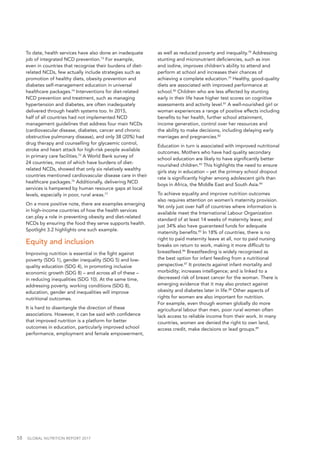
NUTRITION
REPORT
2017
Nourishing the SDGs
2  GLOBAL NUTRITION REPORT 2017
Endorsements
Akinwumi Adesina, President, African Development Bank
Africa’s economic progress is being undermined by hunger, malnutrition and stunting, which cost at least US$25 billion
annually in sub-Saharan Africa, and leave a lasting legacy of loss, pain and ruined potential. Stunted children today
lead to stunted economies tomorrow. The Global Nutrition Report helps us all to maintain focus on and deal with
this wholly preventable African tragedy.
Tedros Adhanom, Director-General, World Health Organization
The Sustainable Development Goals include incredible challenges to the world, including an end to hunger and
improving nutrition for all people by the year 2030. As the Global Nutrition Report 2017 demonstrates, universal
healthy nutrition is inextricably linked to all of the SDGs, and serves as a foundation for Universal Health Coverage,
WHO’s top priority. The United Nations Decade of Action on Nutrition presents a unique opportunity to commit to
end all forms of malnutrition now! 
David Beasley, Executive Director, World Food Programme
The Global Nutrition Report confirms why we need to act, because we all stand to benefit from a world without
malnutrition. The devastating humanitarian crises in 2017 threaten to reverse years of hard-won nutrition gains, and
ending these crises – and the man-made conflicts driving many of them – is the first step to ending malnutrition.
Nutrition is an essential ingredient of the Sustainable Development Goals, key to a world with zero hunger.
This report makes clear we must all take action – now – to end malnutrition.
José Graziano da Silva, Director-General, Food and Agriculture Organization
The transformational vision of the 2030 Agenda requires renewed effort and innovative ways of working. Ending
malnutrition in all its forms is necessary for achieving the 2030 Agenda, as the Global Nutrition Report 2017 lays out.
The Second International Conference on Nutrition recommendations provide the framework within which to act.
At the same time, the Decade of Action on Nutrition 2016–2025 provides the platform to move from commitment to
action and impact. FAO is committed to supporting countries to transform their food systems for better nutrition.
We can be the generation to end hunger and malnutrition.
Anthony Lake, Executive Director, UNICEF
Ending malnutrition is one of the greatest investments we can make in the future of children and nations.
As the Global Nutrition Report 2017 makes clear, good data is key to reaching every child – revealing who we
are missing and how we can improve the coverage and quality of essential nutrition interventions for children,
adolescents and women. Investing in robust data can help accelerate our progress towards our global nutrition
goals – and all the SDG targets.
Sania Nishtar, Founder and President, Heartfile Pakistan
The Global Nutrition Report 2017 argues on behalf of more than half of the world’s population. With more than
a third of people living on this planet overweight and obese, over a staggering billion and a half suffering from
anaemia and other micronutrient deficiencies, and around 200 million children stunted or wasted, this report is a
strong call to action. For sustainable impact, it will be essential for us to take a more holistic view and strive for
better nutrition across the entire life course. Political will, partnerships, building on existing policies and developing
evidence to inform action are the building blocks. To do this, we must break down siloed ways of working and
embrace a multisectoral and multi-stakeholder approach.
NOURISHING THE SDGS 3
Paul Polman, Chief Executive Officer, Unilever
This year’s Global Nutrition Report focuses on the interdependence of the SDGs, and how progress against one goal
generates progress for all. Nowhere are these linkages more evident than in the food agenda. As the producers,
manufacturers and retailers of most of the world’s food, business has a responsibility to help drive the food system
transformation. As a progressive food company, we are committed to helping redesign our global food and
agriculture system, to give everyone access to healthy and nutritious food and diets and thereby create a brighter
future for all.
Gunhild Stordalen, Founder and President, EAT Foundation
The Global Nutrition Report provides a compelling argument for why tackling the challenge of malnutrition in all its
forms will be essential to achieving the Sustainable Development Goals. We need to adopt an integrated, cross-
sectoral approach, breaking out of the nutrition silo to address the food system challenges holistically. Feeding the
growing world population a healthy and sustainable diet is one of our greatest challenges, but as the report shows,
the opportunities have never been greater and we can all make a difference.
Gerda Verburg, Coordinator, SUN Movement
Good nutrition is the engine for achieving the Sustainable Development Goals. It is high time for the world to
confront the stark reality that hundreds of millions of women, men and their families are still going hungry.
There is no country without a nutrition challenge today. Many countries still face stunting, whereby both physical and
brain capacity are irreversibly damaged, while other countries see obesity and non-communicable diseases running
rampant. Also, a growing number of countries are facing both challenges – undernutrition during early childhood,
and then obesity and non-communicable diseases during the reproductive age. The Global Nutrition Report
gives us the evidence to act on this injustice. It aids all of us in connecting the dots between the multiple forms of
malnutrition and supports SUN Movement member countries in their efforts to make sustainable improvements in
people’s lives.
4  GLOBAL NUTRITION REPORT 2017
This report was produced by an Independent Expert
Group empowered by the Global Nutrition Report
Stakeholder Group. The writing was a collective effort
by the group members, led by the co-chairs and
supplemented by additional analysts and contributors.
Corinna Hawkes (co-chair) City, University of London,
UK; Jessica Fanzo (co-chair) Johns Hopkins University,
Baltimore, US; Emorn Udomkesmalee (co-chair),
Mahidol University, Bangkok, Thailand; Endang Achadi,
University of Indonesia, Jakarta, Indonesia; Arti Ahuja,
State Government, Odisha, India; Zulfiqar Bhutta,
Center for Global Child Health, Toronto, Canada and
the Center of Excellence in Women and Child Health,
Aga Khan University, Karachi, Pakistan; Luz Maria
De-Regil, Nutrition International, Ottawa, Canada;
Patrizia Fracassi, Scaling Up Nutrition Secretariat,
Geneva, Switzerland; Laurence M Grummer-Strawn,
World Health Organization, Geneva, Switzerland; Chika
Hayashi, UNICEF, New York, US; Elizabeth Kimani-
Murage, African Population and Health Research
Center, Nairobi, Kenya; Yves Martin-Prével, Institut de
Recherche pour le Développement, Marseille, France;
Purnima Menon, International Food Policy Research
Institute, New Delhi, India; Stineke Oenema, UN System
Standing Committee on Nutrition, Rome, Italy; Judith
Randel, Development Initiatives, Bristol, UK; Jennifer
Requejo, Johns Hopkins University, Baltimore, US; Boyd
Swinburn, University of Auckland, New Zealand.
We also acknowledge the contributions from
Independent Expert Group member Rafael Flores-Ayala,
Centers for Disease Control and Prevention, Atlanta, US.
Additional analysis and writing support was provided
by Meghan Arakelian, Independent, US; Komal Bhatia,
University College London, UK; Josephine Lofthouse,
Independent, UK; Tara Shyam, Independent, Singapore;
Haley Swartz, Johns Hopkins University, Baltimore, US.
Specific sections of Chapter 4 were written by
Jordan Beecher, Development Initiatives, UK
(donor investments); and Patrizia Fracassi and
William Knechtel, Scaling Up Nutrition, Switzerland
(government investments).
Elaine Borghi, World Health Organization, Switzerland,
and Julia Krasevec, UNICEF, US, provided access
to updated data and technical expert advice for the
sections on the maternal and infant and young child
nutrition targets; Carlo Cafiero, Food and Agriculture
Organization, Italy, provided access to the Food
Insecurity Experience Scale/FIES data and Sara Viviani,
Food and Agriculture Organization, Italy, assisted in
interpreting it.
The following people provided written contributions or
data which were drawn upon in the final text:
Claire Chase, World Bank, US; Kaitlin Cordes, Columbia
Center on Sustainable Investment, US; Mariachiara Di
Cesare and Majid Ezzati, Imperial College London, UK;
Mario Herrero, Commonwealth Scientific and
Industrial Research Organisation, Australia; Andrew
Jones, University of Michigan, US; Purnima Menon,
International Food Policy Research Institute, US; Rachel
Nugent, RTI International, US; Andrew Thorne-Lyman,
Johns Hopkins University, US; Anna Taylor, Food
Foundation, UK; and Fiona Watson, Independent, UK.
Authors of the ‘Spotlight’ panels in this report, and
their affiliations, are as follows: Phil Baker, Deakin
University, Australia; Komal Bhatia, University College
London, UK; Tara Boelsen-Robinson, Deakin University,
Australia; Francesco Branca, World Health Organization,
Switzerland; Angelika De Bree, Unilever, the
Netherlands; Chad Chalker, Emory University, US; Helen
Connolly, American Institutes for Research, US; Kirstan
Corben, Deakin University, Australia; Alexis D’Agostino,
John Snow International, US; Mary D’Alimonte, Results
for Development, US; Alessandro Demaio, World
Health Organization, Switzerland; Augustin Flory,
Results for Development, US; Patrizia Fracassi, Scaling
Up Nutrition, Switzerland; Greg Hallen, International
Development Research Centre, Canada; Corinna
Hawkes, City, University of London, UK; Anna Herforth,
Independent, US; Dan Jones, WaterAid, UK; David Kim,
Independent, US; Kerrita McClaughlyn, Unilever, the
Netherlands; Anna Peeters, Deakin University, Australia;
Ellen Piwoz, the Bill & Melinda Gates Foundation, US;
Neena Prasad, Bloomberg Philanthropies, US; Judith
Randel, Development Initiatives, UK; Rahul Rawat,
the Bill & Melinda Gates Foundation, US; Tara Shyam,
Independent, Singapore; Jonathan Tench, Global
Alliance for Improved Nutrition, London, UK; Megan
Wilson-Jones, WaterAid, UK.
NOURISHING THE SDGS 5
Acknowledgements
The Independent Expert Group, under the leadership of co-chairs Corinna Hawkes, Jessica Fanzo and Emorn
Udomkesmalee, would like to sincerely thank all the people and organisations that supported the development of
the Global Nutrition Report 2017.
The core Global Nutrition Report team of Komal Bhatia, Data Analyst; Josephine Lofthouse, Communications Lead;
Tara Shyam, Coordinating Manager; and Emorn Udomkesmalee, Co-Chair, as well as Meghan Arakelian, Nutrition for
Growth Analyst, Haley Swartz, Researcher, worked closely with Corinna Hawkes and Jessica Fanzo, and in support
of the wider Independent Expert Group, to bring this year's report to life. Additional communications advice on the
report’s messaging and design was provided by Gillian Gallanagh, Laetitia Laporte, Jason Noraika, Helen Palmer and
Brian Tjugum, Weber Shandwick.
We are grateful to the team at Development Initiatives Poverty Research (DI) for providing interim hosting
arrangements for the Report Secretariat and for report design and production: Harpinder Collacott, David Hall-
Matthews (consultant), Rebecca Hills, Alex Miller, Fiona Sinclair, Hannah Sweeney, other DI staff.
Numerous people answered questions we had, including: Laura Caulfield, Johns Hopkins Bloomberg School; Kaitlin
Cordes, Columbia Center on Sustainable Investment; Katie Dain and Alena Matzke, NCD Alliance; Ebba Dohlman,
Organisation for Economic Co-operation and Development; Nora Hobbs, World Food Programme; Diane Holland,
Roland Kupka and Louise Mwirigi, UNICEF; Homi Kharas and John McArthur, Brookings Institution; Carol Levin,
University of Washington; Barry Popkin, University of North Carolina; Abigail Ramage, Independent; Jeffrey Sachs,
Columbia University; Guido Schmidt-Traub, Sustainable Development Solutions Network; Dominic Schofield, Global
Alliance for Improved Nutrition; and Andrew Thorne-Lyman, Johns Hopkins University.
For their helpful and insightful comments on earlier drafts of the report, we thank the following people: Jannie
Armstrong, Yarlini Balarajan, Francesco Branca, Aurélie du Châtelet, Katie Dain, Ariane Desmarais-Michaud, Juliane
Friedrich, Lawrence Haddad, Heike Henn, Kate Houston, Anna Lartey, Florence Lasbennes, Kedar Mankad, Alena
Matzke, Peggy Pascal, Abigail Perry, Ellen Piwoz, Danielle Porfido, Joyce Seto, Meera Shekar, Edwyn Shiell, Lucy
Sullivan, Rachel Toku-Appiah, Gerda Verburg, Neil Watkins, Fiona Watson and Sabrina Ziesemer. We are also grateful
to Dennis Bier, D’Ann Finley, Karen King and Kisna Quimby at the American Journal of Clinical Nutrition, and to the
four anonymous reviewers for carrying out the external peer review of the report again this year.
The Independent Expert Group is guided by the Global Nutrition Report Stakeholder Group, which provided
leadership in building support for the report: Victor Aguayo, UNICEF; Francesco Branca, World Health Organization;
Jésus Búlux, Secretaría de Seguridad Alimentaria y Nutricional, Guatemala; Lucero Rodríguez Cabrera, Ministry
of Health, Mexico; Pedro Campos Llopis, European Commission; John Cordaro, Mars and Scaling Up Nutrition
(SUN) Business Network; Ariane Desmarais-Michaud, Isabelle Laroche and Joyce Seto, Government of Canada;
Sandra Ederveen, Dutch Ministry of Foreign Affairs; Juliane Friedrich, IFAD; Heike Henn and Sabrina Ziesemer,
BMZ, Germany; Chris Osa Isokpunwu, Federal Ministry of Health, Nigeria; Lawrence Haddad, Global Alliance for
Improved Nutrition; Kate Houston, Cargill and SUN Business Network; Abdoulaye Ka, Cellule de Lutte contre la
Malnutrition, Senegal; Lauren Landis, World Food Programme; Anna Lartey, Food and Agriculture Organization;
Ferew Lemma, Ministry of Health, Ethiopia; Edith Mkawa, Office of the President, Malawi; Abigail Perry, Department
for International Development (UK); Anne Peniston, USAID; Milton Rondó Filho, Ministry of Foreign Relations,
Brazil; Nina Sardjunani, Ministry of National Development Planning, Indonesia; Muhammad Aslam Shaheen, Planning
Commission, Pakistan; Meera Shekar, World Bank; Lucy Sullivan, 1,000 Days; Gerda Verburg, SUN Secretariat. We are
particularly grateful to the co-chairs of the Stakeholder Group, Neil Watkins, the Bill & Melinda Gates Foundation
and Rachel Toku-Appiah, Graça Machel Trust, for their advice and unwavering support for the report this year.
6  GLOBAL NUTRITION REPORT 2017
The Global Nutrition Report 2017 is a peer-reviewed publication.
Copyright 2017: Development Initiatives Poverty Research Ltd.
Suggested citation: Development Initiatives, 2017. Global Nutrition Report 2017: Nourishing the SDGs. Bristol,
UK: Development Initiatives.
Disclaimer: Any opinions stated herein are those of the authors and are not necessarily representative of or
endorsed by Development Initiatives Poverty Research Ltd or any of the partner organisations involved in the
Global Nutrition Report 2017. The boundaries and names used do not imply official endorsement or acceptance by
Development Initiatives Poverty Research Ltd.
Development Initiatives Poverty Research Ltd
North Quay House, Quay Side, Temple Back, Bristol, BS1 6FL, UK
ISBN:
Copy editing: Jen Claydon, Jen Claydon Editing
Design and layout: Broadley Creative and Definite.design
Acknowledgements (continued)
We also received written contributions from people whose work could not be included in this year’s report but whose
work nevertheless informed our thinking: Alexis D’Agostino and Sascha Lamstein, USAID-funded SPRING; Ty Beal and
Robert Hijmans, University of California, Davis; Jan Cherlet, Lynnda Kiess and Nancy Walters, World Food Programme;
Zach Christensen, Development Initiatives; Colin Khoury, International Center for Tropical Agriculture; Michelle Crino,
Elizabeth Dunford and Fraser Taylor, The George Institute for Global Health; Charlotte Dufour, Food and Agriculture
Organization; Fran Eatwell-Roberts, Jamie Oliver Food Foundation; Augustin Flory, Results for Development; Stuart
Gillespie, International Food Policy Research Institute; Jody Harris and Nick Nisbett, Institute of Development Studies;
Anna Herforth, Independent; Christina Hicks, Lancaster University; Suneetha Kadiyala, London School of Hygiene
and Tropical Medicine; Chizuru Nishida, World Health Organization; Danielle Porfido, 1,000 Days; Dominic Schofield,
Global Alliance for Improved Nutrition; Marco Springmann, University of Oxford.
We thank the following donors for their financial support for this year’s report: Department for International
Development (UK), the Bill & Melinda Gates Foundation, United States Agency for International Development
and Irish Aid.
Finally, we thank you the readers of the Global Nutrition Report for your enthusiasm and constructive feedback
from the Global Nutrition Report 2014 to today. We aim to ensure the report stays relevant using data, analysis and
evidence-based success stories that respond to the needs of your work, from decision-making to implementation,
across the development landscape.
NOURISHING THE SDGS 7
Contents
Executive summary	 8
Chapter 1: A transformative agenda for nutrition: For all and by everyone	 16
Chapter 2: Monitoring progress in achieving global nutrition targets 	 26
Chapter 3: Connecting nutrition across the SDGs	 44
Chapter 4: Financing the integrated agenda	 62
Chapter 5: Nutrition commitments for transformative change: Reflections on the Nutrition for Growth process	 80
Chapter 6: Meeting the transformative aims of the SDGs	 92
Appendix 1: Assessing progress towards global targets – a note on methodology	 96
Appendix 2: Coverage of essential nutrition actions 	 100
Appendix 3: Country nutrition expenditure methodology 	 104
Notes	106
Abbreviations	118
Supplementary online materials	 119
Spotlights	120
Boxes	120
Figures 	 121
Tables	121
8 
Executive summary
NOURISHING THE SDGS 9
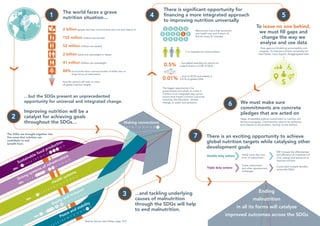
1. The world faces a grave nutrition
situation – but the Sustainable
Development Goals present an
unprecedented opportunity to
change that.
A better nourished world is a better world. Yet despite
the significant steps the world has taken towards
improving nutrition and associated health burdens over
recent decades, this year’s Global Nutrition Report shows
what a large-scale and universal problem nutrition
is. The global community is grappling with multiple
burdens of malnutrition. Our analysis shows that 88% of
countries for which we have data face a serious burden
of either two or three forms of malnutrition (childhood
stunting, anaemia in women of reproductive age and/or
overweight in adult women).
The number of children aged under five who are
chronically or acutely undernourished (stunted and
wasted) may have fallen in many countries, but our
data tracking shows that global progress to reduce
these forms of malnutrition is not rapid enough to
meet internationally agreed nutrition targets, including
Sustainable Development Goal (SDG) target 2.2 to
end all forms of malnutrition by 2030. Hunger statistics
are going in the wrong direction: now 815 million
people are going to bed hungry, up from 777 million in
2015. The reality of famines in the world today means
achieving these targets, especially for wasting, will
become even more challenging. Indeed, an estimated
38 million people are facing severe food insecurity in
Nigeria, Somalia, South Sudan and Yemen while Ethiopia
and Kenya are experiencing significant droughts. No
country is on track to meet targets to reduce anaemia
among women of reproductive age, and the number of
women with anaemia has actually increased since 2012.
Exclusive breastfeeding of infants aged 0–5 months has
marginally increased, but progress is too slow (up 2%
from baseline). And the inexorable rise in the numbers
of children and adults who are overweight and obese
continues. The probability of meeting the internationally
agreed targets to halt the rise in obesity and diabetes by
2025 is less than 1%.
Too many people are being left behind from the
benefits of improved nutrition. Yet when we look at the
wider context, the opportunity for change has never
been greater. The SDGs, adopted by 193 countries in
2015, offer a tremendous window of opportunity to
reverse or stop these trends. They are an agenda that
aims to ‘transform our world’. Many such aspirational
statements have been made in the past, so what makes
the SDGs different? The promise can be summed up
in two words: universal – for all, in every country – and
integrated – by everyone, connecting to achieve the
goals. This has enormous practical implications for what
we do and how we do it.
First, it means focusing on inequities in low, middle and
high-income countries and between them, to ensure
that everyone is included in progress, and everyone
is counted. Second, it means that the time of tackling
problems in isolation is well and truly over. If we want to
transform our world, for everyone, we must all stop acting
in silos, remembering that people do not live in silos.
We have known for some time that actions delivered
through the ‘nutrition sector’ alone can only go so
far. For example, delivering the 10 interventions that
address stunting directly would only reduce stunting
globally by 20%. The SDGs are telling us loud and
clear: we must deliver multiple goals through shared
action. Nutrition is part of that shared action. Action on
nutrition is needed to achieve goals across the SDGs,
and, in turn, action throughout the SDGs is needed
to address the causes of malnutrition. If we can work
together to build connections through the SDG system,
we will ensure that the 2016–2025 Decade of Action
on Nutrition declared by the UN will be a 'Decade of
Transformative Impact'.
2. Improving nutrition will be
a catalyst for achieving goals
throughout the SDGs.
Translating this vision of shared action into reality means
we all need to know how our work relates to, and can
achieve progress across, the other SDGs. There is huge
potential for making connections between SDGs, but
there is also the potential for incoherence. This is why
the SDGs (target 17.14) call for policy coherence for
development. A first and necessary step is to map these
connections and make them transparent. This is what
we begin to do in the Global Nutrition Report 2017.
Based on the best available evidence, we paint a picture
of these connections so we can better understand how
to take this agenda forward.
Our analysis shows there are five core areas that run
through the SDGs which nutrition can contribute to,
and in turn, benefit from:
•	 sustainable food production
•	 strong systems of infrastructure
•	 health systems
•	 equity and inclusion
•	 peace and stability.
NOURISHING THE SDGS 1110  GLOBAL NUTRITION REPORT 2017
The world faces a grave
nutrition situation...1
2 billion people lack key micronutrients like iron and vitamin A
155 million children are stunted
52 million children are wasted
2 billion adults are overweight or obese
41 million children are overweight
88% of countries face a serious burden of either two or
three forms of malnutrition
And the world is off track to meet
all global nutrition targets
Improving nutrition will be a
catalyst for achieving goals
throughout the SDGs…
…but the SDGs present an unprecedented
opportunity for universal and integrated change.
2
...and tackling underlying
causes of malnutrition
through the SDGs will help
to end malnutrition.
3
4
There is significant opportunity for
financing a more integrated approach
to improving nutrition universally
To leave no one behind,
we must fill gaps and
change the way we
analyse and use data
5
$ $ $ $ $
$ $ $ $ $ $
$ $ $ $ $
Malnutrition has a high economic
and health cost and a return of
$16 for every $1 invested.
1 in 3 people are malnourished...
The bigger opportunity is for
governments and others to invest in
nutrition in an integrated way, across
sectors that impact nutrition outcomes
indirectly, like education, climate
change, or water and sanitation.
0.5%
We must make sure
commitments are concrete
pledges that are acted on
6
Deep, embedded political commitment to nutrition will
be key to progress. Commitments need to be ambitious
and relevant to the problem, leaving no-one behind.
There is an exciting opportunity to achieve
global nutrition targets while catalysing other
development goals
7
Ending
malnutrition
in all its forms will catalyse
improved outcomes across the SDGs
Data gaps are hindering accountability and
progress. To improve nutrition universally we
need better, more regular, disaggregated data.
Making connections
SDGs: 1 2 3 4 5 6 7 8 9 10 11 12 13 14 15 16 17
Sustainable food production
SDGs: 1 2 3 4 5 6 7 8 9 10 11 12 13 14 15 16 17
Strong systems of infrastructure
SDGs: 1 2 3 4 5 6 7 8 9 10 11 12 13 14 15 16 17
Health systems
SDGs: 1 2 3 4 5 6 7 8 9 10 11 12 13 14 15 16 17
Equity and inclusion
SDGs: 1 2 3 4 5 6 7 8 9 10 11 12 13 14 15 16 17
Peace and stability
4 5 6 7 8 9 10 11 12 13 14 15 16 17
The SDGs are brought together into
five areas that nutrition can
contribute to and
benefit from.
Double duty actions Tackle more than one
form of malnutrition
Will increase the effectiveness
and efficiency of investment of
time, energy and resources to
improve nutrition
Triple duty actions
Tackle malnutrition
and other development
challenges
Could yield multiple benefits
across the SDGs
...but global spending by donors on
undernutrition is 0.5% of ODA...
...and on NCDs and obesity is
0.01% of global ODA.
$
0.01%
Source: Various (see Notes, page 107).
12  GLOBAL NUTRITION REPORT 2017
Through these five areas, the report finds that improving
nutrition can have a powerful multiplier effect across the
SDGs. Indeed, it indicates that it will be a challenge to
achieve any SDG without addressing nutrition.
1. Good nutrition can drive greater environmental
sustainability. Agriculture and food production is the
backbone of our diets and nutrition. Food production
uses 70% of the world’s freshwater supply and 38% of
the world’s land. Current agriculture practices produce
20% of all greenhouse gas emissions, and livestock uses
70% of agricultural land. Eating better is necessary to
ensure that food production systems are more sustainable.
2. Good nutrition is infrastructure for economic
development. Stunting disrupts the critical ‘grey matter
infrastructure’ – brain development – that builds futures
and economies. Investing in this infrastructure supports
human development throughout life and enhances
mental and productive capacity, offering a $16 return
for every $1 invested. Nutrition is linked to GDP growth:
the prevalence of stunting declines by an estimated
3.2% for every 10% increase in income per capita, and a
10% rise in income translates into a 7.4% fall in wasting.
3. Good nutrition means less burden on health
systems. Health is indivisible from nutrition. Good
nutrition means less sickness and thus less demand on
already-stretched health systems to deliver prevention
and treatment.
4. Good nutrition supports equity and inclusion,
acting as a platform for better outcomes in education,
employment, female empowerment and poverty
reduction. Well-nourished children are 33% more likely
to escape poverty as adults, and each added centimetre
of adult height can lead to an almost 5% increase in
wage rate. Nutritious and healthy diets are associated
with improved performance at school. Children who are
less affected by stunting early in their life have higher
test scores on cognitive assessments and activity level.
5. Good nutrition and improved food security
enhances peace and stability. More evidence is
needed to better understand how poor nutrition and
food insecurity influence conflict. However, available
evidence indicates that investing in food and nutrition
resilience also promotes less unrest and more stability.
3. Tackling the underlying causes of
malnutrition through the SDGs will
unlock significant gains in the fight
to end malnutrition.
Nutrition is an indispensable cog without which the
SDG machine cannot function smoothly. We will
not reach the goal of ending malnutrition without
tackling the other important factors that contribute to
malnutrition. Poor nutrition has many and varied causes
which are intimately connected to work being done to
accomplish other SDGs.
1. Sustainable food production is key to nutrition
outcomes. Agricultural yields will decrease as
temperatures increase by more than 3°C. Increased
carbon dioxide will result in decreased protein, iron,
zinc and other micronutrients in major crops consumed
by much of the world. Unsustainable fishing threatens
17% of the world’s protein and a source of essential
micronutrients. Policies and investments to maintain
and increase the diversity of agricultural landscapes are
needed to ensure small and medium-sized farms can
continue to produce the 53–81% of key micronutrients
they do now.
2. Strong systems of infrastructure play key roles in
providing safe, nutritious and healthy diets and clean
water and sanitation. The infrastructure that makes
up ‘food systems’ that take food from farm to fork is
essential if we are to reduce the 30% of food that is
currently wasted and the contamination of food which
leads to diarrhoea and underweight and death among
young children. With unclean water and poor sanitation
associated with 50% of undernutrition, infrastructure
is needed to deliver them, equitably. Special attention
is needed in cities. Urban populations are predicted to
reach 66% by 2050, yet slums and deprived areas are
underserved, while infrastructure has made it easier to
deliver foods that increase the risk of obesity and
diet-related non-communicable diseases (NCDs).
3. Health systems have an important role in promoting
infant and young child feeding, supplementation,
therapeutic feeding, nutrition counselling to manage
overweight and underweight, and screening for diet-
related NCD in patients. Yet our analysis shows that
health systems are not delivering where they should –
only 5% of children aged 0–59 months who need zinc
treatment are receiving it, for example. And half of all
countries have not implemented NCD management
guidelines. Essential nutrition actions with substantive
evidence should be scaled to ensure they are reaching
those who need it the most, and interventions for diet-
related NCDs tested to see what works most effectively
through the health system.
NOURISHING THE SDGS 13
4. Equity and inclusion matter for nutrition outcomes:
ignoring equity in the distribution of wealth, education
and gender will make it impossible to end malnutrition
in all its forms. A fifth of the global population –
767 million people – live in extreme poverty and 46%
of all stunting falls in this group. This group is often
neglected or excluded. At the same time, measures
must be put into place to counteract the risk of growing
obesity as economies develop. It is estimated that a
10% rise in income per capita translates into a 4.4%
increase in obesity, while national burdens of obesity
are rising at lower levels of economic development.
Severe food insecurity remains a problem across the
world – from 30% in Africa to 7% in Europe. Actions to
ensure women are included and treated equitably are
needed to ensure they can breastfeed and look after
their own nutrition.
5. Peace and stability are vital to ending malnutrition.
The proportion of undernourished people living in
countries in conflict and protracted crisis is almost three
times higher than that in other developing countries.
Long-term instability can exacerbate food insecurity
in many ways. In the worst-case scenario, conflicts can
lead to famines. When conflict or emergencies occur,
nutrition must be included in disaster risk reduction and
post-conflict rebuilding.
4. There is significant opportunity
for financing a more integrated
approach to improving nutrition
universally.
Malnutrition has a high economic and health cost,
yet not enough is spent on improving nutrition.
New analysis this year shows domestic spending on
undernutrition varies from country to country, with
some spending over 10% of their budget on nutrition
and others far less. Global spending by donors on
undernutrition increased by 1% (US$5 million) between
2014 and 2015, but fell as a proportion of official
development assistance (ODA) from 0.57% in 2014 to
0.50% in 2015. Spending on prevention and treatment
of obesity and diet-related NCDs represented 0.01%
of global ODA spending to all sectors in 2015, even
though the global burden of these diseases is huge.
Some donors are leading the way in bucking this trend,
but considerably more investment needs to be put on
the table.
The bigger opportunity is for governments and others
to invest in nutrition in an integrated way. Our analysis
this year already shows that governments spend more
on sectors important in the underlying causes of
malnutrition than they do on interventions specific to
nutrition. Opportunities through innovative financing
mechanisms and existing investment flows for multiple
wins in multiple sectors need to be explored. The
world simply cannot afford not to think about a more
integrated approach to investing in nutrition.
5. To leave no one behind, we must
fill gaps and change the way we
analyse and use data.
The Global Nutrition Report has consistently called for
more rigorous data collection to ensure accountability.
This year we highlight that data gaps are hindering
accountability and progress. To improve nutrition
universally, we need better, more regular, detailed
and disaggregated data. We identify lack of data
disaggregated by wealth quintile, gender, geography,
age and disability as a particular barrier. National
averages are not enough to see who is being left
behind. We need disaggregated data for all forms of
malnutrition, in all countries as nutritional levels can
vary even within households. This is needed if we are
to ensure that marginalised, vulnerable populations are
not left behind in the SDG agenda.
Two notable data gaps are around adolescents and
dietary intake. Better data on adolescents is needed
if we are to hold the world accountable for tackling
nutrition in such a critical part of the life course.
Likewise, if we do not know what people are eating,
we will not be able to design effective interventions to
improve diets.
Beyond just collecting data, we need to actively use this
data to make better choices and inform and advocate
decision-making at the policy level. We need data to
be collected, collated and used to build the dialogues,
partnerships, actions and accountability needed to end
malnutrition in all its forms.
14  GLOBAL NUTRITION REPORT 2017
6. We must make sure
commitments are concrete pledges
that are acted on.
Without deep political commitment to nutrition rooted
in the way governments govern, multilateral agencies
coordinate, civil society engages and businesses are
run, the act of making pledges to improve nutrition
becomes nothing more than empty rhetoric.
Accountability mechanisms, such as the Global Nutrition
Report, are designed to ensure that stated commitments
are delivered in practice. The commitments made to
the Nutrition for Growth (N4G) process in 2013 aimed
to generate deep commitment. It has made progress.
Of the 203 commitments made at the N4G Summit in
2013, 36% are either on track (n=58) or have already
been achieved (n=16). Yet the N4G process shows we
need to do better. To begin with this means ensuring
we can hold governments, multilateral agencies, civil
society and businesses accountable for delivering their
commitments – and this means making sure they are
SMART (specific, measurable, achievable, relevant and
time-bound). Commitments must be ambitious and
relevant to the problem. Also critical are commitments
that aim to achieve multiple goals and ensure no one is
left behind.
The bottom line is that nutrition needs some staying
power. We need a world where having suboptimal
nutrition is considered completely unacceptable and
good nutrition is the global social norm. Accountability
mechanisms should be designed carefully to ensure
they promote this deeper level of commitment by
all stakeholders.
7. There is an exciting opportunity
to achieve global nutrition targets
while catalysing other development
goals through ‘double duty’ and
‘triple duty’ actions.
No country has been able to stop the rise in obesity.
Countries with burgeoning prevalence should start
early to avoid some of the mistakes of high-income
neighbours. There is an opportunity to identify – and
take – ‘double duty’ actions which tackle more than
one form of malnutrition at once. These will increase
the effectiveness and efficiency of investment of
time, energy and resources to improve nutrition. For
example, actions to promote and protect breastfeeding
in the workplace produce benefits for both sides of
the double burden of malnutrition; city planning can
be leveraged to ensure access to affordable, safe and
nutritious foods in underserved areas and discourage
the provision of foods which raise the risk of obesity;
making clean water available in communities and
settings where people gather reduces the risk of
undernutrition and provides a viable alternative to
sugary drinks; universal healthcare packages can be
redesigned to include both undernutrition and diet-
related NCD prevention; and tracking of aid spending
can be improved to monitor the financing of the double
burden more effectively.
To begin with, programme and policy implementers and
funders concerned with undernutrition should review
their work and ensure that they are taking opportunities
to reduce risks of obesity and diet-related NCDs where
they can, while ensuring we do not reverse the progress
made on tackling undernutrition. They should do this
review in the next 12 months. Researchers, meanwhile,
should work to identify the evidence of where and
how these ‘double duty’ approaches can work
most effectively.
Likewise, ‘triple duty actions’ which tackle malnutrition
and other development challenges could yield multiple
benefits across the SDGs. For example, diversification
of food production landscapes can provide multiple
benefits by: ensuring the basis of a nutritious food
supply essential to address undernutrition and
prevent diet-related NCDs; enabling the selection
of micronutrient-rich crops with ecosystem benefits;
and, if the focus is on women in food production,
empowering women to become innovative food
value chain entrepreneurs while minimising work and
time burden. Scaling up access to efficient cooking
stoves would improve households’ nutritional health,
improve respiratory health, save time, preserve forests
and associated ecosystems, and reduce greenhouse
gas emissions. School meal programmes could be
more effectively structured to reduce undernutrition,
ensure children are not unduly exposed to foods that
increase risk of obesity, provide income to farmers, and
encourage children to stay in school and/or learn better
when at school. Urban food policies and strategies can
be designed to reduce climate change, food waste,
food insecurity and poor nutrition. Humanitarian
assistance could be used as a platform to promote
quality, nutritious diets while also rebuilding resilience
via local institutions and support networks.
NOURISHING THE SDGS 15
Overall, there is an immense opportunity to achieve
the SDGs through greater interaction across silos. This
means we must all transform our ways of working. There
needs to be a critical step-change in how the world
approaches nutrition. It is not just about more money;
it is also about breaking down silos and addressing
nutrition in a joined-up way. Governments, business
and civil society: you must think about what the
connections across the SDGs mean for the investment
and commitments you make and the actions you take.
Then act by identifying one triple duty action and make
delivering it a priority.
Changing the way we work also means that the nutrition
community must transform the way it speaks to other
sectors. We must reach out to ask others “what can we
do to help you?” “how can we help you achieve your
goals?”, and not just say “you should be helping us.” To
make us stronger, the different communities who work
on nutrition – on undernutrition, obesity, diet-related
NCDs, maternal and child health and humanitarian relief
– must come together with a stronger voice. And we
must put people at the centre of everything we do, by
inspiring and rallying around this fundamental right that
impacts every single one of us and our families.
If readers take away one message from this report,
it should be that ending malnutrition in all its forms
will catalyse improved outcomes across the SDGs.
Whoever you are, and whatever you work on, you can
make a difference to achieving the SDGs, and you
can help end malnutrition. You can stop the trajectory
towards at least one in three people suffering from
malnutrition. The challenge is huge, but it is dwarfed
by the opportunity.
16 
1 A transformative agenda
for nutrition:
For all and by everyone
NOURISHING THE SDGS 17
The world has taken significant steps towards
improving nutrition over recent decades
but the job is far from done. The number of
children who are chronically undernourished,
or stunted, has fallen in many countries, as
has the number of children who are acutely
malnourished, or wasted. However, the
burden remains high and undernutrition rates
have not fallen fast enough to keep pace
with changing global trends. Obesity remains
a significant challenge, with increasing
numbers of both children and adults who are
overweight and obese.
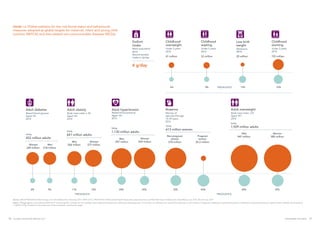
Malnutrition overall remains an immense and universal
problem, with at least one in three people globally
experiencing malnutrition in some form (Figure 1.2).1
No country is immune: almost every country in the
world is facing a serious nutrition-related challenge.
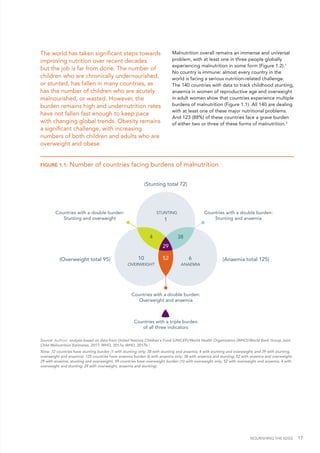
The 140 countries with data to track childhood stunting,
anaemia in women of reproductive age and overweight
in adult women show that countries experience multiple
burdens of malnutrition (Figure 1.1). All 140 are dealing
with at least one of these major nutritional problems.
And 123 (88%) of these countries face a grave burden
of either two or three of these forms of malnutrition.2
FIGURE 1.1: Number of countries facing burdens of malnutrition
4 38
29
5210 6
1
Countries with a triple burden
of all three indicators
Countries with a double burden:
Overweight and anaemia
Countries with a double burden:
Stunting and anaemia
Countries with a double burden:
Stunting and overweight
(Stunting total 72)
ANAEMIA
STUNTING
OVERWEIGHT
(Anaemia total 125)(Overweight total 95)
Source: Authors' analysis based on data from United Nations Children's Fund (UNICEF)/World Health Organization (WHO)/World Bank Group Joint
Child Malnutrition Estimates, 2017; WHO, 2017a; WHO, 2017b.3
Note: 72 countries have stunting burden (1 with stunting only; 38 with stunting and anaemia; 4 with stunting and overweight; and 29 with stunting,
overweight and anaemia). 125 countries have anaemia burden (6 with anaemia only; 38 with anaemia and stunting; 52 with anaemia and overweight;
29 with anaemia, stunting and overweight). 95 countries have overweight burden (10 with overweight only; 52 with overweight and anaemia; 4 with
overweight and stunting; 29 with overweight, anaemia and stunting).
NOURISHING THE SDGS 1918  GLOBAL NUTRITION REPORT 2017
PREVALENCE
PREVALENCEPREVALENCE
Sodium
intake
Mean population
2010
Recommended
intake is 2g/day 155 million
23%
52 million
8%
8%
41 million
6%
20 million
15%
15%
Childhood
stunting
Under 5 years
2016
Childhood
wasting
Under 5 years
2016
Childhood
overweight
Under 5 years
2016
TOTAL
613 million women
TOTAL
1,929 million adultsTOTAL
1,130 million adultsTOTAL
641 million adultsTOTAL
422 million adults
Anaemia
Women of
reproductive age
15–49 years
2016
Adult overweight
Body mass index ≥25
Aged 18+
2014
Women
204 million
Men
218 million
Women
375 million
Men
266 million
Women
982 million
Men
947 millionPregnant
women
35.3 million
Non-pregnant
women
578 million
40% 39%38%
Men
597 million
Women
529 million
20%
Adult obesity
Body mass index ≥ 30
Aged 18+
2014
11%9% 32%24%
Adult hypertension
Raised blood pressure
Aged 18+
2015
Low birth
weight
Newborns
2014
Adult diabetes
Raised blood glucose
Aged 18+
2014
4 g/day
PREVALENCE
PREVALENCEPREVALENCE
Sodium
intake
Mean population
2010
Recommended
intake is 2g/day 155 million
23%
52 million
8%
8%
41 million
6%
20 million
15%
15%
Childhood
stunting
Under 5 years
2016
Childhood
wasting
Under 5 years
2016
Childhood
overweight
Under 5 years
2016
TOTAL
613 million women
TOTAL
1,929 million adultsTOTAL
1,130 million adultsTOTAL
641 million adultsTOTAL
422 million adults
Anaemia
Women of
reproductive age
15–49 years
2016
Adult overweight
Body mass index ≥25
Aged 18+
2014
Women
204 million
Men
218 million
Women
375 million
Men
266 million
Women
982 million
Men
947 millionPregnant
women
35.3 million
Non-pregnant
women
578 million
40% 39%38%
Men
597 million
Women
529 million
20%
Adult obesity
Body mass index ≥ 30
Aged 18+
2014
11%9% 32%24%
Adult hypertension
Raised blood pressure
Aged 18+
2015
Low birth
weight
Newborns
2014
Adult diabetes
Raised blood glucose
Aged 18+
2014
4 g/day
FIGURE 1.2: Global statistics for the nutritional status and behavioural
measures adopted as global targets for maternal, infant and young child
nutrition (MIYCN) and diet-related non-communicable diseases (NCDs)
Source: UNICEF/WHO/World Bank Group Joint Child Malnutrition Estimates 2017; WHO 2017; UNICEF 2016; WHO Global Health Observatory data repository and NCD Risk Factor Collaboration; Mozaffarian et al, 2014; Zhou B et al, 20174
Notes: *Disaggregation conducted by WHO 20175
and sex-specific numbers are not available. Note: Raised blood glucose is defined as fasting glucose ≥7.0 mmol/L, on medication for raised blood glucose or with a history of diagnosis of diabetes; raised blood pressure is defined as raised blood pressure, systolic and/or diastolic blood pressure
≥140/90 mmHg. Prevalence is the proportion of the population reaching the target.
20  GLOBAL NUTRITION REPORT 2017
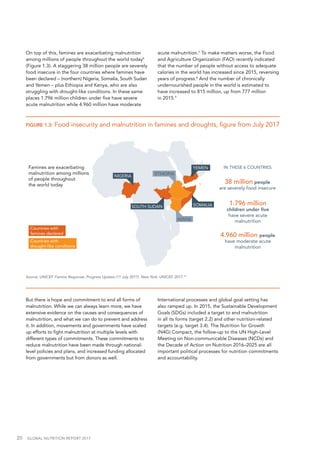
On top of this, famines are exacerbating malnutrition
among millions of people throughout the world today6
(Figure 1.3). A staggering 38 million people are severely
food insecure in the four countries where famines have
been declared – (northern) Nigeria, Somalia, South Sudan
and Yemen – plus Ethiopia and Kenya, who are also
struggling with drought-like conditions. In these same
places 1.796 million children under five have severe
acute malnutrition while 4.960 million have moderate
acute malnutrition.7
To make matters worse, the Food
and Agriculture Organization (FAO) recently indicated
that the number of people without access to adequate
calories in the world has increased since 2015, reversing
years of progress.8
And the number of chronically
undernourished people in the world is estimated to
have increased to 815 million, up from 777 million
in 2015.9
Famines are exacerbating
malnutrition among millions
of people throughout
the world today
IN THESE 6 COUNTRIES:
38 million people
are severely food insecure
4.960 million people
have moderate acute
malnutrition
Countries with
famines declared
1.796 million
children under five
have severe acute
malnutrition
Countries with
drought-like conditions
NIGERIA
SOMALIA
ETHIOPIA
KENYA
YEMEN
SOUTH SUDAN
FIGURE 1.3: Food insecurity and malnutrition in famines and droughts, figure from July 2017
Source: UNICEF. Famine Response. Progress Update (11 July 2017). New York: UNICEF, 2017.10
But there is hope and commitment to end all forms of
malnutrition. While we can always learn more, we have
extensive evidence on the causes and consequences of
malnutrition, and what we can do to prevent and address
it. In addition, movements and governments have scaled
up efforts to fight malnutrition at multiple levels with
different types of commitments. These commitments to
reduce malnutrition have been made through national-
level policies and plans, and increased funding allocated
from governments but from donors as well.
International processes and global goal setting has
also ramped up. In 2015, the Sustainable Development
Goals (SDGs) included a target to end malnutrition
in all its forms (target 2.2) and other nutrition-related
targets (e.g. target 3.4). The Nutrition for Growth
(N4G) Compact, the follow-up to the UN High-Level
Meeting on Non-communicable Diseases (NCDs) and
the Decade of Action on Nutrition 2016–2025 are all
important political processes for nutrition commitments
and accountability.
NOURISHING THE SDGS 21
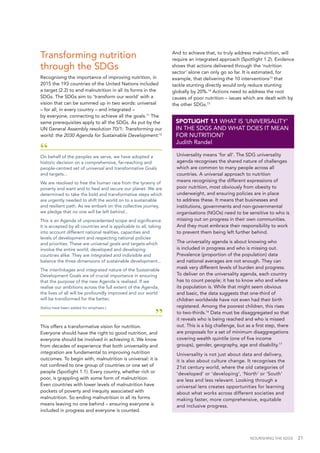
“On behalf of the peoples we serve, we have adopted a
historic decision on a comprehensive, far-reaching and
people-centred set of universal and transformative Goals
and targets...
We are resolved to free the human race from the tyranny of
poverty and want and to heal and secure our planet. We are
determined to take the bold and transformative steps which
are urgently needed to shift the world on to a sustainable
and resilient path. As we embark on this collective journey,
we pledge that no one will be left behind...
This is an Agenda of unprecedented scope and significance.
It is accepted by all countries and is applicable to all, taking
into account different national realities, capacities and
levels of development and respecting national policies
and priorities. These are universal goals and targets which
involve the entire world, developed and developing
countries alike. They are integrated and indivisible and
balance the three dimensions of sustainable development...
The interlinkages and integrated nature of the Sustainable
Development Goals are of crucial importance in ensuring
that the purpose of the new Agenda is realised. If we
realise our ambitions across the full extent of the Agenda,
the lives of all will be profoundly improved and our world
will be transformed for the better.
(Italics have been added for emphasis.)
”
This offers a transformative vision for nutrition.
Everyone should have the right to good nutrition, and
everyone should be involved in achieving it. We know
from decades of experience that both universality and
integration are fundamental to improving nutrition
outcomes. To begin with, malnutrition is universal: it is
not confined to one group of countries or one set of
people (Spotlight 1.1). Every country, whether rich or
poor, is grappling with some form of malnutrition.
Even countries with lower levels of malnutrition have
pockets of poverty and inequity associated with
malnutrition. So ending malnutrition in all its forms
means leaving no one behind – ensuring everyone is
included in progress and everyone is counted.
Universality means ‘for all’. The SDG universality
agenda recognises the shared nature of challenges
which are common to many people across all
countries. A universal approach to nutrition
means recognising the different expressions of
poor nutrition, most obviously from obesity to
underweight, and ensuring policies are in place
to address these. It means that businesses and
institutions, governments and non-governmental
organisations (NGOs) need to be sensitive to who is
missing out on progress in their own communities.
And they must embrace their responsibility to work
to prevent them being left further behind.
The universality agenda is about knowing who
is included in progress and who is missing out.
Prevalence (proportion of the population) data
and national averages are not enough. They can
mask very different levels of burden and progress.
To deliver on the universality agenda, each country
has to count people; it has to know who and where
its population is. While that might seem obvious
and basic, the data suggests that one-third of
children worldwide have not even had their birth
registered. Among the poorest children, this rises
to two-thirds.16
Data must be disaggregated so that
it reveals who is being reached and who is missed
out. This is a big challenge, but as a first step, there
are proposals for a set of minimum disaggregations
covering wealth quintile (one of five income
groups), gender, geography, age and disability.17
Universality is not just about data and delivery,
it is also about culture change. It recognises the
21st century world, where the old categories of
'developed' or 'developing', 'North' or 'South'
are less and less relevant. Looking through a
universal lens creates opportunities for learning
about what works across different societies and
making faster, more comprehensive, equitable
and inclusive progress.
SPOTLIGHT 1.1 WHAT IS ‘UNIVERSALITY’
IN THE SDGS AND WHAT DOES IT MEAN
FOR NUTRITION?
Judith Randel
Transforming nutrition
through the SDGs
Recognising the importance of improving nutrition, in
2015 the 193 countries of the United Nations included
a target (2.2) to end malnutrition in all its forms in the
SDGs. The SDGs aim to ‘transform our world’ with a
vision that can be summed up in two words: universal
– for all, in every country – and integrated –
by everyone, connecting to achieve all the goals.11
The
same prerequisites apply to all the SDGs. As put by the
UN General Assembly resolution 70/1: Transforming our
world: the 2030 Agenda for Sustainable Development:12
And to achieve that, to truly address malnutrition, will
require an integrated approach (Spotlight 1.2). Evidence
shows that actions delivered through the ‘nutrition
sector’ alone can only go so far. It is estimated, for
example, that delivering the 10 interventions13
that
tackle stunting directly would only reduce stunting
globally by 20%.14
Actions need to address the root
causes of poor nutrition – issues which are dealt with by
the other SDGs.15
22  GLOBAL NUTRITION REPORT 2017
Integrated means that all the goals should be
achieved in an indivisible way ‘by everyone’ – by
people making connections across all sectors and all
parts of society. One aspect of integration has long
been recognised as important in nutrition, NCDs and
health more broadly: multi/inter-sectorality. That is,
actions taken by ‘other’ sectors to support (in this
case) nutrition and health goals.18
In the 1970s, the
recognition that nutrition was “everybody’s business
but nobody’s responsibility” led to the concept of
‘multisectoral nutrition planning’.19
In the 2000s the
term ‘mainstreaming nutrition’ was used to describe
how nutrition interventions should become an integral
part of other development priorities, like poverty
reduction, maternal and child health and agriculture.20
Since 2013, the term ‘nutrition sensitive’ has been
used to describe programmes in other sectors that
address the underlying causes of malnutrition.21
A second aspect of integration has been recognised
in nutrition more recently: policy coherence.
The need for policy coherence was acknowledged
as important during the 2014 Second International
Conference on Nutrition.22
In 2017, the World Health
Organization (WHO) held a Global Conference on
NCDs focused on coherence between different
spheres of policymaking. In these cases, policy
coherence refers to policies across governments
actively supporting, rather than undermining,
nutrition or NCD objectives. In development more
broadly, policy coherence has been discussed for
far longer, and it has been primarily concerned with
ensuring domestic and foreign policies support the
goals of developing countries.23
The SDGs take policy
coherence far further. Through target 17.14 on policy
coherence for sustainable development, the SDGs
call on all of government, as well as civil society and
the private sector, to consider links between different
sectors, across borders and between generations to
achieve their goals.24
This broader approach – recognising multiple levels
of interaction – is at the core of the ‘integrated’
vision of the SDGs: delivering multiple goals
through shared action. It means everyone getting
involved with not just their ‘own’ goal, but delivering
outcomes across the SDGs. This is the aspect of
integration that raises the bar for action in nutrition
and across development. All the SDGs interact in
different ways.25
While tools have been developed to
support countries and other stakeholders to develop
integrated SDG plans, there is a long way to go to
implement actions that leverage these interactions.26
But there is also an opportunity to think and act
differently. For nutrition, it is an opportunity to show
how improving people’s nutrition can be catalyst for
the SDGs as a whole – and to work harder to put that
vision into practice.
SPOTLIGHT 1.2 WHAT IS ‘INTEGRATION’ IN THE SDGS AND WHAT DOES IT MEAN
FOR NUTRITION?
Corinna Hawkes
Truly addressing nutrition also involves thinking about
all the different forms of malnutrition. While each form
is very different, there are shared root causes (Spotlight
1.3). Yet to date, they have typically been dealt with
in silos. An integrated view calls for double wins in the
actions we take, through what the Global Nutrition
Report 2015 first termed ‘double duty’ actions. These
are interventions, programmes and policies that have
the potential to simultaneously reduce the risk or
burden of both undernutrition and overweight, obesity
or diet-related NCDs.27
In the Global Nutrition Report
2017 we also consider the potential for ‘triple duty’
actions, which aim to achieve additional goals based on
common agendas (Chapter 3).
The SDGs raise the bar to deliver on all forms of
malnutrition, for all, and by everyone – acknowledging
the interactions between nutrition and development
goals more broadly. A momentous shift is needed
to move this agenda. It necessitates new thinking,
approaches and action, and brings challenges that we
will need to overcome.28
NOURISHING THE SDGS 23
For example:
•	 For universality, we often do not know who is left behind
– this information is often missed in national averages
and prevalence rates. Even household-level data does
not reveal inequalities between different household
members whether based on gender, age, disability,
caste, tribe, race or other status.29
While children need
special protection and attention, there is little reliable
and consistent data for children older than 5 years, or
adolescents outside the 15–19 age range. Hence whole
populations are being left behind because nutrition data
is not systematically collected (Spotlight 1.1).
•	 For integration, we do not know how best to do it.30
While some countries are taking steps to embed the
SDGs across governments,31
very few national SDG
reports include sections on how integration will be
operationalised at the country level.32
Efforts are
being made to integrate sectors and stakeholders
through new initiatives and governance structures.
Yet, national governments, researchers, NGOs,
companies and the UN system still work in silos.
With so many sectors involved, the "biggest misbelief
is that someone else will fix it."33
Despite these challenges, we must seize the
opportunity of the ‘for all and by everyone’ agenda.
This is a unique opportunity to ensure the Decade
of Action on Nutrition 2016–2025, declared by the
193 countries of the UN, becomes a ‘Decade of
Transformative Impact’. The nutrition decade is the
time to catalyse the efforts of all of us to end all forms
of malnutrition as part of the SDG agenda while also
contributing to broader development goals.34
This must also recognise that everyone has a right to
adequate nutrition. Rights related to nutrition have
been directly recognised and protected in a range of
human rights treaties. The 1979 Convention on the
Elimination of All Forms of Discrimination Against
Women underlines women’s right to health, including
“adequate nutrition during pregnancy and lactation”.
Meanwhile the 1989 Convention on the Rights of the
Child obliges governments to “combat disease and
malnutrition, including within the framework of primary
healthcare, through, inter alia, the application of
readily available technology and through the provision
of adequate nutritious foods.”35
Stakeholders are
increasingly recognising that a human rights-based
approach to nutrition is vital for ensuring that everyone
can enjoy the intrinsic benefits of good nutrition.
Yet delivering rights requires accountability.
Accountability matters for nutrition – it is vital for
achieving this ambitious agenda. Good accountability
encourages and enables action. It is about accepting
responsibility for those commitments, delivering them
for impact, and then reporting on the commitments.
Accountability means exercising power responsibly.
The Global Nutrition Report has been working to
enhance accountability for action on nutrition since
2014. In the context of the transformative vision
presented by the SDGs, the Global Nutrition Report
2017 again takes stock of the state of the world’s
nutrition and explores what is needed to achieve
universal outcomes through integrated delivery. It does
so in four ways:
1.		Monitoring progress towards achieving nutrition
targets, universally.
	 The Global Nutrition Report tracks national progress
against globally agreed targets for maternal, infant
and young child nutrition (MIYCN) and those
relevant to diet-related NCDs, as well as the SDG
2.2 and 3.4 targets on nutrition. This year we also
identify the gaps in data and the way it is used that
are curbing our ability to track progress towards
universal improvements. That is, ending malnutrition
in all its forms by 2030, in all countries, for all people
(Chapter 2).
2.		Setting out what connecting nutrition across the
SDGs looks like.
	 This year we provide the basis for acting on nutrition
in a more integrated way to achieve targets across
the SDGs. Chapter 3 explores if and how improved
nutrition has the capacity to be a catalyst for the
SDGs more broadly – and what actions are needed
throughout the SDGs to ensure global nutrition
targets are reached. It exemplifies the kind of
‘double duty’ and ‘triple duty’ actions we can take.
3.		Tracking financing as a means of implementing a
universal and integrated vision.
	 Financing is critical to delivering action: SDG 17
positions financing as a ‘means of implementation’.
Chapter 4 provides the latest data on financing
for nutrition by governments and key donors,
highlighting which key areas across the SDGs need
more investment, and where the finance data
gaps are.
4.		Reflecting on progress on commitments made at
the Nutrition for Growth Summit.
	 In this year’s report, we track the commitments
made in the Nutrition for Growth (‘N4G’) process
– a movement to bring diverse global stakeholders
together to invest in fighting malnutrition. We aim to
show what has been achieved over the last four years
towards their commitments made to 2020. And we
reflect on the implications for commitments needed
to take forward the universal and integrated agenda
to achieve a Decade of Transformative Impact for
nutrition (Chapter 5).
24  GLOBAL NUTRITION REPORT 2017
In line with the demands of the SDGs to articulate
frameworks to integrate different problems and goals,
we can identify some shared causes of different forms
of malnutrition. These are articulated in two WHO
policy briefs published in 2017: The Double Burden of
Malnutrition and Double-duty actions for nutrition.37
Epigenetics
Altering the expression of genes (switching them
on or off) is thought to influence the risk of low
birth weight, overweight, obesity and NCDs.
These alterations can be caused by environmental
factors such as diet, exercise, drugs and chemical
exposure. This in turn leads to intergenerational links
in undernutrition, obesity and NCDs. For example,
intrauterine growth restriction resulting from maternal
undernutrition leads to changes in the way the infant’s
body then regulates energy.
Early-life nutrition
The quality and quantity of nutrition during fetal
development and infancy impact on the body’s
immune function, cognitive development and
regulation of energy storage and expenditure.
For example, by providing essential nutrients for
growth and development, colostrum and breast
milk influences infant biology and nutritional habits.
Another link is through poor maternal nutrition before
and during pregnancy, which can lead to increased
risk of maternal anaemia, preterm birth and low infant
birth weight. In turn, low-birth weight infants can be
at higher risk of metabolic disease and abdominal
obesity later in life.
Socioeconomic factors
Socioeconomic factors such as poverty, gender
empowerment and education affect all forms of
malnutrition in different ways (Chapter 3). For example,
income and wealth inequalities are closely associated
with undernutrition. More complex inequality patterns
for obesity and associated health conditions are seen
in low and middle-income countries, and depend
on the economic and epidemiological development
and state of the country. In general, the shift towards
obesity in groups of lower socioeconomic status is
happening more quickly in lower income countries
than it did in higher income countries.
People’s surroundings
The quality of environments around people are
relevant to all forms of malnutrition. For example,
lack of availability of nutritious foods in the ‘food
environments’ around people can affect the risks
of both an inadequate and unbalanced diet. Other
important aspects of people’s surroundings are the
living and working environments that affect access to
improved water and sanitation services, and influence
the ability to breastfeed, and the built environment
that impedes or promotes physical activity.
Food systems
Underpinning what people eat and their food
environments are food systems. They include
the production of food in agriculture (including
horticulture and raising livestock, small animals
and fish), how food is transformed and processed
through the system, its distribution and trade and
how it is made available to people through retail
and other means. Food systems play a crucial role
in what people eat and whether they are at risk of
undernutrition or obesity.
SPOTLIGHT 1.3 SHARED CAUSES OF DIFFERENT FORMS OF MALNUTRITION36
Corinna Hawkes, Alessandro Demaio and Francesco Branca
NOURISHING THE SDGS 25
The Global Nutrition Report is only as strong as its
uptake. We need our audience and partners to use the
evidence we present here to call for swifter progress,
and to hold decision-makers and implementers
accountable for their actions. We see this report as
an intervention: we rely on you – our partners from
governments, donors, business, civil society and
academia to use it to catalyse more effective action
on nutrition, and to take this conversation further.
Everyone has a role to play.
•	 If you are a decision-maker, budget holder or
implementer, use this report as inspiration for
integrated action on nutrition. Use the approaches
in this report, and beyond, to tackle the current and
future threats of malnutrition which your country,
sector or community faces. Use this report to improve
your ability to deliver universally and leave no one
behind. Use this report as inspiration to increase
your impact on both nutrition outcomes and broader
development outcomes, and increase your ‘bang for
your buck’.38
•	 If you are an advocate, use this report to shine a
light on the nutrition challenges your country, sector
or community faces. Use it to hold people in positions
of power accountable for tackling all forms of
malnutrition in an integrated manner, leaving no one
behind. Use it to advocate for filling the gaps in data
and the way it is used which make accountability
so challenging.
•	 If you are a researcher, consider whether the data
and research gaps identified in this report could
inform your future work. Consider how we can dig
deeper into data to analyse how greater integration
can be achieved and find and rectify the situation of
those being left behind.
We call on everyone reading this report to take action
to ensure that the global nutrition targets are achieved
and the Decade of Action on Nutrition is a ‘Decade of
Transformative Impact’. And not just one for nutrition,
but one in which nutrition acts as a catalyst to achieve
development goals across all countries, for all and
by everyone.
26 
2 Monitoring progress
in achieving global
nutrition targets
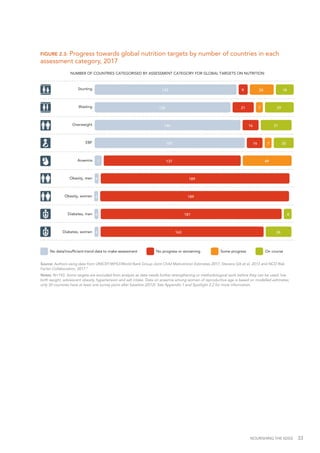
1.	 Overall, the world is off course to meet global nutrition targets:
•	 Global progress to reduce stunting among children under age five is not
rapid enough to meet the 2025 target. The number of children under age
five who are overweight is rising.
•	 The rate of reduction of childhood wasting is also not fast enough to
meet the 2025 target. Famines, brewing conflicts and climate-induced
droughts, floods and other disasters will make wasting much harder to tackle.
•	 Exclusive breastfeeding of infants aged 0–5 months has marginally
increased (up 2% from baseline). This progress is positive but too slow.
•	 Anaemia among women of reproductive age has increased since 2012;
no country is on course to meet the target.
•	 The probability of halting the rise in obesity and diabetes by 2025 is less
than 1%.
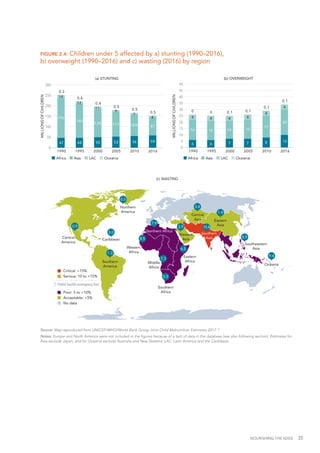
2.	 At a regional level, the number of children who are stunted is increasing in
Africa, and wasting is still high in South Asia.
3.	 At a country level, no nation is on course to meet all five of the six global
maternal and child nutrition targets, and few have stopped the upward
trends in child and adult overweight and obesity. Three countries are ‘on
course’ for four targets – exclusive breastfeeding and childhood stunting,
wasting and overweight.
4.	 Data gaps remain a significant obstacle in tracking progress of the multiple
burdens of malnutrition, universally. Disaggregated data is needed to
ensure no one is left behind due to their geography, age, ethnicity or
gender. This data is missing, as is data on adolescents and dietary intake.
5.	 Better data coordination and its interpretation and use by decision-makers
as part of national priority setting is also needed to track progress against
global nutrition targets.
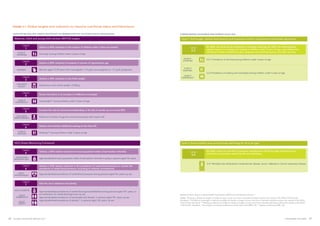
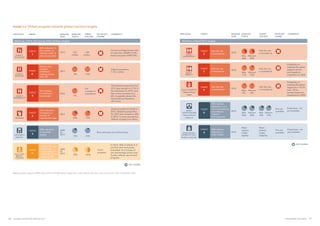
Key findings
NOURISHING THE SDGS 27
What will it take to end malnutrition
universally by 2030 – in all its forms, in all
countries, for all people? What is needed to
navigate the way towards achieving the two
Sustainable Development Goal (SDG) targets,
2.2 and 3.4, that are directly concerned with
nutrition outcomes?
This chapter describes where we are
globally and nationally in reaching what can
be termed the ‘global nutrition targets.’
It uses available country-level prevalence
data to determine, as best as we can, who
is impacted by undernutrition, overweight/
obesity and diet-related non-communicable
diseases (NCDs), and where. It also highlights
where data gaps are preventing us from
taking on a more universal approach to
tracking improvements in nutrition across
the world.
Global nutrition targets
Progress towards the SDG targets can be tracked
using the voluntary global nutrition targets adopted
by member states of the World Health Organization
(WHO). The Global Nutrition Report has been tracking
these global nutrition targets over the last four years.
These targets comprise:
•	 maternal infant and young child nutrition (MIYCN)
targets: six global targets on MIYCN adopted at the
World Health Assembly in 2012 to be attained by 20251
•	 diet-related NCD targets: three of nine NCD targets
adopted at the World Health Assembly in 2013 to be
attained by 2025.2
These ‘MIYCN targets’ and ‘diet-related NCD targets’
overlap significantly with SDG targets 2.2 and 3.4
(Figure 2.1), highlighting the synergies between the
SDGs and current tracking efforts to tackle malnutrition.
While each target is separate and distinct, they are
integrated through basic underlying links which show
that nutritional status is the result of many factors that
come together into an indivisible whole in a person
(Spotlight 1.2, Chapter 1).
The MIYCN targets have the overarching aim of
improving MIYCN by 2025 and are tracked at the global
level by six indicators. The diet-related NCD targets
form part of the Global Monitoring Framework for the
Prevention and Control of NCDs, which sets targets to
monitor progress in achieving targets concerning the
four NCDs that cause the greatest amount of mortality,
three of which have diet-related causes (cardiovascular
disease, diabetes, some cancers), and their risk factors.
The WHO plays a key leadership role in monitoring
the MIYCN and diet-related NCD targets and aligning
them closely with the UN Decade of Action on
Nutrition (2016–2025).3
It has also provided guidance
for countries to set their own national targets in line
with their priorities and resource capacity to address
both MIYCN and NCDs. These are the Comprehensive
Implementation Plan on Maternal, Infant and Young
Child Nutrition4
and the Global Action Plan for the
Prevention and Control of Non-Communicable
Diseases 2013-2020.5
The targets and indicators are
tracked annually in the Global Nutrition Report to instil
accountability in the global nutrition community. These
targets and indicators are shown in Figure 2.1.
Global and country
progress towards global
nutrition targets
The monitoring and assessments presented in this
year’s report show that at the global level, the world is
off course to meet most of the global nutrition targets
for which data is available (Figure 2.2). The analyses
presented supersede numbers given in previous
Global Nutrition Reports. This is because they take
into account new data available in the last year which
reflects improved methodologies and more robust
estimates (see Spotlight 2.2 and Appendix 1).
NOURISHING THE SDGS 2928  GLOBAL NUTRITION REPORT 2017
Under-5
STUNTING
Maternal, infant and young child nutrition targets
NUTRITION-RELATED 2025 TARGETS ADOPTED BY THE MEMBER STATES OF THE WORLD HEALTH ORGANIZATION
Maternal, infant and young child nutrition (MIYCN) targets
Stunting* among children under 5 years of age
TARGET
1
Achieve a 40% reduction in the number of children under 5 who are stunted
Women aged 15–49 years with haemoglobin <12 g/dL (non-pregnant) or <11 g/dL (pregnant)
TARGET
2
Achieve a 50% reduction of anaemia in women of reproductive age
ANAEMIA
Infants born with a birth weight <2,500 g
TARGET
3
Achieve a 30% reduction in low birth weight
LOW BIRTH
WEIGHT
Overweight** among children under 5 years of age
TARGET
4
Ensure that there is no increase in childhood overweight
Under-5
OVERWEIGHT
Infants 0–5 months of age who are fed exclusively with breast milk
TARGET
5
Increase the rate of exclusive breastfeeding in the first 6 months up to at least 50%
EXCLUSIVE
BREASTFEEDING
Wasting*** among children under 5 years of age
TARGET
6
Reduce and maintain childhood wasting to less than 5%
WASTING
Under-5
Maternal, infant and young child nutrition targetsNCD Global Monitoring Framework
Age-standardised mean population intake of salt (sodium chloride) in g/day in persons aged 18+ years
TARGET
4
Achieve a 30% relative reduction in mean population intake of salt (sodium chloride)
Age-standardised prevalence of raised blood pressure among persons aged 18+ years, by sex
TARGET
6
Achieve a 25% relative reduction in the prevalence of raised blood pressure or contain the
prevalence of raised blood pressure, according to national circumstances
Age-standardised prevalence of raised blood glucose/diabetes among persons aged 18+ years, or
on medication for raised blood glucose, by sex
Age-standardised prevalence of overweight and obesity+
in persons aged 18+ years, by sex
Age-standardised prevalence of obesity++
in persons aged 18+ years, by sex
TARGET
7
Halt the rise in diabetes and obesity
POPULATION
INTAKE OF SALT
ADULT
HYPERTENSION
ADULT
OBESITY
ADULT
OVERWEIGHT
ADULT DIABETES
Goal 2. End hunger, achieve food security and improved nutrition and promote sustainable agriculture
CORRESPONDING SUSTAINABLE DEVELOPMENT GOALS 2030
Under-5
OVERWEIGHT
Under-5
WASTING
Under-5
STUNTING
2.2.1 Prevalence of stunting among children under 5 years of age
TARGET
2.2
By 2030, end all forms of malnutrition, including achieving, by 2025, the internationally
agreed targets on stunting and wasting in children under 5 years of age, and address the
nutritional needs of adolescent girls, pregnant and lactating women and older persons
2.2.2 Prevalence of wasting and overweight among children under 5 years of age
3.4.1 Mortality rate attributed to cardiovascular disease, cancer, diabetes or chronic respiratory disease
TARGET
3.4
By 2030, reduce by one-third premature mortality from NCDs through prevention and
treatment and promote mental health and well-being
Goal 3. Ensure healthy lives and promote well-being for all at all ages
FIGURE 2.1: Global targets and indicators to improve nutritional status and behaviours
Source: Authors, based on World Health Organization (WHO) and UN Statistical Division.6
Notes: *Stunting is defined as length or height-for-age z-score more than 2 standard deviations below the median of the WHO Child Growth
Standards. **Childhood overweight is defined as weight-for-length or height z-score more than 2 standard deviations above the median of the WHO
Child Growth Standards. ***Wasting is defined as weight-for-length or height z-score more than 2 standard deviations below the median of the WHO
Child Growth Standards. +
Overweight and obesity is defined as body mass index (BMI) ≥25. ++
Obesity is defined as BMI ≥30.
NOURISHING THE SDGS 3130  GLOBAL NUTRITION REPORT 2017
TARGET
4
TARGET
2
TARGET
3
TARGET
5
TARGET
6
WASTING
Under-5
OVERWEIGHT
2012
8% <5%
2012
7%
ANAEMIA
2012
29% 15%
LOW BIRTH
WEIGHT
15% 10%
New estimates are forthcoming
Global prevalence
7.7% in 2016.
The baseline proportion for
2012 was revised to 5.7% in
the estimates for 2015, and
the current prevalence is
6%, marginally above this
threshold and therefore
off course.
Global prevalence 32.8% in
2016. (Baseline proportion
for 2012 was revised to 30%
in 2016. Current prevalence
reflects increase since then).
Reduce and
maintain
childhood
wasting at less
than 5%
No increase
in childhood
overweight
50% reduction
of anaemia in
women of
reproductive age
30% reduction
in low birth
weight
2008
TO
2012
No
increase in
prevalence
Under-5
Under-5
STUNTING
Maternal, infant and young child nutrition targets
2012 162
million
~100
million
38% ≥50%
Current average annual rate
of reduction (AARR) (2.3%)
below required AARR (4%).
40% reduction in
the number of
children under 5
who are stunted
EXCLUSIVE
BREAST-
FEEDING
Increase the rate
of exclusive
breastfeeding in
the first six months
to at least 50%
2008
TO
2012
In 2016, 40% of infants 0–5
months were exclusively
breastfed. An increase of
two percentage points over
4 years reflects very limited
progress.
Some
progress
COMMENTSON OR OFF
COURSE
TARGET
FOR 2025
BASELINE
STATUS
BASELINE
YEAR
TARGETINDICATOR
TARGET
1
OFF COURSE
FIGURE 2.2: Global progress towards global nutrition targets
Source: Authors, based on WHO, 2012, 2014, NCD Risk Factor Collaboration, 2016, Stevens GA et al, 2013, Zhou B et al, 2017 and UNICEF, 2016.7
Probability of
meeting the global
target is almost
zero based on
projections to 2025.
Probability of
meeting the global
target low (<1% for
men, 1% for
women) based on
projections to 2025.
Projections not
yet available.
Projections not
yet available.
TARGET
4
TARGET
6
Nutrition-related NCD targets
2014
Men
38%
Women
39%
Men
11%
Women
15%
Men
9%
Women
8%
Men
24%
Women
20%
Men
18%
Women
15%
ADULT
OBESITY
2014
2014
2014
2010
Mean
sodium
intake
4g/day
Mean
sodium
intake
2.8g/day
ADULT
OVERWEIGHT
Halt the rise
in prevalence
Halt the rise
in prevalence
Halt the rise
in prevalence
Halt the rise
in prevalence
Halt the rise
in prevalence
ADULT DIABETES
Raised blood
sugar
ADULT
HYPERTENSION
Raised blood
pressure
25% relative
reduction or no
rise in prevalence,
according to
national
circumstances
Not yet
available
Not yet
available
30% relative
reduction in
mean intake
COMMENTSON OR OFF
COURSE
TARGET
FOR 2025
BASELINE
STATUS
BASELINE
YEAR
TARGETINDICATOR
Halt the rise
in prevalence
POPULATION
INTAKE OF SALT
Sodium chloride
OFF COURSE
TARGET
7
TARGET
7
TARGET
7
32  GLOBAL NUTRITION REPORT 2017
Country progress towards
global nutrition targets
At the national level, assessing country progress
towards achieving the global nutrition targets clearly
shows that there are many data gaps holding back
our ability to make robust assessments for four
targets: stunting, wasting, overweight and exclusive
breastfeeding (Figure 2.3). However, several countries
are on course or making some progress towards these.
We present country-level data on prevalence, current
and required rates of change (where applicable), and
an assessment of progress towards global nutrition
targets on our website. The data presented in its tables
is also used in the Global Nutrition Report’s online
Nutrition Country Profiles (see Spotlight 2.1), which
show progress alongside other indicators related to
malnutrition and its determinants.
•	 For improving MIYCN: Based on available data, 18
countries are on course to meet the stunting target,
29 are for wasting, 31 for overweight and 20 for
exclusive breastfeeding. No country is on course
to reduce anaemia among women of reproductive
age (Figure 2.3). Sadly, the figures also highlight the
lack of data to make robust assessments of progress
towards MIYCN targets, meaning many countries
cannot be classified as on or off course.
•	 For halting the rise in obesity: All countries for which
data is available had a probability of less than 0.5
(50% chance) of meeting the 2025 target and thus are
off course to meet obesity targets if upward trends in
obesity continue unabated.
•	 For halting the rise in diabetes: Eight countries
had a probability of at least 0.5 of meeting the 2025
target among men: Australia, Belgium, Denmark,
Finland, Iceland, Nauru, Singapore and Sweden.
These are all high-income countries, except Nauru,
an upper-middle-income country in Oceania. Across
Asia, Africa, Latin America and North America, most
countries will fail to stem the rise in diabetes among
men unless something changes. Progress in halting
the rise in diabetes among women is slightly better:
26 countries have a probability of at least 0.5 of
meeting the target. These are Andorra, Australia,
Austria, Belgium, Brunei Darussalam, Canada,
Democratic People's Republic of Korea, Denmark,
Finland, France, Germany, Iceland, Israel, Italy, Japan,
Luxembourg, Malta, Nauru, Netherlands, Norway,
Portugal, Republic of Korea, Singapore, Spain,
Sweden and Switzerland.
The Global Nutrition Report publishes online
Nutrition Country Profiles for each of the 193 UN
countries. These have been refreshed in 2017 with
new data where available, and align with the data
used in this year’s report. The two-page documents
provide a snapshot of over 80 indicators of
nutrition status and determinants, food availability,
intervention coverage and policies that support
good nutrition for each of the 193 countries, as well
as for the 6 regions and 22 sub-regions.
The profiles are designed to help users easily view
and assess data, or the lack of it, on progress in
reducing malnutrition for a selected geography.
They enable nutrition champions to not only
advocate for greater action for nutrition, but also
support the work of other sectors. The profiles can
also help those working in related sectors to see
shared objectives and challenges, identify ways to
integrate nutrition in your work, and leverage the
multiplier effect that improved nutrition can have in
furthering your goals.
The data used in the profiles is collated from
publicly available datasets provided by numerous
agencies. Survey data is used where available and
methodologically sound, and modelled estimates
are used elsewhere if relevant. While other credible
datasets may be available at the country level,
those included in the profiles are compatible with
internationally agreed standards, allowing for
consistency and comparability across countries. For
more information on the sources and definitions
of the data used in the profiles, see the technical
notes on the Nutrition Country Profiles page of the
Global Nutrition Report website, where a link to
the underlying dataset used to compile individual
profiles can also be found.8
SPOTLIGHT 2.1 GLOBAL NUTRITION
REPORT’S NUTRITION COUNTRY PROFILES
Komal Bhatia and Tara Shyam
NOURISHING THE SDGS 33
FIGURE 2.3: Progress towards global nutrition targets by number of countries in each
assessment category, 2017
Source: Authors using data from UNICEF/WHO/World Bank Group Joint Child Malnutrition Estimates 2017, Stevens GA et al, 2013 and NCD Risk
Factor Collaboration, 2017.9
Notes: N=193. Some targets are excluded from analysis as data needs further strengthening or methodological work before they can be used: low
birth weight, adolescent obesity, hypertension and salt intake. Data on anaemia among women of reproductive age is based on modelled estimates;
only 30 countries have at least one survey point after baseline (2012). See Appendix 1 and Spotlight 2.2 for more information.
8
20
31
29
18
49
7
7
24
163
181
189
189
137
16
16
21
9
4
4
4
4
7
150
146
136
142Stunting
Wasting
Overweight
EBF
Anaemia
Obesity, men
Obesity, women
Diabetes, men
Diabetes, women
NUMBER OF COUNTRIES CATEGORISED BY ASSESSMENT CATEGORY FOR GLOBAL TARGETS ON NUTRITION
26
On courseNo progress or worseningNo data/insufficient trend data to make assessment Some progress
34  GLOBAL NUTRITION REPORT 2017
The methods used to assess global and country
progress towards MIYCN nutrition targets are
based on revised methodologies developed by
WHO and the United Nations Children’s Fund
(UNICEF) Technical Expert Advisory Group on
Nutrition Monitoring (TEAM).10
They are different to
those used in the Global Nutrition Report 2016.
The rules to track progress towards diet-related
NCD targets have also been modified based
on new data available and methodological
considerations. These methodological changes
present some challenges in maintaining continuity
and making comparisons with assessments in
previous reports. Yet the added value of having more
refined and robust rules to make fair and considered
assessments far outweigh the drawbacks.
Country-level assessments aim to make informed
judgements for countries that have adequate data
of high quality collected frequently. They endeavour
to reserve any unfair critique based on very old
prevalence data or highly unstable estimates of rate
of change which could lead to incorrect conclusions
about progress. Rather, the lack of sufficient data
at country level should spur action to collect
better and more frequent data to aid action
and accountability.
The Global Nutrition Report aims to assess progress
in relation to the baseline and/or target years
(‘endline’) as far as possible rather than compare
status to the previous year of reporting. This allows
us to take into account longer-term data trends
using all available information.
Appendix 1 gives full details of the new methods used
to assess progress towards global nutrition targets –
you are encouraged to refer to it to understand how
assessments were made.
SPOTLIGHT 2.2 METHODS TO TRACK
GLOBAL AND COUNTRY PROGRESS
Komal Bhatia
Prevalence and distribution
of malnutrition across regions
In thinking about universality, it is important to examine
the prevalence of the malnutrition burden, where
it exists and among which sub-populations within
countries. Even better would be to have subnational,
deeper disaggregated-level data to ensure that
no one is left behind. These data gaps are discussed in
the section Data needs for tracking progress towards
universal outcomes (Page 24).
Malnutrition among children
The number of children affected by stunting globally
has decreased drastically since 1990. But trends have
varied across regions, with the rate of decline being
unequal across regions and sub-regions. Africa is the
only region that has seen an increase in the number of
children stunted despite a decrease in the prevalence
of stunting. Together, Africa and Asia account for nearly
all the global burden of stunting (Figure 2.4a). In 2016,
two of every five of the world’s stunted children and
more than half of all wasted children lived in South Asia.
Over the same period, the number of children under
age 5 who are overweight has increased dramatically
worldwide (Figure 2.4b), with 40.6 million overweight in
2016.11
And more than 15% of children under age 5 in
South Asian countries were wasted in 2016 (27.6 million,
Figure 2.4c). This represents a critical public health
emergency (as prevalence more than 10% does) and
reflects a serious and pressing problem.
NOURISHING THE SDGS 35
FIGURE 2.4: Children under 5 affected by a) stunting (1990–2016),
b) overweight (1990–2016) and c) wasting (2016) by region
47 48 50 53 56 59
190
160
134 117 103 87
14
12
11
9
7
6
0.3
0.4
0.4
0.5
0.5
0.5
0
50
100
150
200
250
300
1990 1995 2000 2005 2010 2016
MILLIONSOFCHILDREN
(a) STUNTING
Africa Asia LAC Oceania
MILLIONSOFCHILDREN
(b) OVERWEIGHT
Africa Asia LAC Oceania
6 6 7 7 8 10
16 15 14 15
17
20
4 4 4
4
4
0 0.1 0.1
0.1
0.1
0
5
10
15
20
25
30
35
40
45
50
1990 1995 2000 2005 2010 2016
4
0
(c) WASTING
7.9
7.3
5.5
6.5
3.9
3.8
1.9
15.4
8.9
9.4
1.3
3.0
0.9
0.5
Central
America
Caribbean
Southern
America
Western
Africa
Northern Africa
Middle
Africa
Southern
Africa
Eastern
Africa
Western
Asia
Southern
Asia
Southeastern
Asia
Oceania
Northern
America
Central
Asia Eastern
Asia
8.5
Critical: >15%
Serious: 10 to <15%
Poor: 5 to <10%
Acceptable: <5%
No data
Public health emergency line
Source: Map reproduced from UNICEF/WHO/World Bank Group Joint Child Malnutrition Estimates 2017.12
Notes: Europe and North America were not included in the figures because of a lack of data in the database (see also following section). Estimates for
Asia exclude Japan, and for Oceania exclude Australia and New Zealand. LAC: Latin America and the Caribbean.
36  GLOBAL NUTRITION REPORT 2017
No data
5–19.9%
20–39.9%
≥40%
Latest prevalence
(women aged 15–49 years)
Malnutrition among adults
Globally, 614 million women aged 15–49 years were
affected by anaemia. India had the largest number of
women impacted, followed by China, Pakistan, Nigeria
and Indonesia. In India and Pakistan, more than half
of all women of reproductive age have anaemia. It is a
global issue that many women in high-income countries
also suffer from; prevalence rates may be as high as 18%
in countries such as France and Switzerland (Figure 2.5).
As Figure 2.6 shows, obesity (body mass index (BMI)
≥30) is most common among North American men
(33%) and women (34%), and lowest among Asian and
African men (6%) and Asian women (9%). Overweight
and obesity are increasing in almost every country and
are a real concern in many low and middle-income
countries, not just high-income ones. The problem
affects more women than men in all the world’s regions,
reflecting a wider global gender disparity.
Source: Map reproduced from the World Health Organization Global Targets 2025 Tracking Tool.13
FIGURE 2.5: Prevalence of anaemia among women aged 15–49 years by country, 2016
Diabetes or raised blood glucose is most common
(10%) among Asian men and Latin American women,
and lowest (6%) among European and North American
women (Figure 2.7). Regional averages for raised
blood pressure among adult men and women aged
over 18 years in 2015 are shown in Figure 2.8.
Hypertension is most common (28%) among African
women and European men, and lowest (11%) among
North American women. A quarter of Asian and Latin
American men suffered from raised blood pressure
in 2015. While more women worldwide are affected
by obesity, the case for diabetes and hypertension is
mixed. There is more diabetes among men than women
in Asia, Europe, Northern America and Oceania, and
more hypertension among men than women in all
regions except Africa (Figure 2.8).
NOURISHING THE SDGS 37
FIGURE 2.6: Prevalence of obesity (BMI ≥30)
among adults aged 18 years and over by
region, 2014
Source: Authors based on data from the World Health Organization
Global Health Observatory data repository and NCD Risk Factor
Collaboration.14
Notes: Population-weighted means for 189 countries. LAC: Latin
America and the Caribbean.
FIGURE 2.7: Prevalence of diabetes among
men and women aged 18 years and over
by region, 2014
Source: Authors based on data from the World Health Organization
Global Health Observatory data repository and NCD Risk Factor
Collaboration, 2016, 2017.15
6
16
6
9
21
23
19
27
33 34
25
28
0
10
20
30
40
PREVALENCE(%)
Africa Asia Europe LAC N America Oceania
ADULT OBESITY (BMI ≥30)
Men Women
8 8
10
9
7
6
9
10
8
6
9
8
0
2
4
6
8
10
PREVALENCE(%)
Africa Asia Europe LAC N America Oceania
DIABETES/RAISED BLOOD GLUCOSE
Men Women
FIGURE 2.8: Prevalence of hypertension
among men and women aged 18 years
and over by region, 2015
Source: Authors based on data from the World Health Organization
Global Health Observatory data repository, Zhou B et al, 2017 and NCD
Risk Factor Collaboration, 2017.16
Notes: Population-weighted means for 189 countries. LAC: Latin
America and the Caribbean.
FIGURE 2.9: Mean intake of sodium by
region, 2010
Source: Authors based on data from Mozaffarian D et al, 2014 and
Powles J et al, 2013.17
Notes: Population-weighted means for 185 countries. Blue reference line
refers to World Health Organization-recommended intake of 2 g/day.18
LAC: Latin American and the Caribbean.
27 28
24
21
28
18
24
18
15
11
20
16
0
10
20
30
HYPERTENSION/RAISED BLOOD PRESSURE
PREVALENCE(%)
Africa Asia Europe LAC N America Oceania
Men Women
2.7
4.3
4.0
3.5
3.6
3.2
0
1
2
3
4
G/DAY
MEAN POPULATION INTAKE OF SODIUM
Africa Asia Europe LAC N America Oceania
38  GLOBAL NUTRITION REPORT 2017
FIGURE 2.10: Mean intake of sodium in 193
countries by intake band, 2010
Source: Authors, based on data from Mozaffarian D et al, 2014 and
Powles J et al, 2013.19
Notes: Data is for 2010.
The world consumes too much salt (Figure 2.10).
Intake varies by region but no region had intakes within
the WHO-recommended limits of 2 g/day of sodium
(Figure 2.9). Asia has the highest intake (4.3 g/day of
sodium), followed by Europe (4.0 g/day of sodium).
At national level, only seven countries (Burundi, Comoros,
Gabon, Jamaica, Kenya, Malawi and Rwanda) have
sodium intakes within desirable limits.
Data needs for tracking
progress towards universal
outcomes
This chapter, along with part of every Global Nutrition
Report, tracks progress against the country-level and
global nutrition targets. But the universality agenda
will not be achieved without filling data gaps. Some of
these gaps are about reporting on outcomes, but others
are to do with adequate coverage of key interventions
themselves, and ensuring that these interventions reach
those in need. Appendix 2 shows how countries are
doing in reaching their populations with the ‘essential
nutrition actions’ – interventions for undernutrition
delivered primarily through the health system. Previous
Global Nutrition Reports have, for example, highlighted
the lack of data reporting on low birth weight20
and how
data gaps vary across indicators.21
This year’s report
highlights that data is simply not available from most
countries to track the MIYCN targets (Figure 2.3).
In the context of universality, these data challenges are
hampering the ability to track universal outcomes. And
if we cannot track universal outcomes, we cannot hold
the world accountable for achieving them as part of the
SDG agenda. These challenges include the following,
which are then discussed in turn:
1.		 knowing who is included in progress (and who is
not) so we can track progress against leaving no one
behind. This requires disaggregated data
2.		 knowing how well high-income countries (as well as
low and middle-income countries) are doing, so to
ensure all countries are included
3.		 knowing what progress has been made in
addressing risk factors for nutrition (such as dietary
intake data or behavioural risk factors) across
sectors, to ensure integration (see Chapter 3).
7
127
51
8
MEAN POPULATION INTAKE OF SODIUM
≤2g
2 – ≤4g
>4g
No data
NOURISHING THE SDGS 39
Challenge 1: Knowing who is included
(and who is being left behind)
To track progress for universal outcomes, we need to
know who is being counted and who is not. Prevalence
data and national averages are not enough. They can
mask very different levels of burden and progress
(Spotlight 1.1, Chapter 1). Disaggregated data is needed
to identify where and what types of burdens exist and
who is being left behind to better understand why
countries are on or off course. Data collection should
be disaggregated subnationally and geographically,
and across wealth quintiles, national or social origin,
race, ethnicity and gender. This is to ensure we are
objectively understanding inclusion and potentially
exclusion while promoting accountability to various
vulnerable populations. The Global Nutrition Report 2016
highlighted three aspects of disaggregation important for
promoting accountability:
•	 Disaggregation by socioeconomic and demographic
characteristics: An analysis of subnational patterns in
stunting rates using Demographic and Health Surveys
(DHS) datasets. This emphasises the wide variations in
malnutrition rates by wealth, education, age of mother
at birth, residence and sex.22
•	 Disaggregation by specific populations: Research
including data from Save the Children’s ‘Group-based
Inequality Database’ (GRID) database.23
This shows that
children’s nutrition outcomes are lower than average
if they are girls, refugees, displaced or disabled or
from a regionally disadvantaged area in a country or
an excluded ethnic group.24
It indicates that data is
needed for specific populations, with one outstanding
need being data on nutrition among adolescents
(Spotlight 2.3). Adolescent girls are at a critical stage
in development – not yet adults but soon to be fully
grown adults and potential future parents. Their health
and nutritional status is key to not only their own adult
well-being but for their potential offspring. Many
adolescents – girls and boys – are also affected by
obesity. Yet adolescents’ nutritional problems receive
limited attention in global monitoring frameworks.
•	 Spatial disaggregation: Nutritional status by
subnational region. There are wide variations in this
status, leading to demand by decision-makers for
spatially disaggregated data. Awareness of these vast
differences is essential for national plans of action and
for the effective allocation of resources yet examples
of finely detailed maps for undernutrition are rare.25
Spatial disaggregation has the potential to identify
other causes and factors that influence malnutrition
such as infrastructure – rural and urban planning
through for example roads and markets, conflict
hotspots, migration patterns and natural resource
access disparities (also see Chapter 3).
Challenge 2: Knowing the status of
high-income countries
The Global Nutrition Report 201526
noted that many
high-income countries are missing data that should
be included in the Global Nutrition Report Nutrition
Country Profiles (24% for Western Europe to 34% for
Eastern Europe). Even though high-income countries
have greater capacity to produce this data than other
countries, they represent major gaps in international
databases. Failing to provide internationally comparable
data risks their credibility as global partners, especially
since the SDG agenda calls for action from every country.
Some indicators are less relevant to high-income
contexts, such as vitamin A supplementation and
use of oral rehydration salts, but others are relevant
including child anthropometry (body measurement) and
antenatal visits. This data is collected but often uses
different methodologies, is limited to what is in private
clinics and hospitals and is not reported to international
or central databases. Some countries use their own
national standards rather than international standards,
such as the WHO Child Growth Standards.
Challenge 3: Knowing what progress
has been made in addressing risk factors
The Global Nutrition Report 2015 noted that data on
risk factors is among that in “strikingly short supply
across countries”,27
including data on dietary intake
of infants and young children and on metabolic and
behavioural risk factors for diet-related NCDs. It is
crucial that we work to close these data gaps if we are
to reduce reliance on modelled estimates.
The lack of data on dietary intake is a particularly
glaring gap given that diet quality is a common factor
underlying different forms of malnutrition. The Global
Panel on Agriculture and Food Systems for Nutrition in
201628
concluded that “Our ability to describe diets is
hampered by fragmented and incomplete data”.
To track the role of diet in contributing to global
nutrition targets, we need more and better quality
dietary intake data. Spotlight 2.4 highlights the need for
more data as well as better measures of dietary intake.
It is vital to realise that data has many uses beyond
simply tracking it. For a real data revolution in nutrition,
there needs to be better use of the data that is
collected to create a more responsive information
system for nutrition that enables double and triple
duty actions. Spotlight 2.5 highlights the need for a
‘nutrition data revolution’ that uses the entire data
value chain – prioritisation, collection, curation, analysis,
interpretation and decision-making.
40  GLOBAL NUTRITION REPORT 2017
Nutritional status during adolescence impacts adult
health and reproductive outcomes. Adolescence
(typically seen as around 10 to 19 years) and youth
(around 15 to 24 years) are important stages of
the human life course. Poor nutrition during these
stages can perpetuate the intergenerational cycle of
malnutrition; it can negate the cumulative benefits
of good nutrition accrued in infancy and early life.29
Moreover, adolescents may experience high rates of
underweight or overweight, often also accompanied
by micronutrient deficiencies. For example, in Latin
America, national estimates of obesity in adolescents
(12–19 years) range from 16.6% (16.5 million people)
to 35.8% (21.1 million).30
But adolescence also
presents a window of opportunity to improve
nutrition and future adult health and reproductive
outcomes of the world’s 1.2 billion adolescents.
It brings a chance to invest in nutrition interventions
that can address their nutritional outcomes.31
Investing US$4.6 per capita annually over the course
of the SDGs in interventions to improve adolescents’
physical, sexual and mental health would bring an
average benefit-to-cost ratio of 10.32
The nutritional status, behaviours and outcomes of
adolescents form a very small part of global monitoring
frameworks for nutrition. The only targets that address
adolescent nutrition directly are the MIYCN target
to reduce anaemia among women of reproductive
age (15–49) and the diet-related NCD target to halt
the rise in obesity. While the obesity target includes
an indicator for adolescent obesity, the anaemia
target does not look at anaemia in adolescents
separately. Beyond these, indicators are largely
missing. Process and behavioural indicators related to
fruit and vegetable consumption, physical inactivity,
consumption of salt and policy indicators related
to food and nutrition do not address adolescence
directly. A crucial outcome indicator that is not part
of any global targets is the prevalence of low BMI or
underweight among adolescent girls, an important
determinant of reproductive and overall health.
Yet our ability to track nutrition goals that address
adolescent outcomes, specifically anaemia and
obesity, in global nutrition target monitoring
frameworks is limited by the lack of global databases
to enable comparability across countries. Where
estimates are available, from the WHO, these suggest
that iron deficiency anaemia is the leading cause of
disease burden and disability among adolescents in
2015, with the most serious effects in Southeast Asian
and African low and middle-income countries.33
The WHO is filling the data gaps in overweight and
obesity. Its Global school-based student health
survey weighs and measures adolescents aged 13–17
years in over 100 countries. It is producing country-
comparable estimates of adolescent overweight and
obesity based on this and other collected data. When
released, this data will be a crucial tool in planning,
designing and evaluating nutrition-related aspects of
broader interventions that address adolescent health.
However, these surveys are limited in some countries
where a large proportion of adolescents are out of
school. This is because they may not capture the
most marginalised and disadvantaged adolescents,
and hence need to be complemented with additional
measures at population level.
SPOTLIGHT 2.3 THE CRITICAL IMPORTANCE OF FILLING DATA GAPS TO TRACK
NUTRITION IN ADOLESCENTS
Komal Bhatia
NOURISHING THE SDGS 41
Poor diet is one of the leading contributors to the
global burden of disease,34
linked to all forms of
malnutrition as well as environmental sustainability.
Astonishingly, there is no system across countries to
track what people eat. No indicators of diet quality in
the general population are collected across countries.
Current globally comparable indicators are
crude proxies of diet, derived from national food
balance sheets rather than individual dietary data.
Recently, proportion of calories from non-staple
foods has been reported in the Global Nutrition
Report, alongside the longstanding prevalence
of undernourishment indicator (the estimated
proportion of the population without access to
adequate calories). This newer indicator still leaves
much unknown; for example, one country with high
consumption of vegetables and beans, and another
with high consumption of sugars and fats, could
register an equal proportion of non-staple food
calories.
Minimum dietary diversity for infants and young
children is an indicator now collected in the DHS
in 60 countries (and counting), which measures the
proportion of children age 6 to 23 months who ate
foods from four or more food groups (of seven) in the
previous day, and corresponds to nutrient adequacy.35
This indicator is helpful to understand care practices
and diets among infants and young children. It should
ideally be collected in all countries with the DHS, but
even that would only fill the gap in data about diets
among children younger than two.
Overall diet quality in the general population is
critically needed, though not captured by any
existing indicators. Diet quality information has
several components including: adequacy of macro
and micronutrients, food safety, dietary diversity and
protection of health against diet-related NCDs. All
are needed in all regions of the world, as bellwethers
of malnutrition in all its forms. The recently-
validated minimum dietary diversity for women
of reproductive age36
is an indicator of nutrient
adequacy, measuring whether women are consuming
adequately diverse diets. Indicators of diet patterns
that protect health by reducing risk of diet-related
NCDs need to be developed. We also need a
mechanism to collect these indicators – one leaner
than dietary intake surveys, which are costly and
infrequently undertaken. Encouragingly, efforts are
underway to add a diet quality module to the Gallup
World Poll that would collect both the minimum
dietary diversity for women of reproductive age and
indicators of health-protective diet patterns.37
If this
initiative succeeds, it will provide regularly-collected,
globally comparable diet quality information for the
adult population in 160 countries.
Tracking indicators of diet quality across countries
would be transformative for nutrition and health.
As seen from past advances in nutrition, globally
comparable, readily-interpretable indicators will
raise the visibility of this top public health issue and
enable informed policy debates and actions. Without
clear information on what diets actually look like, it is
difficult to move towards improving them.
SPOTLIGHT 2.4 DIET QUALITY DATA GAPS
Anna Herforth
42  GLOBAL NUTRITION REPORT 2017
In 2014, the first Global Nutrition Report declared
“Nutrition needs a data revolution”. The report’s
key messages laid out four actions: 1) identify data
priorities and gaps through a consultative process
in anticipation of the SDGs; 2) invest in nutrition
survey capacity so that consistent and reliable
national data would be available every 3 to 4 years;
3) ensure that high-income countries provide
comparable data so that they can be included in
progress tracking; and 4) invest in national and global,
interoperable and accessible, nutrition databases
to facilitate accountability. The report promised to
analyse investments in relation to need to make this
revolution a reality in its second edition in 2015.
We now know that determining investments in
relation to need is a promise more easily made than
kept. This is true firstly because we have no reliable
means for tracking spending on nutrition data.
We have no template or global guidance on what
nutrition data is essential to meet global nutrition
targets, how to focus programmes on reaching
those in need, or how to make the SDG 2 target 2.2
to ‘end all forms of malnutrition’ a reality. Without
a clear vision as well as data prioritisation it will be
impossible to meet the expectations laid out in 2014
(the Global Nutrition Report), 2015 (the SDGs), and
again in 2016 (the UN Decade of Action on Nutrition
2016–2025).
Transforming how we think about data
Beyond collecting survey data every 3 to 4 years, as
already suggested, we propose a holistic, horizontal
view for a nutrition data revolution that stretches from
priority setting to collection, analysis, interpretation
and use of information by decision-makers. Put
simply, we want to revolutionise efforts across the
entire nutrition data value chain. Further, we propose
positioning data – in and of itself – as a value product
that is central to achieving the SDGs that must be
costed and incorporated into national nutrition
programmes and financing plans.
SDG 17 calls for immediate (by 2020) capacity-
building support to increase the availability of high-
quality, timely and reliable data disaggregated by
income, age, race, gender, ethnicity, migratory
status, disability, geographic location and other
characteristics to enable robust progress tracking by
2030. A strengthened data and information system
for nutrition has multiple purposes beyond progress
tracking. Disaggregated data is needed to: define
nutrition problems including magnitude, distribution,
variability and high-risk populations; diagnose
root causes; design interventions; inform course
corrections and track progress; and hold those who
are responsible to account. The proposed data value
chain has five critical processes defined in Figure 2.11
and a final step, the use of data for decision-making.
SPOTLIGHT 2.5 LAUNCHING A NUTRITION DATA REVOLUTION: WHAT ARE WE
WAITING FOR?
Ellen Piwoz, Rahul Rawat, Patrizia Fracassi and David Kim
FIGURE 2.11: Nutrition data value chain: vision, goal and common constraints
Source: Authors.
Policymakers – and the entities which support development – make evidence-based decisions to drive country development and improve human outcomes
(i.e. progress against the SDGs) based on access to accurate and timely data
OVERALL VISION
Data prioritisation
Data creation
and collection
Data curation Analysis
Interpretation/
recommendations
Decision-making
Defining data priorities
and parameters for
decision-making
Generating and
gathering empirical
field data
Aggregating,
structuring and
reporting field data
Synthesising data, building
analytical tools and
models to derive insight
Translating analytical
findings to program and
policy recommendations
Making evidence-based
decisions and
implementing policy
Feedback loops
OUTCOME GOAL
Improved country
development and
human outcomes
(country progress
against SDGs)
Lack of country voice and ownership in data prioritisation
Critical data is incomplete, missing or out of date
Insufficient statistical/analytical capacity
Proliferation of donor data requests, formats, timelines
Existing data sets not accessible/transparent
Lack of analytical capacity
Data not valued/used
Insufficient, inconsistent funding and lack of capacity
Market failures associated with ‘public goods’
NOURISHING THE SDGS 43
A call for immediate action
The transformations needed to achieve the SDGs
require new ways of thinking. When it comes to data,
we cannot solely discuss aggregating information
upward for annual reports. Rather we must explore
fully exploiting and transforming data into information
to make informed programme and policy decisions
that will improve nutrition and other SDG outcomes.
This will not be achieved without significant
investments in data value chain capacities.
Some may argue that investing in data is too
costly and that scarce resources should go towards
delivering interventions and services. This argument
can be countered with examples of how investing
in data can ‘pay for itself’ in cost savings from more
efficient and effective programmes. For example, a
recent economic optimisation study from Cameroon
used national survey data to suggest policy changes in
the national vitamin A programme that could achieve
the same effective coverage at 44% of the cost.38
Advancing this agenda rapidly will require: 1)
in-country mechanisms for national priority setting
and data coordination; 2) operational guidance for
data prioritisation, harmonisation of indicators, and
incorporation of nutrition into routine management
information systems; 3) tools for capacity development
at multiple levels; 4) costed data plans that are built
into national development strategies, resourced and
implemented; 5) dissemination of tacit knowledge and
experience; 6) innovation across the value chain; and
7) fostering a culture of data use and sharing.
Some of these actions are more straightforward than
others, and all present their unique challenges. But
without these steps, we will not be able to transform
the Decade of Action on Nutrition into a 'Decade of
Transformative Impact', and the SDG target of ending
malnutrition in all its forms will be much harder
to achieve.
Conclusion: Getting on track
This chapter presents a stark picture of the global
nutrition situation. When we look at the global level and
across countries, the world is not on course to achieve
the global nutrition targets. Given their significant
overlap with the nutrition targets in the SDGs, it means
we are not on track to achieve SDG targets 2.2 and 3.4.
Nutrition stakeholders and the wider development
community: you need to play your part. We are all
global citizens. Every one of us has a right to equitable
nutrition and fair allocation of resources. But we need
to share a common humanity to achieve this.
We need to support the least advantaged members
of society to ensure they have the opportunities for
healthy and fulfilling lives. While the lack of progress
in nutrition outcomes may seem daunting, humanity
has overcome greater hurdles and tribulations before.
We must face these complex issues head on and move
towards a universal approach to drive down these
numbers over the next decade. To do so, we need to do
things differently: connect nutrition across development
(Chapter 3), invest in a more integrated way (Chapter 4)
and make commitments deeper and more accountable
(Chapter 5).
SPOTLIGHT 2.5 CONTINUED
44 
3 Connecting nutrition
across the Sustainable
Development Goals
1.	 The Sustainable Development Goals (SDGs) can be brought together into
five areas that are critical to achieving nutrition outcomes. These are:
•	 Sustainable food production is important to ensure our land and waters
are resilient and can support the diversity needed to provide nutritious
and healthy diets.
•	 Systems infrastructure is needed to deliver the clean water, sanitation, energy
and food essential for nutrition to urban, peri-urban and rural settings.
•	 Health systems are vital to provide treatment and preventative
interventions for improved nutrition at scale.
•	 Equity and inclusion are essential to ensure efforts to improve poverty,
gender inequality, education and protections in the workplace deliver
universal outcomes for nutrition.
•	 Peace and stability are necessary to ensure conflict is not contributing
towards famine and food insecurity.
2.	 These same areas are the means through which nutrition can contribute
to development throughout the SDGs. For example: changing diets can
make food production more sustainable; ensuring good nutrition early
in life means better ‘grey matter infrastructure’ – the brain development
essential to ensure economies can innovate and flourish; tackling nutrition
challenges will reduce the burden on the health system; improving nutrition
will help end poverty; and addressing food insecurity and famine can make
an essential contribution to conflict and post-conflict work.
3.	 In all these areas, there are opportunities for ‘double duty actions’ that
can address undernutrition, obesity and diet-related non-communicable
diseases (NCDs). These will increase the effectiveness and efficiency of
investment of time, energy and resources to improve nutrition. Likewise,
potential ‘triple duty actions’ which tackle malnutrition and other
development challenges could yield multiple benefits across the SDGs.
4.	 There is an immense opportunity to achieve the SDGs through greater
interaction across silos. We must all transform our ways of working to
enable the vision of the SDGs to become a reality. Improved nutrition
cannot be a singular set of targets in a silo – rather it is an indispensable
cog, without which the SDG machine cannot function smoothly.
Key findings
NOURISHING THE SDGS 45
The vision of the many architects of the
SDGs was of an integrated, indivisible system
for development. This chapter shows that
improved nutrition is an essential component
of this vision. Poor nutrition has many and
varied causes which are intimately connected
to work being done to accomplish other
SDGs. Improved nutrition can be a catalyst
for many of the SDG targets; conversely, we
need action across the SDGs to achieve the
ambitious nutrition targets we are currently
off course to reach (Chapter 2).
The chapter starts by setting out an integrated vision for
nutrition in the SDGs. It brings together SDGs 1 to 16
into five areas for development which nutrition can
contribute to, and in turn, benefit from:
•	 sustainable food production
•	 strong systems of infrastructure
•	 health systems
•	 equity and inclusion
•	 peace and stability.
It then provides the evidence of the connections
between nutrition and these five areas. The analysis is
not comprehensive but teases out some of the main
associations and interlinkages. It begins to paint a picture
of what an integrated approach in the deepest sense –
delivering multiple goals through shared action – looks like
from a nutrition perspective (Chapter 1, Spotlight 1.2).
SDG 17 is a vital goal because it concerns strengthening
the means of implementation across the goals through
partnerships, capacity, data, accountability, financing
and coherence. While not explicitly including SDG 17 in
the five areas, we take the cross-cutting agenda set in
SDG 17 as our starting point: the need for everyone to
be involved, connecting across the goals. Of particular
relevance is target 17.14: 'enhance policy coherence for
sustainable development'.
An integrated vision for
nutrition in the SDGs
Different parts of government, non-governmental
organisations (NGOs), researchers, development
professionals and the private sector – including the
nutrition community – are currently, for the most part,
focused on achieving their ‘own’ SDGs and targets
(Figure 3.1). This is understandable. However, if we are
to achieve the SDGs, and do better for nutrition, we
need to take action that reflects the interactions across
the goals. This is why SDG 17 calls for ‘policy coherence
for sustainable development’ as a fundamental means
of implementation (Chapter 1, Spotlight 1.2).
FIGURE 3.1: The 17 SDGs
Source: UN. Sustainable Development Goals, 2015.
46  GLOBAL NUTRITION REPORT 2017
Clearly we cannot talk sensibly about ending hunger,
or achieving food security or well-being, for example,
as if they were separate from nutrition. Nor is nutrition
indivisible from health (SDG 3) or most of the other SDGs
(See Global Nutrition Report 2016, Figure 1.1, page 3).
This means it is essential that nutrition is seen as
indivisible from the wider process of achieving
sustainable development. And crucially that actions
and investments in nutrition have the potential to have
multiple – or at least double or triple duty – impacts
in a universal and integrated way (see also Chapter 1).
Improved nutrition cannot be a singular set of targets in
a silo – rather it is an indispensable cog, without which
the SDG machine cannot function smoothly.
To act in an integrated way, we all need to know how our
work relates to and can achieve progress across the other
SDGs. Existing analysis already shows the huge potential
for making connections between SDGs1
– but there is also
the potential for incoherence. Some interactions between
targets are ‘constraining’ or ‘counteracting’, meaning that
they inhibit the achievement of another.2
Achieving one
SDG may not always lead to positive outcomes of other
SDGs. But they are connected and these connections
need to be transparent so they can be leveraged and
mitigated. Mapping the connections brings these
synergies, and the trade-offs, out into the open.
Yet correlations and causes between nutrition and other
development issues are complex; they run in multiple
directions. Trying to map relationships between all
SDGs at once is difficult – the results are tangled and
hard to read. It is not surprising that countries have
struggled to develop integrated SDG plans.3
Here
we identify the areas of development – in low, middle
and high-income countries – across the SDGs in which
nutrition can bring real benefits, and where nutrition will
benefit from greater action (Figure 3.2).
The first area is sustainable food production, which brings
together four SDGs: SDG 2 – which contains a range of
targets on sustainable agriculture alongside hunger and
malnutrition, SDG 13 on climate action, SDG 14 on life
below water and SDG 15 on life on land. These are in
turn intimately bound up with nutrition because what we
eat and how and where it is produced influence climate
change, biodiversity and our waters. Changing what we
eat, and where and how we get our food, is needed to
achieve SDGs 2, 13, 14 and 15. In turn, improving the
sustainability of food production is necessary to improve
nutrition: climate change is threatening our ability to
produce nutritious crops, as are threats to our fisheries.
Diverse crop production landscapes are essential for
producing nutritious foods. Addressing these SDGs will
thus be fundamental to achieving nutrition targets.
Six SDGs are concerned with well-functioning systems
of infrastructure. These are SDG 6 on clean water and
sanitation, SDG 7 on affordable and clean energy,
SDG 8 on decent work and economic growth, SDG 9
on industry, innovation and infrastructure, SDG 11 on
sustainable cities and communities and SDG 12 on
responsible consumption and production. Improved
nutrition supports this infrastructure by ensuring there
is enough ‘grey-matter infrastructure’: healthy people
with the knowledge, ability and energy to drive
economic development and build the future (SDG 8).
The SDGs also show how critical it is to invest in
systems infrastructure, from roads to sanitation, from
electricity to buildings, as well as infrastructure needed
for governance, law, markets, and financing, to ensure
that everyone can have safe, nutritious and healthy
diets, clean water, sanitation and energy. Food systems
are an important part of this picture.
One SDG is dedicated to a development priority
indivisible from nutrition: SDG 3 on ensuring healthy
lives and promoting well-being for all people at all ages.
Tackling nutrition challenges will reduce the burden
on the health system. Improved nutrition during the
first 1,000 days of life means less wasting, stunting and
obesity, which means less sickness and lower death
rates. It also lowers the risk of diet-related NCDs such
as cardiovascular disease and diabetes later in life.
And of course, a well-functioning health system is
vital not just to treat, but to deliver preventative
interventions at scale. The SDGs show just how much
more effort and focus is needed for health systems to
include nutrition and diet-related NCD programmes
and interventions in universal health coverage.
Another set of SDGs is fundamentally concerned with
equity and inclusion, which itself has a strong influence
on whether everyone will benefit from sustainable food
production, systems infrastructure and health services.
These issues are about poverty (SDG 1), quality
education (SDG 4), gender equality (SDG 5), rights at
work (SDG 8) and are part of the cross-cutting SDG on
inequality (SDG 10). Though it is difficult to untangle
the associations, all these factors are connected to
nutrition. Lack of attention to equity in the distribution
of wealth, education and gender will make it difficult to
end malnutrition in all its forms universally.
Nutrition is also part of one of the overarching calls of
the SDGs: peace and stability (SDG 16). Investing in food
security – the equitable distribution of natural resources
important for food – and nutrition resilience is one way
of preventing famine. Linking immediate humanitarian
relief interventions with longer-term development
approaches is important for this resiliency. The SDGs
highlight that conflict resolution and prevention must
never be forgotten – and that nutrition must be included
in disaster risk reduction, conflict mitigation and post-
conflict rebuilding as part of SDG 16. Malnutrition will
never end without peace and stability.
NOURISHING THE SDGS 47
In sum, connecting nutrition across the SDGs means
that people will benefit in multiple ways. Based on
the evidence given in the rest of this chapter, Box 3.1
exemplifies what improved nutrition can do across
development and what in turn others can do for
nutrition. Box 3.2 shows that connecting nutrition
across the SDGs means taking actions to reduce the
risk of undernutrition while reducing the risk of the
unhealthy diets associated with obesity and diet-related
NCDs – the so-called ‘double duty actions.’ Box 3.3
lists five potentially powerful double duty actions across
the SDGs. The evidence shows too that there is the
potential to achieve multiple goals through shared
action. Box 3.4 sets out some examples of potentially
powerful triple duty actions – ones that add in a third
component such as environmental protection or
economic development.
If you work in agriculture, better diets can increase
your markets for safe and nutritious foods while
reducing the pressure on you to produce food using
unsustainable methods. But we also need your help.
We need you – whether a small producer, a medium-
sized horticultural operation, or a large agribusiness
– to increase or maintain diversity in production
landscapes.
If you are working in fish production, you stand to
benefit from larger markets if people eat more fish.
This will help nutrition because fish is one of the
best sources of nutrients. But to ensure nutrition for
future generations, fisheries and aquaculture must be
environmentally sustainable. And fish sources must
remain accessible for the poorest people to ensure
they get access to key nutrients that marine life
provides.
If you work on climate change or protecting
biodiversity, you will benefit if people eat diverse,
nutritious diets that have low environmental footprints
and that decrease the strain on natural resources and
ecosystems essential for food production. In turn, we
need your help in bringing attention to nutrition in
climate change discussions, especially in light of the
Paris Agreement on climate change.
If you work in a ministry of finance, improving
nutrition of children and women will help your
economy grow. That means you need to invest in
systems infrastructure, health services and education
that reaches everyone, including the most vulnerable
and geographically isolated.
If you work for a company building roads or other
transport infrastructure, energy supplies, water pipes,
cities or investment infrastructure, you too will benefit
from a more productive workforce. In turn, we need
you do things differently: to ensure that infrastructure
is put into place to enable access to clean water,
sanitation, energy and safe, nutritious, healthy diets –
and for this infrastructure to serve everyone, not just
the more advantaged parts of society.
If you work in health systems, better nutrition
means you will have less burden on your health
services. In turn, we need you to do a better job of
delivering essential actions for undernutrition through
the health system. The health system also needs to
provide services that can help prevent and manage
diet-related NCDs like cardiovascular disease and
diabetes, and to ensure it serves food to its patients
which promotes good health.
If you work in education, improved nutrition brings
enormous improvements to the ability to do well in
school. In turn, we need your help to ensure girls in
low and middle-income countries stay and progress
in school rather than dropping out. And no less to
provide the education and food needed to promote
healthy diets.
If you work on conflict prevention and peace
building, investing in food security and nutrition
resilience will help your cause. In turn, we need your
help to ensure that nutrition and health of citizens
experiencing conflict does not deteriorate into
famines and high mortality due to acute malnutrition.
BOX 3.1 WHAT IMPROVED NUTRITION CAN DO FOR OTHER SECTORS AND WHAT YOU
CAN DO FOR NUTRITION
48  GLOBAL NUTRITION REPORT 2017
FIGURE 3.2: How nutrition links to the SDGs
Source: Various4
SUSTAINABLE
FOOD
PRODUCTION
Agricultural yields will decrease as temperatures rise by more than 3°C.4a
More carbon dioxide will mean less protein, iron, zinc and other
micronutrient content in major crops consumed by much of the world.4b-f
More sustainable diets could make a significant
difference to climate change, biodiversity and
our waters. Food production uses 70% of the
world’s freshwater supply,4g
agriculture produces
20% of all greenhouse gas emissions,4h
and
livestock uses 70% of agricultural land.4i
SYSTEMS
INFRASTRUCTURE
Infrastructure like roads, sanitation and electricity is needed to deliver
food, water and energy more equitably. This includes cities: the world’s
urban population will reach 66% by 2050,4j
yet deprived areas are
underserved, while infrastructure has made it easier to deliver foods that
increase the risk of obesity.4k,l
Improved nutrition supports ‘grey matter
infrastructure’: healthy people with the knowledge,
ability and energy to drive economic development
and build the future.4m,n
Good nutrition gives
people more labour and mental capacity,
offering a $16 return for every $1 invested.4o
HEALTH
SYSTEMS
A well-functioning health system is vital to deliver preventative
interventions at scale, to prevent and treat undernutrition, particularly in
young children and mothers, and to tackle diet-related NCDs and obesity.
Undernutrition leads to 45% of all under-5
deaths.4p
Improved nutrition reduces sickness
and lowers death rates, and so reduces the
burden on health systems.
EQUITY AND
INCLUSION
Education is associated with improved nutritional outcomes. Mothers
who have had quality secondary school education are likely to have
significantly better nourished children.4q
Nutrition is linked to GDP
growth: a 10% rise in income translates into a 7.4% fall in wasting.4r
Well-nourished children are 33% more likely to
escape poverty,4s
and each added centimetre of
adult height correlates to an almost 5% increase
in wage rates.4t
Improved nutrition means
better outcomes in education, employment and
female empowerment, as well as reduced
poverty and inequality.4u
PEACE AND
STABILITY
The proportion of undernourished people living in countries in conflict and
protracted crisis is almost three times higher than that in other developing
countries.4v
Malnutrition will not end without peace and stability.
Investing in food security and the fair
distribution of natural resources is critical for
both nutrition resilience and reduced fragility.
Improving coherence on nutrition, from
commitments to policy and implementation,
will help build an enabling environment for
all SDGs.
Strengthening implementation across the
goals through partnerships, capacity, data,
accountability, financing and coherence will
be key to ending malnutrition in all its forms.
MAKING
CONNECTIONS
TO ACHIEVE
THE SDGS
NOURISHING THE SDGS 49
1.	 Encourage people in all countries, particularly
those living in high-income countries, to
consume diets that are produced within what the
environment can bear, and advocate for policies
and practices that help to mitigate climate change.
2.	 Engage with communities concerned with life in
the water to ensure fisheries are sustained for
both livelihoods and nutrition.
3.	 Collaborate with people primarily concerned
with improving water, sanitation and hygiene to
advocate for infrastructure for shared benefits.
4.	 Join urban food policy networks focused on urban
agriculture, access to food and climate change to
help advance their goals, while also building in
benefits for nutrition.
5.	 Support the health service community in providing
malnutrition prevention and treatment through
primary healthcare and other health service
delivery platforms.
6.	 Persuade nutrition leaders in governments to
include the protection of labour rights, education
and gender equality in nutrition plans.
7.	 Join calls to invest in early warning systems and
early action to avoid future conflicts, create
resilience and mitigate the risk of future conflict.
BOX 3.2 SEVEN WAYS THE NUTRITION COMMUNITY CAN FURTHER DEVELOPMENT
ACROSS THE SDGS
1.	 Promotion and protection of breastfeeding in
the workplace. Breastfeeding is the best source
of nutrition for babies and produces benefits for
both sides of the double burden of malnutrition.
Children who are breastfed experience fewer
infections; women who breastfeed reduce
their risk of breast cancer. A renewed focus on
maternity protection in the workplace could be an
area of joint advocacy between the undernutrition
and obesity/NCD communities.
2.	 City planning for safe, nutritious and healthy
diets. Building urban infrastructure necessary to
ensure access to affordable, safe and nutritious
foods in underserved areas, such as in slums,
could reduce health risks associated with
inadequate consumption of nutritious foods while
also discouraging the provision of foods which
raise the risk of obesity. People in these areas
must be consulted to determine what type of
infrastructure would most effectively meet their
needs.
3.	 Clean water made available in communities and
settings where people gather. Clean water helps
prevent diarrhoea and environmental enteropathy
and, therefore, reduces the risk of undernutrition.
It also ensures people have a viable alternative to
sugary drinks, which are associated with weight
gain. Sugary drinks may also be presented as a
more attractive option than water. A ‘sugary drinks
tax’ could be treated as a double duty action
by raising funds for making clean drinking water
available and appealing everywhere.
4.	 Universal healthcare packages with
undernutrition and diet-related NCD
prevention. Vertical programmes delivered
through health systems often focus exclusively on
undernutrition. Yet abundant opportunity exists to
integrate programmes for obesity and diet-related
NCD prevention into universal health coverage
packages, such as nutritional counselling,
treatment and monitoring. A first step is to pilot
such shared approaches to overcome the barrier
of lack of knowledge of best practice.
5.	 Costed, multisectoral nutrition plans which
contain double duty actions. Such plans should
also be costed and show clearly how both
domestic financing and international donors could
contribute to delivering double duty. Ensuring
that financing of both sides of the double burden
is effectively tracked would help assist this process
(see also Chapter 4).
BOX 3.3 FIVE IDEAS FOR DOUBLE DUTY ACTIONS TO ADVANCE PROGRESS ACROSS
DIFFERENT FORMS OF MALNUTRITION
Source: Authors, based on chapter text.
50  GLOBAL NUTRITION REPORT 2017
1.	 Diversification of food production landscapes.
This can provide multiple benefits by ensuring
the basis of a nutritious food supply essential to
address undernutrition and prevent diet-related
NCDs; enabling the selection of micronutrient-
rich crops (including indigenous and orphan
crops) with ecosystem benefits; and, if the
focus is on women in food production,
empowering women.
2.	 Scaled up access to efficient cooking stoves.
This would improve households’ nutritional
health, improve respiratory health, save time,
preserve forests and associated ecosystems,
and reduce greenhouse gas emissions.
3.	 School meal programmes. Programmes
can be more effectively designed to reduce
undernutrition, ensure children are not unduly
exposed to foods that increase risk of obesity,
provide income to farmers, and encourage
children to stay in school and/or learn better
when at school. This would not only help
improve nutrition, but support livelihoods and
education.
4.	 Urban food policies. Urban food policies and
strategies are currently being developed across
low, middle and high-income countries that aim
to reduce climate change, food waste, food
insecurity and poor nutrition. They are single
policies with the potential to achieve multiple goals.
5.	 Food aid platforms. Working alongside conflict
response specialists, nutritionists could help
to design food assistance programmes that
serve as platforms to promote quality, nutritious
diets while also rebuilding resilience via local
institutions and support networks, building
farmers’ ability to adapt and reorganise, and
supporting marginalised and vulnerable groups.
BOX 3.4 FIVE IDEAS FOR TRIPLE DUTY
ACTIONS TO ADVANCE PROGRESS
ACROSS THE SDGS
The evidence
Sustainable food production
The evidence is clear that we need to eat differently if
we are to address SDG 13 on climate change,
SDG 14 on life below water, SDG 15 on life on land
and the targets on sustainable agriculture within
SDG 2 on zero hunger. Food production already puts
tremendous strain on natural resources, using 70% of
the world’s freshwater supply,5
and 38% of the world’s
land.6
Agriculture also produces 20% of all greenhouse
gas emissions.7
Livestock is especially land intensive,
using 70% of agricultural land.8
Forests, grasslands
and wetlands are being converted to farmland to feed
a growing population, along with the animals that
we consume.9
Finding less resource-intensive ways to
produce safe, nutritious, healthy diets is essential to
adapt to the existing impacts of climate change, and
reduce the amount of greenhouse gas emissions.
The evidence suggests that a particularly challenging
area is meat. Meat is a nutritious food source that
provides key nutrients;10
yet high intake is culpable in
producing relatively high levels of greenhouse gases.11
Red and processed meats are associated with increased
risk of one of the world’s leading cancers, colorectal
cancer.12
At the same time, improved nutrition requires systems
of food production in which safe, nutritious, healthy
diets – wholegrains, fruits and vegetables, legumes,
nuts, fish, moderate amounts of dairy and small
amounts of meat – are produced, sustainably. This
means paying attention to climate change (SDG 13),
fisheries (SDG 14) diversity of life on land (SDG 15) as
well as sustainable agriculture (SDG 2). Climate change
models predict that agricultural yields will decrease in
most areas where crops are grown, as temperatures
increase by more than 3°C, particularly in the global
South.13
Climate change also affects the nutritional
quality of crops, lowering the nutritional content in
some foods due to carbon dioxide fertilisation effects.14
It is estimated that increased carbon dioxide will result
in decreased protein, iron, zinc and other micronutrients
in major crops consumed by much of the world.15
NOURISHING THE SDGS 51
Climate change also affects fisheries (SDG 14) through
changes in ocean temperatures, salinity, oxygen and
acidification levels, and freshwater temperatures and
water level.16
Fish are estimated to provide 17% of
the global population’s intake of protein and provide
calcium, iron, zinc, iodine, vitamins A and D and
omega-3 fatty acids.17
Fatty fish sourced primarily from
fisheries are the primary dietary source of long chain
polyunsaturated omega-3 fatty acids. These have been
associated with positive outcomes when consumed
in pregnancy including better child development and
lower risk of preeclampsia/early preterm delivery, and
with better cardiovascular health when consumed in
adulthood.18
Yet there are trade-offs: as humans eat
more fish from fisheries, fish stocks will be depleted
if fisheries are not sustainably managed, resulting in
detrimental environmental outcomes with repercussions
for the diets of future generations.19
Protecting diversity on land (SDG 15) is critical for
nutrition. While historically agriculture has focused on
growing enough staple crops to produce sufficient
food through highly-specialised farms and landscapes,
more diverse landscapes yield both more food and
a lot more nutrients (Figure 3.3).20
Recent evidence
shows 53–81% of key micronutrients are produced by
small and medium farms, which make up 84% of all
farms and 33% of the land areas globally and tend to
be more diverse than larger farms.21
This partly reflects
geography – most farms in the Americas are large, most
in Africa small and many in Asia in the middle. But this
shows it is especially critical that food policy in regions
where investment is being made to increase production
focuses strongly on maintaining diversity. It is also
vital that policy works to ensure diverse production
actually translates into better diets. For while there is
some evidence of a positive relationship between the
number of crop species grown on farms and the food
group diversity of households,22
diverse production
systems do not necessarily translate into diverse diets if
producers sell this diversity, or if the infrastructure is not
there to get it to markets accessible to the people who
need it most.23
Moreover, nutritious foods produced
by agriculture may be diverted into less nutritious, less
healthy foods such as wholegrains into refined grains, or
maize into soda.24
This is why it is necessary to consider
the whole food system when assessing the associations
between sustainable food production and what we eat,
as described in the following section (and Figure 3.4).
FIGURE 3.3: Nutrients produced in two
regions by diversity category
Source: Herrero M et al25
Notes: The Shannon diversity index represents diversity: how many
types of foods are produced in a geographic pixel and how evenly these
are distributed. The higher the Shannon index, the higher the diversity.
0 25 50 75 100
NORTH AMERICA
0 25 50 75 100
WEST ASIA AND NORTH AFRICA
PRODUCTION IN %
PRODUCTION IN %
≤0.5 0.5–1 1–1.5 1.5–2 2–2.5 2.5–3
Zinc
Vitamin B12
Vitamin A
Protein
Iron
Folate
Calories
Calcium
Zinc
Vitamin B12
Vitamin A
Protein
Iron
Folate
Calories
Calcium
SHANNON DIVERSITY INDEX
≤0.5 0.5–1 1–1.5 1.5–2 2–2.5 2.5–3
SHANNON DIVERSITY INDEX
52  GLOBAL NUTRITION REPORT 2017
Systems infrastructure
SDG 9 is concerned with building resilient infrastructure
to support economic development and human well-
being, and ensuring that access to this infrastructure
is equitable. When we think of infrastructure, nutrition
does not typically come to mind first. But improved
nutrition advances one of the most essential forms of
infrastructure: ‘grey matter infrastructure’. The World
Bank and the African Development Bank have called
for investment in preventing childhood malnutrition on
the basis that it impedes brain development. Evidence
is clear that nutrition not only saves children’s lives,
but provides them with the mental capacity needed to
support human development throughout life.26
The mental capacity enabled by improved nutrition
is critical to better futures and faster and more
inclusive economic growth – core to achieving SDG 8.
Economies and societies depend on the ingenuity
of their populations to progress, as much as on their
physical strength. In the 21st century, a knowledge-based
economy plays a major part in human development.
The returns on investment in nutrition are impressive, at
US$16 for every US$1 invested.27
This is increasingly being
acknowledged: India’s Ministry of Finance, in its Economic
Survey 2015–16, stated “Imagine the government were
an investor trying to maximise India’s long-run economic
growth. Given fiscal and capacity constraints, where would
it invest?... relatively low-cost maternal and early-life
health and nutrition programmes offer very high returns
on investment.”28
Indeed, the ‘Cost of Hunger in Africa’
studies in four African countries estimate that African
economies lose values equivalent to between 1.9 and
16.5% of GDP annually to undernutrition due to increased
mortality, absenteeism, chronic illnesses and associated
costs, and lost productivity.29
The costs of overweight and
obesity are no less striking: in Germany, for example, the
lifetime cost of overweight and obesity for the current
population is €145 billion.30
In the US, households with
one obese person face, on average, annual healthcare
costs equivalent to 8% of their annual income.31
In China,
people diagnosed with diabetes face an average annual
16.3% loss in income.32
With the increased brain power and productivity that
improved nutrition brings, countries have greater capacity
to develop economically. To get there will involve
building the infrastructure needed for development, such
as governance, law, markets and financing. It will also
involve investing in the hard systems of infrastructure –
roads, refrigerators, pipes, toilets, telephones, internet
technology, and so on. Evidence indicates this is necessary
to deliver safe, diverse and nutritious diets, clean water
and hygiene to people – all of which are essential to
improving nutrition. This is very clear in the case of food
systems (Figure 3.4). After production, infrastructure is
needed for food to move through complex systems of
distribution, processing, trade, retailing and marketing to
the point where people access it (Figure 3.4).33
FIGURE 3.4: Conceptual framework for the links between diet quality and food systems
Source: Global Panel on Agriculture and Food Systems for Nutrition
DRIVERS OF FOOD SYSTEMS
FOOD ENVIRONMENT
Nutrient
quality and
taste of
available
food
Food
labelling
Physical
access to
food
Food
promotion
Food price
Diet
quality
CONSUMER
Purchasing
power
Food supply system
Agricultural
production
subsystem
Food storage,
transport and
trade subsystem
Food retail and
provisioning
subsystem
Food
transformation
subsystem
Knowledge
Preferences Time
NOURISHING THE SDGS 53
This has important implications for safe, nutritious and
healthy diets – and who can access them.
For example, improved post-harvest storage and
transport is important to prevent contamination of
food, such as through microbiological pathogens,
like rotavirus, Salmonella spp and Campylobacter
spp or fungal toxins such as aflatoxin. Food safety is
an important but often under-recognised aspect of
nutrition. Each year an estimated 600 million people in
the world – almost 1 in 10 – fall ill after eating unsafe
food and 420,000 die.34
Foodborne pathogens are a
major cause of diarrhoea among young children, which
in turn contributes to underweight and high levels of
mortality.35
Aflatoxins found in maize and groundnuts
in tropical and subtropical developing countries are
associated with stunting in children and responsible
for an estimated 90,000 deaths from liver cancer each
year.36
Food safety is also strongly linked to clean water
and sanitation, as discussed later in this section.
There are also synergies across the food system
between interventions to reduce food loss and waste
and those promoting nutrition.37
Estimates suggest
that one-third of all food produced (1.3 billion tons) is
lost or wasted every year during production, storage,
transportation, processing and consumption.38
The lack
of infrastructure in many developing countries and poor
harvesting/growing techniques are likely to remain
major factors contributing to food loss with ranges
between 10% and 40% of total food production.39
This is relevant to nutrition because many of the most
nutritious crops essential for dietary adequacy and
diversity (such as groundnuts, fruits and vegetables)
suffer the highest volumes of post-harvest losses40
with one-third of all fruits and vegetables produced
worldwide lost before they reach consumers.41
Well-
functioning infrastructure is needed here – and will also
address one of the ambitious targets of SDG 12 on
responsible production and consumption: to halve per
capita global food waste, including through reducing
food losses along supply chains.
Sustainable production and consumption also involves
managing energy supply and use, and SDG 7 calls
for affordable and clean energy that is accessible to
everyone. The food sector accounts for 30% of the
world’s total energy consumption.42
Four-fifths of
this energy is consumed post farm, and moving and
transforming food ‘from farm to fork’ makes up the
highest proportion globally.43
In lower income countries,
cooking in the home consumes the greatest amount
of energy. Scaling up the infrastructure required to
cook – namely efficient cooking stoves – would improve
households’ health, save time, preserve forests and
associated ecosystems, and reduce emissions.44
A key question is, who has access to this infrastructure?
For example, there is typically a greater diversity of
food in cities due to better distribution, energy and
retailing infrastructure. But this is often not the case in
slums or deprived neighbourhoods where infrastructure
is not developed or where it is used to deliver unhealthy
diets.45
Poorer city dwellers are increasingly exposed to
high-calorie, nutrient-poor foods.46
This highlights the
potentially counteracting nature of the development
of infrastructure since it has enabled delivery of foods
that increase the risk of obesity in cities, made more
appealing through advertising and other forms of
marketing.47
Addressing these types of challenges
in urban areas is a core component of SDG 11 on
sustainable cities and communities – and will become
more relevant as the world’s urban population grows
towards 66% by 2050.48
Ongoing developments in cities
to implement food policies to address lack of access
to adequate food, obesity, food waste, livelihoods
and climate change, have a potentially critical role in
addressing these food system challenges.49
Infrastructure to deliver clean water, sanitation and
hygiene (SDG 6) – its quality, reliability and continuity
– is likewise critical for nutrition. It has been estimated
that 50% of undernutrition is associated with infections
caused by unsafe water, poor sanitation and unhygienic
practices, including not washing hands with soap.50
Repeated diarrhoea or intestinal infections can cause
both acute and chronic undernutrition.51
For example,
54% of international variation in children’s height can
be linked to open defecation. Where clean water is
only accessible at a distance from people’s homes,
their nutritional requirements are increased by the
energy expended in fetching it – while their time and
capacity to work for income are reduced. Yet where
water and sanitation infrastructure is developed, it
tends to primarily benefit wealthier populations. Many
countries have significant income and spatial inequities
in the provision of clean water and sanitation services.
For example, while some districts in Bangladesh deliver
water and sanitation to a standard higher than the
national average to both low-income and high-income
groups, most districts deliver this higher standard only
to higher-income populations (Figure 3.5).52
The good news is that examples of greater integration
between water and sanitation and nutrition are
emerging. Spotlight 3.1 shows an example from
Cambodia, where the government has prioritised water,
sanitation and hygiene in a programme to reduce
stunting, as part of its 2014–2018 National Strategy
for Food Security and Nutrition.53
Significant results
have been achieved by making concerted efforts to
ensure collaboration with NGOs and UN agencies
and across sectors including agriculture, health and
rural development, nutrition and water, sanitation and
hygiene.54
NOURISHING THE SDGS 5554  GLOBAL NUTRITION REPORT 2017
FIGURE 3.5: District coverage of safely managed water supply and improved sanitation to top 60% and bottom 40% of households, Bangladesh, 2012
Source: Reproduced from World Bank. 2017. Precarious Progress: A Diagnostic on Water, Sanitation, Hygiene, and Poverty in Bangladesh.
WASH Poverty Diagnostic. Washington, DC, World Bank.55
Notes: Safely managed water is defined here as improved water technology, on the premises, and free from E. coli and arsenic. High is defined as above
average coverage of both safely managed water supply and improved sanitation. Medium is defined as above average coverage of either safely managed
water supply or improved sanitation. Low is defined as below average coverage of both safely managed water supply and improved sanitation.
TOP 60% BOTTOM 40%
56  GLOBAL NUTRITION REPORT 2017
Despite steady economic growth and poverty
reduction, malnutrition remains a public health
threat in Cambodia. One in four children under five
is underweight, one in ten is wasted and one in
three is stunted, irreversibly damaging their long-
term cognitive and physical development,56
and
contributing to low wages and lost productivity
as adults.57
Child malnutrition including stunting is affected by
an array of complex factors calling for a multisectoral
response.58
In rural communities in Cambodia, fewer
than half of households use an improved latrine,59
and around half have access to an improved drinking
water source.60
Despite initial progress, studies show
a decline in exclusive breastfeeding rates among
infants less than 6 months of age in recent years,61
while bottle use has increased, especially among the
urban poor, a population particularly at risk for use
of contaminated water.62
Recent data also suggests
that only 30% of children aged 6–23 months receive a
minimum acceptable diet.63
The Royal Government of Cambodia is taking action.
The government has prioritised improving water,
sanitation and hygiene practices and services – known
as WASH – as a means to advance the government’s
multisectoral commitment to reducing stunting.
Led by Cambodia’s Council of Agricultural and
Rural Development, the National Strategy for Food
Security and Nutrition (2014–2018) reflects clear
prioritisation of WASH as part of a comprehensive
approach uniquely combining nutrition-specific with
nutrition-sensitive interventions at all levels.64
The strategy advocates for WASH to be integrated
in all child and maternal nutrition programmes,
particularly community-based nutrition, behaviour
change campaigns and school curricula. It also
outlines different institutional mechanisms
to coordinate food security and nutrition in
Cambodia, including WASH actors, and commits
to strengthening the capacity of national and
subnational government to plan, implement, monitor
and evaluate multisectoral programmes.
Building on this strong policy basis, the Council
of Agricultural and Rural Development unified the
Ministries of Rural Development and Health along
with core donors and development partners to
establish a WASH and Nutrition Sub-Working Group
that drives integrated actions forward.
The donors and development partners are WaterAid,
Save the Children, the Global Sanitation Fund,
Plan International, United Nations Children’s Fund
(UNICEF), World Food Programme, World Health
Organization (WHO), Helen Keller International and
the World Bank. Established in December 2015, the
group aims to achieve greater impact by developing
and sharing experiences of integration of WASH and
nutrition, and establishing greater synergy between
the sectors.
Integration in Cambodia is not new but was never
easy; many previous efforts stalled. To succeed, in
2016 the group invested jointly in developing a theory
of change for integrated nutrition programming,
and commissioned a study to build an in-depth
understanding of its barriers and potential solutions.
Based on the findings and recommendations of the
study by the Burnet Institute,65
the government-led
group identified three priorities for action:
1)	 Appoint focal people who can accumulate
knowledge about WASH and nutrition.
2)	 Develop a cross-sectoral strategy that outlines
how existing WASH and nutrition policies
contribute to integrated efforts to improve
nutrition outcomes.
3)	 Advocate to the Ministry of Economy and Finance
for increased national budget allocations to
nutrition and WASH, and advocate to donors for
increased merged funding opportunities.
Endorsed by government and driven by the evidence,
in 2017 all levels of government and development
partners have embraced the integrated, multisectoral
strategy to reducing malnutrition. The national
WASH and Nutrition Sub-Working Group continues
to coordinate national efforts. Subnational health,
rural development and agriculture representatives are
discussing integration for the first time. Government
and development partners are bringing it to the
Cambodian villages, districts and provinces they
support. More donor agencies are building on
promises and early successes of water, sanitation and
hygiene-nutrition policy and action in Cambodia.
SPOTLIGHT 3.1 INTEGRATED POLICY AND ACTION ON NUTRITION AND WATER,
SANITATION AND HYGIENE IN CAMBODIA
Dan Jones and Megan Wilson-Jones
NOURISHING THE SDGS 57
Health systems
Nutrition and health are indivisible: malnutrition is a
form of poor health and all diseases increase nutritional
needs.66
Adequate nutrition during the first 1,000 days
of life means less wasting and stunting, as well as less
illness and death.67
It also lowers the risk of NCDs such
as cardiovascular disease and diabetes later in life.68
All these conditions place a burden on the demand
for health services. SDG 3 is dedicated to health and
contains more targets and indicators than any other
goal intimately associated with nutrition, including
targets 3.2 on child mortality and 3.4 on NCD mortality
(Figure 3.2).
In turn, improving health services is necessary for
improving nutrition. The health system has a key
role in promoting infant and young child feeding,
supplementation, therapeutic feeding and nutrition
counselling to manage overweight and underweight,
and screening for diet-related NCD in patients. Several
essential interventions for undernutrition, so-called
‘essential nutrition actions’ are delivered through
primary healthcare. These include breastfeeding and
nutritional supplements for women of reproductive age
(such as folic acid, vitamin A and other micronutrient
supplements).69
Severe acute malnutrition is often
treated in the health system too, in both formal tertiary
care settings and community health outreach through
community-based management of acute malnutrition.
Yet the evidence is clear that these essential actions are
not currently being delivered through the healthcare
system. Health services are typically hampered by
human resource gaps at local levels, especially in
poor, rural areas. Table 3.1 shows to what extent four
essential nutrition actions are reaching the people
who need them (termed ‘coverage’). For example, it
shows that only 5% of children aged 0–59 months are
receiving zinc treatment (for full list see Appendix 2).
TABLE 3.1: Coverage of essential nutrition actions
Source: Kothari M, 2016, Demographic and Health Survey intervention coverage data, 2016 and UNICEF global databases, 2016.70
For India, new data
from Rapid Survey on Children 2013–2014 is used where applicable.
Notes: The four essential nutrition actions shown are those with intervention coverage indicators. For full list see Appendix 2. *Interventions
recommended by WHO’s e-Library of Evidence for Nutrition Actions.71
Multiple micronutrient supplementation recommended by Bhutta et al.72
Data is
from Demographic and Health Surveys, Multiple Indicator Cluster Surveys and national surveys conducted between 2005 and 2015. Surveys older than
2005 have been excluded from this table pending WHO ratification of this recommendation.
Coverage/practice
indicator
Associated intervention
recommended by
Bhutta et al, 2013
(target population)
Number
of
countries
with data Minimum % Maximum % Mean %
Median
% for
countries
with data
Children 0–59 months with
diarrhoea who received
zinc treatment
Zinc treatment for
diarrhoea (children aged
0–59 months)*
46 0 28 5 2
Children 6–59 months
who received two doses
of vitamin A supplements
in 2014
Vitamin A
supplementation
(children aged 0–59
months)*
57 0 99 65 79
Household consumption of
adequately iodised salt
Universal salt iodisation*
84 0 100 57 62
Women with a birth in last
five years who received iron
and folic acid in the most
recent pregnancy and took
it for 90+ days
Multiple micronutrient
supplementation
(pregnant women) 59 0.4 82 31 30
58  GLOBAL NUTRITION REPORT 2017
To date, health services have also done an inadequate
job of integrated NCD prevention.73
For example,
even in countries that recognise their burdens of diet-
related NCDs, few actually include strategies such as
promotion of healthy diets, obesity prevention and
diabetes self-management education in universal
healthcare packages.74
Interventions for diet-related
NCD prevention and treatment, such as managing
hypertension and diabetes, are often inadequately
delivered through health systems too. In 2015,
half of all countries had not implemented NCD
management guidelines that address four main NCDs
(cardiovascular disease, diabetes, cancer and chronic
obstructive pulmonary disease), and only 38 (20%) had
drug therapy and counselling for glycaemic control,
stroke and heart attack for high-risk people available
in primary care facilities.75
A World Bank survey of
24 countries, most of which have burdens of diet-
related NCDs, showed that only six relatively wealthy
countries mentioned cardiovascular disease care in their
healthcare packages.76
Additionally, delivering NCD
services is hampered by human resource gaps at local
levels, especially in poor, rural areas.77
On a more positive note, there are examples emerging
in high-income countries of how the health services
can play a role in preventing obesity and diet-related
NCDs by ensuring the food they serve supports health.
Spotlight 3.2 highlights one such example.
Equity and inclusion
Improving nutrition is essential in the fight against
poverty (SDG 1), gender inequality (SDG 5) and low-
quality education (SDG 4), in promoting inclusive
economic growth (SDG 8) – and across all of these –
in reducing inequalities (SDG 10). At the same time,
addressing poverty, working conditions (SDG 8),
education, gender and inequalities will improve
nutritional outcomes.
It is hard to disentangle the direction of these
associations. However, it can be said with confidence
that improved nutrition is a platform for better
outcomes in education, particularly improved school
performance, employment and female empowerment,
as well as reduced poverty and inequality.78
Addressing
stunting and micronutrient deficiencies, such as iron
and iodine, improves children’s ability to attend and
perform at school and increases their chances of
achieving a complete education.79
Healthy, good-quality
diets are associated with improved performance at
school.80
Children who are less affected by stunting
early in their life have higher test scores on cognitive
assessments and activity level.81
A well-nourished girl or
woman experiences a range of positive effects including
benefits to her health, further school attainment,
income generation, control over her resources and
the ability to make decisions, including delaying early
marriages and pregnancies.82
Education in turn is associated with improved nutritional
outcomes. Mothers who have had quality secondary
school education are likely to have significantly better
nourished children.83
This highlights the need to ensure
girls stay in education – yet the primary school dropout
rate is significantly higher among adolescent girls than
boys in Africa, the Middle East and South Asia.84
To achieve equality and improve nutrition outcomes
also requires attention on women’s maternity provision.
Yet only just over half of countries where information is
available meet the International Labour Organization
standard of at least 14 weeks of maternity leave; and
just 34% also have guaranteed funds for adequate
maternity benefits.85
In 18% of countries, there is no
right to paid maternity leave at all, nor to paid nursing
breaks on return to work, making it more difficult to
breastfeed.86
Breastfeeding is widely recognised as
the best option for infant feeding from a nutritional
perspective.87
It protects against infant mortality and
morbidity; increases intelligence; and is linked to a
decreased risk of breast cancer for the woman. There is
emerging evidence that it may also protect against
obesity and diabetes later in life.88
Other aspects of
rights for women are also important for nutrition.
For example, even though women globally do more
agricultural labour than men, poor rural women often
lack access to reliable income from their work. In many
countries, women are denied the right to own land,
access credit, make decisions or lead groups.89
NOURISHING THE SDGS 59
In Australia, Alfred Health is a large metropolitan
health service, with three hospitals in the inner
southeast suburbs of Melbourne. Recognising the
importance of not only treating illness, but promoting
health as well, in 2011 Alfred Health embarked on a
project to improve the availability and promotion of
healthier food and drinks offered at its three
hospital sites.
Alfred Health worked with the government guidelines
for the state of Victoria to implement ‘Healthy Choices’90
to improve the healthiness of the food served across
its retail, vending and catering. One of the hallmarks
of the Alfred Health method was its team approach,
with strong leadership from the health service
management, the appointment of a dedicated health
promotion role and the development of a strong
collaboration between the health promotion team
and the food service retailers.91
From this collaborative approach came some novel
trials, designed by the retailers and the health
promotion team together to test the effectiveness
and feasibility of different healthy food service retail
strategies. They wanted to start with short-term
trials to enable them to explore different strategies
in a ‘safe to fail’ manner. Alfred Health partnered
with teaching institutions, academics, independent
research organisations and the state’s health
promotion foundation to resource the evaluation of
these trials. Key partners included Deakin University,
Behavioural Insights Team, VicHealth and the state
Government of Victoria.
While working to improve all aspects of food and
drink availability, Alfred Health focused its initial
trials on changes to sugar-sweetened beverages. All
involved agreed this had a strong health logic and
was a contained and feasible target. Four sugary
drinks trials were conducted: 1) Removing sugary
drinks from display in a full-service café; 2) Removing
sugary drinks from display in a self-service café;
3) Increasing the price of sugary drinks by 20% in
vending machines; 4) Increasing the price of sugary
drinks by 20% in a convenience store outlet. These
approaches were supported by the retailers as they
were seen to be maintaining customer choice while
promoting the choice of healthier alternatives.
All four trials were successful. In all four cases the
sales of sugary drinks decreased substantially and
the sales of the healthiest drink alternatives, such as
water, increased. In the trials removing the sugary
drinks from display the sales of ‘diet’ alternatives
(drinks with non-caloric sweeteners) increased. In
contrast, in the price trials the sales of these ‘diet’
drinks decreased alongside those of sugary drinks.
The strategies are continuing to be implemented in
the hospitals, either as initially implemented or with
some amendments.
All four trials also showed that the changes were
economically viable, with either the number of items
sold, or the revenue returned, remaining the same
during the trial. Customer surveys indicated most
customers were not aware of the changes, and once
made aware were supportive. This was seen as a
significant success for both Alfred Health and its
retailers.92
In one of the trials, where sugary drinks
were removed from display in a self-service café, sales
of sugary drinks decreased from 40% of all cold drinks
sold to only 10%.93
Across all these drinks initiatives
Alfred Health estimates it now sells 36,500 fewer
sugary drinks at its main hospital each year.
Alfred Health became the first Victorian health service
to exceed the state government targets, reaching
56% availability of healthy foods and drinks (up from
30% in 2011) and reducing availability of unhealthy
foods and drinks to 15% (compared with 42% five
years earlier). Several factors are perceived by those
at Alfred Health as having contributed to the success
of these four trials and the implementation of healthy
choices more generally across catering, vending
and food service. These include taking a long-term
perspective with ongoing support and resourcing;
developing and managing the multiple stakeholder
relationships; and using consistent messages on
why the policy was being introduced between all
those involved. Challenges included identifying
popular, healthy alternative products and continually
monitoring and rating the available products.
SPOTLIGHT 3.2 INTEGRATING HEALTHY FOOD PROVISION AND ECONOMIC VIABILITY
IN A LARGE METROPOLITAN HEALTH SERVICE, AUSTRALIA
Anna Peeters, Kirstan Corben and Tara Boelsen-Robinson
60  GLOBAL NUTRITION REPORT 2017
Poor nutrition is strongly correlated with poverty, low
incomes and indeed with low economic growth. A fifth
of the global population – 767 million people – live
in extreme poverty (defined as a daily income below
$1.90). Their nutrition burden is significant: 46% of all
stunting falls in this group.94
Poor nutrition elevates risk
of poverty: we know that 43% of children under five
in low and middle-income countries are at elevated
risk of poverty because of stunting.95
It is estimated
that stunted children earn 20% less as adults than
non-stunted children do,96
whereas well-nourished
children are 33% more likely to escape poverty as
adults.97
Indeed, wage rates correlate well with degrees
of stunting – each added centimetre of adult height
can be matched with an almost 5% increase in wage
rates.98
Similarly, an analysis of 29 countries showed
that both stunting and wasting are associated with
GDP growth. The prevalence of stunting declines by
an estimated 3.2% for every 10% increase in income
per capita. And a 10% rise in income translates into a
7.4% fall in wasting.99
This does not prove that better
nutrition drives higher wages or economic growth – the
figures are more likely to show that higher wages or
economic growth lead to better nutrition. But it does
show the value of using specific nutrition measures to
inform wider policy and influence those concerned with
poverty reduction and economic growth.
The association between poverty, low levels of
education and other forms of deprivation, and obesity
and diet-related NCDs is more complex. In high-income
countries, the incidence of diet-related NCD risk factors
such as obesity is highest among poorer, less-educated
groups.100
More complex inequality patterns for obesity
and associated health conditions are seen in low and
middle-income countries, and depend on the economic
and epidemiological development and state of the
country.101
In some countries the burden is higher
among groups of lower socioeconomic status, but not
in others. Notably, however, the shift in burden towards
populations of lower socioeconomic status happens
at lower levels of economic development.102
Evidence
also shows that groups of lower socioeconomic status
in low and lower-middle-income countries eat less
fruit, vegetables, fish and fibre than those of higher
socioeconomic status.103
Unlike undernutrition,
economic growth is actually associated with an increase
of obesity. It is estimated that a 10% rise in income
per capita translates into a 4.4% increase in obesity
– meaning that measures must be put into place to
counteract this risk as economies develop.104
One influence on nutrition experienced in high, middle
and low-income countries is household food insecurity.
The Food and Agriculture Organization (FAO) has
adapted a Food Insecurity Experience Scale (‘FIES’)
based on scales developed in the Americas to ask
people about their experience of food insecurity.105
The questions ask people about common experiences
which affect people who have too few resources to
ensure they get enough to eat. Figure 3.6 shows that
food insecurity is particularly high in Africa, but even
in Europe 9% of households experience moderate or
severe food insecurity. This finding from higher-income
countries indicates that the same households can be at
risk of both obesity and food insecurity, an interaction
which requires more in-depth research.106
FIGURE 3.6: Prevalence of moderate to
severe food insecurity, by region
Peace and stability
Food insecurity is also fundamentally intertwined
with peace and stability. Violent, armed conflict can
lead to the destruction of crops, livestock, land and
water systems, as well as disruptions to transport
infrastructure, markets and the human resources
required for food production, processing, distribution
and safe consumption.108
Food is often used as a
weapon, with both insurgents and governments wilfully
disrupting civilians’ access to food in order to create
severe food insecurity that weakens and demoralises
potential opponents.109
The legacies left by decades of
competition over resources, and the food price spikes
of 2008, have been credited with initiating social unrest,
conflicts and political demonstrations in more than
50 countries.110
They have also been a contributory
factor to the current famine in South Sudan.111
Long-
term instability can exacerbate food insecurity in
many ways, including loss of assets and livelihoods,
competition over natural resources, increased disease,
reduced access to health and social services and poor
governance.112
All of these further reduce people’s
resilience and governments’ capacity to respond to
natural disasters such as droughts.
60
50
40
30
20
10
0
%OFPOPULATION
Africa Asia Europe Americas
30
26
12
7
12
2 15
4
Moderate food insecurity Severe food insecurity
Source: Authors, based on data from the Food and Agriculture
Organization’s Food Insecurity Experience Scale (FIES) database.107
NOURISHING THE SDGS 61
FIGURE 3.7: Conflict and progress on
reducing stunting
Source: Reproduced with permission from the International Food Policy
Research Institute www.ifpri.org. The original figure is available online at
http://dx.doi.org/10.2499/9780896295759.119
This instability is also associated with malnutrition. In the
worst-case scenario, conflicts can lead to famines – as
in South Sudan now (Chapter 1). It is thus no surprise
that the proportion of undernourished people living in
countries in conflict and protracted crisis is almost three
times higher than that in other developing countries.113
Most of the countries currently experiencing conflict
are classified by FAO as ‘low-income food deficit’ and
have high burdens of undernourishment and stunted
children.114
While these could be effects as well as causes
of violence, it is striking that child malnutrition rates have
been found to be 50% higher, and undernutrition rates
45% higher, at the point when conflict breaks out in
countries.115
Positive nutrition outcomes, such as reduced
stunting, are also far easier and quicker to achieve where
conflict is absent116
(Figure 3.7). There is also evidence
that displaced people experience a double burden of
malnutrition.117
Thus achieving peace (SDG 16) is needed
to end malnutrition in all its forms.
In the other direction, improving nutrition through
investing in nutrition resilience has the potential to unite
communities around a cause and provide an opportunity
for long-term change. Improved nutrition can help
communities, societies and nations thrive and contribute
to long-term peace and stability. A good starting point
would be community-based management for acute
malnutrition programmes, and social protection schemes
for those who may be vulnerable to food price shocks.
It would also help to link humanitarian relief interventions
with longer-term approaches that stabilise food prices
and grain stocks. By investing in short and long-term
approaches, not only can we bring humanitarian
and nutrition practitioners together, we can mitigate
potential social unrest and future conflicts.118
PREVALENCEOFSTUNTINGIN%
50
45
40
35
30
25
20
2005–20131994–2000
AVERAGE
ANNUAL
CHANGE
-0.26%
-0.33%
-0.77%
-1.09%
Countries unaffected by major civil conflict (n=63)
Countries affected by major civil conflict at the beginning of
the past two decades (n=17)
Countries affected by major civil conflict at the end of the past
two decades (n=10)
Countries affected by major civil conflict at the beginning and
end of the past two decades (n=14)
Conclusion: Improved
nutrition is needed to
achieve the SDGs
There are many connections across the SDGs for
nutrition. But we cannot afford to assume that these will
be made automatically. As the Global Nutrition Report
2016 noted, even where the links seem obvious, such
as between nutrition and poverty, social protection
programmes to address poverty typically do not
incorporate nutrition.120
Without consciously mapping
the connections in the SDGs, there is a serious risk “that
sectoral perspectives could undermine the holistic and
integrated development vision of the 2030 Agenda and
lead to business-as-usual.”121
But this mapping will not
happen by itself. It is up to the nutrition community to
demonstrate the clear paths towards mutual agenda
setting and support.
Getting nutrition commitments cemented into other
sectors' plans and strategies at global, national and
programme levels will demand lengthy and sensitive
negotiation, backed up with robust evidence of how
we can help. Recognising the need to agree common
strategies will not develop overnight. It will require
proactive and persistent persuasion. It will likewise
involve acknowledging conflict where policies and
strategies designed to achieve other SDG outcomes
are counter to nutrition goals. The nutrition community
can and should reach out to communities working
across the SDGs and actively offer to help them achieve
their goals. Our analysis of the connections indicates
some of the key sectors to engage with first. Some, like
sustainable agriculture, are obvious. In some cases, such
as water, sanitation and hygiene and health systems,
precedents for collaboration have already been set.
Others, like engaging with people who invest in
infrastructure, are newer departures.
Chapter 2 shows we are not on target to reach global
nutrition targets, which will mean failing to deliver the
SDG targets 2.2 and 3.4. Success throughout the SDGs
will be needed to deliver these nutrition targets. And
if we fail to deliver these targets, it will in turn hamper
efforts to achieve the goals the world has set itself
for development.
62 
4 Financing the
integrated agenda
1.	 Domestic spending by governments on interventions to address
undernutrition varies from country to country, with some spending over
10% of their budget on nutrition and others far less.
2.	 Global spending by donors on undernutrition increased by 1% (US$5 million)
between 2014 and 2015 and fell as a proportion of official development
assistance (ODA) from 0.57% in 2014 to 0.50% in 2015.
3.	 Spending on prevention and treatment of obesity and diet-related
non-communicable diseases (NCDs) represented 0.01% of global ODA
spending to all sectors in 2015 even though the global burden of these
diseases is huge. Some donors are leading the way in bucking this trend but
considerably more investment needs to be put on the table. Overall there is
inadequate data on domestic government spending on obesity and
diet-related NCDs, including by high-income countries. As a result, we
know very little about how much is being spent, on what, and by whom.
4.	 There are opportunities to take a more ‘double duty’ approach to spending
on undernutrition, obesity and diet-related NCDs. One way to start would
be to redefine the code used to track development spending on nutrition
to enable it to more effectively track what is spent, and how, on all forms
of malnutrition.
5.	 Governments invest more in nutrition indirectly (‘nutrition-sensitive’ spending)
than they do on nutrition interventions directly (‘nutrition-specific’ spending).
Nutrition-sensitive spending presents an opportunity for financing a more
integrated agenda. To inform this process we need to better track what
impact this spending has on nutrition and other development goals.
6.	 Achieving global nutrition targets for all will require more domestic
financing and development assistance. Delivering integrated action across
the SDGs also demands looking to more innovative financing mechanisms
and leveraging investment flows for multiple wins in multiple sectors. An
integrated view of investment across the SDGs will be crucial if we are to
deliver universal outcomes for nutrition.
Key findings
NOURISHING THE SDGS 63
Implementing the SDGs in an integrated way
to achieve global nutrition targets, universally,
will require new investment and spending
these investments differently.1
This chapter
tracks progress on the financing of nutrition
following calls in the Global Nutrition Report
2016 to “invest more and allocate better”
(p.xxi).2
It assesses government and donor
spending on essential ‘nutrition-specific
interventions’ designed to improve nutrition
survival, cognitive development and nutrition
and health outcomes. It also assesses
so-called ‘nutrition-sensitive’ spending.
Nutrition-sensitive spending includes budget
line items allocated to sectors that broadly
address the underlying causes of nutrition
(such as access to drinking water, sanitation,
education and social protection), as well as
programmes, interventions or services of
which nutrition is one goal but that are not
defined as nutrition-specific interventions
(such as programmes that both benefit
agricultural producers and have the potential
to achieve dietary diversity). Finally, it tries to
assess spending on obesity and diet-related
NCDs, although we are hampered by a lack
of data on how funds are allocated and spent
on these conditions.
The aim of tracking financing in the Global Nutrition
Report is to provide stakeholders, particularly civil
society, with data to help hold governments and donors
more accountable for financing actions to accelerate
nutrition improvements. Tracking spending can provide
insights into how to achieve the shared agenda set
out in Chapter 3. It demonstrates the funding gaps in
established, costed maternal and child undernutrition
interventions and the obesity and diet-related NCD
agenda. It also raises questions about the need for new
avenues of funding and a better understanding of how
to leverage existing investment flows.
Investments to address
undernutrition3
Government investments in
nutrition-specific and sensitive
interventions to address
undernutrition
Here we present the results of a budget analysis
conducted by 41 countries in the Scaling Up Nutrition
(SUN) Movement in 2015 and 2016 as part of its efforts
to track spending for advocacy, planning and impact.
Of a potential 41 countries who had prepared nutrition
budgets in 2017, 37 were included in the analysis
(those excluded either did not have a complete analysis
done or the results were not validated by the SUN
Government Focal Point). Countries examined their
national budgets to identify government spending on
nutrition-related programmes and assessed the amount
allocated to nutrition-specific and nutrition-sensitive
interventions (see Appendix 3 for more detailed
methodology). Spotlight 4.1 stresses why nutrition
budget analysis is critical for advocacy, programme
planning and funding accountability.
64  GLOBAL NUTRITION REPORT 2017
In its report Investment Framework for Nutrition, the
World Bank estimated that an additional US$7 billion
is needed annually to maximise the contribution of
nutrition-specific interventions to achieving four of
the maternal infant and young child nutrition (MIYCN)
targets for 2025 (stunting, wasting, anaemia and
exclusive breastfeeding).4
Yet advocating for more
resources to tackle nutrition, at both national and
global levels, is hampered by incomplete information
on current commitments and spending. What is more,
identifying funding and programming gaps can be
particularly challenging for nutrition, as funding is
spread across different sectors. With an increased
focus on nutrition, it is vital to ensure there is enough
funding for it – and that this funding goes where it
is needed.
Nutrition budget analysis identifies nutrition-related
activities that countries have included in their
budgets and how much funding has been allocated
to support them. Budget analysis findings can be
useful for advocacy, programme planning and funding
accountability.
Some countries have begun conducting nutrition
budget analysis to meet this need for clear,
accurate data on nutrition budgets and spending –
approximately 40 countries at the time of writing. The
USAID-funded SPRING (Strengthening Partnerships,
Results and Innovations in Nutrition Globally) project
conducted interviews with key stakeholders from
seven of the countries, with more planned for the
future. These interviews revealed many advantages
and opportunities, such as those described here.
Budget analysis exercises result in a wide variety of
learning experiences.
These experiences include advocacy, policy and
legislative outputs and can serve as examples for
using similar analyses in other countries. Findings
were used for purposes as diverse as informing
nutrition champions in the parliament in Malawi to
helping the Ministry of Health advocate for more
nutrition funding mechanisms in Tajikistan.
Budgeting is a complex process but offers many
opportunities to advocate for nutrition.
Findings from budget analyses can be used
throughout the planning cycle. But to use data
effectively requires a strong understanding of both
the budget cycle and nutrition programming. For
example, nutrition stakeholders in Papua New Guinea
worked with colleagues from the Department of
National Planning and Monitoring to link findings
from the budget analysis into the budgeting and
prioritisation process.
There are many ways to present findings.
The goals of the budget analysis project – to advocate,
plan or account for nutrition funding – were similar
from country to country. But the outputs differed
according to methodology followed and target
audience. Tanzania conducted the first public review
on nutrition spending, and presented the findings
to policymakers to raise awareness of the need for
increased nutrition funding. The exercise led to
increased budget allocations and nutrition budgeting
guidance for local authorities. Meanwhile, Malawi used
findings from its national budget analysis exercise to
engage district officials as advocates for nutrition.
The process of sharing findings from budget
analysis evolves over time.
As stakeholders change and the audience becomes
savvier, the types of budget analysis and the
presentation of the findings also change. Nepal has
defined a clear purpose for each round of its data
analysis, ensuring that the findings can be applied to
current challenges or information gaps. In Zambia,
each round of budget analysis has helped guide local
government to engage in the nutrition budgeting
process at the right time.
SPOTLIGHT 4.1 THE IMPORTANCE OF NUTRITION BUDGET ANALYSES
Alexis D’Agostino, Helen Connolly, Chad Chalker
NOURISHING THE SDGS 65
Use of the findings offers a chance to expand the
definition of the nutrition stakeholder.
Although budget analysis itself often involves a
limited number and type of stakeholders, sharing
and discussing the findings offers a chance to involve
a wide range of actors, defining a broad nutrition
community. Countries reported working with a variety
of stakeholders to use findings from the budget
analysis exercises, from district-level officials in
Malawi to donors in Tajikistan. And Zambia has taken
advantage of the budget analysis process to engage
new nutrition stakeholders.
Sharing findings can be a way to educate and
advocate for more detailed analysis in the future.
While budget analysis findings may initially be
used just to raise awareness of the issue, they can
also be used throughout the planning and funding
process, and even during the accountability phase.
In Zambia, the exercise identified a need to establish
set practices for reporting. This led to more frequent
and detailed annual budget tracking reports to hold
stakeholders and the government accountable on
commitments made and ensure nutrition remains
a priority. In the Philippines, the goal for future
exercises is to work more closely with the Department
of Budget Management to state how much funding
is set aside for nutrition on specific activities in every
budgeted programme.
These experiences suggest that nutrition budget
analysis findings can be useful to decision-makers
and an effective tool for accountability in the nutrition
sphere. Budget analysis can only affect funding
allocations and spending for nutrition if the findings are
used and convincingly shared with decision-makers.
There are many ways to do this. Documenting and
sharing country experiences will allow for additional
learning and more robust use of findings.
66  GLOBAL NUTRITION REPORT 2017
Figure 4.1 shows the percentage of national budgets
dedicated to nutrition-specific and nutrition-sensitive
interventions in 37 of the 41 countries that took
part in the budget analysis.5
Chad, Comoros, El
Salvador, Guatemala, Guinea Bissau and Nepal have
demonstrated commitment to investing in nutrition
by allocating over 10% of their general government
spending on nutrition-specific and sensitive
interventions. However, there is no benchmark for
countries on how much of their total national budget
should be dedicated to nutrition. This is likely to be very
context-specific and depend on the underlying causes
of malnutrition. Data from the total 41 countries in
Figure 4.2 shows that most domestic investment was in
nutrition-sensitive interventions except in Viet Nam.
Source: Country budget analysis.
Notes: This considers total budget allocations and therefore represents the maximum amount that could go towards nutrition. DRC: Democratic
Republic of the Congo; Lao PDR: Lao People's Democratic Republic.
FIGURE 4.1: Budget allocations to nutrition-specific and nutrition-sensitive interventions,
37/41 countries, 2017
Bangladesh
Benin
Botswana
Burkina Faso
Burundi
Cameroon
Chad
Comoros
Republic of the Congo
Costa Rica
DRC
El Salvador
Gambia
Ghana
Guatemala
Guinea Bissau
Guinea
Indonesia
Kenya
Kyrgyzstan
Lao PDR
Lesotho
Madagascar
Mauritania
Mozambique
Nepal
Nigeria
Pakistan
Peru
Philippines
South Sudan
Tajikistan
Togo
Uganda
Viet Nam
Yemen
Zambia 0.5%
5.4%
0.0%
0.4%
0.0%
4.7%
4.4%
8.6%
5.3%
3.7%
0.2%
13.1%
7.4%
6.5%
7.7%
0.1%
0.0%
1.9%
4.3%
2.5%
0.1%
21.6%
10.8%
4.8%
2.5%
27.6%
2.9%
4.0%
3.0%
17.2%
19.0%
4.5%
3.6%
2.8%
3.6%
5.6%
8.2%
0 5 10 15 20 25 30
% OF GENERAL GOVERNMENT EXPENDITURE THAT IS THE NUTRITION BUDGET
NOURISHING THE SDGS 67
An analysis between 2013 and 2015 of 25 countries
with at least two data points showed that nutrition-
sensitive intervention spending has increased on average
4% (n=25 countries) over time and nutrition-specific
intervention spending has increased on average 29%
(n=21 countries). Nutrition-specific intervention spending
rose more, with countries including Democratic Republic
of the Congo (DRC), Mauritania, Madagascar and Nepal
increasing spending on nutrition-specific programmes
by over 100%. At the same time, countries including
Indonesia, Lao PDR and Zambia increased spending on
nutrition-sensitive interventions by over 50%.
Figure 4.3 compares the estimated budgets of 22
countries with detailed budget line items for essential
nutrition-specific interventions including supplementing
vitamin A, promoting infant and young child feeding,
supplementing iron and folic acid to pregnant and
lactating women, treating severe acute malnutrition and
fortifying foods with cost estimates of what is needed to
fully fund such interventions.6
The data shows that nearly
all countries’ budgets are falling short of the estimated
costs needed to maximise the contribution of nutrition-
specific interventions to achieving MIYCN targets
(Figure 4.3).7
The exceptions are Guatemala and Peru.
0
20
40
60
80
100
Specific allocations Sensitive allocations
%OFTOTALNUTRITION-
RELATEDSPENDING
BangladeshBenin
Botsw
ana
Burkina
Faso
Burundi
Cam
eroonChad
Com
oros
Republic
ofthe
Congo
Costa
RicaD
RC
ElSalvador
G
am
biaG
hana
G
uatem
ala
G
uinea
BissauG
uinea
Indonesia
Ivory
CoastKenya
Kyrgyzstan
Lao
LesothoLiberia
M
adagascar
M
aharashtra
M
auritania
M
ozam
biqueN
epalN
iger
N
igeria
PakistanPeru
Philippines
South
Sudan
TajikistanTogo
Uganda
VietN
amYem
enZam
bia
Estimated budget Estimated cost
Bangladesh
Benin
Burkina
Faso
Burundi
D
RCElSalvador
G
hanaG
uatem
alaIndonesia
Kenya
Kyrgyz-RepublicLao
PD
R
Lesotho
M
adagascarM
auritania
M
ozam
bique
N
epal
Pakistan
PeruPhilippines
Togo
Zam
bia
40
35
30
25
20
15
10
5
0
US$PERCAPITA
FIGURE 4.2: Total nutrition-related spending as nutrition-specific and sensitive allocations,
41 countries, 2017
Source: Country budget analysis.
Notes: 100% represents total nutrition-related spending. DRC: Democratic Republic of the Congo.
Source: Country budget analysis.
Notes: Chart shows a subset of countries for which there is an estimate of the costs and of current detailed funding based on the budget analysis.
For Bangladesh, Ghana, Guatemala, Indonesia, Kenya, Mozambique, Peru and Togo the reported figure is from mixed sources of funding (domestic
and external). The reported figure for the remaining countries is only from domestic funding. This estimate does not incorporate funding that is not
reported in national budgets. DRC: Democratic Republic of the Congo; Lao PDR: Lao People's Democratic Republic.
FIGURE 4.3: Estimated gap in funding for nutrition-specific interventions to achieve
MIYCN targets, 22/41 countries, 2017
68  GLOBAL NUTRITION REPORT 2017
Of the 41 countries that undertook the budgetary
analysis, 37 have also analysed their national budgets
to assess investments in nutrition-sensitive interventions
across at least three of five key sectors: health,
education, agriculture, social protection and water,
sanitation and hygiene (WASH). Although there is no
common pattern across all countries, the highest share
of nutrition-sensitive allocations is found in the social
protection sector (34%) followed by health (22%),
agriculture (17%),8
WASH (15%) and education (11%)
(Figure 4.4). The biggest share of spending across the
five sectors is dominated by a few types of programmes
– cash transfers, programmes to enhance both drinking
water supply and sanitation facilities, and spending for
basic healthcare have the relative biggest shares (Figure
4.5). Interestingly, more countries are also investing in
agriculture and food security but with smaller amounts
of spending.
17%
22%
34%
15%
SHARE OF NUTRITION-SENSITIVE ALLOCATIONS BY SECTOR,
37/41 COUNTRIES, 2017
Agriculture
Education
Health
Other
11%
1%
Social protection
WASH
0
0.5
1
1.5
2
2.5
3
SUMOFALLOCATIONS
INUS$BILLIONS
Cash
transfers(14)
W
aterand
sanitation*
(22)
Basic
healthcare
(24)
Accessto
education
(11)
Agriculture
production
(29)
D
rinking
w
atersupply
(17)
Food
security
(27)
H
um
anitarian/em
ergency
(13)
Infectiousdiseases(20)
Schoolm
eals(11)
Source: Country budget analysis.
Notes: WASH: water, sanitation and hygiene.
FIGURE 4.4: Share of nutrition-sensitive
allocations by sector, 37/41 countries, 2017
FIGURE 4.5: 10 types of nutrition-sensitive
programmes with the biggest share of
spending, 37/41 countries, 2017
Source: Country budget analysis.
Notes: The numbers in brackets show how many countries have
included the type of programme in their budget analysis. *Combined
drinking water supply and sanitation.
Donor and multilateral
organisations’ investments in
nutrition-specific and sensitive
interventions to address
undernutrition9
Investments by donor and multilateral organisations to
improve nutrition in countries with significant burdens
of undernutrition are critically important, particularly
for countries with small overall budgets to spend on
development. This section uses ODA spending data
reported to the Organisation for Economic Co-operation
and Development (OECD) Development Assistance
Committee (DAC), taken from the Creditor Reporting
System (CRS) database to track nutrition investments
by key donors. Most of the data shown here has been
provided to the OECD DAC CRS, except where noted
as self-reported data, and analyses spending defined
as ‘basic nutrition’ according to the purpose code in
the CRS.10
Better ways of tracking ODA are shown in
Spotlight 4.2 and include redefining this basic nutrition
code, and developing a nutrition policy marker.
NOURISHING THE SDGS 69
Tracking of investment for nutrition is important to tell
us 1) how much funding for nutrition is mobilised each
year, 2) where the largest contributions are coming
from, and 3) to what extent funding is targeted to
interventions that work in areas that need assistance
most. However, there are challenges and gaps in the
current system of resource tracking, notably in the
case of donor aid through ODA.11
Figure 4.6 shows how ODA moves from donor
countries to implementing agencies in recipient
countries. The OECD’s CRS can be used to extract
the amount of aid for nutrition. Yet the basic
nutrition purpose code – which is often used as a
proxy for nutrition-specific investments – includes
large nutrition-sensitive investments like school
feeding. A second challenge is that nutrition-specific
interventions may be reported as part of wider
maternal and child health programmes and not
captured under the basic nutrition code. And third,
some nutrition interventions are delivered through
emergency response and systematically coded as
such and therefore not captured under basic nutrition.
Together, these reasons make the basic nutrition code
an imperfect proxy for donor aid for nutrition-specific
investments. On top of this, there is no systematic
and standardised way for the CRS to capture cross-
cutting nutrition-sensitive investments across sectors.
One recommendation to improve the way nutrition
is captured in the CRS is by redefining the basic
nutrition code to better align to the concept of
nutrition-specific interventions. A redefined code
would also capture any investment that supports
the scale up of those interventions, including
research, governance and policy support. Another
recommendation is introducing a nutrition policy
marker to identify nutrition investments across
sectors, which would allow for tracking in a more
integrated way. A nutrition policy marker would
identify projects across health, emergency response,
agriculture, education and any other nutrition-
sensitive sector that has nutrition goals, targets
and activities. It would cover investments aimed at
preventing overweight and obesity and diet-related
NCDs. The policy marker would also track the number
of projects meeting the nutrition-sensitive inclusion
criteria – defined by the SUN Donor Network as any
project with nutrition goals, indicators and activities
– and would quantify nutrition-sensitive investments
made across sectors (see Appendix 3 for more on
methodology).
A nutrition policy marker would be similar to existing
markers available for gender and climate change,
which, like nutrition, are cross-cutting thematic areas
in development that span many sectors. Instating
this marker system for nutrition would enable
a researcher or data user to extract all relevant
nutrition investments (including total disbursement
or commitment amounts) across sectors and purpose
codes.12
There is also a new proposed code for
NCDs which will include “Exposure to unhealthy diet:
Programmes and interventions that promote healthy
diet through reduced consumption of salt, sugar
and fats and increased consumption of fruits and
vegetables e.g. food reformulation, nutrient labelling,
food taxes, marketing restriction on unhealthy foods,
nutrition education and counselling, and settings-
based interventions (schools, workplaces, villages,
communities).”13
With these changes, the nutrition community will be
able to routinely capture information on the nutrition
financing landscape to inform policy, planning and
advocacy efforts. The data will show how much
is being spent by which donors, going to which
countries, and through which channels (such as
through the multilateral system, public channels
and non-governmental organisations (NGOs)).
This information is essential to promote sustainable
financing and development efforts.
SPOTLIGHT 4.2 IMPROVING TRACKING OF DONOR AID FOR NUTRITION
Mary D’Alimonte and Augustin Flory
70  GLOBAL NUTRITION REPORT 2017
FIGURE 4.6: ODA resource flows in the DAC system
Source: Adapted from OECD Stat.
Notes: WHA: World Health Assembly.
Donor and multilateral investments on
nutrition-specific interventions
The total amount of ODA spent on nutrition-specific
interventions has changed over the past 10 years
(Figure 4.7). Global ODA spending on nutrition-specific
interventions grew annually between 2006 and 2013.
Since then, and in real terms, it plateaued in 2014
and increased only slightly between 2014 and 2015.
Spending reached US$867 million in 2015, up 2% from
the US$851 million spent in 2014. But this remains less
than the US$870 million spent in 2013. This is despite
estimates that US$70 billion will be needed over the
next 10 years to maximise the contribution nutrition-
specific interventions make towards achieving the four
MIYCN targets for 2025 for stunting, wasting, anaemia
and exclusive breastfeeding, with a ‘priority package’
of interventions costing US$23 billion.14
It should be
noted that this estimate does not include how much
investment should be made towards nutrition-sensitive
interventions over the next decade. Gaining a better
understanding of how much should be invested across
nutrition-sensitive interventions and in which sectors will
be key to achieving the MIYCN targets.
DAC country donors15
continued to provide most (72%)
of the global spending on nutrition-specific interventions
in 2015. Other providers reporting to the OECD DAC
spent US$5 million, equal to 1% of the global total.
Multilateral institutions contributed the remaining 28% –
US$242 million in 2015.
Collective spending by DAC country donors increased
by 1%, or US$5 million, between 2014 and 2015. Yet
spending remains lower than in 2013. Spending by
multilateral institutions also increased, by 3% or
US$7.1 million, surpassing levels in any previous year.
Despite the total increase, the amount spent on nutrition-
specific interventions as a proportion of ODA has fallen,
from 0.57% in 2014 to 0.50% in 2015. This is because
total ODA spending globally (in all sectors) has increased
at a greater rate than nutrition-specific spending.
ODAINUS$BILLIONS
Government donors Multilateral institutions
0.0%
0.1%
0.2%
0.3%
0.4%
0.5%
0.6%
0.0
0.2
0.4
0.6
0.8
1.0
2006 2007 2008 2009 2010 2011 2012 2013 2014 2015
% of total ODA
FIGURE 4.7: Government and multilateral
ODA spending on nutrition-specific
interventions, 2006–2015
Source: Development Initiatives based on OECD DAC Creditor
Reporting System.
Notes: Amounts are gross disbursements in constant 2015 prices.
DONOR
Bi/multilateral aid
flowing through
multilateral
institutions:
Non-core funding
Multilateral aid:
Core funding
• Activities undertaken
directly with
partner country
• Activities channelled
through NGOs
Expenditure by
multilateral
organisations via:
• Partner country
governments (i.e.,
development banks)
• Multilateral institution
(i.e., UN institutions)
FLOW TYPE CHANNEL IN
RECIPIENT COUNTRY
INTERVENTION SCALE-UP IN
RECIPIENT COUNTRY TO
ACHIEVE WHA TARGETS
Bilateral aid
CHILDHOOD
STUNTING
ANAEMIA
LOW BIRTH
WEIGHT
CHILDHOOD
OVERWEIGHT
EXCLUSIVE
BREASTFEEDING
CHILDHOOD
WASTING
$
$
$
$ earmarked
$ non-
earmarked
$
NOURISHING THE SDGS 71
Most global spending continues to be provided by
certain DAC members, namely the US, Canada, the UK,
the EU and Germany (Figure 4.8). These five donors
provided 68% of all disbursements in 2014. The US
alone accounts for 32% of total spending, and continues
to spend the single greatest amount of any country
donor (US$274 million in 2015) followed by Canada
(US$109 million), and the UK (US$106 million).
Between 2014 and 2015, spending on nutrition-specific
interventions by 14 DAC country donors increased.
Spending by the US and the UK rose the most, by
US$46 million and US$20 million respectively.
Disbursements from Germany, Republic of Korea,
the Netherlands, Norway and Spain also increased, as
did spending by the Czech Republic, Hungary, Italy,
New Zealand, Poland, the Slovak Republic and Sweden,
though to lesser extents (less than US$1 million each).
Conversely, spending decreased for another 12 DAC
members. At the same time, while nutrition-specific
spending by the EU decreased by US$41.6 million,
spending by other multilateral donors reporting to the
OECD DAC also increased, by a net US$7.1 million and
led by the International Development Association (IDA)
(Figure 4.9).
Since 2014, 17 OECD DAC members have continued
to disburse over US$1 million to nutrition-specific
interventions. Eight countries reported spending
under US$1 million each, and five countries report no
nutrition-specific spending, though the combination of
five has changed since 2014. If each donor spending
less than US$1 million in 2015 increased their spending
to reach the US$1 million mark, there would be an
additional US$12.2 million available for nutrition-specific
interventions.
Nutrition-specific spending was disbursed to at least
121 countries in 2015 but is still concentrated in just a
few of the 121. Over half (50.5%) of all nutrition-specific
ODA goes to just 14 developing countries although,
as highlighted in chapter 2, the burden is significant
across many countries. For example, Ethiopia, which
has witnessed significant decreases in stunting over the
last few years, received the greatest disbursements,
equal to US$61 million in 2015. Guatemala, Malawi,
Mozambique, Nepal and Yemen also received at least
4% of total nutrition-specific disbursements each
(between US$48–33 million apiece). Between 2014
and 2015, Guatemala and Nepal had the greatest
funding increases, at US$21 million and US$17 million
respectively. Rwanda saw the largest decrease at
US$23.9 million – 82% less than in 2014.
FIGURE 4.8: Nutrition-specific intervention spending by donors, 2015
Source: Development Initiatives based on OECD DAC Creditor Reporting System (CRS).
Notes: Amounts are gross disbursements in constant 2015 prices. *Spending by Bill & Melinda Gates Foundation refers to private grants reported to
the OECD DAC CRS. Korea: Republic of Korea.
274
109 106
96
53 51
32
13
6 6 5 3 3 3 3 2 2 2 00000
0
50
100
150
200
250
300
US$MILLIONS
<1 <1 <1 <1 <1 <1 <1 <1
US
Canada
UK
GatesFoundation*
EU
Germany
Netherlands
Ireland
Spain
Australia
France
Korea
Belgium
Sweden
Denmark
Japan
Italy
Norway
CzechRepublic
Luxembourg
Portugal
NewZealand
SlovakRepublic
Austria
Poland
Hungary
Finland
Greece
Iceland
Slovenia
Switzerland
72  GLOBAL NUTRITION REPORT 2017
FIGURE 4.9: Changes from 2014 to 2015 in nutrition-specific spending by country donors
and multilateral institutions
Source: Development Initiatives, based on OECD DAC Creditor Reporting System data. This is not self-reported data.
Notes: Orange bars show spending in 2014 if it has increased since 2014, or spending in 2015 if it has decreased since 2014. Green bars shows
additional spending in 2015. Dotted bars show the decrease in spending in 2015. Amounts are based on gross disbursements in constant 2015 prices.
AFESD: Arab Fund for Economic and Social Development; AsDB: Asian Development Bank; IDB: Inter-American Development Bank; IDA: International
Development Association; KFAED: Kuwait Fund for Arab Economic Development; UNDP: United Nations Development Programme; UNICEF: United
Nations Children's Fund; WFP: World Food Programme; WHO: World Health Organization.
0 50 100 150 200 250 300
US$ MILLIONS
Decrease from 2014
Increase from 2014
Australia
Austria
Belgium
Canada
Czech Republic
Denmark
Finland
France
Germany
Hungary
Iceland
Ireland
Italy
Japan
Korea
Luxembourg
Netherlands
New Zealand
Norway
Poland
Portugal
Slovak Republic
Spain
Sweden
UK
US
Kuwait (KFAED)
United Arab Emirates
Arab Fund (AFESD)
AsDB Special Funds
EU Institutions
IDB Special Fund
IDB
IDA
UNDP
UNICEF
WFP
WHO
CHANGE
-2.0
-0.03
-0.5
-28.3
+0.04
-0.4
-0.1
-0.5
+7.5
+0.01
-0.1
-4.4
+0.6
-48.1
+2.1
-0.7
+11.0
+0.1
+1.2
+0.01
-0.02
+0.03
+1.8
+0.3
+19.8
+45.6
-0.8
+4.4
-1.0
-0.3
-41.6
-0.4
+0.2
+41.5
-0.01
+6.0
-3.3
+6.0
Nutrition-specific spending, with:
DAC COUNTRY DONORS
MULTILATERAL INSTITUTIONS
OTHER GOVERNMENT DONORS
NOURISHING THE SDGS 73
Donor investments in nutrition-sensitive
sectors
This section uses spending data reported directly by
donors to the Global Nutrition Report. Building on
data reported in previous reports, the latest spending
figures indicate that donor nutrition-sensitive spending
continues to rise. Although disbursements data from the
World Bank is not reported, and data from Australia is
not captured this year because it reports data biennially,
collective spending on nutrition-sensitive interventions
grew by US$237 million between 2014 and 2015.
The US, the UK and Canada once again provided the
most funding (Figure 4.10).
Ten donors reported their nutrition-sensitive
disbursements to the Global Nutrition Reports 2016
and 2017. Of these, seven donors reported greater
spending in 2015 than in 2014: the Bill & Melinda Gates
Foundation, Canada, the Children’s Investment Fund
Foundation, Germany, the Netherlands, Switzerland and
the UK. Canada and the UK reported the most significant
increases in spending, with disbursements up by
US$273 million and US$148 million respectively.
The remaining three donors reported less spending in
2015 than in 2014: the EU, Ireland and the US.
The greatest fall was from the EU, which spent
US$147 million less in 2015 than in 2014 (Figure 4.11).
Table 4.1 presents the donor self-reported data and its
caveats. It is difficult to interpret spending trends over
time based on this data, given the missing data and use
of various methodologies to identify nutrition-sensitive
spending.
FIGURE 4.11: Changes in nutrition-sensitive spending by donors, 2014 and 2015
Source: Development Initiatives, based on data provided by the donors.
Notes: Orange bars show spending in 2014 if it has increased since 2014, or spending in 2015 if it has decreased since 2014. Green bars shows
additional spending in 2015. Dotted bars show the decrease in spending in 2015. Amounts are based on reported disbursements and are not in constant
prices. CIFF: Children's Investment Fund Foundation; Gates Foundation: Bill & Melinda Gates Foundation.
-64.6
147.8
17.2
10.1
-1.9
32.6
-147.2.
20.6
273.3
12.8
- 500 1,000 1,500 2,000 2,500 3,000
REPORTED NUTRITION-SENSITIVE DISBURSEMENTS, US$ MILLIONS
Decrease from 2014 Increase from 2014
Gates Foundation
Canada
CIFF
EU
Germany
Ireland
Netherlands
Switzerland
UK
US
FIGURE 4.10: Nutrition-sensitive spending by reporting donors, 2012–2015
Source: Development Initiatives, based on data provided by the donors.
Notes: Data is not in constant prices. ‘Other’ includes Australia, Bill & Melinda Gates Foundation, Children’s Investment Fund Foundation, France,
Germany, Ireland, Netherlands and Switzerland.
0
1,000
2,000
3,000
4,000
5,000
6,000
2012 2013 2014 2015
US$MILLIONS
Other EU Canada UK US
NOURISHING THE SDGS 7574  GLOBAL NUTRITION REPORT 2017
DONOR NUTRITION-SPECIFIC 2010 NUTRITION-SPECIFIC 2012 NUTRITION-SPECIFIC 2013 NUTRITION-SPECIFIC 2014 NUTRITION-SPECIFIC 2015
Australia 6,672 16,516 NA 20,857 NA+++
Canada 98,846 205,463 169,350 159,300 108,600
EU* 50,889 8 54,352 44,680 48,270
France** 2,895 3,852 2,606 6,005 4,660
Germany 2,987 2,719 35,666 50,572 51,399
Ireland 7,691 7,565 10,776 19,154 13,079
Netherlands 2,661 4,007 20,216 25,025 31,604
Switzerland 0 0 0 0 0
UK*** 39,860 63,127 105,000 87,000 92,400
US+
8,820 229,353 311,106 263,240 382,891
Gates Foundation 50,060 80,610 83,534 61,700 96,500
CIFF 980 5,481 37,482 26,750 53,607
World Bank++
NA NA NA NA NA
13 donors total 272,361 618,701 830,088 764,283 883,010
DONOR NUTRITION-SENSITIVE 2010 NUTRITION-SENSITIVE 2012 NUTRITION-SENSITIVE 2013 NUTRITION-SENSITIVE 2014 NUTRITION-SENSITIVE 2015
Australia 49,903 114,553 NA 87,598 NA+++
Canada 80,179 90,171 NR 998,674 1,271,986
EU* 392,563 309,209 315,419 570,890 423,704
France** 23,003 27,141 33,599 NR 23,781
Germany 18,856 29,139 20,642 51,547 84,174
Ireland 34,806 45,412 48,326 56,154 54,217
Netherlands 2,484 20,160 21,616 18,274 28,422
Switzerland 21,099 28,800 29,160 26,501 43,656
UK*** 302,215 412,737 734,700 780,500 928,300
US+
NR 1,857,716 2,206,759 2,619,923 2,555,332
Gates Foundation 12,320 34,860 43,500 29,200 42,000
CIFF 0 0 854 154 20,725
World Bank++
NA NA NA NA NA
13 donors total 937,428 2,969,898 3,454,575 5,239,415 5,476,297
DONOR TOTAL 2010 TOTAL 2012 TOTAL 2013 TOTAL 2014 TOTAL 2015
Australia 56,575 131,069 NR 108,455 NA+++
Canada 179,025 295,634 NA 1,157,974 1,380,586
EU* 443,452 309,217 369,771 615,570 471,974
France* 25,898 30,993 36,205 NA 28,441
Germany 21,843 31,858 56,308 102,119 135,573
Ireland 42,497 52,977 59,102 75,308 67,295
Netherlands 5,145 24,167 41,832 43,299 60,027
Switzerland 21,099 28,800 29,160 26,501 43,656
UK* 342,075 475,864 839,700 867,500 1,020,700
US+
NR 2,087,069 2,517,865 2,883,163 2,938,223
Gates Foundation 62,380 115,470 127,034 90,900 138,500
CIFF 980 5,481 38,336 26,904 74,332
World Bank++
NA NA NA NA NA
13 donors total 1,200,969 3,588,599 4,115,313 5,997,693 6,359,307
TABLE 4.1: Nutrition disbursements reported to the Global Nutrition Reports 2014–2017, US$ thousands
+
The US government’s nutrition-sensitive component is calculated differently from that of other countries. For nutrition-specific, the US government
uses the OECD DAC Creditor Reporting System (CRS) purpose code 12240, which includes activities implemented through the McGovern-
Dole International Food for Education and Child Nutrition Program. It also includes the portion of ‘emergency food aid’ (CRS code 72040) and
'development food aid' (CRS code 52010) under the Title II Food for Peace Program that are identified as nutrition (programme element 3.1.9) in
the US government’s Foreign Assistance Framework. This programme element aims to reduce chronic malnutrition among children under 5 years of
age. To achieve this goal, development partners focus on a preventive approach during the first 1,000 days – from a woman’s pregnancy until the
child is two. Programmes use a synergistic package of nutrition-specific and sensitive interventions that help decrease chronic and acute malnutrition
by improving preventive and curative health services, including growth monitoring and promotion, WASH, immunisation, deworming, reproductive
health and family planning, malaria prevention and treatment.
++
The World Bank does not submit disbursements to the Global Nutrition Report and reports only on commitments through the Nutrition for Growth
process.
+++
While Australia made nutrition investments during the 2015 calendar year, these have not been calculated or reported for publication in the
Global Nutrition Report. Australia reports to the Global Nutrition Report biennially.
Source: Authors, based on data provided by the donors.	
Notes: Data is not in constant prices. Most donors report in US dollars, and where they do not, we use an annual average market exchange rate from
the period reported on.16
CIFF: Children's Investment Fund Foundation; Gates Foundation: Bill & Melinda Gates Foundation; NR: no response to
our request for data; NA: not applicable (meaningful totals cannot be calculated owing to missing data or data produced using a methodology other
than the SUN Donor Network’s).
*At the Nutrition for Growth Summit, the EU committed €3.5 billion for nutrition interventions between 2014 and 2020. A commitment corresponds
to a legally binding financial agreement between the EU and a partner. The disbursement figures reported by the EU are the total amounts of
commitments contracted so far. Further disbursements of funds are made according to a schedule of disbursements outlined in individual contracts,
progress in implementation and rate of use of the funds by the partner.
**France reported US$4,660,013 as nutrition-specific disbursements, which can be rounded to US$4.7 million. The only difference between what
France reported through the OECD DAC system and to the Global Nutrition Report is the SUN contribution which was counted as a nutrition-specific
disbursement for Global Nutrition Report reporting.
***UK figures represent nutrition disbursements from the Department for International Development only.
76  GLOBAL NUTRITION REPORT 2017
Investments to address
obesity and diet-related
non-communicable diseases
Domestic spending on obesity and
diet-related NCDs
Data on current levels of domestic financing for
interventions, policies and programmes that prevent or
treat overweight/obesity and diet-related NCDs, such
as diabetes, cardiovascular disease and some cancers,
is almost non-existent. This gap makes it impossible to
assess the extent to which low, middle and high-income
countries are or are not devoting the requisite resources
to address these rising burdens. It is hoped that future
changes to the World Health Organization (WHO)
National Health Accounts Database will enable more
readily available information about domestic spending
in this area.
Various discussions are looking at how to address the
lack of domestic financing for preventing all types
of NCDs. At the Third International Conference on
Financing for Development in July 2015, governments
sent a clear message in the Addis Ababa Action
Agenda that domestic resources will play a more
important role in global health financing in the SDG
era than in the Millennium Development Goal era.17
Consequently, tobacco taxation was elevated as a
win-win solution. The success of tobacco taxation
has prompted recommendations for tax on other
unnecessary and unhealthy products, including sugary
drinks. Governments around the world are beginning
to recognise the dual benefit of such fiscal policies as
successful ways to generate revenue.18
International spending on obesity and
diet-related NCDs
The focus on domestic spending is not to undervalue
international spending. As reported in the Global
Nutrition Report 2016, there is no CRS code to track
ODA to obesity or NCDs. As discussed in Spotlight
4.2, there are proposals to introduce one. In the
meantime, to estimate donor ODA spending on
obesity and diet-related NCDs, the entire OECD
DAC CRS dataset was searched to identify activities
relating to the prevention or treatment of obesity and
diet-related NCDs among all purpose codes. First the
title and description fields of each record in the CRS
dataset were searched for one or more keywords:
diet, diets, obesity, NCD, non-communicable disease,
chronic disease, diabetes, obésité, maladies non
transmissibles, maladie chronique, diabète. Among the
226,221 records contained in the 2015 CRS dataset,
480 contained one or more keywords. These were then
reviewed individually to discard any irrelevant projects.
Projects were deemed irrelevant when the information
in their title and descriptions clearly indicated the
project did not concern obesity or diet-related NCDs.
Projects that appeared primarily to target agriculture
or undernutrition, and anti-tobacco and sports-based
interventions, were also excluded.
Among the CRS records for 2015, 101 projects
appeared to focus on tackling obesity and diet-related
NCDs based on the information in their titles and
descriptions. ODA disbursements to these activities
total US$25.3 million, and commitments total
US$24.5 million. This amount represents a dismal 0.01%
of global ODA spending (to all sectors) in 2015.
Based on this search, disbursements appear to have
almost halved from the US$49.1 million captured in
2014 to US$25.3 million in 2015. Why there has been
a downturn in funding is unclear. Accounting for 51%
of the funding, the UK and Australia disbursed the
most, US$7.2 million and US$5.7 million respectively.
Spending was directed to at least 36 countries, with
US$5.5 million allocated at a regional level and
US$2.4 million with no single specified recipient.
The largest country recipients were China and Fiji,
receiving US$5.6 million and US$4.0 million respectively.
Of spending on obesity/diet-related NCDs, 92% (or
US$23.3 million) was reported as health sector spending
(purpose code 120). Of this 92%, 3% (or US$0.9 million)
was reported under the basic nutrition purpose code
(12240). The agriculture and food security sector
accounted for another 7% of the obesity/diet-related
NCD-relevant spending, with the remaining 1% spread
across other sectors (Figure 4.12).
Other health
Agriculture and
food security
Other
Basic nutrition/
nutrition-specific
89%
7%
1%
3%
FIGURE 4.12: ODA spending on diet-related
NCDs by sector, 2015
Source: Development Initiatives based on OECD DAC Creditor
Reporting System.
Notes: Amounts based on gross ODA disbursements in 2015. ‘Other’
includes infrastructure, governance and security and humanitarian
interventions.
NOURISHING THE SDGS 77
This reflects low development assistance for all NCDs
overall.19
According to the Institute for Health Metrics
and Evaluation’s 2016 Financing Global Health report,
of the total US$37.6 billion in development assistance
for health in 2016, only 1.7% went to NCDs and mental
health, compared with almost 30% to maternal and
child health and 25% to HIV and AIDS. This does not
match the global burden of disease.20
From 2010 to
2016, while funding for NCDs increased 5.2% on an
annualised basis, it remained the health area with
the least funding by far. The report also shows that
the largest proportion of development assistance for
NCDs between 2000 and 2016 came from private
philanthropy, with the most significant proportions for
tobacco programmes and health services. Despite the
overall neglect of development assistance for obesity
and diet-related NCDs, two private foundations are
investing in obesity and diet-related NCD prevention,
building on their experience of funding tobacco
cessation promotion (Spotlight 4.3).21
Bloomberg Philanthropies
Neena Prasad
Since 2012, Bloomberg Philanthropies has committed
over US$130 million to support cities and countries
around the world to enact and evaluate policies that
aim to curb rising rates of obesity.22
As a private
foundation, it is well placed to test evidence-informed
policy innovations, where cash-strapped governments
might be reluctant to do so.
Our obesity prevention programme mirrors that of
our largest public health programme – the Bloomberg
Initiative to Reduce Tobacco Use – which, from a
policy perspective, has important parallels with
obesity prevention. As a foundation with preventing
NCDs at the core of our public health programming,
the large and rising burden of obesity compelled us
into action. The programme has two components:
•	 The first component funds actions designed to
drive the implementation of public policies. It is
based on evidence that the basic cause of obesity
is an ‘obesogenic’ environment (that is, one that
heightens people's obesity risk through their
surroundings, opportunities or conditions of life).
There is thus a scientific rationale to fund the
testing of public policies to ensure healthy foods
and drinks are more accessible, affordable and
appealing relative to unhealthy ones in the food
environment.
•	 The second component funds rigorous evaluation
of these public policies to build the empirical
evidence for action – to identify what works, where
and how. It is hoped that the generation of this
evidence will be the basis for a policy package that
any country or jurisdiction can adopt.
The priority policies for the programme are:
•	 Limiting children’s and adolescents’ exposure to
unhealthy foods and beverage marketing through
comprehensive marketing bans
•	 Taxing sugary beverages and junk foods
•	 Removing unhealthy products from public sector
institutions, especially schools
•	 Using simple and informative front-of-package
nutrition labels.
The first step in developing the programme was
funding a pilot launched in Mexico in 2012. This
funded Mexican NGOs to campaign for public
policies, and the Mexican National Institute of Public
Health to support evaluation of enacted policies.
The subsequent vigorous campaign by these
NGOs culminated in a one-peso-per-litre tax on
sugary drinks (implemented in January 2014) which
evaluations have found is effective in decreasing
purchases of these drinks.23
The early success in Mexico encouraged us to expand
the programme to other places with a high burden of
obesity (and related NCDs) and momentum among
governments and civil society to act. Additional focus
countries are Barbados, Brazil, Colombia, Jamaica,
South Africa and the US. Meanwhile, Chilean research
institutions are receiving funds from our Evaluation
Fund to measure the effects of recent innovations
around package labelling and marketing restrictions
of junk food.
SPOTLIGHT 4.3 INVESTING IN OBESITY AND NCD PREVENTION: BLOOMBERG
PHILANTHROPIES AND INTERNATIONAL DEVELOPMENT RESEARCH CANADA
Neena Prasad and Greg Hallen
78  GLOBAL NUTRITION REPORT 2017
International Development Research Centre
Greg Hallen
Canada’s International Development Research
Centre (IDRC), a key part of Canada’s foreign policy
programming, supports knowledge, innovation and
solutions to improve lives in developing countries. IDRC
has also taken a leading stance in supporting research
into NCD prevention. This includes focusing on food
systems interventions, and IDRC has funded over
CAD$17 million since 2012 in at least 30 projects in low
and middle-income countries.
Our funding for diet-related NCD prevention,
made through our Food, Environment and Health
programme, was established following the call for
more financing at the 2011 High-Level Meeting on
NCDs, and in response to the growing evidence
that NCDs are a huge and growing burden for
developing countries yet not an inevitable outcome
of economic development. IDRC was well placed to
take a leadership role in this area, given its 20 years’
experience supporting multidisciplinary, multisectoral
research on tobacco control and the environmental
causes of neglected, emerging threats to health.
Through our programming, we aim to stem the rising
tide of diet-related NCDs in several ways: by shifting
local food systems and dietary trends towards healthier,
more nutritious and diverse diets; by identifying and
assessing innovations in food systems and public
policies to improve access to, as well as affordability
and appeal of, healthy diets; and by reducing
consumption of diets high in fat, sugar and salt.
All projects are country led and focus on empowering
local researchers to generate locally-owned solutions.
We follow the principle that local, low-cost solutions are
best enabled through locally-owned evidence. Funded
projects to advance fiscal policy and community-based
solutions to NCDs cover a range of approaches and
global hotspots across Latin America, the Caribbean,
Asia and South Africa.
For example:
•	 In South Africa, policy researchers partnered with
decision-makers to reduce salt intake, leading to
new legislation in 2013. Building on that success,
IDRC-funded research helped introduce new taxes
(announced for 2017) on sugar-sweetened drinks.
•	 In Peru, researchers demonstrated the impact of TV
exposure of unhealthy food advertisements towards
children, leading to a new law to reduce food
advertisements targeting adolescents. They have also
shown that increasing fruit and vegetable content
while reducing use of salt and saturated fat is feasible
in community kitchen-provided lunches that serve
over 500,000 meals a day to people with low incomes.
•	 Further projects to improve public and private sector
food policies are being funded in Argentina, Brazil,
Chile, Guatemala, Malaysia, Mexico, Thailand and
Viet Nam.
•	 Of global relevance, a casebook is being developed
on the ethical challenges of interactions between
public and private actors working towards improved
nutrition and NCD prevention. This is in partnership
with the Canadian Institutes of Health Research and
the UK Health Forum.
IDRC and Bloomberg Philanthropies cooperate in our
efforts to address obesity, whether bolstering evidence-
based research or rallying academic leadership behind
their policy efforts with civil society actors. But their
joint challenge is to articulate how, for an audience of
regional policymakers and potential global partners,
a focus on population-level interventions or policies
is as central to saving lives as are community-level
interventions. Prevention requires special attention to
address the growing burden posed by poor diets –
exactly the kind of experience and focus international
funders can offer in encouraging domestic efforts to
improve nutrition.
Given the overall lack of funding for NCDs, there
have been proposals for further forms of innovative
financing.24
One is private mechanisms such as grants
and technical assistance which entail private-to-private
aid flows, usually through civil society. Another is
solidarity or crowd-funding mechanisms, which collect
decentralised funds from private sources to enable
private-to-sovereign transfers of resources. Catalytic
mechanisms provide public guarantees to mobilise
private capital towards a socially-beneficial purpose and
blended finance mechanisms encompass a broad range
of models that mobilise finance from multiple sources
under the auspices of a trusted public authority.
An investment framework for NCDs, akin to the
Investment Framework for Nutrition, is also in
development, led by WHO and supported by
Bloomberg Philanthropies. The framework would
provide governments and donors with the estimated
costs of investing in proven interventions. The aim
is to provide a robust case to incentivise and guide
investment by governments, donors and businesses,
including a prioritised set of policies and interventions
for countries at different stages of development.
NOURISHING THE SDGS 79
Conclusion: Getting serious
about funding
We need to consider funding flows for nutrition
in a much more universal way. Governments and
donors need to ramp up funding for nutrition-specific
interventions if we are to address the MIYCN targets for
stunting, wasting, anaemia and exclusive breastfeeding.
Funding for the prevention and treatment of obesity
and diet-related NCDs is disturbingly low and does
not reflect the rising burden. Spending on nutrition is
split into that for undernutrition on one side, and diet-
related NCDs and obesity on the other. There needs to
be further exploration of how these investments could
be used to tackle the multiple burdens of malnutrition
through ‘double duty’ investments. One way to start
would be to at least ensure that both nutrition and
NCD donor aid is tracked in a more accurate and
integrated manner.
There is also considerable room for improvements in
the way nutrition-sensitive funding is tracked. The fact
that investments in sectors such as social protection,
health, agriculture and education is significant is
promising for a more integrated agenda for nutrition
and the SDGs. To move this agenda forward we need to
better track the effect this ‘nutrition-sensitive spending’
has on nutrition and other goals across the SDGs.
An additional gap is the lack of information about the
impact on nutrition of the development flows made
for reasons that have nothing to do with nutrition.
According to the OECD, these flows make up more
than 70% of all financing for development (with ODA
making up less than 30%), and include finance provided
by public bodies at close to market terms or with a
commercial motive; private finance at market terms,
such as foreign direct investment;25
and blended
capital approaches that offer grant funding alongside
investment capital. More research is needed to
understand the impact of this financing on nutrition.
The gap in global investment to nutrition is massive
– a rounding error in the flows of money towards
sustainable development. Filling it will be a formidable
challenge. Some of it will be plugged by more ODA and
domestic funding for nutrition-specific interventions.
The data presented in this chapter suggests we will
have to wait for too long if we focus only on this
approach. The SDGs provide an opportunity to think
differently. Their more integrated approach demands
looking to more innovative financing mechanisms and
leveraging other investment flows for multiple wins
in multiple sectors. An integrated view of investment
across the SDGs will be crucial if we are to deliver
universal outcomes for nutrition.
80  GLOBAL NUTRITION REPORT 2017
5 Nutrition commitments
for transformative change:
Reflections on the Nutrition
for Growth process
1.	 Of the 203 commitments made at the Nutrition for Growth (N4G) Summit
in 2013, 36% are either on track (n=58) or have already been achieved
(n=16). UN agencies, non-governmental organisations (NGOs) (with their
policy commitments) and donors (with their financial commitments) are
progressing particularly well.
2.	 Many of the N4G stakeholders (49%) have not reported on progress on
their N4G commitments this year, well below the 90% target response
rate set by the Global Nutrition Report 2016. Donors and UN agencies
continued to have the highest response rates. Over the four years of
reporting progress to the Global Nutrition Report, businesses have
consistently had the lowest response rate. Suggestions to improve response
rates include sticking to annual reporting cycles.
3.	 Lessons learned from the N4G process include that securing SMART
(specific, measurable, achievable, relevant and time-bound) commitments is
a challenge, the 'R' for relevance is important but often ignored, there are
disincentives to make ambitious commitments, and voluntary commitments
must be designed carefully if they are to be an effective accountability
mechanism.
4.	 Evidence from research, as well as the N4G process, shows that there are
differing levels of political commitment. ‘Rhetorical’ commitments made
at global events will not lead to change unless they become embedded
politically through system-wide commitment at the country or local level.
5.	 The Decade of Action on Nutrition 2016–2025 and the SDG agenda
provide excellent opportunities to ensure that future commitments for
nutrition are SMART, integrated into other development platforms, aim to
have ‘double duty’ and triple duty’ outcomes, and have universal reach.
Key findings
80 
NOURISHING THE SDGS 81
In this chapter, we track progress against the
203 commitments made by 110 signatories
at the N4G Summit in 2013. This year,
considering the universal and integrated
vision of the SDGs, and the promise of
the Decade of Action on Nutrition as an
umbrella for new commitments, we also ask
what we have learned from N4G about how
to make commitments align with a more
transformative agenda, and what will be
needed to make these changes.
Monitoring progress on the
N4G commitments
The N4G process
The N4G Summit, held in London in 2013, brought
together diverse stakeholders to commit to reducing
the burden of malnutrition. Signatories committed by
2020 to ensure that effective nutrition interventions
reach at least 500 million pregnant women and children
under two; to reduce stunting of children under five by
20 million; and to save the lives of at least 1.7 million
children under five by preventing stunting, increasing
breastfeeding and increasing treatment of severe
acute malnutrition.
The different groups of signatories made different
types of N4G commitments with financial commitments
totalling US$23 billion.1
Donors made financial and
non-financial commitments. NGOs made policy and
financial commitments. Businesses made commitments
related to their own workforce, as well as wider non-
workforce commitments. Countries made four types of
commitments:2
•	 'impact commitments' on improving nutritional status
•	 'financial commitments' on the sources and amounts
of funding to nutrition
•	 'policy commitments' on policies to create a more
enabling environment for nutrition action
•	 'programme commitments' on specific programmes
to improve nutritional status.
For each year that the Global Nutrition Report is
published, N4G signatories’ progress is assessed
against their original 2013 commitments using the
following categories: ‘reached commitment’, ‘on
course’, ‘off course’, and ‘not clear’. At least three
independent reviewers made assessments before a final
consensus was reached.
Overall progress and achievements
For this year's report, 36% of stakeholders have attained
or are on course to meet the commitments made in
2013 (Figure 5.1), the same proportion as reported in
the Global Nutrition Report 2016.3
The commitments
most likely to be classified as ‘on course’ are the UN
agencies’ at 86% (n=7), followed by other organisations’
at 75% (n=4) and the NGO policy commitments at
73% (n=11) (Figure 5.2). Commitments ‘met’ or that
are ‘on course’ include a wide variety of achievements.
For example, the International Fund for Agricultural
Development (IFAD) surpassed its commitment of
introducing specific nutrition-sensitive designs in
around 20% of all new IFAD-funded projects. In 2016,
IFAD introduced nutrition-sensitive designs in 46%
of new projects. InterAction exceeded its financial
commitment to 2020 of US$300 million on nutrition-
specific programmes and US$450 million to nutrition-
sensitive programmes. The story of how Unilever met
its workforce commitment is told in Spotlight 5.1.
For a complete list of progress across each signatory
and detailed assessments of progress, please see the
tracking tables for each stakeholder on the Global
Nutrition Report website.4
Progress towards the N4G financial commitment by
donors has been relatively strong this year, with 70% of
commitments having been reached or ‘on course’ to be
reached in 2017.5
During the 2013 N4G summit, donors
committed US$19.9 billion, and they have met 90% of
that commitment – US$17.9 billion – since reporting on
N4G began in the 2014 report (Figure 5.3).6
82  GLOBAL NUTRITION REPORT 2017
58%
70%
86%
73%
57%
75%
26%
38%
13%
11%
20%
31%
36%
20%
14%
5%
27%
26%
6%
25%
9%
16%
10%
13%
11%
10%
3%
8%
17%
10%
14%
18%
29%
25%
53%
52%
47%
53%
70%
66%
49%
Donors (non-financial) (12)
Donors (financial) (10)
UN agencies (7)
Civil society organisations (policy) (11)
Civil society organisations (financial) (7)
Other organisations (4)
Countries (programme) (19)
Countries (policy) (21)
Countries (financial) (15)
Countries (impact) (19)
Companies (non-workforce) (20)
Companies (workforce) (58)
Total (203)
Reached commitment or on course Off course Not clear No response
FIGURE 5.2: Progress against N4G commitments by signatory group, 2017
Source: Authors.
Notes: N4G: Nutrition for Growth.
FIGURE 5.1: Overall progress against N4G commitments, 2014–2017
Source: Authors.
Notes: In 2013, 204 commitments were made, but the Global Nutrition Report 2014 included only 173 because businesses were not ready to report on all
their commitments. There were 174 commitments in 2015 and 173 in 2014 because Ethiopia did not separate its N4G commitment into programme and
policy components in its 2014 reporting, but did in 2015. The total for 2016 (203) includes all commitments made; this differs from the 2013 total because the
Naandi Foundation was taken out of the reporting process. N4G: Nutrition for Growth.
11%
20%
2014 (173 commitments)
2015 (174 commitments)
2016 (203 commitments)
2017 (203 commitments)
Reached commitment or on course Off course Not clear No response
36% 6% 8% 49%
36% 8% 11% 45%
44% 10% 25% 21%
42% 9% 40% 10%
NOURISHING THE SDGS 83
Details of progress by signatory group
•	 Country governments: Less than 50% of countries
responded. For the nineteen impact commitments,
two governments are assessed as on course and
five governments are off course. One government
(Senegal) has achieved its financial commitment
and four are assessed as off course. For policy
commitments, two governments (Bangladesh and
Burkina Faso) have reached their commitment and
six are on course. Five governments are on course for
their programme commitments.
•	 Donors: There are twelve non-financial commitments
from donors; two donors have reached their
commitment (Australia and the World Bank) and five
are on course. Two donors (Germany and World Bank)
have achieved their financial commitments and five
are on course; the remaining donors are off course
(two) or did not respond (one).
•	 Civil society organisations: Of the eleven policy
commitments, two NGOs (Action against Hunger and
Micronutrient Initiative, now Nutrition International)
have achieved their commitments and six are on
course. There are seven financial commitments from
NGOs, three have been reached (Comic Relief,
Concern Worldwide and Interaction), one is on course
and one is off course.
•	 Businesses: Companies’ response rates were 30% for
non-workforce commitments and 34% for workforce
commitments. Of the twenty non-workforce
commitments, two have been achieved (Cargill and
Unilever), two are on course and two are not clear.
Of the 58 workforce commitments, 18 companies
self-reported as on course and 2 as not clear. Unilever
explains how it reached its commitment in a case
study in Spotlight 5.1.
•	 UN agencies: Of the seven UN agency commitments,
two have reached their commitments (IFAD and the
UN Network for Scaling Up Nutrition (SUN)) and four
are on course.
•	 Other organisations: There are four commitments
from other organisations; three (CABI, Global Alliance
for Improved Nutrition and Grand Challenges
Canada) are assessed as on course.
Overall shortfalls of the N4G process
While progress in meeting N4G commitments has been
made, it has been slow and response rates have fallen
steadily. In terms of speed of progress, only 16 of 203
commitments were assessed as ‘achieved’ between
2013 and 2016, with another 58 assessed as ‘on course’.
This means 110 stakeholders have until 2020 to achieve
187 of the commitments – most of which are either not
reported on, off course, or unclear. There is thus still
a lot of work to do across policies and programmes
to achieve these commitments. It is notable that the
largest proportion of off-course commitments were
made by national governments (Figure 5.2).
In terms of lack of reporting, the Global Nutrition
Report 2016 included a call to action that, “The Global
Nutrition Report 2017 should be able to report a better
than 90% response rate”. Figure 5.4 shows that this
year, the response rate of 51% is well below that target.
Donors and UN agencies have the highest response
rate, as they did in the Global Nutrition Report 2016.
Low response rates may indicate a perceived lack of
benefit or incentive to report on N4G commitments.
Previous Global Nutrition Reports considered possible
reasons for decreasing response rates, including:
reporting fatigue, the shifting time frame of the Global
Nutrition Report, a short reporting schedule and high
staff turnover particularly in governments and NGOs.
Over the four years of reporting progress to the Global
Nutrition Report, businesses consistently had the
lowest response rate. This year, only 30% of companies
reported on their non-workforce commitments and
34% of companies reported on their workforce
commitments. It should be noted that companies have
the largest number of stakeholders in the 2017 report,
with 38 companies reporting on N4G commitments
(compared with 7 UN agencies). In Spotlight 5.2, the
SUN Business Network proposes some ideas of how
businesses can better hold themselves accountable to
their commitments.
NOURISHING THE SDGS 8584  GLOBAL NUTRITION REPORT 2017
TOTAL N4G COMMITMENT US$19,863 million
TOTALAM
O
UN
T
DISBURSED US$17,887 million (90%
of c
om
m
itment)
Commitment
Amount disbursed
N4G
commitments and
disbursed amounts
as a proportion of
the totalIreland
Germany
European Union
US
World Bank
Bill & Melinda
Gates Foundation
Children’s Investment
Fund Foundation
UK
Netherlands
Australia
0 2,000 4,000 6,000 8,000 10,000 12,000
Amount disbursed
N4G commitment
European Union
US
Bill & Melinda
Gates Foundation
Children’s Investment
Fund Foundation
UK
Australia
Germany
Ireland
Netherlands
World Bank
US$ MILLION
51%
23%
10%
4%
4%
3%
2%2%1%
<1%
58%
6%
15%
2%
1%
13%
1%
1%2%1%
FIGURE 5.3: Donor total N4G commitments (in most cases 2013–2020) and disbursements (in most cases 2013–2015)
Source: Authors; Nutrition for Growth (N4G) commitments.7
Notes: Data for Australia is in Australian dollars. Converted to US dollars using 2013 exchange rate from the Internal Revenue Service (US).8
Amount disbursed is only for 2014 (as Australia only reports to the GNR every other year). N4G commitment covers 2014–2017. For the US the N4G
commitment covers 2012–2014 but disbursements include 2012-2015. The World Bank uses the term 'reported as covering' rather than amount
'disbursed'. For the World Bank the N4G commitment covers 2013–2014 but the disbursements/amount reported cover 2013–2015. The inner
ring of the donut chart on the right shows the percentage spent by each donor as a proportion of the total disbursed, and the outer ring shows the
percentage committed by each donor as a proportion of the total commitment.
86  GLOBAL NUTRITION REPORT 2017
'Lamplighter’ is Unilever’s global healthy workforce programme for assessing and improving four modifiable risk
factors: physical health, exercise, nutrition and mental resilience. Lamplighter provides structure and guidance
on how to develop strategic initiatives around physical and mental health so that each country business can
support its workforce in the most locally appropriate way. This includes providing guidance on managing
long-term health conditions, diabetes or HIV. It is delivered as part of Unilever’s global Well-being Framework.
At the 2013 N4G summit, Unilever made a workforce commitment to lead by example by pledging to improve
nutrition and consequently productivity and health across the company's workforce. By June 2016, Unilever
pledged to:
1.	 Introduce a nutrition policy for a productive and healthy workforce
2.	 Improve policies for maternal health including support for breastfeeding mothers.
Goals of the Lamplighter programme
•	 Ensure that Lamplighter is in place in all countries with 100 or more employees, which Unilever aims to achieve
by 2020.
•	 Address the local health risks and establish local and national health improvement plans – in partnership
with occupational health, human resources and supply chain teams to make sure the right health benefits are
delivered in the way that works best for each country.
Unilever encourages employees to be empowered to manage their own health and provides support and
resources to build “sustainable, healthy performance habits”. A key way to reinforce this message is through
Lamplighter health checks and the global well-being workshop ‘Thrive’, which introduces employees to the
Well-being Framework. The global health check assessments allow colleagues to better understand their health
risk measures, such as blood pressure, body mass, diabetic and cardiovascular risk, and how their lifestyle may
impact on their health. In 2016, Unilever delivered over 80,000 health checks globally, in almost 100 locations.
Employee nutrition is another main component of the global Lamplighter programme. As part of this, all
Unilever-run cafeterias/canteens adhere to Unilever global nutritional guidelines, outlined in the Unilever
Balanced Meal Criteria.
Impact for Unilever
Programmes such as Lamplighter have important short and long-term health and business benefits. In the short
term, Unilever expects to see healthier, more motivated and more productive employees, with lower rates of
sick leave. The long-term benefits are achieving good health and longevity, happiness and purpose for Unilever
colleagues and a sustainable workforce with reduced healthcare costs for the business (which also reduces the
burden on public healthcare).
Unilever has commissioned multi-year studies in various countries to evaluate the return on investment of its
health programmes. The global results range up to >€1:€2.57, proving a positive impact of Unilever’s health
and well-being programme. These findings are measured as part of Unilever’s health risk factors review over a
three-to-five-year period and suggest that the Lamplighter health checks have shown a significant improvement
in the associated disease prevalence of hypercholesterolemia, hypertension and number of smokers in the
organisation. Unilever also reviews the frequency of work-related illness per million man-hours worked and the
performance of its health service suppliers.
SPOTLIGHT 5.1 UNILEVER’S COMMITMENT TO ITS GLOBAL WORKFORCE
Angelika de Bree and Kerrita McClaughlyn
NOURISHING THE SDGS 87
Ensuring businesses hold themselves accountable for their commitments is a challenge not only for the Global
Nutrition Report but also for the plethora of accountability mechanisms springing from the SDGs. Here are some
suggestions for how to keep businesses engaged.
1.	 Use annual cycles: Multinationals stick to quarterly and annual reporting cycles for shareholders, and now,
increasingly, for sustainability initiatives. Tracking for the Financial Times Stock Exchange (FTSE) Sustainability
Index is a year-round process which allows companies to sync tracking and improve the quality of data and
analytics.
2.	 Give recognition: Companies participate in external accountability mechanisms to attract new partners and
investors and keep shareholders and stakeholders happy. For examples, companies in the Access to Nutrition
Index (ATNI) – a global initiative that evaluates the world's largest food and beverage manufacturers on
their policies, practices and performance related to undernutrition and obesity – strive every year to beat
their previous score and, more importantly, their rivals. Highlighting success stories – ensuring companies
compete for the limelight – as well as helping businesses understand why they are not making progress are
ways of encouraging a race to the top.
3.	 Incorporate new companies and new commitments: If accountability mechanisms only report on
commitments made in the past they fail to consider more recent commitments. For example, since the 2013
N4G summit, over 350 companies have made commitments by signing up to the Scaling Up Nutrition (SUN)
Business Network. Businesses would value being recognised for these new commitments as well as older ones.
4.	 Avoid duplication: Multinational companies can offer their nutrition commitments to a multitude of
mechanisms: the UN Global Compact, the UN’s Every Woman Every Child platform, the SUN Business
Network, the World Food Programme’s Zero Hunger initiative, to name a few. If nutrition commitments
could be brought into one mechanism they would be held accountable to, and feel the heat from, the widest
possible audience.
5.	 Develop reporting frameworks as part of the SDGs: Today, companies are directly linking their corporate
social responsibility and sustainability commitments to the SDGs. Integrating reporting of the SDG nutrition
targets, 2.2 and 3.4, into an SDG reporting framework would make it more efficient for business.
SPOTLIGHT 5.2 ACCOUNTABILITY, BUSINESS AND NUTRITION
Jonathan Tench
88  GLOBAL NUTRITION REPORT 2017
20
36
52
68
84
100
2014 2015 2016 2017
Donors
UN agencies Civil society organisations
Other organisations
Countries Companies
All groups
RESPONSERATEIN%
FIGURE 5.4: Response rates by signatory
group, 2014–2017
Reflecting on the nature of
commitments
We can see from N4G 2014–2017 data that voluntary
reporting and compliance are key challenges for
accountability. While the reasons for this need to be
subject to further research, we have drawn on our
experiences with N4G commitments to identify four key
lessons for voluntary commitment-making processes:
1. Securing SMART commitments is
difficult.
The Global Nutrition Report 2015 found that only
29% of 2013 N4G commitments are SMART – specific,
measurable, achievable, relevant and time-bound.
Interestingly, evaluations of another commitment-
making process, the EU Platform on Diet, Physical
Activity and Health, also noted that only 13% of the
116 commitments were SMART.9
Without SMART
commitments, it is challenging to measure progress
and there is a risk that any repository set up for such
commitments will not be able to track effectively.
The Global Nutrition Report 2016 highlighted that
commitments must be SMART to be trackable.
Alongside the report, a guidance note was developed,
Making SMART Commitments to Nutrition Action,10
to
support creating SMART commitments.
“Specifically, we call on governments to make SMART
Commitments to Action to achieve national nutrition targets
and to put in place monitoring systems that allow them
and others to assess progress. We also call on all actors —
governments, international agencies, bilateral agencies, civil
society organisations and businesses — to revise or extend
SMART and ambitious commitments as part of the 2016
N4G Rio Summit process. Actors in other sectors should
also specify in a SMART manner how commitments in their
own sectors can help advance nutrition.
Global Nutrition Report 201611
”
2. Relevance is important but often
ignored.
Relevance (the ‘R’ in SMART) is essential for ensuring
that commitments measure something meaningful:
that is, they contribute to national plans, are linked to
global or regional targets, or relevant to the problem at
hand. For example, a commitment made to buy locally
to improve producer incomes and improve diets would
only be relevant if the foods provided improved the
quality of diets.12
Relevant commitments are particularly
important for civil society and business stakeholders
to make certain that government, global or regional
priorities align. And also to enable stakeholders
and advocates to track trends, adjust their course
appropriately or hold others to account. In the case of
businesses, commitments must tie to their core business
models and commercial incentives. Yet analysis of N4G
targets in the Global Nutrition Report 2016 indicated
that N4G commitments do not sufficiently consider
relevance. For example, they do not specify which types
of malnutrition they seek to address. Where they do,
commitments do not focus on overweight, obesity and
NCDs – a missed opportunity given rising burdens.
Similarly, an evaluation of the EU Platform for Diet,
Physical Activity and Health, found that only 11% of
commitments implemented in 2015 made an explicit
link to wider EU policy priorities, and links to World
Health Organization priorities were implicit rather
than explicit.13
Source: Authors.
NOURISHING THE SDGS 89
3. There are disincentives to make
ambitious commitments
Assessing commitments as ‘on course’ or ‘off course’
may unintentionally incentivise commitments that
can be easily met (the ‘A’ in SMART). In contrast,
tracking may fail to recognise progress on ambitious
commitments. The Global Nutrition Report 2014’s
assessment of Concern Worldwide’s progress on its
N4G commitment was found to be ‘off course’, for
example, though we recognised its impressive progress
against an ambitious target. The same can be said for
Save the Children – ambitious, brave commitments that
set the bar high for the organisation. Further work is
needed to determine how best to incentivise ambitious
commitments, without penalising stakeholders who
make significant progress. This is particularly important
as stakeholders address ambitious global nutrition
targets (such as zero malnutrition by 2030).
4. Voluntary commitment-making
processes have faced challenges.
The N4G process, SUN Business Network and EU
Platform on Diet, Physical Activity and Health include
more than 600 voluntary nutrition or diet-related
commitments from business; this increase in the
number of commitments is a promising trend. However,
voluntary commitments made through these processes
have typically not been SMART. Experience of these
processes also show that having a large number of
diverse commitments makes it hard to track them against
common categories, criteria or targets. This in turn makes
it hard to spot trends and gaps, and to understand
potential barriers and enablers to action on nutrition by
businesses, NGOs and other actors.14
Likewise, there are
issues around voluntary reporting. To be robust, evidence
indicates reporting should be independently verified.
Yet at present, most reporting mechanisms do not verify
the information that is reported to them. One exception
is the Access to Nutrition Index (ATNI) – featured in the
Global Nutrition Report 2015 and 2016 and Spotlight
5.2 – which measures businesses according to set criteria
based on inputs from a wide range of stakeholders and
also verifies independent reporting from businesses.15
From commitments to meaningful
commitment
With the SDG agenda and the Decade of Action
on Nutrition, there are and will continue to be calls
for new commitments (financial, programmatic and
political) to reach set targets and to support that reach.
Commitments have already begun to be made as part
of the Decade of Action on Nutrition. To enable these
commitments to be meaningful – SMART, implemented
and having impact – it is instructive to look at the
meaning of ‘commitment’ from a political perspective.
Researchers who study political commitments have found
that for commitments to be meaningful they need to go
beyond the ‘rhetorical’ – which voluntary commitments
made at global forums can be – to become integrated,
system-wide commitment. Separating these ‘levels’
of commitments (see Spotlight 5.3) provides a better
understanding of the depth of commitment and how to
measure it. Overall, it has important implications for what
type of commitment is needed to convert the Decade of
Action into a ‘Decade of Transformative Impact’.
90  GLOBAL NUTRITION REPORT 2017
Level 1: Rhetorical commitment – spoken but not always acted on.
Many of the N4G commitments are an example of what can be termed ‘rhetorical’ commitments. That is,
statements made by nutrition stakeholders recognising that malnutrition is a serious problem and action is
needed, but not always followed up by SMART action.16
Such ‘statements of intent’ can be converted into
substantive action; but they can also be short-lived and tenuous. This is more likely when the political costs of
inaction are low (such as when civil society pressure or citizen demand is weak) or when opposition is high (such
as when powerful interest groups stand to lose).17
In short, rhetorical commitment can be ‘symbolic’ unless
backed-up by action.
Level 2: Institutional commitment – converting rhetorical commitment into substantive policy infrastructure.
’Institutional commitment’ includes establishing government institutions able to effectively coordinate multi-
sector and multi-level responses to malnutrition, as well as having the right laws, policies, data systems and plans
in place.18
It requires the commitment of mid-level civil servants and managers responsible for coordinating
responses. When well designed, political leaders and bureaucracies can be held accountable to their adopted
policies. Empowered institutions can advocate for ongoing attention and resources.19
Such commitment can be
tenuous, however, when institutions and policies are ‘tokenistic’ only. That is, they appear to act without doing so.
Level 3: Implementation commitment – converting rhetorical and institutional commitment into on-the-
ground action and results.
For ‘implementation commitment’ to happen, the right human, technical and financial resources must be in
place for a sustained period of time at national and subnational levels, so must mechanisms for incentivising
action (such as performance-based financing). It also needs the commitment of the people managing
programmes on the ground.20
Strong implementation commitment, when combined with the right data
systems and monitoring, can increase the likelihood of policy success. This in turn reinforces the other forms of
commitment, and increases ownership of the issue among policymakers and citizens.21
In short, success leads to
commitment which leads to success.
Level 4: Systems-level commitment – achieving level 1–3 commitments, sustained and adjusted over time.
‘Systems-level commitments’ come from all actors in a nutrition system including, ultimately, the communities,
families and individual citizens who benefit from policy actions.22
To be truly effective, building commitments
must be more than a one-off process. Stakeholders must sustain and recalibrate their commitment in response
to opposition, changing conditions and implementation challenges until malnutrition is reduced.23
Once
achieved, systems-level commitments can generate a powerful reinforcing feedback loop that institutionalises
effective nutrition policy responses over time.
Level 5: Embedded, integrated commitment – when commitments in other sectors indirectly related to
nutrition achieve positive nutrition outcomes (such as economic development and poverty reduction).
‘Embedded, integrated commitments’ achieve ‘nutrition success without nutrition-specific commitment’.24
Sustained integrated commitment can create opportunities for nutrition policymakers and advocates, for
example when they are able to sensitise broader policy agendas and position nutrition within them.25
This type
of embedded commitment is fundamental if we are to achieve multiple goals through shared agendas for the
SDGs, as discussed in Chapter 3.
SPOTLIGHT 5.3 FIVE DIFFERENT LEVELS OF POLITICAL COMMITMENT
Phillip Baker
NOURISHING THE SDGS 91
Conclusion: Making
commitments meaningful
We learned in the Global Nutrition Report 2016 that
commitments need to be SMART – and that obtaining
SMART commitments is a challenge. Here we also
highlight the importance of the 'R' for relevance:
commitments must be relevant to the problem, and
relevant to the stakeholder. The accountability process
must also work to incentivise engagement: low
response rates suggest something is not working, as
does inadequate progress.
There are also lessons to be learned from the data in
this chapter – and the evidence presented in Chapters
2 to 4 – about how to make commitments to nutrition
more meaningful in the SDG era. First, integrate
nutrition into commitments made within other areas
of development. These include transport infrastructure,
food systems, water and sanitation, education and
urban planning – areas identified as critical in Chapter 3.
This could mean integrating nutrition into mechanisms
such as the UN Global Compact or the UN Framework
Convention on Climate Change process. It could mean
linking into other communities, such as the Global
Partnership for Education, Every Woman Every Child,
and Sanitation and Water for All. Second, commit to
achieve multiple goals. At the most basic level, commit
to double duty interventions, programmes and policies,
or better still, triple duty so that nutrition is enabling
other development goals to be met, too. Chapter 3
(Boxes 3.3 and 3.4) indicates what such commitments
could look like. Third, commit fully to universality.
Nutrition is both a result and a driver of inequality.
To truly tackle this, we must commit to including targets
and indictors in our plans, programmes and data
systems which cover subnational, intra-community and
intra-household populations. The commitments should
also target all vulnerable populations and all forms of
malnutrition including overweight, obesity and NCDs
as well as stunting and wasting. Fourth, make your
commitments extend beyond rhetoric. Commitments
should be part of a deeper process of committing to
nutrition. Commitments made to global processes
such as N4G, the Decade of Action on Nutrition and
the SDGs are important but not enough. Countries,
NGOs, the private sector, UN agencies, the research
community – you need to make commitments and then
embed them into how you do business.
92  GLOBAL NUTRITION REPORT 2017
6 Meeting the
transformative aims of
the SDGs
92 
NOURISHING THE SDGS 93
If readers take away one message from
this report, it should be that ending
malnutrition in all its forms will catalyse
improved outcomes across the Sustainable
Development Goals (SDGs). And ending
malnutrition can be achieved – for all –
through implementing all the goals – by
everyone. There is incredible potential in
integrating nutrition through the SDGs to
address multiple goals, universally: as a global
community, as nations, as communities,
as families and as people. To achieve
this transformative vision, governments,
non-governmental organisations, the
development community and businesses
must change their ways of working.
1) Build for nutrition while harnessing
nutrition’s power across the SDGs
We all need to work differently, and embrace the SDG
approach to integration. We must view nutrition as both
a cog in the system needed to achieve development
goals and as the outcome of a series of interlinked
SDGs. We must all stop acting in silos and remember
that people do not live in them.
“People do not live their lives in health sectors or
education sectors or infrastructure sectors, arranged in
tidy compartments. People live in families and villages
and communities and countries, where all the issues of
everyday life merge.
Mark Tran, The Guardian1
”
If you are working across the SDGs, your work will need
to factor in nutrition – and the systems it influences –
to achieve the SDGs, whether you work in education,
health, the public sector, civil society, philanthropy,
investment or business. You will need to factor in
nutrition if your work involves building infrastructure;
fighting poverty, inequalities, or climate change;
addressing conflict; or growing, distributing, trading,
processing or retailing food. For example, if you work in
growing and raising food, considering nutrition means
diversifying food production landscapes and supporting
the smaller farms that grow nutritious crops, rather than
only increasing the yields of the major staple crops.
If you are involved in investing in infrastructure,
investing in nutrition means constructing infrastructure
that delivers nutritious, healthy diets, clean water and
sanitation to people in cities and rural settings – not just
starchy staples, manufactured foods stripped of their
original nutrients, or clean water just for the wealthy.
Every community working in each area of development
can – and must – act to improve nutrition while also
improving other aspects of people’s lives.
The analysis in this report gives examples of the ways
people in different sectors can benefit from nutrition.
For instance, for people fighting climate change, the
nutrition community can help by encouraging and
empowering people to eat diets in a more sustainable
way for the planet, since less resource-intensive diets
are essential to reduce greenhouse gas emissions.
For people building better health systems, better
nutrition reduces the burden on health systems from
non-communicable diseases (NCDs), obesity and
undernutrition. For those focused on poverty reduction,
good nutrition can benefit both economies and
individual futures. To enable these synergies to become
a reality, the nutrition community must also transform
the way it speaks to other sectors by reaching out to
ask: what can we do to help you? It must engage on
new issues in creative ways. The spirit of integration is
to view nutrition as a building block for development,
and thus demonstrate how programmes and policies in
other areas can benefit from nutrition.
The challenge is to create the incentive to do this.
This will require those who have responsibility for
the big picture – the chief executive officers, the
prime ministers, the directors, the SDG planners – to
ensure different parts of governments, companies and
organisations understand what their responsibilities are
and where they can contribute.
Our call to action for SDG planners, in governments,
business and civil society, is to identify one 'triple duty'
action – that is, an action that tackles both
undernutrition and NCDs or obesity and other
development goals – that your government, company
or organisation will take, and make that action a priority
in your SDG implementation plans. And to follow-up by
investing human resources, political capital and/or
money; the measure of success will be whether you
have made investments to prioritise this action.
Our call to action for the nutrition community is to
identify one group you do not yet engage with and
reach out to them to ask how you can help them
achieve goals they care about. The metric is: how many
rooms have you been in with people you do not know
to learn from where they are, and what they care about?
Get out of your comfort zone.
94  GLOBAL NUTRITION REPORT 2017
2) Ensure we all address the
problems of obesity and diet-
related non-communicable diseases
alongside efforts to address
stunting, wasting, anaemia and
other micronutrient deficiencies
This report shows there are untaken opportunities for
‘double duty’ actions that can reduce the risk of obesity
while acting to address undernutrition. From ensuring
nutrition interventions delivered through health systems
consider malnutrition in all its forms, to diversifying
the types and levels of foods produced by agriculture,
everyone concerned with nutrition should no longer be
thinking: what can I do to address obesity or stunting or
wasting or micronutrient deficiency? But: what can I do
to optimise nutrition across the life course?
Our call to action for programme and policy
implementers and funders concerned with
undernutrition is to review what you are doing and
ensure that you are taking opportunities to reduce
risks of obesity and diet-related NCDs where you can.
You should do this review now, in the next year.
Researchers, meanwhile, should work to identify
the evidence of where and how these double duty
approaches can work most effectively.
3) Be bolder in ‘committing’
to nutrition
There is now a tremendous opportunity to learn lessons
from experience and evidence to enhance commitment
to nutrition in the SDG era. This is essential if the UN
Decade of Action on Nutrition is to become a ‘Decade
of Transformative Impact for Nutrition’.
First, on making commitments. If the SDGs are
about integration, this will mean building nutrition
commitments in other development goals, and for
other sectors, making SMART (specific, measurable,
achievable, relevant and time-bound) commitments to
nutrition. If the SDGs are about leaving no one behind,
this will mean commitments that address inequality and
lead to universal outcomes. If achieving the SDGs is to
be more than just aspiration, commitments must
be ambitious.
Second, on the nature of commitment. Commitment
building is more than a one-off process. If the SDGs
really are about transformation, they are about a
political process of embedding commitment to nutrition
into national structures, policies, plans and actions
at national and subnational levels across all sectors.
This is about mobilising everyone and developing the
networks of people who can work together to effect
system-wide change.
Our call to action is that everyone reading this report
should make at least one commitment to the Decade
of Action on Nutrition over the next 12 months, show
how relevant it is for other aspects of the SDGs, and
demonstrate how it addresses inequalities to leave
no one behind. The commitment should be genuinely
SMART and be monitored through an accountability
mechanism to ensure it is put into practice through
system-wide commitment.
4) Mind the data gaps
Data gaps are hindering accountability and progress.
The Global Nutrition Report has consistently called for
more rigorous data collection to ensure accountability.
If problems are not tracked, they cannot be fully
understood nor fully addressed.
To address universality in the way we diagnose, use
and act on data, governments and partners need
better, more detailed disaggregated data to ensure
that marginalised, vulnerable populations are not left
behind in the SDG agenda. It is our moral obligation
to make that a reality. We also need to fill data gaps if
we want to ensure integration. Beyond just collecting
data, we need to actively use the data we have on hand
to inform and advocate decision-making at the policy
level.
Our call to action is to invest significantly in better
collection and use of data. Governments need to play
the lead role by developing costed plans to gather,
disseminate, interpret and use data. Those who work
in the data sphere – academics and researchers and
UN agencies: you should work to increase government
capacities to perform data collection, analysis and
interpretation. Governments should build these plans
into national development strategies, and resource and
implement them. The measure of success is whether
data is being collected, collated and used to build the
dialogues, partnerships, actions and accountability
needed to end malnutrition in all its forms.
5) Scale up investments
Nutrition is still neglected: the proportion of official
development assistance (ODA) allocated to nutrition
declined between 2014 and 2015, and allocations
for diet-related NCDs are only at 0.01% of ODA. We
need more investments from donors and multilateral
organisations. In the longer term, the key to sustainable
NOURISHING THE SDGS 95
action on nutrition is domestic budgets. We need more
investment in direct nutrition interventions, as well as
investments in sustainable food production, systems
infrastructure, health services, economic and social
equity and processes aiming to produce peace and
stability – processes that will improve nutrition. We also
need to consider other innovative ways of bringing in
funding to tackle malnutrition.
Our call to action is: invest differently to achieve global
nutrition targets in the Decade of Action on Nutrition.
Existing donors – thank you for the commitments you
have made to date; please continue to invest, and
consider how your money can have more universal,
integrated outcomes and where you can be investing
‘double duty’ or ‘triple duty’. Investors who think you
have nothing to do with nutrition – make sure what you
are funding is benefitting nutrition for all. Innovative
funders – fund for innovative change in food systems,
health systems and areas of development in ways that
can truly drive down malnutrition burdens. The measure
of success will be investors across sectors reporting on
how they are helping to achieve nutrition outcomes.
In summary:
•	 If you are a decision-maker or budget holder
engaged in food production and sustainability; in
building and investing in infrastructure to support
food systems; in delivering clean water, energy and
the built environment in cities; in improving health
systems; in addressing economic, social and gender
inequity; or involved in conflict resolution and
rebuilding post-conflict: seize the ‘multiplier effect’
that nutrition offers you to achieve the SDGs. Use this
report as a springboard to seek more information on
how nutrition can catalyse your outcomes.
•	 If you are an implementer: let this report inform
your work. Consider nutrition as you plan your
programmes, as you measure your impact, as you
gather data. Use data – including nutrition data –
to inform stronger programmes and stronger
SDG outcomes.
•	 If you are an advocate: use this report as an
advocacy tool, demonstrating the impact investing
in nutrition across the SDGs, and working in an
integrated manner – ‘for all and by everyone’ – can
have on reaching the SDGs. Use this report to push
for genuinely SMART commitments that will make
a difference at national and subnational level, and
use the data available to hold those responsible for
delivery to account.
•	 If you are a researcher: help fill the evidence and
data gaps which are holding the global community
back from tackling malnutrition. Help us better
understand which double duty actions are best
placed to tackle undernutrition, obesity, overweight
and NCDs. Help us to see how nutrition’s power
across the SDGs can be harnessed to address other
key human development challenges.
Whoever you are, and whatever you work on, you can
make a difference to achieving the SDGs, and you
can help end malnutrition. You can stop the trajectory
towards at least one in three people suffering from
malnutrition. You can do this by thinking about nutrition
as an outcome that can be delivered in an integrated
way – and never forgetting we must leave no one
behind if we are to deliver universally. The challenge is
huge, but dwarfed by the opportunity. Consider how,
with each conversation, with each action, you can push
for an integrated, universal approach to achieving the
SDGs and in so doing, end malnutrition in all its forms.
The bottom line is that nutrition needs some staying
power. While global goal setting and dedicated
decades for nutrition are important to spur action,
let’s work to mainstream nutrition, so much so that it
is considered commonplace to have optimal nutrition.
Let’s make good nutrition the global social norm. To do
so, first the different communities who work on nutrition
outcomes – on undernutrition, obesity, diet-related
NCDs, maternal and child health, humanitarian relief
– must come together for a stronger voice. Second,
nutrition needs to be made compatible with other
sectors and ministry’s goals, priorities, investments
and programmes. Third, implementers need to be
motivated and given latitude to be creative in how they
incorporate nutrition in their day-to-day operations.
And fourth, people must be put at the centre – by
inspiring and rallying around this fundamental right that
impacts every single one of us and our families.
96  GLOBAL NUTRITION REPORT 2017
1 Assessing progress towards
global nutrition targets –
a note on methodology
Appendix
96 
NOURISHING THE SDGS 97
Maternal, infant and young
child nutrition targets
Annual global, regional and national prevalence and
trends in maternal and child malnutrition are reported in
the annual Joint Child Malnutrition Estimates produced
by the United Nations Children’s Fund (UNICEF), World
Health Organization (WHO) and World Bank.1
These
prevalence estimates are used alongside information
about rates of change to assess whether a country is
‘on course’ or ‘off course’ to meet each maternal, infant
and young child nutrition (MIYCN) target when the
global target is applied at the national level, assuming
the same relative reduction in all countries.2
The rules
to determine which countries are on or off course are
established with extensive technical input from WHO
and UNICEF.
The rules used in the Global Nutrition Reports 2015
and 2016 were different to those employed in the 2014
report, and took into account refinements to methods
that better capture the types of information that shape
a country’s indicator status (such as rate of change,
prevalence, frequency of data points and the optimum
number of categories used to describe progress).
This year, the rules have been updated and revised to
accommodate methodological concerns arising from
previous methods.
In 2017 the WHO/UNICEF Technical Expert Advisory
Group on Nutrition Monitoring (TEAM) revised the
methodology and rules to track MIYCN targets to
improve the quality of nutrition target monitoring.3
The
revised TEAM methodology will be used to monitor
progress until 2025, and will inform the online WHO
Global Targets 2025 Tracking Tool, helping countries set
national targets, visualise ‘what-if’ scenarios, and access
data on trends and progress in malnutrition indicators.4
The assessment exercise aims to differentiate
between countries following different trajectories
as they progress, so it is important that assessment
methodology reflects and helps achieve this objective.
At the country level, average relative percent change in
prevalence of an indicator is calculated using a metric
called average annual rate of reduction, or AARR. There
are two types of AARR: a required AARR ensures that
a country achieves the global target, and a current
AARR reflects recent trends in prevalence. The required
AARR, current AARR and current prevalence (level)
are combined to create rules for various on/off track
categories for each indicator. The rules devised in 2017
are stated in Table A1.1.
It is important to note that since the goal for exclusive
breastfeeding is to increase rates rather than decrease
as for all other indicators, the rate of change must be
positive. However, to harmonise assessment criteria,
the AARR is still used to track exclusively breastfed but
demonstrates a decrease in the proportion of children
who are not exclusively breastfed, thus representing an
increase in the proportion who are exclusively breastfed
(since not exclusively breastfed=100-exclusively breastfed).
INDICATOR ON TRACK OFF TRACK – SOME
PROGRESS
OFF TRACK –
NO PROGRESS OR
WORSENING
Stunting AARR > required
AARR* or level <5%
AARR < required
AARR* but >0.5
AARR < required
AARR* and <0.5
Anaemia AARR >5.2**
or level <5%
AARR <5.2 but >0.5 AARR <0.5
Low birth weight AARR >2.74***
or level <5%
AARR <2.74 but >0.5 AARR <0.5
Not exclusively breastfed AARR >2.74+
or level <30%
AARR <2.74 but >0.8 AARR <0.8
Wasting Level <5% Level >5% but AARR >2.0 Level >5% and AARR <2.0
INDICATOR ON TRACK OFF TRACK
Overweight AARR >-1.5 AARR <-1.5
TABLE A1.1: Proposed monitoring rules and classification of progress towards achieving the
six nutrition targets
Source: WHO-UNICEF Technical Expert Advisory Group on Nutrition Monitoring (TEAM), June/20175
Notes: *Required AARR based on the stunting prevalence change corresponding to a 40% reduction in number of stunted children between 2012
and 2025, considering the estimated population growth estimated (based on data from UN Population Prospects). **Required AARR based on a 50%
reduction in prevalence of anaemia in women of reproductive age between 2012 and 2025. ***Required AARR based on a 30% reduction in prevalence
of low birth weight between 2012 and 2025. +
Required AARR based on a 30% reduction in not exclusively breastfed rate between 2012 and 2025.
98  GLOBAL NUTRITION REPORT 2017
Data requirements and key
considerations
•	 Stunting, wasting, overweight and exclusive
breastfeeding: countries require at least two
nationally representative survey data points since
2008 to assess recent progress, and one of these
must be since 2012 to reflect post-baseline status.
•	 If countries do not have any post-baseline (2012)
data, an assessment is reserved until new survey data
becomes available. As a result, less than 50 countries
meet the data requirements to be classified in this
year’s report. It is expected that this number will
increase as more data becomes available in coming
years.
•	 To provide reliable trend estimates and aid effective
progress monitoring, nationally representative survey
data must be collected every three years.
•	 For anaemia, modelled time-series estimates are
available from 1990 to 2016, and so the number of
countries currently classified is high. However, only
30 out of 193 (15%) countries have post-baseline
(2012) survey estimates, reflecting poor availability of
survey data. The results of the classification and data
availability should be interpreted with caution.
•	 National estimates for low birth weight are being
produced by an inter-agency/institution group of
experts and will be available for use in due course.
Nutrition-related NCD targets
The WHO Global Monitoring Framework for the
Prevention and Control of Non-Communicable Diseases
(NCDs) was adopted by the World Health Assembly in
2013 to effectively implement the NCD Global Action
Plan and monitor progress in NCD prevention and
control at the global level. This framework includes
nine voluntary targets tracked by 25 indicators of NCD
outcomes and risk factors. The overarching goal is to
reduce premature mortality due to NCDs by 25% by 2025.6
The Global Nutrition Report 2016 tracked target 7 ‘halt
the rise in diabetes and obesity’, the NCD target most
directly linked to the importance of food and nutrition.
This year’s report tracks target 7 using new estimates
produced by the NCD Risk Factor Collaboration for the
WHO, with an altered assessment method to match
the new estimation and projection methods. These are
discussed in the next section.
Two additional targets, target 4 on reducing salt intake
at the population level and target 6 on containing
the prevalence of high blood pressure (hypertension),
have been included in the Global Nutrition Report
reporting and assessment dashboard. However, these
targets require further prevalence estimates or refined
assessment methods before progress in achieving them
can be assessed. These limitations and temporary data
substitutes are also discussed next.
Diabetes and obesity
Target 7 of the NCD Action Plan, ‘halt the rise in
diabetes and obesity,’ lists three prevalence indicators:
adult overweight and obesity, adolescent obesity and
adult diabetes.7
Of these, adolescent obesity is not yet
available in a standardised global database and so it is
difficult to assess baseline status or regional variation
among this age group.
The Global Nutrition Report reports on age-standardised
prevalence of overweight and obesity (BMI ≥25), obesity
(BMI ≥30), and diabetes (fasting glucose ≥7.0 mmol/L or
medication for raised blood glucose or with a history of
diagnosis of diabetes) in men and women in 2014. It also
tracks progress on obesity (BMI ≥30) and diabetes using
data produced by the NCD Risk Factor Collaboration
for the WHO Global Health Observatory data repository
and the NCD Global Monitoring Framework.8
These
modelled estimates are used in the absence of globally
comparable survey-based data for all countries on
prevalence of NCD risk factors.
To track global and national progress on diabetes and
obesity the Global Nutrition Report uses projections
of obesity and diabetes up to 2025 and the predicted
probability that global as well as national prevalence
will not increase from 2010 levels.9
A probability value
≥0.50 is defined as representing a high probability that
the 2025 target will be met. Countries were defined as
‘on course’ if they had a probability of at least 0.50 of
meeting the 2025 obesity target and ‘off course’ if they
had a probability of less than 0.50.
NOURISHING THE SDGS 99
Population salt intake
Target 4 to achieve a ‘30% relative reduction in mean
population intake of salt (sodium chloride)’ is monitored
by age-standardised mean population intake of salt
(sodium chloride) in grams per day in people aged
18 and over. There is no available global database on
trends and projections in mean sodium consumption.
Using data published in large epidemiological modelling
studies10
on estimates of sodium intake in 2010, we
classified countries based on how much more or less
sodium their populations consumed in relation to the
WHO-recommended intake of 2 g/day. Mean sodium
intake of ≤2 g/day was classified as ‘green’, mean intake
greater than the recommended 2 g/day but less than or
equal to the global average of 4 g/day as ‘orange’, and
mean intake greater than 4 g/day as ‘red’.
Intake of salt plays a major role in hypertension and
related illness such as stroke and cardiovascular
disease,11
although hypertension is also strongly
determined by non-dietary factors such as genetics,
ageing, smoking, stress and physical inactivity. An intake
of greater than 2 g/day of sodium (5 g or one teaspoon
of table salt) contributes to raised blood pressure,
and is the maximum daily intake recommended by the
WHO.12
The estimated global average intake in 2010
was twice the WHO-recommended intake – around
4 g/day of sodium or 10 g/day of salt.13
Reducing
sodium intake across populations is also a ‘best buy’
for targeting NCDs – a cost-effective, high-impact
intervention that can be feasibly implemented even in
resource-constrained settings.14
Raised blood pressure
Target 6 to achieve a ‘25% relative reduction or
contain the prevalence of raised blood pressure’ is
monitored by age-standardised prevalence of raised
blood pressure (systolic and/or diastolic blood pressure
≥140/90 mmHg) in adults aged 18 years and over.
Data for prevalence of raised blood pressure in 2015
came from modelled estimates produced by the NCD
Risk Factor Collaboration Group.15
Projections to 2025
and probability of attaining the target are not yet
available due to methodological reasons but we will
track progress when they become available in 2018.
For progress by country towards global nutrition
targets (where data is available), visit the online
appendix on the Global Nutrition Report website:
www.globalnutritionreport.org
100  GLOBAL NUTRITION REPORT 2017
2 Coverage
of essential
nutrition actions
Appendix
100 
NOURISHING THE SDGS 101
Table A2.1 and Figure A2.1 show whether the essential
nutrition actions are reaching the people who need
them (termed ‘coverage’). Table A2.1 shows the
number of countries with data across each intervention,
and the minimum and maximum coverage. Treating
children with zinc and iron supplements is considerably
low across the countries with data. Figure A2.1 shows
countries with the highest and lowest coverage rate of
12 core interventions and practices to address maternal
infant and young child nutrition (MIYCN).
TABLE A2.1: Coverage of essential nutrition actions
Coverage/practice
indicator
Associated intervention
recommended by
Bhutta et al, 2013
(target population)
Number
of
countries
with data Minimum % Maximum % Mean %
Median %
for
countries
with data
Children 0–59 months with
diarrhoea who received
zinc treatment
Zinc treatment for
diarrhoea (children aged
0–59 months)*
46 0 28 5 2
Early initiation of
breastfeeding (proportion
of infants who were put to
the breast within 1 hour
of birth
Protection, promotion
and support of
breastfeeding* 125 14 93 52 52
Children <6 months old
who were exclusively
breastfed
Protection, promotion
and support of
breastfeeding*
137 0.3 87 38 36
Children 12–15 months
who are breastfed
Protection, promotion
and support of
breastfeeding*
128 12 98 67 71
Children 6–23 months fed
4+ food groups (minimum
dietary diversity)
Promotion of
complementary
feeding for food-secure
and food-insecure
populations (children
aged 6–23 months)*
60 5 90 36 30
Children 6–23 months
fed the minimum meal
frequency
Promotion of
complementary
feeding for food-secure
and food-insecure
populations (children
aged 6–23 months)*
82 12 94 56 58
Children 6–23 months with
3 infant and young child
feeding practices (minimum
acceptable diet)
Promotion of
complementary
feeding for food-secure
and food-insecure
populations (children
aged 6–23 months)*
60 3 72 21 14
Children 6–59 months
who received two doses
of vitamin A supplements
in 2014
Vitamin A
supplementation
(children aged 0–59
months)*
57 0 99 65 79
Continued on next page
102  GLOBAL NUTRITION REPORT 2017
Source: Kothari M, 2016 and UNICEF global databases, 2016.1
For India, new data from Rapid Survey on Children 2013–2014 is used where applicable.
Notes: *Interventions recommended by the World Health Organization (WHO)'s e-Library of Evidence for Nutrition Actions.2
Multiple micronutrient
supplementation recommended by Bhutta et al.3
Data is from Demographic and Health Surveys, Multiple Indicator Cluster Surveys and national surveys
conducted between 2005 and 2015. Surveys older than 2005 have been excluded from this table pending WHO ratification of this recommendation.
Children 6–59 months
given iron supplements in
past 7 days
Neither Bhutta et
al nor WHO, 2013,
recommend this
intervention
53 2 45 15 12
Household consumption of
adequately iodised salt
Universal salt iodisation*
84 0 100 57 62
Women with a birth in last
five years who received iron
and folic acid during their
most recent pregnancy
Multiple micronutrient
supplementation
(pregnant women)
62 17 97 73 80
Women with a birth in last
five years who received iron
and folic acid during the
most recent pregnancy and
did not take it
Multiple micronutrient
supplementation
(pregnant women) 55 3 83 27 21
Women with a birth in last
five years who received iron
and folic acid in the most
recent pregnancy and took
it for 90+ days
Multiple micronutrient
supplementation
(pregnant women) 59 0.4 82 31 30
TABLE A2.1: Coverage of essential nutrition actions (continued)
Coverage/practice
indicator
Associated intervention
recommended by
Bhutta et al, 2013
(target population)
Number of
countries
with data Minimum % Maximum % Mean %
Median %
for
countries
with data
NOURISHING THE SDGS 103
FIGURE A2.1: Countries with the highest and lowest coverage rates of 12 interventions
and practices to address maternal and child malnutrition, 2017 (based on data from
2005–2015)
0
20
40
60
80
100
LowestSecond lowestThird lowestThird highestSecond highestHighest
Rwanda
Serbia
South Sudan
Serbia
Bolivia
Maldives
Dominican
Republic
Cambodia
Montenegro
Colombia
Swaziland
Senegal
Tanzania
Nicaragua
Bangladesh
Liberia
Republic of Moldova
India
Niger
Burundi
Cameroon
Côte d'Ivoire
Iron–folicacidsupplementation
90+days(pregnantwomen)
Iron–folicacidsupplement
received(pregnantwomen)
Guinea
Tuvalu
Montenegro
Gambia
Malawi
Burkina Faso
Guinea
Burkina Faso
Ethiopia
Liberia
Guinea
Burkina Faso
Montenegro
Suriname
Montenegro
Cuba
Serbia
Viet Nam
Colombia
Philippines
Sierra Leone
Uzbekistan
Madagascar
Democratic People’s
Republic of Korea
Georgia
China
Armenia
Gambia
Liberia
Cambodia
Azerbaijan
India
Ethiopia
Rwanda
Tajikistan
Ethiopia
Somalia
Haiti
Djibouti
CentralAfrican Republic
Mauritania
Bosnia and
Herzegovina
Timor-Leste
Eritrea
Samoa
Sri Lanka
SaoTome
and Principe
Saltiodisation(household)
Ironsupplementation
(childrenunder5)
VitaminAsupplementation
(childrenunder5)
Zinctreatmentfordiarrhoea
(childrenunder5)
Minimumacceptable
diet(6–23months)
Minimummeal
frequency(6–23months)
Minimumdietary
diversity(6–23months)
Breastfeeding
(12–15months)
Exclusivebreastfeeding
(infants<6months)
Earlybreastfeeding
(1hourafterbirth)
Suriname
Djibouti
Chad
COVERAGE(%)
Source: Authors, based on data from Kothari M, 2016 and UNICEF global databases, 20164
, the latter based on Multiple Indicator Cluster Surveys,
Demographic and Health Surveys, and other nationally representative surveys conducted between 2005 and 2015.
104  GLOBAL NUTRITION REPORT 2017
3 Country nutrition
expenditure
methodology
Appendix
104 
NOURISHING THE SDGS 105
The Scaling Up Nutrition (SUN) Movement proposes an
approach to track nutrition expenditures based on two
compulsory steps (Step 1 and Step 2) and one optional
step (Step 3). In Step 1, broad allocations are identified
in the government budget that may be relevant to
nutrition. In Step 2, the broad allocations are classified
into nutrition-specific and nutrition-sensitive categories
and validated through consultations among key
stakeholders. The optional step 3 involves attributing
a percentage of the allocated budget to nutrition
(weighting). The weighted percentage should be based
on the categorisation (Step 2), but also on a judgement
call by national experts to estimate investments towards
nutrition components/activities in the programme.
The weighted results are effectively the ‘perceived’
allocations that relate to nutrition. For SUN countries,
when the data from the budget analysis exercise is
expressed as ‘upper-bound’ figures, this means the
allocations have not been weighted. ‘Upper-bound’
estimates are the dollar-for-dollar values, simply as
they exist.
Weighting broad allocations –
experience from the SUN Movement
During the first round of budget analysis in 2015, 14
countries applied weights to their broad allocations.
When applying weights, these countries judged most
(94%) of the upper-bound nutrition-specific allocations
to be actual allocations and only 29% of the upper-
bound nutrition-sensitive allocations to be actual
allocations. The mean and the median weights were
29% and 25% respectively for all identified sectors
(agriculture, health, education, social protection and
water, sanitation and hygiene). However, there was
significant variation between the reported smallest and
largest weights.
In the analysis presented in the Global Nutrition Report
2016, Greener and colleagues1
applied the mean
weight from 14 countries to 8 new countries to derive
the percentages that were used (Table A3.1).
During the second round of budget analysis in 2016,
only two countries (Indonesia and El Salvador) applied
weights to their broad allocations. Most countries
decided against the weighting of their budget
allocations because of the level of subjectivity in
applying the weights, even when done through a
consultation for each budget line item. Some people
also questioned the use of applying a weight when
sectoral investments are later presented to people
who were not directly involved in the budget analysis
and or familiar with the assumptions. Applying weights
was seen as detrimental when discussing sectoral
investments with budget holders and programme
managers outside the nutrition community.
Minimum Budget lines Reported weights
Thematic
sector In dataset
With
weights In dataset
With
weights Smallest Largest Mean Median
Agriculture 23 14 745 341 1% 100% 29% 25%
Education 18 10 131 52 5% 100% 38% 25%
Health 24 14 421 170 5% 100% 34% 25%
Other 7 4 27 10 1% 25% 16% 18%
Social
protection
20 11
248 126
1% 100% 25% 25%
WASH 21 12 260 170 3% 100% 22% 25%
Total 24 14 1,832 869 1% 100% 29% 25%
TABLE A3.1: Coverage of essential nutrition actions
Source: Greener R et al.2
Notes: WASH: Water, sanitation and hygiene.
106  GLOBAL NUTRITION REPORT 2017
Notes
106 
NOURISHING THE SDGS 107
Notes
Executive summary
Sources for graphic:
2 billion people lack key micronutrients like iron and vitamin A: World
Health Organization (WHO). Guidelines on Food Fortification with
Micronutrients. Geneva: WHO, 2009. Available at: http://www.who.int/
nutrition/publications/micronutrients/9241594012/en/.
155 million children are stunted; 52 million children are wasted; 41 million
children are overweight: United Nations Children's Fund (UNICEF),
WHO and World Bank Group. UNICEF/WHO/World Bank Group
Joint Child Malnutrition Estimates 2017. Levels and Trends in Child
Malnutrition. Key findings of the 2017 edition.
2 billion adults are overweight or obese: WHO. Global Health
Observatory (GHO) data. Overweight and obesity. Adults aged 18+.
Available at: http://www.who.int/gho/ncd/risk_factors/overweight_text/en/
(accessed 1 July 2017).
Malnutrition has a high economic and health cost and a return of $16 for
every $1 invested: International Food Policy Research Institute (IFPRI).
Global Nutrition Report 2014. Actions and Accountability to Accelerate
the World's Progress on Nutrition. Washington, DC: IFPRI, 2014.
1 in 3 people are malnourished: IFPRI. Global Nutrition Report 2015.
Actions and accountability to advance nutrition and sustainable
development. Washington, DC: IFPRI, 2015.
Chapter 1
1.	 IFPRI. Global Food Policy Report. Washington, DC: IFPRI, 2017.
2.	 Serious levels of nutritional problems are: stunting in children aged
under 5 years ≥20%; anaemia in women of reproductive age ≥20%;
overweight (body mass index ≥25) in adult women aged
18+ years ≥35%.
3.	 UNICEF, WHO and World Bank Group. UNICEF/WHO/World Bank
Group Joint Child Malnutrition Estimates 2017. Levels and Trends
in Child Malnutrition. Key findings of the 2017 edition. 2017; WHO.
WHO Global Targets 2025 Tracking Tool (version 3 – May 2017):
Global Progress Report. 2017a. Available at: http://www.who.int/
nutrition/trackingtool/en/ (accessed 1 July 2017); WHO. Global
Health Observatory data repository: Prevalence of overweight
among adults, BMI ≥ 25, age-standardized. Estimates by country,
2017b. Available at: http://apps.who.int/gho/data/node.main.
A897A?lang=en (accessed 1 May 2017).
4.	 UNICEF, WHO and World Bank Group. UNICEF/WHO/World
Bank Group Joint Child Malnutrition Estimates 2017. Levels and
Trends in Child Malnutrition. Key findings of the 2017 edition.
2017. Available at: http://www.who.int/nutgrowthdb/estimates/
en/ (accessed 15 August 2017); WHO. WHO Global Targets 2025
Tracking Tool (version 3 – May 2017): Global Progress Report.
2017. Available at: http://www.who.int/nutrition/trackingtool/en/
(accessed 1 July 2017); UNICEF. From the first hour of life: Making
the case for improved infant and young child feeding everywhere.
New York: UNICEF, 2016; WHO; Global Health Observatory data
repository: Prevalence of overweight among adults, BMI ≥ 25,
age-standardized. Estimates by country, 2017. Available at: http://
apps.who.int/gho/data/node.main.A897A?lang=en (accessed
1 May 2017); NCD Risk Factor Collaboration (NCD-RisC).
Worldwide trends in diabetes since 1980: a pooled analysis of 751
population-based studies with 4.4 million participants. The Lancet,
2016. 387(10027): 1513-30; NCD-RisC. Trends in adult body-mass
index in 200 countries from 1975 to 2014: a pooled analysis of
1698 population-based measurement studies with 19.2 million
participants. The Lancet, 2016. 387(10026): 1377-96; NCD-RisC.
Data downloads. 2017. Available at: http://www.ncdrisc.org/
data-downloads.html (accessed 1 May 2017); WHO. Global Health
Observatory data repository: Raised fasting blood glucose (≥7.0
mmol/L or on medication). Data by country, 2017. Available at:
http://apps.who.int/gho/data/node.main.A869?lang=en (accessed
1 May 2017); WHO. Global Health Observatory data repository:
Raised blood pressure (SBP ≥140 OR DBP ≥90), age-standardized
(%). Estimates by country, 2017. Available at: http://apps.who.
int/gho/data/node.main.A875STANDARD?lang=en (accessed 1
May 2017); WHO. Global Health Observatory data repository:
Prevalence of obesity among adults, BMI ≥ 30, age-standardized.
Estimates by country, 2017. Available at: http://apps.who.int/gho/
data/node.main.A900A?lang=en (accessed 1 May 2017); Zhou B,
Bentham J, Di Cesare M et al. Worldwide trends in blood pressure
from 1975 to 2015: a pooled analysis of 1479 population-based
measurement studies with 19.1 million participants. The Lancet,
2017. 389(10064): 37-55; WHO. Global Health Observatory (GHO)
data. Overweight and obesity. Adults aged 18+, 2017. Available
at: http://www.who.int/gho/ncd/risk_factors/overweight_text/en/
(accessed 1 July 2017); Mozaffarian D, Fahimi S, Singh GM et
al. Global Sodium Consumption and Death from Cardiovascular
Causes. New England Journal of Medicine, 2014. 371(7): 624-34.
5.	 UNICEF. Famine Response. Progress Update (11 July 2017). New
York: UNICEF, 2017.
6.	 Devi S. Famine in South Sudan. The Lancet, 2017. 389(10083):
1967-70.
7.	 UNICEF. Famine Response. Progress Update (11 July 2017). New
York: UNICEF, 2017.
8.	 Food and Agriculture Organization (FAO). World hunger on the rise
again, reversing years of progress. 2017. Available at: http://www.
fao.org/news/story/en/item/902489/icode/ (accessed 18 July 2017).
9.	 FAO, IFAD, UNICEF, World Food Programme and WHO. The State
of Food Security and Nutrition in the World 2017. Rome: FAO,
2017. Available at: http://www.fao.org/3/a-I7695e.pdf (accessed
19 September 2017).
10.	 UNICEF. Famine Response. Progress Update (11 July 2017). New
York: UNICEF, 2017.
11.	 Coopman A, Osborne D, Ullah F et al. Seeing the Whole:
Implementing the SDGs in an Integrated and Coherent Way.
London: Stakeholder Forum, 2016.
12.	 UN. Resolution adopted by the General Assembly on 25
September 2015. 70/1. Transforming our world: the 2030 Agenda
for Sustainable Development.
13.	 (1) Maternal multiple micronutrient supplements to all; (2) Calcium
supplementation to mothers at risk of low intake; (3) Maternal
balanced energy protein supplements as needed; (4) Universal
salt iodisation; (5) Promotion of early and exclusive breastfeeding
for 6 months and continued breastfeeding for up to 24 months;
(6) Appropriate complementary feeding education in food secure
populations and additional complementary food supplements in
food insecure populations; (7) Vitamin A supplementation between
6 and 59 months of age; (8) Preventative zinc supplements between
12 and 59 months of age; (9) Management of moderate acute
malnutrition; (10) Management of severe acute malnutrition.
14.	 Bhutta ZA, Das JK, Rizvi A et al. Evidence-based interventions for
improvement of maternal and child nutrition: what can be done and
at what cost? The Lancet, 2013. 382(9890): 452-77.
15.	 NCD Alliance. NCDs across the SDGs: A call for an integrated
approach. 2017. Available at: https://ncdalliance.org/sites/default/
files/resource_files/NCDs_Across_SDGs_English_May2017.pdf
(accessed 1 July 2017).
108  GLOBAL NUTRITION REPORT 2017
16.	 Development Initiatives. P20 Initiative: Baseline report. Bristol,
UK: Development Initiatives, 2017. Available at: http://devinit.
org/post/p20-initiative-data-to-leave-no-one-behind/ (accessed
15 August 2017), page 23; and see UNICEF. Every Child’s Birth
Right: Inequities and trends in birth registration. New York: UNICEF,
2013. Available at: www.unicef.org/publications/index_71514.html
(accessed 15 August 2017).
17.	 Development Initiatives. P20 Initiative: Baseline report. Bristol, UK:
Development Initiatives, 2017. Available at: http://devinit.org/post/
p20-initiative-data-to-leave-no-one-behind/ (accessed 15 August 2017).
18.	 Bhutta ZA, Das JK, Rizvi A et al. Evidence-based interventions
for improvement of maternal and child nutrition: what can be done
and at what cost? The Lancet, 2013. 382(9890): 452-77; Ruel MT,
Alderman H. Nutrition-sensitive interventions and programmes:
how can they help to accelerate progress in improving maternal
and child nutrition? The Lancet, 2013. 382(9891): 536-51.
19.	 IFPRI (Gillespie S, Hodge J, Yosef S, Pandya-Lorch R). Nourishing
Millions: Stories of Change in Nutrition. Washington, DC: IFPRI,
2016.
20.	 Pelletier DL, Frongillo EA, Gervais S et al. Nutrition agenda
setting, policy formulation and implementation: lessons from the
Mainstreaming Nutrition Initiative. Health Policy and Planning.
2011, 27(1), 19-31.
21.	 Ruel MT, Alderman H. Nutrition-sensitive interventions and
programmes: how can they help to accelerate progress in
improving maternal and child nutrition? The Lancet, 2013.
382(9891): 536-51.
22.	 FAO. Second International Conference on Nutrition. Report of the
Joint FAO/WHO Secretariat on the Conference, 2015. Available at:
http://www.fao.org/3/a-i4436e.pdf (accessed 25 August 2017).
23.	 OECD. Better Policies for Sustainable Development 2016. A New
Framework for Policy Coherence. Paris: OECD, 2016.
24.	 OECD. Better Policies for Sustainable Development 2016. A New
Framework for Policy Coherence. Paris: OECD, 2016.
25.	 Coopman A, Osborne D, Ullah F et al. Seeing the Whole:
Implementing the SDGs in an Integrated and Coherent Way.
London: Stakeholder Forum, 2016; International Council
for Science, A guide to SDG interactions: From science to
implementation, ed. M Nilsson et al., 2017, Paris: International
Council for Science; Le Blanc D, Towards Integration at Last?
The Sustainable Development Goals as a Network of Targets.
Sustainable Development, 2015. 23(3): 176-87.
26.	 OECD. Better Policies for Sustainable Development 2016. A New
Framework for Policy Coherence. Paris: OECD, 2016; Millennium
Institute. iSDG Integrated Simulation Tool. Policy coherence and
integration to achieve the sustainable development goals, 2017.
Available at: http://www.isdgs.org/ (accessed 1 July 2017).
27.	 WHO. Double-duty actions for nutrition: policy brief, WHO/NMH/
NHD/17.2, 2017. Available at: www.who.int/nutrition/publications/
double-duty-actions-nutrition-policybrief/en/ (accessed
4 September 2017).
28.	 Buse K, Hawkes S. Health in the sustainable development goals:
ready for a paradigm shift? Globalization and Health, 2015. 11(1): 13.
29.	 Sahn DE, Stifel D. Exploring Alternative Measures of Welfare in the
Absence of Expenditure Data. Review of Income and Wealth, 2003.
49(4): 463-89.
30.	 Coopman A, Osborne D, Ullah F et al. Seeing the Whole:
Implementing the SDGs in an Integrated and Coherent Way.
London: Stakeholder Forum, 2016.
31.	 OECD. Better Policies for Sustainable Development 2016. A New
Framework for Policy Coherence. Paris: OECD, 2016.
32.	 UKSSD and Bond. Progressing national SDGs implementation:
Experiences and recommendations from 2016. London: Bond, 2016.
33.	 EAT Forum. EAT Talk: Sir Bob Geldof at Stockholm Food Forum 2017.
Available at: http://eatforum.org/article/how-to-create-an-activist-
movement-and-initiate-global-change/ (accessed 1 July 2017).
34.	 UN Standing Committee on Nutrition. UN Decade of Action on
Nutrition (2016–2025) Work Programme. 2017. Available at: https://
www.unscn.org/uploads/web/news/Work-Programme_UN-Decade-
of-Action-on-Nutrition-20170517.pdf (accessed 1 July 2017).
35.	 Ayala A and Mason Meier B. A human rights approach to the health
implications of food and nutrition insecurity, Public Health Reviews,
2017. 38, 10. DOI: 10.1186/s40985-017-0056-5.
36.	WHO. Double-duty actions for nutrition: policy brief. Geneva:
WHO/NMH/NHD/17.2, 2017; WHO. The double burden of
malnutrition: policy brief. Geneva: WHO/NMH/NHD/17.3, 2017.
37.	WHO. Double-duty actions for nutrition: policy brief. Geneva:
WHO/NMH/NHD/17.2, 2017; WHO. The double burden of
malnutrition: policy brief. Geneva: WHO/NMH/NHD/17.3, 2017.
38.	 Your value for money.
Chapter 2
1.	 World Health Organization (WHO). Introduction: Global Nutrition
Targets Policy Brief Series. 2014. Available at: http://www.who.
int/nutrition/topics/globaltargets_policybrief_overview.pdf?ua=1
(accessed 1 May 2017).
2.	 WHO. Global Status Report on Non-Communicable Diseases 2014.
Geneva: WHO, 2014.
3.	 WHO. Ambition and Action in Nutrition 2016-2025. Geneva: WHO, 2017.
4.	 WHO. Comprehensive Implementation Plan on Maternal, Infant and
Young Child Feeding. Geneva: WHO, 2014.
5.	 WHO. Global Action Plan for the Prevention and Control of Non-
Communicable Diseases 2013-2020. Geneva: WHO, 2013.
6.	WHO. Introduction: Global Nutrition Targets Policy Brief
Series. 2014. Available at: http://www.who.int/nutrition/topics/
globaltargets_policybrief_overview.pdf?ua=1 (accessed 1 May
2017); WHO. Global Status Report on Non-Communicable Diseases
2014. Geneva: WHO, 2014; UN Statistical Division. Revised list
of global Sustainable Development Goal indicators March 2017.
Report of the Inter-Agency and Expert Group on Sustainable
Development Goal Indicators (E/CN.3/2017/2), Annex III. New York:
UN Statistical Division, 2017.
7.	WHO. Global Status Report on Non-Communicable Diseases 2014.
Geneva: WHO, 2014; NCD Risk Factor Collaboration (NCD-RisC),
Worldwide trends in diabetes since 1980: a pooled analysis of 751
population-based studies with 4.4 million participants. The Lancet,
2016. 387(10027): 1513-30; NCD-RisC. Trends in adult body-mass
index in 200 countries from 1975 to 2014: a pooled analysis of
1698 population-based measurement studies with 19.2 million
participants. The Lancet, 2016. 387(10026): 1377-96; Stevens GA,
Finucane MM, De-Regil LM et al. Global, regional, and national
trends in haemoglobin concentration and prevalence of total and
severe anaemia in children and pregnant and non-pregnant women
for 1995-2011: a systematic analysis of population-representative
data. The Lancet Global Health, 2013. 1(1): e16-25; WHO.
Global targets 2025. WHO 2012. Available at: http://www.who.
int/nutrition/topics/nutrition_globaltargets2025/en/ (accessed 1
July 2017); Zhou B, Bentham J, Di Cesare M et al. Worldwide
trends in blood pressure from 1975 to 2015: a pooled analysis of
1479 population-based measurement studies with 19.1 million
participants. The Lancet, 2017. 389(10064): 37-55; United Nations
Children’s Fund (UNICEF). From the first hour of life: Making the
case for improved infant and young child feeding everywhere. New
York: UNICEF, 2016.
NOURISHING THE SDGS 109
8.	 See: http://www.globalnutritionreport.org/the-data/nutrition-
country-profiles/, and for the underlying datasets see: http://www.
globalnutritionreport.org/the-data/dataset-and-metadata/
9.	 UNICEF, WHO, World Bank Group. UNICEF/WHO/World Bank
Group Joint Child Malnutrition Estimates 2017. Levels and Trends
in Child Malnutrition. Key findings of the 2017 edition, 2017.
Available at: http://www.who.int/nutgrowthdb/estimates/en/
(accessed 15 August 2017); Stevens GA, Finucane MM, De-Regil
LM et al. Global, regional, and national trends in haemoglobin
concentration and prevalence of total and severe anaemia in
children and pregnant and non-pregnant women for 1995-2011: a
systematic analysis of population-representative data. The Lancet
Global Health, 2013. 1(1): e16-25; NCD-RisC. Data downloads.
2017. Available at: http://www.ncdrisc.org/data-downloads.html
(accessed 1 May 2017).
10.	 WHO, UNICEF, for the WHO-UNICEF Technical Expert Advisory
Group on Nutrition Monitoring. Methodology for monitoring
progress towards the global nutrition targets for 2025: Technical
report. Geneva: WHO, New York: UNICEF, 2017.
11.	 UNICEF, WHO, World Bank Group. UNICEF/WHO/World Bank
Group Joint Child Malnutrition Estimates 2017. Levels and Trends in
Child Malnutrition. Key findings of the 2017 edition, 2017. Available
at: http://www.who.int/nutgrowthdb/estimates/en/ (accessed 15
August 2017).
12.	 UNICEF, WHO, World Bank Group. UNICEF/WHO/World Bank
Group Joint Child Malnutrition Estimates 2017. Levels and Trends in
Child Malnutrition. Key findings of the 2017 edition, 2017. Available
at: http://www.who.int/nutgrowthdb/estimates/en/ (accessed 15
August 2017).
13.	 WHO. WHO Global Targets 2025 Tracking Tool (version 3 – May
2017): Indicator mapping – Anaemia. 2017. Available at: http://
www.who.int/nutrition/trackingtool/en/ (accessed 30 June 2017).
14.	WHO. WHO Global Targets 2025 Tracking Tool (version 3 – May
2017): Indicator mapping – Anaemia. 2017. Available at: http://
www.who.int/nutrition/trackingtool/en/ (accessed 30 June 2017);
NCD-RisC. Trends in adult body-mass index in 200 countries
from 1975 to 2014: a pooled analysis of 1698 population-based
measurement studies with 19.2 million participants. The Lancet,
2016. 387(10026): 1377-96; NCD-RisC. Data downloads. 2017.
Available at: http://www.ncdrisc.org/data-downloads.html
(accessed 1 May 2017).
15.	WHO. Global Health Observatory data repository: Raised fasting
blood glucose (≥7.0 mmol/L or on medication). Data by country,
2017. Available at: http://apps.who.int/gho/data/node.main.
A869?lang=en (accessed 1 May 2017); NCD-RisC. Worldwide
trends in diabetes since 1980: a pooled analysis of 751 population-
based studies with 4.4 million participants. The Lancet, 2016.
387(10027): 1513-30; NCD-RisC. Data downloads. 2017. Available
at: http://www.ncdrisc.org/data-downloads.html (accessed 1 May
2017).
16.	WHO. Global Health Observatory data repository: Raised blood
pressure (SBP ≥140 OR DBP ≥90), age-standardized (%). Estimates
by country, 2017. Available at: http://apps.who.int/gho/data/node.
main.A875STANDARD?lang=en (accessed 1 May 2017); Zhou
B, Bentham J, Di Cesare M et al. Worldwide trends in blood
pressure from 1975 to 2015: a pooled analysis of 1479 population-
based measurement studies with 19.1 million participants. The
Lancet, 2017. 389(10064): 37-55; NCD-RisC. Data downloads.
2017. Available at: http://www.ncdrisc.org/data-downloads.html
(accessed 1 May 2017).
17.	 Mozaffarian D, Fahimi S, Singh GM et al. Global Sodium
Consumption and Death from Cardiovascular Causes. New England
Journal of Medicine, 2014. 371(7): 624-34; Powles J, Fahimi S,
Micha R et al. Global, regional and national sodium intakes in 1990
and 2010: a systematic analysis of 24 h urinary sodium excretion
and dietary surveys worldwide. BMJ Open, 2013. 3(12).
18.	 WHO. Guideline: Sodium Intakes for Adults and Children. Geneva:
WHO, 2012.
19.	 Mozaffarian D, Fahimi S, Singh GM et al. Global Sodium
Consumption and Death from Cardiovascular Causes. New England
Journal of Medicine, 2014. 371(7): 624-34; Powles J, Fahimi S,
Micha R et al. Global, regional and national sodium intakes in 1990
and 2010: a systematic analysis of 24 h urinary sodium excretion
and dietary surveys worldwide. BMJ Open, 2013. 3(12).
20.	 International Food Policy Research Institute (IFPRI). Global Nutrition
Report 2016. From Promise to Impact: Ending Malnutrition by
2030. Washington, DC: IFPRI, 2016, Panel 2.2.
21.	 IFPRI. Global Nutrition Report 2015: Actions and Accountability to
Advance Nutrition and Sustainable Development. Washington, DC:
IFPRI, 2015.
22.	 IFPRI. Global Nutrition Report 2016. From Promise to Impact:
Ending Malnutrition by 2030. Washington, DC: IFPRI, 2016, Chapter 8.
23.	 Save the Children. Group-based Inequality Database (GRID).
Available at: https://campaigns.savethechildren.net/grid.
24.	 IFPRI. Global Nutrition Report 2016. From Promise to Impact:
Ending Malnutrition by 2030. Washington, DC: IFPRI, 2016, Panel 8.2,
page 100.
25.	 IFPRI. Global Nutrition Report 2016. From Promise to Impact:
Ending Malnutrition by 2030. Washington, DC: IFPRI, 2016, Panel
8.4, page 107.
26.	 IFPRI. Global Nutrition Report 2015: Actions and Accountability to
Advance Nutrition and Sustainable Development. Washington DC:
IFPRI, 2015, Panel 9.2, page 111.
27.	 See Chapter 9, Table 9.1, page 112.
28.	 Global Panel on Agriculture and Food Systems for Nutrition
(GloPAN). Food systems and diets: Facing the challenges of the
21st century. London, UK: GloPAN, 2016, page 44.
29.	 Das JK, Salam RA, Thornburg KL et al. Nutrition in adolescents:
physiology, metabolism, and nutritional needs. Annals of the New York
Academy of Sciences, 2017. 1393(1): 21-33; Darnton-Hill I, Nishida C,
James WP. A life course approach to diet, nutrition and the prevention
of chronic diseases. Public Health Nutrition, 2004. 7(1a): 101-21.
30.	 Rivera JA, de Cossio TG, Pedraza LS et al. Childhood and
adolescent overweight and obesity in Latin America: a systematic
review. The Lancet Diabetes & Endocrinology, 2014. 2(4): 321-32.
31.	 Bhutta ZA, Lassi ZS, Bergeron G et al. Delivering an action agenda
for nutrition interventions addressing adolescent girls and young
women: priorities for implementation and research. Annals of the
New York Academy of Sciences, 2017. 1393(1): 61-71.
32.	 Sheehan P, Sweeny K, Rasmussen B et al. Building the foundations
for sustainable development: a case for global investment in the
capabilities of adolescents. The Lancet, 2017.
33.	 Global Burden of Disease Pediatrics Collaboration. Global and
national burden of diseases and injuries among children and
adolescents between 1990 and 2013: Findings from the global
burden of disease 2013 study. JAMA Pediatrics, 2016. 170(3): 267-87.
34.	 Abajobir AA, Abate KH, Abbafati C et al. Global, regional,
and national comparative risk assessment of 84 behavioural,
environmental and occupational, and metabolic risks or clusters
of risks, 1990-2016: a systematic analysis for the Global Burden
of Disease Study 2016. The Lancet, 2017. 390(10100): 1345-1422;
Haddad L, Hawkes C, Webb P et al. A new global research
agenda for food. Nature, 2016. 540(7631): 30-32.
35.	 WHO Indicators for assessing infant and young child feeding
practices. Part 1 Definitions, 2008. Available at: http://apps.who.int/
iris/bitstream/10665/43895/1/9789241596664_eng.pdf (accessed
15 August 2017).
110  GLOBAL NUTRITION REPORT 2017
36.	 Food and Agricultural Organization (FAO) and FHI 360. Minimum
dietary diversity for women: A guide to measurement. Rome: FAO
and FHI 360, 2016.
37.	 Herforth A, Rzepa A. Seeking Indicators of Healthy Diets. It Is Time
to Measure Diets Globally. How? Washington, DC: Gallup and Swiss
Agency for Development and Cooperation, 2016.
38.	 Vosti SA, Kagin J, Engle-Stone R, Brown KH. An Economic
Optimization Model for Improving the Efficiency of Vitamin A
Interventions. An application to young children in Cameroon. Food
and Nutrition Bulletin, 2015. 36(3 suppl): S193-S207.
Chapter 3
1.		 Coopman A, Osborne D, Ullah F et al. Seeing the Whole:
Implementing the SDGs in an Integrated and Coherent Way.
London: Stakeholder Forum, 2016; Le Blanc D, Towards Integration
at Last? The Sustainable Development Goals as a Network of
Targets. Sustainable Development, 2015. 23(3): 176-87; OECD.
Better Policies for Sustainable Development 2016. A New
Framework for Policy Coherence. Paris: OECD, 2016. Millennium
Institute. iSDG Integrated Simulation Tool. Policy coherence and
integration to achieve the sustainable development goals, 2017.
Available at: http://www.isdgs.org/ (accessed 1 July 2017).
2.		 International Council for Science, A guide to SDG interactions:
From science to implementation, ed. M Nilsson et al., 2017, Paris:
International Council for Science.
3.		 BOND and UKSSD. Progressing national SDGs implementation:
Experiences and recommendations from 2016, 2016. London: Bond.
4.		 a
Challinor AJ, Watson J, Lobell DB et al. 2014. A meta-analysis of
crop yield under climate change and adaptation. Nature Climate
Change, 4(4), 287. b
Myers SS, Zanobetti A, Kloog I et al. 2014.
Increasing CO2 threatens human nutrition. Nature, 510(7503), 139-
42. c
Myers SS, Wessells KR, Kloog I et al. Rising atmospheric CO2
increases global threat of zinc deficiency. The Lancet Global Health,
2015. 3(10), p.e639. d
Myers SS, Smith MR, Guth S et al. 2017.
Climate change and global food systems: Potential impacts on food
security and undernutrition. Annual Review of Public Health, 38,
259-77. e
Dietterich LH, Zanobetti A, Kloog I et al. 2015. Impacts
of elevated atmospheric CO2 on nutrient content of important food
crops. Scientific Data, 2, sdata.2015.36. f
Smith MR, Golden CD and
Myers SS. Anthropogenic carbon dioxide emissions may increase
the risk of global iron deficiency. GeoHealth, 2017. g
Marlow HJ,
Hayes WK, Soret S et al. Diet and the environment: does what
you eat matter? American Journal of Clinical Nutrition, 2009. 89(5):
1699s-1703s. h
Food and Agricultural Organization (FAO). Energy-
Smart Food for People and Climate. Issue Paper. Rome: FAO, 2011.
i
United Nations Environment Programme (UNEP). Assessing the
Environmental Impacts of Production and Consumption: A Report
of the Working Group on the Environmental Impacts of Products
and Materials to the International Panel for Sustainable Resource
Management. Geneva: UNEP, 2010. j
UN Department of Economic
and Social Affairs (Population Division). World Urbanization
Prospects: The 2014 Revision, Highlights (ST/ESA/SER.A/352). New
York: UN Department of Economic and Social Affairs, 2014. k
Ruel
M, Garrett J, Yosef S. Food Security and Nutrition: Growing Cities,
New Challenges. Global Food Policy Report 2017. Washington,
DC: International Food Policy Research Institute (IFPRI), 2017;
l
Hawkes C, Harris J and Gillespie S, Changing diets: urbanization
and the nutrition transition. Global Food Policy Report 2017.
Washington, DC: IFPRI, 2017. m
Shekar M, Kakietek J, Eberwein J
and Walters D. An Investment Framework for Nutrition: Reaching
the Global Targets for Stunting, Anemia, Breastfeeding, and
Wasting. Washington, DC: The World Bank, 2016. n
Global Panel
on Agriculture and Food Systems for Nutrition. Food systems
and diets: Facing the challenges of the 21st century. London, UK:
Global Panel on Agriculture and Food Systems for Nutrition, 2016.
o
IFPRI. Global Nutrition Report 2014. Actions and Accountability
to Accelerate the World's Progress on Nutrition. Washington, DC:
IFPRI, 2014, 8-9. p
Black RE, Victora CG, Walker SP et al. Maternal
and child undernutrition and overweight in low-income and middle-
income countries. The Lancet, 2013. 382(9890): 427-51. q
Alderman
H, Headey DD. How Important is Parental Education for Child
Nutrition? World Development, 2017. 30(94): 448-64. r
Webb P,
Block S. Support for agriculture during economic transformation:
Impacts on poverty and undernutrition. Proceedings of the National
Academy of Sciences, 2012. 109(31): 12310 s
Horton S, Steckel RH.
Malnutrition. Global economic losses attributable to malnutrition
1900–2000 and projections to 2050. In: B Lomborg, ed. How much
have global problems cost the world? A scorecard from 1900 to
2050. New York: Cambridge University Press, 2013. t
Hoddinott J,
Maluccio JA, Behrman JR et al. Effect of a nutrition intervention
during early childhood on economic productivity in Guatemalan
adults. The Lancet, 2008. 371(9610): 411-6. u
Chan HS, Knight C,
Nicholson M. Association between dietary intake and 'school-
valued' outcomes: a scoping review. Health Education Research,
2017. 32(1), 48-57. v
FAO. Peace and Food Security: Investing in
resilience to sustain rural livelihoods and conflict. FAO: Rome, 2016.
5.		 Marlow HJ, Hayes WK, Soret S et al. Diet and the environment:
does what you eat matter? American Journal of Clinical Nutrition,
2009. 89(5): 1699s-1703s.
6.		 FAO. FAOSTAT: Land Use, 2017. Available at: http://www.fao.org/
faostat/en/ - data/RL (accessed 18 July 2017).
7.		 FAO. Energy-Smart Food for People and Climate. Issue Paper.
Rome: FAO, 2011.
8.		 UNEP. Assessing the Environmental Impacts of Production
and Consumption: A Report of the Working Group on the
Environmental Impacts of Products and Materials to the
International Panel for Sustainable Resource Management. Geneva:
UNEP, 2010.
9.		 Ranganathan J et al. Shifting Diets for a Sustainable Food
Future: Creating a Sustainable Food Future. Working Paper 11.
Washington, DC: World Resources Institute, 2016. Available at:
www.wri.org/sites/default/files/Shifting_Diets_for_a_Sustainable_
Food_Future_0.pdf.
10.	 Dewey KG and Adu-Afarwuah S. Systematic review of the efficacy
and effectiveness of complementary feeding interventions in
developing countries. Maternal & Child Nutrition, 2008. 4(s1), 24-
85; Zeisel, SH and Da Costa KA. Choline: an essential nutrient for
public health. Nutrition Reviews, 2009. 67(11), 615-23.
11.	 Ranganathan J et al. Shifting Diets for a Sustainable Food
Future: Creating a Sustainable Food Future. Working Paper 11.
Washington, DC: World Resources Institute, 2016. Available at:
www.wri.org/sites/default/files/Shifting_Diets_for_a_Sustainable_
Food_Future_0.pdf; Whitmee S, Haines A, Beyere C et al. 2015.
Safeguarding human health in the Anthropocene epoch: Report
of The Rockefeller Foundation–Lancet Commission on planetary
health. The Lancet, 386(10007), 1973-2028; Tilman D and Clark
M. Global diets link environmental sustainability and human health.
Nature, 2014. 515(7528), 518-22.
12.	 World Cancer Research Fund International. Colorectal cancer.
Available at: http://www.wcrf.org/int/research-we-fund/continuous-
update-project-findings-reports/colorectal-bowel-cancer (accessed
13 September 2017).
13.	 Challinor AJ, Watson J, Lobell DB et al. 2014. A meta-analysis of
crop yield under climate change and adaptation. Nature Climate
Change, 4(4), 287.
14.	 Myers SS, Zanobetti A, Kloog I et al. Increasing CO2 threatens
human nutrition. Nature, 2014. 510(7503): 139-42; Dietterich LH,
Zanobetti A, Kloog I et al. Impacts of elevated atmospheric CO2
on nutrient content of important food crops. Scientific Data, 2,
sdata.2015.36.
NOURISHING THE SDGS 111
15.	 Myers SS, Zanobetti A, Kloog I et al. 2014. Increasing CO2
threatens human nutrition. Nature, 510(7503), 139-142; Myers SS,
Smith MR, Guth S et al. 2017. Climate change and global food
systems: Potential impacts on food security and undernutrition.
Annual Review of Public Health, 38, 259-277; Dietterich LH,
Zanobetti A, Kloog I et al. 2015. Impacts of elevated atmospheric
CO2 on nutrient content of important food crops. Scientific
Data, 2, sdata.2015.36; Smith MR, Golden CD and Myers SS.
Anthropogenic carbon dioxide emissions may increase the risk of
global iron deficiency. GeoHealth, 2017; Myers SS, Wessells KR,
Kloog I et al. Rising atmospheric CO2 increases global threat of
zinc deficiency. The Lancet Global Health, 2015. 3(10), p.e639.
16.	 Cheung WWL, Lam VWY, Sarmiento JL et al. Large-scale redistribution
of maximum fisheries catch potential in the global ocean under climate
change. Global Change Biology, 2010. 16(1): 24-35.
17.	 High Level Panel of Experts on Food Security and Nutrition of
the Committee on World Food Security. Sustainable fisheries and
aquaculture for food security and nutrition. Rome: Committee on
World Food Security, 2014.
18.	 Swanson D, Block R and Mousa SA. Omega-3 fatty acids EPA
and DHA: health benefits throughout life. Advances in Nutrition:
An International Review Journal, 2012. 3(1), 1-7; Imhoff-Kunsch
B, Briggs V, Goldenberg T and Ramakrishnan U. Effect of n-3
long-chain polyunsaturated fatty acid intake during pregnancy
on maternal, infant, and child health outcomes: a systematic
review. Paediatric and Perinatal Epidemiology, 2012. 26 Suppl 1,
91-107; Virtanen JK, Mozaffarian D, Chiuve SE and Rimm EB.
Fish consumption and risk of major chronic disease in men. The
American Journal of Clinical Nutrition, 2008. 88(6), 1618-25.
19.	 Committee on a Framework for Assessing the Health,
Environmental, and Social Effects of the Food System. A
Framework for Assessing Effects of the Food System. Annex 1.
Dietary Recommendations for Fish Consumption, 2015. Available
at: https://www.ncbi.nlm.nih.gov/books/NBK305180/ (accessed 7
September 2017).
20.	 Herrero M, Thornton PK, Power B et al. Farming and the geography
of nutrient production for human use: a transdisciplinary analysis.
The Lancet Planetary Health, 2017. 1(1): e33-e42.
21.	 Herrero M, Thornton PK, Power B, et al. Farming and the
geography of nutrient production for human use: a transdisciplinary
analysis. The Lancet Planetary Health, 2017. 1(1): e33-e42.
22.	 Jones AD. On-Farm Crop Species Richness is Associated with
Household Diet Diversity and Quality in Subsistence- and Market-
Oriented Farming Households in Malawi. The Journal of Nutrition,
2017. 147(1): 86-96.
23.	 Remans R, DeClerck FAJ, Kennedy G and Fanzo J. Expanding the
view on the production and dietary diversity link: Scale, function,
and change over time. Proceedings of the National Academy of
Sciences of the United States of America, 2015. 112(45): E6082.
24.	 Hawkes C, Friel S, Lobstein T and Lang T. Linking agricultural
policies with obesity and noncommunicable diseases: A new
perspective for a globalising world. Food Policy, 2012. 37(3): 343-53.
25.	 Herrero M, Thornton PK, Power B et al. Farming and the geography
of nutrient production for human use: a transdisciplinary analysis.
The Lancet Planetary Health, 2017. 1(1): e33-e42.
26.	 Shekar M, Kakietek J, Eberwein J and Walters D. An Investment
Framework for Nutrition: Reaching the Global Targets for Stunting,
Anemia, Breastfeeding, and Wasting. Washington, DC: The World
Bank, 2016; and Global Panel on Agriculture and Food Systems
for Nutrition (GloPAN). Food systems and diets: Facing the
challenges of the 21st century. London, UK: GloPAN.
27.	 IFPRI. Global Nutrition Report 2014. Actions and Accountability
to Accelerate the World’S Progress on Nutrition. Washington, DC:
IFPRI, 2014, 8-9.
28.	 India, Ministry of Finance: Economic Survey 2015–16, 2016, cited in
International Food Policy Research Institute (IFPRI). Global Nutrition
Report 2016. From Promise to Impact: Ending Malnutrition by
2030. Washington, DC: IFPRI, 2016, page 3.
29.	 World Economics. Global Growth Tracker, 2016. Available
at: http://www.worldeconomics.com/papers/Global Growth
Monitor_7c66ffca-ff86-4e4c-979d-7c5d7a22ef21.paper (accessed
March 2016); Horton S, Steckel RH, Malnutrition. Global economic
losses attributable to malnutrition 1900–2000 and projections to
2050. In: B Lomborg, ed. How much have global problems cost
the earth? A scorecard from 1900 to 2050. New York: Cambridge
University Press, 2013.
30.	 Sonntag D, Ali S, De Bock F. Lifetime indirect cost of childhood
overweight and obesity: A decision analytic model. Obesity, 2016.
24(1): 200-6.
31.	 Su W, Huang J, Chen F et al. Modeling the clinical and economic
implications of obesity using microsimulation. Journal of Medical
Economics, 2015. 18(11), 886-97.
32.	 Liu X, Zhu C. Will Knowing Diabetes Affect Labor Income? Evidence
from a Natural Experiment. Economics Letters, 2014. 124(1): 74-78.
33.	 (GloPAN). Food systems and diets: Facing the challenges of the
21st century. London, UK: (GloPAN), 2016.
34.	 World Health Organization (WHO). Food safety. Fact sheet No
399. version December 2015. Available at: http://www.who.int/
mediacentre/factsheets/fs399/en/ (accessed 30 May 2017).
35.	 Caulfield LE, de Onis M, Blössner M and Black RE. Undernutrition
as an underlying cause of child deaths associated with diarrhea,
pneumonia, malaria, and measles. The American Journal of Clinical
Nutrition, 2004. 80(1), 193-8.
36.	 Unnevehr LJ and Grace D, eds. 2013. Aflatoxins: Finding solutions for
improved food safety. 2020 Vision Focus 20. Washington, DC: IFPRI.
37.	 Neff RA, Kanter R and Vandevijvere S. Reducing food loss and
waste while improving the public’s health. Health Affairs, 2015.
34(11), 1821-29.
38.	 Gustavvson J, Cederberg C, Sonesson U et al. Global food losses
and food waste. Rome: FAO, 2011.
39.	 Parfitt J, Barthel M and Macnaughton S. Food waste within
food supply chains: quantification and potential for change to
2050. Philosophical Transactions of the Royal Society of London.
Biological Sciences, 2010. 365(1554), 3065-81.
40.	 Gustavvson J, Cederberg C, Sonesson U et al. Global food losses
and food waste. Rome: FAO, 2011.
41.	 Kader A. Increasing food availability by reducing post-harvest
losses of fresh produce. Acta Horticulturae, 2005. 682, 2169-75.
42.	 FAO. Energy-Smart Food for People and Climate. Issue Paper.
Rome: FAO, 2011.
43.	 WHO. The double burden of malnutrition: policy brief. Geneva:
WHO, 2017.
44.	 Jeuland MA, Pattanayak SK. Benefits and costs of improved
cookstoves: assessing the implications of variability in health, forest
and climate impacts. PLoS One, 2012. 7(2): e30338.
45.	 Bentley A, Das S, Alcock G et al. Malnutrition and infant and young
child feeding in informal settlements in Mumbai, India: findings from
a census. Food Science & Nutrition, 2015. 3(3), 257-71; Singh A,
Gupta V, Ghosh A et al. Quantitative estimates of dietary intake with
special emphasis on snacking pattern and nutritional status of free
living adults in urban slums of Delhi: impact of nutrition transition.
BMC nutrition, 2015. 1(1), 22; Demilew YM, Tafere TE and Abitew
DB. Infant and young child feeding practice among mothers with
0–24 months old children in Slum areas of Bahir Dar City, Ethiopia.
International Breastfeeding Journal, 2017. 12(1), 26.
112  GLOBAL NUTRITION REPORT 2017
46.	 Hunter-Adams J, Yongsi BN, Dzasi K et al. How to address non-
communicable diseases in urban Africa. The Lancet Diabetes &
Endocrinology, 2017; Khusun H and Fahmida U. Dietary patterns
of obese and normal-weight women of reproductive age in urban
slum areas in Central Jakarta. British Journal of Nutrition, 2016.
116(S1), S49-S56; Gupta V, Downs SM, Ghosh-Jerath S et al.
Unhealthy fat in street and snack foods in low-socioeconomic
settings in India: a case study of the food environments of rural
villages and an urban slum. Journal of Nutrition Education and
Behavior, 2016. 48(4), 269-79.
47.	 Ruel M, Garrett J, Yosef S. Food Security and Nutrition:
Growing Cities, New Challenges. Global Food Policy Report
2017. Washington, DC: IFPRI, 2017; and Hawkes C, Harris J
and Gillespie S, Changing diets: urbanization and the nutrition
transition. Global Food Policy Report 2017. Washington, DC: IFPRI,
2017.
48.	 UN Department of Economic and Social Affairs (Population
Division). World Urbanization Prospects: The 2014 Revision,
Highlights (ST/ESA/SER.A/352). New York: UN Department of
Economic and Social Affairs, 2014.
49.	 IPES-Food. What makes urban food policy happen? Insights
from five case studies, 2017. International Panel of Experts on
Sustainable Food Systems. Available at: http://www.ipes-food.org/
images/Reports/Cities_full.pdf (accessed 13 September 2017).
50.	 WHO and United Nations Children’s Fund (UNICEF). Progress on
Sanitation and Drinking Water: 2015 update and MDG assessment.
Joint Monitoring Programme (JMP), 2015. Geneva: WHO and New
York: UNICEF.
51.	 Prüss-Üstün A, Bos R, Gore F and Bartram J. Safer water, better
health: costs, benefits and sustainability of interventions to protect
and promote health. Geneva: WHO, 2008.
52.	 REACH. Country Diagnostic Report, Bangladesh. REACH Working
Paper 1. Oxford, UK: University of Oxford, 2015.
53.	 Kingdom of Cambodia Council for Agricultural and Rural
Development. National Strategy for Food Security and Nutrition
(2014-2018), 2014. Available at: http://foodsecurity.gov.kh/assets/
uploads/media/_20160707_093107_.pdf (accessed 7 September 2017).
54.	 WaterAid Cambodia. Study on WASH-Nutrition barriers and
potential solutions, 2016. Available at: http://www.wateraid.org/~/
media/Publications/WA-Cambodia-study-on-WaSH-nutrition-
barriers-solutions.pdf (accessed 7 September 2017).
55.	 World Bank. Precarious Progress: A Diagnostic on Water,
Sanitation, Hygiene, and Poverty in Bangladesh, 2017. WASH
Poverty Diagnostic. Washington, DC: World Bank.
56.	 Grantham-McGregor S, Cheung YB, Cueto S et al. Development
potential in the first 5 years of children in developing countries. The
Lancet, 2007. 369(9555), 60-70.
57.	 UNICEF. Improving Child Nutrition: The achievable imperative for
global progress, 2013.
58.	 WHO. Childhood Stunting: A Global Perspective. Maternal and
Child Nutrition, 2016. 12, 12-26.
59.	 National Institute of Statistics, Directorate General for Health and
ICF International. Cambodia Demographic and Health Survey 2014,
2015. Phnom Penh, Cambodia and Rockville, Maryland, US.
60.	 National Institute of Statistics. Cambodia Socio-Economic Survey
2014, 2015. Phnom Penh, Cambodia and Rockville, Maryland, US.
61.	 65% in 2014.
62.	 Prak S, Dahl MI, Oeurn S et al. Breastfeeding trends in Cambodia,
and the increased use of breastmilk substitute – why is it a danger?
Nutrients, 2014. 6(7), 2920-30.
63.	 National Institute of Statistics. Cambodia Socio-Economic Survey
2014, 2015. Phnom Penh, Cambodia and Rockville, Maryland, US.
64.	 Kingdom of Cambodia Council for Agricultural and Rural
Development National Strategy for Food Security and Nutrition
(2014-2018), 2014. Available at: http://foodsecurity.gov.kh/assets/
uploads/media/_20160707_093107_.pdf (accessed 7 September 2017).
65.	 WaterAid Cambodia 2016. Study on WASH-Nutrition barriers and
potential solutions. Available at: http://www.wateraid.org/~/media/
Publications/WA-Cambodia-study-on-WaSH-nutrition-barriers-
solutions.pdf (accessed 7 September 2017).
66.	 International Council for Science. A guide to SDG interactions:
From science to implementation, ed. M Nilsson et al., 2017, Paris:
International Council for Science.
67.	 Black RE, Allen LH, Bhutta ZA et al and Maternal and Child
Undernutrition Study Group. Maternal and child undernutrition:
global and regional exposures and health consequences. The
Lancet, 2008. 371(9608), 243-60.
68.	 UNICEF. The State of the World’s Children 2013. Children with
Disabilities. New York: UNICEF, 2013.
69.	 Black RE, Levin C, Walker N et al. Reproductive, maternal,
newborn, and child health: key messages from Disease Control
Priorities 3rd Edition. The Lancet, 2016. 388(10061): 2811-24.
70.	 Kothari M. Global Nutrition Report 2016 Supplementary Dataset.
Demographic and Health Survey intervention coverage data:
percentage of children and pregnant women who received various
essential nutrition interventions as reported in the DHS surveys
conducted between 2000–2015. Washington DC, 2016; UNICEF
global databases 2016 based on Multiple Indicator Cluster
Surveys, Demographic and Health Surveys and other nationally
representative surveys. Available at: http://data.unicef.org
(accessed 1 July 2017).
71.	 WHO. e-Library of Evidence for Nutrition Actions (eLENA),
available at: http://www.who.int/elena
72.	 Bhutta ZA, Das JK, Rizvi A et al. Evidence-based interventions for
improvement of maternal and child nutrition: what can be done and
at what cost? The Lancet, 2013. 382(9890), 452–77.
73.	 Watkins D, Nugent R. Setting priorities to address cardiovascular
diseases through universal health coverage in low- and middle-
income countries. Heart Asia, 2017.
74.	 Prabhakar et al (forthcoming), Disease Control Priorities, third
edition, volume 5, The Lancet, 2018; World Bank Universal Health
Coverage Study Series (UNICO), 2016. Available at: http://www.
worldbank.org/en/topic/health/publication/universal-health-
coverage-study-series (accessed 1 July 2017).
75.	 WHO. Noncommunicable Diseases Progress Monitor. Geneva:
WHO, 2015.
76.	 World Bank. Universal Health Coverage Study Series (UNICO),
2016. Available at: http://www.worldbank.org/en/topic/health/
publication/universal-health-coverage-study-series (accessed 1 July 2017).
77.	 Gaziano TA, Abrahams-Gessel S, Denman CA et al. An assessment
of community health workers' ability to screen for cardiovascular
disease risk with a simple, non-invasive risk assessment instrument
in Bangladesh, Guatemala, Mexico, and South Africa: an
observational study. The Lancet Global Health, 2015. 3:e556-63.
78.	 Chan HS, Knight C, Nicholson M. Association between dietary
intake and 'school-valued' outcomes: a scoping review. Health
Education Research, 2017. 32(1), 48-57.
NOURISHING THE SDGS 113
79.	 Jukes M et al. Nutrition and Education. Brief No. 2 of Nutrition: A
Foundation for Development. Geneva, Switzerland: UN Standing
Committee on Nutrition; Maluccio J et al. 2009. The impact of
improving nutrition during early childhood on education among
Guatemalan adults, Economic Journal, 119 (537), 734-763; and
WHO 2013. Is it true that lack of iodine really causes brain
damage? WHO Health Topics Q&A, updated May 2013. Available
at: http://www.who.int/features/qa/17/en/.
80.	 Chan HS, Knight C, Nicholson M. Association between dietary
intake and 'school-valued' outcomes: a scoping review. Health
Education Research, 2017. 32(1), 48-57; Henriksson P, Cuenca-
García M, Labayen I et al. Diet quality and attention capacity in
European adolescents: the Healthy Lifestyle in Europe by Nutrition
in Adolescence (HELENA) study. The British Journal of Nutrition,
2017. 117(11), 1587-95.
81.	 Alderman H, Hoddinott J and Kinsey B. Long term consequences of
early childhood malnutrition. Oxford Economic Papers, 2006. 58(3),
450-74.
82.	 Gates MF. Putting women and girls at the center of development.
Science. 2014. 345(6202), 1273-5; Taukobong HF, Kincaid MM, Levy
JK et al. Does addressing gender inequalities and empowering
women and girls improve health and development programme
outcomes? Health Policy and Planning, 2016. 31(10), 1492-514;
and Patton GC, Sawyer SM, Santelli JS et al. Our future: A Lancet
commission on adolescent health and wellbeing. The Lancet. 2016.
387(10036), 2423-78.
83.	 Alderman H, Headey DD. How Important is Parental Education for
Child Nutrition? World Development, 2017. 30(94): 448-64.
84.	 UNICEF. Primary Education Current Status and Progress: Gender
Equality. September 2016. Available at: https://data.unicef.org/
topic/education/primary-education/ (accessed 30 May 2017).
85.	 International Labour Organization (ILO). C183 – Maternity
Protection Convention (No. 183). Geneva: ILO, 2000.
86.	 International Labour Organization. Maternity and paternity at work:
law and practice across the world. Geneva: ILO, 2014.
87.	 WHO. Global Strategy for Infant and Young Child Feeding. Geneva:
WHO, 2003.
88.	 Victora CG, Bahl R, Barros AJD et al. Breastfeeding in the 21st
Century: Epidemiology, Mechanisms, and Lifelong Effect. The
Lancet, 2016. 387(10017), 475-90.
89.	 See for example Sraboni E, Malapit HJ, Quisumbing AR and
Ahmed AU. Women’s Empowerment in Agriculture: What Role for
Food Security in Bangladesh? World Development, 2014. 61: 11-52.
90.	 Healthy Eating Advisory Service. Available at: http://heas.health.vic.
gov.au/healthy-choices/guidelines (accessed 7 September 2017).
91.	 Healthy Eating Advisory Service. Available at: http://heas.health.vic.
gov.au/healthy-choices/case-studies/alfred-health
92.	 Healthy Eating Advisory Service. Available at: http://heas.health.vic.
gov.au/healthy-choices/case-studies/alfred-health-sugary-drink-trials
93.	 Huse O, Blake MR, Brooks R et al. The effect on drink sales of
removal of unhealthy drinks from display in a self-service café.
Public Health Nutrition, 2016. 19(17), 3142-5.
94.	 Development Initiatives. P20 Initiative: Baseline report. Bristol,
UK: Development Initiatives, 2017. Available at: http://devinit.org/
post/p20-initiative-data-to-leave-no-one-behind/# (accessed 2
September 2017).
95.	 Richter LM, Daelmans B, Lombardi J et al. Investing in the
foundation of sustainable development: pathways to scale up for
early childhood development. The Lancet. 2017. 389(10064), 103-18.
96.	 Grantham-McGregor S, Cheung YB, Cueto S et al. Developmental
potential in the first 5 years for children in developing countries.
The Lancet, 2007. 369(9555): 60-70.
97.	 Horton S, Steckel RH. Malnutrition. Global economic losses
attributable to malnutrition 1900–2000 and projections to 2050. In:
B Lomborg, ed. How much have global problems cost the earth?
A scorecard from 1900 to 2050. New York: Cambridge University
Press, 2013.
98.	 Hoddinott J, Maluccio JA, Behrman JR et al. Effect of a nutrition
intervention during early childhood on economic productivity in
Guatemalan adults. The Lancet, 2008. 371(9610): 411-6.
99.	 Webb P, Block S. Support for agriculture during economic
transformation: Impacts on poverty and undernutrition.
Proceedings of the National Academy of Sciences, 2012. 109(31):
12310.
100.	Devaux M, Sassi F, Church J et al. Exploring the Relationship
Between Education and Obesity. OECD Journal: Economic Studies,
2011. 1. Available at: http://dx.doi.org/10.1787/eco_studies-2011-
5kg5825v1k23 (accessed 7 September 2017); Australian Institute
of Health and Welfare. Impact of overweight and obesity as a risk
factor for chronic conditions: Australian Burden of Disease Study.
Australian Burden of Disease Study series no.11. Cat. no. BOD 12.
Canberra: Australian Institute for Health, 2017; WHO Regional
Office for Europe. Adolescent obesity and related behaviours:
trends and inequalities in the WHO European Region, 2002–2014.
Copenhagen: WHO Regional Office for Europe, 2017.
101.	Di Cesare M, Khang YH, Asaria P et al. Inequalities in non-
communicable diseases and effective responses. The Lancet. 2013.
381(9866), 585-97; Monteiro CA, Conde WL, Lu B and Popkin
BM. Obesity and inequities in health in the developing world.
International Journal of Obesity and Related Metabolic Disorders:
Journal of the International Association for the Study of Obesity.
2004. 28(9), 1181-6; McLaren L. Socioeconomic Status and Obesity.
Epidemiologic reviews. 2007; 29, 29-48.
102.	Jones-Smith JC, Gordon-Larsen P, Siddiqi A and Popkin BM. Is
the burden of overweight shifting to the poor across the globe?
Time trends among women in 39 low- and middle-income countries
(1991-2008). International Journal of Obesity, 2012. 36: 1114-
20; Jones-Smith JC, Gordon-Larsen P, Siddiqi A and Popkin
BM. Cross-national comparisons of time trends in overweight
inequality by socioeconomic status among women using repeated
cross-sectional surveys from 37 developing countries, 1989-2007.
American Journal of Epidemiology, 2011; 173: 667-75.
103.	Allen L, Williams J, Townsend N et al. Socioeconomic status and
non-communicable disease behavioural risk factors in low-income
and lower-middle-income countries: a systematic review. The
Lancet Global Health, 2017. 5(3), e277-e289.
104.	Webb P, Block S. Support for agriculture during economic
transformation: Impacts on poverty and undernutrition.
Proceedings of the National Academy of Sciences, 2012. 109(31):
12309-14.
105.	FAO. Voices of the Hungry. See: http://www.fao.org/in-action/
voices-of-the-hungry/en
106.	Ghattas H. Food security and nutrition in the context of the
nutrition transition. Technical Paper. FAO, Rome, 2014; Food
Research and Action Center. Understanding the Connections:
Food Insecurity and Obesity, 2015. Available at: http://frac.org/
wp-content/uploads/frac_brief_understanding_the_connections.pdf
(accessed 7 September 2017).
107.	FAO. Voices of the Hungry. See: http://www.fao.org/in-action/
voices-of-the-hungry/en
108.	Messer E, Cohen MJ, Marchione T. Conflict: A Cause and Effect of
Hunger. Environmental Change and Security Project Report Issue
No. 7 of the Woodrow Wilson International Center for Scholars, 2001.
114  GLOBAL NUTRITION REPORT 2017
109.	Messer E, Cohen MJ, Marchione T. Conflict: A Cause and Effect of
Hunger. Environmental Change and Security Project Report Issue
No. 7 of the Woodrow Wilson International Center for Scholars, 2001.
110.	Messer E. Rising food prices, social mobilizations, and violence:
Conceptual issues in understanding and responding to the
connections linking hunger and conflict. Annals of Anthropological
Practice, 2009. 32(1): 12-22; Lagi M, Bertrand KZ, Yaneer BM. The
Food Crises and Political Instability in North Africa and the Middle
East. Cambridge, MA: New England Complex Systems Institute, 2011.
111.	ACAPS. Famine Northeast Nigeria, Somalia, South Sudan, and
Yemen: Final Report. Geneva: Assessment Capacities Project
(ACAPS), 2017.
112.	De Waal A. Armed Conflict and the Challenge of Hunger: Is an
End in Sight? Global Hunger Index 2015. Washington, DC: IFPRI,
2015; OECD. Principles for good international engagement in
fragile states and situations. Paris: OECD, 2007; FAO, International
Fund for Agricultural Development. Food insecurity in protracted
crises: An overview. Report of a High Level Expert Forum on
Food Insecurity in Protracted Crises Rome: FAO and IFAD, 2012;
Brinkman H and Hendrix C. Food insecurity and violent conflict:
Causes, consequences, and addressing the challenges. World Food
Programme, 2011.
113.	FAO. Peace and Food Security: Investing in resilience to sustain
rural livelihoods and conflict. FAO: Rome, 2016.
114.	Quinn J, Zeleny T, Bencko V. Food Is Security: The Nexus of Health
Security in Fragile and Failed States. Food and Nutrition Sciences,
2014. 5(19): 1828.
115.	Pinstrup-Andersen P, Shimokawa S. Do poverty and poor health
and nutrition increase the risk of armed conflict onset? Food Policy,
2008. 33(6): 513-20.
116.	IFPRI. 2014–2015 Global Food Policy Report. Washington, DC:
IFPRI, 2015.
117.	Grijalva-Eternod CS, Wells JC, Cortina-Borja M et al. The double
burden of obesity and malnutrition in a protracted emergency
setting: a cross-sectional study of Western Sahara refugees. PLoS
Medicine, 2012 9(10), e1001320.
118.	Brinkman H and Hendrix C. Food insecurity and violent conflict:
Causes, consequences, and addressing the challenges. World
Food Programme, 2011; Quinn J, Zeleny T and Bencko V. Food
is security: the nexus of health security in fragile and failed states.
Food and Nutrition Sciences, 2014, 5: 1828-42; and Hendrix CS.
When Hunger Strikes: How Food Security Abroad Matters for
National Security at Home. The Chicago Council on Global Affairs:
Chicago, Illinois, 2016.
119.	Breisinger C, Ecker O and Trinh Tan JF. How Do We Break the
Links? In 2014–2015 Global Food Policy Report. Washington, DC:
International Food Policy Research Institute (IFPRI). Available at:
http://dx.doi.org/10.2499/9780896295759.
120.	IFPRI. Global Nutrition Report 2016. From Promise to Impact:
Ending Malnutrition by 2030. Washington, DC: IFPRI, 2016, page 5.
121.	High-Level Political Forum on Sustainable Development. 2017
HLPF Thematic review of SDG2: End hunger, achieve food security
and improved nutrition, and promote sustainable agriculture,
2017. Available at: https://sustainabledevelopment.un.org/
content/documents/14371SDG2_format.revised_FINAL_28_04.pdf
(accessed 28 May 2017).
Chapter 4
1.	 Buse K, Hawkes S. Health in the sustainable development goals:
ready for a paradigm shift? Globalization and Health, 2015. 11(1): 13.
2.	 International Food Policy Research Institute (IFPRI). Global Nutrition
Report 2016. From Promise to Impact: Ending Malnutrition by
2030. Washington, DC: IFPRI, 2016.
3.	 This section on investments was prepared by the SUN Secretariat, led
by Patrizia Fracassi and William Knechtel. The data is based on the
national budget analysis conducted by country teams. This analytical
exercise is country-led and voluntary. The methodology builds on
work done with Clara Picanyol, Robert Greener, Amanda Pomeroy,
Mary D’Alimonte, Richard Watts, Aurora Gary and Komal Bhatia.
4.	 World Bank (Shekar M, Kakietek J, Dayton Eberwein J, Walters
D). An Investment Framework for Nutrition: Reaching the Global
Targets for Stunting, Anemia, Breastfeeding, and Wasting.
Directions in Development – Human Development. Washington,
DC: World Bank, 2017.
5.	 This analysis excludes the state of Maharashtra (India), Liberia, Ivory
Coast and Niger because of issues with the general government
expenditure.
6.	 The Investment Framework for Nutrition provides unit costs of
interventions to meet the targets and estimates of government
spending on nutrition programmes from various sources (Shekar
et al 2017). Most importantly, the framework clearly identifies
which interventions are included in the estimates. For full source:
World Bank Group (Shekar M, Kakietek J, Eberwein JD, Walters
D et al). An Investment Framework for Nutrition: Reaching the
Global Targets for Stunting, Anemia, Breastfeeding, and Wasting.
Directions in Development. Washington, DC: World Bank, 2017.
doi:10.1596/978-1-4648-1010-7. Available at: https://tinyurl.com/
InvestmentFrameworkNutrition (accessed 17 August 2017).
7.	 The analysis is based on World Bank Group (Shekar M, Kakietek
J, Eberwein JD, Walters D et al). An Investment Framework for
Nutrition: Reaching the Global Targets for Stunting, Anemia,
Breastfeeding, and Wasting. Directions in Development.
Washington, DC: World Bank, 2017. doi:10.1596/978-1-4648-1010-
7. Available at: https://tinyurl.com/InvestmentFrameworkNutrition
(accessed 17 August 2017).
8.	 The 17% allocated to nutrition from agriculture is relative to other
sectors and not to the agriculture budget. The following typologies
of programmes were considered: food security, agriculture services,
food safety, rural development, livestock, fishery and non-staple
(including fruits and vegetables) production. These are aligned with
Creditor Reporting System coding and with what the Food and
Agriculture Organization has used to develop its own methodology.
9.	 This section was prepared by Jordan Beecher, Development Initiatives.
10.	 OECD Development Assistance Committee (DAC). Purpose Codes:
sector classification. Available at: http://www.oecd.org/dac/stats/
purposecodessectorclassification.htm (accessed 11 September 2017)
11.	 D’Alimonte M, Heung S and Hwang C. Tracking Funding for
Nutrition: Improving how aid for nutrition is reported and
monitored. Results for Development, 2016. Available at: http://
www.r4d.org/wp-content/uploads/R4D_TrackingAid4Nutrition-final.
pdf (accessed 15 August 2017).
12.	 OECD. First-Ever Comprehensive Data on Aid for Climate
Change Adaptation. 2011. Available at: https://www.
oecd.org/dac/stats/49187939.pdf (accessed 15 August
2017); OECD. Statistics on resource flows to developing
countries. 2015. Available at: http://www.oecd.org/dac/stats/
statisticsonresourceflowstodevelopingcountries.htm (accessed 15
August 2017).
NOURISHING THE SDGS 115
13.	 OECD DAC Working Party on Development Finance
Statistics. Adjusting purpose codes and policy markers
in light of the SDGs: Proposal on noncommunicable
diseases, 2017, page 5. Available at: http://www.oecd.org/
officialdocuments/publicdisplaydocumentpdf/?cote=DCD/DAC/
STAT(2017)17&docLanguage=En (accessed 30 August 2017).
14.	 World Bank Group (Shekar M, Kakietek J, Eberwein JD, Walters
D et al). An Investment Framework for Nutrition: Reaching the
Global Targets for Stunting, Anemia, Breastfeeding, and Wasting.
Directions in Development. Washington, DC: World Bank, 2017.
doi:10.1596/978-1-4648-1010-7. Available at: https://tinyurl.com/
InvestmentFrameworkNutrition, (accessed 17 August 2017).
15.	 DAC countries can be found at: http://www.oecd.org/dac/
dacmembers.htm
16.	 Using currency exchange rates from the Internal Revenue Service:
https://www.irs.gov/Individuals/International-Taxpayers/Yearly-
Average-Currency-Exchange-Rates
17.	 UN. Addis Ababa Action Agenda of the Third International
Conference on Financing for Development, 2015. Available at:
http://www.un.org/esa/ffd/wp-content/uploads/2015/08/AAAA_
Outcome.pdf (accessed 30 August 2017).
18.	 World Health Organization (WHO). Taxes on sugary drinks:
Why do it? 2016. Available at: http://apps.who.int/iris/
bitstream/10665/250303/1/WHO-NMH-PND-16.5-eng.pdf
(accessed 30 August 2017).
19.	 ‘Development assistance’ refers here to the resources transferred
from development agencies (including private philanthropic
organisations) to low and middle-income countries, and is therefore
wider than ‘official development assistance/ODA’ which refers to
assistance from OECD DAC members only.
20.	 Institute for Health Metrics and Evaluation (IHME). Financing Global
Health 2016: Development Assistance, Public and Private Health
Spending for the Pursuit of Universal Health Coverage. Seattle,
Washington: IHME, 2017.
21.	 Bloomberg Philanthropies. Obesity prevention: Supporting strong
policies to halt rising rates of obesity, 2017. Available at: https://
www.bloomberg.org/program/public-health/obesity-prevention/
(accessed 15 August 2017).
22.	 World Bank Group (Shekar M, Kakietek J, Eberwein JD, Walters
D et al). An Investment Framework for Nutrition: Reaching the
Global Targets for Stunting, Anemia, Breastfeeding, and Wasting.
Directions in Development. Washington, DC: World Bank, 2017.
doi:10.1596/978-1-4648-1010-7. Available at: https://tinyurl.com/
InvestmentFrameworkNutrition, (accessed 17 August 2017).
23.	 Cochero MA, Popkin BM, Rivera JA, Ng SW. Beverage purchases
from stores in Mexico under the excise tax on sugar sweetened
beverages: observational study. The BMJ, 2016. 352: h6704;
Cochero MA, Rivera-Dommarco J, Popkin BM, Ng SW. In
Mexico, evidence of sustained consumer response two years after
implementing a sugar-Sweetened beverage tax. Health Affairs,
2017. 10-377.
24.	 WHO. WHO Global Coordination Mechanism on the Prevention
and Control of Noncommunicable Diseases, 2016. Available at:
http://www.who.int/global-coordination-mechanism/working-
groups/final_5_1with_annexes6may16.pdf?ua=1 (accessed 30
August 2017).
25.	 OECD. Development Co-operation Report 2014: Mobilising Resources
for Sustainable Development. OECD Publishing. Available at: http://
dx.doi.org/10.1787/dcr-2014-en (accessed 30 August 2017).
Chapter 5
1.		 UK government. Nutrition for Growth Commitments: Executive
Summary. 2013. Available at: https://www.gov.uk/government/
uploads/system/uploads/attachment_data/file/207274/nutrition-for-
growth-commitments.pdf (accessed 28 May 2017).
2.		 For more information on the N4G commitments, refer to the 2014,
2015 and 2016 Global Nutrition Reports. Panel 4.1 (page 34) in
the 2016 report details the types of commitments made by each
stakeholder.
3.		 As many commitments are not reported on, this may hide progress
that would be assessed as off course or not clear.
4.		 Global Nutrition Report website, 2017. Available at: http://www.
globalnutritionreport.org/.
5.		 These figures are self-reported by donors. Donor figures in this
chapter come from the OECD Development Assistance Committee
(DAC) database. Thus, there may be some discrepancies between
self-reporting and DAC figures.
6.		 For further analysis of nutrition-specific and nutrition-sensitive
donor investments, see Chapter 4.
7.		 UK government. Nutrition for Growth Commitments: Executive
Summary. 2013. Available at: https://www.gov.uk/government/
uploads/system/uploads/attachment_data/file/207274/nutrition-for-
growth-commitments.pdf (accessed 28 May 2017).
8.		 See: www.irs.gov/Individuals/International-Taxpayers/Yearly-
Average-Currency-Exchange-Rates (accessed 17 August 2017).
9.		 European Commission (ICF International). Monitoring the activities
of the EU Platform for Action on Diet, Physical Activity and Health:
Annual Report 2016. Version May 2016. 2016. Available at: http://
ec.europa.eu/health/sites/health/files/nutrition_physical_activity/
docs/2016_report_en.pdf (accessed 28 May 2017).
10.	 International Food Policy Research Institute (IFPRI). Global Nutrition
Report. How to Make SMART Commitments to Nutrition Action.
Version March 2016. Available at: http://www.globalnutritionreport.
org/files/2016/03/SMART-guideline-GNR-2016.pdf (accessed 28
May 2017).
11.	 IFPRI. Global Nutrition Report. How to Make SMART Commitments
to Nutrition Action. Version March 2016. Available at: http://
www.globalnutritionreport.org/files/2016/03/SMART-guideline-
GNR-2016.pdf (accessed 28 May 2017).
12.	 World Cancer Research Fund International/NCD Alliance. Ambitious,
SMART commitments to address NCDs, overweight and obesity.
World Cancer Research Fund International/NCD Alliance, 2016.
13.	 ICF Consulting Services. Monitoring the Activities of the EU Platform
for Action on Diet, Physical Activity and Health: Annual Report 2016
and Annexes 1-3. ICF, 2016. Available at http://ec.europa.eu/health/
sites/health/files/nutrition_physical_activity/docs/2016_report_en.pdf
and https://ec.europa.eu/health//sites/health/files/nutrition_physical_
activity/docs/2016_report_annex1_en.pdf.
14.	 Lofthouse J. Maximising the Quality of Scaling Up Nutrition Plus
(MQSUN+) Report. Forthcoming, 2017.
15.	 Lofthouse J. Maximising the Quality of Scaling Up Nutrition Plus
(MQSUN+) Report. Forthcoming, 2017.
16.	 Lofthouse J. Maximising the Quality of Scaling Up Nutrition Plus
(MQSUN+) Report. Forthcoming, 2017; Baker. Forthcoming.
Reference pending, 2017; Pelletier DL, Frongillo EA, Gervais
S et al. Nutrition agenda setting, policy formulation and
implementation: Lessons from the Mainstreaming Nutrition
Initiative. Health Policy and Planning, 2012. 27(1): 19-31; te Lintelo
DJH, Lakshman RWD. Equate and Conflate: Political Commitment
to Hunger and Undernutrition Reduction in Five High-Burden
Countries. World Development, 2015. 76: 280-92.
116  GLOBAL NUTRITION REPORT 2017
17.	 Pelletier DL, Frongillo EA, Gervais S et al. Nutrition agenda
setting, policy formulation and implementation: Lessons from the
Mainstreaming Nutrition Initiative. Health Policy and Planning,
2012. 27(1): 19-31; te Lintelo DJH, Lakshman RWD. Equate and
Conflate: Political Commitment to Hunger and Undernutrition
Reduction in Five High-Burden Countries. World Development,
2015. 76: 280-92; Hoey L, Pelletier DL. Bolivia's multisectoral Zero
Malnutrition Program: Insights on commitment, collaboration, and
capacities. Food and Nutrition Bulletin, 2011. 32(suppl 2): s70-s81.
18.	 Hoey L, Pelletier DL. Bolivia's multisectoral Zero Malnutrition
Program: Insights on commitment, collaboration, and capacities.
Food and Nutrition Bulletin, 2011. 32(suppl 2): s70-s81; Gillespie
S, Haddad L, Mannar V et al. The politics of reducing malnutrition:
building commitment and accelerating progress. The Lancet, 2013.
382(9891): 552-69; Fox AM, Balarajan Y, Cheng C, Reich MR.
Measuring political commitment and opportunities to advance
food and nutrition security: Piloting a rapid assessment tool. Health
Policy and Planning, 2015. 30(5): 566-78; World Bank (Heaver R).
Strengthening Country Commitment to Human Development:
Lessons from Nutrition. Directions in Development. 2005,
Washington, DC: World Bank.
19.	 Hoey L, Pelletier DL. Bolivia's multisectoral Zero Malnutrition
Program: Insights on commitment, collaboration, and capacities.
Food and Nutrition Bulletin, 2011. 32(suppl 2): s70-s81; Levinson
FJ, Balarajan Y, Marini A. Addressing malnutrition multisectorally:
What have we learned from recent international experience. New
York: UNICEF and MDG Achievement Fund, 2013; Shiffman J,
Smith S. Generation of political priority for global health initiatives:
a framework and case study of maternal mortality. The Lancet,
2007. 370(9595): 1370-9; Hawkes C, Ahern AL, Jebb SA. A
stakeholder analysis of the perceived outcomes of developing and
implementing England’s obesity strategy 2008–2011. BMC Public
Health, 2014. 14(1): 1.
20.	 Hoey L, Pelletier DL. Bolivia's multisectoral Zero Malnutrition
Program: Insights on commitment, collaboration, and capacities.
Food and Nutrition Bulletin, 2011. 32(suppl 2): s70-s81; Mejía
Acosta A, Fanzo J. Fighting Maternal and Child Malnutrition:
Analysing the political and institutional determinants of delivering
a national multisectoral response in six countries. Brighton, UK:
Institute of Development Studies, 2012; Mejía Acosta A, Haddad L.
The politics of success in the fight against malnutrition in Peru.
Food Policy, 2014. 44: 26-35.
21.	 Levinson FJ, Balarajan Y, Marini A. Addressing malnutrition
multisectorally: What have we learned from recent international
experience. New York: UNICEF and MDG Achievement Fund, 2013;
Meija-Costa A, Fanzo J. Fighting Maternal and Child Malnutrition:
Analysing the political and institutional determinants of delivering
a national multisectoral response in six countries. Brighton, UK:
Institute of Development Studies, 2012.
22.	 Pelletier DL, Frongillo EA, Gervais S et al. Nutrition agenda
setting, policy formulation and implementation: Lessons from the
Mainstreaming Nutrition Initiative. Health Policy and Planning,
2012. 27(1): 19-31; World Bank (Heaver R). Strengthening Country
Commitment to Human Development: Lessons from Nutrition.
Directions in Development. 2005, Washington, DC: World Bank.
23.	 Pelletier DL, Frongillo EA, Gervais S et al. Nutrition agenda
setting, policy formulation and implementation: Lessons from the
Mainstreaming Nutrition Initiative. Health Policy and Planning,
2012. 27(1): 19-31; te Lintelo DJH, Lakshman RWD. Equate and
Conflate: Political Commitment to Hunger and Undernutrition
Reduction in Five High-Burden Countries. World Development,
2015. 76: 280-92; World Bank (Heaver R). Strengthening Country
Commitment to Human Development: Lessons from Nutrition.
Directions in Development. 2005, Washington, DC: World Bank.
24.	 Levinson FJ, Balarajan Y, Marini A. Addressing malnutrition
multisectorally: What have we learned from recent international
experience. New York: UNICEF and MDG Achievement Fund, 2013.
25.	 Levinson FJ, Balarajan Y, Marini A. Addressing malnutrition
multisectorally: What have we learned from recent international
experience. New York: UNICEF and MDG Achievement Fund, 2013;
Meija-Costa A, Fanzo J. Fighting Maternal and Child Malnutrition:
Analysing the political and institutional determinants of delivering
a national multisectoral response in six countries. Brighton, UK:
Institute of Development Studies, 2012; Pelletier DL, Menon P,
Ngo T. The nutrition policy process: The role of strategic capacity in
advancing national nutrition agendas. Food and Nutrition Bulletin,
2011. 32 (suppl 2): s59-s69.
Chapter 6
1.	 Tran, M. The Guardian Poverty matters blog: Millennium development
goals summit live updates, 2010. Available at: https://www.
theguardian.com/global-development/poverty-matters/2010/sep/20/
un-mdg-summit-2010-millennium-development-goals (accessed 7
September 2017).
NOURISHING THE SDGS 117
Appendix 1
1.	 United Nations Children’s Fund (UNICEF), World Health
Organization (WHO) and World Bank Group. UNICEF/WHO/World
Bank Group Joint Child Malnutrition Estimates 2017. Levels and
Trends in Child Malnutrition. Key findings of the 2017 edition.
2017. Available at: http://www.who.int/nutgrowthdb/estimates/en/
(accessed 15 August 2017).
2.	 For a detailed and thorough discussion of the methodology for
monitoring progress towards the global MIYCN targets for 2025,
see WHO, UNICEF for the WHO-UNICEF Technical Expert Advisory
Group on Nutrition Monitoring. Methodology for monitoring
progress towards the global nutrition targets for 2025: Technical
report. Geneva: WHO, UNICEF: New York, 2017.
3.	 WHO, UNICEF, for the WHO-UNICEF Technical Expert Advisory
Group on Nutrition Monitoring. Methodology for monitoring
progress towards the global nutrition targets for 2025: Technical
report. Geneva: WHO, UNICEF: New York, 2017.
4.	 WHO. WHO Global Targets 2025 Tracking Tool (version 3 – May
2017): Global Progress Report, 2017. Available at: http://www.who.
int/nutrition/trackingtool/en/ (accessed 30 June 2017).
5.	 WHO, UNICEF, for the WHO-UNICEF Technical Expert Advisory
Group on Nutrition Monitoring. Methodology for monitoring
progress towards the global nutrition targets for 2025: Technical
report. Geneva: WHO, UNICEF: New York, 2017.
6.	 WHO. NCD Global Monitoring Framework. 2017. Available at:
http://www.who.int/nmh/global_monitoring_framework/en/
(accessed 1 July 2017).
7.	 WHO. Global Status Report on Non-Communicable Diseases 2014.
Geneva: World Health Organisation, 2014.
8.	 WHO. Global Status Report on Non-Communicable Diseases
2014. Geneva: World Health Organisation, 2014; NCD Risk Factor
Collaboration (NCD-RisC). Data downloads. 2017. Available at:
http://www.ncdrisc.org/data-downloads.html (accessed 1 May
2017); WHO. Global Health Observatory data repository: Raised
fasting blood glucose (≥7.0 mmol/L or on medication). Data by
country, 2017. Available at: http://apps.who.int/gho/data/node.
main.A869?lang=en; Raised blood pressure (SBP ≥140 OR DBP
≥90), age-standardized (%). Estimates by country, 2017. Available at:
http://apps.who.int/gho/data/node.main.A875STANDARD?lang=en;
Prevalence of obesity among adults, BMI ≥ 30, age-standardized.
Estimates by country, 2017. Available at: http://apps.who.int/
gho/data/node.main.A900A?lang=en; Prevalence of overweight
among adults, BMI ≥ 25, age-standardized. Estimates by country,
2017. Available at: http://apps.who.int/gho/data/node.main.
A897A?lang=en (all accessed 1 May 2017).
9.	 NCD-RisC. Worldwide trends in diabetes since 1980: a pooled
analysis of 751 population-based studies with 4.4 million participants.
The Lancet, 2016. 387(10027): 1513-30; NCD-RisC. Trends in adult
body-mass index in 200 countries from 1975 to 2014: a pooled
analysis of 1698 population-based measurement studies with 19.2
million participants. The Lancet, 2016. 387(10026): 1377-96.
10.	 Mozaffarian D, Fahimi S, Singh GM et al. Global Sodium
Consumption and Death from Cardiovascular Causes. New England
Journal of Medicine, 2014. 371(7): 624-34; Powles J, Fahimi S,
Micha R et al. Global, regional and national sodium intakes in 1990
and 2010: a systematic analysis of 24 h urinary sodium excretion
and dietary surveys worldwide. BMJ Open, 2013. 3(12).
11.	 WHO. Global Status Report on Non-Communicable Diseases
2014. Geneva: WHO, 2014; Powles J, Fahimi S, Micha R et al.
Global, regional and national sodium intakes in 1990 and 2010: a
systematic analysis of 24 h urinary sodium excretion and dietary
surveys worldwide. BMJ Open, 2013. 3(12).
12.	 WHO. Guideline: Sodium Intakes for Adults and Children. Geneva:
WHO, 2012.
13.	 Mozaffarian D, Fahimi S, Singh GM et al. Global Sodium
Consumption and Death from Cardiovascular Causes. New England
Journal of Medicine, 2014. 371(7): 624-34.
14.	 WHO. Global Status Report on Non-Communicable Diseases 2014.
Geneva: World Health Organisation, 2014.
15.	 NCD-RisC. Data downloads. 2017. Available at: http://www.ncdrisc.
org/data-downloads.html (accessed 1 May 2017).
Appendix 2
1.	 Kothari M. Global Nutrition Report 2016 Supplementary Dataset.
Demographic and Health Survey intervention coverage data:
percentage of children and pregnant women who received various
essential nutrition interventions as reported in the DHS surveys
conducted between 2000–2015. Washington DC, 2016; UNICEF
global databases 2016 based on Multiple Indicator Cluster
Surveys, Demographic and Health Surveys and other nationally
representative surveys. Available at: http://data.unicef.org
(accessed 1 July 2017).
2.	 WHO. e-Library of Evidence for Nutrition Actions (eLENA),
available at: http://www.who.int/elena.
3.	 Bhutta ZA, Das JK, Rizvi A et al. Evidence-based interventions for
improvement of maternal and child nutrition: what can be done and
at what cost? The Lancet, 2013. 382(9890): 452-77.
4.	 Kothari M. 2016. Global Nutrition Report 2016 Supplementary
Dataset: Demographic and Health Survey Intervention Coverage
Data: Percentage of Children and Pregnant Women Who
Received Various Essential Nutrition Interventions as Reported in
the DHS Surveys Conducted between 2005–2015. Washington,
DC, February 4; UNICEF global databases. www.data.unicef.org
(accessed April 2016).
Appendix 3
1.	 Greener R, Picanyol C, Mujica A et al. Analysis of Nutrition-Sensitive
Budget Allocations: Experience from 30 countries. London:
Department for International Development, 2016.
2.	 Greener R, Picanyol C, Mujica A et al. Analysis of Nutrition-Sensitive
Budget Allocations: Experience from 30 countries. London:
Department for International Development, 2016.
118  GLOBAL NUTRITION REPORT 2017
Abbreviations
AARR	 Average annual rate of reduction
BMI	 Body mass index
CRS	 Creditor Reporting System (DAC)
DAC	 Development Assistance Committee
DHS	 Demographic and Health Surveys
DRC	 Democratic Republic of the Congo
EU	 European Union
FAO	 Food and Agriculture Organization
GDP	 Gross domestic product
IDA	 International Development Association
IDRC	 International Development Research
Centre
IFAD	 International Fund for Agricultural
Development
IFPRI	 International Food Policy Research
Institute
MICS	 Multiple Indicator Cluster Survey
MIYCN	 Maternal infant and young child nutrition
N4G	 Nutrition for Growth
NCD	 Non-communicable disease
NCD-RisC	 NCD Risk Factor Collaboration
NGO	 Non-governmental organisation
ODA	 Official development assistance
OECD	 Organisation for Economic Co-operation
and Development
SDG	 Sustainable Development Goal
SMART	 Specific, measurable, achievable, relevant
and time-bound
SUN	 Scaling Up Nutrition
TEAM	 Technical Expert Advisory Group on
Nutrition Monitoring (UNICEF)
UK	 United Kingdom
UNEP 	 United Nations Environment Programme
UNICEF	 United Nations Children’s Fund
UN 	 United Nations
US	 United States
WASH	 Water, sanitation and hygiene
WHO	 World Health Organization
NOURISHING THE SDGS 119
Supplementary online materials
The following supporting materials are available on the Global Nutrition Report website at:
www.globalnutritionreport.org
NUTRITION PROFILES – DATA AVAILABLE FOR OVER 90 INDICATORS
•	 Global Nutrition Profile
•	 Regional and sub-regional nutrition profiles (for 6 UN regions and 22 sub-regions)
•	 Nutrition Country Profiles (for the 193 UN member states)
NUTRITION FOR GROWTH TRACKING TABLES – PROGRESS ON ALL COMMITMENTS MADE
•	 Country progress
•	 Business progress
•	 Civil society organisation progress
•	 Donor nonfinancial progress
•	 Other organisations progress
•	 UN progress
ONLINE APPENDIX
Assessing progress towards global nutrition targets on maternal, infant and young child nutrition (MIYCN) and
diet-related non-communicable diseases (NCDs)
120  GLOBAL NUTRITION REPORT 2017
Spotlights
SPOTLIGHT 1.1: What is ‘universality’ in the SDGs and what does it mean for nutrition?
Judith Randel
SPOTLIGHT 1.2: What is ‘integration’ in the SDGs and what does it mean for nutrition?
Corinna Hawkes
SPOTLIGHT 1.3: Shared causes of different forms of malnutrition
Corinna Hawkes, Alessandro Demaio and Francesco Branca
SPOTLIGHT 2.1: Global Nutrition Report’s Nutrition Country Profiles
Komal Bhatia and Tara Shyam
SPOTLIGHT 2.2: Methods to track global and country progress
Komal Bhatia
SPOTLIGHT 2.3: The critical importance of filling data gaps to track nutrition in adolescents
Komal Bhatia
SPOTLIGHT 2.4: Diet quality data gaps
Anna Herforth
SPOTLIGHT 2.5: Launching a nutrition data revolution: What are we waiting for?
Ellen Piwoz, Rahul Rawat, Patrizia Fracassi and David Kim
SPOTLIGHT 3.1: Integrated policy and action on nutrition and water, sanitation and hygiene in Cambodia
Dan Jones and Megan Wilson-Jones
SPOTLIGHT 3.2: Integrating healthy food provision and economic viability in a large metropolitan health service, Australia
Anna Peeters, Kirstan Corben and Tara Boelsen-Robinson
SPOTLIGHT 4.1: The importance of nutrition budget analyses
Alexis D’Agostino, Helen Connolly and Chad Chalker
SPOTLIGHT 4.2: Improving tracking of donor aid for nutrition
Mary D’Alimonte and Augustin Flory
SPOTLIGHT 4.3: Investing in obesity and NCD prevention: Bloomberg Philanthropies and International
Development Research Canada
Neena Prasad and Greg Hallen
SPOTLIGHT 5.1: Unilever’s commitment to its global workforce
Angelika de Bree and Kerrita McClaughlyn
SPOTLIGHT 5.2: Accountability, business and nutrition
Jonathan Tench
SPOTLIGHT 5.3: Five different levels of political commitment
Phillip Baker
Boxes
BOX 3.1: What improved nutrition can do for other sectors and what you can do for nutrition
BOX 3.2: Seven ways the nutrition community can further development across the SDGs
BOX 3.3: Five ideas for double duty actions to advance progress across different forms
of malnutrition
BOX 3.4: Five ideas for triple duty actions to advance progress across the SDGs
NOURISHING THE SDGS 121
Figures
FIGURE 1.1: Number of countries facing burdens of
malnutrition
FIGURE 1.2: Global statistics for the nutritional status
and behavioural measures adopted as global targets for
maternal, infant and young child nutrition (MIYCN) and
diet-related NCDs
FIGURE 1.3: Food insecurity and malnutrition in
famines and droughts, figure from July 2017
FIGURE 2.1: Global targets and indicators to improve
nutritional status and behaviours
FIGURE 2.2: Global progress towards global nutrition
targets
FIGURE 2.3: Progress towards global nutrition targets by
number of countries in each assessment category, 2017
FIGURE 2.4: Children under 5 affected by a) stunting
(1990–2016), b) overweight (1990–2016) and c) wasting
(2016) by region
FIGURE 2.5: Prevalence of anaemia among women
aged 15–49 years by country, 2016
FIGURE 2.6: Prevalence of obesity (BMI ≥30) among
adults aged 18+ by region, 2014
FIGURE 2.7: Prevalence of diabetes among men and
women aged 18+ by region, 2014
FIGURE 2.8: Prevalence of hypertension among men
and women aged 18+ by region, 2015
FIGURE 2.9: Mean intake of sodium by region, 2010
FIGURE 2.10: Mean intake of sodium in 193 countries
by intake band, 2010
FIGURE 2.11: Nutrition data value chain: vision, goal
and common constraints
FIGURE 3.1: The 17 SDGs
FIGURE 3.2: How nutrition links to the SDGs
FIGURE 3.3: Nutrients produced in two regions by
diversity category
FIGURE 3.4: Conceptual framework for the links
between diet quality and food systems
FIGURE 3.5: District coverage of safely managed water
supply and improved sanitation to top 60% and bottom
40% of households, Bangladesh, 2012
FIGURE 3.6: Prevalence of moderate to severe food
insecurity, by region
FIGURE 3.7: Conflict and progress on reducing stunting
FIGURE 4.1: Budget allocations to nutrition-specific and
nutrition-sensitive interventions, 37/41 countries, 2017
FIGURE 4.2: Total nutrition-related spending as nutrition-
specific and sensitive allocations, 41 countries, 2017
FIGURE 4.3: Estimated gap in funding for nutrition-
specific interventions to achieve MIYCN targets, 22/41
countries, 2017
FIGURE 4.4: Share of nutrition-sensitive allocations by
sector, 37/41 countries, 2017
FIGURE 4.5: 10 types of nutrition-sensitive programmes
with the biggest share of spending, 37/41 countries, 2017
FIGURE 4.6: ODA resource flows in the DAC system
FIGURE 4.7: Government and multilateral ODA
spending on nutrition-specific interventions, 2006–2015
FIGURE 4.8: Nutrition-specific intervention spending by
donors, 2015
FIGURE 4.9: Changes from 2014 to 2015 in nutrition-
specific spending by country donors and multilateral
institutions
FIGURE 4.10: Nutrition-sensitive spending by reporting
donors, 2012–2015
FIGURE 4.11: Changes in nutrition-sensitive spending
by donors, 2014 and 2015
FIGURE 4.12: ODA spending on diet-related NCDs by
sector, 2015
FIGURE 5.1: Overall progress against N4G
commitments, 2014–2017
FIGURE 5.2: Progress against N4G commitments by
signatory group, 2017
FIGURE 5.3: Donor total N4G commitments (in most
cases 2013–2020) and disbursements (in most cases
2013–2015)
FIGURE 5.4: Response rates by signatory group,
2014–2017
FIGURE A2.1: Countries with the highest and lowest
coverage rates of 12 interventions and practices to
address maternal and child malnutrition, 2017 (based
on data from 2005–2015)
Tables
TABLE 3.1: Coverage of essential nutrition actions
TABLE 4.1: Nutrition disbursements reported to the
Global Nutrition Reports 2014–2017, US$ thousands
TABLE A1.1: Proposed monitoring rules and
classification of progress towards achieving the six
nutrition targets
TABLE A2.1: Coverage of essential nutrition actions
TABLE A3.1: Coverage of essential nutrition actions
GLOBAL
NUTRITION
REPORT
PARTNERS 2017
FEDERAL REPUBLIC OF NIGERIA
Ethiopia Guatemala Indonesia Malawi Nigeria Pakistan Senegal CLM
SELECED LOGO WITH TAGLINE
CMYK COLOR MODE
UNIVERSITAS
INDONESIA
WWW.GLOBALNUTRITIONREPORT.ORG

Global nutrition report 2017

  • 1.
  • 2.
    2  GLOBAL NUTRITIONREPORT 2017 Endorsements Akinwumi Adesina, President, African Development Bank Africa’s economic progress is being undermined by hunger, malnutrition and stunting, which cost at least US$25 billion annually in sub-Saharan Africa, and leave a lasting legacy of loss, pain and ruined potential. Stunted children today lead to stunted economies tomorrow. The Global Nutrition Report helps us all to maintain focus on and deal with this wholly preventable African tragedy. Tedros Adhanom, Director-General, World Health Organization The Sustainable Development Goals include incredible challenges to the world, including an end to hunger and improving nutrition for all people by the year 2030. As the Global Nutrition Report 2017 demonstrates, universal healthy nutrition is inextricably linked to all of the SDGs, and serves as a foundation for Universal Health Coverage, WHO’s top priority. The United Nations Decade of Action on Nutrition presents a unique opportunity to commit to end all forms of malnutrition now!  David Beasley, Executive Director, World Food Programme The Global Nutrition Report confirms why we need to act, because we all stand to benefit from a world without malnutrition. The devastating humanitarian crises in 2017 threaten to reverse years of hard-won nutrition gains, and ending these crises – and the man-made conflicts driving many of them – is the first step to ending malnutrition. Nutrition is an essential ingredient of the Sustainable Development Goals, key to a world with zero hunger. This report makes clear we must all take action – now – to end malnutrition. José Graziano da Silva, Director-General, Food and Agriculture Organization The transformational vision of the 2030 Agenda requires renewed effort and innovative ways of working. Ending malnutrition in all its forms is necessary for achieving the 2030 Agenda, as the Global Nutrition Report 2017 lays out. The Second International Conference on Nutrition recommendations provide the framework within which to act. At the same time, the Decade of Action on Nutrition 2016–2025 provides the platform to move from commitment to action and impact. FAO is committed to supporting countries to transform their food systems for better nutrition. We can be the generation to end hunger and malnutrition. Anthony Lake, Executive Director, UNICEF Ending malnutrition is one of the greatest investments we can make in the future of children and nations. As the Global Nutrition Report 2017 makes clear, good data is key to reaching every child – revealing who we are missing and how we can improve the coverage and quality of essential nutrition interventions for children, adolescents and women. Investing in robust data can help accelerate our progress towards our global nutrition goals – and all the SDG targets. Sania Nishtar, Founder and President, Heartfile Pakistan The Global Nutrition Report 2017 argues on behalf of more than half of the world’s population. With more than a third of people living on this planet overweight and obese, over a staggering billion and a half suffering from anaemia and other micronutrient deficiencies, and around 200 million children stunted or wasted, this report is a strong call to action. For sustainable impact, it will be essential for us to take a more holistic view and strive for better nutrition across the entire life course. Political will, partnerships, building on existing policies and developing evidence to inform action are the building blocks. To do this, we must break down siloed ways of working and embrace a multisectoral and multi-stakeholder approach.
  • 3.
    NOURISHING THE SDGS 3 PaulPolman, Chief Executive Officer, Unilever This year’s Global Nutrition Report focuses on the interdependence of the SDGs, and how progress against one goal generates progress for all. Nowhere are these linkages more evident than in the food agenda. As the producers, manufacturers and retailers of most of the world’s food, business has a responsibility to help drive the food system transformation. As a progressive food company, we are committed to helping redesign our global food and agriculture system, to give everyone access to healthy and nutritious food and diets and thereby create a brighter future for all. Gunhild Stordalen, Founder and President, EAT Foundation The Global Nutrition Report provides a compelling argument for why tackling the challenge of malnutrition in all its forms will be essential to achieving the Sustainable Development Goals. We need to adopt an integrated, cross- sectoral approach, breaking out of the nutrition silo to address the food system challenges holistically. Feeding the growing world population a healthy and sustainable diet is one of our greatest challenges, but as the report shows, the opportunities have never been greater and we can all make a difference. Gerda Verburg, Coordinator, SUN Movement Good nutrition is the engine for achieving the Sustainable Development Goals. It is high time for the world to confront the stark reality that hundreds of millions of women, men and their families are still going hungry. There is no country without a nutrition challenge today. Many countries still face stunting, whereby both physical and brain capacity are irreversibly damaged, while other countries see obesity and non-communicable diseases running rampant. Also, a growing number of countries are facing both challenges – undernutrition during early childhood, and then obesity and non-communicable diseases during the reproductive age. The Global Nutrition Report gives us the evidence to act on this injustice. It aids all of us in connecting the dots between the multiple forms of malnutrition and supports SUN Movement member countries in their efforts to make sustainable improvements in people’s lives.
  • 4.
    4  GLOBAL NUTRITIONREPORT 2017 This report was produced by an Independent Expert Group empowered by the Global Nutrition Report Stakeholder Group. The writing was a collective effort by the group members, led by the co-chairs and supplemented by additional analysts and contributors. Corinna Hawkes (co-chair) City, University of London, UK; Jessica Fanzo (co-chair) Johns Hopkins University, Baltimore, US; Emorn Udomkesmalee (co-chair), Mahidol University, Bangkok, Thailand; Endang Achadi, University of Indonesia, Jakarta, Indonesia; Arti Ahuja, State Government, Odisha, India; Zulfiqar Bhutta, Center for Global Child Health, Toronto, Canada and the Center of Excellence in Women and Child Health, Aga Khan University, Karachi, Pakistan; Luz Maria De-Regil, Nutrition International, Ottawa, Canada; Patrizia Fracassi, Scaling Up Nutrition Secretariat, Geneva, Switzerland; Laurence M Grummer-Strawn, World Health Organization, Geneva, Switzerland; Chika Hayashi, UNICEF, New York, US; Elizabeth Kimani- Murage, African Population and Health Research Center, Nairobi, Kenya; Yves Martin-Prével, Institut de Recherche pour le Développement, Marseille, France; Purnima Menon, International Food Policy Research Institute, New Delhi, India; Stineke Oenema, UN System Standing Committee on Nutrition, Rome, Italy; Judith Randel, Development Initiatives, Bristol, UK; Jennifer Requejo, Johns Hopkins University, Baltimore, US; Boyd Swinburn, University of Auckland, New Zealand. We also acknowledge the contributions from Independent Expert Group member Rafael Flores-Ayala, Centers for Disease Control and Prevention, Atlanta, US. Additional analysis and writing support was provided by Meghan Arakelian, Independent, US; Komal Bhatia, University College London, UK; Josephine Lofthouse, Independent, UK; Tara Shyam, Independent, Singapore; Haley Swartz, Johns Hopkins University, Baltimore, US. Specific sections of Chapter 4 were written by Jordan Beecher, Development Initiatives, UK (donor investments); and Patrizia Fracassi and William Knechtel, Scaling Up Nutrition, Switzerland (government investments). Elaine Borghi, World Health Organization, Switzerland, and Julia Krasevec, UNICEF, US, provided access to updated data and technical expert advice for the sections on the maternal and infant and young child nutrition targets; Carlo Cafiero, Food and Agriculture Organization, Italy, provided access to the Food Insecurity Experience Scale/FIES data and Sara Viviani, Food and Agriculture Organization, Italy, assisted in interpreting it. The following people provided written contributions or data which were drawn upon in the final text: Claire Chase, World Bank, US; Kaitlin Cordes, Columbia Center on Sustainable Investment, US; Mariachiara Di Cesare and Majid Ezzati, Imperial College London, UK; Mario Herrero, Commonwealth Scientific and Industrial Research Organisation, Australia; Andrew Jones, University of Michigan, US; Purnima Menon, International Food Policy Research Institute, US; Rachel Nugent, RTI International, US; Andrew Thorne-Lyman, Johns Hopkins University, US; Anna Taylor, Food Foundation, UK; and Fiona Watson, Independent, UK. Authors of the ‘Spotlight’ panels in this report, and their affiliations, are as follows: Phil Baker, Deakin University, Australia; Komal Bhatia, University College London, UK; Tara Boelsen-Robinson, Deakin University, Australia; Francesco Branca, World Health Organization, Switzerland; Angelika De Bree, Unilever, the Netherlands; Chad Chalker, Emory University, US; Helen Connolly, American Institutes for Research, US; Kirstan Corben, Deakin University, Australia; Alexis D’Agostino, John Snow International, US; Mary D’Alimonte, Results for Development, US; Alessandro Demaio, World Health Organization, Switzerland; Augustin Flory, Results for Development, US; Patrizia Fracassi, Scaling Up Nutrition, Switzerland; Greg Hallen, International Development Research Centre, Canada; Corinna Hawkes, City, University of London, UK; Anna Herforth, Independent, US; Dan Jones, WaterAid, UK; David Kim, Independent, US; Kerrita McClaughlyn, Unilever, the Netherlands; Anna Peeters, Deakin University, Australia; Ellen Piwoz, the Bill & Melinda Gates Foundation, US; Neena Prasad, Bloomberg Philanthropies, US; Judith Randel, Development Initiatives, UK; Rahul Rawat, the Bill & Melinda Gates Foundation, US; Tara Shyam, Independent, Singapore; Jonathan Tench, Global Alliance for Improved Nutrition, London, UK; Megan Wilson-Jones, WaterAid, UK.
  • 5.
    NOURISHING THE SDGS 5 Acknowledgements TheIndependent Expert Group, under the leadership of co-chairs Corinna Hawkes, Jessica Fanzo and Emorn Udomkesmalee, would like to sincerely thank all the people and organisations that supported the development of the Global Nutrition Report 2017. The core Global Nutrition Report team of Komal Bhatia, Data Analyst; Josephine Lofthouse, Communications Lead; Tara Shyam, Coordinating Manager; and Emorn Udomkesmalee, Co-Chair, as well as Meghan Arakelian, Nutrition for Growth Analyst, Haley Swartz, Researcher, worked closely with Corinna Hawkes and Jessica Fanzo, and in support of the wider Independent Expert Group, to bring this year's report to life. Additional communications advice on the report’s messaging and design was provided by Gillian Gallanagh, Laetitia Laporte, Jason Noraika, Helen Palmer and Brian Tjugum, Weber Shandwick. We are grateful to the team at Development Initiatives Poverty Research (DI) for providing interim hosting arrangements for the Report Secretariat and for report design and production: Harpinder Collacott, David Hall- Matthews (consultant), Rebecca Hills, Alex Miller, Fiona Sinclair, Hannah Sweeney, other DI staff. Numerous people answered questions we had, including: Laura Caulfield, Johns Hopkins Bloomberg School; Kaitlin Cordes, Columbia Center on Sustainable Investment; Katie Dain and Alena Matzke, NCD Alliance; Ebba Dohlman, Organisation for Economic Co-operation and Development; Nora Hobbs, World Food Programme; Diane Holland, Roland Kupka and Louise Mwirigi, UNICEF; Homi Kharas and John McArthur, Brookings Institution; Carol Levin, University of Washington; Barry Popkin, University of North Carolina; Abigail Ramage, Independent; Jeffrey Sachs, Columbia University; Guido Schmidt-Traub, Sustainable Development Solutions Network; Dominic Schofield, Global Alliance for Improved Nutrition; and Andrew Thorne-Lyman, Johns Hopkins University. For their helpful and insightful comments on earlier drafts of the report, we thank the following people: Jannie Armstrong, Yarlini Balarajan, Francesco Branca, Aurélie du Châtelet, Katie Dain, Ariane Desmarais-Michaud, Juliane Friedrich, Lawrence Haddad, Heike Henn, Kate Houston, Anna Lartey, Florence Lasbennes, Kedar Mankad, Alena Matzke, Peggy Pascal, Abigail Perry, Ellen Piwoz, Danielle Porfido, Joyce Seto, Meera Shekar, Edwyn Shiell, Lucy Sullivan, Rachel Toku-Appiah, Gerda Verburg, Neil Watkins, Fiona Watson and Sabrina Ziesemer. We are also grateful to Dennis Bier, D’Ann Finley, Karen King and Kisna Quimby at the American Journal of Clinical Nutrition, and to the four anonymous reviewers for carrying out the external peer review of the report again this year. The Independent Expert Group is guided by the Global Nutrition Report Stakeholder Group, which provided leadership in building support for the report: Victor Aguayo, UNICEF; Francesco Branca, World Health Organization; Jésus Búlux, Secretaría de Seguridad Alimentaria y Nutricional, Guatemala; Lucero Rodríguez Cabrera, Ministry of Health, Mexico; Pedro Campos Llopis, European Commission; John Cordaro, Mars and Scaling Up Nutrition (SUN) Business Network; Ariane Desmarais-Michaud, Isabelle Laroche and Joyce Seto, Government of Canada; Sandra Ederveen, Dutch Ministry of Foreign Affairs; Juliane Friedrich, IFAD; Heike Henn and Sabrina Ziesemer, BMZ, Germany; Chris Osa Isokpunwu, Federal Ministry of Health, Nigeria; Lawrence Haddad, Global Alliance for Improved Nutrition; Kate Houston, Cargill and SUN Business Network; Abdoulaye Ka, Cellule de Lutte contre la Malnutrition, Senegal; Lauren Landis, World Food Programme; Anna Lartey, Food and Agriculture Organization; Ferew Lemma, Ministry of Health, Ethiopia; Edith Mkawa, Office of the President, Malawi; Abigail Perry, Department for International Development (UK); Anne Peniston, USAID; Milton Rondó Filho, Ministry of Foreign Relations, Brazil; Nina Sardjunani, Ministry of National Development Planning, Indonesia; Muhammad Aslam Shaheen, Planning Commission, Pakistan; Meera Shekar, World Bank; Lucy Sullivan, 1,000 Days; Gerda Verburg, SUN Secretariat. We are particularly grateful to the co-chairs of the Stakeholder Group, Neil Watkins, the Bill & Melinda Gates Foundation and Rachel Toku-Appiah, Graça Machel Trust, for their advice and unwavering support for the report this year.
  • 6.
    6  GLOBAL NUTRITIONREPORT 2017 The Global Nutrition Report 2017 is a peer-reviewed publication. Copyright 2017: Development Initiatives Poverty Research Ltd. Suggested citation: Development Initiatives, 2017. Global Nutrition Report 2017: Nourishing the SDGs. Bristol, UK: Development Initiatives. Disclaimer: Any opinions stated herein are those of the authors and are not necessarily representative of or endorsed by Development Initiatives Poverty Research Ltd or any of the partner organisations involved in the Global Nutrition Report 2017. The boundaries and names used do not imply official endorsement or acceptance by Development Initiatives Poverty Research Ltd. Development Initiatives Poverty Research Ltd North Quay House, Quay Side, Temple Back, Bristol, BS1 6FL, UK ISBN: Copy editing: Jen Claydon, Jen Claydon Editing Design and layout: Broadley Creative and Definite.design Acknowledgements (continued) We also received written contributions from people whose work could not be included in this year’s report but whose work nevertheless informed our thinking: Alexis D’Agostino and Sascha Lamstein, USAID-funded SPRING; Ty Beal and Robert Hijmans, University of California, Davis; Jan Cherlet, Lynnda Kiess and Nancy Walters, World Food Programme; Zach Christensen, Development Initiatives; Colin Khoury, International Center for Tropical Agriculture; Michelle Crino, Elizabeth Dunford and Fraser Taylor, The George Institute for Global Health; Charlotte Dufour, Food and Agriculture Organization; Fran Eatwell-Roberts, Jamie Oliver Food Foundation; Augustin Flory, Results for Development; Stuart Gillespie, International Food Policy Research Institute; Jody Harris and Nick Nisbett, Institute of Development Studies; Anna Herforth, Independent; Christina Hicks, Lancaster University; Suneetha Kadiyala, London School of Hygiene and Tropical Medicine; Chizuru Nishida, World Health Organization; Danielle Porfido, 1,000 Days; Dominic Schofield, Global Alliance for Improved Nutrition; Marco Springmann, University of Oxford. We thank the following donors for their financial support for this year’s report: Department for International Development (UK), the Bill & Melinda Gates Foundation, United States Agency for International Development and Irish Aid. Finally, we thank you the readers of the Global Nutrition Report for your enthusiasm and constructive feedback from the Global Nutrition Report 2014 to today. We aim to ensure the report stays relevant using data, analysis and evidence-based success stories that respond to the needs of your work, from decision-making to implementation, across the development landscape.
  • 7.
    NOURISHING THE SDGS 7 Contents Executivesummary 8 Chapter 1: A transformative agenda for nutrition: For all and by everyone 16 Chapter 2: Monitoring progress in achieving global nutrition targets 26 Chapter 3: Connecting nutrition across the SDGs 44 Chapter 4: Financing the integrated agenda 62 Chapter 5: Nutrition commitments for transformative change: Reflections on the Nutrition for Growth process 80 Chapter 6: Meeting the transformative aims of the SDGs 92 Appendix 1: Assessing progress towards global targets – a note on methodology 96 Appendix 2: Coverage of essential nutrition actions 100 Appendix 3: Country nutrition expenditure methodology 104 Notes 106 Abbreviations 118 Supplementary online materials 119 Spotlights 120 Boxes 120 Figures 121 Tables 121
  • 8.
  • 9.
    NOURISHING THE SDGS 9 1.The world faces a grave nutrition situation – but the Sustainable Development Goals present an unprecedented opportunity to change that. A better nourished world is a better world. Yet despite the significant steps the world has taken towards improving nutrition and associated health burdens over recent decades, this year’s Global Nutrition Report shows what a large-scale and universal problem nutrition is. The global community is grappling with multiple burdens of malnutrition. Our analysis shows that 88% of countries for which we have data face a serious burden of either two or three forms of malnutrition (childhood stunting, anaemia in women of reproductive age and/or overweight in adult women). The number of children aged under five who are chronically or acutely undernourished (stunted and wasted) may have fallen in many countries, but our data tracking shows that global progress to reduce these forms of malnutrition is not rapid enough to meet internationally agreed nutrition targets, including Sustainable Development Goal (SDG) target 2.2 to end all forms of malnutrition by 2030. Hunger statistics are going in the wrong direction: now 815 million people are going to bed hungry, up from 777 million in 2015. The reality of famines in the world today means achieving these targets, especially for wasting, will become even more challenging. Indeed, an estimated 38 million people are facing severe food insecurity in Nigeria, Somalia, South Sudan and Yemen while Ethiopia and Kenya are experiencing significant droughts. No country is on track to meet targets to reduce anaemia among women of reproductive age, and the number of women with anaemia has actually increased since 2012. Exclusive breastfeeding of infants aged 0–5 months has marginally increased, but progress is too slow (up 2% from baseline). And the inexorable rise in the numbers of children and adults who are overweight and obese continues. The probability of meeting the internationally agreed targets to halt the rise in obesity and diabetes by 2025 is less than 1%. Too many people are being left behind from the benefits of improved nutrition. Yet when we look at the wider context, the opportunity for change has never been greater. The SDGs, adopted by 193 countries in 2015, offer a tremendous window of opportunity to reverse or stop these trends. They are an agenda that aims to ‘transform our world’. Many such aspirational statements have been made in the past, so what makes the SDGs different? The promise can be summed up in two words: universal – for all, in every country – and integrated – by everyone, connecting to achieve the goals. This has enormous practical implications for what we do and how we do it. First, it means focusing on inequities in low, middle and high-income countries and between them, to ensure that everyone is included in progress, and everyone is counted. Second, it means that the time of tackling problems in isolation is well and truly over. If we want to transform our world, for everyone, we must all stop acting in silos, remembering that people do not live in silos. We have known for some time that actions delivered through the ‘nutrition sector’ alone can only go so far. For example, delivering the 10 interventions that address stunting directly would only reduce stunting globally by 20%. The SDGs are telling us loud and clear: we must deliver multiple goals through shared action. Nutrition is part of that shared action. Action on nutrition is needed to achieve goals across the SDGs, and, in turn, action throughout the SDGs is needed to address the causes of malnutrition. If we can work together to build connections through the SDG system, we will ensure that the 2016–2025 Decade of Action on Nutrition declared by the UN will be a 'Decade of Transformative Impact'. 2. Improving nutrition will be a catalyst for achieving goals throughout the SDGs. Translating this vision of shared action into reality means we all need to know how our work relates to, and can achieve progress across, the other SDGs. There is huge potential for making connections between SDGs, but there is also the potential for incoherence. This is why the SDGs (target 17.14) call for policy coherence for development. A first and necessary step is to map these connections and make them transparent. This is what we begin to do in the Global Nutrition Report 2017. Based on the best available evidence, we paint a picture of these connections so we can better understand how to take this agenda forward. Our analysis shows there are five core areas that run through the SDGs which nutrition can contribute to, and in turn, benefit from: • sustainable food production • strong systems of infrastructure • health systems • equity and inclusion • peace and stability.
  • 10.
    NOURISHING THE SDGS 1110 GLOBAL NUTRITION REPORT 2017 The world faces a grave nutrition situation...1 2 billion people lack key micronutrients like iron and vitamin A 155 million children are stunted 52 million children are wasted 2 billion adults are overweight or obese 41 million children are overweight 88% of countries face a serious burden of either two or three forms of malnutrition And the world is off track to meet all global nutrition targets Improving nutrition will be a catalyst for achieving goals throughout the SDGs… …but the SDGs present an unprecedented opportunity for universal and integrated change. 2 ...and tackling underlying causes of malnutrition through the SDGs will help to end malnutrition. 3 4 There is significant opportunity for financing a more integrated approach to improving nutrition universally To leave no one behind, we must fill gaps and change the way we analyse and use data 5 $ $ $ $ $ $ $ $ $ $ $ $ $ $ $ $ Malnutrition has a high economic and health cost and a return of $16 for every $1 invested. 1 in 3 people are malnourished... The bigger opportunity is for governments and others to invest in nutrition in an integrated way, across sectors that impact nutrition outcomes indirectly, like education, climate change, or water and sanitation. 0.5% We must make sure commitments are concrete pledges that are acted on 6 Deep, embedded political commitment to nutrition will be key to progress. Commitments need to be ambitious and relevant to the problem, leaving no-one behind. There is an exciting opportunity to achieve global nutrition targets while catalysing other development goals 7 Ending malnutrition in all its forms will catalyse improved outcomes across the SDGs Data gaps are hindering accountability and progress. To improve nutrition universally we need better, more regular, disaggregated data. Making connections SDGs: 1 2 3 4 5 6 7 8 9 10 11 12 13 14 15 16 17 Sustainable food production SDGs: 1 2 3 4 5 6 7 8 9 10 11 12 13 14 15 16 17 Strong systems of infrastructure SDGs: 1 2 3 4 5 6 7 8 9 10 11 12 13 14 15 16 17 Health systems SDGs: 1 2 3 4 5 6 7 8 9 10 11 12 13 14 15 16 17 Equity and inclusion SDGs: 1 2 3 4 5 6 7 8 9 10 11 12 13 14 15 16 17 Peace and stability 4 5 6 7 8 9 10 11 12 13 14 15 16 17 The SDGs are brought together into five areas that nutrition can contribute to and benefit from. Double duty actions Tackle more than one form of malnutrition Will increase the effectiveness and efficiency of investment of time, energy and resources to improve nutrition Triple duty actions Tackle malnutrition and other development challenges Could yield multiple benefits across the SDGs ...but global spending by donors on undernutrition is 0.5% of ODA... ...and on NCDs and obesity is 0.01% of global ODA. $ 0.01% Source: Various (see Notes, page 107).
  • 11.
    12  GLOBAL NUTRITIONREPORT 2017 Through these five areas, the report finds that improving nutrition can have a powerful multiplier effect across the SDGs. Indeed, it indicates that it will be a challenge to achieve any SDG without addressing nutrition. 1. Good nutrition can drive greater environmental sustainability. Agriculture and food production is the backbone of our diets and nutrition. Food production uses 70% of the world’s freshwater supply and 38% of the world’s land. Current agriculture practices produce 20% of all greenhouse gas emissions, and livestock uses 70% of agricultural land. Eating better is necessary to ensure that food production systems are more sustainable. 2. Good nutrition is infrastructure for economic development. Stunting disrupts the critical ‘grey matter infrastructure’ – brain development – that builds futures and economies. Investing in this infrastructure supports human development throughout life and enhances mental and productive capacity, offering a $16 return for every $1 invested. Nutrition is linked to GDP growth: the prevalence of stunting declines by an estimated 3.2% for every 10% increase in income per capita, and a 10% rise in income translates into a 7.4% fall in wasting. 3. Good nutrition means less burden on health systems. Health is indivisible from nutrition. Good nutrition means less sickness and thus less demand on already-stretched health systems to deliver prevention and treatment. 4. Good nutrition supports equity and inclusion, acting as a platform for better outcomes in education, employment, female empowerment and poverty reduction. Well-nourished children are 33% more likely to escape poverty as adults, and each added centimetre of adult height can lead to an almost 5% increase in wage rate. Nutritious and healthy diets are associated with improved performance at school. Children who are less affected by stunting early in their life have higher test scores on cognitive assessments and activity level. 5. Good nutrition and improved food security enhances peace and stability. More evidence is needed to better understand how poor nutrition and food insecurity influence conflict. However, available evidence indicates that investing in food and nutrition resilience also promotes less unrest and more stability. 3. Tackling the underlying causes of malnutrition through the SDGs will unlock significant gains in the fight to end malnutrition. Nutrition is an indispensable cog without which the SDG machine cannot function smoothly. We will not reach the goal of ending malnutrition without tackling the other important factors that contribute to malnutrition. Poor nutrition has many and varied causes which are intimately connected to work being done to accomplish other SDGs. 1. Sustainable food production is key to nutrition outcomes. Agricultural yields will decrease as temperatures increase by more than 3°C. Increased carbon dioxide will result in decreased protein, iron, zinc and other micronutrients in major crops consumed by much of the world. Unsustainable fishing threatens 17% of the world’s protein and a source of essential micronutrients. Policies and investments to maintain and increase the diversity of agricultural landscapes are needed to ensure small and medium-sized farms can continue to produce the 53–81% of key micronutrients they do now. 2. Strong systems of infrastructure play key roles in providing safe, nutritious and healthy diets and clean water and sanitation. The infrastructure that makes up ‘food systems’ that take food from farm to fork is essential if we are to reduce the 30% of food that is currently wasted and the contamination of food which leads to diarrhoea and underweight and death among young children. With unclean water and poor sanitation associated with 50% of undernutrition, infrastructure is needed to deliver them, equitably. Special attention is needed in cities. Urban populations are predicted to reach 66% by 2050, yet slums and deprived areas are underserved, while infrastructure has made it easier to deliver foods that increase the risk of obesity and diet-related non-communicable diseases (NCDs). 3. Health systems have an important role in promoting infant and young child feeding, supplementation, therapeutic feeding, nutrition counselling to manage overweight and underweight, and screening for diet- related NCD in patients. Yet our analysis shows that health systems are not delivering where they should – only 5% of children aged 0–59 months who need zinc treatment are receiving it, for example. And half of all countries have not implemented NCD management guidelines. Essential nutrition actions with substantive evidence should be scaled to ensure they are reaching those who need it the most, and interventions for diet- related NCDs tested to see what works most effectively through the health system.
  • 12.
    NOURISHING THE SDGS 13 4.Equity and inclusion matter for nutrition outcomes: ignoring equity in the distribution of wealth, education and gender will make it impossible to end malnutrition in all its forms. A fifth of the global population – 767 million people – live in extreme poverty and 46% of all stunting falls in this group. This group is often neglected or excluded. At the same time, measures must be put into place to counteract the risk of growing obesity as economies develop. It is estimated that a 10% rise in income per capita translates into a 4.4% increase in obesity, while national burdens of obesity are rising at lower levels of economic development. Severe food insecurity remains a problem across the world – from 30% in Africa to 7% in Europe. Actions to ensure women are included and treated equitably are needed to ensure they can breastfeed and look after their own nutrition. 5. Peace and stability are vital to ending malnutrition. The proportion of undernourished people living in countries in conflict and protracted crisis is almost three times higher than that in other developing countries. Long-term instability can exacerbate food insecurity in many ways. In the worst-case scenario, conflicts can lead to famines. When conflict or emergencies occur, nutrition must be included in disaster risk reduction and post-conflict rebuilding. 4. There is significant opportunity for financing a more integrated approach to improving nutrition universally. Malnutrition has a high economic and health cost, yet not enough is spent on improving nutrition. New analysis this year shows domestic spending on undernutrition varies from country to country, with some spending over 10% of their budget on nutrition and others far less. Global spending by donors on undernutrition increased by 1% (US$5 million) between 2014 and 2015, but fell as a proportion of official development assistance (ODA) from 0.57% in 2014 to 0.50% in 2015. Spending on prevention and treatment of obesity and diet-related NCDs represented 0.01% of global ODA spending to all sectors in 2015, even though the global burden of these diseases is huge. Some donors are leading the way in bucking this trend, but considerably more investment needs to be put on the table. The bigger opportunity is for governments and others to invest in nutrition in an integrated way. Our analysis this year already shows that governments spend more on sectors important in the underlying causes of malnutrition than they do on interventions specific to nutrition. Opportunities through innovative financing mechanisms and existing investment flows for multiple wins in multiple sectors need to be explored. The world simply cannot afford not to think about a more integrated approach to investing in nutrition. 5. To leave no one behind, we must fill gaps and change the way we analyse and use data. The Global Nutrition Report has consistently called for more rigorous data collection to ensure accountability. This year we highlight that data gaps are hindering accountability and progress. To improve nutrition universally, we need better, more regular, detailed and disaggregated data. We identify lack of data disaggregated by wealth quintile, gender, geography, age and disability as a particular barrier. National averages are not enough to see who is being left behind. We need disaggregated data for all forms of malnutrition, in all countries as nutritional levels can vary even within households. This is needed if we are to ensure that marginalised, vulnerable populations are not left behind in the SDG agenda. Two notable data gaps are around adolescents and dietary intake. Better data on adolescents is needed if we are to hold the world accountable for tackling nutrition in such a critical part of the life course. Likewise, if we do not know what people are eating, we will not be able to design effective interventions to improve diets. Beyond just collecting data, we need to actively use this data to make better choices and inform and advocate decision-making at the policy level. We need data to be collected, collated and used to build the dialogues, partnerships, actions and accountability needed to end malnutrition in all its forms.
  • 13.
    14  GLOBAL NUTRITIONREPORT 2017 6. We must make sure commitments are concrete pledges that are acted on. Without deep political commitment to nutrition rooted in the way governments govern, multilateral agencies coordinate, civil society engages and businesses are run, the act of making pledges to improve nutrition becomes nothing more than empty rhetoric. Accountability mechanisms, such as the Global Nutrition Report, are designed to ensure that stated commitments are delivered in practice. The commitments made to the Nutrition for Growth (N4G) process in 2013 aimed to generate deep commitment. It has made progress. Of the 203 commitments made at the N4G Summit in 2013, 36% are either on track (n=58) or have already been achieved (n=16). Yet the N4G process shows we need to do better. To begin with this means ensuring we can hold governments, multilateral agencies, civil society and businesses accountable for delivering their commitments – and this means making sure they are SMART (specific, measurable, achievable, relevant and time-bound). Commitments must be ambitious and relevant to the problem. Also critical are commitments that aim to achieve multiple goals and ensure no one is left behind. The bottom line is that nutrition needs some staying power. We need a world where having suboptimal nutrition is considered completely unacceptable and good nutrition is the global social norm. Accountability mechanisms should be designed carefully to ensure they promote this deeper level of commitment by all stakeholders. 7. There is an exciting opportunity to achieve global nutrition targets while catalysing other development goals through ‘double duty’ and ‘triple duty’ actions. No country has been able to stop the rise in obesity. Countries with burgeoning prevalence should start early to avoid some of the mistakes of high-income neighbours. There is an opportunity to identify – and take – ‘double duty’ actions which tackle more than one form of malnutrition at once. These will increase the effectiveness and efficiency of investment of time, energy and resources to improve nutrition. For example, actions to promote and protect breastfeeding in the workplace produce benefits for both sides of the double burden of malnutrition; city planning can be leveraged to ensure access to affordable, safe and nutritious foods in underserved areas and discourage the provision of foods which raise the risk of obesity; making clean water available in communities and settings where people gather reduces the risk of undernutrition and provides a viable alternative to sugary drinks; universal healthcare packages can be redesigned to include both undernutrition and diet- related NCD prevention; and tracking of aid spending can be improved to monitor the financing of the double burden more effectively. To begin with, programme and policy implementers and funders concerned with undernutrition should review their work and ensure that they are taking opportunities to reduce risks of obesity and diet-related NCDs where they can, while ensuring we do not reverse the progress made on tackling undernutrition. They should do this review in the next 12 months. Researchers, meanwhile, should work to identify the evidence of where and how these ‘double duty’ approaches can work most effectively. Likewise, ‘triple duty actions’ which tackle malnutrition and other development challenges could yield multiple benefits across the SDGs. For example, diversification of food production landscapes can provide multiple benefits by: ensuring the basis of a nutritious food supply essential to address undernutrition and prevent diet-related NCDs; enabling the selection of micronutrient-rich crops with ecosystem benefits; and, if the focus is on women in food production, empowering women to become innovative food value chain entrepreneurs while minimising work and time burden. Scaling up access to efficient cooking stoves would improve households’ nutritional health, improve respiratory health, save time, preserve forests and associated ecosystems, and reduce greenhouse gas emissions. School meal programmes could be more effectively structured to reduce undernutrition, ensure children are not unduly exposed to foods that increase risk of obesity, provide income to farmers, and encourage children to stay in school and/or learn better when at school. Urban food policies and strategies can be designed to reduce climate change, food waste, food insecurity and poor nutrition. Humanitarian assistance could be used as a platform to promote quality, nutritious diets while also rebuilding resilience via local institutions and support networks.
  • 14.
    NOURISHING THE SDGS 15 Overall,there is an immense opportunity to achieve the SDGs through greater interaction across silos. This means we must all transform our ways of working. There needs to be a critical step-change in how the world approaches nutrition. It is not just about more money; it is also about breaking down silos and addressing nutrition in a joined-up way. Governments, business and civil society: you must think about what the connections across the SDGs mean for the investment and commitments you make and the actions you take. Then act by identifying one triple duty action and make delivering it a priority. Changing the way we work also means that the nutrition community must transform the way it speaks to other sectors. We must reach out to ask others “what can we do to help you?” “how can we help you achieve your goals?”, and not just say “you should be helping us.” To make us stronger, the different communities who work on nutrition – on undernutrition, obesity, diet-related NCDs, maternal and child health and humanitarian relief – must come together with a stronger voice. And we must put people at the centre of everything we do, by inspiring and rallying around this fundamental right that impacts every single one of us and our families. If readers take away one message from this report, it should be that ending malnutrition in all its forms will catalyse improved outcomes across the SDGs. Whoever you are, and whatever you work on, you can make a difference to achieving the SDGs, and you can help end malnutrition. You can stop the trajectory towards at least one in three people suffering from malnutrition. The challenge is huge, but it is dwarfed by the opportunity.
  • 15.
    16  1 A transformativeagenda for nutrition: For all and by everyone
  • 16.
    NOURISHING THE SDGS 17 Theworld has taken significant steps towards improving nutrition over recent decades but the job is far from done. The number of children who are chronically undernourished, or stunted, has fallen in many countries, as has the number of children who are acutely malnourished, or wasted. However, the burden remains high and undernutrition rates have not fallen fast enough to keep pace with changing global trends. Obesity remains a significant challenge, with increasing numbers of both children and adults who are overweight and obese. Malnutrition overall remains an immense and universal problem, with at least one in three people globally experiencing malnutrition in some form (Figure 1.2).1 No country is immune: almost every country in the world is facing a serious nutrition-related challenge. The 140 countries with data to track childhood stunting, anaemia in women of reproductive age and overweight in adult women show that countries experience multiple burdens of malnutrition (Figure 1.1). All 140 are dealing with at least one of these major nutritional problems. And 123 (88%) of these countries face a grave burden of either two or three of these forms of malnutrition.2 FIGURE 1.1: Number of countries facing burdens of malnutrition 4 38 29 5210 6 1 Countries with a triple burden of all three indicators Countries with a double burden: Overweight and anaemia Countries with a double burden: Stunting and anaemia Countries with a double burden: Stunting and overweight (Stunting total 72) ANAEMIA STUNTING OVERWEIGHT (Anaemia total 125)(Overweight total 95) Source: Authors' analysis based on data from United Nations Children's Fund (UNICEF)/World Health Organization (WHO)/World Bank Group Joint Child Malnutrition Estimates, 2017; WHO, 2017a; WHO, 2017b.3 Note: 72 countries have stunting burden (1 with stunting only; 38 with stunting and anaemia; 4 with stunting and overweight; and 29 with stunting, overweight and anaemia). 125 countries have anaemia burden (6 with anaemia only; 38 with anaemia and stunting; 52 with anaemia and overweight; 29 with anaemia, stunting and overweight). 95 countries have overweight burden (10 with overweight only; 52 with overweight and anaemia; 4 with overweight and stunting; 29 with overweight, anaemia and stunting).
  • 17.
    NOURISHING THE SDGS 1918 GLOBAL NUTRITION REPORT 2017 PREVALENCE PREVALENCEPREVALENCE Sodium intake Mean population 2010 Recommended intake is 2g/day 155 million 23% 52 million 8% 8% 41 million 6% 20 million 15% 15% Childhood stunting Under 5 years 2016 Childhood wasting Under 5 years 2016 Childhood overweight Under 5 years 2016 TOTAL 613 million women TOTAL 1,929 million adultsTOTAL 1,130 million adultsTOTAL 641 million adultsTOTAL 422 million adults Anaemia Women of reproductive age 15–49 years 2016 Adult overweight Body mass index ≥25 Aged 18+ 2014 Women 204 million Men 218 million Women 375 million Men 266 million Women 982 million Men 947 millionPregnant women 35.3 million Non-pregnant women 578 million 40% 39%38% Men 597 million Women 529 million 20% Adult obesity Body mass index ≥ 30 Aged 18+ 2014 11%9% 32%24% Adult hypertension Raised blood pressure Aged 18+ 2015 Low birth weight Newborns 2014 Adult diabetes Raised blood glucose Aged 18+ 2014 4 g/day PREVALENCE PREVALENCEPREVALENCE Sodium intake Mean population 2010 Recommended intake is 2g/day 155 million 23% 52 million 8% 8% 41 million 6% 20 million 15% 15% Childhood stunting Under 5 years 2016 Childhood wasting Under 5 years 2016 Childhood overweight Under 5 years 2016 TOTAL 613 million women TOTAL 1,929 million adultsTOTAL 1,130 million adultsTOTAL 641 million adultsTOTAL 422 million adults Anaemia Women of reproductive age 15–49 years 2016 Adult overweight Body mass index ≥25 Aged 18+ 2014 Women 204 million Men 218 million Women 375 million Men 266 million Women 982 million Men 947 millionPregnant women 35.3 million Non-pregnant women 578 million 40% 39%38% Men 597 million Women 529 million 20% Adult obesity Body mass index ≥ 30 Aged 18+ 2014 11%9% 32%24% Adult hypertension Raised blood pressure Aged 18+ 2015 Low birth weight Newborns 2014 Adult diabetes Raised blood glucose Aged 18+ 2014 4 g/day FIGURE 1.2: Global statistics for the nutritional status and behavioural measures adopted as global targets for maternal, infant and young child nutrition (MIYCN) and diet-related non-communicable diseases (NCDs) Source: UNICEF/WHO/World Bank Group Joint Child Malnutrition Estimates 2017; WHO 2017; UNICEF 2016; WHO Global Health Observatory data repository and NCD Risk Factor Collaboration; Mozaffarian et al, 2014; Zhou B et al, 20174 Notes: *Disaggregation conducted by WHO 20175 and sex-specific numbers are not available. Note: Raised blood glucose is defined as fasting glucose ≥7.0 mmol/L, on medication for raised blood glucose or with a history of diagnosis of diabetes; raised blood pressure is defined as raised blood pressure, systolic and/or diastolic blood pressure ≥140/90 mmHg. Prevalence is the proportion of the population reaching the target.
  • 18.
    20  GLOBAL NUTRITIONREPORT 2017 On top of this, famines are exacerbating malnutrition among millions of people throughout the world today6 (Figure 1.3). A staggering 38 million people are severely food insecure in the four countries where famines have been declared – (northern) Nigeria, Somalia, South Sudan and Yemen – plus Ethiopia and Kenya, who are also struggling with drought-like conditions. In these same places 1.796 million children under five have severe acute malnutrition while 4.960 million have moderate acute malnutrition.7 To make matters worse, the Food and Agriculture Organization (FAO) recently indicated that the number of people without access to adequate calories in the world has increased since 2015, reversing years of progress.8 And the number of chronically undernourished people in the world is estimated to have increased to 815 million, up from 777 million in 2015.9 Famines are exacerbating malnutrition among millions of people throughout the world today IN THESE 6 COUNTRIES: 38 million people are severely food insecure 4.960 million people have moderate acute malnutrition Countries with famines declared 1.796 million children under five have severe acute malnutrition Countries with drought-like conditions NIGERIA SOMALIA ETHIOPIA KENYA YEMEN SOUTH SUDAN FIGURE 1.3: Food insecurity and malnutrition in famines and droughts, figure from July 2017 Source: UNICEF. Famine Response. Progress Update (11 July 2017). New York: UNICEF, 2017.10 But there is hope and commitment to end all forms of malnutrition. While we can always learn more, we have extensive evidence on the causes and consequences of malnutrition, and what we can do to prevent and address it. In addition, movements and governments have scaled up efforts to fight malnutrition at multiple levels with different types of commitments. These commitments to reduce malnutrition have been made through national- level policies and plans, and increased funding allocated from governments but from donors as well. International processes and global goal setting has also ramped up. In 2015, the Sustainable Development Goals (SDGs) included a target to end malnutrition in all its forms (target 2.2) and other nutrition-related targets (e.g. target 3.4). The Nutrition for Growth (N4G) Compact, the follow-up to the UN High-Level Meeting on Non-communicable Diseases (NCDs) and the Decade of Action on Nutrition 2016–2025 are all important political processes for nutrition commitments and accountability.
  • 19.
    NOURISHING THE SDGS 21 “Onbehalf of the peoples we serve, we have adopted a historic decision on a comprehensive, far-reaching and people-centred set of universal and transformative Goals and targets... We are resolved to free the human race from the tyranny of poverty and want and to heal and secure our planet. We are determined to take the bold and transformative steps which are urgently needed to shift the world on to a sustainable and resilient path. As we embark on this collective journey, we pledge that no one will be left behind... This is an Agenda of unprecedented scope and significance. It is accepted by all countries and is applicable to all, taking into account different national realities, capacities and levels of development and respecting national policies and priorities. These are universal goals and targets which involve the entire world, developed and developing countries alike. They are integrated and indivisible and balance the three dimensions of sustainable development... The interlinkages and integrated nature of the Sustainable Development Goals are of crucial importance in ensuring that the purpose of the new Agenda is realised. If we realise our ambitions across the full extent of the Agenda, the lives of all will be profoundly improved and our world will be transformed for the better. (Italics have been added for emphasis.) ” This offers a transformative vision for nutrition. Everyone should have the right to good nutrition, and everyone should be involved in achieving it. We know from decades of experience that both universality and integration are fundamental to improving nutrition outcomes. To begin with, malnutrition is universal: it is not confined to one group of countries or one set of people (Spotlight 1.1). Every country, whether rich or poor, is grappling with some form of malnutrition. Even countries with lower levels of malnutrition have pockets of poverty and inequity associated with malnutrition. So ending malnutrition in all its forms means leaving no one behind – ensuring everyone is included in progress and everyone is counted. Universality means ‘for all’. The SDG universality agenda recognises the shared nature of challenges which are common to many people across all countries. A universal approach to nutrition means recognising the different expressions of poor nutrition, most obviously from obesity to underweight, and ensuring policies are in place to address these. It means that businesses and institutions, governments and non-governmental organisations (NGOs) need to be sensitive to who is missing out on progress in their own communities. And they must embrace their responsibility to work to prevent them being left further behind. The universality agenda is about knowing who is included in progress and who is missing out. Prevalence (proportion of the population) data and national averages are not enough. They can mask very different levels of burden and progress. To deliver on the universality agenda, each country has to count people; it has to know who and where its population is. While that might seem obvious and basic, the data suggests that one-third of children worldwide have not even had their birth registered. Among the poorest children, this rises to two-thirds.16 Data must be disaggregated so that it reveals who is being reached and who is missed out. This is a big challenge, but as a first step, there are proposals for a set of minimum disaggregations covering wealth quintile (one of five income groups), gender, geography, age and disability.17 Universality is not just about data and delivery, it is also about culture change. It recognises the 21st century world, where the old categories of 'developed' or 'developing', 'North' or 'South' are less and less relevant. Looking through a universal lens creates opportunities for learning about what works across different societies and making faster, more comprehensive, equitable and inclusive progress. SPOTLIGHT 1.1 WHAT IS ‘UNIVERSALITY’ IN THE SDGS AND WHAT DOES IT MEAN FOR NUTRITION? Judith Randel Transforming nutrition through the SDGs Recognising the importance of improving nutrition, in 2015 the 193 countries of the United Nations included a target (2.2) to end malnutrition in all its forms in the SDGs. The SDGs aim to ‘transform our world’ with a vision that can be summed up in two words: universal – for all, in every country – and integrated – by everyone, connecting to achieve all the goals.11 The same prerequisites apply to all the SDGs. As put by the UN General Assembly resolution 70/1: Transforming our world: the 2030 Agenda for Sustainable Development:12 And to achieve that, to truly address malnutrition, will require an integrated approach (Spotlight 1.2). Evidence shows that actions delivered through the ‘nutrition sector’ alone can only go so far. It is estimated, for example, that delivering the 10 interventions13 that tackle stunting directly would only reduce stunting globally by 20%.14 Actions need to address the root causes of poor nutrition – issues which are dealt with by the other SDGs.15
  • 20.
    22  GLOBAL NUTRITIONREPORT 2017 Integrated means that all the goals should be achieved in an indivisible way ‘by everyone’ – by people making connections across all sectors and all parts of society. One aspect of integration has long been recognised as important in nutrition, NCDs and health more broadly: multi/inter-sectorality. That is, actions taken by ‘other’ sectors to support (in this case) nutrition and health goals.18 In the 1970s, the recognition that nutrition was “everybody’s business but nobody’s responsibility” led to the concept of ‘multisectoral nutrition planning’.19 In the 2000s the term ‘mainstreaming nutrition’ was used to describe how nutrition interventions should become an integral part of other development priorities, like poverty reduction, maternal and child health and agriculture.20 Since 2013, the term ‘nutrition sensitive’ has been used to describe programmes in other sectors that address the underlying causes of malnutrition.21 A second aspect of integration has been recognised in nutrition more recently: policy coherence. The need for policy coherence was acknowledged as important during the 2014 Second International Conference on Nutrition.22 In 2017, the World Health Organization (WHO) held a Global Conference on NCDs focused on coherence between different spheres of policymaking. In these cases, policy coherence refers to policies across governments actively supporting, rather than undermining, nutrition or NCD objectives. In development more broadly, policy coherence has been discussed for far longer, and it has been primarily concerned with ensuring domestic and foreign policies support the goals of developing countries.23 The SDGs take policy coherence far further. Through target 17.14 on policy coherence for sustainable development, the SDGs call on all of government, as well as civil society and the private sector, to consider links between different sectors, across borders and between generations to achieve their goals.24 This broader approach – recognising multiple levels of interaction – is at the core of the ‘integrated’ vision of the SDGs: delivering multiple goals through shared action. It means everyone getting involved with not just their ‘own’ goal, but delivering outcomes across the SDGs. This is the aspect of integration that raises the bar for action in nutrition and across development. All the SDGs interact in different ways.25 While tools have been developed to support countries and other stakeholders to develop integrated SDG plans, there is a long way to go to implement actions that leverage these interactions.26 But there is also an opportunity to think and act differently. For nutrition, it is an opportunity to show how improving people’s nutrition can be catalyst for the SDGs as a whole – and to work harder to put that vision into practice. SPOTLIGHT 1.2 WHAT IS ‘INTEGRATION’ IN THE SDGS AND WHAT DOES IT MEAN FOR NUTRITION? Corinna Hawkes Truly addressing nutrition also involves thinking about all the different forms of malnutrition. While each form is very different, there are shared root causes (Spotlight 1.3). Yet to date, they have typically been dealt with in silos. An integrated view calls for double wins in the actions we take, through what the Global Nutrition Report 2015 first termed ‘double duty’ actions. These are interventions, programmes and policies that have the potential to simultaneously reduce the risk or burden of both undernutrition and overweight, obesity or diet-related NCDs.27 In the Global Nutrition Report 2017 we also consider the potential for ‘triple duty’ actions, which aim to achieve additional goals based on common agendas (Chapter 3). The SDGs raise the bar to deliver on all forms of malnutrition, for all, and by everyone – acknowledging the interactions between nutrition and development goals more broadly. A momentous shift is needed to move this agenda. It necessitates new thinking, approaches and action, and brings challenges that we will need to overcome.28
  • 21.
    NOURISHING THE SDGS 23 Forexample: • For universality, we often do not know who is left behind – this information is often missed in national averages and prevalence rates. Even household-level data does not reveal inequalities between different household members whether based on gender, age, disability, caste, tribe, race or other status.29 While children need special protection and attention, there is little reliable and consistent data for children older than 5 years, or adolescents outside the 15–19 age range. Hence whole populations are being left behind because nutrition data is not systematically collected (Spotlight 1.1). • For integration, we do not know how best to do it.30 While some countries are taking steps to embed the SDGs across governments,31 very few national SDG reports include sections on how integration will be operationalised at the country level.32 Efforts are being made to integrate sectors and stakeholders through new initiatives and governance structures. Yet, national governments, researchers, NGOs, companies and the UN system still work in silos. With so many sectors involved, the "biggest misbelief is that someone else will fix it."33 Despite these challenges, we must seize the opportunity of the ‘for all and by everyone’ agenda. This is a unique opportunity to ensure the Decade of Action on Nutrition 2016–2025, declared by the 193 countries of the UN, becomes a ‘Decade of Transformative Impact’. The nutrition decade is the time to catalyse the efforts of all of us to end all forms of malnutrition as part of the SDG agenda while also contributing to broader development goals.34 This must also recognise that everyone has a right to adequate nutrition. Rights related to nutrition have been directly recognised and protected in a range of human rights treaties. The 1979 Convention on the Elimination of All Forms of Discrimination Against Women underlines women’s right to health, including “adequate nutrition during pregnancy and lactation”. Meanwhile the 1989 Convention on the Rights of the Child obliges governments to “combat disease and malnutrition, including within the framework of primary healthcare, through, inter alia, the application of readily available technology and through the provision of adequate nutritious foods.”35 Stakeholders are increasingly recognising that a human rights-based approach to nutrition is vital for ensuring that everyone can enjoy the intrinsic benefits of good nutrition. Yet delivering rights requires accountability. Accountability matters for nutrition – it is vital for achieving this ambitious agenda. Good accountability encourages and enables action. It is about accepting responsibility for those commitments, delivering them for impact, and then reporting on the commitments. Accountability means exercising power responsibly. The Global Nutrition Report has been working to enhance accountability for action on nutrition since 2014. In the context of the transformative vision presented by the SDGs, the Global Nutrition Report 2017 again takes stock of the state of the world’s nutrition and explores what is needed to achieve universal outcomes through integrated delivery. It does so in four ways: 1. Monitoring progress towards achieving nutrition targets, universally. The Global Nutrition Report tracks national progress against globally agreed targets for maternal, infant and young child nutrition (MIYCN) and those relevant to diet-related NCDs, as well as the SDG 2.2 and 3.4 targets on nutrition. This year we also identify the gaps in data and the way it is used that are curbing our ability to track progress towards universal improvements. That is, ending malnutrition in all its forms by 2030, in all countries, for all people (Chapter 2). 2. Setting out what connecting nutrition across the SDGs looks like. This year we provide the basis for acting on nutrition in a more integrated way to achieve targets across the SDGs. Chapter 3 explores if and how improved nutrition has the capacity to be a catalyst for the SDGs more broadly – and what actions are needed throughout the SDGs to ensure global nutrition targets are reached. It exemplifies the kind of ‘double duty’ and ‘triple duty’ actions we can take. 3. Tracking financing as a means of implementing a universal and integrated vision. Financing is critical to delivering action: SDG 17 positions financing as a ‘means of implementation’. Chapter 4 provides the latest data on financing for nutrition by governments and key donors, highlighting which key areas across the SDGs need more investment, and where the finance data gaps are. 4. Reflecting on progress on commitments made at the Nutrition for Growth Summit. In this year’s report, we track the commitments made in the Nutrition for Growth (‘N4G’) process – a movement to bring diverse global stakeholders together to invest in fighting malnutrition. We aim to show what has been achieved over the last four years towards their commitments made to 2020. And we reflect on the implications for commitments needed to take forward the universal and integrated agenda to achieve a Decade of Transformative Impact for nutrition (Chapter 5).
  • 22.
    24  GLOBAL NUTRITIONREPORT 2017 In line with the demands of the SDGs to articulate frameworks to integrate different problems and goals, we can identify some shared causes of different forms of malnutrition. These are articulated in two WHO policy briefs published in 2017: The Double Burden of Malnutrition and Double-duty actions for nutrition.37 Epigenetics Altering the expression of genes (switching them on or off) is thought to influence the risk of low birth weight, overweight, obesity and NCDs. These alterations can be caused by environmental factors such as diet, exercise, drugs and chemical exposure. This in turn leads to intergenerational links in undernutrition, obesity and NCDs. For example, intrauterine growth restriction resulting from maternal undernutrition leads to changes in the way the infant’s body then regulates energy. Early-life nutrition The quality and quantity of nutrition during fetal development and infancy impact on the body’s immune function, cognitive development and regulation of energy storage and expenditure. For example, by providing essential nutrients for growth and development, colostrum and breast milk influences infant biology and nutritional habits. Another link is through poor maternal nutrition before and during pregnancy, which can lead to increased risk of maternal anaemia, preterm birth and low infant birth weight. In turn, low-birth weight infants can be at higher risk of metabolic disease and abdominal obesity later in life. Socioeconomic factors Socioeconomic factors such as poverty, gender empowerment and education affect all forms of malnutrition in different ways (Chapter 3). For example, income and wealth inequalities are closely associated with undernutrition. More complex inequality patterns for obesity and associated health conditions are seen in low and middle-income countries, and depend on the economic and epidemiological development and state of the country. In general, the shift towards obesity in groups of lower socioeconomic status is happening more quickly in lower income countries than it did in higher income countries. People’s surroundings The quality of environments around people are relevant to all forms of malnutrition. For example, lack of availability of nutritious foods in the ‘food environments’ around people can affect the risks of both an inadequate and unbalanced diet. Other important aspects of people’s surroundings are the living and working environments that affect access to improved water and sanitation services, and influence the ability to breastfeed, and the built environment that impedes or promotes physical activity. Food systems Underpinning what people eat and their food environments are food systems. They include the production of food in agriculture (including horticulture and raising livestock, small animals and fish), how food is transformed and processed through the system, its distribution and trade and how it is made available to people through retail and other means. Food systems play a crucial role in what people eat and whether they are at risk of undernutrition or obesity. SPOTLIGHT 1.3 SHARED CAUSES OF DIFFERENT FORMS OF MALNUTRITION36 Corinna Hawkes, Alessandro Demaio and Francesco Branca
  • 23.
    NOURISHING THE SDGS 25 TheGlobal Nutrition Report is only as strong as its uptake. We need our audience and partners to use the evidence we present here to call for swifter progress, and to hold decision-makers and implementers accountable for their actions. We see this report as an intervention: we rely on you – our partners from governments, donors, business, civil society and academia to use it to catalyse more effective action on nutrition, and to take this conversation further. Everyone has a role to play. • If you are a decision-maker, budget holder or implementer, use this report as inspiration for integrated action on nutrition. Use the approaches in this report, and beyond, to tackle the current and future threats of malnutrition which your country, sector or community faces. Use this report to improve your ability to deliver universally and leave no one behind. Use this report as inspiration to increase your impact on both nutrition outcomes and broader development outcomes, and increase your ‘bang for your buck’.38 • If you are an advocate, use this report to shine a light on the nutrition challenges your country, sector or community faces. Use it to hold people in positions of power accountable for tackling all forms of malnutrition in an integrated manner, leaving no one behind. Use it to advocate for filling the gaps in data and the way it is used which make accountability so challenging. • If you are a researcher, consider whether the data and research gaps identified in this report could inform your future work. Consider how we can dig deeper into data to analyse how greater integration can be achieved and find and rectify the situation of those being left behind. We call on everyone reading this report to take action to ensure that the global nutrition targets are achieved and the Decade of Action on Nutrition is a ‘Decade of Transformative Impact’. And not just one for nutrition, but one in which nutrition acts as a catalyst to achieve development goals across all countries, for all and by everyone.
  • 24.
    26  2 Monitoring progress inachieving global nutrition targets 1. Overall, the world is off course to meet global nutrition targets: • Global progress to reduce stunting among children under age five is not rapid enough to meet the 2025 target. The number of children under age five who are overweight is rising. • The rate of reduction of childhood wasting is also not fast enough to meet the 2025 target. Famines, brewing conflicts and climate-induced droughts, floods and other disasters will make wasting much harder to tackle. • Exclusive breastfeeding of infants aged 0–5 months has marginally increased (up 2% from baseline). This progress is positive but too slow. • Anaemia among women of reproductive age has increased since 2012; no country is on course to meet the target. • The probability of halting the rise in obesity and diabetes by 2025 is less than 1%. 2. At a regional level, the number of children who are stunted is increasing in Africa, and wasting is still high in South Asia. 3. At a country level, no nation is on course to meet all five of the six global maternal and child nutrition targets, and few have stopped the upward trends in child and adult overweight and obesity. Three countries are ‘on course’ for four targets – exclusive breastfeeding and childhood stunting, wasting and overweight. 4. Data gaps remain a significant obstacle in tracking progress of the multiple burdens of malnutrition, universally. Disaggregated data is needed to ensure no one is left behind due to their geography, age, ethnicity or gender. This data is missing, as is data on adolescents and dietary intake. 5. Better data coordination and its interpretation and use by decision-makers as part of national priority setting is also needed to track progress against global nutrition targets. Key findings
  • 25.
    NOURISHING THE SDGS 27 Whatwill it take to end malnutrition universally by 2030 – in all its forms, in all countries, for all people? What is needed to navigate the way towards achieving the two Sustainable Development Goal (SDG) targets, 2.2 and 3.4, that are directly concerned with nutrition outcomes? This chapter describes where we are globally and nationally in reaching what can be termed the ‘global nutrition targets.’ It uses available country-level prevalence data to determine, as best as we can, who is impacted by undernutrition, overweight/ obesity and diet-related non-communicable diseases (NCDs), and where. It also highlights where data gaps are preventing us from taking on a more universal approach to tracking improvements in nutrition across the world. Global nutrition targets Progress towards the SDG targets can be tracked using the voluntary global nutrition targets adopted by member states of the World Health Organization (WHO). The Global Nutrition Report has been tracking these global nutrition targets over the last four years. These targets comprise: • maternal infant and young child nutrition (MIYCN) targets: six global targets on MIYCN adopted at the World Health Assembly in 2012 to be attained by 20251 • diet-related NCD targets: three of nine NCD targets adopted at the World Health Assembly in 2013 to be attained by 2025.2 These ‘MIYCN targets’ and ‘diet-related NCD targets’ overlap significantly with SDG targets 2.2 and 3.4 (Figure 2.1), highlighting the synergies between the SDGs and current tracking efforts to tackle malnutrition. While each target is separate and distinct, they are integrated through basic underlying links which show that nutritional status is the result of many factors that come together into an indivisible whole in a person (Spotlight 1.2, Chapter 1). The MIYCN targets have the overarching aim of improving MIYCN by 2025 and are tracked at the global level by six indicators. The diet-related NCD targets form part of the Global Monitoring Framework for the Prevention and Control of NCDs, which sets targets to monitor progress in achieving targets concerning the four NCDs that cause the greatest amount of mortality, three of which have diet-related causes (cardiovascular disease, diabetes, some cancers), and their risk factors. The WHO plays a key leadership role in monitoring the MIYCN and diet-related NCD targets and aligning them closely with the UN Decade of Action on Nutrition (2016–2025).3 It has also provided guidance for countries to set their own national targets in line with their priorities and resource capacity to address both MIYCN and NCDs. These are the Comprehensive Implementation Plan on Maternal, Infant and Young Child Nutrition4 and the Global Action Plan for the Prevention and Control of Non-Communicable Diseases 2013-2020.5 The targets and indicators are tracked annually in the Global Nutrition Report to instil accountability in the global nutrition community. These targets and indicators are shown in Figure 2.1. Global and country progress towards global nutrition targets The monitoring and assessments presented in this year’s report show that at the global level, the world is off course to meet most of the global nutrition targets for which data is available (Figure 2.2). The analyses presented supersede numbers given in previous Global Nutrition Reports. This is because they take into account new data available in the last year which reflects improved methodologies and more robust estimates (see Spotlight 2.2 and Appendix 1).
  • 26.
    NOURISHING THE SDGS 2928 GLOBAL NUTRITION REPORT 2017 Under-5 STUNTING Maternal, infant and young child nutrition targets NUTRITION-RELATED 2025 TARGETS ADOPTED BY THE MEMBER STATES OF THE WORLD HEALTH ORGANIZATION Maternal, infant and young child nutrition (MIYCN) targets Stunting* among children under 5 years of age TARGET 1 Achieve a 40% reduction in the number of children under 5 who are stunted Women aged 15–49 years with haemoglobin <12 g/dL (non-pregnant) or <11 g/dL (pregnant) TARGET 2 Achieve a 50% reduction of anaemia in women of reproductive age ANAEMIA Infants born with a birth weight <2,500 g TARGET 3 Achieve a 30% reduction in low birth weight LOW BIRTH WEIGHT Overweight** among children under 5 years of age TARGET 4 Ensure that there is no increase in childhood overweight Under-5 OVERWEIGHT Infants 0–5 months of age who are fed exclusively with breast milk TARGET 5 Increase the rate of exclusive breastfeeding in the first 6 months up to at least 50% EXCLUSIVE BREASTFEEDING Wasting*** among children under 5 years of age TARGET 6 Reduce and maintain childhood wasting to less than 5% WASTING Under-5 Maternal, infant and young child nutrition targetsNCD Global Monitoring Framework Age-standardised mean population intake of salt (sodium chloride) in g/day in persons aged 18+ years TARGET 4 Achieve a 30% relative reduction in mean population intake of salt (sodium chloride) Age-standardised prevalence of raised blood pressure among persons aged 18+ years, by sex TARGET 6 Achieve a 25% relative reduction in the prevalence of raised blood pressure or contain the prevalence of raised blood pressure, according to national circumstances Age-standardised prevalence of raised blood glucose/diabetes among persons aged 18+ years, or on medication for raised blood glucose, by sex Age-standardised prevalence of overweight and obesity+ in persons aged 18+ years, by sex Age-standardised prevalence of obesity++ in persons aged 18+ years, by sex TARGET 7 Halt the rise in diabetes and obesity POPULATION INTAKE OF SALT ADULT HYPERTENSION ADULT OBESITY ADULT OVERWEIGHT ADULT DIABETES Goal 2. End hunger, achieve food security and improved nutrition and promote sustainable agriculture CORRESPONDING SUSTAINABLE DEVELOPMENT GOALS 2030 Under-5 OVERWEIGHT Under-5 WASTING Under-5 STUNTING 2.2.1 Prevalence of stunting among children under 5 years of age TARGET 2.2 By 2030, end all forms of malnutrition, including achieving, by 2025, the internationally agreed targets on stunting and wasting in children under 5 years of age, and address the nutritional needs of adolescent girls, pregnant and lactating women and older persons 2.2.2 Prevalence of wasting and overweight among children under 5 years of age 3.4.1 Mortality rate attributed to cardiovascular disease, cancer, diabetes or chronic respiratory disease TARGET 3.4 By 2030, reduce by one-third premature mortality from NCDs through prevention and treatment and promote mental health and well-being Goal 3. Ensure healthy lives and promote well-being for all at all ages FIGURE 2.1: Global targets and indicators to improve nutritional status and behaviours Source: Authors, based on World Health Organization (WHO) and UN Statistical Division.6 Notes: *Stunting is defined as length or height-for-age z-score more than 2 standard deviations below the median of the WHO Child Growth Standards. **Childhood overweight is defined as weight-for-length or height z-score more than 2 standard deviations above the median of the WHO Child Growth Standards. ***Wasting is defined as weight-for-length or height z-score more than 2 standard deviations below the median of the WHO Child Growth Standards. + Overweight and obesity is defined as body mass index (BMI) ≥25. ++ Obesity is defined as BMI ≥30.
  • 27.
    NOURISHING THE SDGS 3130 GLOBAL NUTRITION REPORT 2017 TARGET 4 TARGET 2 TARGET 3 TARGET 5 TARGET 6 WASTING Under-5 OVERWEIGHT 2012 8% <5% 2012 7% ANAEMIA 2012 29% 15% LOW BIRTH WEIGHT 15% 10% New estimates are forthcoming Global prevalence 7.7% in 2016. The baseline proportion for 2012 was revised to 5.7% in the estimates for 2015, and the current prevalence is 6%, marginally above this threshold and therefore off course. Global prevalence 32.8% in 2016. (Baseline proportion for 2012 was revised to 30% in 2016. Current prevalence reflects increase since then). Reduce and maintain childhood wasting at less than 5% No increase in childhood overweight 50% reduction of anaemia in women of reproductive age 30% reduction in low birth weight 2008 TO 2012 No increase in prevalence Under-5 Under-5 STUNTING Maternal, infant and young child nutrition targets 2012 162 million ~100 million 38% ≥50% Current average annual rate of reduction (AARR) (2.3%) below required AARR (4%). 40% reduction in the number of children under 5 who are stunted EXCLUSIVE BREAST- FEEDING Increase the rate of exclusive breastfeeding in the first six months to at least 50% 2008 TO 2012 In 2016, 40% of infants 0–5 months were exclusively breastfed. An increase of two percentage points over 4 years reflects very limited progress. Some progress COMMENTSON OR OFF COURSE TARGET FOR 2025 BASELINE STATUS BASELINE YEAR TARGETINDICATOR TARGET 1 OFF COURSE FIGURE 2.2: Global progress towards global nutrition targets Source: Authors, based on WHO, 2012, 2014, NCD Risk Factor Collaboration, 2016, Stevens GA et al, 2013, Zhou B et al, 2017 and UNICEF, 2016.7 Probability of meeting the global target is almost zero based on projections to 2025. Probability of meeting the global target low (<1% for men, 1% for women) based on projections to 2025. Projections not yet available. Projections not yet available. TARGET 4 TARGET 6 Nutrition-related NCD targets 2014 Men 38% Women 39% Men 11% Women 15% Men 9% Women 8% Men 24% Women 20% Men 18% Women 15% ADULT OBESITY 2014 2014 2014 2010 Mean sodium intake 4g/day Mean sodium intake 2.8g/day ADULT OVERWEIGHT Halt the rise in prevalence Halt the rise in prevalence Halt the rise in prevalence Halt the rise in prevalence Halt the rise in prevalence ADULT DIABETES Raised blood sugar ADULT HYPERTENSION Raised blood pressure 25% relative reduction or no rise in prevalence, according to national circumstances Not yet available Not yet available 30% relative reduction in mean intake COMMENTSON OR OFF COURSE TARGET FOR 2025 BASELINE STATUS BASELINE YEAR TARGETINDICATOR Halt the rise in prevalence POPULATION INTAKE OF SALT Sodium chloride OFF COURSE TARGET 7 TARGET 7 TARGET 7
  • 28.
    32  GLOBAL NUTRITIONREPORT 2017 Country progress towards global nutrition targets At the national level, assessing country progress towards achieving the global nutrition targets clearly shows that there are many data gaps holding back our ability to make robust assessments for four targets: stunting, wasting, overweight and exclusive breastfeeding (Figure 2.3). However, several countries are on course or making some progress towards these. We present country-level data on prevalence, current and required rates of change (where applicable), and an assessment of progress towards global nutrition targets on our website. The data presented in its tables is also used in the Global Nutrition Report’s online Nutrition Country Profiles (see Spotlight 2.1), which show progress alongside other indicators related to malnutrition and its determinants. • For improving MIYCN: Based on available data, 18 countries are on course to meet the stunting target, 29 are for wasting, 31 for overweight and 20 for exclusive breastfeeding. No country is on course to reduce anaemia among women of reproductive age (Figure 2.3). Sadly, the figures also highlight the lack of data to make robust assessments of progress towards MIYCN targets, meaning many countries cannot be classified as on or off course. • For halting the rise in obesity: All countries for which data is available had a probability of less than 0.5 (50% chance) of meeting the 2025 target and thus are off course to meet obesity targets if upward trends in obesity continue unabated. • For halting the rise in diabetes: Eight countries had a probability of at least 0.5 of meeting the 2025 target among men: Australia, Belgium, Denmark, Finland, Iceland, Nauru, Singapore and Sweden. These are all high-income countries, except Nauru, an upper-middle-income country in Oceania. Across Asia, Africa, Latin America and North America, most countries will fail to stem the rise in diabetes among men unless something changes. Progress in halting the rise in diabetes among women is slightly better: 26 countries have a probability of at least 0.5 of meeting the target. These are Andorra, Australia, Austria, Belgium, Brunei Darussalam, Canada, Democratic People's Republic of Korea, Denmark, Finland, France, Germany, Iceland, Israel, Italy, Japan, Luxembourg, Malta, Nauru, Netherlands, Norway, Portugal, Republic of Korea, Singapore, Spain, Sweden and Switzerland. The Global Nutrition Report publishes online Nutrition Country Profiles for each of the 193 UN countries. These have been refreshed in 2017 with new data where available, and align with the data used in this year’s report. The two-page documents provide a snapshot of over 80 indicators of nutrition status and determinants, food availability, intervention coverage and policies that support good nutrition for each of the 193 countries, as well as for the 6 regions and 22 sub-regions. The profiles are designed to help users easily view and assess data, or the lack of it, on progress in reducing malnutrition for a selected geography. They enable nutrition champions to not only advocate for greater action for nutrition, but also support the work of other sectors. The profiles can also help those working in related sectors to see shared objectives and challenges, identify ways to integrate nutrition in your work, and leverage the multiplier effect that improved nutrition can have in furthering your goals. The data used in the profiles is collated from publicly available datasets provided by numerous agencies. Survey data is used where available and methodologically sound, and modelled estimates are used elsewhere if relevant. While other credible datasets may be available at the country level, those included in the profiles are compatible with internationally agreed standards, allowing for consistency and comparability across countries. For more information on the sources and definitions of the data used in the profiles, see the technical notes on the Nutrition Country Profiles page of the Global Nutrition Report website, where a link to the underlying dataset used to compile individual profiles can also be found.8 SPOTLIGHT 2.1 GLOBAL NUTRITION REPORT’S NUTRITION COUNTRY PROFILES Komal Bhatia and Tara Shyam
  • 29.
    NOURISHING THE SDGS 33 FIGURE2.3: Progress towards global nutrition targets by number of countries in each assessment category, 2017 Source: Authors using data from UNICEF/WHO/World Bank Group Joint Child Malnutrition Estimates 2017, Stevens GA et al, 2013 and NCD Risk Factor Collaboration, 2017.9 Notes: N=193. Some targets are excluded from analysis as data needs further strengthening or methodological work before they can be used: low birth weight, adolescent obesity, hypertension and salt intake. Data on anaemia among women of reproductive age is based on modelled estimates; only 30 countries have at least one survey point after baseline (2012). See Appendix 1 and Spotlight 2.2 for more information. 8 20 31 29 18 49 7 7 24 163 181 189 189 137 16 16 21 9 4 4 4 4 7 150 146 136 142Stunting Wasting Overweight EBF Anaemia Obesity, men Obesity, women Diabetes, men Diabetes, women NUMBER OF COUNTRIES CATEGORISED BY ASSESSMENT CATEGORY FOR GLOBAL TARGETS ON NUTRITION 26 On courseNo progress or worseningNo data/insufficient trend data to make assessment Some progress
  • 30.
    34  GLOBAL NUTRITIONREPORT 2017 The methods used to assess global and country progress towards MIYCN nutrition targets are based on revised methodologies developed by WHO and the United Nations Children’s Fund (UNICEF) Technical Expert Advisory Group on Nutrition Monitoring (TEAM).10 They are different to those used in the Global Nutrition Report 2016. The rules to track progress towards diet-related NCD targets have also been modified based on new data available and methodological considerations. These methodological changes present some challenges in maintaining continuity and making comparisons with assessments in previous reports. Yet the added value of having more refined and robust rules to make fair and considered assessments far outweigh the drawbacks. Country-level assessments aim to make informed judgements for countries that have adequate data of high quality collected frequently. They endeavour to reserve any unfair critique based on very old prevalence data or highly unstable estimates of rate of change which could lead to incorrect conclusions about progress. Rather, the lack of sufficient data at country level should spur action to collect better and more frequent data to aid action and accountability. The Global Nutrition Report aims to assess progress in relation to the baseline and/or target years (‘endline’) as far as possible rather than compare status to the previous year of reporting. This allows us to take into account longer-term data trends using all available information. Appendix 1 gives full details of the new methods used to assess progress towards global nutrition targets – you are encouraged to refer to it to understand how assessments were made. SPOTLIGHT 2.2 METHODS TO TRACK GLOBAL AND COUNTRY PROGRESS Komal Bhatia Prevalence and distribution of malnutrition across regions In thinking about universality, it is important to examine the prevalence of the malnutrition burden, where it exists and among which sub-populations within countries. Even better would be to have subnational, deeper disaggregated-level data to ensure that no one is left behind. These data gaps are discussed in the section Data needs for tracking progress towards universal outcomes (Page 24). Malnutrition among children The number of children affected by stunting globally has decreased drastically since 1990. But trends have varied across regions, with the rate of decline being unequal across regions and sub-regions. Africa is the only region that has seen an increase in the number of children stunted despite a decrease in the prevalence of stunting. Together, Africa and Asia account for nearly all the global burden of stunting (Figure 2.4a). In 2016, two of every five of the world’s stunted children and more than half of all wasted children lived in South Asia. Over the same period, the number of children under age 5 who are overweight has increased dramatically worldwide (Figure 2.4b), with 40.6 million overweight in 2016.11 And more than 15% of children under age 5 in South Asian countries were wasted in 2016 (27.6 million, Figure 2.4c). This represents a critical public health emergency (as prevalence more than 10% does) and reflects a serious and pressing problem.
  • 31.
    NOURISHING THE SDGS 35 FIGURE2.4: Children under 5 affected by a) stunting (1990–2016), b) overweight (1990–2016) and c) wasting (2016) by region 47 48 50 53 56 59 190 160 134 117 103 87 14 12 11 9 7 6 0.3 0.4 0.4 0.5 0.5 0.5 0 50 100 150 200 250 300 1990 1995 2000 2005 2010 2016 MILLIONSOFCHILDREN (a) STUNTING Africa Asia LAC Oceania MILLIONSOFCHILDREN (b) OVERWEIGHT Africa Asia LAC Oceania 6 6 7 7 8 10 16 15 14 15 17 20 4 4 4 4 4 0 0.1 0.1 0.1 0.1 0 5 10 15 20 25 30 35 40 45 50 1990 1995 2000 2005 2010 2016 4 0 (c) WASTING 7.9 7.3 5.5 6.5 3.9 3.8 1.9 15.4 8.9 9.4 1.3 3.0 0.9 0.5 Central America Caribbean Southern America Western Africa Northern Africa Middle Africa Southern Africa Eastern Africa Western Asia Southern Asia Southeastern Asia Oceania Northern America Central Asia Eastern Asia 8.5 Critical: >15% Serious: 10 to <15% Poor: 5 to <10% Acceptable: <5% No data Public health emergency line Source: Map reproduced from UNICEF/WHO/World Bank Group Joint Child Malnutrition Estimates 2017.12 Notes: Europe and North America were not included in the figures because of a lack of data in the database (see also following section). Estimates for Asia exclude Japan, and for Oceania exclude Australia and New Zealand. LAC: Latin America and the Caribbean.
  • 32.
    36  GLOBAL NUTRITIONREPORT 2017 No data 5–19.9% 20–39.9% ≥40% Latest prevalence (women aged 15–49 years) Malnutrition among adults Globally, 614 million women aged 15–49 years were affected by anaemia. India had the largest number of women impacted, followed by China, Pakistan, Nigeria and Indonesia. In India and Pakistan, more than half of all women of reproductive age have anaemia. It is a global issue that many women in high-income countries also suffer from; prevalence rates may be as high as 18% in countries such as France and Switzerland (Figure 2.5). As Figure 2.6 shows, obesity (body mass index (BMI) ≥30) is most common among North American men (33%) and women (34%), and lowest among Asian and African men (6%) and Asian women (9%). Overweight and obesity are increasing in almost every country and are a real concern in many low and middle-income countries, not just high-income ones. The problem affects more women than men in all the world’s regions, reflecting a wider global gender disparity. Source: Map reproduced from the World Health Organization Global Targets 2025 Tracking Tool.13 FIGURE 2.5: Prevalence of anaemia among women aged 15–49 years by country, 2016 Diabetes or raised blood glucose is most common (10%) among Asian men and Latin American women, and lowest (6%) among European and North American women (Figure 2.7). Regional averages for raised blood pressure among adult men and women aged over 18 years in 2015 are shown in Figure 2.8. Hypertension is most common (28%) among African women and European men, and lowest (11%) among North American women. A quarter of Asian and Latin American men suffered from raised blood pressure in 2015. While more women worldwide are affected by obesity, the case for diabetes and hypertension is mixed. There is more diabetes among men than women in Asia, Europe, Northern America and Oceania, and more hypertension among men than women in all regions except Africa (Figure 2.8).
  • 33.
    NOURISHING THE SDGS 37 FIGURE2.6: Prevalence of obesity (BMI ≥30) among adults aged 18 years and over by region, 2014 Source: Authors based on data from the World Health Organization Global Health Observatory data repository and NCD Risk Factor Collaboration.14 Notes: Population-weighted means for 189 countries. LAC: Latin America and the Caribbean. FIGURE 2.7: Prevalence of diabetes among men and women aged 18 years and over by region, 2014 Source: Authors based on data from the World Health Organization Global Health Observatory data repository and NCD Risk Factor Collaboration, 2016, 2017.15 6 16 6 9 21 23 19 27 33 34 25 28 0 10 20 30 40 PREVALENCE(%) Africa Asia Europe LAC N America Oceania ADULT OBESITY (BMI ≥30) Men Women 8 8 10 9 7 6 9 10 8 6 9 8 0 2 4 6 8 10 PREVALENCE(%) Africa Asia Europe LAC N America Oceania DIABETES/RAISED BLOOD GLUCOSE Men Women FIGURE 2.8: Prevalence of hypertension among men and women aged 18 years and over by region, 2015 Source: Authors based on data from the World Health Organization Global Health Observatory data repository, Zhou B et al, 2017 and NCD Risk Factor Collaboration, 2017.16 Notes: Population-weighted means for 189 countries. LAC: Latin America and the Caribbean. FIGURE 2.9: Mean intake of sodium by region, 2010 Source: Authors based on data from Mozaffarian D et al, 2014 and Powles J et al, 2013.17 Notes: Population-weighted means for 185 countries. Blue reference line refers to World Health Organization-recommended intake of 2 g/day.18 LAC: Latin American and the Caribbean. 27 28 24 21 28 18 24 18 15 11 20 16 0 10 20 30 HYPERTENSION/RAISED BLOOD PRESSURE PREVALENCE(%) Africa Asia Europe LAC N America Oceania Men Women 2.7 4.3 4.0 3.5 3.6 3.2 0 1 2 3 4 G/DAY MEAN POPULATION INTAKE OF SODIUM Africa Asia Europe LAC N America Oceania
  • 34.
    38  GLOBAL NUTRITIONREPORT 2017 FIGURE 2.10: Mean intake of sodium in 193 countries by intake band, 2010 Source: Authors, based on data from Mozaffarian D et al, 2014 and Powles J et al, 2013.19 Notes: Data is for 2010. The world consumes too much salt (Figure 2.10). Intake varies by region but no region had intakes within the WHO-recommended limits of 2 g/day of sodium (Figure 2.9). Asia has the highest intake (4.3 g/day of sodium), followed by Europe (4.0 g/day of sodium). At national level, only seven countries (Burundi, Comoros, Gabon, Jamaica, Kenya, Malawi and Rwanda) have sodium intakes within desirable limits. Data needs for tracking progress towards universal outcomes This chapter, along with part of every Global Nutrition Report, tracks progress against the country-level and global nutrition targets. But the universality agenda will not be achieved without filling data gaps. Some of these gaps are about reporting on outcomes, but others are to do with adequate coverage of key interventions themselves, and ensuring that these interventions reach those in need. Appendix 2 shows how countries are doing in reaching their populations with the ‘essential nutrition actions’ – interventions for undernutrition delivered primarily through the health system. Previous Global Nutrition Reports have, for example, highlighted the lack of data reporting on low birth weight20 and how data gaps vary across indicators.21 This year’s report highlights that data is simply not available from most countries to track the MIYCN targets (Figure 2.3). In the context of universality, these data challenges are hampering the ability to track universal outcomes. And if we cannot track universal outcomes, we cannot hold the world accountable for achieving them as part of the SDG agenda. These challenges include the following, which are then discussed in turn: 1. knowing who is included in progress (and who is not) so we can track progress against leaving no one behind. This requires disaggregated data 2. knowing how well high-income countries (as well as low and middle-income countries) are doing, so to ensure all countries are included 3. knowing what progress has been made in addressing risk factors for nutrition (such as dietary intake data or behavioural risk factors) across sectors, to ensure integration (see Chapter 3). 7 127 51 8 MEAN POPULATION INTAKE OF SODIUM ≤2g 2 – ≤4g >4g No data
  • 35.
    NOURISHING THE SDGS 39 Challenge1: Knowing who is included (and who is being left behind) To track progress for universal outcomes, we need to know who is being counted and who is not. Prevalence data and national averages are not enough. They can mask very different levels of burden and progress (Spotlight 1.1, Chapter 1). Disaggregated data is needed to identify where and what types of burdens exist and who is being left behind to better understand why countries are on or off course. Data collection should be disaggregated subnationally and geographically, and across wealth quintiles, national or social origin, race, ethnicity and gender. This is to ensure we are objectively understanding inclusion and potentially exclusion while promoting accountability to various vulnerable populations. The Global Nutrition Report 2016 highlighted three aspects of disaggregation important for promoting accountability: • Disaggregation by socioeconomic and demographic characteristics: An analysis of subnational patterns in stunting rates using Demographic and Health Surveys (DHS) datasets. This emphasises the wide variations in malnutrition rates by wealth, education, age of mother at birth, residence and sex.22 • Disaggregation by specific populations: Research including data from Save the Children’s ‘Group-based Inequality Database’ (GRID) database.23 This shows that children’s nutrition outcomes are lower than average if they are girls, refugees, displaced or disabled or from a regionally disadvantaged area in a country or an excluded ethnic group.24 It indicates that data is needed for specific populations, with one outstanding need being data on nutrition among adolescents (Spotlight 2.3). Adolescent girls are at a critical stage in development – not yet adults but soon to be fully grown adults and potential future parents. Their health and nutritional status is key to not only their own adult well-being but for their potential offspring. Many adolescents – girls and boys – are also affected by obesity. Yet adolescents’ nutritional problems receive limited attention in global monitoring frameworks. • Spatial disaggregation: Nutritional status by subnational region. There are wide variations in this status, leading to demand by decision-makers for spatially disaggregated data. Awareness of these vast differences is essential for national plans of action and for the effective allocation of resources yet examples of finely detailed maps for undernutrition are rare.25 Spatial disaggregation has the potential to identify other causes and factors that influence malnutrition such as infrastructure – rural and urban planning through for example roads and markets, conflict hotspots, migration patterns and natural resource access disparities (also see Chapter 3). Challenge 2: Knowing the status of high-income countries The Global Nutrition Report 201526 noted that many high-income countries are missing data that should be included in the Global Nutrition Report Nutrition Country Profiles (24% for Western Europe to 34% for Eastern Europe). Even though high-income countries have greater capacity to produce this data than other countries, they represent major gaps in international databases. Failing to provide internationally comparable data risks their credibility as global partners, especially since the SDG agenda calls for action from every country. Some indicators are less relevant to high-income contexts, such as vitamin A supplementation and use of oral rehydration salts, but others are relevant including child anthropometry (body measurement) and antenatal visits. This data is collected but often uses different methodologies, is limited to what is in private clinics and hospitals and is not reported to international or central databases. Some countries use their own national standards rather than international standards, such as the WHO Child Growth Standards. Challenge 3: Knowing what progress has been made in addressing risk factors The Global Nutrition Report 2015 noted that data on risk factors is among that in “strikingly short supply across countries”,27 including data on dietary intake of infants and young children and on metabolic and behavioural risk factors for diet-related NCDs. It is crucial that we work to close these data gaps if we are to reduce reliance on modelled estimates. The lack of data on dietary intake is a particularly glaring gap given that diet quality is a common factor underlying different forms of malnutrition. The Global Panel on Agriculture and Food Systems for Nutrition in 201628 concluded that “Our ability to describe diets is hampered by fragmented and incomplete data”. To track the role of diet in contributing to global nutrition targets, we need more and better quality dietary intake data. Spotlight 2.4 highlights the need for more data as well as better measures of dietary intake. It is vital to realise that data has many uses beyond simply tracking it. For a real data revolution in nutrition, there needs to be better use of the data that is collected to create a more responsive information system for nutrition that enables double and triple duty actions. Spotlight 2.5 highlights the need for a ‘nutrition data revolution’ that uses the entire data value chain – prioritisation, collection, curation, analysis, interpretation and decision-making.
  • 36.
    40  GLOBAL NUTRITIONREPORT 2017 Nutritional status during adolescence impacts adult health and reproductive outcomes. Adolescence (typically seen as around 10 to 19 years) and youth (around 15 to 24 years) are important stages of the human life course. Poor nutrition during these stages can perpetuate the intergenerational cycle of malnutrition; it can negate the cumulative benefits of good nutrition accrued in infancy and early life.29 Moreover, adolescents may experience high rates of underweight or overweight, often also accompanied by micronutrient deficiencies. For example, in Latin America, national estimates of obesity in adolescents (12–19 years) range from 16.6% (16.5 million people) to 35.8% (21.1 million).30 But adolescence also presents a window of opportunity to improve nutrition and future adult health and reproductive outcomes of the world’s 1.2 billion adolescents. It brings a chance to invest in nutrition interventions that can address their nutritional outcomes.31 Investing US$4.6 per capita annually over the course of the SDGs in interventions to improve adolescents’ physical, sexual and mental health would bring an average benefit-to-cost ratio of 10.32 The nutritional status, behaviours and outcomes of adolescents form a very small part of global monitoring frameworks for nutrition. The only targets that address adolescent nutrition directly are the MIYCN target to reduce anaemia among women of reproductive age (15–49) and the diet-related NCD target to halt the rise in obesity. While the obesity target includes an indicator for adolescent obesity, the anaemia target does not look at anaemia in adolescents separately. Beyond these, indicators are largely missing. Process and behavioural indicators related to fruit and vegetable consumption, physical inactivity, consumption of salt and policy indicators related to food and nutrition do not address adolescence directly. A crucial outcome indicator that is not part of any global targets is the prevalence of low BMI or underweight among adolescent girls, an important determinant of reproductive and overall health. Yet our ability to track nutrition goals that address adolescent outcomes, specifically anaemia and obesity, in global nutrition target monitoring frameworks is limited by the lack of global databases to enable comparability across countries. Where estimates are available, from the WHO, these suggest that iron deficiency anaemia is the leading cause of disease burden and disability among adolescents in 2015, with the most serious effects in Southeast Asian and African low and middle-income countries.33 The WHO is filling the data gaps in overweight and obesity. Its Global school-based student health survey weighs and measures adolescents aged 13–17 years in over 100 countries. It is producing country- comparable estimates of adolescent overweight and obesity based on this and other collected data. When released, this data will be a crucial tool in planning, designing and evaluating nutrition-related aspects of broader interventions that address adolescent health. However, these surveys are limited in some countries where a large proportion of adolescents are out of school. This is because they may not capture the most marginalised and disadvantaged adolescents, and hence need to be complemented with additional measures at population level. SPOTLIGHT 2.3 THE CRITICAL IMPORTANCE OF FILLING DATA GAPS TO TRACK NUTRITION IN ADOLESCENTS Komal Bhatia
  • 37.
    NOURISHING THE SDGS 41 Poordiet is one of the leading contributors to the global burden of disease,34 linked to all forms of malnutrition as well as environmental sustainability. Astonishingly, there is no system across countries to track what people eat. No indicators of diet quality in the general population are collected across countries. Current globally comparable indicators are crude proxies of diet, derived from national food balance sheets rather than individual dietary data. Recently, proportion of calories from non-staple foods has been reported in the Global Nutrition Report, alongside the longstanding prevalence of undernourishment indicator (the estimated proportion of the population without access to adequate calories). This newer indicator still leaves much unknown; for example, one country with high consumption of vegetables and beans, and another with high consumption of sugars and fats, could register an equal proportion of non-staple food calories. Minimum dietary diversity for infants and young children is an indicator now collected in the DHS in 60 countries (and counting), which measures the proportion of children age 6 to 23 months who ate foods from four or more food groups (of seven) in the previous day, and corresponds to nutrient adequacy.35 This indicator is helpful to understand care practices and diets among infants and young children. It should ideally be collected in all countries with the DHS, but even that would only fill the gap in data about diets among children younger than two. Overall diet quality in the general population is critically needed, though not captured by any existing indicators. Diet quality information has several components including: adequacy of macro and micronutrients, food safety, dietary diversity and protection of health against diet-related NCDs. All are needed in all regions of the world, as bellwethers of malnutrition in all its forms. The recently- validated minimum dietary diversity for women of reproductive age36 is an indicator of nutrient adequacy, measuring whether women are consuming adequately diverse diets. Indicators of diet patterns that protect health by reducing risk of diet-related NCDs need to be developed. We also need a mechanism to collect these indicators – one leaner than dietary intake surveys, which are costly and infrequently undertaken. Encouragingly, efforts are underway to add a diet quality module to the Gallup World Poll that would collect both the minimum dietary diversity for women of reproductive age and indicators of health-protective diet patterns.37 If this initiative succeeds, it will provide regularly-collected, globally comparable diet quality information for the adult population in 160 countries. Tracking indicators of diet quality across countries would be transformative for nutrition and health. As seen from past advances in nutrition, globally comparable, readily-interpretable indicators will raise the visibility of this top public health issue and enable informed policy debates and actions. Without clear information on what diets actually look like, it is difficult to move towards improving them. SPOTLIGHT 2.4 DIET QUALITY DATA GAPS Anna Herforth
  • 38.
    42  GLOBAL NUTRITIONREPORT 2017 In 2014, the first Global Nutrition Report declared “Nutrition needs a data revolution”. The report’s key messages laid out four actions: 1) identify data priorities and gaps through a consultative process in anticipation of the SDGs; 2) invest in nutrition survey capacity so that consistent and reliable national data would be available every 3 to 4 years; 3) ensure that high-income countries provide comparable data so that they can be included in progress tracking; and 4) invest in national and global, interoperable and accessible, nutrition databases to facilitate accountability. The report promised to analyse investments in relation to need to make this revolution a reality in its second edition in 2015. We now know that determining investments in relation to need is a promise more easily made than kept. This is true firstly because we have no reliable means for tracking spending on nutrition data. We have no template or global guidance on what nutrition data is essential to meet global nutrition targets, how to focus programmes on reaching those in need, or how to make the SDG 2 target 2.2 to ‘end all forms of malnutrition’ a reality. Without a clear vision as well as data prioritisation it will be impossible to meet the expectations laid out in 2014 (the Global Nutrition Report), 2015 (the SDGs), and again in 2016 (the UN Decade of Action on Nutrition 2016–2025). Transforming how we think about data Beyond collecting survey data every 3 to 4 years, as already suggested, we propose a holistic, horizontal view for a nutrition data revolution that stretches from priority setting to collection, analysis, interpretation and use of information by decision-makers. Put simply, we want to revolutionise efforts across the entire nutrition data value chain. Further, we propose positioning data – in and of itself – as a value product that is central to achieving the SDGs that must be costed and incorporated into national nutrition programmes and financing plans. SDG 17 calls for immediate (by 2020) capacity- building support to increase the availability of high- quality, timely and reliable data disaggregated by income, age, race, gender, ethnicity, migratory status, disability, geographic location and other characteristics to enable robust progress tracking by 2030. A strengthened data and information system for nutrition has multiple purposes beyond progress tracking. Disaggregated data is needed to: define nutrition problems including magnitude, distribution, variability and high-risk populations; diagnose root causes; design interventions; inform course corrections and track progress; and hold those who are responsible to account. The proposed data value chain has five critical processes defined in Figure 2.11 and a final step, the use of data for decision-making. SPOTLIGHT 2.5 LAUNCHING A NUTRITION DATA REVOLUTION: WHAT ARE WE WAITING FOR? Ellen Piwoz, Rahul Rawat, Patrizia Fracassi and David Kim FIGURE 2.11: Nutrition data value chain: vision, goal and common constraints Source: Authors. Policymakers – and the entities which support development – make evidence-based decisions to drive country development and improve human outcomes (i.e. progress against the SDGs) based on access to accurate and timely data OVERALL VISION Data prioritisation Data creation and collection Data curation Analysis Interpretation/ recommendations Decision-making Defining data priorities and parameters for decision-making Generating and gathering empirical field data Aggregating, structuring and reporting field data Synthesising data, building analytical tools and models to derive insight Translating analytical findings to program and policy recommendations Making evidence-based decisions and implementing policy Feedback loops OUTCOME GOAL Improved country development and human outcomes (country progress against SDGs) Lack of country voice and ownership in data prioritisation Critical data is incomplete, missing or out of date Insufficient statistical/analytical capacity Proliferation of donor data requests, formats, timelines Existing data sets not accessible/transparent Lack of analytical capacity Data not valued/used Insufficient, inconsistent funding and lack of capacity Market failures associated with ‘public goods’
  • 39.
    NOURISHING THE SDGS 43 Acall for immediate action The transformations needed to achieve the SDGs require new ways of thinking. When it comes to data, we cannot solely discuss aggregating information upward for annual reports. Rather we must explore fully exploiting and transforming data into information to make informed programme and policy decisions that will improve nutrition and other SDG outcomes. This will not be achieved without significant investments in data value chain capacities. Some may argue that investing in data is too costly and that scarce resources should go towards delivering interventions and services. This argument can be countered with examples of how investing in data can ‘pay for itself’ in cost savings from more efficient and effective programmes. For example, a recent economic optimisation study from Cameroon used national survey data to suggest policy changes in the national vitamin A programme that could achieve the same effective coverage at 44% of the cost.38 Advancing this agenda rapidly will require: 1) in-country mechanisms for national priority setting and data coordination; 2) operational guidance for data prioritisation, harmonisation of indicators, and incorporation of nutrition into routine management information systems; 3) tools for capacity development at multiple levels; 4) costed data plans that are built into national development strategies, resourced and implemented; 5) dissemination of tacit knowledge and experience; 6) innovation across the value chain; and 7) fostering a culture of data use and sharing. Some of these actions are more straightforward than others, and all present their unique challenges. But without these steps, we will not be able to transform the Decade of Action on Nutrition into a 'Decade of Transformative Impact', and the SDG target of ending malnutrition in all its forms will be much harder to achieve. Conclusion: Getting on track This chapter presents a stark picture of the global nutrition situation. When we look at the global level and across countries, the world is not on course to achieve the global nutrition targets. Given their significant overlap with the nutrition targets in the SDGs, it means we are not on track to achieve SDG targets 2.2 and 3.4. Nutrition stakeholders and the wider development community: you need to play your part. We are all global citizens. Every one of us has a right to equitable nutrition and fair allocation of resources. But we need to share a common humanity to achieve this. We need to support the least advantaged members of society to ensure they have the opportunities for healthy and fulfilling lives. While the lack of progress in nutrition outcomes may seem daunting, humanity has overcome greater hurdles and tribulations before. We must face these complex issues head on and move towards a universal approach to drive down these numbers over the next decade. To do so, we need to do things differently: connect nutrition across development (Chapter 3), invest in a more integrated way (Chapter 4) and make commitments deeper and more accountable (Chapter 5). SPOTLIGHT 2.5 CONTINUED
  • 40.
    44  3 Connecting nutrition acrossthe Sustainable Development Goals 1. The Sustainable Development Goals (SDGs) can be brought together into five areas that are critical to achieving nutrition outcomes. These are: • Sustainable food production is important to ensure our land and waters are resilient and can support the diversity needed to provide nutritious and healthy diets. • Systems infrastructure is needed to deliver the clean water, sanitation, energy and food essential for nutrition to urban, peri-urban and rural settings. • Health systems are vital to provide treatment and preventative interventions for improved nutrition at scale. • Equity and inclusion are essential to ensure efforts to improve poverty, gender inequality, education and protections in the workplace deliver universal outcomes for nutrition. • Peace and stability are necessary to ensure conflict is not contributing towards famine and food insecurity. 2. These same areas are the means through which nutrition can contribute to development throughout the SDGs. For example: changing diets can make food production more sustainable; ensuring good nutrition early in life means better ‘grey matter infrastructure’ – the brain development essential to ensure economies can innovate and flourish; tackling nutrition challenges will reduce the burden on the health system; improving nutrition will help end poverty; and addressing food insecurity and famine can make an essential contribution to conflict and post-conflict work. 3. In all these areas, there are opportunities for ‘double duty actions’ that can address undernutrition, obesity and diet-related non-communicable diseases (NCDs). These will increase the effectiveness and efficiency of investment of time, energy and resources to improve nutrition. Likewise, potential ‘triple duty actions’ which tackle malnutrition and other development challenges could yield multiple benefits across the SDGs. 4. There is an immense opportunity to achieve the SDGs through greater interaction across silos. We must all transform our ways of working to enable the vision of the SDGs to become a reality. Improved nutrition cannot be a singular set of targets in a silo – rather it is an indispensable cog, without which the SDG machine cannot function smoothly. Key findings
  • 41.
    NOURISHING THE SDGS 45 Thevision of the many architects of the SDGs was of an integrated, indivisible system for development. This chapter shows that improved nutrition is an essential component of this vision. Poor nutrition has many and varied causes which are intimately connected to work being done to accomplish other SDGs. Improved nutrition can be a catalyst for many of the SDG targets; conversely, we need action across the SDGs to achieve the ambitious nutrition targets we are currently off course to reach (Chapter 2). The chapter starts by setting out an integrated vision for nutrition in the SDGs. It brings together SDGs 1 to 16 into five areas for development which nutrition can contribute to, and in turn, benefit from: • sustainable food production • strong systems of infrastructure • health systems • equity and inclusion • peace and stability. It then provides the evidence of the connections between nutrition and these five areas. The analysis is not comprehensive but teases out some of the main associations and interlinkages. It begins to paint a picture of what an integrated approach in the deepest sense – delivering multiple goals through shared action – looks like from a nutrition perspective (Chapter 1, Spotlight 1.2). SDG 17 is a vital goal because it concerns strengthening the means of implementation across the goals through partnerships, capacity, data, accountability, financing and coherence. While not explicitly including SDG 17 in the five areas, we take the cross-cutting agenda set in SDG 17 as our starting point: the need for everyone to be involved, connecting across the goals. Of particular relevance is target 17.14: 'enhance policy coherence for sustainable development'. An integrated vision for nutrition in the SDGs Different parts of government, non-governmental organisations (NGOs), researchers, development professionals and the private sector – including the nutrition community – are currently, for the most part, focused on achieving their ‘own’ SDGs and targets (Figure 3.1). This is understandable. However, if we are to achieve the SDGs, and do better for nutrition, we need to take action that reflects the interactions across the goals. This is why SDG 17 calls for ‘policy coherence for sustainable development’ as a fundamental means of implementation (Chapter 1, Spotlight 1.2). FIGURE 3.1: The 17 SDGs Source: UN. Sustainable Development Goals, 2015.
  • 42.
    46  GLOBAL NUTRITIONREPORT 2017 Clearly we cannot talk sensibly about ending hunger, or achieving food security or well-being, for example, as if they were separate from nutrition. Nor is nutrition indivisible from health (SDG 3) or most of the other SDGs (See Global Nutrition Report 2016, Figure 1.1, page 3). This means it is essential that nutrition is seen as indivisible from the wider process of achieving sustainable development. And crucially that actions and investments in nutrition have the potential to have multiple – or at least double or triple duty – impacts in a universal and integrated way (see also Chapter 1). Improved nutrition cannot be a singular set of targets in a silo – rather it is an indispensable cog, without which the SDG machine cannot function smoothly. To act in an integrated way, we all need to know how our work relates to and can achieve progress across the other SDGs. Existing analysis already shows the huge potential for making connections between SDGs1 – but there is also the potential for incoherence. Some interactions between targets are ‘constraining’ or ‘counteracting’, meaning that they inhibit the achievement of another.2 Achieving one SDG may not always lead to positive outcomes of other SDGs. But they are connected and these connections need to be transparent so they can be leveraged and mitigated. Mapping the connections brings these synergies, and the trade-offs, out into the open. Yet correlations and causes between nutrition and other development issues are complex; they run in multiple directions. Trying to map relationships between all SDGs at once is difficult – the results are tangled and hard to read. It is not surprising that countries have struggled to develop integrated SDG plans.3 Here we identify the areas of development – in low, middle and high-income countries – across the SDGs in which nutrition can bring real benefits, and where nutrition will benefit from greater action (Figure 3.2). The first area is sustainable food production, which brings together four SDGs: SDG 2 – which contains a range of targets on sustainable agriculture alongside hunger and malnutrition, SDG 13 on climate action, SDG 14 on life below water and SDG 15 on life on land. These are in turn intimately bound up with nutrition because what we eat and how and where it is produced influence climate change, biodiversity and our waters. Changing what we eat, and where and how we get our food, is needed to achieve SDGs 2, 13, 14 and 15. In turn, improving the sustainability of food production is necessary to improve nutrition: climate change is threatening our ability to produce nutritious crops, as are threats to our fisheries. Diverse crop production landscapes are essential for producing nutritious foods. Addressing these SDGs will thus be fundamental to achieving nutrition targets. Six SDGs are concerned with well-functioning systems of infrastructure. These are SDG 6 on clean water and sanitation, SDG 7 on affordable and clean energy, SDG 8 on decent work and economic growth, SDG 9 on industry, innovation and infrastructure, SDG 11 on sustainable cities and communities and SDG 12 on responsible consumption and production. Improved nutrition supports this infrastructure by ensuring there is enough ‘grey-matter infrastructure’: healthy people with the knowledge, ability and energy to drive economic development and build the future (SDG 8). The SDGs also show how critical it is to invest in systems infrastructure, from roads to sanitation, from electricity to buildings, as well as infrastructure needed for governance, law, markets, and financing, to ensure that everyone can have safe, nutritious and healthy diets, clean water, sanitation and energy. Food systems are an important part of this picture. One SDG is dedicated to a development priority indivisible from nutrition: SDG 3 on ensuring healthy lives and promoting well-being for all people at all ages. Tackling nutrition challenges will reduce the burden on the health system. Improved nutrition during the first 1,000 days of life means less wasting, stunting and obesity, which means less sickness and lower death rates. It also lowers the risk of diet-related NCDs such as cardiovascular disease and diabetes later in life. And of course, a well-functioning health system is vital not just to treat, but to deliver preventative interventions at scale. The SDGs show just how much more effort and focus is needed for health systems to include nutrition and diet-related NCD programmes and interventions in universal health coverage. Another set of SDGs is fundamentally concerned with equity and inclusion, which itself has a strong influence on whether everyone will benefit from sustainable food production, systems infrastructure and health services. These issues are about poverty (SDG 1), quality education (SDG 4), gender equality (SDG 5), rights at work (SDG 8) and are part of the cross-cutting SDG on inequality (SDG 10). Though it is difficult to untangle the associations, all these factors are connected to nutrition. Lack of attention to equity in the distribution of wealth, education and gender will make it difficult to end malnutrition in all its forms universally. Nutrition is also part of one of the overarching calls of the SDGs: peace and stability (SDG 16). Investing in food security – the equitable distribution of natural resources important for food – and nutrition resilience is one way of preventing famine. Linking immediate humanitarian relief interventions with longer-term development approaches is important for this resiliency. The SDGs highlight that conflict resolution and prevention must never be forgotten – and that nutrition must be included in disaster risk reduction, conflict mitigation and post- conflict rebuilding as part of SDG 16. Malnutrition will never end without peace and stability.
  • 43.
    NOURISHING THE SDGS 47 Insum, connecting nutrition across the SDGs means that people will benefit in multiple ways. Based on the evidence given in the rest of this chapter, Box 3.1 exemplifies what improved nutrition can do across development and what in turn others can do for nutrition. Box 3.2 shows that connecting nutrition across the SDGs means taking actions to reduce the risk of undernutrition while reducing the risk of the unhealthy diets associated with obesity and diet-related NCDs – the so-called ‘double duty actions.’ Box 3.3 lists five potentially powerful double duty actions across the SDGs. The evidence shows too that there is the potential to achieve multiple goals through shared action. Box 3.4 sets out some examples of potentially powerful triple duty actions – ones that add in a third component such as environmental protection or economic development. If you work in agriculture, better diets can increase your markets for safe and nutritious foods while reducing the pressure on you to produce food using unsustainable methods. But we also need your help. We need you – whether a small producer, a medium- sized horticultural operation, or a large agribusiness – to increase or maintain diversity in production landscapes. If you are working in fish production, you stand to benefit from larger markets if people eat more fish. This will help nutrition because fish is one of the best sources of nutrients. But to ensure nutrition for future generations, fisheries and aquaculture must be environmentally sustainable. And fish sources must remain accessible for the poorest people to ensure they get access to key nutrients that marine life provides. If you work on climate change or protecting biodiversity, you will benefit if people eat diverse, nutritious diets that have low environmental footprints and that decrease the strain on natural resources and ecosystems essential for food production. In turn, we need your help in bringing attention to nutrition in climate change discussions, especially in light of the Paris Agreement on climate change. If you work in a ministry of finance, improving nutrition of children and women will help your economy grow. That means you need to invest in systems infrastructure, health services and education that reaches everyone, including the most vulnerable and geographically isolated. If you work for a company building roads or other transport infrastructure, energy supplies, water pipes, cities or investment infrastructure, you too will benefit from a more productive workforce. In turn, we need you do things differently: to ensure that infrastructure is put into place to enable access to clean water, sanitation, energy and safe, nutritious, healthy diets – and for this infrastructure to serve everyone, not just the more advantaged parts of society. If you work in health systems, better nutrition means you will have less burden on your health services. In turn, we need you to do a better job of delivering essential actions for undernutrition through the health system. The health system also needs to provide services that can help prevent and manage diet-related NCDs like cardiovascular disease and diabetes, and to ensure it serves food to its patients which promotes good health. If you work in education, improved nutrition brings enormous improvements to the ability to do well in school. In turn, we need your help to ensure girls in low and middle-income countries stay and progress in school rather than dropping out. And no less to provide the education and food needed to promote healthy diets. If you work on conflict prevention and peace building, investing in food security and nutrition resilience will help your cause. In turn, we need your help to ensure that nutrition and health of citizens experiencing conflict does not deteriorate into famines and high mortality due to acute malnutrition. BOX 3.1 WHAT IMPROVED NUTRITION CAN DO FOR OTHER SECTORS AND WHAT YOU CAN DO FOR NUTRITION
  • 44.
    48  GLOBAL NUTRITIONREPORT 2017 FIGURE 3.2: How nutrition links to the SDGs Source: Various4 SUSTAINABLE FOOD PRODUCTION Agricultural yields will decrease as temperatures rise by more than 3°C.4a More carbon dioxide will mean less protein, iron, zinc and other micronutrient content in major crops consumed by much of the world.4b-f More sustainable diets could make a significant difference to climate change, biodiversity and our waters. Food production uses 70% of the world’s freshwater supply,4g agriculture produces 20% of all greenhouse gas emissions,4h and livestock uses 70% of agricultural land.4i SYSTEMS INFRASTRUCTURE Infrastructure like roads, sanitation and electricity is needed to deliver food, water and energy more equitably. This includes cities: the world’s urban population will reach 66% by 2050,4j yet deprived areas are underserved, while infrastructure has made it easier to deliver foods that increase the risk of obesity.4k,l Improved nutrition supports ‘grey matter infrastructure’: healthy people with the knowledge, ability and energy to drive economic development and build the future.4m,n Good nutrition gives people more labour and mental capacity, offering a $16 return for every $1 invested.4o HEALTH SYSTEMS A well-functioning health system is vital to deliver preventative interventions at scale, to prevent and treat undernutrition, particularly in young children and mothers, and to tackle diet-related NCDs and obesity. Undernutrition leads to 45% of all under-5 deaths.4p Improved nutrition reduces sickness and lowers death rates, and so reduces the burden on health systems. EQUITY AND INCLUSION Education is associated with improved nutritional outcomes. Mothers who have had quality secondary school education are likely to have significantly better nourished children.4q Nutrition is linked to GDP growth: a 10% rise in income translates into a 7.4% fall in wasting.4r Well-nourished children are 33% more likely to escape poverty,4s and each added centimetre of adult height correlates to an almost 5% increase in wage rates.4t Improved nutrition means better outcomes in education, employment and female empowerment, as well as reduced poverty and inequality.4u PEACE AND STABILITY The proportion of undernourished people living in countries in conflict and protracted crisis is almost three times higher than that in other developing countries.4v Malnutrition will not end without peace and stability. Investing in food security and the fair distribution of natural resources is critical for both nutrition resilience and reduced fragility. Improving coherence on nutrition, from commitments to policy and implementation, will help build an enabling environment for all SDGs. Strengthening implementation across the goals through partnerships, capacity, data, accountability, financing and coherence will be key to ending malnutrition in all its forms. MAKING CONNECTIONS TO ACHIEVE THE SDGS
  • 45.
    NOURISHING THE SDGS 49 1. Encourage people in all countries, particularly those living in high-income countries, to consume diets that are produced within what the environment can bear, and advocate for policies and practices that help to mitigate climate change. 2. Engage with communities concerned with life in the water to ensure fisheries are sustained for both livelihoods and nutrition. 3. Collaborate with people primarily concerned with improving water, sanitation and hygiene to advocate for infrastructure for shared benefits. 4. Join urban food policy networks focused on urban agriculture, access to food and climate change to help advance their goals, while also building in benefits for nutrition. 5. Support the health service community in providing malnutrition prevention and treatment through primary healthcare and other health service delivery platforms. 6. Persuade nutrition leaders in governments to include the protection of labour rights, education and gender equality in nutrition plans. 7. Join calls to invest in early warning systems and early action to avoid future conflicts, create resilience and mitigate the risk of future conflict. BOX 3.2 SEVEN WAYS THE NUTRITION COMMUNITY CAN FURTHER DEVELOPMENT ACROSS THE SDGS 1. Promotion and protection of breastfeeding in the workplace. Breastfeeding is the best source of nutrition for babies and produces benefits for both sides of the double burden of malnutrition. Children who are breastfed experience fewer infections; women who breastfeed reduce their risk of breast cancer. A renewed focus on maternity protection in the workplace could be an area of joint advocacy between the undernutrition and obesity/NCD communities. 2. City planning for safe, nutritious and healthy diets. Building urban infrastructure necessary to ensure access to affordable, safe and nutritious foods in underserved areas, such as in slums, could reduce health risks associated with inadequate consumption of nutritious foods while also discouraging the provision of foods which raise the risk of obesity. People in these areas must be consulted to determine what type of infrastructure would most effectively meet their needs. 3. Clean water made available in communities and settings where people gather. Clean water helps prevent diarrhoea and environmental enteropathy and, therefore, reduces the risk of undernutrition. It also ensures people have a viable alternative to sugary drinks, which are associated with weight gain. Sugary drinks may also be presented as a more attractive option than water. A ‘sugary drinks tax’ could be treated as a double duty action by raising funds for making clean drinking water available and appealing everywhere. 4. Universal healthcare packages with undernutrition and diet-related NCD prevention. Vertical programmes delivered through health systems often focus exclusively on undernutrition. Yet abundant opportunity exists to integrate programmes for obesity and diet-related NCD prevention into universal health coverage packages, such as nutritional counselling, treatment and monitoring. A first step is to pilot such shared approaches to overcome the barrier of lack of knowledge of best practice. 5. Costed, multisectoral nutrition plans which contain double duty actions. Such plans should also be costed and show clearly how both domestic financing and international donors could contribute to delivering double duty. Ensuring that financing of both sides of the double burden is effectively tracked would help assist this process (see also Chapter 4). BOX 3.3 FIVE IDEAS FOR DOUBLE DUTY ACTIONS TO ADVANCE PROGRESS ACROSS DIFFERENT FORMS OF MALNUTRITION Source: Authors, based on chapter text. Source: Authors, based on chapter text.
  • 46.
    50  GLOBAL NUTRITIONREPORT 2017 1. Diversification of food production landscapes. This can provide multiple benefits by ensuring the basis of a nutritious food supply essential to address undernutrition and prevent diet-related NCDs; enabling the selection of micronutrient- rich crops (including indigenous and orphan crops) with ecosystem benefits; and, if the focus is on women in food production, empowering women. 2. Scaled up access to efficient cooking stoves. This would improve households’ nutritional health, improve respiratory health, save time, preserve forests and associated ecosystems, and reduce greenhouse gas emissions. 3. School meal programmes. Programmes can be more effectively designed to reduce undernutrition, ensure children are not unduly exposed to foods that increase risk of obesity, provide income to farmers, and encourage children to stay in school and/or learn better when at school. This would not only help improve nutrition, but support livelihoods and education. 4. Urban food policies. Urban food policies and strategies are currently being developed across low, middle and high-income countries that aim to reduce climate change, food waste, food insecurity and poor nutrition. They are single policies with the potential to achieve multiple goals. 5. Food aid platforms. Working alongside conflict response specialists, nutritionists could help to design food assistance programmes that serve as platforms to promote quality, nutritious diets while also rebuilding resilience via local institutions and support networks, building farmers’ ability to adapt and reorganise, and supporting marginalised and vulnerable groups. BOX 3.4 FIVE IDEAS FOR TRIPLE DUTY ACTIONS TO ADVANCE PROGRESS ACROSS THE SDGS The evidence Sustainable food production The evidence is clear that we need to eat differently if we are to address SDG 13 on climate change, SDG 14 on life below water, SDG 15 on life on land and the targets on sustainable agriculture within SDG 2 on zero hunger. Food production already puts tremendous strain on natural resources, using 70% of the world’s freshwater supply,5 and 38% of the world’s land.6 Agriculture also produces 20% of all greenhouse gas emissions.7 Livestock is especially land intensive, using 70% of agricultural land.8 Forests, grasslands and wetlands are being converted to farmland to feed a growing population, along with the animals that we consume.9 Finding less resource-intensive ways to produce safe, nutritious, healthy diets is essential to adapt to the existing impacts of climate change, and reduce the amount of greenhouse gas emissions. The evidence suggests that a particularly challenging area is meat. Meat is a nutritious food source that provides key nutrients;10 yet high intake is culpable in producing relatively high levels of greenhouse gases.11 Red and processed meats are associated with increased risk of one of the world’s leading cancers, colorectal cancer.12 At the same time, improved nutrition requires systems of food production in which safe, nutritious, healthy diets – wholegrains, fruits and vegetables, legumes, nuts, fish, moderate amounts of dairy and small amounts of meat – are produced, sustainably. This means paying attention to climate change (SDG 13), fisheries (SDG 14) diversity of life on land (SDG 15) as well as sustainable agriculture (SDG 2). Climate change models predict that agricultural yields will decrease in most areas where crops are grown, as temperatures increase by more than 3°C, particularly in the global South.13 Climate change also affects the nutritional quality of crops, lowering the nutritional content in some foods due to carbon dioxide fertilisation effects.14 It is estimated that increased carbon dioxide will result in decreased protein, iron, zinc and other micronutrients in major crops consumed by much of the world.15
  • 47.
    NOURISHING THE SDGS 51 Climatechange also affects fisheries (SDG 14) through changes in ocean temperatures, salinity, oxygen and acidification levels, and freshwater temperatures and water level.16 Fish are estimated to provide 17% of the global population’s intake of protein and provide calcium, iron, zinc, iodine, vitamins A and D and omega-3 fatty acids.17 Fatty fish sourced primarily from fisheries are the primary dietary source of long chain polyunsaturated omega-3 fatty acids. These have been associated with positive outcomes when consumed in pregnancy including better child development and lower risk of preeclampsia/early preterm delivery, and with better cardiovascular health when consumed in adulthood.18 Yet there are trade-offs: as humans eat more fish from fisheries, fish stocks will be depleted if fisheries are not sustainably managed, resulting in detrimental environmental outcomes with repercussions for the diets of future generations.19 Protecting diversity on land (SDG 15) is critical for nutrition. While historically agriculture has focused on growing enough staple crops to produce sufficient food through highly-specialised farms and landscapes, more diverse landscapes yield both more food and a lot more nutrients (Figure 3.3).20 Recent evidence shows 53–81% of key micronutrients are produced by small and medium farms, which make up 84% of all farms and 33% of the land areas globally and tend to be more diverse than larger farms.21 This partly reflects geography – most farms in the Americas are large, most in Africa small and many in Asia in the middle. But this shows it is especially critical that food policy in regions where investment is being made to increase production focuses strongly on maintaining diversity. It is also vital that policy works to ensure diverse production actually translates into better diets. For while there is some evidence of a positive relationship between the number of crop species grown on farms and the food group diversity of households,22 diverse production systems do not necessarily translate into diverse diets if producers sell this diversity, or if the infrastructure is not there to get it to markets accessible to the people who need it most.23 Moreover, nutritious foods produced by agriculture may be diverted into less nutritious, less healthy foods such as wholegrains into refined grains, or maize into soda.24 This is why it is necessary to consider the whole food system when assessing the associations between sustainable food production and what we eat, as described in the following section (and Figure 3.4). FIGURE 3.3: Nutrients produced in two regions by diversity category Source: Herrero M et al25 Notes: The Shannon diversity index represents diversity: how many types of foods are produced in a geographic pixel and how evenly these are distributed. The higher the Shannon index, the higher the diversity. 0 25 50 75 100 NORTH AMERICA 0 25 50 75 100 WEST ASIA AND NORTH AFRICA PRODUCTION IN % PRODUCTION IN % ≤0.5 0.5–1 1–1.5 1.5–2 2–2.5 2.5–3 Zinc Vitamin B12 Vitamin A Protein Iron Folate Calories Calcium Zinc Vitamin B12 Vitamin A Protein Iron Folate Calories Calcium SHANNON DIVERSITY INDEX ≤0.5 0.5–1 1–1.5 1.5–2 2–2.5 2.5–3 SHANNON DIVERSITY INDEX
  • 48.
    52  GLOBAL NUTRITIONREPORT 2017 Systems infrastructure SDG 9 is concerned with building resilient infrastructure to support economic development and human well- being, and ensuring that access to this infrastructure is equitable. When we think of infrastructure, nutrition does not typically come to mind first. But improved nutrition advances one of the most essential forms of infrastructure: ‘grey matter infrastructure’. The World Bank and the African Development Bank have called for investment in preventing childhood malnutrition on the basis that it impedes brain development. Evidence is clear that nutrition not only saves children’s lives, but provides them with the mental capacity needed to support human development throughout life.26 The mental capacity enabled by improved nutrition is critical to better futures and faster and more inclusive economic growth – core to achieving SDG 8. Economies and societies depend on the ingenuity of their populations to progress, as much as on their physical strength. In the 21st century, a knowledge-based economy plays a major part in human development. The returns on investment in nutrition are impressive, at US$16 for every US$1 invested.27 This is increasingly being acknowledged: India’s Ministry of Finance, in its Economic Survey 2015–16, stated “Imagine the government were an investor trying to maximise India’s long-run economic growth. Given fiscal and capacity constraints, where would it invest?... relatively low-cost maternal and early-life health and nutrition programmes offer very high returns on investment.”28 Indeed, the ‘Cost of Hunger in Africa’ studies in four African countries estimate that African economies lose values equivalent to between 1.9 and 16.5% of GDP annually to undernutrition due to increased mortality, absenteeism, chronic illnesses and associated costs, and lost productivity.29 The costs of overweight and obesity are no less striking: in Germany, for example, the lifetime cost of overweight and obesity for the current population is €145 billion.30 In the US, households with one obese person face, on average, annual healthcare costs equivalent to 8% of their annual income.31 In China, people diagnosed with diabetes face an average annual 16.3% loss in income.32 With the increased brain power and productivity that improved nutrition brings, countries have greater capacity to develop economically. To get there will involve building the infrastructure needed for development, such as governance, law, markets and financing. It will also involve investing in the hard systems of infrastructure – roads, refrigerators, pipes, toilets, telephones, internet technology, and so on. Evidence indicates this is necessary to deliver safe, diverse and nutritious diets, clean water and hygiene to people – all of which are essential to improving nutrition. This is very clear in the case of food systems (Figure 3.4). After production, infrastructure is needed for food to move through complex systems of distribution, processing, trade, retailing and marketing to the point where people access it (Figure 3.4).33 FIGURE 3.4: Conceptual framework for the links between diet quality and food systems Source: Global Panel on Agriculture and Food Systems for Nutrition DRIVERS OF FOOD SYSTEMS FOOD ENVIRONMENT Nutrient quality and taste of available food Food labelling Physical access to food Food promotion Food price Diet quality CONSUMER Purchasing power Food supply system Agricultural production subsystem Food storage, transport and trade subsystem Food retail and provisioning subsystem Food transformation subsystem Knowledge Preferences Time
  • 49.
    NOURISHING THE SDGS 53 Thishas important implications for safe, nutritious and healthy diets – and who can access them. For example, improved post-harvest storage and transport is important to prevent contamination of food, such as through microbiological pathogens, like rotavirus, Salmonella spp and Campylobacter spp or fungal toxins such as aflatoxin. Food safety is an important but often under-recognised aspect of nutrition. Each year an estimated 600 million people in the world – almost 1 in 10 – fall ill after eating unsafe food and 420,000 die.34 Foodborne pathogens are a major cause of diarrhoea among young children, which in turn contributes to underweight and high levels of mortality.35 Aflatoxins found in maize and groundnuts in tropical and subtropical developing countries are associated with stunting in children and responsible for an estimated 90,000 deaths from liver cancer each year.36 Food safety is also strongly linked to clean water and sanitation, as discussed later in this section. There are also synergies across the food system between interventions to reduce food loss and waste and those promoting nutrition.37 Estimates suggest that one-third of all food produced (1.3 billion tons) is lost or wasted every year during production, storage, transportation, processing and consumption.38 The lack of infrastructure in many developing countries and poor harvesting/growing techniques are likely to remain major factors contributing to food loss with ranges between 10% and 40% of total food production.39 This is relevant to nutrition because many of the most nutritious crops essential for dietary adequacy and diversity (such as groundnuts, fruits and vegetables) suffer the highest volumes of post-harvest losses40 with one-third of all fruits and vegetables produced worldwide lost before they reach consumers.41 Well- functioning infrastructure is needed here – and will also address one of the ambitious targets of SDG 12 on responsible production and consumption: to halve per capita global food waste, including through reducing food losses along supply chains. Sustainable production and consumption also involves managing energy supply and use, and SDG 7 calls for affordable and clean energy that is accessible to everyone. The food sector accounts for 30% of the world’s total energy consumption.42 Four-fifths of this energy is consumed post farm, and moving and transforming food ‘from farm to fork’ makes up the highest proportion globally.43 In lower income countries, cooking in the home consumes the greatest amount of energy. Scaling up the infrastructure required to cook – namely efficient cooking stoves – would improve households’ health, save time, preserve forests and associated ecosystems, and reduce emissions.44 A key question is, who has access to this infrastructure? For example, there is typically a greater diversity of food in cities due to better distribution, energy and retailing infrastructure. But this is often not the case in slums or deprived neighbourhoods where infrastructure is not developed or where it is used to deliver unhealthy diets.45 Poorer city dwellers are increasingly exposed to high-calorie, nutrient-poor foods.46 This highlights the potentially counteracting nature of the development of infrastructure since it has enabled delivery of foods that increase the risk of obesity in cities, made more appealing through advertising and other forms of marketing.47 Addressing these types of challenges in urban areas is a core component of SDG 11 on sustainable cities and communities – and will become more relevant as the world’s urban population grows towards 66% by 2050.48 Ongoing developments in cities to implement food policies to address lack of access to adequate food, obesity, food waste, livelihoods and climate change, have a potentially critical role in addressing these food system challenges.49 Infrastructure to deliver clean water, sanitation and hygiene (SDG 6) – its quality, reliability and continuity – is likewise critical for nutrition. It has been estimated that 50% of undernutrition is associated with infections caused by unsafe water, poor sanitation and unhygienic practices, including not washing hands with soap.50 Repeated diarrhoea or intestinal infections can cause both acute and chronic undernutrition.51 For example, 54% of international variation in children’s height can be linked to open defecation. Where clean water is only accessible at a distance from people’s homes, their nutritional requirements are increased by the energy expended in fetching it – while their time and capacity to work for income are reduced. Yet where water and sanitation infrastructure is developed, it tends to primarily benefit wealthier populations. Many countries have significant income and spatial inequities in the provision of clean water and sanitation services. For example, while some districts in Bangladesh deliver water and sanitation to a standard higher than the national average to both low-income and high-income groups, most districts deliver this higher standard only to higher-income populations (Figure 3.5).52 The good news is that examples of greater integration between water and sanitation and nutrition are emerging. Spotlight 3.1 shows an example from Cambodia, where the government has prioritised water, sanitation and hygiene in a programme to reduce stunting, as part of its 2014–2018 National Strategy for Food Security and Nutrition.53 Significant results have been achieved by making concerted efforts to ensure collaboration with NGOs and UN agencies and across sectors including agriculture, health and rural development, nutrition and water, sanitation and hygiene.54
  • 50.
    NOURISHING THE SDGS 5554 GLOBAL NUTRITION REPORT 2017 FIGURE 3.5: District coverage of safely managed water supply and improved sanitation to top 60% and bottom 40% of households, Bangladesh, 2012 Source: Reproduced from World Bank. 2017. Precarious Progress: A Diagnostic on Water, Sanitation, Hygiene, and Poverty in Bangladesh. WASH Poverty Diagnostic. Washington, DC, World Bank.55 Notes: Safely managed water is defined here as improved water technology, on the premises, and free from E. coli and arsenic. High is defined as above average coverage of both safely managed water supply and improved sanitation. Medium is defined as above average coverage of either safely managed water supply or improved sanitation. Low is defined as below average coverage of both safely managed water supply and improved sanitation. TOP 60% BOTTOM 40%
  • 51.
    56  GLOBAL NUTRITIONREPORT 2017 Despite steady economic growth and poverty reduction, malnutrition remains a public health threat in Cambodia. One in four children under five is underweight, one in ten is wasted and one in three is stunted, irreversibly damaging their long- term cognitive and physical development,56 and contributing to low wages and lost productivity as adults.57 Child malnutrition including stunting is affected by an array of complex factors calling for a multisectoral response.58 In rural communities in Cambodia, fewer than half of households use an improved latrine,59 and around half have access to an improved drinking water source.60 Despite initial progress, studies show a decline in exclusive breastfeeding rates among infants less than 6 months of age in recent years,61 while bottle use has increased, especially among the urban poor, a population particularly at risk for use of contaminated water.62 Recent data also suggests that only 30% of children aged 6–23 months receive a minimum acceptable diet.63 The Royal Government of Cambodia is taking action. The government has prioritised improving water, sanitation and hygiene practices and services – known as WASH – as a means to advance the government’s multisectoral commitment to reducing stunting. Led by Cambodia’s Council of Agricultural and Rural Development, the National Strategy for Food Security and Nutrition (2014–2018) reflects clear prioritisation of WASH as part of a comprehensive approach uniquely combining nutrition-specific with nutrition-sensitive interventions at all levels.64 The strategy advocates for WASH to be integrated in all child and maternal nutrition programmes, particularly community-based nutrition, behaviour change campaigns and school curricula. It also outlines different institutional mechanisms to coordinate food security and nutrition in Cambodia, including WASH actors, and commits to strengthening the capacity of national and subnational government to plan, implement, monitor and evaluate multisectoral programmes. Building on this strong policy basis, the Council of Agricultural and Rural Development unified the Ministries of Rural Development and Health along with core donors and development partners to establish a WASH and Nutrition Sub-Working Group that drives integrated actions forward. The donors and development partners are WaterAid, Save the Children, the Global Sanitation Fund, Plan International, United Nations Children’s Fund (UNICEF), World Food Programme, World Health Organization (WHO), Helen Keller International and the World Bank. Established in December 2015, the group aims to achieve greater impact by developing and sharing experiences of integration of WASH and nutrition, and establishing greater synergy between the sectors. Integration in Cambodia is not new but was never easy; many previous efforts stalled. To succeed, in 2016 the group invested jointly in developing a theory of change for integrated nutrition programming, and commissioned a study to build an in-depth understanding of its barriers and potential solutions. Based on the findings and recommendations of the study by the Burnet Institute,65 the government-led group identified three priorities for action: 1) Appoint focal people who can accumulate knowledge about WASH and nutrition. 2) Develop a cross-sectoral strategy that outlines how existing WASH and nutrition policies contribute to integrated efforts to improve nutrition outcomes. 3) Advocate to the Ministry of Economy and Finance for increased national budget allocations to nutrition and WASH, and advocate to donors for increased merged funding opportunities. Endorsed by government and driven by the evidence, in 2017 all levels of government and development partners have embraced the integrated, multisectoral strategy to reducing malnutrition. The national WASH and Nutrition Sub-Working Group continues to coordinate national efforts. Subnational health, rural development and agriculture representatives are discussing integration for the first time. Government and development partners are bringing it to the Cambodian villages, districts and provinces they support. More donor agencies are building on promises and early successes of water, sanitation and hygiene-nutrition policy and action in Cambodia. SPOTLIGHT 3.1 INTEGRATED POLICY AND ACTION ON NUTRITION AND WATER, SANITATION AND HYGIENE IN CAMBODIA Dan Jones and Megan Wilson-Jones
  • 52.
    NOURISHING THE SDGS 57 Healthsystems Nutrition and health are indivisible: malnutrition is a form of poor health and all diseases increase nutritional needs.66 Adequate nutrition during the first 1,000 days of life means less wasting and stunting, as well as less illness and death.67 It also lowers the risk of NCDs such as cardiovascular disease and diabetes later in life.68 All these conditions place a burden on the demand for health services. SDG 3 is dedicated to health and contains more targets and indicators than any other goal intimately associated with nutrition, including targets 3.2 on child mortality and 3.4 on NCD mortality (Figure 3.2). In turn, improving health services is necessary for improving nutrition. The health system has a key role in promoting infant and young child feeding, supplementation, therapeutic feeding and nutrition counselling to manage overweight and underweight, and screening for diet-related NCD in patients. Several essential interventions for undernutrition, so-called ‘essential nutrition actions’ are delivered through primary healthcare. These include breastfeeding and nutritional supplements for women of reproductive age (such as folic acid, vitamin A and other micronutrient supplements).69 Severe acute malnutrition is often treated in the health system too, in both formal tertiary care settings and community health outreach through community-based management of acute malnutrition. Yet the evidence is clear that these essential actions are not currently being delivered through the healthcare system. Health services are typically hampered by human resource gaps at local levels, especially in poor, rural areas. Table 3.1 shows to what extent four essential nutrition actions are reaching the people who need them (termed ‘coverage’). For example, it shows that only 5% of children aged 0–59 months are receiving zinc treatment (for full list see Appendix 2). TABLE 3.1: Coverage of essential nutrition actions Source: Kothari M, 2016, Demographic and Health Survey intervention coverage data, 2016 and UNICEF global databases, 2016.70 For India, new data from Rapid Survey on Children 2013–2014 is used where applicable. Notes: The four essential nutrition actions shown are those with intervention coverage indicators. For full list see Appendix 2. *Interventions recommended by WHO’s e-Library of Evidence for Nutrition Actions.71 Multiple micronutrient supplementation recommended by Bhutta et al.72 Data is from Demographic and Health Surveys, Multiple Indicator Cluster Surveys and national surveys conducted between 2005 and 2015. Surveys older than 2005 have been excluded from this table pending WHO ratification of this recommendation. Coverage/practice indicator Associated intervention recommended by Bhutta et al, 2013 (target population) Number of countries with data Minimum % Maximum % Mean % Median % for countries with data Children 0–59 months with diarrhoea who received zinc treatment Zinc treatment for diarrhoea (children aged 0–59 months)* 46 0 28 5 2 Children 6–59 months who received two doses of vitamin A supplements in 2014 Vitamin A supplementation (children aged 0–59 months)* 57 0 99 65 79 Household consumption of adequately iodised salt Universal salt iodisation* 84 0 100 57 62 Women with a birth in last five years who received iron and folic acid in the most recent pregnancy and took it for 90+ days Multiple micronutrient supplementation (pregnant women) 59 0.4 82 31 30
  • 53.
    58  GLOBAL NUTRITIONREPORT 2017 To date, health services have also done an inadequate job of integrated NCD prevention.73 For example, even in countries that recognise their burdens of diet- related NCDs, few actually include strategies such as promotion of healthy diets, obesity prevention and diabetes self-management education in universal healthcare packages.74 Interventions for diet-related NCD prevention and treatment, such as managing hypertension and diabetes, are often inadequately delivered through health systems too. In 2015, half of all countries had not implemented NCD management guidelines that address four main NCDs (cardiovascular disease, diabetes, cancer and chronic obstructive pulmonary disease), and only 38 (20%) had drug therapy and counselling for glycaemic control, stroke and heart attack for high-risk people available in primary care facilities.75 A World Bank survey of 24 countries, most of which have burdens of diet- related NCDs, showed that only six relatively wealthy countries mentioned cardiovascular disease care in their healthcare packages.76 Additionally, delivering NCD services is hampered by human resource gaps at local levels, especially in poor, rural areas.77 On a more positive note, there are examples emerging in high-income countries of how the health services can play a role in preventing obesity and diet-related NCDs by ensuring the food they serve supports health. Spotlight 3.2 highlights one such example. Equity and inclusion Improving nutrition is essential in the fight against poverty (SDG 1), gender inequality (SDG 5) and low- quality education (SDG 4), in promoting inclusive economic growth (SDG 8) – and across all of these – in reducing inequalities (SDG 10). At the same time, addressing poverty, working conditions (SDG 8), education, gender and inequalities will improve nutritional outcomes. It is hard to disentangle the direction of these associations. However, it can be said with confidence that improved nutrition is a platform for better outcomes in education, particularly improved school performance, employment and female empowerment, as well as reduced poverty and inequality.78 Addressing stunting and micronutrient deficiencies, such as iron and iodine, improves children’s ability to attend and perform at school and increases their chances of achieving a complete education.79 Healthy, good-quality diets are associated with improved performance at school.80 Children who are less affected by stunting early in their life have higher test scores on cognitive assessments and activity level.81 A well-nourished girl or woman experiences a range of positive effects including benefits to her health, further school attainment, income generation, control over her resources and the ability to make decisions, including delaying early marriages and pregnancies.82 Education in turn is associated with improved nutritional outcomes. Mothers who have had quality secondary school education are likely to have significantly better nourished children.83 This highlights the need to ensure girls stay in education – yet the primary school dropout rate is significantly higher among adolescent girls than boys in Africa, the Middle East and South Asia.84 To achieve equality and improve nutrition outcomes also requires attention on women’s maternity provision. Yet only just over half of countries where information is available meet the International Labour Organization standard of at least 14 weeks of maternity leave; and just 34% also have guaranteed funds for adequate maternity benefits.85 In 18% of countries, there is no right to paid maternity leave at all, nor to paid nursing breaks on return to work, making it more difficult to breastfeed.86 Breastfeeding is widely recognised as the best option for infant feeding from a nutritional perspective.87 It protects against infant mortality and morbidity; increases intelligence; and is linked to a decreased risk of breast cancer for the woman. There is emerging evidence that it may also protect against obesity and diabetes later in life.88 Other aspects of rights for women are also important for nutrition. For example, even though women globally do more agricultural labour than men, poor rural women often lack access to reliable income from their work. In many countries, women are denied the right to own land, access credit, make decisions or lead groups.89
  • 54.
    NOURISHING THE SDGS 59 InAustralia, Alfred Health is a large metropolitan health service, with three hospitals in the inner southeast suburbs of Melbourne. Recognising the importance of not only treating illness, but promoting health as well, in 2011 Alfred Health embarked on a project to improve the availability and promotion of healthier food and drinks offered at its three hospital sites. Alfred Health worked with the government guidelines for the state of Victoria to implement ‘Healthy Choices’90 to improve the healthiness of the food served across its retail, vending and catering. One of the hallmarks of the Alfred Health method was its team approach, with strong leadership from the health service management, the appointment of a dedicated health promotion role and the development of a strong collaboration between the health promotion team and the food service retailers.91 From this collaborative approach came some novel trials, designed by the retailers and the health promotion team together to test the effectiveness and feasibility of different healthy food service retail strategies. They wanted to start with short-term trials to enable them to explore different strategies in a ‘safe to fail’ manner. Alfred Health partnered with teaching institutions, academics, independent research organisations and the state’s health promotion foundation to resource the evaluation of these trials. Key partners included Deakin University, Behavioural Insights Team, VicHealth and the state Government of Victoria. While working to improve all aspects of food and drink availability, Alfred Health focused its initial trials on changes to sugar-sweetened beverages. All involved agreed this had a strong health logic and was a contained and feasible target. Four sugary drinks trials were conducted: 1) Removing sugary drinks from display in a full-service café; 2) Removing sugary drinks from display in a self-service café; 3) Increasing the price of sugary drinks by 20% in vending machines; 4) Increasing the price of sugary drinks by 20% in a convenience store outlet. These approaches were supported by the retailers as they were seen to be maintaining customer choice while promoting the choice of healthier alternatives. All four trials were successful. In all four cases the sales of sugary drinks decreased substantially and the sales of the healthiest drink alternatives, such as water, increased. In the trials removing the sugary drinks from display the sales of ‘diet’ alternatives (drinks with non-caloric sweeteners) increased. In contrast, in the price trials the sales of these ‘diet’ drinks decreased alongside those of sugary drinks. The strategies are continuing to be implemented in the hospitals, either as initially implemented or with some amendments. All four trials also showed that the changes were economically viable, with either the number of items sold, or the revenue returned, remaining the same during the trial. Customer surveys indicated most customers were not aware of the changes, and once made aware were supportive. This was seen as a significant success for both Alfred Health and its retailers.92 In one of the trials, where sugary drinks were removed from display in a self-service café, sales of sugary drinks decreased from 40% of all cold drinks sold to only 10%.93 Across all these drinks initiatives Alfred Health estimates it now sells 36,500 fewer sugary drinks at its main hospital each year. Alfred Health became the first Victorian health service to exceed the state government targets, reaching 56% availability of healthy foods and drinks (up from 30% in 2011) and reducing availability of unhealthy foods and drinks to 15% (compared with 42% five years earlier). Several factors are perceived by those at Alfred Health as having contributed to the success of these four trials and the implementation of healthy choices more generally across catering, vending and food service. These include taking a long-term perspective with ongoing support and resourcing; developing and managing the multiple stakeholder relationships; and using consistent messages on why the policy was being introduced between all those involved. Challenges included identifying popular, healthy alternative products and continually monitoring and rating the available products. SPOTLIGHT 3.2 INTEGRATING HEALTHY FOOD PROVISION AND ECONOMIC VIABILITY IN A LARGE METROPOLITAN HEALTH SERVICE, AUSTRALIA Anna Peeters, Kirstan Corben and Tara Boelsen-Robinson
  • 55.
    60  GLOBAL NUTRITIONREPORT 2017 Poor nutrition is strongly correlated with poverty, low incomes and indeed with low economic growth. A fifth of the global population – 767 million people – live in extreme poverty (defined as a daily income below $1.90). Their nutrition burden is significant: 46% of all stunting falls in this group.94 Poor nutrition elevates risk of poverty: we know that 43% of children under five in low and middle-income countries are at elevated risk of poverty because of stunting.95 It is estimated that stunted children earn 20% less as adults than non-stunted children do,96 whereas well-nourished children are 33% more likely to escape poverty as adults.97 Indeed, wage rates correlate well with degrees of stunting – each added centimetre of adult height can be matched with an almost 5% increase in wage rates.98 Similarly, an analysis of 29 countries showed that both stunting and wasting are associated with GDP growth. The prevalence of stunting declines by an estimated 3.2% for every 10% increase in income per capita. And a 10% rise in income translates into a 7.4% fall in wasting.99 This does not prove that better nutrition drives higher wages or economic growth – the figures are more likely to show that higher wages or economic growth lead to better nutrition. But it does show the value of using specific nutrition measures to inform wider policy and influence those concerned with poverty reduction and economic growth. The association between poverty, low levels of education and other forms of deprivation, and obesity and diet-related NCDs is more complex. In high-income countries, the incidence of diet-related NCD risk factors such as obesity is highest among poorer, less-educated groups.100 More complex inequality patterns for obesity and associated health conditions are seen in low and middle-income countries, and depend on the economic and epidemiological development and state of the country.101 In some countries the burden is higher among groups of lower socioeconomic status, but not in others. Notably, however, the shift in burden towards populations of lower socioeconomic status happens at lower levels of economic development.102 Evidence also shows that groups of lower socioeconomic status in low and lower-middle-income countries eat less fruit, vegetables, fish and fibre than those of higher socioeconomic status.103 Unlike undernutrition, economic growth is actually associated with an increase of obesity. It is estimated that a 10% rise in income per capita translates into a 4.4% increase in obesity – meaning that measures must be put into place to counteract this risk as economies develop.104 One influence on nutrition experienced in high, middle and low-income countries is household food insecurity. The Food and Agriculture Organization (FAO) has adapted a Food Insecurity Experience Scale (‘FIES’) based on scales developed in the Americas to ask people about their experience of food insecurity.105 The questions ask people about common experiences which affect people who have too few resources to ensure they get enough to eat. Figure 3.6 shows that food insecurity is particularly high in Africa, but even in Europe 9% of households experience moderate or severe food insecurity. This finding from higher-income countries indicates that the same households can be at risk of both obesity and food insecurity, an interaction which requires more in-depth research.106 FIGURE 3.6: Prevalence of moderate to severe food insecurity, by region Peace and stability Food insecurity is also fundamentally intertwined with peace and stability. Violent, armed conflict can lead to the destruction of crops, livestock, land and water systems, as well as disruptions to transport infrastructure, markets and the human resources required for food production, processing, distribution and safe consumption.108 Food is often used as a weapon, with both insurgents and governments wilfully disrupting civilians’ access to food in order to create severe food insecurity that weakens and demoralises potential opponents.109 The legacies left by decades of competition over resources, and the food price spikes of 2008, have been credited with initiating social unrest, conflicts and political demonstrations in more than 50 countries.110 They have also been a contributory factor to the current famine in South Sudan.111 Long- term instability can exacerbate food insecurity in many ways, including loss of assets and livelihoods, competition over natural resources, increased disease, reduced access to health and social services and poor governance.112 All of these further reduce people’s resilience and governments’ capacity to respond to natural disasters such as droughts. 60 50 40 30 20 10 0 %OFPOPULATION Africa Asia Europe Americas 30 26 12 7 12 2 15 4 Moderate food insecurity Severe food insecurity Source: Authors, based on data from the Food and Agriculture Organization’s Food Insecurity Experience Scale (FIES) database.107
  • 56.
    NOURISHING THE SDGS 61 FIGURE3.7: Conflict and progress on reducing stunting Source: Reproduced with permission from the International Food Policy Research Institute www.ifpri.org. The original figure is available online at http://dx.doi.org/10.2499/9780896295759.119 This instability is also associated with malnutrition. In the worst-case scenario, conflicts can lead to famines – as in South Sudan now (Chapter 1). It is thus no surprise that the proportion of undernourished people living in countries in conflict and protracted crisis is almost three times higher than that in other developing countries.113 Most of the countries currently experiencing conflict are classified by FAO as ‘low-income food deficit’ and have high burdens of undernourishment and stunted children.114 While these could be effects as well as causes of violence, it is striking that child malnutrition rates have been found to be 50% higher, and undernutrition rates 45% higher, at the point when conflict breaks out in countries.115 Positive nutrition outcomes, such as reduced stunting, are also far easier and quicker to achieve where conflict is absent116 (Figure 3.7). There is also evidence that displaced people experience a double burden of malnutrition.117 Thus achieving peace (SDG 16) is needed to end malnutrition in all its forms. In the other direction, improving nutrition through investing in nutrition resilience has the potential to unite communities around a cause and provide an opportunity for long-term change. Improved nutrition can help communities, societies and nations thrive and contribute to long-term peace and stability. A good starting point would be community-based management for acute malnutrition programmes, and social protection schemes for those who may be vulnerable to food price shocks. It would also help to link humanitarian relief interventions with longer-term approaches that stabilise food prices and grain stocks. By investing in short and long-term approaches, not only can we bring humanitarian and nutrition practitioners together, we can mitigate potential social unrest and future conflicts.118 PREVALENCEOFSTUNTINGIN% 50 45 40 35 30 25 20 2005–20131994–2000 AVERAGE ANNUAL CHANGE -0.26% -0.33% -0.77% -1.09% Countries unaffected by major civil conflict (n=63) Countries affected by major civil conflict at the beginning of the past two decades (n=17) Countries affected by major civil conflict at the end of the past two decades (n=10) Countries affected by major civil conflict at the beginning and end of the past two decades (n=14) Conclusion: Improved nutrition is needed to achieve the SDGs There are many connections across the SDGs for nutrition. But we cannot afford to assume that these will be made automatically. As the Global Nutrition Report 2016 noted, even where the links seem obvious, such as between nutrition and poverty, social protection programmes to address poverty typically do not incorporate nutrition.120 Without consciously mapping the connections in the SDGs, there is a serious risk “that sectoral perspectives could undermine the holistic and integrated development vision of the 2030 Agenda and lead to business-as-usual.”121 But this mapping will not happen by itself. It is up to the nutrition community to demonstrate the clear paths towards mutual agenda setting and support. Getting nutrition commitments cemented into other sectors' plans and strategies at global, national and programme levels will demand lengthy and sensitive negotiation, backed up with robust evidence of how we can help. Recognising the need to agree common strategies will not develop overnight. It will require proactive and persistent persuasion. It will likewise involve acknowledging conflict where policies and strategies designed to achieve other SDG outcomes are counter to nutrition goals. The nutrition community can and should reach out to communities working across the SDGs and actively offer to help them achieve their goals. Our analysis of the connections indicates some of the key sectors to engage with first. Some, like sustainable agriculture, are obvious. In some cases, such as water, sanitation and hygiene and health systems, precedents for collaboration have already been set. Others, like engaging with people who invest in infrastructure, are newer departures. Chapter 2 shows we are not on target to reach global nutrition targets, which will mean failing to deliver the SDG targets 2.2 and 3.4. Success throughout the SDGs will be needed to deliver these nutrition targets. And if we fail to deliver these targets, it will in turn hamper efforts to achieve the goals the world has set itself for development.
  • 57.
    62  4 Financing the integratedagenda 1. Domestic spending by governments on interventions to address undernutrition varies from country to country, with some spending over 10% of their budget on nutrition and others far less. 2. Global spending by donors on undernutrition increased by 1% (US$5 million) between 2014 and 2015 and fell as a proportion of official development assistance (ODA) from 0.57% in 2014 to 0.50% in 2015. 3. Spending on prevention and treatment of obesity and diet-related non-communicable diseases (NCDs) represented 0.01% of global ODA spending to all sectors in 2015 even though the global burden of these diseases is huge. Some donors are leading the way in bucking this trend but considerably more investment needs to be put on the table. Overall there is inadequate data on domestic government spending on obesity and diet-related NCDs, including by high-income countries. As a result, we know very little about how much is being spent, on what, and by whom. 4. There are opportunities to take a more ‘double duty’ approach to spending on undernutrition, obesity and diet-related NCDs. One way to start would be to redefine the code used to track development spending on nutrition to enable it to more effectively track what is spent, and how, on all forms of malnutrition. 5. Governments invest more in nutrition indirectly (‘nutrition-sensitive’ spending) than they do on nutrition interventions directly (‘nutrition-specific’ spending). Nutrition-sensitive spending presents an opportunity for financing a more integrated agenda. To inform this process we need to better track what impact this spending has on nutrition and other development goals. 6. Achieving global nutrition targets for all will require more domestic financing and development assistance. Delivering integrated action across the SDGs also demands looking to more innovative financing mechanisms and leveraging investment flows for multiple wins in multiple sectors. An integrated view of investment across the SDGs will be crucial if we are to deliver universal outcomes for nutrition. Key findings
  • 58.
    NOURISHING THE SDGS 63 Implementingthe SDGs in an integrated way to achieve global nutrition targets, universally, will require new investment and spending these investments differently.1 This chapter tracks progress on the financing of nutrition following calls in the Global Nutrition Report 2016 to “invest more and allocate better” (p.xxi).2 It assesses government and donor spending on essential ‘nutrition-specific interventions’ designed to improve nutrition survival, cognitive development and nutrition and health outcomes. It also assesses so-called ‘nutrition-sensitive’ spending. Nutrition-sensitive spending includes budget line items allocated to sectors that broadly address the underlying causes of nutrition (such as access to drinking water, sanitation, education and social protection), as well as programmes, interventions or services of which nutrition is one goal but that are not defined as nutrition-specific interventions (such as programmes that both benefit agricultural producers and have the potential to achieve dietary diversity). Finally, it tries to assess spending on obesity and diet-related NCDs, although we are hampered by a lack of data on how funds are allocated and spent on these conditions. The aim of tracking financing in the Global Nutrition Report is to provide stakeholders, particularly civil society, with data to help hold governments and donors more accountable for financing actions to accelerate nutrition improvements. Tracking spending can provide insights into how to achieve the shared agenda set out in Chapter 3. It demonstrates the funding gaps in established, costed maternal and child undernutrition interventions and the obesity and diet-related NCD agenda. It also raises questions about the need for new avenues of funding and a better understanding of how to leverage existing investment flows. Investments to address undernutrition3 Government investments in nutrition-specific and sensitive interventions to address undernutrition Here we present the results of a budget analysis conducted by 41 countries in the Scaling Up Nutrition (SUN) Movement in 2015 and 2016 as part of its efforts to track spending for advocacy, planning and impact. Of a potential 41 countries who had prepared nutrition budgets in 2017, 37 were included in the analysis (those excluded either did not have a complete analysis done or the results were not validated by the SUN Government Focal Point). Countries examined their national budgets to identify government spending on nutrition-related programmes and assessed the amount allocated to nutrition-specific and nutrition-sensitive interventions (see Appendix 3 for more detailed methodology). Spotlight 4.1 stresses why nutrition budget analysis is critical for advocacy, programme planning and funding accountability.
  • 59.
    64  GLOBAL NUTRITIONREPORT 2017 In its report Investment Framework for Nutrition, the World Bank estimated that an additional US$7 billion is needed annually to maximise the contribution of nutrition-specific interventions to achieving four of the maternal infant and young child nutrition (MIYCN) targets for 2025 (stunting, wasting, anaemia and exclusive breastfeeding).4 Yet advocating for more resources to tackle nutrition, at both national and global levels, is hampered by incomplete information on current commitments and spending. What is more, identifying funding and programming gaps can be particularly challenging for nutrition, as funding is spread across different sectors. With an increased focus on nutrition, it is vital to ensure there is enough funding for it – and that this funding goes where it is needed. Nutrition budget analysis identifies nutrition-related activities that countries have included in their budgets and how much funding has been allocated to support them. Budget analysis findings can be useful for advocacy, programme planning and funding accountability. Some countries have begun conducting nutrition budget analysis to meet this need for clear, accurate data on nutrition budgets and spending – approximately 40 countries at the time of writing. The USAID-funded SPRING (Strengthening Partnerships, Results and Innovations in Nutrition Globally) project conducted interviews with key stakeholders from seven of the countries, with more planned for the future. These interviews revealed many advantages and opportunities, such as those described here. Budget analysis exercises result in a wide variety of learning experiences. These experiences include advocacy, policy and legislative outputs and can serve as examples for using similar analyses in other countries. Findings were used for purposes as diverse as informing nutrition champions in the parliament in Malawi to helping the Ministry of Health advocate for more nutrition funding mechanisms in Tajikistan. Budgeting is a complex process but offers many opportunities to advocate for nutrition. Findings from budget analyses can be used throughout the planning cycle. But to use data effectively requires a strong understanding of both the budget cycle and nutrition programming. For example, nutrition stakeholders in Papua New Guinea worked with colleagues from the Department of National Planning and Monitoring to link findings from the budget analysis into the budgeting and prioritisation process. There are many ways to present findings. The goals of the budget analysis project – to advocate, plan or account for nutrition funding – were similar from country to country. But the outputs differed according to methodology followed and target audience. Tanzania conducted the first public review on nutrition spending, and presented the findings to policymakers to raise awareness of the need for increased nutrition funding. The exercise led to increased budget allocations and nutrition budgeting guidance for local authorities. Meanwhile, Malawi used findings from its national budget analysis exercise to engage district officials as advocates for nutrition. The process of sharing findings from budget analysis evolves over time. As stakeholders change and the audience becomes savvier, the types of budget analysis and the presentation of the findings also change. Nepal has defined a clear purpose for each round of its data analysis, ensuring that the findings can be applied to current challenges or information gaps. In Zambia, each round of budget analysis has helped guide local government to engage in the nutrition budgeting process at the right time. SPOTLIGHT 4.1 THE IMPORTANCE OF NUTRITION BUDGET ANALYSES Alexis D’Agostino, Helen Connolly, Chad Chalker
  • 60.
    NOURISHING THE SDGS 65 Useof the findings offers a chance to expand the definition of the nutrition stakeholder. Although budget analysis itself often involves a limited number and type of stakeholders, sharing and discussing the findings offers a chance to involve a wide range of actors, defining a broad nutrition community. Countries reported working with a variety of stakeholders to use findings from the budget analysis exercises, from district-level officials in Malawi to donors in Tajikistan. And Zambia has taken advantage of the budget analysis process to engage new nutrition stakeholders. Sharing findings can be a way to educate and advocate for more detailed analysis in the future. While budget analysis findings may initially be used just to raise awareness of the issue, they can also be used throughout the planning and funding process, and even during the accountability phase. In Zambia, the exercise identified a need to establish set practices for reporting. This led to more frequent and detailed annual budget tracking reports to hold stakeholders and the government accountable on commitments made and ensure nutrition remains a priority. In the Philippines, the goal for future exercises is to work more closely with the Department of Budget Management to state how much funding is set aside for nutrition on specific activities in every budgeted programme. These experiences suggest that nutrition budget analysis findings can be useful to decision-makers and an effective tool for accountability in the nutrition sphere. Budget analysis can only affect funding allocations and spending for nutrition if the findings are used and convincingly shared with decision-makers. There are many ways to do this. Documenting and sharing country experiences will allow for additional learning and more robust use of findings.
  • 61.
    66  GLOBAL NUTRITIONREPORT 2017 Figure 4.1 shows the percentage of national budgets dedicated to nutrition-specific and nutrition-sensitive interventions in 37 of the 41 countries that took part in the budget analysis.5 Chad, Comoros, El Salvador, Guatemala, Guinea Bissau and Nepal have demonstrated commitment to investing in nutrition by allocating over 10% of their general government spending on nutrition-specific and sensitive interventions. However, there is no benchmark for countries on how much of their total national budget should be dedicated to nutrition. This is likely to be very context-specific and depend on the underlying causes of malnutrition. Data from the total 41 countries in Figure 4.2 shows that most domestic investment was in nutrition-sensitive interventions except in Viet Nam. Source: Country budget analysis. Notes: This considers total budget allocations and therefore represents the maximum amount that could go towards nutrition. DRC: Democratic Republic of the Congo; Lao PDR: Lao People's Democratic Republic. FIGURE 4.1: Budget allocations to nutrition-specific and nutrition-sensitive interventions, 37/41 countries, 2017 Bangladesh Benin Botswana Burkina Faso Burundi Cameroon Chad Comoros Republic of the Congo Costa Rica DRC El Salvador Gambia Ghana Guatemala Guinea Bissau Guinea Indonesia Kenya Kyrgyzstan Lao PDR Lesotho Madagascar Mauritania Mozambique Nepal Nigeria Pakistan Peru Philippines South Sudan Tajikistan Togo Uganda Viet Nam Yemen Zambia 0.5% 5.4% 0.0% 0.4% 0.0% 4.7% 4.4% 8.6% 5.3% 3.7% 0.2% 13.1% 7.4% 6.5% 7.7% 0.1% 0.0% 1.9% 4.3% 2.5% 0.1% 21.6% 10.8% 4.8% 2.5% 27.6% 2.9% 4.0% 3.0% 17.2% 19.0% 4.5% 3.6% 2.8% 3.6% 5.6% 8.2% 0 5 10 15 20 25 30 % OF GENERAL GOVERNMENT EXPENDITURE THAT IS THE NUTRITION BUDGET
  • 62.
    NOURISHING THE SDGS 67 Ananalysis between 2013 and 2015 of 25 countries with at least two data points showed that nutrition- sensitive intervention spending has increased on average 4% (n=25 countries) over time and nutrition-specific intervention spending has increased on average 29% (n=21 countries). Nutrition-specific intervention spending rose more, with countries including Democratic Republic of the Congo (DRC), Mauritania, Madagascar and Nepal increasing spending on nutrition-specific programmes by over 100%. At the same time, countries including Indonesia, Lao PDR and Zambia increased spending on nutrition-sensitive interventions by over 50%. Figure 4.3 compares the estimated budgets of 22 countries with detailed budget line items for essential nutrition-specific interventions including supplementing vitamin A, promoting infant and young child feeding, supplementing iron and folic acid to pregnant and lactating women, treating severe acute malnutrition and fortifying foods with cost estimates of what is needed to fully fund such interventions.6 The data shows that nearly all countries’ budgets are falling short of the estimated costs needed to maximise the contribution of nutrition- specific interventions to achieving MIYCN targets (Figure 4.3).7 The exceptions are Guatemala and Peru. 0 20 40 60 80 100 Specific allocations Sensitive allocations %OFTOTALNUTRITION- RELATEDSPENDING BangladeshBenin Botsw ana Burkina Faso Burundi Cam eroonChad Com oros Republic ofthe Congo Costa RicaD RC ElSalvador G am biaG hana G uatem ala G uinea BissauG uinea Indonesia Ivory CoastKenya Kyrgyzstan Lao LesothoLiberia M adagascar M aharashtra M auritania M ozam biqueN epalN iger N igeria PakistanPeru Philippines South Sudan TajikistanTogo Uganda VietN amYem enZam bia Estimated budget Estimated cost Bangladesh Benin Burkina Faso Burundi D RCElSalvador G hanaG uatem alaIndonesia Kenya Kyrgyz-RepublicLao PD R Lesotho M adagascarM auritania M ozam bique N epal Pakistan PeruPhilippines Togo Zam bia 40 35 30 25 20 15 10 5 0 US$PERCAPITA FIGURE 4.2: Total nutrition-related spending as nutrition-specific and sensitive allocations, 41 countries, 2017 Source: Country budget analysis. Notes: 100% represents total nutrition-related spending. DRC: Democratic Republic of the Congo. Source: Country budget analysis. Notes: Chart shows a subset of countries for which there is an estimate of the costs and of current detailed funding based on the budget analysis. For Bangladesh, Ghana, Guatemala, Indonesia, Kenya, Mozambique, Peru and Togo the reported figure is from mixed sources of funding (domestic and external). The reported figure for the remaining countries is only from domestic funding. This estimate does not incorporate funding that is not reported in national budgets. DRC: Democratic Republic of the Congo; Lao PDR: Lao People's Democratic Republic. FIGURE 4.3: Estimated gap in funding for nutrition-specific interventions to achieve MIYCN targets, 22/41 countries, 2017
  • 63.
    68  GLOBAL NUTRITIONREPORT 2017 Of the 41 countries that undertook the budgetary analysis, 37 have also analysed their national budgets to assess investments in nutrition-sensitive interventions across at least three of five key sectors: health, education, agriculture, social protection and water, sanitation and hygiene (WASH). Although there is no common pattern across all countries, the highest share of nutrition-sensitive allocations is found in the social protection sector (34%) followed by health (22%), agriculture (17%),8 WASH (15%) and education (11%) (Figure 4.4). The biggest share of spending across the five sectors is dominated by a few types of programmes – cash transfers, programmes to enhance both drinking water supply and sanitation facilities, and spending for basic healthcare have the relative biggest shares (Figure 4.5). Interestingly, more countries are also investing in agriculture and food security but with smaller amounts of spending. 17% 22% 34% 15% SHARE OF NUTRITION-SENSITIVE ALLOCATIONS BY SECTOR, 37/41 COUNTRIES, 2017 Agriculture Education Health Other 11% 1% Social protection WASH 0 0.5 1 1.5 2 2.5 3 SUMOFALLOCATIONS INUS$BILLIONS Cash transfers(14) W aterand sanitation* (22) Basic healthcare (24) Accessto education (11) Agriculture production (29) D rinking w atersupply (17) Food security (27) H um anitarian/em ergency (13) Infectiousdiseases(20) Schoolm eals(11) Source: Country budget analysis. Notes: WASH: water, sanitation and hygiene. FIGURE 4.4: Share of nutrition-sensitive allocations by sector, 37/41 countries, 2017 FIGURE 4.5: 10 types of nutrition-sensitive programmes with the biggest share of spending, 37/41 countries, 2017 Source: Country budget analysis. Notes: The numbers in brackets show how many countries have included the type of programme in their budget analysis. *Combined drinking water supply and sanitation. Donor and multilateral organisations’ investments in nutrition-specific and sensitive interventions to address undernutrition9 Investments by donor and multilateral organisations to improve nutrition in countries with significant burdens of undernutrition are critically important, particularly for countries with small overall budgets to spend on development. This section uses ODA spending data reported to the Organisation for Economic Co-operation and Development (OECD) Development Assistance Committee (DAC), taken from the Creditor Reporting System (CRS) database to track nutrition investments by key donors. Most of the data shown here has been provided to the OECD DAC CRS, except where noted as self-reported data, and analyses spending defined as ‘basic nutrition’ according to the purpose code in the CRS.10 Better ways of tracking ODA are shown in Spotlight 4.2 and include redefining this basic nutrition code, and developing a nutrition policy marker.
  • 64.
    NOURISHING THE SDGS 69 Trackingof investment for nutrition is important to tell us 1) how much funding for nutrition is mobilised each year, 2) where the largest contributions are coming from, and 3) to what extent funding is targeted to interventions that work in areas that need assistance most. However, there are challenges and gaps in the current system of resource tracking, notably in the case of donor aid through ODA.11 Figure 4.6 shows how ODA moves from donor countries to implementing agencies in recipient countries. The OECD’s CRS can be used to extract the amount of aid for nutrition. Yet the basic nutrition purpose code – which is often used as a proxy for nutrition-specific investments – includes large nutrition-sensitive investments like school feeding. A second challenge is that nutrition-specific interventions may be reported as part of wider maternal and child health programmes and not captured under the basic nutrition code. And third, some nutrition interventions are delivered through emergency response and systematically coded as such and therefore not captured under basic nutrition. Together, these reasons make the basic nutrition code an imperfect proxy for donor aid for nutrition-specific investments. On top of this, there is no systematic and standardised way for the CRS to capture cross- cutting nutrition-sensitive investments across sectors. One recommendation to improve the way nutrition is captured in the CRS is by redefining the basic nutrition code to better align to the concept of nutrition-specific interventions. A redefined code would also capture any investment that supports the scale up of those interventions, including research, governance and policy support. Another recommendation is introducing a nutrition policy marker to identify nutrition investments across sectors, which would allow for tracking in a more integrated way. A nutrition policy marker would identify projects across health, emergency response, agriculture, education and any other nutrition- sensitive sector that has nutrition goals, targets and activities. It would cover investments aimed at preventing overweight and obesity and diet-related NCDs. The policy marker would also track the number of projects meeting the nutrition-sensitive inclusion criteria – defined by the SUN Donor Network as any project with nutrition goals, indicators and activities – and would quantify nutrition-sensitive investments made across sectors (see Appendix 3 for more on methodology). A nutrition policy marker would be similar to existing markers available for gender and climate change, which, like nutrition, are cross-cutting thematic areas in development that span many sectors. Instating this marker system for nutrition would enable a researcher or data user to extract all relevant nutrition investments (including total disbursement or commitment amounts) across sectors and purpose codes.12 There is also a new proposed code for NCDs which will include “Exposure to unhealthy diet: Programmes and interventions that promote healthy diet through reduced consumption of salt, sugar and fats and increased consumption of fruits and vegetables e.g. food reformulation, nutrient labelling, food taxes, marketing restriction on unhealthy foods, nutrition education and counselling, and settings- based interventions (schools, workplaces, villages, communities).”13 With these changes, the nutrition community will be able to routinely capture information on the nutrition financing landscape to inform policy, planning and advocacy efforts. The data will show how much is being spent by which donors, going to which countries, and through which channels (such as through the multilateral system, public channels and non-governmental organisations (NGOs)). This information is essential to promote sustainable financing and development efforts. SPOTLIGHT 4.2 IMPROVING TRACKING OF DONOR AID FOR NUTRITION Mary D’Alimonte and Augustin Flory
  • 65.
    70  GLOBAL NUTRITIONREPORT 2017 FIGURE 4.6: ODA resource flows in the DAC system Source: Adapted from OECD Stat. Notes: WHA: World Health Assembly. Donor and multilateral investments on nutrition-specific interventions The total amount of ODA spent on nutrition-specific interventions has changed over the past 10 years (Figure 4.7). Global ODA spending on nutrition-specific interventions grew annually between 2006 and 2013. Since then, and in real terms, it plateaued in 2014 and increased only slightly between 2014 and 2015. Spending reached US$867 million in 2015, up 2% from the US$851 million spent in 2014. But this remains less than the US$870 million spent in 2013. This is despite estimates that US$70 billion will be needed over the next 10 years to maximise the contribution nutrition- specific interventions make towards achieving the four MIYCN targets for 2025 for stunting, wasting, anaemia and exclusive breastfeeding, with a ‘priority package’ of interventions costing US$23 billion.14 It should be noted that this estimate does not include how much investment should be made towards nutrition-sensitive interventions over the next decade. Gaining a better understanding of how much should be invested across nutrition-sensitive interventions and in which sectors will be key to achieving the MIYCN targets. DAC country donors15 continued to provide most (72%) of the global spending on nutrition-specific interventions in 2015. Other providers reporting to the OECD DAC spent US$5 million, equal to 1% of the global total. Multilateral institutions contributed the remaining 28% – US$242 million in 2015. Collective spending by DAC country donors increased by 1%, or US$5 million, between 2014 and 2015. Yet spending remains lower than in 2013. Spending by multilateral institutions also increased, by 3% or US$7.1 million, surpassing levels in any previous year. Despite the total increase, the amount spent on nutrition- specific interventions as a proportion of ODA has fallen, from 0.57% in 2014 to 0.50% in 2015. This is because total ODA spending globally (in all sectors) has increased at a greater rate than nutrition-specific spending. ODAINUS$BILLIONS Government donors Multilateral institutions 0.0% 0.1% 0.2% 0.3% 0.4% 0.5% 0.6% 0.0 0.2 0.4 0.6 0.8 1.0 2006 2007 2008 2009 2010 2011 2012 2013 2014 2015 % of total ODA FIGURE 4.7: Government and multilateral ODA spending on nutrition-specific interventions, 2006–2015 Source: Development Initiatives based on OECD DAC Creditor Reporting System. Notes: Amounts are gross disbursements in constant 2015 prices. DONOR Bi/multilateral aid flowing through multilateral institutions: Non-core funding Multilateral aid: Core funding • Activities undertaken directly with partner country • Activities channelled through NGOs Expenditure by multilateral organisations via: • Partner country governments (i.e., development banks) • Multilateral institution (i.e., UN institutions) FLOW TYPE CHANNEL IN RECIPIENT COUNTRY INTERVENTION SCALE-UP IN RECIPIENT COUNTRY TO ACHIEVE WHA TARGETS Bilateral aid CHILDHOOD STUNTING ANAEMIA LOW BIRTH WEIGHT CHILDHOOD OVERWEIGHT EXCLUSIVE BREASTFEEDING CHILDHOOD WASTING $ $ $ $ earmarked $ non- earmarked $
  • 66.
    NOURISHING THE SDGS 71 Mostglobal spending continues to be provided by certain DAC members, namely the US, Canada, the UK, the EU and Germany (Figure 4.8). These five donors provided 68% of all disbursements in 2014. The US alone accounts for 32% of total spending, and continues to spend the single greatest amount of any country donor (US$274 million in 2015) followed by Canada (US$109 million), and the UK (US$106 million). Between 2014 and 2015, spending on nutrition-specific interventions by 14 DAC country donors increased. Spending by the US and the UK rose the most, by US$46 million and US$20 million respectively. Disbursements from Germany, Republic of Korea, the Netherlands, Norway and Spain also increased, as did spending by the Czech Republic, Hungary, Italy, New Zealand, Poland, the Slovak Republic and Sweden, though to lesser extents (less than US$1 million each). Conversely, spending decreased for another 12 DAC members. At the same time, while nutrition-specific spending by the EU decreased by US$41.6 million, spending by other multilateral donors reporting to the OECD DAC also increased, by a net US$7.1 million and led by the International Development Association (IDA) (Figure 4.9). Since 2014, 17 OECD DAC members have continued to disburse over US$1 million to nutrition-specific interventions. Eight countries reported spending under US$1 million each, and five countries report no nutrition-specific spending, though the combination of five has changed since 2014. If each donor spending less than US$1 million in 2015 increased their spending to reach the US$1 million mark, there would be an additional US$12.2 million available for nutrition-specific interventions. Nutrition-specific spending was disbursed to at least 121 countries in 2015 but is still concentrated in just a few of the 121. Over half (50.5%) of all nutrition-specific ODA goes to just 14 developing countries although, as highlighted in chapter 2, the burden is significant across many countries. For example, Ethiopia, which has witnessed significant decreases in stunting over the last few years, received the greatest disbursements, equal to US$61 million in 2015. Guatemala, Malawi, Mozambique, Nepal and Yemen also received at least 4% of total nutrition-specific disbursements each (between US$48–33 million apiece). Between 2014 and 2015, Guatemala and Nepal had the greatest funding increases, at US$21 million and US$17 million respectively. Rwanda saw the largest decrease at US$23.9 million – 82% less than in 2014. FIGURE 4.8: Nutrition-specific intervention spending by donors, 2015 Source: Development Initiatives based on OECD DAC Creditor Reporting System (CRS). Notes: Amounts are gross disbursements in constant 2015 prices. *Spending by Bill & Melinda Gates Foundation refers to private grants reported to the OECD DAC CRS. Korea: Republic of Korea. 274 109 106 96 53 51 32 13 6 6 5 3 3 3 3 2 2 2 00000 0 50 100 150 200 250 300 US$MILLIONS <1 <1 <1 <1 <1 <1 <1 <1 US Canada UK GatesFoundation* EU Germany Netherlands Ireland Spain Australia France Korea Belgium Sweden Denmark Japan Italy Norway CzechRepublic Luxembourg Portugal NewZealand SlovakRepublic Austria Poland Hungary Finland Greece Iceland Slovenia Switzerland
  • 67.
    72  GLOBAL NUTRITIONREPORT 2017 FIGURE 4.9: Changes from 2014 to 2015 in nutrition-specific spending by country donors and multilateral institutions Source: Development Initiatives, based on OECD DAC Creditor Reporting System data. This is not self-reported data. Notes: Orange bars show spending in 2014 if it has increased since 2014, or spending in 2015 if it has decreased since 2014. Green bars shows additional spending in 2015. Dotted bars show the decrease in spending in 2015. Amounts are based on gross disbursements in constant 2015 prices. AFESD: Arab Fund for Economic and Social Development; AsDB: Asian Development Bank; IDB: Inter-American Development Bank; IDA: International Development Association; KFAED: Kuwait Fund for Arab Economic Development; UNDP: United Nations Development Programme; UNICEF: United Nations Children's Fund; WFP: World Food Programme; WHO: World Health Organization. 0 50 100 150 200 250 300 US$ MILLIONS Decrease from 2014 Increase from 2014 Australia Austria Belgium Canada Czech Republic Denmark Finland France Germany Hungary Iceland Ireland Italy Japan Korea Luxembourg Netherlands New Zealand Norway Poland Portugal Slovak Republic Spain Sweden UK US Kuwait (KFAED) United Arab Emirates Arab Fund (AFESD) AsDB Special Funds EU Institutions IDB Special Fund IDB IDA UNDP UNICEF WFP WHO CHANGE -2.0 -0.03 -0.5 -28.3 +0.04 -0.4 -0.1 -0.5 +7.5 +0.01 -0.1 -4.4 +0.6 -48.1 +2.1 -0.7 +11.0 +0.1 +1.2 +0.01 -0.02 +0.03 +1.8 +0.3 +19.8 +45.6 -0.8 +4.4 -1.0 -0.3 -41.6 -0.4 +0.2 +41.5 -0.01 +6.0 -3.3 +6.0 Nutrition-specific spending, with: DAC COUNTRY DONORS MULTILATERAL INSTITUTIONS OTHER GOVERNMENT DONORS
  • 68.
    NOURISHING THE SDGS 73 Donorinvestments in nutrition-sensitive sectors This section uses spending data reported directly by donors to the Global Nutrition Report. Building on data reported in previous reports, the latest spending figures indicate that donor nutrition-sensitive spending continues to rise. Although disbursements data from the World Bank is not reported, and data from Australia is not captured this year because it reports data biennially, collective spending on nutrition-sensitive interventions grew by US$237 million between 2014 and 2015. The US, the UK and Canada once again provided the most funding (Figure 4.10). Ten donors reported their nutrition-sensitive disbursements to the Global Nutrition Reports 2016 and 2017. Of these, seven donors reported greater spending in 2015 than in 2014: the Bill & Melinda Gates Foundation, Canada, the Children’s Investment Fund Foundation, Germany, the Netherlands, Switzerland and the UK. Canada and the UK reported the most significant increases in spending, with disbursements up by US$273 million and US$148 million respectively. The remaining three donors reported less spending in 2015 than in 2014: the EU, Ireland and the US. The greatest fall was from the EU, which spent US$147 million less in 2015 than in 2014 (Figure 4.11). Table 4.1 presents the donor self-reported data and its caveats. It is difficult to interpret spending trends over time based on this data, given the missing data and use of various methodologies to identify nutrition-sensitive spending. FIGURE 4.11: Changes in nutrition-sensitive spending by donors, 2014 and 2015 Source: Development Initiatives, based on data provided by the donors. Notes: Orange bars show spending in 2014 if it has increased since 2014, or spending in 2015 if it has decreased since 2014. Green bars shows additional spending in 2015. Dotted bars show the decrease in spending in 2015. Amounts are based on reported disbursements and are not in constant prices. CIFF: Children's Investment Fund Foundation; Gates Foundation: Bill & Melinda Gates Foundation. -64.6 147.8 17.2 10.1 -1.9 32.6 -147.2. 20.6 273.3 12.8 - 500 1,000 1,500 2,000 2,500 3,000 REPORTED NUTRITION-SENSITIVE DISBURSEMENTS, US$ MILLIONS Decrease from 2014 Increase from 2014 Gates Foundation Canada CIFF EU Germany Ireland Netherlands Switzerland UK US FIGURE 4.10: Nutrition-sensitive spending by reporting donors, 2012–2015 Source: Development Initiatives, based on data provided by the donors. Notes: Data is not in constant prices. ‘Other’ includes Australia, Bill & Melinda Gates Foundation, Children’s Investment Fund Foundation, France, Germany, Ireland, Netherlands and Switzerland. 0 1,000 2,000 3,000 4,000 5,000 6,000 2012 2013 2014 2015 US$MILLIONS Other EU Canada UK US
  • 69.
    NOURISHING THE SDGS 7574 GLOBAL NUTRITION REPORT 2017 DONOR NUTRITION-SPECIFIC 2010 NUTRITION-SPECIFIC 2012 NUTRITION-SPECIFIC 2013 NUTRITION-SPECIFIC 2014 NUTRITION-SPECIFIC 2015 Australia 6,672 16,516 NA 20,857 NA+++ Canada 98,846 205,463 169,350 159,300 108,600 EU* 50,889 8 54,352 44,680 48,270 France** 2,895 3,852 2,606 6,005 4,660 Germany 2,987 2,719 35,666 50,572 51,399 Ireland 7,691 7,565 10,776 19,154 13,079 Netherlands 2,661 4,007 20,216 25,025 31,604 Switzerland 0 0 0 0 0 UK*** 39,860 63,127 105,000 87,000 92,400 US+ 8,820 229,353 311,106 263,240 382,891 Gates Foundation 50,060 80,610 83,534 61,700 96,500 CIFF 980 5,481 37,482 26,750 53,607 World Bank++ NA NA NA NA NA 13 donors total 272,361 618,701 830,088 764,283 883,010 DONOR NUTRITION-SENSITIVE 2010 NUTRITION-SENSITIVE 2012 NUTRITION-SENSITIVE 2013 NUTRITION-SENSITIVE 2014 NUTRITION-SENSITIVE 2015 Australia 49,903 114,553 NA 87,598 NA+++ Canada 80,179 90,171 NR 998,674 1,271,986 EU* 392,563 309,209 315,419 570,890 423,704 France** 23,003 27,141 33,599 NR 23,781 Germany 18,856 29,139 20,642 51,547 84,174 Ireland 34,806 45,412 48,326 56,154 54,217 Netherlands 2,484 20,160 21,616 18,274 28,422 Switzerland 21,099 28,800 29,160 26,501 43,656 UK*** 302,215 412,737 734,700 780,500 928,300 US+ NR 1,857,716 2,206,759 2,619,923 2,555,332 Gates Foundation 12,320 34,860 43,500 29,200 42,000 CIFF 0 0 854 154 20,725 World Bank++ NA NA NA NA NA 13 donors total 937,428 2,969,898 3,454,575 5,239,415 5,476,297 DONOR TOTAL 2010 TOTAL 2012 TOTAL 2013 TOTAL 2014 TOTAL 2015 Australia 56,575 131,069 NR 108,455 NA+++ Canada 179,025 295,634 NA 1,157,974 1,380,586 EU* 443,452 309,217 369,771 615,570 471,974 France* 25,898 30,993 36,205 NA 28,441 Germany 21,843 31,858 56,308 102,119 135,573 Ireland 42,497 52,977 59,102 75,308 67,295 Netherlands 5,145 24,167 41,832 43,299 60,027 Switzerland 21,099 28,800 29,160 26,501 43,656 UK* 342,075 475,864 839,700 867,500 1,020,700 US+ NR 2,087,069 2,517,865 2,883,163 2,938,223 Gates Foundation 62,380 115,470 127,034 90,900 138,500 CIFF 980 5,481 38,336 26,904 74,332 World Bank++ NA NA NA NA NA 13 donors total 1,200,969 3,588,599 4,115,313 5,997,693 6,359,307 TABLE 4.1: Nutrition disbursements reported to the Global Nutrition Reports 2014–2017, US$ thousands + The US government’s nutrition-sensitive component is calculated differently from that of other countries. For nutrition-specific, the US government uses the OECD DAC Creditor Reporting System (CRS) purpose code 12240, which includes activities implemented through the McGovern- Dole International Food for Education and Child Nutrition Program. It also includes the portion of ‘emergency food aid’ (CRS code 72040) and 'development food aid' (CRS code 52010) under the Title II Food for Peace Program that are identified as nutrition (programme element 3.1.9) in the US government’s Foreign Assistance Framework. This programme element aims to reduce chronic malnutrition among children under 5 years of age. To achieve this goal, development partners focus on a preventive approach during the first 1,000 days – from a woman’s pregnancy until the child is two. Programmes use a synergistic package of nutrition-specific and sensitive interventions that help decrease chronic and acute malnutrition by improving preventive and curative health services, including growth monitoring and promotion, WASH, immunisation, deworming, reproductive health and family planning, malaria prevention and treatment. ++ The World Bank does not submit disbursements to the Global Nutrition Report and reports only on commitments through the Nutrition for Growth process. +++ While Australia made nutrition investments during the 2015 calendar year, these have not been calculated or reported for publication in the Global Nutrition Report. Australia reports to the Global Nutrition Report biennially. Source: Authors, based on data provided by the donors. Notes: Data is not in constant prices. Most donors report in US dollars, and where they do not, we use an annual average market exchange rate from the period reported on.16 CIFF: Children's Investment Fund Foundation; Gates Foundation: Bill & Melinda Gates Foundation; NR: no response to our request for data; NA: not applicable (meaningful totals cannot be calculated owing to missing data or data produced using a methodology other than the SUN Donor Network’s). *At the Nutrition for Growth Summit, the EU committed €3.5 billion for nutrition interventions between 2014 and 2020. A commitment corresponds to a legally binding financial agreement between the EU and a partner. The disbursement figures reported by the EU are the total amounts of commitments contracted so far. Further disbursements of funds are made according to a schedule of disbursements outlined in individual contracts, progress in implementation and rate of use of the funds by the partner. **France reported US$4,660,013 as nutrition-specific disbursements, which can be rounded to US$4.7 million. The only difference between what France reported through the OECD DAC system and to the Global Nutrition Report is the SUN contribution which was counted as a nutrition-specific disbursement for Global Nutrition Report reporting. ***UK figures represent nutrition disbursements from the Department for International Development only.
  • 70.
    76  GLOBAL NUTRITIONREPORT 2017 Investments to address obesity and diet-related non-communicable diseases Domestic spending on obesity and diet-related NCDs Data on current levels of domestic financing for interventions, policies and programmes that prevent or treat overweight/obesity and diet-related NCDs, such as diabetes, cardiovascular disease and some cancers, is almost non-existent. This gap makes it impossible to assess the extent to which low, middle and high-income countries are or are not devoting the requisite resources to address these rising burdens. It is hoped that future changes to the World Health Organization (WHO) National Health Accounts Database will enable more readily available information about domestic spending in this area. Various discussions are looking at how to address the lack of domestic financing for preventing all types of NCDs. At the Third International Conference on Financing for Development in July 2015, governments sent a clear message in the Addis Ababa Action Agenda that domestic resources will play a more important role in global health financing in the SDG era than in the Millennium Development Goal era.17 Consequently, tobacco taxation was elevated as a win-win solution. The success of tobacco taxation has prompted recommendations for tax on other unnecessary and unhealthy products, including sugary drinks. Governments around the world are beginning to recognise the dual benefit of such fiscal policies as successful ways to generate revenue.18 International spending on obesity and diet-related NCDs The focus on domestic spending is not to undervalue international spending. As reported in the Global Nutrition Report 2016, there is no CRS code to track ODA to obesity or NCDs. As discussed in Spotlight 4.2, there are proposals to introduce one. In the meantime, to estimate donor ODA spending on obesity and diet-related NCDs, the entire OECD DAC CRS dataset was searched to identify activities relating to the prevention or treatment of obesity and diet-related NCDs among all purpose codes. First the title and description fields of each record in the CRS dataset were searched for one or more keywords: diet, diets, obesity, NCD, non-communicable disease, chronic disease, diabetes, obésité, maladies non transmissibles, maladie chronique, diabète. Among the 226,221 records contained in the 2015 CRS dataset, 480 contained one or more keywords. These were then reviewed individually to discard any irrelevant projects. Projects were deemed irrelevant when the information in their title and descriptions clearly indicated the project did not concern obesity or diet-related NCDs. Projects that appeared primarily to target agriculture or undernutrition, and anti-tobacco and sports-based interventions, were also excluded. Among the CRS records for 2015, 101 projects appeared to focus on tackling obesity and diet-related NCDs based on the information in their titles and descriptions. ODA disbursements to these activities total US$25.3 million, and commitments total US$24.5 million. This amount represents a dismal 0.01% of global ODA spending (to all sectors) in 2015. Based on this search, disbursements appear to have almost halved from the US$49.1 million captured in 2014 to US$25.3 million in 2015. Why there has been a downturn in funding is unclear. Accounting for 51% of the funding, the UK and Australia disbursed the most, US$7.2 million and US$5.7 million respectively. Spending was directed to at least 36 countries, with US$5.5 million allocated at a regional level and US$2.4 million with no single specified recipient. The largest country recipients were China and Fiji, receiving US$5.6 million and US$4.0 million respectively. Of spending on obesity/diet-related NCDs, 92% (or US$23.3 million) was reported as health sector spending (purpose code 120). Of this 92%, 3% (or US$0.9 million) was reported under the basic nutrition purpose code (12240). The agriculture and food security sector accounted for another 7% of the obesity/diet-related NCD-relevant spending, with the remaining 1% spread across other sectors (Figure 4.12). Other health Agriculture and food security Other Basic nutrition/ nutrition-specific 89% 7% 1% 3% FIGURE 4.12: ODA spending on diet-related NCDs by sector, 2015 Source: Development Initiatives based on OECD DAC Creditor Reporting System. Notes: Amounts based on gross ODA disbursements in 2015. ‘Other’ includes infrastructure, governance and security and humanitarian interventions.
  • 71.
    NOURISHING THE SDGS 77 Thisreflects low development assistance for all NCDs overall.19 According to the Institute for Health Metrics and Evaluation’s 2016 Financing Global Health report, of the total US$37.6 billion in development assistance for health in 2016, only 1.7% went to NCDs and mental health, compared with almost 30% to maternal and child health and 25% to HIV and AIDS. This does not match the global burden of disease.20 From 2010 to 2016, while funding for NCDs increased 5.2% on an annualised basis, it remained the health area with the least funding by far. The report also shows that the largest proportion of development assistance for NCDs between 2000 and 2016 came from private philanthropy, with the most significant proportions for tobacco programmes and health services. Despite the overall neglect of development assistance for obesity and diet-related NCDs, two private foundations are investing in obesity and diet-related NCD prevention, building on their experience of funding tobacco cessation promotion (Spotlight 4.3).21 Bloomberg Philanthropies Neena Prasad Since 2012, Bloomberg Philanthropies has committed over US$130 million to support cities and countries around the world to enact and evaluate policies that aim to curb rising rates of obesity.22 As a private foundation, it is well placed to test evidence-informed policy innovations, where cash-strapped governments might be reluctant to do so. Our obesity prevention programme mirrors that of our largest public health programme – the Bloomberg Initiative to Reduce Tobacco Use – which, from a policy perspective, has important parallels with obesity prevention. As a foundation with preventing NCDs at the core of our public health programming, the large and rising burden of obesity compelled us into action. The programme has two components: • The first component funds actions designed to drive the implementation of public policies. It is based on evidence that the basic cause of obesity is an ‘obesogenic’ environment (that is, one that heightens people's obesity risk through their surroundings, opportunities or conditions of life). There is thus a scientific rationale to fund the testing of public policies to ensure healthy foods and drinks are more accessible, affordable and appealing relative to unhealthy ones in the food environment. • The second component funds rigorous evaluation of these public policies to build the empirical evidence for action – to identify what works, where and how. It is hoped that the generation of this evidence will be the basis for a policy package that any country or jurisdiction can adopt. The priority policies for the programme are: • Limiting children’s and adolescents’ exposure to unhealthy foods and beverage marketing through comprehensive marketing bans • Taxing sugary beverages and junk foods • Removing unhealthy products from public sector institutions, especially schools • Using simple and informative front-of-package nutrition labels. The first step in developing the programme was funding a pilot launched in Mexico in 2012. This funded Mexican NGOs to campaign for public policies, and the Mexican National Institute of Public Health to support evaluation of enacted policies. The subsequent vigorous campaign by these NGOs culminated in a one-peso-per-litre tax on sugary drinks (implemented in January 2014) which evaluations have found is effective in decreasing purchases of these drinks.23 The early success in Mexico encouraged us to expand the programme to other places with a high burden of obesity (and related NCDs) and momentum among governments and civil society to act. Additional focus countries are Barbados, Brazil, Colombia, Jamaica, South Africa and the US. Meanwhile, Chilean research institutions are receiving funds from our Evaluation Fund to measure the effects of recent innovations around package labelling and marketing restrictions of junk food. SPOTLIGHT 4.3 INVESTING IN OBESITY AND NCD PREVENTION: BLOOMBERG PHILANTHROPIES AND INTERNATIONAL DEVELOPMENT RESEARCH CANADA Neena Prasad and Greg Hallen
  • 72.
    78  GLOBAL NUTRITIONREPORT 2017 International Development Research Centre Greg Hallen Canada’s International Development Research Centre (IDRC), a key part of Canada’s foreign policy programming, supports knowledge, innovation and solutions to improve lives in developing countries. IDRC has also taken a leading stance in supporting research into NCD prevention. This includes focusing on food systems interventions, and IDRC has funded over CAD$17 million since 2012 in at least 30 projects in low and middle-income countries. Our funding for diet-related NCD prevention, made through our Food, Environment and Health programme, was established following the call for more financing at the 2011 High-Level Meeting on NCDs, and in response to the growing evidence that NCDs are a huge and growing burden for developing countries yet not an inevitable outcome of economic development. IDRC was well placed to take a leadership role in this area, given its 20 years’ experience supporting multidisciplinary, multisectoral research on tobacco control and the environmental causes of neglected, emerging threats to health. Through our programming, we aim to stem the rising tide of diet-related NCDs in several ways: by shifting local food systems and dietary trends towards healthier, more nutritious and diverse diets; by identifying and assessing innovations in food systems and public policies to improve access to, as well as affordability and appeal of, healthy diets; and by reducing consumption of diets high in fat, sugar and salt. All projects are country led and focus on empowering local researchers to generate locally-owned solutions. We follow the principle that local, low-cost solutions are best enabled through locally-owned evidence. Funded projects to advance fiscal policy and community-based solutions to NCDs cover a range of approaches and global hotspots across Latin America, the Caribbean, Asia and South Africa. For example: • In South Africa, policy researchers partnered with decision-makers to reduce salt intake, leading to new legislation in 2013. Building on that success, IDRC-funded research helped introduce new taxes (announced for 2017) on sugar-sweetened drinks. • In Peru, researchers demonstrated the impact of TV exposure of unhealthy food advertisements towards children, leading to a new law to reduce food advertisements targeting adolescents. They have also shown that increasing fruit and vegetable content while reducing use of salt and saturated fat is feasible in community kitchen-provided lunches that serve over 500,000 meals a day to people with low incomes. • Further projects to improve public and private sector food policies are being funded in Argentina, Brazil, Chile, Guatemala, Malaysia, Mexico, Thailand and Viet Nam. • Of global relevance, a casebook is being developed on the ethical challenges of interactions between public and private actors working towards improved nutrition and NCD prevention. This is in partnership with the Canadian Institutes of Health Research and the UK Health Forum. IDRC and Bloomberg Philanthropies cooperate in our efforts to address obesity, whether bolstering evidence- based research or rallying academic leadership behind their policy efforts with civil society actors. But their joint challenge is to articulate how, for an audience of regional policymakers and potential global partners, a focus on population-level interventions or policies is as central to saving lives as are community-level interventions. Prevention requires special attention to address the growing burden posed by poor diets – exactly the kind of experience and focus international funders can offer in encouraging domestic efforts to improve nutrition. Given the overall lack of funding for NCDs, there have been proposals for further forms of innovative financing.24 One is private mechanisms such as grants and technical assistance which entail private-to-private aid flows, usually through civil society. Another is solidarity or crowd-funding mechanisms, which collect decentralised funds from private sources to enable private-to-sovereign transfers of resources. Catalytic mechanisms provide public guarantees to mobilise private capital towards a socially-beneficial purpose and blended finance mechanisms encompass a broad range of models that mobilise finance from multiple sources under the auspices of a trusted public authority. An investment framework for NCDs, akin to the Investment Framework for Nutrition, is also in development, led by WHO and supported by Bloomberg Philanthropies. The framework would provide governments and donors with the estimated costs of investing in proven interventions. The aim is to provide a robust case to incentivise and guide investment by governments, donors and businesses, including a prioritised set of policies and interventions for countries at different stages of development.
  • 73.
    NOURISHING THE SDGS 79 Conclusion:Getting serious about funding We need to consider funding flows for nutrition in a much more universal way. Governments and donors need to ramp up funding for nutrition-specific interventions if we are to address the MIYCN targets for stunting, wasting, anaemia and exclusive breastfeeding. Funding for the prevention and treatment of obesity and diet-related NCDs is disturbingly low and does not reflect the rising burden. Spending on nutrition is split into that for undernutrition on one side, and diet- related NCDs and obesity on the other. There needs to be further exploration of how these investments could be used to tackle the multiple burdens of malnutrition through ‘double duty’ investments. One way to start would be to at least ensure that both nutrition and NCD donor aid is tracked in a more accurate and integrated manner. There is also considerable room for improvements in the way nutrition-sensitive funding is tracked. The fact that investments in sectors such as social protection, health, agriculture and education is significant is promising for a more integrated agenda for nutrition and the SDGs. To move this agenda forward we need to better track the effect this ‘nutrition-sensitive spending’ has on nutrition and other goals across the SDGs. An additional gap is the lack of information about the impact on nutrition of the development flows made for reasons that have nothing to do with nutrition. According to the OECD, these flows make up more than 70% of all financing for development (with ODA making up less than 30%), and include finance provided by public bodies at close to market terms or with a commercial motive; private finance at market terms, such as foreign direct investment;25 and blended capital approaches that offer grant funding alongside investment capital. More research is needed to understand the impact of this financing on nutrition. The gap in global investment to nutrition is massive – a rounding error in the flows of money towards sustainable development. Filling it will be a formidable challenge. Some of it will be plugged by more ODA and domestic funding for nutrition-specific interventions. The data presented in this chapter suggests we will have to wait for too long if we focus only on this approach. The SDGs provide an opportunity to think differently. Their more integrated approach demands looking to more innovative financing mechanisms and leveraging other investment flows for multiple wins in multiple sectors. An integrated view of investment across the SDGs will be crucial if we are to deliver universal outcomes for nutrition.
  • 74.
    80  GLOBAL NUTRITIONREPORT 2017 5 Nutrition commitments for transformative change: Reflections on the Nutrition for Growth process 1. Of the 203 commitments made at the Nutrition for Growth (N4G) Summit in 2013, 36% are either on track (n=58) or have already been achieved (n=16). UN agencies, non-governmental organisations (NGOs) (with their policy commitments) and donors (with their financial commitments) are progressing particularly well. 2. Many of the N4G stakeholders (49%) have not reported on progress on their N4G commitments this year, well below the 90% target response rate set by the Global Nutrition Report 2016. Donors and UN agencies continued to have the highest response rates. Over the four years of reporting progress to the Global Nutrition Report, businesses have consistently had the lowest response rate. Suggestions to improve response rates include sticking to annual reporting cycles. 3. Lessons learned from the N4G process include that securing SMART (specific, measurable, achievable, relevant and time-bound) commitments is a challenge, the 'R' for relevance is important but often ignored, there are disincentives to make ambitious commitments, and voluntary commitments must be designed carefully if they are to be an effective accountability mechanism. 4. Evidence from research, as well as the N4G process, shows that there are differing levels of political commitment. ‘Rhetorical’ commitments made at global events will not lead to change unless they become embedded politically through system-wide commitment at the country or local level. 5. The Decade of Action on Nutrition 2016–2025 and the SDG agenda provide excellent opportunities to ensure that future commitments for nutrition are SMART, integrated into other development platforms, aim to have ‘double duty’ and triple duty’ outcomes, and have universal reach. Key findings 80 
  • 75.
    NOURISHING THE SDGS 81 Inthis chapter, we track progress against the 203 commitments made by 110 signatories at the N4G Summit in 2013. This year, considering the universal and integrated vision of the SDGs, and the promise of the Decade of Action on Nutrition as an umbrella for new commitments, we also ask what we have learned from N4G about how to make commitments align with a more transformative agenda, and what will be needed to make these changes. Monitoring progress on the N4G commitments The N4G process The N4G Summit, held in London in 2013, brought together diverse stakeholders to commit to reducing the burden of malnutrition. Signatories committed by 2020 to ensure that effective nutrition interventions reach at least 500 million pregnant women and children under two; to reduce stunting of children under five by 20 million; and to save the lives of at least 1.7 million children under five by preventing stunting, increasing breastfeeding and increasing treatment of severe acute malnutrition. The different groups of signatories made different types of N4G commitments with financial commitments totalling US$23 billion.1 Donors made financial and non-financial commitments. NGOs made policy and financial commitments. Businesses made commitments related to their own workforce, as well as wider non- workforce commitments. Countries made four types of commitments:2 • 'impact commitments' on improving nutritional status • 'financial commitments' on the sources and amounts of funding to nutrition • 'policy commitments' on policies to create a more enabling environment for nutrition action • 'programme commitments' on specific programmes to improve nutritional status. For each year that the Global Nutrition Report is published, N4G signatories’ progress is assessed against their original 2013 commitments using the following categories: ‘reached commitment’, ‘on course’, ‘off course’, and ‘not clear’. At least three independent reviewers made assessments before a final consensus was reached. Overall progress and achievements For this year's report, 36% of stakeholders have attained or are on course to meet the commitments made in 2013 (Figure 5.1), the same proportion as reported in the Global Nutrition Report 2016.3 The commitments most likely to be classified as ‘on course’ are the UN agencies’ at 86% (n=7), followed by other organisations’ at 75% (n=4) and the NGO policy commitments at 73% (n=11) (Figure 5.2). Commitments ‘met’ or that are ‘on course’ include a wide variety of achievements. For example, the International Fund for Agricultural Development (IFAD) surpassed its commitment of introducing specific nutrition-sensitive designs in around 20% of all new IFAD-funded projects. In 2016, IFAD introduced nutrition-sensitive designs in 46% of new projects. InterAction exceeded its financial commitment to 2020 of US$300 million on nutrition- specific programmes and US$450 million to nutrition- sensitive programmes. The story of how Unilever met its workforce commitment is told in Spotlight 5.1. For a complete list of progress across each signatory and detailed assessments of progress, please see the tracking tables for each stakeholder on the Global Nutrition Report website.4 Progress towards the N4G financial commitment by donors has been relatively strong this year, with 70% of commitments having been reached or ‘on course’ to be reached in 2017.5 During the 2013 N4G summit, donors committed US$19.9 billion, and they have met 90% of that commitment – US$17.9 billion – since reporting on N4G began in the 2014 report (Figure 5.3).6
  • 76.
    82  GLOBAL NUTRITIONREPORT 2017 58% 70% 86% 73% 57% 75% 26% 38% 13% 11% 20% 31% 36% 20% 14% 5% 27% 26% 6% 25% 9% 16% 10% 13% 11% 10% 3% 8% 17% 10% 14% 18% 29% 25% 53% 52% 47% 53% 70% 66% 49% Donors (non-financial) (12) Donors (financial) (10) UN agencies (7) Civil society organisations (policy) (11) Civil society organisations (financial) (7) Other organisations (4) Countries (programme) (19) Countries (policy) (21) Countries (financial) (15) Countries (impact) (19) Companies (non-workforce) (20) Companies (workforce) (58) Total (203) Reached commitment or on course Off course Not clear No response FIGURE 5.2: Progress against N4G commitments by signatory group, 2017 Source: Authors. Notes: N4G: Nutrition for Growth. FIGURE 5.1: Overall progress against N4G commitments, 2014–2017 Source: Authors. Notes: In 2013, 204 commitments were made, but the Global Nutrition Report 2014 included only 173 because businesses were not ready to report on all their commitments. There were 174 commitments in 2015 and 173 in 2014 because Ethiopia did not separate its N4G commitment into programme and policy components in its 2014 reporting, but did in 2015. The total for 2016 (203) includes all commitments made; this differs from the 2013 total because the Naandi Foundation was taken out of the reporting process. N4G: Nutrition for Growth. 11% 20% 2014 (173 commitments) 2015 (174 commitments) 2016 (203 commitments) 2017 (203 commitments) Reached commitment or on course Off course Not clear No response 36% 6% 8% 49% 36% 8% 11% 45% 44% 10% 25% 21% 42% 9% 40% 10%
  • 77.
    NOURISHING THE SDGS 83 Detailsof progress by signatory group • Country governments: Less than 50% of countries responded. For the nineteen impact commitments, two governments are assessed as on course and five governments are off course. One government (Senegal) has achieved its financial commitment and four are assessed as off course. For policy commitments, two governments (Bangladesh and Burkina Faso) have reached their commitment and six are on course. Five governments are on course for their programme commitments. • Donors: There are twelve non-financial commitments from donors; two donors have reached their commitment (Australia and the World Bank) and five are on course. Two donors (Germany and World Bank) have achieved their financial commitments and five are on course; the remaining donors are off course (two) or did not respond (one). • Civil society organisations: Of the eleven policy commitments, two NGOs (Action against Hunger and Micronutrient Initiative, now Nutrition International) have achieved their commitments and six are on course. There are seven financial commitments from NGOs, three have been reached (Comic Relief, Concern Worldwide and Interaction), one is on course and one is off course. • Businesses: Companies’ response rates were 30% for non-workforce commitments and 34% for workforce commitments. Of the twenty non-workforce commitments, two have been achieved (Cargill and Unilever), two are on course and two are not clear. Of the 58 workforce commitments, 18 companies self-reported as on course and 2 as not clear. Unilever explains how it reached its commitment in a case study in Spotlight 5.1. • UN agencies: Of the seven UN agency commitments, two have reached their commitments (IFAD and the UN Network for Scaling Up Nutrition (SUN)) and four are on course. • Other organisations: There are four commitments from other organisations; three (CABI, Global Alliance for Improved Nutrition and Grand Challenges Canada) are assessed as on course. Overall shortfalls of the N4G process While progress in meeting N4G commitments has been made, it has been slow and response rates have fallen steadily. In terms of speed of progress, only 16 of 203 commitments were assessed as ‘achieved’ between 2013 and 2016, with another 58 assessed as ‘on course’. This means 110 stakeholders have until 2020 to achieve 187 of the commitments – most of which are either not reported on, off course, or unclear. There is thus still a lot of work to do across policies and programmes to achieve these commitments. It is notable that the largest proportion of off-course commitments were made by national governments (Figure 5.2). In terms of lack of reporting, the Global Nutrition Report 2016 included a call to action that, “The Global Nutrition Report 2017 should be able to report a better than 90% response rate”. Figure 5.4 shows that this year, the response rate of 51% is well below that target. Donors and UN agencies have the highest response rate, as they did in the Global Nutrition Report 2016. Low response rates may indicate a perceived lack of benefit or incentive to report on N4G commitments. Previous Global Nutrition Reports considered possible reasons for decreasing response rates, including: reporting fatigue, the shifting time frame of the Global Nutrition Report, a short reporting schedule and high staff turnover particularly in governments and NGOs. Over the four years of reporting progress to the Global Nutrition Report, businesses consistently had the lowest response rate. This year, only 30% of companies reported on their non-workforce commitments and 34% of companies reported on their workforce commitments. It should be noted that companies have the largest number of stakeholders in the 2017 report, with 38 companies reporting on N4G commitments (compared with 7 UN agencies). In Spotlight 5.2, the SUN Business Network proposes some ideas of how businesses can better hold themselves accountable to their commitments.
  • 78.
    NOURISHING THE SDGS 8584 GLOBAL NUTRITION REPORT 2017 TOTAL N4G COMMITMENT US$19,863 million TOTALAM O UN T DISBURSED US$17,887 million (90% of c om m itment) Commitment Amount disbursed N4G commitments and disbursed amounts as a proportion of the totalIreland Germany European Union US World Bank Bill & Melinda Gates Foundation Children’s Investment Fund Foundation UK Netherlands Australia 0 2,000 4,000 6,000 8,000 10,000 12,000 Amount disbursed N4G commitment European Union US Bill & Melinda Gates Foundation Children’s Investment Fund Foundation UK Australia Germany Ireland Netherlands World Bank US$ MILLION 51% 23% 10% 4% 4% 3% 2%2%1% <1% 58% 6% 15% 2% 1% 13% 1% 1%2%1% FIGURE 5.3: Donor total N4G commitments (in most cases 2013–2020) and disbursements (in most cases 2013–2015) Source: Authors; Nutrition for Growth (N4G) commitments.7 Notes: Data for Australia is in Australian dollars. Converted to US dollars using 2013 exchange rate from the Internal Revenue Service (US).8 Amount disbursed is only for 2014 (as Australia only reports to the GNR every other year). N4G commitment covers 2014–2017. For the US the N4G commitment covers 2012–2014 but disbursements include 2012-2015. The World Bank uses the term 'reported as covering' rather than amount 'disbursed'. For the World Bank the N4G commitment covers 2013–2014 but the disbursements/amount reported cover 2013–2015. The inner ring of the donut chart on the right shows the percentage spent by each donor as a proportion of the total disbursed, and the outer ring shows the percentage committed by each donor as a proportion of the total commitment.
  • 79.
    86  GLOBAL NUTRITIONREPORT 2017 'Lamplighter’ is Unilever’s global healthy workforce programme for assessing and improving four modifiable risk factors: physical health, exercise, nutrition and mental resilience. Lamplighter provides structure and guidance on how to develop strategic initiatives around physical and mental health so that each country business can support its workforce in the most locally appropriate way. This includes providing guidance on managing long-term health conditions, diabetes or HIV. It is delivered as part of Unilever’s global Well-being Framework. At the 2013 N4G summit, Unilever made a workforce commitment to lead by example by pledging to improve nutrition and consequently productivity and health across the company's workforce. By June 2016, Unilever pledged to: 1. Introduce a nutrition policy for a productive and healthy workforce 2. Improve policies for maternal health including support for breastfeeding mothers. Goals of the Lamplighter programme • Ensure that Lamplighter is in place in all countries with 100 or more employees, which Unilever aims to achieve by 2020. • Address the local health risks and establish local and national health improvement plans – in partnership with occupational health, human resources and supply chain teams to make sure the right health benefits are delivered in the way that works best for each country. Unilever encourages employees to be empowered to manage their own health and provides support and resources to build “sustainable, healthy performance habits”. A key way to reinforce this message is through Lamplighter health checks and the global well-being workshop ‘Thrive’, which introduces employees to the Well-being Framework. The global health check assessments allow colleagues to better understand their health risk measures, such as blood pressure, body mass, diabetic and cardiovascular risk, and how their lifestyle may impact on their health. In 2016, Unilever delivered over 80,000 health checks globally, in almost 100 locations. Employee nutrition is another main component of the global Lamplighter programme. As part of this, all Unilever-run cafeterias/canteens adhere to Unilever global nutritional guidelines, outlined in the Unilever Balanced Meal Criteria. Impact for Unilever Programmes such as Lamplighter have important short and long-term health and business benefits. In the short term, Unilever expects to see healthier, more motivated and more productive employees, with lower rates of sick leave. The long-term benefits are achieving good health and longevity, happiness and purpose for Unilever colleagues and a sustainable workforce with reduced healthcare costs for the business (which also reduces the burden on public healthcare). Unilever has commissioned multi-year studies in various countries to evaluate the return on investment of its health programmes. The global results range up to >€1:€2.57, proving a positive impact of Unilever’s health and well-being programme. These findings are measured as part of Unilever’s health risk factors review over a three-to-five-year period and suggest that the Lamplighter health checks have shown a significant improvement in the associated disease prevalence of hypercholesterolemia, hypertension and number of smokers in the organisation. Unilever also reviews the frequency of work-related illness per million man-hours worked and the performance of its health service suppliers. SPOTLIGHT 5.1 UNILEVER’S COMMITMENT TO ITS GLOBAL WORKFORCE Angelika de Bree and Kerrita McClaughlyn
  • 80.
    NOURISHING THE SDGS 87 Ensuringbusinesses hold themselves accountable for their commitments is a challenge not only for the Global Nutrition Report but also for the plethora of accountability mechanisms springing from the SDGs. Here are some suggestions for how to keep businesses engaged. 1. Use annual cycles: Multinationals stick to quarterly and annual reporting cycles for shareholders, and now, increasingly, for sustainability initiatives. Tracking for the Financial Times Stock Exchange (FTSE) Sustainability Index is a year-round process which allows companies to sync tracking and improve the quality of data and analytics. 2. Give recognition: Companies participate in external accountability mechanisms to attract new partners and investors and keep shareholders and stakeholders happy. For examples, companies in the Access to Nutrition Index (ATNI) – a global initiative that evaluates the world's largest food and beverage manufacturers on their policies, practices and performance related to undernutrition and obesity – strive every year to beat their previous score and, more importantly, their rivals. Highlighting success stories – ensuring companies compete for the limelight – as well as helping businesses understand why they are not making progress are ways of encouraging a race to the top. 3. Incorporate new companies and new commitments: If accountability mechanisms only report on commitments made in the past they fail to consider more recent commitments. For example, since the 2013 N4G summit, over 350 companies have made commitments by signing up to the Scaling Up Nutrition (SUN) Business Network. Businesses would value being recognised for these new commitments as well as older ones. 4. Avoid duplication: Multinational companies can offer their nutrition commitments to a multitude of mechanisms: the UN Global Compact, the UN’s Every Woman Every Child platform, the SUN Business Network, the World Food Programme’s Zero Hunger initiative, to name a few. If nutrition commitments could be brought into one mechanism they would be held accountable to, and feel the heat from, the widest possible audience. 5. Develop reporting frameworks as part of the SDGs: Today, companies are directly linking their corporate social responsibility and sustainability commitments to the SDGs. Integrating reporting of the SDG nutrition targets, 2.2 and 3.4, into an SDG reporting framework would make it more efficient for business. SPOTLIGHT 5.2 ACCOUNTABILITY, BUSINESS AND NUTRITION Jonathan Tench
  • 81.
    88  GLOBAL NUTRITIONREPORT 2017 20 36 52 68 84 100 2014 2015 2016 2017 Donors UN agencies Civil society organisations Other organisations Countries Companies All groups RESPONSERATEIN% FIGURE 5.4: Response rates by signatory group, 2014–2017 Reflecting on the nature of commitments We can see from N4G 2014–2017 data that voluntary reporting and compliance are key challenges for accountability. While the reasons for this need to be subject to further research, we have drawn on our experiences with N4G commitments to identify four key lessons for voluntary commitment-making processes: 1. Securing SMART commitments is difficult. The Global Nutrition Report 2015 found that only 29% of 2013 N4G commitments are SMART – specific, measurable, achievable, relevant and time-bound. Interestingly, evaluations of another commitment- making process, the EU Platform on Diet, Physical Activity and Health, also noted that only 13% of the 116 commitments were SMART.9 Without SMART commitments, it is challenging to measure progress and there is a risk that any repository set up for such commitments will not be able to track effectively. The Global Nutrition Report 2016 highlighted that commitments must be SMART to be trackable. Alongside the report, a guidance note was developed, Making SMART Commitments to Nutrition Action,10 to support creating SMART commitments. “Specifically, we call on governments to make SMART Commitments to Action to achieve national nutrition targets and to put in place monitoring systems that allow them and others to assess progress. We also call on all actors — governments, international agencies, bilateral agencies, civil society organisations and businesses — to revise or extend SMART and ambitious commitments as part of the 2016 N4G Rio Summit process. Actors in other sectors should also specify in a SMART manner how commitments in their own sectors can help advance nutrition. Global Nutrition Report 201611 ” 2. Relevance is important but often ignored. Relevance (the ‘R’ in SMART) is essential for ensuring that commitments measure something meaningful: that is, they contribute to national plans, are linked to global or regional targets, or relevant to the problem at hand. For example, a commitment made to buy locally to improve producer incomes and improve diets would only be relevant if the foods provided improved the quality of diets.12 Relevant commitments are particularly important for civil society and business stakeholders to make certain that government, global or regional priorities align. And also to enable stakeholders and advocates to track trends, adjust their course appropriately or hold others to account. In the case of businesses, commitments must tie to their core business models and commercial incentives. Yet analysis of N4G targets in the Global Nutrition Report 2016 indicated that N4G commitments do not sufficiently consider relevance. For example, they do not specify which types of malnutrition they seek to address. Where they do, commitments do not focus on overweight, obesity and NCDs – a missed opportunity given rising burdens. Similarly, an evaluation of the EU Platform for Diet, Physical Activity and Health, found that only 11% of commitments implemented in 2015 made an explicit link to wider EU policy priorities, and links to World Health Organization priorities were implicit rather than explicit.13 Source: Authors.
  • 82.
    NOURISHING THE SDGS 89 3.There are disincentives to make ambitious commitments Assessing commitments as ‘on course’ or ‘off course’ may unintentionally incentivise commitments that can be easily met (the ‘A’ in SMART). In contrast, tracking may fail to recognise progress on ambitious commitments. The Global Nutrition Report 2014’s assessment of Concern Worldwide’s progress on its N4G commitment was found to be ‘off course’, for example, though we recognised its impressive progress against an ambitious target. The same can be said for Save the Children – ambitious, brave commitments that set the bar high for the organisation. Further work is needed to determine how best to incentivise ambitious commitments, without penalising stakeholders who make significant progress. This is particularly important as stakeholders address ambitious global nutrition targets (such as zero malnutrition by 2030). 4. Voluntary commitment-making processes have faced challenges. The N4G process, SUN Business Network and EU Platform on Diet, Physical Activity and Health include more than 600 voluntary nutrition or diet-related commitments from business; this increase in the number of commitments is a promising trend. However, voluntary commitments made through these processes have typically not been SMART. Experience of these processes also show that having a large number of diverse commitments makes it hard to track them against common categories, criteria or targets. This in turn makes it hard to spot trends and gaps, and to understand potential barriers and enablers to action on nutrition by businesses, NGOs and other actors.14 Likewise, there are issues around voluntary reporting. To be robust, evidence indicates reporting should be independently verified. Yet at present, most reporting mechanisms do not verify the information that is reported to them. One exception is the Access to Nutrition Index (ATNI) – featured in the Global Nutrition Report 2015 and 2016 and Spotlight 5.2 – which measures businesses according to set criteria based on inputs from a wide range of stakeholders and also verifies independent reporting from businesses.15 From commitments to meaningful commitment With the SDG agenda and the Decade of Action on Nutrition, there are and will continue to be calls for new commitments (financial, programmatic and political) to reach set targets and to support that reach. Commitments have already begun to be made as part of the Decade of Action on Nutrition. To enable these commitments to be meaningful – SMART, implemented and having impact – it is instructive to look at the meaning of ‘commitment’ from a political perspective. Researchers who study political commitments have found that for commitments to be meaningful they need to go beyond the ‘rhetorical’ – which voluntary commitments made at global forums can be – to become integrated, system-wide commitment. Separating these ‘levels’ of commitments (see Spotlight 5.3) provides a better understanding of the depth of commitment and how to measure it. Overall, it has important implications for what type of commitment is needed to convert the Decade of Action into a ‘Decade of Transformative Impact’.
  • 83.
    90  GLOBAL NUTRITIONREPORT 2017 Level 1: Rhetorical commitment – spoken but not always acted on. Many of the N4G commitments are an example of what can be termed ‘rhetorical’ commitments. That is, statements made by nutrition stakeholders recognising that malnutrition is a serious problem and action is needed, but not always followed up by SMART action.16 Such ‘statements of intent’ can be converted into substantive action; but they can also be short-lived and tenuous. This is more likely when the political costs of inaction are low (such as when civil society pressure or citizen demand is weak) or when opposition is high (such as when powerful interest groups stand to lose).17 In short, rhetorical commitment can be ‘symbolic’ unless backed-up by action. Level 2: Institutional commitment – converting rhetorical commitment into substantive policy infrastructure. ’Institutional commitment’ includes establishing government institutions able to effectively coordinate multi- sector and multi-level responses to malnutrition, as well as having the right laws, policies, data systems and plans in place.18 It requires the commitment of mid-level civil servants and managers responsible for coordinating responses. When well designed, political leaders and bureaucracies can be held accountable to their adopted policies. Empowered institutions can advocate for ongoing attention and resources.19 Such commitment can be tenuous, however, when institutions and policies are ‘tokenistic’ only. That is, they appear to act without doing so. Level 3: Implementation commitment – converting rhetorical and institutional commitment into on-the- ground action and results. For ‘implementation commitment’ to happen, the right human, technical and financial resources must be in place for a sustained period of time at national and subnational levels, so must mechanisms for incentivising action (such as performance-based financing). It also needs the commitment of the people managing programmes on the ground.20 Strong implementation commitment, when combined with the right data systems and monitoring, can increase the likelihood of policy success. This in turn reinforces the other forms of commitment, and increases ownership of the issue among policymakers and citizens.21 In short, success leads to commitment which leads to success. Level 4: Systems-level commitment – achieving level 1–3 commitments, sustained and adjusted over time. ‘Systems-level commitments’ come from all actors in a nutrition system including, ultimately, the communities, families and individual citizens who benefit from policy actions.22 To be truly effective, building commitments must be more than a one-off process. Stakeholders must sustain and recalibrate their commitment in response to opposition, changing conditions and implementation challenges until malnutrition is reduced.23 Once achieved, systems-level commitments can generate a powerful reinforcing feedback loop that institutionalises effective nutrition policy responses over time. Level 5: Embedded, integrated commitment – when commitments in other sectors indirectly related to nutrition achieve positive nutrition outcomes (such as economic development and poverty reduction). ‘Embedded, integrated commitments’ achieve ‘nutrition success without nutrition-specific commitment’.24 Sustained integrated commitment can create opportunities for nutrition policymakers and advocates, for example when they are able to sensitise broader policy agendas and position nutrition within them.25 This type of embedded commitment is fundamental if we are to achieve multiple goals through shared agendas for the SDGs, as discussed in Chapter 3. SPOTLIGHT 5.3 FIVE DIFFERENT LEVELS OF POLITICAL COMMITMENT Phillip Baker
  • 84.
    NOURISHING THE SDGS 91 Conclusion:Making commitments meaningful We learned in the Global Nutrition Report 2016 that commitments need to be SMART – and that obtaining SMART commitments is a challenge. Here we also highlight the importance of the 'R' for relevance: commitments must be relevant to the problem, and relevant to the stakeholder. The accountability process must also work to incentivise engagement: low response rates suggest something is not working, as does inadequate progress. There are also lessons to be learned from the data in this chapter – and the evidence presented in Chapters 2 to 4 – about how to make commitments to nutrition more meaningful in the SDG era. First, integrate nutrition into commitments made within other areas of development. These include transport infrastructure, food systems, water and sanitation, education and urban planning – areas identified as critical in Chapter 3. This could mean integrating nutrition into mechanisms such as the UN Global Compact or the UN Framework Convention on Climate Change process. It could mean linking into other communities, such as the Global Partnership for Education, Every Woman Every Child, and Sanitation and Water for All. Second, commit to achieve multiple goals. At the most basic level, commit to double duty interventions, programmes and policies, or better still, triple duty so that nutrition is enabling other development goals to be met, too. Chapter 3 (Boxes 3.3 and 3.4) indicates what such commitments could look like. Third, commit fully to universality. Nutrition is both a result and a driver of inequality. To truly tackle this, we must commit to including targets and indictors in our plans, programmes and data systems which cover subnational, intra-community and intra-household populations. The commitments should also target all vulnerable populations and all forms of malnutrition including overweight, obesity and NCDs as well as stunting and wasting. Fourth, make your commitments extend beyond rhetoric. Commitments should be part of a deeper process of committing to nutrition. Commitments made to global processes such as N4G, the Decade of Action on Nutrition and the SDGs are important but not enough. Countries, NGOs, the private sector, UN agencies, the research community – you need to make commitments and then embed them into how you do business.
  • 85.
    92  GLOBAL NUTRITIONREPORT 2017 6 Meeting the transformative aims of the SDGs 92 
  • 86.
    NOURISHING THE SDGS 93 Ifreaders take away one message from this report, it should be that ending malnutrition in all its forms will catalyse improved outcomes across the Sustainable Development Goals (SDGs). And ending malnutrition can be achieved – for all – through implementing all the goals – by everyone. There is incredible potential in integrating nutrition through the SDGs to address multiple goals, universally: as a global community, as nations, as communities, as families and as people. To achieve this transformative vision, governments, non-governmental organisations, the development community and businesses must change their ways of working. 1) Build for nutrition while harnessing nutrition’s power across the SDGs We all need to work differently, and embrace the SDG approach to integration. We must view nutrition as both a cog in the system needed to achieve development goals and as the outcome of a series of interlinked SDGs. We must all stop acting in silos and remember that people do not live in them. “People do not live their lives in health sectors or education sectors or infrastructure sectors, arranged in tidy compartments. People live in families and villages and communities and countries, where all the issues of everyday life merge. Mark Tran, The Guardian1 ” If you are working across the SDGs, your work will need to factor in nutrition – and the systems it influences – to achieve the SDGs, whether you work in education, health, the public sector, civil society, philanthropy, investment or business. You will need to factor in nutrition if your work involves building infrastructure; fighting poverty, inequalities, or climate change; addressing conflict; or growing, distributing, trading, processing or retailing food. For example, if you work in growing and raising food, considering nutrition means diversifying food production landscapes and supporting the smaller farms that grow nutritious crops, rather than only increasing the yields of the major staple crops. If you are involved in investing in infrastructure, investing in nutrition means constructing infrastructure that delivers nutritious, healthy diets, clean water and sanitation to people in cities and rural settings – not just starchy staples, manufactured foods stripped of their original nutrients, or clean water just for the wealthy. Every community working in each area of development can – and must – act to improve nutrition while also improving other aspects of people’s lives. The analysis in this report gives examples of the ways people in different sectors can benefit from nutrition. For instance, for people fighting climate change, the nutrition community can help by encouraging and empowering people to eat diets in a more sustainable way for the planet, since less resource-intensive diets are essential to reduce greenhouse gas emissions. For people building better health systems, better nutrition reduces the burden on health systems from non-communicable diseases (NCDs), obesity and undernutrition. For those focused on poverty reduction, good nutrition can benefit both economies and individual futures. To enable these synergies to become a reality, the nutrition community must also transform the way it speaks to other sectors by reaching out to ask: what can we do to help you? It must engage on new issues in creative ways. The spirit of integration is to view nutrition as a building block for development, and thus demonstrate how programmes and policies in other areas can benefit from nutrition. The challenge is to create the incentive to do this. This will require those who have responsibility for the big picture – the chief executive officers, the prime ministers, the directors, the SDG planners – to ensure different parts of governments, companies and organisations understand what their responsibilities are and where they can contribute. Our call to action for SDG planners, in governments, business and civil society, is to identify one 'triple duty' action – that is, an action that tackles both undernutrition and NCDs or obesity and other development goals – that your government, company or organisation will take, and make that action a priority in your SDG implementation plans. And to follow-up by investing human resources, political capital and/or money; the measure of success will be whether you have made investments to prioritise this action. Our call to action for the nutrition community is to identify one group you do not yet engage with and reach out to them to ask how you can help them achieve goals they care about. The metric is: how many rooms have you been in with people you do not know to learn from where they are, and what they care about? Get out of your comfort zone.
  • 87.
    94  GLOBAL NUTRITIONREPORT 2017 2) Ensure we all address the problems of obesity and diet- related non-communicable diseases alongside efforts to address stunting, wasting, anaemia and other micronutrient deficiencies This report shows there are untaken opportunities for ‘double duty’ actions that can reduce the risk of obesity while acting to address undernutrition. From ensuring nutrition interventions delivered through health systems consider malnutrition in all its forms, to diversifying the types and levels of foods produced by agriculture, everyone concerned with nutrition should no longer be thinking: what can I do to address obesity or stunting or wasting or micronutrient deficiency? But: what can I do to optimise nutrition across the life course? Our call to action for programme and policy implementers and funders concerned with undernutrition is to review what you are doing and ensure that you are taking opportunities to reduce risks of obesity and diet-related NCDs where you can. You should do this review now, in the next year. Researchers, meanwhile, should work to identify the evidence of where and how these double duty approaches can work most effectively. 3) Be bolder in ‘committing’ to nutrition There is now a tremendous opportunity to learn lessons from experience and evidence to enhance commitment to nutrition in the SDG era. This is essential if the UN Decade of Action on Nutrition is to become a ‘Decade of Transformative Impact for Nutrition’. First, on making commitments. If the SDGs are about integration, this will mean building nutrition commitments in other development goals, and for other sectors, making SMART (specific, measurable, achievable, relevant and time-bound) commitments to nutrition. If the SDGs are about leaving no one behind, this will mean commitments that address inequality and lead to universal outcomes. If achieving the SDGs is to be more than just aspiration, commitments must be ambitious. Second, on the nature of commitment. Commitment building is more than a one-off process. If the SDGs really are about transformation, they are about a political process of embedding commitment to nutrition into national structures, policies, plans and actions at national and subnational levels across all sectors. This is about mobilising everyone and developing the networks of people who can work together to effect system-wide change. Our call to action is that everyone reading this report should make at least one commitment to the Decade of Action on Nutrition over the next 12 months, show how relevant it is for other aspects of the SDGs, and demonstrate how it addresses inequalities to leave no one behind. The commitment should be genuinely SMART and be monitored through an accountability mechanism to ensure it is put into practice through system-wide commitment. 4) Mind the data gaps Data gaps are hindering accountability and progress. The Global Nutrition Report has consistently called for more rigorous data collection to ensure accountability. If problems are not tracked, they cannot be fully understood nor fully addressed. To address universality in the way we diagnose, use and act on data, governments and partners need better, more detailed disaggregated data to ensure that marginalised, vulnerable populations are not left behind in the SDG agenda. It is our moral obligation to make that a reality. We also need to fill data gaps if we want to ensure integration. Beyond just collecting data, we need to actively use the data we have on hand to inform and advocate decision-making at the policy level. Our call to action is to invest significantly in better collection and use of data. Governments need to play the lead role by developing costed plans to gather, disseminate, interpret and use data. Those who work in the data sphere – academics and researchers and UN agencies: you should work to increase government capacities to perform data collection, analysis and interpretation. Governments should build these plans into national development strategies, and resource and implement them. The measure of success is whether data is being collected, collated and used to build the dialogues, partnerships, actions and accountability needed to end malnutrition in all its forms. 5) Scale up investments Nutrition is still neglected: the proportion of official development assistance (ODA) allocated to nutrition declined between 2014 and 2015, and allocations for diet-related NCDs are only at 0.01% of ODA. We need more investments from donors and multilateral organisations. In the longer term, the key to sustainable
  • 88.
    NOURISHING THE SDGS 95 actionon nutrition is domestic budgets. We need more investment in direct nutrition interventions, as well as investments in sustainable food production, systems infrastructure, health services, economic and social equity and processes aiming to produce peace and stability – processes that will improve nutrition. We also need to consider other innovative ways of bringing in funding to tackle malnutrition. Our call to action is: invest differently to achieve global nutrition targets in the Decade of Action on Nutrition. Existing donors – thank you for the commitments you have made to date; please continue to invest, and consider how your money can have more universal, integrated outcomes and where you can be investing ‘double duty’ or ‘triple duty’. Investors who think you have nothing to do with nutrition – make sure what you are funding is benefitting nutrition for all. Innovative funders – fund for innovative change in food systems, health systems and areas of development in ways that can truly drive down malnutrition burdens. The measure of success will be investors across sectors reporting on how they are helping to achieve nutrition outcomes. In summary: • If you are a decision-maker or budget holder engaged in food production and sustainability; in building and investing in infrastructure to support food systems; in delivering clean water, energy and the built environment in cities; in improving health systems; in addressing economic, social and gender inequity; or involved in conflict resolution and rebuilding post-conflict: seize the ‘multiplier effect’ that nutrition offers you to achieve the SDGs. Use this report as a springboard to seek more information on how nutrition can catalyse your outcomes. • If you are an implementer: let this report inform your work. Consider nutrition as you plan your programmes, as you measure your impact, as you gather data. Use data – including nutrition data – to inform stronger programmes and stronger SDG outcomes. • If you are an advocate: use this report as an advocacy tool, demonstrating the impact investing in nutrition across the SDGs, and working in an integrated manner – ‘for all and by everyone’ – can have on reaching the SDGs. Use this report to push for genuinely SMART commitments that will make a difference at national and subnational level, and use the data available to hold those responsible for delivery to account. • If you are a researcher: help fill the evidence and data gaps which are holding the global community back from tackling malnutrition. Help us better understand which double duty actions are best placed to tackle undernutrition, obesity, overweight and NCDs. Help us to see how nutrition’s power across the SDGs can be harnessed to address other key human development challenges. Whoever you are, and whatever you work on, you can make a difference to achieving the SDGs, and you can help end malnutrition. You can stop the trajectory towards at least one in three people suffering from malnutrition. You can do this by thinking about nutrition as an outcome that can be delivered in an integrated way – and never forgetting we must leave no one behind if we are to deliver universally. The challenge is huge, but dwarfed by the opportunity. Consider how, with each conversation, with each action, you can push for an integrated, universal approach to achieving the SDGs and in so doing, end malnutrition in all its forms. The bottom line is that nutrition needs some staying power. While global goal setting and dedicated decades for nutrition are important to spur action, let’s work to mainstream nutrition, so much so that it is considered commonplace to have optimal nutrition. Let’s make good nutrition the global social norm. To do so, first the different communities who work on nutrition outcomes – on undernutrition, obesity, diet-related NCDs, maternal and child health, humanitarian relief – must come together for a stronger voice. Second, nutrition needs to be made compatible with other sectors and ministry’s goals, priorities, investments and programmes. Third, implementers need to be motivated and given latitude to be creative in how they incorporate nutrition in their day-to-day operations. And fourth, people must be put at the centre – by inspiring and rallying around this fundamental right that impacts every single one of us and our families.
  • 89.
    96  GLOBAL NUTRITIONREPORT 2017 1 Assessing progress towards global nutrition targets – a note on methodology Appendix 96 
  • 90.
    NOURISHING THE SDGS 97 Maternal,infant and young child nutrition targets Annual global, regional and national prevalence and trends in maternal and child malnutrition are reported in the annual Joint Child Malnutrition Estimates produced by the United Nations Children’s Fund (UNICEF), World Health Organization (WHO) and World Bank.1 These prevalence estimates are used alongside information about rates of change to assess whether a country is ‘on course’ or ‘off course’ to meet each maternal, infant and young child nutrition (MIYCN) target when the global target is applied at the national level, assuming the same relative reduction in all countries.2 The rules to determine which countries are on or off course are established with extensive technical input from WHO and UNICEF. The rules used in the Global Nutrition Reports 2015 and 2016 were different to those employed in the 2014 report, and took into account refinements to methods that better capture the types of information that shape a country’s indicator status (such as rate of change, prevalence, frequency of data points and the optimum number of categories used to describe progress). This year, the rules have been updated and revised to accommodate methodological concerns arising from previous methods. In 2017 the WHO/UNICEF Technical Expert Advisory Group on Nutrition Monitoring (TEAM) revised the methodology and rules to track MIYCN targets to improve the quality of nutrition target monitoring.3 The revised TEAM methodology will be used to monitor progress until 2025, and will inform the online WHO Global Targets 2025 Tracking Tool, helping countries set national targets, visualise ‘what-if’ scenarios, and access data on trends and progress in malnutrition indicators.4 The assessment exercise aims to differentiate between countries following different trajectories as they progress, so it is important that assessment methodology reflects and helps achieve this objective. At the country level, average relative percent change in prevalence of an indicator is calculated using a metric called average annual rate of reduction, or AARR. There are two types of AARR: a required AARR ensures that a country achieves the global target, and a current AARR reflects recent trends in prevalence. The required AARR, current AARR and current prevalence (level) are combined to create rules for various on/off track categories for each indicator. The rules devised in 2017 are stated in Table A1.1. It is important to note that since the goal for exclusive breastfeeding is to increase rates rather than decrease as for all other indicators, the rate of change must be positive. However, to harmonise assessment criteria, the AARR is still used to track exclusively breastfed but demonstrates a decrease in the proportion of children who are not exclusively breastfed, thus representing an increase in the proportion who are exclusively breastfed (since not exclusively breastfed=100-exclusively breastfed). INDICATOR ON TRACK OFF TRACK – SOME PROGRESS OFF TRACK – NO PROGRESS OR WORSENING Stunting AARR > required AARR* or level <5% AARR < required AARR* but >0.5 AARR < required AARR* and <0.5 Anaemia AARR >5.2** or level <5% AARR <5.2 but >0.5 AARR <0.5 Low birth weight AARR >2.74*** or level <5% AARR <2.74 but >0.5 AARR <0.5 Not exclusively breastfed AARR >2.74+ or level <30% AARR <2.74 but >0.8 AARR <0.8 Wasting Level <5% Level >5% but AARR >2.0 Level >5% and AARR <2.0 INDICATOR ON TRACK OFF TRACK Overweight AARR >-1.5 AARR <-1.5 TABLE A1.1: Proposed monitoring rules and classification of progress towards achieving the six nutrition targets Source: WHO-UNICEF Technical Expert Advisory Group on Nutrition Monitoring (TEAM), June/20175 Notes: *Required AARR based on the stunting prevalence change corresponding to a 40% reduction in number of stunted children between 2012 and 2025, considering the estimated population growth estimated (based on data from UN Population Prospects). **Required AARR based on a 50% reduction in prevalence of anaemia in women of reproductive age between 2012 and 2025. ***Required AARR based on a 30% reduction in prevalence of low birth weight between 2012 and 2025. + Required AARR based on a 30% reduction in not exclusively breastfed rate between 2012 and 2025.
  • 91.
    98  GLOBAL NUTRITIONREPORT 2017 Data requirements and key considerations • Stunting, wasting, overweight and exclusive breastfeeding: countries require at least two nationally representative survey data points since 2008 to assess recent progress, and one of these must be since 2012 to reflect post-baseline status. • If countries do not have any post-baseline (2012) data, an assessment is reserved until new survey data becomes available. As a result, less than 50 countries meet the data requirements to be classified in this year’s report. It is expected that this number will increase as more data becomes available in coming years. • To provide reliable trend estimates and aid effective progress monitoring, nationally representative survey data must be collected every three years. • For anaemia, modelled time-series estimates are available from 1990 to 2016, and so the number of countries currently classified is high. However, only 30 out of 193 (15%) countries have post-baseline (2012) survey estimates, reflecting poor availability of survey data. The results of the classification and data availability should be interpreted with caution. • National estimates for low birth weight are being produced by an inter-agency/institution group of experts and will be available for use in due course. Nutrition-related NCD targets The WHO Global Monitoring Framework for the Prevention and Control of Non-Communicable Diseases (NCDs) was adopted by the World Health Assembly in 2013 to effectively implement the NCD Global Action Plan and monitor progress in NCD prevention and control at the global level. This framework includes nine voluntary targets tracked by 25 indicators of NCD outcomes and risk factors. The overarching goal is to reduce premature mortality due to NCDs by 25% by 2025.6 The Global Nutrition Report 2016 tracked target 7 ‘halt the rise in diabetes and obesity’, the NCD target most directly linked to the importance of food and nutrition. This year’s report tracks target 7 using new estimates produced by the NCD Risk Factor Collaboration for the WHO, with an altered assessment method to match the new estimation and projection methods. These are discussed in the next section. Two additional targets, target 4 on reducing salt intake at the population level and target 6 on containing the prevalence of high blood pressure (hypertension), have been included in the Global Nutrition Report reporting and assessment dashboard. However, these targets require further prevalence estimates or refined assessment methods before progress in achieving them can be assessed. These limitations and temporary data substitutes are also discussed next. Diabetes and obesity Target 7 of the NCD Action Plan, ‘halt the rise in diabetes and obesity,’ lists three prevalence indicators: adult overweight and obesity, adolescent obesity and adult diabetes.7 Of these, adolescent obesity is not yet available in a standardised global database and so it is difficult to assess baseline status or regional variation among this age group. The Global Nutrition Report reports on age-standardised prevalence of overweight and obesity (BMI ≥25), obesity (BMI ≥30), and diabetes (fasting glucose ≥7.0 mmol/L or medication for raised blood glucose or with a history of diagnosis of diabetes) in men and women in 2014. It also tracks progress on obesity (BMI ≥30) and diabetes using data produced by the NCD Risk Factor Collaboration for the WHO Global Health Observatory data repository and the NCD Global Monitoring Framework.8 These modelled estimates are used in the absence of globally comparable survey-based data for all countries on prevalence of NCD risk factors. To track global and national progress on diabetes and obesity the Global Nutrition Report uses projections of obesity and diabetes up to 2025 and the predicted probability that global as well as national prevalence will not increase from 2010 levels.9 A probability value ≥0.50 is defined as representing a high probability that the 2025 target will be met. Countries were defined as ‘on course’ if they had a probability of at least 0.50 of meeting the 2025 obesity target and ‘off course’ if they had a probability of less than 0.50.
  • 92.
    NOURISHING THE SDGS 99 Populationsalt intake Target 4 to achieve a ‘30% relative reduction in mean population intake of salt (sodium chloride)’ is monitored by age-standardised mean population intake of salt (sodium chloride) in grams per day in people aged 18 and over. There is no available global database on trends and projections in mean sodium consumption. Using data published in large epidemiological modelling studies10 on estimates of sodium intake in 2010, we classified countries based on how much more or less sodium their populations consumed in relation to the WHO-recommended intake of 2 g/day. Mean sodium intake of ≤2 g/day was classified as ‘green’, mean intake greater than the recommended 2 g/day but less than or equal to the global average of 4 g/day as ‘orange’, and mean intake greater than 4 g/day as ‘red’. Intake of salt plays a major role in hypertension and related illness such as stroke and cardiovascular disease,11 although hypertension is also strongly determined by non-dietary factors such as genetics, ageing, smoking, stress and physical inactivity. An intake of greater than 2 g/day of sodium (5 g or one teaspoon of table salt) contributes to raised blood pressure, and is the maximum daily intake recommended by the WHO.12 The estimated global average intake in 2010 was twice the WHO-recommended intake – around 4 g/day of sodium or 10 g/day of salt.13 Reducing sodium intake across populations is also a ‘best buy’ for targeting NCDs – a cost-effective, high-impact intervention that can be feasibly implemented even in resource-constrained settings.14 Raised blood pressure Target 6 to achieve a ‘25% relative reduction or contain the prevalence of raised blood pressure’ is monitored by age-standardised prevalence of raised blood pressure (systolic and/or diastolic blood pressure ≥140/90 mmHg) in adults aged 18 years and over. Data for prevalence of raised blood pressure in 2015 came from modelled estimates produced by the NCD Risk Factor Collaboration Group.15 Projections to 2025 and probability of attaining the target are not yet available due to methodological reasons but we will track progress when they become available in 2018. For progress by country towards global nutrition targets (where data is available), visit the online appendix on the Global Nutrition Report website: www.globalnutritionreport.org
  • 93.
    100  GLOBAL NUTRITIONREPORT 2017 2 Coverage of essential nutrition actions Appendix 100 
  • 94.
    NOURISHING THE SDGS 101 TableA2.1 and Figure A2.1 show whether the essential nutrition actions are reaching the people who need them (termed ‘coverage’). Table A2.1 shows the number of countries with data across each intervention, and the minimum and maximum coverage. Treating children with zinc and iron supplements is considerably low across the countries with data. Figure A2.1 shows countries with the highest and lowest coverage rate of 12 core interventions and practices to address maternal infant and young child nutrition (MIYCN). TABLE A2.1: Coverage of essential nutrition actions Coverage/practice indicator Associated intervention recommended by Bhutta et al, 2013 (target population) Number of countries with data Minimum % Maximum % Mean % Median % for countries with data Children 0–59 months with diarrhoea who received zinc treatment Zinc treatment for diarrhoea (children aged 0–59 months)* 46 0 28 5 2 Early initiation of breastfeeding (proportion of infants who were put to the breast within 1 hour of birth Protection, promotion and support of breastfeeding* 125 14 93 52 52 Children <6 months old who were exclusively breastfed Protection, promotion and support of breastfeeding* 137 0.3 87 38 36 Children 12–15 months who are breastfed Protection, promotion and support of breastfeeding* 128 12 98 67 71 Children 6–23 months fed 4+ food groups (minimum dietary diversity) Promotion of complementary feeding for food-secure and food-insecure populations (children aged 6–23 months)* 60 5 90 36 30 Children 6–23 months fed the minimum meal frequency Promotion of complementary feeding for food-secure and food-insecure populations (children aged 6–23 months)* 82 12 94 56 58 Children 6–23 months with 3 infant and young child feeding practices (minimum acceptable diet) Promotion of complementary feeding for food-secure and food-insecure populations (children aged 6–23 months)* 60 3 72 21 14 Children 6–59 months who received two doses of vitamin A supplements in 2014 Vitamin A supplementation (children aged 0–59 months)* 57 0 99 65 79 Continued on next page
  • 95.
    102  GLOBAL NUTRITIONREPORT 2017 Source: Kothari M, 2016 and UNICEF global databases, 2016.1 For India, new data from Rapid Survey on Children 2013–2014 is used where applicable. Notes: *Interventions recommended by the World Health Organization (WHO)'s e-Library of Evidence for Nutrition Actions.2 Multiple micronutrient supplementation recommended by Bhutta et al.3 Data is from Demographic and Health Surveys, Multiple Indicator Cluster Surveys and national surveys conducted between 2005 and 2015. Surveys older than 2005 have been excluded from this table pending WHO ratification of this recommendation. Children 6–59 months given iron supplements in past 7 days Neither Bhutta et al nor WHO, 2013, recommend this intervention 53 2 45 15 12 Household consumption of adequately iodised salt Universal salt iodisation* 84 0 100 57 62 Women with a birth in last five years who received iron and folic acid during their most recent pregnancy Multiple micronutrient supplementation (pregnant women) 62 17 97 73 80 Women with a birth in last five years who received iron and folic acid during the most recent pregnancy and did not take it Multiple micronutrient supplementation (pregnant women) 55 3 83 27 21 Women with a birth in last five years who received iron and folic acid in the most recent pregnancy and took it for 90+ days Multiple micronutrient supplementation (pregnant women) 59 0.4 82 31 30 TABLE A2.1: Coverage of essential nutrition actions (continued) Coverage/practice indicator Associated intervention recommended by Bhutta et al, 2013 (target population) Number of countries with data Minimum % Maximum % Mean % Median % for countries with data
  • 96.
    NOURISHING THE SDGS 103 FIGUREA2.1: Countries with the highest and lowest coverage rates of 12 interventions and practices to address maternal and child malnutrition, 2017 (based on data from 2005–2015) 0 20 40 60 80 100 LowestSecond lowestThird lowestThird highestSecond highestHighest Rwanda Serbia South Sudan Serbia Bolivia Maldives Dominican Republic Cambodia Montenegro Colombia Swaziland Senegal Tanzania Nicaragua Bangladesh Liberia Republic of Moldova India Niger Burundi Cameroon Côte d'Ivoire Iron–folicacidsupplementation 90+days(pregnantwomen) Iron–folicacidsupplement received(pregnantwomen) Guinea Tuvalu Montenegro Gambia Malawi Burkina Faso Guinea Burkina Faso Ethiopia Liberia Guinea Burkina Faso Montenegro Suriname Montenegro Cuba Serbia Viet Nam Colombia Philippines Sierra Leone Uzbekistan Madagascar Democratic People’s Republic of Korea Georgia China Armenia Gambia Liberia Cambodia Azerbaijan India Ethiopia Rwanda Tajikistan Ethiopia Somalia Haiti Djibouti CentralAfrican Republic Mauritania Bosnia and Herzegovina Timor-Leste Eritrea Samoa Sri Lanka SaoTome and Principe Saltiodisation(household) Ironsupplementation (childrenunder5) VitaminAsupplementation (childrenunder5) Zinctreatmentfordiarrhoea (childrenunder5) Minimumacceptable diet(6–23months) Minimummeal frequency(6–23months) Minimumdietary diversity(6–23months) Breastfeeding (12–15months) Exclusivebreastfeeding (infants<6months) Earlybreastfeeding (1hourafterbirth) Suriname Djibouti Chad COVERAGE(%) Source: Authors, based on data from Kothari M, 2016 and UNICEF global databases, 20164 , the latter based on Multiple Indicator Cluster Surveys, Demographic and Health Surveys, and other nationally representative surveys conducted between 2005 and 2015.
  • 97.
    104  GLOBAL NUTRITIONREPORT 2017 3 Country nutrition expenditure methodology Appendix 104 
  • 98.
    NOURISHING THE SDGS 105 TheScaling Up Nutrition (SUN) Movement proposes an approach to track nutrition expenditures based on two compulsory steps (Step 1 and Step 2) and one optional step (Step 3). In Step 1, broad allocations are identified in the government budget that may be relevant to nutrition. In Step 2, the broad allocations are classified into nutrition-specific and nutrition-sensitive categories and validated through consultations among key stakeholders. The optional step 3 involves attributing a percentage of the allocated budget to nutrition (weighting). The weighted percentage should be based on the categorisation (Step 2), but also on a judgement call by national experts to estimate investments towards nutrition components/activities in the programme. The weighted results are effectively the ‘perceived’ allocations that relate to nutrition. For SUN countries, when the data from the budget analysis exercise is expressed as ‘upper-bound’ figures, this means the allocations have not been weighted. ‘Upper-bound’ estimates are the dollar-for-dollar values, simply as they exist. Weighting broad allocations – experience from the SUN Movement During the first round of budget analysis in 2015, 14 countries applied weights to their broad allocations. When applying weights, these countries judged most (94%) of the upper-bound nutrition-specific allocations to be actual allocations and only 29% of the upper- bound nutrition-sensitive allocations to be actual allocations. The mean and the median weights were 29% and 25% respectively for all identified sectors (agriculture, health, education, social protection and water, sanitation and hygiene). However, there was significant variation between the reported smallest and largest weights. In the analysis presented in the Global Nutrition Report 2016, Greener and colleagues1 applied the mean weight from 14 countries to 8 new countries to derive the percentages that were used (Table A3.1). During the second round of budget analysis in 2016, only two countries (Indonesia and El Salvador) applied weights to their broad allocations. Most countries decided against the weighting of their budget allocations because of the level of subjectivity in applying the weights, even when done through a consultation for each budget line item. Some people also questioned the use of applying a weight when sectoral investments are later presented to people who were not directly involved in the budget analysis and or familiar with the assumptions. Applying weights was seen as detrimental when discussing sectoral investments with budget holders and programme managers outside the nutrition community. Minimum Budget lines Reported weights Thematic sector In dataset With weights In dataset With weights Smallest Largest Mean Median Agriculture 23 14 745 341 1% 100% 29% 25% Education 18 10 131 52 5% 100% 38% 25% Health 24 14 421 170 5% 100% 34% 25% Other 7 4 27 10 1% 25% 16% 18% Social protection 20 11 248 126 1% 100% 25% 25% WASH 21 12 260 170 3% 100% 22% 25% Total 24 14 1,832 869 1% 100% 29% 25% TABLE A3.1: Coverage of essential nutrition actions Source: Greener R et al.2 Notes: WASH: Water, sanitation and hygiene.
  • 99.
    106  GLOBAL NUTRITIONREPORT 2017 Notes 106 
  • 100.
    NOURISHING THE SDGS 107 Notes Executivesummary Sources for graphic: 2 billion people lack key micronutrients like iron and vitamin A: World Health Organization (WHO). Guidelines on Food Fortification with Micronutrients. Geneva: WHO, 2009. Available at: http://www.who.int/ nutrition/publications/micronutrients/9241594012/en/. 155 million children are stunted; 52 million children are wasted; 41 million children are overweight: United Nations Children's Fund (UNICEF), WHO and World Bank Group. UNICEF/WHO/World Bank Group Joint Child Malnutrition Estimates 2017. Levels and Trends in Child Malnutrition. Key findings of the 2017 edition. 2 billion adults are overweight or obese: WHO. Global Health Observatory (GHO) data. Overweight and obesity. Adults aged 18+. Available at: http://www.who.int/gho/ncd/risk_factors/overweight_text/en/ (accessed 1 July 2017). Malnutrition has a high economic and health cost and a return of $16 for every $1 invested: International Food Policy Research Institute (IFPRI). Global Nutrition Report 2014. Actions and Accountability to Accelerate the World's Progress on Nutrition. Washington, DC: IFPRI, 2014. 1 in 3 people are malnourished: IFPRI. Global Nutrition Report 2015. Actions and accountability to advance nutrition and sustainable development. Washington, DC: IFPRI, 2015. Chapter 1 1. IFPRI. Global Food Policy Report. Washington, DC: IFPRI, 2017. 2. Serious levels of nutritional problems are: stunting in children aged under 5 years ≥20%; anaemia in women of reproductive age ≥20%; overweight (body mass index ≥25) in adult women aged 18+ years ≥35%. 3. UNICEF, WHO and World Bank Group. UNICEF/WHO/World Bank Group Joint Child Malnutrition Estimates 2017. Levels and Trends in Child Malnutrition. Key findings of the 2017 edition. 2017; WHO. WHO Global Targets 2025 Tracking Tool (version 3 – May 2017): Global Progress Report. 2017a. Available at: http://www.who.int/ nutrition/trackingtool/en/ (accessed 1 July 2017); WHO. Global Health Observatory data repository: Prevalence of overweight among adults, BMI ≥ 25, age-standardized. Estimates by country, 2017b. Available at: http://apps.who.int/gho/data/node.main. A897A?lang=en (accessed 1 May 2017). 4. UNICEF, WHO and World Bank Group. UNICEF/WHO/World Bank Group Joint Child Malnutrition Estimates 2017. Levels and Trends in Child Malnutrition. Key findings of the 2017 edition. 2017. Available at: http://www.who.int/nutgrowthdb/estimates/ en/ (accessed 15 August 2017); WHO. WHO Global Targets 2025 Tracking Tool (version 3 – May 2017): Global Progress Report. 2017. Available at: http://www.who.int/nutrition/trackingtool/en/ (accessed 1 July 2017); UNICEF. From the first hour of life: Making the case for improved infant and young child feeding everywhere. New York: UNICEF, 2016; WHO; Global Health Observatory data repository: Prevalence of overweight among adults, BMI ≥ 25, age-standardized. Estimates by country, 2017. Available at: http:// apps.who.int/gho/data/node.main.A897A?lang=en (accessed 1 May 2017); NCD Risk Factor Collaboration (NCD-RisC). Worldwide trends in diabetes since 1980: a pooled analysis of 751 population-based studies with 4.4 million participants. The Lancet, 2016. 387(10027): 1513-30; NCD-RisC. Trends in adult body-mass index in 200 countries from 1975 to 2014: a pooled analysis of 1698 population-based measurement studies with 19.2 million participants. The Lancet, 2016. 387(10026): 1377-96; NCD-RisC. Data downloads. 2017. Available at: http://www.ncdrisc.org/ data-downloads.html (accessed 1 May 2017); WHO. Global Health Observatory data repository: Raised fasting blood glucose (≥7.0 mmol/L or on medication). Data by country, 2017. Available at: http://apps.who.int/gho/data/node.main.A869?lang=en (accessed 1 May 2017); WHO. Global Health Observatory data repository: Raised blood pressure (SBP ≥140 OR DBP ≥90), age-standardized (%). Estimates by country, 2017. Available at: http://apps.who. int/gho/data/node.main.A875STANDARD?lang=en (accessed 1 May 2017); WHO. Global Health Observatory data repository: Prevalence of obesity among adults, BMI ≥ 30, age-standardized. Estimates by country, 2017. Available at: http://apps.who.int/gho/ data/node.main.A900A?lang=en (accessed 1 May 2017); Zhou B, Bentham J, Di Cesare M et al. Worldwide trends in blood pressure from 1975 to 2015: a pooled analysis of 1479 population-based measurement studies with 19.1 million participants. The Lancet, 2017. 389(10064): 37-55; WHO. Global Health Observatory (GHO) data. Overweight and obesity. Adults aged 18+, 2017. Available at: http://www.who.int/gho/ncd/risk_factors/overweight_text/en/ (accessed 1 July 2017); Mozaffarian D, Fahimi S, Singh GM et al. Global Sodium Consumption and Death from Cardiovascular Causes. New England Journal of Medicine, 2014. 371(7): 624-34. 5. UNICEF. Famine Response. Progress Update (11 July 2017). New York: UNICEF, 2017. 6. Devi S. Famine in South Sudan. The Lancet, 2017. 389(10083): 1967-70. 7. UNICEF. Famine Response. Progress Update (11 July 2017). New York: UNICEF, 2017. 8. Food and Agriculture Organization (FAO). World hunger on the rise again, reversing years of progress. 2017. Available at: http://www. fao.org/news/story/en/item/902489/icode/ (accessed 18 July 2017). 9. FAO, IFAD, UNICEF, World Food Programme and WHO. The State of Food Security and Nutrition in the World 2017. Rome: FAO, 2017. Available at: http://www.fao.org/3/a-I7695e.pdf (accessed 19 September 2017). 10. UNICEF. Famine Response. Progress Update (11 July 2017). New York: UNICEF, 2017. 11. Coopman A, Osborne D, Ullah F et al. Seeing the Whole: Implementing the SDGs in an Integrated and Coherent Way. London: Stakeholder Forum, 2016. 12. UN. Resolution adopted by the General Assembly on 25 September 2015. 70/1. Transforming our world: the 2030 Agenda for Sustainable Development. 13. (1) Maternal multiple micronutrient supplements to all; (2) Calcium supplementation to mothers at risk of low intake; (3) Maternal balanced energy protein supplements as needed; (4) Universal salt iodisation; (5) Promotion of early and exclusive breastfeeding for 6 months and continued breastfeeding for up to 24 months; (6) Appropriate complementary feeding education in food secure populations and additional complementary food supplements in food insecure populations; (7) Vitamin A supplementation between 6 and 59 months of age; (8) Preventative zinc supplements between 12 and 59 months of age; (9) Management of moderate acute malnutrition; (10) Management of severe acute malnutrition. 14. Bhutta ZA, Das JK, Rizvi A et al. Evidence-based interventions for improvement of maternal and child nutrition: what can be done and at what cost? The Lancet, 2013. 382(9890): 452-77. 15. NCD Alliance. NCDs across the SDGs: A call for an integrated approach. 2017. Available at: https://ncdalliance.org/sites/default/ files/resource_files/NCDs_Across_SDGs_English_May2017.pdf (accessed 1 July 2017).
  • 101.
    108  GLOBAL NUTRITIONREPORT 2017 16. Development Initiatives. P20 Initiative: Baseline report. Bristol, UK: Development Initiatives, 2017. Available at: http://devinit. org/post/p20-initiative-data-to-leave-no-one-behind/ (accessed 15 August 2017), page 23; and see UNICEF. Every Child’s Birth Right: Inequities and trends in birth registration. New York: UNICEF, 2013. Available at: www.unicef.org/publications/index_71514.html (accessed 15 August 2017). 17. Development Initiatives. P20 Initiative: Baseline report. Bristol, UK: Development Initiatives, 2017. Available at: http://devinit.org/post/ p20-initiative-data-to-leave-no-one-behind/ (accessed 15 August 2017). 18. Bhutta ZA, Das JK, Rizvi A et al. Evidence-based interventions for improvement of maternal and child nutrition: what can be done and at what cost? The Lancet, 2013. 382(9890): 452-77; Ruel MT, Alderman H. Nutrition-sensitive interventions and programmes: how can they help to accelerate progress in improving maternal and child nutrition? The Lancet, 2013. 382(9891): 536-51. 19. IFPRI (Gillespie S, Hodge J, Yosef S, Pandya-Lorch R). Nourishing Millions: Stories of Change in Nutrition. Washington, DC: IFPRI, 2016. 20. Pelletier DL, Frongillo EA, Gervais S et al. Nutrition agenda setting, policy formulation and implementation: lessons from the Mainstreaming Nutrition Initiative. Health Policy and Planning. 2011, 27(1), 19-31. 21. Ruel MT, Alderman H. Nutrition-sensitive interventions and programmes: how can they help to accelerate progress in improving maternal and child nutrition? The Lancet, 2013. 382(9891): 536-51. 22. FAO. Second International Conference on Nutrition. Report of the Joint FAO/WHO Secretariat on the Conference, 2015. Available at: http://www.fao.org/3/a-i4436e.pdf (accessed 25 August 2017). 23. OECD. Better Policies for Sustainable Development 2016. A New Framework for Policy Coherence. Paris: OECD, 2016. 24. OECD. Better Policies for Sustainable Development 2016. A New Framework for Policy Coherence. Paris: OECD, 2016. 25. Coopman A, Osborne D, Ullah F et al. Seeing the Whole: Implementing the SDGs in an Integrated and Coherent Way. London: Stakeholder Forum, 2016; International Council for Science, A guide to SDG interactions: From science to implementation, ed. M Nilsson et al., 2017, Paris: International Council for Science; Le Blanc D, Towards Integration at Last? The Sustainable Development Goals as a Network of Targets. Sustainable Development, 2015. 23(3): 176-87. 26. OECD. Better Policies for Sustainable Development 2016. A New Framework for Policy Coherence. Paris: OECD, 2016; Millennium Institute. iSDG Integrated Simulation Tool. Policy coherence and integration to achieve the sustainable development goals, 2017. Available at: http://www.isdgs.org/ (accessed 1 July 2017). 27. WHO. Double-duty actions for nutrition: policy brief, WHO/NMH/ NHD/17.2, 2017. Available at: www.who.int/nutrition/publications/ double-duty-actions-nutrition-policybrief/en/ (accessed 4 September 2017). 28. Buse K, Hawkes S. Health in the sustainable development goals: ready for a paradigm shift? Globalization and Health, 2015. 11(1): 13. 29. Sahn DE, Stifel D. Exploring Alternative Measures of Welfare in the Absence of Expenditure Data. Review of Income and Wealth, 2003. 49(4): 463-89. 30. Coopman A, Osborne D, Ullah F et al. Seeing the Whole: Implementing the SDGs in an Integrated and Coherent Way. London: Stakeholder Forum, 2016. 31. OECD. Better Policies for Sustainable Development 2016. A New Framework for Policy Coherence. Paris: OECD, 2016. 32. UKSSD and Bond. Progressing national SDGs implementation: Experiences and recommendations from 2016. London: Bond, 2016. 33. EAT Forum. EAT Talk: Sir Bob Geldof at Stockholm Food Forum 2017. Available at: http://eatforum.org/article/how-to-create-an-activist- movement-and-initiate-global-change/ (accessed 1 July 2017). 34. UN Standing Committee on Nutrition. UN Decade of Action on Nutrition (2016–2025) Work Programme. 2017. Available at: https:// www.unscn.org/uploads/web/news/Work-Programme_UN-Decade- of-Action-on-Nutrition-20170517.pdf (accessed 1 July 2017). 35. Ayala A and Mason Meier B. A human rights approach to the health implications of food and nutrition insecurity, Public Health Reviews, 2017. 38, 10. DOI: 10.1186/s40985-017-0056-5. 36. WHO. Double-duty actions for nutrition: policy brief. Geneva: WHO/NMH/NHD/17.2, 2017; WHO. The double burden of malnutrition: policy brief. Geneva: WHO/NMH/NHD/17.3, 2017. 37. WHO. Double-duty actions for nutrition: policy brief. Geneva: WHO/NMH/NHD/17.2, 2017; WHO. The double burden of malnutrition: policy brief. Geneva: WHO/NMH/NHD/17.3, 2017. 38. Your value for money. Chapter 2 1. World Health Organization (WHO). Introduction: Global Nutrition Targets Policy Brief Series. 2014. Available at: http://www.who. int/nutrition/topics/globaltargets_policybrief_overview.pdf?ua=1 (accessed 1 May 2017). 2. WHO. Global Status Report on Non-Communicable Diseases 2014. Geneva: WHO, 2014. 3. WHO. Ambition and Action in Nutrition 2016-2025. Geneva: WHO, 2017. 4. WHO. Comprehensive Implementation Plan on Maternal, Infant and Young Child Feeding. Geneva: WHO, 2014. 5. WHO. Global Action Plan for the Prevention and Control of Non- Communicable Diseases 2013-2020. Geneva: WHO, 2013. 6. WHO. Introduction: Global Nutrition Targets Policy Brief Series. 2014. Available at: http://www.who.int/nutrition/topics/ globaltargets_policybrief_overview.pdf?ua=1 (accessed 1 May 2017); WHO. Global Status Report on Non-Communicable Diseases 2014. Geneva: WHO, 2014; UN Statistical Division. Revised list of global Sustainable Development Goal indicators March 2017. Report of the Inter-Agency and Expert Group on Sustainable Development Goal Indicators (E/CN.3/2017/2), Annex III. New York: UN Statistical Division, 2017. 7. WHO. Global Status Report on Non-Communicable Diseases 2014. Geneva: WHO, 2014; NCD Risk Factor Collaboration (NCD-RisC), Worldwide trends in diabetes since 1980: a pooled analysis of 751 population-based studies with 4.4 million participants. The Lancet, 2016. 387(10027): 1513-30; NCD-RisC. Trends in adult body-mass index in 200 countries from 1975 to 2014: a pooled analysis of 1698 population-based measurement studies with 19.2 million participants. The Lancet, 2016. 387(10026): 1377-96; Stevens GA, Finucane MM, De-Regil LM et al. Global, regional, and national trends in haemoglobin concentration and prevalence of total and severe anaemia in children and pregnant and non-pregnant women for 1995-2011: a systematic analysis of population-representative data. The Lancet Global Health, 2013. 1(1): e16-25; WHO. Global targets 2025. WHO 2012. Available at: http://www.who. int/nutrition/topics/nutrition_globaltargets2025/en/ (accessed 1 July 2017); Zhou B, Bentham J, Di Cesare M et al. Worldwide trends in blood pressure from 1975 to 2015: a pooled analysis of 1479 population-based measurement studies with 19.1 million participants. The Lancet, 2017. 389(10064): 37-55; United Nations Children’s Fund (UNICEF). From the first hour of life: Making the case for improved infant and young child feeding everywhere. New York: UNICEF, 2016.
  • 102.
    NOURISHING THE SDGS 109 8. See: http://www.globalnutritionreport.org/the-data/nutrition- country-profiles/, and for the underlying datasets see: http://www. globalnutritionreport.org/the-data/dataset-and-metadata/ 9. UNICEF, WHO, World Bank Group. UNICEF/WHO/World Bank Group Joint Child Malnutrition Estimates 2017. Levels and Trends in Child Malnutrition. Key findings of the 2017 edition, 2017. Available at: http://www.who.int/nutgrowthdb/estimates/en/ (accessed 15 August 2017); Stevens GA, Finucane MM, De-Regil LM et al. Global, regional, and national trends in haemoglobin concentration and prevalence of total and severe anaemia in children and pregnant and non-pregnant women for 1995-2011: a systematic analysis of population-representative data. The Lancet Global Health, 2013. 1(1): e16-25; NCD-RisC. Data downloads. 2017. Available at: http://www.ncdrisc.org/data-downloads.html (accessed 1 May 2017). 10. WHO, UNICEF, for the WHO-UNICEF Technical Expert Advisory Group on Nutrition Monitoring. Methodology for monitoring progress towards the global nutrition targets for 2025: Technical report. Geneva: WHO, New York: UNICEF, 2017. 11. UNICEF, WHO, World Bank Group. UNICEF/WHO/World Bank Group Joint Child Malnutrition Estimates 2017. Levels and Trends in Child Malnutrition. Key findings of the 2017 edition, 2017. Available at: http://www.who.int/nutgrowthdb/estimates/en/ (accessed 15 August 2017). 12. UNICEF, WHO, World Bank Group. UNICEF/WHO/World Bank Group Joint Child Malnutrition Estimates 2017. Levels and Trends in Child Malnutrition. Key findings of the 2017 edition, 2017. Available at: http://www.who.int/nutgrowthdb/estimates/en/ (accessed 15 August 2017). 13. WHO. WHO Global Targets 2025 Tracking Tool (version 3 – May 2017): Indicator mapping – Anaemia. 2017. Available at: http:// www.who.int/nutrition/trackingtool/en/ (accessed 30 June 2017). 14. WHO. WHO Global Targets 2025 Tracking Tool (version 3 – May 2017): Indicator mapping – Anaemia. 2017. Available at: http:// www.who.int/nutrition/trackingtool/en/ (accessed 30 June 2017); NCD-RisC. Trends in adult body-mass index in 200 countries from 1975 to 2014: a pooled analysis of 1698 population-based measurement studies with 19.2 million participants. The Lancet, 2016. 387(10026): 1377-96; NCD-RisC. Data downloads. 2017. Available at: http://www.ncdrisc.org/data-downloads.html (accessed 1 May 2017). 15. WHO. Global Health Observatory data repository: Raised fasting blood glucose (≥7.0 mmol/L or on medication). Data by country, 2017. Available at: http://apps.who.int/gho/data/node.main. A869?lang=en (accessed 1 May 2017); NCD-RisC. Worldwide trends in diabetes since 1980: a pooled analysis of 751 population- based studies with 4.4 million participants. The Lancet, 2016. 387(10027): 1513-30; NCD-RisC. Data downloads. 2017. Available at: http://www.ncdrisc.org/data-downloads.html (accessed 1 May 2017). 16. WHO. Global Health Observatory data repository: Raised blood pressure (SBP ≥140 OR DBP ≥90), age-standardized (%). Estimates by country, 2017. Available at: http://apps.who.int/gho/data/node. main.A875STANDARD?lang=en (accessed 1 May 2017); Zhou B, Bentham J, Di Cesare M et al. Worldwide trends in blood pressure from 1975 to 2015: a pooled analysis of 1479 population- based measurement studies with 19.1 million participants. The Lancet, 2017. 389(10064): 37-55; NCD-RisC. Data downloads. 2017. Available at: http://www.ncdrisc.org/data-downloads.html (accessed 1 May 2017). 17. Mozaffarian D, Fahimi S, Singh GM et al. Global Sodium Consumption and Death from Cardiovascular Causes. New England Journal of Medicine, 2014. 371(7): 624-34; Powles J, Fahimi S, Micha R et al. Global, regional and national sodium intakes in 1990 and 2010: a systematic analysis of 24 h urinary sodium excretion and dietary surveys worldwide. BMJ Open, 2013. 3(12). 18. WHO. Guideline: Sodium Intakes for Adults and Children. Geneva: WHO, 2012. 19. Mozaffarian D, Fahimi S, Singh GM et al. Global Sodium Consumption and Death from Cardiovascular Causes. New England Journal of Medicine, 2014. 371(7): 624-34; Powles J, Fahimi S, Micha R et al. Global, regional and national sodium intakes in 1990 and 2010: a systematic analysis of 24 h urinary sodium excretion and dietary surveys worldwide. BMJ Open, 2013. 3(12). 20. International Food Policy Research Institute (IFPRI). Global Nutrition Report 2016. From Promise to Impact: Ending Malnutrition by 2030. Washington, DC: IFPRI, 2016, Panel 2.2. 21. IFPRI. Global Nutrition Report 2015: Actions and Accountability to Advance Nutrition and Sustainable Development. Washington, DC: IFPRI, 2015. 22. IFPRI. Global Nutrition Report 2016. From Promise to Impact: Ending Malnutrition by 2030. Washington, DC: IFPRI, 2016, Chapter 8. 23. Save the Children. Group-based Inequality Database (GRID). Available at: https://campaigns.savethechildren.net/grid. 24. IFPRI. Global Nutrition Report 2016. From Promise to Impact: Ending Malnutrition by 2030. Washington, DC: IFPRI, 2016, Panel 8.2, page 100. 25. IFPRI. Global Nutrition Report 2016. From Promise to Impact: Ending Malnutrition by 2030. Washington, DC: IFPRI, 2016, Panel 8.4, page 107. 26. IFPRI. Global Nutrition Report 2015: Actions and Accountability to Advance Nutrition and Sustainable Development. Washington DC: IFPRI, 2015, Panel 9.2, page 111. 27. See Chapter 9, Table 9.1, page 112. 28. Global Panel on Agriculture and Food Systems for Nutrition (GloPAN). Food systems and diets: Facing the challenges of the 21st century. London, UK: GloPAN, 2016, page 44. 29. Das JK, Salam RA, Thornburg KL et al. Nutrition in adolescents: physiology, metabolism, and nutritional needs. Annals of the New York Academy of Sciences, 2017. 1393(1): 21-33; Darnton-Hill I, Nishida C, James WP. A life course approach to diet, nutrition and the prevention of chronic diseases. Public Health Nutrition, 2004. 7(1a): 101-21. 30. Rivera JA, de Cossio TG, Pedraza LS et al. Childhood and adolescent overweight and obesity in Latin America: a systematic review. The Lancet Diabetes & Endocrinology, 2014. 2(4): 321-32. 31. Bhutta ZA, Lassi ZS, Bergeron G et al. Delivering an action agenda for nutrition interventions addressing adolescent girls and young women: priorities for implementation and research. Annals of the New York Academy of Sciences, 2017. 1393(1): 61-71. 32. Sheehan P, Sweeny K, Rasmussen B et al. Building the foundations for sustainable development: a case for global investment in the capabilities of adolescents. The Lancet, 2017. 33. Global Burden of Disease Pediatrics Collaboration. Global and national burden of diseases and injuries among children and adolescents between 1990 and 2013: Findings from the global burden of disease 2013 study. JAMA Pediatrics, 2016. 170(3): 267-87. 34. Abajobir AA, Abate KH, Abbafati C et al. Global, regional, and national comparative risk assessment of 84 behavioural, environmental and occupational, and metabolic risks or clusters of risks, 1990-2016: a systematic analysis for the Global Burden of Disease Study 2016. The Lancet, 2017. 390(10100): 1345-1422; Haddad L, Hawkes C, Webb P et al. A new global research agenda for food. Nature, 2016. 540(7631): 30-32. 35. WHO Indicators for assessing infant and young child feeding practices. Part 1 Definitions, 2008. Available at: http://apps.who.int/ iris/bitstream/10665/43895/1/9789241596664_eng.pdf (accessed 15 August 2017).
  • 103.
    110  GLOBAL NUTRITIONREPORT 2017 36. Food and Agricultural Organization (FAO) and FHI 360. Minimum dietary diversity for women: A guide to measurement. Rome: FAO and FHI 360, 2016. 37. Herforth A, Rzepa A. Seeking Indicators of Healthy Diets. It Is Time to Measure Diets Globally. How? Washington, DC: Gallup and Swiss Agency for Development and Cooperation, 2016. 38. Vosti SA, Kagin J, Engle-Stone R, Brown KH. An Economic Optimization Model for Improving the Efficiency of Vitamin A Interventions. An application to young children in Cameroon. Food and Nutrition Bulletin, 2015. 36(3 suppl): S193-S207. Chapter 3 1. Coopman A, Osborne D, Ullah F et al. Seeing the Whole: Implementing the SDGs in an Integrated and Coherent Way. London: Stakeholder Forum, 2016; Le Blanc D, Towards Integration at Last? The Sustainable Development Goals as a Network of Targets. Sustainable Development, 2015. 23(3): 176-87; OECD. Better Policies for Sustainable Development 2016. A New Framework for Policy Coherence. Paris: OECD, 2016. Millennium Institute. iSDG Integrated Simulation Tool. Policy coherence and integration to achieve the sustainable development goals, 2017. Available at: http://www.isdgs.org/ (accessed 1 July 2017). 2. International Council for Science, A guide to SDG interactions: From science to implementation, ed. M Nilsson et al., 2017, Paris: International Council for Science. 3. BOND and UKSSD. Progressing national SDGs implementation: Experiences and recommendations from 2016, 2016. London: Bond. 4. a Challinor AJ, Watson J, Lobell DB et al. 2014. A meta-analysis of crop yield under climate change and adaptation. Nature Climate Change, 4(4), 287. b Myers SS, Zanobetti A, Kloog I et al. 2014. Increasing CO2 threatens human nutrition. Nature, 510(7503), 139- 42. c Myers SS, Wessells KR, Kloog I et al. Rising atmospheric CO2 increases global threat of zinc deficiency. The Lancet Global Health, 2015. 3(10), p.e639. d Myers SS, Smith MR, Guth S et al. 2017. Climate change and global food systems: Potential impacts on food security and undernutrition. Annual Review of Public Health, 38, 259-77. e Dietterich LH, Zanobetti A, Kloog I et al. 2015. Impacts of elevated atmospheric CO2 on nutrient content of important food crops. Scientific Data, 2, sdata.2015.36. f Smith MR, Golden CD and Myers SS. Anthropogenic carbon dioxide emissions may increase the risk of global iron deficiency. GeoHealth, 2017. g Marlow HJ, Hayes WK, Soret S et al. Diet and the environment: does what you eat matter? American Journal of Clinical Nutrition, 2009. 89(5): 1699s-1703s. h Food and Agricultural Organization (FAO). Energy- Smart Food for People and Climate. Issue Paper. Rome: FAO, 2011. i United Nations Environment Programme (UNEP). Assessing the Environmental Impacts of Production and Consumption: A Report of the Working Group on the Environmental Impacts of Products and Materials to the International Panel for Sustainable Resource Management. Geneva: UNEP, 2010. j UN Department of Economic and Social Affairs (Population Division). World Urbanization Prospects: The 2014 Revision, Highlights (ST/ESA/SER.A/352). New York: UN Department of Economic and Social Affairs, 2014. k Ruel M, Garrett J, Yosef S. Food Security and Nutrition: Growing Cities, New Challenges. Global Food Policy Report 2017. Washington, DC: International Food Policy Research Institute (IFPRI), 2017; l Hawkes C, Harris J and Gillespie S, Changing diets: urbanization and the nutrition transition. Global Food Policy Report 2017. Washington, DC: IFPRI, 2017. m Shekar M, Kakietek J, Eberwein J and Walters D. An Investment Framework for Nutrition: Reaching the Global Targets for Stunting, Anemia, Breastfeeding, and Wasting. Washington, DC: The World Bank, 2016. n Global Panel on Agriculture and Food Systems for Nutrition. Food systems and diets: Facing the challenges of the 21st century. London, UK: Global Panel on Agriculture and Food Systems for Nutrition, 2016. o IFPRI. Global Nutrition Report 2014. Actions and Accountability to Accelerate the World's Progress on Nutrition. Washington, DC: IFPRI, 2014, 8-9. p Black RE, Victora CG, Walker SP et al. Maternal and child undernutrition and overweight in low-income and middle- income countries. The Lancet, 2013. 382(9890): 427-51. q Alderman H, Headey DD. How Important is Parental Education for Child Nutrition? World Development, 2017. 30(94): 448-64. r Webb P, Block S. Support for agriculture during economic transformation: Impacts on poverty and undernutrition. Proceedings of the National Academy of Sciences, 2012. 109(31): 12310 s Horton S, Steckel RH. Malnutrition. Global economic losses attributable to malnutrition 1900–2000 and projections to 2050. In: B Lomborg, ed. How much have global problems cost the world? A scorecard from 1900 to 2050. New York: Cambridge University Press, 2013. t Hoddinott J, Maluccio JA, Behrman JR et al. Effect of a nutrition intervention during early childhood on economic productivity in Guatemalan adults. The Lancet, 2008. 371(9610): 411-6. u Chan HS, Knight C, Nicholson M. Association between dietary intake and 'school- valued' outcomes: a scoping review. Health Education Research, 2017. 32(1), 48-57. v FAO. Peace and Food Security: Investing in resilience to sustain rural livelihoods and conflict. FAO: Rome, 2016. 5. Marlow HJ, Hayes WK, Soret S et al. Diet and the environment: does what you eat matter? American Journal of Clinical Nutrition, 2009. 89(5): 1699s-1703s. 6. FAO. FAOSTAT: Land Use, 2017. Available at: http://www.fao.org/ faostat/en/ - data/RL (accessed 18 July 2017). 7. FAO. Energy-Smart Food for People and Climate. Issue Paper. Rome: FAO, 2011. 8. UNEP. Assessing the Environmental Impacts of Production and Consumption: A Report of the Working Group on the Environmental Impacts of Products and Materials to the International Panel for Sustainable Resource Management. Geneva: UNEP, 2010. 9. Ranganathan J et al. Shifting Diets for a Sustainable Food Future: Creating a Sustainable Food Future. Working Paper 11. Washington, DC: World Resources Institute, 2016. Available at: www.wri.org/sites/default/files/Shifting_Diets_for_a_Sustainable_ Food_Future_0.pdf. 10. Dewey KG and Adu-Afarwuah S. Systematic review of the efficacy and effectiveness of complementary feeding interventions in developing countries. Maternal & Child Nutrition, 2008. 4(s1), 24- 85; Zeisel, SH and Da Costa KA. Choline: an essential nutrient for public health. Nutrition Reviews, 2009. 67(11), 615-23. 11. Ranganathan J et al. Shifting Diets for a Sustainable Food Future: Creating a Sustainable Food Future. Working Paper 11. Washington, DC: World Resources Institute, 2016. Available at: www.wri.org/sites/default/files/Shifting_Diets_for_a_Sustainable_ Food_Future_0.pdf; Whitmee S, Haines A, Beyere C et al. 2015. Safeguarding human health in the Anthropocene epoch: Report of The Rockefeller Foundation–Lancet Commission on planetary health. The Lancet, 386(10007), 1973-2028; Tilman D and Clark M. Global diets link environmental sustainability and human health. Nature, 2014. 515(7528), 518-22. 12. World Cancer Research Fund International. Colorectal cancer. Available at: http://www.wcrf.org/int/research-we-fund/continuous- update-project-findings-reports/colorectal-bowel-cancer (accessed 13 September 2017). 13. Challinor AJ, Watson J, Lobell DB et al. 2014. A meta-analysis of crop yield under climate change and adaptation. Nature Climate Change, 4(4), 287. 14. Myers SS, Zanobetti A, Kloog I et al. Increasing CO2 threatens human nutrition. Nature, 2014. 510(7503): 139-42; Dietterich LH, Zanobetti A, Kloog I et al. Impacts of elevated atmospheric CO2 on nutrient content of important food crops. Scientific Data, 2, sdata.2015.36.
  • 104.
    NOURISHING THE SDGS 111 15. Myers SS, Zanobetti A, Kloog I et al. 2014. Increasing CO2 threatens human nutrition. Nature, 510(7503), 139-142; Myers SS, Smith MR, Guth S et al. 2017. Climate change and global food systems: Potential impacts on food security and undernutrition. Annual Review of Public Health, 38, 259-277; Dietterich LH, Zanobetti A, Kloog I et al. 2015. Impacts of elevated atmospheric CO2 on nutrient content of important food crops. Scientific Data, 2, sdata.2015.36; Smith MR, Golden CD and Myers SS. Anthropogenic carbon dioxide emissions may increase the risk of global iron deficiency. GeoHealth, 2017; Myers SS, Wessells KR, Kloog I et al. Rising atmospheric CO2 increases global threat of zinc deficiency. The Lancet Global Health, 2015. 3(10), p.e639. 16. Cheung WWL, Lam VWY, Sarmiento JL et al. Large-scale redistribution of maximum fisheries catch potential in the global ocean under climate change. Global Change Biology, 2010. 16(1): 24-35. 17. High Level Panel of Experts on Food Security and Nutrition of the Committee on World Food Security. Sustainable fisheries and aquaculture for food security and nutrition. Rome: Committee on World Food Security, 2014. 18. Swanson D, Block R and Mousa SA. Omega-3 fatty acids EPA and DHA: health benefits throughout life. Advances in Nutrition: An International Review Journal, 2012. 3(1), 1-7; Imhoff-Kunsch B, Briggs V, Goldenberg T and Ramakrishnan U. Effect of n-3 long-chain polyunsaturated fatty acid intake during pregnancy on maternal, infant, and child health outcomes: a systematic review. Paediatric and Perinatal Epidemiology, 2012. 26 Suppl 1, 91-107; Virtanen JK, Mozaffarian D, Chiuve SE and Rimm EB. Fish consumption and risk of major chronic disease in men. The American Journal of Clinical Nutrition, 2008. 88(6), 1618-25. 19. Committee on a Framework for Assessing the Health, Environmental, and Social Effects of the Food System. A Framework for Assessing Effects of the Food System. Annex 1. Dietary Recommendations for Fish Consumption, 2015. Available at: https://www.ncbi.nlm.nih.gov/books/NBK305180/ (accessed 7 September 2017). 20. Herrero M, Thornton PK, Power B et al. Farming and the geography of nutrient production for human use: a transdisciplinary analysis. The Lancet Planetary Health, 2017. 1(1): e33-e42. 21. Herrero M, Thornton PK, Power B, et al. Farming and the geography of nutrient production for human use: a transdisciplinary analysis. The Lancet Planetary Health, 2017. 1(1): e33-e42. 22. Jones AD. On-Farm Crop Species Richness is Associated with Household Diet Diversity and Quality in Subsistence- and Market- Oriented Farming Households in Malawi. The Journal of Nutrition, 2017. 147(1): 86-96. 23. Remans R, DeClerck FAJ, Kennedy G and Fanzo J. Expanding the view on the production and dietary diversity link: Scale, function, and change over time. Proceedings of the National Academy of Sciences of the United States of America, 2015. 112(45): E6082. 24. Hawkes C, Friel S, Lobstein T and Lang T. Linking agricultural policies with obesity and noncommunicable diseases: A new perspective for a globalising world. Food Policy, 2012. 37(3): 343-53. 25. Herrero M, Thornton PK, Power B et al. Farming and the geography of nutrient production for human use: a transdisciplinary analysis. The Lancet Planetary Health, 2017. 1(1): e33-e42. 26. Shekar M, Kakietek J, Eberwein J and Walters D. An Investment Framework for Nutrition: Reaching the Global Targets for Stunting, Anemia, Breastfeeding, and Wasting. Washington, DC: The World Bank, 2016; and Global Panel on Agriculture and Food Systems for Nutrition (GloPAN). Food systems and diets: Facing the challenges of the 21st century. London, UK: GloPAN. 27. IFPRI. Global Nutrition Report 2014. Actions and Accountability to Accelerate the World’S Progress on Nutrition. Washington, DC: IFPRI, 2014, 8-9. 28. India, Ministry of Finance: Economic Survey 2015–16, 2016, cited in International Food Policy Research Institute (IFPRI). Global Nutrition Report 2016. From Promise to Impact: Ending Malnutrition by 2030. Washington, DC: IFPRI, 2016, page 3. 29. World Economics. Global Growth Tracker, 2016. Available at: http://www.worldeconomics.com/papers/Global Growth Monitor_7c66ffca-ff86-4e4c-979d-7c5d7a22ef21.paper (accessed March 2016); Horton S, Steckel RH, Malnutrition. Global economic losses attributable to malnutrition 1900–2000 and projections to 2050. In: B Lomborg, ed. How much have global problems cost the earth? A scorecard from 1900 to 2050. New York: Cambridge University Press, 2013. 30. Sonntag D, Ali S, De Bock F. Lifetime indirect cost of childhood overweight and obesity: A decision analytic model. Obesity, 2016. 24(1): 200-6. 31. Su W, Huang J, Chen F et al. Modeling the clinical and economic implications of obesity using microsimulation. Journal of Medical Economics, 2015. 18(11), 886-97. 32. Liu X, Zhu C. Will Knowing Diabetes Affect Labor Income? Evidence from a Natural Experiment. Economics Letters, 2014. 124(1): 74-78. 33. (GloPAN). Food systems and diets: Facing the challenges of the 21st century. London, UK: (GloPAN), 2016. 34. World Health Organization (WHO). Food safety. Fact sheet No 399. version December 2015. Available at: http://www.who.int/ mediacentre/factsheets/fs399/en/ (accessed 30 May 2017). 35. Caulfield LE, de Onis M, Blössner M and Black RE. Undernutrition as an underlying cause of child deaths associated with diarrhea, pneumonia, malaria, and measles. The American Journal of Clinical Nutrition, 2004. 80(1), 193-8. 36. Unnevehr LJ and Grace D, eds. 2013. Aflatoxins: Finding solutions for improved food safety. 2020 Vision Focus 20. Washington, DC: IFPRI. 37. Neff RA, Kanter R and Vandevijvere S. Reducing food loss and waste while improving the public’s health. Health Affairs, 2015. 34(11), 1821-29. 38. Gustavvson J, Cederberg C, Sonesson U et al. Global food losses and food waste. Rome: FAO, 2011. 39. Parfitt J, Barthel M and Macnaughton S. Food waste within food supply chains: quantification and potential for change to 2050. Philosophical Transactions of the Royal Society of London. Biological Sciences, 2010. 365(1554), 3065-81. 40. Gustavvson J, Cederberg C, Sonesson U et al. Global food losses and food waste. Rome: FAO, 2011. 41. Kader A. Increasing food availability by reducing post-harvest losses of fresh produce. Acta Horticulturae, 2005. 682, 2169-75. 42. FAO. Energy-Smart Food for People and Climate. Issue Paper. Rome: FAO, 2011. 43. WHO. The double burden of malnutrition: policy brief. Geneva: WHO, 2017. 44. Jeuland MA, Pattanayak SK. Benefits and costs of improved cookstoves: assessing the implications of variability in health, forest and climate impacts. PLoS One, 2012. 7(2): e30338. 45. Bentley A, Das S, Alcock G et al. Malnutrition and infant and young child feeding in informal settlements in Mumbai, India: findings from a census. Food Science & Nutrition, 2015. 3(3), 257-71; Singh A, Gupta V, Ghosh A et al. Quantitative estimates of dietary intake with special emphasis on snacking pattern and nutritional status of free living adults in urban slums of Delhi: impact of nutrition transition. BMC nutrition, 2015. 1(1), 22; Demilew YM, Tafere TE and Abitew DB. Infant and young child feeding practice among mothers with 0–24 months old children in Slum areas of Bahir Dar City, Ethiopia. International Breastfeeding Journal, 2017. 12(1), 26.
  • 105.
    112  GLOBAL NUTRITIONREPORT 2017 46. Hunter-Adams J, Yongsi BN, Dzasi K et al. How to address non- communicable diseases in urban Africa. The Lancet Diabetes & Endocrinology, 2017; Khusun H and Fahmida U. Dietary patterns of obese and normal-weight women of reproductive age in urban slum areas in Central Jakarta. British Journal of Nutrition, 2016. 116(S1), S49-S56; Gupta V, Downs SM, Ghosh-Jerath S et al. Unhealthy fat in street and snack foods in low-socioeconomic settings in India: a case study of the food environments of rural villages and an urban slum. Journal of Nutrition Education and Behavior, 2016. 48(4), 269-79. 47. Ruel M, Garrett J, Yosef S. Food Security and Nutrition: Growing Cities, New Challenges. Global Food Policy Report 2017. Washington, DC: IFPRI, 2017; and Hawkes C, Harris J and Gillespie S, Changing diets: urbanization and the nutrition transition. Global Food Policy Report 2017. Washington, DC: IFPRI, 2017. 48. UN Department of Economic and Social Affairs (Population Division). World Urbanization Prospects: The 2014 Revision, Highlights (ST/ESA/SER.A/352). New York: UN Department of Economic and Social Affairs, 2014. 49. IPES-Food. What makes urban food policy happen? Insights from five case studies, 2017. International Panel of Experts on Sustainable Food Systems. Available at: http://www.ipes-food.org/ images/Reports/Cities_full.pdf (accessed 13 September 2017). 50. WHO and United Nations Children’s Fund (UNICEF). Progress on Sanitation and Drinking Water: 2015 update and MDG assessment. Joint Monitoring Programme (JMP), 2015. Geneva: WHO and New York: UNICEF. 51. Prüss-Üstün A, Bos R, Gore F and Bartram J. Safer water, better health: costs, benefits and sustainability of interventions to protect and promote health. Geneva: WHO, 2008. 52. REACH. Country Diagnostic Report, Bangladesh. REACH Working Paper 1. Oxford, UK: University of Oxford, 2015. 53. Kingdom of Cambodia Council for Agricultural and Rural Development. National Strategy for Food Security and Nutrition (2014-2018), 2014. Available at: http://foodsecurity.gov.kh/assets/ uploads/media/_20160707_093107_.pdf (accessed 7 September 2017). 54. WaterAid Cambodia. Study on WASH-Nutrition barriers and potential solutions, 2016. Available at: http://www.wateraid.org/~/ media/Publications/WA-Cambodia-study-on-WaSH-nutrition- barriers-solutions.pdf (accessed 7 September 2017). 55. World Bank. Precarious Progress: A Diagnostic on Water, Sanitation, Hygiene, and Poverty in Bangladesh, 2017. WASH Poverty Diagnostic. Washington, DC: World Bank. 56. Grantham-McGregor S, Cheung YB, Cueto S et al. Development potential in the first 5 years of children in developing countries. The Lancet, 2007. 369(9555), 60-70. 57. UNICEF. Improving Child Nutrition: The achievable imperative for global progress, 2013. 58. WHO. Childhood Stunting: A Global Perspective. Maternal and Child Nutrition, 2016. 12, 12-26. 59. National Institute of Statistics, Directorate General for Health and ICF International. Cambodia Demographic and Health Survey 2014, 2015. Phnom Penh, Cambodia and Rockville, Maryland, US. 60. National Institute of Statistics. Cambodia Socio-Economic Survey 2014, 2015. Phnom Penh, Cambodia and Rockville, Maryland, US. 61. 65% in 2014. 62. Prak S, Dahl MI, Oeurn S et al. Breastfeeding trends in Cambodia, and the increased use of breastmilk substitute – why is it a danger? Nutrients, 2014. 6(7), 2920-30. 63. National Institute of Statistics. Cambodia Socio-Economic Survey 2014, 2015. Phnom Penh, Cambodia and Rockville, Maryland, US. 64. Kingdom of Cambodia Council for Agricultural and Rural Development National Strategy for Food Security and Nutrition (2014-2018), 2014. Available at: http://foodsecurity.gov.kh/assets/ uploads/media/_20160707_093107_.pdf (accessed 7 September 2017). 65. WaterAid Cambodia 2016. Study on WASH-Nutrition barriers and potential solutions. Available at: http://www.wateraid.org/~/media/ Publications/WA-Cambodia-study-on-WaSH-nutrition-barriers- solutions.pdf (accessed 7 September 2017). 66. International Council for Science. A guide to SDG interactions: From science to implementation, ed. M Nilsson et al., 2017, Paris: International Council for Science. 67. Black RE, Allen LH, Bhutta ZA et al and Maternal and Child Undernutrition Study Group. Maternal and child undernutrition: global and regional exposures and health consequences. The Lancet, 2008. 371(9608), 243-60. 68. UNICEF. The State of the World’s Children 2013. Children with Disabilities. New York: UNICEF, 2013. 69. Black RE, Levin C, Walker N et al. Reproductive, maternal, newborn, and child health: key messages from Disease Control Priorities 3rd Edition. The Lancet, 2016. 388(10061): 2811-24. 70. Kothari M. Global Nutrition Report 2016 Supplementary Dataset. Demographic and Health Survey intervention coverage data: percentage of children and pregnant women who received various essential nutrition interventions as reported in the DHS surveys conducted between 2000–2015. Washington DC, 2016; UNICEF global databases 2016 based on Multiple Indicator Cluster Surveys, Demographic and Health Surveys and other nationally representative surveys. Available at: http://data.unicef.org (accessed 1 July 2017). 71. WHO. e-Library of Evidence for Nutrition Actions (eLENA), available at: http://www.who.int/elena 72. Bhutta ZA, Das JK, Rizvi A et al. Evidence-based interventions for improvement of maternal and child nutrition: what can be done and at what cost? The Lancet, 2013. 382(9890), 452–77. 73. Watkins D, Nugent R. Setting priorities to address cardiovascular diseases through universal health coverage in low- and middle- income countries. Heart Asia, 2017. 74. Prabhakar et al (forthcoming), Disease Control Priorities, third edition, volume 5, The Lancet, 2018; World Bank Universal Health Coverage Study Series (UNICO), 2016. Available at: http://www. worldbank.org/en/topic/health/publication/universal-health- coverage-study-series (accessed 1 July 2017). 75. WHO. Noncommunicable Diseases Progress Monitor. Geneva: WHO, 2015. 76. World Bank. Universal Health Coverage Study Series (UNICO), 2016. Available at: http://www.worldbank.org/en/topic/health/ publication/universal-health-coverage-study-series (accessed 1 July 2017). 77. Gaziano TA, Abrahams-Gessel S, Denman CA et al. An assessment of community health workers' ability to screen for cardiovascular disease risk with a simple, non-invasive risk assessment instrument in Bangladesh, Guatemala, Mexico, and South Africa: an observational study. The Lancet Global Health, 2015. 3:e556-63. 78. Chan HS, Knight C, Nicholson M. Association between dietary intake and 'school-valued' outcomes: a scoping review. Health Education Research, 2017. 32(1), 48-57.
  • 106.
    NOURISHING THE SDGS 113 79. Jukes M et al. Nutrition and Education. Brief No. 2 of Nutrition: A Foundation for Development. Geneva, Switzerland: UN Standing Committee on Nutrition; Maluccio J et al. 2009. The impact of improving nutrition during early childhood on education among Guatemalan adults, Economic Journal, 119 (537), 734-763; and WHO 2013. Is it true that lack of iodine really causes brain damage? WHO Health Topics Q&A, updated May 2013. Available at: http://www.who.int/features/qa/17/en/. 80. Chan HS, Knight C, Nicholson M. Association between dietary intake and 'school-valued' outcomes: a scoping review. Health Education Research, 2017. 32(1), 48-57; Henriksson P, Cuenca- García M, Labayen I et al. Diet quality and attention capacity in European adolescents: the Healthy Lifestyle in Europe by Nutrition in Adolescence (HELENA) study. The British Journal of Nutrition, 2017. 117(11), 1587-95. 81. Alderman H, Hoddinott J and Kinsey B. Long term consequences of early childhood malnutrition. Oxford Economic Papers, 2006. 58(3), 450-74. 82. Gates MF. Putting women and girls at the center of development. Science. 2014. 345(6202), 1273-5; Taukobong HF, Kincaid MM, Levy JK et al. Does addressing gender inequalities and empowering women and girls improve health and development programme outcomes? Health Policy and Planning, 2016. 31(10), 1492-514; and Patton GC, Sawyer SM, Santelli JS et al. Our future: A Lancet commission on adolescent health and wellbeing. The Lancet. 2016. 387(10036), 2423-78. 83. Alderman H, Headey DD. How Important is Parental Education for Child Nutrition? World Development, 2017. 30(94): 448-64. 84. UNICEF. Primary Education Current Status and Progress: Gender Equality. September 2016. Available at: https://data.unicef.org/ topic/education/primary-education/ (accessed 30 May 2017). 85. International Labour Organization (ILO). C183 – Maternity Protection Convention (No. 183). Geneva: ILO, 2000. 86. International Labour Organization. Maternity and paternity at work: law and practice across the world. Geneva: ILO, 2014. 87. WHO. Global Strategy for Infant and Young Child Feeding. Geneva: WHO, 2003. 88. Victora CG, Bahl R, Barros AJD et al. Breastfeeding in the 21st Century: Epidemiology, Mechanisms, and Lifelong Effect. The Lancet, 2016. 387(10017), 475-90. 89. See for example Sraboni E, Malapit HJ, Quisumbing AR and Ahmed AU. Women’s Empowerment in Agriculture: What Role for Food Security in Bangladesh? World Development, 2014. 61: 11-52. 90. Healthy Eating Advisory Service. Available at: http://heas.health.vic. gov.au/healthy-choices/guidelines (accessed 7 September 2017). 91. Healthy Eating Advisory Service. Available at: http://heas.health.vic. gov.au/healthy-choices/case-studies/alfred-health 92. Healthy Eating Advisory Service. Available at: http://heas.health.vic. gov.au/healthy-choices/case-studies/alfred-health-sugary-drink-trials 93. Huse O, Blake MR, Brooks R et al. The effect on drink sales of removal of unhealthy drinks from display in a self-service café. Public Health Nutrition, 2016. 19(17), 3142-5. 94. Development Initiatives. P20 Initiative: Baseline report. Bristol, UK: Development Initiatives, 2017. Available at: http://devinit.org/ post/p20-initiative-data-to-leave-no-one-behind/# (accessed 2 September 2017). 95. Richter LM, Daelmans B, Lombardi J et al. Investing in the foundation of sustainable development: pathways to scale up for early childhood development. The Lancet. 2017. 389(10064), 103-18. 96. Grantham-McGregor S, Cheung YB, Cueto S et al. Developmental potential in the first 5 years for children in developing countries. The Lancet, 2007. 369(9555): 60-70. 97. Horton S, Steckel RH. Malnutrition. Global economic losses attributable to malnutrition 1900–2000 and projections to 2050. In: B Lomborg, ed. How much have global problems cost the earth? A scorecard from 1900 to 2050. New York: Cambridge University Press, 2013. 98. Hoddinott J, Maluccio JA, Behrman JR et al. Effect of a nutrition intervention during early childhood on economic productivity in Guatemalan adults. The Lancet, 2008. 371(9610): 411-6. 99. Webb P, Block S. Support for agriculture during economic transformation: Impacts on poverty and undernutrition. Proceedings of the National Academy of Sciences, 2012. 109(31): 12310. 100. Devaux M, Sassi F, Church J et al. Exploring the Relationship Between Education and Obesity. OECD Journal: Economic Studies, 2011. 1. Available at: http://dx.doi.org/10.1787/eco_studies-2011- 5kg5825v1k23 (accessed 7 September 2017); Australian Institute of Health and Welfare. Impact of overweight and obesity as a risk factor for chronic conditions: Australian Burden of Disease Study. Australian Burden of Disease Study series no.11. Cat. no. BOD 12. Canberra: Australian Institute for Health, 2017; WHO Regional Office for Europe. Adolescent obesity and related behaviours: trends and inequalities in the WHO European Region, 2002–2014. Copenhagen: WHO Regional Office for Europe, 2017. 101. Di Cesare M, Khang YH, Asaria P et al. Inequalities in non- communicable diseases and effective responses. The Lancet. 2013. 381(9866), 585-97; Monteiro CA, Conde WL, Lu B and Popkin BM. Obesity and inequities in health in the developing world. International Journal of Obesity and Related Metabolic Disorders: Journal of the International Association for the Study of Obesity. 2004. 28(9), 1181-6; McLaren L. Socioeconomic Status and Obesity. Epidemiologic reviews. 2007; 29, 29-48. 102. Jones-Smith JC, Gordon-Larsen P, Siddiqi A and Popkin BM. Is the burden of overweight shifting to the poor across the globe? Time trends among women in 39 low- and middle-income countries (1991-2008). International Journal of Obesity, 2012. 36: 1114- 20; Jones-Smith JC, Gordon-Larsen P, Siddiqi A and Popkin BM. Cross-national comparisons of time trends in overweight inequality by socioeconomic status among women using repeated cross-sectional surveys from 37 developing countries, 1989-2007. American Journal of Epidemiology, 2011; 173: 667-75. 103. Allen L, Williams J, Townsend N et al. Socioeconomic status and non-communicable disease behavioural risk factors in low-income and lower-middle-income countries: a systematic review. The Lancet Global Health, 2017. 5(3), e277-e289. 104. Webb P, Block S. Support for agriculture during economic transformation: Impacts on poverty and undernutrition. Proceedings of the National Academy of Sciences, 2012. 109(31): 12309-14. 105. FAO. Voices of the Hungry. See: http://www.fao.org/in-action/ voices-of-the-hungry/en 106. Ghattas H. Food security and nutrition in the context of the nutrition transition. Technical Paper. FAO, Rome, 2014; Food Research and Action Center. Understanding the Connections: Food Insecurity and Obesity, 2015. Available at: http://frac.org/ wp-content/uploads/frac_brief_understanding_the_connections.pdf (accessed 7 September 2017). 107. FAO. Voices of the Hungry. See: http://www.fao.org/in-action/ voices-of-the-hungry/en 108. Messer E, Cohen MJ, Marchione T. Conflict: A Cause and Effect of Hunger. Environmental Change and Security Project Report Issue No. 7 of the Woodrow Wilson International Center for Scholars, 2001.
  • 107.
    114  GLOBAL NUTRITIONREPORT 2017 109. Messer E, Cohen MJ, Marchione T. Conflict: A Cause and Effect of Hunger. Environmental Change and Security Project Report Issue No. 7 of the Woodrow Wilson International Center for Scholars, 2001. 110. Messer E. Rising food prices, social mobilizations, and violence: Conceptual issues in understanding and responding to the connections linking hunger and conflict. Annals of Anthropological Practice, 2009. 32(1): 12-22; Lagi M, Bertrand KZ, Yaneer BM. The Food Crises and Political Instability in North Africa and the Middle East. Cambridge, MA: New England Complex Systems Institute, 2011. 111. ACAPS. Famine Northeast Nigeria, Somalia, South Sudan, and Yemen: Final Report. Geneva: Assessment Capacities Project (ACAPS), 2017. 112. De Waal A. Armed Conflict and the Challenge of Hunger: Is an End in Sight? Global Hunger Index 2015. Washington, DC: IFPRI, 2015; OECD. Principles for good international engagement in fragile states and situations. Paris: OECD, 2007; FAO, International Fund for Agricultural Development. Food insecurity in protracted crises: An overview. Report of a High Level Expert Forum on Food Insecurity in Protracted Crises Rome: FAO and IFAD, 2012; Brinkman H and Hendrix C. Food insecurity and violent conflict: Causes, consequences, and addressing the challenges. World Food Programme, 2011. 113. FAO. Peace and Food Security: Investing in resilience to sustain rural livelihoods and conflict. FAO: Rome, 2016. 114. Quinn J, Zeleny T, Bencko V. Food Is Security: The Nexus of Health Security in Fragile and Failed States. Food and Nutrition Sciences, 2014. 5(19): 1828. 115. Pinstrup-Andersen P, Shimokawa S. Do poverty and poor health and nutrition increase the risk of armed conflict onset? Food Policy, 2008. 33(6): 513-20. 116. IFPRI. 2014–2015 Global Food Policy Report. Washington, DC: IFPRI, 2015. 117. Grijalva-Eternod CS, Wells JC, Cortina-Borja M et al. The double burden of obesity and malnutrition in a protracted emergency setting: a cross-sectional study of Western Sahara refugees. PLoS Medicine, 2012 9(10), e1001320. 118. Brinkman H and Hendrix C. Food insecurity and violent conflict: Causes, consequences, and addressing the challenges. World Food Programme, 2011; Quinn J, Zeleny T and Bencko V. Food is security: the nexus of health security in fragile and failed states. Food and Nutrition Sciences, 2014, 5: 1828-42; and Hendrix CS. When Hunger Strikes: How Food Security Abroad Matters for National Security at Home. The Chicago Council on Global Affairs: Chicago, Illinois, 2016. 119. Breisinger C, Ecker O and Trinh Tan JF. How Do We Break the Links? In 2014–2015 Global Food Policy Report. Washington, DC: International Food Policy Research Institute (IFPRI). Available at: http://dx.doi.org/10.2499/9780896295759. 120. IFPRI. Global Nutrition Report 2016. From Promise to Impact: Ending Malnutrition by 2030. Washington, DC: IFPRI, 2016, page 5. 121. High-Level Political Forum on Sustainable Development. 2017 HLPF Thematic review of SDG2: End hunger, achieve food security and improved nutrition, and promote sustainable agriculture, 2017. Available at: https://sustainabledevelopment.un.org/ content/documents/14371SDG2_format.revised_FINAL_28_04.pdf (accessed 28 May 2017). Chapter 4 1. Buse K, Hawkes S. Health in the sustainable development goals: ready for a paradigm shift? Globalization and Health, 2015. 11(1): 13. 2. International Food Policy Research Institute (IFPRI). Global Nutrition Report 2016. From Promise to Impact: Ending Malnutrition by 2030. Washington, DC: IFPRI, 2016. 3. This section on investments was prepared by the SUN Secretariat, led by Patrizia Fracassi and William Knechtel. The data is based on the national budget analysis conducted by country teams. This analytical exercise is country-led and voluntary. The methodology builds on work done with Clara Picanyol, Robert Greener, Amanda Pomeroy, Mary D’Alimonte, Richard Watts, Aurora Gary and Komal Bhatia. 4. World Bank (Shekar M, Kakietek J, Dayton Eberwein J, Walters D). An Investment Framework for Nutrition: Reaching the Global Targets for Stunting, Anemia, Breastfeeding, and Wasting. Directions in Development – Human Development. Washington, DC: World Bank, 2017. 5. This analysis excludes the state of Maharashtra (India), Liberia, Ivory Coast and Niger because of issues with the general government expenditure. 6. The Investment Framework for Nutrition provides unit costs of interventions to meet the targets and estimates of government spending on nutrition programmes from various sources (Shekar et al 2017). Most importantly, the framework clearly identifies which interventions are included in the estimates. For full source: World Bank Group (Shekar M, Kakietek J, Eberwein JD, Walters D et al). An Investment Framework for Nutrition: Reaching the Global Targets for Stunting, Anemia, Breastfeeding, and Wasting. Directions in Development. Washington, DC: World Bank, 2017. doi:10.1596/978-1-4648-1010-7. Available at: https://tinyurl.com/ InvestmentFrameworkNutrition (accessed 17 August 2017). 7. The analysis is based on World Bank Group (Shekar M, Kakietek J, Eberwein JD, Walters D et al). An Investment Framework for Nutrition: Reaching the Global Targets for Stunting, Anemia, Breastfeeding, and Wasting. Directions in Development. Washington, DC: World Bank, 2017. doi:10.1596/978-1-4648-1010- 7. Available at: https://tinyurl.com/InvestmentFrameworkNutrition (accessed 17 August 2017). 8. The 17% allocated to nutrition from agriculture is relative to other sectors and not to the agriculture budget. The following typologies of programmes were considered: food security, agriculture services, food safety, rural development, livestock, fishery and non-staple (including fruits and vegetables) production. These are aligned with Creditor Reporting System coding and with what the Food and Agriculture Organization has used to develop its own methodology. 9. This section was prepared by Jordan Beecher, Development Initiatives. 10. OECD Development Assistance Committee (DAC). Purpose Codes: sector classification. Available at: http://www.oecd.org/dac/stats/ purposecodessectorclassification.htm (accessed 11 September 2017) 11. D’Alimonte M, Heung S and Hwang C. Tracking Funding for Nutrition: Improving how aid for nutrition is reported and monitored. Results for Development, 2016. Available at: http:// www.r4d.org/wp-content/uploads/R4D_TrackingAid4Nutrition-final. pdf (accessed 15 August 2017). 12. OECD. First-Ever Comprehensive Data on Aid for Climate Change Adaptation. 2011. Available at: https://www. oecd.org/dac/stats/49187939.pdf (accessed 15 August 2017); OECD. Statistics on resource flows to developing countries. 2015. Available at: http://www.oecd.org/dac/stats/ statisticsonresourceflowstodevelopingcountries.htm (accessed 15 August 2017).
  • 108.
    NOURISHING THE SDGS 115 13. OECD DAC Working Party on Development Finance Statistics. Adjusting purpose codes and policy markers in light of the SDGs: Proposal on noncommunicable diseases, 2017, page 5. Available at: http://www.oecd.org/ officialdocuments/publicdisplaydocumentpdf/?cote=DCD/DAC/ STAT(2017)17&docLanguage=En (accessed 30 August 2017). 14. World Bank Group (Shekar M, Kakietek J, Eberwein JD, Walters D et al). An Investment Framework for Nutrition: Reaching the Global Targets for Stunting, Anemia, Breastfeeding, and Wasting. Directions in Development. Washington, DC: World Bank, 2017. doi:10.1596/978-1-4648-1010-7. Available at: https://tinyurl.com/ InvestmentFrameworkNutrition, (accessed 17 August 2017). 15. DAC countries can be found at: http://www.oecd.org/dac/ dacmembers.htm 16. Using currency exchange rates from the Internal Revenue Service: https://www.irs.gov/Individuals/International-Taxpayers/Yearly- Average-Currency-Exchange-Rates 17. UN. Addis Ababa Action Agenda of the Third International Conference on Financing for Development, 2015. Available at: http://www.un.org/esa/ffd/wp-content/uploads/2015/08/AAAA_ Outcome.pdf (accessed 30 August 2017). 18. World Health Organization (WHO). Taxes on sugary drinks: Why do it? 2016. Available at: http://apps.who.int/iris/ bitstream/10665/250303/1/WHO-NMH-PND-16.5-eng.pdf (accessed 30 August 2017). 19. ‘Development assistance’ refers here to the resources transferred from development agencies (including private philanthropic organisations) to low and middle-income countries, and is therefore wider than ‘official development assistance/ODA’ which refers to assistance from OECD DAC members only. 20. Institute for Health Metrics and Evaluation (IHME). Financing Global Health 2016: Development Assistance, Public and Private Health Spending for the Pursuit of Universal Health Coverage. Seattle, Washington: IHME, 2017. 21. Bloomberg Philanthropies. Obesity prevention: Supporting strong policies to halt rising rates of obesity, 2017. Available at: https:// www.bloomberg.org/program/public-health/obesity-prevention/ (accessed 15 August 2017). 22. World Bank Group (Shekar M, Kakietek J, Eberwein JD, Walters D et al). An Investment Framework for Nutrition: Reaching the Global Targets for Stunting, Anemia, Breastfeeding, and Wasting. Directions in Development. Washington, DC: World Bank, 2017. doi:10.1596/978-1-4648-1010-7. Available at: https://tinyurl.com/ InvestmentFrameworkNutrition, (accessed 17 August 2017). 23. Cochero MA, Popkin BM, Rivera JA, Ng SW. Beverage purchases from stores in Mexico under the excise tax on sugar sweetened beverages: observational study. The BMJ, 2016. 352: h6704; Cochero MA, Rivera-Dommarco J, Popkin BM, Ng SW. In Mexico, evidence of sustained consumer response two years after implementing a sugar-Sweetened beverage tax. Health Affairs, 2017. 10-377. 24. WHO. WHO Global Coordination Mechanism on the Prevention and Control of Noncommunicable Diseases, 2016. Available at: http://www.who.int/global-coordination-mechanism/working- groups/final_5_1with_annexes6may16.pdf?ua=1 (accessed 30 August 2017). 25. OECD. Development Co-operation Report 2014: Mobilising Resources for Sustainable Development. OECD Publishing. Available at: http:// dx.doi.org/10.1787/dcr-2014-en (accessed 30 August 2017). Chapter 5 1. UK government. Nutrition for Growth Commitments: Executive Summary. 2013. Available at: https://www.gov.uk/government/ uploads/system/uploads/attachment_data/file/207274/nutrition-for- growth-commitments.pdf (accessed 28 May 2017). 2. For more information on the N4G commitments, refer to the 2014, 2015 and 2016 Global Nutrition Reports. Panel 4.1 (page 34) in the 2016 report details the types of commitments made by each stakeholder. 3. As many commitments are not reported on, this may hide progress that would be assessed as off course or not clear. 4. Global Nutrition Report website, 2017. Available at: http://www. globalnutritionreport.org/. 5. These figures are self-reported by donors. Donor figures in this chapter come from the OECD Development Assistance Committee (DAC) database. Thus, there may be some discrepancies between self-reporting and DAC figures. 6. For further analysis of nutrition-specific and nutrition-sensitive donor investments, see Chapter 4. 7. UK government. Nutrition for Growth Commitments: Executive Summary. 2013. Available at: https://www.gov.uk/government/ uploads/system/uploads/attachment_data/file/207274/nutrition-for- growth-commitments.pdf (accessed 28 May 2017). 8. See: www.irs.gov/Individuals/International-Taxpayers/Yearly- Average-Currency-Exchange-Rates (accessed 17 August 2017). 9. European Commission (ICF International). Monitoring the activities of the EU Platform for Action on Diet, Physical Activity and Health: Annual Report 2016. Version May 2016. 2016. Available at: http:// ec.europa.eu/health/sites/health/files/nutrition_physical_activity/ docs/2016_report_en.pdf (accessed 28 May 2017). 10. International Food Policy Research Institute (IFPRI). Global Nutrition Report. How to Make SMART Commitments to Nutrition Action. Version March 2016. Available at: http://www.globalnutritionreport. org/files/2016/03/SMART-guideline-GNR-2016.pdf (accessed 28 May 2017). 11. IFPRI. Global Nutrition Report. How to Make SMART Commitments to Nutrition Action. Version March 2016. Available at: http:// www.globalnutritionreport.org/files/2016/03/SMART-guideline- GNR-2016.pdf (accessed 28 May 2017). 12. World Cancer Research Fund International/NCD Alliance. Ambitious, SMART commitments to address NCDs, overweight and obesity. World Cancer Research Fund International/NCD Alliance, 2016. 13. ICF Consulting Services. Monitoring the Activities of the EU Platform for Action on Diet, Physical Activity and Health: Annual Report 2016 and Annexes 1-3. ICF, 2016. Available at http://ec.europa.eu/health/ sites/health/files/nutrition_physical_activity/docs/2016_report_en.pdf and https://ec.europa.eu/health//sites/health/files/nutrition_physical_ activity/docs/2016_report_annex1_en.pdf. 14. Lofthouse J. Maximising the Quality of Scaling Up Nutrition Plus (MQSUN+) Report. Forthcoming, 2017. 15. Lofthouse J. Maximising the Quality of Scaling Up Nutrition Plus (MQSUN+) Report. Forthcoming, 2017. 16. Lofthouse J. Maximising the Quality of Scaling Up Nutrition Plus (MQSUN+) Report. Forthcoming, 2017; Baker. Forthcoming. Reference pending, 2017; Pelletier DL, Frongillo EA, Gervais S et al. Nutrition agenda setting, policy formulation and implementation: Lessons from the Mainstreaming Nutrition Initiative. Health Policy and Planning, 2012. 27(1): 19-31; te Lintelo DJH, Lakshman RWD. Equate and Conflate: Political Commitment to Hunger and Undernutrition Reduction in Five High-Burden Countries. World Development, 2015. 76: 280-92.
  • 109.
    116  GLOBAL NUTRITIONREPORT 2017 17. Pelletier DL, Frongillo EA, Gervais S et al. Nutrition agenda setting, policy formulation and implementation: Lessons from the Mainstreaming Nutrition Initiative. Health Policy and Planning, 2012. 27(1): 19-31; te Lintelo DJH, Lakshman RWD. Equate and Conflate: Political Commitment to Hunger and Undernutrition Reduction in Five High-Burden Countries. World Development, 2015. 76: 280-92; Hoey L, Pelletier DL. Bolivia's multisectoral Zero Malnutrition Program: Insights on commitment, collaboration, and capacities. Food and Nutrition Bulletin, 2011. 32(suppl 2): s70-s81. 18. Hoey L, Pelletier DL. Bolivia's multisectoral Zero Malnutrition Program: Insights on commitment, collaboration, and capacities. Food and Nutrition Bulletin, 2011. 32(suppl 2): s70-s81; Gillespie S, Haddad L, Mannar V et al. The politics of reducing malnutrition: building commitment and accelerating progress. The Lancet, 2013. 382(9891): 552-69; Fox AM, Balarajan Y, Cheng C, Reich MR. Measuring political commitment and opportunities to advance food and nutrition security: Piloting a rapid assessment tool. Health Policy and Planning, 2015. 30(5): 566-78; World Bank (Heaver R). Strengthening Country Commitment to Human Development: Lessons from Nutrition. Directions in Development. 2005, Washington, DC: World Bank. 19. Hoey L, Pelletier DL. Bolivia's multisectoral Zero Malnutrition Program: Insights on commitment, collaboration, and capacities. Food and Nutrition Bulletin, 2011. 32(suppl 2): s70-s81; Levinson FJ, Balarajan Y, Marini A. Addressing malnutrition multisectorally: What have we learned from recent international experience. New York: UNICEF and MDG Achievement Fund, 2013; Shiffman J, Smith S. Generation of political priority for global health initiatives: a framework and case study of maternal mortality. The Lancet, 2007. 370(9595): 1370-9; Hawkes C, Ahern AL, Jebb SA. A stakeholder analysis of the perceived outcomes of developing and implementing England’s obesity strategy 2008–2011. BMC Public Health, 2014. 14(1): 1. 20. Hoey L, Pelletier DL. Bolivia's multisectoral Zero Malnutrition Program: Insights on commitment, collaboration, and capacities. Food and Nutrition Bulletin, 2011. 32(suppl 2): s70-s81; Mejía Acosta A, Fanzo J. Fighting Maternal and Child Malnutrition: Analysing the political and institutional determinants of delivering a national multisectoral response in six countries. Brighton, UK: Institute of Development Studies, 2012; Mejía Acosta A, Haddad L. The politics of success in the fight against malnutrition in Peru. Food Policy, 2014. 44: 26-35. 21. Levinson FJ, Balarajan Y, Marini A. Addressing malnutrition multisectorally: What have we learned from recent international experience. New York: UNICEF and MDG Achievement Fund, 2013; Meija-Costa A, Fanzo J. Fighting Maternal and Child Malnutrition: Analysing the political and institutional determinants of delivering a national multisectoral response in six countries. Brighton, UK: Institute of Development Studies, 2012. 22. Pelletier DL, Frongillo EA, Gervais S et al. Nutrition agenda setting, policy formulation and implementation: Lessons from the Mainstreaming Nutrition Initiative. Health Policy and Planning, 2012. 27(1): 19-31; World Bank (Heaver R). Strengthening Country Commitment to Human Development: Lessons from Nutrition. Directions in Development. 2005, Washington, DC: World Bank. 23. Pelletier DL, Frongillo EA, Gervais S et al. Nutrition agenda setting, policy formulation and implementation: Lessons from the Mainstreaming Nutrition Initiative. Health Policy and Planning, 2012. 27(1): 19-31; te Lintelo DJH, Lakshman RWD. Equate and Conflate: Political Commitment to Hunger and Undernutrition Reduction in Five High-Burden Countries. World Development, 2015. 76: 280-92; World Bank (Heaver R). Strengthening Country Commitment to Human Development: Lessons from Nutrition. Directions in Development. 2005, Washington, DC: World Bank. 24. Levinson FJ, Balarajan Y, Marini A. Addressing malnutrition multisectorally: What have we learned from recent international experience. New York: UNICEF and MDG Achievement Fund, 2013. 25. Levinson FJ, Balarajan Y, Marini A. Addressing malnutrition multisectorally: What have we learned from recent international experience. New York: UNICEF and MDG Achievement Fund, 2013; Meija-Costa A, Fanzo J. Fighting Maternal and Child Malnutrition: Analysing the political and institutional determinants of delivering a national multisectoral response in six countries. Brighton, UK: Institute of Development Studies, 2012; Pelletier DL, Menon P, Ngo T. The nutrition policy process: The role of strategic capacity in advancing national nutrition agendas. Food and Nutrition Bulletin, 2011. 32 (suppl 2): s59-s69. Chapter 6 1. Tran, M. The Guardian Poverty matters blog: Millennium development goals summit live updates, 2010. Available at: https://www. theguardian.com/global-development/poverty-matters/2010/sep/20/ un-mdg-summit-2010-millennium-development-goals (accessed 7 September 2017).
  • 110.
    NOURISHING THE SDGS 117 Appendix1 1. United Nations Children’s Fund (UNICEF), World Health Organization (WHO) and World Bank Group. UNICEF/WHO/World Bank Group Joint Child Malnutrition Estimates 2017. Levels and Trends in Child Malnutrition. Key findings of the 2017 edition. 2017. Available at: http://www.who.int/nutgrowthdb/estimates/en/ (accessed 15 August 2017). 2. For a detailed and thorough discussion of the methodology for monitoring progress towards the global MIYCN targets for 2025, see WHO, UNICEF for the WHO-UNICEF Technical Expert Advisory Group on Nutrition Monitoring. Methodology for monitoring progress towards the global nutrition targets for 2025: Technical report. Geneva: WHO, UNICEF: New York, 2017. 3. WHO, UNICEF, for the WHO-UNICEF Technical Expert Advisory Group on Nutrition Monitoring. Methodology for monitoring progress towards the global nutrition targets for 2025: Technical report. Geneva: WHO, UNICEF: New York, 2017. 4. WHO. WHO Global Targets 2025 Tracking Tool (version 3 – May 2017): Global Progress Report, 2017. Available at: http://www.who. int/nutrition/trackingtool/en/ (accessed 30 June 2017). 5. WHO, UNICEF, for the WHO-UNICEF Technical Expert Advisory Group on Nutrition Monitoring. Methodology for monitoring progress towards the global nutrition targets for 2025: Technical report. Geneva: WHO, UNICEF: New York, 2017. 6. WHO. NCD Global Monitoring Framework. 2017. Available at: http://www.who.int/nmh/global_monitoring_framework/en/ (accessed 1 July 2017). 7. WHO. Global Status Report on Non-Communicable Diseases 2014. Geneva: World Health Organisation, 2014. 8. WHO. Global Status Report on Non-Communicable Diseases 2014. Geneva: World Health Organisation, 2014; NCD Risk Factor Collaboration (NCD-RisC). Data downloads. 2017. Available at: http://www.ncdrisc.org/data-downloads.html (accessed 1 May 2017); WHO. Global Health Observatory data repository: Raised fasting blood glucose (≥7.0 mmol/L or on medication). Data by country, 2017. Available at: http://apps.who.int/gho/data/node. main.A869?lang=en; Raised blood pressure (SBP ≥140 OR DBP ≥90), age-standardized (%). Estimates by country, 2017. Available at: http://apps.who.int/gho/data/node.main.A875STANDARD?lang=en; Prevalence of obesity among adults, BMI ≥ 30, age-standardized. Estimates by country, 2017. Available at: http://apps.who.int/ gho/data/node.main.A900A?lang=en; Prevalence of overweight among adults, BMI ≥ 25, age-standardized. Estimates by country, 2017. Available at: http://apps.who.int/gho/data/node.main. A897A?lang=en (all accessed 1 May 2017). 9. NCD-RisC. Worldwide trends in diabetes since 1980: a pooled analysis of 751 population-based studies with 4.4 million participants. The Lancet, 2016. 387(10027): 1513-30; NCD-RisC. Trends in adult body-mass index in 200 countries from 1975 to 2014: a pooled analysis of 1698 population-based measurement studies with 19.2 million participants. The Lancet, 2016. 387(10026): 1377-96. 10. Mozaffarian D, Fahimi S, Singh GM et al. Global Sodium Consumption and Death from Cardiovascular Causes. New England Journal of Medicine, 2014. 371(7): 624-34; Powles J, Fahimi S, Micha R et al. Global, regional and national sodium intakes in 1990 and 2010: a systematic analysis of 24 h urinary sodium excretion and dietary surveys worldwide. BMJ Open, 2013. 3(12). 11. WHO. Global Status Report on Non-Communicable Diseases 2014. Geneva: WHO, 2014; Powles J, Fahimi S, Micha R et al. Global, regional and national sodium intakes in 1990 and 2010: a systematic analysis of 24 h urinary sodium excretion and dietary surveys worldwide. BMJ Open, 2013. 3(12). 12. WHO. Guideline: Sodium Intakes for Adults and Children. Geneva: WHO, 2012. 13. Mozaffarian D, Fahimi S, Singh GM et al. Global Sodium Consumption and Death from Cardiovascular Causes. New England Journal of Medicine, 2014. 371(7): 624-34. 14. WHO. Global Status Report on Non-Communicable Diseases 2014. Geneva: World Health Organisation, 2014. 15. NCD-RisC. Data downloads. 2017. Available at: http://www.ncdrisc. org/data-downloads.html (accessed 1 May 2017). Appendix 2 1. Kothari M. Global Nutrition Report 2016 Supplementary Dataset. Demographic and Health Survey intervention coverage data: percentage of children and pregnant women who received various essential nutrition interventions as reported in the DHS surveys conducted between 2000–2015. Washington DC, 2016; UNICEF global databases 2016 based on Multiple Indicator Cluster Surveys, Demographic and Health Surveys and other nationally representative surveys. Available at: http://data.unicef.org (accessed 1 July 2017). 2. WHO. e-Library of Evidence for Nutrition Actions (eLENA), available at: http://www.who.int/elena. 3. Bhutta ZA, Das JK, Rizvi A et al. Evidence-based interventions for improvement of maternal and child nutrition: what can be done and at what cost? The Lancet, 2013. 382(9890): 452-77. 4. Kothari M. 2016. Global Nutrition Report 2016 Supplementary Dataset: Demographic and Health Survey Intervention Coverage Data: Percentage of Children and Pregnant Women Who Received Various Essential Nutrition Interventions as Reported in the DHS Surveys Conducted between 2005–2015. Washington, DC, February 4; UNICEF global databases. www.data.unicef.org (accessed April 2016). Appendix 3 1. Greener R, Picanyol C, Mujica A et al. Analysis of Nutrition-Sensitive Budget Allocations: Experience from 30 countries. London: Department for International Development, 2016. 2. Greener R, Picanyol C, Mujica A et al. Analysis of Nutrition-Sensitive Budget Allocations: Experience from 30 countries. London: Department for International Development, 2016.
  • 111.
    118  GLOBAL NUTRITIONREPORT 2017 Abbreviations AARR Average annual rate of reduction BMI Body mass index CRS Creditor Reporting System (DAC) DAC Development Assistance Committee DHS Demographic and Health Surveys DRC Democratic Republic of the Congo EU European Union FAO Food and Agriculture Organization GDP Gross domestic product IDA International Development Association IDRC International Development Research Centre IFAD International Fund for Agricultural Development IFPRI International Food Policy Research Institute MICS Multiple Indicator Cluster Survey MIYCN Maternal infant and young child nutrition N4G Nutrition for Growth NCD Non-communicable disease NCD-RisC NCD Risk Factor Collaboration NGO Non-governmental organisation ODA Official development assistance OECD Organisation for Economic Co-operation and Development SDG Sustainable Development Goal SMART Specific, measurable, achievable, relevant and time-bound SUN Scaling Up Nutrition TEAM Technical Expert Advisory Group on Nutrition Monitoring (UNICEF) UK United Kingdom UNEP United Nations Environment Programme UNICEF United Nations Children’s Fund UN United Nations US United States WASH Water, sanitation and hygiene WHO World Health Organization
  • 112.
    NOURISHING THE SDGS 119 Supplementaryonline materials The following supporting materials are available on the Global Nutrition Report website at: www.globalnutritionreport.org NUTRITION PROFILES – DATA AVAILABLE FOR OVER 90 INDICATORS • Global Nutrition Profile • Regional and sub-regional nutrition profiles (for 6 UN regions and 22 sub-regions) • Nutrition Country Profiles (for the 193 UN member states) NUTRITION FOR GROWTH TRACKING TABLES – PROGRESS ON ALL COMMITMENTS MADE • Country progress • Business progress • Civil society organisation progress • Donor nonfinancial progress • Other organisations progress • UN progress ONLINE APPENDIX Assessing progress towards global nutrition targets on maternal, infant and young child nutrition (MIYCN) and diet-related non-communicable diseases (NCDs)
  • 113.
    120  GLOBAL NUTRITIONREPORT 2017 Spotlights SPOTLIGHT 1.1: What is ‘universality’ in the SDGs and what does it mean for nutrition? Judith Randel SPOTLIGHT 1.2: What is ‘integration’ in the SDGs and what does it mean for nutrition? Corinna Hawkes SPOTLIGHT 1.3: Shared causes of different forms of malnutrition Corinna Hawkes, Alessandro Demaio and Francesco Branca SPOTLIGHT 2.1: Global Nutrition Report’s Nutrition Country Profiles Komal Bhatia and Tara Shyam SPOTLIGHT 2.2: Methods to track global and country progress Komal Bhatia SPOTLIGHT 2.3: The critical importance of filling data gaps to track nutrition in adolescents Komal Bhatia SPOTLIGHT 2.4: Diet quality data gaps Anna Herforth SPOTLIGHT 2.5: Launching a nutrition data revolution: What are we waiting for? Ellen Piwoz, Rahul Rawat, Patrizia Fracassi and David Kim SPOTLIGHT 3.1: Integrated policy and action on nutrition and water, sanitation and hygiene in Cambodia Dan Jones and Megan Wilson-Jones SPOTLIGHT 3.2: Integrating healthy food provision and economic viability in a large metropolitan health service, Australia Anna Peeters, Kirstan Corben and Tara Boelsen-Robinson SPOTLIGHT 4.1: The importance of nutrition budget analyses Alexis D’Agostino, Helen Connolly and Chad Chalker SPOTLIGHT 4.2: Improving tracking of donor aid for nutrition Mary D’Alimonte and Augustin Flory SPOTLIGHT 4.3: Investing in obesity and NCD prevention: Bloomberg Philanthropies and International Development Research Canada Neena Prasad and Greg Hallen SPOTLIGHT 5.1: Unilever’s commitment to its global workforce Angelika de Bree and Kerrita McClaughlyn SPOTLIGHT 5.2: Accountability, business and nutrition Jonathan Tench SPOTLIGHT 5.3: Five different levels of political commitment Phillip Baker Boxes BOX 3.1: What improved nutrition can do for other sectors and what you can do for nutrition BOX 3.2: Seven ways the nutrition community can further development across the SDGs BOX 3.3: Five ideas for double duty actions to advance progress across different forms of malnutrition BOX 3.4: Five ideas for triple duty actions to advance progress across the SDGs
  • 114.
    NOURISHING THE SDGS 121 Figures FIGURE1.1: Number of countries facing burdens of malnutrition FIGURE 1.2: Global statistics for the nutritional status and behavioural measures adopted as global targets for maternal, infant and young child nutrition (MIYCN) and diet-related NCDs FIGURE 1.3: Food insecurity and malnutrition in famines and droughts, figure from July 2017 FIGURE 2.1: Global targets and indicators to improve nutritional status and behaviours FIGURE 2.2: Global progress towards global nutrition targets FIGURE 2.3: Progress towards global nutrition targets by number of countries in each assessment category, 2017 FIGURE 2.4: Children under 5 affected by a) stunting (1990–2016), b) overweight (1990–2016) and c) wasting (2016) by region FIGURE 2.5: Prevalence of anaemia among women aged 15–49 years by country, 2016 FIGURE 2.6: Prevalence of obesity (BMI ≥30) among adults aged 18+ by region, 2014 FIGURE 2.7: Prevalence of diabetes among men and women aged 18+ by region, 2014 FIGURE 2.8: Prevalence of hypertension among men and women aged 18+ by region, 2015 FIGURE 2.9: Mean intake of sodium by region, 2010 FIGURE 2.10: Mean intake of sodium in 193 countries by intake band, 2010 FIGURE 2.11: Nutrition data value chain: vision, goal and common constraints FIGURE 3.1: The 17 SDGs FIGURE 3.2: How nutrition links to the SDGs FIGURE 3.3: Nutrients produced in two regions by diversity category FIGURE 3.4: Conceptual framework for the links between diet quality and food systems FIGURE 3.5: District coverage of safely managed water supply and improved sanitation to top 60% and bottom 40% of households, Bangladesh, 2012 FIGURE 3.6: Prevalence of moderate to severe food insecurity, by region FIGURE 3.7: Conflict and progress on reducing stunting FIGURE 4.1: Budget allocations to nutrition-specific and nutrition-sensitive interventions, 37/41 countries, 2017 FIGURE 4.2: Total nutrition-related spending as nutrition- specific and sensitive allocations, 41 countries, 2017 FIGURE 4.3: Estimated gap in funding for nutrition- specific interventions to achieve MIYCN targets, 22/41 countries, 2017 FIGURE 4.4: Share of nutrition-sensitive allocations by sector, 37/41 countries, 2017 FIGURE 4.5: 10 types of nutrition-sensitive programmes with the biggest share of spending, 37/41 countries, 2017 FIGURE 4.6: ODA resource flows in the DAC system FIGURE 4.7: Government and multilateral ODA spending on nutrition-specific interventions, 2006–2015 FIGURE 4.8: Nutrition-specific intervention spending by donors, 2015 FIGURE 4.9: Changes from 2014 to 2015 in nutrition- specific spending by country donors and multilateral institutions FIGURE 4.10: Nutrition-sensitive spending by reporting donors, 2012–2015 FIGURE 4.11: Changes in nutrition-sensitive spending by donors, 2014 and 2015 FIGURE 4.12: ODA spending on diet-related NCDs by sector, 2015 FIGURE 5.1: Overall progress against N4G commitments, 2014–2017 FIGURE 5.2: Progress against N4G commitments by signatory group, 2017 FIGURE 5.3: Donor total N4G commitments (in most cases 2013–2020) and disbursements (in most cases 2013–2015) FIGURE 5.4: Response rates by signatory group, 2014–2017 FIGURE A2.1: Countries with the highest and lowest coverage rates of 12 interventions and practices to address maternal and child malnutrition, 2017 (based on data from 2005–2015) Tables TABLE 3.1: Coverage of essential nutrition actions TABLE 4.1: Nutrition disbursements reported to the Global Nutrition Reports 2014–2017, US$ thousands TABLE A1.1: Proposed monitoring rules and classification of progress towards achieving the six nutrition targets TABLE A2.1: Coverage of essential nutrition actions TABLE A3.1: Coverage of essential nutrition actions
  • 115.
    GLOBAL NUTRITION REPORT PARTNERS 2017 FEDERAL REPUBLICOF NIGERIA Ethiopia Guatemala Indonesia Malawi Nigeria Pakistan Senegal CLM SELECED LOGO WITH TAGLINE CMYK COLOR MODE UNIVERSITAS INDONESIA WWW.GLOBALNUTRITIONREPORT.ORG