GLOBAL WARMING
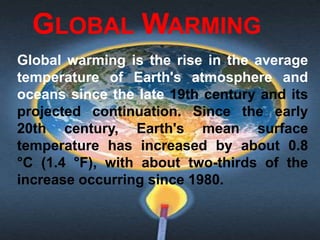
Global warming is the rise in the average
temperature of Earth's atmosphere and
oceans since the late 19th century and its
projected continuation. Since the early
20th century, Earth's mean surface
temperature has increased by about 0.8
°C (1.4 °F), with about two-thirds of the
increase occurring since 1980.
CAUSES
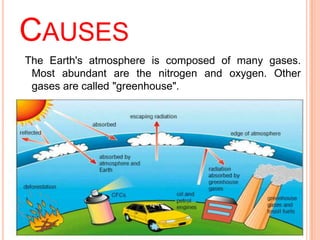
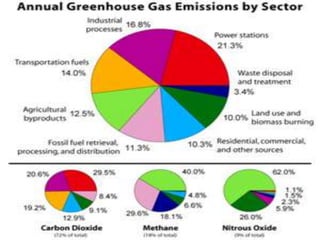
The Earth's atmosphere is composed of many gases.
 Most abundant are the nitrogen and oxygen. Other
 gases are called "greenhouse".
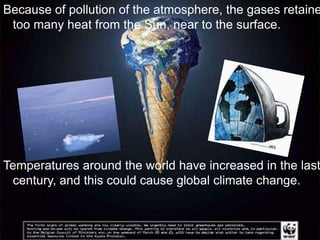
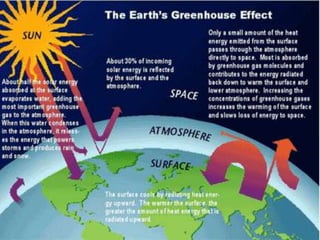
Because of pollution of the atmosphere, the gases retaine
 too many heat from the Sun, near to the surface.


Temperatures around the world have increased in the last
 century, and this could cause global climate change.
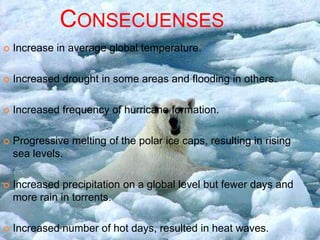
CONSECUENSES
   Increase in average global temperature.

   Increased drought in some areas and flooding in others.

   Increased frequency of hurricane formation.

   Progressive melting of the polar ice caps, resulting in rising
    sea levels.

   Increased precipitation on a global level but fewer days and
    more rain in torrents.

   Increased number of hot days, resulted in heat waves.
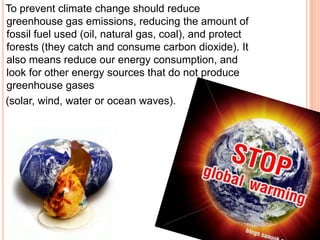
To prevent climate change should reduce
greenhouse gas emissions, reducing the amount of
fossil fuel used (oil, natural gas, coal), and protect
forests (they catch and consume carbon dioxide). It
also means reduce our energy consumption, and
look for other energy sources that do not produce
greenhouse gases
(solar, wind, water or ocean waves).

Global warming

  • 1.
    GLOBAL WARMING Global warmingis the rise in the average temperature of Earth's atmosphere and oceans since the late 19th century and its projected continuation. Since the early 20th century, Earth's mean surface temperature has increased by about 0.8 °C (1.4 °F), with about two-thirds of the increase occurring since 1980.
  • 2.
    CAUSES The Earth's atmosphereis composed of many gases. Most abundant are the nitrogen and oxygen. Other gases are called "greenhouse".
  • 4.
    Because of pollutionof the atmosphere, the gases retaine too many heat from the Sun, near to the surface. Temperatures around the world have increased in the last century, and this could cause global climate change.
  • 5.
    CONSECUENSES  Increase in average global temperature.  Increased drought in some areas and flooding in others.  Increased frequency of hurricane formation.  Progressive melting of the polar ice caps, resulting in rising sea levels.  Increased precipitation on a global level but fewer days and more rain in torrents.  Increased number of hot days, resulted in heat waves.
  • 8.
    To prevent climatechange should reduce greenhouse gas emissions, reducing the amount of fossil fuel used (oil, natural gas, coal), and protect forests (they catch and consume carbon dioxide). It also means reduce our energy consumption, and look for other energy sources that do not produce greenhouse gases (solar, wind, water or ocean waves).