WHAT IS GLOBAL WARMING?
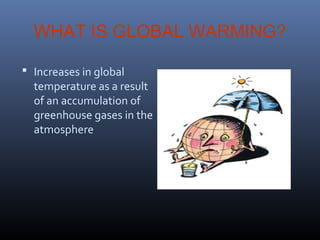
 Increases in global

temperature as a result
of an accumulation of
greenhouse gases in the
atmosphere
WHAT ARE GREENHOUSE
GASES?
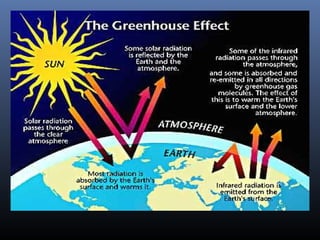
 Substances including carbon dioxide,

methane and chlorofluorocarbons. These
gases trap the sun's heat as it is radiated from
the earth and prevent it from escaping back
into space somewhat like the glass panels of a
greenhouse
WHAT IS THE GREENHOUSE
EFFECT?
 Something that occur as a result of

greenhouse gases trapping the heat from the
sun and keeping it close to the earth
 The earth has a natural greenhouse effect
that’s keeps it about 60 degrees warmer than
it would be otherwise. This enables us to live
comfortably on earth.
CAUSES OF GLOBAL WARMING
 Burning fossil fuels to






run cars and trucks,
heat homes and power
factories
Agriculture
Deforestation
Landfills
Industrial production
and mining
 When trees cut down for development,

agriculture and other purposes they not only
can't use up the carbon dioxide in the air but
they actually release it when they decay or are
burned
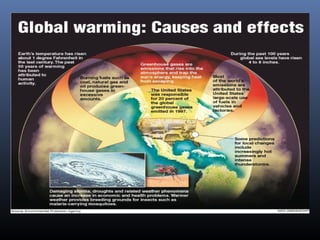
GLOBAL WARMING EFFECT
 A perpetual El Nino-like state, with higher

temperatures, wetter winters and drier summers.
This would mean more flooding in winter and
spring, but more water shortages in late summer
and fall
 A rise sea level resulting in submersion of low-lying
parts of coastal highways and land, increased
coastal erosion, changes in habitat, and saltwater
intrusion into fresh water
 a possible increase in human diseases,as warm

weather boosts tick and other parasite
populations and fosters the spread of viruses
and bacteria
 Loss of forest lands as a results of forest fires,
wind storms, and insect infestations
 Increased risk of extinction for salmon and other

marine life,as ocean temperature rise, nutrient
levels drop, and habitat changes
 Building and roads close to the water could be
flooded and they could not be suffer damage
from hurricane and tropical storm
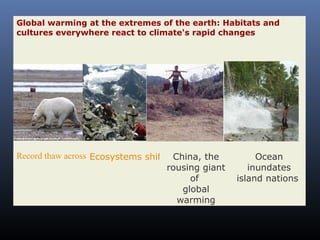
Global warming at the extremes of the earth: Habitats and
cultures everywhere react to climate's rapid changes

Record thaw across the Arctic
Ecosystems shift up mountainsides Ocean
China, the
rousing giant
inundates
of
island nations
global
warming
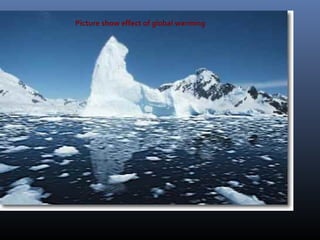
Picture show effect of global warming
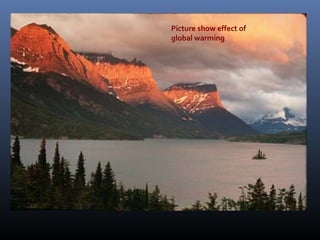
Picture show effect of
global warming
HOW TO REDUCE EMISSION OF
GREENHOUSE GASES
 Drive less frequently. Use alternative

methods of transportation such as buses,
carpools , bicycling, or walking
 Buy more energy efficient vehicles to helps
reduce use of fossil fuels such as coal and
gasoline
 Use cleaner alternative fuels such as methane
and propane
 Buy products that feature reusable, recyclable,

or reduced packaging to save the energy
required to manufacture new containers
 Use non-fossil energy, such as solar power and
wind power
 Weatherize buildings to conserve energy
 Plants tees

Global warming

  • 2.
    WHAT IS GLOBALWARMING?  Increases in global temperature as a result of an accumulation of greenhouse gases in the atmosphere
  • 3.
    WHAT ARE GREENHOUSE GASES? Substances including carbon dioxide, methane and chlorofluorocarbons. These gases trap the sun's heat as it is radiated from the earth and prevent it from escaping back into space somewhat like the glass panels of a greenhouse
  • 4.
    WHAT IS THEGREENHOUSE EFFECT?  Something that occur as a result of greenhouse gases trapping the heat from the sun and keeping it close to the earth  The earth has a natural greenhouse effect that’s keeps it about 60 degrees warmer than it would be otherwise. This enables us to live comfortably on earth.
  • 7.
    CAUSES OF GLOBALWARMING  Burning fossil fuels to     run cars and trucks, heat homes and power factories Agriculture Deforestation Landfills Industrial production and mining
  • 8.
     When treescut down for development, agriculture and other purposes they not only can't use up the carbon dioxide in the air but they actually release it when they decay or are burned
  • 9.
    GLOBAL WARMING EFFECT A perpetual El Nino-like state, with higher temperatures, wetter winters and drier summers. This would mean more flooding in winter and spring, but more water shortages in late summer and fall  A rise sea level resulting in submersion of low-lying parts of coastal highways and land, increased coastal erosion, changes in habitat, and saltwater intrusion into fresh water
  • 10.
     a possibleincrease in human diseases,as warm weather boosts tick and other parasite populations and fosters the spread of viruses and bacteria  Loss of forest lands as a results of forest fires, wind storms, and insect infestations
  • 11.
     Increased riskof extinction for salmon and other marine life,as ocean temperature rise, nutrient levels drop, and habitat changes  Building and roads close to the water could be flooded and they could not be suffer damage from hurricane and tropical storm
  • 12.
    Global warming atthe extremes of the earth: Habitats and cultures everywhere react to climate's rapid changes Record thaw across the Arctic Ecosystems shift up mountainsides Ocean China, the rousing giant inundates of island nations global warming
  • 13.
    Picture show effectof global warming
  • 14.
    Picture show effectof global warming
  • 15.
    HOW TO REDUCEEMISSION OF GREENHOUSE GASES  Drive less frequently. Use alternative methods of transportation such as buses, carpools , bicycling, or walking  Buy more energy efficient vehicles to helps reduce use of fossil fuels such as coal and gasoline  Use cleaner alternative fuels such as methane and propane
  • 16.
     Buy productsthat feature reusable, recyclable, or reduced packaging to save the energy required to manufacture new containers  Use non-fossil energy, such as solar power and wind power  Weatherize buildings to conserve energy  Plants tees