Phenomena
(Case of Global
Warming)
Dr. Sujinna Karnasuta
Environment Technology and
Life (01999213)
Faculty of Environment,
Kasetsart University
Main TopicsMain Topics
 Earth’s temperature is a balancing act
 The Greenhouse Effect causes the
atmosphere to retain heat
 The Recent Role of the Greenhouse Effect
Main TopicsMain Topics
 The Main Greenhouse Gases
 Humans are largely responsible for recent
climate change
 Climate change affects life
Earth’s temperature is a
balancing act
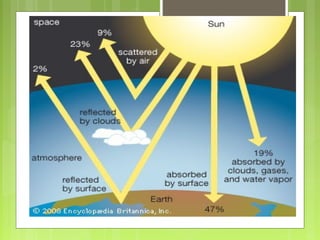
 Earth’s temperature depends on the balance
between energy entering and leaving the
planet’s system .
 When incoming energy from the sun is
absorbed by the Earth system, Earth warms.
 When the sun’s energy is reflected back into
space, Earth avoids warming.
 When energy is released back into space,
Earth cools.
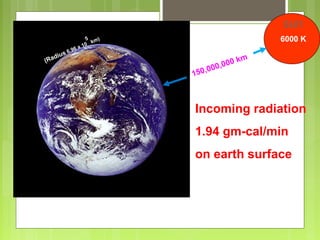
Incoming radiation
1.94 gm-cal/min
on earth surface
(Radius 6.96 x 10
5
km)
150,000,000 km
6000 K
sun
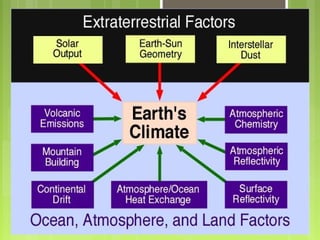
Factors caused Earth’s climate change
 The amount of heat retained by Earth’s
atmosphere
 Variations in the sun’s energy reaching
Earth
 Changes in the reflectivity of Earth’s
atmosphere and surface
Greenhouse effect
Greenhouse gases (GHGs) like water vapor
(H2O), carbon dioxide (CO2), and methane
(CH4) absorb energy
Slowing or preventing the loss of heat to
space. In this way, GHGs act like a blanket,
making Earth warmer than it would otherwise
be.
Our Earth is warming
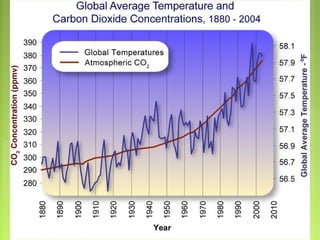
 Earth's average temperature has risen by
1.4°F over the past century, and is
projected to rise another 2 to 11.5°F over
the next hundred years.
 Small changes in the average
temperature of the planet can translate
to large and potentially dangerous shifts
in climate and weather.
The Recent Role of the
Greenhouse Effect
 Since the Industrial Revolution began
around 1750, human activities have
contributed substantially to climate
change by adding CO2 and other heat-
trapping gases to the atmosphere.
 These greenhouse gas emissions have
increased the greenhouse effect and
caused Earth’s surface temperature to rise.
 The primary human activity affecting the
amount and rate of climate change is
greenhouse gas emissions from the burning
of fossil fuels.
The Main Greenhouse
Gases
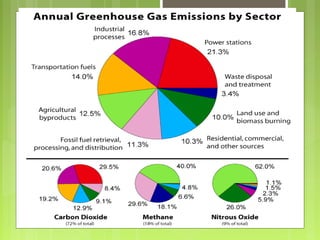
 CO2
 CH4
 nitrous oxide (N2O)
 several others
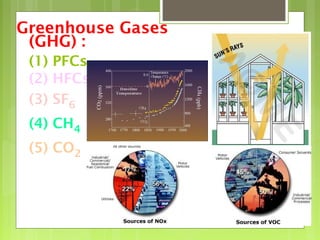
Greenhouse Gases
(GHG) :
(1) PFCs
(2) HFCs
(3) SF6
(4) CH4
(5) CO2
(6) N2O
Humans are largely
responsible for recent
climate change
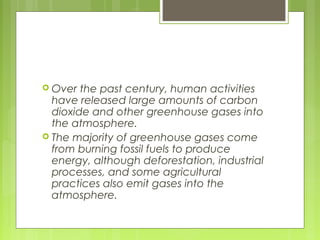
 Over the past century, human activities
have released large amounts of carbon
dioxide and other greenhouse gases into
the atmosphere.
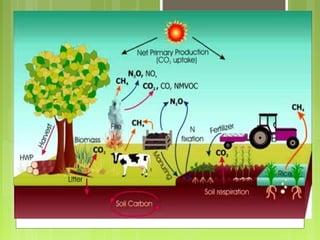
 The majority of greenhouse gases come
from burning fossil fuels to produce
energy, although deforestation, industrial
processes, and some agricultural
practices also emit gases into the
atmosphere.
Climate change affects Life
Regional impacts of
global change forecast by
the IPCC
Decreasing snowpack in the western
mountains
5-20 percent increase in yields of rain-fed
agriculture in some regions
Increased frequency, intensity and
duration of heat waves in cities that
currently experience them.
North America
 Gradual replacement of tropical forest by
savannah in eastern Amazonia
 Risk of significant biodiversity loss through
species extinction in many tropical areas
 Significant changes in water availability for
human consumption, agriculture and
energy generation.
Latin America
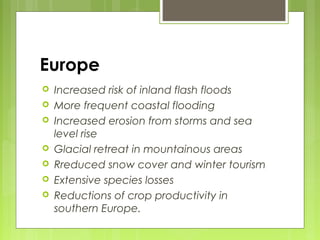
Europe
 Increased risk of inland flash floods
 More frequent coastal flooding
 Increased erosion from storms and sea
level rise
 Glacial retreat in mountainous areas
 Rreduced snow cover and winter tourism
 Extensive species losses
 Reductions of crop productivity in
southern Europe.
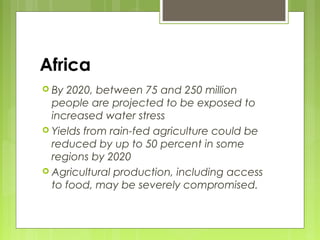
Africa
 By 2020, between 75 and 250 million
people are projected to be exposed to
increased water stress
 Yields from rain-fed agriculture could be
reduced by up to 50 percent in some
regions by 2020
 Agricultural production, including access
to food, may be severely compromised.
 Freshwater availability projected to
decrease in Central, South, East and
Southeast Asia by the 2050s
 Coastal areas will be at risk due to
increased flooding
 Death rate from disease associated with
floods and droughts expected to rise in
some regions.
Asia
25432536
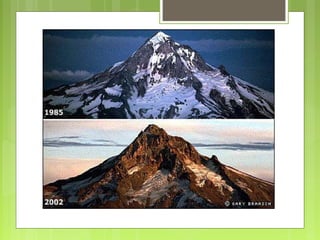
©NASAEarthObservatory ©NASAEarthObservatory©NASAEarthObservatory ©NASAEarthObservatory
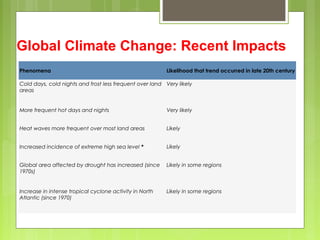
Global Climate Change: Recent Impacts
Phenomena Likelihood that trend occurred in late 20th century
Cold days, cold nights and frost less frequent over land
areas
Very likely
More frequent hot days and nights Very likely
Heat waves more frequent over most land areas Likely
Increased incidence of extreme high sea level * Likely
Global area affected by drought has increased (since
1970s)
Likely in some regions
Increase in intense tropical cyclone activity in North
Atlantic (since 1970)
Likely in some regions
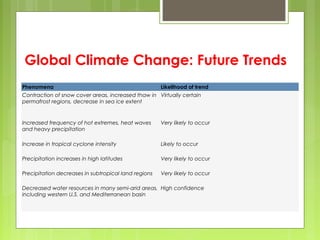
Global Climate Change: Future Trends
Phenomena Likelihood of trend
Contraction of snow cover areas, increased thaw in
permafrost regions, decrease in sea ice extent
Virtually certain
Increased frequency of hot extremes, heat waves
and heavy precipitation
Very likely to occur
Increase in tropical cyclone intensity Likely to occur
Precipitation increases in high latitudes Very likely to occur
Precipitation decreases in subtropical land regions Very likely to occur
Decreased water resources in many semi-arid areas,
including western U.S. and Mediterranean basin
High confidence
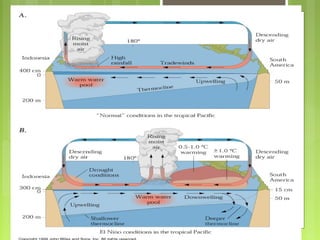
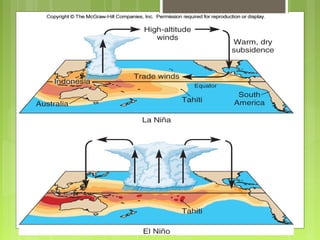
El Niño
El Niño meaning The Little
Boy, or Christ Child in Spanish
originally recognized by
fishermen off the coast of
South America in 1600s.
Appearance of unusually
warm water in the Pacific
Ocean.
Basing on the time of
year,around December during
which these warm waters
The El Niño refers to the
large-scale ocean-
atmosphere climate
interaction linked to a
periodic warming in sea
surface temperatures
across the central and
east-central Equatorial
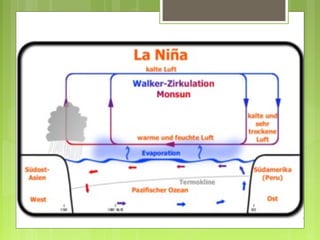
La Niña
La Niña means The Little Girl in Spanish. La
Niña is also sometimes called El Viejo, anti-
El Niño, or simply "a cold event."
La Niña episodes represent periods of
below-average sea surface temperatures
across the east-central Equatorial Pacific.
Global climate La Niña impacts tend to be
opposite those of El Niño impacts and in the
tropics, ocean temperature variations in La
Niña also tend to be opposite those of El
Niño.
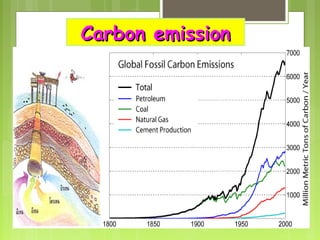
Carbon emissionCarbon emission
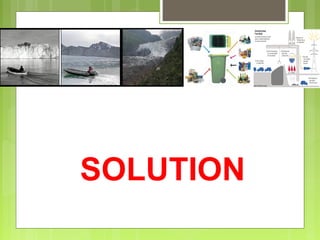
SOLUTION
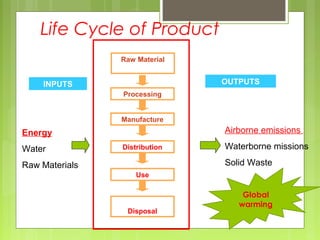
Life Cycle of Product
Raw Material
Sourcing
Processing
Manufacture
Distribution
Use
Post Consumer
Disposal
INPUTS OUTPUTS
Energy
Water
Raw Materials
Airborne emissions
Waterborne missions
Solid Waste
Global
warming
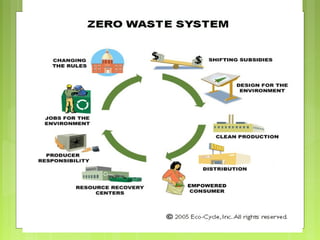
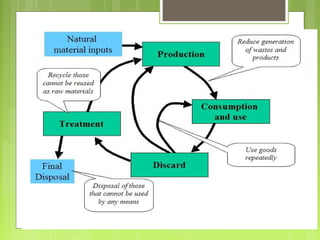
3R concept within the production cycle
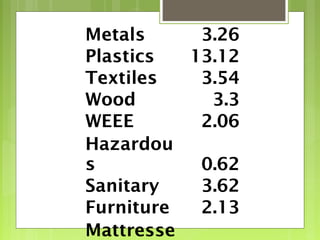
Metals 3.26
Plastics 13.12
Textiles 3.54
Wood 3.3
WEEE 2.06
Hazardou
s 0.62
Sanitary 3.62
Furniture 2.13
Mattresse
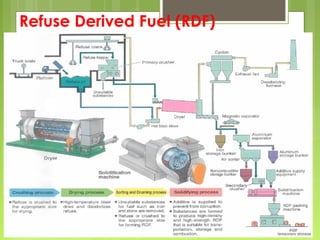
Refuse Derived Fuel (RDF)
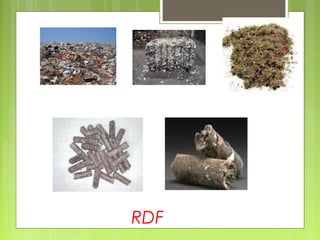
RDF
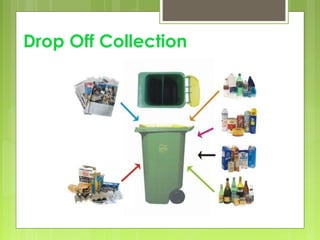
Drop Off Collection
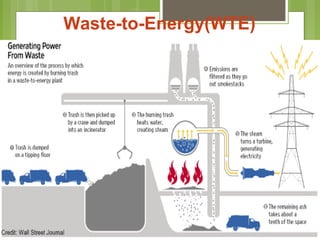
Waste-to-Energy(WTE)
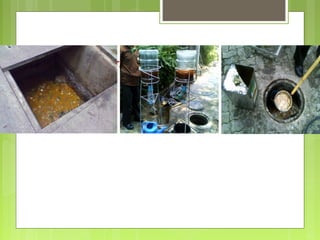
Waste Grease
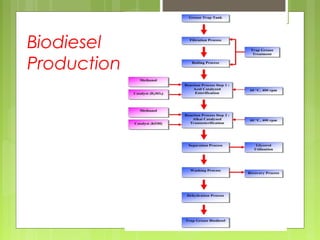
Biodiesel
Production
Campus Activities
Reducing
Global Warming Effect
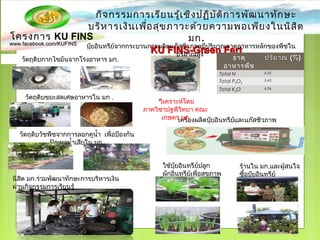
กิจกรรมการเรียนรู้เชิงปฏิบัติการพัฒนาทักษะ
บริหารเงินเพื่อสุขภาวะด้วยความพอเพียงในนิสิต
มก.
KU FINS-Green FertKU FINS-Green Fert
วัตถุดิบกากไขมันจากโรงอาหาร มก.
วัตถุดิบวัชพืชจากการลอกคูนำ้า เพื่อป้องกัน
ปัญหานำ้าเสียใน มก.
เครื่องผลิตปุ๋ยอินทรีย์และแก๊สชีวภาพ
วัตถุดิบขยะสดเศษอาหารใน มก .
นิสิต มก.ร่วมพัฒนาทักษะการบริหารเงิน
ผ่านกิจกรรมการเรียนรู้
ปุ๋ยอินทรีย์จากกระบวนการผลิตเเก็สชีวภาพมีปริมาณธาตุอาหารหลักของพืชใน
ปริมาณสูง*
ใช้ปุ๋ยอินทรีย์ปลูก
ผักอินทรีย์เพื่อสุขภาพ
ร้านใน มก.และผู้สนใจ
ซื้อปุ๋ยอินทรีย์
www.facebook.com/KUFINSwww.facebook.com/KUFINS
โครงการ KU FINS
ธาตุ
อาหารพืช
ปริมาณปริมาณ ((%%))
Total N 4.02
Total P2O5
3.43
Total K2O 4.26
*วิเคราะห์โดย
ภาควิชาปฐพีวิทยา คณะ
เกษตร มก.
Virtues and Ethics
A Tale of “ What do you think about it”
……………………
…………

Pw999213sec480chapter5 dr.sujinna2 57-10_4_58

  • 1.
    Phenomena (Case of Global Warming) Dr.Sujinna Karnasuta Environment Technology and Life (01999213) Faculty of Environment, Kasetsart University
  • 2.
    Main TopicsMain Topics Earth’s temperature is a balancing act  The Greenhouse Effect causes the atmosphere to retain heat  The Recent Role of the Greenhouse Effect
  • 3.
    Main TopicsMain Topics The Main Greenhouse Gases  Humans are largely responsible for recent climate change  Climate change affects life
  • 4.
    Earth’s temperature isa balancing act
  • 5.
     Earth’s temperaturedepends on the balance between energy entering and leaving the planet’s system .  When incoming energy from the sun is absorbed by the Earth system, Earth warms.  When the sun’s energy is reflected back into space, Earth avoids warming.  When energy is released back into space, Earth cools.
  • 6.
    Incoming radiation 1.94 gm-cal/min onearth surface (Radius 6.96 x 10 5 km) 150,000,000 km 6000 K sun
  • 8.
    Factors caused Earth’sclimate change  The amount of heat retained by Earth’s atmosphere  Variations in the sun’s energy reaching Earth  Changes in the reflectivity of Earth’s atmosphere and surface
  • 10.
    Greenhouse effect Greenhouse gases(GHGs) like water vapor (H2O), carbon dioxide (CO2), and methane (CH4) absorb energy Slowing or preventing the loss of heat to space. In this way, GHGs act like a blanket, making Earth warmer than it would otherwise be.
  • 11.
    Our Earth iswarming  Earth's average temperature has risen by 1.4°F over the past century, and is projected to rise another 2 to 11.5°F over the next hundred years.  Small changes in the average temperature of the planet can translate to large and potentially dangerous shifts in climate and weather.
  • 13.
    The Recent Roleof the Greenhouse Effect
  • 14.
     Since theIndustrial Revolution began around 1750, human activities have contributed substantially to climate change by adding CO2 and other heat- trapping gases to the atmosphere.  These greenhouse gas emissions have increased the greenhouse effect and caused Earth’s surface temperature to rise.  The primary human activity affecting the amount and rate of climate change is greenhouse gas emissions from the burning of fossil fuels.
  • 15.
  • 16.
     CO2  CH4 nitrous oxide (N2O)  several others
  • 17.
    Greenhouse Gases (GHG) : (1)PFCs (2) HFCs (3) SF6 (4) CH4 (5) CO2 (6) N2O
  • 20.
    Humans are largely responsiblefor recent climate change
  • 21.
     Over thepast century, human activities have released large amounts of carbon dioxide and other greenhouse gases into the atmosphere.  The majority of greenhouse gases come from burning fossil fuels to produce energy, although deforestation, industrial processes, and some agricultural practices also emit gases into the atmosphere.
  • 22.
    Climate change affectsLife Regional impacts of global change forecast by the IPCC
  • 23.
    Decreasing snowpack inthe western mountains 5-20 percent increase in yields of rain-fed agriculture in some regions Increased frequency, intensity and duration of heat waves in cities that currently experience them. North America
  • 24.
     Gradual replacementof tropical forest by savannah in eastern Amazonia  Risk of significant biodiversity loss through species extinction in many tropical areas  Significant changes in water availability for human consumption, agriculture and energy generation. Latin America
  • 25.
    Europe  Increased riskof inland flash floods  More frequent coastal flooding  Increased erosion from storms and sea level rise  Glacial retreat in mountainous areas  Rreduced snow cover and winter tourism  Extensive species losses  Reductions of crop productivity in southern Europe.
  • 26.
    Africa  By 2020,between 75 and 250 million people are projected to be exposed to increased water stress  Yields from rain-fed agriculture could be reduced by up to 50 percent in some regions by 2020  Agricultural production, including access to food, may be severely compromised.
  • 27.
     Freshwater availabilityprojected to decrease in Central, South, East and Southeast Asia by the 2050s  Coastal areas will be at risk due to increased flooding  Death rate from disease associated with floods and droughts expected to rise in some regions. Asia
  • 29.
  • 31.
    Global Climate Change:Recent Impacts Phenomena Likelihood that trend occurred in late 20th century Cold days, cold nights and frost less frequent over land areas Very likely More frequent hot days and nights Very likely Heat waves more frequent over most land areas Likely Increased incidence of extreme high sea level * Likely Global area affected by drought has increased (since 1970s) Likely in some regions Increase in intense tropical cyclone activity in North Atlantic (since 1970) Likely in some regions
  • 32.
    Global Climate Change:Future Trends Phenomena Likelihood of trend Contraction of snow cover areas, increased thaw in permafrost regions, decrease in sea ice extent Virtually certain Increased frequency of hot extremes, heat waves and heavy precipitation Very likely to occur Increase in tropical cyclone intensity Likely to occur Precipitation increases in high latitudes Very likely to occur Precipitation decreases in subtropical land regions Very likely to occur Decreased water resources in many semi-arid areas, including western U.S. and Mediterranean basin High confidence
  • 33.
    El Niño El Niñomeaning The Little Boy, or Christ Child in Spanish originally recognized by fishermen off the coast of South America in 1600s. Appearance of unusually warm water in the Pacific Ocean. Basing on the time of year,around December during which these warm waters
  • 34.
    The El Niñorefers to the large-scale ocean- atmosphere climate interaction linked to a periodic warming in sea surface temperatures across the central and east-central Equatorial
  • 36.
    La Niña La Niñameans The Little Girl in Spanish. La Niña is also sometimes called El Viejo, anti- El Niño, or simply "a cold event." La Niña episodes represent periods of below-average sea surface temperatures across the east-central Equatorial Pacific. Global climate La Niña impacts tend to be opposite those of El Niño impacts and in the tropics, ocean temperature variations in La Niña also tend to be opposite those of El Niño.
  • 40.
  • 41.
  • 43.
    Life Cycle ofProduct Raw Material Sourcing Processing Manufacture Distribution Use Post Consumer Disposal INPUTS OUTPUTS Energy Water Raw Materials Airborne emissions Waterborne missions Solid Waste Global warming
  • 44.
    3R concept withinthe production cycle
  • 45.
    Metals 3.26 Plastics 13.12 Textiles3.54 Wood 3.3 WEEE 2.06 Hazardou s 0.62 Sanitary 3.62 Furniture 2.13 Mattresse
  • 46.
  • 47.
  • 48.
  • 49.
  • 50.
  • 51.
  • 52.
  • 53.
    กิจกรรมการเรียนรู้เชิงปฏิบัติการพัฒนาทักษะ บริหารเงินเพื่อสุขภาวะด้วยความพอเพียงในนิสิต มก. KU FINS-Green FertKUFINS-Green Fert วัตถุดิบกากไขมันจากโรงอาหาร มก. วัตถุดิบวัชพืชจากการลอกคูนำ้า เพื่อป้องกัน ปัญหานำ้าเสียใน มก. เครื่องผลิตปุ๋ยอินทรีย์และแก๊สชีวภาพ วัตถุดิบขยะสดเศษอาหารใน มก . นิสิต มก.ร่วมพัฒนาทักษะการบริหารเงิน ผ่านกิจกรรมการเรียนรู้ ปุ๋ยอินทรีย์จากกระบวนการผลิตเเก็สชีวภาพมีปริมาณธาตุอาหารหลักของพืชใน ปริมาณสูง* ใช้ปุ๋ยอินทรีย์ปลูก ผักอินทรีย์เพื่อสุขภาพ ร้านใน มก.และผู้สนใจ ซื้อปุ๋ยอินทรีย์ www.facebook.com/KUFINSwww.facebook.com/KUFINS โครงการ KU FINS ธาตุ อาหารพืช ปริมาณปริมาณ ((%%)) Total N 4.02 Total P2O5 3.43 Total K2O 4.26 *วิเคราะห์โดย ภาควิชาปฐพีวิทยา คณะ เกษตร มก.
  • 55.
    Virtues and Ethics ATale of “ What do you think about it” …………………… …………