Global Learning Programme - 
Wales 
Bill Burson – Programme Manager 
In partnership with
© Crown Copyright 2013 
What is the GLP-W? 
• A three-year funded programme 
• Supports schools to embed good 
practice in global learning through the 
creation of school networks 
• Focused on sharing practice and ideas 
• Supported by access to high quality 
training and resources. 
Target - Half of Wales’ schools will engage 
with the programme by July 2017 
1
© Crown Copyright 2013 
What do we want the GLP-W to do? 
• Help children and young people understand 
their role in a globally interdependent world 
and explore ways by which they can make it 
more just and sustainable 
• Familiarise pupils with the concepts of 
interdependence, development and 
globalisation 
• Stimulate critical thinking about global 
issues, both at a whole school and pupil level 
• Help schools promote greater awareness of 
global poverty and how it can be reduced 
• Enable teachers to explore new and 
alternative ways of teaching about 
development and sustainability in the 
classroom. 
2
© Crown Copyright 2013 
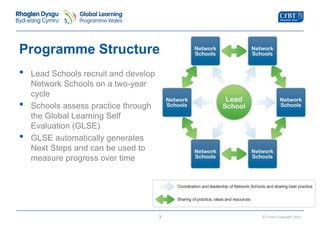
Programme Structure 
3 
• Lead Schools recruit and develop 
Network Schools on a two-year 
cycle 
• Schools assess practice through 
the Global Learning Self 
Evaluation (GLSE) 
• GLSE automatically generates 
Next Steps and can be used to 
measure progress over time
4 © Crown Copyright 2013 
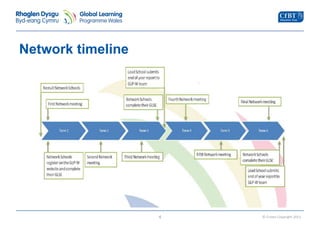
Network timeline
Why should schools engage with the GLP-W? 
© Crown Copyright 2013 
 
ESDGC (especially the GC bit!) 
 
Training, resources and support 
 
Curriculum enrichment 
 
A relevant and exciting context to 
develop literacy and numeracy 
 
To prepare pupils for the wider world 
5
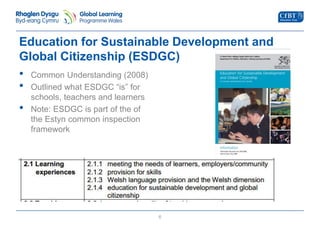
Education for Sustainable Development and 
Global Citizenship (ESDGC) 
• Common Understanding (2008) 
• Outlined what ESDGC “is” for 
schools, teachers and learners 
• Note: ESDGC is part of the of 
the Estyn common inspection 
framework 
6
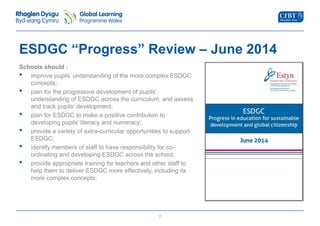
ESDGC “Progress” Review – June 2014 
Schools should : 
• improve pupils’ understanding of the more complex ESDGC 
7 
concepts; 
• plan for the progressive development of pupils’ 
understanding of ESDGC across the curriculum, and assess 
and track pupils’ development; 
• plan for ESDGC to make a positive contribution to 
developing pupils’ literacy and numeracy; 
• provide a variety of extra-curricular opportunities to support 
ESDGC; 
• identify members of staff to have responsibility for co-ordinating 
and developing ESDGC across the school; 
• provide appropriate training for teachers and other staff to 
help them to deliver ESDGC more effectively, including its 
more complex concepts;
© Crown Copyright 2013 
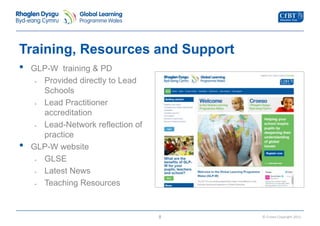
Training, Resources and Support 
• GLP-W training & PD 
- Provided directly to Lead 
Schools 
- Lead Practitioner 
accreditation 
- Lead-Network reflection of 
practice 
• GLP-W website 
- GLSE 
- Latest News 
- Teaching Resources 
8
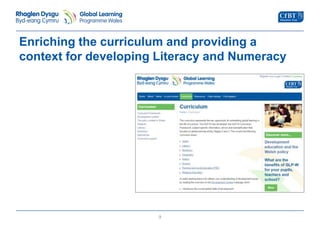
Enriching the curriculum and providing a 
context for developing Literacy and Numeracy 
9
The value of global learning to pupils 
Practical: 
75% of board- and director-level executives and CEOs think that “we are in 
danger of being left behind by emerging countries unless young people 
learn to think more globally” 
The Global Skills Gap. (2011) Think Global and British Council 
Personal: 
• Social responsibility 
• Cultural, racial and religious respect 
• Empathetic and rights aware 
• Prepared for a more sustainable future 
10
What next? 
Recruitment: 
- Further Lead Schools (Deadlines in 2015) 
- Around 700 Network schools (by 2017) 
Resources: 
- Subject specific and cross curricular 
- Stronger support for Literacy and Numeracy 
development 
- Case Studies of identified effective practice from 
11 
schools in Wales 
Sharing 
- Via school networks, events, newsletters, website and 
partners

Global Learning Programme

  • 1.
    Global Learning Programme- Wales Bill Burson – Programme Manager In partnership with
  • 2.
    © Crown Copyright2013 What is the GLP-W? • A three-year funded programme • Supports schools to embed good practice in global learning through the creation of school networks • Focused on sharing practice and ideas • Supported by access to high quality training and resources. Target - Half of Wales’ schools will engage with the programme by July 2017 1
  • 3.
    © Crown Copyright2013 What do we want the GLP-W to do? • Help children and young people understand their role in a globally interdependent world and explore ways by which they can make it more just and sustainable • Familiarise pupils with the concepts of interdependence, development and globalisation • Stimulate critical thinking about global issues, both at a whole school and pupil level • Help schools promote greater awareness of global poverty and how it can be reduced • Enable teachers to explore new and alternative ways of teaching about development and sustainability in the classroom. 2
  • 4.
    © Crown Copyright2013 Programme Structure 3 • Lead Schools recruit and develop Network Schools on a two-year cycle • Schools assess practice through the Global Learning Self Evaluation (GLSE) • GLSE automatically generates Next Steps and can be used to measure progress over time
  • 5.
    4 © CrownCopyright 2013 Network timeline
  • 6.
    Why should schoolsengage with the GLP-W? © Crown Copyright 2013  ESDGC (especially the GC bit!)  Training, resources and support  Curriculum enrichment  A relevant and exciting context to develop literacy and numeracy  To prepare pupils for the wider world 5
  • 7.
    Education for SustainableDevelopment and Global Citizenship (ESDGC) • Common Understanding (2008) • Outlined what ESDGC “is” for schools, teachers and learners • Note: ESDGC is part of the of the Estyn common inspection framework 6
  • 8.
    ESDGC “Progress” Review– June 2014 Schools should : • improve pupils’ understanding of the more complex ESDGC 7 concepts; • plan for the progressive development of pupils’ understanding of ESDGC across the curriculum, and assess and track pupils’ development; • plan for ESDGC to make a positive contribution to developing pupils’ literacy and numeracy; • provide a variety of extra-curricular opportunities to support ESDGC; • identify members of staff to have responsibility for co-ordinating and developing ESDGC across the school; • provide appropriate training for teachers and other staff to help them to deliver ESDGC more effectively, including its more complex concepts;
  • 9.
    © Crown Copyright2013 Training, Resources and Support • GLP-W training & PD - Provided directly to Lead Schools - Lead Practitioner accreditation - Lead-Network reflection of practice • GLP-W website - GLSE - Latest News - Teaching Resources 8
  • 10.
    Enriching the curriculumand providing a context for developing Literacy and Numeracy 9
  • 11.
    The value ofglobal learning to pupils Practical: 75% of board- and director-level executives and CEOs think that “we are in danger of being left behind by emerging countries unless young people learn to think more globally” The Global Skills Gap. (2011) Think Global and British Council Personal: • Social responsibility • Cultural, racial and religious respect • Empathetic and rights aware • Prepared for a more sustainable future 10
  • 12.
    What next? Recruitment: - Further Lead Schools (Deadlines in 2015) - Around 700 Network schools (by 2017) Resources: - Subject specific and cross curricular - Stronger support for Literacy and Numeracy development - Case Studies of identified effective practice from 11 schools in Wales Sharing - Via school networks, events, newsletters, website and partners