Theories of International Organization: Constructivism	Katya Haratonik and Irina Saakyan
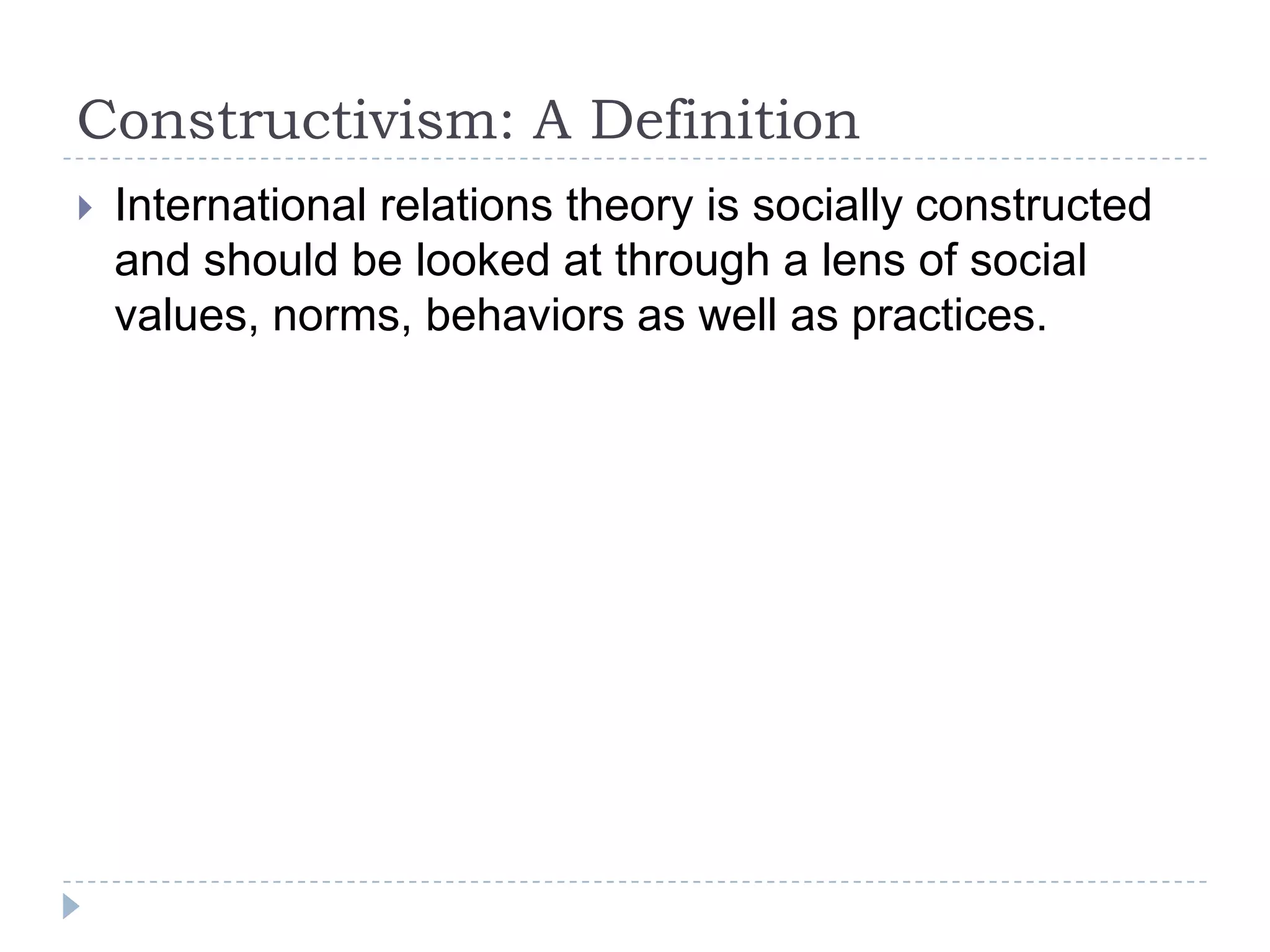
Constructivism: A DefinitionInternational relations theory is socially constructed and should be looked at through a lens of social values, norms, behaviors as well as practices.
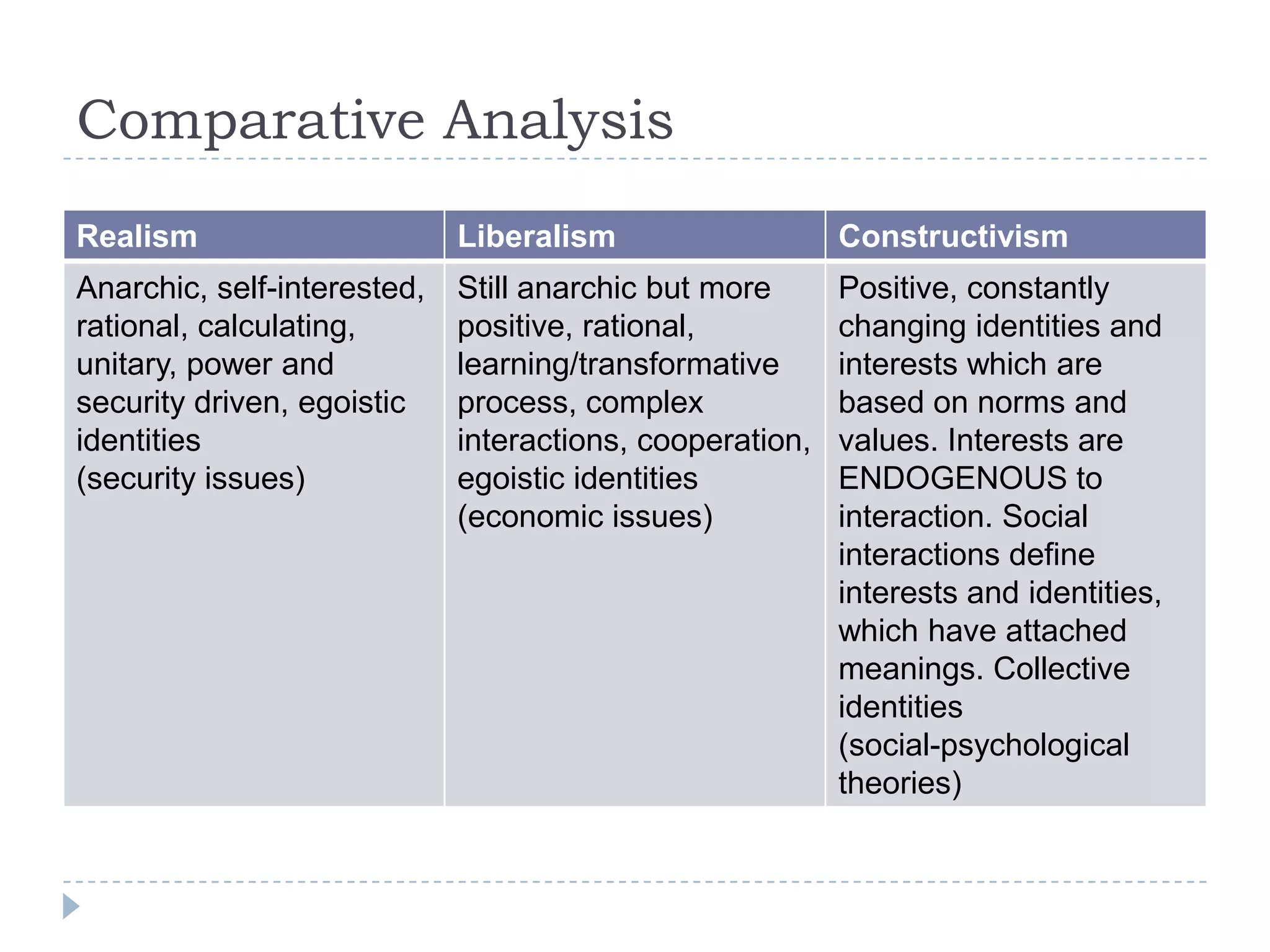
Constructivism: A Table
Comparative Analysis
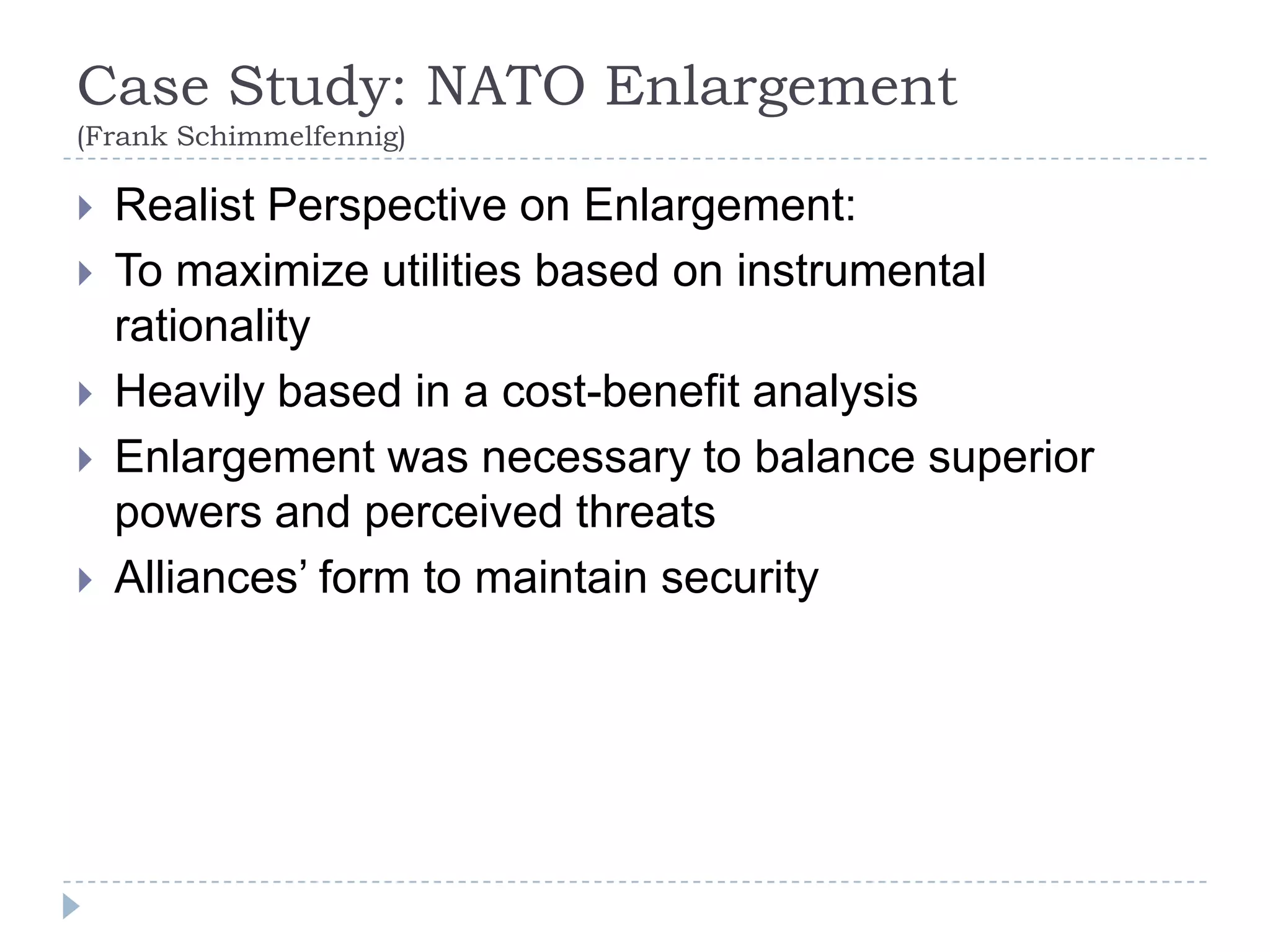
Case Study: NATO Enlargement (Frank Schimmelfennig)Realist Perspective on Enlargement:To maximize utilities based on instrumental rationalityHeavily based in a cost-benefit analysisEnlargement was necessary to balance superior powers and perceived threats Alliances’ form to maintain security
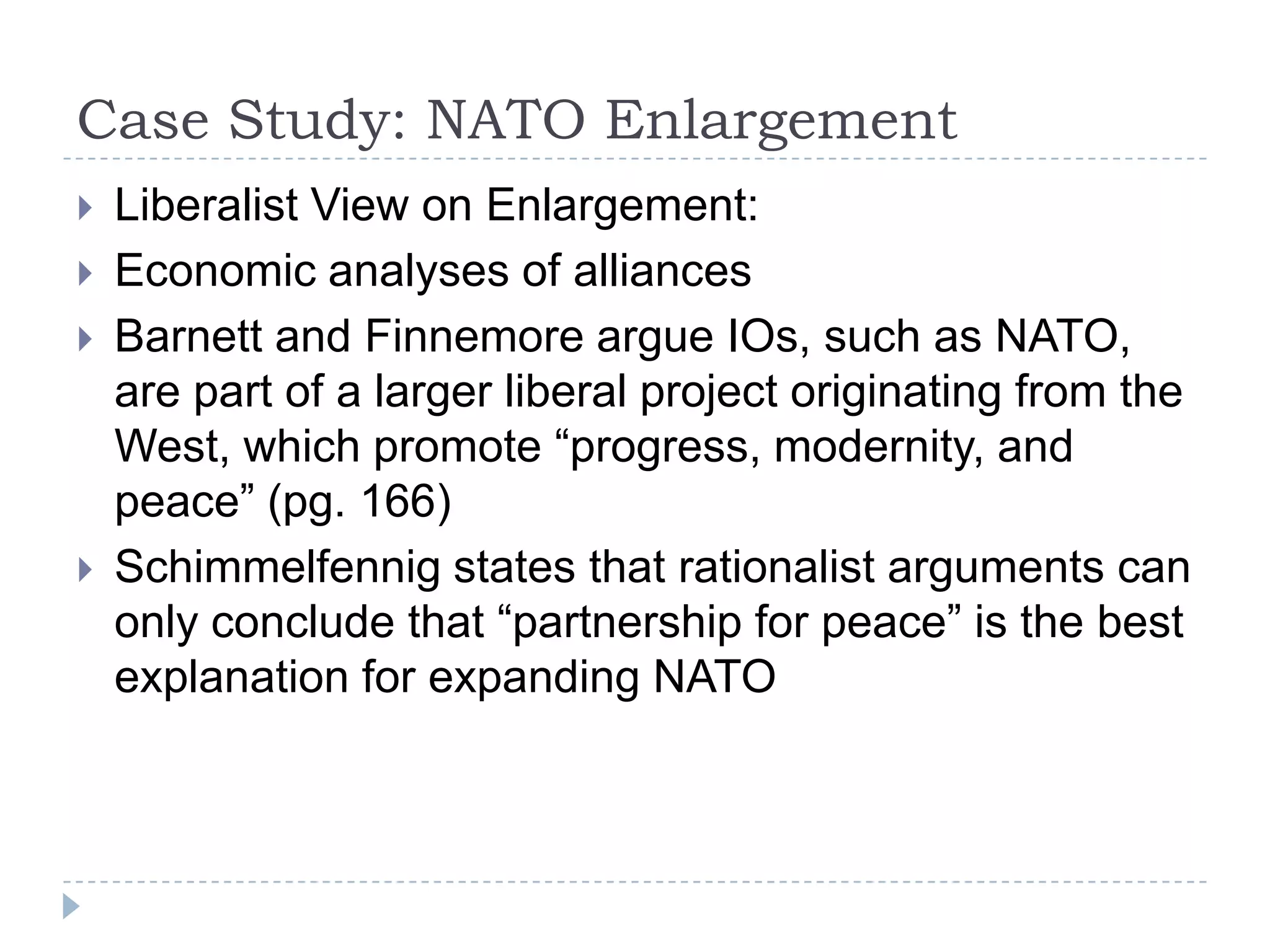
Case Study: NATO Enlargement Liberalist View on Enlargement:Economic analyses of alliancesBarnett and Finnemore argue IOs, such as NATO, are part of a larger liberal project originating from the West, which promote “progress, modernity, and peace” (pg. 166)Schimmelfennig states that rationalist arguments can only conclude that “partnership for peace” is the best explanation for expanding NATO
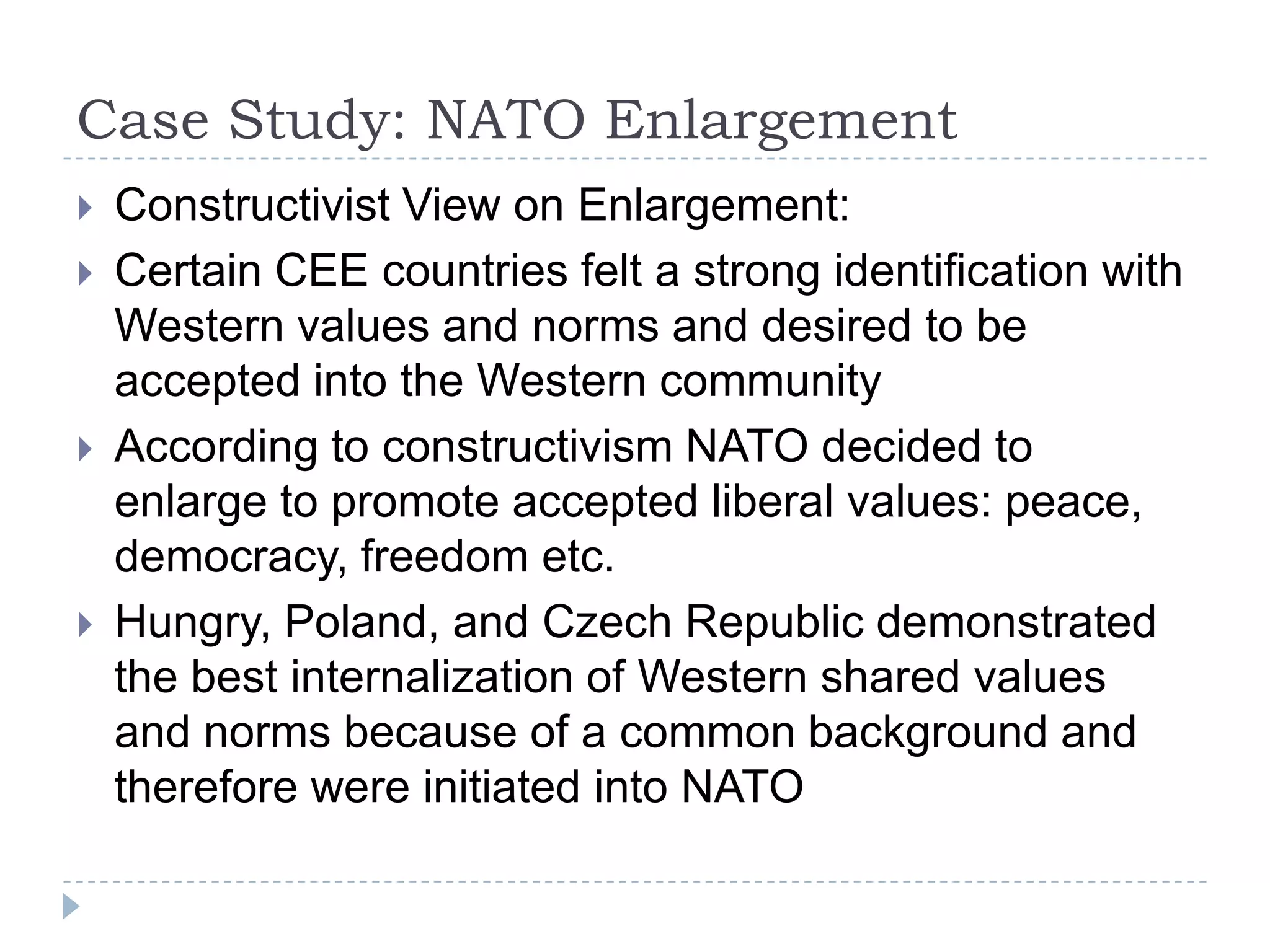
Case Study: NATO Enlargement Constructivist View on Enlargement:Certain CEE countries felt a strong identification with Western values and norms and desired to be accepted into the Western communityAccording to constructivism NATO decided to enlarge to promote accepted liberal values: peace, democracy, freedom etc.Hungry, Poland, and Czech Republic demonstrated the best internalization of Western shared values and norms because of a common background and therefore were initiated into NATO
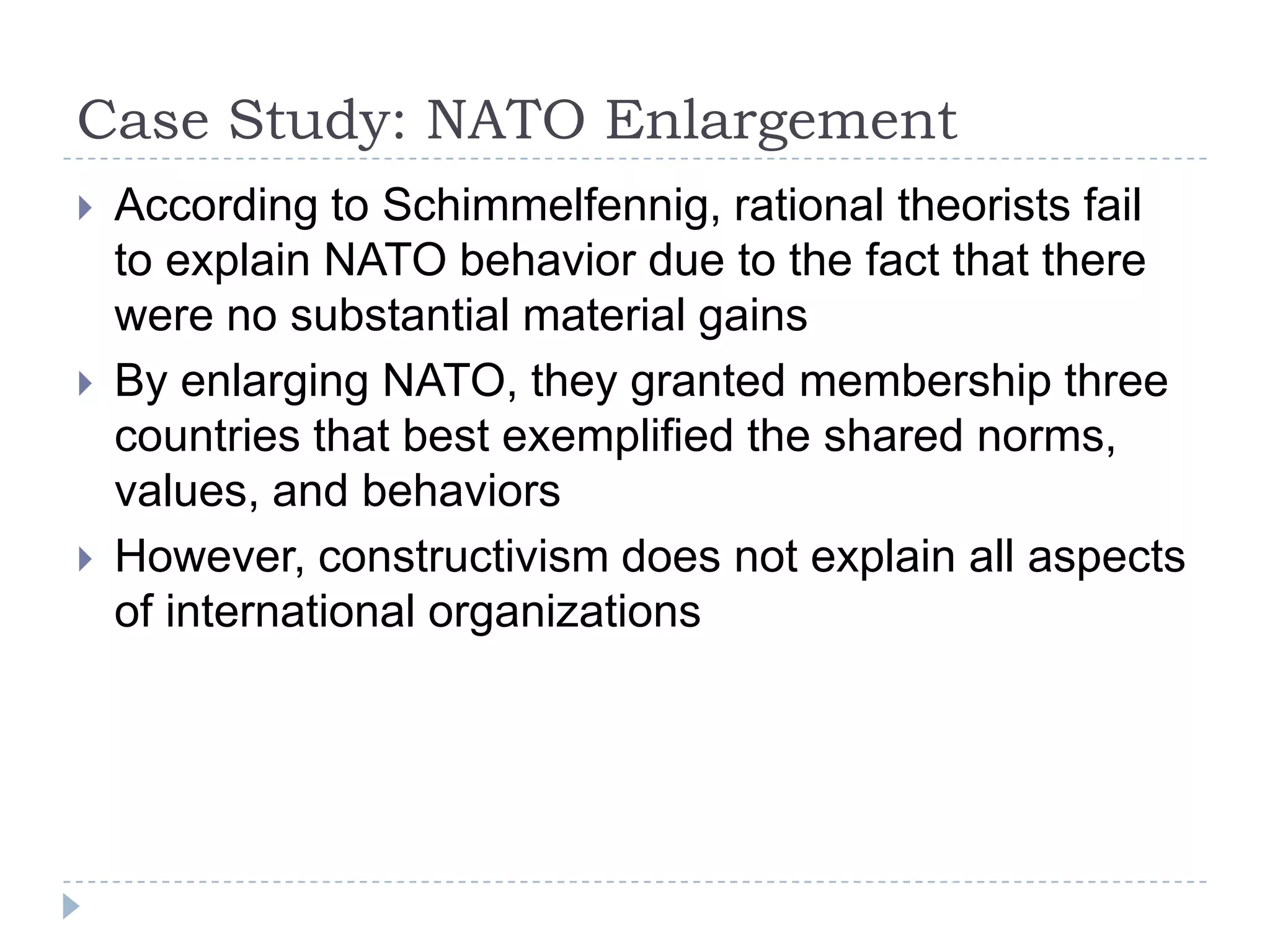
Case Study: NATO Enlargement According to Schimmelfennig, rational theorists fail to explain NATO behavior due to the fact that there were no substantial material gainsBy enlarging NATO, they granted membership three countries that best exemplified the shared norms, values, and behaviorsHowever, constructivism does not explain all aspects of international organizations
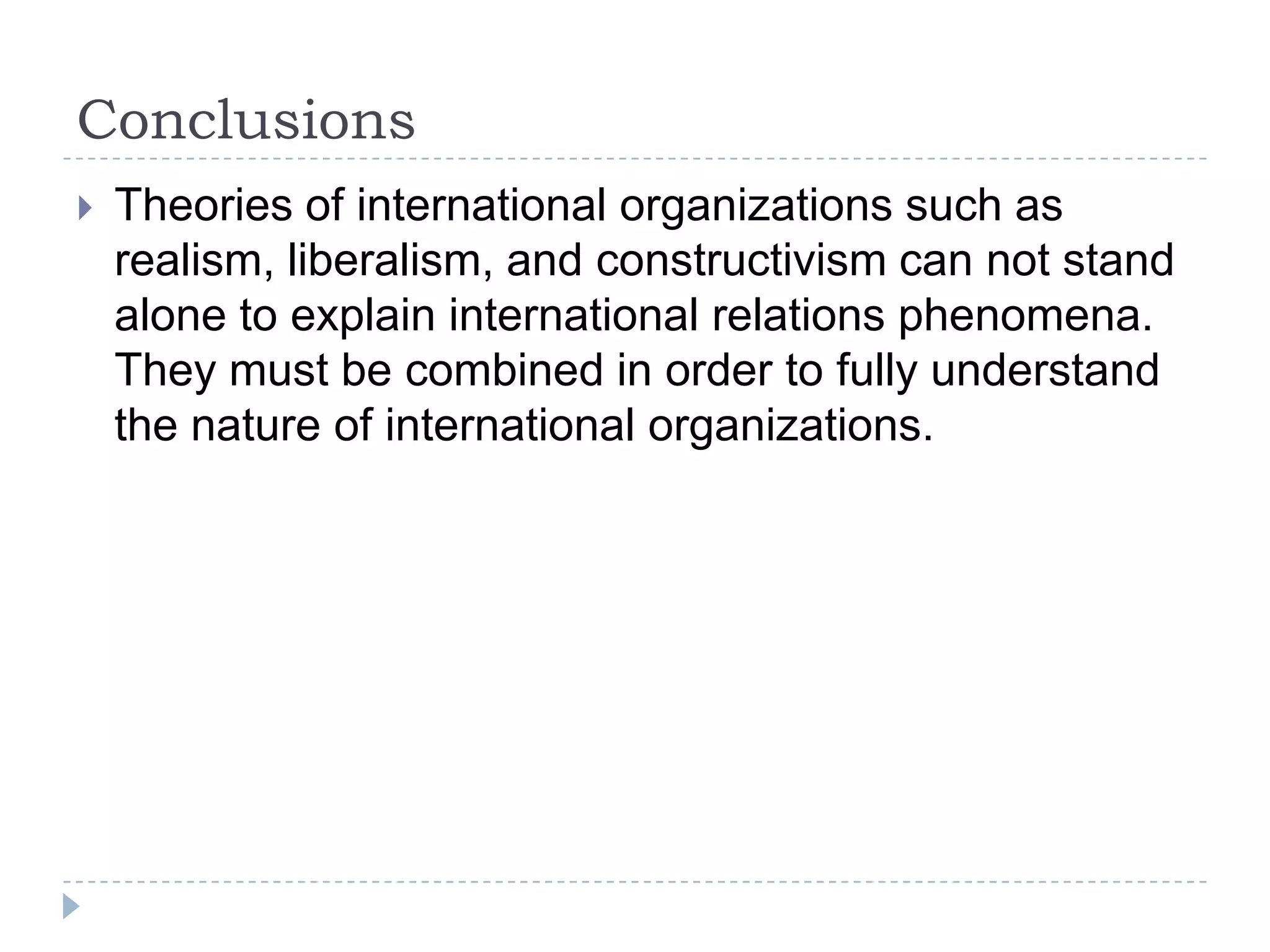
Conclusions Theories of international organizations such as realism, liberalism, and constructivism can not stand alone to explain international relations phenomena. They must be combined in order to fully understand the nature of international organizations.
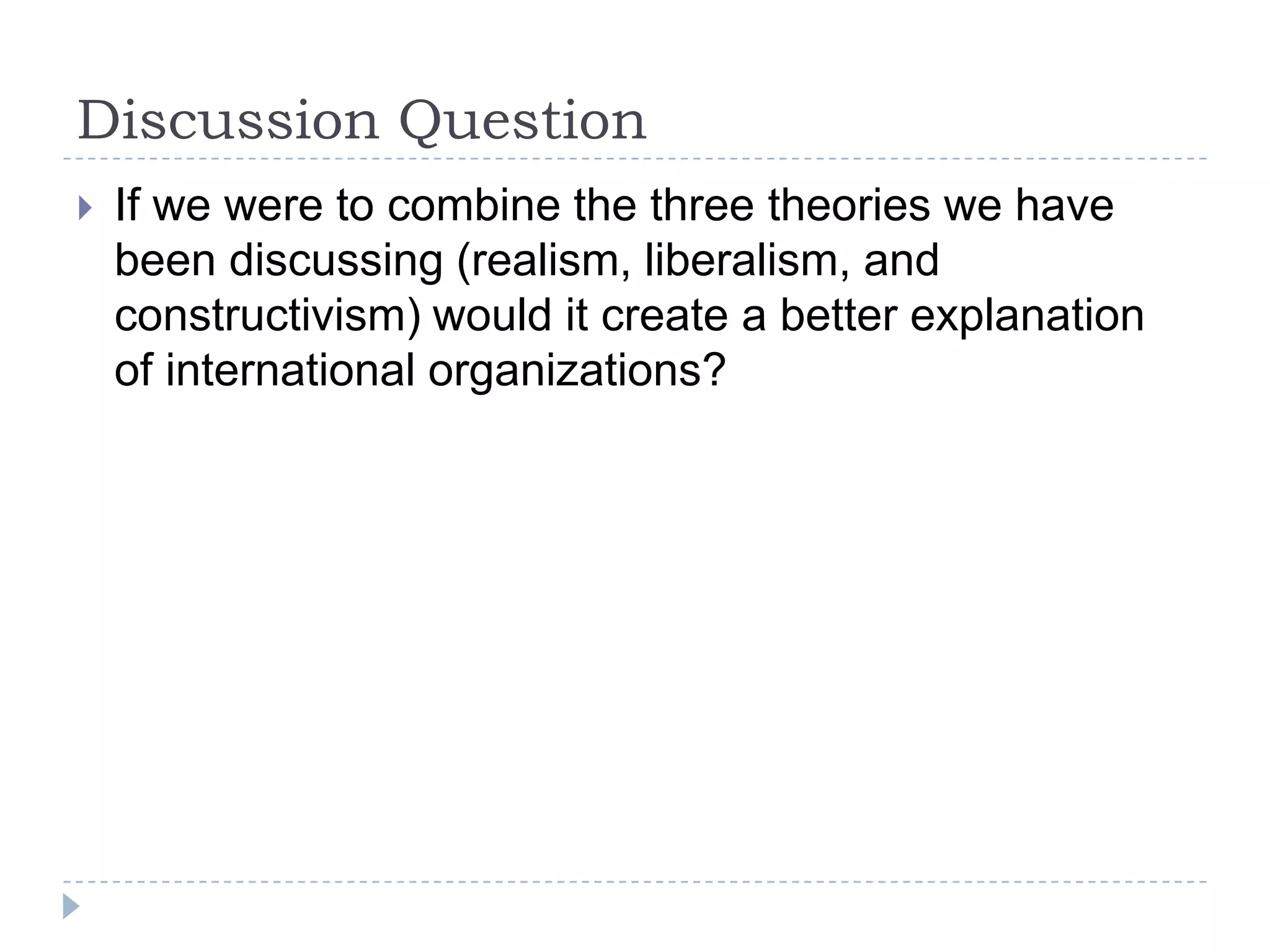
Discussion QuestionIf we were to combine the three theories we have been discussing (realism, liberalism, and constructivism) would it create a better explanation of international organizations?

Global governance ppt

  • 1.
    Theories of InternationalOrganization: Constructivism Katya Haratonik and Irina Saakyan
  • 2.
    Constructivism: A DefinitionInternationalrelations theory is socially constructed and should be looked at through a lens of social values, norms, behaviors as well as practices.
  • 3.
  • 4.
  • 5.
    Case Study: NATOEnlargement (Frank Schimmelfennig)Realist Perspective on Enlargement:To maximize utilities based on instrumental rationalityHeavily based in a cost-benefit analysisEnlargement was necessary to balance superior powers and perceived threats Alliances’ form to maintain security
  • 6.
    Case Study: NATOEnlargement Liberalist View on Enlargement:Economic analyses of alliancesBarnett and Finnemore argue IOs, such as NATO, are part of a larger liberal project originating from the West, which promote “progress, modernity, and peace” (pg. 166)Schimmelfennig states that rationalist arguments can only conclude that “partnership for peace” is the best explanation for expanding NATO
  • 7.
    Case Study: NATOEnlargement Constructivist View on Enlargement:Certain CEE countries felt a strong identification with Western values and norms and desired to be accepted into the Western communityAccording to constructivism NATO decided to enlarge to promote accepted liberal values: peace, democracy, freedom etc.Hungry, Poland, and Czech Republic demonstrated the best internalization of Western shared values and norms because of a common background and therefore were initiated into NATO
  • 8.
    Case Study: NATOEnlargement According to Schimmelfennig, rational theorists fail to explain NATO behavior due to the fact that there were no substantial material gainsBy enlarging NATO, they granted membership three countries that best exemplified the shared norms, values, and behaviorsHowever, constructivism does not explain all aspects of international organizations
  • 9.
    Conclusions Theories ofinternational organizations such as realism, liberalism, and constructivism can not stand alone to explain international relations phenomena. They must be combined in order to fully understand the nature of international organizations.
  • 10.
    Discussion QuestionIf wewere to combine the three theories we have been discussing (realism, liberalism, and constructivism) would it create a better explanation of international organizations?