
Global Collaboration
Learning on the edge
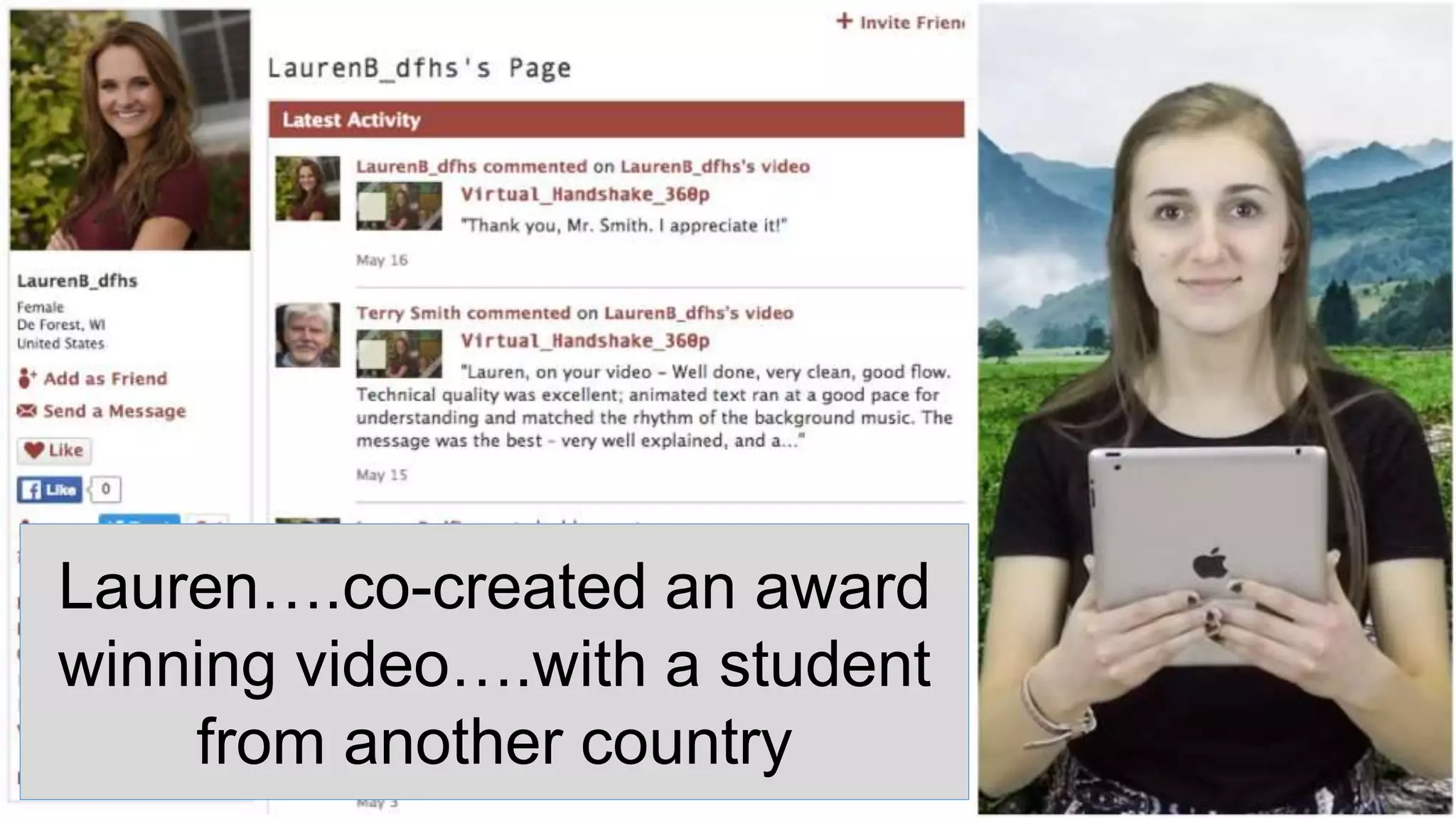
Meet Lauren
Lauren….co-created an award
winning video….with a student
from another country
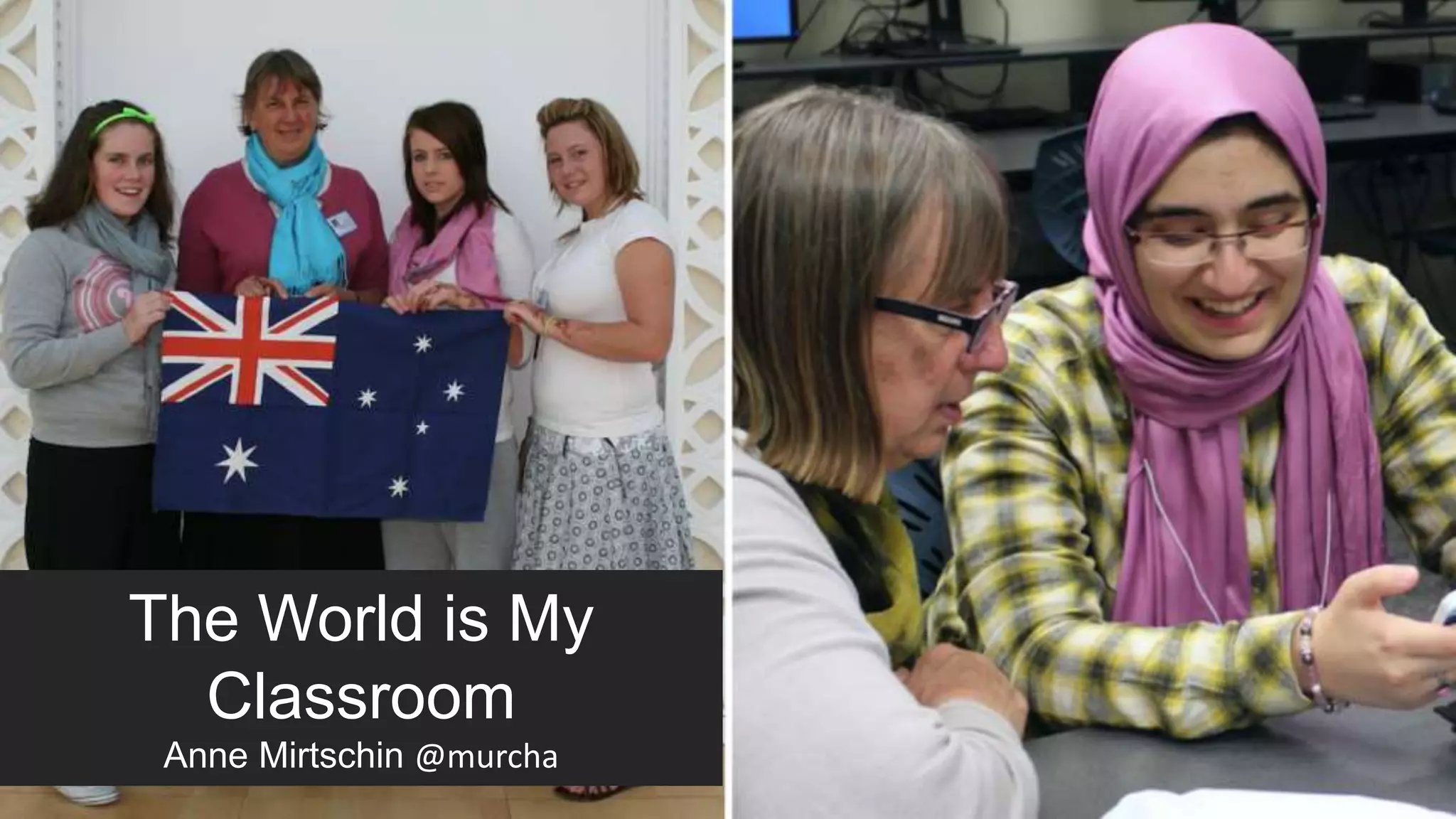
The World is My
Classroom
Anne Mirtschin @murcha
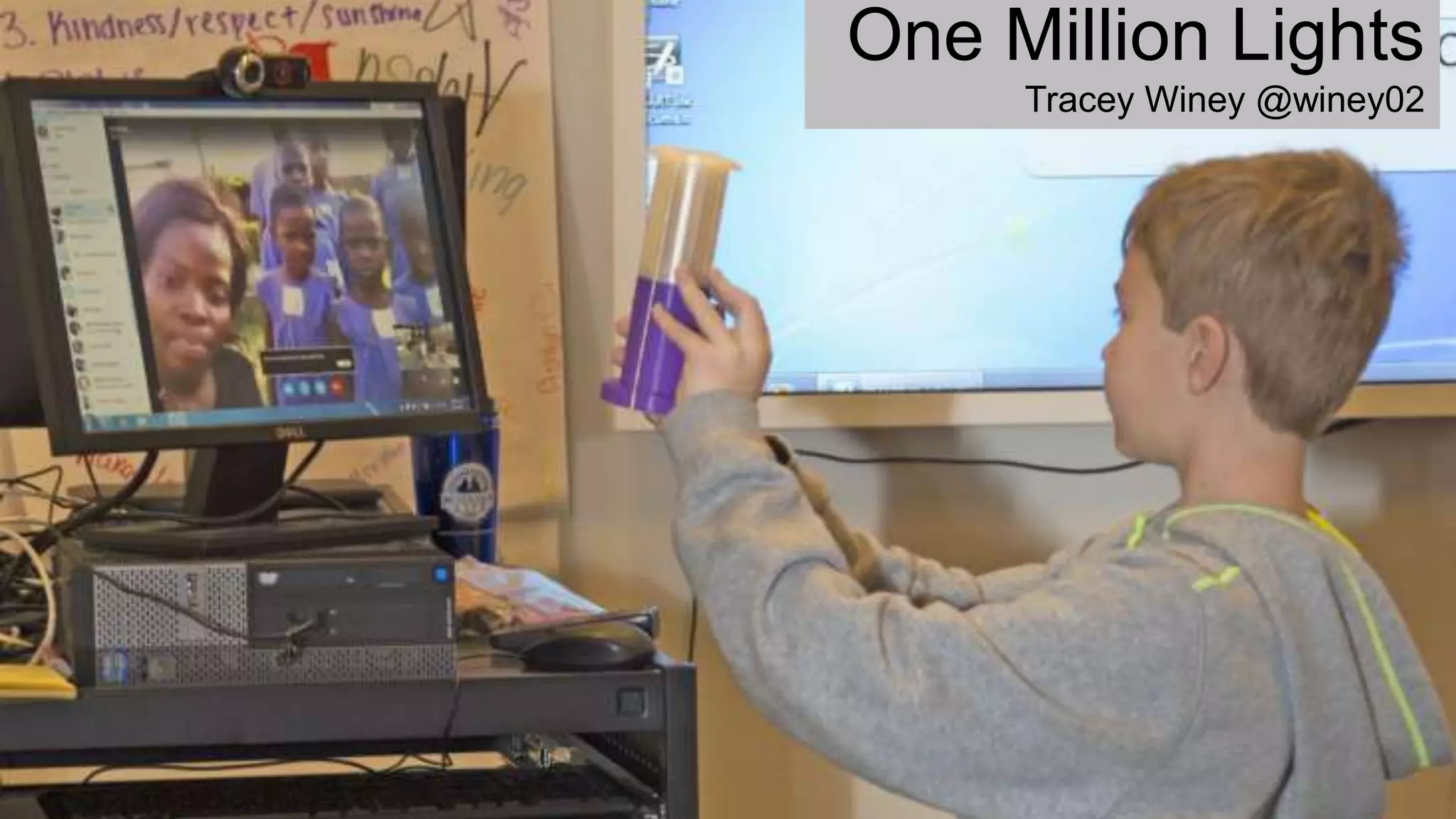
This is Tracey’s story……One Million Lights
Tracey Winey @winey02
EMPATHY
“I think when we collaborate
globally we learn just as much
about those other people as
we do about ourselves”
Anne Mirtschin, Australia
Local to global
- Reduced ethnocentricity
(Union & Green, 2013)
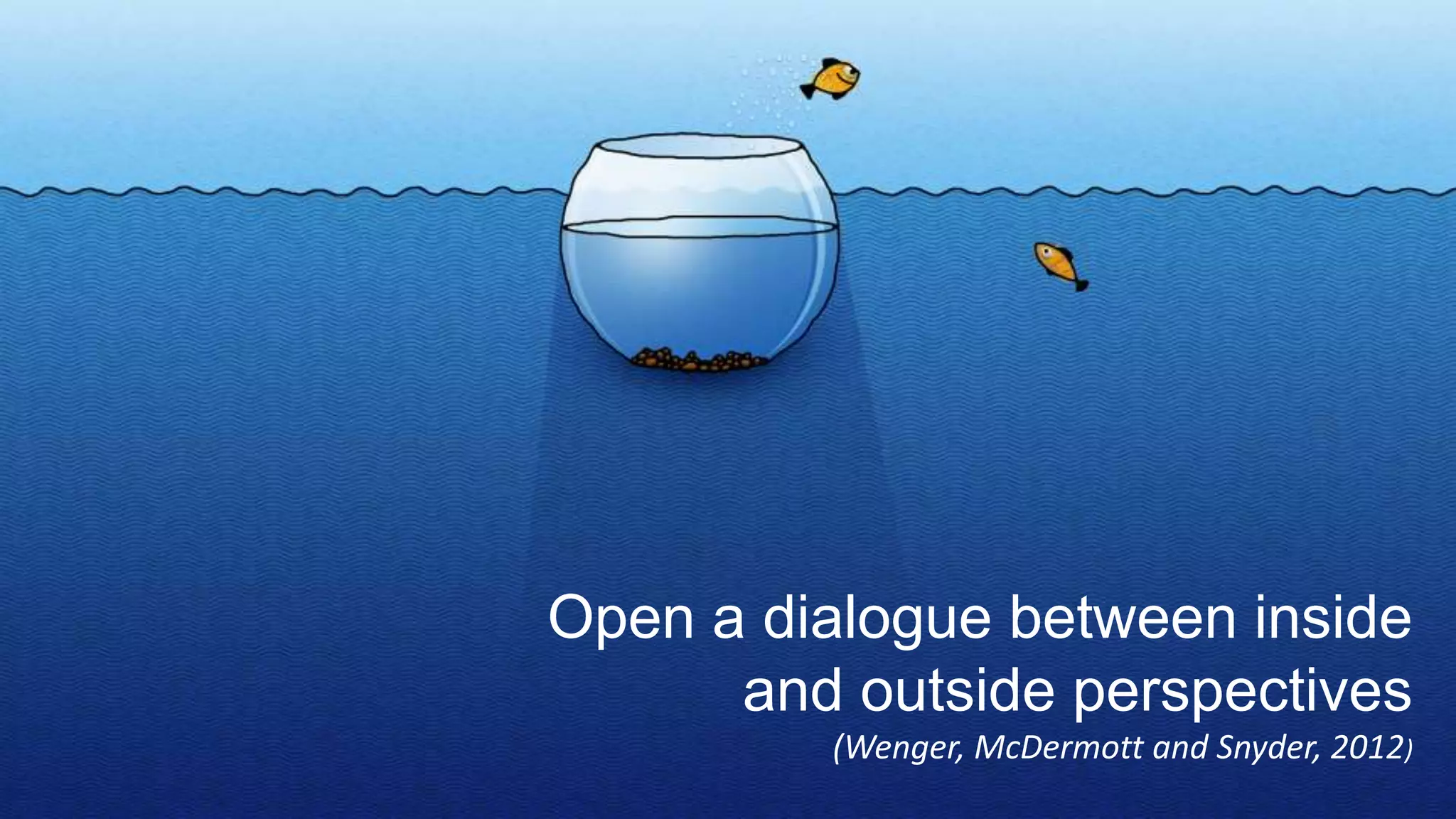
Open a dialogue between inside
and outside perspectives
(Wenger, McDermott and Snyder, 2012)
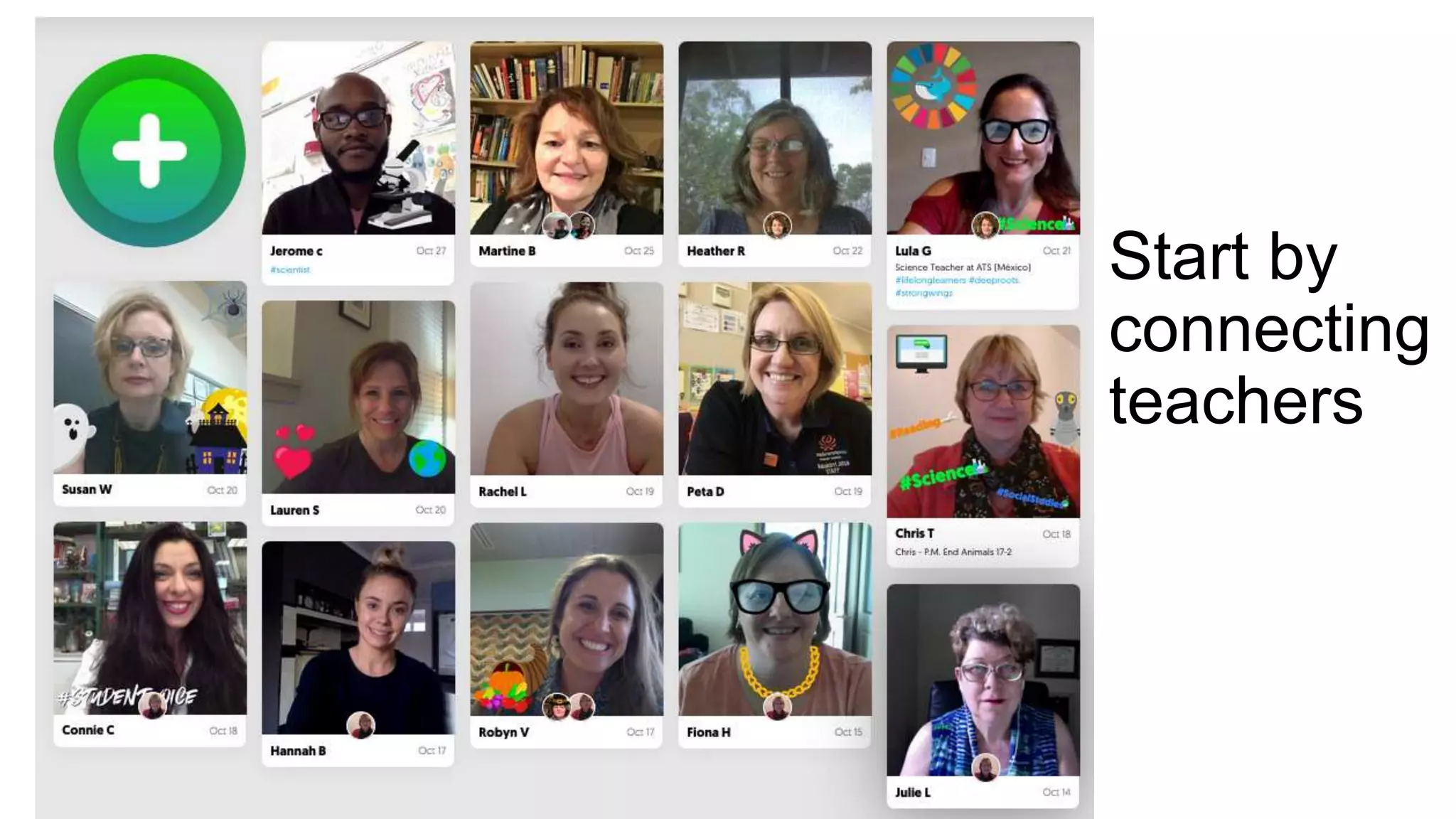
Start by
connecting
teachers
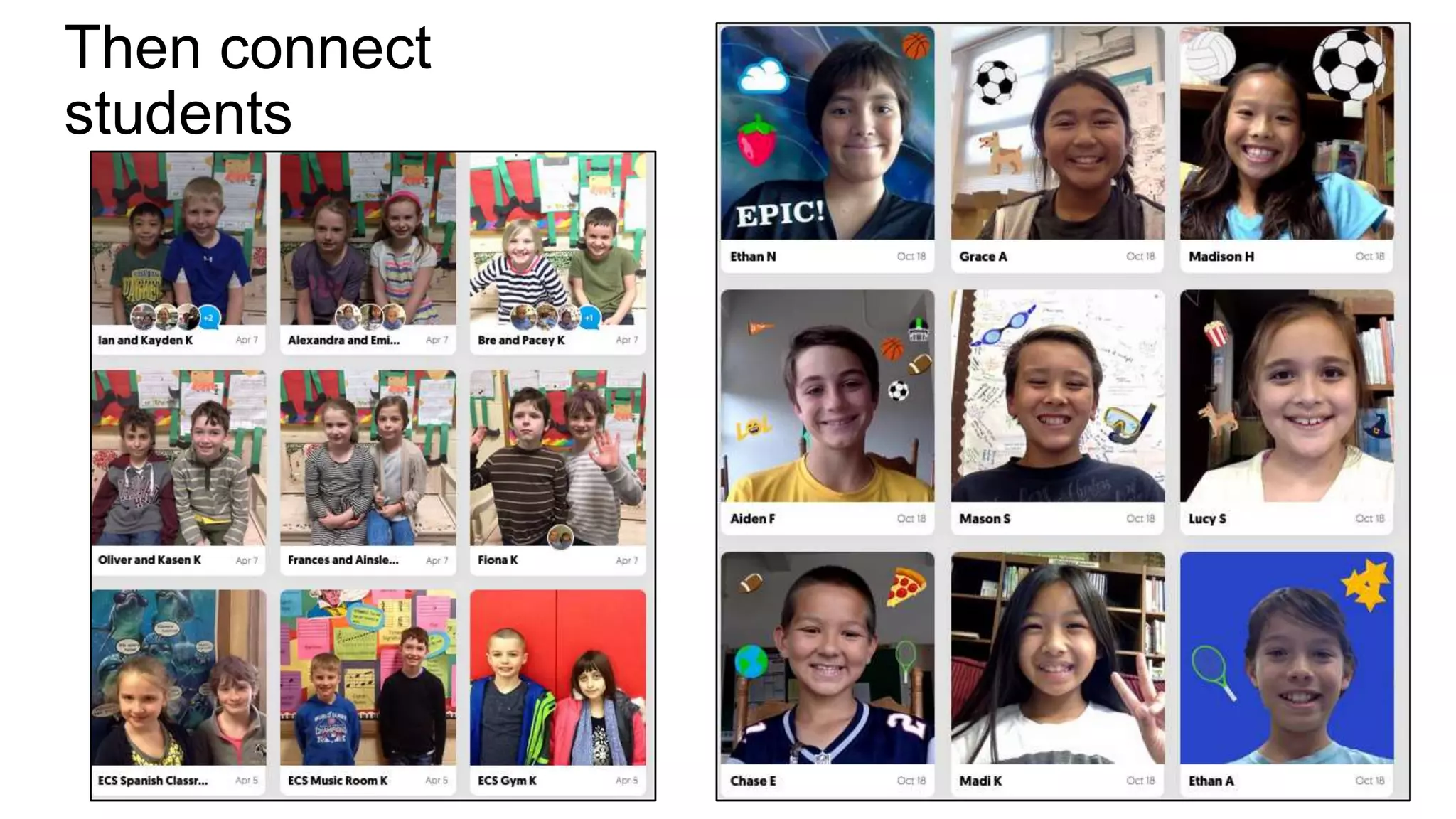
Then connect
students
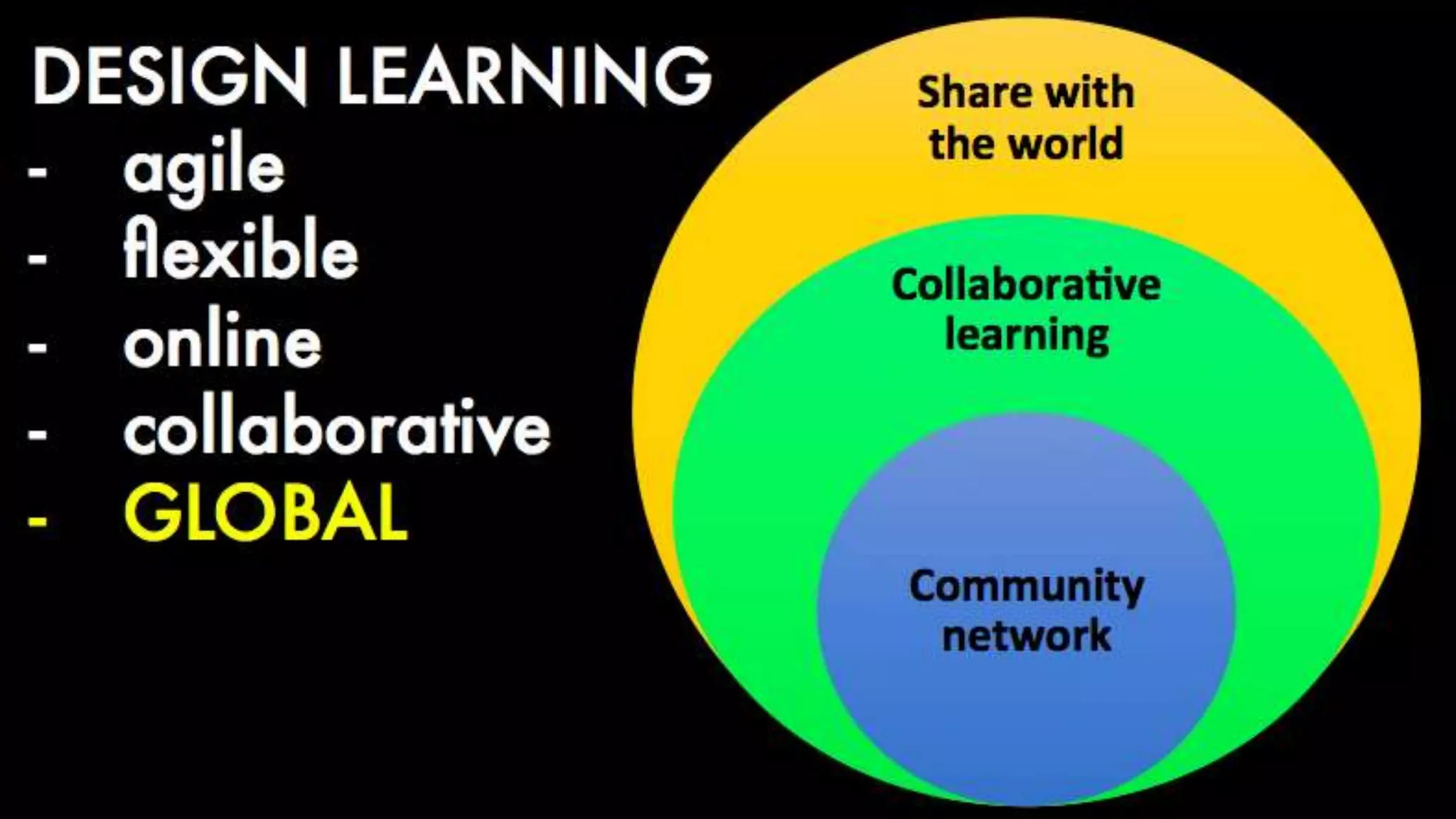
DESIGN LEARNING
- agile
- flexible
- online
- collaborative
- GLOBAL
Share with
the world
Collaborative
learning
Community
network
Learn with the world,
not just about the world
Julie Lindsay
Global Collaborator
@julielindsay
RESOURCES
Lindsay, J. (2016). The global educator: Leveraging technology for collaborative learning &
teaching. Eugene, Oregon/Arlington, VA: International Society for Technology in Education.
Union, C., & Green, T. (2013). The use of Web 2.0 technology to help students in high school
overcome ethnocentrism during Global Education Projects: A cross-cultural case study. The
Georgia Social Studies Journal, 3(3), 109-124.
Wenger, E., McDermott, R., & Snyder, W. M. (2002). Seven principles for cultivating communities
of practice. Cultivating Communities of Practice: a guide to managing knowledge, 4.
Images from VladStudio - http://www.vladstudio.com/

Global collaboration - Learning on the edge

Editor's Notes

  • #2 What I am about to share with you is on the edge of learning in schools – and it shouldn’t be. Global collaboration – For the last 20 years I have been exploring how to connect people across the world for collaborative learning, and my PhD research examines online global collaborative educators Let me introduce you to three people who are doing just that – learning on the edge - My PhD research into global collaborative educators and pedagogical change. Let me share some examples showing that new pedagogical approaches support online global learning and collaboration Let me share the triggers that got me into this study
  • #3 Meet Lauren – high school – award winning video – presented at an international conference virtually Authentic project Design, leadership – bringing a team together
  • #4 Anne lives rural isolated – country cows – married to a dairy farmer Meet educator Anne Mirtschin – The world is her classroom – Her students have travelled from Australia to the middle east, and collaborated virtually with others from across the world Skype walk from WAB in Beijing – impromptu Chinese lesson Isolated part of the world – it doesn’t stop her from connecting with the world
  • #5 The power of global collaboration – how technology can impact the world and themselves Uganda, Canada, USA Meet Tracey – STEM specialist – her students collaborated with students in Uganda to design a unique light that could be 3D printed – solving the problem of no light to do study at night Engineering and humanity merge to make the world a brighter place
  • #6 OUTCOMES My research is showing that making global connections builds empathy between learners. - This means having the ability to understand and share the feelings of another. Empathy is the heart and soul – those 3 stories show how empathy and trust can be built Like Lauren – building skills through global team leadership and TRUST Consider how we build empathy when in person – and how we can transfer those skills to an online environment Move from being a face to being a person you can work with
  • #7 As Anne our farmer says - Global collaborative educator, revealed, “I think when we collaborate globally we learn just as much about those other people as we do about ourselves and I think our own personal sense of being an Australian etc. is terribly important as well.”
  • #8 Another outcome of local to global learning is where you don’t just read about people but deal with people – we have the tools to go to the source and have a real conversation Craig Union wrote his PhD on how global projects positively reduce ethnocentricity Anne – takes rural, dairy farming students to the world – when kids study about the world it’s somewhere else – but when they learn with the world the diversity of thought and learning no longer depends on physical space
  • #9  Ettienne Wenger, educational theorist in communities of practice – One principle for developing global communities is to Open a dialogue between inside and outside perspectives - Like Tracey and One Million Lights – opening perspectives in order to impact others
  • #10 Connect learning Remove barriers Model best practices
  • #11 Provide opportunities for students to build empathy and online learning skills by collaborating WITH different groups
  • #13 Educators, our work has never been so important…..to affect positive social change I believe every student at every grade level should have global collaborative learning opportunities So that learning can be with the world not just about the world