
Julie Lindsay - @julielindsay
March 2019
Building capacity for global
connections and
collaborations
NEW PERSPECTIVES
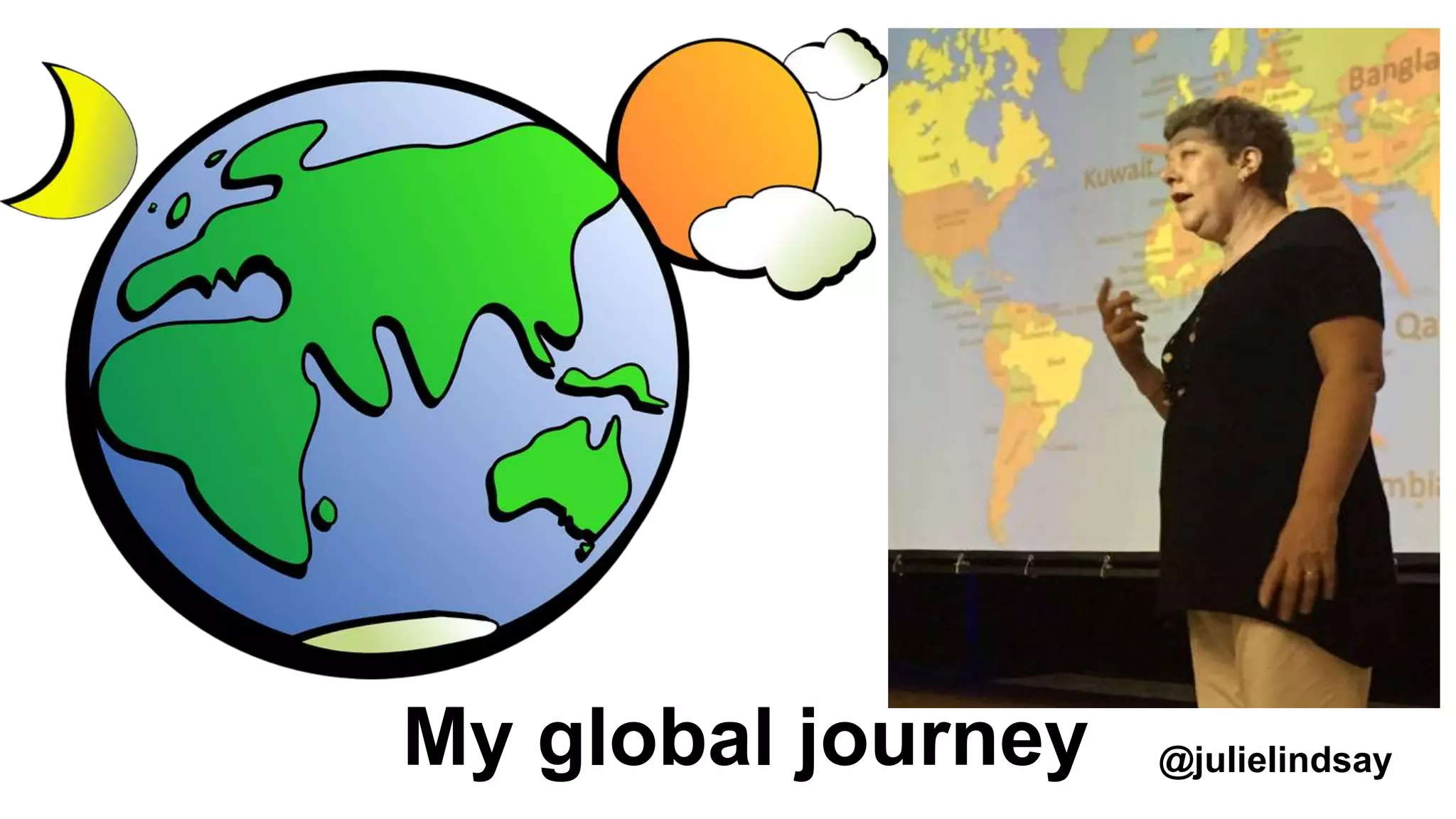
My global journey @julielindsay
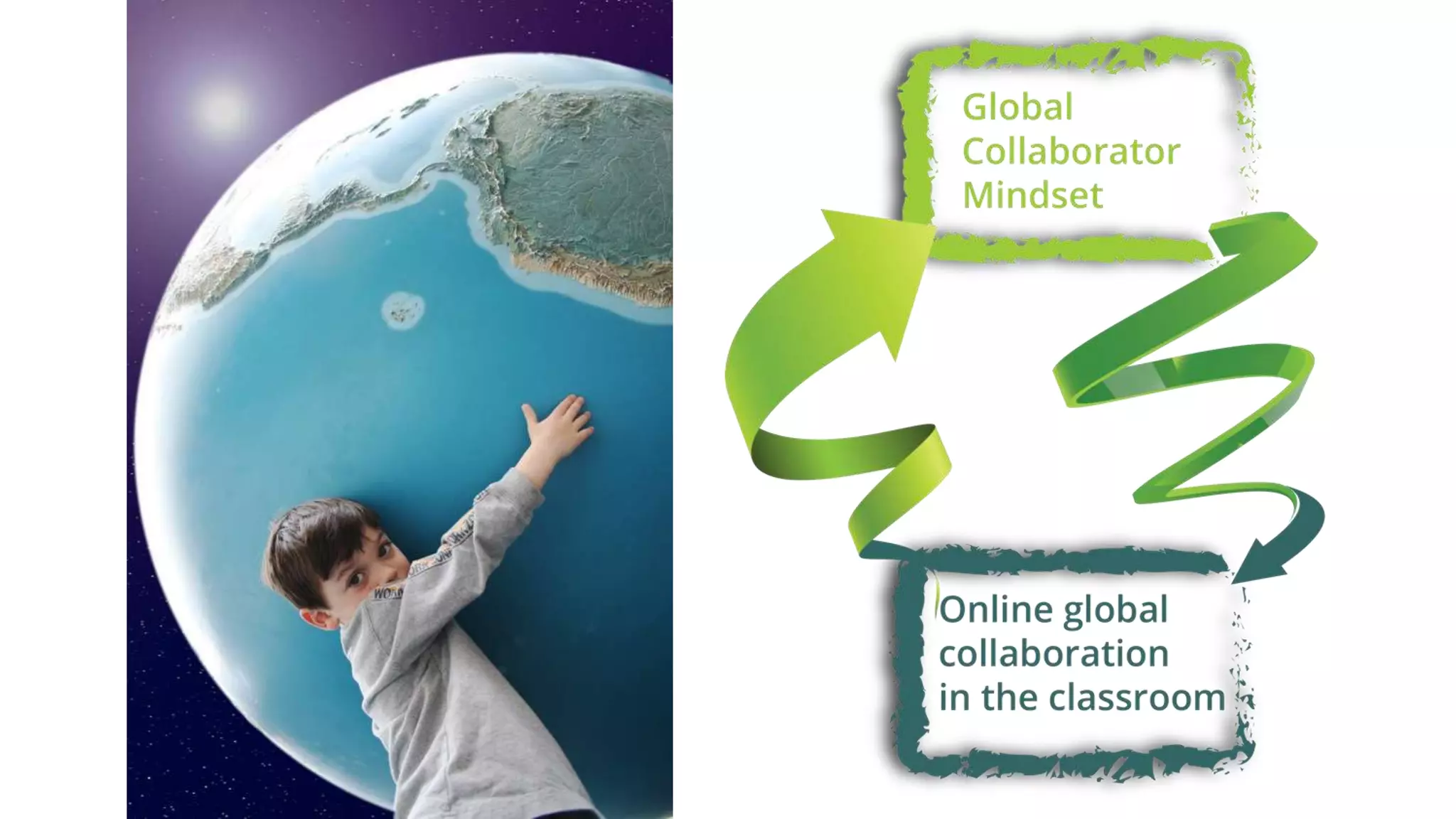
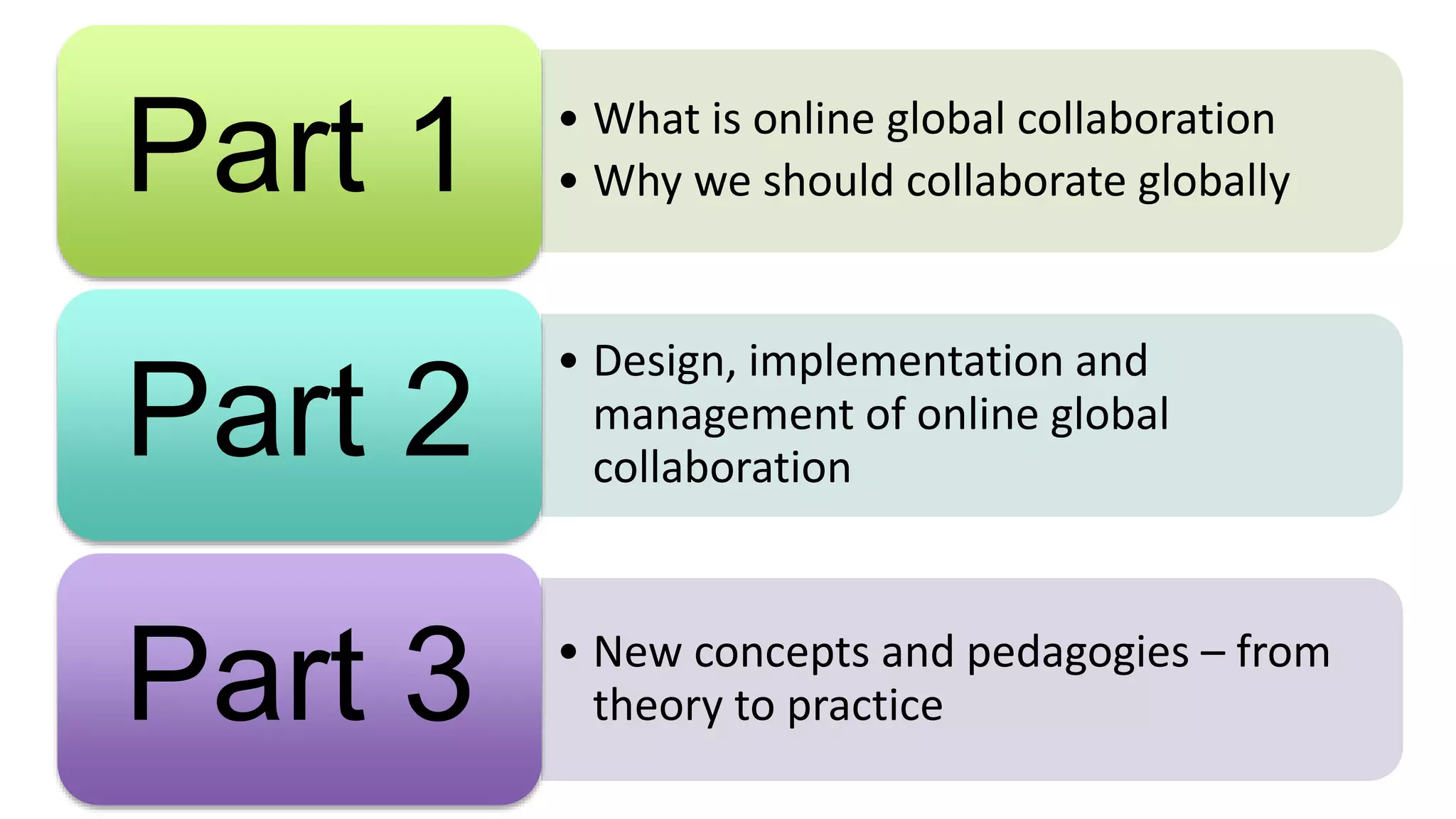
• What is online global collaboration
• Why we should collaborate globallyPart 1
• Design, implementation and
management of online global
collaboration
Part 2
• New concepts and pedagogies – from
theory to practicePart 3
What is online global collaboration?
Collaborative learning
“[C]ollaborative production is simple: no one person can take
credit for what gets created, and the project could not come into
being without the participation of many.”
Clay Shirky, Here comes everybody
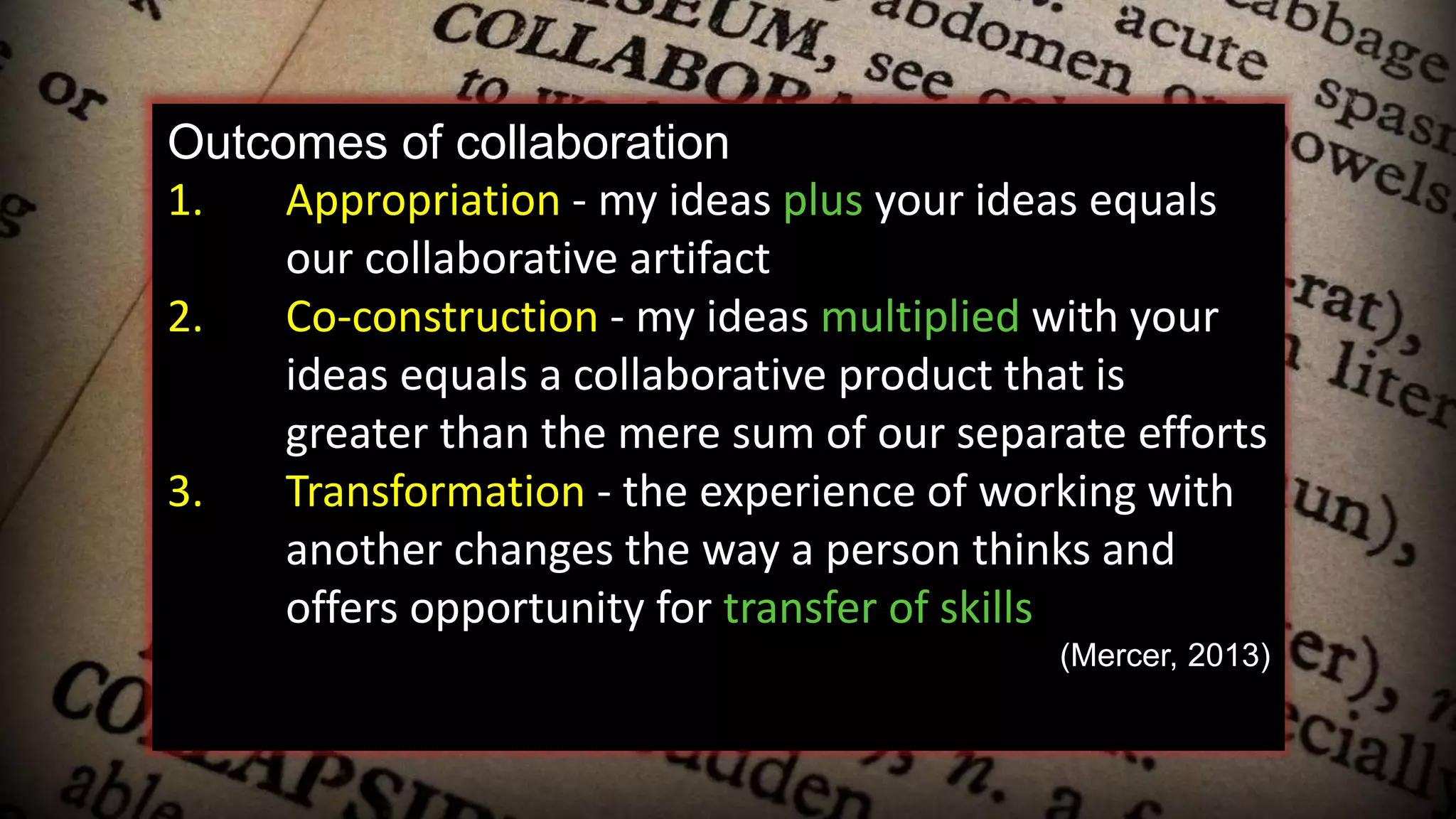
Outcomes of collaboration
1. Appropriation - my ideas plus your ideas equals
our collaborative artifact
2. Co-construction - my ideas multiplied with your
ideas equals a collaborative product that is
greater than the mere sum of our separate efforts
3. Transformation - the experience of working with
another changes the way a person thinks and
offers opportunity for transfer of skills
(Mercer, 2013)
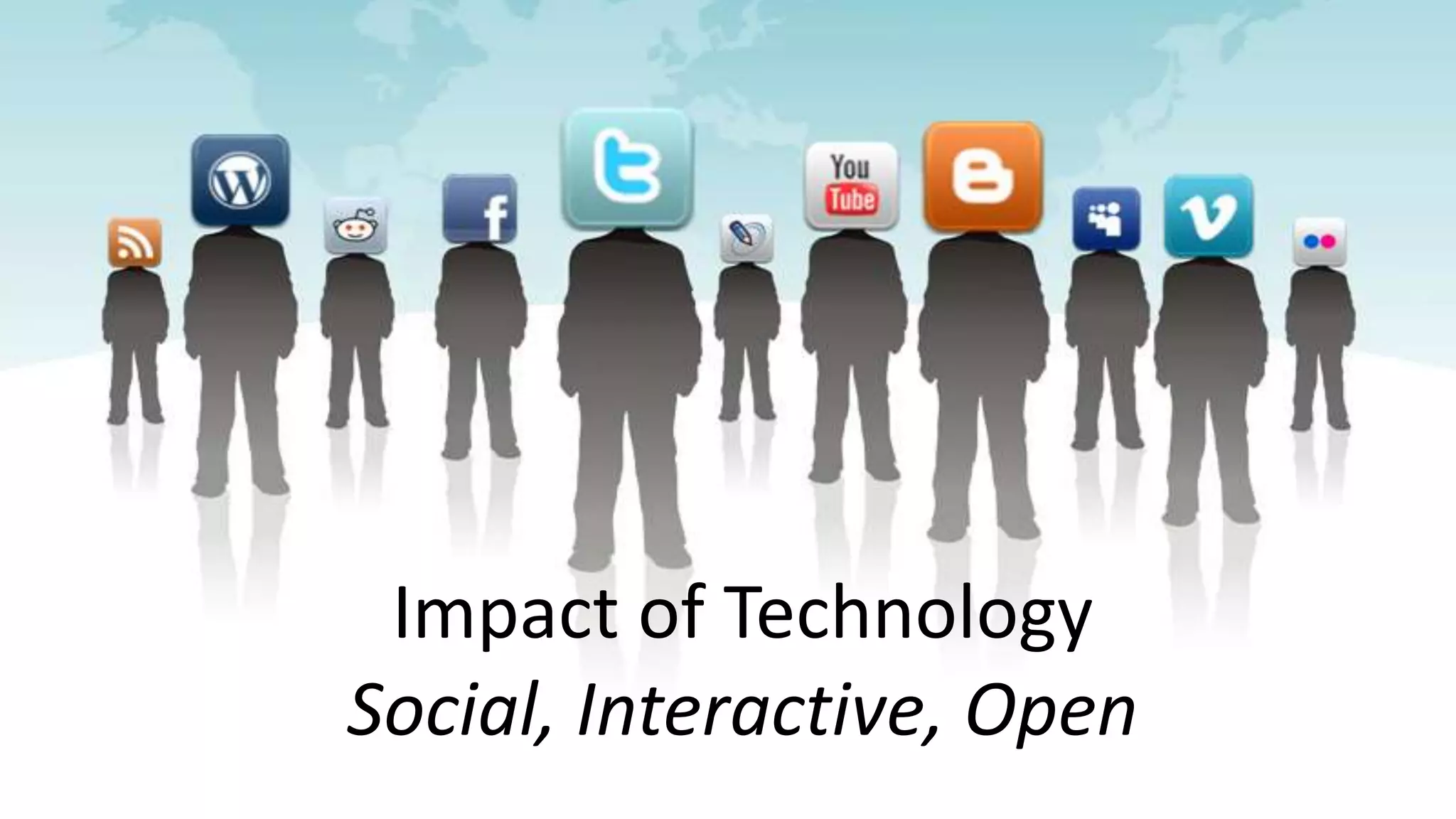
Impact of Technology
Social, Interactive, Open
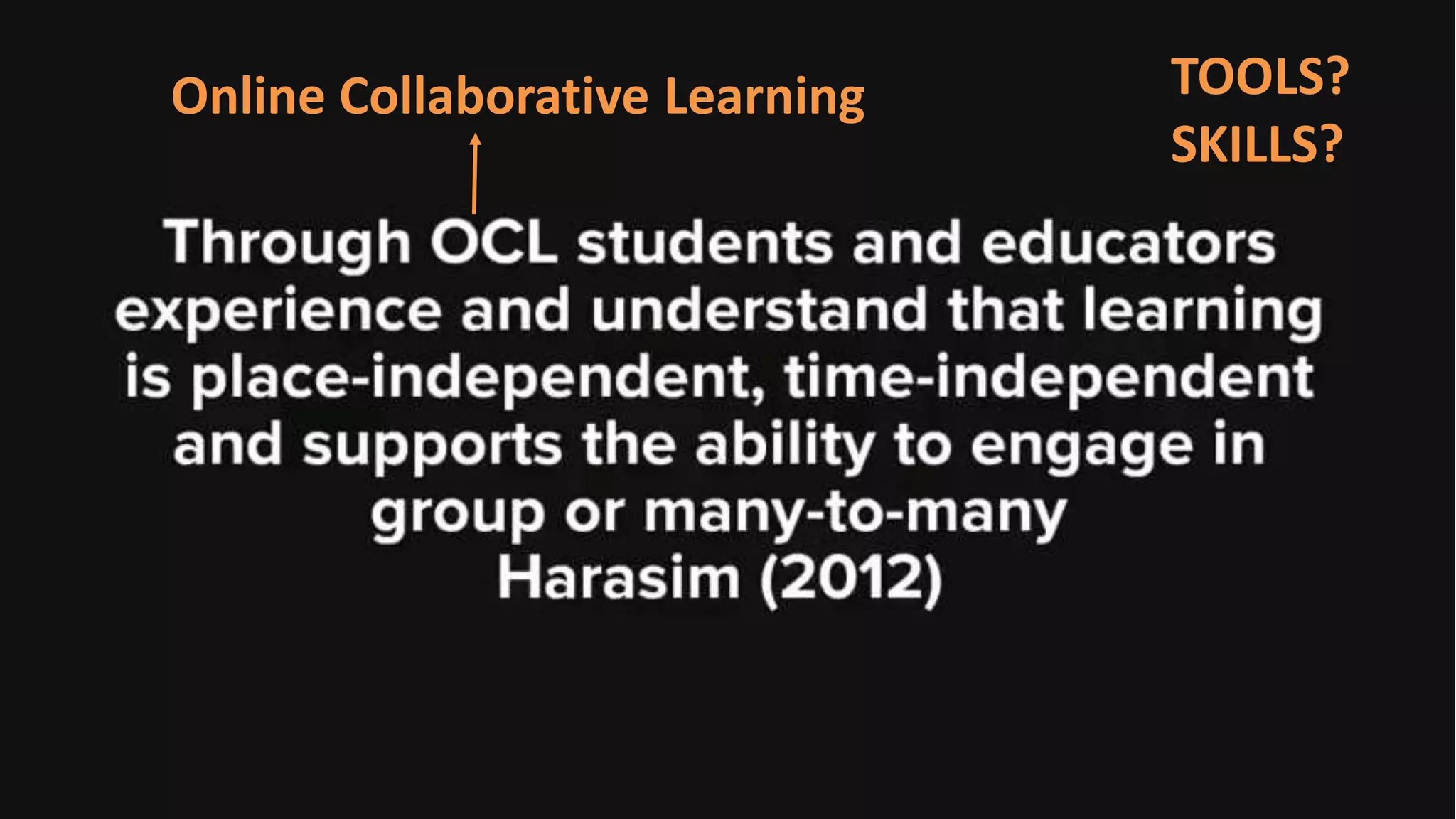
Online Collaborative Learning TOOLS?
SKILLS?
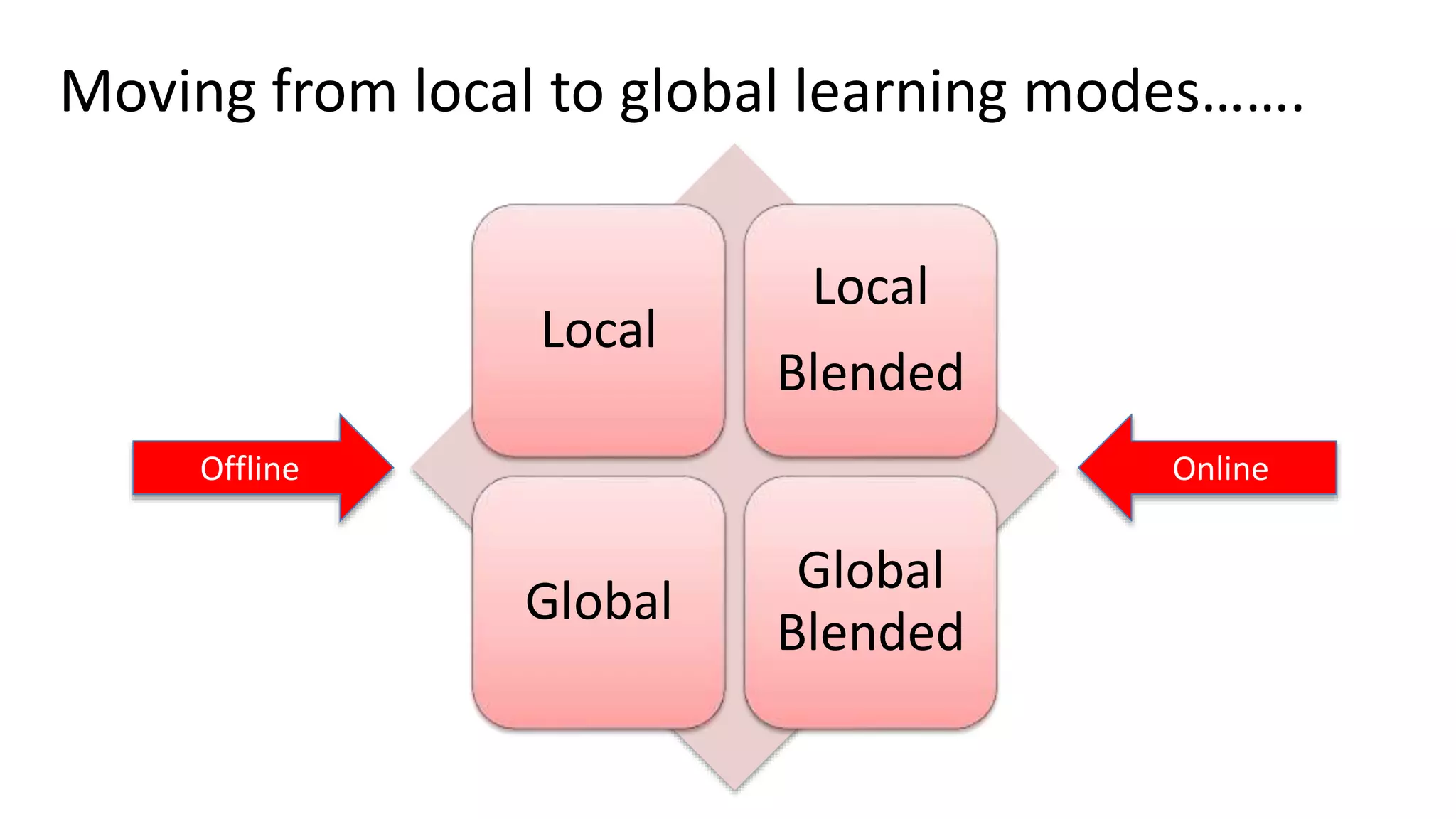
Moving from local to global learning modes…….
Local
Local
Blended
Global
Global
Blended
Offline Online
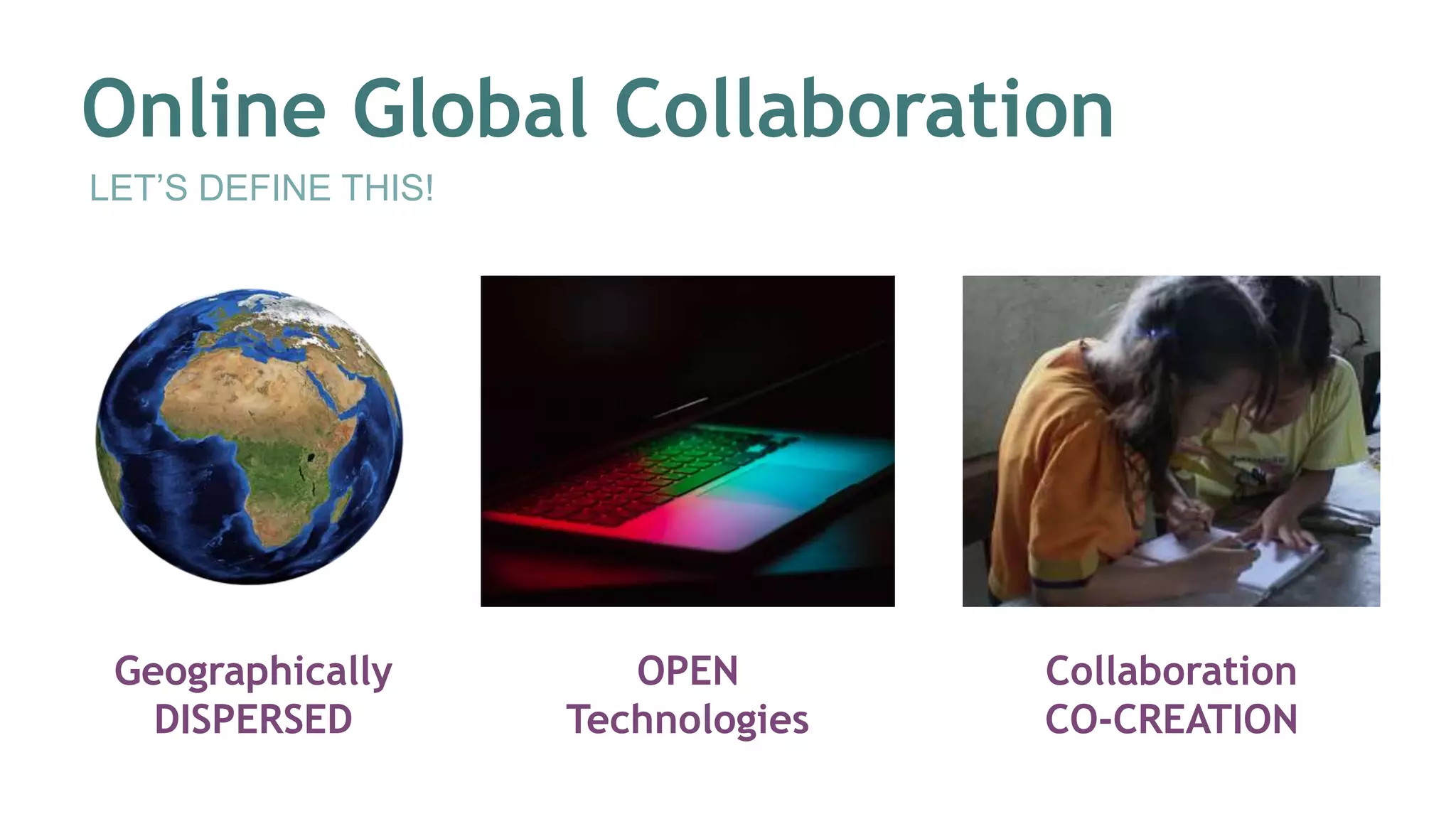
Online Global Collaboration
LET’S DEFINE THIS!
Geographically
DISPERSED
OPEN
Technologies
Collaboration
CO-CREATION
Learn with the world,
not just about the world
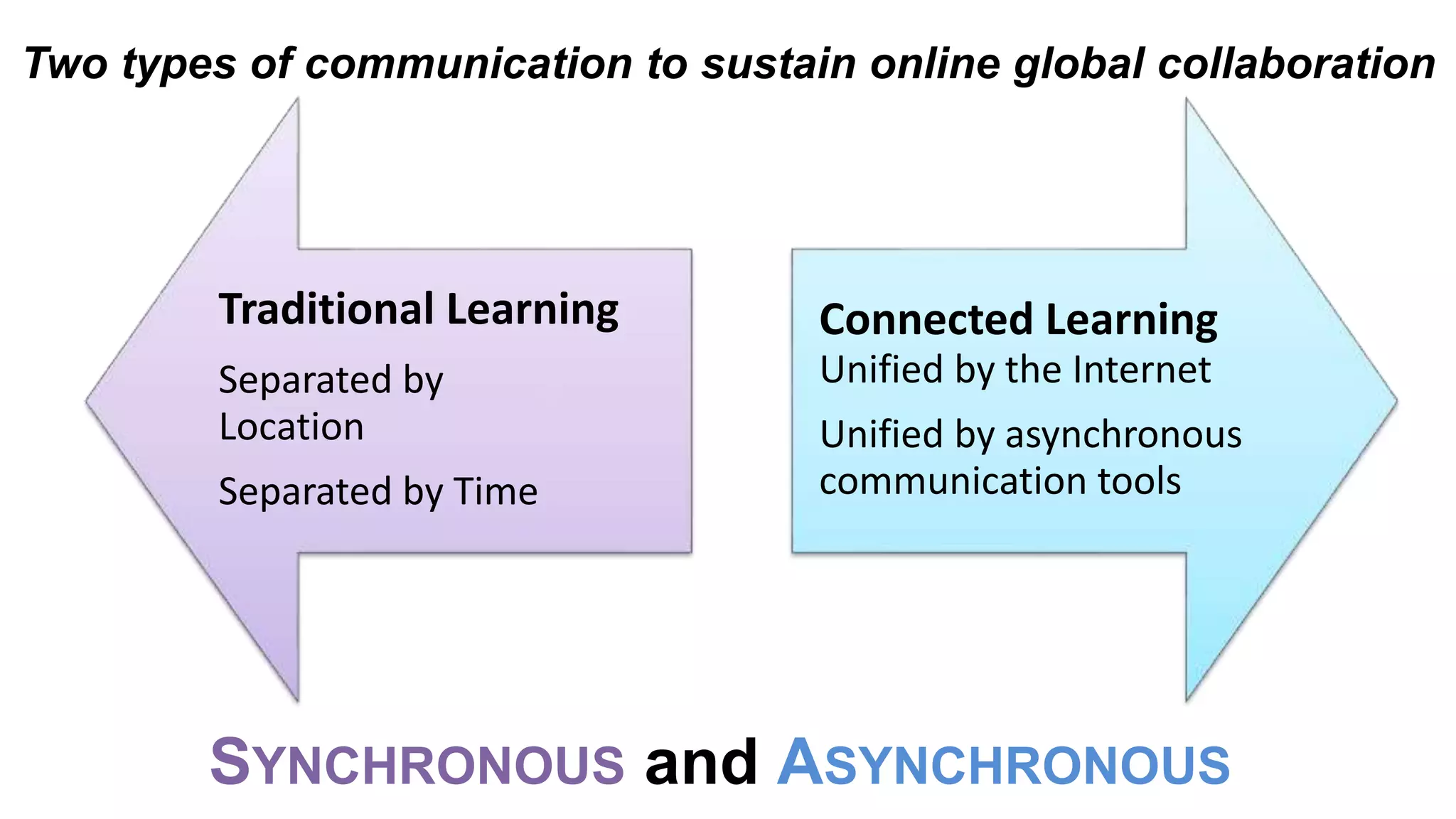
Two types of communication to sustain online global collaboration
Traditional Learning
Separated by
Location
Separated by Time
Connected Learning
Unified by the Internet
Unified by asynchronous
communication tools
SYNCHRONOUS and ASYNCHRONOUS
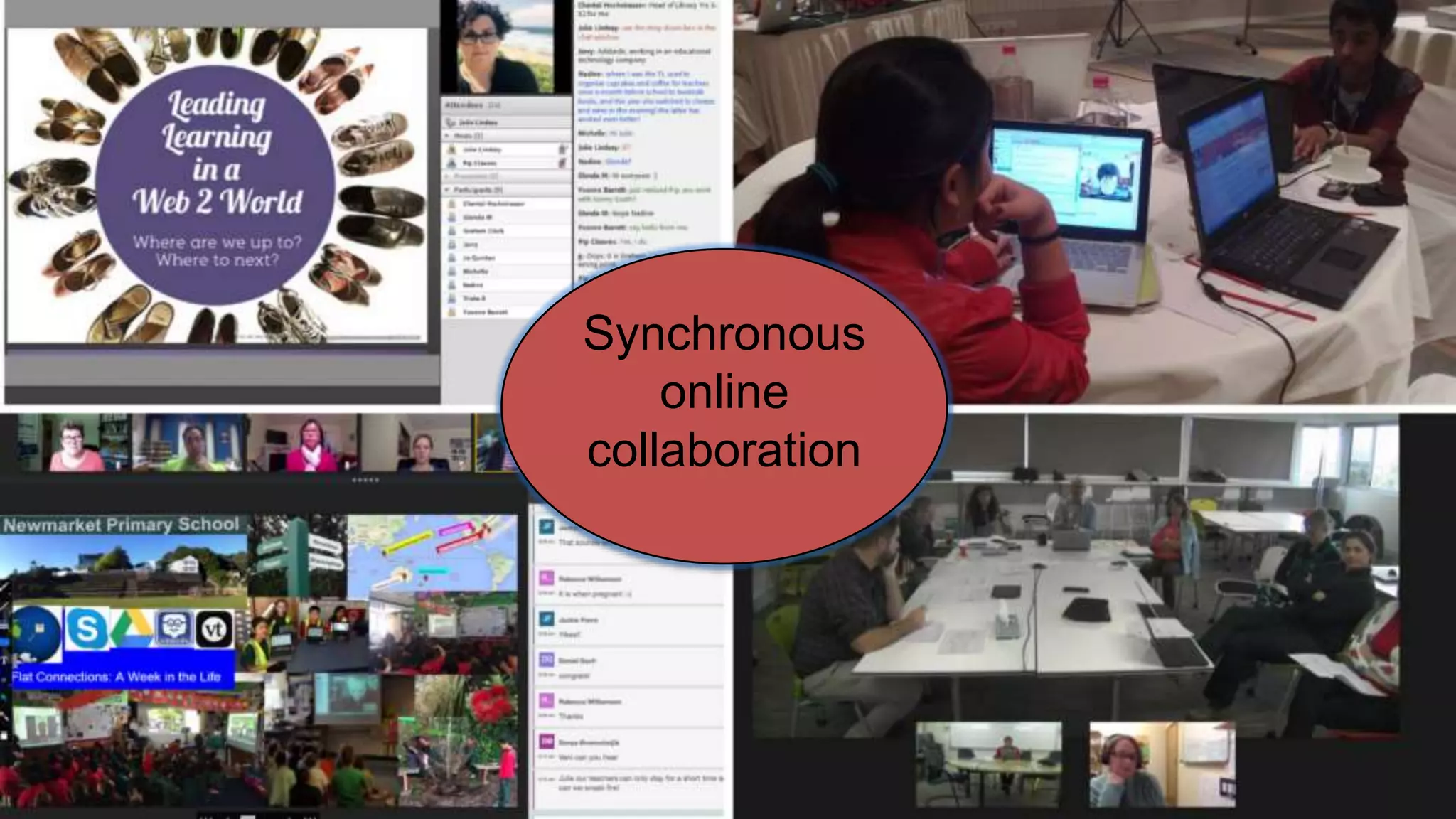
Synchronous
online
collaboration
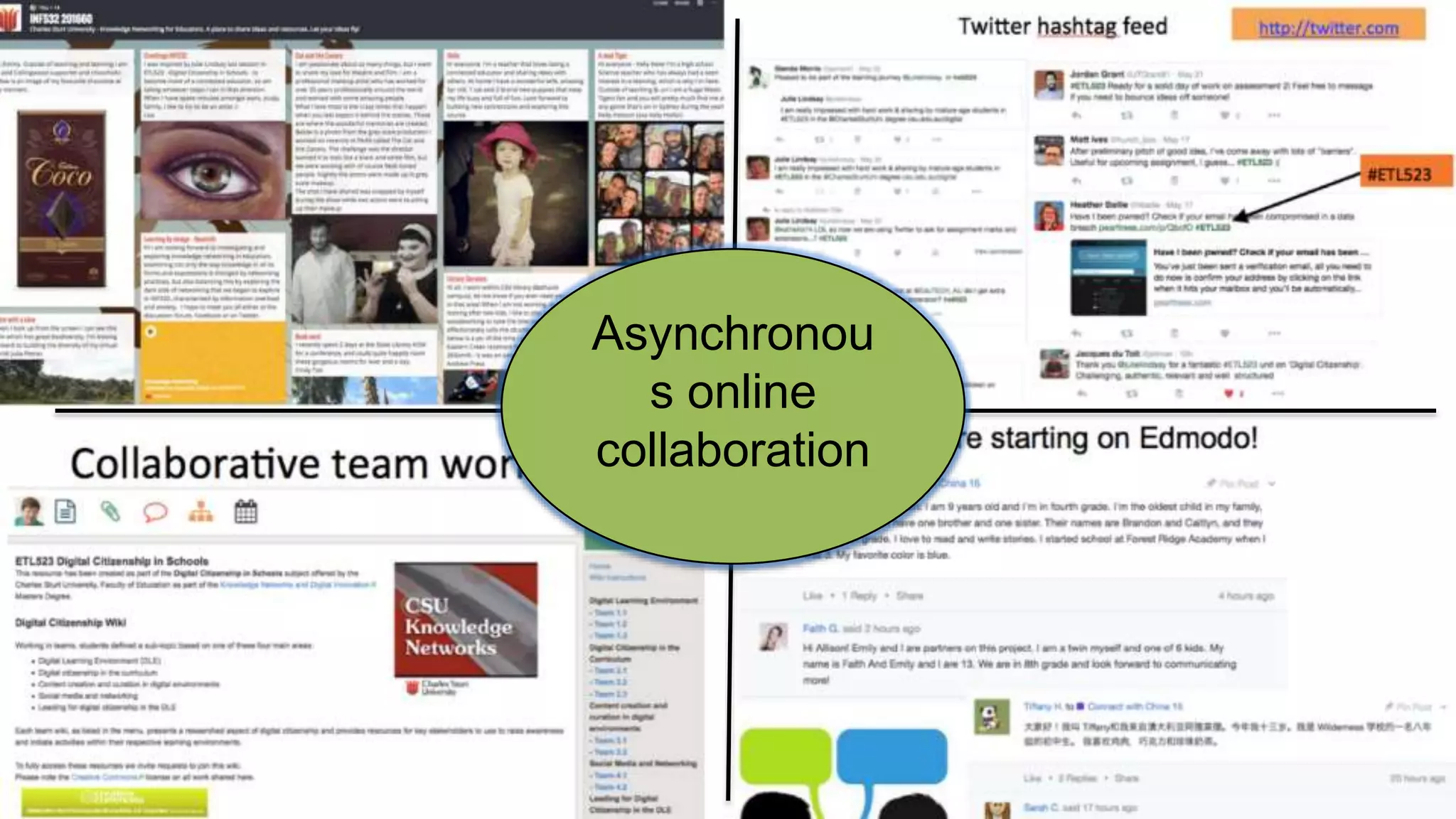
Asynchronou
s online
collaboration
Two types of communication to sustain global collaboration
SYNCHRONOUS
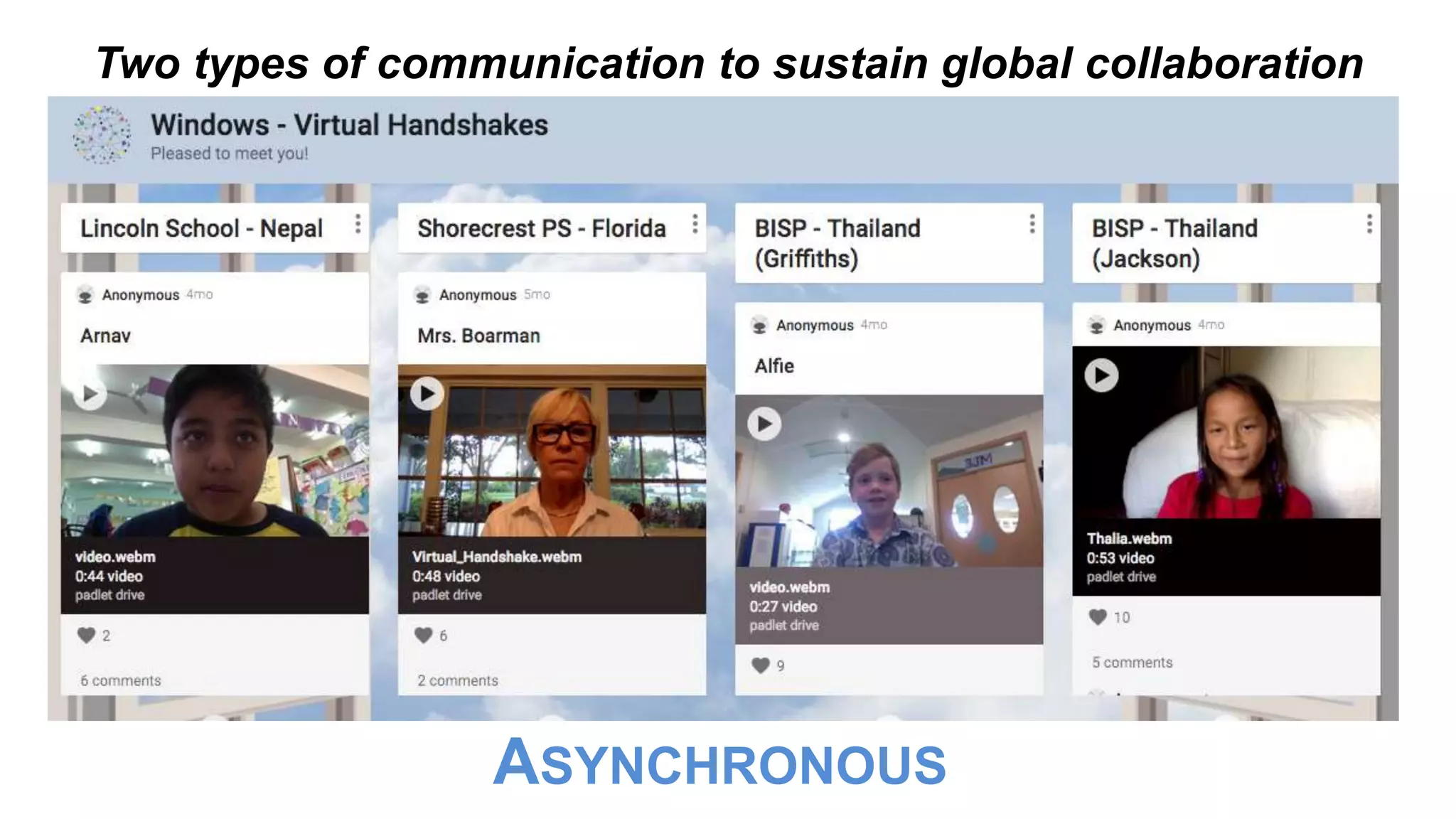
Two types of communication to sustain global collaboration
ASYNCHRONOUS
Why we should collaborate globally
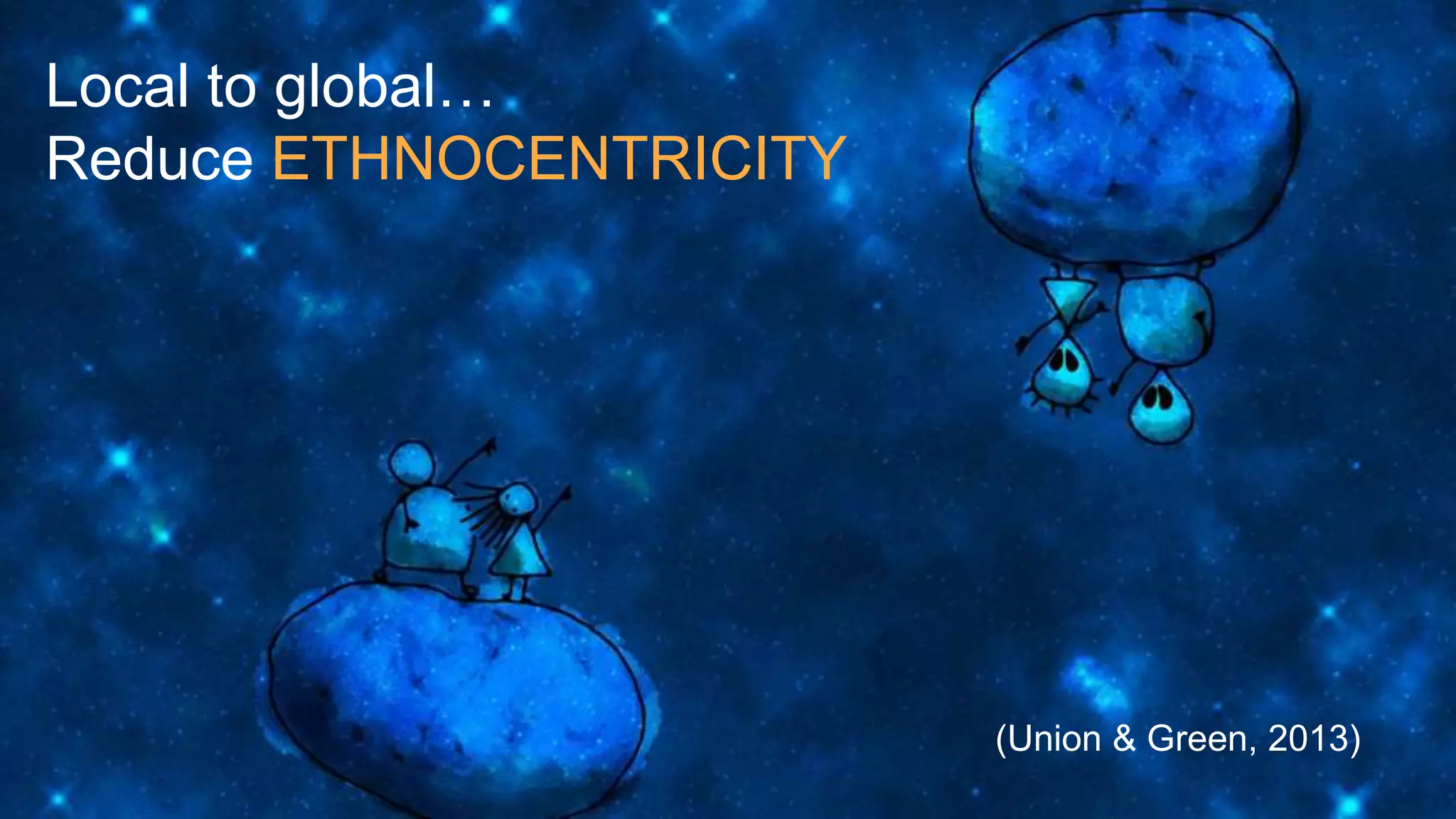
Local to global…
Reduce ETHNOCENTRICITY
(Union & Green, 2013)
Local to global…
Develop EMPATHY
(Cook, Bell, Nugent, & Smith, 2016; Klein, 2017; Riel 1994)
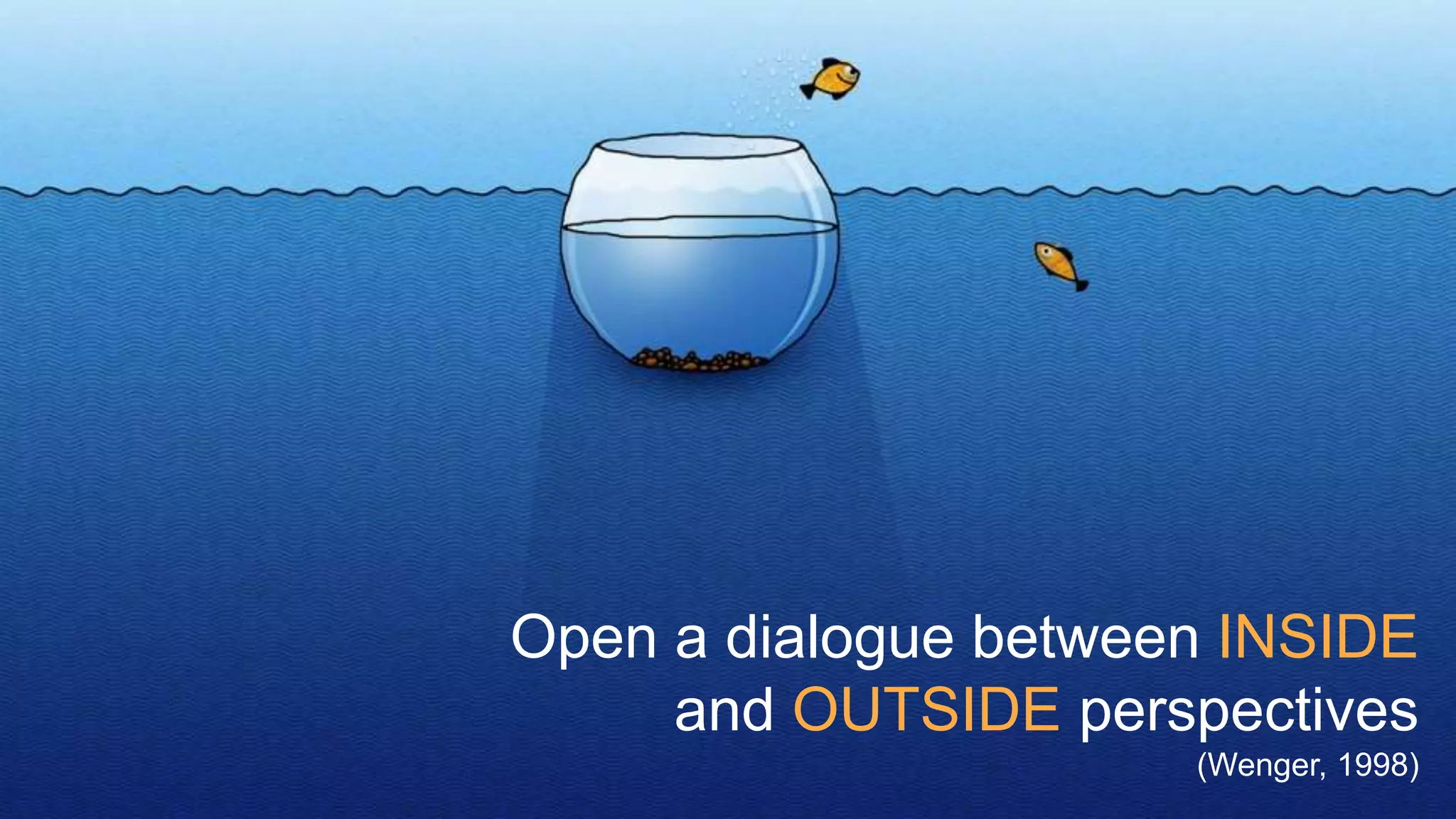
Open a dialogue between INSIDE
and OUTSIDE perspectives
(Wenger, 1998)
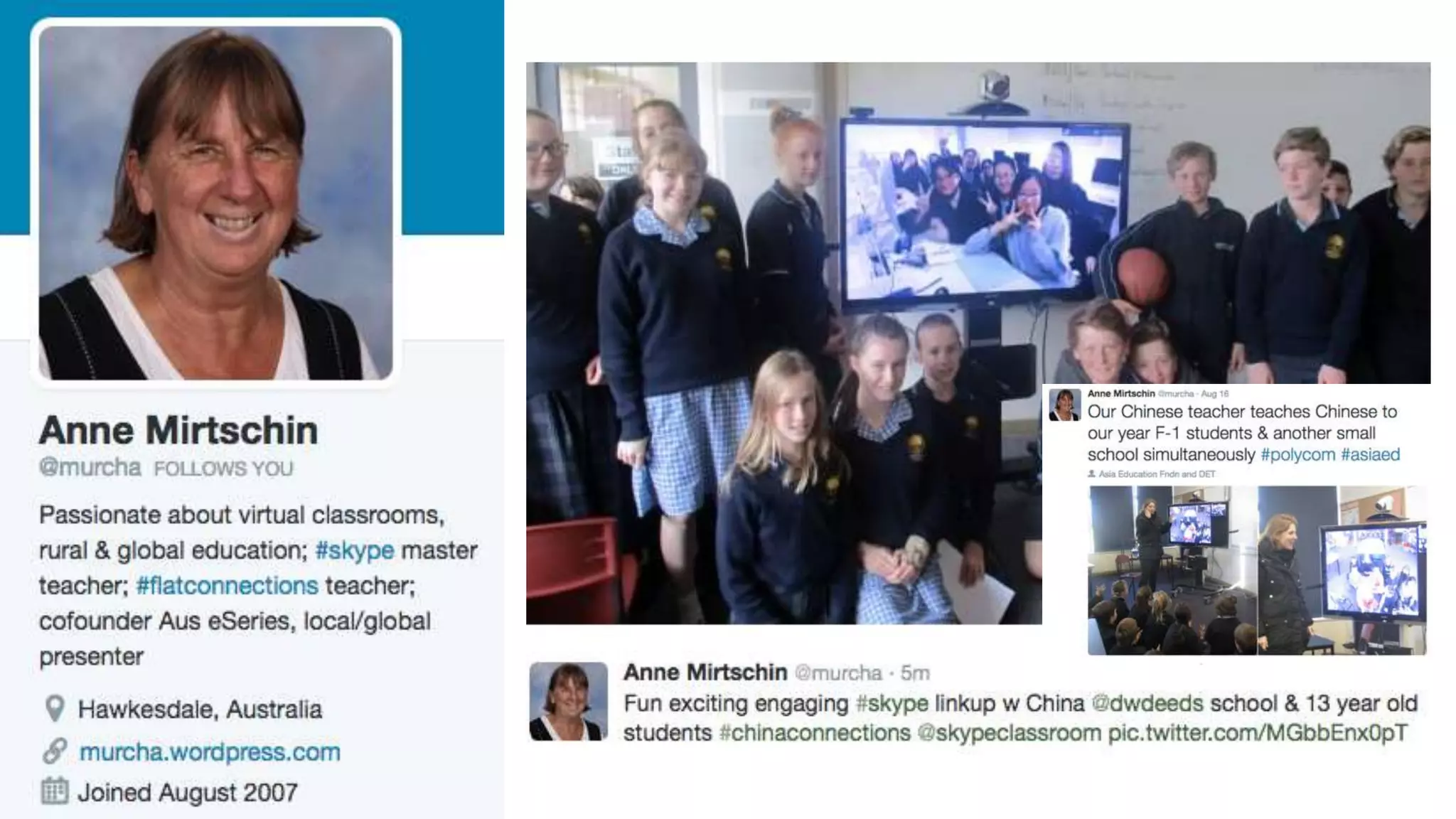
“I think when we collaborate
globally we learn just as
much about those other
people as we do about
ourselves”
Anne Mirtschin, Australia
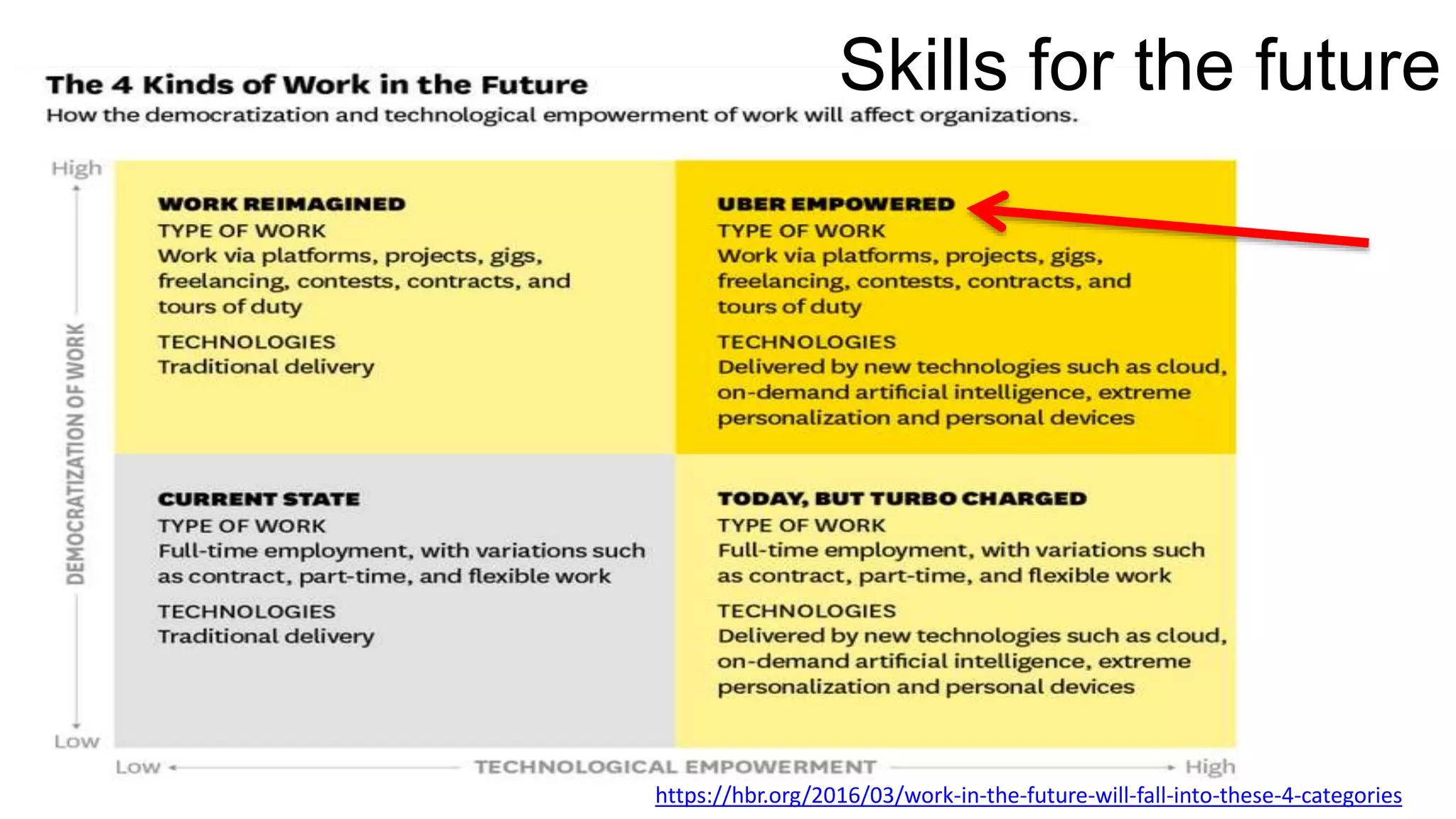
https://hbr.org/2016/03/work-in-the-future-will-fall-into-these-4-categories
Skills for the future
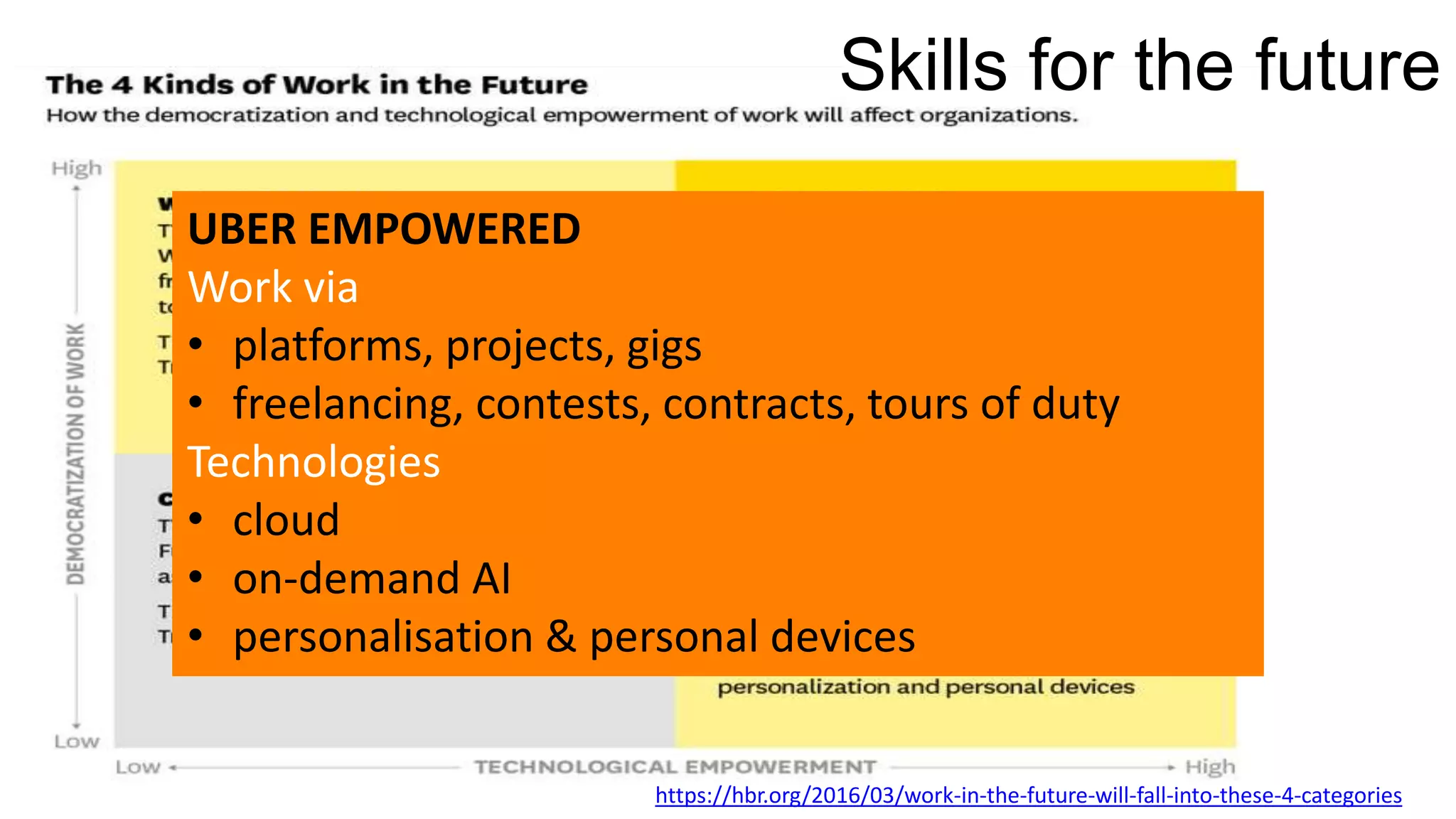
https://hbr.org/2016/03/work-in-the-future-will-fall-into-these-4-categories
Skills for the future
UBER EMPOWERED
Work via
• platforms, projects, gigs
• freelancing, contests, contracts, tours of duty
Technologies
• cloud
• on-demand AI
• personalisation & personal devices
Design, implementation and
management of online global
collaboration
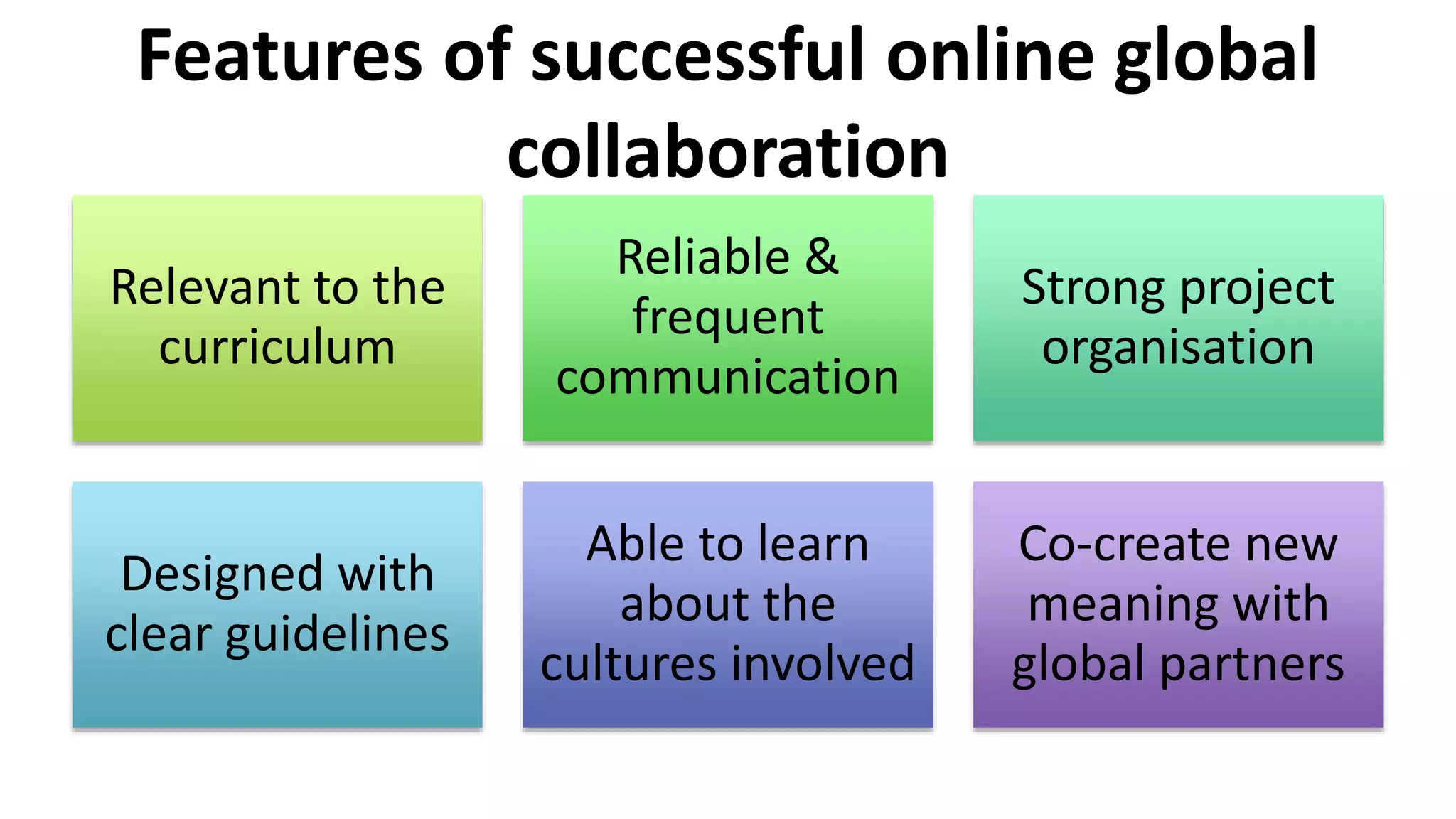
Features of successful online global
collaboration
Relevant to the
curriculum
Reliable &
frequent
communication
Strong project
organisation
Designed with
clear guidelines
Able to learn
about the
cultures involved
Co-create new
meaning with
global partners
The Taxonomy of Global Connection (Lindsay & Davis, 2012)
LEVEL 1:
Intraconne
ction
Typically one
teacher and a set
of students
LEVEL 2:
Interconne
ction
Two classes
share for
intercultural
understanding
and problem
solving
LEVEL 3:
Managed
Global
Connection
Collaborative learning
between classes
designed and managed
by teachers
LEVEL 4:
Student to
Student
(Teacher
Management)
Students connect with
each other and develop
collaborative learning
modes supported by the
teacher
LEVEL 5:
Student to
Student
(Student
Management)
Students take on
leadership roles and
manage learning
across classrooms
and groups with
teacher facilitation
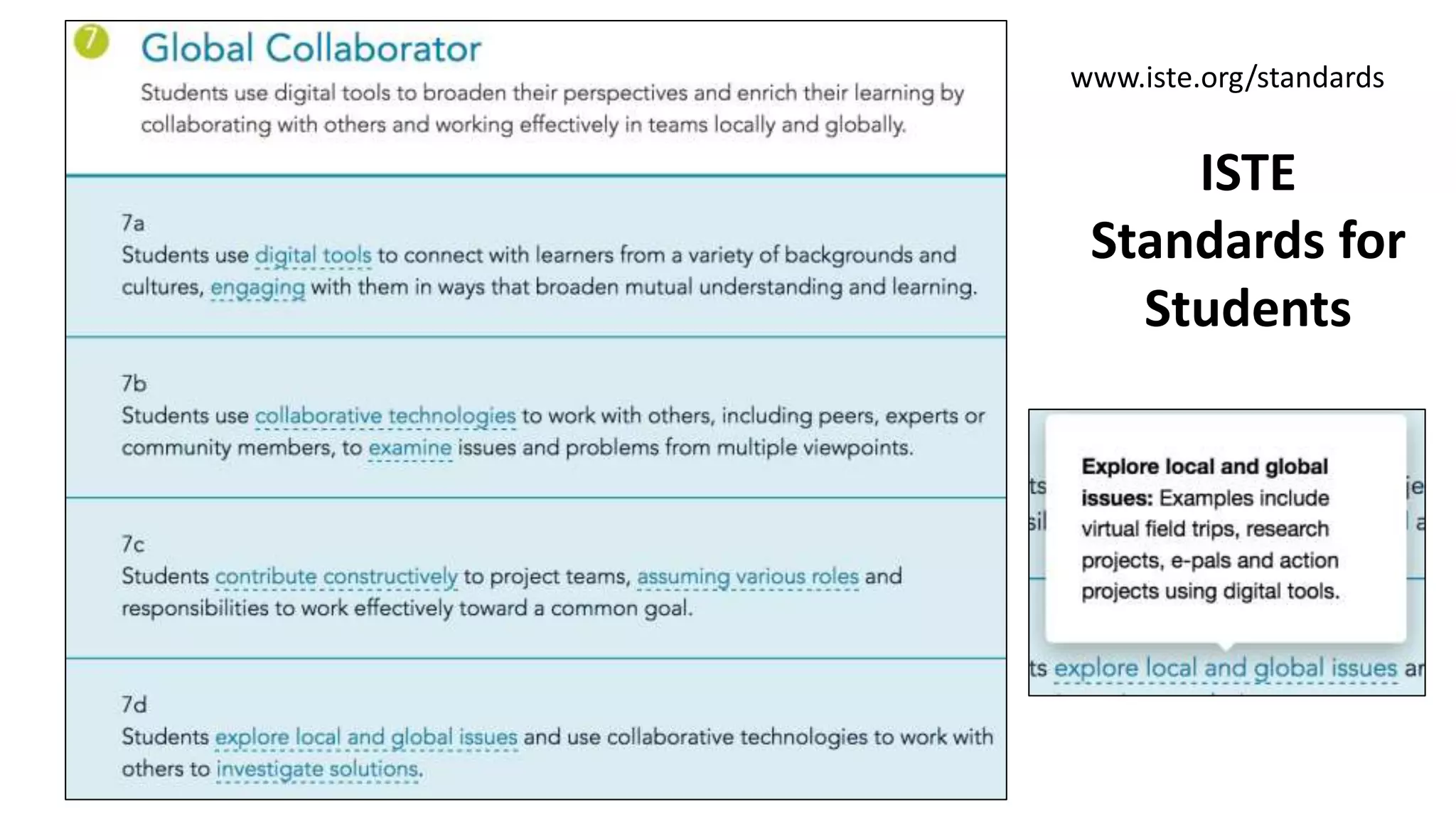
www.iste.org/standards
ISTE
Standards for
Students
https://www.iste.org/standards ISTE
Standards for
Educators
www.iste.org/standards
Case Study:
Endangered Animals Global Project
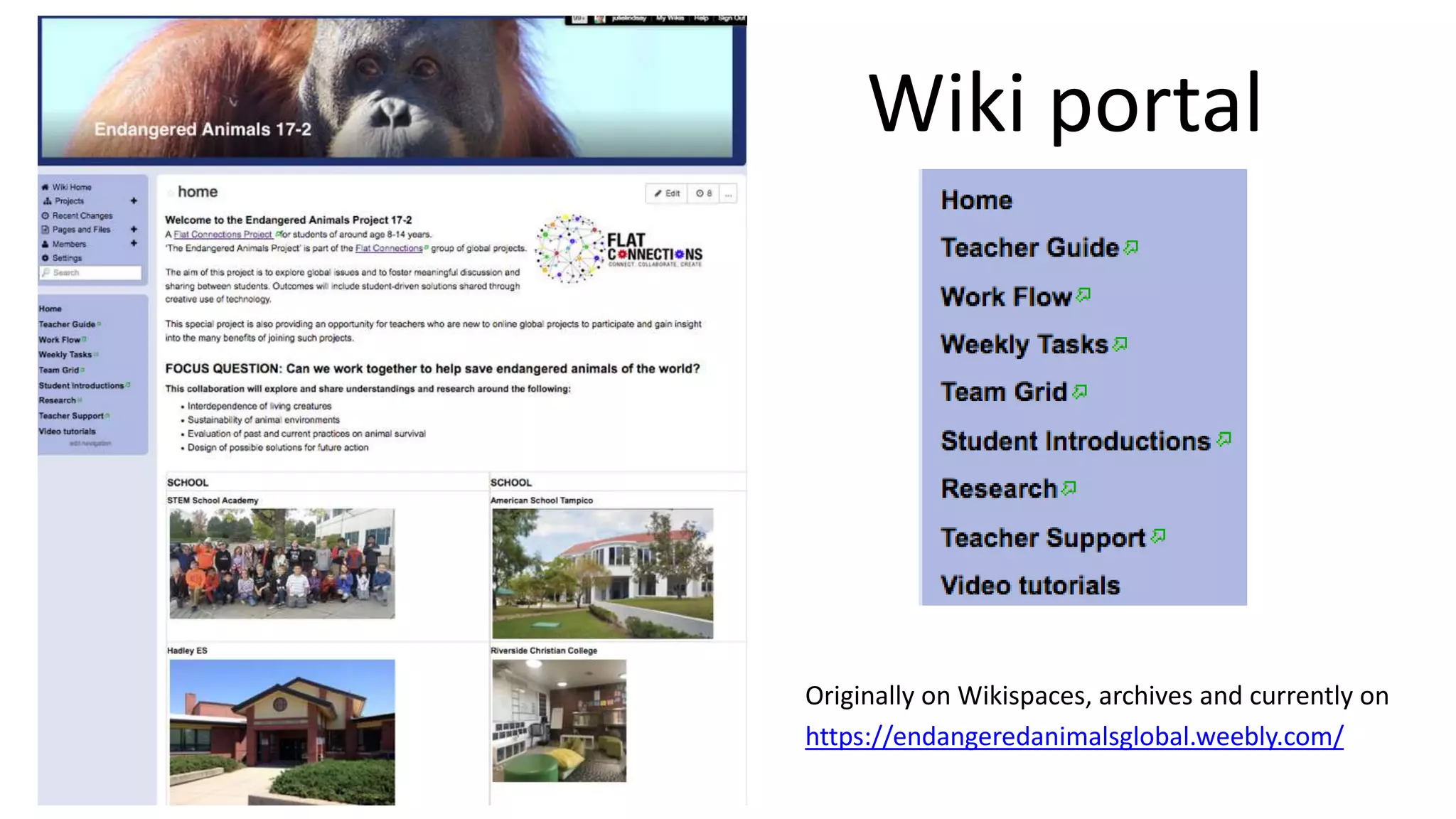
Wiki portal
Originally on Wikispaces, archives and currently on
https://endangeredanimalsglobal.weebly.com/
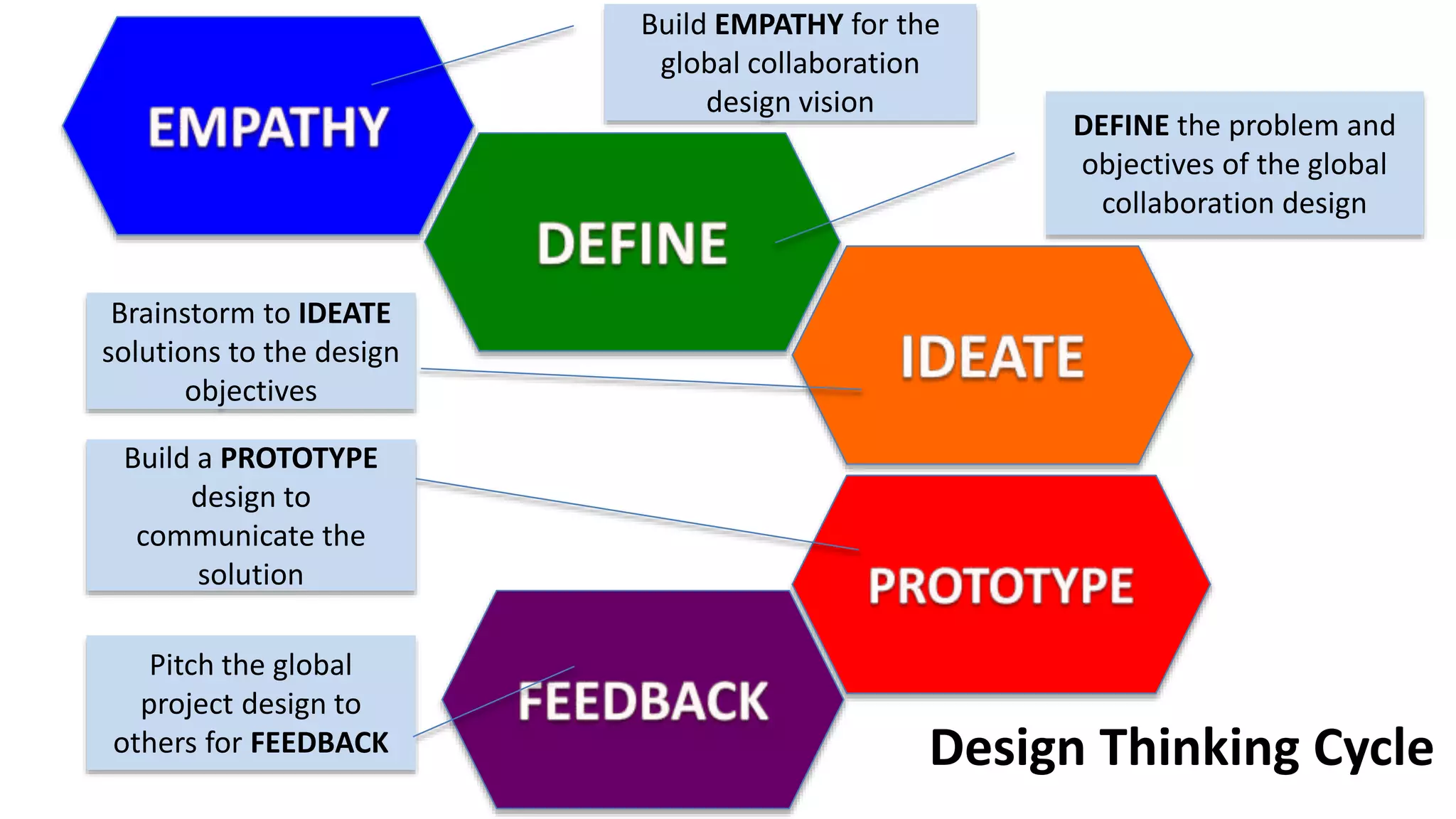
Build EMPATHY for the
global collaboration
design vision
DEFINE the problem and
objectives of the global
collaboration design
Brainstorm to IDEATE
solutions to the design
objectives
Build a PROTOTYPE
design to
communicate the
solution
Pitch the global
project design to
others for FEEDBACK Design Thinking Cycle
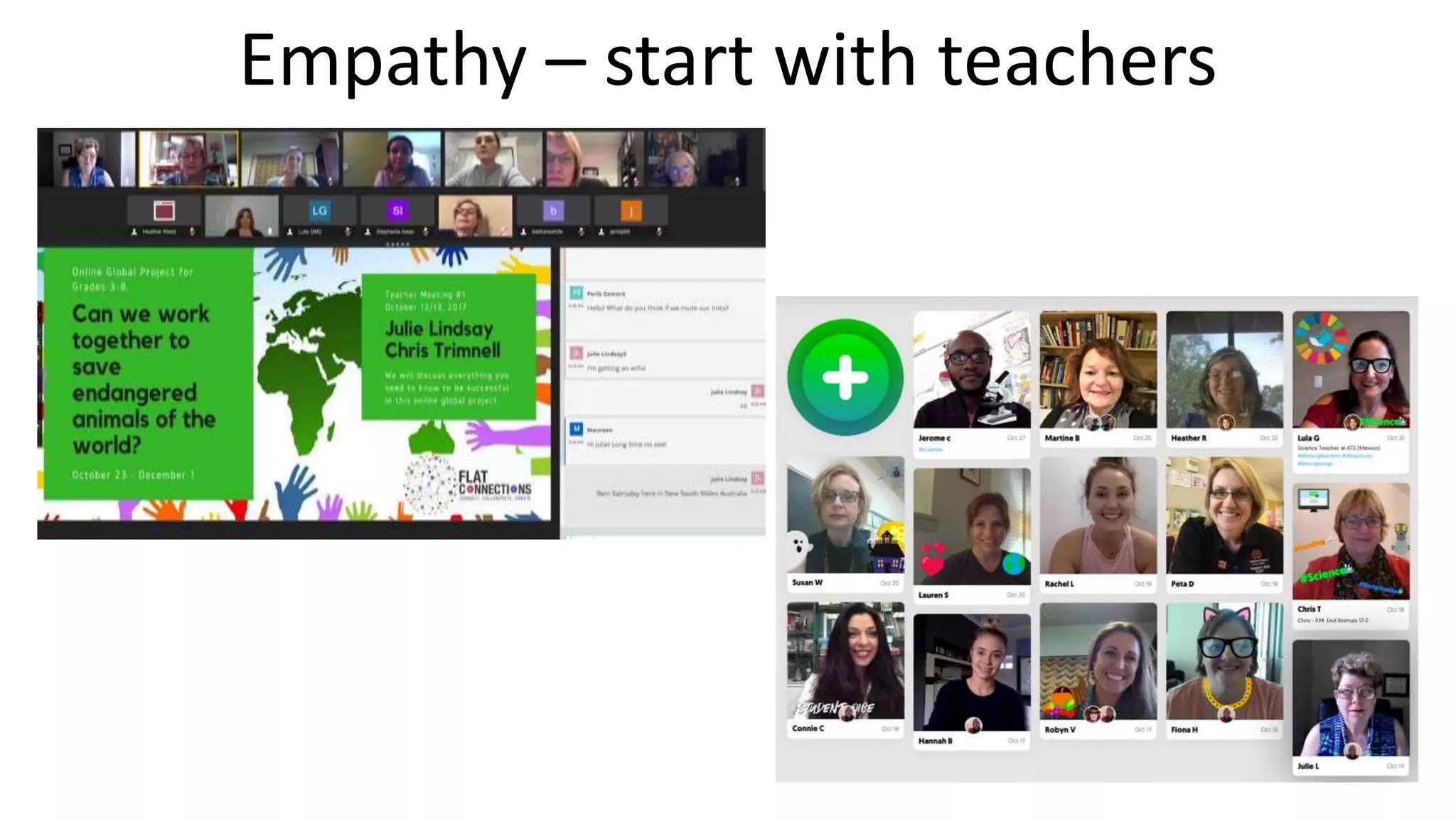
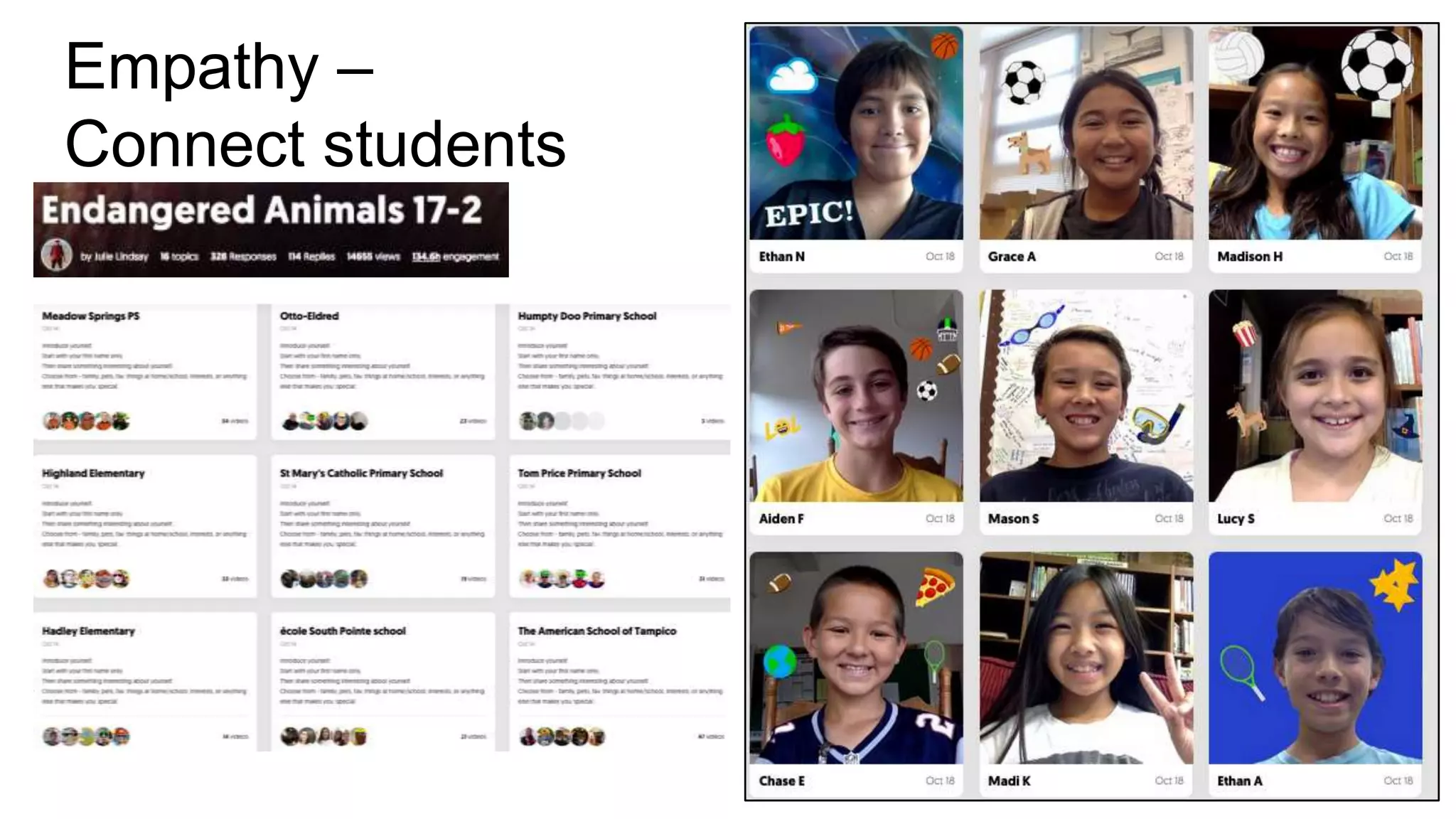
Empathy – start with teachers
Empathy –
Connect students
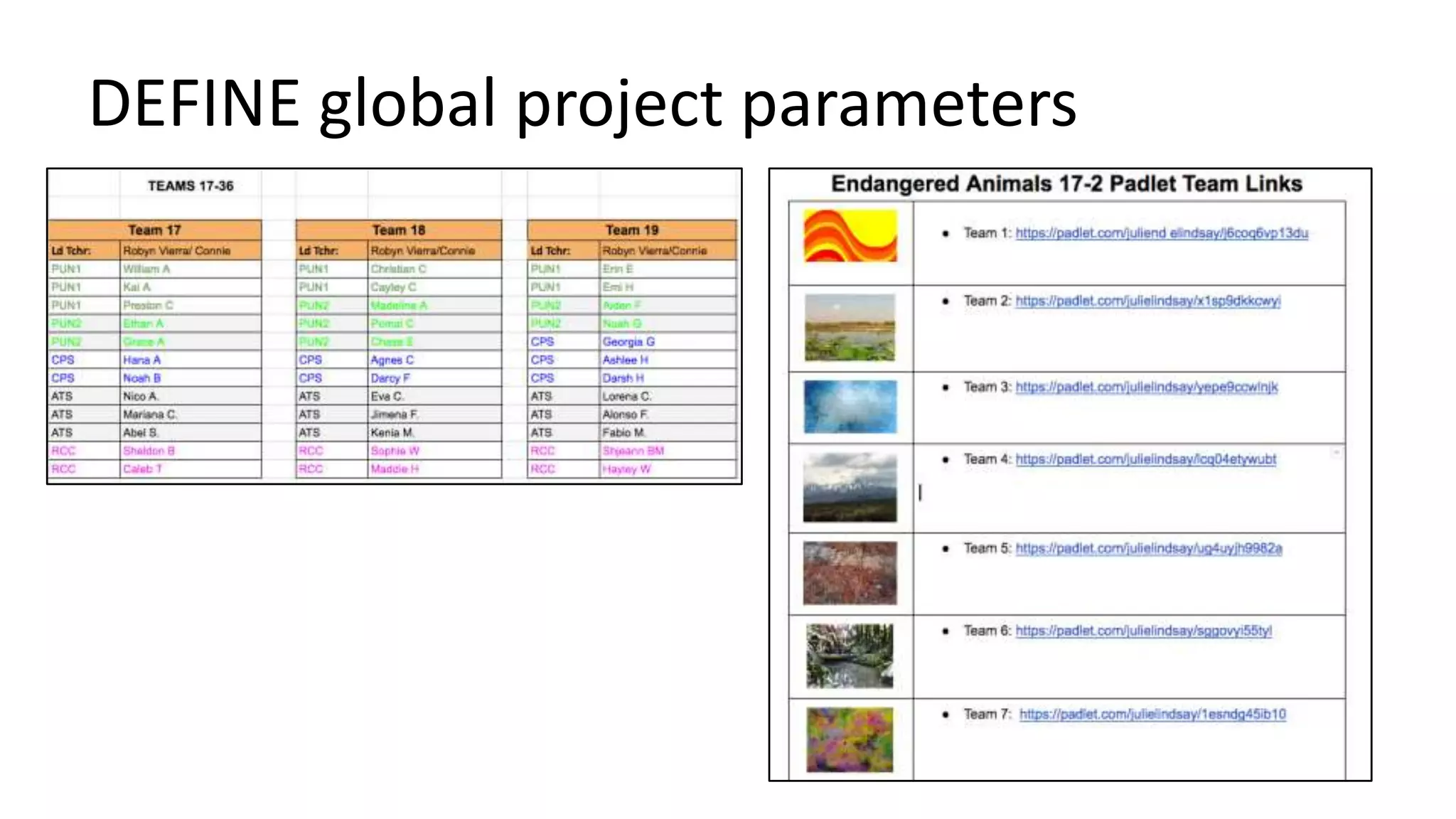
DEFINE global project parameters
Student
collaborative
team work
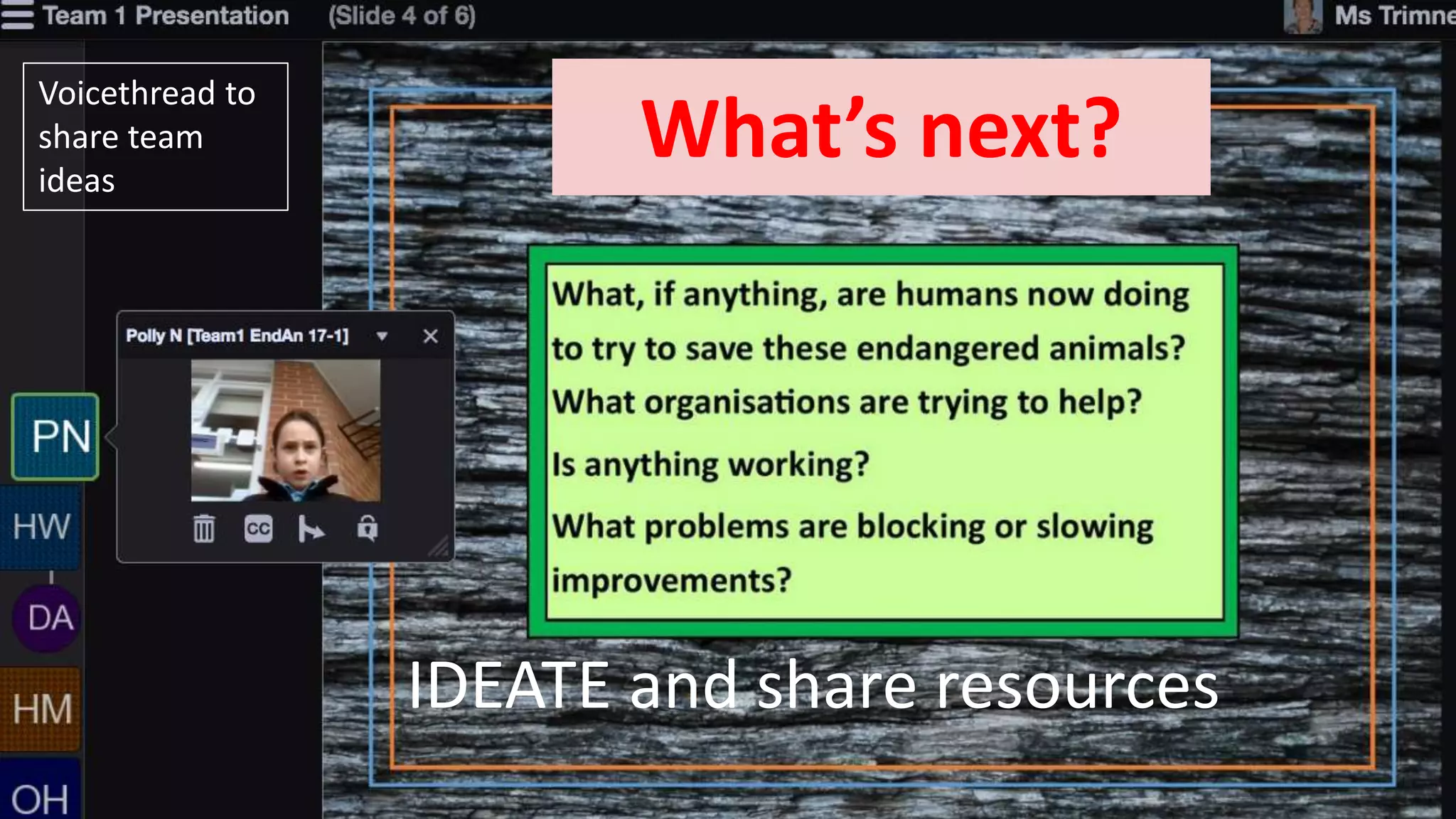
What’s next?
Voicethread to
share team
ideas
IDEATE and share resources
Prototype / Outcomes
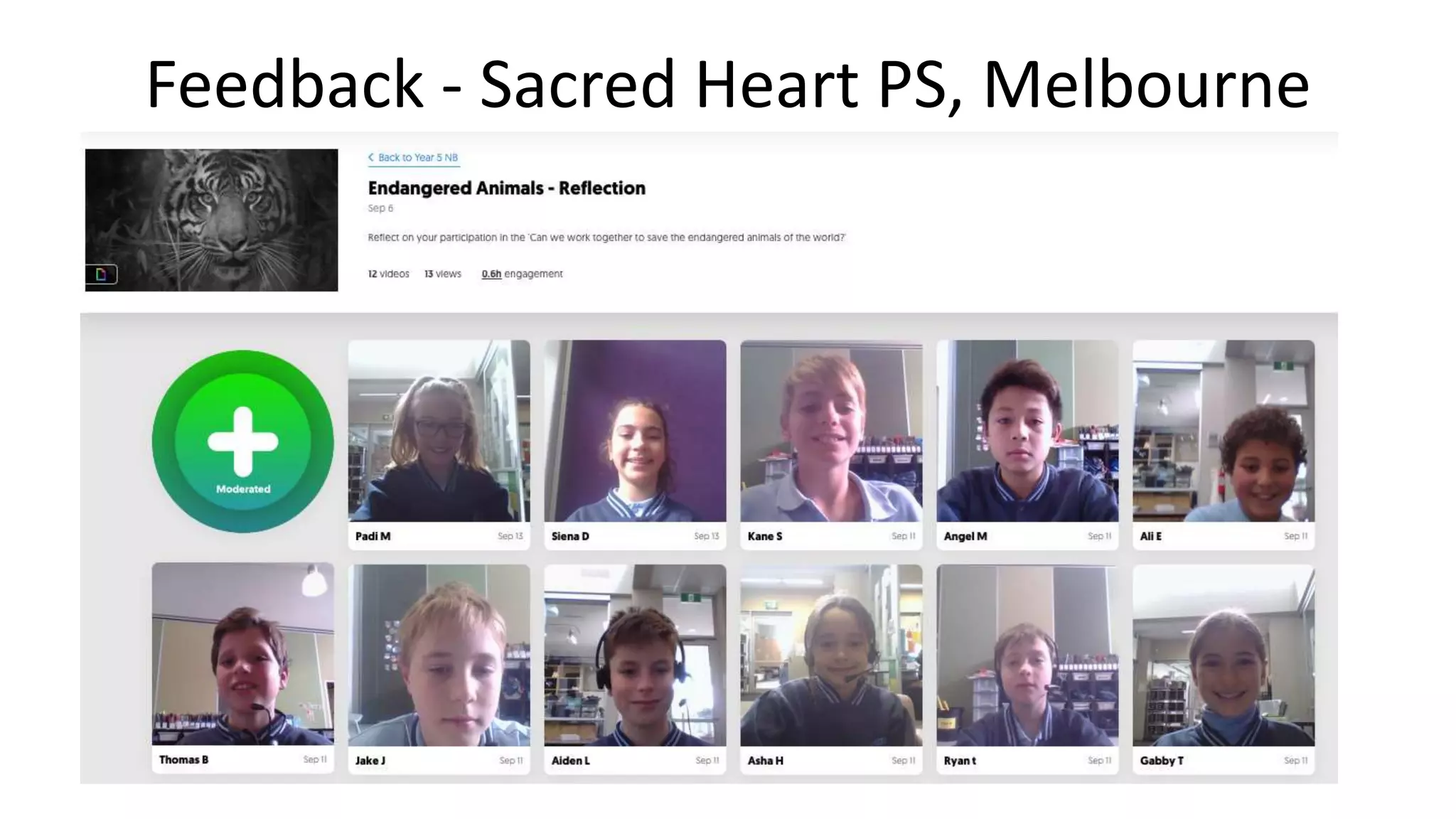
Feedback - Sacred Heart PS, Melbourne
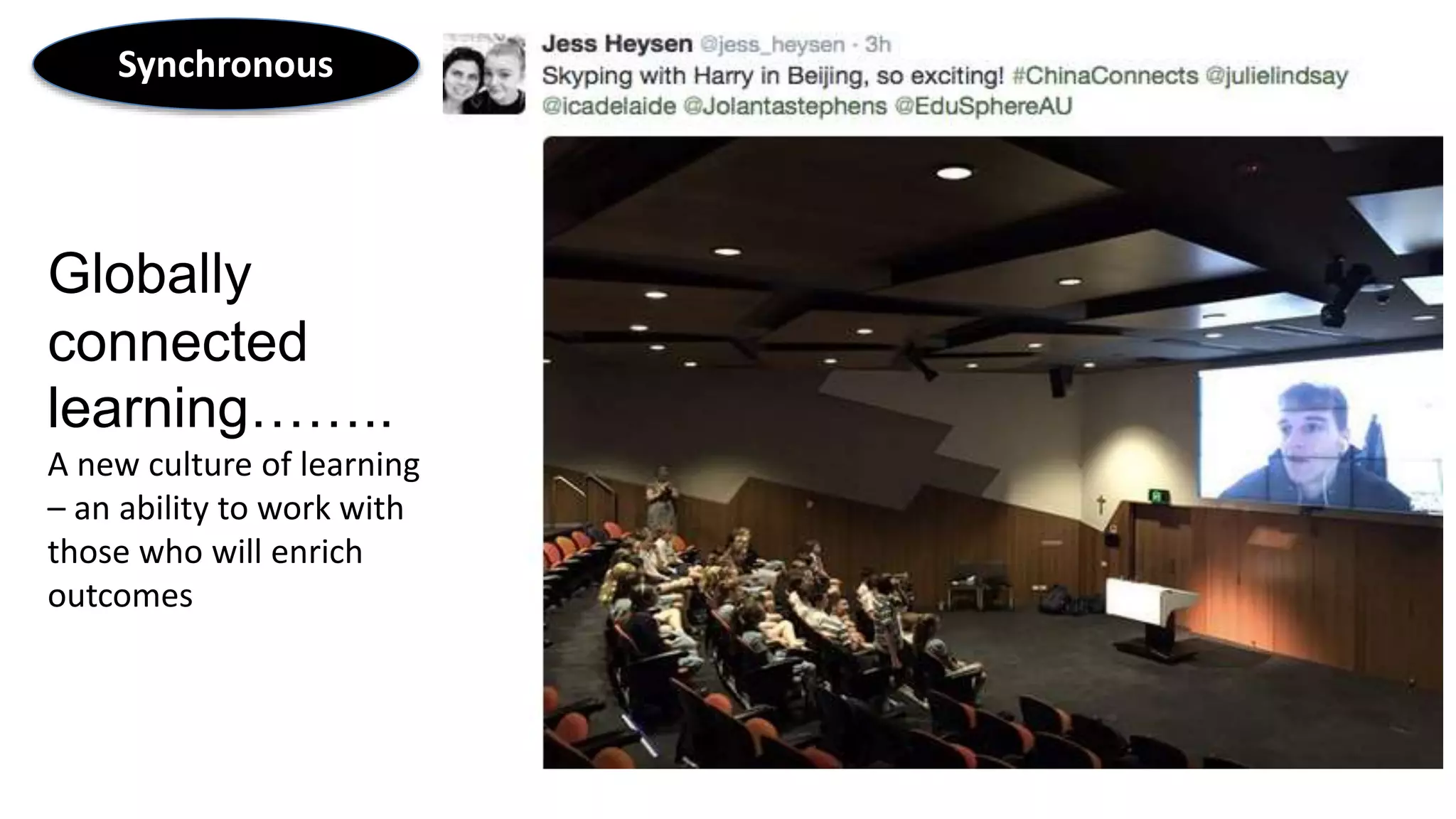
Globally
connected
learning……..
A new culture of learning
– an ability to work with
those who will enrich
outcomes
Synchronous
Learners are the best textbook for each other
New concepts and pedagogies
Theory into practice
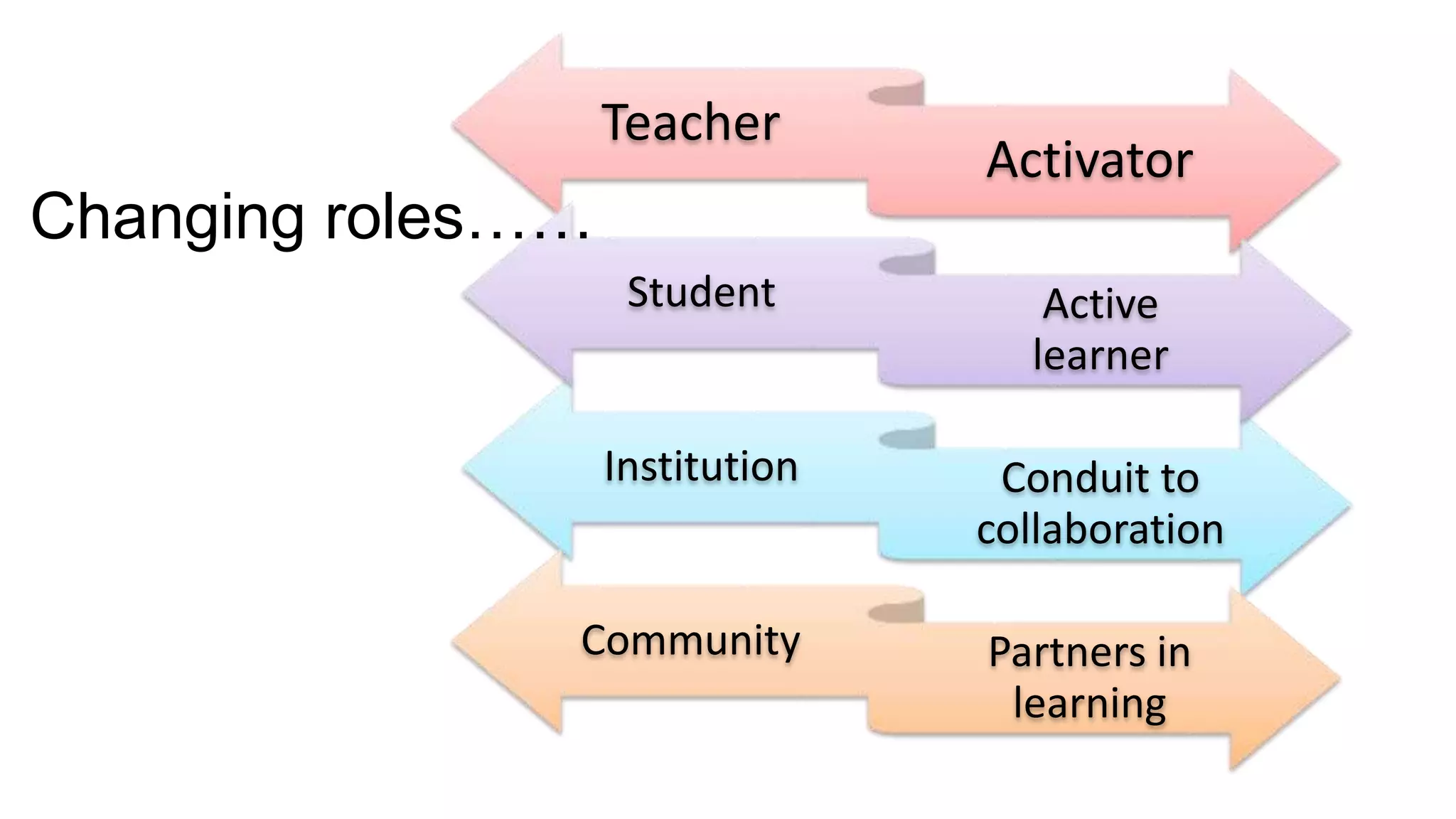
Teacher
Activator
Institution Conduit to
collaboration
Community Partners in
learning
Student Active
learner
Changing roles……
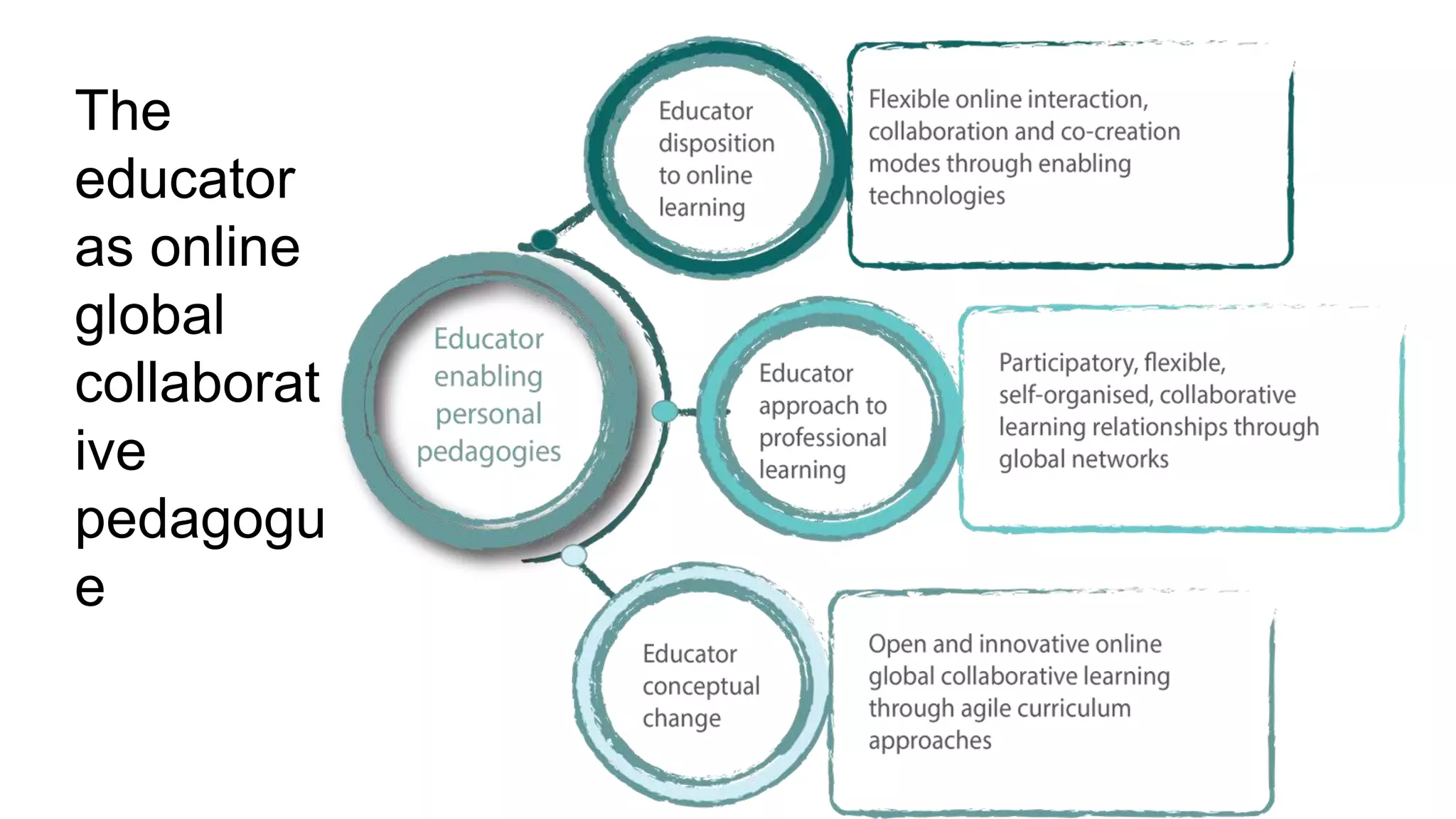
The
educator
as online
global
collaborat
ive
pedagogu
e
SKILLSET
and
MINDSET
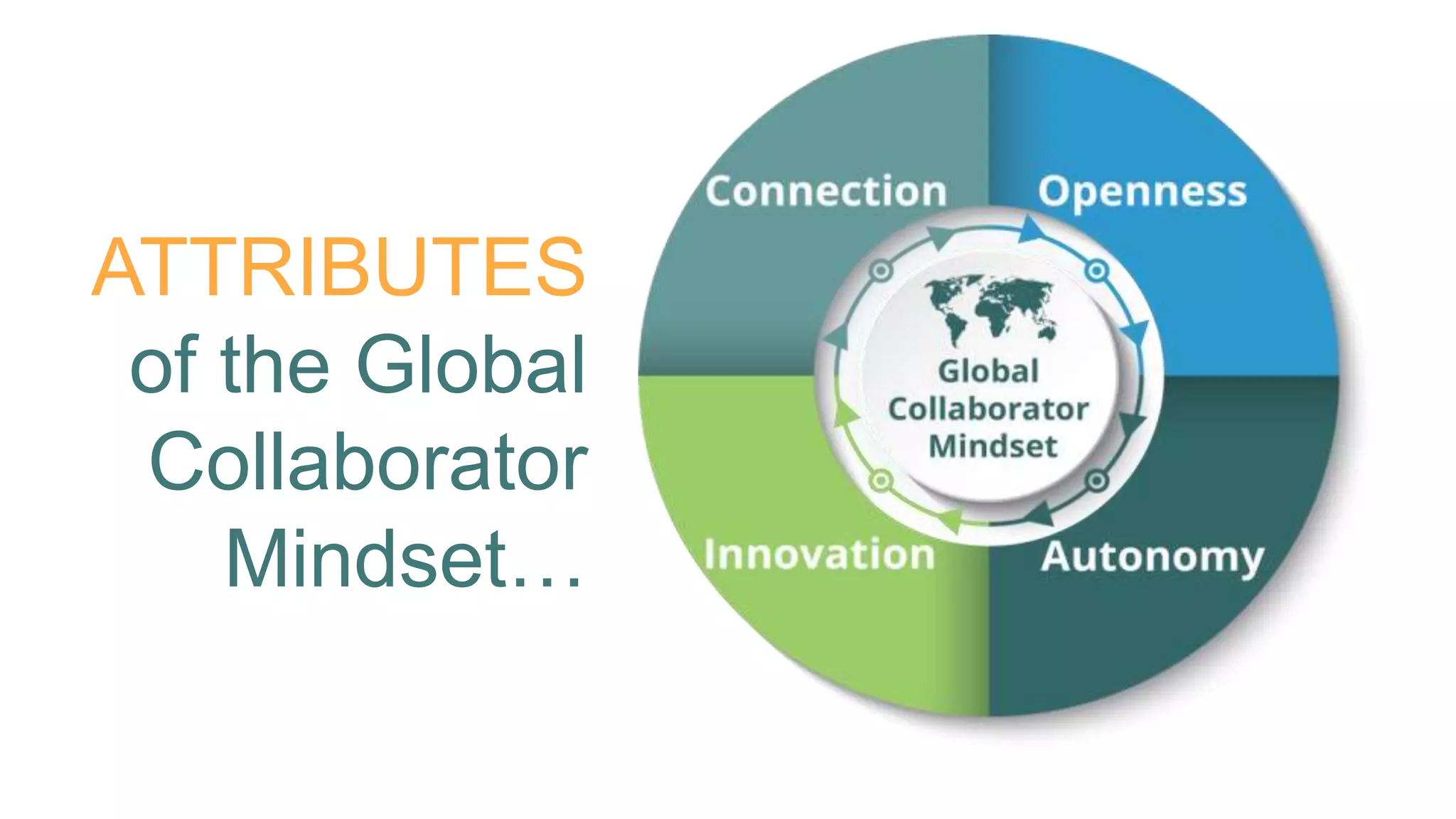
ATTRIBUTES
of the Global
Collaborator
Mindset…
CONNECTION
OPENNESS
AUTONOMY
INNOVATION
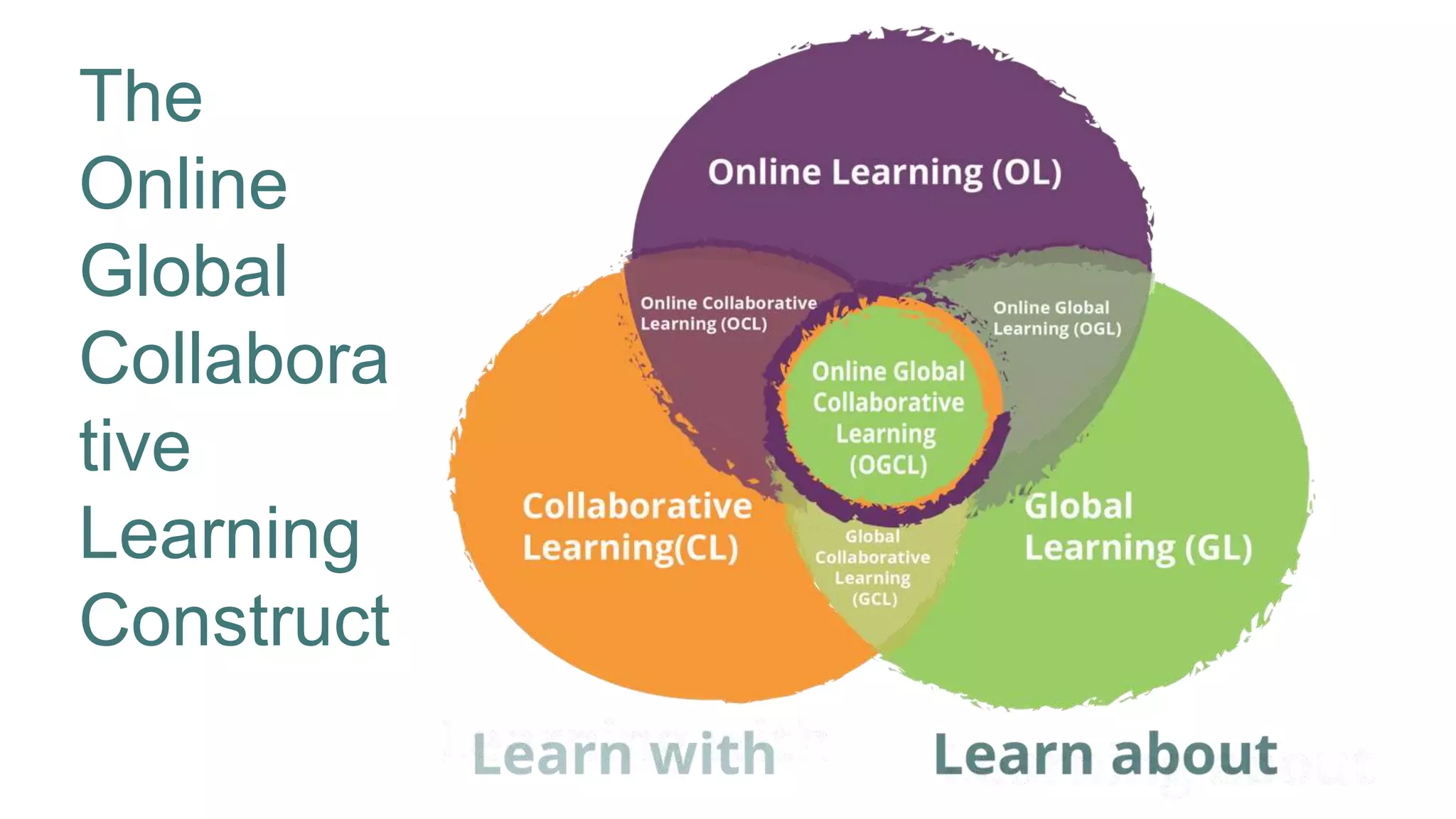
The
Online
Global
Collabora
tive
Learning
Construct
A Vision
for the
FUTUR
E
If you aren’t doing it, it’s not
happening
Tom Friedman, The World is Flat, 2017
Images: https://vlad.studio/, @lennimk, http://pixabay.com
Thank you!
Please connect with me.
Julie Lindsay
@julielindsay
http://flatconnections.com
http://www.julielindsay.net
References
Cook, L., Bell, M., Nugent, J., & Smith, W. (2016). Global collaboration enhances technology literacy. Technology
and Engineering Teacher, 75(5), 20-25.
Harasim, L. (2017). Learning theory and online technologies (2nd ed.). New York, NY: Routledge.
Lindsay, J. (2016). The global educator: Leveraging technology for collaborative learning & teaching. Eugene,
Oregon/Arlington, VA: International Society for Technology in Education.
Klein, J. D. (2017). The Global Education Guidebook: Humanizing K-12 Classrooms Worldwide Through Equitable
Partnerships. Bloomington, IN: Solution Tree Press.
Mercer, N. (2013). The Social Brain, Language, and Goal-Directed Collective Thinking: A Social Conception of
Cognition and Its Implications for Understanding How We Think, Teach, and Learn. Educational Psychologist,
48(3), 148–168. doi:10.1080/00461520.2013.804394
Riel, M. (1994). Cross‐classroom collaboration in global Learning Circles. The Sociological Review, 42(S1), 219-
242. doi:10.1111/j.1467-954X.1994.tb03418.x
Union, C., & Green, T. (2013). The use of Web 2.0 technology to help students in high school overcome
ethnocentrism during Global Education Projects: A cross-cultural case study. The Georgia Social Studies Journal,
3(3), 109-124.
Wenger, E. (1998). Communities of practice: Learning, meaning, and identity. Cambridge, UK: Cambridge
University Press.

New perspectives on building capacity for global connections and collaborations