
What the emergency nurse need’s to know about
GHB?
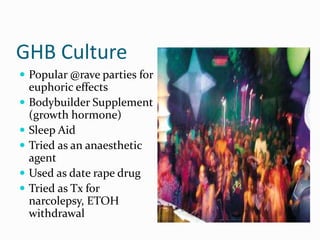
GHB Culture
 Popular @rave parties for
euphoric effects
 Bodybuilder Supplement
(growth hormone)
 Sleep Aid
 Tried as an anaesthetic
agent
 Used as date rape drug
 Tried as Tx for
narcolepsy, ETOH
withdrawal
Street Names (What the cool people call it!!!)
 GBH (grievous bodily harm)
 Liquid ecstasy
 Fantasy
 Cherry Meth
 G
 Georgia home boy
 Goop
 Salty water
 Scoob
 SCGH Alcohol & Drug Liaison Project
Is it in WA
 We tend to be the virgin state.
 Popular on the east coast during rave’s
 Popular in the media
 Move raves/festivals each year in Perth
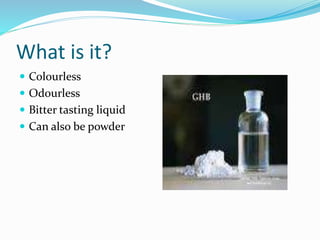
What is it?
 Colourless
 Odourless
 Bitter tasting liquid
 Can also be powder
Pharmacology
 Gamma hydroxybutytric acid
 Crosses blood-brain barrier
 CNS depressant that's abused for its ability to induce
euphoria, hypnosis, and amnesia.
 Toxicity occurs from depressant effects (cns/resp)
Pathophysiology
The GHB Clinical Syndrome generally presents with:
1. CNS depression
2. Nystagmus
3. Respiratory depression
4. Miosis
5. Myoclonus
6. Vomiting
 Patient typically present’s with coma, resp depression,
mild bradycardia, and vomiting.
Differential Dx:
 Look @ what else can cause:
 COMA, SEIZURES, RESP depression/arrest
 Hypoglycaemia
 Opiate OD, Ketamine OD
 SAH
 CVA
 CNS Lesion
 Infection
Clinical Features
Cardio: Resp:
 Bradycardia Depression
 Hypotension Apnoea
 Hypertension Aspiration
 ECG Changes Cheyne-stokes
Gastro:
 Nausea
 Vomiting
 Caustic Burns
Clinical Features
Neuro: Metabolic:
 CNS depression Resp Acidosis
 Coma Metabolic Acidosis
 Myoclonus Hypernatreamia
 Seizures Hypokalaemia
 Miosis Hyperglycaemia
 Ataxia
 Agitation
 Euphoria
 Amnesia
 Dizziness
 EPS
Investigations
Tox Screen:
 12 lead ECG
 BSL
 Paracetamol level
 Temp
Acute Management
 Management is supportive of ABC
 Airway
 Breathing
 Circulation
1. Tx: bradycardia with atropine
2. Hypotension responds fluid challenge
 Disability
1. Can be combative, need restraints, ?sedation
2. Decreasing GCS = Intubate
3. ?? Use of Physostigmine
 Exposure
1. Other drugs on board (commonly ETOH, Amphetamines)
2. Other toxidromes
Decontamination
 AC not clinically useful as onset CNS depression
occurs rapidly
Enhanced Elimination:
 Not clinically uselful
 (Toxicology handbook, 2007, p201)
Antidotes
 Physostigmine has been used and proposed as
antidote for GHB
 Poor safety profile in GHB
Withdrawal
 GHB very addictive
 Need frequent ingestions to WD
Withdrawal Mx
 Supportive Care
 Benzo’s (Diazepam)
 Phenothiazines (Olanzapine)
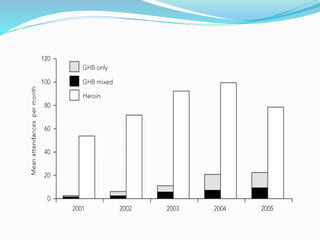
Prehospital Presentations
 Victorian study looked @ ambulance related attendances
for GHB Vs Heroin
 Retrospective analysis from Mar 01- Oct 05.
 Dietze, P.(2008). Patterns and incidences of y-
hydroxybutyrate (GHB)-related ambulance attendances in
Melbourne, Victoria. MJA, 188(12), 709-711
Presentations to ED
The Gold Coast Experience
 Harraway, T., & Stephenson, L.(1999). Gamma
hydroxbutyrate intoxication: The Gold Coast
experience. Emergency Medicine, 11, 45-48
Kiddies stuff
Fatalities
 Australasia study Jan 2000 – Aug 2003.
 10 confirmed GHB Deaths
 Caldicott, D, Et al.(2004).Fatalities associated with the use of y-
hydroxybutyrate and its analogues in Australasia. MJA, 18(6), 310-313.
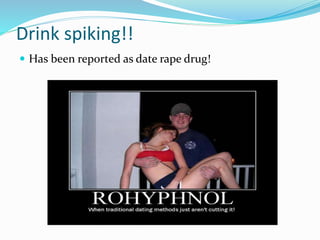
Drink spiking!!
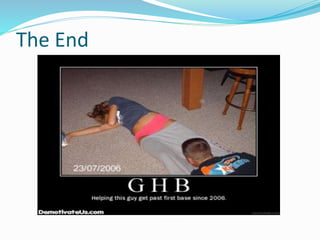
 Has been reported as date rape drug!
Disaster Preparedness
 Multiple pts presenting in short period of time
 Often present 0400-0800 (decreased staffing)
 Need for multiple ventilators
 Need to call in staff
 Arrange ICU beds
References
 Caldicott, D, Et al.(2004).Fatalities associated with the
use of y-hydroxybutyrate and its analogues in
Australasia. MJA, 18(6), 310-313
 Dietze, P.(2008). Patterns and incidences of y-
hydroxybutyrate (GHB)-related ambulance
attendances in Melbourne, Victoria. MJA, 188(12), 709-
711
 Harraway, T., & Stephenson, L.(1999). Gamma
hydroxybutyrate intoxication: The Gold Coast
experience. Emergency Medicine, 11, 45-48
The End

GHB

  • 1.
    What the emergencynurse need’s to know about GHB?
  • 2.
    GHB Culture  Popular@rave parties for euphoric effects  Bodybuilder Supplement (growth hormone)  Sleep Aid  Tried as an anaesthetic agent  Used as date rape drug  Tried as Tx for narcolepsy, ETOH withdrawal
  • 3.
    Street Names (Whatthe cool people call it!!!)  GBH (grievous bodily harm)  Liquid ecstasy  Fantasy  Cherry Meth  G  Georgia home boy  Goop  Salty water  Scoob  SCGH Alcohol & Drug Liaison Project
  • 4.
    Is it inWA  We tend to be the virgin state.  Popular on the east coast during rave’s  Popular in the media  Move raves/festivals each year in Perth
  • 5.
    What is it? Colourless  Odourless  Bitter tasting liquid  Can also be powder
  • 6.
    Pharmacology  Gamma hydroxybutytricacid  Crosses blood-brain barrier  CNS depressant that's abused for its ability to induce euphoria, hypnosis, and amnesia.  Toxicity occurs from depressant effects (cns/resp)
  • 7.
    Pathophysiology The GHB ClinicalSyndrome generally presents with: 1. CNS depression 2. Nystagmus 3. Respiratory depression 4. Miosis 5. Myoclonus 6. Vomiting  Patient typically present’s with coma, resp depression, mild bradycardia, and vomiting.
  • 8.
    Differential Dx:  Look@ what else can cause:  COMA, SEIZURES, RESP depression/arrest  Hypoglycaemia  Opiate OD, Ketamine OD  SAH  CVA  CNS Lesion  Infection
  • 9.
    Clinical Features Cardio: Resp: Bradycardia Depression  Hypotension Apnoea  Hypertension Aspiration  ECG Changes Cheyne-stokes Gastro:  Nausea  Vomiting  Caustic Burns
  • 10.
    Clinical Features Neuro: Metabolic: CNS depression Resp Acidosis  Coma Metabolic Acidosis  Myoclonus Hypernatreamia  Seizures Hypokalaemia  Miosis Hyperglycaemia  Ataxia  Agitation  Euphoria  Amnesia  Dizziness  EPS
  • 11.
    Investigations Tox Screen:  12lead ECG  BSL  Paracetamol level  Temp
  • 12.
    Acute Management  Managementis supportive of ABC  Airway  Breathing  Circulation 1. Tx: bradycardia with atropine 2. Hypotension responds fluid challenge  Disability 1. Can be combative, need restraints, ?sedation 2. Decreasing GCS = Intubate 3. ?? Use of Physostigmine  Exposure 1. Other drugs on board (commonly ETOH, Amphetamines) 2. Other toxidromes
  • 13.
    Decontamination  AC notclinically useful as onset CNS depression occurs rapidly Enhanced Elimination:  Not clinically uselful  (Toxicology handbook, 2007, p201)
  • 14.
    Antidotes  Physostigmine hasbeen used and proposed as antidote for GHB  Poor safety profile in GHB
  • 15.
    Withdrawal  GHB veryaddictive  Need frequent ingestions to WD
  • 16.
    Withdrawal Mx  SupportiveCare  Benzo’s (Diazepam)  Phenothiazines (Olanzapine)
  • 17.
    Prehospital Presentations  Victorianstudy looked @ ambulance related attendances for GHB Vs Heroin  Retrospective analysis from Mar 01- Oct 05.  Dietze, P.(2008). Patterns and incidences of y- hydroxybutyrate (GHB)-related ambulance attendances in Melbourne, Victoria. MJA, 188(12), 709-711
  • 19.
  • 20.
    The Gold CoastExperience  Harraway, T., & Stephenson, L.(1999). Gamma hydroxbutyrate intoxication: The Gold Coast experience. Emergency Medicine, 11, 45-48
  • 21.
  • 22.
    Fatalities  Australasia studyJan 2000 – Aug 2003.  10 confirmed GHB Deaths  Caldicott, D, Et al.(2004).Fatalities associated with the use of y- hydroxybutyrate and its analogues in Australasia. MJA, 18(6), 310-313.
  • 23.
    Drink spiking!!  Hasbeen reported as date rape drug!
  • 24.
    Disaster Preparedness  Multiplepts presenting in short period of time  Often present 0400-0800 (decreased staffing)  Need for multiple ventilators  Need to call in staff  Arrange ICU beds
  • 25.
    References  Caldicott, D,Et al.(2004).Fatalities associated with the use of y-hydroxybutyrate and its analogues in Australasia. MJA, 18(6), 310-313  Dietze, P.(2008). Patterns and incidences of y- hydroxybutyrate (GHB)-related ambulance attendances in Melbourne, Victoria. MJA, 188(12), 709- 711  Harraway, T., & Stephenson, L.(1999). Gamma hydroxybutyrate intoxication: The Gold Coast experience. Emergency Medicine, 11, 45-48
  • 26.